Jennifer Lambert

A Sacred Balance

Visit Us On FacebookVisit Us On PinterestVisit Us On InstagramVisit Us On Linkedin
  • Homeschool
    • Book Lists
    • How Do We Do That?
    • Notebooking
    • Subjects and Styles
    • Unit Studies
  • Travel
    • Europe
      • Benelux
      • France
      • Germany
      • Greece
      • Ireland
      • Italy
      • London
      • Porto
      • Prague
    • USA
      • Chicago
      • Georgia
      • Hawaii
      • Ohio
      • Utah
      • Yellowstone and Teton
  • Family
    • Celebrations
    • Frugal
  • Military Life
    • Deployment
    • PCS
  • Health
    • Recipes
    • Essential Oils
    • Fitness
    • Mental Health
    • Natural Living
    • Natural Beauty
  • Faith
  • About Me
    • Favorite Resources
    • Advertising and Sponsorship
    • Policies
  • Reviews

© 2025Jennifer Lambert · Copyright · Disclosure · Privacy · Ad

Illumination Art Study

This blog may contain affiliate links: disclosure.
Please see my suggested resources.

April 26, 2016 By Jennifer Lambert 4 Comments

We’ve been fascinated with studying Illumination in medieval art.

We traveled to Ireland and saw where the Book of Kells was created.

We’re amazed and thankful that monks worshiped God in such a creative way!

We love this: Marguerite Makes a Book.

Marguerite Makes a Book

We discussed how paint was made in medieval times.

Red

Madder: made by boiling the root of the madder plant rubia tintorium

Vermilion: found in nature as the mineral cinnabar

Rust: found in iron oxide-rich earth compounds

Carmine, also known as cochineal: carminic acid from the female Dactylopius coccus insect is mixed with aluminum salt

Crimson: also known as kermes, extracted from the insect Kermes vermilio

Lac: resinous secretion of insects

Blue

Woad: produced from the leaves of the plant Isatis tinctoria

Indigo: derived from the plant Indigofera tinctoria

Turnsole: also known as folium, a dyestuff prepared from the plant Crozophora tinctoria

Ultramarine: made from the minerals lapis lazuli or the cheaper azurite

Smalt: now known as cobalt blue

Yellow

Weld: processed from the Reseda luteola plant. This is the oldest European dye plant in the world!

Turmeric: from the Curcuma longa plant

Saffron: from the Crocus sativus

Ochre: an earth pigment that occurs as the mineral limonite. Can be heated to become red ochre.

Orpiment: arsenic trisulfide

Green

Verdigris: cupric acetate, made by boiling copper plates in vinegar

Malachite: a mineral found in nature, copper carbonate

China green: a plant-based pigment extracted from buckthorn Rhamnus tinctoria or R. utilis berries.

White

Lead: made by corroding sheets of lead with vinegar, and covering that with decaying matter, such as dung, to provide the necessary carbon dioxide for the chemical reaction

Chalk: calcium carbonate

Black

Carbon: from sources such as lampblack, charcoal, burnt bones or ivory

Sepia: produced by the cuttlefish

Iron gall ink: iron nails would be boiled in vinegar; the resulting compound would then be mixed with an extract of oak apple (oak galls).

Decorations

Designs and Borders

Illustrative miniatures or decorative motifs may enclose the whole of the text space or occupy only a small part of the margin of the page. Some borders were in panelled form while others were composed of foliate decorations or bars which often sprouted plant forms and are known as “foliate bar borders.”

Lettering

The parchment was ruled, usually with leadpoint or colored ink. Ruling lines helped the scribe to write evenly and were part of the design of the page. The scribe wrote with a quill pen made from the feather of a goose or swan. The end of the feather was cut to form the writing nib. A slit cut into the middle of the nib allowed the ink to flow smoothly to the tip of the pen. The appearance of the script—whether rounded or angular, dense or open—was partly dependent upon the shape and the angle of the nib.

Gilding

Gold: leaf, gold hammered extremely thin, or gold powder, bound in gum arabic or egg

Silver: either leaf or powdered

Tin: leaf

We chose to make historiated initials.

These were pages of initials that portray figures or scenes that are clearly identifiable, telling a story.

I printed large Old English initial outlines for each of the kids to decorate with their story.

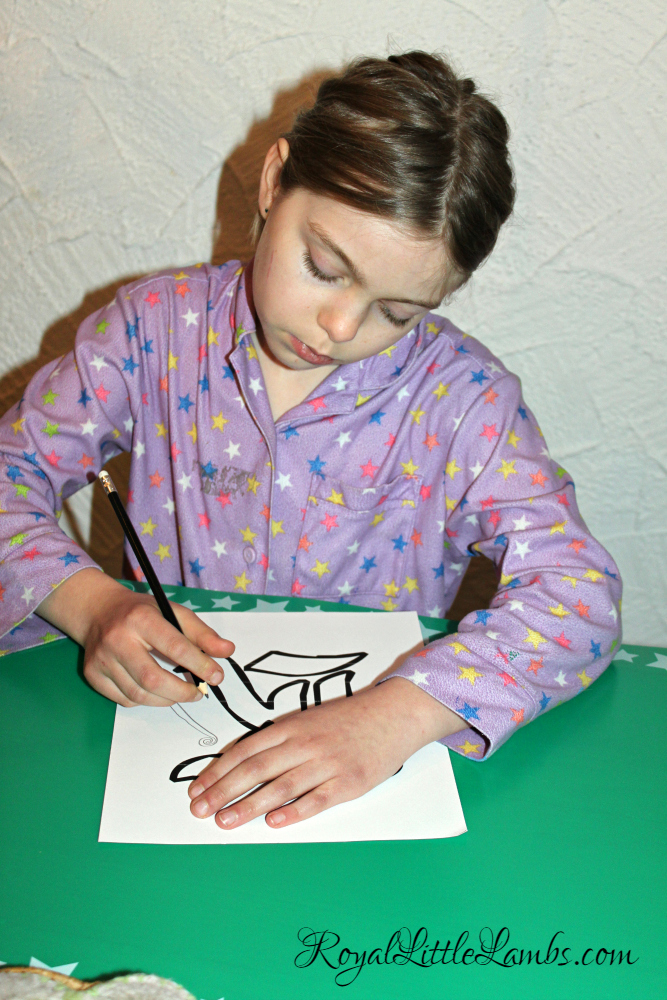
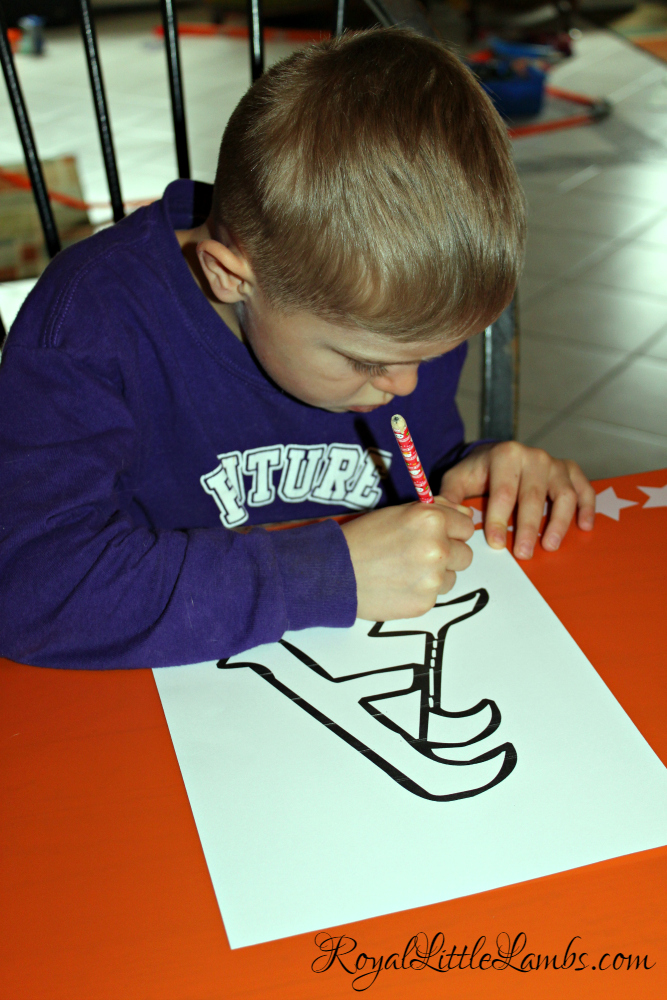
They began with outlining borders and decorations in pencil.

Drawing a Border
Drawing Designs
Outlining a Border
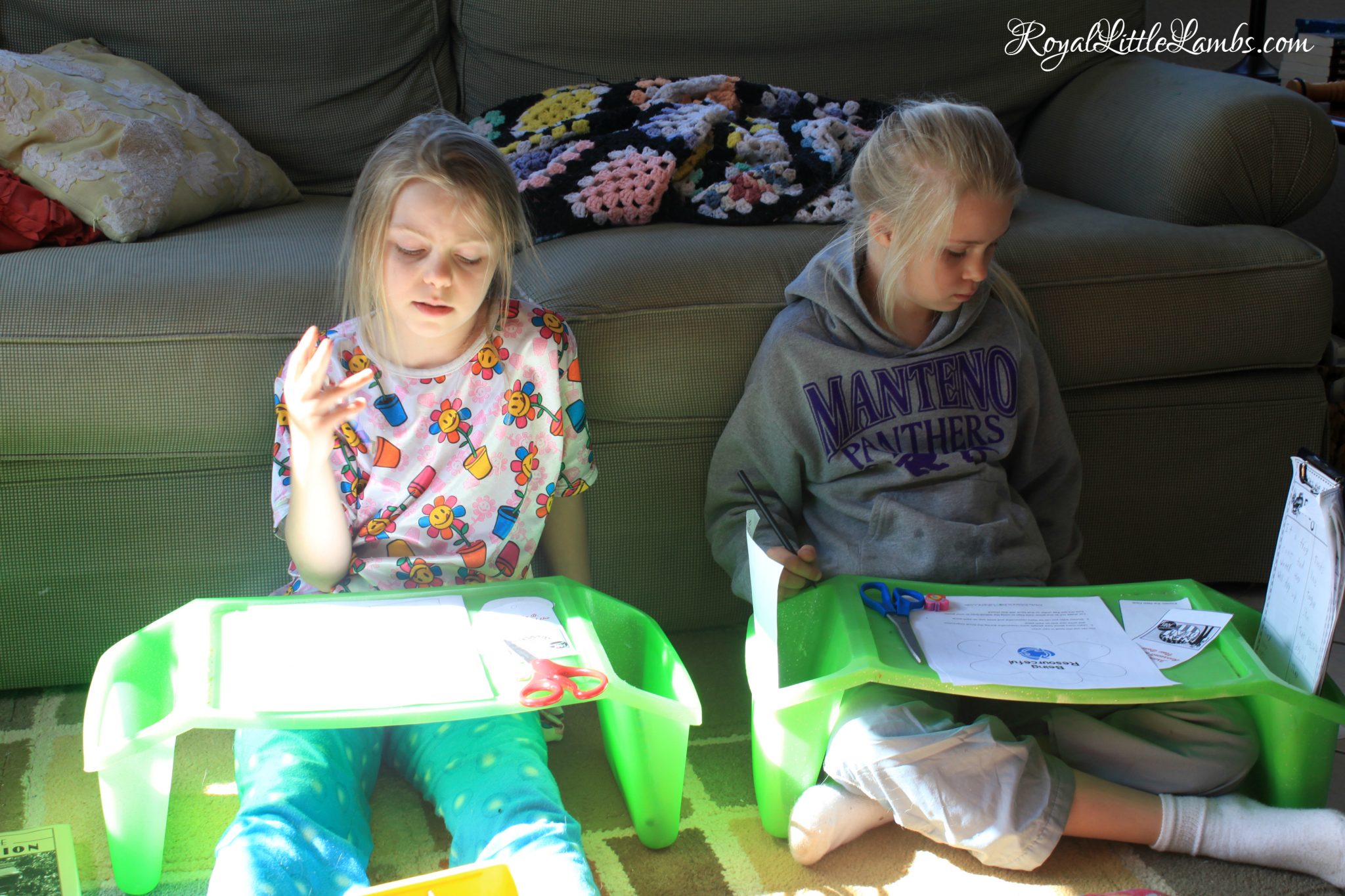
They soon realized how much work must have gone into the illumination of pages and books. They were tired of the detail work after just a few minutes. They took a break and went back to work the next day.
Taking a Break

I was impressed with how each of them expressed themselves with their letters by drawing their favorite things and using their favorite colors.

Tori drew lots of flowers and made her initial shiny.
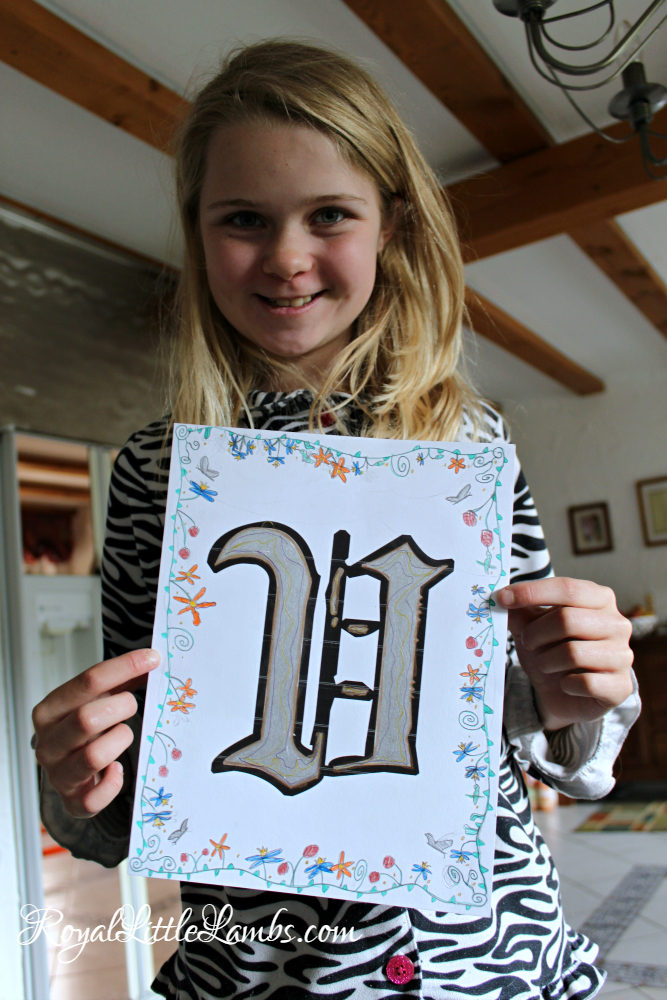
Flowery Letter V
Katie made her entire page shiny and drew lots of undersea animals.
Shiny Undersea Letter K
Alex drew leaves, stars, and flowers and cats playing music and wearing hats.
Letter A
We then framed the initials and hung them up in their rooms!

ProSchool Membership - Productive HomeschoolingLinking up: A Little R&R, Wholehearted Home, Cornerstone Confessions, F Dean Hackett, Rich Faith Rising, Donna Reidland, Our Home of Many Blessings, A Proverbs 31 Wife, What Joy is Mine, Pat and Candy, VMG206, Sarah Celebrates, The Modest Mom, The Quintessential Mommy, Oh My Heartsie Girl, Marilyns Treats, Classical Homemaking, Ducks n a Row, Books and Giggles, Blogghetti, Making Our Life Matter, Life of Faith, Morsels of Life, Living Montessori Now, ABC Creative Learning, Hip Homeschool Moms, Crystal and Co., Lamberts Lately, Frog’s Lilypad, I Choose Joy, My Learning Table, Bloom Designs, Every Star is Different, Education Possible, The Natural Homeschool, Wondermom Wannabe, Coffeeshop Conversations, xoxo Rebecca, Oh My Heartsie Girl, What About, Sincerely Paula, Create with Joy, Life with Lorelai, A Kreative Whim, Happy and Blessed Home, Creative Home Keeper, Holly McBerty, A Wise Woman Builds Her Home, The Deliberate Mom, Children are a Blessing, Raising Homemakers,
Share
Pin5
Share
5 Shares
You might also like:

Filed Under: Homeschool Tagged With: art, history, homeschool, Tapestry of Grace, unit study

Ireland Unit Study

This blog may contain affiliate links: disclosure.
Please see my suggested resources.

March 15, 2016 By Jennifer Lambert 7 Comments

We’re finishing up our Ancient Studies history year with an Ireland unit. I’m also including some resources for the other time periods because it’s hard not to discuss everything when questions arise.

I’ve always had a fascination with Ireland and this unit study is really exciting for our family.

Ireland Unit Study

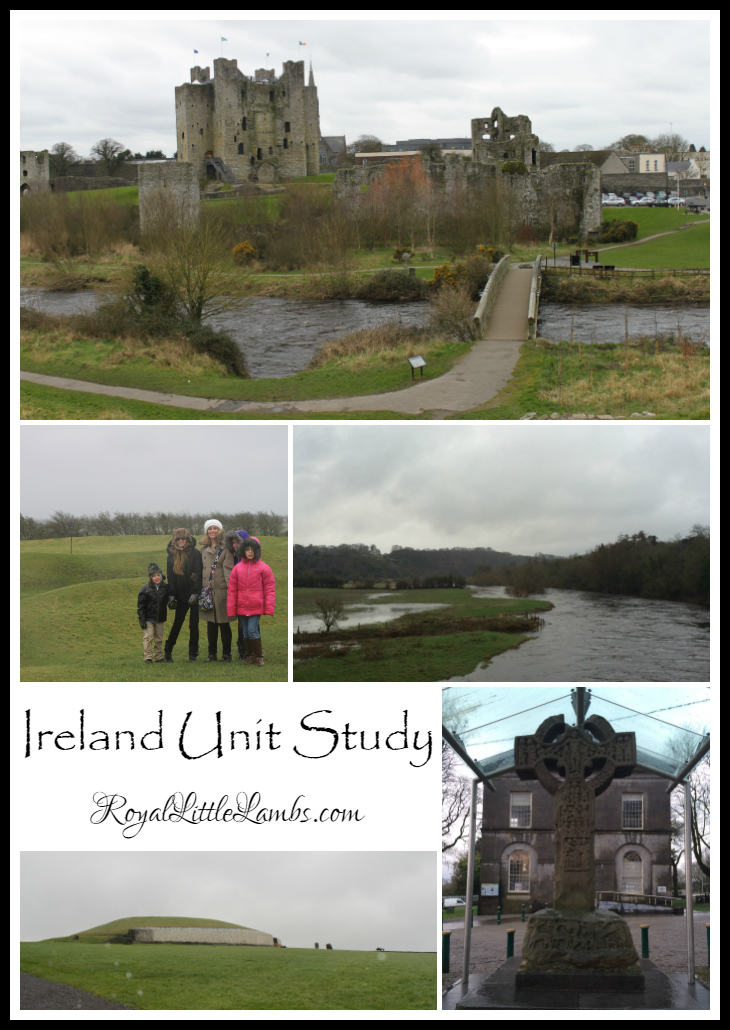
We read a lot of books, watched some movies, listened to Irish music (old and new), and took a trip to Ireland!

We’re all about experiential learning!

We stayed at Ashford Castle where we flew hawks and visited Kylemore Abbey, Galway City, and County Meath – where we saw Trim Castle, The Hill of Tara, Newgrange, and City of Kells!

We loved seeing all the sheep and sweet Irish Wolfhounds.

Ireland is so beautiful! Yes, it really is that green.

Book List

  • What Life Was Like Among Druids and High Kings (we found this at our local library)
  • Treasures of Ireland by A.T. Lucas (also found at our local library)
  • Brigid’s Cloak by Bryce Milligan (this is one of my very favorites!)
  • Patrick: Patron Saint of Ireland by Tomie dePaola
  • The Story of Saint Patrick by James A. Janda
  • Patrick: Saint of Ireland by Diana Mayo
  • St. Patrick’s Day by Gail Gibbons
  • St. Patrick’s Day in the Morning by Eve Bunting
  • The Saint and his Bees by Dessi Jackson
  • Saint Brendan and the Voyage Before Columbus by Michael McGrew
  • Irish Folk Tales by Henry Glassie (this was one of my college course texts!)
  • Early Irish Myths and Sagas by Jeffrey Gantz (this was also one of my college course texts!)
  • Druids, Gods, & Heroes from Celtic Mythology by Ann Ross
  • Step into the Celtic World by Fiona MacDonald
  • Life in Celtic Times by A.G. Smith
  • Raiders of the North: Discover The Dramatic World Of The Celts And Vikings by Fiona MacDonald

Advanced Reading:

I love to read along with my children, but sometimes I want something meatier or I just get very interested and want to delve deeper.

I love the Dublin Saga by Edward Rutherfurd. See also Ireland: Awakening. He’s one of my favorite authors.

I’ve been enjoying the Ireland series by Frank Delaney.

Music

Here’s a great article on the history of Irish music.

We listened to The Corrs and The Chieftains.

We tried out a tin whistle and Bodhran.

Movies

(always preview or children view at your discretion)

There are a great many PBS and History Channel DVDs about ancient and more recent Ireland events at our library.

  • The Secret of Roan Inish – a fun magical legend!
  • The Secret of Kells
  • Michael Collins
  • The Wind That Shakes the Barley
  • Some Mother’s Son
  • In the Name of the Father
  • The Boxer
  • Bloody Sunday
  • Dancing At Lughnasa
  • The Quiet Man (filmed on the grounds of Ashford Castle!)

Activities and Printables

We’re kinda getting out of the crafts stage and doing more activities and writing.

  • St. Patrick’s Day and Ireland printables from Education.com (I printed these for our plane rides and road trips.)
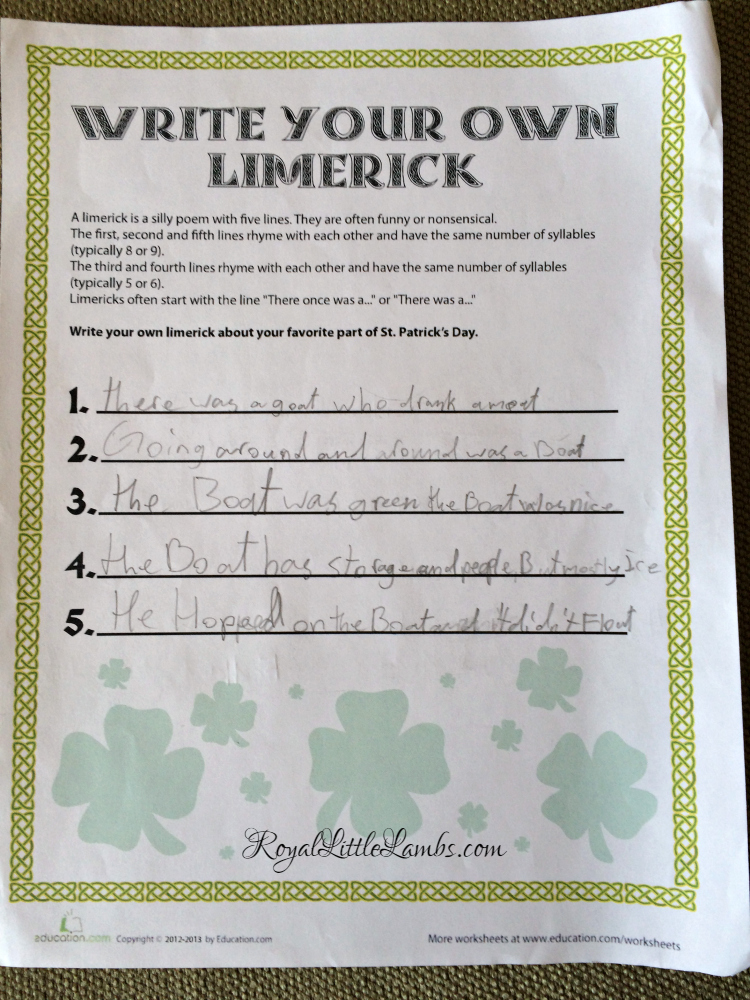
  • We wrote limericks while driving through the City of Limerick, Ireland
  • FREE unit study from Knowledge Quest Maps!
  • Lots of FREE and FRUGAL Irish printables from Currclick.
  • This fun lapbook from A Journey Through Learning.
  • Teach the Trinity with shamrocks.
  • A FREE lapbook from Homeschool Share.
  • FOOD! Bake soda bread and make corned beef and cabbage. (We had some delightful modern Irish food. They have amazing bread, butter, and potatoes!)

My youngest daughter’s Limerick Poem:

Limerick Poem

Lots of St. Patrick’s Day ideas:

Follow Jennifer’s board St. Patrick’s Day on Pinterest.
ProSchool Membership - Productive Homeschooling
Share
Pin103
Share
103 Shares
You might also like:

Filed Under: Homeschool Tagged With: Ireland, unit study

Rocks and Minerals Unit Study

This blog may contain affiliate links: disclosure.
Please see my suggested resources.

September 7, 2015 By Jennifer Lambert 10 Comments

Rocks and Minerals Roundup of Activities, Books, Resources, and Printables

Tori has always loved rocks. She has said for years that she wants to be a geologist when she grows up. We always look for ways to expose her to rocks and minerals when we travel – with fun field trips, museums, and activities.

I created this list of fun activities we have loved to use to learn about geology.

Geology Resources - Rocks, Minerals, and Gemstones

My kids really love these monthly themed Calendar Connections with fun science and history facts. We chose rocks and minerals for August.

Calendar Connections Rocks and Minerals

Tori practiced her reading with this great rocks and minerals unit study from Currclick (link below)!

Reading about Rocks and Minerals

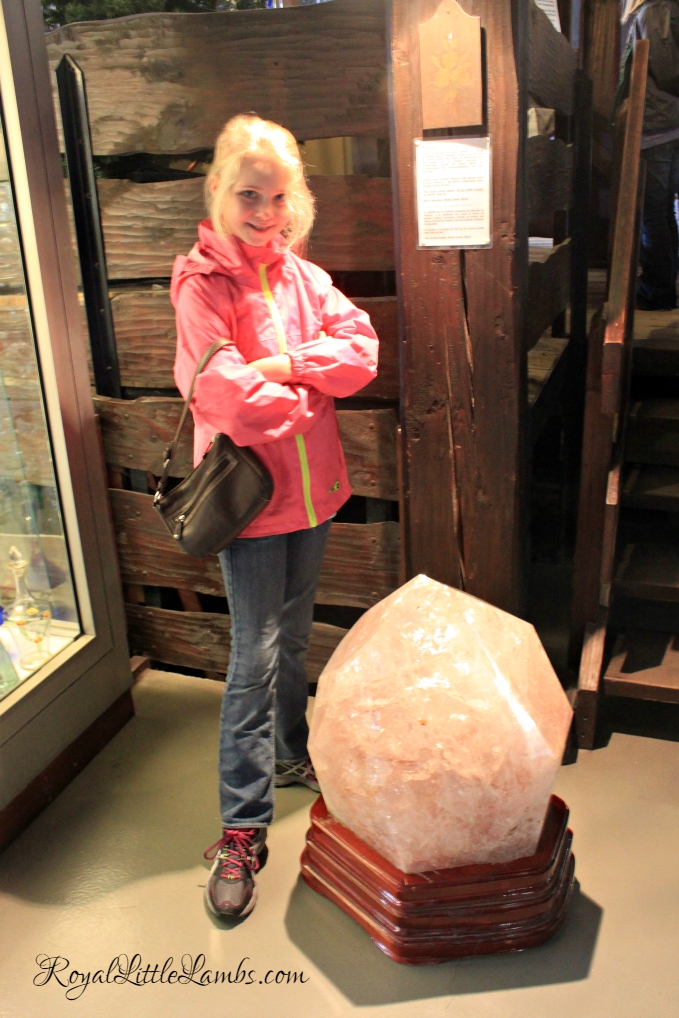
Tori loved seeing this huge crystal at Dorothy’s Glass Hut.

Big Crystal

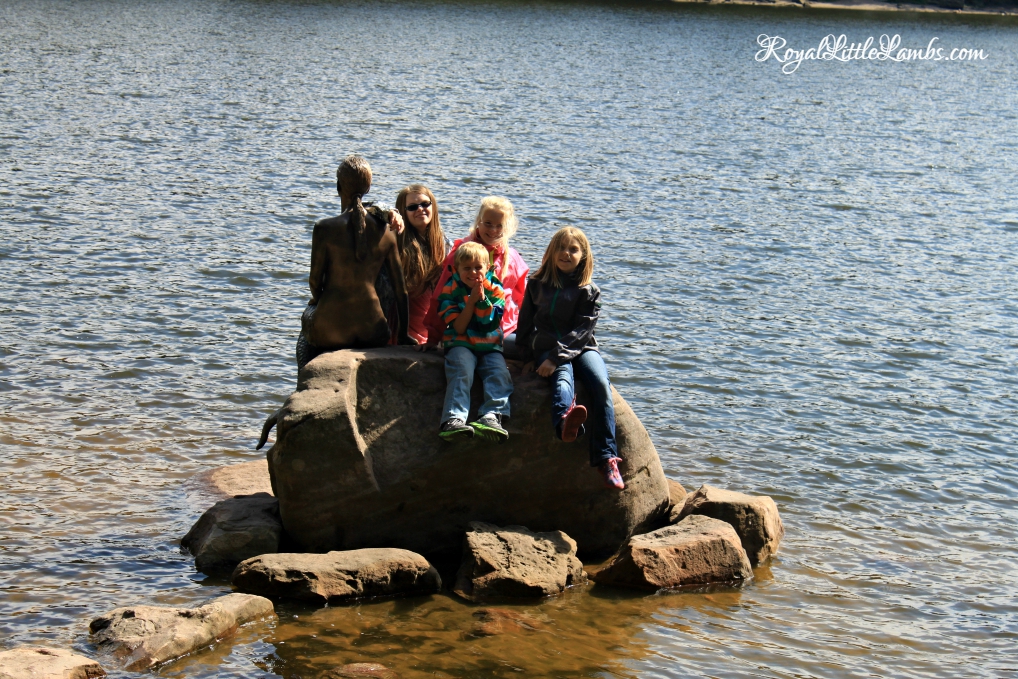
All my kids loved Mummelsee and the rocky Mermaid statue.

Mummelsee Mermaid

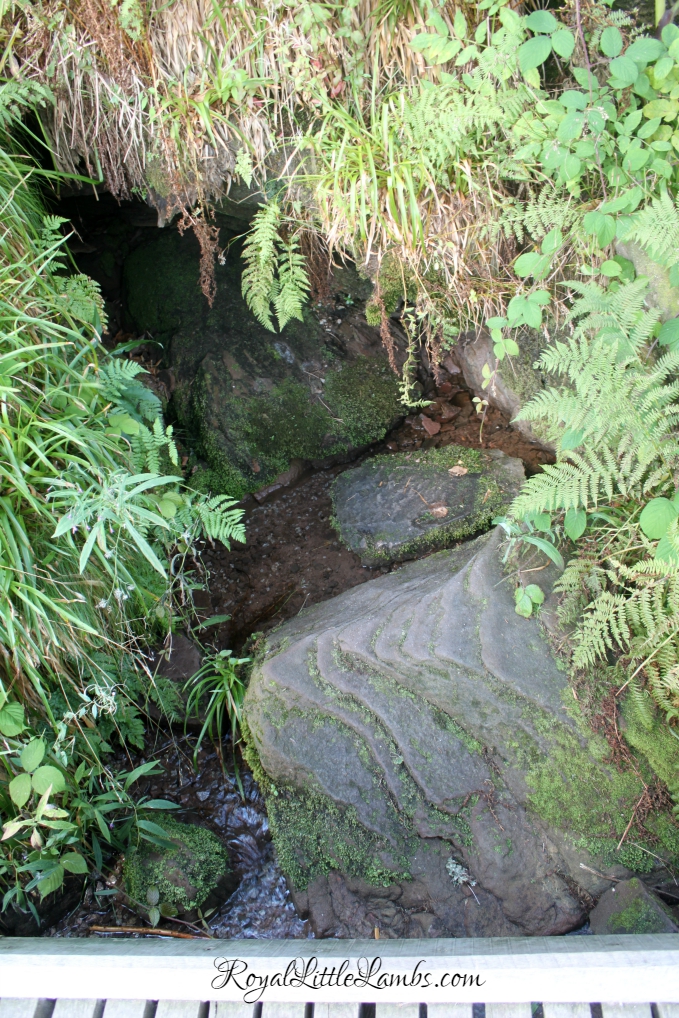
We loved the pattern on this eroding rock at Mummelsee.

Eroding Rock at Mummelsee

Pick and Choose from these Amazing Rocks and Minerals Resources!

Projects and Crafts:

  • Have fun with this edible rock project.
  • Make crystals.
  • Rock doodles project
  • Get crafty and make a pet rock! Be creative. Paint it, glue on googly eyes, and give it hair!
  • Celebrate Collect Rocks Day on September 16!
  • Go on a nature walk and collect pretty and intersting rocks to study. Look them up online or in a guide book. Discuss texture, color, class. My kids are obsessed with rocks and collect them wherever we go – cheap souvenirs! (Make sure it’s legal to take rocks wherever you are! Some places don’t like it.)

Books

  • If Rocks Could Sing: A Discovered Alphabet by Leslie McGuirk
  • Geology Lab for Kids by Garret Romaine
  • Everybody Needs a Rock by Byrd Baylor
  • Milo and the Magical Stones by Marcus Pfister
  • Roxaboxen by Alice McLarren
  • Rocks: Hard, Soft, Smooth, and Rough by Natalie M. Rosinksy
  • If You Find a Rock by Peggy Christian
  • Jump into Science: Rocks and Minerals by Steve Tomecek
  • Under One Rock: Bugs, Slugs, and Other Ughs by Anthony D. Fredericks
  • Rocks, Fossils & Arrowheads by Laura Evert
  • Ultimate Sticker Book: Rocks and Minerals
  • National Geographic Kids Everything Rocks and Minerals by Steve Tomecek
  • National Geographic Readers: Rocks and Minerals Readers by Kathleen Weidner Zoehfeld
  • Geology Rocks! by Cindy Bloboam
  • Peterson Field Guide to Rocks and Minerals
  • Smithsonian Handbooks: Rocks & Minerals
  • A Golden Guide: Rocks, Gems and Minerals
  • Apologia Exploring Creation with Chemistry and Physics
  • Apologia Exploring Creation with Physical Science
  • Apologia Exploring Creation with Astronomy

Notebooking and Printables:

  • Geology pages from Homeschool Helper
  • Rocks and Minerals pages from the Notebooking Fairy
  • Metamorphic pages from the Notebooking Fairy
  • Igneous pages from the Notebooking Fairy
  • Sedimentary pages from the Notebooking Fairy
  • Nature Study from Notebooking Pages (our favorite notebooking resource!)
  • Handbook of Nature Study: Rocks – Articles, Printables, and Challenges

Unit Studies and Learning Links:

  • Crystal Unit Study
  • Montessori Rocks and Minerals Works from Living Montessori Now
  • Rocks and Minerals from The Homeschool Den
  •  with a great study guide and Powerpoint presentation from Currclick (see pic above of Tori reading aloud from it!)
  • HUGE list of Rocks and Minerals curricula from Currclick
  • Rocks and Minerals from Stacy Sews and Schools
  • Lapbook and Unit Study from Simply Necessary
  • Old Earth Geology FREE curriculum
  • Mineralogy4Kids interactive website

Fun Field Trips Around the World:

See a list of Teacher Resources in the USA

Fun field trip ideas for rock hounds: museums, mines, archeological sites and digs, gold panning, canyons, gorges, waterfalls, rivers, creeks.

Northeast

  • Sterling Hill Mining Museum in the Highlands region of New Jersey
  • Mineral Collecting in New England and Mid-Atlantic
  • Herkimer Diamond Mine in New York
  • Crystal Grove Diamond Mine in New York

West and Southwest

  • Rocky Mountain Association of Geologists
  • Colorado Geological Survey
  • Northwest Geology Field Trips
  • Some great Kansas rocks field trips
  • Natural History Museum in Salt Lake City, Utah
  • Gemstone Museum and Dinosaur Park in Ogden, Utah
  • Idaho Museum of Mining and Geology
  • Gem Mountain Sapphire Mine in Montana
  • Glacier National Park in Montana
  • Yellowstone National Park in Wyoming and Montana
  • Gold Bug Park in Placerville, California
  • Julian Mining in Julian, California
  • Cavern Tours and Mining in the Sierra Nevadas
  • Royal Peacock Opal Mine in Nevada
  • Bonanza Opal Mine in Nevada
  • Crater of Diamonds in Arkansas

Hawaii

  • Volcanoes National Park for hiking and learning about volcanoes, lava, rocks

Northwest

  • Independence Mine State Park in Alaska
  • State Parks near Tok in Alaska
  • Trapper Creek Museum in Alaska
  • Pioneer Park in Alaska
  • Crow Creek Gold Mine in Alaska

South

  • Rock City in Chattanooga, Tennessee
  • Morefield Mine in Virginia
  • Sliding Rock near Asheville, North Carolina
  • Cherokee Ruby and Sapphire Mine in North Carolina
  • Hiddenite Gems in North Carolina
  • Crisson Mining in Dahlonega, Georgia
  • Consolidated Mining in Dahlonega, Georgia
  • Diamond Del’s Gem Mining Adventure

Virtual

  • Dig into Mining Virtual Field Trips
  • Online Mineral Museum
  • Skull Cliff, Alaska 

Canada

  • Check out Mining Matters
  • Britannia Mine Museum near Vancouver, BC

Australia

  • The Crystal Caves in Queensland, Australia
  • Blue Hollow Mine in Queensland
  • Miners’ Heritage in Queensland
  • Rubyvale in Queensland
  • Mt. Surprise Gems in Queensland
  • Pat’s Gems Fossicking Park in Queensland
  • The Big Sapphire Gemfields Information Centre in Queensland
  • Carman’s Tunnel Goldmine in Maldon, Victoria
  • Gemtree Caravan Park in Northern Territory
  • Outback Mining near Perth
  • Australian Museum
  • Melbourne Museum

Europe

  • Fischbach Copper Mine in Germany
  • Berchtesgaden Salt Mine in Germany
  • Salt Mines – Bavaria, Germany
  • Hallein Salt Mine in Bad Dürrnberg, Austria
  • Partnach Gorge in Bavaria – great opportunity to discuss erosion and collect river rocks!
  • Grube Wenzel Visitor’s Mine in OberWolfach, Germany
  • KristallWelt in Dietingen, Germany
  • Mummelsee in the Black Forest, Germany: A kettle hole lake – shallow, sediment-filled body of water formed by retreating glaciers
  • The German gemstone route – especially the Idar-Oberstein Steinkaulenberg gemstone mine – our family loved it!
  • Geology Museum in Rome, Italy
  • Mineralogy Museum in Rome, Italy

What are your favorite tools to study geology?

More fun resources on my Geology Pinterest board:

Follow Jennifer’s board Geology on Pinterest.


ProSchool Membership - Productive Homeschooling
Share
Pin360
Share
360 Shares
You might also like:

Filed Under: Homeschool Tagged With: geology, homeschool, Science, unit study

Women’s Literature Study

This blog may contain affiliate links: disclosure.
Please see my suggested resources.

August 3, 2015 By Jennifer Lambert 28 Comments

I spent a summer minimester reading and discussing women’s issues with my favorite professor (who was a man with a daughter) and only half a dozen girls. It was a small, intimate class and I learned a lot about myself and who I wanted to be.

One of my favorite college courses was a Women’s Literature Study.

I have three daughters and a son. I want them to love women authors too. I want my girls to grow into strong women. I want my son to be respectful of women.

While some of these titles have graphic content, they are important works to understand women around the world and how we struggle for identity, to be heard.

Throughout history, men have had power and control.

Women were in the background, in the kitchen, in the nursery, hidden away from the world, unseen and unheard.

Many of these authors challenge social, cultural, and political ideas. Their voices will not be silenced.

This is a book list for a mature reader. I read most of these titles in college and beyond. These would be great options for a book club.

I look forward to reading these books again and discussing them with my daughters when they’re ready.

Women's Literature Study - Top Ten Women Authors

My Top Ten Women Authors

1. Margaret Atwood

I love Atwood’s writing style and her focus on gender politics. When people ask what my favorite book is, I am quick to say Surfacing. It was a life-changing read for me.

2. Amy Tan

Spellbinding stories of Chinese and Chinese-American women and their struggles as mothers and daughters and to be seen and heard throughout history.

3. Sandra Cisneros

A writer focusing on the cultural identity of Chicana women amidst the isolation of misogyny and white American dominance.

4. Julia Alvarez

She grew up as a Dominican American in New York. She focuses primarily on issues of cultural assimilation and identity, as evident in the combination of personal and political tones in her writing.

5. Isabel Allende

Her works focus on mystical realism as she writes from personal experience, focusing on South American women‘s relationships.

6. Barbara Kingsolver

She focuses on topics such as social justice, biodiversity, and human interaction with their communities and environments.

7. Alice Walker

In all her written works, Walker examines the creative inheritance of one’s maternity. She has been an activist all her adult life: for civil rights, the poor, women – all living beings. She coined the term “Womanism” as the black women’s struggle for gender equality, as opposed to the term “Feminism” that primarily focuses on white women.

8. Kate Chopin

Regional Cajun and Creole race interests and feminism mark Chopin’s writing style. Specifically The Awakening is recommended for its frank approach to sexual themes. The main character leaves her marriage to have an affair. It was shocking for the times and received much criticism. Desiree’s Baby focuses on matters of race and moralism.

9. Jhumpa Lahiri

An Indian American author, born in London and raised in Rhode Island. She highlights the immigrant experience, the clash of cultures and assimilation, and the poignant, tangled ties between generations.

10. Azar Nafisi

After resigning from her job as a professor at a university in Tehran due to repressive policies, the author secretly gathered seven female students to read forbidden Western classics every week in her home. She wrote about it in Reading Lolita in Tehran: A Memoir in Books. Celebrate our freedom of education and learn about the desperation of these women to learn.

Some other Good Books About Women:

  • Kabul Beauty School by Deborah Rodriguez

The author originally traveled to Afghanistan to offer humanitarian aid. Soon, she learned she could create an extraordinary community of women by empowering them through the art of beauty.

  • Tess of the D’Urbervilles by Thomas Hardy

This novel challenged the sexual morals of late Victorian England. The themes and events certainly offer many discussion opportunities.

  • Like Water for Chocolate by Laura Esquivel

The main character’s voice is silenced. She is only able to express herself when she cooks. Esquivel employs magical realism and writes like a screenplay. Setting is turn-of-the-century Mexico.

There are so many wonderful writers to name that it was hard to narrow it down to a top ten!

Who are your favorite female authors?

Literature Study (or Book Report) Notebooking Pages
Share
Pin42
Share
42 Shares
You might also like:

Filed Under: Homeschool Tagged With: book list, literature, reading, unit study

Fahrenheit 451 Unit Study

This blog may contain affiliate links: disclosure.
Please see my suggested resources.

July 13, 2015 By Jennifer Lambert 3 Comments

Fahrenheit 451 is one of my all-time favorite books.

I remember reading Fahrenheit 451 (and other amazing literature) in Ms. Walker’s 10th grade English class. I sat behind ginger curly-haired Mandy, second desk from the front, on the far left, away from the door, by the window.

When I became an English teacher, I was thrilled to teach 10th grade, my favorite literature curriculum. I would read the last section aloud to the class. I ended up emotionally drained, teary-eyed, hoarse. My students applauded my performance.

Fahrenheit 451 Literature Unit Study

Fahrenheit 451 Unit Study

Liz didn’t particularly care for this book at first.

Fahrenheit 451 Unit

Here is a partial reading list for this year.

I introduced the novel with background studies on McCarthyism, science fiction, politics, and socio-economics after WWII. It’s important to understand what audience the novel was written for. And it’s still relevant today!

Culture

We related the characters and society in Fahrenheit 451 to our modern society. We identified issues in current events and history. We discussed how events in history could lead society to destruction.

We discussed what’s important to our society and how we can be a light in the darkness. We don’t have a TV and we go screen-free often to remind ourselves to focus on relationships. We periodically clear our schedule to rest and revive our minds and souls.

We compared/contrasted and discussed these characters:

  • Clarisse to modern teens.
  • Montag to fireman, husbands, adults today.
  • Mildred and her friends to modern wives and mothers.
  • Beatty as establishment/government/authority/present.
  • Faber as protector/mentor/past.
  • Granger as revolutionary/future.

We discussed value of life with some current events like abortion, euthanasia, life support, medical ethics.

These conversations led us into discussion about how religion plays a role in the novel and in our lives.

Religion

There are allusions to the Bible throughout Fahrenheit 451.

We read Ecclesiastes. Montag tries to memorize this chapter and it’s certainly a great theme for his character.

We skipped over most of the questions and discussions in the Progeny Press study guide. They were getting just ridiculous. I’m all for allusions to the Bible, but some of the ones they asked for were just a stretch. We skipped sections of the guide and completed others.

Faber’s description of Christ and Christianity spotlights all that’s wrong with churchianity.

“Lord, how they’ve changed it in our ‘parlors’ these days. Christ is one of the ‘family’ now. I often wonder if God recognizes His own son the way we’ve dressed him up, or is it dressed him down? He’s a regular peppermint stick now, all sugar-crystal and saccharine when he isn’t making veiled references to certain commercial products that every worshiper absolutely needs.” p. 77-78

The denominations and schisms within the American Church confuse truth seekers. I have spent most of my life looking for the Real Church.

Too often, church is disguised as entertainment: rock concerts, fortune tellers, get-rich-quick schemes, dating services, finance classes, social events.

We’re learning church history and reading stories about missionaries. We’re paying attention to current events. We’re frightened about the state of the American church. We’re seeing through history how liberalism and other “isms” have affected so many countries.

History

We discussed historical and political events that occurred leading up to the 1950s.

There was a worldwide fear of war after WWII that led to McCarthyism, Communism, the Cold War, and the popularity of science fiction novels, shows, and comics.

Our theme the last few months is summarized by the character Faber:

“I’m one of the innocents who could have spoken up and out when no one would listen to the ‘guilty’ but I did not speak and thus became guilty myself.” p.78

This is also discussed during Nazi Germany and during Communist regime and we read many stories about heroes who spoke up during these horrific times. It is good to revisit the book of Esther in the Bible. Since we love comics and sci fi, we’re discussing how they give kids hope in a fallen world. Of course, our ultimate hope is Jesus, but I don’t see anything wrong with these fictions. They offer a great political commentary in a pretty package.

We love learning history through literature. So many voices with different perspectives and ideas.

Literature

Lots of great allusions to poets and political literature. Many allusions to the Bible and mythology. Offers great opportunity for literary analysis and research.

One of the reasons we began homeschooling is because I wanted to control my children’s education. I love literature. I wanted to teach my children to love reading. I wanted them to love learning. I saw what schools did to children and I didn’t want that for our family.

“The public itself stopped reading of its own accord.” p. 83

I have a hard time respecting people who don’t like literature or art.

“The good writers [and artists] touch life often. The mediocre ones run a quick hand over her. The bad ones rape her and leave her for the flies.” p. 79

Of course, we discussed censorship. We discussed also how TV and Internet displace reading literature. I was against owning Kindles and iPads a long time. It is very difficult to have balance with so much technology. I encourage my kids to experience life and to read to expand their minds. Sitting stationary in front of a screen is a last resort.

A list of resources that have similar themes in Fahrenheit 451 (viewer discretion):

Videos and Other Books

  • The Book of Eli
  • Mad Max
  • The Giver and the book quartet by Lois Lowry
  • Planet of the Apes
  • Divergent
  • The Terminator
  • The Stand by Stephen King
  • 12 Monkeys
  • Red Dawn
  • Swan Song by Robert McCammon
  • Children of Men
  • Equilibrium

Notebooking

We used several different graphic organizers and various notebooking page templates to learn about Fahrenheit 451. 

  • Venn Diagrams
  • Characterization Pages
  • Plot Charts
  • Theme Information
  • Literary Terms
  • Outlines

This is how I approach most novels I teach. I look at overall themes and how I can incorporate them into our other studies. I pull in relevant Bible passages, missionary stories, church history, current events to show how the literature stands up throughout generations to teach us wisdom.

ProSchool Membership - Productive Homeschooling
Share
Pin2
Share
2 Shares
You might also like:

Filed Under: Homeschool Tagged With: literature, unit study

Our Backyard Pond Study

This blog may contain affiliate links: disclosure.
Please see my suggested resources.

May 21, 2015 By Jennifer Lambert 5 Comments

The kids have been super excited to watch our little backyard pond and the life cycle taking place right before our very eyes.

Very fun and educational.

We’ve taken an unschooling approach to our pond study.

Our Unschooling Pond Study

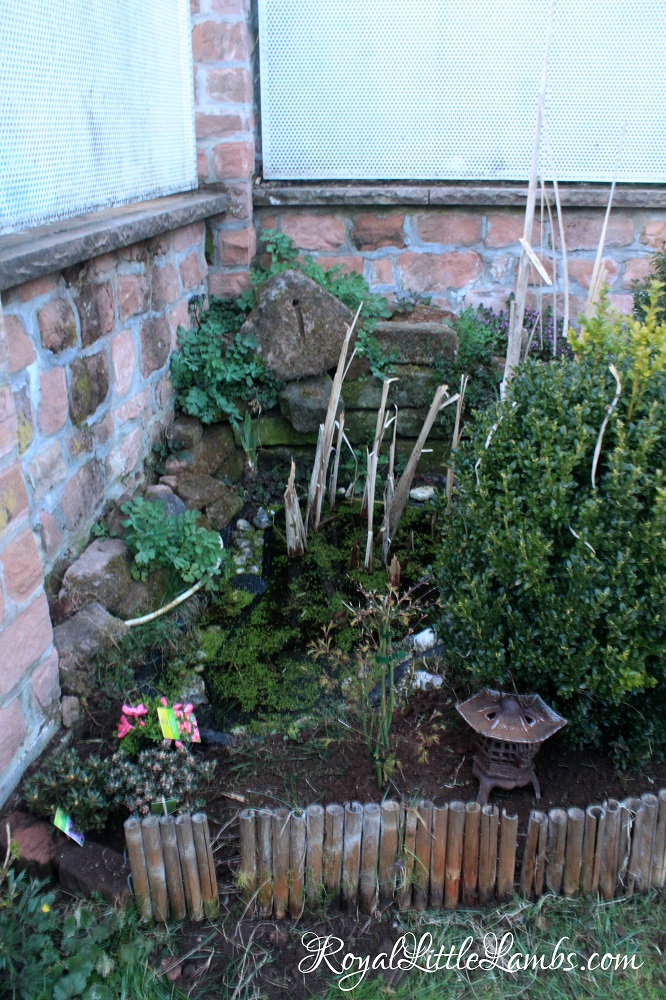
Here’s our little backyard pond:

This was the pond a month ago and we have enjoyed watching the plants grow and the frogs and toads frolic.

My Little Backyard Pond a Month Ago

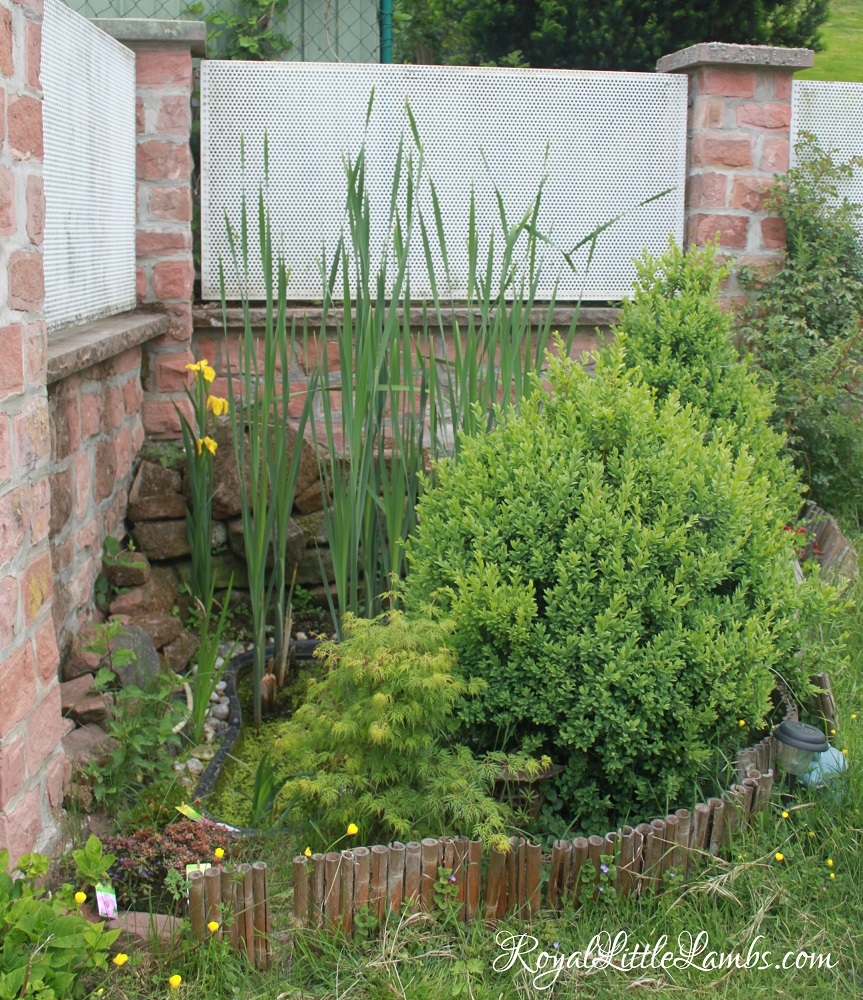
This is what the pond looks like now:

Our Backyard Pond

It was here when we moved in last year, but all dry and overgrown. I cleaned it up. I planted some azaleas and a Japanese maple. I have some pea gravel and want to line it with granite bricks instead of the bamboo fence. I need to trim the bushes.

The yellow irises are a lovely surprise!

And I love the yellow buttercups all over the yard. I can’t bear to mow them or pick them.

I have no idea what I’m doing, but apparently it’s a success!

We have three goldfish that survived the winter. We had a dozen or more frogs and toads last month, singing and mating and laying eggs.

The kids were absolutely fascinated watching them.

The cattails and other pond plants are flourishing.
The Pond in Our Backyard

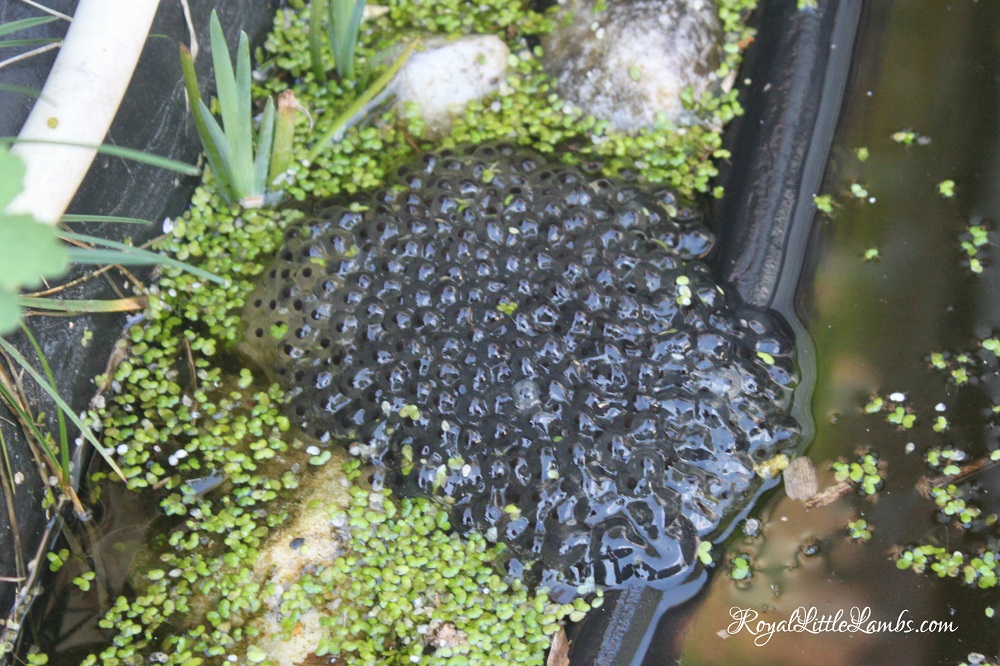
A few weeks ago, we discovered and several clusters and strands of eggs. The clusters are from frogs and the strands are from toads.

Frog Eggs

The kids explored the neighbor’s larger pond with lots of tadpoles. Love this pic, taken by our neighbor!

Neighbors Pond

We also drove to a couple nearby larger ponds to explore and compare with our tiny backyard pond.

Tadpole

This heron has learned that the bread thrown by humans attracts the minnows. He uses the bread as bait so he can eat the minnows!

Tori loves turtles!

Smart Heron

I love the Charlotte Mason, Montessori, and Unschooling methods of learning.

The children are responsible for their education, with just a little guidance from the parent or teacher. They are led but what delights them, are independent, and are not externally rewarded.

They develop a love of learning.

What’s the difference between the methods I mentioned?

Charlotte Mason: “Education is an Atmosphere, a Discipline, a Life.” We keep lessons short and don’t work on every subject every day.  We read, read, read living books and explore.

Montessori: “a system of education for young children that seeks to develop natural interests and activities rather than use formal teaching methods.” I provide many opportunities for the children to learn individually and naturally with open-ended activities.

Unschooling: “puts the desire, drive, motive and responsibility for life – this thing we call learning, or education – in the hands of the learner.” I am open to many different options for learning and don’t just rely on prepared curriculum.

How we learned about pond life:

Observation

We watched the plants bloom and grow and the critters move about. We discussed what they were doing over a period of several weeks.

Reading

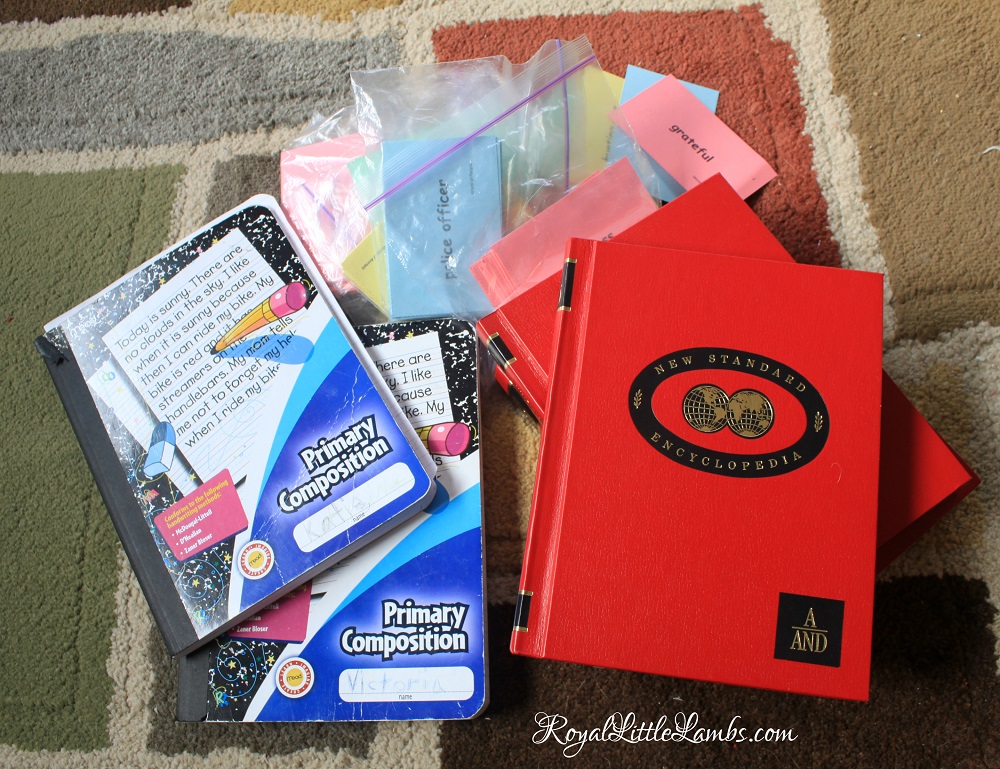
We used a variety of reading materials to further explore – online articles, from the library, from our home bookshelves, encyclopedias. We love The Handbook of Nature Study for lessons on our natural world.

Research and Journal Writing

Videos

We looked up videos of frogs and toads online and watched different parts of the life cycle. We compared the different species at different times.

Notebooking

We have open-ended pages to draw and journal about our learning experiences. The kids write and draw about what they found most fascinating. They asked for pages on frogs, toads, irises, ferns, snails, wildflowers, cattails, and more! All pages are different and original.

NatureStudyNotebooking.jpg

Successfully unschooling:

  • It’s important that I am excited about learning with my kids (and sometimes moreso!) My excitement is surely contagious and I show my children it’s safe and ok to get excited about what we’re learning.
  • Many extended learning opportunities. I provide books and websites, notebooking pages, videos, field trips, library trips for more books. We all do love to read and books are super important to us. I have modeled a love for reading since before my kids were born.
  • Lots of oral discussion. I love listening to my kids and answering their questions as we learn. I always want them to feel safe to ask the hard and uncomfortable questions.
  • Projects and crafts. My kids learn best by doing. They love to create as they learn, so providing them opportunities to draw and be artistic is good for them and helps them understand concepts.

I’ve found that when I don’t stress with checklists, schedules, curriculum…my kids naturally learn and explore and exceed my expectations with their school work!

Favorite Resources

  • Notability app for iPads for fun clipart, presentations, and graphic design. My kids love to create books about their favorite topics!
  • Productive Homeschooling for printables and online creation. My kids love the beautiful designs and many options for notebooking pages!
  • Handbook of Nature Study blog – great printables, challenges, and ideas for learning about nature and art.
  • BBC Nature Documentaries – great video education in a British accent
  • Cornell Ornithology Lab – tons of info about birds, including their calls, videos, coloring pages, and more!
  • My Nature Study Pinterest board has lots of great ideas and lesson resources.

We love science!

Nature Study Journal Notebooking Pages
Share
Pin9
Share
9 Shares
You might also like:

Filed Under: Homeschool Tagged With: Charlotte Mason, nature study, notebooking, pond, unit study, unschooling

Great Depression Unit Study

This blog may contain affiliate links: disclosure.
Please see my suggested resources.

May 11, 2015 By Jennifer Lambert 1 Comment

We’ve been learning about difficult times in history.

The Great Depression was a dark time in American history. And it led into a dark time for the world.

Some of our books were hard to read and the imagery was hard to view.

We are so fortunate and have never known hardship.

Being a military family overseas, we have ration cards for certain luxury items we can purchase on the US base. We discussed and compared that to the ration cards during the world wars and Great Depression.

We listened to ragtime and learned about the music of the times.

The girls read lots of books – nonfiction, living books, and fiction.

Reading about The Great Depression

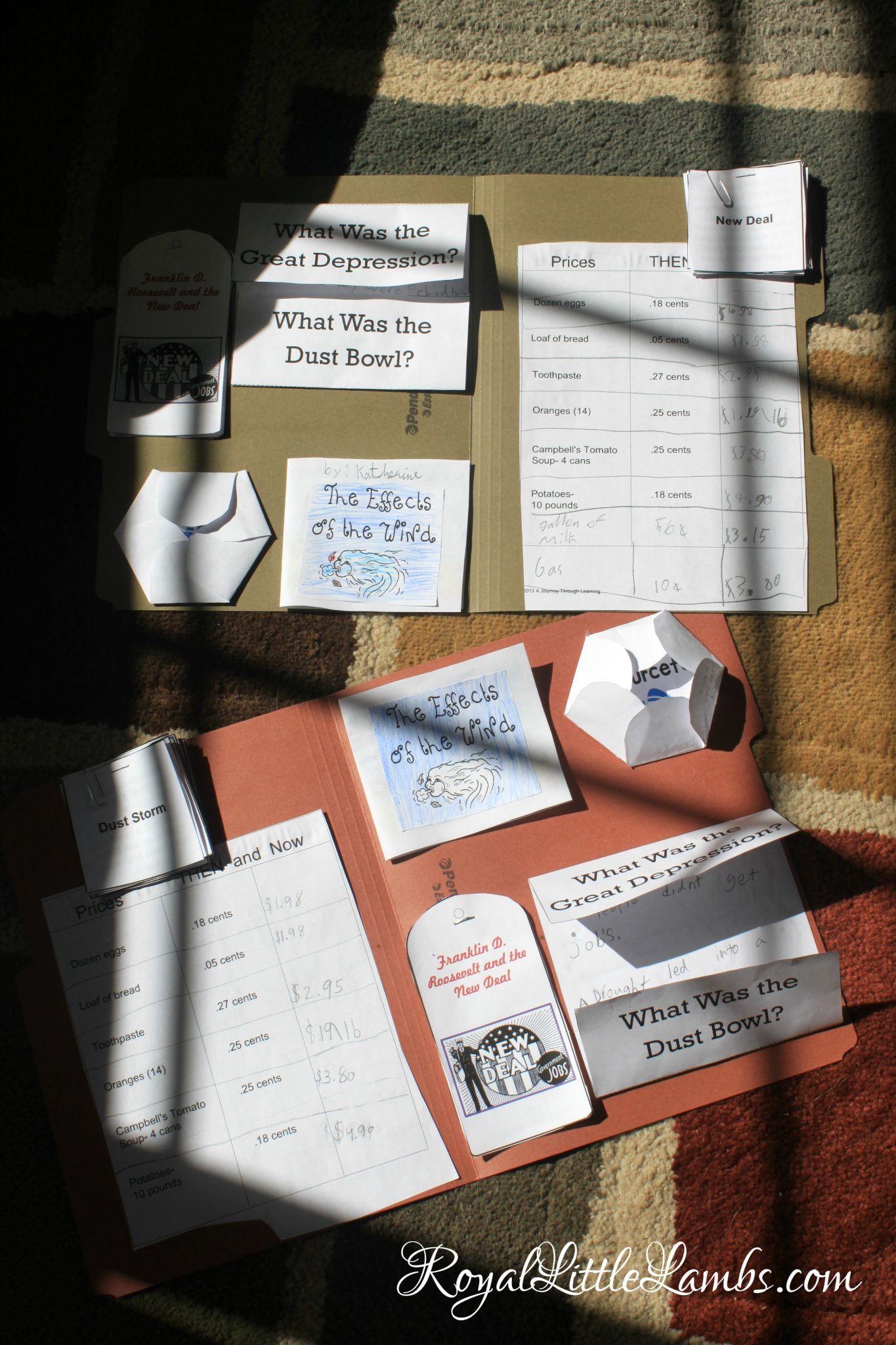
We completed notebooking pages and a lapbook.

The Great Depression Lapbook

We studied the causes and effects of The Great Depression and the Dust Bowl.

We learned about erosion, crop rotation, wind.

We discussed how wind can be destructive or beautiful and helpful.

We looked at wind in art. We love to study van Gogh’s paintings of wind. We looked through our pictures of recent museum tours.

A Wheatfield with Cypresses

We studied the photography of Dorothea Lange and read biographies about her.

We really enjoyed the books Restless Spirit by Elizabeth Partridge and Migrant Mother by Don Nardo.

We always love biographies by Mike Venezia.

We also looked at photography in these books: The Dust Bowl Through the Lens by Martin W. Sandler, Who We Were by Michael Williams, and We Were There Too by Phillip Hoose.

Photo project:

I asked the girls to go out and photograph beauty from ashes, something that might not be an especially lovely or photogenic scene, to search for beauty and find it in austerity.

Tori chose this bark-stripped tree stump with moss, lichen, and mushrooms growing from it:

Tree Stump

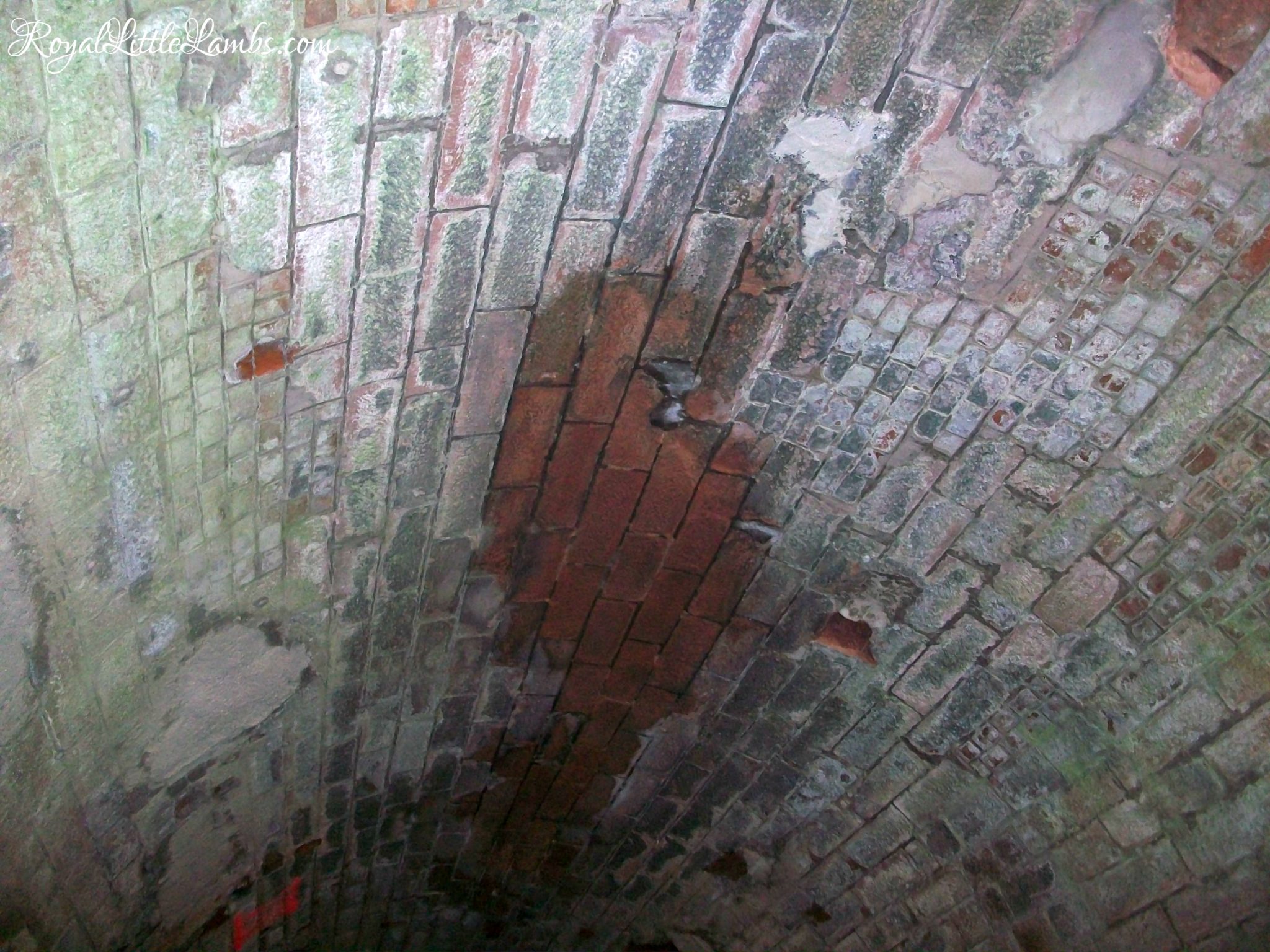
Kate found the bricks under this train trestle bridge lovely in their patches of color and the dampness seeping through:

Under the Train Bridge

They also photographed rocks, grass, moss and a peeling, rotten wooden bench.

They see beauty everywhere.

Resources we use and love:

Elizabeth is currently 14 and in 9th grade and Tori and Kate are in 3rd grade. These are the resources we enjoyed, with supervision.

Notebooking and Lapbooks:

  • American Presidents pages (we studied Franklin D. Roosevelt and the New Deal)
  • Ration book activity and lapbook materials from Homeschool Share
  • The Great Depression Express Lapbook from A Journey Through Learning
  • Notebooking pages from Homeschool Helper
The Great Depression lapbooks

Books:

  • Kit books from the American Girl series by Valerie Tripp
  • Mimmy and Sophie by Miriam Cohen
  • Bud, Not Buddy by Christopher Paul Curtis
  • Grapes of Wrath by John Steinbeck
  • Of Mice and Men by John Steinbeck
  • Potato by Kate Lied
  • Children of the Great Depression by Russell Freedman
  • Children of the Dust Bowl by Jerry Stanley
  • Children of the Dust Days by Karen Mueller Coombs
  • The Great Gatsby by F. Scott Fitzgerald
  • Out of the Dust by Karen Hesse
  • Sounder by William H. Armstrong
  • The Green Mile by Stephen King
  • Water for Elephants by Sara Gruen
  • The Color Purple by Alice Walker
  • To Kill a Mockingbird by Harper Lee

Movies:

Of course, use discretion. Not all of these are suitable for all audiences. My younger kids did not watch many of these.

  • Seabiscuit
  • Annie
  • The Great Gatsby
  • Chicago
  • Cinderella Man
  • Oscar
  • The Godfather
  • Indiana Jones and the Last Crusade
  • Radioland Murders
  • Shirley Temple movies
  • Modern Times or any Charlie Chaplin film
  • O Brother, Where Art Thou?
  • Public Enemies
  • Road to Perdition

There’s a lot of crossover with the books being made into movies, and I usually want the kids to read it before they watch it. We only have so much time and Liz probably won’t get to do year 4 again.

Do you have anything to add to the list?

ProSchool Membership - Productive Homeschooling
Share
Pin122
Share
122 Shares
You might also like:

Filed Under: Homeschool Tagged With: history, Tapestry of Grace, unit study

Christmas Unit Study

This blog may contain affiliate links: disclosure.
Please see my suggested resources.

December 19, 2014 By Jennifer Lambert Leave a Comment

We like to slow down for the holiday, but the kids still love learning.

I use this time to make learning fun.

The kids are enjoying some fun Christmas themed school time this week.

I got the reindeer idea and Very Hungry Reindeer printables here, but it doesn’t look available anymore.

Very Hungry Reindeer

Counting ornaments and matching with the correct number on the stars. I got these over at Musings of Me, but I can’t find the direct link anymore. They’re super cute!

Counting ornaments

Matching capital letters with lowercase letters in puzzles. I’m pretty sure these puzzles are from 1+1+1=1 somewhere. Alex loves the letter mazes too!

Matching Letter Puzzles

The whole family enjoys the history behind The Twelve Days of Christmas and these are fun printables for Alex.

Throw some baby Jesus clipart on a page and it’s “Christmas math”! It’s amazing how excited the girls were to do these.
ChristmasMath.jpg

I printed Christmas tree outlines and the kids used rosemary, glitter glue, stickers, and sequins to decorate those.

I was pretty impressed with the tracing the outline with glitter glue.

sensory Christmas tree craft

Then we hunted elves. We hid the cards and the littles found them. Bubba circled the numbered elves on his page as he found them. Sisters had to practice writing where they found the cards. Download Elf Hunt printables here.

elf scavenger hunt

Elf hats help.

Elf

We love fun free Christmas printable activities!

Christmas Resources:

  • DLTK
  • Kids Activities
  • 123 Homeschool 4Me
  • Homeschool Scientist
  • Crafty Classroom
  • Homeschool Creations
  • Natural Homeschool
  • Confessions of a Homeschooler
  • 1+1+1=1
  • Rock your Homeschool
  • Homeschool Share

12 Days of Christmas Printables:

  • 1+1+1=1
  • 3 Dinosaurs
  • Little Pinch of Perfect
  • Teach Beside Me
  • DLTK
  • First School
  • Preschool Mom
  • Our Adventure Story

Check out my Christmas Pinterest board:

Follow Jennifer’s board Christmas on Pinterest. Christmas Notebooking Pages (FREE)
Share
Pin
Share
0 Shares
You might also like:

Filed Under: Homeschool Tagged With: Christmas, homeschool, unit study

Impressionist Art Study

This blog may contain affiliate links: disclosure.
Please see my suggested resources.

August 21, 2014 By Jennifer Lambert Leave a Comment

So, a big benefit to living in Europe?

We study Impressionist art…

We drove up to Frankfurt to the Städel Museum. It’s only about an hour away.

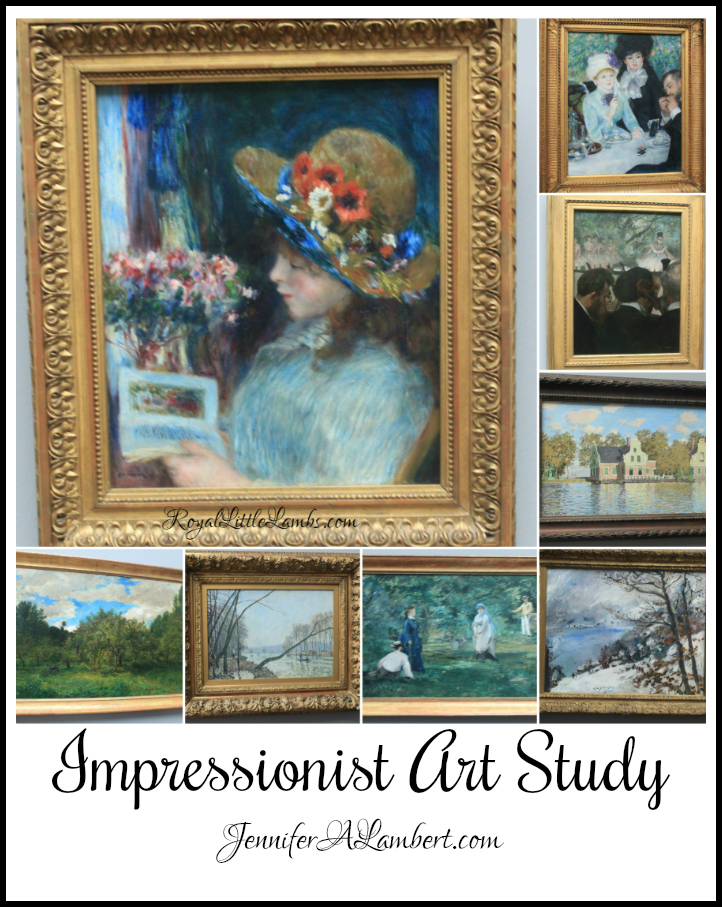
Along with some lovely Iconic art and some weird contemporary stuff, there was a lovely Impressionist gallery with Degas, Monet, Manet, Renoir, and some others.

We have been reading about how the Impressionists mimicked the new invention of photography – and the perspective in this Degas shows that style, with the viewpoint from the orchestra and cutting off some of the other ballerinas in this picture:

Degas - Orchestra Musicians

Here, I taught the girls about the perspective and showed them how Degas made this look like a snapshot, focusing on the foreground of the orchestra and making it look like the artist is in the orchestra pit, looking up at the ballerinas, who are too ethereal to be on ground-level, and are therefore on a grand stage.

Teaching Perspective

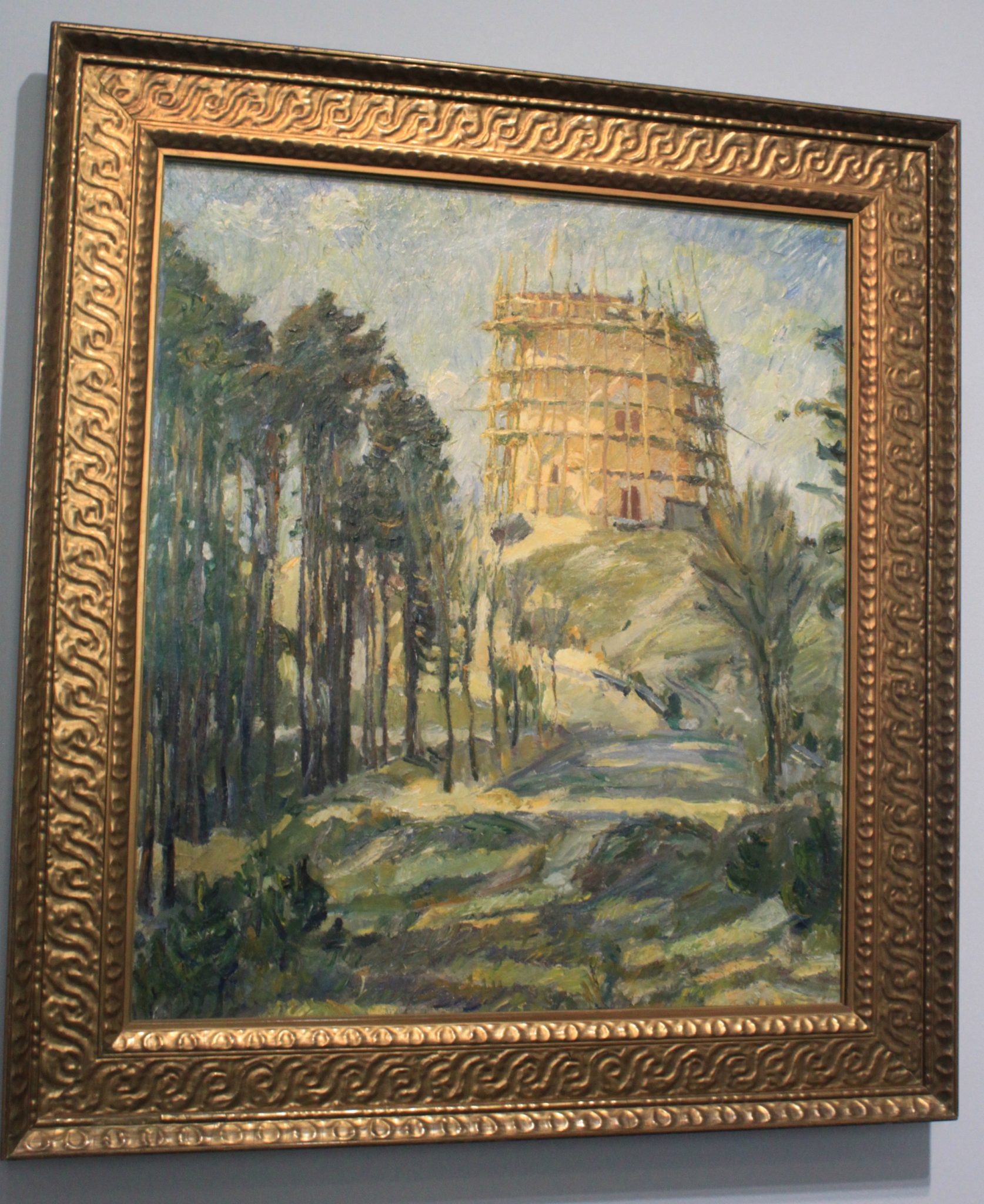
We admired the brushstrokes and color of landscapes:

apple orchard
building

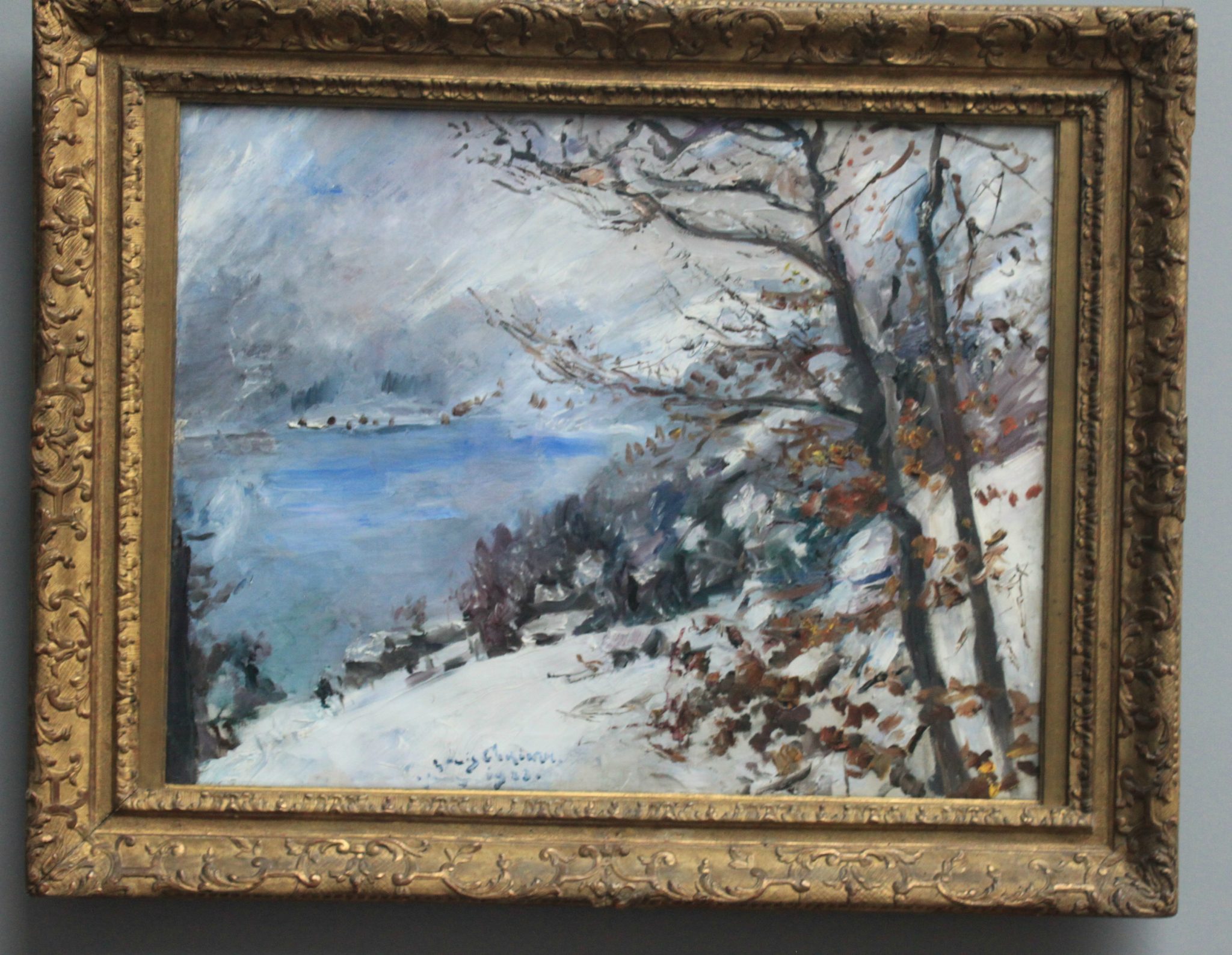
Fascinating white landscapes that were quite lovely and looked like photographs with amazing details:

winterscape
river

A fun scene of two couples playing croquet. I love the blending of blues and greens contrasted with the light clothing. And the one lady in blue. Tori loved her.

Manet - The Croquet Party

A pretty Monet and we noticed the open windows of the house don’t reflect in the water. The sky is quite lovely and there are a couple figures in the distance by the trees.

Monet, Houses on the Bank of the River Zaan

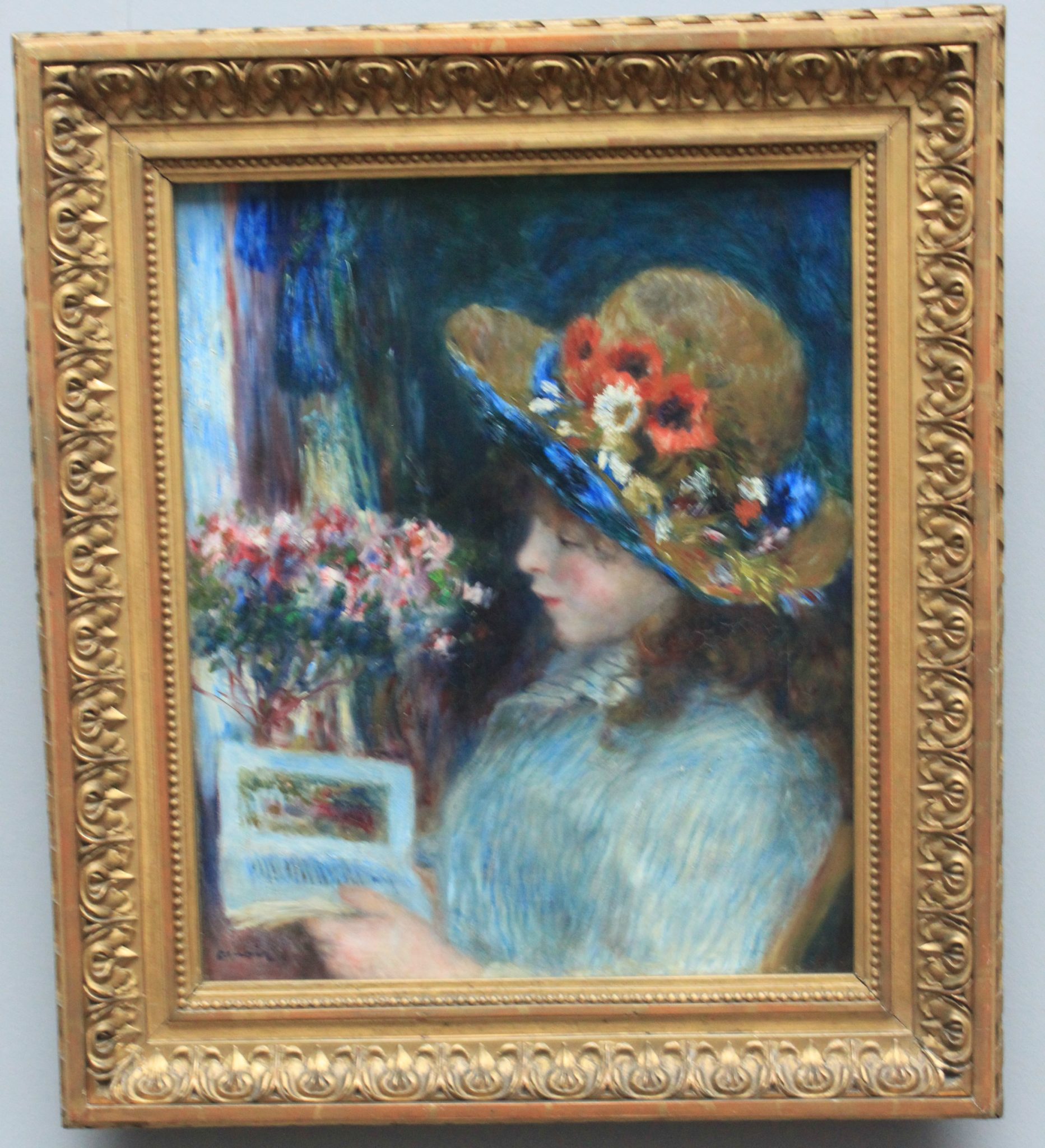
We had studied Renoir pretty extensively and were ecstatic to find these. Did you know he was trained as a porcelain painter? Look at the china cups and carafes. Such skill!

Renoir - After the Luncheon

Renoir was famous for painting flowers, and you can see the lovely colorful flowers in the hat and vase and book: Renoir - girl with hat

Of course, we got yelled at and followed around by one of the guards. Apparently they have video cameras everywhere and he said we touched and he showed us we had to stay back at least an arm’s length. We certainly didn’t touch anything. We were pointing things out to the kids, you know, educating, and Tori pointed to a blank square in one of the altarpieces to ask why it was missing. We stayed behind the ropes. We are careful and respectful. It was very upsetting. The guard made me want to eat a sleeve of Saltines, but I didn’t want us to get thrown out.

Another guard was super sweet and she wanted to make sure we knew there was an outdoor exhibit and she got an English speaker to explain to us how to get there. The kids had a blast at the Städel.

Some of the main impressionist artists are Claude Monet, Berthe Morisot, Camille Pissarro, Alfred Sisley, Auguste Renoir, Mary Cassatt, and Edgar Degas.

Resources:

  • We’ve also viewed art at the D’Orsay, Louvre, Netherlands, Dayton, and more
  • How We Do Art
  • Guide from The National Gallery
  • Impressionism Guide from Khan Academy
  • FREE Resources! Famous Impressionist Artists from Practical Pages
  • Impressionism Lesson Plan from Art Class Curator
  • Printables and Mini-Books for Art History – Impressionism from One Bright Crayon
  • FREE Impressionism Lapbook from Homeschool Helper Online
  • FREE Printable Impressionist Art Cards by Layers of Learning
  • Impressionist Artists Famous Artists Degas Matisse Monet Renoir Van Gogh BUNDLE from Magic Spells for Teachers
  • Life Beyond the Lesson Plan: Monet
  • Kitchen Table Classroom: Monet
  • Table Life Blog: Monet
  • Peanut Butter Fish Lessons: Monet
  • Monet Projects for Kids by Artsy Craftsy Mom
  • Make a Monet by Kinder Art
  • Artist Notebooking Page from Homeschool Helper Online
  • Monet Notebook Page: Intimate Impressionism from Harmony Fine Arts
  • Water Lily Pond Monet Art Lesson from Making Art Fun
  • Renoir Art Project for Kids from Teach Beside Me
  • Montessori Inspired Renoir Printables and Activities from Welcome to Mommyhood
  • Mary Cassatt – A Charlotte Mason Picture Study  by Art Curator for Kids
  • Fun Mary Cassatt Art Projects for Kids by Happy Homeschool Nest
  • Edgar Degas for Kids- Printable Resources and Books from Kitchen Table Classroom

We like to narrate and notebook with these pages:

Famous Artists & Picture Study Notebooking Pages
Share
Pin6
Share
6 Shares
You might also like:

Filed Under: Germany, Homeschool, Travel Tagged With: art, Frankfurt, Germany, Impressionism, unit study

Music Study with Doctor Who

This blog may contain affiliate links: disclosure.
Please see my suggested resources.

February 5, 2014 By Jennifer Lambert 12 Comments

I thought it would be fun to do a Music Study with Doctor Who.

The kids certainly agreed so we set to researching together.

Music of Doctor Who unit study with free notebooking page!

50 years of great music. 11 (or 12) doctors representing decades (or millions of years) of history.

Doctor Who 50th Anniversary

Check out this performance, complete with video clips. LOVE!

I also love this series of shorts about the original composers of sci-fi music: – The history of science fiction program music! So full of win.

List of all music featured in Doctor Who episodes=awesome.

Study with Your Doctor:

1st Doctor: The Beatles – get a CD on Amazon or download it on iTunes (seriously, everyone should have some in their collection)

2nd Doctor: Bartók – Amazon CD or iTunes album

3rd Doctor:

  • King Crimson (I saw them perform at a tiny club in the ’90s! It was epic.) – get their CD on Amazon
  • Emerson Lake and Palmer – download a great album on iTunes
  • Berlioz – CD on Amazon or iTunes download

4th Doctor:

  • Debussy – Amazon or iTunes
  • Tchaikovsky – Amazon or iTunes
  • Schubert – Amazon or iTunes

5th Doctor: ’20s music – Learn how to dance the Charleston!

  • Savoy Havana Band and The Savoy Orpheans – Amazon or iTunes
  • Irving Berlin – Amazon or iTunes

6th Doctor: Fun ’60s music and beach tunes

  • The Beach Boys – Amazon or iTunes
  • Elvis Presley – Amazon or iTunes
  • Jimi Hendrix – Amazon or iTunes

7th Doctor:

  • Wagner – Amazon or iTunes
  • British composer Keff McCulloch – several tracks on the 50th Anniversary soundtrack on iTunes

8th Doctor: Puccini – Amazon or iTunes

9th Doctor:

  • Big Band, especially Glenn Miller – and practice swing dancing! Amazon or iTunes
  • David Bowie – Amazon or iTunes
  • Rick Astley  – Amazon or iTunes

10th Doctor: Program music by British composer Murray Gold – Amazon or iTunes

11th Doctor: Such a fun way to study the greatness of classic bands and artists:

  • Queen – Amazon or iTunes
  • Duran Duran – Amazon or iTunes
  • The Cult – Amazon or iTunes

Notebooking options – some free and some not:

  • Notebooking Fairy
  • SQUILT music appreciation curriculum
  • Productive Homeschooling
  • Music in Our Homeschool pages
  • In All You Do Notebooking Composer Pages
  • Practical Pages Music Appreciation Worksheets
  • That Resource Site Composer Notebooking Pages
  • Music Lapbooking from Homeschool Share
  • 123Homeschool4Me Music Lapbook
  • Orchestra lapbooking and notebooking from Homeschool Helper
  • Homeschool in the Woods composers lapbook

AND…Look what I made for you!

Doctor Who Music Notebooking Pages – with a T.A.R.D.I.S.!

FREE. Click to download. You’re welcome.

Doctor Who Music Notebooking Pages

So, like the good homeschool mama I am, I asked my kids the other day: what do you want to be when you grow up?

Answer?

The Doctor’s Companions.

For the win.

Check out my other cross-curricular unit study here.

Famous Composers Notebooking Pages
Share
Pin2
Share
2 Shares
You might also like:

Filed Under: Homeschool Tagged With: composer, DoctorWho, geek, Music, notebooking, unit study

  • « Previous Page
  • 1
  • 2
  • 3
  • 4
  • 5
  • 6
  • 7
  • Next Page »
Suggested ResourcesFind Weird Books at AbeBooks.comCheckout 51

Archives

Popular Posts

10 DIY Gifts with Essential Oils10 DIY Gifts with Essential Oils
Natural Remedies for HeadacheNatural Remedies for Headache
10 Natural Remedies to Keep on Hand10 Natural Remedies to Keep on Hand
Henna Hands CraftHenna Hands Craft
Homemade Turkey Divan CasseroleHomemade Turkey Divan Casserole
This website uses cookies to improve your experience. We'll assume you're ok with this, but you can opt-out if you wish.Accept Reject Read More
Privacy & Cookies Policy

Privacy Overview

This website uses cookies to improve your experience while you navigate through the website. Out of these, the cookies that are categorized as necessary are stored on your browser as they are essential for the working of basic functionalities of the website. We also use third-party cookies that help us analyze and understand how you use this website. These cookies will be stored in your browser only with your consent. You also have the option to opt-out of these cookies. But opting out of some of these cookies may affect your browsing experience.
Necessary
Always Enabled
Necessary cookies are absolutely essential for the website to function properly. This category only includes cookies that ensures basic functionalities and security features of the website. These cookies do not store any personal information.
Non-necessary
Any cookies that may not be particularly necessary for the website to function and is used specifically to collect user personal data via analytics, ads, other embedded contents are termed as non-necessary cookies. It is mandatory to procure user consent prior to running these cookies on your website.
SAVE & ACCEPT