Jennifer Lambert

A Sacred Balance

Visit Us On FacebookVisit Us On PinterestVisit Us On InstagramVisit Us On Linkedin
  • Homeschool
    • Book Lists
    • How Do We Do That?
    • Notebooking
    • Subjects and Styles
    • Unit Studies
  • Travel
    • Europe
      • Benelux
      • France
      • Germany
      • Greece
      • Ireland
      • Italy
      • London
      • Porto
      • Prague
    • USA
      • Chicago
      • Georgia
      • Hawaii
      • Ohio
      • Utah
      • Yellowstone and Teton
  • Family
    • Celebrations
    • Frugal
  • Military Life
    • Deployment
    • PCS
  • Health
    • Recipes
    • Essential Oils
    • Fitness
    • Mental Health
    • Natural Living
    • Natural Beauty
  • Faith
  • About Me
    • Favorite Resources
    • Advertising and Sponsorship
    • Policies
  • Reviews

© 2025Jennifer Lambert · Copyright · Disclosure · Privacy · Ad

Best Book Series for Middle Schoolers

This blog may contain affiliate links: disclosure.
Please see my suggested resources.

June 7, 2016 By Jennifer Lambert 10 Comments

We read good literature in our family.

Sure, my kids like to read fluff once in a while, but they always come back to the good stuff and even complain about their choices of pop fiction with its poor writing, incorrect references to mythology, and predictable plots.

Of course, we all love Narnia, Tolkein, Anne of Green Gables, and The Little House series.

I discourage my kids from reading much of the popular fiction with its themes of dating drama, sexual situations, and occult references.

We go to the library weekly and we see the marketing displays of popular fiction for teens. The book covers make me want to guard their eyes. It’s almost as bad as Harlequin romance novels with those ripped bodices! Many of the plots involve vampires and witches. Almost none of it is worthwhile reading material.

My criteria for good books:

  1. Is it stimulating to the mind and imagination? I want books that are engaging and require my kids to make connections or dream of possibilities.
  2. Does it cultivate our values? I often encourage reading books that differ from our worldview. It’s thought-provoking and a great conversation starter!
  3. Is it well-written? We don’t waste time on poorly written material.
  4. Is it interesting or challenging? I want books that encourage my kids to think long after they close the book. How can we be kinder, help others, be servant leaders?
  5. Does it encourage discussion? I love discussing books with my kids and hearing what they think about what they read!

We read world mythology and folk tales as part of our homeschool curriculum. And my kids love/hate the Percy Jackson series because it’s so “inaccurate,” lol!

I see the value in dystopian lit and we often read these books together and discuss them. I do love sci-fi and fantasy and encourage my kids to love it too.

After completing my homeschool reading assignments, my older teens are welcome to read the popular YA fiction to see for themselves. And so far, they agree with me.

This list goes a bit beyond the great classics that everyone should read.
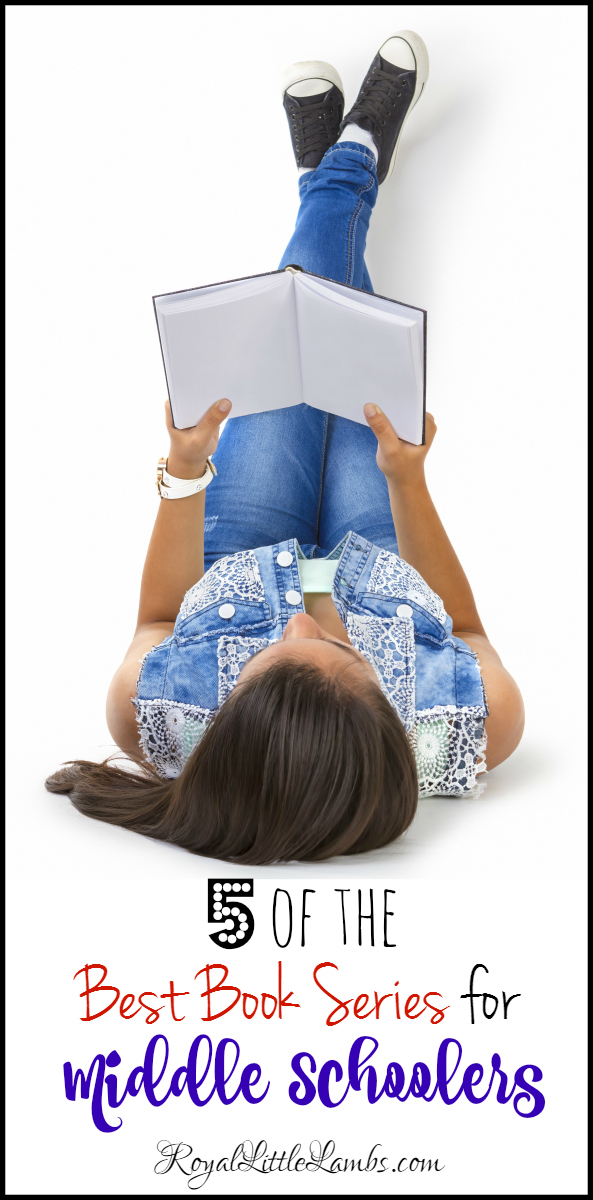
5 of the Best Book Series for Middle Schoolers

5 Great Book Series for Middle Schoolers

My 8-year-old daughter is a very advanced and mature reader and has read all of these and approves them.

I have listed the recommended ages and grade levels, but always preview reading material for appropriateness for your child and family.

1. My Side of the Mountain and more by Jean Craighead George

Fun adventure books about nature and animals.

These living books teach about survival skills, respecting the environment, identifying plants and animals. They’re great for any nature lover!

Age Range: 10 and up

  • Grade Level: 5 and up

2. Swallows and Amazons series by Arthur Ransome

12 books about adventurous kids set between the two World Wars.

We love reading about these siblings and all their pretend play in a simpler time.

3. The Giver series by Lois Lowry

A great dystopian series about valuing all lives.

We love the lessons these books teach about society and relationships.

  • Age Range: 12 and up
  • Grade Level: 7 and up

4. Brian’s Saga series by Gary Paulsen

Survival and self-discovery.

Great books for boys and girls about survival skills, relationships, and learning about self.

  • Ages 11-13

5. Wonder series by R.J. Palacio

Lovely books about looking beyond physical appearances and being kind.

We’re currently reading these and loving them! I encourage kindness in our lives.

  • Age Range: 8 – 12 years
  • Grade Level: 3 – 7

I’m always on the lookout for great literature to add to our collection. We don’t shy away from tough topics. Literature is important for us to learn about the world we live in. I’m raising readers!

Do you have any great books or series to add to my list?

Literature Study (or Book Report) Notebooking Pages
Share
Pin3
Share
3 Shares
You might also like:

Filed Under: Homeschool Tagged With: book list, homeschool, middle school, reading, teen

Learning to Read

This blog may contain affiliate links: disclosure.
Please see my suggested resources.

April 14, 2016 By Jennifer Lambert 12 Comments

I have had the privilege and opportunity of teaching 3/4 of my kids how to read.

My eldest daughter attended daycare and preschool and they mostly took care of all the potty training and teaching her the alphabet and reading. I just reinforced what they taught at home. She caught on to reading very easily and quickly at the age of 4 and took off, devouring bigger and bigger books.

I never pushed my kids to read early. I let them go as their interest led them. They will always learn if I get out of the way and allow plenty of tools.

My middle two daughters are very different in personality and ability. The older one is very analytical and the younger one is a free spirit.

We recently learned about eye problems like convergence insufficiency and Victoria had a year of vision therapy which helped her in many ways.

My youngest, the boy, is five and already finishing up a reading curriculum. He loves early readers about animals and transportation. He prefers level 3 books already!

Learn about my goals and tips for reading readiness.

I hated reading until I was in junior high school, so I have no worries about having four lifelong lovers of books, even if they seem reluctant sometimes.

We have a house filled with books and we take library trips at least weekly. Reading is our go-to for learning. Our main curriculum is completely focused on literature and history.

We love leveled readers, Life of Fred, and All About Reading.

Sometimes, young readers need a little help with distractions. I don’t want reading time to foster negative feelings of frustration or dread.

Early Reading Tools

Teaching reading to young children is a challenge for me.

I was trained as a high school English teacher, so early childhood education got me a little anxious.

I relied on teaching books and reading programs to guide us through that process. I took cues from my kids with what worked and what wasn’t as exciting or needed.

Our favorite reading curricula:

I used Teach Your Child to Read in 100 Easy Lessons with my first child. She also learned well with A Beka preK and K curricula. We never used A Beka again.

My younger three kids loved All About Reading. They completed it when there were only 3 levels. Then we just moved on. They were fluent.

My middle girls liked Logic of English. Reading our reviews of Logic of English here and here. It’s very analytical and offers plenty of tools to use.

We’ve used computer programs and apps like Starfall, Funnix, Reading Kingdom, ABCMouse, Reading Eggs.

I read aloud to my kids every day, usually morning and evening. I encourage my girls to take turns reading aloud to me and to each other. In the evenings, we all read aloud from the Bible. My son has started reading his memory verse every morning. As with anything, practice makes perfect.

I encourage my kids to read leveled readers and science nature readers. High interest reading is key to lifelong learners and readers.

Sometimes we get stuck or distracted with reading and need a little help along the way.

Usually, it’s distractions or daydreaming that make them lose their place in the text. Sometimes, it’s just forgetting a sound or word.

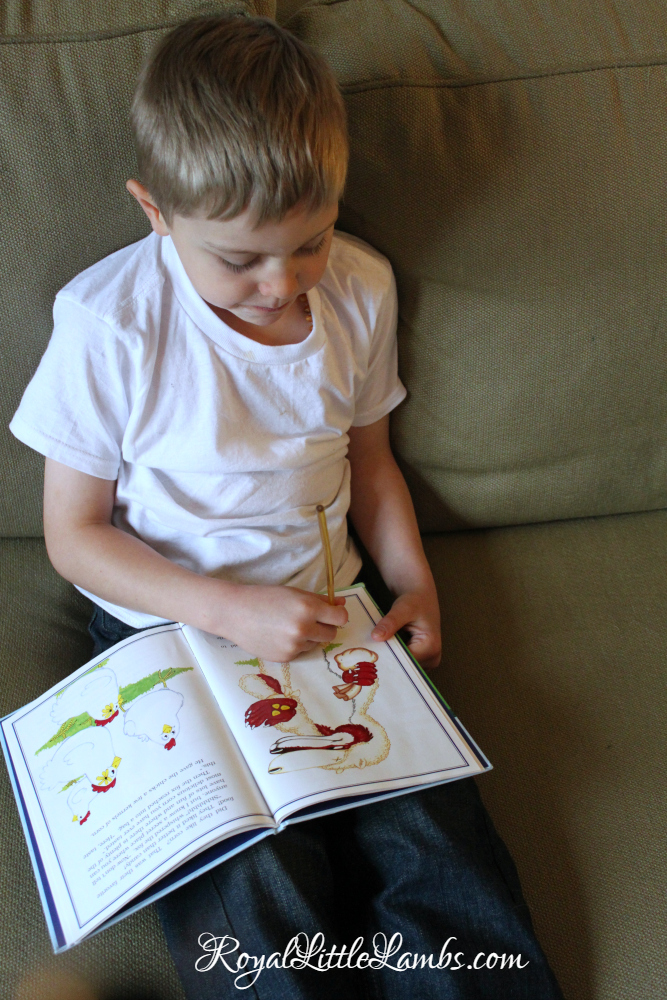
I like these mini plastic pointers to follow each words as we read. They give fidgety fingers something to hold onto and stay on task by tapping each word as it’s read.

Reading with a Pointer

The bigger reading guides show a whole paragraph in the view finder. This is helpful to practice or wean off the smaller reading strips.

There are many variations in the reading guides.

Full page reading guides might help tone down harsh fluorescent lighting or help tired eyes. The translucent pages also multitask with a light box or color blending at a window!

I highly recommend this book: Reading by the Colors: Overcoming Dyslexia and Other Reading Disabilities Through the Irlen Method by Helen Irlen

Strategies for Reading Comprehension

We find notebooking pages with story maps, KWL charts, graphic organizers, and verbal/written narration are helpful.

  • Using Prior Knowledge/Previewing
  • Predicting
  • Identifying the Main Idea and Summarizing
  • Questioning
  • Making Inferences
  • Visualizing

Alex has grown into quite the reader lately! We love All About Reading and it has helped me teach all the phonics rules and sight words for Alex to take off reading well on his own.

Alex really loves reading about dogs and cats lately.

He’s proud of reading like his big sisters!

Early Readers

You might also like:

  • Vision health
  • Letter Recognition
  • Tips for Read Alouds
  • Reading Readiness
  • Learning to Read
  • Learning to Spell
  • Spelling Work
  • Reader Notebook
  • Building a Better Vocabulary
  • I Don’t Teach English
Share
Pin5
Share
5 Shares
You might also like:

Filed Under: Homeschool Tagged With: homeschool, reading

I Don’t Teach English

This blog may contain affiliate links: disclosure.
Please see my suggested resources.

January 28, 2016 By Jennifer Lambert 26 Comments

I was a real English teacher for over ten years.

I have taught 8th grade gifted and ESOL, advanced 9th and 10th graders, and university introduction to writing courses.

I don’t teach English in my homeschool. I don’t use a grammar, literature, or writing curriculum.

I realize I’m a bit of a snob when it comes to English.

I don’t really need a curriculum. I prefer to work alongside my kids instead of throwing a book or app or computer program at them to let them learn on their own.

I don’t have 150 students to track progress like I did when I was a classroom teacher. When I taught in public school, I had to have an opener on the board for the students to correct when they arrived to class. I spent 45+ minutes during each class period actively teaching, lecturing, and interacting with the students. Then, I had to provide a closer to summarize the lesson. This, times five class periods. I had to grade all the assignments, essays, quizzes, and tests – lots of which was busy work to track progress because I couldn’t possibly know how much each student understood every day. We had textbooks for grammar, vocabulary building, and literature…and sometimes novels – all with teacher guides I had to use.

With only 4 students in our homeschool, I have the ability of knowing exactly what each child needs to work on and when. I don’t have to issue busy work.

I have been disappointed with every English/Language Arts curriculum I’ve seen for homeschool grammar, literature, and writing. They all fall short.

Writing Strands is sarcastic and flippant with little useful content. IEW is senseless busy work and geared for parents who are weak in verbal skills – why else do they have such extensive DVD teaching programs for teachers? There are so many workbooks (like Easy Grammar) with endless drills that just make students miserable and waste my precious time in grading and corrections. Progeny Press literature guides are a joke, relating everything in literature to the Bible with few literary theory or critical thinking questions. Some analogies are a real s-t-r-e-t-c-h. Sometimes, the curtains are just blue and not every book has a Jesus figure.

I’m not going to pay for some online or app program that claims to teach kids writing. I try to avoid more screentime if I can help it. We use real books and paper for schoolwork.

We did use First Language Lessons in the very beginning – our first year -with the girls. It has an actual script but I felt like an idiot reading from that. It’s ok for a transitioning or a first time homeschooler or someone who really needs, likes, or wants a script.

For early reading, my son loved All About Reading. He whizzed through pre-level to level 4 by the time he was 6! My middle daughters enjoyed one year of All About Reading and then The Logic of English. We loathed The Code books. We didn’t like the BOB books much either.

Honestly, the kids all taught themselves to read.

After that, we don’t really use too much curriculum for spelling, writing, grammar, or reading. My kids tolerate Spelling Workout even after they’re really fluent readers and writers, so I buy the little workbooks to help their vocabulary.

Sometimes, I print Education.com or other online worksheets for when we travel.

How do we learn English or grammar in our homeschool?

We study Latin.

Latin Texts

We begin Prima Latina at age 8 or 9 and continue with Latina Christiana I and Latina Christiana II and then the First Form, Second Form. I don’t press after this. They can study on their own if they wish.

After that, the kids can choose to continue with Henle Latin and/or learn a modern foreign language – or ancient languages like Greek or Hebrew.

See our Prima Latina review.

We diagram sentences in Latin and English and that really helps with learning parts of speech and subject-verb agreement.

We study modern foreign languages.

My girls love learning German, French, and Greek.

They play constantly on the Duolingo app.

Studying foreign languages helps to learn grammar: parts of speech, syntax, conjugations, and tense.

Foreign Languages

We read a lot. Like, a whole whole lot.

We read everything, especially historical fiction and great literature.

The kids and I all read voraciously. It’s a good problem to have to beg the kids to read to do chores or school work.

I love the book lists on Ambleside Online.

We have extensive reading in literature and history with Story of the World and Tapestry of Grace.

We go to the library weekly and stock up on science, history, and literature corresponding to our studies.

We read missionary stories and biographies about artists and composers.
I strew books all over the house to expose my kids to great ideas. We have many books on our Kindle app accounts.

We have family read aloud time every morning and evening with lots of different kinds of books – biographies, literature, poetry.

Summertime is full of free reading on whatever the kids like.

Life of Fred Language Arts Books

We like everything by Life of Fred. The Language Arts series is super fun! The kids read Life of Fred books all the time. My son loved the early readers for entertainment.

Mini-lessons are everywhere.

We often find spelling and grammar errors on restaurant menus and punctuation errors on signs and websites.

My teen daughter circled a random comma in her math text the other day and we all shared a laugh!

Even my middle kids are noticing when there are grammar errors in public or in eBooks or online.

I’m so proud.

Grammar Helps

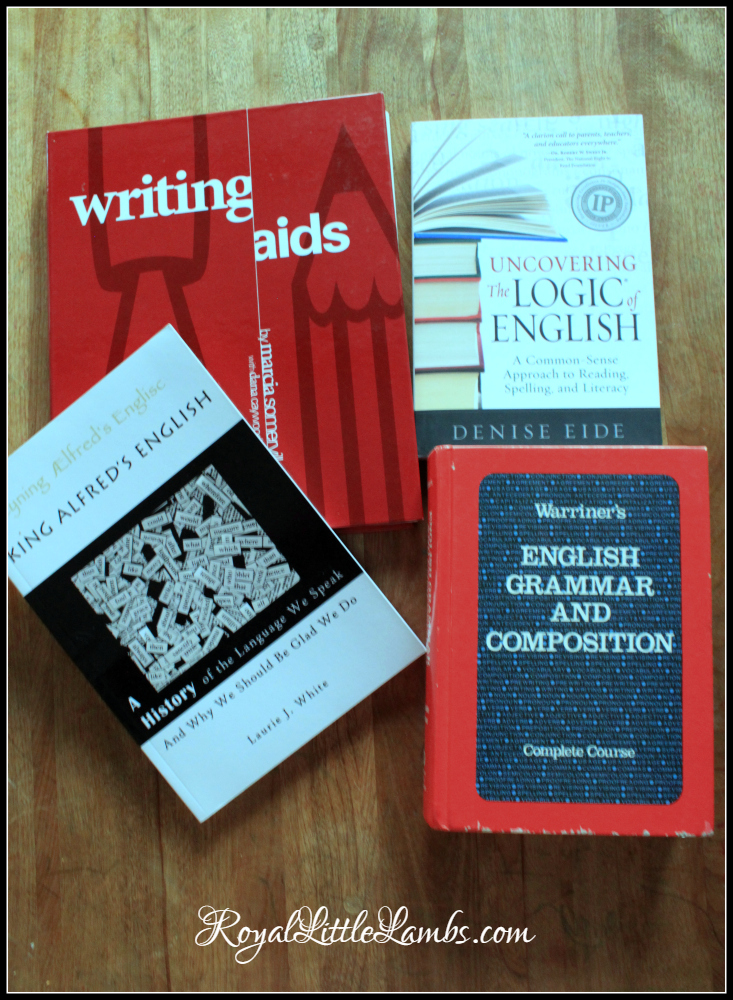
If the kids have questions about writing or grammar, I have resources to show them to help them understand word origins, basic and advanced grammar, and the fundamentals of good writing. We also have The Elements of Style on my Kindle app for iPad. I’ll break out the Warriner’s sometimes too.

My teen daughter and I just read through King Alfred’s English. I wish it were better, but it’s an ok overview for kids.

We discuss.

It’s just natural for me to guide my kids in discussion about what we’re reading. I don’t need a teacher guide. Most of the teacher guides encourage busy work and seem silly to us anyway.

I encourage them to narrate back to me so I know they comprehend what we read.

They often surprise me with their insight into a story, the connections they make to other things we’ve read or done or seen.

I love discussing things with my children. I love hearing what they think, like, dislike, feel…about what we read, learn, do.

Homeschooling is about connection.

We notebook.

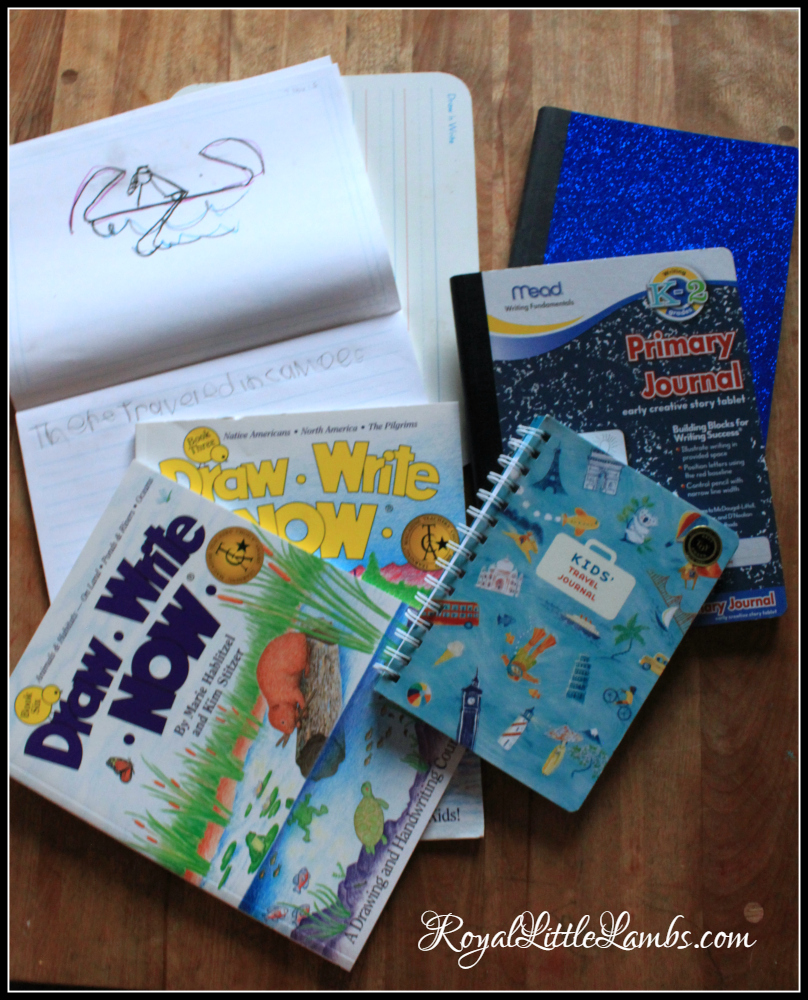
I encourage notebooking from preschool on up. I keep notebooks and journals and model that for my kids.

Notebooking

When they’re old enough, they take information from our discussions and write it down.

The kids write a lot in journals when we travel.

The girls complete notebooking pages for science, history, art, music, religion, and literature. I’m often very impressed when they go above and beyond. I give them freedom to write anything they find interesting. And I only require a few notebooking pages on important topics for each unit since I don’t want to overwhelm them. Since we cycle through 4 years of history, we build on prior knowledge each go-round and get more complex.

They love to complete biography pages about missionaries, artists, and composers.

My teen daughter has advanced comprehension and thinking questions with our main curriculum, Tapestry of Grace, about her literature, history, and worldview reading assignments to complete each week that help guide our discussions.

I don’t encourage formal writing until after age 10-12 or so.

I encourage my kids to write whenever they like – about anything. They often create fun little stories and books and even illustrate them!

I begin to teach proper sentence and paragraph structure after age 10 since little kids need to focus on other more important tasks – like playing. How to write a paragraph?

Whenever they show interest, or in high school, I teach research methods and citation as they begin completing research papers and literary analysis essays. How to write essays?

My middle kids and young son recently completed geography projects on India and China and Hawaii by their choice.

My teen daughter often writes and gives oral presentations for Civil Air Patrol. She won 1st place for her science fair project last year (and it was a doozy!). It entailed much research and recording data and writing up the information. And her work will be published in a real scientific journal!

Some fun creative writing tools are Story Cubes Game, Writing Prompt Cubes by Learning Resources, and Story Building cards.

I realize most homeschool parents need curriculum for most subjects. It is possible to teach with an eclectic blend of materials!

I am so happy that I am trained as an English teacher and my husband is good with advanced maths and physical sciences!

How do your kids learn English grammar?

Literature Study (or Book Report) Notebooking Pages
Share
Pin1
Share
1 Shares
You might also like:

Filed Under: Homeschool Tagged With: English, homeschool, Language Arts, reading

Women’s Literature Study

This blog may contain affiliate links: disclosure.
Please see my suggested resources.

August 3, 2015 By Jennifer Lambert 28 Comments

I spent a summer minimester reading and discussing women’s issues with my favorite professor (who was a man with a daughter) and only half a dozen girls. It was a small, intimate class and I learned a lot about myself and who I wanted to be.

One of my favorite college courses was a Women’s Literature Study.

I have three daughters and a son. I want them to love women authors too. I want my girls to grow into strong women. I want my son to be respectful of women.

While some of these titles have graphic content, they are important works to understand women around the world and how we struggle for identity, to be heard.

Throughout history, men have had power and control.

Women were in the background, in the kitchen, in the nursery, hidden away from the world, unseen and unheard.

Many of these authors challenge social, cultural, and political ideas. Their voices will not be silenced.

This is a book list for a mature reader. I read most of these titles in college and beyond. These would be great options for a book club.

I look forward to reading these books again and discussing them with my daughters when they’re ready.

Women's Literature Study - Top Ten Women Authors

My Top Ten Women Authors

1. Margaret Atwood

I love Atwood’s writing style and her focus on gender politics. When people ask what my favorite book is, I am quick to say Surfacing. It was a life-changing read for me.

2. Amy Tan

Spellbinding stories of Chinese and Chinese-American women and their struggles as mothers and daughters and to be seen and heard throughout history.

3. Sandra Cisneros

A writer focusing on the cultural identity of Chicana women amidst the isolation of misogyny and white American dominance.

4. Julia Alvarez

She grew up as a Dominican American in New York. She focuses primarily on issues of cultural assimilation and identity, as evident in the combination of personal and political tones in her writing.

5. Isabel Allende

Her works focus on mystical realism as she writes from personal experience, focusing on South American women‘s relationships.

6. Barbara Kingsolver

She focuses on topics such as social justice, biodiversity, and human interaction with their communities and environments.

7. Alice Walker

In all her written works, Walker examines the creative inheritance of one’s maternity. She has been an activist all her adult life: for civil rights, the poor, women – all living beings. She coined the term “Womanism” as the black women’s struggle for gender equality, as opposed to the term “Feminism” that primarily focuses on white women.

8. Kate Chopin

Regional Cajun and Creole race interests and feminism mark Chopin’s writing style. Specifically The Awakening is recommended for its frank approach to sexual themes. The main character leaves her marriage to have an affair. It was shocking for the times and received much criticism. Desiree’s Baby focuses on matters of race and moralism.

9. Jhumpa Lahiri

An Indian American author, born in London and raised in Rhode Island. She highlights the immigrant experience, the clash of cultures and assimilation, and the poignant, tangled ties between generations.

10. Azar Nafisi

After resigning from her job as a professor at a university in Tehran due to repressive policies, the author secretly gathered seven female students to read forbidden Western classics every week in her home. She wrote about it in Reading Lolita in Tehran: A Memoir in Books. Celebrate our freedom of education and learn about the desperation of these women to learn.

Some other Good Books About Women:

  • Kabul Beauty School by Deborah Rodriguez

The author originally traveled to Afghanistan to offer humanitarian aid. Soon, she learned she could create an extraordinary community of women by empowering them through the art of beauty.

  • Tess of the D’Urbervilles by Thomas Hardy

This novel challenged the sexual morals of late Victorian England. The themes and events certainly offer many discussion opportunities.

  • Like Water for Chocolate by Laura Esquivel

The main character’s voice is silenced. She is only able to express herself when she cooks. Esquivel employs magical realism and writes like a screenplay. Setting is turn-of-the-century Mexico.

There are so many wonderful writers to name that it was hard to narrow it down to a top ten!

Who are your favorite female authors?

Literature Study (or Book Report) Notebooking Pages
Share
Pin42
Share
42 Shares
You might also like:

Filed Under: Homeschool Tagged With: book list, literature, reading, unit study

Building a Better Vocabulary

This blog may contain affiliate links: disclosure.
Please see my suggested resources.

March 11, 2015 By Jennifer Lambert 1 Comment

Having a high schooler means that I have to get real intentional about vocabulary building.

It’s a lot of newness with grades and schedules, and teaching her to budget her time well. We have to make lists and check off the assignments and stay on task. We’re not used to having to be so diligent keeping track and recording.

I am blessed to have four children who love reading and words as much as I do. My husband complains there is never anywhere for him to sit because every surface is covered in books.

I don’t see the problem.

5 Tools for Vocabulary Building

5 Tools for Vocabulary Building

Reading and writing are the best tools to building a strong vocabulary. But sometimes we need a little help.

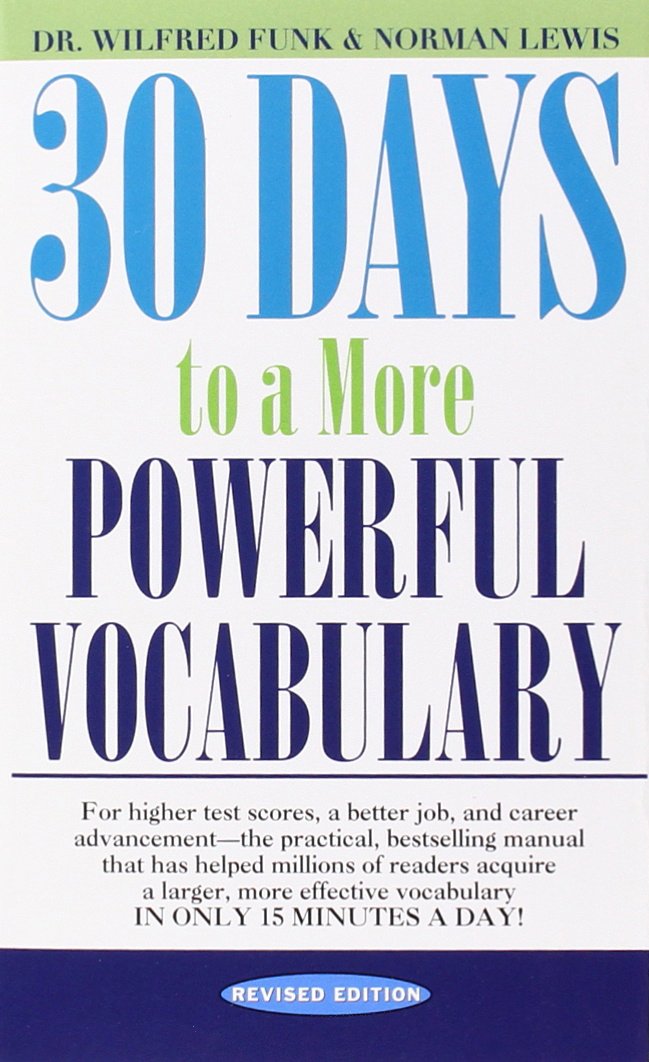
1. 30 Days to a More Powerful Vocabulary

30 Days to a More Powerful Vocabulary is a great little book that helps with test scores and cramming vocabulary in that style. I used it when I taught study skills and test taking tips and my husband and I used it to refresh for grad school entrance exams.

2. Reader Notebook

Keeping a reading writing notebook makes my daughter own her vocabulary lists. Ideally, she jots down words in the quotes as she reads literature and looks up definitions to keep a running list. Sometimes it’s an archaic word or a term in a new context, but this helps her be responsible for learning. With the Kindle app on her iPad, it’s often instantaneous to learn definitions and she gets lazy, but she’s only cheating herself. She loves adding Notebooking Pages to her reading writing notebook. She uses it for all her literature reading.

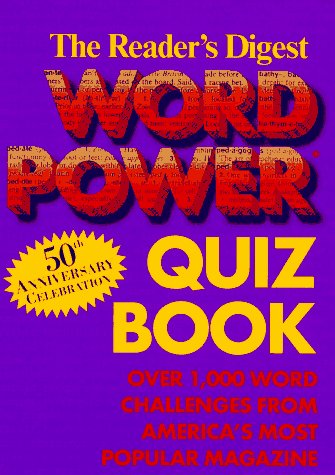
3. Reader’s Digest Word Power

My father and I have been competing for decades on the Reader’s Digest Word Power quizzes and I am so pleased that my kids are now joining in the competition.

4. Word of the Day

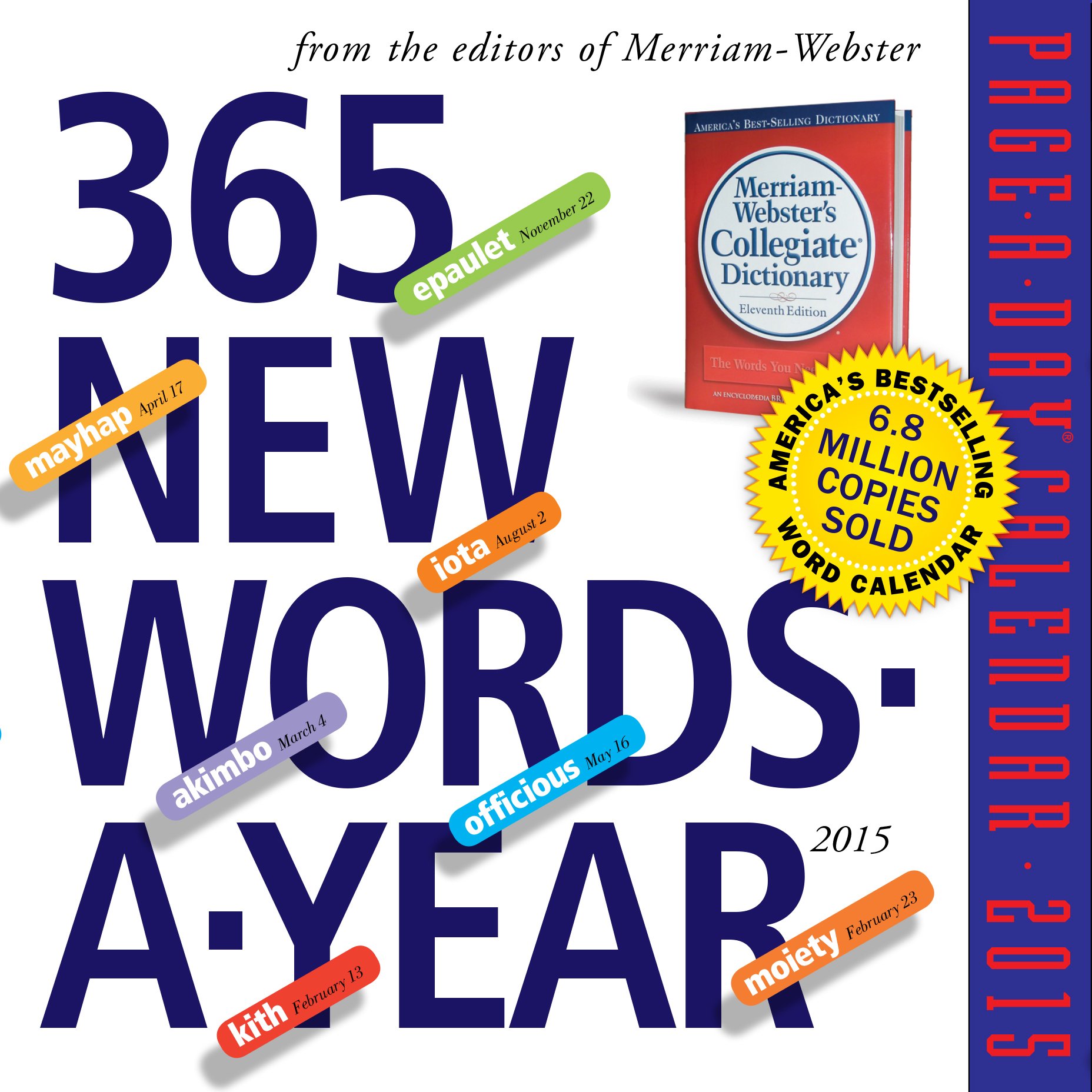
When I was a teen, my parents bought me a Word of the Day tear-off desk calendar. I loved that thing. My kids now love to check the word of the day app every morning.

5. Spelling Workout

My kids love Spelling Workout for quick and fun vocabulary lessons. I love the various activities in each lesson – prefixes and suffixes, analogies, synonyms and antonyms, dictation, editing, freewriting exercises, puzzles, riddles, and more. Books recommended for grades 1-8.

These are fun vocabulary building tools for the whole family to learn new vocabulary.

It can be a challenge to try to fit those new words into regular conversation throughout the day. We have done copywork in the past, but I think that just focuses on good penmanship. I love to work with my kids and these vocabulary builders have assisted our kids increase their word count. I am blessed that we have strong readers and they all love words and learning how to use them well.

Share
Pin3
Share
3 Shares
You might also like:

Filed Under: Homeschool Tagged With: reading, writing

Raising Readers

This blog may contain affiliate links: disclosure.
Please see my suggested resources.

February 16, 2015 By Jennifer Lambert 5 Comments

Liz has always been an accelerated reader. It never occurred to me to not let her fly.

She attended day care from six months – and then a Christian preK that used A Beka curriculum.

She complained loudly that they finished their curriculum by April and then watched Veggie Tales movies for the rest of the school year. The program did give her enough to go on for her to teach herself how to read.

So I didn’t have to really toilet train her or teach her how to read. Not sure how I feel about that.

I remember when she read the entire series of Magic Treehouse and Junie B. Jones our first few months of homeschooling – and we carried home stacks of Minnie Moo and early chapter books from the library each week.

I didn’t know that was unusual for a four-year-old.

I chalked it up to early exposure to words and reading. I was an English professor after all.

We had more books than anything else in our house. Books are important.

I very quickly developed some standards for her reading material.

I didn’t really like Junie B. Jones and a lot of that sort of fluff. I discovered Charlotte Mason and Ambleside Online and The Well-Trained Mind and all these amazing works of literature for children. Living books entered my vocabulary.

Somehow, I skipped over a lot of really good reading material when I was a kid.

I suppose I am a product of a school system focused on test scores and workbooks more than critical thinking and quality of reading material.

I actually really loathed reading until I was about 10.

I remember one night, lying to my mom about a homework reading assignment and I couldn’t narrate back to her anything about the text. I still feel ashamed. But it was so boring and I really didn’t care for any of the school assignments.

And I seem to have jumped right into Stephen King and Dean Koontz in late elementary school. I didn’t have the greatest guidance from teachers or parents.

I honestly don’t remember reading anything worthwhile in school until 8th grade with Diary of Anne Frank. We only did maybe 2-3 novels each year of high school. In 11th and 12th grade, I sat in the back of English class, by the window overlooking the teachers’ parking lot, reading the Beat poets and Russian novels that were nowhere on the curriculum lists.

I didn’t know how to write an essay until my sophomore year in college, in my Shakespeare class.

So, of course, it made perfect sense for me to become an English teacher.

My ten years or so of teaching English taught me a great deal about life, kids, parents, and education.

I certainly knew what I didn’t want for my kids when we decided to homeschool.

Thank God all four of our kids love words, books, and writing. Read alouds are an everyday, twice-a-day occurrence – and even the littlest one loves to snuggle while I read aloud from really hard, great books.

I am blessed with curious children, constantly asking the hard questions, demanding to get at the marrow of life, desiring to know what’s really important, trusting in my opinions, striving to learn the righteous path.

It’s a really tough transition into high school. The early teen years are fraught with confusion and making difficult connections and having virtually no life experience from which to draw conclusions.

I’m raising readers.

Raising Readers - Reading literature helps us to learn and understand the nature of man in all its beauty and ugliness. | www.JenniferALambert.com

How to Raise Readers

Read read READ aloud to kids from prebirth until they won’t let you anymore. We read aloud in the mornings and bedtime stories in the evenings.

Buy lots of books. Get lots of books from libraries or used sales or borrow from friends.

Read a lot all the time and let that habit pass like osmosis to the rest of the family.

Find books on topics your kids are interested in. There’s always something for a reluctant reader. But don’t suggest or press or offer it. Just leave it lying around in their path for them to discover.

Audiobooks count. Movies based on books count. Anything to get kids interested in a literary life, to love words and phrases and imagination.

  • The Read-Aloud Family: Making Meaningful and Lasting Connections with Your Kids by Sarah Mackenzie
  • The Read-Aloud Handbook by Jim Trelease
  • Before They Were Authors: Famous Writers as Kids by Elizabeth Haidle
  • Give Your Child the World: Raising Globally Minded Kids One Book at a Time by Jamie C. Martin
  • The Book Whisperer: Awakening the Inner Reader in Every Child by Donalyn Miller
  • Reading in the Wild: The Book Whisperer’s Keys to Cultivating Lifelong Reading Habits by Donalyn Miller

Great literature helps us learn about people and events and the WHY.

This cycle 4 of modern times in our history studies is a really tough year to learn. I skipped most of the subject matter TWICE during our history cycles because I.Can’t.Even.

Modern history is tragic and really hard.

But we need to just jump in and do this.

Sample of a 9th grade reading list:

  • The Call of the Wild and White Fang by Jack London
  • Anne of Green Gables by LM Montgomery
  • The Short Novels by John Steinbeck
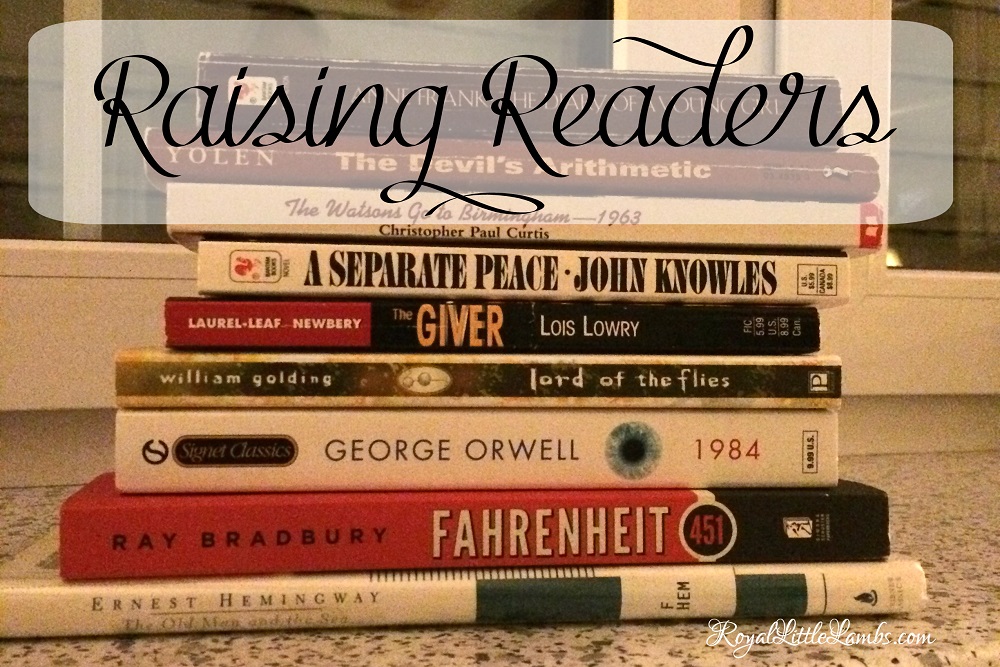
  • The Old Man and the Sea by Ernest Hemingway
  • Short Stories by Faulkner
  • The Great Gatsbyby F. Scott Fitzgerald
  • The Jungle by Upton Sinclair
  • The Catcher in the Rye by JD Salinger
  • The Outsiders by SE Hinton

Plays:

  • Our Town by Thornton Wilder
  • The Glass Menagerie by Tennesee Williams
  • The Crucible by Arthur Miller

Dystopian and Sci-Fi:

  • The Metamorphosis by Franz Kafka
  • The Invisible Man by HG Wells
  • 1984 and Animal Farm by George Orwell
  • Lord of the Flies by William Golding
  • A Separate Peace by John Knowles
  • Fahrenheit 451 by Ray Bradbury
  • The Giver by Lois Lowry
  • Have Space Suit – Will Travel by Robert A. Heinlein
  • I, Robot by Isaac Asimov

War:

  • The Diary of a Young Girl by Anne Frank
  • The Book Thief by Markus Zusak
  • Broken by Lauren Hillenbrand
  • Lots of history material from the library and she’s performing in the play KinderTransport.

Civil Rights:

  • Bud, Not Buddy by Christopher Paul Curtis
  • Roll of Thunder, Hear My Cry by Mildred D. Taylor
  • Invisible Man by Ralph Ellison
  • To Kill a Mockingbird by Harper Lee
  • The Help by Kathryn Stockett
  • The Watsons Go to Birmingham – 1963 by Christopher Paul Curtis
  • Maya Angelou

We’re also watching many great films that showcase historical events well. Liz and I are having great discussions. She asks amazing questions and understands well. I’m actually not forcing too many assignments. She has a reader notebook and some assignment notebooking pages, but much fewer than usual. I want her to enjoy reading.

I know many parents shy away from the tougher subjects. Modern and contemporary history and events are too close. It’s uncomfortable. We remember lots of it. Our parents and grandparents lived through it. Their views formed our opinions and values. But we must study and review events with new eyes as we teach our children so we can all learn from the mistakes of the past.

We do our children a disservice not to walk through this with them and teach them about horrific events that took place. We must put aside any discomfort to discuss events that affects millions of people. We can’t live in a bubble and pretend that horror didn’t and doesn’t happen every day.

I refuse to send my teens out into the world ill-equipped– without an understanding of the sexual nature of mankind, without a knowledge of war, without being taught discernment, without an awareness of people’s fears.

Reading literature helps us to learn and understand the nature of man in all its beauty and ugliness.

My youngest daughter is disappointed that she can’t join the homeschool book clubs in our area because they have rules and their two clubs are only for certain age groups.

She loudly complained to me, “But Mo-om! I read teen books!” She’s 7. It pains me to see her confusion.

Even in the homeschool community, accelerated students are shunned. I get that there have to be rules, but kids shouldn’t be punished for being smart.

My 5-year-old son is now reading level 3 readers.

I won’t dumb down life for my kids.

Literature Study (or Book Report) Notebooking Pages

The #1 Writing Tool
Share
Pin24
Share
24 Shares
You might also like:

Filed Under: Homeschool Tagged With: book list, high school, reading, Tapestry of Grace

Summer Reading

This blog may contain affiliate links: disclosure.
Please see my suggested resources.

July 9, 2014 By Jennifer Lambert 1 Comment

I am blessed that I don’t have to bribe or coerce my kids to read at any time of year. All four of my kids love books and love to read and be read to. We are raising readers.

We’ve always had lots of books and we go to the library weekly and come home with bags full. We maxed out the prizes at our summer reading program and there’s nothing more to do but continue reading. The prizes were awful anyway.

It’s becoming increasingly difficult for me to straddle a fence of popular fiction and classical literature with my teen daughter, Liz.

I remember the trash I read at her age and I don’t want to just give her free reign to read whatever she sets her eyes on.

When lessons slow down or we take a summer break, teens have more free time to read for fun…and I struggle to find appropriate reading material for my teen that doesn’t feel like school.

Summer Reading for Teens

Luckily, my kids are kinda nerdy and love reading schoolish books for fun. They have lots of freedom during summer and school breaks to read what they like and I am so thankful that they choose educational reading. I have few worries.

I love the reading lists at Ambleside Online. I enjoy the reading assignments with Tapestry of Grace and Story of the World. I feel that Shakespeare, poetry, naturalist reading, and biographies are very important. Living books are so much better than textbooks or dry non-fictional accounts.

I love discussing the books Liz reads. I try to preview everything she reads, but sometimes I go on reviews and pray it’s ok since I can’t keep up with her! She keeps a reader notebook and we discuss topics and themes together. Reading helps with vocabulary building.

The library teen reading lists have nothing worthwhile and the covers of the books are disturbing. Men kissing girls with torn shirts. It’s no better than Harlequin and there is no place for that in our house. And we don’t subscribe to Oprah’s reading list or any other celebrity-sanctioned books.

I worry about Liz’s peers who are obsessed with vampires and the occult and how they devour all these dystopian books about teens in a post-Apocalytpic world.

I love it that Liz enjoys Dickens (especially since I do not). I’m encouraging her to read Anne of Green Gables and Little Women as part of our history studies. Her tastes are different than mine and I love to hear what she likes and dislikes, her favorite parts and characters, what makes her angry or sad. I pray to keep conversations going through the teen years and books offer great discussion jumping-off points for life topics.

Liz is a great example to her younger siblings. They see her reading and love to read too. They beg her to read to them and she’s really great at doing voices and sound effects.

My life is easier than most since I have a degree in English literature and taught middle school, high school, and college English for almost ten years.

We still do family read-alouds every morning and evening. School books are in the mornings and a fun family classic is before bed. Alex even reminds me if our evenings get crazy and I forget or try to skip it!

I look forward to our reading assignments this year as we move into year 4 of our history cycle. We’ve never worked through year 4 completely before. I couldn’t bear to teach World War II when Liz was so little. I couldn’t expose her to all that yet. But now that we’re living here in Germany, it’s so much more important.

Did you know that swastikas and raising a right hand in the “Heil” are illegal in Germany? They don’t tolerate hatred or intolerance here.

I look forward to having discussions with Liz about our brave new world. This is the era when science fiction became popular and I love that I can raise geeky kids.

See what our homeschool high school looks like.

Check out other Crew members writing about teen reading:

Summer Reading for High School Students
Share
Pin
Share
0 Shares
You might also like:

Filed Under: Homeschool Tagged With: reading, summer

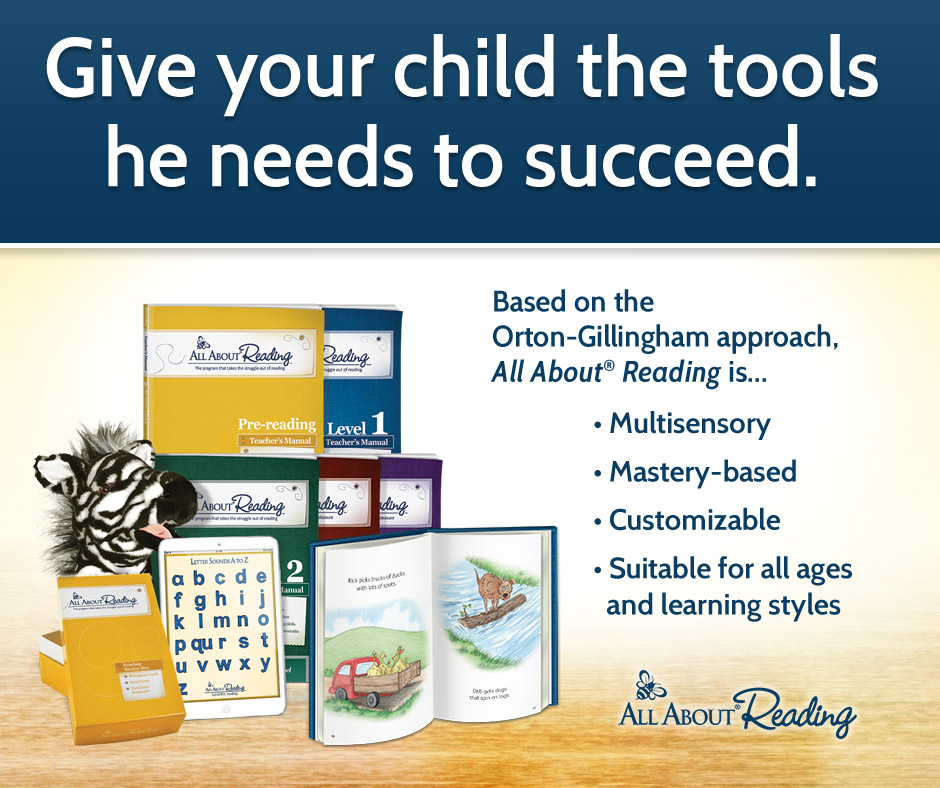
All About Reading Review

This blog may contain affiliate links: disclosure.
Please see my suggested resources.

May 15, 2014 By Jennifer Lambert Leave a Comment

It was an absolute answer to prayer to be able to review All About Reading Level 1 with my son.

We’d gotten halfway through pre-level 1 and he was getting bored and ornery. I remember the girls going through this limbo stage. He was frustrated with me and wanted to learn more! He wanted to be able to read.

My son was thrilled to participate in this reading review.

He was enthralled with our first lesson. He’s an active boy and likes to touch the letter tiles and make words and cut and paste and play with the paper games in the workbook. 

This learn-to-read program is perfect for a tactile, kinesthetic learner.

Ziggy the puppet helps with our phonogram cards and sight words. He loves this zebra puppet, and it helps with attentiveness.

We both love the ease of the phonogram app, and he touches the phonograms each day for our lesson, and then we practice saying them aloud.

The program teaches:

  • Phonological Awareness
  • Decoding (Phonics and Structural Awareness)
  • Vocabulary
  • Fluency

I love the comprehensive reading curriculum that teaches all the basics of reading that I am certainly not qualified to do. My son knows his letter sounds. Now he’s learning how to put those sounds together to make words. I love that this is laid out for me in the program. Each lesson focuses on 1-3 phonograms, and we play with the letter tiles on the board, making new words together and sounding them out.

Flashcards help reinforce learning, and then the activity page and easy readers drive it home further. He isn’t near fluent yet and got rather frustrated with the reviews that expect him to read an entire page of phrases. We did some together, but mostly I didn’t want him to feel discouraged and we skipped them.

I love that he’s excited and begs to do his school. Every day. Anything that instills a love of learning is A-OK in my book. The vowels have hand motions to help memory. He thought they were a bit silly, but he did them.

My son loves the cutting and pasting activities. He’s getting better at sounding out the words and understanding rhymes.

He’s not interested in writing, tracing, or coloring, so there is no stress! We like to do Montessori style learning and active learning. Of course, he loves to get a sticker at the end of each lesson! Who doesn’t?!

We love the stories in the easy reader and he repeats each word I point to after I read it to him. He’s trying to sound out the words, and I am so proud!

  The story “The Hot Rod” needed props:

We are thoroughly enjoying All About Reading Level 1. I love the ease of the lessons, with little teacher preparation, and how it holds his attention so well. Most lessons only take a few minutes, with the longest being about half an hour. Perfect for a little guy who has to move. I love seeing his progress and when he sounds out words for his dad, my heart swells with pride that he’s learning so well and is enjoying it so much.

All About Reading Level 1 Materials:

All About Reading
  • Teacher’s Manual
  • Activity Book
  • 3 Readers
  • Also needed: Reading Interactive Kit

There’s a placement test on the site to find out which level is right for your child.

All About Reading: Pre-reading, Levels 1, 2, 3, and 4.

All About Reading

Have you tried All About Reading or All About Spelling?

Share
Pin1
Share
1 Shares
You might also like:

Filed Under: Reviews Tagged With: homeschool, reading, review

Tips for Read Alouds

This blog may contain affiliate links: disclosure.
Please see my suggested resources.

February 27, 2014 By Jennifer Lambert 19 Comments

Do you struggle with getting the kids to

  • sit still
  • stay quiet
  • not touching!
  • not playing with the cat/dog/hamster/guinea pig/mouse/snake/lizard/insertwhateverpethere
  • stop making noises with body parts
  • stop making faces

or anything like that?

Read aloud time can be a challenge for sure.

20 Tips for Read Alouds

Good readers make it interesting by changing:

  • pitch
  • rhythm
  • volume
  • tone

It’s important to know context, show emotion, inflection, enunciate. Be a storyteller when you read!

What reading aloud to your child can do:

  1. Improve vocabulary.
  2. Grow the neurons in his brain.
  3. Help her become a lifelong learner and reader.
  4. Improve behaviors.
  5. Create strong bonds in family.
  6. Increase kindness and empathy.

Here’s a list of 20 tips to help your kids to focus, comprehend the words that are coming outta your mouth, and be respectful of read aloud time.

  1. Practice. It’s hard when they’re little and antsy. Keep going, mama! It’s great to teach respect and when and how to be quiet. Be intentional and gentle. They’re little and this is new and unpopular. They’ll get it eventually.
  2. Start with only a few minutes each day. Work up to more. We limit it to an hour. Then my voice gets tired.
  3. Mix it up. We read aloud from the Bible. Later, we do science. We do history on a different day. And we make time for fun reads too.
  4. Take breaks. Let em stretch or run around the house or do something to get the wiggles out. Attention spans are only about 15 minutes, tops.
  5. Let the kids take turns reading. Even if it’s a sentence or two. Great practice and they love it.
  6. Great excuse for snuggle time on the couch! Make sure you have a rotation schedule for who sits next to on Mama or there will be fights. How do I know? sigh.
  7. Get outside and worship God in creation while reading Bible stories or inspirational poetry or fiction. Yes, they might get distracted by birds or squirrels, but they’ll hear some too.
  8. Allow for questions and conversation time. It’s about relationship! Have fun.
  9. Give littles something to do with their hands quietly – like Legos, cars, mini animals (Toobs are great!), puzzles, blocks, Better Builders, Wedgits, or something quiet
  10. Give coloring pages that coincide with your reading materials – get Notebooking Pages here! Get US history coloring pages and other history pages here!
  11. Get books on CD or tape or Audible and listen to give your voice a break. Also check the library!
  12. Give each child her own rug, cushion, or spot to sit on during reading time
  13. Make sure they know they will be narrating this to Daddy so they should pay attention!
  14. Have the kids draw pictures of their favorite scenes as narration after reading time
  15. Inform them they will be acting out the narration afterwards. Let em make it a skit with props! Perform it for Daddy or grandparents or neighbors that night. Or video it!
  16. Let em have snacks or read during breakfast or tea time. Their mouths are full and they can’t talk!
  17. My eldest likes to crochet during reading time. She even balances a book or her iPad mini on her knee during her quiet time
  18. Give littles tracing pages or a dry erase board to play with with colored markers or crayons
  19. Provide matching cards or 3-part cards or some other manipulatives that pertain to the read alouds
  20. Read at a park, or Starbuck’s, or somewhere public. They’re less likely to embarrass you in public. They’ll be super good if the incentive is playtime or a treat after. They’ll want to hurry through it and go!
  21. BONUS! Read alouds after dinner include snuggle time with Dad. He loves listening to me read history and science. :)

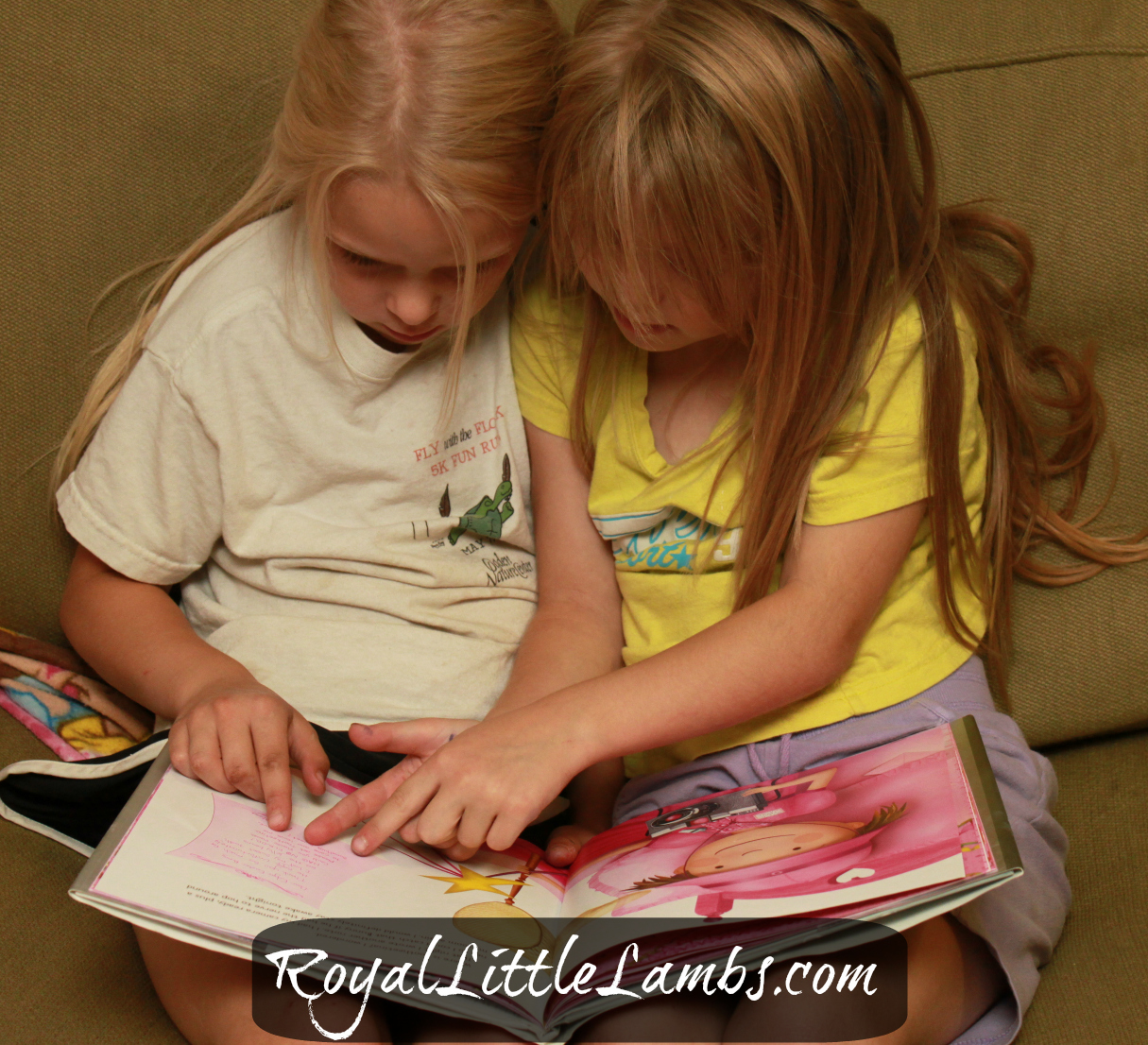
It’s all worth it when you find your kids like this:

Sisters Reading Together

I still read aloud to my kids and they’re tweens and teens now!

Do you have any strategies that help your kids (and you) during read aloud time?

Share
Pin10
Share
10 Shares
You might also like:

Filed Under: Homeschool Tagged With: Charlotte Mason, read alouds, reading, tips

Back to School Unit Study

This blog may contain affiliate links: disclosure.
Please see my suggested resources.

September 30, 2013 By Jennifer Lambert 2 Comments

Usually, back to school themes have to do with apples, fall, leaves, getting to know new friends, and many other traditional topics.

We homeschool, and it’s just now changing to cooler temps. We often do not back to school, celebrating the freedom of staying home.

For our Back to School theme, we let our library story time do our activity for us.

Convenient and I didn’t have to think or clean up anything! Bonus.

Our new storybook lady this year is pretty awesome. That makes all the difference in the world! And she loves kids. She spends so much time on the lessons and provides great experiential learning every Wednesday for about an hour.

school theme

My girls are the oldest kids there and they usually help clean up the crafts. Without being asked. Love them.

They like front row seating.

IMG_2733.jpg

The books for this session were fun. Great illustrations and animals!

IMG_2736.jpg

I’d never heard of some of these book selections. They’re just great! Always fun to meet new book friends.

IMG_2735.jpg

These are some of our absolute favorites. Oh, the giggles when she read them.

IMG_2737.jpg

The storytime activity for the kids was to make little books of their very own.

The kids were provided little booklets with colored cardstock covers and white pages inside. Pictures from magazines were already cut out and the kids could choose them to glue into their books to make collages.

Tori made a butterfly book. She wrote a title on her cover.

IMG_9916.jpg

Tori also drew butterflies in addition to pasting pictures.

IMG_9917.jpg

Kate made a book of her favorite animals. Kate wrote the names of all her favorite animals under their pictures.

Alex made a transportation book. He really, really loved this activity.

IMG_2740.jpg

And we all got cool bookmarks!

Back to School Ideas:

  • Night before school party
  • Special breakfast
  • Pictures to commemorate the new year
  • Memory board or interview page
  • Gifts or treats
  • Look through new school materials and books together to get familiar.
  • Set up a work area for each child to complete assignments.
  • Special back to school books. It’s hard to find books celebrating homeschool.
  • New clothes fashion show. It could be new loungewear or pajamas!
  • Schultüte – traditional school cones for 1st graders in Germany. Another Schulüte DIY idea here. DIY auf Deutsch hier.
  • Ice cream!
  • Chalk drawings in the driveway or sidewalk
  • Fresh flowers, especially roses for new schoolers! I love the Waldorf rose ceremony.
  • Discuss plans, desires, and dreams for the year
  • Make calm jars with glitter, oil, food coloring, and water.
  • Make tie-dye shirts or bags.
  • Go hiking or do a nature scavenger hunt.
  • Picnic lunch
  • Bowling
  • Parties with a fun theme, even if it’s just immediate family
  • Movie night

Books:

  • Dinosaur vs. the Library by Bob Shea
  • The Library Dragon by Carmen Agra Deedy
  • Read It, Don’t Eat It! by Ian Shoenherr
  • Library Lion by Michelle Knudsen
  • Homer, the Library Cat by Reeve Lindbergh
  • Book! Book! Book! by Deborah Bruss
  • Wild About Books by Judy Sierra
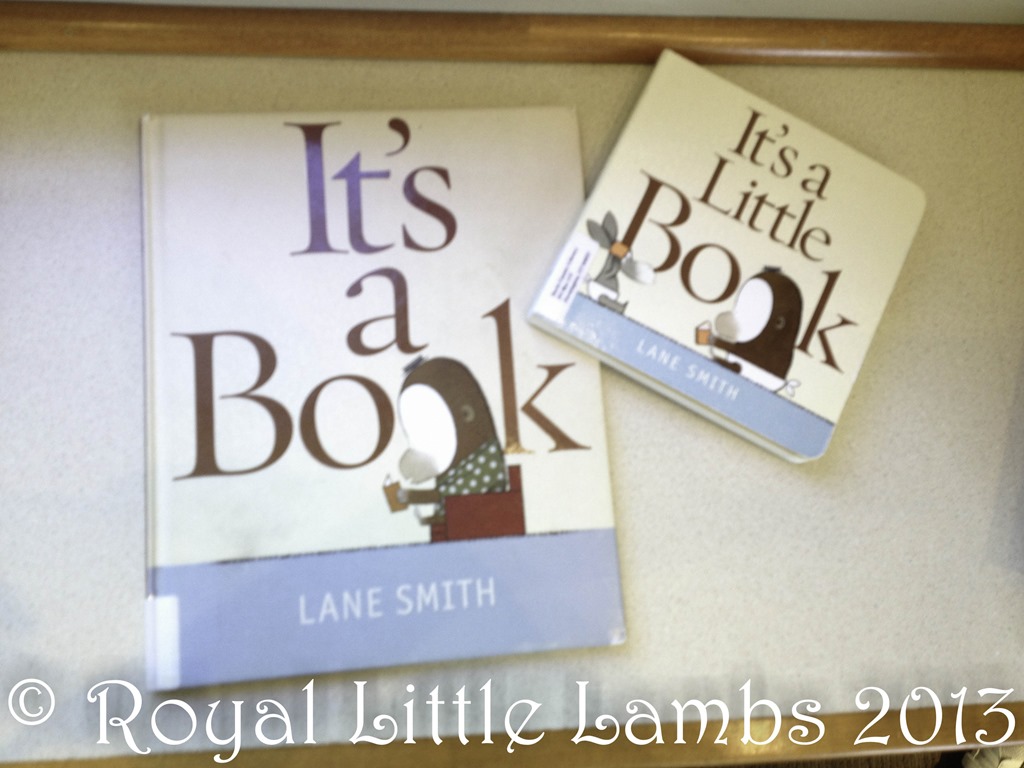
  • It’s a Little Book by Lane Smith

How do you celebrate back to school?

Share
Pin22
Share
22 Shares
You might also like:

Filed Under: Poppins Book Nook Tagged With: back to school, library, PoppinsBookNook, reading

  • « Previous Page
  • 1
  • 2
  • 3
  • 4
  • Next Page »
Suggested ResourcesFetch

Archives

Popular Posts

10 DIY Gifts with Essential Oils10 DIY Gifts with Essential Oils
Natural Remedies for HeadacheNatural Remedies for Headache
10 Natural Remedies to Keep on Hand10 Natural Remedies to Keep on Hand
Henna Hands CraftHenna Hands Craft
Homemade Turkey Divan CasseroleHomemade Turkey Divan Casserole
This website uses cookies to improve your experience. We'll assume you're ok with this, but you can opt-out if you wish.Accept Reject Read More
Privacy & Cookies Policy

Privacy Overview

This website uses cookies to improve your experience while you navigate through the website. Out of these, the cookies that are categorized as necessary are stored on your browser as they are essential for the working of basic functionalities of the website. We also use third-party cookies that help us analyze and understand how you use this website. These cookies will be stored in your browser only with your consent. You also have the option to opt-out of these cookies. But opting out of some of these cookies may affect your browsing experience.
Necessary
Always Enabled
Necessary cookies are absolutely essential for the website to function properly. This category only includes cookies that ensures basic functionalities and security features of the website. These cookies do not store any personal information.
Non-necessary
Any cookies that may not be particularly necessary for the website to function and is used specifically to collect user personal data via analytics, ads, other embedded contents are termed as non-necessary cookies. It is mandatory to procure user consent prior to running these cookies on your website.
SAVE & ACCEPT