Jennifer Lambert

A Sacred Balance

Visit Us On FacebookVisit Us On PinterestVisit Us On InstagramVisit Us On Linkedin
  • Homeschool
    • Book Lists
    • How Do We Do That?
    • Notebooking
    • Subjects and Styles
    • Unit Studies
  • Travel
    • Europe
      • Benelux
      • France
      • Germany
      • Greece
      • Ireland
      • Italy
      • London
      • Porto
      • Prague
    • USA
      • Chicago
      • Georgia
      • Hawaii
      • Ohio
      • Utah
      • Yellowstone and Teton
  • Family
    • Celebrations
    • Frugal
  • Military Life
    • Deployment
    • PCS
  • Health
    • Recipes
    • Essential Oils
    • Fitness
    • Mental Health
    • Natural Living
    • Natural Beauty
  • Faith
  • About Me
    • Favorite Resources
    • Advertising and Sponsorship
    • Policies
  • Reviews

© 2025Jennifer Lambert · Copyright · Disclosure · Privacy · Ad

Should I Label My Children?

This blog may contain affiliate links: disclosure.
Please see my suggested resources.

December 8, 2014 By Jennifer Lambert 4 Comments

I’m sure my kids would be inundated with all sorts of labels if they attended public school.

The one month my eldest attended third grade was a nightmare.

Schools need to place students inside convenient little boxes.

Almost everyone I know has one or more children with some disorder or another.

Is it real or imagined?

There is such competition for children to excel with schoolwork and test scores that parents are medicating kids to perform well – like little racehorses on steroids.

A diagnosis of ADHD brings so many benefits in the school system. Kids with ADHD are entitled to special classes and extra time on tests – even the SAT and ACT and college entrance exams. The schools have an invested interest in diagnosing kids with disorders and/or special needs to receive more tax funding. Teachers want quiet and compliant kids who stay silently in their seats.

Homeschooling allows me the freedom to teach each of my children however it best suits us. Each of my four children are individuals with needs that require much care and time on my part.

We all have strengths and weaknesses.

We don’t all have a disorder, or do we?

It is no measure of health to be well adjusted to a profoundly sick society.

Jiddu Krishnamurti

A child’s identity should be based on their abilities rather than disabilities. And certainly not just on appearances or a list of symptoms that may vary with different circumstances.

This thread on Twitter is educational. I don’t want to be that abled mother who sees my kids as “less-than.”

I’ve seen mamas’ digital signatures in forums and whatnot, proudly displaying the whole “Wife to so-and-so, mother to 4 kids, 1 with {insert disorder acronym, spectrum tag, disability, whatever}”

Obviously, it’s informative and helpful for moms to find others to share and support each other.

But I think some mothers wear their kids’ disabilities and disorders like a badge of honor.

Some mothers seem proud they have such a burden in their kids’ disorders. They love the attention they get and the sympathy when they complain.

And I get eye rolls and tsk, tsk if I dare utter a complaint ever because my kids are neurotypical or even “above average.”

Who decides what is typical or divergent?

But what is normal?

Is mental illness the new norm?

I am all for people getting the services they need and deserve. There are more great therapies and medication to help people than there ever was before. Knowledge is power.

But where is the knowledge coming from? Is it correct? Who decides?

Movies and television programs deify psychology. The person with a psychology degree is considered a god. Social media encourages kids and teens to self-diagnose themselves.

It was worrying to think how labeling her like that, without a diagnosis or even a doctor’s appointment, could affect her for the rest of her life. Saying so nonchalantly that children have a psychological or neurological disorder as if they are hungry or cold is very serious. Not only does it belittle the severity and seriousness of those who truly suffer from these conditions, but it also labels children unfairly. When they hear a plotline repeated about their lives, they begin to associate themselves with these labels and draw identity conclusions from them. These narratives become their life story, and it is very hard to get our of them.

The Danish Way of Parenting

I know some parents with very real struggles with very real children with very real challenges. I am not discounting real diagnoses or real special needs or disabilities that are physical, biological, or psycho-social.

The issue with ADHD is that it has no biological markers. It is overdiagnosed in the USA.

Lots of kids don’t actually get a real medical diagnosis. You can’t just claim your kid has ADHD because he can’t sit still for hours or she daydreams sometimes instead of completing 60 algebra problems in an hour.

It’s so much easier to make our kids pop a pill than to teach them executive function or self-control or to learn it ourselves.

We are destroying children with our expectations.

In 1991, Congress included ADHD as a disability that falls under the Individuals with Disabilities Education Act (IDEA). So the child’s family is entitled to disability benefits. It is more work for individual teachers completing IEPs for these kids. It is quite the conundrum.

Schools and the expectations for children is often a big part of the problem.

Since when is being a child an illness?

There should be comprehensive tests to diagnose disorders and syndromes (and physical issues as well). It should take more than 20 minutes and a little checklist of 6/15 symptoms for a doctor to determine a child has ADHD.

Online quizzes are dangerous. I look at those online medical quizzes and apparently I have every disorder, syndrome, disease, and illness known and unknown and will not live past next year.

Like astrology in which everyone relates to her horoscope, almost everyone who takes an ADHD quiz discovers she is “sick.”

Is this the new witchcraft?

So, without a battery of real medical tests that come back with a true medical diagnosis, don’t label kids to make up for a lack of relationship.

I think there is a vast overdiagnosis of American kids with ADHD and other psycho-social issues. We are medicating America.

It makes our society complacent and then no one is responsible for any behavior. They blame “The Disorder.”

Sure, lots of kids probably show signs of ADHD. It’s often a temporary thing that kids experience under stress. And we are surely a very stressed out society.

In America, the oddball is the mother with kids who have no labels.

Does everybody who is labeled with it actually have ADHD?

It’s way overdiagnosed in America. Fewer European kids are diagnosed or medicated for ADHD than American kids. They have a different lifestyle and priorities.

We monitor behavior in our family closely. We have a flexible schedule and structure. We stay close together to relate well.

A military pediatrician diagnosed my eldest as “OFF THE CHARTS ADHD” when she was seven. I just never fully agreed with it. Honestly? She was SEVEN. She was learning to cope with daily life with a new dad, two new sisters, a cross-country move, and beginning homeschooling. She had been abused by her birth father. Stress!

I don’t fear the ADHD label: I just think many kids diagnosed with it is unnecessary and imaginary. My little kids don’t even know these labels exist. They’re children. When they get rambunctious, I send them outside or we have a dance party. No one wants to sit still and quiet for hours.

 “‘You shall not make for yourself a carved image, or any likeness of anything that is in heaven above, or that is on the earth beneath, or that is in the water under the earth. You shall not bow down to them or serve them; for I the Lord your God am a jealous God, visiting the iniquity of the fathers on the children to the third and fourth generation of those who hate me, but showing steadfast love to thousands of those who love me and keep my commandments. 

Deuteronomy 5:8-10

In John 5, Jesus asked the man at the pool: “Do you want to get well?”

“Many of us want freedom from pain, but we don’t always want the adversity that comes with spiritual wellness.”

Michelle Lazurek

I am not discounting real physiological illness that can be complex.

We weren’t always in a homeschool environment. As a classroom teacher, I saw all sorts of kids with very real family, medical, and personal problems.

My eldest attended day care and preschool until she was five. When she attended third grade (for a month), the school officials immediately labeled her. Many of her classmates were already labeled. It was a military (DoD) school and medical clinic. They certainly had an agenda.

I see many parents who reveled in their kids’ labels and hid behind them rather than do any real parenting. They’re winging it and perpetuating generational trauma. Many just don’t know any better. And just because a kid has real special needs doesn’t release a parent from setting some boundaries and education.

Many of my students acted differently with me than with other teachers. I treated them differently and tried not to listen to what others had to say about attitudes and behaviors. I gave those kids a chance to be themselves. I respected them. I listened.

I do know very real issues are out there, but I think some doctors and parents are too quick to smack an ADHD label and prescribe an addictive amphetamine rather than evaluate and learn the root of the problem. The doctors don’t have time to do a proper exam or listen to issues.

As a military family, there is little continuity in the medical field. We have new doctors frequently and records don’t get written up well, transferred timely, or read by new staff. We moved every 2-4 years and it’s just really hard to maintain a relationship with the medical staff.

There are many real reasons for the symptoms of ADHD that should be explored. Hormones, environmental causes, brain injury, dietary allergies, or emotional issues. This is not a biological illness as the drug companies and many doctors would have us believe. ADHD is usually a temporary psycho-social disorder that could be managed with therapy and addressing environmental and relational stresses. Drugs should be a last resort and only temporary. We don’t have many longitudinal studies about the effects of these drugs long-term.

The common drugs prescribed for ADHD: Ritalin, Adderall, Concerta, Quillivant, Methylin, Strattera – many highly addictive stimulants – are Schedule II controlled substances (the same category as Oxycontin).

Some help for brain (and physical) health for some people:

  • Vitamins: especially D, B complex, E, and other antioxidants.
  • Mineral supplements: magnesium, chromium, selenium
  • Cod liver oil. Everyone needs this to help maintain mental acuity.
  • Healthy real food diet. Start by limiting processed snacks and sweets and introducing more fruits and vegetables. Healthy fats and oils instead of trans fats. Be wary when eating out. Even if allergy tests return negative, don’t discount a sensitivity. Do an elimination diet to make sure!
  • Regular exercise. Get the whole family in the habit.
  • Outside time. Fresh air and sunshine works wonders.
  • Therapy. We need to overcome our triggers and generational trauma. We cannot continue to pass this along to our children.
  • Meds. Perhaps as temporary assistance while undergoing lifestyle changes and therapy.

If it takes two years to gain fifty pounds, it will take many months of hard work to lose weight. Too many Americans want instant gratification in the form of a miracle med that often exacerbates the issues with unwanted side effects. I know too many mothers who are exhausted due to a poor lifestyle during their childhood and youth. It often takes years, much time, and even money to get healthy again. It takes work.

Our lifestyles are a rat race trying to keep up when we really just need to slow down.

How is this affecting our children?

Instead of having a relationship with our children, we look to the screens as babysitters, food as drugs, and drugs as candy.

And we wonder why so many kids are asthmatic, obese, and inattentive? Some parents just aren’t the best role models. They don’t know any better. But kids learn by example. If we had poor role models, shouldn’t we educate ourselves so we can be better stewards of our bodies and teach our kids to be good stewards of their bodies? To leave a legacy of physical and mental health is important.

And I realize that receiving sufficient mental and physical health resources is a privilege many don’t have. It’s very expensive in the USA and there is a societal stigma that we are slowly removing, but kids, women, and people of color still have issues finding and receiving good medical care.

As kids get older, maybe we should ask them if they want the label. We should learn and help them understand the stigma so we can eliminate it in our society. We as an entire society need to shift and heal together.

What I’m NOT saying:

  • I’m NOT saying that everyone who has weight issues is lazy or a bad parent. Weight issues are quite real and are often hereditary and a sign of many other problems that can take generations to heal with help. Weight doesn’t always equal health. It’s often a struggle. But the medical community loves to only treat symptoms and not look for the reasons behind them. I realize our society has fatphobia.
  • Not every mom revels in her kids’ labels, disorders, special needs. If a child has a real medical illness, physical disabilities, mental disorders, or special needs, then by all means, doctors, specialists, medical professionals, and recommended services should be used. Use discretion. Just don’t make excuses or use bandaids.
  • All home and school environments are unique. I have experienced public, private, all levels, homeschool, co-ops…and I have seen all sorts of parents, kids, teachers, and administrators who did and did not serve children well. Learn to recognize toxic and abusive environments and avoid them.

The symptoms of ADHD do exist, but many of the symptoms can be explained by other medical or mental diagnoses.

Helpful: Hamilton Anxiety Rating Scale for ACEs (Adverse Childhood Experiences)

Even if and when kids are correctly diagnosed with a medical disability, disorder, or disease, they are more than a label.

Resources:

  • Scattered: How Attention Deficit Disorder Originates and What You Can Do About It by Gabor Maté
  • When the Body Says No by Gabor Maté
  • Suffer the Children: The Case against Labeling and Medicating and an Effective Alternative by Marilyn Wedge 
  • Hype: A Doctor’s Guide to Medical Myths, Exaggerated Claims, and Bad Advice – How to Tell What’s Real and What’s Not by Nina Shapiro MD and Kristin Loberg
  • The Myth of the ADHD Child, Revised Edition: 101 Ways to Improve Your Child’s Behavior and Attention Span Without Drugs, Labels, or Coercion by Thomas Armstrong 
  • The ADHD Explosion: Myths, Medication, Money, and Today’s Push for Performance by Stephen P. Hinshaw and Richard M. Scheffler 
  • The ADD Myth: How to Cultivate the Unique Gifts of Intense Personalities by Martha Burge  
  • The Myth of ADHD and Other Learning Disabilities: Parenting Without Ritalin by Jan Strydom and Susan Du Plessis 
  • Smart but Scattered: The Revolutionary “Executive Skills” Approach to Helping Kids Reach Their Potential by Peg Dawson and Richard Guare  
  • ADHD Does Not Exist: The Truth About Attention Deficit and Hyperactivity Disorder by Richard Saul 
  • Eating Mindfully: How to End Mindless Eating and Enjoy a Balanced Relationship with Food by Susan Albers
  • The Danish Way of Parenting: What the Happiest People in the World Know About Raising Confident, Capable Kids by Jessica Joelle Alexander and Iben Sandahl 
  • Bringing Up Bébé: One American Mother Discovers the Wisdom of French Parenting by Pamela Druckerman
  • How Children Learn by John Holt
  • Free to Learn: Why Unleashing the Instinct to Play Will Make Our Children Happier, More Self-Reliant, and Better Students for Life by Peter Gray
  • Balanced and Barefoot: How Unrestricted Outdoor Play Makes for Strong, Confident, and Capable Children by Angela J. Hanscom
  • Simplicity Parenting: Using the Extraordinary Power of Less to Raise Calmer, Happier, and More Secure Kids by Kim John Payne
  • Free-Range Kids: How Parents and Teachers Can Let Go and Let Grow by Lenore Skenazy
  • Nonviolent Communication: A Language of Life: Life-Changing Tools for Healthy Relationships by Marshall B. Rosenberg, PhD 
  • Hold On to Your Kids: Why Parents Need to Matter More Than Peers by Gordon Neufeld and Gabor Maté  
  • The Myth of Normal: Trauma, Illness, and Healing in a Toxic Culture by Gabor Maté 
Share
Pin1
Share
1 Shares
You might also like:

Filed Under: Health Tagged With: ADHD, mental health, natural health, parenting

Because I Said So

This blog may contain affiliate links: disclosure.
Please see my suggested resources.

October 30, 2014 By Jennifer Lambert Leave a Comment

“Because I said so” should never be uttered from a parent’s lips to her child.

Especially if that parent is of the “do as I say, not as I do” variety. Kids deserve a reason and they can understand most reasons.

I’m not saying to try to reason with a two year old, but a four year old can understand he has to wait for a meal to cook. He may not like it and he may not exhibit the self-control you should expect from a fourteen year old. That is normal child development.

Actions speak so much louder than words.

If you teach “do as I say,” you’re setting yourself up for a rebellious child.

If your child sees you eat in the living room but she can’t? You’ve just confused her and she understands you don’t respect her.

If you sneak a cookie before dinner but won’t let your whining son have one? You’ve just confused him and disrespected him.

If you’re irritable and snappish but reprimand your child for the same tone of voice or even the same phrasing of words to her sibling? It’s confusing and disrespectful.

Don’t expect blind obedience.

This isn’t healthy. It’s brainwashing. You most likely have your child’s best interests at heart, but does that teacher, boyfriend, boss, or whoever they will find to obey in the future?

Teach your children to make wise decisions. Coach them on this journey of life to be kind and respectful to others. Give them opportunities to exhibit integrity. Not just a list of black and white rules to follow.

How to be an better parent:

  1. Lead by example. You as a parent have to do the right thing if you want your kids to follow.
  2. Eliminate arbitrary rules. Desire to say yes as much as possible and have the no’s mean no for everyone.
  3. Don’t use the Bible as a weapon. Most kids will just learn to hate it if you make them do copywork for punishment. Or if you quip Bible verses at them to remind them what they did wrong. There are ways to use the Bible as a heart training tool. Sit with them and discuss it together. Pray without shaming.
  4. Yelling and hitting is never an option. Use your big girl mama words to explain what the problem is. Never use your superior size and power to physically demean a child. It’s not a power struggle. Discuss with your child what should happen next time the issue arises. Offer grace.
  5. Exhibit integrity in all you do. Even those little white lies (we can’t afford cookies) or the typical societal pretending (Santa and the tooth fairy) can erode the parent-child relationship. It’s just easier to be honest. If your goal is not to buy cookies, explain that you’re eliminating processed foods and you can make a healthy alternative together. If you like the holiday traditions, teach the legends behind them and let the children decide if they want to pretend or not. Ours do!

Focus on the positive and find ways todo life together with your children. They will learn by watching you.

Share
Pin
Share
0 Shares
You might also like:

Filed Under: Family Tagged With: 31Days, parenting

Obedience Is Not Wisdom

This blog may contain affiliate links: disclosure.
Please see my suggested resources.

September 3, 2014 By Jennifer Lambert 3 Comments

If children are taught obedience, they’ll find someone to obey.

Teach your children to make wise decisions.

“Obedience is doing what you’re told, no matter what’s right. Morality is doing what’s right, no matter what you’re told.” L.R.Knost

Wise Decisions
In the beginning of my parenting journey, I was all about obedience.

We sang songs, did lapbooks, learned poems and chants, discussed character building with Bible verses and watched spiritual stories about obedience.

The church encouraged and supported these beliefs. There are many, many resources on the topic of obedience – for children and wives.

Do I want my kids to obey me for their safety? Certainly. And for young kids, they must be taught to obey me and trust me and respond quickly without thinking.

If I sharply say, “Stop!” or “Wait!” or “Duck!” of course, I want them to obey all the way, right way, with or without a cheerful heart. It’s for their immediate safety so they don’t step off the curb when there’s a car coming or get run over by a cyclist or get hit with a ball or Frisbee. If something occurs that they don’t understand, I explain why they needed to obey after the event. That’s just being a good parent and having a relationship with my kids and showing them respect.

After a child comes of age or has reached that age of reason, decisions are often so much more complex and the choice to obey gets more unclear. Differences between right and wrong become even cloudier as she weighs options and consequences. Often, the devil’s voice is very loud and drowns out what she knows to be true.

In the military (and many other professions), there are differences between leaders and bosses.

Bosses bark orders and expect troops to scramble to obey as quickly as possible. Leaders discuss solutions to problems and realize how often lower ranking members have really great ideas. But in the field, leaders know they have to give orders that must be obeyed quickly without question.

Relationship and trust is key.

We value leadership around here. We value relationship.

I’m raising leaders instead of followers.

I have to model the behaviors I desire to see in my children.

Recent events at our house have made me realize that I must be constantly diligent, seeking any holes in my relationships with my children and be quick plug the leaks.{Tweet This!}

I am in a constant battle for the souls of my children.

The Internet and its predators are constantly lurking, “friends” are wolves in sheep’s clothing, too many distractions to take us out of the home and into dangerous territory.

The devil is a ravenous lion, seeking to devour all that is good. (1 Peter 5:8)

He desires above all to destroy families and he will do it through our children.

Nothing worth doing is ever easy.

It would be easier for me to enroll my children in school and have time to myself. It would be easier to turn away and not know what they read, watch, listen to. It would be easier to send them out to play and not know where or with whom they hang out.

I refuse to take the easy way out.

Rebellion is not normal. The church and many Christian resources admonish parents to disciple, train, punish, even beat their children into submission. While we are all born with a sin nature, children don’t come into this world desiring to rebel against their parents, to irritate, annoy, or cause strife. They are naturally selfish little beings (as are we all!) and should be gently taught by example how to get along with kindness. There is no need for disrespect, punishment, or control in parenting. Parents should be guides, helping their children navigate society and learn how to cooperate well with others. Having power struggles with children only weakens their trust. They naturally want to please their parents and should be offered every opportunity to do so, in a safe and loving environment.

Children can be trusted to make wise decisions.

My children are worth more to me than comfort, money, time to myself, sleeping late in the morning, or even expanding my blogging and business.

I will teach them with kindness and respect.

I may have lost track of priorities in the last year, but I know Jesus can redeem even this.

I will fight for the souls of my children.

Linking up: Mommy Crusader, B Inspired Mama
Share
Pin
Share
0 Shares
You might also like:

Filed Under: Family Tagged With: parenting

Shepherding Teens

This blog may contain affiliate links: disclosure.
Please see my suggested resources.

August 25, 2014 By Jennifer Lambert Leave a Comment

When I was pregnant with our third child, my husband asked me in bewilderment, “How will we do bedtime?”

At the time it seemed to me a ridiculously silly question.

“We’ll just do it,” I thought, exasperated.

As parents, we sometimes do what we must to survive.

I soon realized that having more than one child was hard. I envied the families with only children. I also had no idea how large families did anything well.

And I’ve never considered ours a large family.

Until we moved to Germany.

We stood out in Europe among the families of single kids or perfect pairs. The parents aren’t outnumbered. They can drive small cars with four seats. They don’t have to wait forever at restaurants to be seated. They’re mathematically correct.

With a thirteen-year-old, eight-year-old, seven-year-old, and four-year-old, it seemed like a legitimate concern. How do I do bedtime well? How do I divide my time and mothering well?

A few harried years went by with rushed bedtimes. Rushed baths. Rushed prayers. Rushed affection. Exhausted, ready to be done with the day, and still facing the destruction of a kitchen well-used every night.

I traded a relationship with my children at bedtime for me time.

The eldest child often went unheeded as I rocked the baby and Dad prayed with the girls. Night after night. Not every night, but too many. I dreaded the never-ending chores of cleaning up and just wanted to collapse into writing or reading or sleep.

Teens are just as needy as toddlers.

Perhaps needier.

I missed out on many bedtime conversations and prayers and opportunities for heart training and answering difficult questions.

Because I was exhausted.

Or thought I was.

I’d read all the right books (and many wrong ones!) about parenting, shepherding and training hearts, but all those words won’t substitute for the proactive parent relationship a child needs.

It took near disaster to wake us up to how much we are needed as the parents of a teen. To pray for the reversal of damage. To pray for redemption of time and the experiences that we missed. To pray for improvement in our family relationships.

We were living on the surface.

We lived superficially instead of getting at the marrow of life. We were in the wings, instead of actively directing and counseling. We were focused on all the wrong things.

Every day was an uphill battle as defiance reigned and I was ready to just give up.

I almost lost her.

Then a not-so-gentle nudge from God.

Pray.

I’m not a prayer warrior. It’s not my nature. I wasn’t raised to this. We’re not a hymn-singing, Bible-quoting, tract-giving family. We don’t spend hours on Bible study or scripture reading every morning. Maybe we should do some things differently.

Such a simple thing, really–to pray earnestly for and with this child. This child so different from myself. Despite the hard days, the mean looks, the saucy attitude. This child whom I have seen withering away and growing cold and distant is now blossoming again with the nourishment of relationship she needs and now receives that she didn’t know how to ask for.

I know that God can redeem that lost time and restore this relationship. He is a God of reconciliation. He reminds me of the good memories we shared and the knowledge that we can make more good memories. I look forward to the future as it unfolds in excitement and anticipation and opportunity.

It’s not always a matter of good or bad parenting. Kids eventually make their own choices. They’re too often stuck in the middle. I can actively pray for and with my daughter and know it’s in God’s hands.

And I will love her no matter what.

As my other three kids grow up into teens and young adults, I pray fervently for each of them. I know they struggle to grow into their own individual selves and I have to hold them with open hands as they develop and make their mistakes and learn. They also watched their eldest sibling flounder and they learned from witnessing her mistakes and lessons.

I am so pleased to be through this stage with my eldest and it seems smoother with my other three. Perhaps I learned so much that I am less anxious and realize my place and that I can’t live vicariously through my children and they must learn with their own ups and downs.

I will always be here to catch them if and when they fall.

Resources:

  • Jesus, the Gentle Parent: Gentle Christian Parenting by L.R. Knost 
  • Hold On to Your Kids: Why Parents Need to Matter More Than Peers by Gordon Neufeld and Gabor Maté  
  • Untangled: Guiding Teenage Girls Through the Seven Transitions into Adulthood by Lisa Damour, Ph.D. 
  • Hands Free Mama: A Guide to Putting Down the Phone, Burning the To-Do List, and Letting Go of Perfection to Grasp What Really Matters! by Rachel Macy Stafford  
  • Unconditional Parenting: Moving from Rewards and Punishments to Love and Reason by Alfie Kohn 
  • Free to Learn: Why Unleashing the Instinct to Play Will Make Our Children Happier, More Self-Reliant, and Better Students for Life by Peter Gray 
  • The Danish Way of Parenting: What the Happiest People in the World Know About Raising Confident, Capable Kids by Jessica Joelle Alexander  

You might also like:

  • The Dirty Dozen Apps
  • Teaching Self-Control
  • Teaching Kindness
  • Teaching Diversity
  • 5 Best Books for Teen Life Skills
  • Graduating from Homeschool
Share
Pin31
Share
31 Shares
You might also like:

Filed Under: Family Tagged With: high school, parenting, teen

To Sit With An Empty Lap

This blog may contain affiliate links: disclosure.
Please see my suggested resources.

July 28, 2014 By Jennifer Lambert 1 Comment

Motherhood is not a joy.

I haven’t gotten to that place where I can feel comfortable having a filthy house and clean hearts. I want both. I want it all. I want the spotless magazine-home and obedient, grateful children.

The expectations are too much. The ones I carry with me, the ones I perceive my husband has. All the ones I’ve picked up from various relationships, the media, church denominations.

I still struggle to tell the difference between anger and hatred.

I study other parents to learn what works…and what not to do.

I analyze the happy parents and study the miserable ones. Often, the happiest parents have the unruliest children and messiest houses.

Perhaps my priorities are all wrong.

The work overwhelms me.

The constant battling over dust and sand, dirty looks, and hateful comments thrown like darts from around corners. The lying and deceit. The laziness and shirking of duty.

It’s exhausting. I get bogged down in the checklists of laundry, meal planning and preparation, dishes, school lesson planning and implementation, flossing.

I don’t have time or energy to dance or sing…or sit with an empty lap.

To Sit With An Empty Lap

I don’t have time for my husband. The relationship that was tenuous is slowly slipping away.

Between the teeth brushing and baths and bedtimes and early risers and second breakfast, there is all but nothing left over.

And the blogging and the home business? I am such a poser. You see only a glimpse of the best: the fairy tale, photoshopped, magazine-pretty version of my reality.

The thankful journals, the hymn-singing, the chore charts, the Bible studies, worldview notebooking, the scripture memorization and copywork. The church and Sunday school attendance. VBS. All the checklists that don’t matter to Jesus or to anyone else, not really.

If they’re not hiding it in their hearts. Just going through the motions of learning lessons at face value isn’t enough.

If they’re not pouring out love, then they’re not being filled up properly.

When the stresses of the world weigh me down. When I have to walk away, biting my lip, sucking back tears, holding my breath.

I haven’t yet reached that place where motherhood is a joy, where I can laugh at spills and smile at mistakes.

The busyness is a defense mechanism. To just be still is scary, requires too much of the soft, fleshy insides to be revealed, exposed, examined. {Click to tweet this!}

And I dread being found wanting.

Even after thirteen years of motherhood and ten years of marriage, I’m not comfortable enough with myself to allow God, my husband, or my children in.

If I don’t accept love, I cannot offer it. If I don’t receive love, I cannot give it.

I struggle to find a balance of teaching the hard lessons well and stepping back to not take it personally when the children misbehave.

So, I must pray and find new ways to fill myself up with Love so I can pour it into my little ones. So I can teach them well and love them well. So there is something leftover.

Love is a verb.

Joy is a choice.

Resources:

  • Motherwhelmed by Beth Berry
  • Jesus, the Gentle Parent by LR Knost
  • Adult Children of Emotionally Immature Parents by Lindsay Gibson
  • The Highly Sensitive Parent: Be Brilliant in Your Role, Even When the World Overwhelms You by Elaine N. Aron, Ph.D
  • Raising An Emotionally Intelligent Child by John Gottman
  • The Mother Dance: How Children Change Your Life by Harriet Lerner
  • I’m So Effing Tired: A Proven Plan to Beat Burnout, Boost Your Energy, and Reclaim Your Life by Dr. Amy Shah, MD
  • Hold On to Your Kids: Why Parents Need to Matter More Than Peers by Gordon Neufeld
  • Originals: How Non-Conformists Move the World by Adam Grant
  • Good-Enough Mother: The Perfectly Imperfect Book of Parenting by René Syler and Karen Moline
  • The Mom Gap by Karen Gurney

You might also like:

  • How much is a mom worth?
  • A Mother’s Résumé
  • Mommy Guilt
  • Celebrating Holidays
  • Birthday Unit Study
  • Healing Mother
  • Standing Alone
  • Balancing Blogging and Mothering
  • Navigating Motherhood During Deployment
  • Childcare Crisis
Share
Pin
Share
0 Shares
You might also like:

Filed Under: Family Tagged With: love, motherhood, parenting

Diligent Parenting

This blog may contain affiliate links: disclosure.
Please see my suggested resources.

June 26, 2014 By Jennifer Lambert 4 Comments

I let down my guard for a few days.

I allowed the children to play with a boy they met in the village. He is American and I think the kids and he were excited to meet and be able to speak easily to each other.

I was happy they met a friend and were getting out of the house. I want them to be children and to play and have fun and explore.

How much trouble could they get into riding bikes and scooters and playing at the village playground?

Village Playground

Then they went to his house one afternoon.

I walked the trail around our village and went back to pick them up.

Liz had gotten on their Internet and broken my rules. The irony is that the boy tattled on her to me the moment I walked through their door.

Then, while I chatted with the woman, the boy played a violent video game in front of my younger three kids.

I think I caught on in time since I heard the TV blaring and excused myself to go investigate and called my kids to come. I don’t think they saw much.

The boy argued that there was no blood. Like that’s the least of my worries.

He backtalked his mama and me. He snapped at Kate.

I snatched up my babies and left.

His mama apologized to me as I walked down their steps and started down the sidewalk to home.

It was too little, too late and I wonder how sincere it really was. Mere moments around them informed me of their priorities and values.

I should have been more careful.

A framed marriage prayer on the wall doesn’t make anyone a Christian, but the lack of parenting certainly was blaringly obvious to me and I don’t want my kids influenced by them.

I must remain diligent at all times.

I get so worn out meeting new people, getting excited about potential friendships, just to get disappointed and hurt that they have such different standards and lifestyles.

Diligent Parenting - I must remain diligent at all times.

Personally, I am tolerant of so much, but I cannot allow my children to be exposed to anything contrary our worldview.

I am reminded of Matthew 10:16:

“Look, I am sending you out as sheep among wolves. So be as shrewd as snakes and harmless as doves.”

My kids didn’t even question me when I told them they were not to go back to that house.

I know my younger three kids were a little disconcerted. Liz was ashamed, perhaps more at getting caught than what she had done.

Luckily, they’ve met a few German kids who seem nice, but I will be more careful before they go inside any other houses.

Updates: The boy came to the house the next day when I was out. Liz answered the door because he was so loud and obnoxious: ringing the bell, banging on the door, and hollering for them. He wanted to apologize to me, but I wasn’t there. So he apologized to Liz and then asked if they could come out to play or if he could come inside. Liz obeyed my rules and said that they could not leave the house nor could he come inside while I wasn’t home. He got huffy and left and we haven’t seen him again.

Weeks later, the mom confronted Liz at the village park. She demanded to know why our family wouldn’t accept their friendship.

No adult should ever bully a child.

This mom has never come to my house. She has never asked to speak to me directly. Liz stumbled over some excuses. This woman frightened my teen daughter. Inexcusable.

They have since moved out of our village. Their house is vacant and for rent.

If you were bullied when you were younger, the reason you freeze at genuine compliments is because fake compliments were a prelude to an attack.

Share
Pin2
Share
2 Shares
You might also like:

Filed Under: Family Tagged With: antibullying, parenting

I Almost Lost Her

This blog may contain affiliate links: disclosure.
Please see my suggested resources.

June 11, 2014 By Jennifer Lambert 8 Comments

We all know the tween years are tough.

It doesn’t matter the kind of school: public, private, homeschool.

It’s hard with the pressures from the outside and the changes on the inside.

I feel like those were the lost years. Literally.

I am just now realizing how close I came to almost losing my daughter.

She’s thirteen and half now and I see my little girl peeking through again lately. She laughs and is silly and her eyes twinkle again. She’s growing up and she’s super smart and the past is now a fading shadow.

For several years, she was buried down deep.

She had rough beginnings, torn between two households every other weekend and most holidays. Then, being uprooted and traveling where the Air Force sends us, homeschooling, three siblings, more responsibility than she should have for one so young.

I relied too heavily on her as my support. She was more to me than just a mother’s helper. I had no one else but her.

Having three babies and no family or friends, I expected her to help more than she should. She was too willing and able and I am ever grateful to her, but I wish I could have those years back for her.

She lost part of her childhood.

She did her schooling very independently for a couple years. I was busy, busy, busy with a baby and two toddlers. She liked playing computer games. I was a lazy mother with her, thinking she was fine, that she was doing well. I was so stressed and barely hanging on.

We were in survival mode.

When I asked her about some things, she fought me and dug her heels in. She became quiet and aloof. She didn’t want to eat. She was irritable. She was depressed.

Her Latin assignments weren’t completed and most lessons were done poorly. We started over but then mostly she gave up. She got “fired” from piano class for not completing the lessons or practicing. She refused to complete science experiments. She lost interest in many things she used to love.

I didn’t know what was wrong or what to do.

No one tells you that those computer parenting controls and services often don’t monitor chats or instant messaging.

(At least the service we had then did nothing to block Yahoo Messenger.)

For her protection and privacy, I won’t go into details.

Two months can cause damage that lasts years.

The ripples affected too much.

Predators are everywhere and this is why our children have no social media and we very, very closely monitor email and all online activity. Computers stay in the main rooms with screens facing out so I can see – at all times. Emails are filtered through our accounts. My husband receives every single email and can preview them. Chat and messaging are disabled.

We always said it wouldn’t happen to us. We were so diligent. We checked histories and installed parental control programs. We had Internet contracts and talked openly about dangers online.

I almost lost her.

We didn’t go to counseling. We didn’t involve our church or the FBI. We probably handled the whole thing really poorly and made it worse. But I don’t think we overreacted. We put our electronics on lockdown. Settings are restricted and long complicated passwords block the kids from making changes on their iPads. We blocked YouTube completely.

God can and will redeem those lost months. I am gradually rebuilding my relationship with my daughter. She is reemerging a lovely young lady who delights in so much like she used to. She’s healing and moving on. We all are.

I love seeing my daughter again. I missed her so much.

We are very concerned about G+ communities.  Just doing an innocent search of “teen” and up pops all sorts of porn communities where teens are sucked into an ugly, evil world. Too many apps have potential for misuse. And I don’t think it’s right to allow children under age 13 to have social media accounts. Who cares if their peers don’t think they’re cool?

Resources:

  • American Girls: Social Media and the Secret Lives of Teenagers by Nancy Jo Sales
  • Disconnected: Youth, New Media, and the Ethics Gap by Carrie James
  • Alone Together: Why We Expect More from Technology and Less from Each Other by Sherry Turkle
  • It’s Complicated: The Social Lives of Networked Teens by danah boyd
  • iGen: Why Today’s Super-Connected Kids Are Growing Up Less Rebellious, More Tolerant, Less Happy–and Completely Unprepared for Adulthood–and What That Means for the Rest of Us by Jean M. Twenge, PhD
  • The Anxious Generation: How the Great Rewiring of Childhood Is Causing an Epidemic of Mental Illness by Jonathan Haidt
  • Last Child in the Woods: Saving Our Children From Nature-Deficit by Richard Louv
  • Simplicity Parenting: Using the Extraordinary Power of Less to Raise Calmer, Happier, and More Secure Kids by Kim John Payne and Lisa M. Ross
  • Hands Free Life: Nine Habits for Overcoming Distraction, Living Better, and Loving More by Rachel Macy Stafford
  • Hands Free Mama: A Guide to Putting Down the Phone, Burning the To-Do List, and Letting Go of Perfection to Grasp What Really Matters! by Rachel Macy Stafford
Share
Pin2
Share
2 Shares
You might also like:

Filed Under: Family Tagged With: Internet, parenting, social media, technology, teen

Confident Parenting

This blog may contain affiliate links: disclosure.
Please see my suggested resources.

June 3, 2014 By Jennifer Lambert 1 Comment

So, I walked across base to the homeschool PE time to meet some new friends.

Elizabeth immediately met a sweet girl with many of the same interests. Tori and Kate played with each other. Alex mostly sulked and played with a basketball a little bit.

One mom ventured that her daughter was disliking doing chores, mostly because a particular neighborhood girl was bragging that she didn’t have to do anything at home and the daughter was starting to get a bad attitude about chore time.

The devil was gaining a foothold at that house.

I listened and didn’t offer any advice. She wasn’t really asking for advice, I don’t think. A couple other moms offered sympathetic comments. The mother wondered aloud if she was asking too much of her daughter. How should she address the issue with the neighborhood acquaintance?

Every family handles chores differently. Some pay allowances. Some don’t. Charts or no charts. I can see it might cause contention to have another child inform your child that chores don’t exist in her house.

But why would you let a child, an outsider, influence your parenting?

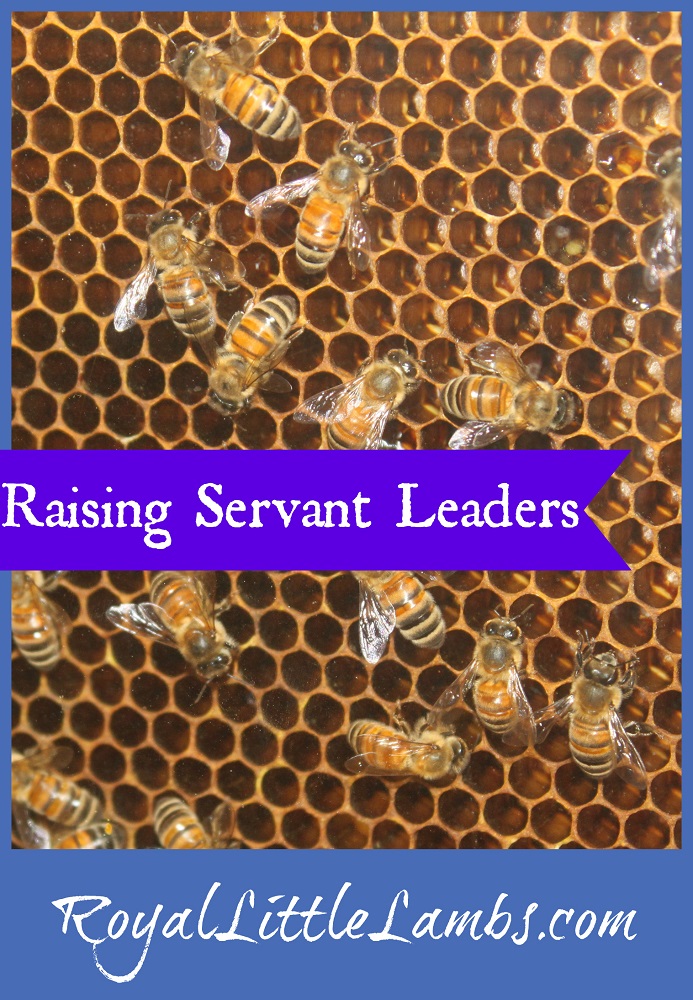
Raising Servant Leaders

All I heard in this mother’s exasperation over the situation was that she wasn’t confident in her parenting.

I am by no means an expert, but I am confident that I am leading my kids in the right direction.

Up.

I point them to God through Scripture.

I love, love, love the book Lead Your Family Like Jesus.

I don’t hold it over their heads as a threat, but I encourage them in their work ethic and attitude:

Servants, do what you’re told by your earthly masters. And don’t just do the minimum that will get you by. Do your best. Work from the heart for your real Master, for God, confident that you’ll get paid in full when you come into your inheritance. Keep in mind always that the ultimate Master you’re serving is Christ. The sullen servant who does shoddy work will be held responsible. Being a follower of Jesus doesn’t cover up bad work.

Colossians 3:23-25 The Message

I’ve never discouraged my kids from helping when they so desire (There have been times when I direct my kids to do something a little differently due to a scheduling issue or disastrous mess though). I want my kids to understand that work is good. Sure, I loathe doing dishes and each child has his or her favorite and least favorite chores.

We all have to pitch in to make the household run smoothly.

I want to raise my four lambs to be servant leaders, world changers for Jesus. They need a strong work ethic and great attitude to be successful.

Wondering which chores I expect at which ages?

Share
Pin1
Share
1 Shares
You might also like:

Filed Under: Leadership Tagged With: parenting

Teaching By Example with Chores

This blog may contain affiliate links: disclosure.
Please see my suggested resources.

April 24, 2014 By Jennifer Lambert 15 Comments

We like to train our children from very early on to help out at home. We also train the older kids to help the younger kids, teaching them and kindly guiding them to do jobs well and completely.

I expect the older ones to give grace and not be too demanding. This helps build teamwork and leadership skills.

Working together is important. Teaching helps us learn a task completely, when students ask questions or do something differently, it expands our knowledge base.

I use some of these times to teach my older kids the difference between being a leader and being a boss.

Let them help in a real way from the time they are toddlers, rather than assuming they need to be otherwise distracted while we do the work.

Kids benefit from REAL responsibilities.

A basic list of various household chore ideas by age.

These are what my kids are and were able to accomplish. Every child and family is different.

These are tasks my kids complete daily or weekly. And of course, each level can do the previous level work.

I have learned to not say no if my child wishes to do a chore. Even if that chore doesn’t need to be done. That window or mirror could be wiped every hour, but my son does it so cheerfully, why would I discourage him?

Toddlers (under age 3)

Model to them how to help.

Babies want to be with Mama. Mama has to do chores. I often wore my babies while doing chores too.

Babies and toddlers love it when you narrate what you’re doing. This teaches them language, relationship, and work ethic, and skills.

I began training my babies to help as soon as they were able to sit up on their own. They love helping. It’s amazing what they’re capable of doing if you let them!

We start with the lessons that we always clean up our messes and finish what we begin. We establish routine and structure to our days.

  • Folding towels or napkins and helping to put them away
  • Sorting laundry by colors and throwing sorted clothes in the washer
  • Slicing soft fruits (use a safe knife)
  • Helping to set the table
  • Put toys away (with lots of guidance, encouragement, games and songs, and help)
  • Push buttons to begin dishwasher or laundry cycles (my kids always begged to do that!)
  • Wipe a mirror or cabinet with a cleaning cloth

Preschoolers (ages 3-5)

I love preschoolers with their “I do it!” attitude. They want to do everything themselves.

Let them.

Encourage them to contribute. They love it. Even if it’s more work for you. Don’t ever let them see you go back and fix it!

I am amazed at how independent kids can be if you just allow them the freedom to try. I wish I hadn’t been so anxious with my daughters. By the time my son Alex came along, I was relaxed and loved to just sit back and watch what he would do on his own. He impresses me. He can complete multi-step commands very well!

I encourage critical thinking by asking what we need to do next rather than giving commands.

  • making a bed
  • cleaning up toys (with lots of encouragement, help, a game or song) – I often tell him to get started and I come around to help him finish.
  • slicing fruits or vegetables (we love these knives)
  • sorting laundry, helping to switch it from washer to dryer, folding and putting away
  • setting the table
  • sweeping the floor (they need help with the dustpan part)
  • vacuuming (my kids are strong – our vacuum cleaner weighs a ton!) but we also have a small vacuum for small cleanups
  • spray and wipe mirrors, cabinets, doors, doorknobs with a cleaning cloth
  • help empty trashcans
  • feed and water pets

Primary (ages 6-8)

This is really the golden age.

These kids are still cheerful and helpful about chores. My middle children were a beautiful thing at this age. They were compliant and agreeable and regularly came to me, asking: what more can we do to help?

My kids totally embarrassed a friend of mine when they stayed with her so Aaron and I could spend a weekend in the mountains on a marriage retreat. They cooked, cleaned (even wiped down her kitchen cabinets in and out), and were just very, very, very helpful. She now expects way more of her own kids (who are the same age as my younger three) since mine were so capable. (I’m proud!)

I encourage my kids to accept personal responsibility with words and actions. For example, if they lose a library book, they have to earn the replacement cost or late fee.

  • laundry with supervision
  • setting and clearing the table
  • unload and load the dishwasher
  • sweeping and mopping (still help with that blasted dustpan)
  • vacuuming
  • dusting
  • helping in the kitchen with food prep
  • cooking simple items with supervision
  • keeping bedroom, play space, and school work neat and organized (with help)
  • sorting clothes for donation, resale, or rag bin
  • help with gardening or yard work
  • wiping down bathrooms
  • getting the mail
  • putting groceries away

Tweens (ages 9-12)

This is the age when chores have lost their magic.

These kids start expecting to earn an allowance or extra privileges for doing chores they’ve done since they were in diapers. They live in my house, eat my food, use my water and electricity, and occasionally get new clothes. They must do chores. They must contribute to the common good. I teach them to make to do lists. We try to make chores fun and dance and listen to music and play games. Occasionally, they can do extra chores for pay to help learn responsibility.

  • laundry
  • dishes
  • cooking simple meals
  • keeping bedroom, play space, and school work neat and organized
  • gardening and yard work
  • cutting the grass
  • cleaning the car, inside and out
  • cleaning kitty litter boxes
  • putting garbage cans on the curb (and bring them back to the garage)
  • pet sitting or dog walking

Teens (ages 13+)

By the time kids are teens, they should be parents’ helpers.

Training should be finalized in the early teens and they should gradually become independent and capable as they approach adulthood. It’s our purpose as parents to train ourselves out of the job. Our kids should become self-sufficient. I won’t allow my kids to be like some of the friends I had as a teen and young adult who didn’t know how to make even a simple meal or sew on a button!

  • meal planning (we like eMeals!)
  • cook complete meals from scratch
  • oil change for the car
  • rotating or changing tires on the car
  • running a yard sale (I love that my eldest is a whiz with customer service and money and I can just supervise)
  • babysitting
  • sewing and mending
  • organizing and tidying
  • elderly companion (I did that as a teen, reading and assisting a family friend)
  • filing and paperwork, applications for college or jobs, tax prep help
  • household management
  • technology help, even VA training – We need to make sure our kids are Internet savvy and use discretion online. I monitor closely and teach.

We encourage our kids to help Daddy and learn about handyman activities.

I will say my kids are a bit advanced in the kitchen. All four of my kids are pros at making perfect scrambled eggs – without supervision at a very young age. The girls are very able to prepare to prepare simple meals with very little supervision. We all love to cook and eat together!

All the men in my and Aaron’s family were very handy and I want my kids to learn those skills. And it’s wise and frugal to know some basic handyman methods and be able to fix things yourself.

We don’t do cute little charts or lists or any of that extrinsic motivation. Chores get completed daily and weekly as needed. The kids are trained to complete a task when it’s necessary. We do zones each week. Sure, we sometimes get behind if our schedule gets crazy, but we catch up. Work before play.

I expect the younger kids to complete a task to the best of their ability. Older kids have to meet higher standards.

For instance, I expect a floor vacuumed.

The 4-year-old sweeps the vacuum across the floor 3-4 times until he is physically exhausted from the effort of that monstrosity of a vacuum. Awesome.

The 7-year-old vacuums up visible dirt around the paths made from furniture. Awesome.

The 13-year-old should move the ottoman and coffee table and vacuum under those, get that wand out and vacuum along the baseboards. Awesome.

The husband vacuums and there’s a ticker tape parade.

No, not really.

Not every time.

We used this chore chart for a while with our littles to help them.

How do your kids help with household chores?


Share
Pin41
Share
41 Shares
You might also like:

Filed Under: Family Tagged With: chores, leadership, parenting

We All Make Mistakes

This blog may contain affiliate links: disclosure.
Please see my suggested resources.

March 18, 2014 By Jennifer Lambert 4 Comments

I had an awesome mama moment with my son when he was a toddler.

He dropped an egg and, out of fear, he hid it.

He did admit he dropped an egg.

I am glad he told me.

We All Make Mistakes

I gathered towels and went to go help clean up the mess. When I couldn’t find a mess, I asked him about it.

He stammered and lied.

I found where he hid the egg. The shell had barely cracked and the membrane was still intact. There was no mess.

He stared at me, wide-eyed in fear, as I held the cracked egg in my hand.

I told him to sit on the sofa for a minute.

He cried.

I threw the egg out.

I pulled out our Child Training Bible and read aloud the verses on lying and we discussed them and prayed, holding hands. I hugged him and told him how much I love him.

I told him I’m not mad and mistakes happen. I thanked him for telling me he broke an egg, and that I will always help him clean up his mistakes.

He is so much more than a broken eggshell.

Leading him in prayer over the sin of lying was so much easier than yelling, shaming, isolating him in a timeout over a hidden broken egg.

I could have cracked his shell, smeared his soul, and spilled his heart out all over the floor.

I did that too often with my firstborn. We’re still rebuilding.

Too often, we as parents are the reason our children lie. They’re afraid of consequences. They don’t feel safe enough to tell the truth.

Do we as adults feel safe enough for truth?

Don’t exasperate your children by coming down hard on them. Take them by the hand and lead them in the way of the Master. Ephesians 6:4

Forgiveness is good.

How many times do I make a mistake and then hide it, pretend it didn’t happen, or even lie about it (even if I only deceive myself)?

Do you have any mistakes you need help cleaning up?

Jesus would love to help.

Share
Pin23
Share
23 Shares
You might also like:

Filed Under: Family Tagged With: discipleship, parenting, prayer

  • « Previous Page
  • 1
  • …
  • 5
  • 6
  • 7
  • 8
  • 9
  • 10
  • Next Page »
Suggested ResourcesRakuten Coupons and Cash BackNotebookingPages.com LIFETIME Membership

Archives

Popular Posts

10 DIY Gifts with Essential Oils10 DIY Gifts with Essential Oils
Natural Remedies for HeadacheNatural Remedies for Headache
10 Natural Remedies to Keep on Hand10 Natural Remedies to Keep on Hand
Henna Hands CraftHenna Hands Craft
Homemade Turkey Divan CasseroleHomemade Turkey Divan Casserole
This website uses cookies to improve your experience. We'll assume you're ok with this, but you can opt-out if you wish.Accept Reject Read More
Privacy & Cookies Policy

Privacy Overview

This website uses cookies to improve your experience while you navigate through the website. Out of these, the cookies that are categorized as necessary are stored on your browser as they are essential for the working of basic functionalities of the website. We also use third-party cookies that help us analyze and understand how you use this website. These cookies will be stored in your browser only with your consent. You also have the option to opt-out of these cookies. But opting out of some of these cookies may affect your browsing experience.
Necessary
Always Enabled
Necessary cookies are absolutely essential for the website to function properly. This category only includes cookies that ensures basic functionalities and security features of the website. These cookies do not store any personal information.
Non-necessary
Any cookies that may not be particularly necessary for the website to function and is used specifically to collect user personal data via analytics, ads, other embedded contents are termed as non-necessary cookies. It is mandatory to procure user consent prior to running these cookies on your website.
SAVE & ACCEPT