Jennifer Lambert

A Sacred Balance

Visit Us On FacebookVisit Us On PinterestVisit Us On InstagramVisit Us On Linkedin
  • Homeschool
    • Book Lists
    • How Do We Do That?
    • Notebooking
    • Subjects and Styles
    • Unit Studies
  • Travel
    • Europe
      • Benelux
      • France
      • Germany
      • Greece
      • Ireland
      • Italy
      • London
      • Porto
      • Prague
    • USA
      • Chicago
      • Georgia
      • Hawaii
      • Ohio
      • Utah
      • Yellowstone and Teton
  • Family
    • Celebrations
    • Frugal
  • Military Life
    • Deployment
    • PCS
  • Health
    • Recipes
    • Essential Oils
    • Fitness
    • Mental Health
    • Natural Living
    • Natural Beauty
  • Faith
  • About Me
    • Favorite Resources
    • Advertising and Sponsorship
    • Policies
  • Reviews

© 2025Jennifer Lambert · Copyright · Disclosure · Privacy · Ad

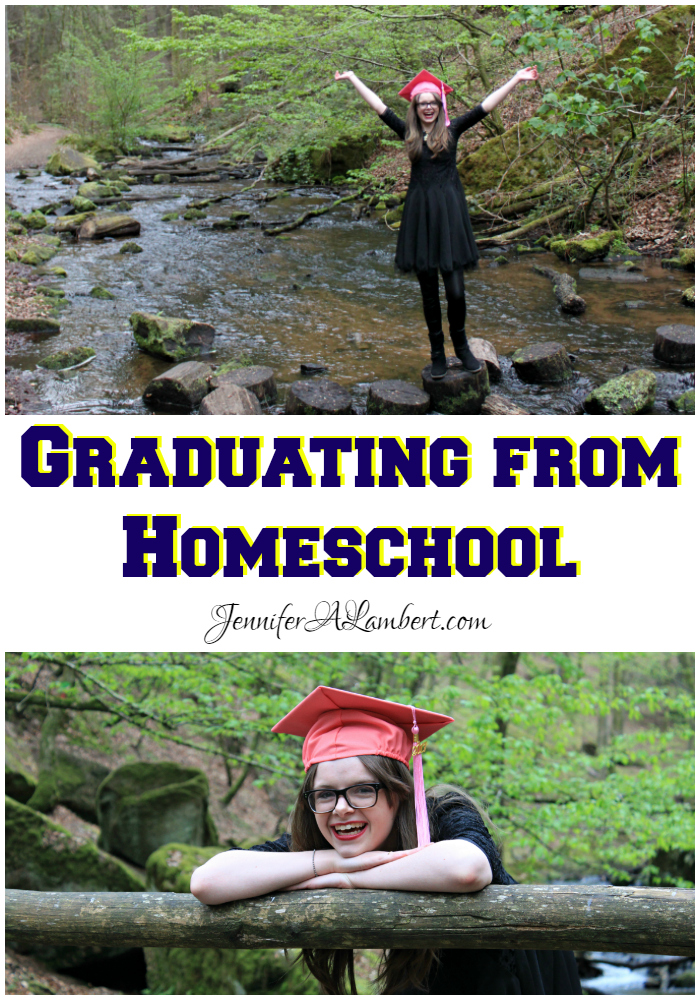
Homeschooling as a Military Family

This blog may contain affiliate links: disclosure.
Please see my suggested resources.

March 28, 2017 By Jennifer Lambert 19 Comments

Families decide to homeschool their children for so many different reasons: academics, extra-curricular activities, special needs, allergies, religion, and more all bring families to the decision to homeschool.

Who homeschools?

Homeschooling families are as diverse as our United States military families!

According to the National Center for Education Statistics (NCES), in 2012, there were an estimated 1.8 million homeschooled students in the United States, and those numbers are increasing!

Many families homeschool temporarily for various reasons and some families are in it for the long haul.

Why homeschool in the military?

Transitions

Many military families find PCS season easier without having to deal with school transfer paperwork. Who wants more paperwork?

Different standards in each state can make it difficult for children transferring between school districts. With homeschooling, fewer credits are missed because it is a more cohesive transition if parents are in control. Many parents also complain of “gaps” in education standards in the states where they’ve lived.

Flexibility

Instead of worrying about school break schedules and half-days, homeschoolers can travel whenever they want or take time off from book work to spend more time with a soon-to-be deployed or returning parent.

Opportunity

Homeschoolers receive a “real world” education, especially in military families, since we often have the opportunity to live in or travel to so many interesting places around the world! We learn to be more culturally aware. We are third culture families! We’re often “road schooling” so we can see the places we’re learning about in our homeschool.

Homeschooling can be done anywhere, anytime.

What you need to know:

Homeschool families in CONUS locations must abide by the state law where you live (not your sponsor’s state of residency) which may include submitting an “intent to homeschool” letter or form, providing standardized test scores, assessments, portfolios, curricula titles, attendance records, and more annually.

You could be penalized for truancy or worse if you don’t comply.

Know the law and your rights.

For OCONUS locations, homeschool families do not have to report or submit anything to anyone, but it is recommended (not required) to mention it to the sponsor’s commander. Realize that homeschooling is often illegal for local citizens in host countries, so it is good to know your rights under the SOFA agreement. And it’s also nice to be respectful of daytime hours when neighbors might question your or your kids.

It is advisable to keep good records of homeschool documents in case of PCS to a state with stricter policy – or the possibility of future enrollment into public, private, or DoD schools. You just never know what the future may hold.

What about socialization?

Homeschoolers are not all stuck in little closets, reading quantum physics, rebuilding computers, composing symphonies, or hacking into secure servers.

Socialization is a concern, especially for many parents beginning homeschooling. We worry about isolation and how our children will be able to interact with others in a healthy way.

School environments cannot recreate natural socialization within controlled age-segregated institutions.

We’ve discovered many unique opportunities to socialize!

Libraries offer all kinds of fun: storytime, crafts, clubs, games, classes, contests. Ask your librarian to plan homeschool events!

Our children have always taken music lessons from amazing teachers in our community.

My kids participate in gymnastics, soccer, track, and baseball. There are many sports opportunities within most communities.

We attend church frequently where our children interact with so many different people of all ages.

Volunteering is a great opportunity for homeschoolers who have a flexible schedule. My teen daughter works at our installation hospital twice a week. She is certified with the Red Cross and loves it!

My teenage daughter is also a member of a local drama troupe where she performs with many amateur thespians of all ages in our community.

We are members of a local homeschooling organization that holds art shows, science and geography fairs, co-op classes led by parents, talent shows, field trips, holiday parties, and special events. We can participate as much or as little as we want.

Many homeschoolers are involved in Girl Scouts or Boy Scouts or similar extra-curricular activities.

My eldest daughter has participated in Civil Air Patrol since she was 12 years old.

Even shopping, medical appointments, and dining out is educational. It’s a learning experience to interact with and be courteous to store clerks, cashiers, nurses, wait staff, and other patrons.

We as homeschool parents get to choose our children’s socialization…who they associate with and what they spend their time doing.

Our attitudes and experiences impart knowledge to our kids.

What if you can’t (or don’t want to) teach something?

I am so lucky that I am the English and history expert and my husband is the math and science guy. Together, we can tackle almost anything our kids want to learn, even the tougher high school courses.

But what if you don’t want to teach writing or algebra gives you hives?

Many homeschool classes are offered online! Lots of companies provide classes especially for homeschoolers.

Private tutors are an available resource, both online and locally. Many local and DoD libraries offer free or reduced educational services.

You can check for local co-op classes. If there is nothing available in your area to suit your family’s needs, ask other parents to help you create a course! There are probably other parents in need of your skills who can offer their expertise.

Homeschoolers can enroll part-time in many local or DoD schools for academics, electives, or extra-curricular activities. Just speak to the school office for procedure.

What about high school and beyond?

We are navigating this right now and it’s both scary and exciting!

It’s important to keep good records.

Calculate high school credits and complete a transcript.

Prepare for the ACT or SAT.

Complete paperwork for financial aid, applications, scholarships.

Visit college or job fairs.

Homeschool high school doesn’t have to look like traditional school.

Coach your homeschooled students well for after high school – no matter if that’s work, college, a gap year, or whatever.

Whether it’s for a semester or 12+ years, homeschooling is an educational option many military families all over the world choose for their children.

Homeschooling is the hardest job you will ever love.

Resources:

The Homeschool Foundation assists military homeschool families who struggle financially to meet their children’s educational needs.
The Homeschool Association for Military Families is a group advocating for military families to be allowed to choose one location (a family home state) and a set of laws to follow throughout a child’s education. I think that’s great!
Get a starter kit from the Home School Association for Military Families.
Remember: You can get military and teacher discounts at many stores! Check with curricula providers, bookstores, services, and stores for military and teacher discounts.

Homeschool Support Groups:

Military Homeschoolers (Worldwide)
Military Homeschoolers Overseas
Secular Homeschoolers

OCONUS Homeschool Support Groups:

There are lots of groups for each installation. Ask or do an online search to find one near you!

United Homeschoolers of Germany (KMC, Germany)
KMC Christian Homeschoolers (KMC, Germany)
KMC Inclusive Homeschool Group (KMC, Germany)
Eifel Homeschool Group (Spangdahlem, Germany)
Grafenwoehr and Vilseck Homeschoolers and Facebook Group (Germany)
Sigonella Homeschoolers (Italy)
Naples Homeschooling (Italy)
Naples Christian Homeschooling (Italy)
L.I.F.E. Homeschool Group – Lakenheath and Mildenhall (UK)
Okinawa Homeschool Group
Seoul Homeschool Group

Let me know if there’s a group where you live that I don’t have on my list!

Book Resources:

  • The Well-Trained Mind: A Guide to Classical Education at Home by Susan Wise Bauer
  • Last Child in the Woods: Saving Our Children From Nature-Deficit Disorder by Richard Louv
  • Unconditional Parenting: Moving from Rewards and Punishments to Love and Reason by Alfie Kohn
  • The Danish Way of Parenting: What the Happiest People in the World Know About Raising Confident, Capable Kids by Jessica Joelle Alexander and Iben Sandahl 
  • Bringing Up Bébé: One American Mother Discovers the Wisdom of French Parenting by Pamela Druckerman
  • How Children Learn by John Holt
  • Free to Learn: Why Unleashing the Instinct to Play Will Make Our Children Happier, More Self-Reliant, and Better Students for Life by Peter Gray
  • Balanced and Barefoot: How Unrestricted Outdoor Play Makes for Strong, Confident, and Capable Children by Angela J. Hanscom
  • Simplicity Parenting: Using the Extraordinary Power of Less to Raise Calmer, Happier, and More Secure Kids by Kim John Payne
  • Free-Range Kids: How Parents and Teachers Can Let Go and Let Grow by Lenore Skenazy
  • Nonviolent Communication: A Language of Life: Life-Changing Tools for Healthy Relationships by Marshall B. Rosenberg, PhD 
  • Hold On to Your Kids: Why Parents Need to Matter More Than Peers by Gordon Neufeld and Gabor Maté  
  • The Myth of Normal: Trauma, Illness, and Healing in a Toxic Culture by Gabor Maté

You might also like:

  • PCS While Homeschooling
  • Preparing Kids for a PCS
  • Military Kids are TCKs
Share
Pin29
Share
29 Shares
You might also like:

Filed Under: Homeschool, Military Tagged With: homeschool, milfam, military, milkid

How to Write an Essay

This blog may contain affiliate links: disclosure.
Please see my suggested resources.

March 8, 2017 By Jennifer Lambert 13 Comments

When I entered university, I didn’t know how to write the typical 5-paragraph essay.

I vaguely remembered writing a literary research paper in 9th and again in 10th grade, with much hand-holding from the teacher, but I had a substitute teacher for my 11th and 12th grade years, so I basically sat in the back corner, by the window, and read poetry and classic novels. I started college early to escape.

In my second year or college, my Shakespeare professor kindly took me under his wing and tutored me in the essay format and I then took off with it, easily earning A’s in all my English courses.

I majored in literature, which was kind of a cop out and didn’t enable me to explore too many career options. I entered a 15-month master’s program to earn my M.Ed. and then I taught high school English for a few years. I moved on to teach college writing until we moved out of state and I had my babies.

Now I homeschool my four children. I don’t encourage formal writing until my kids are high school age. I don’t place a huge focus on typical English education. We read a lot and have lively discussions.

Essays are a bit more than a series of paragraphs thrown together. I explain the necessary parts of a well-written paragraph here.

Types of essays:

  • Expository essays
  • Descriptive essays
  • Narrative essays
  • Argumentative (Persuasive) essays

Most college essays require research and source citations. Different disciplines require different styles. I typically used MLA since I worked with literature. I love how easy these websites make generating source citations!

Citation Styles:

  • MLA
  • APA
  • Chicago

How to write an essay:

When I taught writing as a school teacher, I used to begin by pulling out an adorable copy of The Three Little Pigs and reading it aloud to the class.

Middle school, high school, college level. The students loved it and giggled, excited to be swept back to preschool storytime days.

It’s a well-known story, familiar and comfortable, so it takes the scary out of essay-writing when it’s so simplified.

After reading the book, I wrote on the board the outline format of the story.

The Three Little Pigs is a perfect 5-paragraph essay!

I. Introduction
II. Straw Pig
III. Stick Pig
IV. Brick Pig
V. Conclusion

Then, we would summarize the story together and I would jot down details on the outline.

Download a worksheet for summarizing The Three Little Pigs here.

Since I had to give grades and busy work to students in middle school and high school, I would assign them to quickly write up the summary in 5-paragraph format.

Then, we would segue into writing 5-paragraph essays on a variety of topics, working up to the dreaded literary analysis essay with citations and sources and references.

I like this handy dandy visual:

Review the format of a 5-paragraph essay:

  1. Determine a thesis.
    This is a statement that serves as the premise to be maintained or proved throughout the essay.
    When I teach essay writing to new writers, I make the formula easy: State the argument including the 3 supporting statements. Place the thesis at the end of the introduction paragraph.
  2. At least 3 supporting statements.
    These three statements become the three body paragraphs. I typically require a resource quote for each paragraph.
  3. Introduction paragraph.
    The introductory paragraph attempts to accomplish these three things:
    • Introduce the topic with some indication of its inherent interest or importance, and a clear definition of the boundaries of the subject area
    • Indicate the structure and/or methodology of the essay, often with the major sections of the essay or its structural principle clearly stated
    • State the thesis of the essay, preferably in a single, arguable statement with a clear main clause
  4. Conclusion paragraph.
    A conclusion paragraph attempts to accomplish these three things:
    • It provides the reader with a sense of closure on the topic
    • It demonstrates to the reader that you accomplished what you set out to do
    • It shows how you have proved your thesis
  5. Works Cited page.
    This is a formatted list of research sources on a separate page after the essay. Many teachers and professors are very particular about spacing and punctuation.

Thesis Examples:

The three little pigs thwarted the big, bad wolf.
Albrecht Durer as a Reformation artist utilized color, symbolism, and secular subjects in his art to express the Protestant values of his peers.
Alice Walker coined the term “Womanism” to unify strong women of color, give them a voice, and differentiate from the more white Feminist ideals.

Tips:

Eliminate “to be” verbs. In data processing programs, search for these and replace with active verbs.
Do not use “you” or “I.”
No slang.
No contractions.
Wikipedia is not a credible source.
Use 1 quote per body paragraph. Make sure to introduce it and support it. Place it in the middle of the paragraph.

Teaching and writing essays shouldn’t be frightening. It’s easy when you follow a formula.

Linking up: Life of Faith, Blogghetti, Practical Mom, The Mrs. Tee, Curly Crafty Mom, Marilyns Treats, Donna Reidland, Strangers & Pilgrims on Earth, A Fresh Start, Inspiration for Moms, Modest Mom, Proverbs 31 Wife, MaryAndering Creatively, Simple Life of a Fire Wife, Oh My Heartsie Girl, Wife Mommy Me, Christian Blogger Community, Rich Faith Rising, Holley Gerth, Teaching what is good, Pat and Candy, Wise Woman, Raising Homemakers, Jaime Wiebel, Becoming Press, Saving 4Six, Katherine’s Corner, Women with Intention, Classical Homemaking, A Bountiful Love, Feeding Big, Life Beyond the Kitchen, Creative K Kids, Oh My Heartsie Girl Friday, Sincerely Paula, Create with Joy, Life with Lorelai, Being a Wordsmith, Strawberry Butterscotch, Arabah Joy, Crystal Waddell, Counting my Blessings, Debbie Kitterman, Happy and Blessed Home, Mommynificent, A Books and More, Pams Party and Practical Tips, Arabah Joy, Hip Homeschool Moms,
Share
Pin55
Share
55 Shares
You might also like:

Filed Under: Homeschool Tagged With: homeschool, LA, writing

We Don’t Do Testing

This blog may contain affiliate links: disclosure.
Please see my suggested resources.

February 16, 2017 By Jennifer Lambert 27 Comments

Apparently, it’s shocking that we don’t do any testing in our homeschool.

Going against the norm is uncomfortable for lots of people. Homeschool parents seem to feel like they must recreate a school environment at home.

We don’t do testing in our homeschool.

Whoever said there’s no such thing as a stupid question never looked carefully at a standardized test. ~Alfie Kohn

Our culture is permeated with performance.

Outcomes, grades, products, success are more important than the process, than learning. When we focus on outcomes, the motivation is extrinsic and meaningless. We cram for the assignment and then purge the information to move on to the next. There’s no learning involved except in the conditioned behavior, like a rat pushing a button for food.

Let’s begin with a few definitions:

What are Assessments?

Assessment focuses on learning, teaching, and outcomes. It provides information for improving learning and teaching. Assessment is an interactive process between student and teacher that informs the teacher how well the student is learning what they are teaching. The information is used to make changes in the learning environment, and is shared with students to assist them in improving their learning and study habits. This information is learner-centered, course based, frequently anonymous, and not graded.

What are Evaluations?

Evaluation focuses on grades and may reflect components other than course content and mastery level. These could include discussion, cooperation, attendance, and verbal ability.

Tests, exams, quizzes, assessments, and evaluations are often used interchangeably among teachers and parents.

In school, you’re taught a lesson and then given a test. In life, you’re given a test that teaches you a lesson. ~Tom Bodett

Some arguments I’ve heard for testing:

How do I  know if the kids are learning?

I have FOUR children. I think I know if they’re learning or not. I don’t have 150 students. Testing is for schools. We’re always learning and the kids are great at self-evaluation. Life is learning. I allow them great freedom to explore their interests.

How do the kids know how to take tests?

Trust me. My kids know what tests are and can complete true/false, multiple choice, fill in the blank, short answer, and essay questions on a variety of subjects. But why would I require such low level evaluation?

How do I report to authorities that require test results?

Sure, it’s probably easier to subject the kids to standardized tests to report to state authorities than complete a portfolio or evaluation form. But is it easiest for the kids or the parent?

Only 8 states require testing with no other option: GA, MN, NC, ND, OR, SC, SD, TN. The standard and penalty are arbitrary, undefined, remediation, “family should remedy,” or enrolling in an umbrella school. AR, MN, NC are the only states which require annual testing without alternatives.

I had my eldest daughter tested in Hawaii in 3rd grade. We weren’t stressed about it. It gave us a baseline, but nothing we didn’t already know. The other states where we’ve lived, TX and UT, didn’t require any reporting.

We’re not interested in comparing our kids to anyone, so testing isn’t important to us.

It’s not difficult to complete portfolio or evaluation requirements. Or just enroll under an umbrella school or homeschool organization if that’s an option.

How are the kids graded?

My kids are not graded.

I repeat: We don’t do grades.

We’re constantly learning. Grades ruin the process. Grades don’t mean anything. They have freedom to learn. They have freedom to take risks, to explore, to fail, to succeed, to be challenged. They are not limited to a rubric. There’s no pressure.

Grades are extrinsic motivation and we prefer intrinsic motivation.

How do the kids know how to study?

I prefer that my kids learn than cram for some test, but they have great skills to help with studying if and when they need it. They’re active readers and writers and remember lots of information and make great connections. I occasionally offer minilessons to teach a skill I think is interesting.

How do I write high school transcripts?

Transcripts are pretty subjective. I list courses completed to mastery. Based on effort, there are a range of A’s and B’s on the transcript.

My eldest audited physics. Civil Air Patrol didn’t issue grades, but she excelled at it.

I’m hoping for colleges to look at a portfolio and not put such an emphasis on grades.

No one has ever asked me for my transcript or GPA or grades since my grad school enrollment.

How do the kids prep for the SAT/ACT?

Strong vocabulary and math skills are key. We read lots and discuss for comprehension, focus on math skills all along, then learn some testing tricks. My teen’s score on the PSAT was great with no prep at all, so we’re hoping to boost that score by a couple hundred points with some practice on Kahn Academy and a vocabulary book.

Thanks to the nation’s testing mania (which I like to call ‘No Child Left Untested’ rather than ‘No Child Left Behind’), children are being barraged with a nonstop volley of standardized tests. From kindergarten to graduate school, students are subjected to an unprecedented number of high-stakes tests. ~Laurie E. Rozakis, I Before E, Except After C: Spelling for the Alphabetically Challenged

How we assess in our homeschool:

My kids are great learners. They don’t need me.

I’m not a teacher. I’m not a tutor.

I’m a guide. I’m a counselor.

Discussion

We constantly discuss what we’re learning and reading and exploring. Narration is a great tool that can be really fun with all ages.

Language is important to express our ideas, preferences, interests.

I love to hear what my kids have to say about art, music, literature, history. I love to see them make connections on their own. I love to see that lightbulb moment.

Notebooking

The kids love to write and draw about their experiences. The open-ended idea of notebooking allows for great creativity and individuality instead of a cookie-cutter worksheet with low level thought processes.

I’m not worried about benchmarks, curricula, What My Child Needs to Know in Nth Grade, grades, tests, or knowledge. We don’t participate in co-ops.

Writing

I don’t discourage essay writing, but I don’t force it. I don’t even really teach it until high school.

I think younger kids need to learn so much more than writing that we don’t focus on it at all. Kids are natural storytellers. We discuss what we read and make connections, synthesizing knowledge…and this paves the way almost effortlessly into the formulaic essays that college professors like.

I’m more concerned that my kids love learning and exploring and grow up to be free thinkers.

Educational success should be measured by how strong your desire is to keep learning. ~ Alfie Kohn

Learning is a lifelong process.

I’ve learned more outside of school, after high school and university, then I ever did inside a classroom.

Kids will learn despite school.

Sources:
https://cft.vanderbilt.edu/guides-sub-pages/blooms-taxonomy/
https://arc.duke.edu/documents/The%20difference%20between%20assessment%20and%20evaluation.pdf
http://a2zhomeschooling.com/main_articles/comparing_testing_requirements/

Linking up: The Modest Mom, Marilyn’s Treats, Strangers & Pilgrims on Earth, Donna Reidland, A Fresh Start, Life of Faith, Inspiration for Moms, Proverbs 31 Wife, Mrs. AOK, Curly Crafty Mom, Practical Mom, This Chaotic Bliss, A Pinch of Joy, Nourishing Joy, Simple Life of a Fire Wife, Teaching What is Good, Blogghetti, Let Me Tell You a Story, Raising Homemakers, Wise Woman, Messy Marriage, Christian Blogger Community, Holley Gerth, Oh My Heartsie Girl, Pat and Candy, Katherine’s Corner, A Bountiful Love, Women with Intention, Saving 4Six, Feeding Big, Creative K Kids, Life Beyond the Kitchen, Chronically Content, Life with Lorelai, RCH Reviews, Create with Joy, Life as we Know It, Oh My Heartsie Girl Friday, Being a Wordsmith, Crafty Moms Share, Hip Homeschool Moms,
Share
Pin33
Share
33 Shares
You might also like:

Filed Under: Homeschool Tagged With: back to school, homeschool, unschooling

Homeschool Preschool

This blog may contain affiliate links: disclosure.
Please see my suggested resources.

January 30, 2017 By Jennifer Lambert Leave a Comment

For preschool, we’ve tried lots of different activities and curricula.

Preschool homeschool doesn’t have to cost really anything. I know some homeschool parents who buy these expensive boxed curriculum sets, but I think these are a waste of money and cause lots of stress for child and parent. The schedules are strict and seem to have a lot of worthless busy work.

Our homeschool days have always been only a couple hours of academic work, even for high schoolers!

I highly recommend the books by Louise Bates Ames. Good guides to follow are What Your Preschooler Needs to Know: Get Ready for Kindergarten and What Your Kindergartner Needs to Know: Preparing Your Child for a Lifetime of Learning by E.D. Hirsch, Jr. These are just great jumping off points.

How We Homeschool Preschool:

While I believe that small children should play, play, play as much as possible, my younger kids wanted to “do school” like big sister, so I obliged with workbooks and fun activities and they soaked it up like sponges.

I read aloud to my kids from pre-birth through high school age. We all love books.

Autonomy

I don’t force anything on my kids. I allow them to explore their interests. We don’t worry about handwriting. Reading comes naturally, whenever the child is ready. They love learning about science and history.

Toys

Lots of plastic electronic toys are a waste of money. My kids prefer building materials and toys and recyclable items for craft creations. Pretend play is important. I shop after Halloween sales and thrift shops for fun dressup clothes. Less really is more.

Technology

Screens in moderation. Sometimes kids just need and want the downtime. When it’s bad weather outside or we’re not feeling well, it’s fine to curl up together or alone with the cats and watch a show or play an app. Why should we make kids feel guilty when adults do it all the time? My kids learn how to self-regulate their screen time by not having strict rules about it, other than all devices away at bedtime.

Outdoors

We spend lots of time outside. We play balancing and running games and run free and wild. We learn about and experience nature. I seldom structure this time unless we go on a hike at a nature center. Kids need lots of free play time outdoors.

Practical Life

They use real tools in the kitchen, helping cook real food meals.

We explore textures and colors and drawing with real art supplies.

We go to the library at least weekly – for storytime and checking out lots of fun books.

Lots of fun field trips – farms, museums, science centers, historic locations, beaches, parks, nature centers. We prefer realistic locales over entertainment places like amusement parks. We love to travel!

My middle and youngest children wanted to “do school” almost from birth. They followed their sister around and wanted to do everything she did. I provided activities based on interests and needs so they felt useful and occupied.

Letter of the Week

We loved using the programs from Confessions of a Homeschooler and 1+1+1=1. It was lots of paper and printing, but the girls really loved it. Alex liked it ok.

My girls completed 2 levels of All About Reading and my son used their entire program. They all loved it! It was a fun and easy way to learn to read and they begged to do a lesson every single day.

Here are some of our random letter blog posts. I didn’t record all of our letter learning efforts.

  • Letter A
  • Letter D
  • Letter M
  • Letter N
  • Letter R
  • Letter U

Unit Studies

  • Astronomy
  • Beach
  • Back to School
  • Fall
  • Apples
  • Winter
  • Snow
  • Antarctica
  • Transportation
  • Royalty
  • Dinosaurs
  • Foxes
  • Wizard of Oz

Preschool Pinterest Board

Montessori Pinterest Board

I try to limit toys to encourage imaginative play.

Recommendations:

  • Sarah’s Silks
  • Branch Blocks
  • Geometric Blocks
  • Bilibo
  • Puppet Theater
  • Wiggle Car
  • Hopper Ball
  • K’Nex
  • Dome Climber
  • LeapFrog DVDs
  • Kumon workbooks
  • Kuhn Rikon kinderkitchen
  • Colored Pencils
  • Painting Supplies

Book Recommendations:

  • Your Self-Confident Baby: How to Encourage Your Child’s Natural Abilities — From the Very Start by Magda Gerber
  • Baby Knows Best: Raising a Confident and Resourceful Child, the RIE™ Way by Deborah Carlisle Solomon
  • Elevating Child Care: A Guide To Respectful Parenting by Janet Lansbury
  • No Bad Kids: Toddler Discipline Without Shame by Janet Lansbury
  • Help Your Preschooler Build a Better Brain: A Complete Guide to Doing Montessori Early Learning at Home by John Bowman
  • How To Raise An Amazing Child the Montessori Way by Tim Seldin
  • Montessori at Home Guide: A Short Guide to a Practical Montessori Homeschool for Children Ages 2-6 by AM Sterling
  • Teach Me to Do It Myself: Montessori Activities for You and Your Child by Maja Pitamic
  • Last Child in the Woods: Saving Our Children From Nature-Deficit Disorder by Richard Louv
  • Unconditional Parenting: Moving from Rewards and Punishments to Love and Reason by Alfie Kohn
  • How Children Learn by John Holt
  • Teach Your Own: The Indispensable Guide to Living and Learning with Children at Home by John Holt
  • Free to Learn: Why Unleashing the Instinct to Play Will Make Our Children Happier, More Self-Reliant, and Better Students for Life by Peter Gray
  • Free-Range Kids: How to Raise Safe, Self-Reliant Children (Without Going Nuts with Worry) by Lenore Skenazy
  • The Collapse of Parenting: How We Hurt Our Kids When We Treat Them Like Grown-Ups by Leonard Sax
  • A Disease Called Childhood: Why ADHD Became an American Epidemic by Marilyn Wedge

Preschool does mean Before Schooling. Kids before age six really need to play, play, play.

Share
Pin10
Share
10 Shares
You might also like:

Filed Under: Homeschool Tagged With: back to school, curriculum, homeschool, kindergarten, preschool, tot school

How We Learn

This blog may contain affiliate links: disclosure.
Please see my suggested resources.

January 19, 2017 By Jennifer Lambert 8 Comments

I’m often asked which curricula we use by other homeschool moms. I’m asked about our schedule. I’m asked about high school and transcripts. I’m asked about my kids’ behavior and attitudes.

Lately, I’ve tried to steer clear of conversations like these because we just seem to do things so differently.

Most people just aren’t willing or ready to hear our truth. They don’t really want to make any changes. They want an easy fix.

They want some miracle for their kids to be perfectly obedient, great readers, math whizzes, to ace their SAT/ACT.

They don’t want a relationship with their kids.

They don’t want to work and learn alongside their kids.

I’ve had parents flat out tell me that they quit Latin because they certainly don’t want to learn it with their kids and it was impossible for the kids to do alone.

It seems that so many parents want to recreate school at home. To me, that’s not homeschooling. It’s a waste of time and resources. It creates stress.

What Does School Really Teach Children?

  1. Truth comes from Authority.
  2. Intelligence is the ability to remember and repeat.
  3. Accurate memory and repetition are rewarded.
  4. Noncompliance is punished.
  5. Conform: Intellectually and socially.

We love our freedom to learn anything whenever we want.

I love seeing the uninhibited joy my kids exhibit as they hum a Gloria Estefan song during science notebooking or apply fraction math during cooking and baking.

We all snuggle up on the sofa to read history and literature together.

I love the natural rhythms of our lives as the kids and I learn together. See our schedule here.

We don’t separate our lives into contrived courses like home economics or anything. We just work together to do everything that needs to be done. The kids love to be in the kitchen, learning and working together. We all understand the less desirable chores must be done for a smoothly working household.

How we learn:

  1. We threw out the printables.

    They were a waste of time, took up loads of printer ink, and we ran out of storage room for their “portfolios.” We’d rather not do busy work anymore.

  2. We streamlined curricula.

    The most important curricula? Love and understanding. I want my children to have passion for learning, not held down to a scripted textbook or program. And I absolutely loathe computer curricula. It’s lazy. I do have a very few standards for my kids, but overall, we are very relaxed. I want them to complete Latin, and for the most part, they enjoy it. I learn alongside them. We have all these science textbooks and living books and they really are quite lovely, so we’re working through them. Bible workbooks are fun and offer a basis for great conversation. I want my kids to be Bible literate and comprehensive of apologetics. Math workbooks keep them on track and eliminate any gaps, and they go at their own pace. So what if my 6 year old is completing a 2nd grade workbook? High school credits have to be earned and tracked. We work towards mastery and my eldest is 16 and already graduating in a couple months.

  3. We canceled organized sports and outside lessons.

    The lessons became a waste of time and money. There was little progress in piano or guitar. Kids sports are just expensive controlled play time.

  4. Books outweigh screentime.

    We have an extensive book collection. I keep our coffee table covered with stacks of books pertaining to our time period in history that we learn each month. Each of us is always reading a book for fun. While we do have iPad minis, and spend time watching Netflix and playing games, the book time outweighs the screentime.

  5. No rewards.

    We don’t use incentive programs to motivate our kids. They’re worthless and train the authority more than the child. I never could remember the stupid stickers. Rewards confuse my kids. They ask why they get something for doing what they should do anyway. Kids under reward systems become adults with no self-control or intrinsic motivation.

  6. No punishments.

    If we don’t do rewards, we shouldn’t do punishments either. Natural consequences teach way more than external punishments. Time outs, spanking, restrictions, and taking away gifts or privileges are controlling and cruel. These actions only teach children that they are unloved, isolated, worthless, disrespected, captive. I prefer to be proactive and discuss situations with our kids.

  7. Few schedule controls.

    Children know when they’re hungry or tired. They can regulate their body’s needs.
    I provide a hot breakfast in the mornings, help prepare lunches when they say they’re hungry, and cook dinners in the evenings. Usually, everyone eats meals together, but sometimes, someone isn’t ready or doesn’t like a food, so they’re welcome to make a sandwich or wait until later. I don’t schedule snacks, but we always have fruit, nuts, yogurt, leftovers, and more available.
    We don’t have set bedtimes, but we recommend that the middle girls go to bed by 10 so they get enough sleep.
    Our son usually falls asleep during bedtime reading.
    Our teen stays up as late as she wants and sleeps later in the mornings. She has learned that she should go to bed earlier on the evenings before a work day.

  8. Lots of free play time.

    The kids get to choose when they complete their workbooks and they prefer to get those completed quickly so they have plenty of free play time. They use their free time to read, play on their iPads, create games with their toys, building and creating. I encourage lots of outside time, except when it is bitterly cold out.

  9. The best supplies.

    I try to provide the best supplies for my kids to create and build. They love learning about electricity, magnets, light, and pulleys and we buy science kits with their birthday and Christmas money. They love doing art with coloring pencils and paints. I don’t bother with cheap generic brands. They should be trusted with professional products and they don’t cost too much more.

  10. Travel.

    We make it a priority to travel to places we learn about in history and literature. It’s super important to us to experience travel and we make sacrifices in order to afford these trips. The kids remember these trips way more than a video or book.

Resources:

  • Balanced and Barefoot: How Unrestricted Outdoor Play Makes for Strong, Confident, and Capable Children by Angela J. Hanscom
  • The Collapse of Parenting: How We Hurt Our Kids When We Treat Them Like Grown-Ups by Leonard Sax
  • A Disease Called Childhood: Why ADHD Became an American Epidemic by Marilyn Wedge
  • Teach Your Own: The Indispensable Guide to Living and Learning with Children at Home by John Holt
  • Unconditional Parenting: Moving from Rewards and Punishments to Love and Reason by Alfie Kohn
  • Free to Learn: Why Unleashing the Instinct to Play Will Make Our Children Happier, More Self-Reliant, and Better Students for Life by Peter Gray
  • Last Child in the Woods: Saving Our Children From Nature-Deficit Disorder by Richard Louv
  • Simplicity Parenting: Using the Extraordinary Power of Less to Raise Calmer, Happier, and More Secure Kids by Kim John Payne with Lisa M. Ross
  • Free-Range Kids by Lenore Skenazy
  • Smart Moves: Why Learning Is Not All In Your Head by Carla Hannaford
  • 8 Great Smarts: Discover and Nurture Your Child’s Intelligences by Kathy Koch

What is your learning style?

Share
Pin10
Share
10 Shares
You might also like:

Filed Under: Homeschool Tagged With: back to school, homeschool, unschooling

Thanksgiving Unit Study

This blog may contain affiliate links: disclosure.
Please see my suggested resources.

November 8, 2016 By Jennifer Lambert 17 Comments

We’re focusing on American history this year in our homeschool.

I don’t waste my kids’ time forcing them to write gratitude journals or notebooking through thankfulness lists. If they desire to do those things, great. It kind of defeats the purpose when we make gratitude a chore.

We try to practice being thankful all the time. I copy Scripture each month with the handy calendars from Sweet Blessings. We read the Bible together every evening and my kids do morning devotions and Bible workbooks together every day as part of their homeschool work.

We live far from family, so we don’t really look forward to a huge meal and football with grandparents, cousins, aunts and uncles. We’re quite alone during holidays and the rest of the year.

We used to spend Thanksgiving at church – a huge potluck dinner. We often have turkey and fixings during Rosh Hashanah. Several family members don’t really like turkey. (gasp!)

We enjoyed traveling over the long Thanksgiving weekends when we lived in Germany. We’ve traveled to Prague and Porto and Venice. I miss traveling.

When Aaron was deployed, we ate just eat ham and played games together during the quiet long weekend.

We like to learn about the reasons Europeans colonized the Americas.

Most Americans celebrate our national day of Thanksgiving with turkey and football, but millions of people were and are being treated so poorly around the world. I want my kids to understand real history and not some whitewashed version written by people who consider themselves the winners. It’s sometimes hard not to get overwhelmed.

It wasn’t all a pleasant experience during that time of American history. We also learn about the tensions between colonists and natives with lots of books and documentaries. Native Americans are still around! Don’t let our public school educations fool us into thinking they’re just a stereotype from TV or all gone and assimilated into White culture.

November is also Native American month, so we learn about the tribes who inhabited the land and area we now call home. Here is a great list of books about and by Indigenous People.

We love the scene in Addams Family Values when Wednesday changes the script for their pageant.

We can change the script too – for our families. We can learn about and teach Truth about American history.

We can still celebrate gratitude, decorate with pumpkins, eat turkey and pie – and even watch football if that’s a thing that’s important. We can volunteer or give of our abundance.

We can make new traditions with our kids rather than highlighting Pilgrims and colonization. We can honor all ancestors and the land we live on with charity, love, and peace.

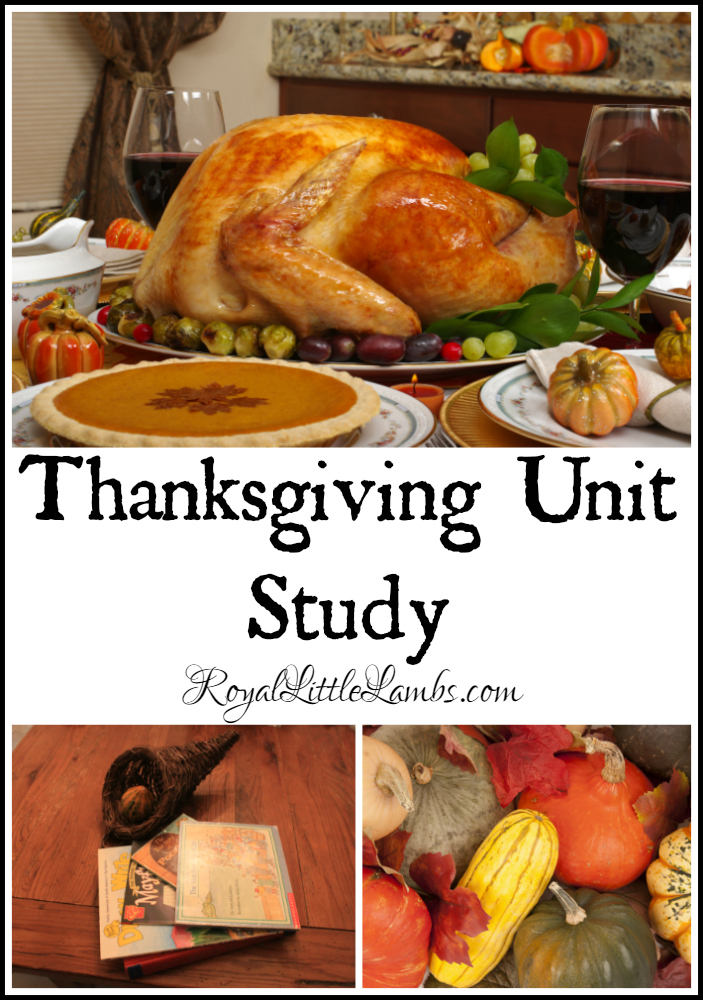
Thanksgiving Unit Study

How we celebrate Thanksgiving

We snuggle up on the sofa and read together in the mornings and evenings. Hygge. With candles and kitties. We love our new basement gas firelogs.

We get through these cold, dreary days when it gets dark at 4 PM with warm tea and cider, baking delicious cinnamon-scented goodies – like pumpkin scones, trying new soup concoctions, diffusing essential oils, and wearing fuzzy slippers.

We take our cod liver oil and have on our happy light at least 20 minutes every day to keep the depression at bay.

We try to get outside for walks unless it is very, very cold or icy.

We used to do fun crafts and activities when the kids were younger, but now that they’re older and no longer interested, we often just read and discuss and bake and watch movies together.

Resources:

  • FREE Thanksgiving Notebooking Pages
  • Makahiki – Thanksgiving in Hawaii
  • Favorite Thanksgiving Books
  • Redhead Mom Thanksgiving and Pilgrims Unit
  • Early Elementary Unit from Ed Snapshots
  • Countdown to Thanksgiving by Amy Puetz
  • The Homeschool Mom Thanksgiving Resources
  • Amanda Bennett Unit Study
  • Thanksgiving Lessons from Meet Penny
  • Thanksgiving Activities from Joy-Filled Life
  • Real Life at Home PreK and K Thanksgiving Unit
  • The History of Thanksgiving for Little Ones from The Modest Mom
  • Pilgrim Unit Study from In All You Do
  • First Thanksgiving Unit Plans from Scholastic
  • Harrington Harmonies Colonial Unit Study
  • Blessed Beyond a Doubt Cultivating Thankful Hearts Unit Study
  • Thanksgiving Build-a-Unit from Homeschooling in Detroit
  • Oklahoma Homeschool Pilgrim/Thanksgiving Unit
  • Hubbard’s Cupboard The Pilgrims’ First Thanksgiving
  • Moms with a Blog The Night Before Thanksgiving
  • Just Mommies Pilgrims Unit Study
  • Thanksgiving Turkey Unit Study by The Homeschool Scientist
  • Give Thanks! A Unit Study About Gratefulness from Crosswalk
  • Fields of Daisies Old Fashioned Thanksgiving
  • Draw Write Now Book 3: Native Americans, North America, Pilgrims

Books we Love:

I go to the library often and request all the books I can on our topics of study. Here is a list of our favorite Thanksgiving books!

Thanksgiving Day Notebooking Pages (FREE)

We practice being grateful and content in all circumstances.

Share
Pin144
Share
144 Shares
You might also like:

Filed Under: Homeschool Tagged With: homeschool, thanksgiving, unit study

How I Teach Shakespeare

This blog may contain affiliate links: disclosure.
Please see my suggested resources.

October 18, 2016 By Jennifer Lambert 18 Comments

Reading and teaching Shakespeare doesn’t have to be daunting.

How I Teach Shakespeare

I loved reading and learning Shakespeare in high school. It’s one of the few things I remember enjoying about my time in public school. We read Romeo and Juliet in 9th grade and Julius Caesar and Midsummer Night’s Dream in 10th grade.

One of my favorite university courses was Shakespeare. We read lots of tragedies and history plays and sonnets in just a few short weeks. My teacher was passionate about Shakespeare and it was contagious.

When I taught public school, I loved teaching Shakespeare! I taught all levels of students the plays: Romeo and Juliet, Julius Caesar, Midsummer Night’s Dream, Hamlet, and Macbeth. We didn’t use kids’ versions or easier modern language texts. We read the real Shakespeare. I taught to middle school and high school students. We read aloud and performed scenes in class. Our school had a Shakespeare society and one year I sponsored the team, we won for the county with a scene from The Taming of the Shrew!

Many teachers and parents treat the language of Shakespeare like something foreign and many students are intimidated by that and it shows in their approach to learning something new and a bit unusual.

As a homeschool mom, I teach Shakespeare all the time to my kids of all ages.

How I take the fear out of Shakespeare:

I expose my very young kids to Shakespeare very early on, so they’re familiar with the stories. As they get older, they can read Shakespeare plays and poetry on their own.

We learn about William Shakespeare along with history. We read biographies about Shakespeare and how important he was to developing our English language and his place in history.

I begin with the KJV Bible when my kids reach the level of independent reading, at about age 6 or so. We love reading this version of the Bible. The language is so beautiful and poetic. Being familiar with the spelling and writing of Shakespeare’s time period makes reading the literature easier.

We’re familiar with mythology. The stories are fun and important to literature. Shakespeare makes a lot of references to the Bible and mythology. It helps to understand what he’s referring to in his writing. Shakespeare was very educated in the Greek and Latin plays and refers to them often in his plays.

We read the plays aloud because they make more sense when we can hear it. I don’t kill the lesson with busy work like vocabulary lists, comprehension questions, or analytical essays. We read for fun. We discuss characters, plot, setting, scenes, how they would have been performed. My kids have been taught to think critically and narrate since they were in preschool, so this is natural for us.

We watch the plays performed on film and live on stage whenever we can. I love how the plays are timeless and can be updated with modern twists.

We took a tour of Shakespeare’s Globe Theatre in London!

I bought a Shakespeare’s Globe tour online with Viator.

It was easier than booking directly at the Globe website, especially since they showed no availability.

I chose the day I wanted the tour and we showed up early. We were ushered right on in to join the first tour of the day.

shakespeares-globe-theatre

The theatre is a replica of the original Globe.

globe-theatre-stage

Our guide was delightful. They’re all actors at the Globe and he was funny. The kids loved him.

We toured the whole theatre and he told us history and stories about the opening performance of the new Globe in 1997.

There’s a lovely exhibition – a not to miss museum that’s fun and educational for the whole family.

Tori even got to experience traditional clothing. It was so heavy with all the layers, and the farm girl costume was more lightweight than the costume of a noblewoman!

traditional-renaissance-farm-girl-costume

The kids even said this was the highlight of our London trip. They love Shakespeare.

My job is done here.

Shakespeare can be fun for all ages!

Resources:

  • We LOVE Notebooking Pages in our homeschool!
  • Homeschool Share Shakespeare Unit
  • A Gentle Approach to Shakespeare from Homegrown Learners
  • We Are Teachers Shakespeare Activities
  • Shakespeare from Activity Village
  • Shakespeare Notebooking Pages from Mama Jenn
  • Words and Expressions from Shakespeare Pages by Notebooking Fairy
  • Shakespeare Lapbook by Homeschool Helper Online
  • Star Wars and Geek Shakespeare by Ian Doescher
  • Shakespeare Words from Notebooking Fairy
  • Currclick Shakespeare list – Some FREE and some $
Share
Pin35
Share
35 Shares
You might also like:

Filed Under: Homeschool Tagged With: homeschool, Shakespeare

How to Write a Paragraph

This blog may contain affiliate links: disclosure.
Please see my suggested resources.

September 15, 2016 By Jennifer Lambert 12 Comments

I have taught writing for many years – to middle schoolers, high schoolers, and college level. I was a writing and English tutor for also – to both public school students and homeschoolers.

We don’t use a writing curriculum in our homeschool because I am confident in my teaching methods.

We have reviewed IEW and it’s a good program. We’ve used workbooks, monthly calendar journal topics, and scripted curricula to see if it would help or interest my kids with writing.

I found most of it was worthless busy work.

We do lots of informal writing in journals and notebooking pages from preschool on. When left alone, kids love to write, mimicking their parents, elder siblings, anyone they see writing regularly. I keep regular prayer journals and we love notebooking.

I don’t teach English.

I never pressure my kids to write. I only encourage them to write formally in high school.

The early years are for the gathering of facts, memorizing, filling the empty bucket with so much knowledge, stored for use later on. These are the grammar years and we focus on play, experiential learning, basics of reading, writing, and math. Exploring with science and history and art and music and great literature. Journaling is more for handwriting practice with copywork, memorization, and fact recording. Form and quality is more important than quantity.

The middle years are for making connections with all that knowledge stored away. Grammar rules begin to make sense. I love to see the beginnings of self-correction in their behavior. The understanding of relationships among people, events, and experiences help with the overall comprehension of history, science, the arts, and literature. We continue to explore the world around us and journal about it more purposefully. I limit anxiety by eliminating grades – and correction unless asked. I begin teaching good writing methods, like eliminating slang, contractions, and filler phrases sucah as “needless to say.” I address indenting and correct pronunciation. Reader notebooks are a great way to interact with books and begin to synthesize with reading.

The upper years are for synthesis with the knowledge and connections. This is when abstract thinking comes into play. There’s no sense wasting time forcing kids to learn to write when they still can only think concretely. Sure, they can memorize the methods, but the magic is lost. Waiting until high school to encourage writing is so much more fulfilling. We work on analyzing literature, history, psychology, sociology – comparing and contrasting, research and criticism.

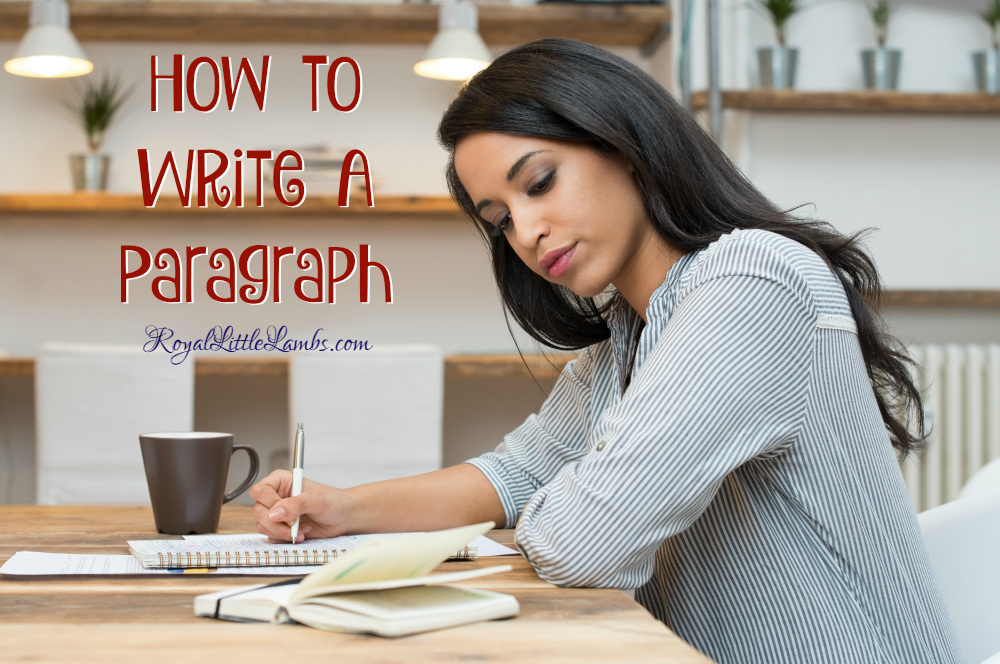
How to Write a Paragraph

Here is a PDF file of my Paragraph Instruction outline.

I have used this paragraph outline with my own children, middle schoolers, high schoolers, and college level students.

The best way to learn how to write is to practice.

I don’t expect the same quality paragraph from an elementary student that I do from an 8th grader. I expect more from college students than I do high schoolers. But the difference lies mainly in complexity and vocabulary. The format is the same across the board.

Share
Pin5
Share
5 Shares
You might also like:

Filed Under: Homeschool Tagged With: homeschool, LA, writing

Finding a Focus

This blog may contain affiliate links: disclosure.
Please see my suggested resources.

September 1, 2016 By Jennifer Lambert 15 Comments

When I was younger, I didn’t have much guidance for my future beyond doing well in school and getting a decent job.

And I wasn’t even really sure what that entailed. Good grades and lots of money was what I assumed.

I wasn’t actively taught much at home or in school about relationships, finances, stress, or anything actually important that currently seeps its way into my subconscious and lurks with criticisms and less-than reminders every single waking moment.

My parents wobbled between totally hands-off and stifling authoritarianism, depending on the situation.

I ran absolutely wild through the neighborhood from about 4 years old on up after school and summers, but I seldom had any friends over to my house for a meal or sleepover or playtime, and not ever if my dad was home. I’ve never had many friends, but I’ve had lots of acquaintances over the years who came and went.

My parents only ever intervened at school maybe three times in 13 years. The rest of the time I was on my own to work out any issues with bullies, inept teachers, politicized and uncaring administrators, groping boys, and weird parents. 

While I realize that having been left to myself, I developed character and learned a lot about how to solve problems, but I think I’d like to be a little more involved and proactive with my family.

While there are gazillions of articles, blog posts, books, and videos dictating rules and regulations, and shoulds and shouldn’ts, I think we all have to set our own values and goals. We’re bombarded with so much information that sounds like authority, but if we don’t hold any of it to any standard, we will fail and collapse with information overload.

What’s your standard?

My standard is the Bible.

As a Christian wife and mom, I hold up everything to the standard of Scripture. If it doesn’t fit with my worldview, then it’s not for my family.

This is true for books and TV shows and movies.

This is true for friends.

This is true for activities.

If anything takes away from or somehow doesn’t align with my values and goals, then it’s not for us.

Finding a Focus

How do we find our focus?

Discovering our personal values and setting goals for our families should be accompanied with much prayer and discussion with our spouse.

If you’re not pleased with your home life, then take a good look at where your priorities lie. Maybe it’s time for an evaluation and some changes.

Focus in Faith

We spent many years trying to determine our beliefs. My husband grew up Presbyterian, which meant he attended Sunday school as a child and that was about it. I never attended church except with my grandma 2-3 times a year or with friends who occasionally invited me.

I knew I wanted to raise my children with a strong faith foundation.

We teetered from Presbyterian to Baptist and tottered back to Presbyterian and then to Lutheran.

It’s often difficult to find a temporary church home when we move around so frequently.

Focus in Family

My children are my priority.

This means that I limit my social engagements. I don’t work or volunteer outside the home.

I don’t overschedule our family, so we’re seldom stressed. We like a peaceful home atmosphere.

I enjoy being with my kids. I enjoy teaching them and working with them and everything in between.

I seldom go anywhere without my kids.

Focus in Education

Homeschooling is my calling.

I don’t rely on videos, DVDs, games, other people, or the government to educate my children.

We read books together. We learn together.

I delight in my children learning new concepts.

I make time for art, nature study, music, and each of my children’s interests in addition to the math, Latin, history, and science we learn. Academics aren’t everything. Life is our education.

Focus in Friends

We’re very choosy about who we spend time around.

This is probably our prickliest topic.

While I don’t need a lot of social interation and rarely trust people, I know my husband and at least two of my children crave social stuff.

So, I make sure to provide opportunities to feed their social butterflies.

Focus for the Future

We are active planners for the future.

This includes financial planning and also teaching concepts my children will need in certain situations, like what to do regarding:

suspicious strangers,

bullying,

rude questions, requests, or touches from adults,

advances from peers of the opposite (or same) sex,

emergency training,

car maintenance,

kitchen safety,

fire safety, and more.

I want my kids to have open conversations with me. I want them to feel safe discussing anything with me. And I want them prepared for social interations or life situations that might become unsafe.

It’s my job to create a healthy environment for my children to grow emotionally, psychologically, academically, and physically.


Share
Pin1
Share
1 Shares
You might also like:

Filed Under: Family Tagged With: health, homeschool, parenting

My Thoughts on Socialization

This blog may contain affiliate links: disclosure.
Please see my suggested resources.

August 30, 2016 By Jennifer Lambert 20 Comments

It seems like all homeschool parents stress over socialization.

What is socialization?

The enculturation for the process of being socialized to a particular culture. {anthropology}

Children learn the norms, customs, values, and ideologies of society from their parents…and eventually others. {Wikipedia}

I don’t want my family to be representative of our culture.

When I first began homeschooling, it was purely for academic and financial reasons. After a few years, we realized this would be our lifestyle.

When we met an older KMC couple at the American Cemetery in Normandy, the lady who is a DODs school teacher, nodded her approval that our kids are “at least in the base sports…for socialization.”

I gritted my teeth and pasted on a smile.

My husband’s family has expressed that everything I post online is a direct attack on them as public school teachers. I never tag them nor directly send them articles I write or share. I was a public and private school teacher and college professor and private tutor, so it’s not like I don’t know the system and issues. I chose to get out of the system and homeschool.

I post and write articles for discussion and provoking conversation. So many are indoctrinated into what the government and society wants us to believe is best that they defend it! There are other options.

I don’t want an institution raising my child.

School is not necessary.

Herding groups of same-age children for 13 years is not socialization.

Too many people think that a school environment is the only way children can and should be socialized. They offer weak arguments. They’re confused how my homeschooled children will ever cope in the world.

I’m not buying what they’re selling.

I don’t believe socialization is any of this:

  • Bullying
  • Competition
  • Age Segregation
  • Standing in line
  • Sitting still
  • Being silent
  • Raising hands for permission to do anything
  • Power and control by adults over children
  • Using the toilet only on a schedule
  • Eating a barely nutritious state-funded “lunch” in fewer than 20 minutes
My Thoughts on Socialization

I’m not worried about my kids not knowing how to stand in line or act quietly when necessary.

I’ve noticed that when we attend community events, it’s often the children who attend school who have self-control problems.

The education I provide my children is above and beyond better than anything a school can offer.

We use amazing books, travel experiences, real art, and handicrafts projects (instead of cutesy worthless crafts).

I make sure I find time to include all the art, music, nature study, and interests my children have in addition to our math, Latin, history, and science.

We read and study the Bible every day, not just on Sundays at church.

My job is not to recreate a school environment.

We choose not to participate in co-ops and seldom attend field trips or events in our homeschool community because they too often replicate a school environment.

Almost all the field trips and co-op classes are age-segregated and offer very little of value to me or my children. When we have attended in the past, my kids soon complain since the courses are unorganized, the other kids are unruly and disrupt their attempts to learn, deadlines are arbitrary, and rules are enforced inconsistently. We’ve been bullied.

Just because it’s the norm doesn’t mean it’s for us.

Too many homeschool events seem to be just exclusive clubs for cliques within the homeschool community. For example, a particular mom plans an event or field trip and messages her children’s friends’ moms to sign up so the event is full before others even notice it’s on the calendar.

I read articles, blogs, memes, and social media statuses attempting to be humorous, describing kids and siblings and families fighting and bickering and being mean to each other. Or memes about back to school time where the parents are ecstatic to get rid of their kids. Or the public shaming of kids acting like children. I don’t find it funny. It saddens me that this is the expectation and considered normal.

The kids and I all get along really well. My kids seldom argue. They never fight. We are respectful and kind to each other.

I respect my children as people. They are perfectly capable of answering questions without my input. They are perfectly capable of making wise choices (most of the time). They are perfectly capable of deciding what and how and when they learn.

We have a peaceful home and restful homeschool.

The kids work together and help around the house, assist each other, and have great attitudes (most of the time).

This kind of learning is way more important to me than if my kids compete in sports, do well academically, stand in line without fidgeting, ace the SAT, or get a high-paying job.

I think I’m doing all right.

I recently received this text from a neighbor:

Compliment to My Kids

Because it matters more to me that my kids are kind and well-behaved and know how to interact well with others when I’m not around.

I’m raising leaders, not followers.

Linking up: Proverbs 31 Wife, What Joy is Mine, Sarah Celebrates, Marilyns Treats, Southern Beauty Guide, VMG206, Modest Mom, Our Home of Many Blessings, Holly Barrett, Cornerstone Confessions, Strangers and Pilgrims on Earth, Darling Downs Diaries, Moms the Word, A Fresh Start, Life of Faith, Inspiration for Moms, Blogghetti, Practical Mom, Squishable Baby, Crafty Moms Share, Smart Moms Smart Ideas, Written Reality, Simple Life of a Fire Wife, Messy Marriage, Christian Blogger Community, Jamie Wiebel, Holley Gerth, W2w Ministries, 3DLessons4Life, A Wise Women Builds Her Home, Raising Homemakers, Pat and Candy, Moms are Frugal, I Choose Joy, Frog’s Lilypad, My Learning Table, Oh My Heartsie Girl, Katherines Corner, Cookin and Craftin, Jamiffer, Happily Ever After, Wondermom Wannabe, A Bountiful Love, Adventures of Mel, The Natural Homeschool, Crystal and Comp, Hip Homeschool Moms, Al Things Beautiful, A Kreative Whim, OMHG Friday, Life with Lorelai, Juggling Food and Real Life, Happy and Blessed Home, What About, Create with Joy, Sincerely Paula, RCH Reviews, The Diary of a Real Housewife, Momfessionals, Crystal Waddell, Saving 4Six, Sweet Little Ones, Coffeeshop Conversations, Arabah Joy, Counting My Blessings, Susan Mead, xoxo Rebecca, Books and More, Strawberry Butterscotch, Pam’s Party and Practical Tips, Craft-o-Maniac, Crafty Moms Share, Being a Wordsmith, Janis Cox,
Share
Pin1
Share
1 Shares
You might also like:

Filed Under: Homeschool Tagged With: homeschool, parenting

  • « Previous Page
  • 1
  • …
  • 6
  • 7
  • 8
  • 9
  • 10
  • …
  • 18
  • Next Page »
Suggested ResourcesFind Weird Books at AbeBooks.comNotebookingPages.com LIFETIME Membership

Archives

Popular Posts

10 DIY Gifts with Essential Oils10 DIY Gifts with Essential Oils
Natural Remedies for HeadacheNatural Remedies for Headache
10 Natural Remedies to Keep on Hand10 Natural Remedies to Keep on Hand
Henna Hands CraftHenna Hands Craft
Homemade Turkey Divan CasseroleHomemade Turkey Divan Casserole
This website uses cookies to improve your experience. We'll assume you're ok with this, but you can opt-out if you wish.Accept Reject Read More
Privacy & Cookies Policy

Privacy Overview

This website uses cookies to improve your experience while you navigate through the website. Out of these, the cookies that are categorized as necessary are stored on your browser as they are essential for the working of basic functionalities of the website. We also use third-party cookies that help us analyze and understand how you use this website. These cookies will be stored in your browser only with your consent. You also have the option to opt-out of these cookies. But opting out of some of these cookies may affect your browsing experience.
Necessary
Always Enabled
Necessary cookies are absolutely essential for the website to function properly. This category only includes cookies that ensures basic functionalities and security features of the website. These cookies do not store any personal information.
Non-necessary
Any cookies that may not be particularly necessary for the website to function and is used specifically to collect user personal data via analytics, ads, other embedded contents are termed as non-necessary cookies. It is mandatory to procure user consent prior to running these cookies on your website.
SAVE & ACCEPT