Jennifer Lambert

A Sacred Balance

Visit Us On FacebookVisit Us On PinterestVisit Us On InstagramVisit Us On Linkedin
  • Homeschool
    • Book Lists
    • How Do We Do That?
    • Notebooking
    • Subjects and Styles
    • Unit Studies
  • Travel
    • Europe
      • Benelux
      • France
      • Germany
      • Greece
      • Ireland
      • Italy
      • London
      • Porto
      • Prague
    • USA
      • Chicago
      • Georgia
      • Hawaii
      • Ohio
      • Utah
      • Yellowstone and Teton
  • Family
    • Celebrations
    • Frugal
  • Military Life
    • Deployment
    • PCS
  • Health
    • Recipes
    • Essential Oils
    • Fitness
    • Mental Health
    • Natural Living
    • Natural Beauty
  • Faith
  • About Me
    • Favorite Resources
    • Advertising and Sponsorship
    • Policies
  • Reviews

© 2025Jennifer Lambert · Copyright · Disclosure · Privacy · Ad

Writing Cuneiform on Clay

This blog may contain affiliate links: disclosure.
Please see my suggested resources.

November 19, 2015 By Jennifer Lambert Leave a Comment

We’re on cycle 1 for our history again this year – Ancient Studies.
We did this project last cycle too!
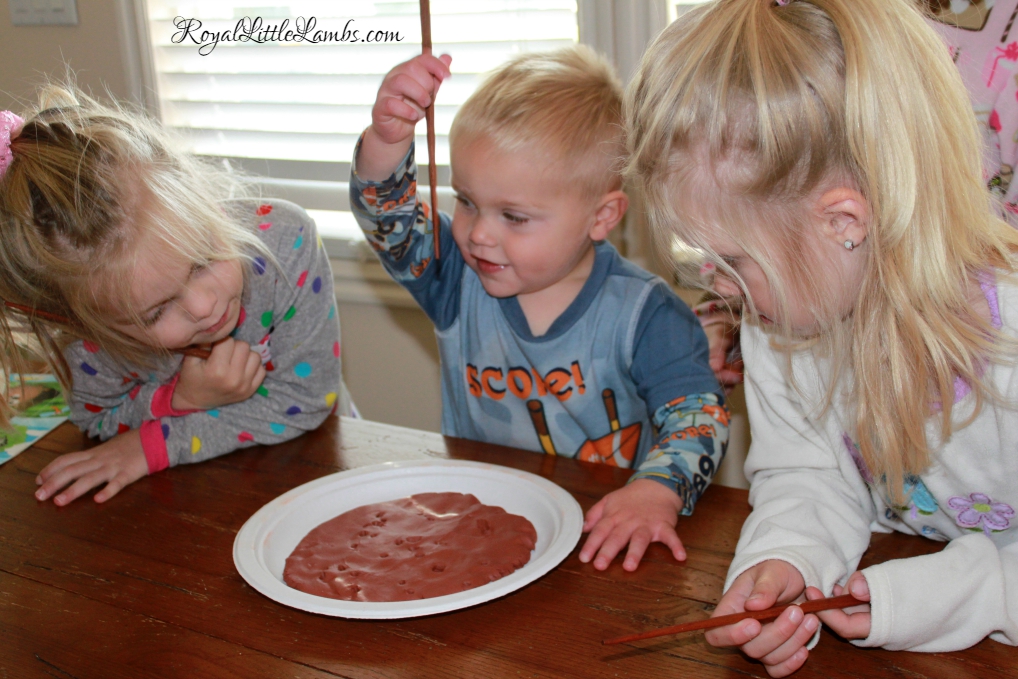
Clay Craft Time

We learned about writing cuneiform on clay tablets.

I divided the bucket of clay into thirds and gave a handful to each kid.

It was cold and hard.

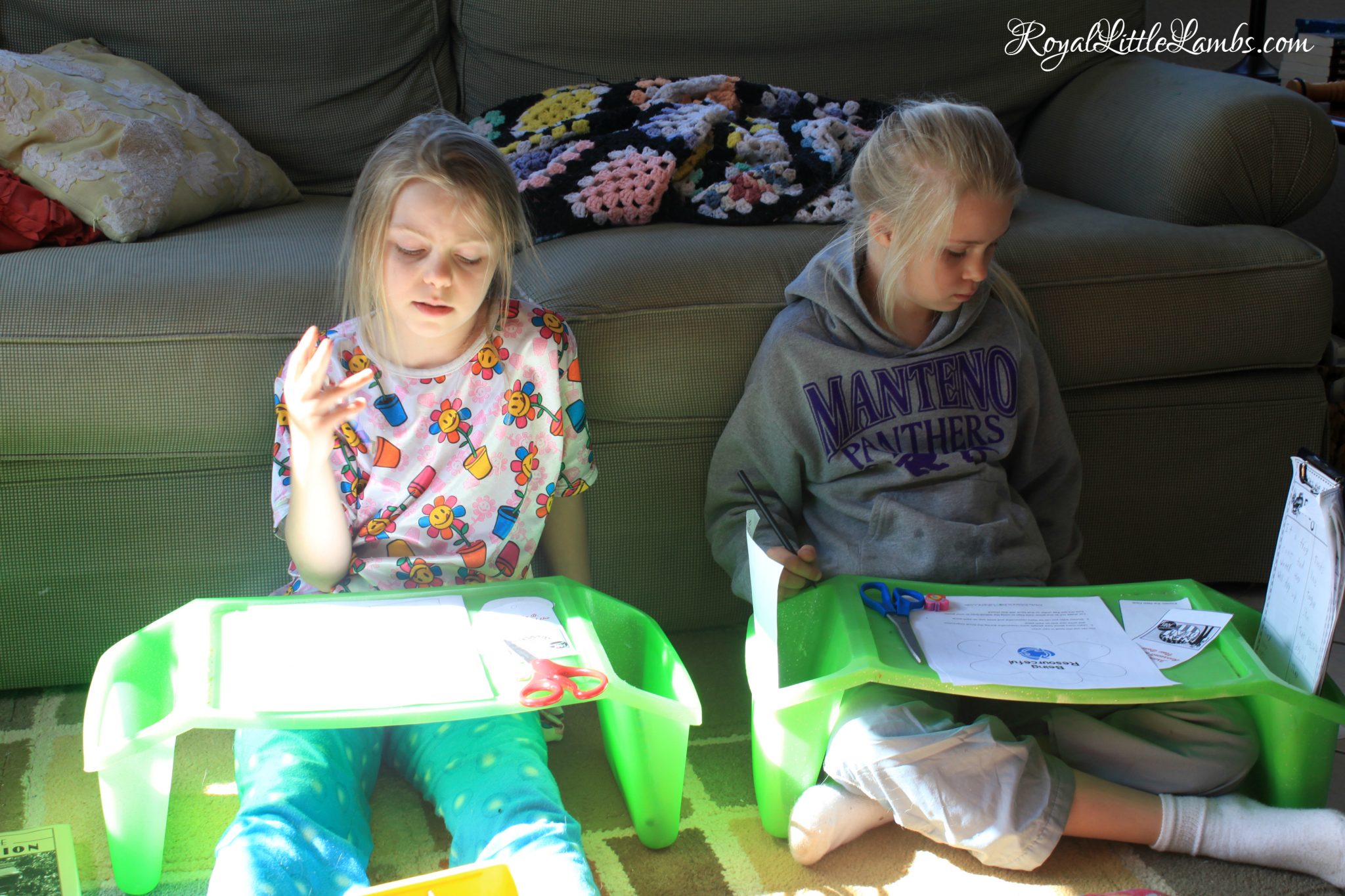
They molded the clay into their trays.

Clay Craft Time

They realize how much work it must have been to get the clay tablets prepared for writing. And they would have been heavy!

So much easier to have paper and pencils ready available!

I provided a page from the Story of the World workbook with examples of simplified hieroglyphics and cuneiform writing corresponding to our alphabet.

The girls wrote their names in cuneiform:

Clay Cuneiform Writing
Cuneiform Clay Writing

Alex wrote his name and then molded his clay into a fox.

Of course, they all played with the clay until their hands were sore!


Linking up: A Life in Balance, The Resourceful Mama, Living Montessori Now,

Share
Pin
Share
0 Shares
You might also like:

Filed Under: Homeschool Tagged With: art, history

Visit to Dachau

This blog may contain affiliate links: disclosure.
Please see my suggested resources.

September 28, 2015 By Jennifer Lambert 2 Comments

After our idyllic weekend in Bavaria, we drove home past Munich and visited Dachau.

It was a humbling experience for our family visiting Dachau to learn about WWII history.

We recently had studied about Dachau and other concentration camps in our history studies.

There is a tragic beauty to the area with its trees, memorials, and austere gravel path.

For the dead and the living, we must bear witness.

Elie Wiesel

We were quiet and wide-eyed as we emerged from the visitor’s center and restrooms, and seemed to leave modern society.

There are stations with signs throughout for a self-guided tour.

We followed the path which mimics that of the prisoners entering the concentration camp.

I whispered explanations and read the station signs aloud to the children.

Station 1: In Front of the Jourhaus

The Dachau Concentration Camp opened with the arrival of the first prisoners on March 22, 1933. This is a remnant of the train platform and tracks.

The Jourhaus served as the main exit and entrance to the prisoners’ camp and as the main office of the camp SS.

Dachau Railroad Track and Platform

Station 2: The Jourhaus

The Jourhaus served as the main exit and entrance to the prisoners’ camp and as the main office of the camp SS personnel.

The ominous front gate with its ironic motto: Work Makes Free.

Work Makes You Free

I shed tears as I walked through these gates.

Station 3: International Memorial

Officially dedicated in 1968, the International Monument was designed by the Yugoslavian artist and concentration camp survivor, Nandor Glid.

International Monument - Sculpture by Nandor Glid

Station 4: Maintenance Building

Today the exhibition documenting the history of the Dachau concentration camp is located in the rooms of the former maintenance building.

We rushed through the museum last since I wanted to make sure we saw the memorials.

We skipped the video as recommended for ages 12+. They were locking the doors as we finished the last part of the exhibit.

During the ordeal of roll call, the prisoners were confronted with the inscription painted on the roof of the maintenance building which read: “There is one path to freedom. Its milestones are: obedience, honesty, cleanliness, sobriety, diligence, orderliness, self-sacrifice, truthfulness, love of the fatherland.”

Station 5: Shunt Room

This is the section of the Maintenance Building where prisoners were admitted.

Station 6: Prisoner Baths

Also in the Maintenance Building. The baths were the last station of the admission procedure.

Station 7: Courtyard and Bunker

There were three detention buildings (bunkers) in camp.

Station 8: Roll-call Square

The open area was able to hold fifty thousand people.

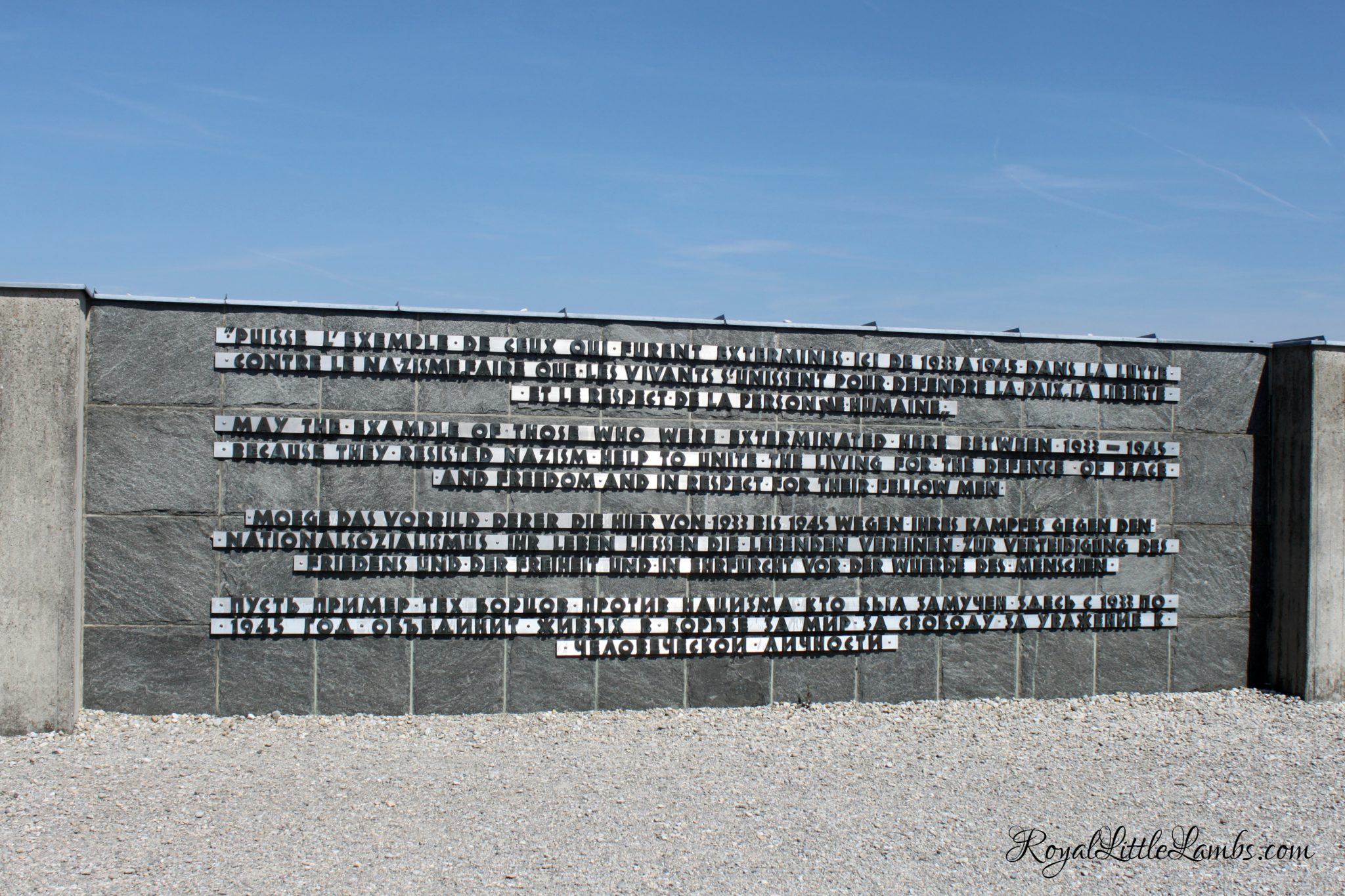
May the example of those who were exterminated here between 1933 and 1945 because of their fight against National Socialism unite the living in their defense of peace and freedom and in reverence of human dignity.

Resist and Unite

Station 9: Barracks

A total of 34 barracks were located on the right and left of the camp road. It was pretty devastating to view the conditions of the 2 reconstructed barracks. Outlined beds of gravel show the location of the former barracks. They have numbers in front of each bed.

Station 10: Camp Road

A line of evenly-spaced poplar trees was planted on each side of the camp road in 1937. The original trees were cut down in 1964 and the current trees were planted in the 1980s.

I was reminded of this poem by my favorite poet:

Wind shakes the big poplar,
quicksilvering
The whole tree in a single sweep.
What bright scale fell and left this needle quivering?
What loaded balances have come to grief?

~Seamus Heaney

And Psalm 137: 1-6:

By the rivers of Babylon we sat and wept
    when we remembered Zion.
There on the poplars
    we hung our harps,
for there our captors asked us for songs,
    our tormentors demanded songs of joy;
    they said, “Sing us one of the songs of Zion!”

How can we sing the songs of the Lord
    while in a foreign land?
If I forget you, Jerusalem,
    may my right hand forget its skill.
May my tongue cling to the roof of my mouth
    if I do not remember you,
if I do not consider Jerusalem
    my highest joy.

Poplars and Barracks Foundations

There are seven watchtowers. The grass was off-limits. Prisoners were shot if they touched the grass.

Forbidden Grass

Station 11: Crematorium

We did not go into this area. There are some monuments.

Crematorium Area

Station 12: Religious Memorials

  • Carmelite Convent
  • The Protestant Church of Reconciliation
  • The Jewish Memorial
  • The Russian-Orthodox Chapel
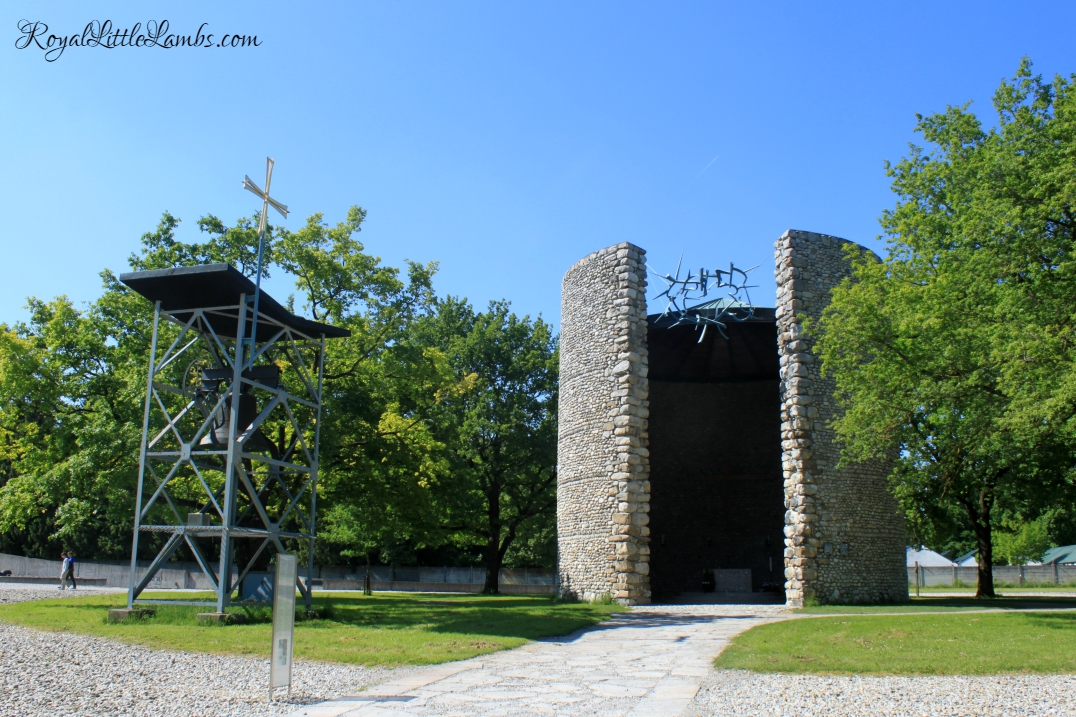
  • The Mortal Agony of Christ Chapel (below)
The Mortal Agony of Christ Chapel

Station 13: International Memorial

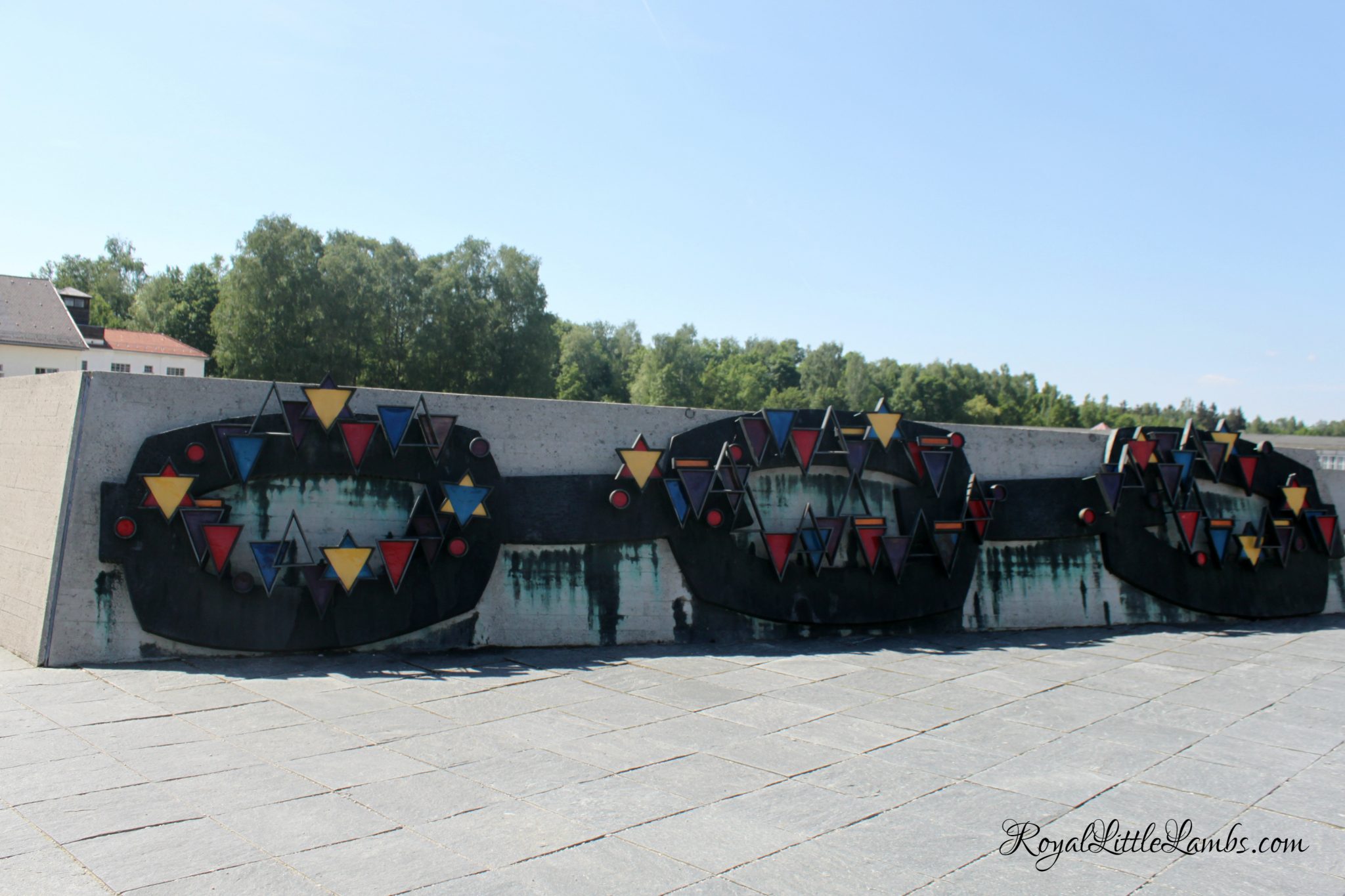
This part of the monument recalls the triangle badges that marked every prisoner as of 1937.

Triangle Patch Relief

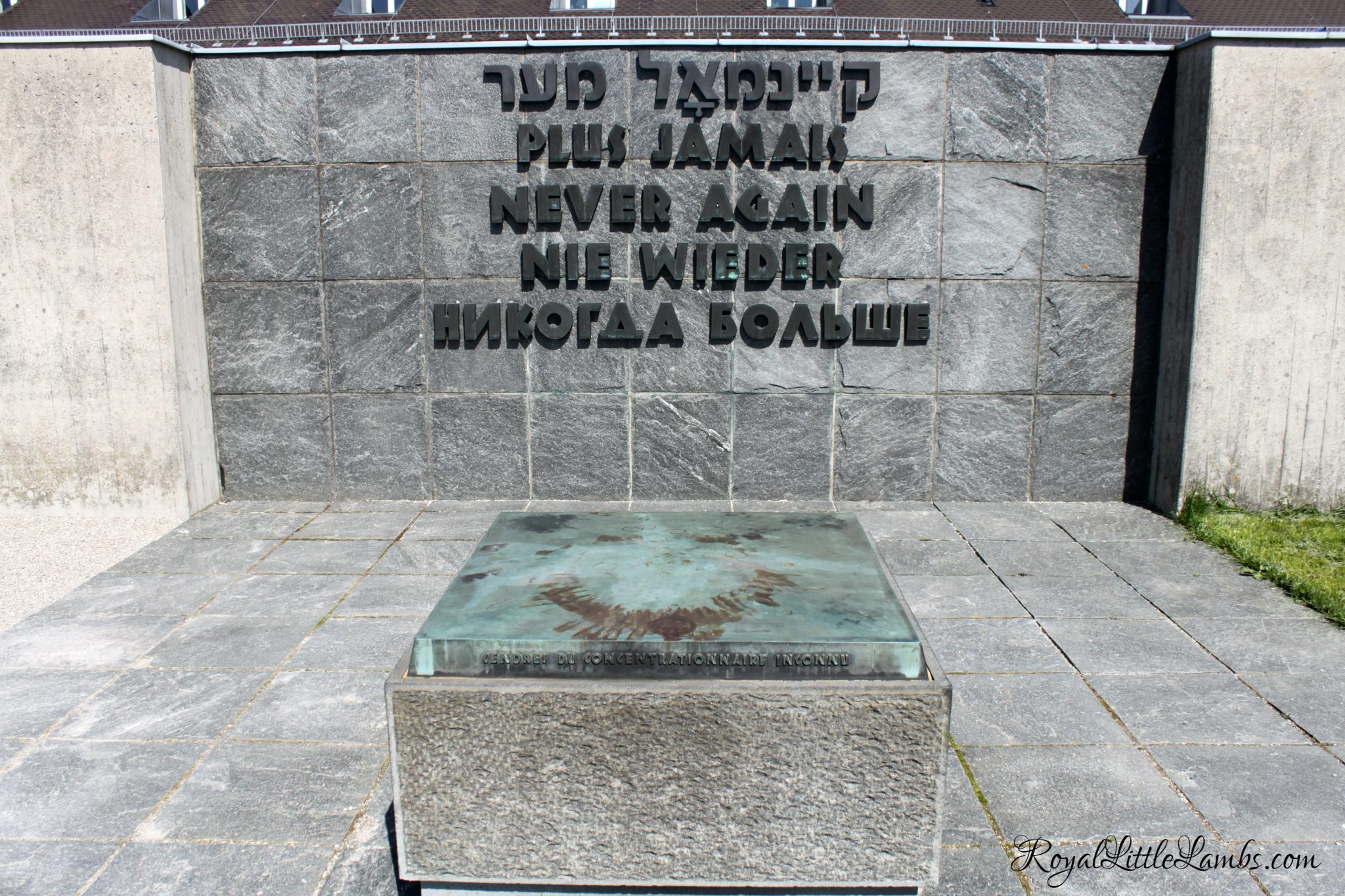
At the end of the monument are the words “Never Again” in Yiddish using Hebrew letters, and in French, English, German and Russian.

An urn with the ashes of the unknown concentration camp prisoner lies before it and recalls the fate of the thousands of people whose corpses were burnt in the crematorium. It was buried here in May 1967. The panel on the left narrow side of the monument notes further: “This monument was erected in honor of the tens of thousands of martyrs, who died here as victims of National Socialist tyranny and was dedicated on September 8, 1968 by the Comité International de Dachau.”

NEVER AGAIN

When we left, we started to walk down the Path of Remembrance, but it was too far and we were all exhausted.

The commandant’s house:

Commandant's House

Former Business Enterprises of the Dachau Concentration CampBusiness Enterprises of Dachau

We saw this poignant memorial as we left the parking lot. We didn’t notice it when we turned in.

Poignant Monument

My children were aged 5, 8, 9, and 14 when we visited Dachau. They understood and were respectful of all the monuments and exhibits. You know your kids best, if they can handle and understand such an experience. It was very moving.

Visitor Info:

Open daily from 9:00 am to 5:00 pm. Closed December 24.

Entry is free. Parking fees are €3,00 per car.

View the guidelines for visitors here. (We saw a man wearing a pretty graphic inappropriate T-shirt. Don’t be that guy.)

It’s about 4 hours from Ramstein and 5.5 hours from Spangdahlem.

Share
Pin5
Share
5 Shares
You might also like:

Filed Under: Europe, Germany, Travel Tagged With: Germany, history, travel, WWII

Cookie Maps

This blog may contain affiliate links: disclosure.
Please see my suggested resources.

September 15, 2015 By Jennifer Lambert 15 Comments

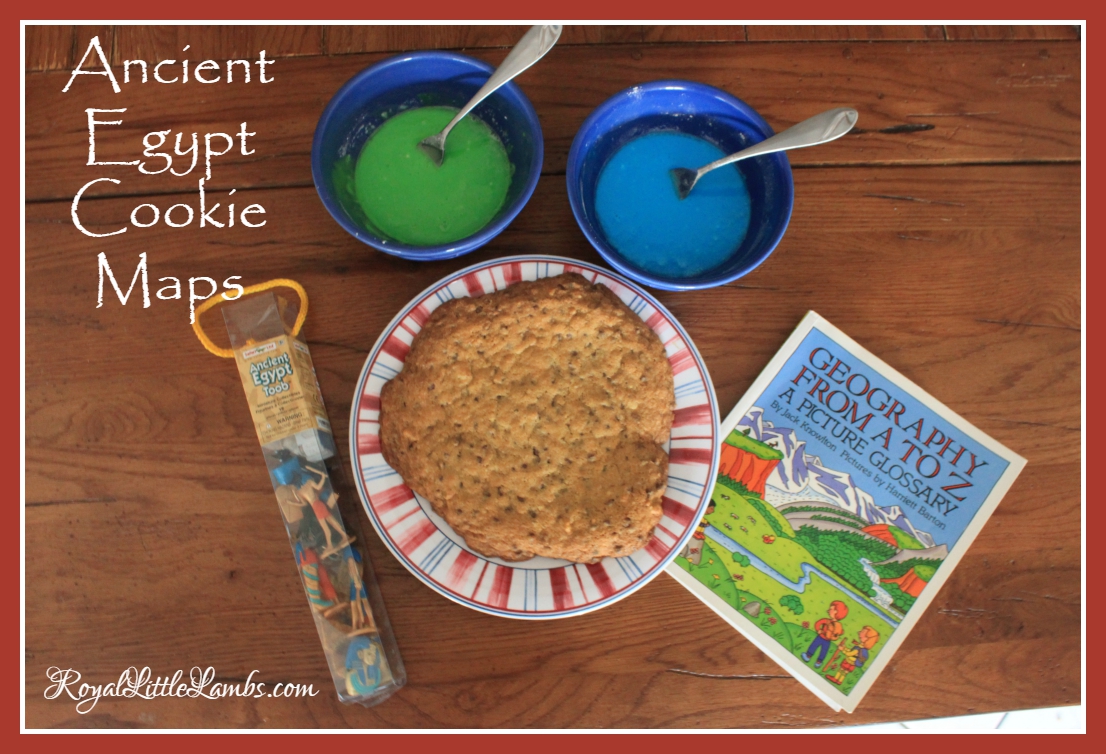
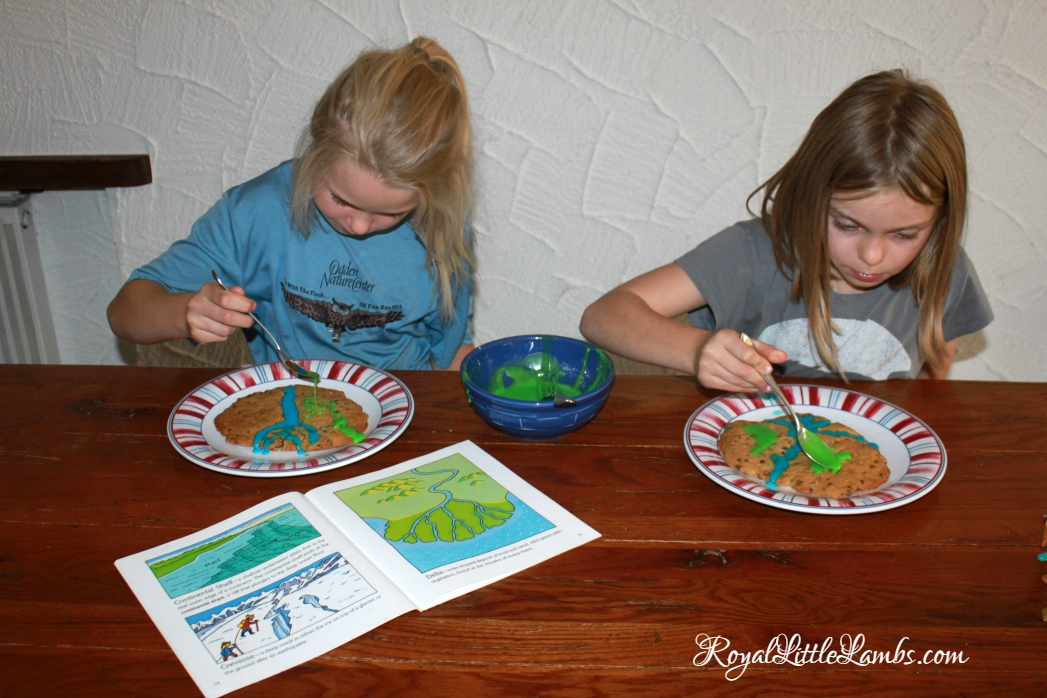
We made homemade cookie maps for our Ancient Egypt studies!

Ancient Egypt Cookie Maps

I baked large chocolate chip walnut cookies for our yummy map bases.

I made simple blue and green icing for the Nile River delta.

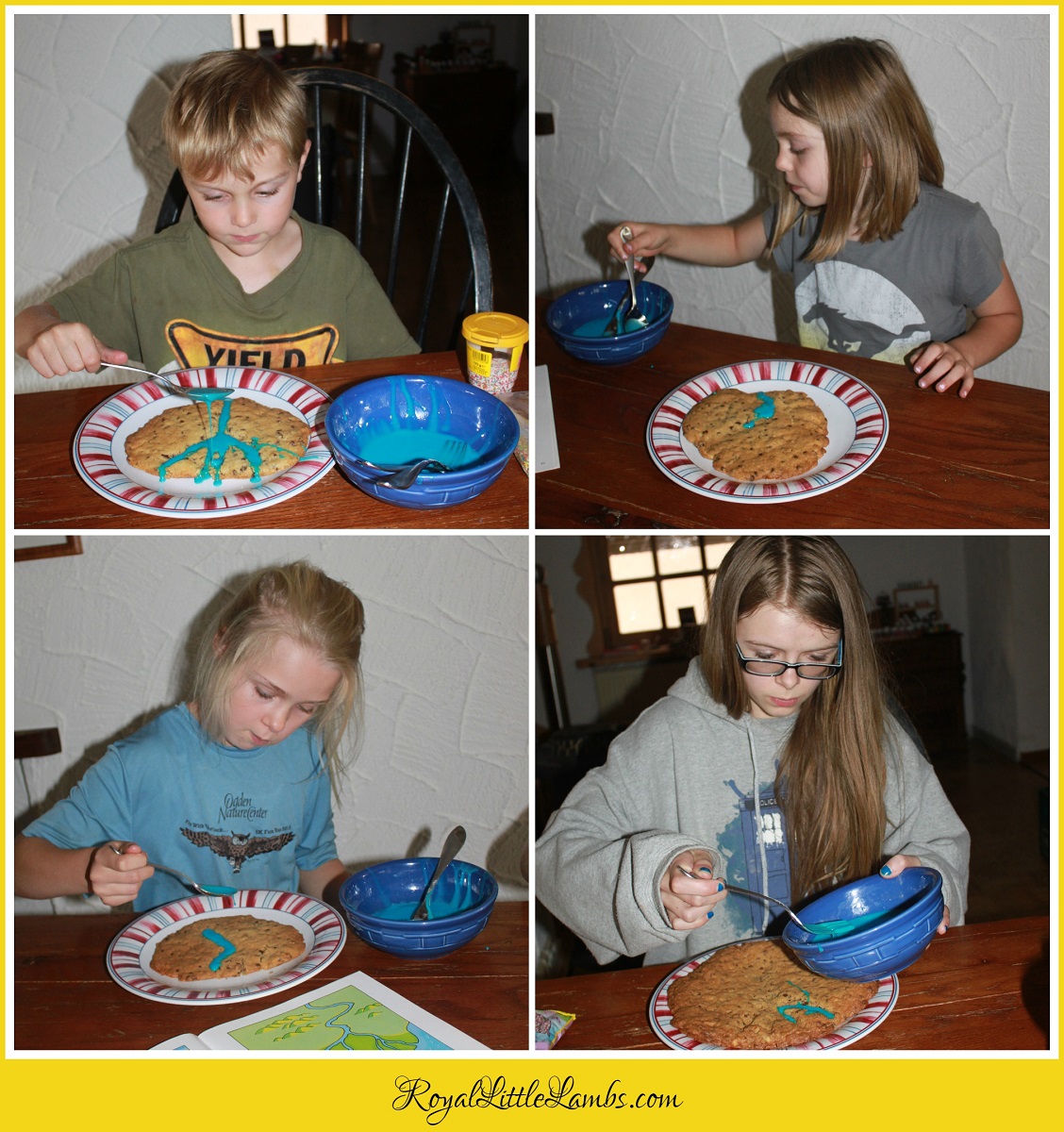
Icing the Nile River Delta

The girls were so careful as they drizzled the icing to form the rivulets and fertile plains.

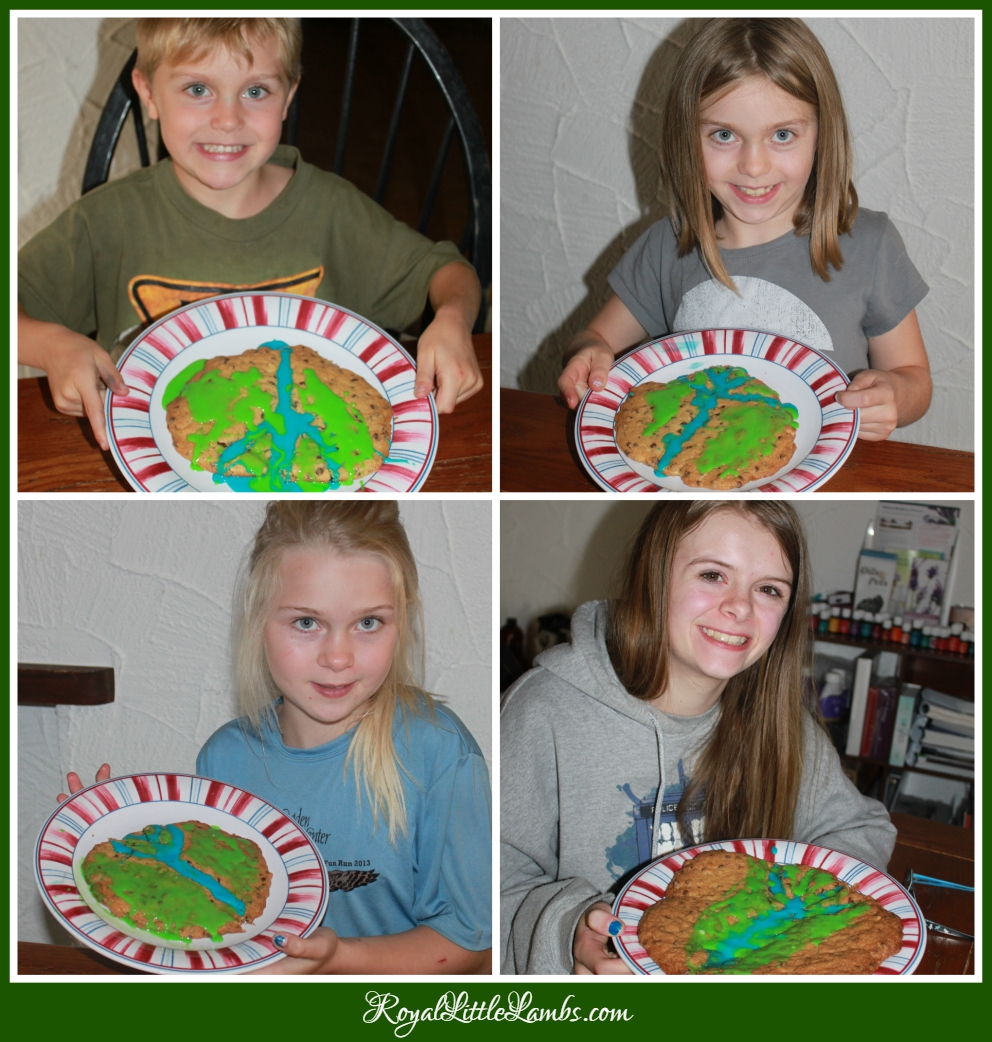
Nile River Delta in Icing

After we decorated and discussed the Nile River delta and growing cycles, I let the kids further decorate with fun sprinkles and candies.

Nile River Delta Cookie Maps

Use your favorite cookie recipe! Chocolate chip, sugar, or butter cookies work great.

Also, play dough, salt dough, or cookie dough make fun maps.

Also see this salt dough map of the Nile River Delta and these landform maps. Check out no-bake cookie dough maps .

Icing:

  • about 1 cup powdered sugar
  • a couple tablespoons milk
  • a couple drops food coloring

How do you make history fun?

Linking up: Life of Faith, The Educators Spin on It, Kiddy Charts, ABC Creative Learning, Living Montessori Now, Simple Life of a Fire Wife, Burlap and Babies, Written Reality, What Joy is Mine, Diamonds in the Rough, 3GLOL, Time Warp Wife, F. Dean Hackett, Cornerstone Confessions, True Aim Education, Los Gringos Locos, Hip Homeschooling Blog, Hip Homeschool Moms, A Little R&R, Raising Homemakers, A Wise Woman Builds Her Home, Handmade for Elle, Happy and Blessed Home, Kitchen Fun with my 3 Sons, The Jenny Evolution, Eats Amazing, Christian Mommy Blogger, The Deliberate Mom, Frogs Lilypad, Imparting Grace, I Choose Joy, XOXO Rebecca, Design Dining and Diapers, The 36th Avenue, Alayna’s Creations, 123Homeschool4Me, Crafty Moms Share, Faith Along the Way, Arabah Joy, The Resourceful Mama, Buns in My Oven, Sunny Day Family
Share
Pin4
Share
4 Shares
You might also like:

Filed Under: Homeschool Tagged With: history, homeschool, Tapestry of Grace

How We Do History

This blog may contain affiliate links: disclosure.
Please see my suggested resources.

May 25, 2015 By Jennifer Lambert 7 Comments

We primarily use Tapestry of Grace for our homeschool.

It encompasses most of our curriculum needs and we only add math, science, and foreign language to complete our studies.

Tapestry of Grace is a four-year cycle, similar to other classical history programs.

  • Year 1 – Creation to the Fall of Rome
  • Year 2 – Middle Ages, from Byzantium to the New World
  • Year 3 – Nineteenth Century, from Napoleon to Teddy Roosevelt
  • Year 4 – 1900 to the Present Day

We used Story of the World for our first four year cycle of homeschooling but Liz studied that so comprehensively that we needed something more in-depth after that. We tried compiling our own materials for a year, but I preferred some guidance. ToG uses Story of the World as a spine for upper grammar level.

Each year is divided into four units. Each unit is divided into 9 weeks. Within the units are color-coded study materials and resource lists for the four learning levels – lower grammar, upper grammar (logic), dialectic, and rhetoric.

I like the division of four levels instead of the typical three because it encourages me to include my littles as soon as they are able to sit for read alouds and some seat work.

And now, there is even a Primer level (at an additional cost) so even preschoolers can join in the family fun! We previewed it and it just wasn’t that great.
I don’t always follow the curriculum outline completely. Often I look at the overview and make a checklist for the unit and we work through that until it’s completed. We utilize the library regularly. We can’t possibly purchase all the recommended books!

The 9-week units last us between 3-12 weeks, depending on the availability of material and interest. There are 36 weeks in each year, four units of nine weeks each.

The subject threads available each week are:

  • History
  • Writing
  • Literature
  • Geography
  • Fine Arts and Activities
  • Church History/Worldview
  • Enrichment
  • Government (high school level and an additional cost)
  • Philosophy (high school level and an additional cost)

I am a bit disappointed how sparse the curriculum is for the last unit and a half for year 4. There has been much great literature written and history made during my lifetime and I have to pull it together myself, since there is so little listed in the curriculum that I paid for.

The curriculum is quite biased towards conservative evangelical Christian so I pick and choose what I include and omit (we will not be reading anything by complementarian John Piper nor watching the horrendous Left Behind series or anything by Kirk Cameron), often supplementing so my kids get a more well-rounded idea of real history and world events from all sides.

We actually don’t focus a whole lot on US History. We realize we are just a blip on the timeline. I try to focus on a different region every cycle – Asia, Africa, South America, Russia, etc.

Our Favorite History Texts:

  • A History of US: Eleven-Volume Set by Joy Hakim
  • The Story of Mankind by Hendrik Willem van Loon
  • A People’s History of the World: From the Stone Age to the New Millennium by Chris Harman 
  • A People’s History of the United States by Howard Zinn
  • An African American and Latinx History of the United States by Paul Ortiz 
  • A Black Women’s History of the United States by Daina Ramey Berry and Kali Nicole Gross 
  • An Indigenous Peoples’ History of the United States by Roxanne Dunbar-Ortiz  
  • A Disability History of the United States by Kim E. Nielsen  
  • A Queer History of the United States by Michael Bronski  
  • A Different Mirror by Ronald Takaki  
  • Lies My Teacher Told Me: Everything Your American History Textbook Got Wrong by James W. Loewen
  • Life: Our Century In Pictures by Richard B. Stolley
  • The Century for Young People by Peter Jennings
  • Story of the World, Vol. 1: History for the Classical Child: Ancient Times by Susan Wise Bauer
  • Story of the World, Vol. 2: History for the Classical Child: The Middle Ages by Susan Wise Bauer
  • Story of the World, Vol. 3: History for the Classical Child: Early Modern Times by Susan Wise Bauer
  • Story of the World, Vol. 4: History for the Classical Child: The Modern Age by Susan Wise Bauer

How we study history:

  • Geography
  • Timelines
  • Literature
  • Living Books
  • Church History
  • Art
  • Music
  • Videos
  • Field Trips
  • Notebooking

Maps and Geography

Most weeks, the kids have a map to label and color. It helps to visualize where in the world we are studying.

We have large world and USA maps on the wall too, for quick reference. We have several atlases and apps too.

The kids label physical and political maps, even my youngest!

Map Work

I supplement our map pages with curriculum from Knowledge Quest – printables and geography galore!

We also create fun maps – with cookies, salt dough, cookie dough, or homemade play dough!

Timelines

This is the first year we’ve completed a big timeline. Tori and I essentially pasted the timeline images (from Story of the World Activity Books) on Index cards. She colored the flags but we left the others black and white. She put them in order and helped hole punch them. I strung them up with yarn in our homeschool classroom.

My Level 3 daughter completes a Book of Centuries page every week as part of her history notebooking.

Timelines

Literature

Great classic literature to accompany our history studies and the time periods we learn.

You can read our ninth grade reading list here (some were family read alouds).

View all my book lists.

The literature thread has core and in-depth options each week. Most are living books that bring history to life through the eyes of real or fictional characters.

Literature Notebooking

Living History Books

I love, love, love the reading lists. So many choices and we want to read them all!

We love biographies and historical fiction.

History assignments are divided into core, in-depth, textbook, and supplement.

You can see our Great Depression Unit Study with our reading lists and activities.

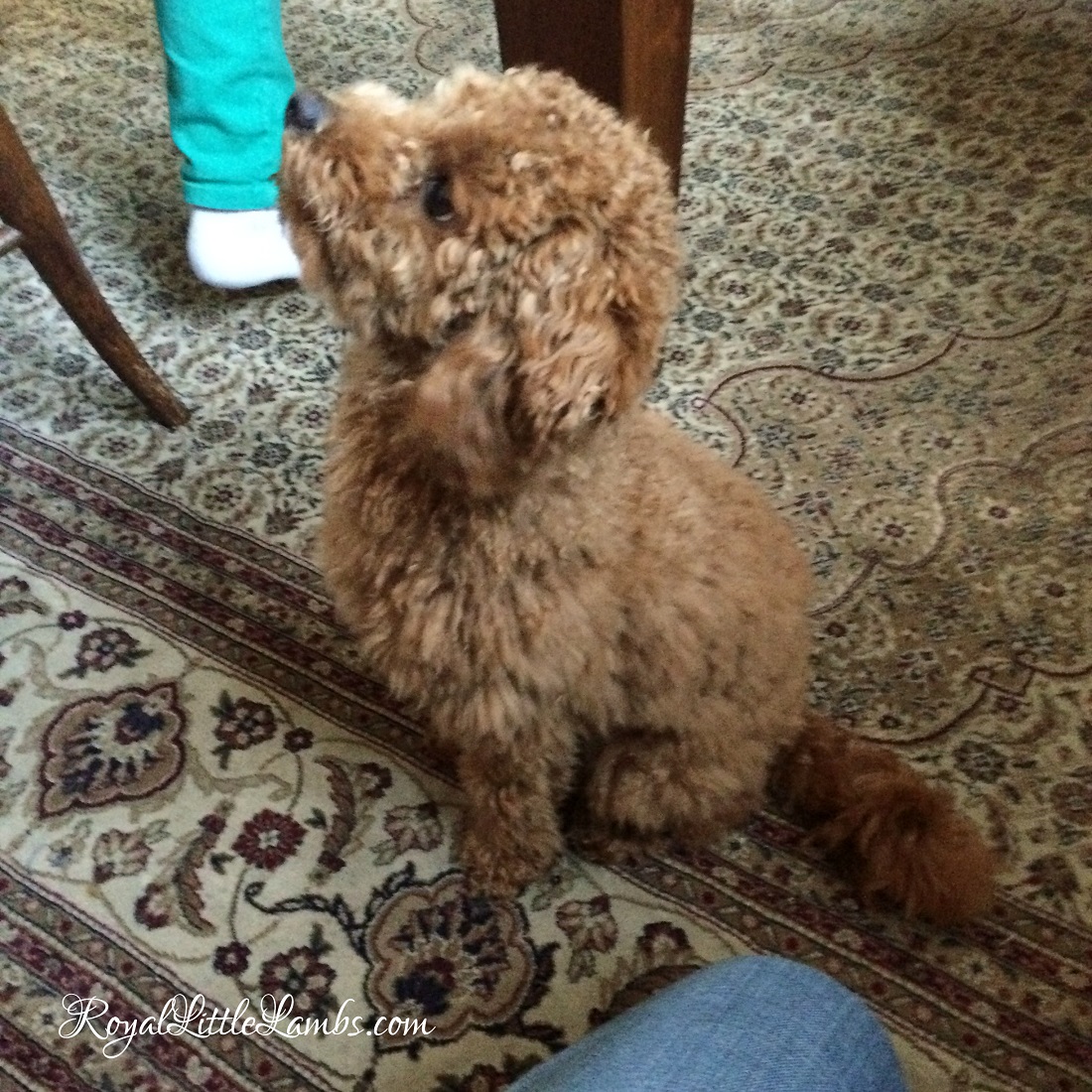
We were ecstatic to read War Dogs about Winston Churchill and then meet a new friend who has the same kind of poodle as Rufus!

Rufus

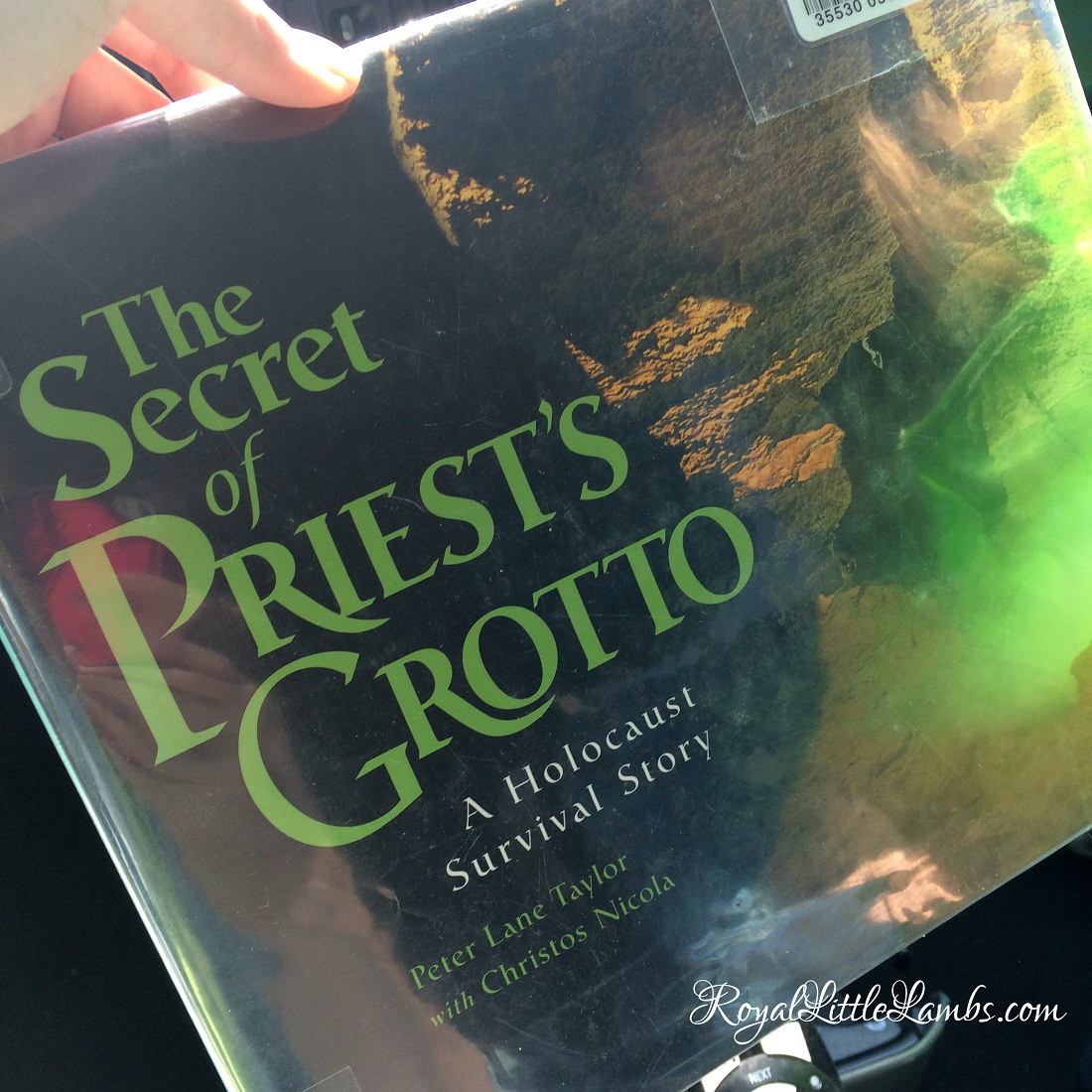
We all thoroughly enjoyed The Secret of Priest’s Grotto. It was just a lucky find at the library! Amazing story.

Secret of Priest's Grotto

Church History and Worldview

Our evening read alouds are Bible stories, Christian education, and missionary stories.

The whole family gathers and I read about the missionary who corresponds to our history each week.

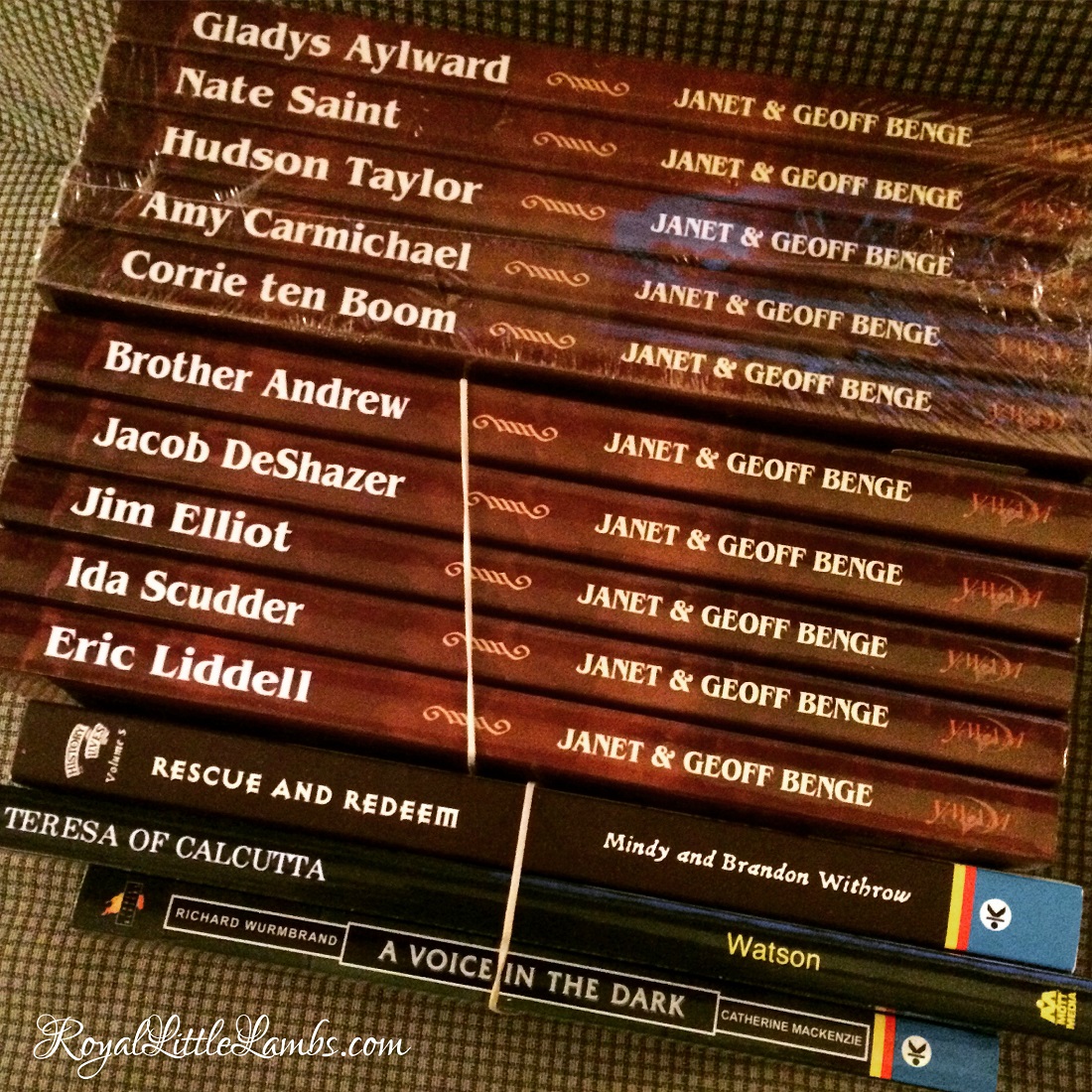
We read through the Christian Heroes series. Well-written and easy to read and listen to, even for my young son.

We’re moving away from these now and into more progressive Christian biographies and histories.

Missionary Stories

Arts and Crafts

I fail miserably at arts and crafts.

But I love love love art history.

We study artists and go see art often.

We’ve visited several art museums this year – Stadel in Frankfurt, The Louvre and d’Orsay in Paris, the van Gogh, Rijksmuseum, and Mauritshuis in Amsterdam.

We loved the history and culture in Greece.

We learned about glass and lace making in Venice.

I love Artistic Pursuits which often corresponds to our history timeline.

I vow to do more arts and crafts projects with the kids since they love it so much.

van Gogh Bedroom

Music History and Appreciation

The kids and I love to listen to music that corresponds to our history time period.

One of our favorite books is The Gift of Music. It’s a great intro to composers.

We look up YouTube videos or search on Spotify for music and often, we notebook about the ones who interest us most.

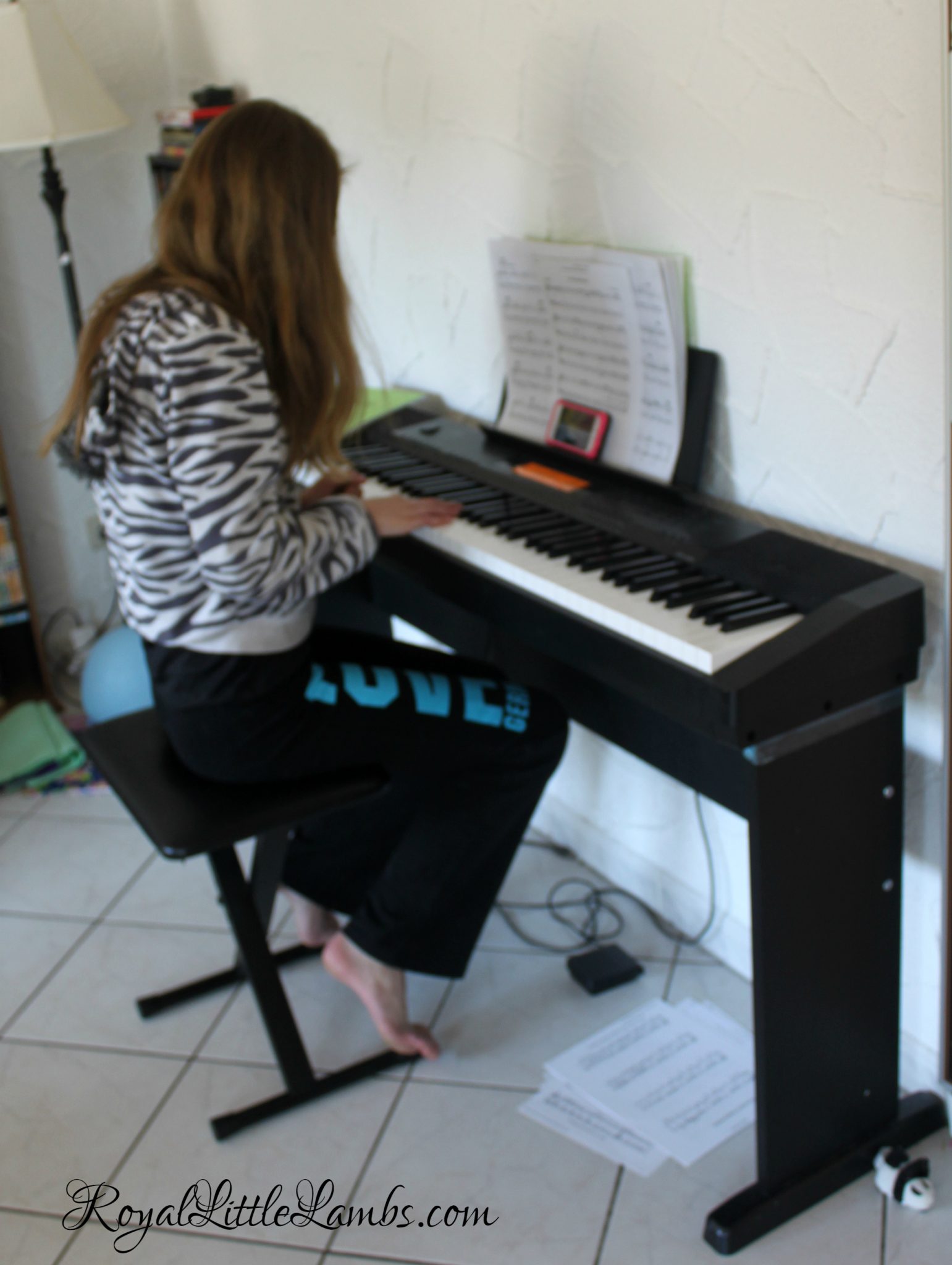
Liz practices ragtime on the keyboard:

Learning Ragtime

Videos

The enrichment thread lists recommended videos that support the topics we learn about that week.

Some films for our history lessons for year 4:

Rough Riders, Titanic, Gallipoli, Lawrence of Arabia, Chariots of Fire, The Inn of the Sixth Happiness, Life is Beautiful, Schindler’s List, The Pianist, The Book Thief, Unbroken, Farewell My Concubine, Ghandi, Malcolm X, Mr. Holland’s Opus, Blood Diamond, Hotel Rwanda and more!

We like PBS and the library if we can’t stream a film on Netflix or Amazon.

I like to teach cinema history when it’s relevant.

Field Trips

Recommendations for field trips, both real and virtual are listed on the website for each unit.

We’ve been very fortunate to be able to travel and see many sites as we study.

We enjoyed seeing Yellowstone National Park a few years ago.

We drove to Georgia a year ago just as we finished up studying the Civil War and we got to see an antebellum home and Stone Mountain.

Stone Mountain Field Trip

We learned about the Missions in San Antonio, TX.

We visited the Pearl Harbor sites when we lived in Hawaii.

We went camping and learned about Utah, Yellowstone, the Tetons.

We have traveled all over Europe for three years and visited many historical sites and museums.

We’re studying Ohio history.

Notebooking

Each week has threads with pages for activities, writing, and notebooking options.

I often gather materials and design themed unit studies for seasons, time periods, and interests.

The Student Activities Pages are an optional purchase and I use those mostly for grammar level. Liz still likes some of the graphic organizers for her history notebooking.

*All the following Tapestry of Grace pages are available as a free sample!*

This is the high school writing assignments page:

ToG Writing Assignments

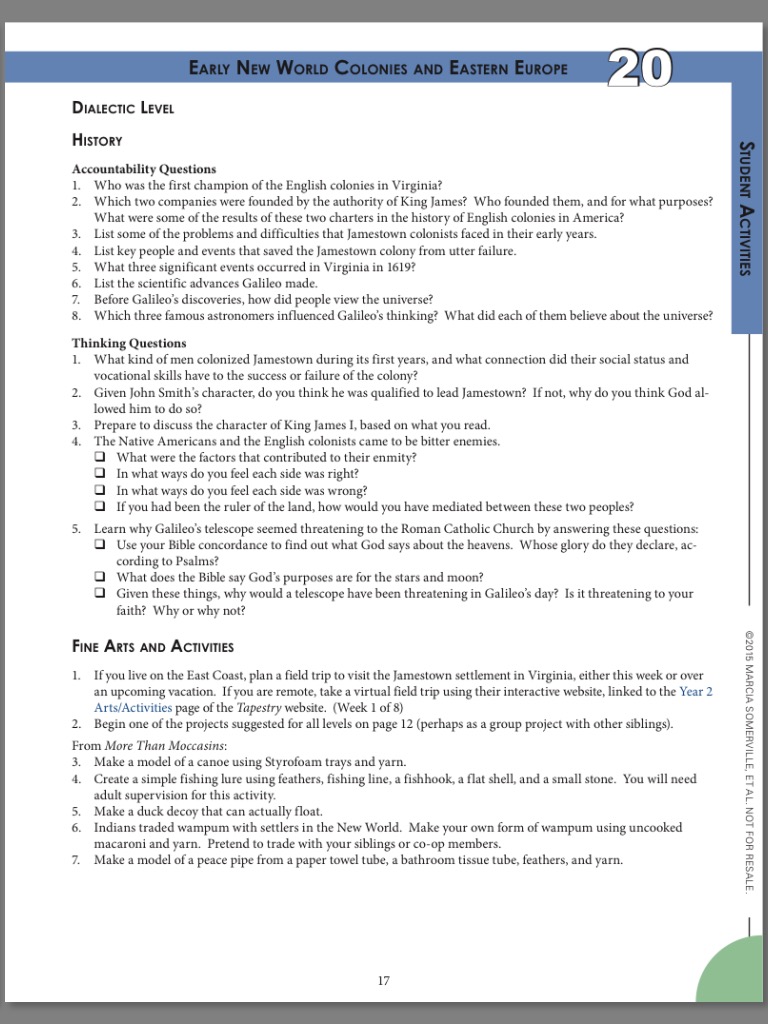
This is a Dialectic Level page. She completes the Accountability and Thinking Questions in a journal and we discuss them.

Dialectic Accountability and Thinking Questions

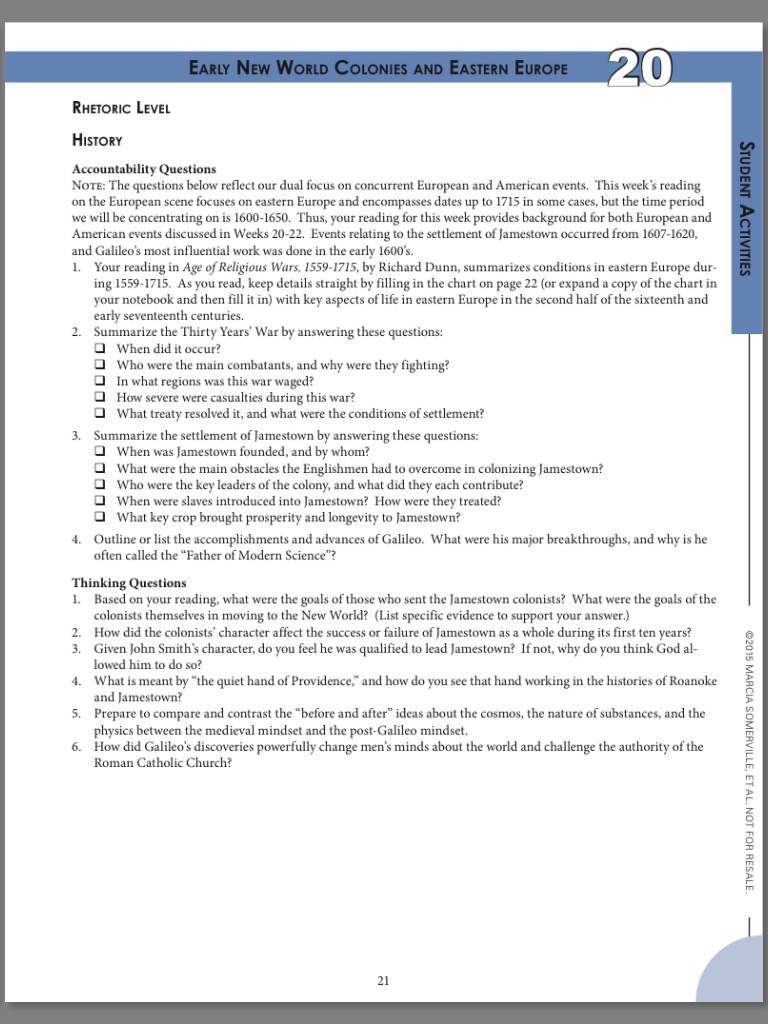
This is the Rhetoric Level accountability and thinking questions. They’re a little more in depth. It all starts to come together!

Rhetoric Accountability and Thinking Questions

This is a Rhetoric Level page for church history and government (an optional supplement).

Rhetoric Government

We often read missionary stories (sometimes a different selection than the booklist) and discuss the questions.

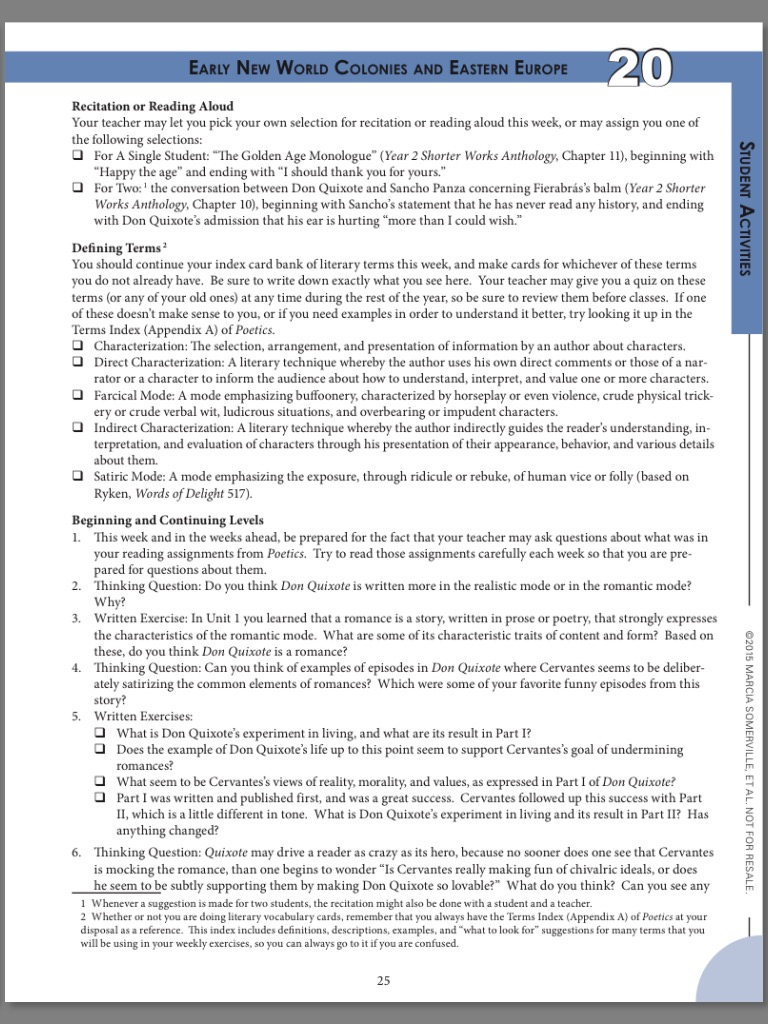
This is the Rhetoric Level Literature page. My daughter answers the questions in a journal and we discuss.

Rhetoric Literature

You can download high school credits pages for the Rhetoric Level, scope and sequence, and notebooking page templates for free from the website.

I also like to supplement the SAP with printable Notebooking Pages and we often make our own for biographies and topics of interest with the web app:

ProSchool LIFETIME Membership Sale

Supporting links offer great resources for each unit.

Supplements to a year’s curriculum:

  • Map Aids $25
  • Writing Aids $40-60 (I have never needed this and regret the purchase)
  • Lapbooks (options for ready made or pdf files) $15-75
  • Evaluations $15 per level per year
  • Pop Quiz (marketed to dads) $50 (We never used these)
  • Government $15
  • Shorter Works (Literature Anthology) $25 (I just bought all the Norton’s anthologies used)
  • Poetics (Literature Handbook) $20-50
  • Additional Printed Student Activities Packs $15-35 (great to save printer ink!)
  • Primer Level $49.90 (we didn’t care for this)
  • Lit Studies $29.95 (we don’t like these plans)

A digital edition of a year plan (updated forever) is $170 and print edition is $295. The digital is constantly updated forever.

Overall, Tapestry of Grace is the most comprehensive program we have seen for classical and Charlotte Mason style homeschooling. We love that it encompasses literature and history and offers so many options and choices.

My eldest just began college and is running the show in her history and English courses, so it’s all been worth it!

History Pinterest Boards:

  • Year 1
  • Year 2
  • Year 3
  • Year 4
  • US History
  • Geography
Linking up: A Little Pinch of Perfect, All Kinds of Things, The Jenny Evolution, Rich Faith Rising, Happy and Blessed Home, 123Homeschool4Me, Hip Homeschooling, 

How do you teach history in your homeschool?

Share
Pin6
Share
6 Shares
You might also like:

Filed Under: Homeschool Tagged With: Charlotte Mason, classical, history, Tapestry of Grace

Great Depression Unit Study

This blog may contain affiliate links: disclosure.
Please see my suggested resources.

May 11, 2015 By Jennifer Lambert 1 Comment

We’ve been learning about difficult times in history.

The Great Depression was a dark time in American history. And it led into a dark time for the world.

Some of our books were hard to read and the imagery was hard to view.

We are so fortunate and have never known hardship.

Being a military family overseas, we have ration cards for certain luxury items we can purchase on the US base. We discussed and compared that to the ration cards during the world wars and Great Depression.

We listened to ragtime and learned about the music of the times.

The girls read lots of books – nonfiction, living books, and fiction.

Reading about The Great Depression

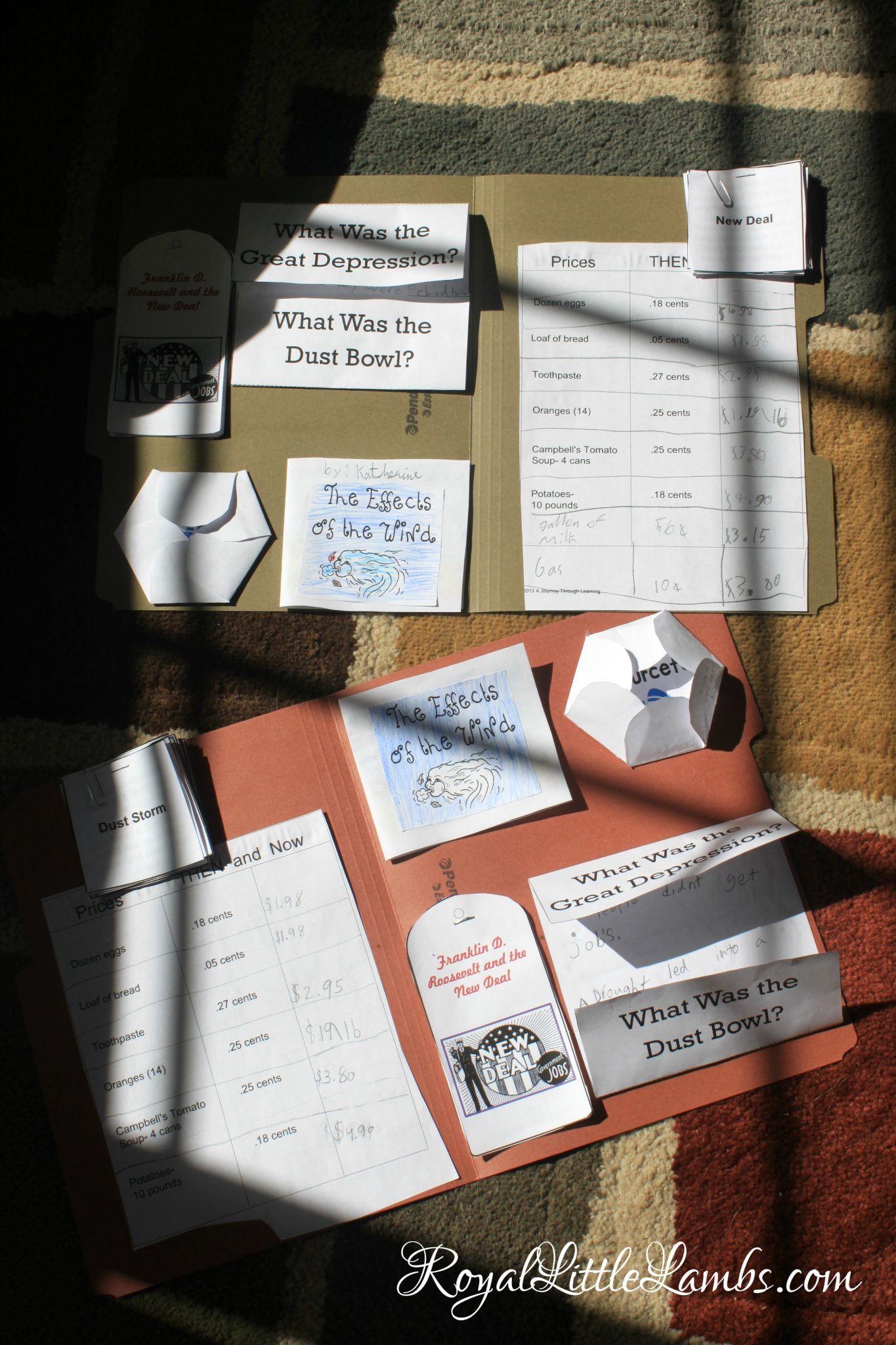
We completed notebooking pages and a lapbook.

The Great Depression Lapbook

We studied the causes and effects of The Great Depression and the Dust Bowl.

We learned about erosion, crop rotation, wind.

We discussed how wind can be destructive or beautiful and helpful.

We looked at wind in art. We love to study van Gogh’s paintings of wind. We looked through our pictures of recent museum tours.

A Wheatfield with Cypresses

We studied the photography of Dorothea Lange and read biographies about her.

We really enjoyed the books Restless Spirit by Elizabeth Partridge and Migrant Mother by Don Nardo.

We always love biographies by Mike Venezia.

We also looked at photography in these books: The Dust Bowl Through the Lens by Martin W. Sandler, Who We Were by Michael Williams, and We Were There Too by Phillip Hoose.

Photo project:

I asked the girls to go out and photograph beauty from ashes, something that might not be an especially lovely or photogenic scene, to search for beauty and find it in austerity.

Tori chose this bark-stripped tree stump with moss, lichen, and mushrooms growing from it:

Tree Stump

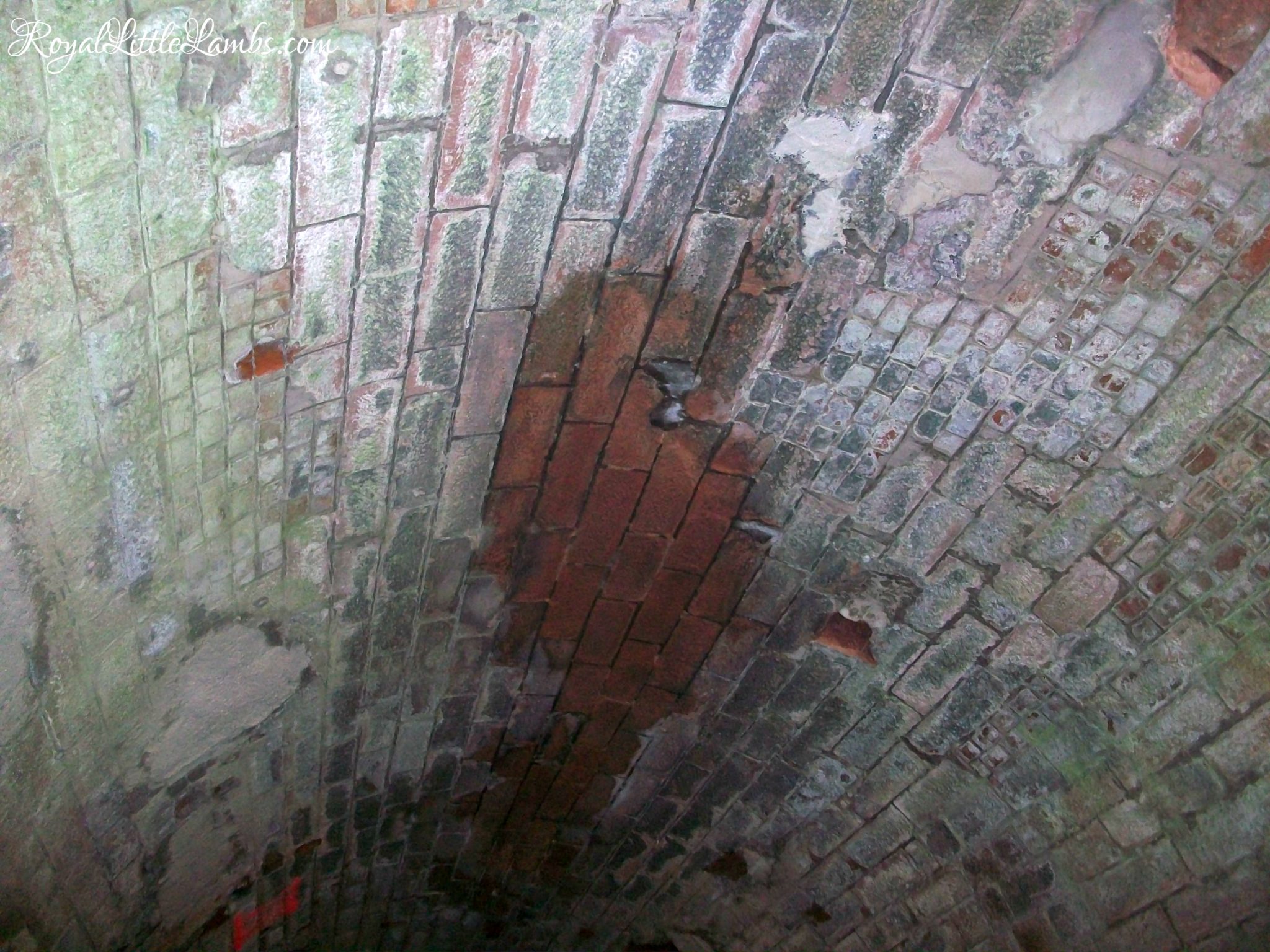
Kate found the bricks under this train trestle bridge lovely in their patches of color and the dampness seeping through:

Under the Train Bridge

They also photographed rocks, grass, moss and a peeling, rotten wooden bench.

They see beauty everywhere.

Resources we use and love:

Elizabeth is currently 14 and in 9th grade and Tori and Kate are in 3rd grade. These are the resources we enjoyed, with supervision.

Notebooking and Lapbooks:

  • American Presidents pages (we studied Franklin D. Roosevelt and the New Deal)
  • Ration book activity and lapbook materials from Homeschool Share
  • The Great Depression Express Lapbook from A Journey Through Learning
  • Notebooking pages from Homeschool Helper
The Great Depression lapbooks

Books:

  • Kit books from the American Girl series by Valerie Tripp
  • Mimmy and Sophie by Miriam Cohen
  • Bud, Not Buddy by Christopher Paul Curtis
  • Grapes of Wrath by John Steinbeck
  • Of Mice and Men by John Steinbeck
  • Potato by Kate Lied
  • Children of the Great Depression by Russell Freedman
  • Children of the Dust Bowl by Jerry Stanley
  • Children of the Dust Days by Karen Mueller Coombs
  • The Great Gatsby by F. Scott Fitzgerald
  • Out of the Dust by Karen Hesse
  • Sounder by William H. Armstrong
  • The Green Mile by Stephen King
  • Water for Elephants by Sara Gruen
  • The Color Purple by Alice Walker
  • To Kill a Mockingbird by Harper Lee

Movies:

Of course, use discretion. Not all of these are suitable for all audiences. My younger kids did not watch many of these.

  • Seabiscuit
  • Annie
  • The Great Gatsby
  • Chicago
  • Cinderella Man
  • Oscar
  • The Godfather
  • Indiana Jones and the Last Crusade
  • Radioland Murders
  • Shirley Temple movies
  • Modern Times or any Charlie Chaplin film
  • O Brother, Where Art Thou?
  • Public Enemies
  • Road to Perdition

There’s a lot of crossover with the books being made into movies, and I usually want the kids to read it before they watch it. We only have so much time and Liz probably won’t get to do year 4 again.

Do you have anything to add to the list?

ProSchool Membership - Productive Homeschooling
Share
Pin122
Share
122 Shares
You might also like:

Filed Under: Homeschool Tagged With: history, Tapestry of Grace, unit study

Celebrating Hanukkah

This blog may contain affiliate links: disclosure.
Please see my suggested resources.

December 16, 2014 By Jennifer Lambert 10 Comments

We began celebrating Hanukkah in 2011 when we learned about the Hebrew festivals during ancient studies in history with the Tapestry of Grace curriculum.

We love celebrating Hanukkah.

The kids loved the Jewish feasts all so much that we celebrate them every year now!

May the lights of Hanukkah usher in a better world for all humankind.

How we celebrate Hanukkah:

Celebrating Light

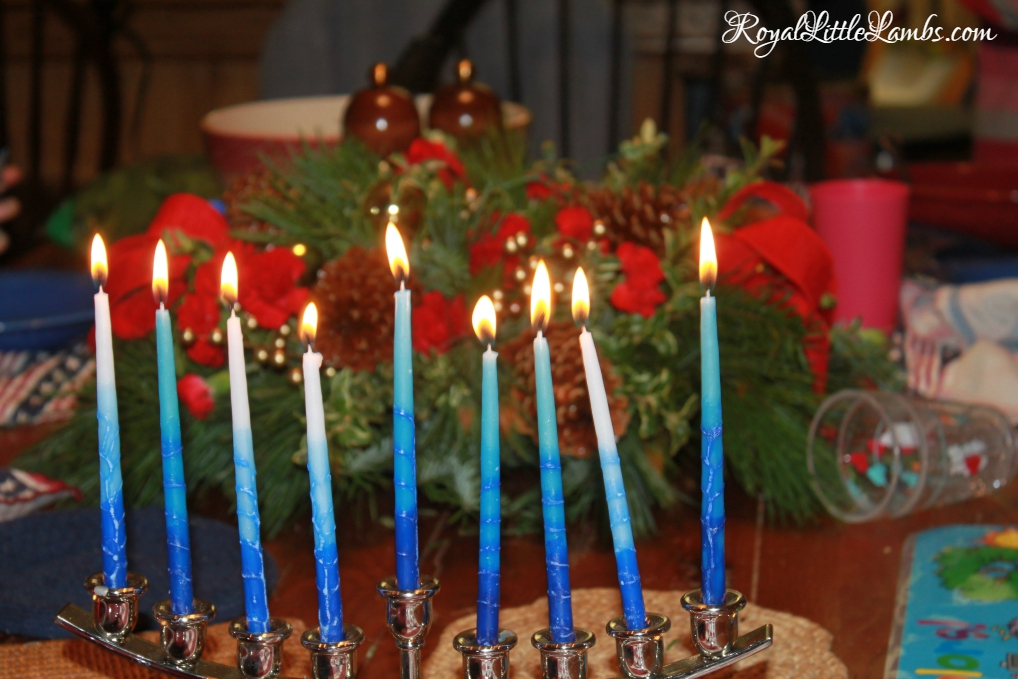
The first year, we had a plain silver colored menorah.

Menorah

We’ve focused our Bible studies about LIGHT this week.

There are so many Bible verses about light. We’ve read Bible lessons and sang songs and prayed about light.

I love my new “I AM” menorah. (I have the Passover cup and plate too.)

Menorah

Music

We love the Maccabeats! We listen to these guys even when it’s not a Jewish festival time. They’re just awesome.

Food

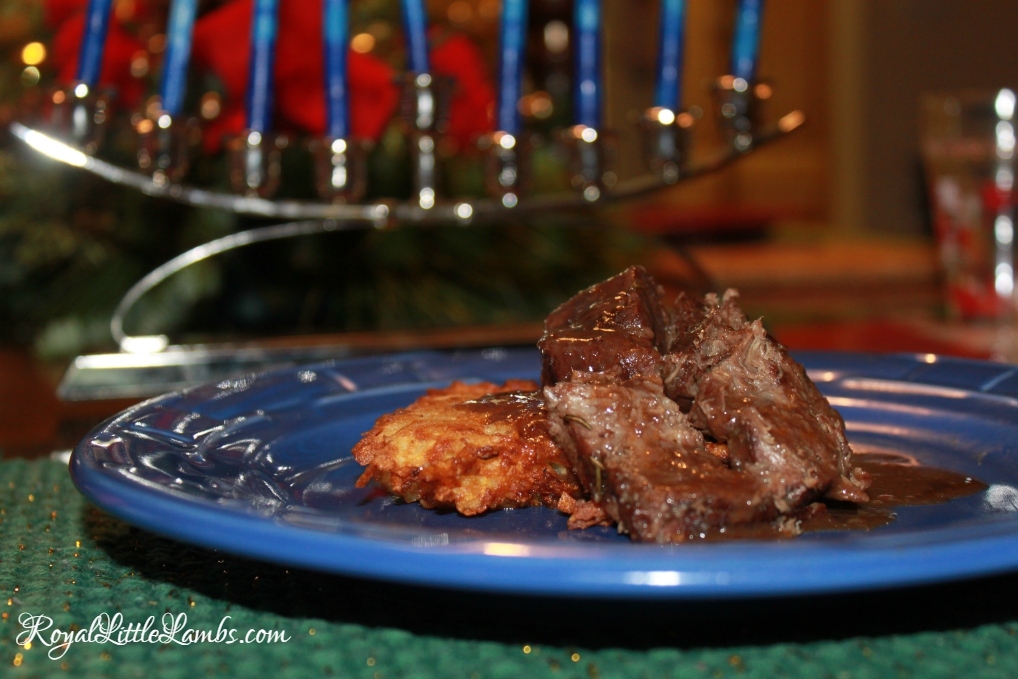
We usually have beef brisket or beef tips.

But my favorite is beef short ribs!

Latkes and Beef Short Ribs

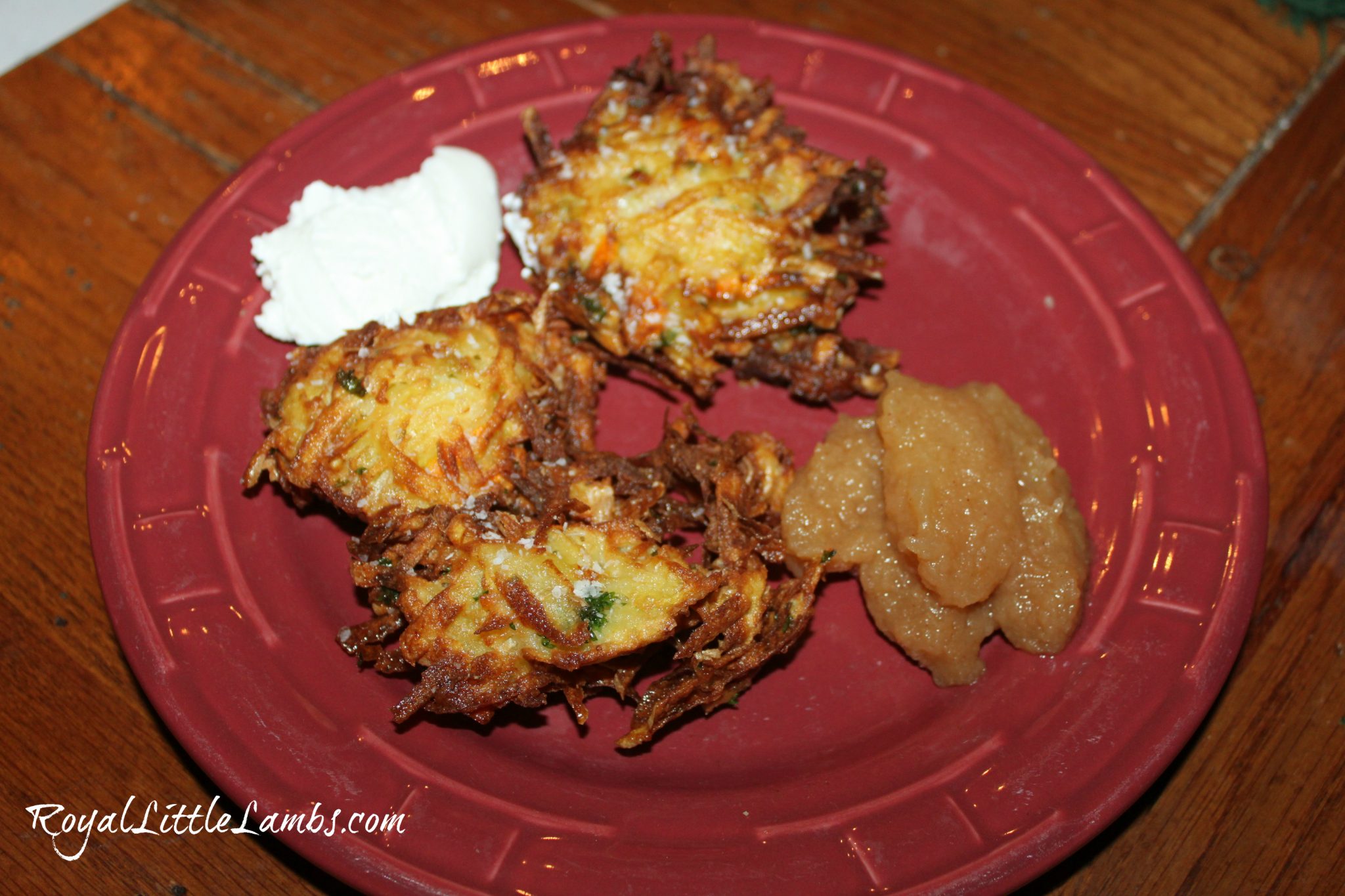
The kids look forward to potato latkes all year long!

Latkes

Fun

We play games, complete fun printable pages, and of course, play the dreidel!

  • Hanukkah Printables from Education.com
  • ABCTeach printables
  • DLTK Kids Activities
  • Fun Party Printables from Catch My Party
  • Packs from 3 Dinosaurs

Coloring pages are always a hit!

Hanukkah Coloring Page

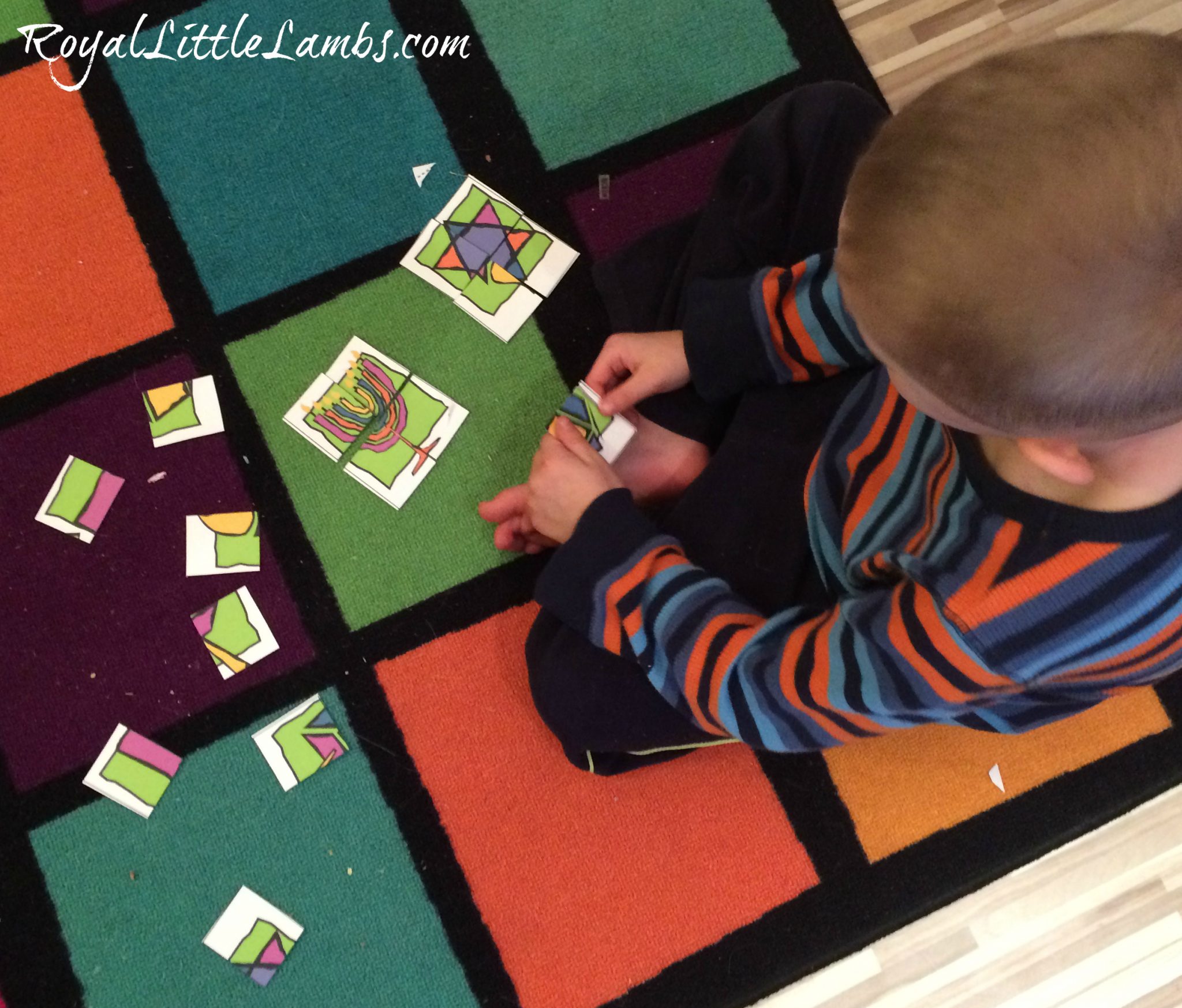
These cute printable Hanukkah puzzles are fun for preschoolers!

HanukkahPuzzles_thumb.jpg

My Jewish friend gave me these amazing workbooks after her kids outgrew them!

The girls like coloring pages, writing prompts, songs, and poems. They really soak up everything I teach them now. I love it!

There are some great Hanukkah decor ideas, cards, recipes, worksheets, and printable games at Education.com.

The BEST Hanukkah books

They’re the perfect age now to do the fun activities and learn about Hanukkah. They’re out of print now.

Check out the fun story and pictures:

The Story of the Maccabees

Dreidel Game

The Hebrew Nes Gadol Hayah Sham mean “A miracle happened there.” Those are the letters on the dreidel.

1. Give each person the same amount of candy, nuts, chocolate coins, or pennies.

2. Each player puts one piece in the “pot.”

3. The first player spins the dreidel and does what the dreidel says.

Gimel—take all

Hay—take half

Shin—add 1 to pot

Nun—take nothing

4. After a player gets a Gimel, everyone puts one more piece into the pot.

5. Everyone gets a turn. When you finish playing, you can eat your candy.

Presents

That first year, I gave the kids a tiny present each of the eight nights of Hanukkah. It’s always extra special when the week of Hanukkah coincides with Christmas.

Some years, we just save one present for the last night of Hanukkah. (We like to travel and celebrate Christmas too. Presents are never our focus or priority.)

One year,  we had themed presents for 8 nights!

I gave the girls nail polish and we had a nails and Doctor Who marathon after dinner (Alex got a fun activity book about Hanukkah). The kids got new pajamas and bath towels another night. One night they got stickers. One night was puzzles. I gave them Star Wars stuff one night. Another night is socks and underwear. Candy was another night. The last night is calendars.

Books

We often check out books from the library to read during the week of Hanukkah. We also have a few in our homeschool library.

  • Meet the Latkes by Alan Silberberg
  • How Do Dinosaurs Say Happy Chanukah? by Jane Yolen
  • All-of-a-Kind Family Hanukkah by Emily Jenkins
  • Maccabee!: The Story of Hanukkah by Tilda Balsley
  • Hanukkah Bear by Eric A Kimmel
  • Hershel and the Hanukkah Goblins by Eric A. Kimmel
  • Daddy Christmas and Hanukkah Mama by Selina Alko
  • The Story of Hanukkah by David A. Adler
  • Grandma’s Latkes by Malka Drucker
Print

Potato Latkes

Ingredients

  • 2 large eggs beaten
  • 3 cups grated potatoes Simply Potatoes!
  • 1/2 onion grated
  • 1 peeled carrot grated
  • 1 t garlic minced
  • 2 T fresh flat leaf parsley chopped (half if dried)
  • 2 T matzoh meal
  • 1/2 cup oil for frying
  • salt and pepper to taste

Instructions

  1. Beat the eggs and add the grated potatoes, onion, carrot, parsley, salt, pepper, and meal. Mix and let sit for about 30 minutes.

    Heat half the oil in a frying pan and drop formed potato patties into it. Repeat, adding oil as necessary.

    Fry until browned on both sides, about 3 minutes each side. 

    Serve with applesauce or sour cream.

Check out my Pinterest board for great Hanukkah fun and music and ideas:

Share
Pin292
Share
292 Shares
You might also like:

Filed Under: Faith Tagged With: December, faith, Hanukkah, history

Studying US History

This blog may contain affiliate links: disclosure.
Please see my suggested resources.

October 17, 2013 By Jennifer Lambert Leave a Comment

In light of the government shutdown, it’s been interesting to see how simple things were 225 years ago.

Thankfully, my husband got a paycheck, but we know many who have not and they are struggling. We pray this all gets resolved quickly.

We use Tapestry of Grace as our history core.

We follow a four year cycle of learning history, but US history is only in year three and four because we’re a young country.

See how we do history.

Favorite US History books:

  • A People’s History of the United States by Howard Zinn
  • A Different Mirror by Ronald Takaki  
  • An African American and Latinx History of the United States by Paul Ortiz 
  • A Black Women’s History of the United States by Daina Ramey Berry and Kali Nicole Gross 
  • An Indigenous Peoples’ History of the United States by Roxanne Dunbar-Ortiz  
  • A Disability History of the United States by Kim E. Nielsen  
  • A Queer History of the United States by Michael Bronski  
  • Lies My Teacher Told Me: Everything Your American History Textbook Got Wrong by James W. Loewen
  • A History of US: Eleven-Volume Set by Joy Hakim
  • Life: Our Century In Pictures by Richard B. Stolley
  • The Century for Young People by Peter Jennings

We study our nation’s beginnings in our homeschool.

We love lapbooks and notebooking!

I grew up traveling to many military and history sites around the USA. I hope to show my kids how beautiful the US landscape is and also discuss disturbing history topics and how we can learn from our mistakes.

We watch Schoolhouse Rock videos and do lots and lots and lots of reading.

Studying US History

Travel

We visited the Missions in San Antonio, TX.

We explored Hawaii when we lived there for three years.

We learned about the Transcontinental Railroad in Utah. We took a trip to Yellowstone and the Tetons.

When we moved to Ohio, we learned about the Wright Brothers.

Colonialism

Did Columbus really discover America?

No.

We enjoy reading about different aspects of the discovery of America and the American colonies.

My 4th of July Unit.

My Revolutionary War Unit.

My Constitution Unit.

Government

How was the US Government formed?

We enjoy reading about “the founding fathers” (and mothers) and how our early government worked. It’s pretty unique with states and federal.

My eldest is pretty fascinated by the election process. She likes the Presidential Game and iCivics.

We all loved this mouse book about the Supreme Court.

Here’s the official page of the USS Constitution. It’s important to read and understand it.

Military

The USA probably has the strongest military in the world, but it wasn’t always that way.

Is it right that we’re the policemen of the world?

Old Ironsides coloring page for younger kids.

Learn about sailing with these fun games and activities!

My girls love to make their own timelines, biography pages, and write about their learning in history and other subjects. They wrote a timeline of the events leading up the War of 1812.

  • Revolutionary War
  • Civil War
  • World War I
  • World War II
  • Pearl Harbor Remembrance Day
  • Japan Unit
  • Korea Unit
  • Vietnam Unit
  • The Middle East
  • Patriot Day or 9/11

Pioneer

My girls loved notebooking about Lewis and Clark.

We lived in Utah for four years and they really celebrated Pioneer Day which never really set right with me.

I enjoy learning about homesteading, but the history of the US exploring the west and manifest destiny is terrible.

White Europeans stole land and colonized in the name of God, destroying native culture.

Native Americans

We’re reading about Sacagawea and Tecumseh and I’m loving learning along with the kids!

(They’re still here.)

  • Indigenous People Book List – by and about Natives
  • Thanksgiving Unit
  • Johnston Farm and Indian Agency

Black History

I have a duty to teach my white children truth about our country and its history.

I teach from many different resources about Black history year-round with our history cycles, not just one month a year.

My youngest daughter and I made a cotton gin with Story of the World!

We learn about history by visiting museums like the National Underground Railroad Freedom Center.

Stone Mountain is an odd amusement park that sparks much discussion.

Civil Rights

We’re reading and learning about civil rights in the USA and around the world.

  • Nonviolence Unit Study
  • Being AntiRacist
  • Celebrating Diversity
  • Love Your Neighbor
  • Hispanic Heritage Unit
  • Asian Pacific American Heritage Unit

The US has much work to do for civil rights for all.

Our favorite resource for notebooking is Notebooking Pages.

NotebookingPages.com LIFETIME Membership

What are your favorite US history resources?

Share
Pin26
Share
26 Shares
You might also like:

Filed Under: Homeschool Tagged With: history, notebooking, Tapestry of Grace

Middle East Unit Study

This blog may contain affiliate links: disclosure.
Please see my suggested resources.

August 10, 2013 By Jennifer Lambert 1 Comment

We learned about the Middle East with Books, Movies, and Notebooking.

History Series:
American Revolutionary War
Civil War
World War I
World War II
Vietnam and Korea (coming soon!)
Iraq and Afghanistan

Too few Americans only know about the Middle East from Fox News, Breitbart, and other news outlets. They don’t know any of the history.

They don’t understand. Some don’t even want to understand or learn.

There is beauty in Afghanistan, Iraq, Syria, and other Middle East countries.

People are not our enemy. God loves all of us in this world. The moms and dads love their children in the Middle East just like we love our babies here in America.

For our struggle is not against flesh and blood, but against the rulers, against the authorities, against the powers of this dark world and against the spiritual forces of evil in the heavenly realms. Ephesians 6:12

Please pray with me for a more peaceful world.

This is a difficult concept. Our children have never known our country to not be at war. I remember when Desert Shield and Desert Storm took place when I was in high school. My parents worked for the U.S. Army and provided support for our forces in Iraq.
CNN and other news channels show their biased accounts of what’s going on “over there” but history is written by the winners.

The children aren’t winning.

9/11 disrupted the world and brought many Americans together but tore many others apart. Sides were chosen. America is the world’s police.
The children aren’t winning.

My husband deployed to Kandahar Air Field in 2011 for almost 8 months. He protected me from many stories and that’s probably best. I know he saw many horrors there. He worked in the medical facility there and in the blood bank. The medics cared for all injured, no matter whose side they fought for. My husband’s team collected and provided blood from UN Coalition personnel for injured Afghani civilians and soldiers (and even child soldiers) from both sides of that country’s conflict, in addition to our own.

The children aren’t winning.
My husband has those memories forever.
Will the war ever end?

I have to admit that we haven’t really exposed our kids to these events much yet. We are protecting their innocence as long as possible. It’s such a scary world we live in. The news is full of terrorist attacks and we just don’t discuss it much. We are diligent to be aware of our surroundings when we travel. We realize we are very American in a very hostile environment.

We’re losing much history, art, and culture with war in the Middle East.

Resources

  • Center for Middle Eastern Studies – lots of lesson plans
  • War and Terrorism
  • Oil and Water in the Middle East
  • Daily Life in the Middle East
  • Rebuilding Baghdad from Scholastic
  • Teaching the Iraq War Lesson Plans from PBS
  • Refugees
  • Iraq (PBS Nature video)
  • Iraq in Transition
  • Iraq in Pictures
  • Nat Geo Iraq
  • The Changing Face of War
  • Afghanistan (PBS)
  • Women on the Rise in Afghanistan
  • Teaching a People’s History
  • The Homeschool Mom Resources
  • Eclectic Mom Resources
  • Middle East Lapbook
  • Afghanistan Unit Study
  • 8 educational resources to better understand the refugee crisis
  • Productive Homeschooling $

Movies

(use discretion)

  • The True Story of Charlie Wilson
  • Restrepo
  • The Battle for Marjah
  • Rendition
  • Zero Dark Thirty
  • Hell and Back Again
  • Hurt Locker
  • Osama

Books

(use discretion)

  • Nasreen’s Secret School
  • I See the Sun in Afghanistan
  • A Refugee’s Journey from Afghanistan
  • A Refugee’s Journey from Syria
  • A Refugee’s Journey from Iraq
  • Lost and Found Cat
  • My Beautiful Birds
  • Stepping Stones
  • The Sky of Afghanistan
  • One Green Apple
  • Tasting the Sky
  • Balcony on the Moon
  • A Little Piece of Ground
  • Persepolis
  • The Breadwinner Trilogy
  • Afghanistan: A Military History from Alexander the Great to the War Against the Taliban
  • Kabul Beauty School
  • Ghosts of War
  • The Kite Runner
  • A Thousand Splendid Suns
  • And the Mountains Echoed
  • Waiting for the Owl’s Call
  • Silent Music: A Story of Baghdad
  • The Librarian of Basra: A True Story from Iraq
  • Four Feet, Two Sandals

We are very respectful of the military and very patriotic.
Recently, my eldest joined Civil Air Patrol and you can read about it here: My Civil Air Patrol cadet.

Please join me in praying for our world.

How we do history…

You might also like: Raising Readers and How We Study History

We use Tapestry of Grace for our main history studies.

My girls especially love the living books and literature selections. They have a government supplement that is wonderful for high school. Four learning levels means the whole family learns together. Each unit has Internet links to relevant sites (most I’ve never heard of). The Revolutionary War begins at the end of Year 2 (from Byzantium to the New World) and the beginnings of our new nation is in the first unit of Year 3 (from Napoleon to Teddy Roosevelt).

Year 1

Year 2

Year 3

Year 4

Follow Jennifer Lambert’s board US History on Pinterest.


Follow Jennifer Lambert’s board Modern History on Pinterest.

You might also like: Raising Readers and How We Study History.

Check out the rest of the Crew posts!
Summer Blog Hop

Do you have resources to add? How do you teach this difficult time period to your kids?

ProSchool Membership - Productive Homeschooling
Share
Pin46
Share
46 Shares
You might also like:

Filed Under: Homeschool Tagged With: history, military, Tapestry of Grace, unit study

World War II Unit Study

This blog may contain affiliate links: disclosure.
Please see my suggested resources.

August 8, 2013 By Jennifer Lambert 9 Comments

We studied World War II with Notebooking, Books, Videos, and Trips.

Series:
American Revolutionary War
Civil War
World War I
World War II
 Iraq and Afghanistan

World War II Unit

We watched in horror as the world erupted in war. When America was attacked at Pearl Harbor, it was devastating to Americans.
We defended our nation and its people and fought valiantly in Europe and the Pacific.
 
The genocidal state of Germany made the rapid extermination of a cultural and racial group {including women and children} an unprecedented event in the history of the world. Almost 6 million or 78% of the Jews in Europe were murdered during WWII, along with millions of others, such as Slavs, disabled, persons of color, Freemasons, homosexuals, and Jehovah’s Witnesses.
Few knew about the situation and even fewer tried to help.

Travel

  • Our Dachau Trip
  • Normandy Memorial Sites
  • Prague Synagogues

Resources

  • WWII Lapbook
  • WWII Lapbook and Notebooking Pages
  • Homeschool Share Holocaust
  • The Power of a Paperclip
  • Free Unit from Something 2 Offer
  • Unit Study from Tina’s Dynamic Homeschool Plus
  • PBS The War
  • History.com WWII
  • National Archives
  • National WWII Memorial
  • National WWII Museum
  • NPS WWII Memorials
  • Visit Pearl Harbor
  • Pearl Harbor.org
  • Pearl Harbor Historic Sites
  • NPS: Valor in the Pacific
  • History.com Pearl Harbor
  • Holocaust Education
  • Remembering the Holocaust {Scholastic}
  • Aish.com
  • St. Louis
  • US Holocaust Memorial Museum and the Traveling USHMM
  • Holocaust History Project
  • Productive Homeschooling $

Movies

{use discretion}

  • Swing Kids
  • Hart’s War
  • The Pianist
  • Schindler’s List
  • Life is Beautiful
  • Paradise Road
  • Come See the Paradise
  • In Enemy Hands
  • Saving Private Ryan
  • Red Tails
  • The Thin Red Line
  • Windtalkers
  • Flags of our Fathers
  • Memphis Belle
  • The Boy in the Striped Pajamas

Books

  • The Boy in the Striped Pajamas
  • The Hiding Place
  • Anne Frank: The Diary of a Young Girl
  • The Devil’s Arithmetic
  • Number the Stars
  • Hidden: A Child’s Story of the Holocaust
  • Yankee Doodle Gals
  • Early Sunday Morning
  • Meet Molly
  • Catch-22
  • World Wars
  • A History of US: War, Peace, and All That Jazz: 1918-1945 A History of US
  • Terezin: Voices from the Holocaust
  • Baseball Saved Us
  • Terrible Things: An Allegory of the Holocaust
  • Jars of Hope: How One Woman Helped Save 2,500 Children During the Holocaust
  • The Yellow Star: The Legend of King Christian X of Denmark
  • Star of Fear, Star of Hope
  • The Butterfly
  • Passage to Freedom: The Sugihara Story
  • The Little Riders
  • The Harmonica
  • A Father’s Promise
  • The Cats in Krasinski Square
  • The War That Saved My Life
  • War Boy: A Wartime Childhood
  • When Hitler Stole Pink Rabbit
  • Benno and the Night of Broken Glass
  • The Bracelet
  • The Whispering Town
  • Six Million Paper Clips: The Making Of A Children’s Holocaust Memorial

How we do history…

You might also like: Raising Readers and How We Study History

We use Tapestry of Grace for our main history studies.

My girls especially love the living books and literature selections. They have a government supplement that is wonderful for high school. Four learning levels means the whole family learns together. Each unit has Internet links to relevant sites (most I’ve never heard of). The Revolutionary War begins at the end of Year 2 (from Byzantium to the New World) and the beginnings of our new nation is in the first unit of Year 3 (from Napoleon to Teddy Roosevelt).

Year 1

Year 2

Year 3

Year 4

Follow Jennifer Lambert’s board US History on Pinterest.


Follow Jennifer Lambert’s board Modern History on Pinterest.

You might also like: Raising Readers and How We Study History

Check out the rest of the Crew posts!
 
Summer Blog Hop
ProSchool Membership - Productive Homeschooling
Share
Pin242
Share
242 Shares
You might also like:

Filed Under: Homeschool Tagged With: history, military, Tapestry of Grace, unit study, World War II, WWII

World War I Unit Study

This blog may contain affiliate links: disclosure.
Please see my suggested resources.

August 7, 2013 By Jennifer Lambert 6 Comments

We studied WWI with Notebooking, Books, Videos, and Trips.


Series:
American Revolutionary War
Civil War
World War I
World War II
Iraq and Afghanistan

World War 1 Unit Study

American military forces

The most destructive war the world had seen and the first genuinely world war began exactly 99 years ago. Called the Great War until World War II. The history books focus on Europe, but there were campaigns in Asia, the Pacific, and Africa too. Many Europeans military fought in conflicts all over the world while Americans supported European interests on the Western front.

But I don’t want my kids to have just an American view of the war – or the world. We study all world history. We learned about the British Commonwealth and their interests during WWI. We learned about German issues.

It’s important to have the larger picture to understand why it happened, lest we forget.

Travel

Our trip to the Flanders Fields WWI Sites with lots of resources.

On this day, at the 11th hour on the 11th day of the 11th month of 1918, the Great War ends. At 5 a.m. that morning, Germany, bereft of manpower and supplies and faced with imminent invasion, signed an armistice agreement with the Allies in a railroad car outside Compiegne, France.

Resources

  • WWI Pinterest Unit Study Board
  • General Patton Museum
  • Truman Papers
  • The Great War~PBS
  • Productive Homeschooling $
  • WWI worksheets
  • WWI Notebook/Lapbook
  • WWI Lapbook and Notebooking Pages

Books

  • All Quiet on the Western Front
  • Farewell to Arms
  • The Night Flyers
  • When Christmas Comes Again
  • World Wars
  • Where Poppies Grow: A World War I Companion
  • War Game: Village Green to No-Man’s-Land
  • A History of US: War, Peace, and All That Jazz: 1918-1945 A History of US
  • WWI Booklist from Booktrust

Movies

(use viewer discretion)

  • Flyboys
  • Behind the Lines {renamed Regeneration}
  • World War I in Color
  • War Horse
  • Legends of the Fall
  • list of movies that take place during WW1
  • The Red Baron

How we do history…

You might also like: Raising Readers and How We Study History

We use Tapestry of Grace for our main history studies.

My girls especially love the living books and literature selections. They have a government supplement that is wonderful for high school. Four learning levels means the whole family learns together. Each unit has Internet links to relevant sites (most I’ve never heard of). The Revolutionary War begins at the end of Year 2 (from Byzantium to the New World) and the beginnings of our new nation is in the first unit of Year 3 (from Napoleon to Teddy Roosevelt).

Year 1

Year 2

Year 3

Year 4

Do you have any resources to add to my list?

Follow Jennifer Lambert’s board US History on Pinterest.


Follow Jennifer Lambert’s board Modern History on Pinterest.

You might also like: Raising Readers and How We Study History

Check out the rest of the Crew posts!
Summer Blog Hop
ProSchool Membership - Productive Homeschooling
Share
Pin54
Share
54 Shares
You might also like:

Filed Under: Homeschool Tagged With: history, military, Tapestry of Grace, unit study, World War I, WWI

  • « Previous Page
  • 1
  • 2
  • 3
  • 4
  • 5
  • Next Page »
Suggested ResourcesFetchRakuten Coupons and Cash Back

Archives

Popular Posts

10 DIY Gifts with Essential Oils10 DIY Gifts with Essential Oils
Natural Remedies for HeadacheNatural Remedies for Headache
10 Natural Remedies to Keep on Hand10 Natural Remedies to Keep on Hand
Henna Hands CraftHenna Hands Craft
Homemade Turkey Divan CasseroleHomemade Turkey Divan Casserole
This website uses cookies to improve your experience. We'll assume you're ok with this, but you can opt-out if you wish.Accept Reject Read More
Privacy & Cookies Policy

Privacy Overview

This website uses cookies to improve your experience while you navigate through the website. Out of these, the cookies that are categorized as necessary are stored on your browser as they are essential for the working of basic functionalities of the website. We also use third-party cookies that help us analyze and understand how you use this website. These cookies will be stored in your browser only with your consent. You also have the option to opt-out of these cookies. But opting out of some of these cookies may affect your browsing experience.
Necessary
Always Enabled
Necessary cookies are absolutely essential for the website to function properly. This category only includes cookies that ensures basic functionalities and security features of the website. These cookies do not store any personal information.
Non-necessary
Any cookies that may not be particularly necessary for the website to function and is used specifically to collect user personal data via analytics, ads, other embedded contents are termed as non-necessary cookies. It is mandatory to procure user consent prior to running these cookies on your website.
SAVE & ACCEPT