Jennifer Lambert

A Sacred Balance

Visit Us On FacebookVisit Us On PinterestVisit Us On InstagramVisit Us On Linkedin
  • Homeschool
    • Book Lists
    • How Do We Do That?
    • Notebooking
    • Subjects and Styles
    • Unit Studies
  • Travel
    • Europe
      • Benelux
      • France
      • Germany
      • Greece
      • Ireland
      • Italy
      • London
      • Porto
      • Prague
    • USA
      • Chicago
      • Georgia
      • Hawaii
      • Ohio
      • Utah
      • Yellowstone and Teton
  • Family
    • Celebrations
    • Frugal
  • Military Life
    • Deployment
    • PCS
  • Health
    • Recipes
    • Essential Oils
    • Fitness
    • Mental Health
    • Natural Living
    • Natural Beauty
  • Faith
  • About Me
    • Favorite Resources
    • Advertising and Sponsorship
    • Policies
  • Reviews

© 2025Jennifer Lambert · Copyright · Disclosure · Privacy · Ad

Flanders WWI Sites

This blog may contain affiliate links: disclosure.
Please see my suggested resources.

June 14, 2017 By Jennifer Lambert 18 Comments

We visited Flanders Fields.

It’s something I’ve always wanted to see.

We took a little trip to Bruges, Belgium…and saw the Flanders Fields WWI sites on the way back home to Germany.

It was emotional to see all the monuments and memorials to the Commonwealth soldiers.

The “Brooding Soldier” statue by Frederick Chapman Clemesha in the St. Julien Memorial was poignant and much taller than I expected.

We enjoyed the Memorial Museum Passchendaele 1917.

Open from Monday to Sunday, from 9:00 to 18:00. Last admission at 16:30. A museum visit lasts approximately two hours.

Adults: €6,5 or €10,5 with audioguide
Students: €4 or €7 with audioguide
Under 7 FREE

I read that it was a fun and interactive museum, but we were really blown away by how well put-together it is. We didn’t bother to get audio-guides. The plaques on each display were in English and we read every single one.

The kids loved the interactive exhibits, trying on body armor and helmets, gas masks, and cloaks.

The kids were excited to see a stuffed messenger pigeon like Cher Ami.

Cher Ami was a registered Blue Check Hen carrier pigeon, one of 600 birds owned and flown by the U.S. Army Signal Corps in France during World War I. Download the Cher Ami real story here.

The exhibits were really amazing.

We really experienced history in the replicated dugout and trenches.

There was a gorgeous park with lots of walking trails. We had a picnic lunch by the pond.

The Menin Gate was breathtaking.

I really wanted to see the Essex Farm Cemetery and Memorials.

John McCrae wrote the poem In Flanders Fields.

It was memorable to see all these World War I sites and I’m so glad the kids and I got to experience this history.

Also, here’s my World War I Unit Study.

On this day, at the 11th hour on the 11th day of the 11th month of 1918, the Great War ends. At 5 a.m. that morning, Germany, bereft of manpower and supplies and faced with imminent invasion, signed an armistice agreement with the Allies in a railroad car outside Compiegne, France.

Learn about WWI, Armistice Day, Remembrance Day, and American Veterans Day

Books:

  • DK Eyewitness Books: World War I by Simon Adams
  • World War I for Kids: A History with 21 Activities by R. Kent Rasmussen 
  • The War to End All Wars: World War I by Russell Freedman
  • Treaties, Trenches, Mud, and Blood by Nathan Hale 
  • War Horse by Michael Morpurgo
  • All Quiet on the Western Front by Erich Maria Remarque
  • A Farewell to Arms by Ernest Hemingway 
  • Silver Threads by Marsha Forchuk Skrypuch
  • War Game: Village Green to No-Man’s-Land by Michael Foreman 
  • Truce by Jim Murphy 
  • Christmas in the Trenches by John McCutcheon
  • Shooting at the Stars: The Christmas Truce of 1914 by John Hendrix
  • Silent Night: The Story of the World War I Christmas Truce by Stanley Weintraub 
  • Christmas Truce: A True Story of World War 1 by Aaron Shepard
  • Eleventh Month, Eleventh Day, Eleventh Hour: Armistice Day, 1918 World War I and Its Violent Climax by Joseph E. Persico
  • Archie’s War by Marcia Williams
  • A Brave Soldier by Nicolas Debon 
  • Rags: Hero Dog of WWI: A True Story by Margot Theis Raven
  • Stubby the War Dog: The True Story of World War I’s Bravest Dog by Ann Bausum
  • Stubby the Dog Soldier: World War I Hero by Blake Hoena 
  • The Silver Donkey by Sonya Hartnett
  • In Flanders Fields: The Story of the Poem by John McCrae by Linda Granfield 
  • The Poppy Lady: Moina Belle Michael and Her Tribute to Veterans by Barbara Walsh
  • Where Poppies Grow: A World War I Companion by Linda Granfield
  • A Poppy Is to Remember by Heather Patterson
  • Remembrance Poems & Readings: Reflection on Matters of War & Peace by David Roberts
  • Come On In, America: The United States in World War I by Linda Barrett Osborne
  • The Wall by Eve Bunting
  • America’s White Table by Margot Theis Raven

Movies:

  • Fly Boys
  • The Red Baron
  • The Great War in Color
  • Joyeux Noel
  • Lawrence of Arabia
  • Gallipoli
  • Legends of the Fall
  • The Trench
  • The Lost Battalion
  • Passchendaele

Activities and Printables:

  • Activity Village Remembrance Day
  • 51 Remembrance Day Poppy Craft Ideas from Everything Mom
  • French Remembrance Day Activities by For French Immersion
  • Remembrance Day from DLTK
  • 51 Remembrance Day Poppy Craft Ideas from Everything Mom
  • WWI from BBC
  • History of Veterans Day from History Channel
  • Lemon Poppy Sugar Cookies from The Endless Meal

Learn the difference: American Memorial Day

  • How to Memorial Day
  • Don’t say Thanks for Service
  • FREE Notebooking Pages
  • ABC Teach – Free Memorial Day printables
  • Home of Heroes – Medal of Honor resources
  • Raising Our Kids –  Memorial Day coloring pages
  • Homeschool Helper Online – Memorial Day resources
  • The Homeschool Mom – Memorial Lesson Plans
  • Homeschool Creations – Memorial Day Printables
  • Memorial Day Preschool Cutting Practice from 3 Boys and a Dog
  • How to Make a DIY Patriotic T-Shirt from Crafty Mama in ME
  • F is for Flag Handwriting Letter Mazes from Simple Fun for Kids
  • Memorial Day Penmanship Worksheet from Schooling a Monkey
  • Memorial Day Word Search from Something 2 Offer
  • Learning With My Boys – Memorial Day unit study

Lest we forget.

Share
Pin55
Share
55 Shares
You might also like:

Filed Under: Belgium, Europe, Military, Travel Tagged With: Belgium, Benelux, history, travel, World War I, WWI

Reformation Unit Study

This blog may contain affiliate links: disclosure.
Please see my suggested resources.

October 27, 2016 By Jennifer Lambert 6 Comments

I wish we had the time and resources to travel all over Europe to study the Protestant Reformation.

We’ve traveled to Prague to view the statue of Jan Huß.

Jan Huß was a Czech priest, philosopher, early Christian reformer and Master at Charles University in Prague. After John Wycliffe, the theorist of ecclesiastical Reformation, Hus is considered the first Church reformer, as he lived before Luther, Calvin, and Zwingli.

Hus was a key predecessor to Protestantism, and his teachings had a strong influence on the states of Western Europe, most immediately in the approval of a reformist Bohemian religious denomination, and, more than a century later, on Martin Luther himself. He was burned at the stake for heresy against the doctrines of the Catholic Church, including those on ecclesiology, the Eucharist, and other theological topics.

After Huß was executed in 1415, the followers of his religious teachings (known as Hußites) rebelled against their Roman Catholic rulers and defeated five consecutive papal crusades between 1420 and 1431, in what became known as the Hußite Wars. A century later, as many as 90% of inhabitants of the Czech lands were Hußites.

This was almost 100 years before Martin Luther nailed his 95 These to the church door.

JanHussMonument.jpg

We really love the humongous statue to Martin Luther and other Protestant Reformers in Worms, Germany.

Most of us are familiar with Martin Luther and his 95 Theses.

Luther focused on the doctrine of justification by faith alone.

Martin Luther’s story is fascinating, involving legal tangles with the Catholic church and government authorities, excommunication, kidnapping, hiding away in a castle where he translated the Bible, then he married an ex-nun. They had six children. He wrote and taught and composed hymns until his death.

luther-statue-in-worms

It is legend that Luther said the words: “Here I stand. I cannot do otherwise. God help me. Amen.”
here-i-stand

What Luther really said:
“Unless I am convinced by Scripture and plain reason – I do not accept the authority of the popes and councils, for they have contradicted each other – my conscience is captive to the Word of God. I cannot and I will not recant anything for to go against conscience is neither right nor safe. God help me. Amen.”

The monument is quite massive.

Luther stands in the center and the four seated on the base are Girolamo Savonarola, Peter Waldo, John Wycliffe, and Jan Hus.

The two men standing on either side in front are Frederick III, Elector of Saxony and Philip I, Landgrave of Hesse.

The two standing in the back are Johannes Reuchlin and Philipp Melanchthon.

Three seated women on the sides and back center represent the first German cities to adopt Protestantism: Augsburg, Speyer, and Magdeburg.

flowers-and-luther-monument

This map of the monument shows more info and where everyone is.

Where I’d like to go:

The city of Wittenberg, Germany, has a 500-year anniversary celebration of the 95 Theses!

There’s a John Calvin Museum in Geneva, Switzerland. But Switzerland is sooo expensive to eat and stay.

We’ve been reading lots.

I love these series: Christian Biographies for Young Readers by Simonetta Carr and Historical Biblical Fiction by Louise A. Vernon.

Resources:

  • Reformation Day activity list from Blessed Beyond a Doubt
  • Reformation notebooking from Proverbial Homemaker
  • Homeschool Helper Online Martin Luther Notebooking Pages
  • Reformation Unit Study and Lapbook from I Choose Joy
  • Homeschool Giveaways activity list
  • Homeschool Share Reformation Unit and Notebooking Pages
  • Reformation Day Party Ideas from Intoxicated on Life
  • Resource List from Curriculum Choice
  • Reformation Coloring Book
  • Women of the Reformation series
  • Fun activities from Reformation Lady
  • The Queen’s Smuggler by Dave and Neta Jackson
  • Martin Luther: Reformation Fire by Catherine MacKenzie
  • John Knox: The Sharpened Sword by Catherine MacKenzie
  • Ink On His Fingers by Louise A. Vernon
  • The Beggar’s Bible by Louise A. Vernon
  • The Man Who Laid the Egg by Louise A. Vernon
  • The Bible Smuggler by Louise A. Vernon
  • William Tyndale: The Smuggler’s Flame by Lori Rich
  • Morning Star of the Reformation by Andy Thomson
  • The River of Grace: The Story of John Calvin by Joyce McPherson
  • When Lightning Struck!: The Story of Martin Luther by Danika Cooley
  • Martin Luther: A Man Who Changed the World by Paul Maier
  • Courage and Conviction: Chronicles of the Reformation Church by Mindy and Brian Withrow
  • Reformation Sketches: Insights into Luther, Calvin, and the Confessions by W. Robert Godfrey
  • Famous Men Of The Renaissance & Reformation by Robert G. Shearer
  • Following the Reformation Trail in Germany and Switzerland – Part 1
  • Torchlighters: William Tyndale
  • Torchlighters: The Martin Luther Story
  • Luther
  • Zwingli and Calvin
  • Martin Luther: A Journey to the Heart of the Reformation
  • Truth Prevails: The Undying Faith Of Jan Hus

The Reformation is a fascinating time in history and helped to usher in the Renaissance!

ProSchool Membership - Productive Homeschooling
Share
Pin8
Share
8 Shares
You might also like:

Filed Under: Faith Tagged With: faith, history, Reformation, unit study

Michelangelo Unit Study

This blog may contain affiliate links: disclosure.
Please see my suggested resources.

October 11, 2016 By Jennifer Lambert 6 Comments

We’ve traveled to Rome and Florence and studied Michelangelo’s art extensively.

Michelangelo was a true Renaissance man: sculptor, painter, poet, engineer, architect.

Michelangelo Unit Study
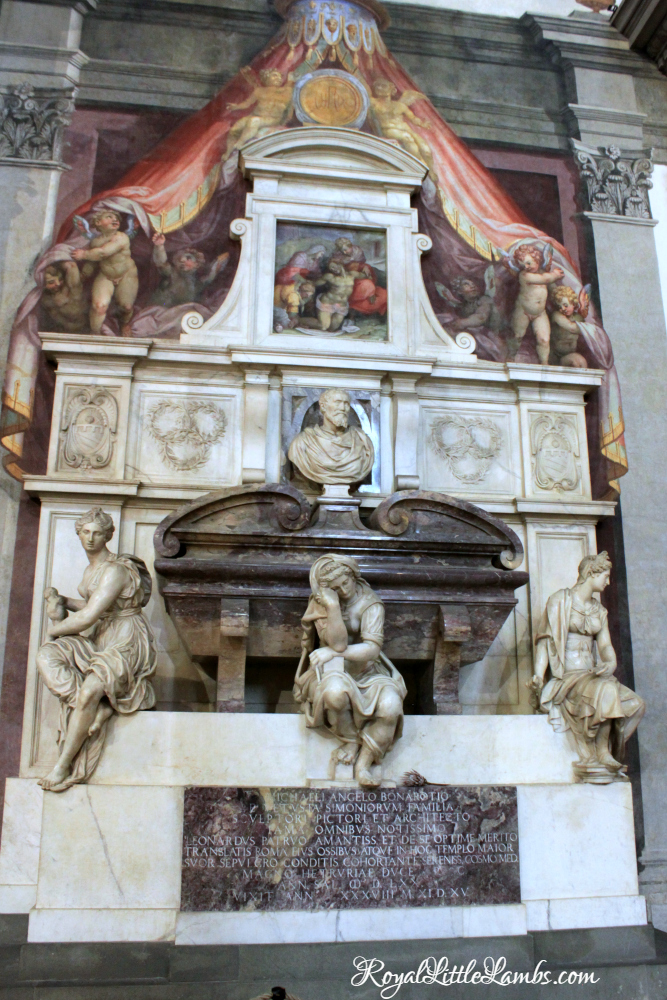
His memorial is in Santa Croce church in Florence:

Michelangelo's Tomb in Santa Croce

Some of our favorites:

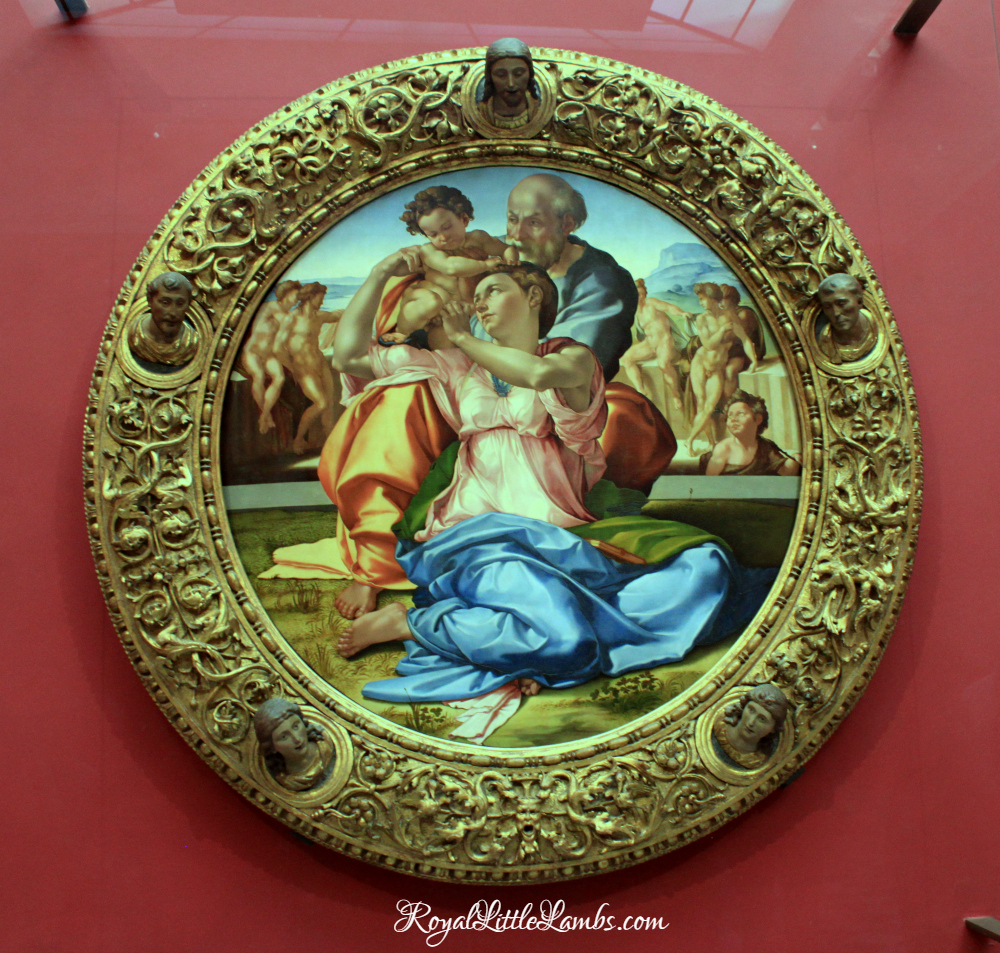
The Doni Tondo at the Uffizi Museum in Florence.

Tondo means “in the round.” Michelangelo designed the frame, but didn’t create this one. Michelangelo hated painting, especially portrait painting.

Funny story has it that the minor nobleman who commissioned this piece for his bride’s wedding gift disliked the peasant look of the Holy Family and the nudes in the background, so refused to pay. Michelangelo had a fit and doubled the price. They went back and forth, even shouting in the streets, and all of Florence watched it like a tennis match until he finally agreed to pay.

Doni Tondo by Michelangelo
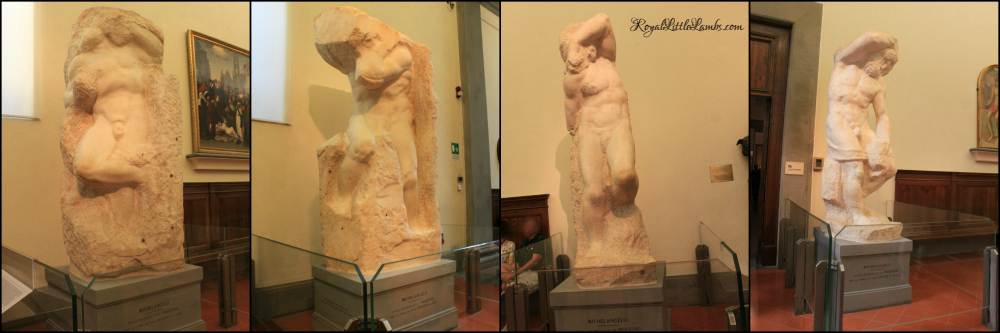
Michelangelo’s 4 Slaves or Prisoners at the Accademia Gallery in Florence:

He designed these (and the Moses) for the tomb of Pope Julius II, that was never completed.

Michelangelo’s Slaves or Prisoners
Also, St. Matthew at the Accademia Gallery in Florence:

He was commissioned to complete all 12 apostles for the city of Florence, but they were not completed after the Republic government fell.

St. Matthew by Michelangelo
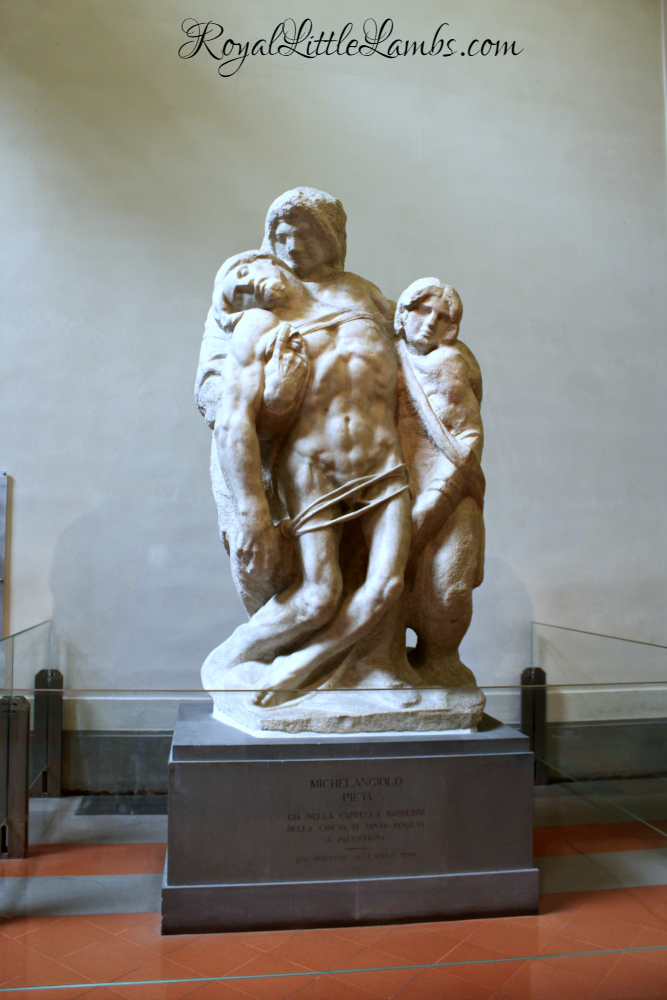
Palestrina Pietà at the Accademia Gallery in Florence:

May or may not be Michelangelo. There’s very little info about it.
Palestrina Pietà
The David, of course! At Accademia Gallery.

He won a contest to create a statue for the city of Florence from a damaged block of marble that had been lying open to the elements for almost 50 years.
The David
The Deposition, also called the Florence Pietà, the Bandini Pietà or The Lamentation over the Dead Christ, and thought to be a self-portrait as the face of Nicodemus. At the Duomo Museum.

Giorgio Vasari noted that Michelangelo began to work on the sculpture around the age of 72. Without commission, Michelangelo worked tirelessly into the night with just a single candle to illuminate his work. Vasari wrote that he began to work on this piece to amuse his mind and to keep his body healthy. After 8 years of working on the piece, Michelangelo would go on and attempt to destroy the work in a fit of frustration. Vasari gave several reasons why Michelangelo destroyed his Florentine pieta:

“…Either because of defects in the marble, or because the stone was so hard | that the chisel often struck sparks, or because he was too severe a judge J of his own work and could never be content with anything he did. It is | true that few of his mature works were ever completed and that those entirely finished were productions of his youth. Such were the Bacchus, the Pieta of the Madonna della F^ebbre [in Saint Peter’s], il Gigante [the David], at Florence, and the Christ Risen of the Minerva [Santa Maria sopra Minerva], which are finished to such perfection that a single grain could not be taken from them without injury. Michelangelo often said that, if he were compelled to satisfy himself, he should show little or nothing. The reason is obvious: he had attained such knowledge in art that the slightest error could not exist without his immediate dis- covery of it. But once it had been seen in public, he would never attempt to correct it, but would begin a new work, for he believed that a similar failure would not happen again. He often declared that this was the reason that the number of his finished works was so small.”
The Deposition by Michelangelo

In Rome, we stood in awe of The Pietà, in St. Peter’s Basilica in Rome.

Michelangelo's Pieta

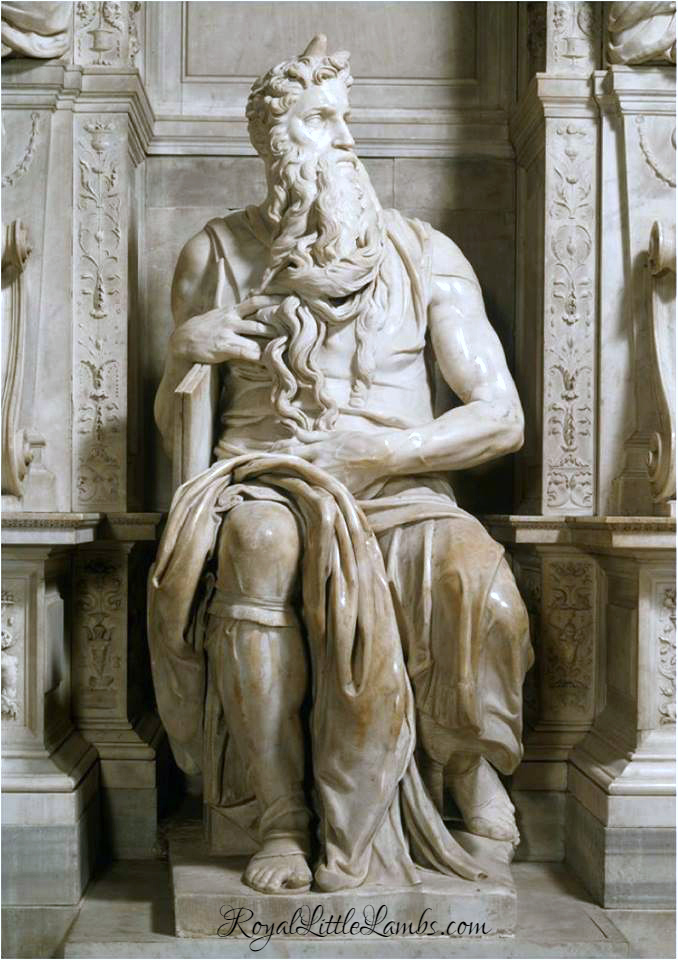
Also, we kept putting in a Euro to light up the chapel with the statue of Moses, in St. Peter Vincoli:

Michelangelo's Moses

Shhh…we snuck a picture of the Sistine Chapel ceiling at the Vatican:

Sistine Chapel Ceiling

We love traveling to see art and history come alive!

Activities:

  • Notebooking with famous art and artists printable pages from Productive Homeschooling.
  • We made our own paints from natural materials when we reviewed Michelangelo for Kids. There are 21 educational activities in that book!
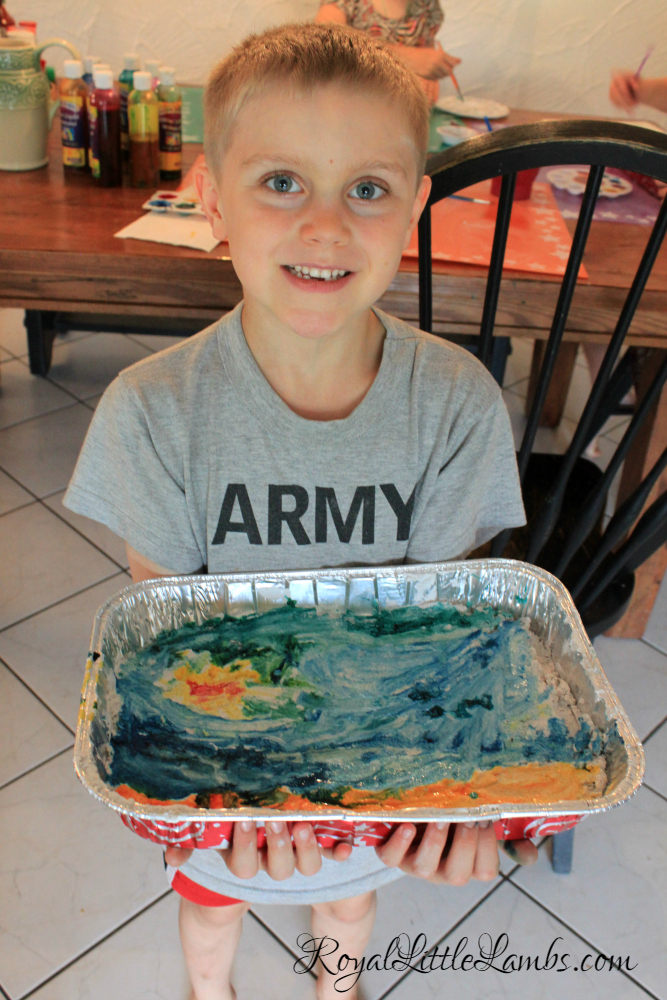
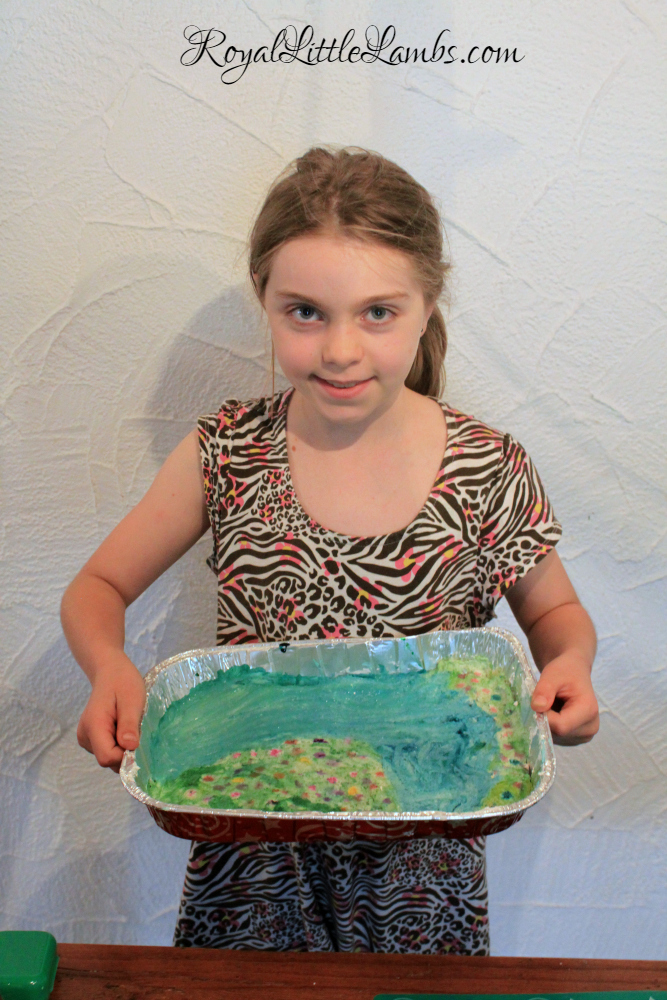
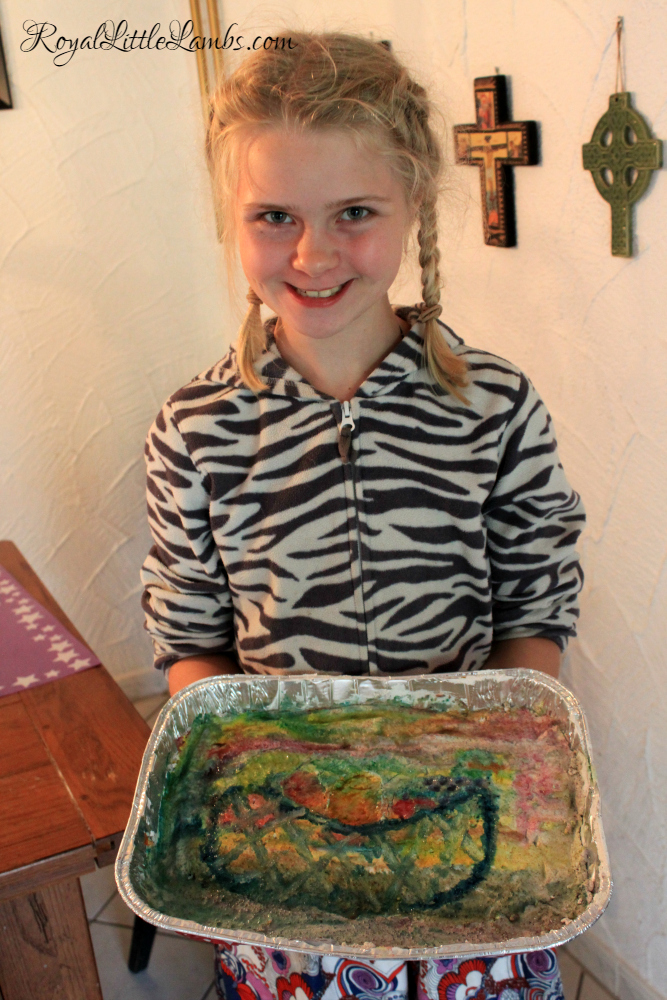
  • We made little frescoes of our own and realized how difficult it is!

Alex painted a beach scene.

Beach Scene Fresco

Katie painted a river with flowers on the bank.

Flowery Riverbank Fresco

Tori painted a fruit basket.

Fruit Bowl Fresco

In the morning, they were dry and the colors were faded. We realize how precise and complicated making the perfect consistency of plaster is for the colors to stay true. We used liquid watercolors, which probably aren’t the best for fresco-painting.

Michelangelo is one of our favorite artists of all time!

Resources:

Mixing with the Masters Mixed Media Workshop, Volume One

I also like this art website.

I thoroughly enjoyed reading The Agony and the Ecstasy: A Biographical Novel of Michelangelo by Irving Stone.

Famous Artists & Picture Study Notebooking Pages
Share
Pin31
Share
31 Shares
You might also like:

Filed Under: Europe, Florence, Homeschool, Italy, Rome, Travel Tagged With: art, Florence, history, Rome, travel, unit study

Bernini Unit Study

This blog may contain affiliate links: disclosure.
Please see my suggested resources.

October 6, 2016 By Jennifer Lambert 1 Comment

We fell in love with Bernini’s sculpture in Rome.

Gian Lorenzo Bernini is considered the founder of Baroque art.

Bernini Unit Study

Bernini designed and created the Chair of Saint Peter, also known as the Throne of Saint Peter, AND St. Peter’s Baldachin, a large Baroque sculpted bronze canopy, technically called a ciborium or baldachin, over the high altar of St. Peter’s Basilica.

We got to witness The Pope give Christmas morning Mass and saw the Chair and Baldachin up close!

Altar of the Chair of Peter

We got to quickly explore the area near the altar after the Pope and Cardinals left the floor of St. Peter’s Basilica to prepare for the Christmas Benediction from the balcony.

St. Peter's Baldachin

Bernini also designed the piazza and colonnade in front of St. Peter’s Basilica. Also, at the Vatican, he is responsible for the Scala Regia (1663–66), the monumental grand stairway entrance to the Vatican Palace, along with the Cathedra Petri, the Chair of Saint Peter, in the apse of St. Peter’s, and the Chapel of the Blessed Sacrament in the nave.

Around Rome:

The Turtle Fountain in the Jewish district is a favorite with Tori, love of all turtles and tortoises!

Bernini's Turtle Fountain
Fountain of the Moor in Piazza Navona
Fontana del Moro by Bernini
Fountain of the Four Rivers in Piazza Navona
Fontana dei Quattro Fiumi by Bernini
Fountain of the Old Boat by Pietro Bernini, father of Gian. This is near the Spanish Steps.
Fontana della Barcaccia by Bernini

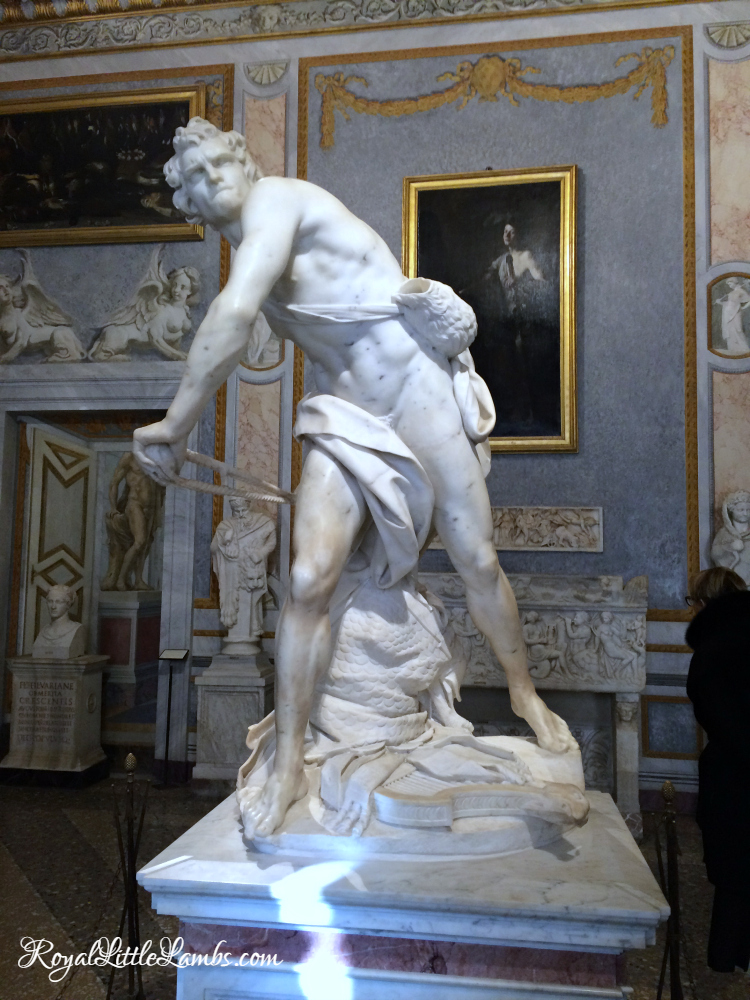
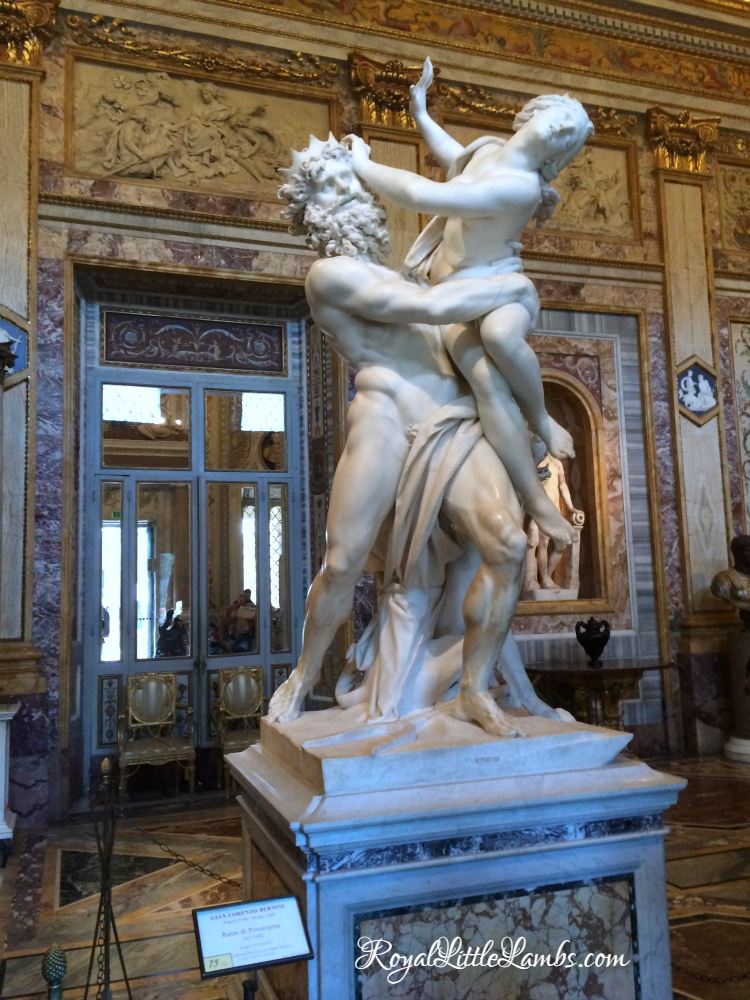
We visited the Borghese Gallery in Rome, which houses so many Bernini sculptures:

I have to say that I really, really, really love Bernini’s David.

Bernini's David

Hades and Persephone are so lifelike. The fingers pressing into her thigh!

The Rape of Proserpina
The Rape of Proserpina Front

Apollo and Daphne. Her fingers are turning into leaves.

Apollo and Daphne

We also saw the statue of Aeneas, Anchises, and Ascanius from the Aeneid and the unfinished Truth Unveiled by Time. Spectacular.

Bernini’s family tomb is in the Basilica di Santa Maria Maggiore in Rome.

Bernini Family Tomb in Santa Maria Maggiore

We’re on our way to see more Bernini sculpture at The Louvre and Versailles. Stay tuned for photos. Follow us on Instagram!

The Sleeping Hermaphroditus in The Louvre:

sleeping-hermaphroditus

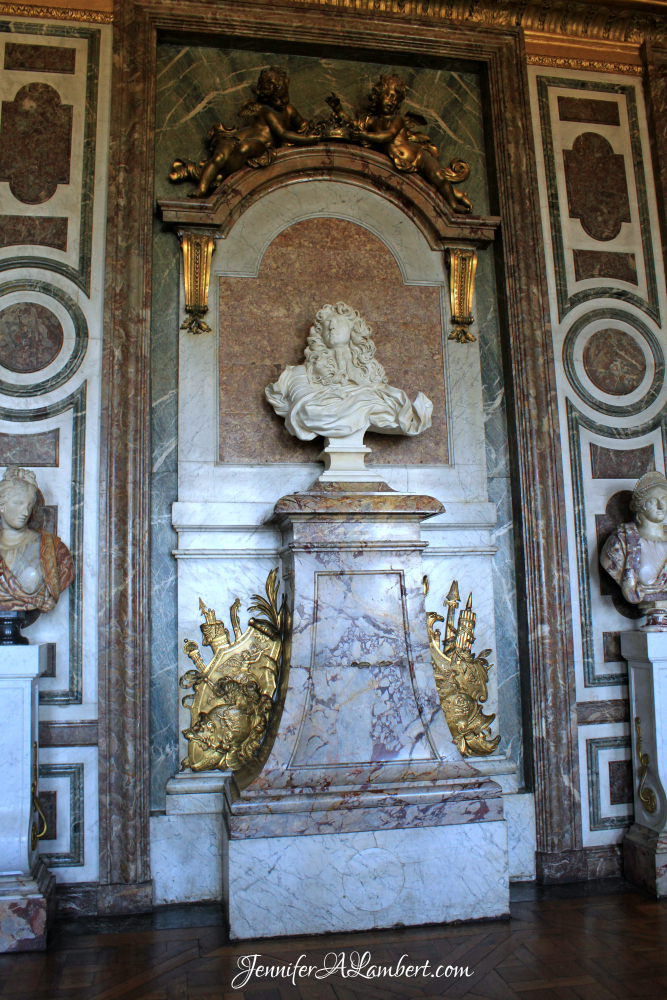
The Bust of Louis XIV in the Salon of Diana at Versailles:

bust-of-louis-xiv

We carved our own statues from soap!

It was really hard. Tori and Alex just made reliefs. Katie cut out a PokeBall. We can imagine how difficult sculpting from marble must be.

soap-carvings

Love this:

Mixing with the Masters Mixed Media Workshop, Volume One

I also like this art site.

Famous Artists & Picture Study Notebooking Pages
Share
Pin4
Share
4 Shares
You might also like:

Filed Under: Europe, Homeschool, Italy, Rome, Travel Tagged With: art, history, Paris, Rome, travel, unit study

Celebrating Saint Joan of Arc

This blog may contain affiliate links: disclosure.
Please see my suggested resources.

August 4, 2016 By Jennifer Lambert 15 Comments

I’ve always held a fascination for Joan of Arc, ever since I was a little girl.

The historical story is a remarkable one, no matter what one believes.

To hear heavenly voices and do something amazing, to save one’s country and obey God – it’s the stuff of dreams and fairy tales.

But Joan did all that and more.

Joan was burned at the stake as a heretic in 1431, after a politically-motivated trial. The appellate court retried Joan and declared her innocent on 7 July 1456. She was beatified in 1909 and canonized in 1920.

We’re focusing on European history this year since we’re living in Germany.

We spent several weeks reading about Joan of Arc, the 100-year war, and other issues of the Middle Ages.

To celebrate the end of the first unit of our history cycle 2, we visited Rouen – where Joan of Arc was tried and executed.

For our Joan of Arc Unit Study, we read lots of books, watched some films, completed notebooking pages, and traveled to Rouen.

My son especially loved this book and it was very accurate, not dumbing anything down.

Books:

Joan of Arc: The Lily Maid by Margaret Hodges

Joan of Arc by Michael Morpurgo

Joan of Arc: Heroine of France by Ann Tompert

Dove and Sword: A Novel of Joan of Arc by Nancy Garden

Joan of Arc by Diane Stanley

Joan of Arc by Demi

Joan of Arc by Josephine Poole

Joan of Arc by Mark Twain

DK Biography: Joan of Arc by Kathleen Kudlinski

Joan of Arc (Step into Reading) by Shana Corey

Joan of Arc (Dorling Kindersley Readers, Level 4) by Angela Bull

Films:

Joan of Arc with Ingrid Bergman and Directed by Victor Fleming

Joan of Arc with Leelee Sobieski

The Messenger: The Story of Joan of Arc with Milla Jovovich

The Passion of Joan of Arc (The Criterion Collection) with Maria Falconetti
Joan of Arc Interactive DVD by Nest Learning

There’s also an Nest activity book here.

Activities:

St. Joan of Arc coloring page from Catholic Icing

Reenaction with Legos by Adventures in Mommydom

Simple Joan of Arc Lapbook from Homeschool Epiphany

Online documents of Saint Joan of Arc Trials

Interactive Maps of Travels of Joan of Arc

Joan of Arc notebooking and coloring pages from Shower of Roses

Joan of Arc notebooking page from Homeschool Helper Online

Our Field Trip to Rouen:

Eglise Sainte-Jeanne-d’Arc de Rouen

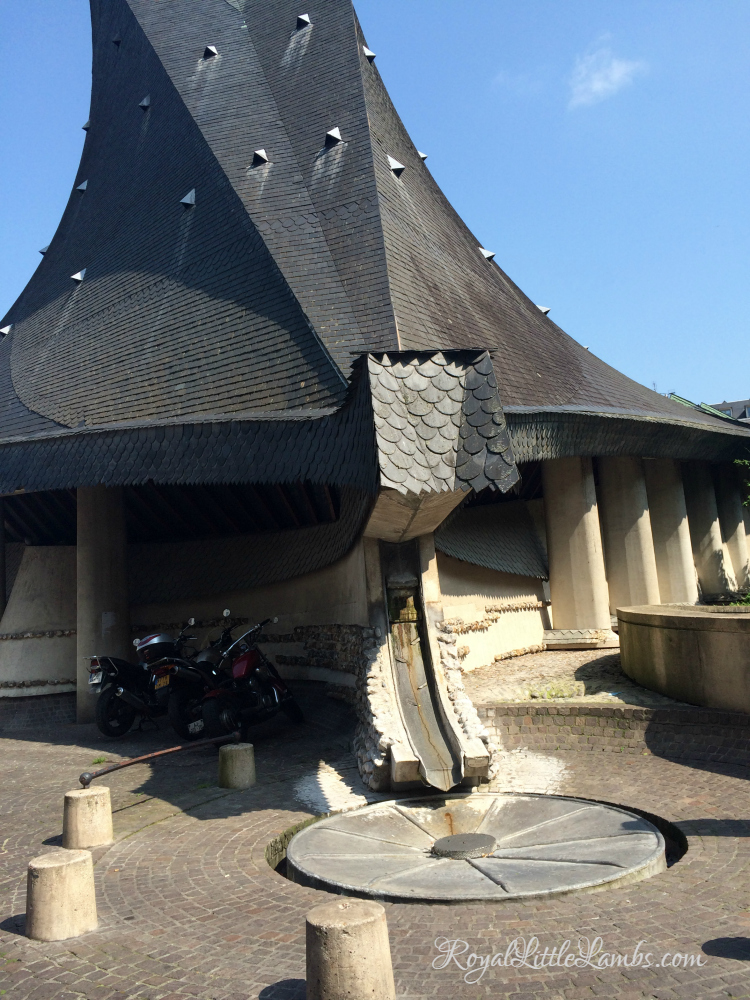
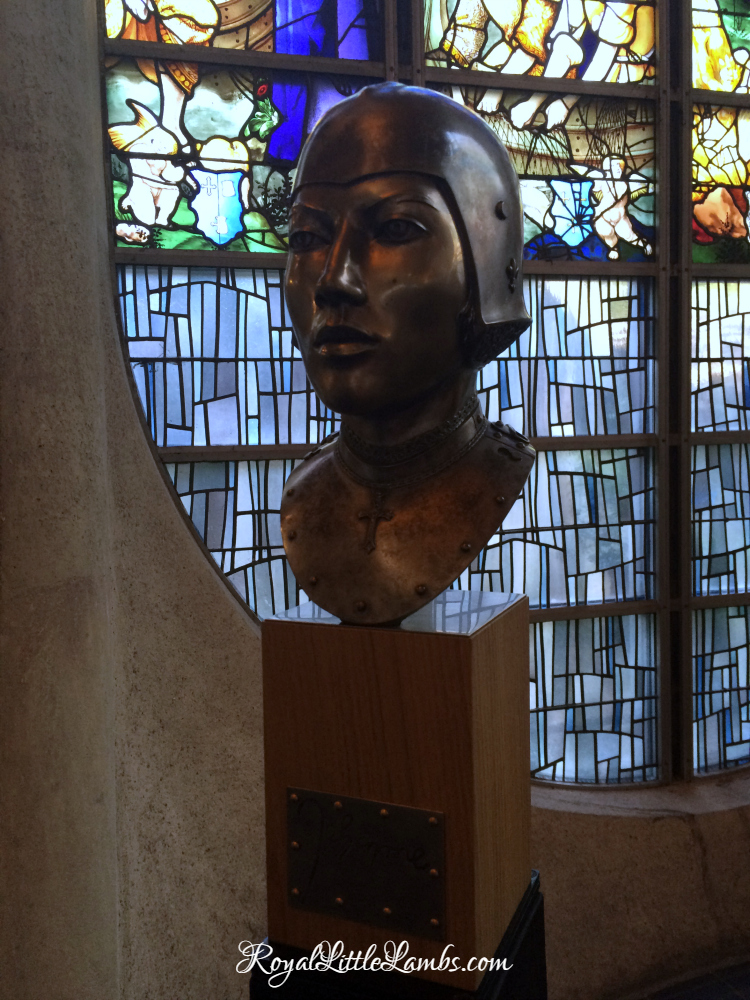
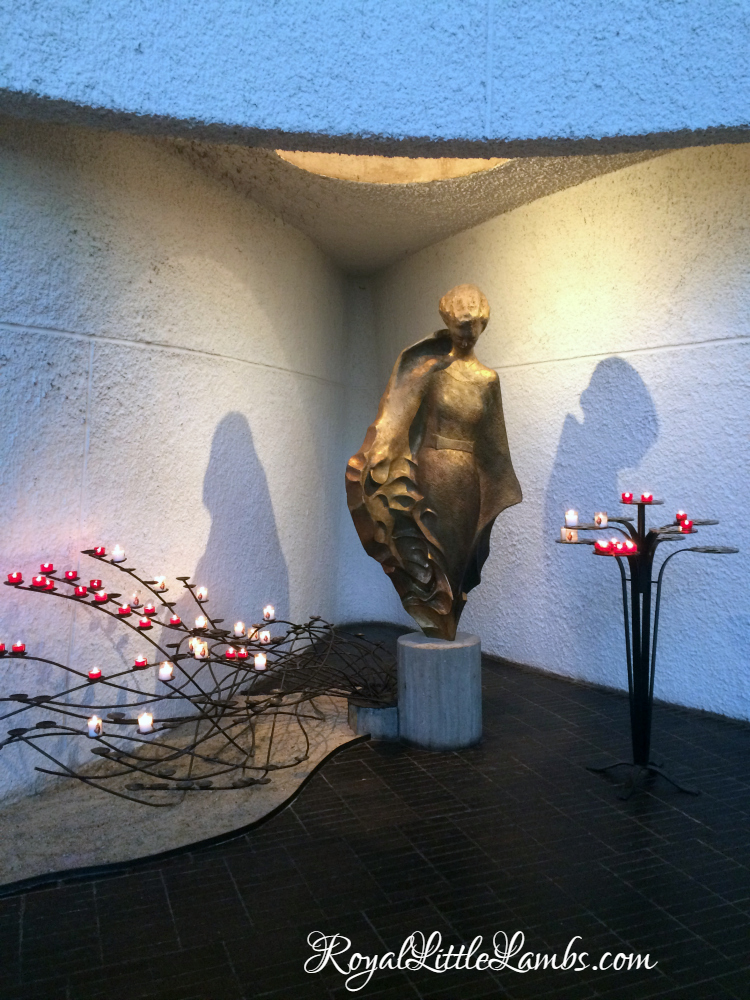
Since 1979, this church stands on the Old Market Square where she was burned. It is both a church honoring St. Joan of Arc and a civil memorial with a cross and eternal flame in the courtyard. The outside is modern, designed by architect Louis Arretche, evoking the sea with a cover of scales in slate or copper. The roof of the church is meant to resemble an overturned Viking ship and consuming flames. Inside, there are remarkable stained glass windows of the old church Saint Vincent Renaissance. There are no relics of St. Joan of Arc.

Cross Monument Eglise outside Sainte-Jeanne-d'Arc de Rouen
Eternal Flame at Base of the Cross outside Eglise Sainte-Jeanne-d'Arc de Rouen
Front Facade of Eglise Sainte-Jeanne-d'Arc de Rouen
Eglise Sainte-Jeanne-d'Arc de Rouen downspout
Bust Statue of Joan of Arc
Michel Coste Statue of Joan of Arc

I paid €0,50 for an English brochure.

Joan of History and Message Brochure

Hours:

Monday to Thursday, Saturday : 10am to 12pm and from 14h to 18h

Friday and Sunday : 14h to 18h

Closed : 25 December and 1 January.

Rouen Cathedral

Joan of Arc was put on trial in the bishops’ palace, but we felt it fitting to visit the famous cathedral.

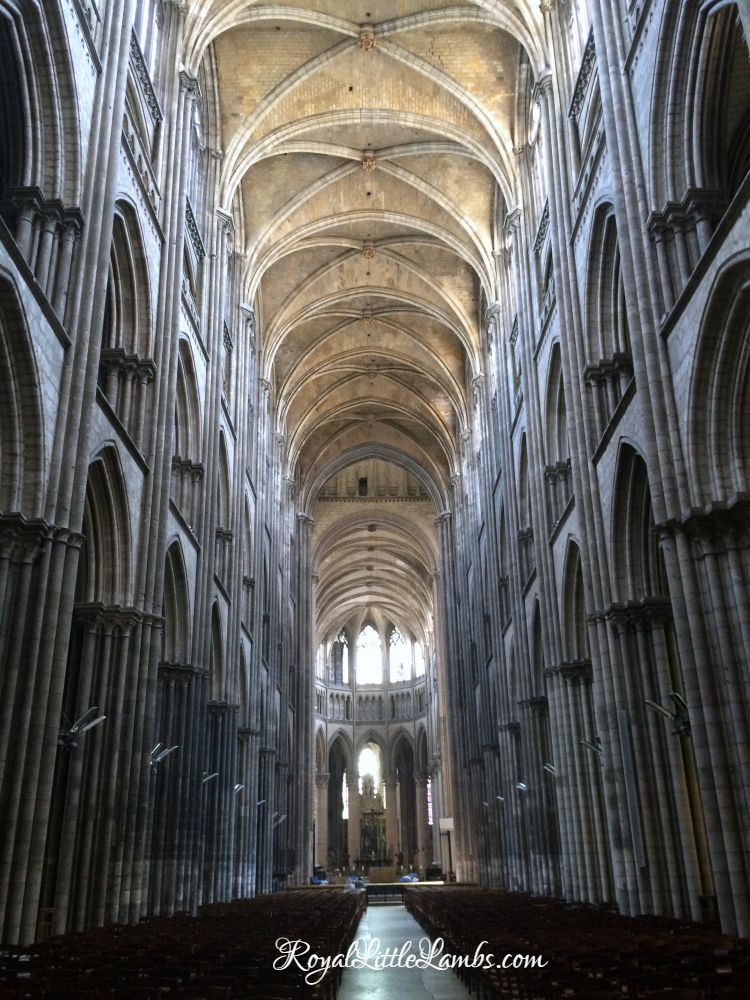
The highest spire in France, erected in 1876, a cast-iron tour-de-force rising 490 ft above the Cathédrale Notre-Dame de Rouen. Claude Monet immortalized Rouen’s cathedral facade in his paintings.

Rouen Cathedral

A chapel is dedicated to Joan of Arc.

Joan of Arc Chapel in Rouen Cathedral

New Joan of Arc Museum in Rouen

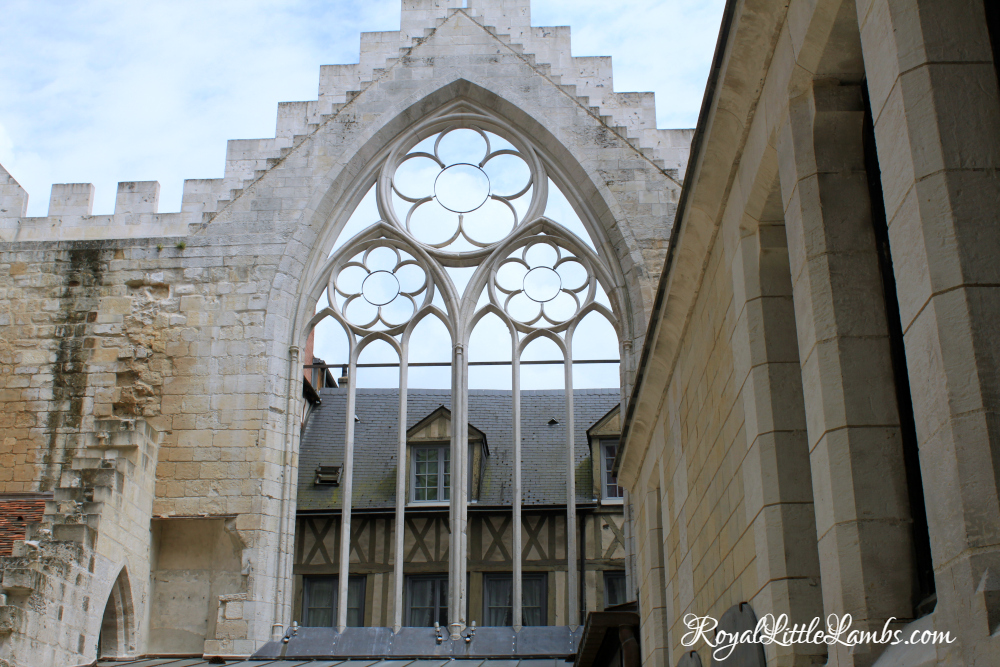
Interior courtyard of the Bishop's palace Rouen

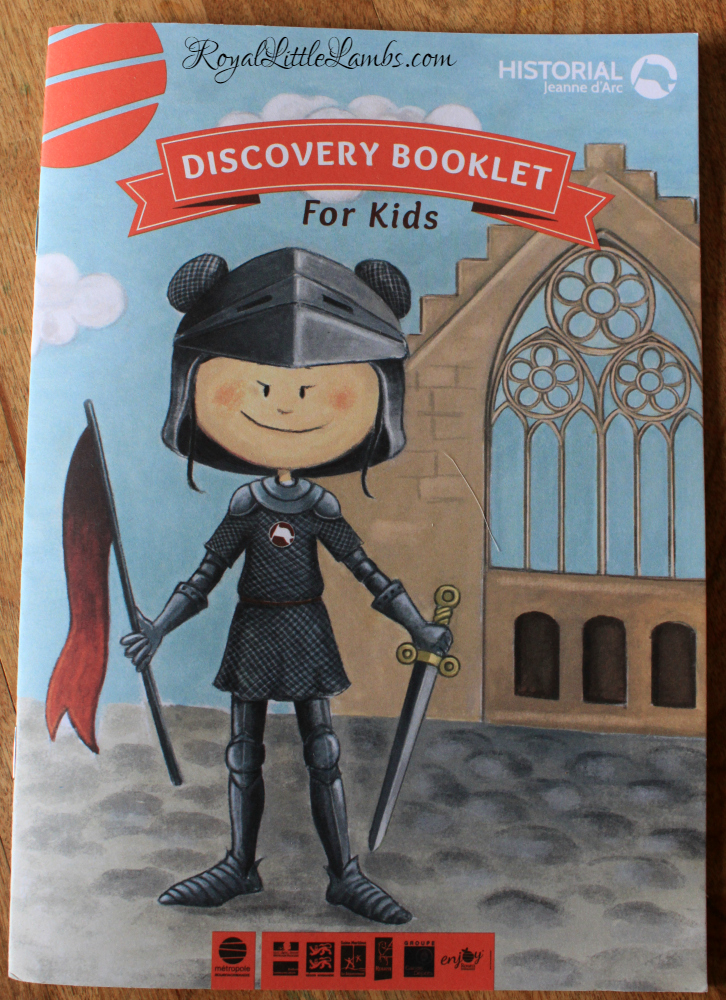
The kids loved these discovery booklets with puzzles, questions, activities, and information about the life and times of Joan of Arc and the city of Rouen.

Joan of Arc Museum Discovery Booklet for Kids

The Joan of Arc museum has projected videos and images that explain the story of Joan in each room of the bishop’s palace. It’s quite innovative and exciting and holds everyone’s attention really well.

There are statues and artifacts at the end of the tour.

We viewed the tower from the attic window.

Joan of Arc Museum

We bought a rare souvenir in the museum gift shop:

Joan of Arc and Rouen Book Souvenir

See info about Historial Jeanne d’Arc here.

Individual Tickets €9,50 or Family Ticket €26

Hours:

31 May to 1 October:

Tuesday to Sunday: 9.45 a.m.–7.45 p.m. (last visit begins at 6 p.m.)

1 June to 30 September

Tuesday, Wednesday, Thursday, Sunday: 9.45 a.m.–7.45 p.m. (last visit begins at 6 p.m.)

Friday and Saturday: 9.45 a.m.–8.45 p.m. (last visit begins at 7 p.m.)

Joan of Arc Tower

This dungeon was part of the castle built in 1204 by Philippe Auguste. It is all that remains of the Rouen Castle. Joan was held prisoner here during her trial.

We didn’t have time to walk over to the tower, but we saw it from the window of the museum.

Tickets € 1.50

Free for children under 18

Hours:

1 April to 30 September

10am to 12.30pm and from 14h to 18h Monday through Saturday. From 14h to 18h30 on Sundays.

October 1 to March 31

10am to 12.30pm and from 14h to 17h Monday through Saturday. From 14 to 17.30 on Sundays.

Closed: Tuesdays and 1 January, 1 May, 1 and 11 November, 25 December.

Rouen is a fun town with lots to see and do, a nice market, and plenty of restaurants and shopping.

We would love to see Domrémy and Reims someday.

Share
Pin15
Share
15 Shares
You might also like:

Filed Under: Europe, France, Homeschool, Travel Tagged With: cathedral, faith, France, history, saint, travel, unit study

Illumination Art Study

This blog may contain affiliate links: disclosure.
Please see my suggested resources.

April 26, 2016 By Jennifer Lambert 4 Comments

We’ve been fascinated with studying Illumination in medieval art.

We traveled to Ireland and saw where the Book of Kells was created.

We’re amazed and thankful that monks worshiped God in such a creative way!

We love this: Marguerite Makes a Book.

Marguerite Makes a Book

We discussed how paint was made in medieval times.

Red

Madder: made by boiling the root of the madder plant rubia tintorium

Vermilion: found in nature as the mineral cinnabar

Rust: found in iron oxide-rich earth compounds

Carmine, also known as cochineal: carminic acid from the female Dactylopius coccus insect is mixed with aluminum salt

Crimson: also known as kermes, extracted from the insect Kermes vermilio

Lac: resinous secretion of insects

Blue

Woad: produced from the leaves of the plant Isatis tinctoria

Indigo: derived from the plant Indigofera tinctoria

Turnsole: also known as folium, a dyestuff prepared from the plant Crozophora tinctoria

Ultramarine: made from the minerals lapis lazuli or the cheaper azurite

Smalt: now known as cobalt blue

Yellow

Weld: processed from the Reseda luteola plant. This is the oldest European dye plant in the world!

Turmeric: from the Curcuma longa plant

Saffron: from the Crocus sativus

Ochre: an earth pigment that occurs as the mineral limonite. Can be heated to become red ochre.

Orpiment: arsenic trisulfide

Green

Verdigris: cupric acetate, made by boiling copper plates in vinegar

Malachite: a mineral found in nature, copper carbonate

China green: a plant-based pigment extracted from buckthorn Rhamnus tinctoria or R. utilis berries.

White

Lead: made by corroding sheets of lead with vinegar, and covering that with decaying matter, such as dung, to provide the necessary carbon dioxide for the chemical reaction

Chalk: calcium carbonate

Black

Carbon: from sources such as lampblack, charcoal, burnt bones or ivory

Sepia: produced by the cuttlefish

Iron gall ink: iron nails would be boiled in vinegar; the resulting compound would then be mixed with an extract of oak apple (oak galls).

Decorations

Designs and Borders

Illustrative miniatures or decorative motifs may enclose the whole of the text space or occupy only a small part of the margin of the page. Some borders were in panelled form while others were composed of foliate decorations or bars which often sprouted plant forms and are known as “foliate bar borders.”

Lettering

The parchment was ruled, usually with leadpoint or colored ink. Ruling lines helped the scribe to write evenly and were part of the design of the page. The scribe wrote with a quill pen made from the feather of a goose or swan. The end of the feather was cut to form the writing nib. A slit cut into the middle of the nib allowed the ink to flow smoothly to the tip of the pen. The appearance of the script—whether rounded or angular, dense or open—was partly dependent upon the shape and the angle of the nib.

Gilding

Gold: leaf, gold hammered extremely thin, or gold powder, bound in gum arabic or egg

Silver: either leaf or powdered

Tin: leaf

We chose to make historiated initials.

These were pages of initials that portray figures or scenes that are clearly identifiable, telling a story.

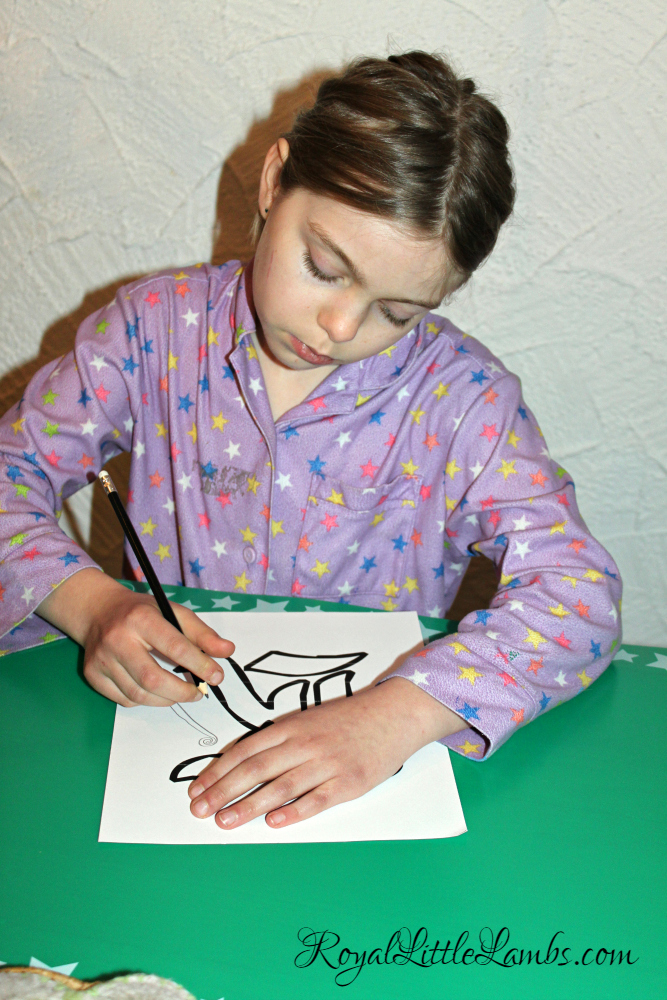
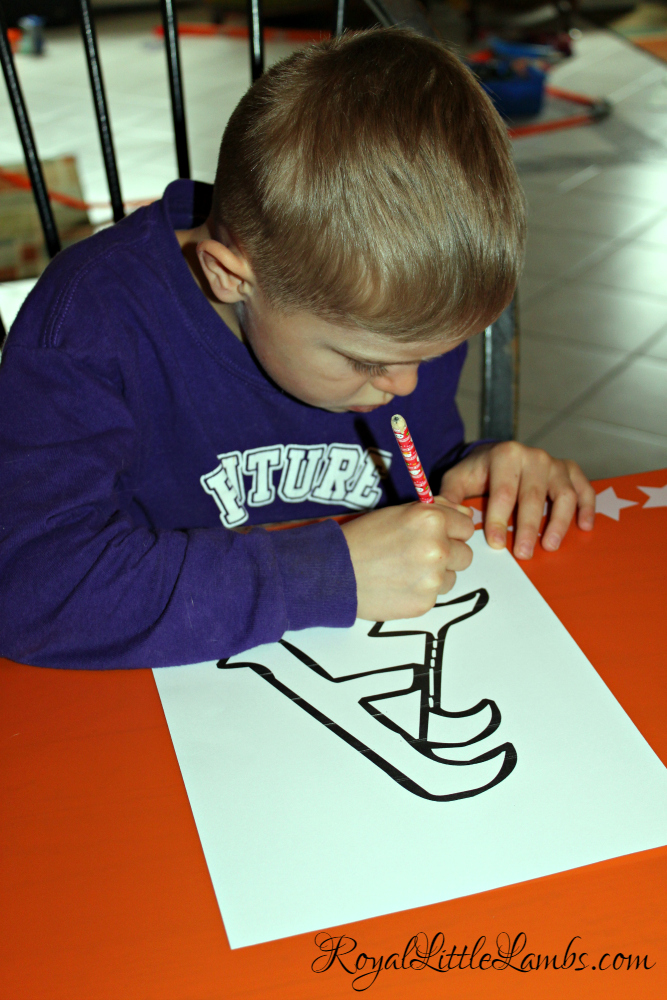
I printed large Old English initial outlines for each of the kids to decorate with their story.

They began with outlining borders and decorations in pencil.

Drawing a Border
Drawing Designs
Outlining a Border
They soon realized how much work must have gone into the illumination of pages and books. They were tired of the detail work after just a few minutes. They took a break and went back to work the next day.
Taking a Break

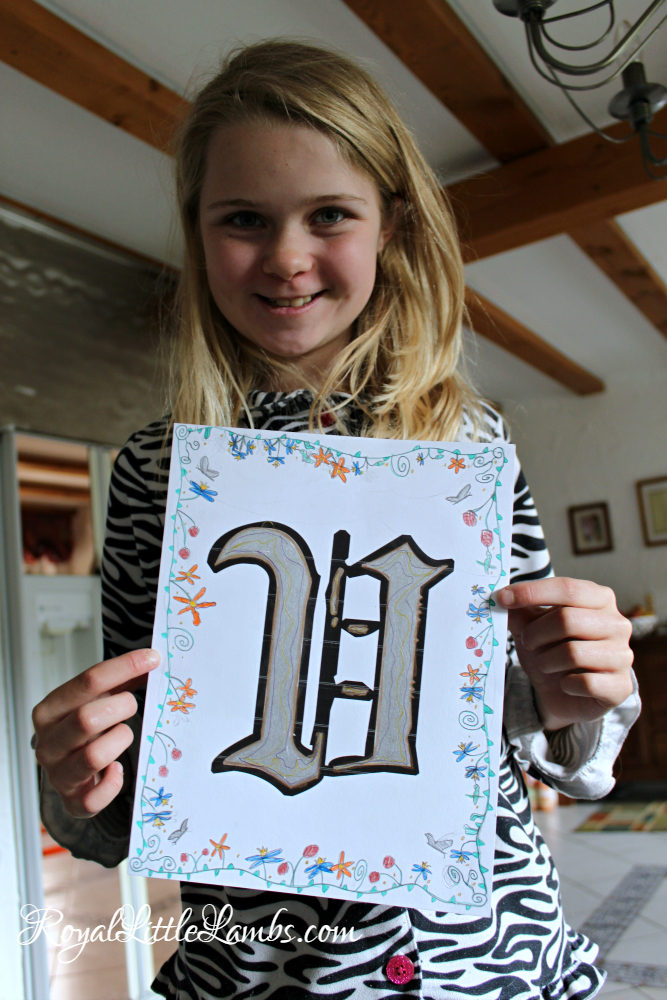
I was impressed with how each of them expressed themselves with their letters by drawing their favorite things and using their favorite colors.

Tori drew lots of flowers and made her initial shiny.

Flowery Letter V
Katie made her entire page shiny and drew lots of undersea animals.
Shiny Undersea Letter K
Alex drew leaves, stars, and flowers and cats playing music and wearing hats.
Letter A
We then framed the initials and hung them up in their rooms!

ProSchool Membership - Productive HomeschoolingLinking up: A Little R&R, Wholehearted Home, Cornerstone Confessions, F Dean Hackett, Rich Faith Rising, Donna Reidland, Our Home of Many Blessings, A Proverbs 31 Wife, What Joy is Mine, Pat and Candy, VMG206, Sarah Celebrates, The Modest Mom, The Quintessential Mommy, Oh My Heartsie Girl, Marilyns Treats, Classical Homemaking, Ducks n a Row, Books and Giggles, Blogghetti, Making Our Life Matter, Life of Faith, Morsels of Life, Living Montessori Now, ABC Creative Learning, Hip Homeschool Moms, Crystal and Co., Lamberts Lately, Frog’s Lilypad, I Choose Joy, My Learning Table, Bloom Designs, Every Star is Different, Education Possible, The Natural Homeschool, Wondermom Wannabe, Coffeeshop Conversations, xoxo Rebecca, Oh My Heartsie Girl, What About, Sincerely Paula, Create with Joy, Life with Lorelai, A Kreative Whim, Happy and Blessed Home, Creative Home Keeper, Holly McBerty, A Wise Woman Builds Her Home, The Deliberate Mom, Children are a Blessing, Raising Homemakers,
Share
Pin5
Share
5 Shares
You might also like:

Filed Under: Homeschool Tagged With: art, history, homeschool, Tapestry of Grace, unit study

County Meath in Ireland

This blog may contain affiliate links: disclosure.
Please see my suggested resources.

March 17, 2016 By Jennifer Lambert 3 Comments

We saved the best for last on our Ireland trip.

We drove from Ashford Castle to County Meath to tour all the sites we’ve only read and dreamed about.

County Meath in Ireland

It’s about a 3-hour drive, depending on traffic and weather…and GPS mistakes.

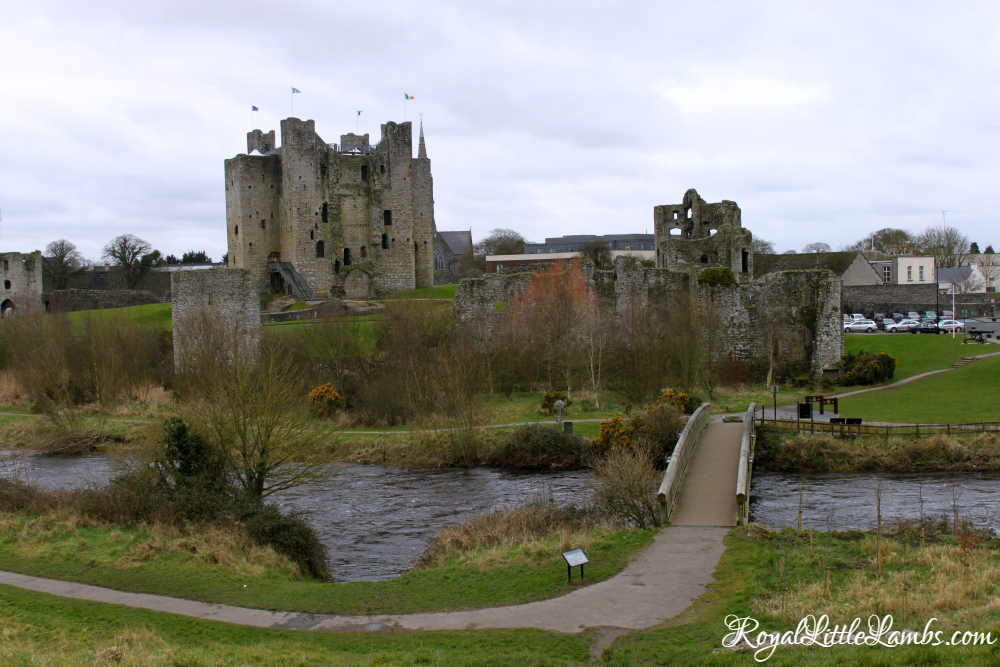
We stopped first at Trim Castle.

My ancestor, Hugh de Lacy, constructed Trim Castle over a thirty-year period with his son, Walter.

Construction of the massive three-storied keep, the central stronghold of the castle, was begun in 1176 on the site of an earlier wooden fortress. Ready for occupancy in 1173, Trim Castle is the largest, best-preserved Anglo-Norman castle in Ireland. Trim get its name from the Irish áth Truim, meaning “The Ford of the Elder Trees.”

Trim Castle on the River Boyne

The kids were excited to run up to the gate.
Front Gate to Trim Castle

We just opted for the self-guided tour instead of the extra group tour of the keep. It would have taken over an hour and we were a bit pinched for time. I didn’t know if Alex would have found it interesting enough to listen to the guide for that long.

We bought the guide book and that is quite comprehensive.

The keep is a twenty-sided cruciform design with walls 3m thick. It was protected by a ditch, curtain wall, and moat.

Trim Castle Keep

In the 16th and 17th centuries, Trim Castle declined in importance, and it was allowed to deteriorate.

Admission Prices:

Adult €4 | Child/Student €2 | Family €10

Castle Excluding the Keep – Adult €2 | Child/Student €1 | Family €4

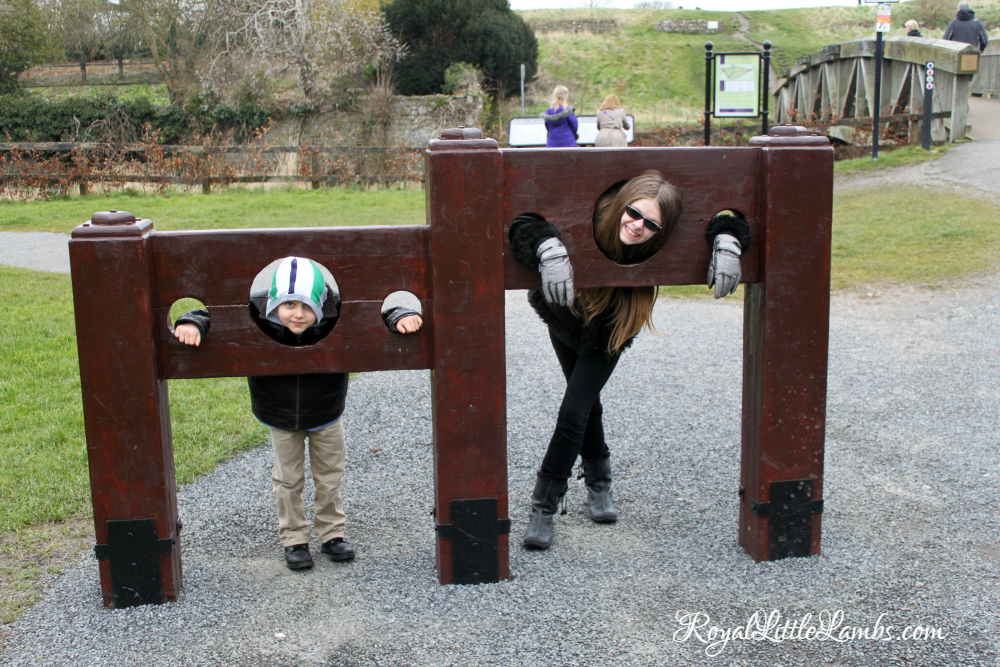
Alex enjoyed seeing the stocks outside the castle grounds. He had asked about them and had a hard time understanding.

Experiential learning is always best.

Stocks at Trim Castle

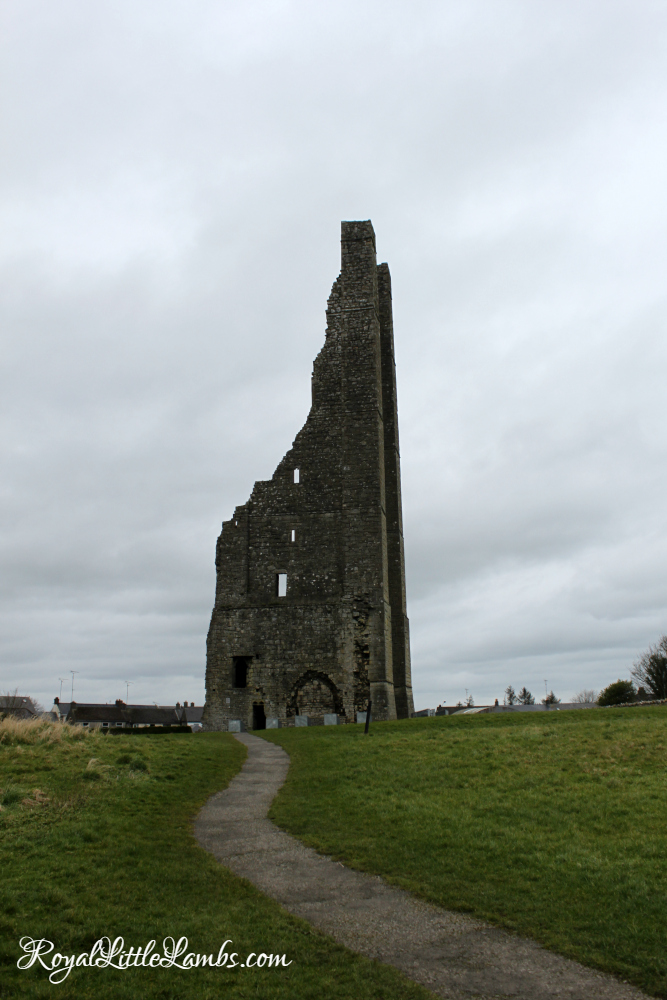
We walked the trail around the castle and across the River Boyne bridge to see the Sheep’s Gate and Yellow Steeple ruins of St. Mary’s Abbey.

The Yellow Steeple St. Mary's Abbey

St. Patrick’s Church is in the background, to the left.

Trim Castle and St. Patrick's Cathedral

St. Patrick

St. Patrick's Church

After getting a treat at a shop in town, we got back in the car.

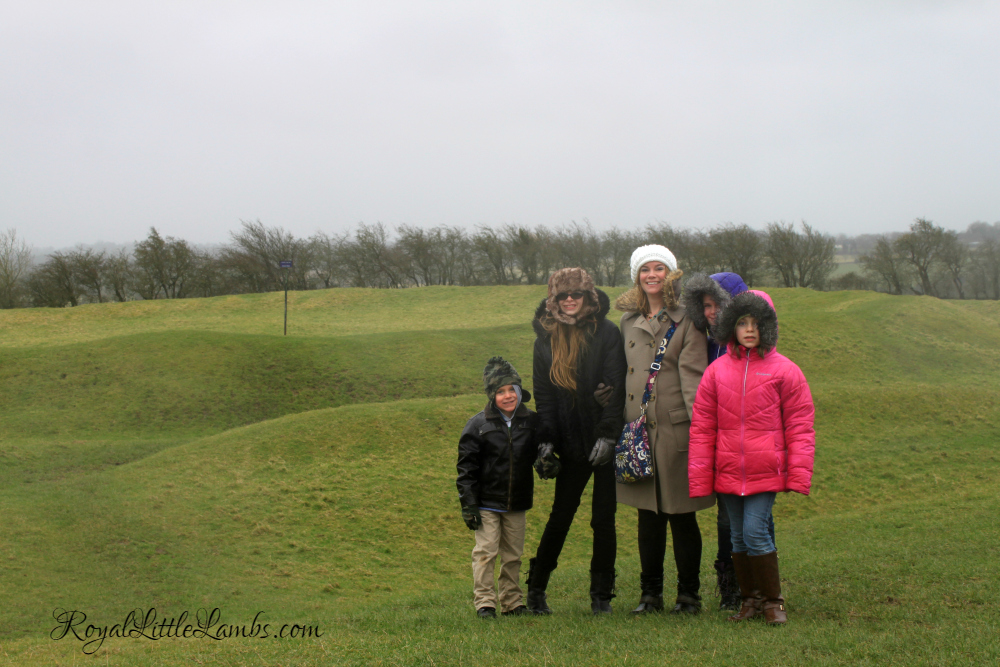
Our next stop was The Hill of Tara.

It was cold, windy, misty, and quite muddy.

I lost my grip and slid halfway down one of the hills, thinking the Fenians were dragging me back to the Underworld.

The Hill of Tara

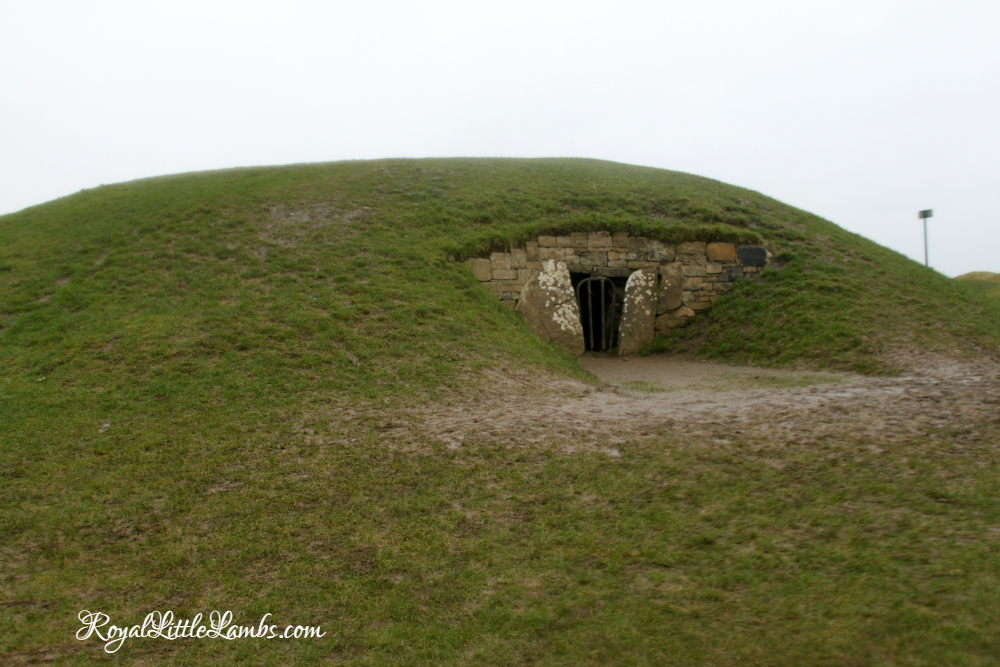
The megalithic passage tomb called the Mound of the Hostages (Duma na nGiall) is the oldest monument on the Hill of Tara, dating between 2500 and 3000 B.C. The passage, 4 m in long and 1 m wide, is divided by sill stones into three compartments, each containing cremated remains. There’s a lovely etched stone inside with a triple spiral triskelion.Mound of the Hostages

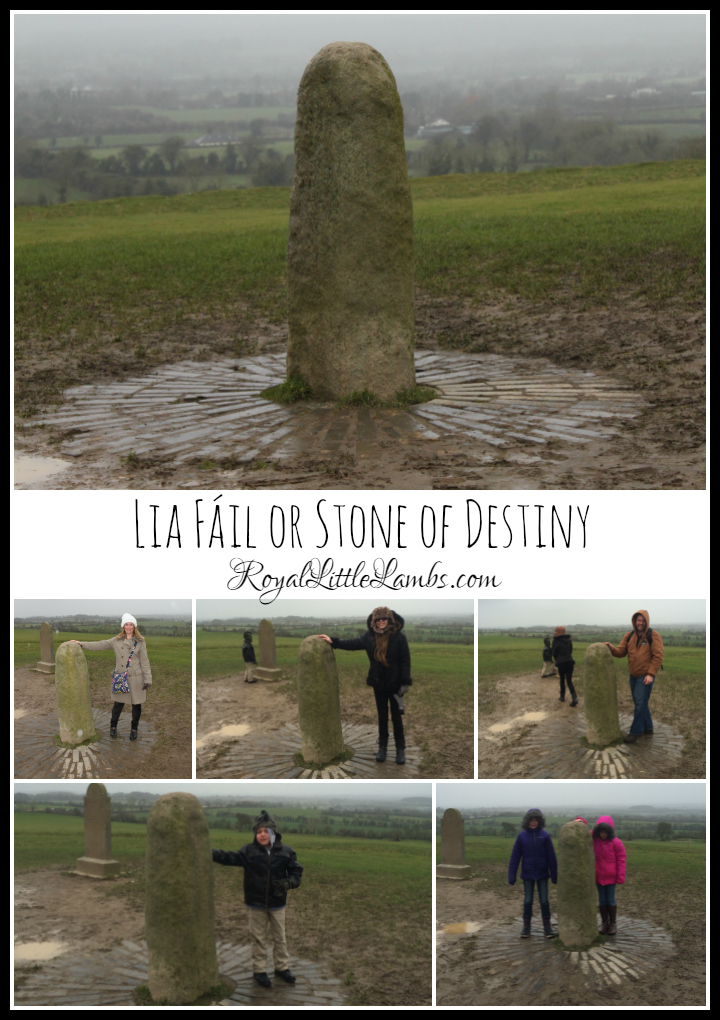
The Lia Fáil or Stone of Destiny stands about one meter high on the King’s Seat.

According to legend: if touched by a worthy king, the stone would scream its approval. It could be heard all over Ireland.

It didn’t scream for us.

Lia Fáil or Stone of Destiny

Admission Fees

Adult: €4.00
Child/Student: €2.00
Family: €10.00

Then, we drove to Newgrange.

We arrived just in time for the last bus from the visitor’s center to the site. You can only visit the Newgrange archaeological site with tickets, the bus trip, and a guide.

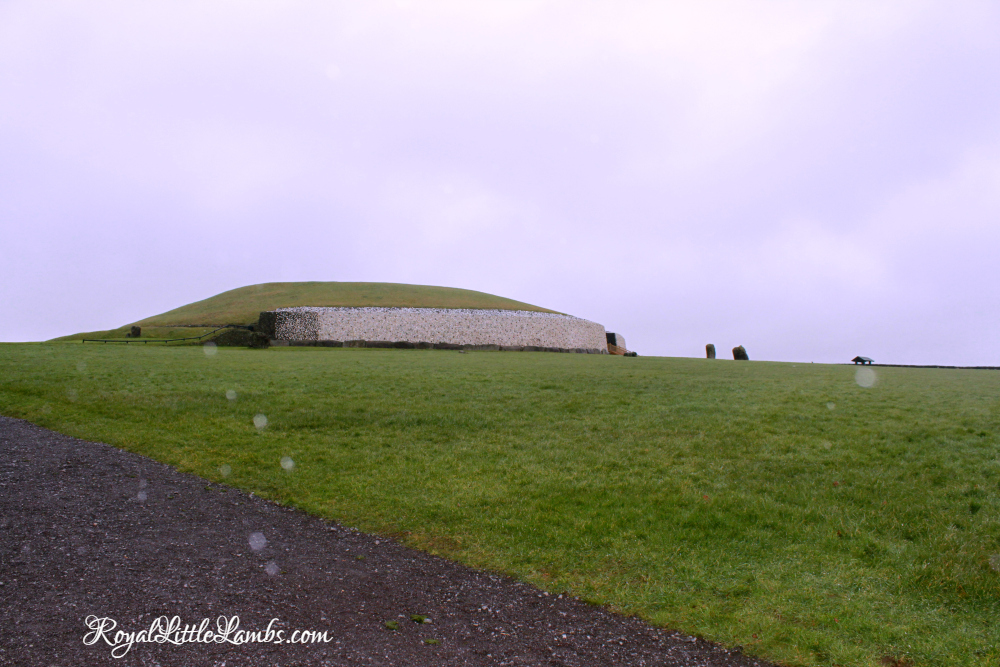
The mound dates to 3,200 BC, which makes it older than Stonehenge and Great Pyramids of Giza. It is approximately 80 m in diameter with the base consisting of 97 stones.

Newgrange Monolithic Site

At dawn on the winter solstice and for a number of days before and after, a shaft of sunlight enters the chamber through an opening in the aperture above the entrance.

Newgrange

Pictures aren’t allowed inside. The ceiling is so low, adults have to bend over a bit, but can stand up at the end. The ground actually rises gradually from the entrance to the rear. The passage ends in a cross-shaped chamber. The passage points southeast and is a little fewer than 19 m long. The chamber consists of three recesses with a corbelled roof. To construct this roof, the builders overlapped layers of large rocks until the roof could be sealed with a capstone, 6 meters above the floor. After 5,000 years, the roof is still waterproof.

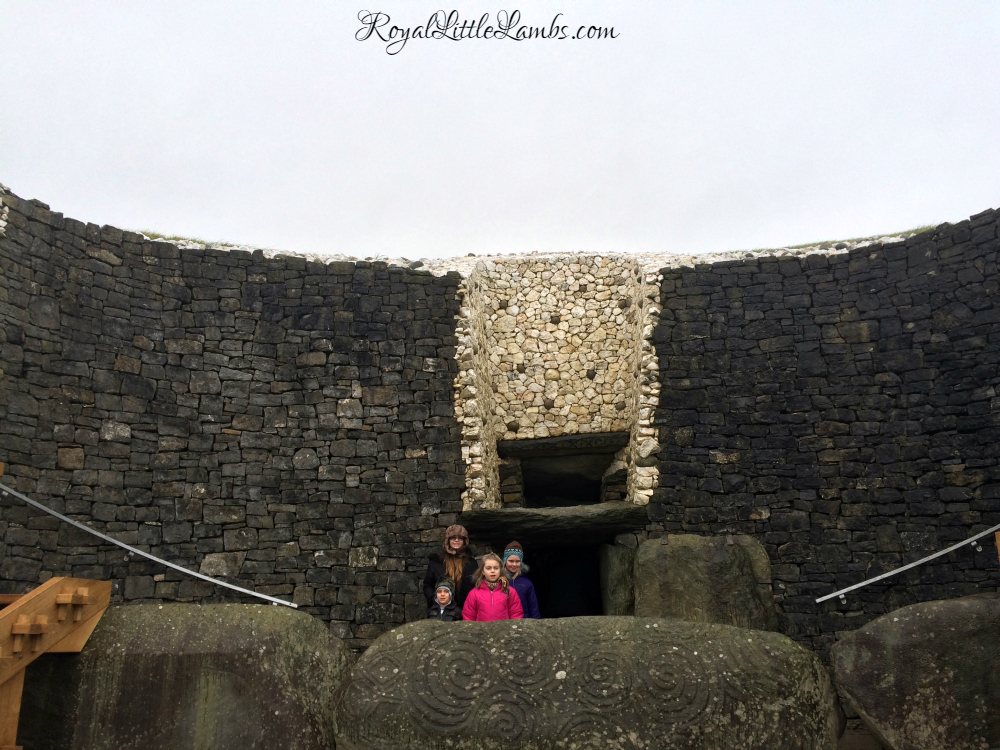
There are large stone basins in each recess and the walls are decorated with carvings of geometric designs like diamonds, triangles, spirals, and triskelia.

Kerbstone 52 is directly opposite the entrance stone on the outside of Newgrange. You can see carved spirals, diamonds, and triangles on the left, and more elaborate shapes on the right.

Newgrange Kerbstone 52

Visitors Center and Newgrange Megalithic Tomb

Adult: €6.00
Senior/Group: €5.00
Child/Student: €3.00
Family: €15.00
Average Length of Visit is 2 hours.

Some great educational resources on the Brú na Bóinne site.

The Battle of the Boyne site and museum is just down the road from Newgrange, but it was getting late and we were tired and hungry.

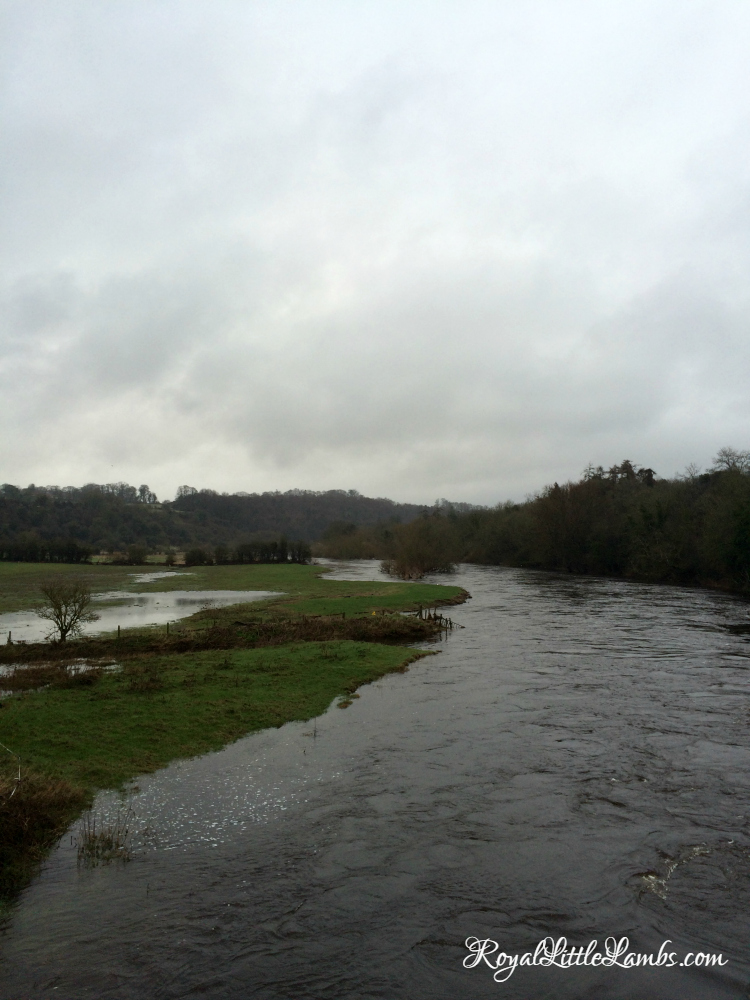
River Boyne

We drove to the city of Kells to see some sites and eat dinner.

Kells derives from the Irish Ceanannas Mór, meaning “great residence.”

We saw the 9th century Market High Cross as soon as we drove into Kells. The carvings depict scenes from the Old Testament.

Kells Market High Cross and Old Courthouse

The Abbey of Kells was first founded by St. Columba in 554. We’re so glad we watched The Secret of Kells!

The Book of Kells remained at Kells Abbey until the 1650s, when Cromwell’s troops were stationed in the town. It was sent then to Dublin for safekeeping. In 1661, the Book of Kells ended up in Trinity College, Dublin, where it remains.

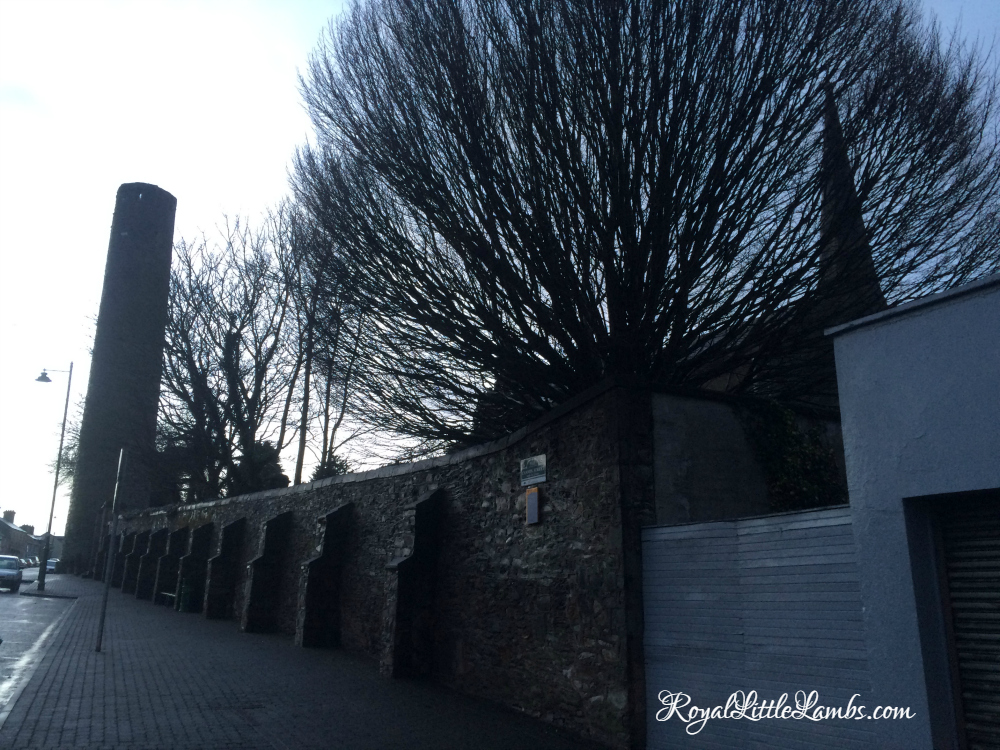
The Round Tower is 90 feet high and unusual in that it has five windows, rather than the usual four, overlooking the five main roads into the town. The Churchyard Wall marks the original limit of the monastery. It was rebuilt in 1714 and 1998.

Round Tower and Churchyard Walls

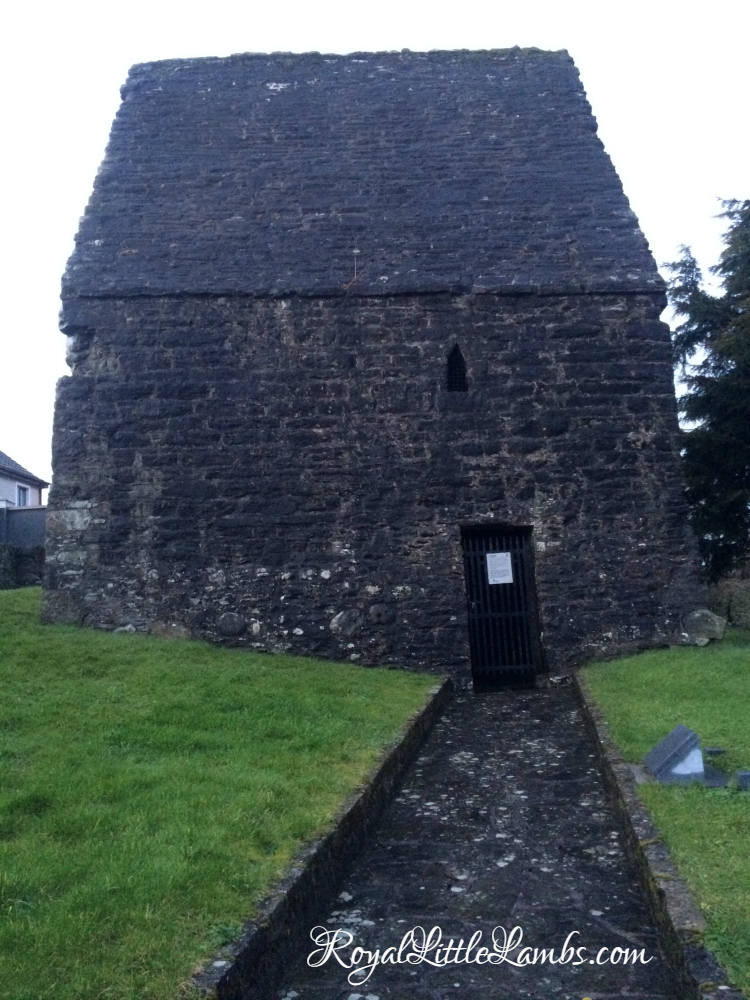
St. Columcille’s House probably dates from the early 10th century and is characteristic of an oratory from that period. There is no mortar in the house, it is stacked and angled stones, an amazing feat of early architecture. There was an underground passage from the house to the church.

St. Columba's House

The Abbey gates were locked and the old lady who holds the key to St. Columba’s house wasn’t home.

We had dinner at The Bective. It was recommended by a sweet local passerby when we were looking at the Round Tower.

The food was quite divine. I’m just not sure what the restaurant wants to be: it’s not a pub, but neither is it fancy white tablecloths.

We were squeezed into a small table in the middle of the room since we didn’t have a reservation.

Instead of water, we were served a Tang-like orange cordial. We loved that. Don’t get me wrong: I grew up with Tang and it’s a delightful memory.

The service was iffy.

I had to beg for a waitress to explain their beer selection from a smudged chalkboard in the far back corner of the restaurant. If they advertise “local craft beer” then maybe they should have a menu I can read up close. I was never quite sure which lady was our main waitress.

They didn’t pay attention when we all ordered and then switched up two of my daughters’ meals so I had to scramble to share around to cover up their mistake. I understand it’s odd for my teen to order off the kids’ menu and my 10-year-old to order an adult meal, but that’s just normal for us. The chicken wings my one daughter ordered off the kids’ menu came out all spicy sauce and all, but they quickly replaced them with plain ones. Maybe the menu descriptions could be a little clearer.

The salmon and trout were some of the best I’ve ever had.

I ordered a mushroom au gratin that was like cheesy cream soup. It was good, but not what I expected.

Their card machine was on the fritz so we had to pay cash.

We then drove back to Ashford Castle. It was late when we arrived.

Share
Pin48
Share
48 Shares
You might also like:

Filed Under: Europe, Ireland, Travel Tagged With: history, Ireland, travel

Ancient Greek Vases Art Study

This blog may contain affiliate links: disclosure.
Please see my suggested resources.

January 20, 2016 By Jennifer Lambert 10 Comments

We loved learning about ancient Greek pottery.

We completed several projects to learn about Greek vases.

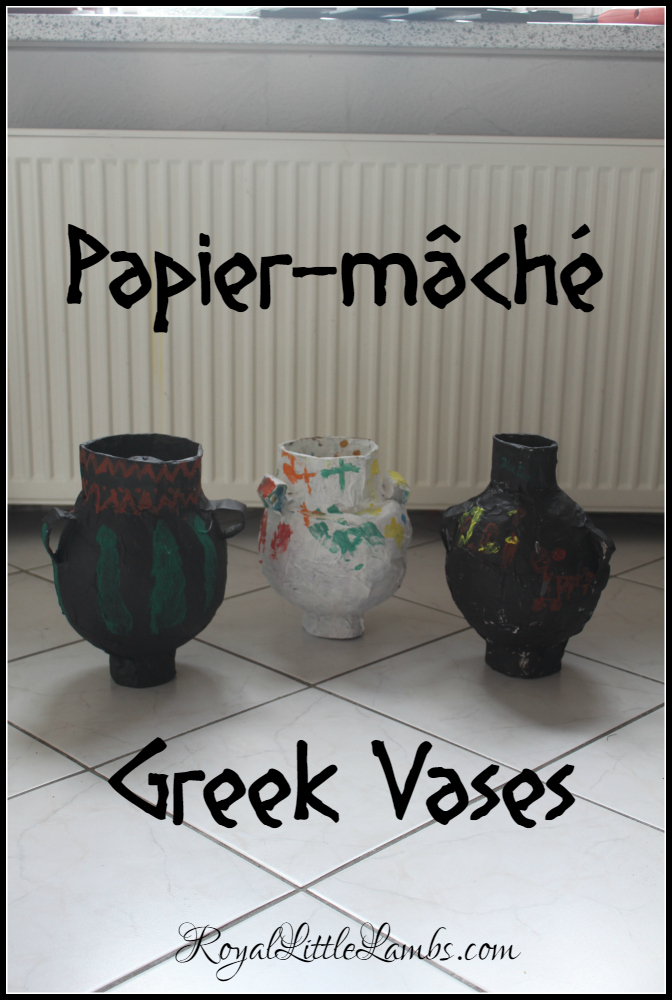
Papier-mâché Ancient Greek Vases

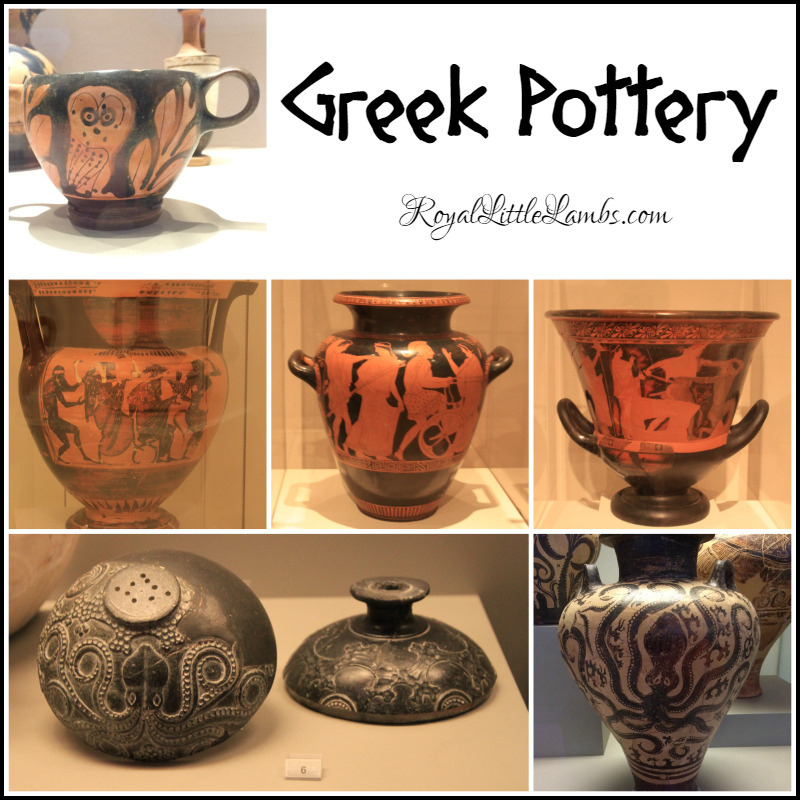
We recently traveled to Greece and saw many beautiful examples of Greek pottery with all sorts of designs, shapes, and colors.

We loved the artwork of owls, octopuses, wrestlers, and more!

Greek Pottery

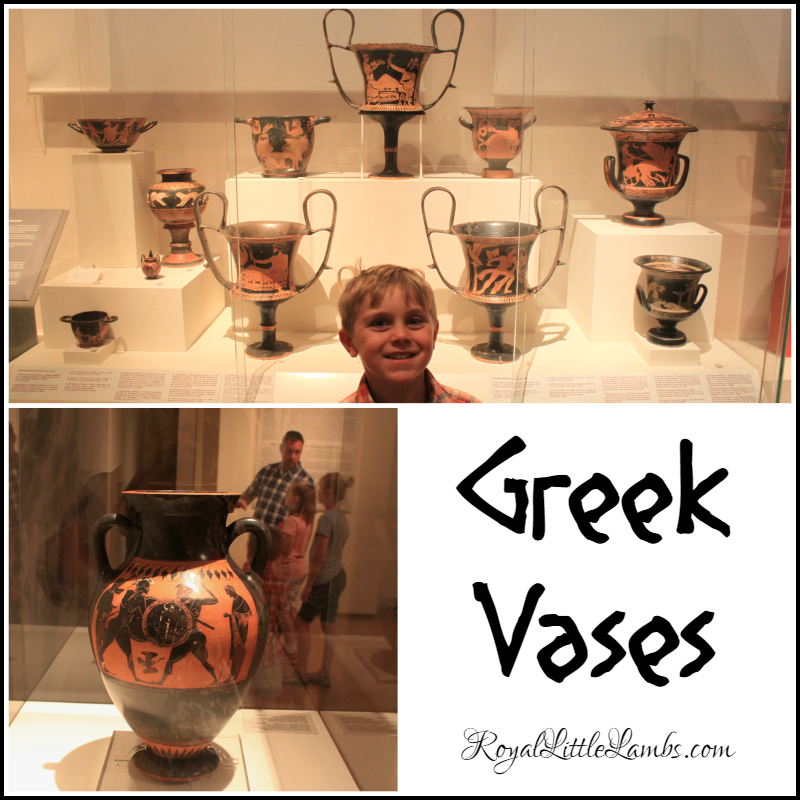
The handles on some of these vases are very ornate.

We loved reading about the different uses for the pottery based on their shapes.

Greek Vases

First, we designed a vase on regular paper.

Designing a Vase

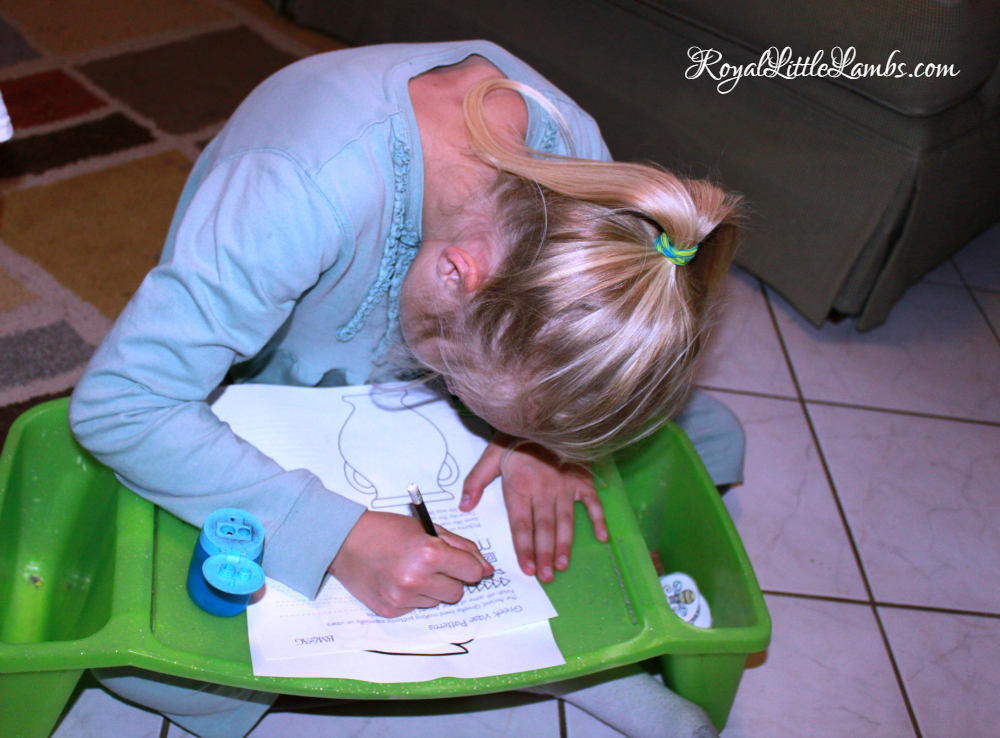
Tori was very particular about her geometric designs.

Vase Patterns

Katie loves any and all art projects.

Planning a Vase Design

We cut out paper vases with our designs.

We got the inspiration for our scratch vases here.

We practiced on the scraps of scratch paper to see how to use it since it’s a new concept.
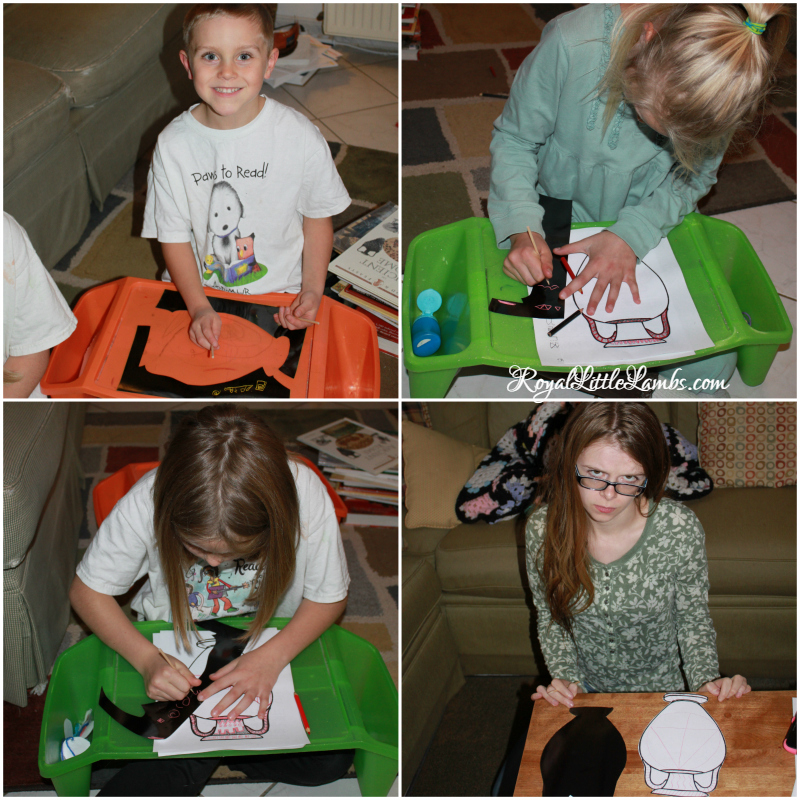
Practicing on Scratch Paper

Then we cut out colored scratch paper in a vase shape and made designs on the vases.

Scratch Paper Vase

Our final project was to make actual vases!

I gathered the materials for our Papier Mâché vases project.

(We also have a fresco art project coming up!)

I collected free newspapers, balloons, tape, and cardboard for the bases, tops, and handles.
Vases and Frescoes

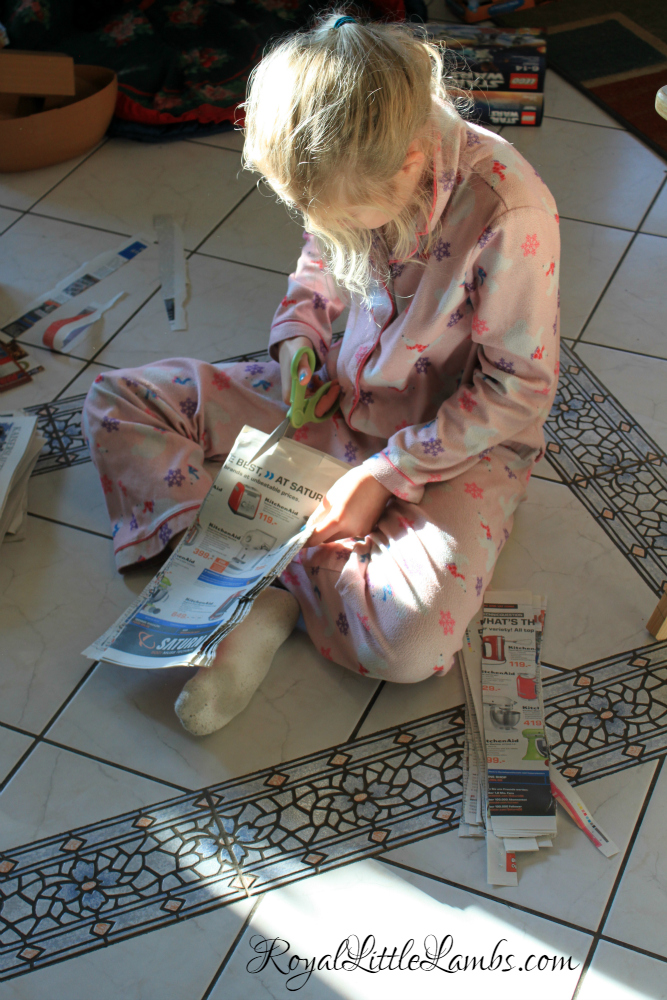
The girls cut strips of newspaper.

Strips of Paper

I made the glue and we covered the balloons and cardboard pieces with strips of newspaper.

Papier-Mâché Recipe:

  • 1 part flour to 5 parts water
  • Boil about 3 minutes and let cool

I laid out newspapers to collect drips and we used our art trays to keep the vases steady. I poured the glue into an aluminum pan.

Ready for Papier Mâché

Notice there are no pictures of the actual Papier-Mâché-ing.

It was so sticky and messy that we had to take showers and I had to mop the floor twice, even with the newspapers and trays catching most of it.

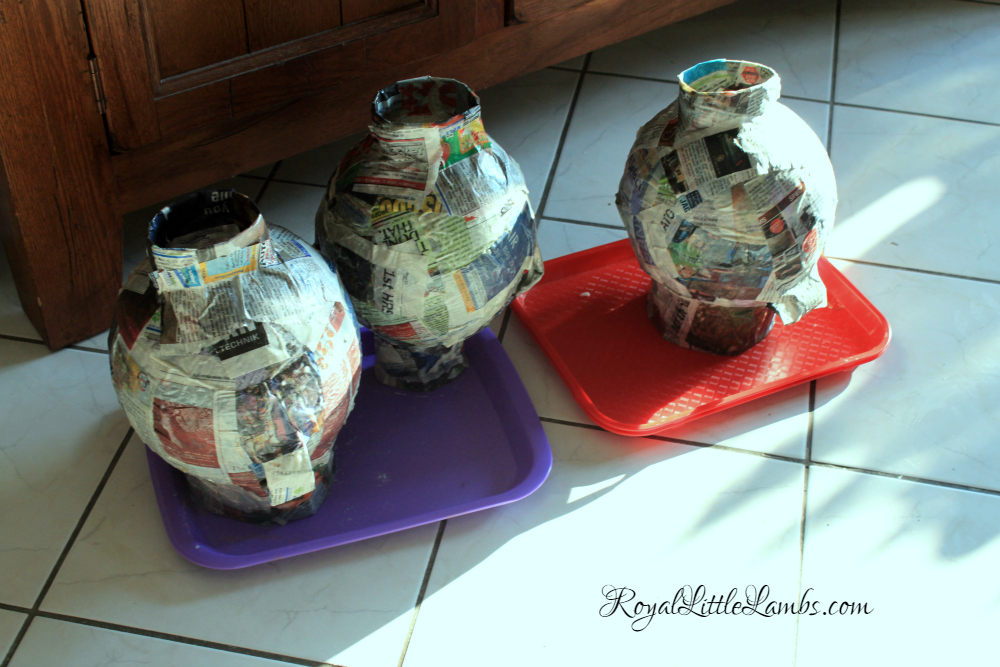
It took a looooong time for the bases to dry completely.

Drying Papier Mâché Vases

Then, we painted the vases a solid color!

We used tubes of acrylic paint – mostly black, orange, brown, red, and white to be more authentic.

Painting Vases

We added fun details in another color like the vases we learned about: people, animals, geometric shapes.

Painting the Vase

Our completed vases!

Papier-mâché Greek Vases

We had lots of fun learning about Greek pottery and creating our vases.

Resources:

  • Papier-mâché
  • Balloons
  • Rainbow Magic Scratch Off Paper
  • Acrylic Paint
  • Plastic Trays

You might also like:

  • Our Greece Itinerary
  • Eating Our Way Through Greece
  • 2 Days in Thessaloniki
  • A Weekend in Athens, Greece
Share
Pin54
Share
54 Shares
You might also like:

Filed Under: Homeschool Tagged With: art, Greece, history, homeschool

Ancient Mycenae

This blog may contain affiliate links: disclosure.
Please see my suggested resources.

January 12, 2016 By Jennifer Lambert Leave a Comment

We took a day trip to Mycenae.

The archaeological site of Mycenae comprises the fortified acropolis and surrounding funerary and habitation sites. Most of the visible monuments date from 1350 to 1200 BC.

Mycenae Citadel

We stopped into the little museum first.

We were so excited we go to wander all over the ruins and explore.

The Lion’s Gate is still magnificent, even headless.

Lion's Gate

We even walked down into a cistern. We used our phones as flashlights.

Down to the Cistern

The tombs of Clytemnestra and Agamemnon are enormous.

Tomb of Agamemnon

Adult tickets are €8 and kids are FREE!
Ticket is valid for the Archaeological Site, the Museum, and the Treasure of Atreus.

The Treasury of Atreus is across the street. We just walked, but there is no sidewalk. There is a little trailer with ice cold water that’s super affordable.

Check out our Eating Through Greece post! See our whole Greek trip itinerary here.

Share
Pin16
Share
16 Shares
You might also like:

Filed Under: Europe, Greece, Travel Tagged With: Greece, history, Mycenae, travel

Ancient Olympia

This blog may contain affiliate links: disclosure.
Please see my suggested resources.

January 7, 2016 By Jennifer Lambert Leave a Comment

We took a day trip to the ancient city of Olympia.

This is where athletes lived and trained during ancient times.

There are many temples and training buildings in great condition.

Tori ran around the Olympia stadium.

Stadium at Olympia

The entryway into the stadium:

Entryway into the Stadium

Outside the entrance were statues erected from fines of athletes who cheated. On the bases of the statues were the athletes’ names and nature of penalty. I think we should reenact this practice.

The track is 212.54 m (697.3 ft) long and 28.5 m (94 ft) wide and surrounded by grassy banks on all sides. All the seats were made of mud and on the southern slope there was a stone platform, the exedra, on which the Hellanodikai, the judges, would sit. The stadium could hold 50,000 spectators.

The games were held between 776 BC and 393 AD. The games were held every four years at the beginning, and the middle of the “Great Year”. The Great Year, was a way that people in Greece would determine the difference between solar and lunar years.

There were three stadiums constructed. The first one, (Stadium I), was created during the archaic period. It was mainly used to hold games for the contestants of nearby city-states of Greece. (Stadium II) was built to the east of the first stadium, this was built to add on events. In addition, a racetrack was also built. It was built ideally next to a large hillside that served as a natural sitting area. The third stadium, (Stadium III), was built mainly to hold larger audiences. Along the embankments surrounding the stadium are large wells that not only served as water offerings, but also served as votive offerings, mostly of bronze.

For all participating city-states, a sacred truce was made by the three kings Iphitus of Elis, Lycurgus of Sparta, and Cleisthenes of Pisa. The truce ensured that no one would be hostile towards one another and it also ensured a suspension of any executions for the duration of the games. From the lists that we have of victors from these Olympic games, we know that the Olympic games eventually brought in many champions from different parts of the world. Champions were from as far as Sicily and Northern Africa. See more.

Guests and patrons stayed in a fancy house with a mosaic pool and lovely courtyard.

Guest House Pool

Here’s what it used to look like:

Leonidaion

Alex liked the Philippeion, commissioned by Alexander the Great.

Philippeion

I just wanted to see the workshop of Pheidias!

Workshop of Pheidias

The building was erected in the second half of the fifth century, when Pheidias, after completing the sculptures for the Athenian Acropolis, went to Olympia to work on the statue of Zeus. Excavation finds and pottery date it precisely to 430-420 BC. Later the workshop became a place of worship containing an altar for sacrifices to various gods, which Pausanias saw in the second century AD. In the fifth century AD, a Christian basilica was erected over its ruins.

The workshop, a rectangular hall oriented east-west with an entrance on the east side, had the same dimensions (32 x18 x 14.50m) as the cella of the temple of Zeus, probably to facilitate the construction of the statue. Built of shell-limestone, it was divided into three naves by two rows of columns. The statue probably stood in the central, wider nave. It had a wooden core which the sculptor revetted with gold, ivory and glass plaques. These were worked in the adjacent south wing of the workshop, which sheltered the craftsmen. A wealth of excavation finds, including clay matrices for the folds of the statue’s robe, pieces of ivory and semi-precious stone, bone goldsmith’s tools, glass flower petals and a most important small black-painted oinochoe inscribed Pheidio eimi, or “I belong to Pheidias” all come from this area. See more.

There’s a nice museum where we cooled off and saw some of the artifacts from the workshop of Pheidias.

Molds from the Workshop of Pheidias

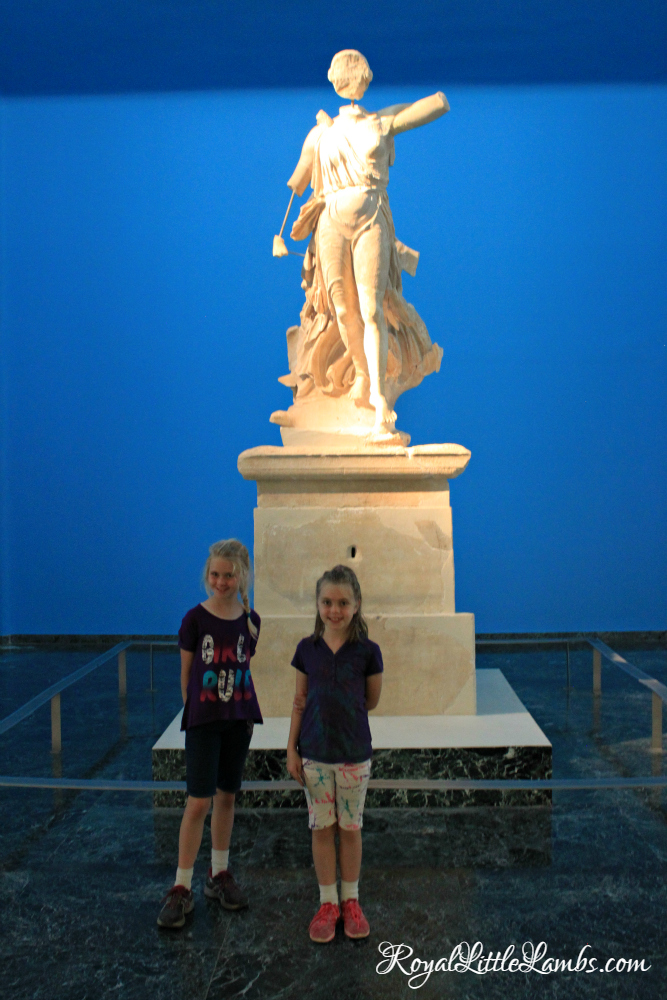
The girls liked the statue of Victoria Nike.

Victoria Nike

This was one of our favorite trips. It was the least anticipated and we were so pleasantly surprised. It was quite warm that day and the ruins are extensive. There’s a shop by the parking lot for treats and a nice cafe in the museum where we got ice cream.

Combo tickets for adults for the ruins and museum are €9 and kids are FREE!

Check out our Eating Through Greece post! See our whole Greek trip itinerary here.

Share
Pin2
Share
2 Shares
You might also like:

Filed Under: Europe, Greece, Travel Tagged With: Greece, history, Olympia, travel

  • « Previous Page
  • 1
  • 2
  • 3
  • 4
  • 5
  • Next Page »
Suggested ResourcesCheckout 51Fetch

Archives

Popular Posts

10 DIY Gifts with Essential Oils10 DIY Gifts with Essential Oils
Natural Remedies for HeadacheNatural Remedies for Headache
10 Natural Remedies to Keep on Hand10 Natural Remedies to Keep on Hand
Henna Hands CraftHenna Hands Craft
Homemade Turkey Divan CasseroleHomemade Turkey Divan Casserole
This website uses cookies to improve your experience. We'll assume you're ok with this, but you can opt-out if you wish.Accept Reject Read More
Privacy & Cookies Policy

Privacy Overview

This website uses cookies to improve your experience while you navigate through the website. Out of these, the cookies that are categorized as necessary are stored on your browser as they are essential for the working of basic functionalities of the website. We also use third-party cookies that help us analyze and understand how you use this website. These cookies will be stored in your browser only with your consent. You also have the option to opt-out of these cookies. But opting out of some of these cookies may affect your browsing experience.
Necessary
Always Enabled
Necessary cookies are absolutely essential for the website to function properly. This category only includes cookies that ensures basic functionalities and security features of the website. These cookies do not store any personal information.
Non-necessary
Any cookies that may not be particularly necessary for the website to function and is used specifically to collect user personal data via analytics, ads, other embedded contents are termed as non-necessary cookies. It is mandatory to procure user consent prior to running these cookies on your website.
SAVE & ACCEPT