Jennifer Lambert

A Sacred Balance

Visit Us On FacebookVisit Us On PinterestVisit Us On InstagramVisit Us On Linkedin
  • Homeschool
    • Book Lists
    • How Do We Do That?
    • Notebooking
    • Subjects and Styles
    • Unit Studies
  • Travel
    • Europe
      • Benelux
      • France
      • Germany
      • Greece
      • Ireland
      • Italy
      • London
      • Porto
      • Prague
    • USA
      • Chicago
      • Georgia
      • Hawaii
      • Ohio
      • Utah
      • Yellowstone and Teton
  • Family
    • Celebrations
    • Frugal
  • Military Life
    • Deployment
    • PCS
  • Health
    • Recipes
    • Essential Oils
    • Fitness
    • Mental Health
    • Natural Living
    • Natural Beauty
  • Faith
  • About Me
    • Favorite Resources
    • Advertising and Sponsorship
    • Policies
  • Reviews

© 2025Jennifer Lambert · Copyright · Disclosure · Privacy · Ad

Homeschool Foreign Language

This blog may contain affiliate links: disclosure.
Please see my suggested resources.

April 19, 2016 By Jennifer Lambert 11 Comments

I’ve always felt learning a foreign language is important.

My high school offerings were only Spanish and French. My parents encouraged me to take Spanish since they thought it would be more useful. I took three years in high school, but in college, I maxed out the foreign language programs and also took the maximum courses offered in French and German. I really wish I had become a linguist but I had little counseling and didn’t really know that was a possibility.

While I am not fluent, I can get by with small conversations in French, German, and Spanish. I can read it ok, so that’s good when we travel. I can break down and pronounce Italian. Portuguese is harder!

It’s totally true that if you learn one language, it’s easier to learn others.

I don’t want to pay hundreds of dollars on a language program.

We’ve reviewed Mango, but it’s so expensive for a large family. I’ve seen Transparent Language and Rosetta Stone at the library.

Most colleges require 2 credits of the same foreign language. I want my kids to be more than prepared.

Labeling everything with sticky notes is a fun way to learn vocabulary. Reading menus and watching shows in other languages with subtitles can help us understand.

Homeschool Foreign Language

How We Learn Foreign Language in our Homeschool

Latin

Since we follow a classical education model, we focus on Latin in the beginning. It’s a great jumping off point for Spanish, French, Italian, and more!

We being with Prima Latina at about age 8.

Then we follow the books as far as we can:

We study Latina Christiana I and Latina Christiana II for upper elementary or middle school.

Or you can just jump into First Form Latin I-IV (which is mostly Henle in workbooks) in high school. There is some argument among homeschoolers about whether to count each Form as 1 high school credit.

Cassell’s Standard Latin Dictionary is a must buy.

The kids love it. It’s easy. We watch the DVDs and complete the workbooks and sing songs and recite prayers. I know it’s working because when we travel, the kids totally read the Latin inscriptions! It’s a little harder to understand spoken Latin, like at a Catholic Mass.

Latin helps a lot in science and with vocabulary.

Greek

I’m so happy there’s a Greek program that begins with the Alphabet and continues with Elementary Greek I, II, and III.

Easy and I use the teacher’s guide for snags and to make sure since I’m unfamiliar with Greek. When we traveled to Greece, it was fun to pick apart the letters and words. While ancient Greek is a bit different, the sounds and alphabet haven’t changed!

My second child is obsessed with Greek and is so proud she knows the alphabet and how to sound out the words. It helps a lot with science and vocabulary.

French

I’m not super thrilled with First Start French. The lessons are not comprehensive enough for high school credit. The girls enjoy the workbooks. The CD isn’t the greatest, so I read the dialogue exercises aloud. The girls review with apps and love to practice speaking French anytime we go over the border!

We’ve heard great things about William Linney’s Getting Started with French and may look into that. He also offers Spanish and Latin.

My eldest took French in college through College Credit Plus.

Larousse Concise French-English/English-French Dictionary is a must-buy.

German

We live in Germany, so it’s important that we can communicate with our neighbors. I bought some kids workbooks and we worked through those for vocabulary.

We worked through German for Children and now we’re on German DeMYSTiFieD.

Russian

My second child wants to learn Russian and is obsessed with astronauts so I bought her The Everything Learning Russian Book and she’s happily completing that.

Gaelic

Two of my kids are very interested in learning Irish. There is not much out there for lesson books. We are pleased with the revival of the Irish language.

Oxford Pocket Irish Dictionary is a good help. They research pronunciation when they read the Irish folk tales, mythology, and stories.

More

  • Many colleges and universities offer language courses through their extension offices
  • Many city or county rec centers offer language courses
  • Used high school textbooks are great starting points and can be found on Abebooks. These are helpful for students to complete exercises.
  • The kids use the Duolingo app for review.
  • Great resources from Mason’s living languages.
  • These are some free online college courses we’re looking into.
  • Classical Academic Press offers Latin, Greek, French, Spanish curriculum.
  • Compass Classroom offers courses in Latin and Spanish
  • Muzzy BBC Languages offers free online courses.
  • Easy Peasy Spanish and French (scroll down)
  • Time4Languages offers many different language options
  • Georgia Virtual School has courses in Latin, Chinese, Japanese, Spanish, French, or German. I haven’t reviewed these, but they look like little lessons and quizzes, similar to Mango.

We love these apps for when we travel:

  • Google Translate and Word Lens
  • Linguee
  • iTranslate
  • Country or Language specific apps come in handy with basic words and phrases but often have in-app purchases for more info.

How do you teach foreign languages to your students?

Latin & Greek Word Study Notebooking Pages
Share
Pin3
Share
3 Shares
You might also like:

Filed Under: Homeschool Tagged With: French, high school, homeschool, language, Latin

Critical Tips to Acing the SAT and ACT

This blog may contain affiliate links: disclosure.
Please see my suggested resources.

April 14, 2016 By Jennifer Lambert Leave a Comment

High school students have been studying for and taking the SAT and ACT exams for years, but that doesn’t stop the same questions on how to prepare from cropping up each year. As a new set of students approach this stressful exam time they can find themselves missing important details and wondering how best to study for such a comprehensive exam.

Breaking the process down into planning stages and highlighting important key steps helps keep students on track and ensures they don’t miss a deadline or forget an important tool on the morning of the test. Start with the basics and work your way down into the important details (from what kind of pencil you need to how to study for your weakest topic). Getting a firm grasp on one step will make the rest of the decisions easier to focus on.

Critical Tips to Acing the SAT and ACT

Decide Which Exam to Take

The SAT used to reign supreme across much of the country, but the ACT overtook it in popularity in 2012. These days most colleges are used to evaluating either exam when considering admission.

You guidance counselor should be able to help you decide which exam to take, but be sure to also check the requirements of any colleges or universities you’re applying too. Some schools have a preference and may even share the average exam score of their freshman class. This will give you a good gauge of how well you’ll need to do on the SAT or ACT to land a spot at your dream school. Some prominent schools have begun doing away with the test requirement for admission. Take the time to carefully evaluate the requirements of your top schools before deciding on your exam course of action.

Some states require all graduating high school students to take the ACT or SAT as a school exit exam (including Connecticut, Colorado, Minnesota, Michigan and Washington D.C.). In these cases, unless a university specifically requests the other exam or you feel you may do better on the other one, the decision of which test to take is easy.

Know the Important Dates

Both the SAT and ACT is offered multiple times during the year and require pre-registration. Keeping an eye on these dates not only makes sure you don’t miss your chance to take the SAT or ACT, but also gives you the advantage of choosing which date works best for you. If you take the exam during one of the earlier sessions you also have a chance to retake it if you’re not happy with your score.

The SAT is offered in October, November, December, January, March, May and June. Registration deadlines are typically about a month before the exam, however, you can register late for an additional fee.

The ACT is offered in September, October, December, February, April and June. The regular registration deadline for the ACT is also roughly a month before your chosen exam date with a select window for late registration, also requiring a fee.

If you plan on taking both the ACT and SAT select your exam dates carefully so you don’t get overwhelmed and have enough time to appropriately study for each test.

Study, study, study

More than 80% of college admission teams rank grades in college prep courses (essentially any course a college may look at) as having “considerable importance” to college acceptance, according to a survey by National Association for College Admission Counseling. SAT and ACT test scores are considerably important to 58.3% of those surveyed. Doing well in prep classes and on college admissions tests is important to college acceptance.

While you can take the SAT and ACT more than once, doing the best you can is important to getting into the college of your choice. Some universities require you to submit all SAT and ACT test scores, even if you retested to get a better score. The better you do the first time, the better you’ll look to an admissions counselor.

Investing in an ACT or SAT prep course will keep you focused on your studies and help you prepare for the material and format of the exam. If you struggle with a particular subject area, such as Algebra 2, spend extra time focusing on that topic with drill down courses, lessons and practice tests. This is particularly important if you plan on taking any SAT Subject Tests, which the College Board notes are “an additional opportunity to show colleges what you know and what you know you can do.”

Create a Day-of Checklist

The SAT and ACT organizations are extremely strict on what can and can’t be brought into testing environments. For instance, cellphones, tablets, laptops and iPods aren’t allowed into SAT testing rooms and must be turned off and out of reach when taking the ACT – so don’t plan on listening to music during the exam. If you want to keep track of time you’ll need to wear a wrist watch. If you have a smartwatch leave it at home and opt for a more traditional alternative.

To take either exam you’ll need at least two soft lead No. 2 pencils. Soft lead generally means a pencil that you have to sharpen, not a mechanical pencil. The ACT specifically prohibits mechanical pencils. You’ll also need your printed exam ticket and a valid photo ID.

Review the exact requirements the week before your exam date so you can plan according and buy or borrow any tools you might need. Once you know what you can and can’t bring, make a list and lay out everything the night before so you’re not stressed the morning of the exam.

With some careful attention and preparation, the day of the test will be a breeze.

Share
Pin1
Share
1 Shares
You might also like:

Filed Under: Homeschool Tagged With: college, high school

High School Health Credit

This blog may contain affiliate links: disclosure.
Please see my suggested resources.

April 5, 2016 By Jennifer Lambert 10 Comments

I don’t know about you, but I took PE/Health in 9th grade public school and it was a less than stellar experience.

It was taught by the football coach, co-ed, and it was pretty embarrassing for all involved.

How do homeschoolers meet the requirements for high school health credit?

High School Health Credit

What are the requirements for a health class?

Check for state requirements for health education.

I prefer to go above and beyond and max out requirements. We also never know where we might be living since the Air Force moves us around pretty often. Some states require only a 0.5 credit health course, while other states want a full 1.0 credit for graduation.

What’s a credit?

18 weeks = 0.5 credit

36 weeks= 1 credit

135-150 hours of coursework = 1 credit

What should be included in a health course?

A 0.5 credit health course should cover: developing a healthy self, substance-abuse prevention, human development, relationships, disease prevention, HIV/AIDS education, CPR and safety, consumer health, injury/violence prevention, nutrition, fitness, and community health.

A 1.0 credit health course includes everything in the course above and should cover: developing healthy sun exposure habits, acquiring knowledge and skills to practice healthy habits that prevent and/or control disease, learning positive tactics to avoid drug use, and learning healthy eating strategies.

Since we maintain a lifestyle of learning, most of these concepts are review for my teens in high school.

How do I teach health?

Sure, you can buy a traditional textbook health curriculum. Lots of those all-in-one companies include health in their package. If that’s the route you’re going, move along. I refuse to buy a textbook or workbook for something that should be a basic life skill. The library has lots of great resources!

Collect current events articles from newspapers, magazines, online and discuss or research to learn more.

Personal Health:

Study to include human anatomy and physiology, physical fitness, nutrition. We review our chemical-free lifestyle and recipes for personal care products. My daughter took a separate psychology course, so many coinciding health and development topics are covered in that.

Disease Prevention:

We love the links on the CDC and NIH websites.

Drug awareness:

Study to include information and avoidance of illicit drugs, smoking, and alcohol. This offers a great time to discuss peer pressure and self-control. The Bible offers instruction on excessive alcohol consumption. This is a great ministry opportunity for pray or volunteer participation. Also, address marijuana and CBD issues.

Fire safety:

Learn about what to do in the event of household fires, review a fire evacuation plan, learn how to use a fire extinguisher. I like these safety tip sheets. Check out this fire safety guide.

Household safety:

How should cleaning supplies, food items, and toxic items be handled and stored? How do we handle accidents or emergencies?

Basic First Aid:

Minor medical emergencies, to include burns, bleeding, choking, poison, injury, shock. My daughter completed certification courses through the Red Cross. They offer great babysitting and CPR courses.

Consumer Health:

Learn about health care programs around the world. Visit and/or volunteer at a crisis pregnancy center. Learn about propaganda, marketing, drug company lobbying. Really find out where our food comes from. There are great videos available like Food, Inc., Super Size Me, Captivated, Fed Up, and more.

Relationships:

We discuss courtesy, manners, etiquette, friendship, peer pressure, gossip, bullying, dating. We do role playing and review social situations that are successful or unpleasant. The book How Rude! is a great resource for etiquette.

Sex Ed:

This is a touchy subject, but a super important one.

  • Human Development (including reproduction, puberty, sexual orientation, and gender identity)
  • Relationships (including families, friendships, romantic relationships and dating)
  • Personal Skills (including communication, negotiation, and decision-making)
  • Sexual Behavior (including abstinence and sexuality throughout life)
  • Sexual Health (including sexually transmitted diseases, contraception, and pregnancy)
  • Society and Culture (including gender roles, diversity, and sexuality in the media)

My Sex Ed Series:

  • Teaching About Healthy Relationships
  • Is it Time for The Talk?
  • Having The Talk
  • Relationships
  • Making Sense of It Book Review
  • Why I Don’t Teach Purity

Download a great free sex-ed curriculum here.

See my favorite books for life skills.

I like the links and resources at All in One High School Health for guidance.

Civil Air Patrol has monthly safety briefings that cover many of the topics in health courses. We discuss the presentations at home afterwards.

My daughter volunteers two days per week at our local hospital with The Red Cross.

She’s volunteered every Monday in the medical laboratory for over a year. She likes microbiology and virology.

Recently, she’s been volunteering in the maternity ward and has assisted nurses, doctors, and technicians with hearing screenings, taking vitals, circumcisions, and more.

This hands-on experience is teaching her more than a textbook or video ever could!

Share
Pin104
Share
104 Shares
You might also like:

Filed Under: Homeschool Tagged With: health, high school, homeschool, teen

How to Prepare for After High School

This blog may contain affiliate links: disclosure.
Please see my suggested resources.

March 29, 2016 By Jennifer Lambert 8 Comments

When we begin our homeschooling journey, we think that high school is so far away.

Thinking about “after high school” seems silly when you’re playing patty cake with a toddler, singing ABCs with a preschooler, or teaching a 6-year-old how to read and add.

But the goals we set when our kids are young ensure our children’s success when they are adults.

How should you prepare your child for college, vocational school, or work?

How do you know your child is ready for life after homeschool?

Three important areas should be addressed for success after high school: our child’s Heart, Hands, and Head.

Humans have three areas in our bodies that are in communication with each other through the vagus nerve:

• the heart = intelligence

• the gut = intuition

• the head = intellect

Heart:

Spiritual, emotional, and psychological well-being are important for success after high school.

What is your child’s worldview and character like?

Is your child equipped with critical thinking skills? Does your child know how to handle adversity, relationships, emotions, communication? It’s important to learn how to apologize and be emotionally healthy.

Is your child able to show self-control when her peers indulge in poor behavior? Teaching self-control is probably the most important lesson children can learn.

Can your child exhibit empathy if a friend experiences a tragedy – illness, injury, death in her family, failing a course, an ugly breakup with a boyfriend? Teaching and modeling kindness is integral for a child to show compassion to others.

Hands:

Life skills are necessary for success after high school.

Life skills books are helpful, but doing makes for more lasting learning.

Most teens get a driver’s license before age 18. It’s important that young adults learn defensive driving skills. Driver’s ed is a requirement in many states for teens under age 18.

Car maintenance schedules and simple auto tasks should be taught so they don’t get taken advantage of by mechanics due to their ignorance.

We love this book: Girls Garage: How to Use Any Tool, Tackle Any Project, and Build the World You Want to See by Emily Pilloton.

Make sure your child understands finances: balancing a checkbook, the difference between a credit card and a debit or check card, avoiding debt, the basics of investing or planning for retirement, and taxes.

Cooking skills are super important. An easy way to ensure this is to include your children in meal planning, shopping, cooking, and cleaning up. Have your child practice simple cooking with help and supervision – building up to planning and preparing several simple, frugal, and healthy meals. We build recipe binders for our four kids with their favorites that they are very proud of that they will eventually take with them when they grow up and away.

Laundry care is important. Kids should learn all the washing and drying basics. Reading labels is necessary to keep clothing well maintained. Learning how to remove tough stains and make small mending repairs is helpful. We’ve even made our own laundry soap.

Housekeeping chores and home maintenance are very necessary skills. Everyone should know how to do dishes, laundry (to include ironing and mending), deep cleaning of every room, and minor handyman tasks.

Basic safety tips for real life and online are necessary. It’s more than a single conversation about sex ed. I give my kids a lot of freedom online, but we constantly discuss online safety and problematic apps.

Survival skills are a lost art. We love to go hiking and camping so my kids know how to prep fish and use a compass. What happens when the

First aid knowledge will be helpful in all sorts of situations and emergencies. Practice using a fire extinguisher and know when to use it. Also discuss kitchen fires and how to use salt or baking soda on grease. Knowing what to do in emergencies and car accidents is imperative so the child doesn’t panic. Calling authorities for help is scary and should be discussed so teens know what to expect when they’re in their first fender bender. Role playing and checklists can help.

Head:

Academics are certainly important for success in college, many technical schools, and jobs.

Here’s an unpopular thought: Academics are the smallest factor for success in life.

That being said, let’s not be lazy.

Too many homeschoolers I know seem to take the easiest way out. Parents choose a simpler, cheaper, or easier curriculum, often DVD, online, or workbook, just to check it off on the transcript. And that may be fine for some of the hoops we homeschoolers have to jump through, depending on state graduation requirements. Just don’t fear a challenge or shortchange yourself.

I’ve even known some homeschoolers who “graduated” without completing all their high school coursework. Is a ceremony and party so important that we shouldn’t have integrity?

Homeschoolers need to complete a decent course of study in the core academic areas: English, math, science, and social studies.

If a teen has his heart set on a specific career, then tailoring his high school focus towards that academic goal is wise. Look at the college or technical school requirements and make sure he completes all that – to excellence.

Electives are a great way to customize a homeschooler’s education to interests and strengths.

Many homeschoolers have the freedom to get a headstart on college courses online or at local colleges during their junior or senior year. This is a great way to gently transition into college life or to prove to a chosen university that the homeschooler can succeed at college coursework.

Liberal arts college isn’t the only option.

There are many training opportunities after high school.

Teens need career counsel to help them on their future path.

Teens need to know how to fill out applications and conduct a successful interview. Following up with thank you letters or emails are good too.

Good communication and organization skills are necessary before independence.

Ensuring our children grow up to be successful, content adults who contribute well to society is a tough job.

It requires diligence, consistency, and discipline.

Share
Pin37
Share
37 Shares
You might also like:

Filed Under: Homeschool Tagged With: college, high school, homeschool, teen

Homeschool High School Credits

This blog may contain affiliate links: disclosure.
Please see my suggested resources.

March 24, 2016 By Jennifer Lambert 11 Comments

How do you determine high school credits?

High school homeschool shouldn’t be scary or confusing.

Counting credits and completing transcripts is a daunting task for homeschool parents.

Here’s how we’re doing high school transcripts.

High School Credits and Transcripts

What’s a credit?

Generally, one credit equals one year or 36 weeks of 50 minutes per day per subject. This is a “Carnegie unit.”
It generally amounts to almost four hours per subject each week, or 150 hours per year.

18 weeks = 0.5 credit

36 weeks= 1 credit

150 hours of coursework = 1 credit

Check your state’s requirements for the amount of high school credits needed to graduate.

Suggested College Preparatory High School 4-Year Program:

English4 credits
Social Studies3-4 credits
Science3-4 credits
Math3-4 credits
Foreign Language2-4 credits
PE/Health1-2 credits
Fine Arts1-2 credits
Electives 2-4 credits

What’s a GPA?

A grade point average is “the average obtained by dividing the total number of grade points earned by the total number of credits attempted —called also quality point average.” {dictionary}

You as a homeschool parent get to determine your own policy on calculating grades.

I like the traditional scale of 90-100=A, 89-80=B, 79-70=C, etc. It’s not complicated. We don’t inflate. We don’t make things harder than they should be.

I’m tough when it comes to grading, when we even have grades. My kids know they won’t be “those homeschoolers” who are given high grades without properly earning it.

A GPA depends on three things:

  1. Your grading scale
  2. The letter grade earned for each course
  3. The credit earned for each course

Typically, A = 4, B = 3, C = 2, D = 1, F = 0

The grade points are multiplied by the number of credits earned per course, resulting in “quality points.”

How to calculate a GPA:

  1. Assign each course a credit value.
  2. Assign each course a numerical grade.
  3. Multiply each course credit by it’s numerical grade. That gives you the grade point for that particular course.
  4. Add all the grade points for all the classes that are complete.
  5. Divide the total grade points by the number of credits completed.
  6. The answer is the current grade point average.

What about weighting grades?

Weighted grades are for honors classes, college courses, AP classes, etc.  Since these course are more rigorous, they have a greater GPA value than other high school courses, so receive a 1-point increase in their numeric value.  Use the higher value for that course and then calculate the GPA as usual.

Contact the college or university your child is planning to attend for their grading preferences. Always tailor the transcript to the college’s needs.

See detailed information about GPA calculations at Back to College.

So, how does a homeschool parent determine credits for all these courses?

The three easiest ways to determine course credits are by textbook completion, recording time, and mastery of subject.

Textbook

Most textbooks are meant to be used for a year-long course, so 1.0 credit is given. For example, Algebra I is a year-long course, even if a child takes longer than a year to complete it. Often, textbooks will list at the beginning or on their website how much credit should be given for the course.

Many homeschool curricula list recommended course credits for completion, even at different levels of study. For example, our main curriculum Tapestry of Grace offers a chart I can follow to determine how many credits my kids earn for the time she puts in for her work.

Time

What if there isn’t an actual curriculum? Or you’re an unschooler? Or your high schooler spends every Monday for over two years volunteering at the hospital?

For some activities or courses, you can log the hours spent. This is where it’s important to know how many hours equals 0.5 or 1.0 credit.

My daughter calculates her time spent volunteering at our local hospital laboratory as a Red Cross certified volunteer.

Mastery

Homeschoolers have so many of opportunities for non-traditional education.

Credit can and should be awarded for mastery of a subject.

Projects completed and entered into a contest or winning an award earn mastery credit. Apprenticeships are amazing opportunities.

My eldest was in Civil Air Patrol, and earned the rank of Captain.

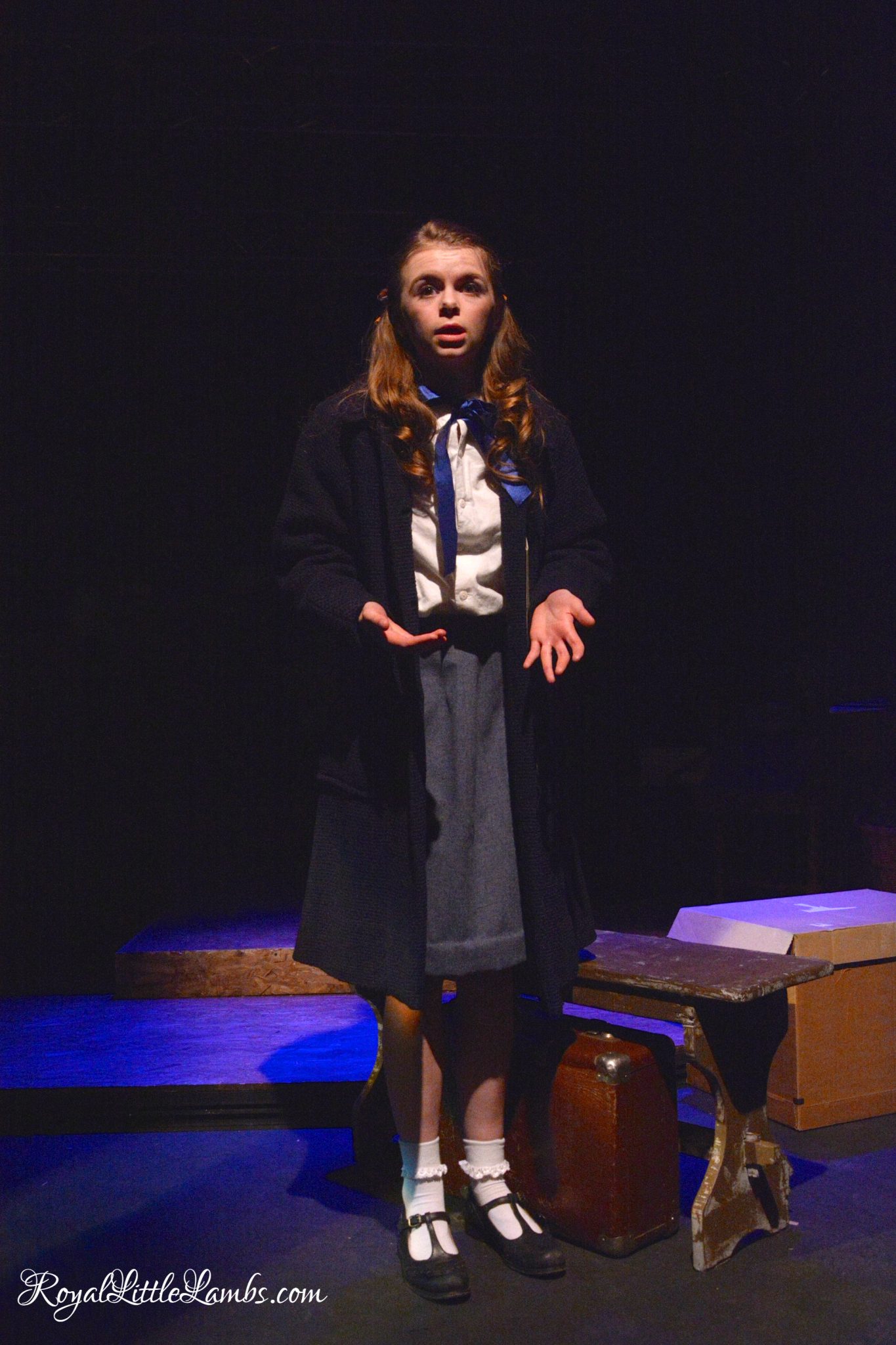
She starred in the play Kindertransport and participated as an extra in Mary Poppins with our community theatre. She has learned so much about stage productions!

Transcript Planning

I start to keep records of courses my children complete beginning in the middle school years. It’s good practice for me and can come in handy if they’re already taking advanced classes.

My daughter completed her Latin language requirements before age 14. She’s now learning French.

She’s been in Civil Air Patrol since she was 12. This is a great elective, similar to ROTC.

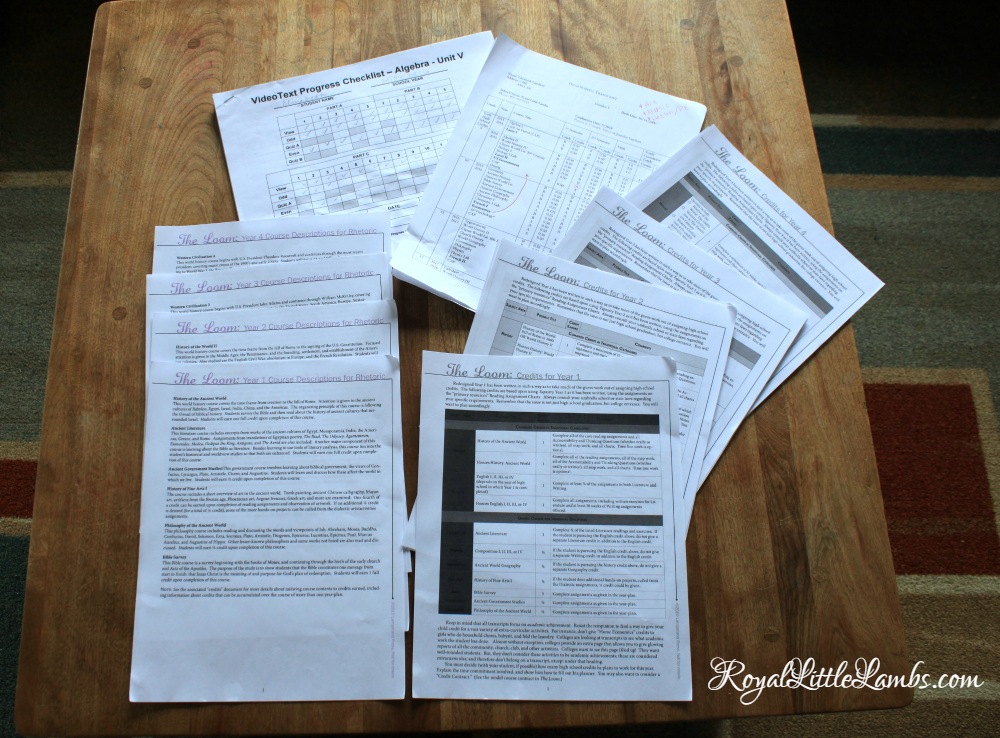
I printed the course checklist for VideoText Algebra and recorded the assignments, quizzes, and tests.

Our main curriculum, Tapestry of Grace, has printable course descriptions and suggested credits for literature, writing, geography, fine arts, Bible/church history, government, and philosophy. I love that.

I created a sample transcript and list the courses already completed and the potential courses for each year.

My daughter completed economics earlier than I had planned. I jotted down in the top right corner a reminder to myself that we need to make sure she completes courses in art, music, and health/PE.

See how we homeschool high school.

I also include spaces for PSAT and SAT/ACT scores.

High School Transcript Planning

Don’t fall into these traps:

Don’t give credit unless the student has actually completed a course. We’ve known homeschoolers who “graduate” before actually having completed a high school course of study. What message does that send?

Don’t count electives as academic courses. Academics are core classes: math, science, social studies, and English. Many curricula list what kind of course it is. Look at high school or college syllabi to see where the course should be places on a transcript.

Don’t give credits for fluff. If you can honestly calculate hours for a credit in a subject, then list it. Otherwise, chalk it up to life experience or a hobby. There are places to explain those on college and scholarship applications.

Don’t inflate grades. You’re not doing your child any favors. If a high school student struggles with a course and earns a solid C, don’t feel guilty or whatever and inflate that grade to a B to make him look better. You’re not preparing him for success.

Graduating a homeschooler is an exciting time for a parent, successfully launching an adult into the world, after years of being so involved in the educational process.

I can’t wait to see what our four children grow up to be and do.

Extra Tips:

List curriculum titles, especially for lab sciences.

Make a space for volunteering on the transcript and log the hours.

Explain unique extracurricular activities.

List on-the-job training or part-time work.

We have so much freedom as homeschoolers to list all the fun learning opportunities!

Many homeschoolers are highly successful during and after high school – going on to do great things in the workforce, university, alternative education, and life.

Transcript Resources:

  • Fast Transcripts
  • Transcript from FiveJs
  • The Homeschool Mom
  • The Homeschool Source
  • Walking by the Way
  • Annie and Everything
  • Responsible Homeschooling
  • Homeschool Tracker
  • Pros and Cons of Homeschooling
  • Student Handouts
  • Oklahoma Homeschool
  • Homeschool Christian
  • Clep Prep
  • Regent University
  • Cedarville University

How do you record life skills in your homeschool transcript?

Share
Pin101
Share
101 Shares
You might also like:

Filed Under: Homeschool Tagged With: high school, homeschool

Civil Air Patrol as a High School Elective

This blog may contain affiliate links: disclosure.
Please see my suggested resources.

September 30, 2015 By Jennifer Lambert 6 Comments

Civil Air Patrol is a useful high school elective for all students.

I am counting CAP as a 1-credit elective for each year of high school, so a total of 4 credits on a high school transcript. It could even be as much as 7 credits if you count CAP as early high school courses (because I know many students who take advanced courses in middle school/junior high – and those should count and be listed on the transcript!) or you could include the earlier participation years in the description.

For a course description, I make sure to explain all the major aspects CAP addresses – leadership, character development, aerospace, volunteering, and physical fitness.

Civil Air Patrol as a High School Elective

History:

Civil Air Patrol was founded one week prior to the Japanese attack on Pearl Harbor.

Three primary mission areas were set forth at that time: aerospace education, cadet programs, and emergency services.

CAP is the civilian auxiliary of the United States Air Force.

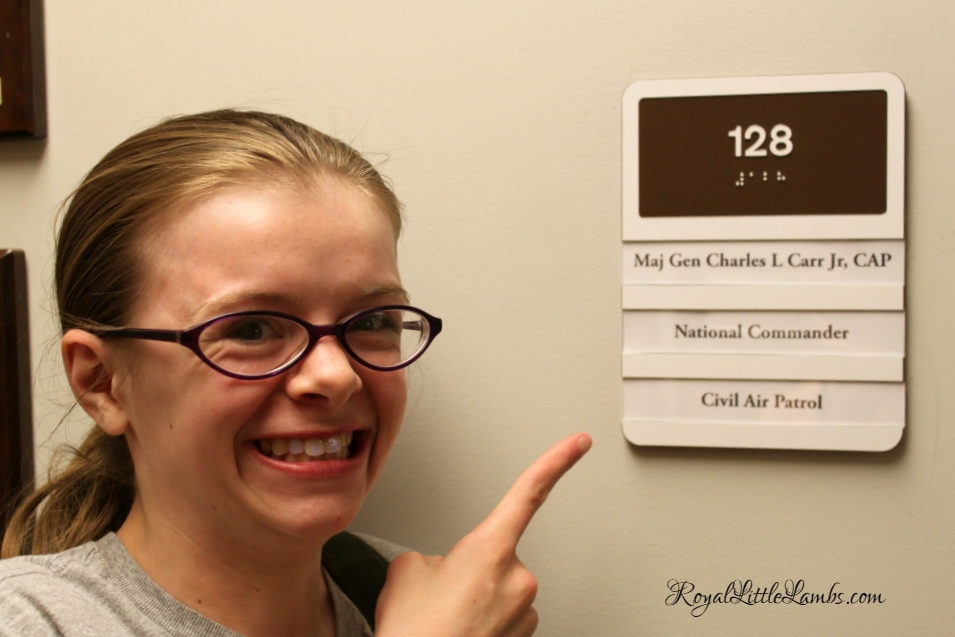
We took a little field trip to National Headquarters when we PCSed last year.

Civil Air Patrol National Headquarters Building

Liz was excited to see the office of the previous National CAP commander. He wasn’t in.

National CAP Commander Office

My daughter has been a CAP member since she was 12 years old.

High school electives are courses that are outside of the main academic subject areas of English, math, history, science, and foreign language. We more than fulfull the minimum academic requrements in our homeschool high school planning. My children are on schedule for 4-5 credits for each academic subject.

Electives offer so many possibilities for homeschoolers. We have so much freedom and no time constraints. While most school districts require only 3-4 credits of electives, my children will most likely surpass those requirements, again with 4-5 credits or more of electives in subjects they love.

The fine arts, Bible courses, technology, internships, sports and fitness, career prep courses, extra academic classes, and Civil Air Patrol are all avenues for electives that we hope to achieve in our homeschool.

We prefer real courses over video or virtual classes. I want my kids to experience life rather than watching it from the sidelines.

Civil Air Patrol offers many valuable life skills.

Why Civil Air Patrol?

  • Develop valuable leadership skills
  • Experience the thrill of flying
  • Test-fly potential careers
  • Earn rank and awards
  • Qualify for college scholarships
  • Solidify moral character traits
  • Make friends and have fun!

Civil Air Patrol’s core values of Integrity, Volunteer Service, Excellence, and Respect were first instituted in 1999. The CAP core values mirror the core values of the United States Air Force. These core values reflect how CAP chooses to act as an organization. It’s a statement of how CAP chooses to treat fellow members, customers, and the American public. They reflect the CAP organization’s institutional commitment – as well as CAP members’ personal commitment to public service.

Civil Air Patrol offers training in leadership, aerospace, character development, and physical fitness.

Leadership

Cadets advance at their own pace. Typically every two months, cadets are eligible to test for the next rank. Each Phase I and II rank earns an achievement ribbon.

Liz recently earned the rank of 2Lt and is working towards the rank of 1Lt.

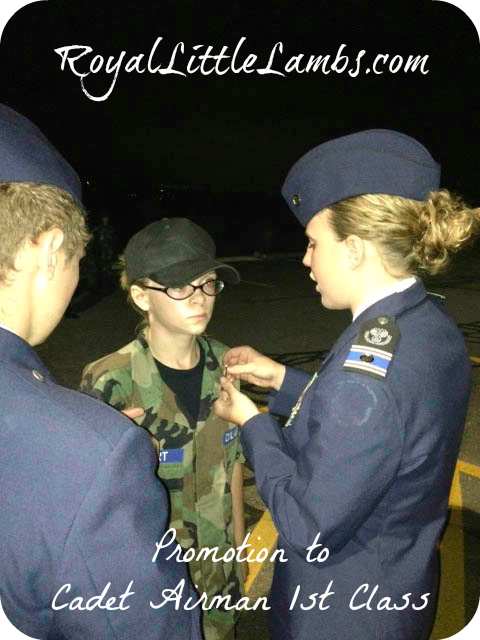
Airman-First-Class-Cadet.png

To progress in rank, cadets must

  • participate actively
  • pass a leadership test
  • pass an aerospace test
  • pass a physical fitness test
  • participate in character development forums
  • demonstrate they have the maturity to accept increased responsibility

Four Phases of Leadership:

Each rank offers Achievements and greater responsibilities.

The Learning Phase I: C/Amn, C/A1C, C/SrA, C/SSgt

The Leadership Phase II: C/TSgt, C/MSgt, C/SMSgt, C/CMSgt, C/2d Lt

The Command Phase III C/2d Lt, C/1st Lt, C/Capt

The Executive Phase IV: C/Capt, C/Maj, C/Lt Col, C/Col

The awards and decorations of Civil Air Patrol are designed to recognize heroism, service, and program achievements.

CAP Awards

Mitchell Cadets completing Phase II who choose to enlist in the Air Force or the Coast Guard are promoted to E-3 upon enlistment and completion of Basic Military Training (BMT), instead of E-1. Mitchell Cadets who enlist in the Marine Corps, Navy, or Army are promoted to E-2 upon completion of BMT.

View the Learn to Lead curriculum.

Explore other opportunities to grow and learn at Encampment, Leadership Schools, National Special Activities, and more.

My daughter has completed three Civil Air Patrol Encampments so far.

CAP Encampment Number 3

Of course, not all CAP cadets choose to join the military. The skills cadets learn can help them achieve any goals for college or career. It’s a great preparatory program for anyone.

Aerospace

Cadets experience flight firsthand through orientation flights in powered aircraft and gliders. CAP pilots are licensed by the FAA, follow a syllabus for each flight, and ensure the flight is conducted safely. Orientation flights are free to cadets.

My Airman Cadet participated in a Civil Air Patrol campout with astronomy and activities during her first year.

Airman Cadet

View the Aerospace curriculum.

Many cadets choose to earn a pilot’s license with the various scholarship opportunities for pilot programs.

Aerospace training is a great addition to science and technology studies, offers a step up for those choosing to enlist the military, and is just fun and interesting to many students.

Character Development

Civil Air Patrol provides a comprehensive character development program through Education, Training, and Outreach that:

  • Promotes a positive community service lifestyle.
  • Encourages youth to remain in school.
  • Focuses on drug abuse awareness, education, and prevention.
  • Provides positive activities as an alternative to drugs and gang violence.

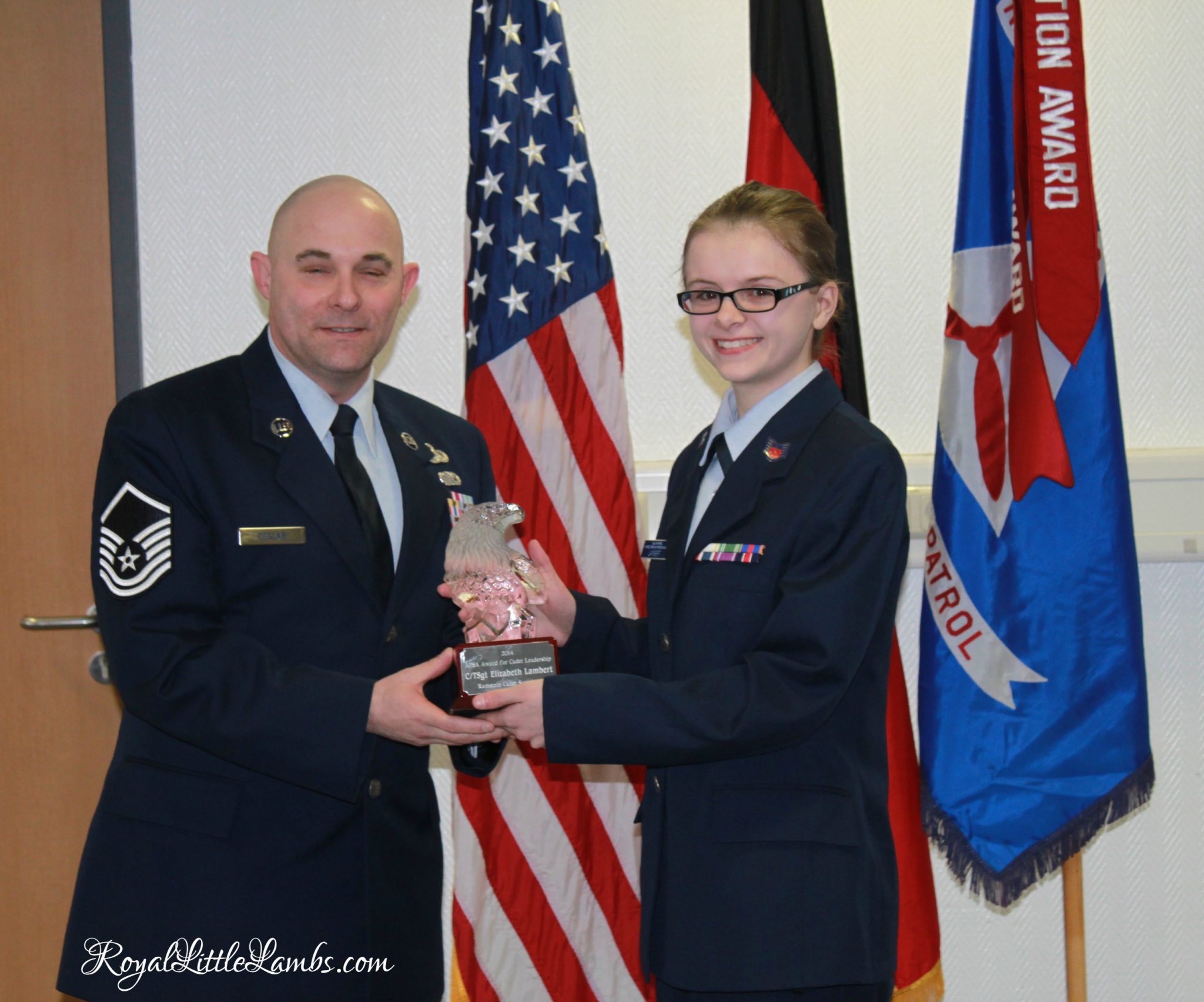
Liz received the Air Force Sergeants Association Award for Cadet Leadership in April 2015!

Leadership Award

View the Medal of Honor curriculum.

Character development is emphasized in Civil Air Patrol through leadership responsibilities, volunteering, classroom lectures, team-building activities, and guest speakers.

Volunteer Opportunities

Many squadrons participate in community outreach by assisting at military events, honor guard and color guard, partnering with charity organizations, and many other volunteer opportunities to help others.

Liz’s squadrons have assisted at a local aviation museum and ushering at the Officers’ Club and Tops in Blue events.

Achievement ribbons can be earned for acquiring individual volunteer hours outside of Civil Air Patrol.

I know many states require volunteer hours on transcripts and this always looks good on college applications!

Liz also has earned many, many volunteer hours as a Red Cross volunteer at our local hospital, working in the medical laboratory and maternity ward.

Physical Fitness

Cadets are expected to maintain physical fitness standards.

Cadets are measured each month in the following exercises:

  • The Sit and Reach tests flexibility of the lower back and hamstrings. 
  • Curl Ups test abdominal strength and endurance. 
  • Push Ups test upper body strength and endurance. 
  • The Mile Run or Shuttle Run tests heart and lung endurance.

Monthly PT tests ensure cadets can make rank and be physically fit. See physical fitness requirements.

The time spent and learning achieved during monthly physical fitness training and testing combined with weekly drill along with personal fitness and health education can easily be translated into a PE credit on a high school transcript.

Today’s cadets are tomorrow’s aerospace leaders. Through its Cadet Program, Civil Air Patrol transforms youth aged 12 to 20 into responsible citizens.

What’s CAP like? 

Liz describes what Civil Air Patrol is like:

We learn leadership. In the States, you can do Orientation flights with real airplanes. We get to shoot real guns or do simulator activities. I earned a sharpshooter badge from the NRA. At age 16, you can do real search and rescues. Before that, there are mock-ups for practice. We get to do drill: march and look professional. It’s great experience if you plan to join the military.

What’s the time commitment? What do the cadets have to do on their own time?

Squadron meetings are held weekly. Cadets are expected to study to take tests to achieve rank. Extra activities are encouraged, but optional. Encampment is required to become an officer.

More information about Civil Air Patrol:

Air Force “Blues” and camouflage “BDU” uniforms are usually provided by the squadron. Some accessories need to be purchased, like reflector belts and Camelbaks, undershirts and socks within regs, achievement ribbons and rank, and uniform accessories for officers.

Hair and fingernails must be within CAP regulations.

Cadets can excel and earn academic scholarships.

The online cadet resource library provides tips, tools, and information.

Annual membership dues vary by location. I think it’s a small price to pay for so many benefits! Some squadrons do fundraising for special events and encampment costs.

So many great opportunities for local, regional, national, and international activities. See all the special activities offered.

Find a Civil Air Patrol squadron near you! Find out how to join Civil Air Patrol. It’s not just for military kids. Most squadrons are near Air Force bases, but anyone can join. (Also, if your student decides to join CAP, message me for my daughter’s CAP ID number so she gets recruitment credit! Thanks!)

Other info:

Read about our Cadet Airman’s first month.

See how we Homeschool High School.

Share
Pin22
Share
22 Shares
You might also like:

Filed Under: Homeschool Tagged With: high school, homeschool, middle school, military

How We Do Math

This blog may contain affiliate links: disclosure.
Please see my suggested resources.

September 3, 2015 By Jennifer Lambert 5 Comments

Math is very important for productive members of society.

I think many homeschool parents are intimidated by teaching math, especially as kids get older and do more complicated work. I love learning along with my kids, filling in the gaps in my own education.

I got lost in math around 6th grade and never really caught up. I love learning along with my kids now!

Here’s how we do math in our homeschool – from preschool to high school.

Primary curriculum is Singapore workbooks, Life of Fred, and VideoText.

How We Do Math in Our Homeschool - From Preschool to High School

We do lots of supplemental math work with stories, games, manipulatives, and apps.

We love notebooking along with workbooks and occasional drill exercises to ensure our kids know their math facts and concepts well to move on to higher level math coursework.

We love keeping math journals. We do special math projects around seasons. We do fun math activities during the holidays like Valentine’s and Easter. I like to incorporate cross-curricular activities for further review. And we love playing with food. The kids like Montessori math games.

We love reading math stories all year long, no matter our age!

Preschool

Babies, toddlers, and preschoolers should play, play, play!

As soon as my kids showed interest, I would let them lead the way and provide opportunities for them to explore and learn about math.

We focus on counting and number recognition: cardinal and ordinal. We play and make math fun.

There is little writing at this age.

We draw, play with shapes, identify, play matching, games, sing songs, play apps.

Preschool Base Ten Works

Alex soon begged for a math workbook like his sisters.

Luckily, I found Singapore K was just right for him!

Singapore Math Kindergarten

He would beg to do so many pages each day that he completed both workbooks in just a few months!

I don’t hold back or push my kids. I let them soar and rest as needed.

Elementary

I follow the natural transitions of my kids’ learning.

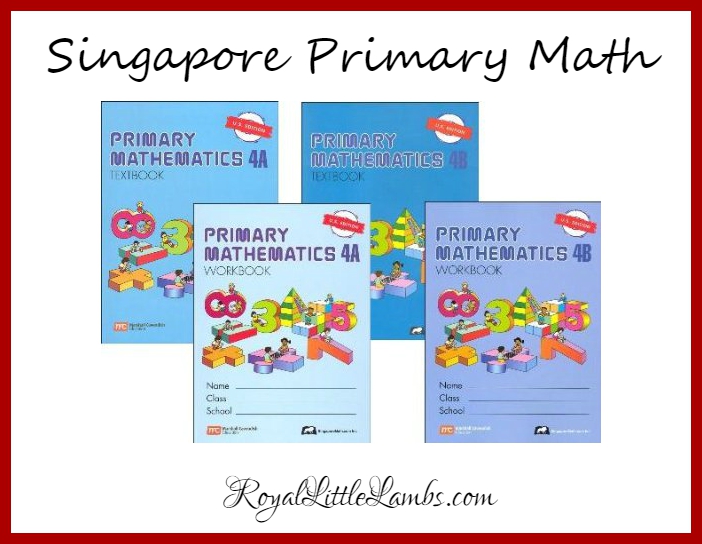
We’ve loved Singapore Primary Math for levels 1-6 since the beginning of our homeschool journey.

My children have been ready for the Book 1 Set by the time they were 5 years old.

A complete set of Singapore Primary Math for one grade level consists of two softcover textbooks and two consumable workbooks. There are also teacher manuals and homeschool schedule booklets that I never needed or used.

Singapore Primary Math

We love notebooking with Life of Fred math.

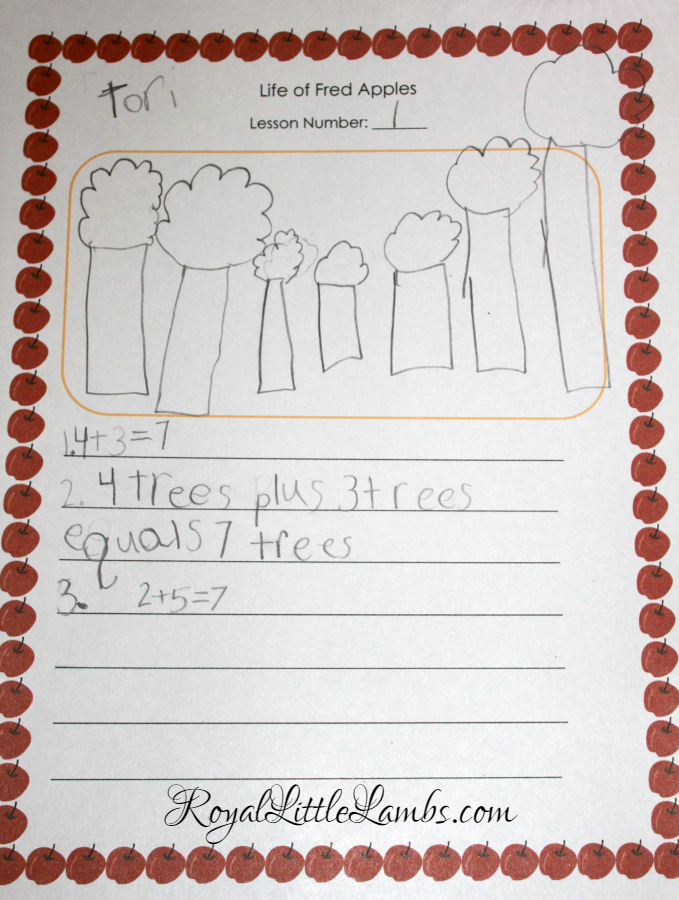
I read the books aloud and the girls complete the Your Turn at the end of each chapter together with printable themed notebooking pages.

Life of Fred Apples Lesson 1

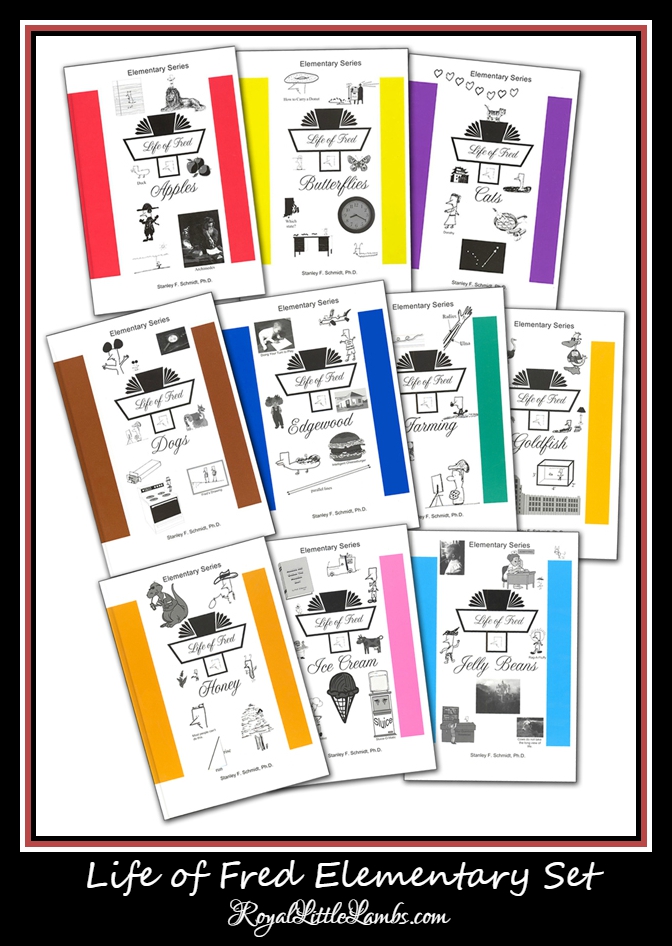
The elementary set of Life of Fred math are 10 books with titles beginning with the alphabet A through J.

Life of Fred is fun reading: it’s a narrative following the character Fred through adventures that entertain as we learn math concepts.

Life of Fred Elementary Set

The math concepts in Life of Fred are interspersed with fun stories, life skills, cross-curricular information. We all love it!

We reinforce math concepts with fun store bought, printable, or homemade manipulatives.

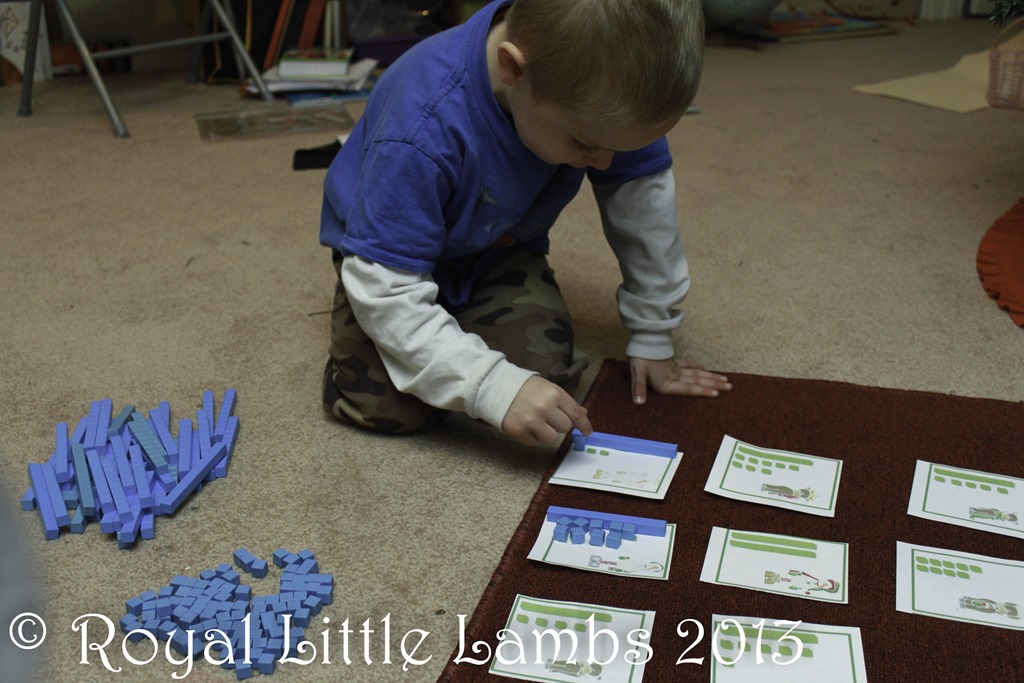
Place value, money, and fractions are easier to grasp with visuals.

Place Value Works

The girls love learning math with music, doing special activities around the holidays and seasons, and playing math apps on their iPad minis.

Middle School

Singapore Math changes after Book 6.

My eldest jumped right into VideoText, but my younger kids needed a transition curriculum. Singapore has middle school texts that they do with their dad.

The Life of Fred Intermediate books are a great new addition to our math shelf. They weren’t around when Liz was at this level.

I find it funny their titles continue the alphabet with the alphabet: KLM.

These offer a great transition to pre-Algebra and higher math.

Life of Fred Intermediate set

I love the Intermediate and “Before High School” sets of Life of Fred.

We completed Fractions, Decimals and Percents, Pre-Algebra 0 with Physics, Pre-Algebra I with Biology, and Pre-Algebra 2 with Economics in about two years.

Life of Fred Middle School and High School Books

Middle school is a rough time and we have to make sure all the basics are memorized and all the concepts are learned well. This is super important before moving on to high school math.

Unfortunately, most higher education options expect students to complete the SAT or ACT but these texts help with critical thinking.

I plan to enroll my younger three kids in test prep since my eldest didn’t quite get the score she hoped for on the SAT though she was accepted into Ohio College Credit Plus early admission and then to a local university. She might have to take a math placement test or remedial course.

High School

We love continuing Life of Fred math for high school.

I purchased the last of the series: Beginning and Advanced Algebra, Geometry, and Trigonometry.

I also purchased Calculus, which is listed as college-level, but it tells the story of Fred’s baby years and we wanna know! There are also books on Linear Algebra and Statistics.

We use VideoText Algebra and Geometry for our main college prep high school.

The VideoText Algebra program gives these credits: pre-algebra, algebra I, and algebra II.

The VideoText Geometry program gives these credits: geometry, trigonometry, and pre-calculus.

It was always highly recommended by homeschoolers I knew for high school math. The videos are a little dry, but the lessons cover all the material needed. Both Videotext algebra and geometry can be completed in two years if you rush it.

My eldest went through VideoText Algebra in a little over a year. She and her dad worked through one lesson each school day.

VideoText Algebra

We’re lucky that I’m a history/language arts/biology person and my husband is a math/chemistry guru.

Liz completes her video lesson and notes during the day and then she works through the text with Dad before dinner each evening. There are also quizzes and tests.

We teach to mastery, reviewing and supplementing as needed.

Visit my Math Pinterest board:

Follow Jennifer’s board Math on Pinterest.

Resources:

  • Ideas, Activities and FREE Notebook Pages
  • Life of Fred Worksheets
  • Is Life of Fred enough?
  • Life of Fred; Apples, Chapter 5
  • Life of Fred; Apples, Chapter 1 Math Lesson
  • Free Printables for Life of Fred

What are your favorite math activities?

Share
Pin
Share
0 Shares
You might also like:

Filed Under: Homeschool Tagged With: elementary, high school, homeschool, math, middle school, preschool

Homeschool High School

This blog may contain affiliate links: disclosure.
Please see my suggested resources.

April 22, 2015 By Jennifer Lambert 1 Comment

I stressed over the transition from middle school to high school. I worried my daughter would get “behind” in her studies. We struggled with schedules and checklists and planners and keeping up with the lessons.

I did her a disservice the last couple years with review items and I should have listened to my gut and let her be to complete the core four: science, math, history, and literature. She got bogged down and overwhelmed with all I expected her to do. And I cannot live vicariously through her with the education I would have wanted.

What Can Homeschool High School Look Like

I realize she is so much more successful if I just back off.

We still have curriculum: books and a schedule to complete. I discussed how I would like her to cram it all in the next couple months but she’s not interested. If she wants to “waste” her summer, so be it.

The awesome thing?

She’s been learning so much.

I must keep an active, safe conversation flowing.

I listen to her rattle on and on and on about her play rehearsals and what he said at CAP or what she learned about lab science that day.

It can be tiresome but I give her my undivided attention. I must make sure she feels important. Otherwise, she will clam up and there will be no relationship there. I am trying to maintain attachment before she feels that peers are more important than family.

What can homeschool high school look like?

Civil Air Patrol

Liz is currently a C/MSgt.

So proud that Liz received the Air Force Sergeants Association Award for Cadet Leadership!

Leadership Award
Formal

Several CAP cadets are also members of JROTC and Liz was invited to the JROTC Ball.

Drama

Liz was AMAZING in the play Kindertransport with KMC Onstage. She won an award.

Eva saying bye to Mutti

Science

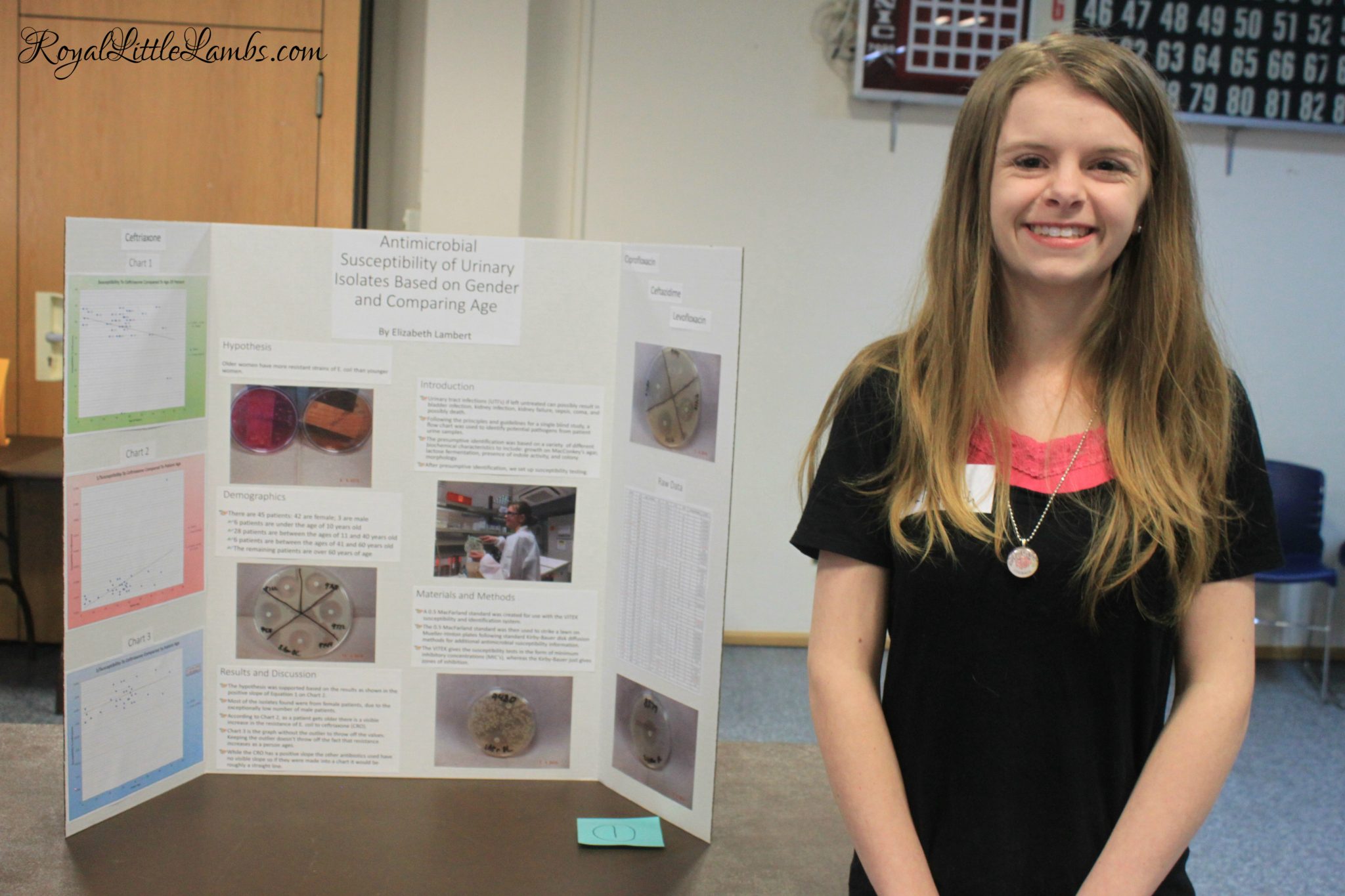
Liz earned first place at our little homeschool science fair.

She worked really, really hard on it and actually did all the research and data and analysis in the medical laboratory.

Science Fair Project

She learns well this way and applies what she reads in her books.

We had loads of fun at an eclipse party with these fun glasses!

Eclipse Party

Literature

We love to read and watch the films based on the books we read. We go to the library weekly and use Netflix and Amazon to view movies.

I am currently thrilled to be reading through some of my favorite books that I read and used to teach to my students.

Sometimes, we just read the book and don’t do massive amounts of analysis and work. Sometimes, I have her narrate orally to me what she learned. We like Venn diagrams and notebooking. We’re working up to a couple literary analysis essays in the next couple months.

I don’t force grammar studies or formal writing. We get lots of grammar learning with Latin and foreign language. Liz is a natural writer with all the reading she does and when I work closely with her, I know which areas need improvement.

Much of our literature reading corresponds to our history studies.

We recently visited the Anne Frank House in Amsterdam.

Anne Frank House

History

We’ve been traveling and learning about events and culture to tie in with our history studies.

It’s such a wonderful opportunity to live in Europe and see all the cultural and historical sites.

Liz is on the E in Amsterdam outside the Rijksmuseum.

Amsterdam

There we all are!

I am Amsterdam

Art

We love to read about our favorite artists and attempt to recreate something in that style…

but to actually see the originals?

We love the d’Orsay and the van Gogh Museum.

Alex was also thrilled to see his boats from his favorite art game – Art Ditto.

Admiring van Gogh

We enjoyed the artistic flower sculpture and displays at Keukenhof.

Flowers as Art

Math

Liz is slowly completing the algebra program with VideoText.

We plan to log in her activities in a portfolio to make transcripts easier.

It’s been an uphill battle with homeschooling and parenting the last couple years but things are settling down well and I’m seeing the fruits of her labor and I am so proud of her.

I look forward to seeing greatness during high school years. Liz is a social butterfly and unafraid to try new things and I pray for wonderful learning opportunities in her future. Dual credit is a great option for many students. Look into your state and local colleges for more information!

High School Homeschool:

  • Graduating Homeschool High School
  • Health Credit
  • Transcripts and Credits
  • Homeschool Planner Printables
  • Civil Air Patrol as Elective
  • Homeschool Electives
  • How we do History
  • I Don’t Teach English
  • How we do Math
  • Foreign Language
  • How we do Science
  • Preparing for After High School
  • 5 Best Life Skills Books for Teens
The #1 Writing Tool
Share
Pin34
Share
34 Shares
You might also like:

Filed Under: Homeschool Tagged With: back to school, curriculum, high school, homeschool, teen

Raising Readers

This blog may contain affiliate links: disclosure.
Please see my suggested resources.

February 16, 2015 By Jennifer Lambert 5 Comments

Liz has always been an accelerated reader. It never occurred to me to not let her fly.

She attended day care from six months – and then a Christian preK that used A Beka curriculum.

She complained loudly that they finished their curriculum by April and then watched Veggie Tales movies for the rest of the school year. The program did give her enough to go on for her to teach herself how to read.

So I didn’t have to really toilet train her or teach her how to read. Not sure how I feel about that.

I remember when she read the entire series of Magic Treehouse and Junie B. Jones our first few months of homeschooling – and we carried home stacks of Minnie Moo and early chapter books from the library each week.

I didn’t know that was unusual for a four-year-old.

I chalked it up to early exposure to words and reading. I was an English professor after all.

We had more books than anything else in our house. Books are important.

I very quickly developed some standards for her reading material.

I didn’t really like Junie B. Jones and a lot of that sort of fluff. I discovered Charlotte Mason and Ambleside Online and The Well-Trained Mind and all these amazing works of literature for children. Living books entered my vocabulary.

Somehow, I skipped over a lot of really good reading material when I was a kid.

I suppose I am a product of a school system focused on test scores and workbooks more than critical thinking and quality of reading material.

I actually really loathed reading until I was about 10.

I remember one night, lying to my mom about a homework reading assignment and I couldn’t narrate back to her anything about the text. I still feel ashamed. But it was so boring and I really didn’t care for any of the school assignments.

And I seem to have jumped right into Stephen King and Dean Koontz in late elementary school. I didn’t have the greatest guidance from teachers or parents.

I honestly don’t remember reading anything worthwhile in school until 8th grade with Diary of Anne Frank. We only did maybe 2-3 novels each year of high school. In 11th and 12th grade, I sat in the back of English class, by the window overlooking the teachers’ parking lot, reading the Beat poets and Russian novels that were nowhere on the curriculum lists.

I didn’t know how to write an essay until my sophomore year in college, in my Shakespeare class.

So, of course, it made perfect sense for me to become an English teacher.

My ten years or so of teaching English taught me a great deal about life, kids, parents, and education.

I certainly knew what I didn’t want for my kids when we decided to homeschool.

Thank God all four of our kids love words, books, and writing. Read alouds are an everyday, twice-a-day occurrence – and even the littlest one loves to snuggle while I read aloud from really hard, great books.

I am blessed with curious children, constantly asking the hard questions, demanding to get at the marrow of life, desiring to know what’s really important, trusting in my opinions, striving to learn the righteous path.

It’s a really tough transition into high school. The early teen years are fraught with confusion and making difficult connections and having virtually no life experience from which to draw conclusions.

I’m raising readers.

Raising Readers - Reading literature helps us to learn and understand the nature of man in all its beauty and ugliness. | www.JenniferALambert.com

How to Raise Readers

Read read READ aloud to kids from prebirth until they won’t let you anymore. We read aloud in the mornings and bedtime stories in the evenings.

Buy lots of books. Get lots of books from libraries or used sales or borrow from friends.

Read a lot all the time and let that habit pass like osmosis to the rest of the family.

Find books on topics your kids are interested in. There’s always something for a reluctant reader. But don’t suggest or press or offer it. Just leave it lying around in their path for them to discover.

Audiobooks count. Movies based on books count. Anything to get kids interested in a literary life, to love words and phrases and imagination.

  • The Read-Aloud Family: Making Meaningful and Lasting Connections with Your Kids by Sarah Mackenzie
  • The Read-Aloud Handbook by Jim Trelease
  • Before They Were Authors: Famous Writers as Kids by Elizabeth Haidle
  • Give Your Child the World: Raising Globally Minded Kids One Book at a Time by Jamie C. Martin
  • The Book Whisperer: Awakening the Inner Reader in Every Child by Donalyn Miller
  • Reading in the Wild: The Book Whisperer’s Keys to Cultivating Lifelong Reading Habits by Donalyn Miller

Great literature helps us learn about people and events and the WHY.

This cycle 4 of modern times in our history studies is a really tough year to learn. I skipped most of the subject matter TWICE during our history cycles because I.Can’t.Even.

Modern history is tragic and really hard.

But we need to just jump in and do this.

Sample of a 9th grade reading list:

  • The Call of the Wild and White Fang by Jack London
  • Anne of Green Gables by LM Montgomery
  • The Short Novels by John Steinbeck
  • The Old Man and the Sea by Ernest Hemingway
  • Short Stories by Faulkner
  • The Great Gatsbyby F. Scott Fitzgerald
  • The Jungle by Upton Sinclair
  • The Catcher in the Rye by JD Salinger
  • The Outsiders by SE Hinton

Plays:

  • Our Town by Thornton Wilder
  • The Glass Menagerie by Tennesee Williams
  • The Crucible by Arthur Miller

Dystopian and Sci-Fi:

  • The Metamorphosis by Franz Kafka
  • The Invisible Man by HG Wells
  • 1984 and Animal Farm by George Orwell
  • Lord of the Flies by William Golding
  • A Separate Peace by John Knowles
  • Fahrenheit 451 by Ray Bradbury
  • The Giver by Lois Lowry
  • Have Space Suit – Will Travel by Robert A. Heinlein
  • I, Robot by Isaac Asimov

War:

  • The Diary of a Young Girl by Anne Frank
  • The Book Thief by Markus Zusak
  • Broken by Lauren Hillenbrand
  • Lots of history material from the library and she’s performing in the play KinderTransport.

Civil Rights:

  • Bud, Not Buddy by Christopher Paul Curtis
  • Roll of Thunder, Hear My Cry by Mildred D. Taylor
  • Invisible Man by Ralph Ellison
  • To Kill a Mockingbird by Harper Lee
  • The Help by Kathryn Stockett
  • The Watsons Go to Birmingham – 1963 by Christopher Paul Curtis
  • Maya Angelou

We’re also watching many great films that showcase historical events well. Liz and I are having great discussions. She asks amazing questions and understands well. I’m actually not forcing too many assignments. She has a reader notebook and some assignment notebooking pages, but much fewer than usual. I want her to enjoy reading.

I know many parents shy away from the tougher subjects. Modern and contemporary history and events are too close. It’s uncomfortable. We remember lots of it. Our parents and grandparents lived through it. Their views formed our opinions and values. But we must study and review events with new eyes as we teach our children so we can all learn from the mistakes of the past.

We do our children a disservice not to walk through this with them and teach them about horrific events that took place. We must put aside any discomfort to discuss events that affects millions of people. We can’t live in a bubble and pretend that horror didn’t and doesn’t happen every day.

I refuse to send my teens out into the world ill-equipped– without an understanding of the sexual nature of mankind, without a knowledge of war, without being taught discernment, without an awareness of people’s fears.

Reading literature helps us to learn and understand the nature of man in all its beauty and ugliness.

My youngest daughter is disappointed that she can’t join the homeschool book clubs in our area because they have rules and their two clubs are only for certain age groups.

She loudly complained to me, “But Mo-om! I read teen books!” She’s 7. It pains me to see her confusion.

Even in the homeschool community, accelerated students are shunned. I get that there have to be rules, but kids shouldn’t be punished for being smart.

My 5-year-old son is now reading level 3 readers.

I won’t dumb down life for my kids.

Literature Study (or Book Report) Notebooking Pages

The #1 Writing Tool
Share
Pin24
Share
24 Shares
You might also like:

Filed Under: Homeschool Tagged With: book list, high school, reading, Tapestry of Grace

Homeschool Planner

This blog may contain affiliate links: disclosure.
Please see my suggested resources.

January 7, 2015 By Jennifer Lambert 12 Comments

The kids are finishing up curriculum and January is typically when we evaluate our successes and whether we need a change.

We tend to follow a calendar year rather than a fiscal or traditional school year.

I realize that my teen needs some direction for time management and must learn to keep a time budget for herself so she can stay on track with her school assignments and not get further behind.

I have some great planning printables on my Pinterest board, but I realize that some of them aren’t exactly what we need.

There are some great calendars and planners for sale all over the Internet but they’re not exactly what we need either and I’ve been so disappointed when I’ve purchased them in the past and they didn’t work well for us.

We made our own student planner.

Here’s what we found and put together for the perfect planner.

A pretty cover.

We love this neato zebra cover page that’s just perfect (she has oodles to choose from).

Goal-setting pages.

Since I’m raising servant leaders, we need goals. I love these free printable goal-planning pages.

I plan to take some time after our holiday to discuss goals with my kids. She can have these planning pages to refer to throughout the year and make sure she stays on track. I think this would be a great motivational tool so she will complete her work.

Calendar pages.

I love the colors for these monthly calendar pages! 

And I printed some pretty weekly planning pages to help Liz keep track of her school and extracurricular schedule. I saved them ages ago and have no idea where I got them.

Assignments pages.

I designed some weekly assignment planning pages of our own. There are some really beautiful pages out there, but I need simple, lots of room to write in assignments, checklists, and no bells or whistles to distract. Download our simple student pages below.

As we complete her planner and get all the pages printed for the rest of the year, I will comb bind it and help her fill it out and coach her to keep track every day.

What I’m not including:

  • cutesy journal pages
  • artsy freestyle pages
  • Bible study journals

I saw oodles of these pretty pages to print, but I just know it would end in disaster if I included these in this planner. They would distract the girls and take the focus off time management. They would waste lots of time playing with filling in the blanks and doodling rather than completing and checking off appointments and assignments.

I have an art journal and a great Bible study for teen girls as part of regular homeschool work.

I pray that this pretty new planner will help Liz with time management this year!

I also like this blog planner for me.

The #1 Writing Tool

Subscribe to the blog and download our student planning pages:

Share
Pin45
Share
45 Shares
You might also like:

Filed Under: Homeschool Tagged With: back to school, calendar, high school, planner, teen, time management

  • « Previous Page
  • 1
  • 2
  • 3
  • 4
  • Next Page »
Suggested ResourcesFetchRakuten Coupons and Cash Back

Archives

Popular Posts

10 DIY Gifts with Essential Oils10 DIY Gifts with Essential Oils
Natural Remedies for HeadacheNatural Remedies for Headache
10 Natural Remedies to Keep on Hand10 Natural Remedies to Keep on Hand
Henna Hands CraftHenna Hands Craft
Homemade Turkey Divan CasseroleHomemade Turkey Divan Casserole
This website uses cookies to improve your experience. We'll assume you're ok with this, but you can opt-out if you wish.Accept Reject Read More
Privacy & Cookies Policy

Privacy Overview

This website uses cookies to improve your experience while you navigate through the website. Out of these, the cookies that are categorized as necessary are stored on your browser as they are essential for the working of basic functionalities of the website. We also use third-party cookies that help us analyze and understand how you use this website. These cookies will be stored in your browser only with your consent. You also have the option to opt-out of these cookies. But opting out of some of these cookies may affect your browsing experience.
Necessary
Always Enabled
Necessary cookies are absolutely essential for the website to function properly. This category only includes cookies that ensures basic functionalities and security features of the website. These cookies do not store any personal information.
Non-necessary
Any cookies that may not be particularly necessary for the website to function and is used specifically to collect user personal data via analytics, ads, other embedded contents are termed as non-necessary cookies. It is mandatory to procure user consent prior to running these cookies on your website.
SAVE & ACCEPT