Jennifer Lambert

A Sacred Balance

Visit Us On FacebookVisit Us On PinterestVisit Us On InstagramVisit Us On Linkedin
  • Homeschool
    • Book Lists
    • How Do We Do That?
    • Notebooking
    • Subjects and Styles
    • Unit Studies
  • Travel
    • Europe
      • Benelux
      • France
      • Germany
      • Greece
      • Ireland
      • Italy
      • London
      • Porto
      • Prague
    • USA
      • Chicago
      • Georgia
      • Hawaii
      • Ohio
      • Utah
      • Yellowstone and Teton
  • Family
    • Celebrations
    • Frugal
  • Military Life
    • Deployment
    • PCS
  • Health
    • Recipes
    • Essential Oils
    • Fitness
    • Mental Health
    • Natural Living
    • Natural Beauty
  • Faith
  • About Me
    • Favorite Resources
    • Advertising and Sponsorship
    • Policies
  • Reviews

© 2025Jennifer Lambert · Copyright · Disclosure · Privacy · Ad

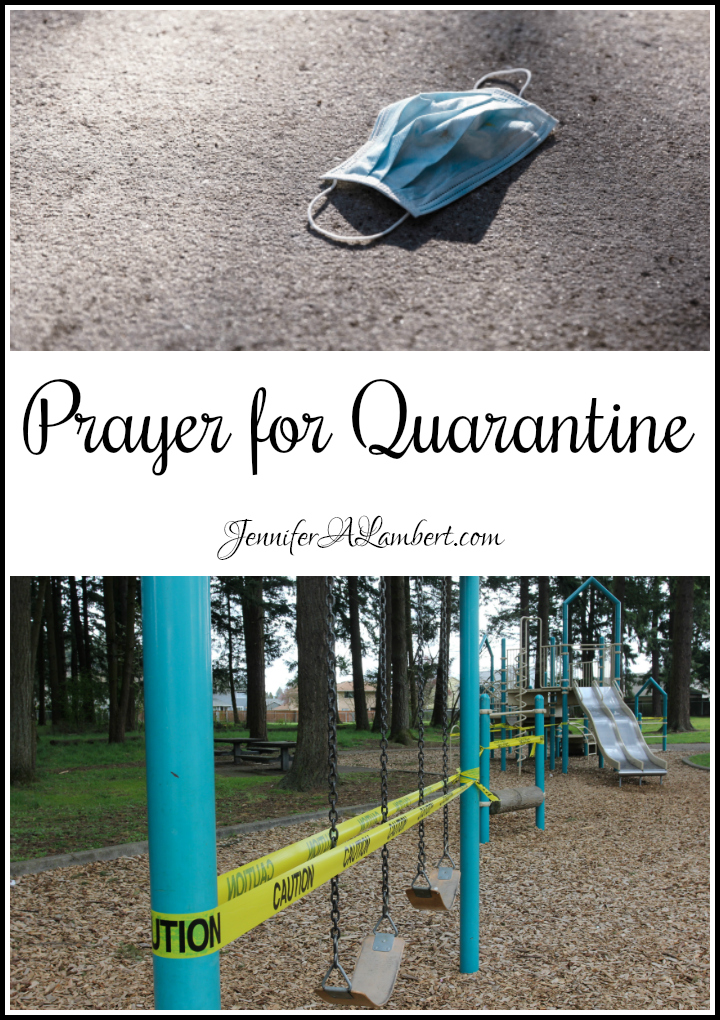
Prayer for Quarantine

This blog may contain affiliate links: disclosure.
Please see my suggested resources.

April 26, 2020 By Jennifer Lambert Leave a Comment

For all those who think they’re unaffected by a virus.

Insulated in a bubble of wealth without reason.

Dark hair roots show when they remove their red hats.

We can all see who you really are now.

Thinking the economy is more important than a soul.

Confused by authority, leadership, contradictions.

Crying over puppy videos while calling the police on black and brown people.

Who are you to deny that we are all connected?

Medical professionals who cry in the hallways like hysterical Cassandra and her unheard prophecies.

Giving birth alone, hearing ecstatic or dire medical news alone, attending medical appointments and procedures alone.

Being too scared to go to the ER with heart attack or stroke symptoms or an injury.

Immunocompromised or disabled and invisible.

The individuals who die alone in silence, forgotten, mere statistics.

Who is essential?

The lack of paper products and cleaning supplies.

Crying over restaurant closures and having to make food for oneself.

The leavening disappeared from store shelves and now swamps the news.

Scarcity doesn’t affect everyone equally.

What is necessary?

The celebrations passed over.

Coming together with online streaming.

Dates that were looked forward to, milestones that meant so much.

The teens crying over missed prom, sports, graduation, college orientation.

The parents whose hopes are locked away in their bedrooms playing video games.

The kids watching their friends from windows, online, social media.

Abusers locked away with their victims.

Who are the helpers?

The privileged ones who fight for their right to party while starving beggars sit at the grocery store door palms up.

They had a secure job a month ago. They were living the American dream with all their expensive toys and debt, keeping up with the Joneses.

Sheep led to the slaughter with jeers and cheers.

Maskless protesters demand rights, but not for all.

We need more than a hug and a Snickers bar.

Who is expendable?

Even those who long to just go back to normal know in the corner of their minds that it wasn’t a good normal.

Desire to create a better simpler normal, including all, loving all, welcoming all, protecting all.

Let us pray.

Let us act.

Let us love.

Let us change.

Let us heal.
Share
Pin28
Share
28 Shares
You might also like:

Filed Under: Faith Tagged With: health, prayer, quarantine

Lessons from Quarantine

This blog may contain affiliate links: disclosure.
Please see my suggested resources.

March 22, 2020 By Jennifer Lambert 12 Comments

I didn’t even realize my normal introverted stay-at-home-homeschooling lifestyle was called “quarantine” until people started having real meltdowns on social media about being forced to stay home, work from home, not eat out, not socializing with friends at bars, restaurants, parties, etc.

People seem to really not like their kids, cooking at home, staying home, or walking in nature.

For years, everyone has underestimated my desire to stay home. I’m an introvert and I’m tired of apologizing for my simple lifestyle.

Schools are canceled. College classes are canceled. Churches are closed. Restaurants and stores are closed. Sports are canceled. Libraries and other fun places we would occasionally go to are closed. The kids’ gymnastics and ice skating lessons are canceled.

Very little of this really affects me but I’m trying so hard to empathize with people who are upset about it all. I am amazed at how well my kids handle disappointment and I’m sometimes struggling.

While I understand these times are hard for extroverts like my teen daughter, we can adjust and help each other through this.

What can we learn from quarantine?

Let us live in hope of a better day.

Lessons from Quarantine

Love Your Neighbor.

I’m very concerned by people who are living in denial that this virus is dangerous and deadly. I’m concerned about people who are still traveling and vacationing.

I’m worried about the people who can’t get their needs met – the people laid off, unable to work, immunocompromised, starving children, abusive families, those with mental illness.

The economy is surely hurting and will take a while to recover. Perhaps this is the time our leaders can rethink how wealth is distributed and what programs should be in place as societal safety nets.

I love seeing people offering to help others – by picking up groceries or however people need help. All the online threads with GoFundMe and payment apps to help pay bills. As long as it’s not caremongering – posturing and flashy “look at me and all the good I’m doing!” Performance-based-Christianity is a virus itself.

But it’s sad we weren’t more prepared as a nation and world. May we come out on the other side of this with new perspective in how to serve others.

Many church leaders are posting mini services and prayer chains on social media. They offer hope and connection to those who are anxious and scared.

We’re all learning how to love and it’s so, so sad to still see hate, exclusion, blame, and negativity out there.

Boundaries.

While I’m used to being at home with my kids all day, every day…the mental load of realizing that we shouldn’t go out and all our extracurricular courses are cancelled and no one can play or socialize with friends is still very hard.

I’m not really much of a rule maker, but I have to institute some boundaries to make sure we don’t regress into chaos since weekends aren’t anything anymore. I’ve never really stressed about screentime, but I will not have disrespectful attitudes.

My almost twenty year old daughter is struggling with having her freedom sucked away. I do get it. It’s difficult for a fledgling adult to have her wings clipped and it’s not her fault. Her anxiety is running rampant. Her college classes were canceled for the whole semester and everything is online and she doesn’t do well with that education model. She has a part-time job at a local bank and she’s at least able to work a few days a week at their drive-thru (the inside bank is closed) when many cannot work. It hurts me that she would prefer greasy fast food instead of our home cooked meals. I will not have her treating her young siblings like her peers, showing them inappropriate Tik Tok videos, Instagram, or Snapchat, and wanting to watch unsuitable films and shows with them.

There have been lectures, slamming doors, angry texts, and rolling eyes. It’s really hard to be a gentle parent sometimes. I’m not sure what to do or say since it all seems wrong.

My husband works from home most evenings and weekends while still going to work Monday-Friday 7-5. He’s a military medical lab manager and it’s stressful everywhere in the medical communities right now. I’m feeling sometimes like I did when he was deployed. He’s here, but he’s not really here.

Sometimes, I really just want to be alone for an hour – in my home office, on the deck, in the bathroom. In silence.

Simplicity.

I like the simple life.

We cook all our meals at home. Restaurant closures don’t affect us at all since we rarely dine out and rarely get takeout and never delivery. I’ve never used a meal delivery service and I don’t plan to start. I’m concerned for food service industry and their jobs and well-being more than my lack of ability to get prepared or precooked food.

We’ve been striving to get debt-free for years and we are getting pretty close. Our investments took a hit as I’m sure many others have noticed. We’re not especially worried since we’re in that for the long haul.

I’m not much of a shopper. I mean I order tons of things online for our homeschool and when the kids ask for something (and they rarely ask for anything!). But I really loathe going inside stores. I don’t care about fashion or accessories or jewelry or makeup. I love seeing the beautiful regular people using this time to show us their tutorials online though.

Of course it’s easier not to spend money and pay off debts when there’s nowhere to go and no one to visit. There’s no point in buying anything.

We read Deuteronomy 15 along with history read aloud of the 2008-09 housing crash and that really was interesting in light of current events. Perhaps we really need a Jubilee?

We’ve been cleaning and purging for spring. Making much needed updates and repairs that have been on our list for ages. We just bought our house!

We read lots. That doesn’t change. We’re bingeing dystopian film and books too!

We do lots of creative things like art, crafts, jewelry…

We play Legos, board games, Switch and Wii, iPads…

We evaluate our priorities and lifestyle all the time and continue to simplify.

Going Outside.

I’m seeing so many more people outside – walking, running, skating, biking, with dogs. They mostly keep a good distance and wave or call hello. It’s pleasant and I hope it continues.

The outdoors aren’t closed or canceled except when they’re getting swamped with people not following the distancing rules.

We love nature and the outdoors and we still do our almost daily walks around our pond and hike off in the woods in our backyard. We play in our driveway and yard.

We love seeing the blossoms and buds that are new each day as the seasons change. We watch the birds and squirrels. We await the new babies.

The warmer weather and sunshine are very welcome.

Making Memories.

We’re pretty doing the same things we’ve always done.

Our life is mostly unchanged.

I wonder what memories we will have of this time in the years to come… What will our kids tell their children? What will history say of us?

We baked brownies and breads, learned how to perfect homemade pasta, had more meals with our families, bought bidets during the great tissue shortage, and shared more of our lives online with our neighbors, friends, and family.

Sometimes, we have to go offline and protect our anxious minds. Perhaps we can grow from this time of rest.

Maybe we’re understanding what community means.

We’re learning what love means in a time of crisis.

How are you passing the time?

Share
Pin32
Share
32 Shares
You might also like:

Filed Under: Health Tagged With: growth, health, quarantine

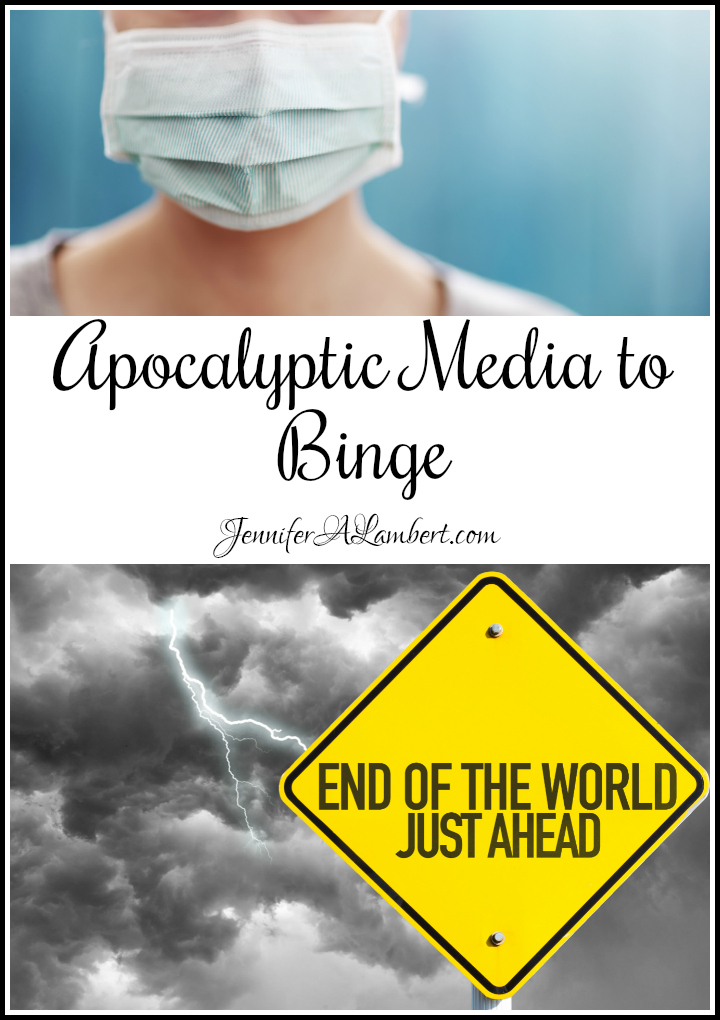
Apocalyptic Media to Binge

This blog may contain affiliate links: disclosure.
Please see my suggested resources.

March 21, 2020 By Jennifer Lambert 1 Comment

We’ve been quarantined only a week or so and so many of us are unironically binge watching and reading apocalyptic movies and literature.

It brings a weird comfort. Maybe some how-to manuals. Sometimes a laugh at how unrealistic it is.

Apocalyptic Media to Binge

Movies

My kids couldn’t finish Outbreak, they said it was too real. We’ve watched lots of these end of the world movies. We love aliens, zombies, sci-fi, and fantasy.

  • Outbreak
  • 28 Days Later and 28 Weeks Later
  • Contagion
  • 12 Monkeys
  • Patient Zero
  • 2012
  • The Day After Tomorrow
  • I am Legend
  • Children of Men
  • Cabin Fever
  • Planet of the Apes (original series)
  • Planet of the Apes (new series)
  • The Andromeda Strain
  • The Maze Runner series
  • Divergent series
  • Hunger Games trilogy
  • Love in The Time of Cholera
  • The Horseman on the Roof
  • Logan’s Run
  • Resident Evil collection
  • 9
  • The Book of Eli
  • Knowing
  • World War Z
  • Mad Max and Fury Road
  • Night of the Living Dead
  • Dawn of the Dead (original)
  • Dawn of the Dead (new)
  • Evil Dead, Evil Dead 2, and Army of Darkness

Books

We do read alouds in our homeschool every weekday morning.

We’re reading We Make the Road by Walking by Brian McLaren. We’re finishing up our Year 4 history with the last 25 years and it’s so hard, y’all.

Many of these selections are also on my Dystopian Book List.

  • MaddAddam Trilogy by Margaret Atwood
  • The Handmaid’s Tale by Margaret Atwood
  • anything by Robin Cook
  • The Eyes of Darkness by Dean Koontz
  • The Stand by Stephen King
  • The Running Man by Richard Bachman
  • Swan Song by Robert R. McCammon
  • The Andromeda Strain by Michael Crichton
  • Parable of the Sower Series by Octavia Butler
  • Love in the Time of Cholera by Gabriel Garcia Marquez
  • Logan’s Run Trilogy by William F. Nolan & George Clayton Johnson
  • Fahrenheit 451 by Ray Bradbury
  • 1984 by George Orwell
  • Brave New World by Aldous Huxley
  • I Am Legend by Richard Matheson
  • The Children of Men by PD James
  • I, Robot by Isaac Asimov
  • The Road by Cormac McCarthy
  • Never Let Me Go by Kazuo Ishiguro
  • Do Androids Dream of Electric Sheep? by Philip K. Dick
  • We by Yevgeny Zamyatin
  • Lord of the Flies by William Golding
  • Wanderers by Chuck Wendig
  • Divergent Series by Veronica Roth
  • The Hunger Games Series by Suzanne Collins
  • The Maze Runner Series by James Dashner
  • The Giver Quartet by Lois Lowry

What are you reading and watching these days?

Share
Pin18
Share
18 Shares
You might also like:

Filed Under: Homeschool Tagged With: book list, health, movies, quarantine

Do Not Fear

This blog may contain affiliate links: disclosure.
Please see my suggested resources.

March 13, 2020 By Jennifer Lambert 13 Comments

We live in a fearful time.

Anger is often disguised fear.

People act irrationally when they are fearful.

Sometimes it’s hard.

Fear breeds empty girls – fake girls with no opinions. Girls who smile when they want to scream and laugh when they need to cry. We are not that girl. We are the ones they’ve called witches. The ones who have too much to say and who feel too much. We are the ones with fire in our blood and we are not afraid anymore.

Brooke Hampton

Why do we experience so much fear?

Fear of nature

Many public places have signs warning to stay out of the water, off the grass…look but don’t touch.

I’ve witnessed parents, surely well-meaning, admonish their kids to not get dirty outside, don’t play there, don’t get in that, stay off the grass.

They’re kids.

They’re supposed to get dirty and play in the creek, grass, woods, in trees.

Kids are washable.

Of course, nature can be violent and unpredictable and we should prepare for severe weather conditions.

But usually, there is no bad weather, and we should model for kids that nature is good in all seasons. We should teach and model respect and awe for bugs, animals, plants, trees, waterways, the oceans, the environment.

Men are afraid that women will laugh at them. Women are afraid that men will kill them.

Margaret Atwood

Fear of others

Americans seem to have always had an us/them mentality.

I’ve seen it in the news and on social media a lot these last few years. Immigration, racism, misogyny, poverty. It’s so sad.

I try to teach my kids that we are one human family.

We are global citizens.

What may not affect me or you personally still may affect someone we know, or someone they know. When did the commandment Love thy neighbor become exclusionary?

I am raising my children to be revolutionaries who are nonviolent and hopefully will help change this world for the better.

I’m convinced that nothing can separate us from God’s love in Christ Jesus our Lord: not death or life, not angels or rulers, not present things or future things, not powers or height or depth, or any other thing that is created.

Romans 8:38-39

Fear of the unknown

It’s normal to feel a little apprehensive in new situations and to worry about the future.

But when worry develops into paralysis or anxiety, it’s not healthy.

It’s easy to tell people to have faith, be calm, trust, and let it go.

It’s hard when we’re in the thick of a crisis or difficult time.

Looking back over hard times, it’s easy to see how I perhaps unnecessarily worried, but at the time it was so hard to be patient and wait for an answer, a healing, better times.

Fear of risk

As parents, we long to protect our kids at all costs.

But it’s healthier for them to understand risk – their own abilities and limits.

While I followed behind my toddlers to catch them if they fell, I soon took a more hands-off approach as they became preschoolers and school age.

Now, they’re all over age 10 and I am in awe of how they fly without my hovering.

Some healthy risk, of course, is fine, but taking it too far isn’t a good idea.

We need to strive to be debt-free and not take too much financial risk. We shouldn’t be daredevils and test fate with our lives. We need balance.

Fear of failure and imposter syndrome seem to be more prevalent these days.

Fear of real connection

I have realized there seems to be a shift in our Western society of lack of connection.

I see it in the rise of addiction.

I see it in the divorce rates.

I see so many broken homes. I see rampant abuse and dysfunctional relationships.

People are quick to live only on the surface, never really getting to know neighbors, coworkers, even their own spouses and children before it might be too late.

I have no friends. People unfriend our family on social media as soon as we are out of sight to our next military base. We are disposable.

They were more important to us than we ever were to them.

I see such lack of support for women – working mothers, stay at home moms. There is a lot of misogyny and childism.

Our society doesn’t respect women, children, disabled, or elderly.

Our society blames people for being poor. or disabled. or different. or Black.

Is is time to worry yet?

Not yet.

It’s not time to worry yet.

Atticus in To Kill a Mockingbird by Harper Lee

Conquering Fear

Sometimes, it’s almost too easy to give in to panic and herd mentality. We are bombarded with fake news or information with tiny threads of truth and lots of hateful opinion designed to promote division and fear.

Anxiety tricks you out of the “now” as you obsessively replay and regret the past and worry about the future. It tricks you into losing sight of your competence and your capacity for love, creativity, and joy. It tricks you into believing that you are lesser and smaller than you really are. Anxiety interferes with self-regard and self-respect, the foundation on which all else rests.

Harriet Lerner, The Dance of Fear: Rising Above Anxiety, Fear, and Shame to Be Your Best and Bravest Self 

Most of us are generally unaffected by the stock market, viruses that come from strange places, innercity turmoil, gas prices, racism, extreme poverty.

Gratitude and privilege will not save us.

Manage expectations, emotions, and reactions. Take it easy. Be proactive and stay flexible.

It’s how we react and what we do during times of emergency that show our true hearts.

Fear makes us grab traditional, routine ways of doing things. Or it might be so intense that it throws us for a loop and makes us run around wild. Both types are not the Christian joy Jesus speaks of.

Henri J. M. Nouwen, Following Jesus: Finding Our Way Home in an Age of Anxiety

From Adam Hamilton in Unafraid:

F: Face your fears.

E: Examine your assumptions in the light of the facts.

A: Attack your anxiety with action. 

R: Release your cares to God.  

Tip delivery people and wait staff well. Buy gift cards direct from local stores and restaurants to use later.

Wash your hands. Cover your mouth. Take your vitamins. Don’t in fistfights at Kroger over toilet paper.

Realize that others may have different lifestyles and experiences. Single parents struggle with child care. Wage workers can’t pay their bills if they don’t work. Some students are finding themselves homeless without their work-study programs, meal plans, and dorms. Overwhelming debt cripples this country.

Always be kind.

Don’t panic.

Douglas Adams, The Hitchhiker’s Guide to the Galaxy

There is no fear in love, but perfect love drives out fear, because fear expects punishment. The person who is afraid has not been made perfect in love.

1 John 4:18

Jesus calls us to rise higher than fear, worry, anxiety, judging, and not loving others in Matthew 7.

Are we generous or not?

You might like my other post about Fear.

What could you do if you weren’t afraid?

We’re all just walking each other home.

Ram Dass

Being fully present to fear, to gratitude, to all that is—this is the practice of mutual belonging. As living members of the living body of Earth, we are grounded in that kind of belonging. Even when faced with cataclysmic changes, nothing can ever separate us from Earth. We are already home.

Joanna Macy

In “Why Are Americans Afraid of Dragons?” I talked about how so many Americans distrust and despise not only the obviously imaginative kind of fiction we call fantasy, but also all fiction, often rationalizing their fear and contempt with financial or religious arguments: reading novels is a waste of valuable time, the only true book is the Bible, etc. I said that many Americans have been taught “to repress their imagination, to reject it as something childish or effeminate, unprofitable, and probably sinful. . . . They have learned to fear [the imagination]. But they have never learned to discipline it at all.” I wrote that in 1974. The millennium has come and we still fear dragons.

Ursula K. Le Guin

Resources:

  • The Gift of Fear: And Other Survival Signals That Protect Us from Violence by Gavin de Becker
  • Reasons to Stay Alive by Matt Haig
  • Conquering Fear: Living Boldly in an Uncertain World by Harold S. Kushner
  • Unafraid: Living with Courage and Hope in Uncertain Times by Adam Hamilton
  • Unafraid: Moving Beyond Fear-Based Faith by Benjamin L. Corey
  • The Alchemist: A Fable About Following Your Dream by Paulo Coelho
  • Fear: Essential Wisdom for Getting Through the Storm by Thich Nhat Hanh 
  • Do It Scared: Finding the Courage to Face Your Fears, Overcome Adversity, and Create a Life You Love by Ruth Soukup
  • Me And My Fear by Francesca Sanna 

You might also like:

Lessons from Quarantine

Apocalyptic Movies and Books to Binge

Share
Pin28
Share
28 Shares
You might also like:

Filed Under: Health Tagged With: health, mental health, quarantine

Boost Winter Immunity

This blog may contain affiliate links: disclosure.
Please see my suggested resources.

January 12, 2020 By Jennifer Lambert Leave a Comment

Stressful holiday schedules and expectations can wear us down.

How can we recover quickly and boost our immune system?

5 proven ways for added protection from illness:

Create a happy gut. 

Your gastrointestinal (GI) tract makes up a large part of your immune system – up to 70 percent! The holidays often tempt us to overindulge in high-sugar or processed food and alcohol, which force our gut to work harder and reduce our natural immune abilities. While these yummy treats are fine in moderation, try eating more balanced meals and snacks as much as possible to give your gut a fighting chance against germs. Probiotics supplements are helpful. Make sure you get plenty of fiber. Stay hydrated!

Practice good hygiene. 

Your first line of defense is to keep the germs away with good personal cleansing habits. Wash hands frequently with natural soap and water. Cover your mouth and nose with a tissue or inner elbow when you sneeze or cough. Thoroughly clean and cover open cuts. These simple actions alone can help power away germs before they ever get a chance to reach your system. Clean tech devices regularly with disinfectant.

Get a good night’s sleep. 

Studies show that not getting enough sleep greatly affects how well your immunity cells function. While you sleep, your body is able to rest and recharge itself. So, make a sleep routine and stick to it. Be sure to turn off all electronics at least one hour before bed to help you fall asleep faster and sleep more soundly. Exercising outdoors for at least thirty minutes helps set our body clocks.

Take your vitamins. 

Making sure your body gets all the nutrients it needs to function properly is essential to smooth immune function. Some of these we can consume by eating lots of leafy greens, fruits, and other whole foods. Supplementing with natural products helps us get everything we need to fight wintertime germs. For example, Vitamin D can help lower your risk of chronic infections, while Vitamin C is linked to better immunity. Elderberry is also a fantastic natural supplement, proven to help boost immunity as part of a healthy diet. I like diffusing essential oils too.

Watch your stress levels. 

The bottom line: stress hurts our immune system. The holidays are a challenging and busy time, so making sure to keep stress levels low can help maintain your good health. If you start to feel overwhelmed with holiday pressures, schedule time for yourself, try deep breathing exercises, or practice yoga and meditation. Studies also show that supportive relationships and healthy social interactions can help to lower stress. Pets help lower stress. Slow down and rest when needed.

The winter season brings with it increased challenges to our immune system. Things like cold weather, holiday stress, and temptations to overindulge on sugary treats can all affect our body’s ability to fight off germs. Take protective action with these 5 tips to help boost your natural immunity and enjoy a happy and healthy holiday season! 

Share
Pin
Share
0 Shares
You might also like:

Filed Under: Health Tagged With: health, natural health, winter

A Decade Later

This blog may contain affiliate links: disclosure.
Please see my suggested resources.

November 25, 2019 By Jennifer Lambert 21 Comments

So much has happened in ten years.

We lived in Hawaii for three years. We explored Oahu, Maui, and The Big Island.

My husband adopted my daughter.

I was pregnant with my son.

We were and still are shifting to gentler, more respectful parenting, constantly reevaluating methods and learning.

I’ve homeschooled our four kids for over fifteen years now. I’ve come full circle in my educational and religious beliefs after exploring so many options, many of which were very harmful to me and my family.

We’re a military family. We moved from Hawaii to Utah to Germany to Ohio.

Looking back over the last decade, I realize there are few photos of me since I’m usually the one behind the camera.

I rarely take selfies. We rarely get family photos. My kids don’t have a record of me in pictures.

This picture was taken in fall 2016.

Here’s a photo of me in the same outfit in May 2019.

It’s a bit of a glow up. I feel more confident and healthy.

It’s been an adventure for sure.

I’m trying to do better to ask my family to snap photos of me, preferably when I don’t have my mouth full.

I’ve changed quite a bit in the last decade, especially the last couple years. I think I’ve improved. I’m never content with a status quo. I’m constantly growing.

If we are not regularly deeply embarrassed by who we are, the journey to self-knowledge hasn’t begun.

Alain de Botton

Self Improvement

Health

I lost 20+ pounds the last couple years.

I’m not concerned with weight as a number. I’m not concerned with aging gracefully. I just want to be healthy.

The first picture is the heaviest I ever was, not pregnant. I weighed in at about 175. I didn’t feel good. My knees hurt. I felt tired all the time. I was too sedentary. I didn’t eat well. I didn’t exercise enough or correctly. I was depressed. I needed to jumpstart my metabolism.

I have no medical complications or issues. Thank God.

I take supplements that work for me. Glutathione and progesterone before bed. B vitamins and evening primrose in the mornings.

I massage castor oil into my hands, scalp, and thighs probably weekly.

I drink lots of water.

I only have 2-3 cups of caffeine each day. I have found I do better with tea than coffee.

I pray and meditate every day.

I try to go outside every day.

I don’t have social media on my smartphone or iPad.

I will say that I seldom have joint pain now and I feel happier and more energetic.

Food

I try to eat real foods.

I happen to really like almost all foods. I have no allergies or sensitivities.

Food has no morality.

Fiber and good fat is really important. I add collagen, chia, and flax to my smoothies.

I splurge and sometimes get takeout from Raising Cane’s. I actually seldom eat out. I drink a beer or glass of wine with dinners on weekends.

I don’t like this idea of “cheat days” or “being good” by eating more veggies or the idea that veganism will save the world.

I know sugar isn’t good for me and causes health problems, so I do try to limit my refined sugar intake.

I really like bread.

I eat mostly what I want, what I like, when I’m hungry. Sometimes, that means coffee at brunchtime and a sensible dinner. I suppose it’s intermittent fasting, but I just eat when I want to, not when society tells me to.

I teach my kids that balance and moderation is key.

Exercise

I do HIIT workouts about three times a week.

I had physical therapy for my knee last year and I continue to practice what I learned with my exercise ball, balance trainer, kettle weight, and hip band.

Here’s how I maintain my health. It’s not all about exercise and eating!

Everyone is different. I’m not competing with anyone but myself.

I try to walk outside 1-3 miles every evening after dinner. If I don’t get my walk in, I don’t feel well and I don’t sleep well. This is my down time to destress and listen to the birds and wind. It calms me. I get to think and work through problems or issues or conversations.

Rest

Rest is so, so, so important.

I try to not be too busy. I like being peaceful and not rushed.

Life happens.

Even good stress can affect us physically and mentally.

When I’m stressed, I get bloated. I don’t sleep well. I feel anxious. It’s a vicious cycle.

Moving every 3 or so years is stressful. Cats get sick. Finances get wonky. Car accidents or repairs that can’t be avoided. I take extra care during stressful life events.

I try not to overschedule the kids so we don’t have to hurry and we can almost always have dinner together.

We have leisurely mornings over breakfast. We do reading. I do work while they complete their lessons. We watch shows or run errands. Evenings are for sports, dinner, walking, more reading, prayers.

Learning

I am constantly reading. I love to read books about parenting, education, religion, psychology, politics, history, historical and speculative fiction.

I have stacks of books on my shelves and tables and oodles of Kindle editions. I get books from the library if I can.

I like to read articles about my many topics of interest. These often lead to more books from their bibliography and source notes and quotations.

Learning is very important to me. I want to keep up with everything. I want to fill in the gaps in my lackluster Georgia public school education.

My aunt and several elderly female cousins had Alzheimer’s and I worry about my parents and my husband and myself.

I am learning about anti-racism and how to counter prejudice and stereotypes. What can we do to improve our society and eliminate the wealth and class gaps?

I dream of a better future for all of us.

View this post on Instagram

A post shared by Jennifer Lambert, M.Ed. (@jenalambert)

I’m constantly reevaluating my priorities as my family and I grow and change.

I don’t have a Word for the year. I don’t really do resolutions. I constantly try to improve and become who I am supposed to be. I want to exude love and kindness and teach my family what that should look like.

What are your priorities?

Share
Pin57
Share
57 Shares
You might also like:

Filed Under: Health Tagged With: growth, health, New Year

The Danger of Mixing Meds with Alcohol

This blog may contain affiliate links: disclosure.
Please see my suggested resources.

December 3, 2018 By Jennifer Lambert Leave a Comment

There’s a reason why prescription and some over the counter medication packages are marked with a “Do not mix with alcohol” — it’s dangerous. Mixing medicine and alcohol can have all kinds of negative side effects. Unfortunately, many people overlook this.Maybe they’re having too much fun at a party and decide to pop a few pills while they’re already drunk. Perhaps they take prescription medication and forget that they can’t drink booze. Or, maybe they struggle with alcoholism and are just seeking a stronger high.Dr. Duy Nguyen, D.O., is a Board-Certified Psychiatrist in General Psychiatry practicing at Beachway Therapy Center, a drug and alcohol rehab in Boynton Beach, Florida.  He says, “Whatever the case, it’s important for everyone to know how dangerous it is. After all, when you combine alcohol with some drugs, the results can be deadly. More than 100 drugs interact with wine, beer, champagne, and hard liquor, triggering problems ranging from nausea and headaches to life-threatening issues, such as internal bleeding and difficulty breathing.”

More problematic for women than men

Dr. Nguyen says, “This is more of a problem for women than for men. After consuming the same amount of alcohol, females are more likely to achieve higher blood alcohol concentrations than males because females have less gastric alcohol dehydrogenase activity (breaking down alcohol through digestion) and proportionally less body water.”

What does alcohol do to my medication?

Dr. Nguyen explains, “Alcohol may interfere with the absorption, metabolism, or excretion of medications which can either increase or oppose the effects of your medication. With some drugs, alcohol competes with the enzymes metabolizing your medications, increasing the amount of drug in the body—along with any side effects. Mixing alcohol and other medications may have short-term side effects like drowsiness, nausea, and vomiting.”

Common drugs you should not mix with alcohol:

Allergy, Cold, and Flu Medications

You should avoid drinking if taking allergy medications and any multi-symptom cold and flu formulation. Drowsiness and dizziness are common, interfering with your ability to drive or operate heavy machinery. Because the combined use can impair judgment, there is also an increased risk of overdose.

Angina Medications

Angina, also known as ischemic chest pain, is a type of pain caused by reduced blood flow to the heart. Taking alcohol with the angina medication nitroglycerin can lead to a rapid heartbeat (tachycardia), sudden changes in blood pressure, dizziness, and fainting. Avoid drinking when taking any brand of nitroglycerin.

Anti-Anxiety and Epilepsy Medications

The combined use of alcohol and anti-anxiety and epilepsy medications can cause drowsiness, dizziness, slowed breathing, breathing restriction, impaired motor control, abnormal behavior, liver damage, and memory loss.

Antidepressants

As a rule, the combined use of alcohol and antidepressants can cause drowsiness, dizziness, increased feelings of depression, or suicidal thoughts (especially in young people).

Anti-Seizure Medications

The combined use of alcohol and anti-seizure medications can cause drowsiness, dizziness, and even the very seizures they are meant to prevent.

Muscle Relaxants

The combined use of alcohol and muscle relaxants can cause drowsiness, dizziness, slowed or impaired breathing, impaired motor control, abnormal behavior, memory loss, and seizures.

Sleep Aids

The combined use of alcohol and sleep medications should be avoided. It can cause slowed or impaired breathing, impaired motor control, abnormal behavior, memory loss, and fainting.

Opioids

The combination of painkillers and alcohol is also of great concern, and should always be avoided, considering the U.S. opioid epidemic. The use of alcohol and pain medications like narcotics together can disrupt breathing and may be fatal. Without enough oxygen, the brain will begin to shut down organ systems, and the person can eventually suffer brain damage or death due to lack of oxygen.

Final Advice

Dr. Nguyen says that, “If you have combined prescription or OTC drugs with alcohol and begin to feel side effects that could be dangerous, contact your doctor immediately or go to the nearest emergency room. Always read medicine labels carefully.  If you are deliberately mixing drugs and alcohol to “get high” you may have a substance abuse problem and should seek the advice of a psychiatrist or consider an in- patient treatment center.
Share
Pin
Share
0 Shares
You might also like:

Filed Under: Health Tagged With: health

Back to School Eye Health Tips

This blog may contain affiliate links: disclosure.
Please see my suggested resources.

August 14, 2018 By Jennifer Lambert 9 Comments

New clothes and a new backpack may be on your child’s back-to-school list. But, what about a back-to-school eye exam?

Vision is one of the keys to success in school, so make sure your children get regular vision screenings.

Dr. Laura Sperazza, Director of Low Vision Services at Lighthouse Guild, says, “The most important thing you can do to protect your child’s vision is to make sure they get an eye exam. An eye health professional can determine if your child needs eyeglasses or contact lenses, or if there is a vision problem that requires further intervention.”

My husband and I both wear contacts and glasses and two of our four kids wear glasses. My prescription hasn’t actually changed in about ten years.

August Is Children’s Eye Health and Safety Month

We’ve spent the last year in vision therapy with one of our children for convergence insufficiency treatment.

We attended weekly sessions and completed daily homework.

I have seen a world of difference in my daughter’s reading, comprehension, abstract thinking, and confidence.

As homeschoolers, we didn’t know she was experiencing any vision issues and we didn’t have the proper screenings through specialist doctors, even though she had eyeglasses for reading.

It’s important as parents to do research and pay attention to problems and symptoms.

We can’t rely on schools to do that job for us. I’ve read about many parents whose kids were misdiagnosed with attention or behavior disorders and they just had weak eye muscles.

Learn more at COVD.

Some of it is hereditary, but most is lifestyle and can be prevented or improved or at least halted.

5 healthy vision tips to help safeguard your child’s eye health:

Eat Your Carrots

The old saying still applies. Encourage your child to eat a well-balanced diet loaded with different types of fruits and veggies, as well as sustainable fish and/or flax. Omega 3, D supplements, B vitamins, and beta carotene help with vision health.

Speak Up

Pay attention to your child doing different activities. Ask your child to let you know if they notice any vision changes during different environments – if their vision is blurry, if they are squinting a lot in one or both eyes, if lights are really bright, or their eyes start bothering them in other ways. If a child has trouble reading fluently by around age 10-12, there might be a vision problem not readily understood by pediatricians or many optometrists. My daughter’s eyes were very watery all the time and she yawned a lot, especially when trying to read.

Wear Glasses Consistently

Help your child understand the importance of wearing their eyeglasses. If they are resistant because they believe glasses are unattractive, try pointing out sports figures and other well-known people who wear glasses. Talk with them about how to clean and store their glasses properly.

Rest Your Eyes

Looking continuously at a computer, smartphone, tablet, or TV screen can tire eyes. Encourage your child to take regular breaks from staring at a screen. Also, make sure there is adequate lighting during close work. There are special lenses designed to help block harmful rays with screen use.

Get Outside

Did you know that regular outside play helps reduce myopia?

Balanced and Barefoot: How Unrestricted Outdoor Play Makes for Strong, Confident, and Capable Children by Angela J. Hanscom

Wear Safety Gear

Make sure your child wears glasses bands or goggles or other types of protective eye wear while playing sports, using chemicals or tools for school projects, or engaging in other activities. Many eye injuries can be prevented with better safety habits.

Worried about Screens and Eye Strain?

Parents can help their children alleviate some of the eye strain by encouraging kids to do the following:

  • Take breaks. To a certain extent, students won’t have control over this because teachers will decide when breaks happen during the school day. But ideally, they should follow a 20/20 rule; take a break every 20 minutes and look away from the screen at a distant object for 20 seconds.
  • Choose the right lighting. The type of lighting used in the student’s work space can make a difference. Incandescent lights work better than fluorescent lights because they give off less glare, Kegarise says. “It’s also better if the light is placed over your shoulder than if it’s shining straight down on the screen because that will cause fewer reflections,” he says.
  • Adjust the position of the computer. The computer monitor and the keyboard should be positioned to conform with the child’s size. Make sure the screen isn’t too high in the child’s field of view. A report by the National Institute of Health suggests an adjustable chair is the best option to get height just right.
  • Remind them to blink. Parents should remind children to blink when they spend a lot of time in front of a screen. That helps spread tears across the eyes, keeping the eyes lubricated and aiding in the prevention of dry eyes

As a parent, sometimes we just need to trust our gut feelings if we think something isn’t right about our kids’ health. And we need to model healthy habits for our kids by limiting our screen time and taking breaks.

Lots of eye care shops offer great back to school deals on glasses for kids under age 18.

Deal on glasses!

Order the Warby Parker Home Try-On program and walk through the process from start to finish: from selecting and ordering five frames, to finding the right pair for your face, all in the comfort of your own home!

Linking up: Little Cottage, Family Corner, MaryAndering Creatively, Mostly Blogging, Flour Me With Love, Kippi at Home, Create with Joy, Over the Moon, Confessions of a New Mummy, LouLou Girls, Home Stories, April Harris, Insta Encouragements,Mary Geisen, Meghan Weyerbacher, Purposeful Faith, Me and My Captain, Home Away, Sarah Frazer, Life Abundant, Worth Beyond Rubies, Soaring with Him, Grace for Gypsy, Welcome Heart, Wise Woman, Gingersnap Crafts, Fluster Buster, Girlish Whims, Apron Strings, Crystal Storms, Debbie Kitterman, Rachel Lee, CKK, TFT, Imparting Grace, Try it Like it, Quiet Homemaker, Answer is Choco, Anna Nuttall, Della Devoted, Momfessionals, Simply Sweet Home, Lyli Dunbar, Counting My Blessings, Pieced Pastimes, CWJ, Life with Lorelai, OMHG, Fireman’s Wife, Kingdom Bloggers,

Share
Pin22
Share
22 Shares
You might also like:

Filed Under: Health Tagged With: back to school, health, vision

How to Keep Your Kids Safer in the Sun

This blog may contain affiliate links: disclosure.
Please see my suggested resources.

May 22, 2018 By Jennifer Lambert Leave a Comment

Kids are more vulnerable to damage from the sun than adults. A few blistering sunburns in childhood can double a person’s lifetime chances of developing serious forms of skin cancer.

The best sunscreen is a hat and shirt. After that, protect kids with a sunscreen that’s effective and safe.

These tips will help you keep kids of all ages safe in the sun.

Infants

Infants under 6 months should be kept out of direct sun as much as possible. Their skin is not yet protected by melanin.

When you take your baby outside:

· Cover them up with protective clothing that is tightly woven but loose-fitting, and a sun hat.

· Make shade. Use the stroller’s canopy or hood. If you can’t sit in a shady spot, use an umbrella.

· Avoid midday sun. Take walks in the early morning or late afternoon.

· Follow product warnings for sunscreens on infants younger than 6 months old. Most manufacturers advise against using sunscreens on infants, or advise parents and caregivers to consult a doctor first.

Toddlers and children

Sunscreens are an essential part of a day in the sun. But young children’s skin is especially sensitive to chemical allergens – as well as the sun’s UV rays.

· Test sunscreen by applying a small amount on the inside of your child’s wrist the day before you plan to use it. If an irritation or rash develops, try another product. Ask your child’s doctor to suggest a product less likely to irritate your child’s skin. Or make your own!

· Apply plenty of sunscreen and reapply it often, especially if your child is playing in the water or sweating a lot. The American Academy of Pediatrics suggests about one ounce of sunscreen per application for a child.

Teens

Teenagers coveting bronzed skin are likely to sunbathe, patronize tanning salons, or buy self-tanning products – all of which are bad ideas. Researchers believe that increasing UV exposure may have caused the marked increase in melanoma incidence noted among women born after 1965. Tanning parlors expose the skin to as much as 15 times more UV radiation than the sun and likely contribute to the melanoma increase. Many chemicals in self-tanning products have not been tested for safety.

Parents of teens should be good role models – let your teen see that you protect yourself from the sun. Tan does not mean healthy.

Sun safety at school

Sometimes school and daycare policies interfere with children’s sun safety. Many schools treat sunscreen as a medicine and require written permission to use it on a child. Some insist that only the school nurse apply it. Some ban hats and sunglasses as distractions.

Here are a few questions to ask your school, daycare, or camp:

· What is the policy on sun safety?

· Is there shade on the playground?

· Are outdoor activities scheduled to avoid midday sun?

5 Natural Ways to Prevent Sunburns

Vitamin D

While the sun helps us to manufacture vitamin D, consuming vitamin D rich foods like cod liver oil and/or supplementing with quality source of oral vitamin D3 can in turn help to protect us from the UV radiation of the sun. What a brilliant cycle nature created! Learn how to best absorb vitamin D from your foods and you may very well find that your tolerance to sun exposure increases significantly.

Healthy Fats

It’s true, healthy fats do truly relate to everything. Including stable, robust fats in the diet is crucial to resilient skin. Dietary fats and oils provide building blocks for skin tissues. Logically, if your skin is enriched with fragile oils, it will be much more sensitive to damage by the sun.

Minerals

Deficiencies in certain minerals such as zinc and magnesium can cause photosensitivity and sun rashes. Be sure to have your mineral status checked and consume mineral rich foods from both plant and animal sources. Bone broths and organ meats like liver are particularly balanced in trace minerals.

Coconut Oil

It may be delicious to eat, but coconut oil is also a powerful healing agent when applied to the skin. There is anecdotal evidence showing that Polynesians frequently rubbed this precious oil on before spending long periods of time in the sun. Although it has been tested to block only about 20% of the sun’s rays, its value lies more in the powerful antioxidants it releases into the skin, which bolster natural defenses and prevents damage from long term sun exposure. Try making your own whipped coconut oil lotion.

Astaxanthin

This unique compound is a super-antioxidant found in algae and the organisms that consume it such as salmon, shrimp, krill and flamingos. Pink-red in color (hint: think about the animals that eat it), this substance has been growing in popularity as an “internal sunscreen.” Several trials using human cells have shown it to have protective effects on the skin. Although it may not turn our skin quite as romantic a hue as a flamingo, many people experience skin benefits and an enhanced ability to tan from consuming astaxanthin or krill oil.

Click here for my homemade sunscreen recipe!

Share
Pin18
Share
18 Shares
You might also like:

Filed Under: Health Tagged With: health, sunscreen

How an OB/GYN Can Help You

This blog may contain affiliate links: disclosure.
Please see my suggested resources.

August 28, 2017 By Jennifer Lambert 8 Comments

A person who specializes in the medical fields of obstetrics and gynecology is often referred to as an OB/GYN. Are you a woman who is planning on giving birth to children at some point in your life?

If this is the case, it will be very important for you to seek out the services of a skilled OB/GYN to assist you during your pregnancy. There is a common misconception that all doctors who work in this profession are basically the same. After all, these people are taught the same things when they are attending medical school. You need to realize that some medical schools are much better than others. Some people have been a practicing OB/GYN for a longer period of time. Look around and explore the backgrounds of the various people who work in this profession in your area. The health of your baby will be better off because of the time you spend searching for the best OB/GYN for your needs.

Here are some examples of a few of the areas that an OB/GYN can specialize in.

1. Maternal-fetal medicine

This person will be able to help you if you have a pregnancy that is very high-risk. For example, you will go to see a maternal-fetal medicine specialist if you go into premature labor, you have a problem that prevents your blood from clotting properly, you have gestational diabetes or you have gestational or chronically high blood pressure. All of these problems require the treatment from a specialist. An OB/GYN who does not have extensive training in these areas will not be able to provide you with the help you need. Therefore, you should always make sure that the OB/GYN you make an appointment with has a background in the area you need help with. Dr. Max Izbicki became an OB/GYN because he loves to help people. Max Izbicki loves his job and is respected by his many patients and colleagues in the medical profession.

2. Reproductive endocrinology and infertility

In this case, the OB/GYN will be able to treat problems that involve a woman’s infertility. This person also has extensive knowledge of the hormones and glands that are in a woman’s endocrine system. A reproductive endocrinologist is a person you would make an appointment with if you and your partner have not been able to conceive a child. This person will have the necessary training to perform an embryo transfer, zygote intrafallopian transfer, gamete intrafallopian transfer or in vitro fertilization.

3. Gynecologic oncology

This doctor has chosen to focus on finding and eliminating various forms of cancer that are able to develop and grow inside a woman’s reproductive system. The vulva, ovaries, cervix and uterus are all areas where cancer can form.

4. Reproductive surgery and pelvic medicine

This type of OB/GYN has a surgical background. They can help women by repairing problems they are experiencing with their urinary tract. They also perform surgery on the connective tissue and muscle that is found below the pelvis. A number of things like getting older and pregnancy can cause a weakening of the pelvic floor. This person has the training to correct problems related to pelvic organ prolapse, overactive bladder, fecal or urinary incontinence, discomfort in the bladder and infections of the urinary tract.

Share
Pin
Share
0 Shares
You might also like:

Filed Under: Uncategorized Tagged With: health

  • « Previous Page
  • 1
  • 2
  • 3
  • 4
  • Next Page »
Suggested ResourcesRakuten Coupons and Cash Back

Archives

Popular Posts

10 DIY Gifts with Essential Oils10 DIY Gifts with Essential Oils
Natural Remedies for HeadacheNatural Remedies for Headache
10 Natural Remedies to Keep on Hand10 Natural Remedies to Keep on Hand
Henna Hands CraftHenna Hands Craft
Homemade Turkey Divan CasseroleHomemade Turkey Divan Casserole
This website uses cookies to improve your experience. We'll assume you're ok with this, but you can opt-out if you wish.Accept Reject Read More
Privacy & Cookies Policy

Privacy Overview

This website uses cookies to improve your experience while you navigate through the website. Out of these, the cookies that are categorized as necessary are stored on your browser as they are essential for the working of basic functionalities of the website. We also use third-party cookies that help us analyze and understand how you use this website. These cookies will be stored in your browser only with your consent. You also have the option to opt-out of these cookies. But opting out of some of these cookies may affect your browsing experience.
Necessary
Always Enabled
Necessary cookies are absolutely essential for the website to function properly. This category only includes cookies that ensures basic functionalities and security features of the website. These cookies do not store any personal information.
Non-necessary
Any cookies that may not be particularly necessary for the website to function and is used specifically to collect user personal data via analytics, ads, other embedded contents are termed as non-necessary cookies. It is mandatory to procure user consent prior to running these cookies on your website.
SAVE & ACCEPT