Jennifer Lambert

A Sacred Balance

Visit Us On FacebookVisit Us On PinterestVisit Us On InstagramVisit Us On Linkedin
  • Homeschool
    • Book Lists
    • How Do We Do That?
    • Notebooking
    • Subjects and Styles
    • Unit Studies
  • Travel
    • Europe
      • Benelux
      • France
      • Germany
      • Greece
      • Ireland
      • Italy
      • London
      • Porto
      • Prague
    • USA
      • Chicago
      • Georgia
      • Hawaii
      • Ohio
      • Utah
      • Yellowstone and Teton
  • Family
    • Celebrations
    • Frugal
  • Military Life
    • Deployment
    • PCS
  • Health
    • Recipes
    • Essential Oils
    • Fitness
    • Mental Health
    • Natural Living
    • Natural Beauty
  • Faith
  • About Me
    • Favorite Resources
    • Advertising and Sponsorship
    • Policies
  • Reviews

© 2025Jennifer Lambert · Copyright · Disclosure · Privacy · Ad

Best Book Series for Middle Schoolers

This blog may contain affiliate links: disclosure.
Please see my suggested resources.

June 7, 2016 By Jennifer Lambert 10 Comments

We read good literature in our family.

Sure, my kids like to read fluff once in a while, but they always come back to the good stuff and even complain about their choices of pop fiction with its poor writing, incorrect references to mythology, and predictable plots.

Of course, we all love Narnia, Tolkein, Anne of Green Gables, and The Little House series.

I discourage my kids from reading much of the popular fiction with its themes of dating drama, sexual situations, and occult references.

We go to the library weekly and we see the marketing displays of popular fiction for teens. The book covers make me want to guard their eyes. It’s almost as bad as Harlequin romance novels with those ripped bodices! Many of the plots involve vampires and witches. Almost none of it is worthwhile reading material.

My criteria for good books:

  1. Is it stimulating to the mind and imagination? I want books that are engaging and require my kids to make connections or dream of possibilities.
  2. Does it cultivate our values? I often encourage reading books that differ from our worldview. It’s thought-provoking and a great conversation starter!
  3. Is it well-written? We don’t waste time on poorly written material.
  4. Is it interesting or challenging? I want books that encourage my kids to think long after they close the book. How can we be kinder, help others, be servant leaders?
  5. Does it encourage discussion? I love discussing books with my kids and hearing what they think about what they read!

We read world mythology and folk tales as part of our homeschool curriculum. And my kids love/hate the Percy Jackson series because it’s so “inaccurate,” lol!

I see the value in dystopian lit and we often read these books together and discuss them. I do love sci-fi and fantasy and encourage my kids to love it too.

After completing my homeschool reading assignments, my older teens are welcome to read the popular YA fiction to see for themselves. And so far, they agree with me.

This list goes a bit beyond the great classics that everyone should read.
5 of the Best Book Series for Middle Schoolers

5 Great Book Series for Middle Schoolers

My 8-year-old daughter is a very advanced and mature reader and has read all of these and approves them.

I have listed the recommended ages and grade levels, but always preview reading material for appropriateness for your child and family.

1. My Side of the Mountain and more by Jean Craighead George

Fun adventure books about nature and animals.

These living books teach about survival skills, respecting the environment, identifying plants and animals. They’re great for any nature lover!

Age Range: 10 and up

  • Grade Level: 5 and up

2. Swallows and Amazons series by Arthur Ransome

12 books about adventurous kids set between the two World Wars.

We love reading about these siblings and all their pretend play in a simpler time.

3. The Giver series by Lois Lowry

A great dystopian series about valuing all lives.

We love the lessons these books teach about society and relationships.

  • Age Range: 12 and up
  • Grade Level: 7 and up

4. Brian’s Saga series by Gary Paulsen

Survival and self-discovery.

Great books for boys and girls about survival skills, relationships, and learning about self.

  • Ages 11-13

5. Wonder series by R.J. Palacio

Lovely books about looking beyond physical appearances and being kind.

We’re currently reading these and loving them! I encourage kindness in our lives.

  • Age Range: 8 – 12 years
  • Grade Level: 3 – 7

I’m always on the lookout for great literature to add to our collection. We don’t shy away from tough topics. Literature is important for us to learn about the world we live in. I’m raising readers!

Do you have any great books or series to add to my list?

Literature Study (or Book Report) Notebooking Pages
Share
Pin3
Share
3 Shares
You might also like:

Filed Under: Homeschool Tagged With: book list, homeschool, middle school, reading, teen

Women’s Literature Study

This blog may contain affiliate links: disclosure.
Please see my suggested resources.

August 3, 2015 By Jennifer Lambert 28 Comments

I spent a summer minimester reading and discussing women’s issues with my favorite professor (who was a man with a daughter) and only half a dozen girls. It was a small, intimate class and I learned a lot about myself and who I wanted to be.

One of my favorite college courses was a Women’s Literature Study.

I have three daughters and a son. I want them to love women authors too. I want my girls to grow into strong women. I want my son to be respectful of women.

While some of these titles have graphic content, they are important works to understand women around the world and how we struggle for identity, to be heard.

Throughout history, men have had power and control.

Women were in the background, in the kitchen, in the nursery, hidden away from the world, unseen and unheard.

Many of these authors challenge social, cultural, and political ideas. Their voices will not be silenced.

This is a book list for a mature reader. I read most of these titles in college and beyond. These would be great options for a book club.

I look forward to reading these books again and discussing them with my daughters when they’re ready.

Women's Literature Study - Top Ten Women Authors

My Top Ten Women Authors

1. Margaret Atwood

I love Atwood’s writing style and her focus on gender politics. When people ask what my favorite book is, I am quick to say Surfacing. It was a life-changing read for me.

2. Amy Tan

Spellbinding stories of Chinese and Chinese-American women and their struggles as mothers and daughters and to be seen and heard throughout history.

3. Sandra Cisneros

A writer focusing on the cultural identity of Chicana women amidst the isolation of misogyny and white American dominance.

4. Julia Alvarez

She grew up as a Dominican American in New York. She focuses primarily on issues of cultural assimilation and identity, as evident in the combination of personal and political tones in her writing.

5. Isabel Allende

Her works focus on mystical realism as she writes from personal experience, focusing on South American women‘s relationships.

6. Barbara Kingsolver

She focuses on topics such as social justice, biodiversity, and human interaction with their communities and environments.

7. Alice Walker

In all her written works, Walker examines the creative inheritance of one’s maternity. She has been an activist all her adult life: for civil rights, the poor, women – all living beings. She coined the term “Womanism” as the black women’s struggle for gender equality, as opposed to the term “Feminism” that primarily focuses on white women.

8. Kate Chopin

Regional Cajun and Creole race interests and feminism mark Chopin’s writing style. Specifically The Awakening is recommended for its frank approach to sexual themes. The main character leaves her marriage to have an affair. It was shocking for the times and received much criticism. Desiree’s Baby focuses on matters of race and moralism.

9. Jhumpa Lahiri

An Indian American author, born in London and raised in Rhode Island. She highlights the immigrant experience, the clash of cultures and assimilation, and the poignant, tangled ties between generations.

10. Azar Nafisi

After resigning from her job as a professor at a university in Tehran due to repressive policies, the author secretly gathered seven female students to read forbidden Western classics every week in her home. She wrote about it in Reading Lolita in Tehran: A Memoir in Books. Celebrate our freedom of education and learn about the desperation of these women to learn.

Some other Good Books About Women:

  • Kabul Beauty School by Deborah Rodriguez

The author originally traveled to Afghanistan to offer humanitarian aid. Soon, she learned she could create an extraordinary community of women by empowering them through the art of beauty.

  • Tess of the D’Urbervilles by Thomas Hardy

This novel challenged the sexual morals of late Victorian England. The themes and events certainly offer many discussion opportunities.

  • Like Water for Chocolate by Laura Esquivel

The main character’s voice is silenced. She is only able to express herself when she cooks. Esquivel employs magical realism and writes like a screenplay. Setting is turn-of-the-century Mexico.

There are so many wonderful writers to name that it was hard to narrow it down to a top ten!

Who are your favorite female authors?

Literature Study (or Book Report) Notebooking Pages
Share
Pin42
Share
42 Shares
You might also like:

Filed Under: Homeschool Tagged With: book list, literature, reading, unit study

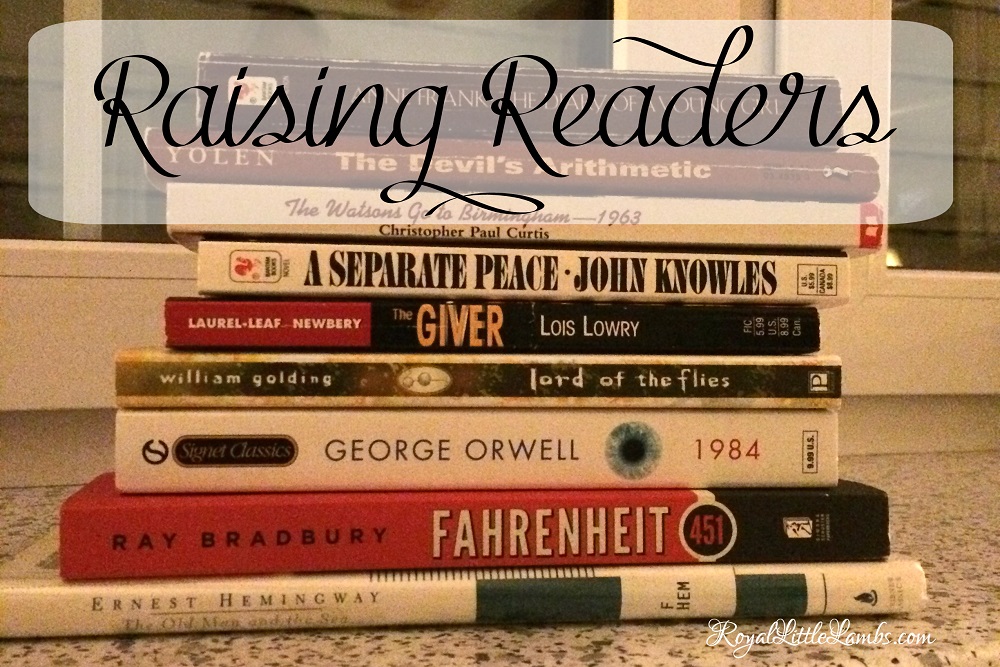
Raising Readers

This blog may contain affiliate links: disclosure.
Please see my suggested resources.

February 16, 2015 By Jennifer Lambert 5 Comments

Liz has always been an accelerated reader. It never occurred to me to not let her fly.

She attended day care from six months – and then a Christian preK that used A Beka curriculum.

She complained loudly that they finished their curriculum by April and then watched Veggie Tales movies for the rest of the school year. The program did give her enough to go on for her to teach herself how to read.

So I didn’t have to really toilet train her or teach her how to read. Not sure how I feel about that.

I remember when she read the entire series of Magic Treehouse and Junie B. Jones our first few months of homeschooling – and we carried home stacks of Minnie Moo and early chapter books from the library each week.

I didn’t know that was unusual for a four-year-old.

I chalked it up to early exposure to words and reading. I was an English professor after all.

We had more books than anything else in our house. Books are important.

I very quickly developed some standards for her reading material.

I didn’t really like Junie B. Jones and a lot of that sort of fluff. I discovered Charlotte Mason and Ambleside Online and The Well-Trained Mind and all these amazing works of literature for children. Living books entered my vocabulary.

Somehow, I skipped over a lot of really good reading material when I was a kid.

I suppose I am a product of a school system focused on test scores and workbooks more than critical thinking and quality of reading material.

I actually really loathed reading until I was about 10.

I remember one night, lying to my mom about a homework reading assignment and I couldn’t narrate back to her anything about the text. I still feel ashamed. But it was so boring and I really didn’t care for any of the school assignments.

And I seem to have jumped right into Stephen King and Dean Koontz in late elementary school. I didn’t have the greatest guidance from teachers or parents.

I honestly don’t remember reading anything worthwhile in school until 8th grade with Diary of Anne Frank. We only did maybe 2-3 novels each year of high school. In 11th and 12th grade, I sat in the back of English class, by the window overlooking the teachers’ parking lot, reading the Beat poets and Russian novels that were nowhere on the curriculum lists.

I didn’t know how to write an essay until my sophomore year in college, in my Shakespeare class.

So, of course, it made perfect sense for me to become an English teacher.

My ten years or so of teaching English taught me a great deal about life, kids, parents, and education.

I certainly knew what I didn’t want for my kids when we decided to homeschool.

Thank God all four of our kids love words, books, and writing. Read alouds are an everyday, twice-a-day occurrence – and even the littlest one loves to snuggle while I read aloud from really hard, great books.

I am blessed with curious children, constantly asking the hard questions, demanding to get at the marrow of life, desiring to know what’s really important, trusting in my opinions, striving to learn the righteous path.

It’s a really tough transition into high school. The early teen years are fraught with confusion and making difficult connections and having virtually no life experience from which to draw conclusions.

I’m raising readers.

Raising Readers - Reading literature helps us to learn and understand the nature of man in all its beauty and ugliness. | www.JenniferALambert.com

How to Raise Readers

Read read READ aloud to kids from prebirth until they won’t let you anymore. We read aloud in the mornings and bedtime stories in the evenings.

Buy lots of books. Get lots of books from libraries or used sales or borrow from friends.

Read a lot all the time and let that habit pass like osmosis to the rest of the family.

Find books on topics your kids are interested in. There’s always something for a reluctant reader. But don’t suggest or press or offer it. Just leave it lying around in their path for them to discover.

Audiobooks count. Movies based on books count. Anything to get kids interested in a literary life, to love words and phrases and imagination.

  • The Read-Aloud Family: Making Meaningful and Lasting Connections with Your Kids by Sarah Mackenzie
  • The Read-Aloud Handbook by Jim Trelease
  • Before They Were Authors: Famous Writers as Kids by Elizabeth Haidle
  • Give Your Child the World: Raising Globally Minded Kids One Book at a Time by Jamie C. Martin
  • The Book Whisperer: Awakening the Inner Reader in Every Child by Donalyn Miller
  • Reading in the Wild: The Book Whisperer’s Keys to Cultivating Lifelong Reading Habits by Donalyn Miller

Great literature helps us learn about people and events and the WHY.

This cycle 4 of modern times in our history studies is a really tough year to learn. I skipped most of the subject matter TWICE during our history cycles because I.Can’t.Even.

Modern history is tragic and really hard.

But we need to just jump in and do this.

Sample of a 9th grade reading list:

  • The Call of the Wild and White Fang by Jack London
  • Anne of Green Gables by LM Montgomery
  • The Short Novels by John Steinbeck
  • The Old Man and the Sea by Ernest Hemingway
  • Short Stories by Faulkner
  • The Great Gatsbyby F. Scott Fitzgerald
  • The Jungle by Upton Sinclair
  • The Catcher in the Rye by JD Salinger
  • The Outsiders by SE Hinton

Plays:

  • Our Town by Thornton Wilder
  • The Glass Menagerie by Tennesee Williams
  • The Crucible by Arthur Miller

Dystopian and Sci-Fi:

  • The Metamorphosis by Franz Kafka
  • The Invisible Man by HG Wells
  • 1984 and Animal Farm by George Orwell
  • Lord of the Flies by William Golding
  • A Separate Peace by John Knowles
  • Fahrenheit 451 by Ray Bradbury
  • The Giver by Lois Lowry
  • Have Space Suit – Will Travel by Robert A. Heinlein
  • I, Robot by Isaac Asimov

War:

  • The Diary of a Young Girl by Anne Frank
  • The Book Thief by Markus Zusak
  • Broken by Lauren Hillenbrand
  • Lots of history material from the library and she’s performing in the play KinderTransport.

Civil Rights:

  • Bud, Not Buddy by Christopher Paul Curtis
  • Roll of Thunder, Hear My Cry by Mildred D. Taylor
  • Invisible Man by Ralph Ellison
  • To Kill a Mockingbird by Harper Lee
  • The Help by Kathryn Stockett
  • The Watsons Go to Birmingham – 1963 by Christopher Paul Curtis
  • Maya Angelou

We’re also watching many great films that showcase historical events well. Liz and I are having great discussions. She asks amazing questions and understands well. I’m actually not forcing too many assignments. She has a reader notebook and some assignment notebooking pages, but much fewer than usual. I want her to enjoy reading.

I know many parents shy away from the tougher subjects. Modern and contemporary history and events are too close. It’s uncomfortable. We remember lots of it. Our parents and grandparents lived through it. Their views formed our opinions and values. But we must study and review events with new eyes as we teach our children so we can all learn from the mistakes of the past.

We do our children a disservice not to walk through this with them and teach them about horrific events that took place. We must put aside any discomfort to discuss events that affects millions of people. We can’t live in a bubble and pretend that horror didn’t and doesn’t happen every day.

I refuse to send my teens out into the world ill-equipped– without an understanding of the sexual nature of mankind, without a knowledge of war, without being taught discernment, without an awareness of people’s fears.

Reading literature helps us to learn and understand the nature of man in all its beauty and ugliness.

My youngest daughter is disappointed that she can’t join the homeschool book clubs in our area because they have rules and their two clubs are only for certain age groups.

She loudly complained to me, “But Mo-om! I read teen books!” She’s 7. It pains me to see her confusion.

Even in the homeschool community, accelerated students are shunned. I get that there have to be rules, but kids shouldn’t be punished for being smart.

My 5-year-old son is now reading level 3 readers.

I won’t dumb down life for my kids.

Literature Study (or Book Report) Notebooking Pages

The #1 Writing Tool
Share
Pin24
Share
24 Shares
You might also like:

Filed Under: Homeschool Tagged With: book list, high school, reading, Tapestry of Grace

Great Books for Writers

This blog may contain affiliate links: disclosure.
Please see my suggested resources.

February 4, 2015 By Jennifer Lambert 12 Comments

Many of my friends are writers and bloggers.

My daughter is growing into a writer and artist.

NaNoWriMo is great for kids and young writers! We are including a creative writing credit on her homeschool high school transcript.

It’s sometimes helpful to read from successful writers – a pep talk, how they became successful, or just their fun biography.

Sometimes we suffer from writer’s block and need inspiration to keep going. We never, ever call this procrastinating. It’s research!

I love this Writer’s Prayer:

Oh Lord, let me not be one of those who writes too much;
who spreads himself too thinly with his words,
diluting all the things he has to say,
like butter spread too thinly over toast,
or watered milk in some worn-out hotel;
but let me write the things I have to say,
and then be silent, ’til I need to speak.
Oh Lord, let me not be one of those who writes too little;
a decade-man between each tale, or more,
where every word accrues significance
and dread replaces joy upon the page.
Perfectionists like chasing the horizon;
You kept perfection, gave the rest to us,
so let me earn the wisdom to move on.
But over and above those two mad spectres of parsimony and profligacy,
Lord, let me be brave, and let me, while I craft my tales, be wise:
let me say true things in a voice that is true,
and, with the truth in mind, let me write lies.

~Neil Gaiman (listen to him read it here)

My TOP 10 favorite books for writers:

1. On Writing: A Memoir Of The Craft by Stephen King

I love the humor and real life stories. It’s always fun to know the beginnings of a famour writer and how he came to success.

2. You Are a Writer by Jeff Goins

Great inspirational calls to action. These books make you want to be a better person and not just a better writer.

3. Bird by Bird: Some Instructions on Writing and Life by Anne Lamott

Raw, intelligent, realistic writing advice mingled with poignant stories of her life.

4. The Elements of Style, Annotated and Updated for Present-Day Use by William Strunk, Jr.

Every writer needs to know this stuff. Period.

5. Conversations with a Writing Coach by Susan May Warren

Easy to follow advice with an actionable plan to write a novel.

6. Walking on Water: Reflections on Faith and Art by Madeleine L’Engle

Great thoughts on being a Christian artist.

7. Writing Down the Bones: Freeing the Writer Within by Natalie Goldberg

Great exercises on writing and how to live life to the fullest, based on her writing courses.

8. On Writing Well: The Classic Guide to Writing by William Zinsser

How to write nonfiction well.

9. Zen in the Art of Writing: Essays on Creativity by Ray Bradbury

It’s by Ray Bradbury. Need I say more?

10. The War of Art: Break Through the Blocks and Win Your Inner Creative Battles by Steven Pressfield (all his books are great!)

Succeed despite all the Resistance.

11. Writing to Change the World: An Inspiring Guide for Transforming the World with Words by Mary Pipher

Words are the most powerful tools at our disposal. With them, writers have saved lives and taken them, brought justice and confounded it, started wars and ended them. Writers can change the way we think and transform our definitions of right and wrong.

Writing to Change the World is a beautiful paean to the transformative power of words. Encapsulating Mary Pipher’s years as a writer and therapist, it features rousing commentary, personal anecdotes, memorable quotations, and stories of writers who have helped reshape society. It is a book that will shake up readers’ beliefs, expand their minds, and possibly even inspire them to make their own mark on the world.

12. The Artist’s Way by Julia Cameron

Julia Cameron takes readers on an amazing twelve-week journey to discover the inextricable link between their spiritual and creative selves. This groundbreaking program includes:

– Introductions to two of Cameron’s most vital tools for creative recovery–The Morning Pages and The Artist Date
– Hundreds of highly effective exercises and activities
– Guidance on starting a “Creative Cluster” of fellow artists who will support you in your creative endeavors

Do you have any favorite books or tips about writing?

Check out some great resources for writing: Follow Jennifer Lambert’s board Writing on Pinterest.

Share
Pin22
Share
22 Shares
You might also like:

Filed Under: Homeschool Tagged With: book list, writing

Favorite Nature Books for Kids

This blog may contain affiliate links: disclosure.
Please see my suggested resources.

April 17, 2011 By Jennifer Lambert 1 Comment

We have an overwhelming number of books for children and adults on a vast array of topics. We also have the Kindle app on our iPad.

So, when I went to scope out books on outside play, I was sorely disappointed. An excuse to purchase yet more books?! As if I ever need an excuse! (And no, dear deployed husband, don’t fret! because we just went to the library instead…)

So, here are some we own and some we borrowed that were fun the past few weeks…The girls and I love poetry, and what better thing than to lay on a quilt in the yard and read nature poetry? So Jane Austen! So these may not be what some would call outside books…but whatever…

The Five in a Row curriculum has lots of great books that incorporate nature and outdoors!

Of course, being a Charlotte Mason family…we must include these!

Nature Center

Favorite Nature Books for Kids

Last Child in the Woods: Saving Our Children From Nature-Deficit Disorder by Richard Louv

“I like to play indoors better ’cause that’s where all the electrical outlets are,” reports a fourth-grader. Never before in history have children been so plugged in-and so out of touch with the natural world. In this groundbreaking new work, child advocacy expert Richard Louv directly links the lack of nature in the lives of today’s wired generation-he calls it nature deficit-to some of the most disturbing childhood trends, such as rises in obesity, Attention Deficit Disorder (Add), and depression. Some startling facts: By the 1990s the radius around the home where children were allowed to roam on their own had shrunk to a ninth of what it had been in 1970. Today, average eight-year-olds are better able to identify cartoon characters than native species, such as beetles and oak trees, in their own community. The rate at which doctors prescribe antidepressants to children has doubled in the last five years, and recent studies show that too much computer use spells trouble for the developing mind. Nature-deficit disorder is not a medical condition; it is a description of the human costs of alienation from nature. This alienation damages children and shapes adults, families, and communities. There are solutions, though, and they’re right in our own backyards. Last child in the Woods is the first book to bring together cutting-edge research showing that direct exposure to nature is essential for healthy childhood development-physical, emotional, and spiritual. What’s more, nature is a potent therapy for depression, obesity, and Add. Environment-based education dramatically improves standardized test scores and grade point averages and develops skills in problem solving, critical thinking, and decision making. Even creativity is stimulated by childhood experiences in nature.

Backyard by Donald M. Silver

An exciting journey of science discovery is as near as your own backyard. Just one small square is alive with creepers and crawlers, lifters and leapers, singers, buzzers, climbers, builders, and recyclers. Backyard invites children ages 7 and up to become nature lovers by looking, listening, touching, and smelling the world from the ground up! From the unique One Small Square series of science acitivity books. . .where children can explore exotic and familiar ecosystems in detail, one small square at a time. There’s a whole set of these books – One Small Square series!

Fun With Nature: Take Along Guide by Mel Boring

Fun with Nature helps kids discover the incredible world in their backyards. It is a compilation of seven bestselling titles: Caterpillars, Bugs and Butterflies; Frogs, Toads and Turtles; Snakes, Salamanders and Lizards; Rabbits, Squirrels and Chipmunks; Tracks, Scats and Signs; and Trees, Leaves and Bark. This entertaining book is filled with fascinating facts and awesome activities.

Roots, Shoots, Buckets & Boots: Gardening Together with Children by Sharon Lovejoy

Plant a pumpkinseed with a child, and cultivate wonder. This simple act of reconnecting with children with nature is Sharon Lovejoy’s purpose and joy and gift. Author of Sunflower Houses: Garden Discoveries for Children of All Ages and Hollyhock Days: Garden Adventures for the Young at Heart, Sharon Lovejoy is a nationally known garden writer whose books, television specials, and projects at her learning landscape in California have introduced thousands of children to the pleasures of gardening.

In her newest book, Roots, Shoots, Buckets & Boots, she presents 12 spirited, easy-to-implement ideas for theme gardens that parents and kids can grow together. Illustrated throughout by the author’s own lyrical watercolors, each garden includes a plan, the planting recipe — seeds, seedlings, and growing instructions spelled out step-by-step — and activities. There’s the Pizza Patch , a giant-size wheel garden planted in “slices” of tomatoes, zucchini, oregano, and basil. A Flowery Maze to get lost in. A Moon Garden of night-blooming flowers, including a moonflower tent. And Mother Nature’s Medicine Chest.

Discovery Walks teach kids how the gardens work, and a chapter on gardening basics includes a child-friendly 10-Minute Plan for planting and maintenance, plus a list of the top 20 plants guaranteed to make gardeners out of kids.

Pocketful of Pinecones: Nature Study With the Gentle Art of Learning by Karen Andreola

Woven into the story are:
More than 100 examples of what to look for on a nature walk,
Latin names for the living things to observed by the characters,
Study questions,
Nature poems and verses.

Other features include:
A supplement of selected quotations by Miss Charlotte Mason,
An annotated list of books with a nature theme-both fiction and non-fiction,
Nostalgic pencil drawings.

Handbook of Nature Study by Anna Botsford Comstock

A matchless handbook for decades, this classic work has been the natural history bible for countless teachers and others who seek information about their environment. Written originally for those elementary school teachers who knew little of common plants and animals, and even less about the earth beneath their feet and the skies overhead, this book is for the most part as valid and helpful today as it was when first written in 1911―and revised in the spirit of its authors by a group of naturalists in 1939. After all, dandelions, toads, robins, and constellations have changed little since then! And modern society’s concern with the quality of life and the impact of people on soil, water, and wildlife makes this book even more relevant. Nature-study, as used in this handbook, encompasses all living things except humans, as well as all nonliving things such as rocks and minerals, the heavens, and weather. Of the living things described, most are common in the northeastern states, and many, such as the dandelion, milkweed, and mullein, and the house mouse, muskrat, and red fox, are so widespread that people living outside the United States will recognize them easily.

Anna Botsford Comstock very appropriately took the view that we should know first and best the things closest to us. Only then, when we have an intimate knowledge of our neighbors, should we, journey farther afield to learn about more distant things. Teachers and children will find the material in this book invaluable in that regard. Details of the most common, but in some ways the most interesting, things are brought out, first by careful, nontechnical descriptions of the things themselves and later by thoughtful questions and study units. Because the most common things are treated in greatest detail, materials for study are easy to find. Whether the reader lives in the inner city or in the rural outback, the handbook is a treasure trove of information. A teacher does not need to know much about nature to use this handbook. The information is there for the novice and the expert alike. All that is needed is an inquiring mind, senses to observe, and a willingness to think about nature on a personal level. To enter this book in search of information about any common organism, stone, or object in the sky is to open the door to a fresh and lively acquaintance with one’s environment.

The Burgess Animal Book for Children by Thornton W. Burgess

When Jenny Wren learns that Peter Rabbit would like to know more about the four-footed friends who share the Green Meadows and Green Forest with him, she encourages him to speak with Old Mother Nature who is only too happy to help. During their “classroom” chats, she not only teaches Peter about Arctic Hare and Antelope Jack but also tells him about such creatures as Flying Squirrel, Mountain Beaver, Pocket Gopher, Grasshopper Mouse, Silvery Bat, Mule Deer, and Grizzly Bear.
Told with all the warmth and whimsy of Burgess’s stories, this engaging book acquaints youngsters with many forms of wildlife and the animals’ relationships with one another. The charming collection of entertaining tales is sure to transport today’s young readers to the same captivating world of nature that delighted generations of children before them.

The Burgess Bird Book for Children by Thornton W. Burgess

Parents, teachers, and young readers all over the world have enthusiastically welcomed the Dover reprints of Thornton Burgess’s classic nature books, including the perennial bestseller, The Adventures of Peter Cottontail. In the present volume, the author’s goal of introducing children to the fascinating subject of bird life is brilliantly realized in story fashion. While “interviewing” Slaty the Junco, Redwing the Blackbird, Melody the Wood Thrush, Spooky the Screech Owl, and dozens of other common birds, our guides, Peter Rabbit and saucy Jenny Wren — and, of course, the reader — learn about their physical appearances, eating and nesting habits, and songs and calls. Over eighty years after its first publication, the book remains noteworthy and valuable for its extraordinarily successful blend of information and entertainment.

Parables from Nature by Mrs. Alfred Gatty

Parables for children inspired by nature. This collection includes all 29 stories from the first, second, third, and fourth series, originally published in separate volumes.

The Tree Book for Kids and Their Grown-Ups by Gina Ingoglia

The birds, the bees, the flowers and the…TREES! How do trees grow? Why do leaves change? What kind of tree is that? The acclaimed Brooklyn Botanic Garden’s guide answers all kids’ (and their parents’) tree-related questions in an easy-to-understand way. It features 33 different trees that grow in North America, from rural Georgia to the streets of New York City to the California suburbs. Each profile includes a beautiful botanical watercolor illustration by author Gina Ingoglia showing the tree as it appears in a particular season, as well as life-size depictions of its leaf, flower, and seed. Readers of all ages will be in awe over the wonderful world of trees.

Child’s Introduction to the Night Sky: The Story of the Stars, Planets, and Constellations–and How You Can Find Them in the Sky by Michael Driscoll

Children eight and up will enjoy this conversational but information-packed introduction to astronomy and stargazing, which includes the achievements of the great scientists, the history of space exploration, the story of our solar system, the myths behind the constellations, and how to navigate the night sky. Whimsical color illustrations on every page and handy definitions and sidebars help engage younger readers and develop their interest. The special star wheel helps locate stars and planets from any location at any time of year.

The Kids’ Nature Book: 365 Indoor/Outdoor Activities and Experiences by Susan Milord

Shore to desert, country to city,exciting nature activities await discovery from beneath th smallest rock to the vast sky above.
With a full year of “nature-nurturing” activities, Milord launches kids on a lifelong love affair with the natural world.

Survivor Kid: A Practical Guide to Wilderness Survival by Denise Long

Anyone can get lost while camping or on a hike and Survivor Kid teaches young adventurers the survival skills they need if they ever find themselves lost or in a dangerous situation in the wild.
Written by a search and rescue professional and lifelong camper, it s filled with safe and practical advice on building shelters and fires, signaling for help, finding water and food, dealing with dangerous animals, learning how to navigate, and avoiding injuries in the wilderness. Ten projects include building a simple brush shelter, using a reflective surface to start a fire, testing your navigation skills with a treasure hunt, and casting animal tracks to improve your observation skills.
For ages 9 and Up.

These are some of my favorite books about nature study.

But nothing compares to getting outside in nature! It doesn’t have to be stressful. The weather doesn’t have to be perfect. It’s ok to get dirty or wet. You don’t have to have a checklist or journal or notebook. Just go explore and Have fun!

ProSchool Membership - Productive Homeschooling
Share
Pin18
Share
18 Shares
You might also like:

Filed Under: Homeschool Tagged With: book list, nature study

  • « Previous Page
  • 1
  • …
  • 3
  • 4
  • 5
Suggested ResourcesFetchFind Weird Books at AbeBooks.com

Archives

Popular Posts

10 DIY Gifts with Essential Oils10 DIY Gifts with Essential Oils
Natural Remedies for HeadacheNatural Remedies for Headache
10 Natural Remedies to Keep on Hand10 Natural Remedies to Keep on Hand
Henna Hands CraftHenna Hands Craft
Homemade Turkey Divan CasseroleHomemade Turkey Divan Casserole
This website uses cookies to improve your experience. We'll assume you're ok with this, but you can opt-out if you wish.Accept Reject Read More
Privacy & Cookies Policy

Privacy Overview

This website uses cookies to improve your experience while you navigate through the website. Out of these, the cookies that are categorized as necessary are stored on your browser as they are essential for the working of basic functionalities of the website. We also use third-party cookies that help us analyze and understand how you use this website. These cookies will be stored in your browser only with your consent. You also have the option to opt-out of these cookies. But opting out of some of these cookies may affect your browsing experience.
Necessary
Always Enabled
Necessary cookies are absolutely essential for the website to function properly. This category only includes cookies that ensures basic functionalities and security features of the website. These cookies do not store any personal information.
Non-necessary
Any cookies that may not be particularly necessary for the website to function and is used specifically to collect user personal data via analytics, ads, other embedded contents are termed as non-necessary cookies. It is mandatory to procure user consent prior to running these cookies on your website.
SAVE & ACCEPT