Jennifer Lambert

A Sacred Balance

Visit Us On FacebookVisit Us On PinterestVisit Us On InstagramVisit Us On Linkedin
  • Homeschool
    • Book Lists
    • How Do We Do That?
    • Notebooking
    • Subjects and Styles
    • Unit Studies
  • Travel
    • Europe
      • Benelux
      • France
      • Germany
      • Greece
      • Ireland
      • Italy
      • London
      • Porto
      • Prague
    • USA
      • Chicago
      • Georgia
      • Hawaii
      • Ohio
      • Utah
      • Yellowstone and Teton
  • Family
    • Celebrations
    • Frugal
  • Military Life
    • Deployment
    • PCS
  • Health
    • Recipes
    • Essential Oils
    • Fitness
    • Mental Health
    • Natural Living
    • Natural Beauty
  • Faith
  • About Me
    • Favorite Resources
    • Advertising and Sponsorship
    • Policies
  • Reviews

© 2025Jennifer Lambert · Copyright · Disclosure · Privacy · Ad

An Imperfect Pilgrim Book Review

This blog may contain affiliate links: disclosure.
Please see my suggested resources.

May 1, 2018 By Jennifer Lambert Leave a Comment

Mental Health and Suicide Prevention Advocate Suzanne Ludlum Provides Inspiring Message of Hope and Healing.

As an author and yoga therapist, Suzanne Ludlum shares her compelling story of struggling with mental illness and suicide attempts to help others suffering in silence know they are not alone and to never give up.

May is Mental Health Awareness Month and as an advocate for mental health awareness and suicide prevention, author Suzanne Ludlum has a message to send:  Hope.

Ludlum’s recently released book, An Imperfect Pilgrim – Trauma and Healing on This Side of the Rainbow, is a compelling memoir which chronicles her harrowing experiences with trauma and severe depression to navigating her struggles and finding a pathway to healing and overcoming her demons.

Suzanne Ludlum allows readers into the most intimate and tragic moments of her life while she finds hope in the pathways that were the key to helping her reclaim her lost life. After suffering multiple losses and subsequent abuse at the hands of those very people who were supposed to help her, Ludlum suffered intense mental decline and fell into a darkness that seemed unrecoverable.  After years of psychiatric hospitals and various therapists, she began her long climb out. She is now active in spreading her message of hope and healing to those who may still be suffering, teaching them that they are not alone and that help truly is available.

As a yoga therapist and owner of Trinity Yoga Therapy, Ludlum is also involved in her local chapter of Mental Health America. Her inspiring messages and therapeutic practices are helping those who suffer from trauma and mental health issues such as PTSD.

“Suzanne offers us ways we can discover and nourish resources within ourselves that enable us to feel in control, even when life is out of control. Here, she shows us that we don’t have to be defined by our circumstances. We truly can be the master of our own destiny,” said Richard Miller, PhD, founder of the Integrative Restoration Institute and author of The iRest Program for Healing PTSD.

An Imperfect Pilgrim – Trauma and Healing on This Side of the Rainbow By Suzanne Ludlum

About Suzanne Ludlum:

Author Suzanne Ludlum is a Certified Yoga Therapist and holds the highest credentials in her field, including a Master of Science degree in Yoga Therapy from Maryland University of Integrative Health, certification through the International Association of Yoga Therapists, and ERYT-500 designation (experienced yoga teacher at the highest level) from Yoga Alliance. She also presents at international conferences to audiences of mental health professionals and other yoga therapists. Ludlum resides in Fredericksburg, Virginia with her husband and daughter.

To learn more please visit www.animperfectpilgrim.com and www.trinityyogatherapy.com.

You might also like:

Filed Under: Book Reviews Tagged With: book review

What We Eat Every Week

This blog may contain affiliate links: disclosure.
Please see my suggested resources.

April 30, 2018 By Jennifer Lambert 13 Comments

We actually eat almost the same things every week.

It helps with planning and grocery shopping.

I use Checkout 51 and Ibotta apps along with Kroger sales and coupons to plan our week.

We buy most of our fruits and veggies and other items at Kroger. I occasionally buy organic. I plan to buy more from local farmers markets and perhaps growing some of our own this year.

We buy almost all our meats from a local butcher shop. I like knowing our meat is local and without hormones and other additives. They live happier lives and we’re happier not consuming mass-produced feedlot meat.

What We Eat Every Week:

Breakfasts

My husband usually makes breakfast for the kids on weekends and lets me sleep in. They love egg hash with sausage and potatoes, pancakes, waffles…all the things I seldom make. Tori’s favorite is eggs Benedict.

My typical weekday breakfasts for the kids are a combo of scrambled eggs, Oscar Mayer natural bacon, Jones sausage links or patties, steel-cut oatmeal, 10-grain porridge, cheesy grits, Annie’s canned biscuits with jelly, occasionally homemade muffins or scones.

Katie sometimes makes a lovely breakfast cake or muffins.

The girls sometimes get up late and have the yummy new protein Cheerios.

I have coffee and sometimes what the kids are having, but usually a mango-spinach or berry smoothie. Sometimes yogurt with fruit and homemade granola.

Lunches

Katie loves to make these little tortilla pizzas. Quesadillas are an easy lunch that kids can make.

We often have sandwiches or charcuterie platters.

Sometimes, we have leftovers, but we’re getting to the point there aren’t many! Sometimes, we have a fancy tea time with cute little sandwiches. When the kids were little, we did Muffin Tin Monday.

Dinners…

Sunday

We usually have leftovers or something quick prepped from the freezer.

Twice a month, the girls participate in church activities in the evening, so we don’t bother making a big fancy meal most Sundays. Sometimes, we even get some takeout.

Monday

I’m usually rested after the weekend, so I go all out and prepare something special.

I’ll go to the store and get fish to try or something a little different than our norm or that takes more time.

Sometimes, we have huge salads with grilled or leftover meat.

We like chicken Marsala.

Tuesday

Tacos, duh.

I make our own taco seasoning and use it in lots of dishes. Sometimes, I make a taco noodle casserole or baked chicken enchiladas.

Sometimes, we mix it up and have Asian tacos.

Wednesday

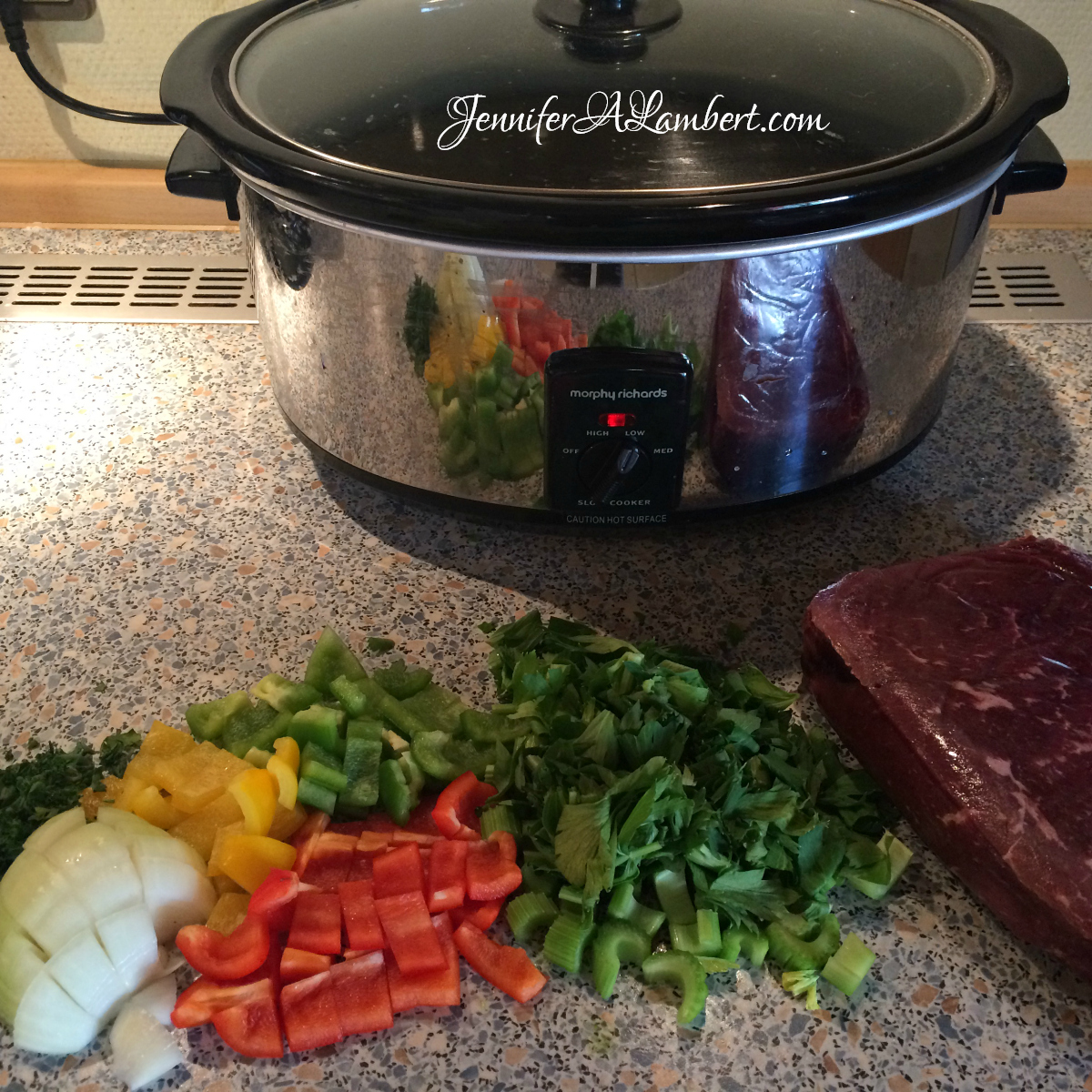
Usually something in the slow cooker, like a stew or roast. Sometimes something that’s quick and easy that can be thrown together last minute.

Swiss steak is delicious with lots of veggies.

Pork tenderloin is super easy and flavorful.

Everyone loves these Asian slow cooker pork ribs.

Our favorite soups: cream of vegetable, dill chicken, ham and bean.

Thursday

Usually something easy like pasta, potatoes, or rice and a grilled meat and steamed veggies. The kids have an architecture class at the library and it’s about a 30 minute drive, so we’re home about 7 and my husband finishes up what I’ve prepped.

Cashew chicken is a go-to that’s really easy to make.

I marinate meat in bags and it grills up super nice! These are great for camping, busy weeks, or grabbing a bag from the freezer when I’m out of ideas.

We reviewed eMeals one year and got some fun new meal ideas.

Friday

Homemade pizza. With a movie.

I usually have sliced tomatoes, sliced mozzarella, oregano basil garlic, with a few dollops of pizza sauce.

My husband and two kids like sausage and/or pepperoni. Two girls like sausage, pepperoni, onions, and red bell peppers.

Saturday

We often grill steaks or hamburgers.

When my husband travels out of town or works late, I make the things he doesn’t like – like tuna casserole or turkey divan, and lots of bell pepper dishes.

I’m also incorporating more vegetarian dishes into our family’s recipe repertoire.

We seldom dine out. I am usually disappointed at the quality for the price. I don’t like not knowing where my food comes from or what’s in it.

And I like that I can eat dinner in my loungewear.

There isn’t much that I can’t make myself at home – better and cheaper.

Resources:

  • The Case Against Sugar by Gary Taubes
  • The Big Fat Surprise: Why Butter, Meat and Cheese Belong in a Healthy Diet by Nina Teicholz
  • The Great Cholesterol Myth, Revised and Expanded: Why Lowering Your Cholesterol Won’t Prevent Heart Disease–and the Statin-Free Plan that Will by Jonny Bowden and Stephen T. Sinatra
  • Animal, Vegetable, Miracle: A Year of Food Life by Barbara Kingsolver
  • Food Matters: A Guide to Conscious Eating with More Than 75 Recipes by Mark Bittman
  • VB6: Eat Vegan Before 6:00 to Lose Weight and Restore Your Health . . . for Good by Mark Bittman
  • In Defense of Food: An Eater’s Manifesto by Michael Pollan
  • The Whole30: The 30-Day Guide to Total Health and Food Freedom by Melissa Hartwig Urban and Dallas Hartwig
  • 100 Days of Real Food: Fast & Fabulous: The Easy and Delicious Way to Cut Out Processed Food by Lisa Leake
You might also like:

Filed Under: Recipes Tagged With: food, frugal, homemaking, meal plan, recipe

A Peaceful Home

This blog may contain affiliate links: disclosure.
Please see my suggested resources.

April 23, 2018 By Jennifer Lambert 18 Comments

I see so many questions about homeschooling and parenting. In the absence of a village, parents flock to Facebook to crowdsource answers. Those answers are often based on experience. They’re not always the best answers nor do they work for everyone.

I find the easiest and best answer to most parenting and homeschooling questions, whether about behavior issues or scheduling or feeling just worn out from the endless chatter and noise of a houseful of young children is to create a peaceful home atmosphere.

But how does one do that? What does it look like?

When I had my third child, I was worn out. I couldn’t understand why I never felt like I could complete a day without lots of caffeine and needed to nap when my toddler and baby did in the early afternoon, praying my older child just read or played quietly in her room.

I was homeschooling. I was keeping a spotless home. I was doing, doing, doing.

I was exhausted and miserable. I hated myself. I hated my husband. I even hated my kids.

I felt like a failure.

I knew it wasn’t right. I knew something was wrong, but I couldn’t place my finger on it nor could I pull myself out of it.

I asked my pastor’s wife for a meeting and she arrived at my home where I had cleaned and stressed over providing her homemade lemonade and fresh-baked cookies.

While I expected to be pointed to Bible verses about the Proverbs 31 women, she asked some practical questions. When were we eating dinner? When was bedtime? Why were the kids’ things all hidden away from the public rooms?

I also went to a doctor to rule out physical issues. I was put on a supplement regimen for adrenal failure.

Then I implemented a new peaceful lifestyle.

It took years to get comfortable with who I am and how I live and what my priorities and preferences are.

I shouldn’t have to make excuses for my priorities. I try to be patient with people who aren’t where I am in the spiritual journey.

This is a key to happiness.

How to Create a Peaceful Home:

Self.

Understand your past, your story – and know your triggers. Deal with it.

If you’re anxious or tired or ill, make the necessary changes to heal yourself.

If you’ve suffered some traumatic experience, get professional help to work through it.

Nurture yourself. Pray or meditate, get outside, exercise, eat well.

Deal with finances. Do your best to get out of debt.

Work through any idols or addictions.

Legalism is the opposite of peace. Set goals and priorities but don’t worry about so many rules and regulations.

Realize that we go through cycles and seasons, just like nature.

Space.

Remove clutter. Feng shui ideas really do help remove anxiety.

Go minimalist. If you have to buy something to put somethings in, you have too much stuff.

Soothing color scheme. My house is decorated in all blues and greens, because these are my favorite colors, but they’re also calming.

Aromatherapy and music. We have diffusers in every rooms with essential oils. We often listen to music while making and eating meals.

Practice hygge.

Have tech-free time to connect.

Spouse.

(or significant other or pet or whatever)

Practice nonviolent communication.

Argue intelligently, calmly, and lovingly. You don’t have to hide conflict from your children. They need to learn healthy resolution.

Learn how to really apologize.

Be constant students of each other.

Don’t make excuses to be complacent. Don’t get lazy. Those are causes of adultery and midlife crises.

Yeah, most days are boring and tedious. It’s not all romance and over-the-top. Duty outweighs everything else.

Children.

Model self-control.

Coach on healthy relationships.

Don’t force sharing.

Don’t punish, bribe, or reward. Gently guide and communicate well.

Spanking is abuse. Never, ever hit a child.

Allow for lots of unstructured play time and go outdoors every day.

Maybe you grew up in a household with strife and you don’t really have a relationship with your siblings.

Don’t let your kids make those same mistakes.

Most days are ordinary. They don’t have to be drenched in negativity. Find the extraordinary in the tiniest of things.

Service.

Focus on others first.

But don’t neglect yourself.

We need to teach our kids empathy and kindness. We do that by modeling it.

Do your part to make the world a better place. It may be charity work, recycling, cycling or walking instead of driving, cleaning a creek, planting a garden, whatever.

What can you begin doing right now towards a more peaceful home?


You might also like:

Filed Under: Family Tagged With: parenting, peace

5 Ways to Learn Fast and Retain More

This blog may contain affiliate links: disclosure.
Please see my suggested resources.

April 19, 2018 By Jennifer Lambert Leave a Comment

The sooner you realize that learning never ends, the more willing you’ll be to expand, elevate in your profession, thrive in your life and even generate more income. Learning and studying can be difficult once we are long past our college years. For all the old dogs who might be reluctant to learning new tricks, we tapped the expertise of Dr. Sanam Hafeez, a New York based Neuropsychologist and Teaching Faculty at Columbia University to share 5 ways to learn fast and retain more so we can quickly grasp new concepts, technologies, business strategies and up-level our willingness to learn.

Independent learning is the hot new brain trend. Thanks to digital media, we see a new renaissance when it comes to learning. On the professional side, nearly two-thirds of U.S. workers have taken a course or sought additional training to advance their careers, according to a March 2016 study by Pew Research Center. On the personal development side, a simple Google search can lead anyone to a plethora of courses on everything from mastering personal finances, parenting, our relationships, nutrition, cooking, designing clothes, home organization and design.

“The key to longevity is the learning and application of new things. When we stop learning, we stop growing and that is a slow death to our brains and bodies. Luckily today there are online seminars and other ways to learn that speak to our interests. It’s also incredibly convenient to learn,” explains Dr. Hafeez.

What are the best ways to learn new things quickly? Dr. Sanam Hafeez offers the following 5 ways to learn fast and retain more.

1. Learn in quick sprints.

There’s a sweet spot for learning in the 30-50 minute timeframe. Dedicate that amount of time to learning and then take a 10 to 15-minute break to end a learning segment before starting a new task. “You’re more likely to retain more when you focus for a shorter amount of time at once,” explains Dr. Hafeez who helps people with ADHD to enhance their ability to focus and learn. “Using tools like notecards with quick points helps the brain absorb concepts even more,” she adds. Which leads to…

2. Take written notes and use color!

Ditch the laptop and go old school with a pen and paper. Outline important points with a different color pen or highlighter and if you can draw a concept out in the margin, go for it. Writing fuels comprehension and enhances listening skills. Studies out of UCLA and Princeton found students who took notes on laptops didn’t perform as well as students who wrote by hand. “When we handwrite notes we listen then process the information before writing. When we type on a laptop, we transcribe what we hear without any self-interpretation which is where the actual learning comes into play,” offers Dr. Hafeez.

3. Give your brain time to rest and recharge with sleep.

People brag that they work so much and sleep so little. Arianna Huffington’s book, “The Sleep Revolution,” and choice to add nap rooms at her Huffington Post offices turned the light onto sleep as a performance enhancer. “People who get a full 8 hours of deep uninterrupted sleep retain what they learn and have bandwidth to grasp more information quicker. We often feel tired after a course or following instructions. This is because focusing requires energy. Naturally, when we rest we get to reboot the brain,” says Dr. Hafeez.

4. Read out loud, record, replay.

Research has shown that reading out loud engages both senses of sight and sound which heightens retention. “Recording yourself reading and elaborating with your own idea of how the concept resonates then replaying the recording a day or two later, is a great technique that fires up the part of the brain that processes concepts like a computer filing information for later use,” explains Dr. Hafeez.

5. Break things down and relate it to what you already know.

We all heard of the math teacher who used the example of rock concert ticket sales to get kids to grasp algebra. According to Dr. Hafeez, “when we take a concept and link it to something we already know about or have genuine interest in, we retain that concept. Anytime we can internalize a concept is has resonance. It sticks.”

About the Doctor:

Dr. Sanam Hafeez PsyD is a NYC based licensed clinical psychologist, teaching faculty member at the prestigious Columbia University Teacher’s College and the founder and Clinical Director of Comprehensive Consultation Psychological Services, P.C. a neuropsychological, developmental and educational center in Manhattan and Queens.

Dr. Hafeez masterfully applies her years of experience connecting psychological implications to address some of today’s common issues such as body image, social media addiction, relationships, workplace stress, parenting and psychopathology (bipolar, schizophrenia, depression, anxiety, etc…). In addition, Dr. Hafeez works with individuals who suffer from post-traumatic stress disorder (PTSD), learning disabilities, attention and memory problems, and abuse. Dr. Hafeez often shares her credible expertise to various news outlets in New York City and frequently appears on CNN and Dr.Oz.

Connect with her via twitter @comprehendMind or www.comprehendthemind.com

You might also like:

Filed Under: Homeschool Tagged With: learning

Indigenous Peoples Books

This blog may contain affiliate links: disclosure.
Please see my suggested resources.

April 16, 2018 By Jennifer Lambert 13 Comments

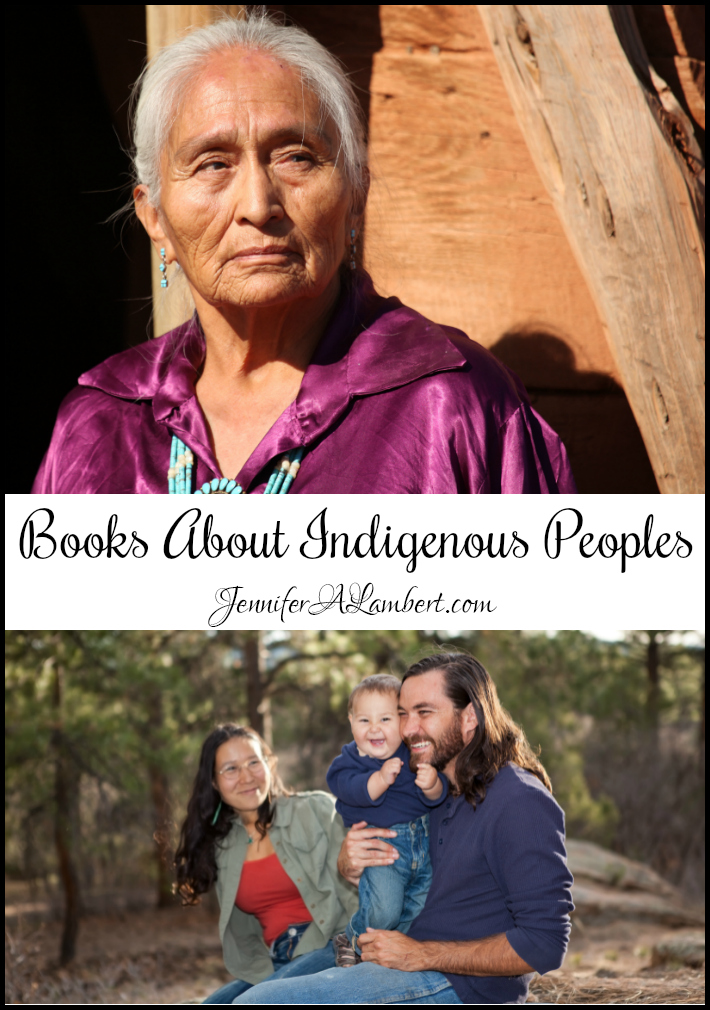
I want my children to understand North American history, and that includes the First Nations and Native Americans with their tragic displacement by white Europeans…and their discrimination even today.

As a white teacher, I have a responsibility to teach my children truth, even when, especially when, it might be uncomfortable.

My daughter is in college and recently read The Round House by Louise Erdrich in one of her classes. A white male student in her class asked if there really were still reservations. We must be diligent in the education of our children so they understand that there is more to Indigenous peoples than casinos and stereotypes in Western movies.

I think it’s sad that the most exposure many white kids get to Native Peoples are stories about American Thanksgiving.

I was obsessed with Native American culture when I was little but there wasn’t much I could find to learn about them. I watched a lot of westerns and Lone Ranger reruns. I think I loved the idea from watching Little House on the Prairie and Lone Ranger reruns. There was a huge surge of Westerns in film and TV. I would beg my mom to braid my hair and I had this woven skirt that was probably more South American in design, but I loved it. I would often play “cowboys and Indians” in the neighborhood and I always chose to be the Indian, whooping and hollering and tying Chris up and beating him with sticks.

It’s embarrassing now to remember. I truly didn’t know any better and I was a product of the media I consumed and the dominant racist white culture in which I was raised.

We have so many offensive phrases in our vocabulary that we maybe don’t think about like we should.

From Kaitlin Curtice…A few phrases we should stop saying, especially around indigenous peoples:

  1. “Let’s powwow.”
  2. “Really, we’re all Native Americans”
  3. Oh, that’s my spirit animal.”
  4. “Too many chiefs, not enough Indians”
  5. “Off the reservation”
  6. *Washington football team name* and others
  7. “Find your tribe.”
  8. “On the warpath”

Every step towards healing, justice, and reconciliation matters.

To be an Indigenous parent today is about reversing the toxic narrative found in novels, speeches, magazines, and movies. Its about teaching our children indigenous truths rather than colonial lies. It’s about restoring the truth of our kinship models. ~ Chief Lady Bird ~ The Intergenerational Resistance of Unapologetic Indigenous Parents

Many books on reading lists are told from a white perspective. While some are realistic and even respectful of Native history and culture, others are told from a Manifest Destiny perspective. I was rather horrified to see how many plots were about kidnapping white children. I want my children to understand the events that formed North America and how many of those events were and are harmful, even evil. I want them to see the whole picture and I refuse to glorify white history.

If we don’t actively discuss racism and its evils with our children, how will it ever end?

While researching, I found this amazing resource: American Indians in Children’s Literature (AICL), with book lists and answers to hard questions. Also, the First Nations website has a great book list.

We recently visited Fort Ancient and learned about the Ohio Natives and their history. We learned about how and where they lived and what foods they grew and how they prepared them.

We’ve visited Boonshoft and learned about Native houses and culture. They had a temporary exhibit, Explorers, which includes:

  • The American Plains, where they can discover the history and culture of Native American peoples through books and hands-on activities in a real tipi, examine artifacts, and discover the tactile difference between leather and rawhide.
  • Guests can stamp their passport in each area, and even trek to an area designed for our youngest explorers.
  • More than 200 artifacts from the American Plains were donated in 1926 by Katharine Talbott of Oakwood, after she received them from A. L. Corey, a healer and teacher of American Indian arts on the Western frontier during the turn of the century.

It’s important we study all history and be honest.

I want to honor Native authors and illustrators here. I try to include as many books as I can find. If you know of a lovely Indigenous book for kids that’s not on my list, let me know!

Several famous books are not on this list due to being problematic with racism and stereotypes.

We must recognize and listen to Indigenous voices and learn from their history and culture.

SkySisters by Jan Bourdeau Waboose


Two Ojibway sisters set off across the frozen north country to see the SkySpirits’ midnight dance. It isn’t easy for the younger sister to be silent, but gradually she begins to treasure the stillness and the wonderful experiences it brings. After an exhilarating walk and patient waiting, the girls are rewarded by the arrival of the SkySpirits — the northern lights — dancing and shimmering in the night sky.

This powerful story, with its stunning illustrations, captures the chill of a northern night, the warmth of the family circle and the radiance of a child’s wonder.

The Blue Roses by Linda Boyden


Every spring Rosalie, a Native American girl, and her grandfather sow tiny seeds that blossom into bright flowers. A red rosebush, planted under Rosalie’s bedroom window when she was born, is later joined by pink and yellow ones “to make a sunset,” Papa tells her. Rosalie asks for a blue bush, to represent the sky, but Papa explains that roses do not come in blue. When he dies the following winter, Rosalie’s blue rosebush comes to her in her dreams as a symbol of love, memory, and transcendence.

The Good Luck Cat by Joy Harjo


Some cats are good luck. You pet them and good things happen. Woogie is one of those cats. But as Woogie gets into one mishap after another, everyone starts to worry. Can a good luck cat’s good luck run out?

The first children’s book from an acclaimed poet whose honors include the American Book Award and the William Carlos Williams Award
Celebrates the special relationship between a young girl and her cat. A modern Native American story from a member of the Muskogee-Creek tribe.

When I Was Eight by Christy Jordan-Fenton


Olemaun is eight and knows a lot of things. But she does not know how to read. Ignoring her father’s warnings, she travels far from her Arctic home to the outsiders’ school to learn. The nuns at the school call her Margaret. They cut off her long hair and force her to do menial chores, but she remains undaunted. Her tenacity draws the attention of a black-cloaked nun who tries to break her spirit at every turn. But the young girl is more determined than ever to learn how to read.

Fatty Legs by Christy Jordan-Fenton


Eight-year-old Margaret Pokiak has set her sights on learning to read, even though it means leaving her village in the high Arctic. Faced with unceasing pressure, her father finally agrees to let her make the five-day journey to attend school, but he warns Margaret of the terrors of residential schools. At school Margaret soon encounters the Raven, a black-cloaked nun with a hooked nose and bony fingers that resemble claws. She immediately dislikes the strong-willed young Margaret. Intending to humiliate her, the heartless Raven gives gray stockings to all the girls — all except Margaret, who gets red ones. In an instant Margaret is the laughingstock of the entire school. In the face of such cruelty, Margaret refuses to be intimidated and bravely gets rid of the stockings. Although a sympathetic nun stands up for Margaret, in the end it is this brave young girl who gives the Raven a lesson in the power of human dignity. Complemented by archival photos from Margaret Pokiak-Fenton’s collection and striking artworks from Liz Amini-Holmes, this inspiring first-person account of a plucky girl’s determination to confront her tormentor will linger with young readers.

Dragonfly Kites by Tomson Highway


Dragonfly Kites is the third book in Tomson Highway’s magical Songs of the North Wind trilogy. Like Fox on the Ice and Caribou Song, it has a bilingual text, written in English and Cree. And once again Tomson Highway brilliantly evokes the very essence of childhood as he weaves a deceptively simple story about the power of the imagination.

Joe and Cody, two young Cree brothers, along with their parents and their little dog Ootsie, are spending the summer by one of the hundreds of lakes in northern Manitoba. Summer means a chance to explore the world and make friends with an array of creatures, But what Joe and Cody like doing best of all is flying dragonfly kites. They catch dragonflies and gently tie a length of thread around the middle of each dragonfly before letting it go. Off soar the dragonflies into the summer sky and off race the brothers and Ootsie too, chasing after their dragonfly kites through trees and meadows and down to the beach before watching them disappear into the night sky. But in their dreams, Joe and Cody soar through the skies with their kites until it’s time to wake up.

Hiawatha and the Peacemaker by Robbie Robertson


Born of Mohawk and Cayuga descent, musical icon Robbie Robertson learned the story of Hiawatha and his spiritual guide, the Peacemaker, as part of the Iroquois oral tradition. Now he shares the same gift of storytelling with a new generation.

Hiawatha was a strong and articulate Mohawk who was chosen to translate the Peacemaker’s message of unity for the five warring Iroquois nations during the 14th century. This message not only succeeded in uniting the tribes but also forever changed how the Iroquois governed themselves—a blueprint for democracy that would later inspire the authors of the U.S. Constitution.

Malian’s Song (Vermont Folklife Center Children’s Book Series) by Marge Bruchac


Young Malian lives contentedly with her parents and extended family in an Abenaki village near Montréal in the mid-eighteenth century. One night, Malian’s life changes abruptly. Silently, her father carries her off to the woods, blanket and all, and orders her to run to their tribe’s winter camp. Malian obeys, but not before she turns to watch her father slip back to the village through the trees. She never sees him again.

Malian’s Song is based on the true story of a deliberate attack by English Major Robert Rogers on Québec’s St. Francis Abenaki community in 1759. Malian’s account of “Rogers’s Raid,” passed down through generations of Abenaki oral tradition, reveals that many Abenaki people survived the attack that destroyed their village, in direct contrast to Rogers’ journal accounts. Jeanne Brink, a descendant of Malian living in Vermont, told the Vermont Folklife Center the little-known Abenaki version of the brutal attack. In this first Abenaki and English picture book, preeminent Abenaki historian Marge Bruchac and illustrator William Maughan portray Malian’s story of a people’s strength and fortitude in the face of unspeakable loss.

Thanks to the Animals by Allen Sockabasin


Little Zoo Sap and his family are moving from their summer home on the coast to their winter home in the deep woods. Unnoticed, the youngster tumbles off the end of the sled.

Alone, cold, and frightened, Zoo Sap cries, and his cries attract the forest animals. Beginning with beaver and ending with the great bald eagle, the animals rush to protect the baby and shelter him from the cold until his father returns for him.

New, expanded 10th-anniversary edition of this classic that has sold more than 30,000 copies. ·
New features include an author’s note explaining the seasonal movement of the Passamaquoddy people; a pronunciation guide to the Passamaquoddy names of the animals in the story; and a QR code that will let readers link to the audio recording of Allen Sockabasin telling the story in the Passamaquoddy language.
A beguiling bedtime story and a profound expression of reverence for the natural world.

Chickadee by Louise Erdrich


Winner of the Scott O’Dell Award for Historical Fiction, Chickadee is the first novel of a new arc in the critically acclaimed Birchbark House series by New York Times bestselling author Louise Erdrich.

Twin brothers Chickadee and Makoons have done everything together since they were born—until the unthinkable happens and the brothers are separated.

Desperate to reunite, both Chickadee and his family must travel across new territories, forge unlikely friendships, and experience both unexpected moments of unbearable heartache as well as pure happiness. And through it all, Chickadee has the strength of his namesake, the chickadee, to carry him on.

Chickadee continues the story of one Ojibwe family’s journey through one hundred years in America. School Library Journal, in a starred review, proclaimed, “Readers will be more than happy to welcome little Chickadee into their hearts.”

The paperback edition includes additional material, such as an interview with the author and activities.

Jingle Dancer by Cynthia Leitich Smith


The affirming story of how a contemporary Native American girl turns to her family and community to help her dance find a voice.

Jenna loves the tradition of jingle dancing that has been shared by generations of women in her family, and she hopes to dance at the next powwow. But she has a problem—how will her dress sing if it has no jingles?

The cone-shaped jingles sewn to Grandma Wolfe’s dress sing tink, tink, tink, tink.

Jenna’s heart beats to the brum, brum, brum, brum of the powwow drum as she daydreams about the clinking song of her grandma’s jingle dancing.

The warm, evocative watercolors of Cornelius Van Wright and Ying-Hwa Hu complement author Cynthia Leitich Smith’s lyrical text in this picture book.

When the Shadbush Blooms by Carla Messinger


My grandparents’ grandparents walked beside the same stream where I walk with my brother, and we can see what they saw.

Today when a Lenape Indian girl ventures to the stream to fish for shad, she knows that another girl did the same generations before. Through the cycle of the seasons, what is important has remained: being with family, knowing when berries are ripe for picking, listening to stories in a warm home.

Told by Traditional Sister and Contemporary Sister, each from her own time, this is a book about tradition and about change. Then and now are not so very different when the shadbush blooms.

Giving Thanks: A Native American Good Morning Message by Chief Jake Swamp


Giving Thanks is a special children’s version of the Thanksgiving Address, a message of gratitude that originated with the Native people of upstate New York and Canada and that is still spoken at ceremonial gatherings held by the Iroquois, or Six Nations.

Grandmother’s Dreamcatcher by Becky Ray McCain


While Kimmy’s parents look for a house close to Daddy’s job, Kimmy stays with her Chippewa grandmother. The bad dreams she has had still bother her. But with her grandmother’s help, she learns about dreamcatchers.

Dreamcatcher by Audrey Osofsky


In the land of the Ojibway a baby sleeps protected from bad dreams, as the life of the tribe goes on around him.

I Am Not a Number by Jenny Kay Dupuis


When Irene is removed from her First Nations family to live in a residential school, she is confused, frightened and terribly homesick. She tries to remember who she is and where she came from despite being told to do otherwise. When she goes home for summer holidays, her parents decide never to send her away again, but where will she hide and what will happen when her parents disobey the law?

Buffalo Bird Girl: A Hidatsa Story by S. D. Nelson


This fascinating picture book biography tells the childhood story of Buffalo Bird Woman—a Hidatsa Indian born around 1839. Through her true story, readers learn what it was like to be part of this Native American community, which lived along the Missouri River in the Dakotas, a society that depended on agriculture for food and survival rather than hunting. Using original artwork and archival photographs, award-winning author/illustrator S. D. Nelson has captured the spirit of Buffalo Bird Girl and her lost way of life. The book includes a bibliography and an index, as well as an author’s note and timeline of events.
We love all the books by S.D. Nelson!

A Boy Called Slow by Joseph Bruchac


The True Story of Sitting Bull from multi-award-winning author Joseph Bruchac.

Anxious to be given a name as strong and brave as that of his father, a proud Lakota Sioux grows into manhood, acting with careful deliberation, determination, and bravery, which eventually earned him his proud new name: Sitting Bull.
We love all the books by Joseph Bruchac!

Arrow over the Door by Joseph Bruchac


For young Samuel Russell, the summer of 1777 is a time of fear. The British Army is approaching, and the Indians in the area seem ready to attack. To Stands Straight, a young Abenaki Indian scouting for King George, Americans are dangerous enemies who threaten his family and home. When Stands Straight’s party enters the Quaker Meetinghouse where Samuel worships, the two boys share an encounter that neither will ever forget. Told in alternating viewpoints, The Arrow over the Door is based on a true story.

How the Stars Fell into the Sky: A Navajo Legend by Jerrie Oughton


This retelling of a Navajo folktale explains how First Woman tried to write the laws of the land using stars in the sky, only to be thwarted by the trickster Coyote.

We Sang You Home by Richard Van Camp


In this sweet and lyrical board book from the creators of the bestselling Little You, gentle rhythmic text captures the wonder new parents feel as they welcome baby into the world. A celebration of the bond between parent and child, this is the perfect song to share with your little ones.

Internationally renowned storyteller and bestselling author Richard Van Camp teams up with award-winning illustrator Julie Flett for a second time to create a stunning board book for babies and toddlers.

Welcome Song for Baby by Richard Van Camp


From renowned First Nations storyteller Richard Van Camp comes a lyrical lullaby for newborns. Complemented with stunning photographs, this evocative board book is perfectly suited as a first book for every baby.

Little You by Richard Van Camp


Richard Van Camp, internationally renowned storyteller and bestselling author of the hugely successful Welcome Song for Baby: A Lullaby for Newborns, has partnered with award-winning illustrator Julie Flett to create a tender board book for babies and toddlers that celebrates the potential of every child. With its delightful contemporary illustrations, Little You is perfect to be shared, read or sung to all the little people in your life—and the new little ones on the way!

Loving Me by Debby Slier


Whether it is a gentle kiss from mom, a hug from dad, a playful romp with an older brother, or reading with grandpa, babies and toddlers will discover the importance of family relationships in these charming photographs of Native American families. Loving Me features multi-generational family members loving and caring for a child, as they tenderly show their babies and young children how much they are loved in this book of love and diversity.

My Heart Fills with Happiness by Monique Gray Smith


The sun on your face. The smell of warm bannock baking in the oven. Holding the hand of someone you love. What fills your heart with happiness? This beautiful board book, with illustrations from celebrated artist Julie Flett, serves as a reminder for little ones and adults alike to reflect on and cherish the moments in life that bring us joy.

International speaker and award-winning author Monique Gray Smith wrote My Heart Fills with Happiness to support the wellness of Indigenous children and families, and to encourage young children to reflect on what makes them happy.

We All Count: A Book of Cree Numbers by Julie Flett


We All Count: A Book of Cree Numbers provides insight into contemporary Cree life. It teaches Cree numbers and provides pronunciation. This board book is wonderfully illustrated by Canadian based Cree/Metis artist Julie Flett. This book is important in enhancing learning of Cree numbers and making Cree culture accessible to young readers.

Sweetest Kulu by Celina Kalluk


A lyrical lullaby imbued with traditional Inuit beliefs, this bedtime poem written by internationally acclaimed Inuit throat singer Celina Kalluk describes the gifts bestowed upon a newborn baby by all the animals of the Arctic. Lyrically and lovingly written, this visually stunning book is infused with the Inuit values of love and respect for the land and its animal inhabitants.

Zoe and the Fawn by Catherine Jameson


An adventure begins when Zoe finds a lone fawn in the forest and helps search for its mother. But who could the mother be? A bunny? A fish? Join Zoe and her father as they encounter many woodland animals and learn their Native names along the way.

When We Were Alone by David Alexander Robertson


When a young girl helps tend to her grandmother’s garden, she begins to notice things that make her curious. Why does her grandmother have long, braided hair and beautifully coloured clothing? Why does she speak another language and spend so much time with her family? As she asks her grandmother about these things, she is told about life in a residential school a long time ago, where all of these things were taken away. When We Were Alone is a story about a difficult time in history, and, ultimately, one of empowerment and strength.

Mama, Do You Love Me? by Barbara M. Joosse


Mama, do you love me? Yes I do Dear One. How much? In this universal story, a child tests the limits of independence and comfortingly learns that a parent’s love is unconditional and everlasting. The story is made all the more captivating by its unusual Arctic setting. The lyrical text introduces young readers to a distinctively different culture, while at the same time showing that the special love that exists between parent and child transcends all boundaries of time and place. The story is beautifully complemented by graphically stunning illustrations that are filled with such exciting animals as whales, wolves, puffins, and sled dogs, and a carefully researched glossary provides additional information on Arctic life. This tender and reassuring book is one that both parents and children will turn to again and again.

Thunder Boy Jr. by Sherman Alexie


Thunder Boy Jr. is named after his dad, but he wants a name that’s all his own. Just because people call his dad Big Thunder doesn’t mean he wants to be Little Thunder. He wants a name that celebrates something cool he’s done, like Touch the Clouds, Not Afraid of Ten Thousand Teeth, or Full of Wonder.

But just when Thunder Boy Jr. thinks all hope is lost, he and his dad pick the perfect name…a name that is sure to light up the sky.

Hungry Johnny by Cheryl Kay Minnema


“I like to eat, eat, eat,” choruses young Johnny as he watches Grandma at work in the kitchen. Wild rice, fried potatoes, fruit salad, frosted sweet rolls—what a feast! Johnny can hardly contain his excitement. In no time, he’ll be digging in with everyone else, filling his belly with all this good food.

But wait. First there is the long drive to the community center. And then an even longer Ojibwe prayer. And then—well, young boys know to follow the rules: elders eat first, no matter how hungry the youngsters are. Johnny lingers with Grandma, worried that the tasty treats won’t last. Seats at the tables fill and refill; platters are emptied and then replaced. Will it ever be their turn? And will there be enough?

As Johnny watches anxiously, Grandma gently teaches. By the time her friend Katherine arrives late to the gathering, Johnny knows just what to do, hunger pangs or no. He understands, just as Grandma does, that gratitude, patience, and respect are rewarded by a place at the table—and plenty to eat, eat, eat.

Powwow’s Coming by Linda Boyden


Powwow’s coming, hear the beat?
Powwow’s coming, dancing feet.
Powwow’s coming, hear the drum?
Powwow’s coming, everyone!

Frustrated as a schoolteacher not being able to find good instructional materials on American Indians, Linda Boyden has bypassed the tired stereotype of Indians on horseback or hunting game and placed them in today’s setting of a powwow.

Powwow’s Coming provides children with a foundation for understanding and celebrating the enduring culture and heritage of American Indians. Boyden’s exquisite cut-paper collage and engaging poem visually place readers within the scenes of a contemporary Native American community while offering a thoughtful look at powwows and their meanings to the Native participants.

Wild Berries by Julie Flett


Tch, tch, sh, sh, tup, tup.
Spend the day picking wild blueberries with Clarence and his grandmother. Meet ant, spider, and fox in a beautiful woodland landscape, the ancestral home of author and illustrator Julie Flett. This book is written in both English and Cree, in particular the n-dialect, also known as Swampy Cree from the Cumberland House area.

Kunu’s Basket: A Story from Indian Island by Lee DeCora Francis


Kunu wants to make a pack basket, just like the other men on Indian Island.

But making the basket is difficult, and Kunu gets frustrated. He is ready to give up when his grandfather intervenes. This is not only a story about a family tradition, but also a story about learning to be patient and gentle with yourself.

A story about contemporary Native American life
This new paperback edition includes a new Author’s Note about the traditions and importance of basketmaking in Penobscot Nation culture.

Wild Eggs: A Tale of Arctic Egg Collecting by Suzie Napayok-Short


Summer vacation becomes exciting when Akuluk goes egg hunting with her grandparents in the Arctic.

Akuluk is not excited about visiting her grandparents in Nunavut. She would rather head south for summer vacation, somewhere with roller coasters and cotton candy. There can’t be much to do way up there, Akuluk figures. But as soon as she steps off the plane and sees all the exciting animals that the tundra has to offer, Akuluk forgets all about her dreams of going south. On her first full day in Nunavut, she can’t wait to travel out on the land with her grandfather to hunt for wild eggs. As she learns about the different types of eggs, how to collect them properly, and the delicious meals that can be prepared with them, Akuluk knows that this is just the beginning of the exciting things she’ll learn about the Arctic.

Water Walkers by Carol Ann Trembath


Water Walkers is the story of an Ojibway girl named Mai. Her family members are walking around Lake Superior to raise awareness about the harm that is being done to the Great Lakes. At first, Mai is told she is too little to go, but her grandmother says, “Even little people can do big things.” As Mai walks along the lakeside path, she tries to find ways to help. Will the secret messages from the animals she sees on her journey show her how to help the water and Mother Earth? Will Mai prove that she is a clever coyote girl and can become a good water walker?

Water Walkers is a tribute to the many Native women and men who in today’s world have courageously walked countless miles to draw attention to the condition of water. The message of this diverse, environmental book is to protect the water.

Included are: common core state standards, websites, cross-curriculum activities, a glossary of environmental terms, and ten ways for children to protect the Earth. With new original illustrations by Native American artist, David W. Craig.
Also, look at Stepping Stones: Protecting the Great Lakes.

The Water Walker by Joanne Robertson


The determined story of an Ojibwe grandmother (nokomis), Josephine Mandamin, and her great love for nibi (water). Nokomis walks to raise awareness of our need to protect nibi for future generations and for all life on the planet. She, along with other women, men and youth, has walked around all the Great Lakes from the four salt waters, or oceans, to Lake Superior. The walks are full of challenges, and by her example she challenges us all to take up our responsibility to protect our water, the giver of life, and to protect our planet for all generations.

Stolen Words by Melanie Florence


The story of the beautiful relationship between a little girl and her grandfather. When she asks her grandfather how to say something in his language, Cree, he admits that his language was stolen from him when he was a boy. The little girl then sets out to help her grandfather find his language again. This sensitive, beautifully illustrated picture book explores the intergenerational impact of Canada’s residential school system, which separated young Indigenous children from their families.

Tasunka: A Lakota Horse Legend (English and Indic Edition) by Donald F. Montileaux


Curiosity leads a young warrior to track a new animal. It leads him far from home, but at last he finds a herd of the strange new creatures. They are horses that shimmer with colour and run swift as the wind. The Lakota capture and tame them, and the people grow rich and powerful. They become filled with pride. With their newfound strength they rule over the plains. Then the Great Spirit, who gave the gift of the horse, takes it away. Donald F. Montileaux retells the legend of Tasunka from the traditional stories of the Lakota people. Using the ledger-art style of his forefathers he adds colorful detail. His beautiful images enhance our understanding of the horse and its importance in Lakota culture.
Donald F. Montileaux has some other lovely books.

Rock and Roll Highway: The Robbie Robertson Story by Sebastian Robertson


Canadian guitarist and songwriter Robbie Robertson is known mainly for his central role in the musical group the Band. But how did he become one of Rolling Stone’s top 100 guitarists of all time? Written by his son, Sebastian, this is the story of a rock-and-roll legend’s journey through music, beginning when he was taught to play guitar at nine years old on a Native American reservation. Rock and Roll Highway is the story of a young person’s passion, drive, and determination to follow his dream.

In the Footsteps of Crazy Horse by Joseph Marshall


Jimmy McClean is a Lakota boy—though you wouldn’t guess it by his name: his father is part white and part Lakota, and his mother is Lakota. When he embarks on a journey with his grandfather, Nyles High Eagle, he learns more and more about his Lakota heritage—in particular, the story of Crazy Horse, one of the most important figures in Lakota and American history. Drawing references and inspiration from the oral stories of the Lakota tradition, celebrated author Joseph Marshall III juxtaposes the contemporary story of Jimmy with an insider’s perspective on the life of Tasunke Witko, better known as Crazy Horse (c. 1840–1877). The book follows the heroic deeds of the Lakota leader who took up arms against the US federal government to fight against encroachments on the territories and way of life of the Lakota people, including leading a war party to victory at the Battle of the Little Bighorn. Along with Sitting Bull, Crazy Horse was the last of the Lakota to surrender his people to the US army. Through his grandfather’s tales about the famous warrior, Jimmy learns more about his Lakota heritage and, ultimately, himself.

Beaver Steals Fire: A Salish Coyote Story by Confederated Salish and Kootenai Tribes


A long time ago, fire belonged only to the animals in the land above, not to those on the earth below. Curlew, keeper of the sky world, guarded fire and kept it from the earth. Coyote, however, devised a clever plan to steal fire, aided by Grizzly Bear, Wren, Snake, Frog, Eagle, and Beaver. These brave and resourceful animal beings raided the land above and risked all to steal fire from Curlew.

Beaver Steals Fire is an ancient and powerful tale springing from the hearts and experiences of the Salish people of Montana. Steeped in the rich and culturally vital storytelling tradition of the tribe, this tale teaches both respect for fire and awareness of its significance, themes particularly relevant today. This unforgettable version of the story is told by Salish elder Johnny Arlee and beautifully illustrated by tribal artist Sam Sandoval.
Also, check out Bull Trout’s Gift: A Salish Story about the Value of Reciprocity.

Saltypie: A Choctaw Journey from Darkness into Light by Tim Tingle


Bee stings on the backside! That was just the beginning. Tim was about to enter a world of the past, with bullying boys, stones and Indian spirits of long ago. But they were real spirits, real stones, very real memories…

In this powerful family saga, author Tim Tingle tells the story of his family’s move from Oklahoma Choctaw country to Pasadena, TX. Spanning 50 years, Saltypie describes the problems encountered by his Choctaw grandmother—from her orphan days at an Indian boarding school to hardships encountered in her new home on the Gulf Coast.

Tingle says, “Stories of modern Indian families rarely grace the printed page. Long before I began writing, I knew this story must be told.” Seen through the innocent eyes of a young boy, Saltypie — a 2011 Skipping Stones honor book, WordCraft Circle 2012 Children’s Literature Award-winner, and winner of the 2011 Paterson Prize for Books for Young People in the category of Grades 4-6 — is the story of one family’s efforts to honor the past while struggling to gain a foothold in modern America.

Tim Tingle, a member of the Choctaw Nation of Oklahoma, is a sought-after storyteller for folklore festivals, library conferences, and schools across America. At the request of Choctaw Chief Pyle, Tim tells a story to the tribe every year before Pyle’s State of the Nation Address at the Choctaw Labor Day Gathering. Tim’s previous and often reprinted books from Cinco Puntos Press—Walking the Choctaw Road and Crossing Bok Chitto—received numerous awards, but what makes Tim the proudest is the recognition he receives from the American Indian communities.

Karen Clarkson, a Choctaw tribal member, is a self-taught artist who specializes in portraits of Native Americans. She did not start painting until after her children had left home; she has since been widely acclaimed as a Native American painter. She lives in San Leandro, California.
Tim Tingle has several children’s and YA books.

The Apple Tree – A Modern Day Cherokee Story Told in English & Cherokee by Sandy Tharp-Thee


A Cherokee boy plants an apple seed, already seeing the apple tree it is meant to be. But the little apple tree is not so sure. Young and impatient, it begins to doubt its calling after apples fail to appear that first fall. How can the boy convince the tree to give the seasons the time to work their magic? The story is told in English with Cherokee translation, and includes a Cherokee syllabary.

Grandmother Spider Brings the Sun: A Cherokee Story by Geri Keams


After Possum and Buzzard fail in their attempts to steal a piece of the sun, Grandmother Spider succeeds in bringing light to the animals on her side of the world.

Soft Rain: A Story of the Cherokee Trail of Tears by Cornelia Cornelissen


It all begins when Soft Rain’s teacher reads a letter stating that as of May 23, 1838, all Cherokee people are to leave their land and move to what many Cherokees called “the land of darkness”. . .the west. Soft Rain is confident that her family will not have to move, because they have just planted corn for the next harvest but soon thereafter, soldiers arrive to take nine-year-old, Soft Rain, and her mother to walk the Trail of Tears, leaving the rest of her family behind.

Because Soft Rain knows some of the white man’s language, she soon learns that they must travel across rivers, valleys, and mountains. On the journey, she is forced to eat the white man’s food and sees many of her people die. Her courage and hope are restored when she is reunited with her father, a leader on the Trail, chosen to bring her people safely to their new land.
This book is one of my favorite read alouds.

If You Lived With The Cherokees by Peter Roop


This book tells what it was like to grow up in a Cherokee family in the Great Smoky Mountains about 200 years ago.

We like the illustrations.

The Legend of the Indian Paintbrush by Tomie dePaola


In spring, the hills and meadows of Texas and Wyoming are ablaze with the reds, oranges, and yellows of the Indian Paintbrush. How this striking plant received its name is told in an old Indian legend.
Many years ago, when the People traveled the Plains, a young Indian boy had a Dream-Vision in which it was revealed that one day he would create a painting that was as pure as the colors of the evening sky at sunset. The boy grew up to become the painter of the tribe, but although he found a pure white buckskin for a canvas and made paints from the brightest flowers and the reddest berries, he could not capture the sunset.

How the young Indian artist finally fulfills his Dream-Vision is lovingly told and illustrated by Tomie dePaola, in words and pictures that capture the spirit and beauty of this dramatic legend.

The Girl Who Loved Wild Horses by Paul Goble


“There was a girl in the village who loved horses… She led the horses to drink at the river. She spoke softly and they followed. People noticed that she understood horses in a special way.”
And so begins the story of a young Native American girl devoted to the care of her tribe’s horses. With simple text and brilliant illustrations. Paul Goble tells how she eventually becomes one of them to forever run free. Paul Goble has several lovely books.

Shin-chi’s Canoe by Nicola I. Campbell


When they arrive at school, Shi-shi-etko reminds Shinchi, her six-year-old brother, that they can only use their English names and that they can’t speak to each other. For Shinchi, life becomes an endless cycle of church mass, school, and work, punctuated by skimpy meals. He finds solace at the river, clutching a tiny cedar canoe, a gift from his father, and dreaming of the day when the salmon return to the river — a sign that it’s almost time to return home. This poignant story about a devastating chapter in First Nations history is told at a child’s level of understanding.

Indian Shoes by Cynthia L. Smith


What do Indian shoes look like, anyway? Like beautiful beaded moccasins…or hightops with bright orange shoelaces?

Ray Halfmoon prefers hightops, but he gladly trades them for a nice pair of moccasins for his Grampa. After all, it’s Grampa Halfmoon who’s always there to help Ray get in and out of scrapes — like the time they are forced to get creative after a homemade haircut makes Ray’s head look like a lawn-mowing accident.

This collection of interrelated stories is heartwarming and laugh-out-loud funny. Cynthia Leitich Smith writes with wit and candor about what it’s like to grow up as a Seminole-Cherokee boy who is just as happy pounding the pavement in windy Chicago as rowing on a take in rural Oklahoma.

Son Who Returns by Gary Robinson


Fifteen-year-old Mark Centeno is of Chumash, Crow, Mexican and Filipino ancestry—he calls himself “four kinds of brown.” When Mark goes to live with his Chumash grandmother on the reservation in central California, he discovers a rich world of family history and culture that he knows very little about. He also finds a pathway to understanding better a part of his own identity: powwow dancing. Riveted by the traditional dancers and feeling the magnetic pull of the drums, Mark begins the training and other preparations necessary for him to compete as a dancer in one of America’s largest powwows.

Tallchief: America’s Prima Ballerina by Maria Tallchief

Growing up on the Osage Indian reservation, Maria Tallchief was a gifted pianist and dancer. According to Osage tradition, women are not permitted to dance, but Maria’s parents recognized her gifts and allowed her to break the rule. Then when Maria reached the age of twelve, her father told her it was time to choose between her two loves. Maria chose ballet. It was a decision that would change not only the course of her life, but the face of classical ballet in America.

Sweetgrass Basket by Marlene Carvell


In prose poetry and alternating voices, Marlene Carvell weaves a heartbreakingly beautiful story based on the real-life experiences of Native American children. Mattie and Sarah are two Mohawk sisters who are sent to an off-reservation school after the death of their mother. Subject to intimidation and corporal punishment, with little hope of contact with their father, the girls are taught menial tasks to prepare them for life as domestics. How Mattie and Sarah protect their culture, memories of their family life, and their love for each other makes for a powerful, unforgettable historical novel.

Super Indian by Arigon Starr

Hubert Logan was an ordinary Reservation boy until he ate tainted commodity cheese infused with Rezium, a secret government food enrichment additive. Known as Super Indian, Hubert fights evil forces who would overtake the Reservation’s resources and population. Assisted by his trusty sidekicks Mega Bear and Diogi, they fight crime the way they know how — with strength, smarts and humor.

Dreaming in Indian: Contemporary Native American Voices by Lisa Charleyboy

Whether discussing the transformative power of art or music, the lasting trauma of residential schools, growing up poor, or achieving success, the contributors to this remarkable anthology all have something in common: a rich Native heritage that has informed who they are.

“All the Real Indians Died Off”: And 20 Other Myths About Native Americans by Roxanne Dunbar-Ortiz

In this enlightening book, scholars and activists Roxanne Dunbar-Ortiz and Dina Gilio-Whitaker tackle a wide range of myths about Native American culture and history that have misinformed generations. Tracing how these ideas evolved, and drawing from history, the authors disrupt long-held and enduring myths such as:

“Columbus Discovered America”
“Thanksgiving Proves the Indians Welcomed Pilgrims”
“Indians Were Savage and Warlike”
“Europeans Brought Civilization to Backward Indians”
“The United States Did Not Have a Policy of Genocide”
“Sports Mascots Honor Native Americans”
“Most Indians Are on Government Welfare”
“Indian Casinos Make Them All Rich”
“Indians Are Naturally Predisposed to Alcohol”

Each chapter deftly shows how these myths are rooted in the fears and prejudice of European settlers and in the larger political agendas of a settler state aimed at acquiring Indigenous land and tied to narratives of erasure and disappearance. Accessibly written and revelatory, “All the Real Indians Died Off” challenges readers to rethink what they have been taught about Native Americans and history.

Moccasin Thunder: American Indian Stories for Today by Lori Marie Carlson


The ten stories that make up this collection are raw, original, and fresh. Although they are all about American Indians, they are as different from one another as they are from anything you’ve read before.

A supermarket checkout line, a rowboat on a freezing lake at dawn, a drunken dance in the gym, an ice hockey game on public-access TV. These are some of the backgrounds against which ten outstanding authors have created their memorable characters. Their work — both poignant and funny, sarcastic and serious — reminds us that the American Indian story is far from over — it’s being written every day.

Night Flying Woman: An Ojibway Narrative by Ignatia Broker

With the art of a practiced storyteller, Ignatia Broker recounts the life of her great-great-grandmother, Night Flying Woman, who was born in the mid-19th century and lived during a chaotic time of enormous change, uprootings, and loss for the Minnesota Ojibwe. But this story also tells of her people’s great strength and continuity.

The Absolutely True Diary of a Part-Time Indian by Sherman Alexie

Bestselling author Sherman Alexie tells the story of Junior, a budding cartoonist growing up on the Spokane Indian Reservation. Determined to take his future into his own hands, Junior leaves his troubled school on the rez to attend an all-white farm town high school where the only other Indian is the school mascot.

Heartbreaking, funny, and beautifully written, The Absolutely True Diary of a Part-Time Indian, which is based on the author’s own experiences, coupled with poignant drawings by Ellen Forney that reflect the character’s art, chronicles the contemporary adolescence of one Native American boy as he attempts to break away from the life he was destined to live.

With a foreword by Markus Zusak, interviews with Sherman Alexie and Ellen Forney, and four-color interior art throughout, this edition is perfect for fans and collectors alike.

Code Talker Stories by Laura Tohe

The Navajo language helped win World War II, and it lives on in this book, as the Code Talkers remember the war and reflect on the aftermath and the legacy they will leave behind. The veterans, able to speak to a daughter of one of their own in English and Navajo, truly shared from their hearts. They not only provided more battlefield details, but they also reveal how their war experiences affected themselves and the Navajo generations that followed.

My Name Is Not Easy by Debby Dahl Edwardson

My name is not easy. My name is hard like ocean ice grinding the shore…Luke knows his Iñupiaq name is full of sounds white people can’t say. So he leaves it behind when he and his brothers are sent to boarding school hundreds of miles away from their Arctic village. At Sacred Heart School, students—Eskimo, Indian, White—line up on different sides of the cafeteria like there’s some kind of war going on. Here, speaking Iñupiaq—or any native language—is forbidden. And Father Mullen, whose fury is like a force of nature, is ready to slap down those who disobey. Luke struggles to survive at Sacred Heart. But he’s not the only one. There’s smart-aleck Amiq, a daring leader— if he doesn’t self-destruct; Chickie, blond and freckled, a different kind of outsider; and small, quiet Junior, noticing everything and writing it all down. They each have their own story to tell. But once their separate stories come together, things at Sacred Heart School—and the wider world—will never be the same.

If I Ever Get Out of Here by Eric Gansworth

Lewis “Shoe” Blake is used to the joys and difficulties of life on the Tuscarora Indian reservation in 1975: the joking, the Fireball games, the snow blowing through his roof. What he’s not used to is white people being nice to him — people like George Haddonfield, whose family recently moved to town with the Air Force. As the boys connect through their mutual passion for music, especially the Beatles, Lewis has to lie more and more to hide the reality of his family’s poverty from George. He also has to deal with the vicious Evan Reininger, who makes Lewis the special target of his wrath. But when everyone else is on Evan’s side, how can he be defeated? And if George finds out the truth about Lewis’s home — will he still be his friend?

Acclaimed adult author Eric Gansworth makes his YA debut with this wry and powerful novel about friendship, memory, and the joy of rock ‘n’ roll.

Walking on Earth and Touching the Sky: Poetry and Prose by Lakota Youth at Red Cloud Indian School by Timothy P. McLaughlin

This is an exceptional poetry collection written by Lakota students in the fifth, sixth, seventh, and eighth grades at Red Cloud Indian School on the Pine Ridge Indian Reservation in South Dakota. The historic school was founded in 1888 at the request of Chief Red Cloud of the Oglala Lakota. The poems enable readers to learn about the unique lives and heritage of students growing up in such distinctive circumstances and straddling cultures. The collection was compiled by a teacher at the school, working with school administrators, and contains never-before-published artworks by award-winning artist S. D. Nelson.

Native Writers: Voices of Power by Kim Sigafus

Learn about the life events and aspirations that shaped the voices of ten influential Native writers, whose novels, short stories and plays encompass the soul of Native life. Learn how these writers draw from personal experience to create situations and characters that are entertaining and poignant. Featured writers include:

Sherman Alexie (Spokane/Coeur d’Alene) Marilyn Dumont (Cree/Métis)
Joseph Boyden (Cree/Métis) Louise Erdrich (Ojibwa)
Joseph Bruchac (Abenaki) Tomson Highway (Cree)
Maria Campbell (Métis) N. Scott Momaday (Kiowa/Cherokee)
Nicola Campbell (Interior Salish of Nle7kepmx Tim Tingle (Choctaw)
[Thompson] and Nsilx [Okanagan]/Métis)

Many individuals portrayed in the Native Trailblazers series surmounted adversity and humble beginnings in their journey for personal success. The Trailblazer books feature positive role models for Native students while providing non-Native students with a view of Indigenous people today.

The Marrow Thieves by Cherie Dimaline

Humanity has nearly destroyed its world through global warming, but now an even greater evil lurks. The indigenous people of North America are being hunted and harvested for their bone marrow, which carries the key to recovering something the rest of the population has lost: the ability to dream. In this dark world, Frenchie and his companions struggle to survive as they make their way up north to the old lands. For now, survival means staying hidden—but what they don’t know is that one of them holds the secret to defeating the marrow thieves.

Native American History for Kids: With 21 Activities by Karen Bush Gibson


As the first Americans, hundreds of indigenous bands and nations already lived in North America when European explorers first set out to conquer an inhabited land. This book captures the early history of these complex societies and their 500-year struggle to survive against all odds from war, displacement, broken treaties, and boarding schools. Not only a history of tribal nations, Native American History for Kids also includes profiles of famous Native Americans and their many contributions, from early leaders to superstar athlete Jim Thorpe, dancer Maria Tallchief, astronaut John Herrington, author Sherman Alexie, actor Wes Studi, and more.

Readers will also learn about Indian culture through hands-on activities, such as planting a Three Sisters garden (corn, squash, and beans), making beef jerky in a low-temperature oven, weaving a basket out of folded newspaper strips, deciphering a World War II Navajo Code Talker message, and playing Ball-and-Triangle, a game popular with Penobscot children. And before they are finished, readers will be inspired to know that the history of the Native American people is the history of all Americans.

Other Craft Books: More Than Moccasins: A Kid’s Activity Guide to Traditional North American Indian Life and A Kid’s Guide to Native American History: More than 50 Activities

The People Shall Continue by Simon J Ortiz

Told in the rhythms of traditional oral narrative, this powerful telling of the history of the Native/Indigenous peoples of North America recounts their story from Creation to the invasion and usurpation of Native lands. As more and more people arrived, The People saw that the new men did not respect the land. The People witnessed the destruction of their Nations and the enslavement of their people. The People fought hard, but eventually agreed to stop fighting and signed treaties.

Many things changed and became more difficult, but The People continued to farm and create crafts. They remembered and told their children, “You are Shawnee. You are Lakota. You are Pima. You Acoma. . . . You are all these Nations of the People.” The People held onto their beliefs and customs and found solidarity with other oppressed people. And despite struggles against greed, destruction of their lands, and oppression, The People persisted.

Custer Died for Your Sins: An Indian Manifesto by Vine Deloria, Jr.

In his new preface to this paperback edition, the author observes, “The Indian world has changed so substantially since the first publication of this book that some things contained in it seem new again.” Indeed, it seems that each generation of whites and Indians will have to read and reread Vine Deloria’s Manifesto for some time to come, before we absorb his special, ironic Indian point of view and what he tells us, with a great deal of humor, about U.S. race relations, federal bureaucracies, Christian churches, and social scientists. This book continues to be required reading for all Americans, whatever their special interest.

The Lone Ranger and Tonto Fistfight in Heaven by Sherman Alexie

Vividly weaving memory, fantasy, and stark reality to paint a portrait of life in and around the Spokane Indian reservation, this book introduces some of Alexie’s most beloved characters, including Thomas Builds-the-Fire, the storyteller who no one seems to listen to, and his compatriot, Victor, the sports hero who turned into a recovering alcoholic. Now with an updated introduction from Alexie, these twenty-four tales are narrated by characters raised on humiliation and government-issue cheese, and yet they are filled with passion and affection, myth and charm. Against a backdrop of addiction, car accidents, laughter, and basketball, Alexie depicts the distances between men and women, Indians and whites, reservation Indians and urban Indians, and, most poetically, modern Indians and the traditions of the past.

Killing the White Man’s Indian: Reinventing Native Americans at the End of the Twentieth Century by Fergus M. Bordewich

In the face of a new lightly romanticized view of Native Americans, Killing the White Man’s Indian bravely confronts the current myths and often contradictory realities of tribal life today. Following two centuries of broken treaties and virtual government extermination of the “savage redmen,” Americans today have recast Native Americans into another, equally stereotyped role, that of eternal victims, politically powerless and weakened by poverty and alcoholism, yet whose spiritual ties with the natural world form our last, best hope of salvaging our natural environment and ennobling our souls.

The truth, however, is neither as grim , nor as blindly idealistic, as many would expect. The fact is that a virtual revolution is underway in Indian Country, an upheaval of epic proportions. For the first time in generations, Indians are shaping their own destinies, largely beyond the control of whites, reinventing Indian education and justice, exploiting the principle of tribal sovereignty in ways that empower tribal governments far beyond most American’s imaginations. While new found power has enriched tribal life and prospects, and has made Native Americans fuller participants in the American dream, it has brought tribal governments into direct conflict with local economics and the federal government.

Based on three years of research on the Native American reservations, and written without a hidden conservative bias or politically correct agenda, Killing the White Man’s Indian takes on Native American politics and policies today in all their contradictory–and controversial-guises.”

Killers of the Flower Moon: The Osage Murders and the Birth of the FBI by David Grann

In the 1920s, the richest people per capita in the world were members of the Osage Indian nation in Oklahoma. After oil was discovered beneath their land, they rode in chauffeured automobiles, built mansions, and sent their children to study in Europe.
      Then, one by one, the Osage began to be killed off. The family of an Osage woman, Mollie Burkhart, became a prime target. Her relatives were shot and poisoned. And it was just the beginning, as more and more members of the tribe began to die under mysterious circumstances.
      In this last remnant of the Wild West—where oilmen like J. P. Getty made their fortunes and where desperadoes like Al Spencer, the “Phantom Terror,” roamed—many of those who dared to investigate the killings were themselves murdered. As the death toll climbed to more than twenty-four, the FBI took up the case. It was one of the organization’s first major homicide investigations and the bureau badly bungled the case. In desperation, the young director, J. Edgar Hoover, turned to a former Texas Ranger named Tom White to unravel the mystery. White put together an undercover team, including one of the only American Indian agents in the bureau. The agents infiltrated the region, struggling to adopt the latest techniques of detection.  Together with the Osage they began to expose one of the most chilling conspiracies in American history. 
      In Killers of the Flower Moon, David Grann revisits a shocking series of crimes in which dozens of people were murdered in cold blood. Based on years of research and startling new evidence, the book is a masterpiece of narrative nonfiction, as each step in the investigation reveals a series of sinister secrets and reversals. But more than that, it is a searing indictment of the callousness and prejudice toward American Indians that allowed the murderers to operate with impunity for so long. Killers of the Flower Moon is utterly compelling, but also emotionally devastating.

This Day in North American Indian History: Events in the History of North America’s Native Peoples by Phil Konstantin

This Day in North American Indian History is a one-of-a-kind, fun-to-read book covering over 5,000 years of North American Indian history, culture, and lore. Wide-ranging and in-depth, it lists over 5,000 important events involving the native peoples of North America in a unique day-by-day format.From the construction of Mayan temples in A.D. 715 to modern political activism and governmental legislation affecting native peoples-and everything in between-virtually every significant historical event in Indian history is listed. It also includes biographical sketches of prominent and lesser-known North American Indian leaders, chiefs, explorers, and their white counterparts, descriptions of migrations, the histories of tribes and ancient languages, and a list of the meanings of tribal names. Well-organized and comprehensive, the thousands of entries in This Day in North American Indian History weave an exciting and panoramic mosaic of North American Indian history. It is the most all-encompassing single-volume reference work on the subject available.

Exiled in the Land of the Free: Democracy, Indian Nations, and the U.S. Constitution by Lyons et al, Oren, Donald A. Grinde, Curtis Berkey

This groundbreaking work, which was written into the Congressional Record, has major implications for future relations between Indian tribes and the governments of the United States and other nations. It presents the strongest case ever made for Native American sovereignty.

1491: New Revelations of the Americas Before Columbus by Charles C. Mann

In this groundbreaking work of science, history, and archaeology, Charles C. Mann radically alters our understanding of the Americas before the arrival of Columbus in 1492.

Contrary to what so many Americans learn in school, the pre-Columbian Indians were not sparsely settled in a pristine wilderness; rather, there were huge numbers of Indians who actively molded and influenced the land around them. The astonishing Aztec capital of Tenochtitlan had running water and immaculately clean streets, and was larger than any contemporary European city. Mexican cultures created corn in a specialized breeding process that it has been called man’s first feat of genetic engineering. Indeed, Indians were not living lightly on the land but were landscaping and manipulating their world in ways that we are only now beginning to understand. Challenging and surprising, this a transformative new look at a rich and fascinating world we only thought we knew.

1493: Uncovering the New World Columbus Created by Charles C. Mann

A deeply engaging new history of how European settlements in the post-Colombian Americas shaped the world, from the bestselling author of 1491.

Presenting the latest research by biologists, anthropologists, archaeologists, and historians, Mann shows how the post-Columbian network of ecological and economic exchange fostered the rise of Europe, devastated imperial China, convulsed Africa, and for two centuries made Mexico City—where Asia, Europe, and the new frontier of the Americas dynamically interacted—the center of the world. In this history, Mann uncovers the germ of today’s fiercest political disputes, from immigration to trade policy to culture wars. In 1493, Mann has again given readers an eye-opening scientific interpretation of our past, unequaled in its authority and fascination.

Bury My Heart at Wounded Knee: An Indian History of the American West by Dee Brown

Immediately recognized as a revelatory and enormously controversial book since its first publication in 1971, Bury My Heart at Wounded Knee is universally recognized as one of those rare books that forever changes the way its subject is perceived. Now repackaged with a new introduction from bestselling author Hampton Sides to coincide with a major HBO dramatic film of the book, Bury My Heart at Wounded Knee.

Bury My Heart at Wounded Knee is Dee Brown’s classic, eloquent, meticulously documented account of the systematic destruction of the American Indian during the second half of the nineteenth century. A national bestseller in hardcover for more than a year after its initial publication, it has sold over four million copies in multiple editions and has been translated into seventeen languages.

Using council records, autobiographies, and firsthand descriptions, Brown allows great chiefs and warriors of the Dakota, Ute, Sioux, Cheyenne, and other tribes to tell us in their own words of the series of battles, massacres, and broken treaties that finally left them and their people demoralized and decimated. A unique and disturbing narrative told with force and clarity, Bury My Heart at Wounded Knee changed forever our vision of how the West was won, and lost. It tells a story that should not be forgotten, and so must be retold from time to time.

Braiding Sweetgrass: Indigenous Wisdom, Scientific Knowledge and the Teachings of Plants by Robin Wall Kimmerer

Drawing on her life as an indigenous scientist, and as a woman, Kimmerer shows how other living beings―asters and goldenrod, strawberries and squash, salamanders, algae, and sweetgrass―offer us gifts and lessons, even if we’ve forgotten how to hear their voices. In reflections that range from the creation of Turtle Island to the forces that threaten its flourishing today, she circles toward a central argument: that the awakening of ecological consciousness requires the acknowledgment and celebration of our reciprocal relationship with the rest of the living world. For only when we can hear the languages of other beings will we be capable of understanding the generosity of the earth, and learn to give our own gifts in return.

An Indigenous Peoples’ History of the United States (ReVisioning History) by Roxanne Dunbar-Ortiz

Today in the United States, there are more than five hundred federally recognized Indigenous nations comprising nearly three million people, descendants of the fifteen million Native people who once inhabited this land. The centuries-long genocidal program of the US settler-colonial regimen has largely been omitted from history. Now, for the first time, acclaimed historian and activist Roxanne Dunbar-Ortizoffers a history of the United States told from the perspective of Indigenous peoples and reveals how Native Americans, for centuries, actively resisted expansion of the US empire.

With growing support for movements such as the campaign to abolish Columbus Day and replace it with Indigenous Peoples’ Day and the Dakota Access Pipeline protest led by the Standing Rock Sioux Tribe, An Indigenous Peoples’ History of the United States is an essential resource providing historical threads that are crucial for understanding the present. In An Indigenous Peoples’ History of the United States, Dunbar-Ortiz adroitly challenges the founding myth of the United States and shows how policy against the Indigenous peoples was colonialist and designed to seize the territories of the original inhabitants, displacing or eliminating them. And as Dunbar-Ortiz reveals, this policy was praised in popular culture, through writers like James Fenimore Cooper and Walt Whitman, and in the highest offices of government and the military. Shockingly, as the genocidal policy reached its zenith under President Andrew Jackson, its ruthlessness was best articulated by US Army general Thomas S. Jesup, who, in 1836, wrote of the Seminoles: “The country can be rid of them only by exterminating them.”
 
Spanning more than four hundred years, this classic bottom-up peoples’ history radically reframes US history and explodes the silences that have haunted our national narrative.

What’s your favorite book on the list?

What prejudice do you still see towards Indigenous peoples?

You might also like:

Filed Under: Homeschool Tagged With: americanindian, book list, firstnations, indigenous, native, nativeamerican

Spark Art

This blog may contain affiliate links: disclosure.
Please see my suggested resources.

April 9, 2018 By Jennifer Lambert Leave a Comment

We are so thrilled to have found Spark Art Studio.

As a home educator, I don’t usually outsource my kids’ education. I can teach art history just fine.

But hands-on arts and crafts is something I often skip at home. While I absolutely love art, I fail in the actual hands-on part of art. I don’t like the setup, research, mess, or cleanup. I don’t have the time, talent, supplies, space, or aptitude. I don’t feel I do art justice or often enough.

These classes are worth every single penny.

The homeschool classes encompass all sorts of fabulous art techniques and art history.

Miss Jamie really goes all out with getting the kids involved in the process and creating amazing and fun projects.

I love this sign that hangs in their waiting room:

Sometimes when we arrive a few minutes early, I overhear the interaction with the previous class. I just love the kindness in Miss Jamie’s voice as she ever so gently guides the toddler and baby in their art exploration, play, and projects. Their mother also is exemplary in her respectful tone and words with her young children. They both are such role models!

I’ve never heard Miss Jamie get exasperated with a child. She must have the patience of a saint!

My kids adore Miss Jamie and the homeschool art class.

Here’s a lovely tribute wall to her mom:

I will sacrifice in other areas of our budget to ensure my kids get their art on.

Spark Art just moved to a new and improved permanent location and it’s just wonderful.

I’ve been so very impressed with all the incredible art my kids have learned about and created each week.

The kids loved making prints and learning about lithographs.

They learned about the Huichol people in Mexico and made some inspired texture designs.

Miss Jamie often gives me neat printouts of the artists and art history for me to bring home for my files. I love that.

I have no interest in glitter.

One of my favorites are these drip paint pieces. I sprayed them with polyurethane and mounted them on our wall.

I also love these circles paintings. I plan to frame those and hang them.

The kids really enjoyed making clay sculptures.

They learned about Helen Frankenthaler one week and painted these amazing rubber band boards. They’re still being stored on the shelf to dry.

They’ve learned about story book illustrators, painters, performance artists, sculptors, and pop art. 

They’ve worked on stop motion videos, anime, drawing, painting.

I love the variety.

Each homeschool class includes a lesson and/or story and often up to 3-4 projects!

There are classes for everyone!

You can order a whole session of 5 weekly classes or do a drop-in to see if you love it. (You will.)

  • Mommy and Me
  • Preschoolers
  • After School
  • Teens
  • Homeschoolers
  • Adults

There are special holiday workshops, Scouts events, and birthday parties!

The lineup for summer camp looks amazing.

If you live in the Dayton, OH, area…you must visit Spark Art Studio!

You might also like:

Filed Under: Ohio Tagged With: art, homeschool, review

Unafraid Book Review

This blog may contain affiliate links: disclosure.
Please see my suggested resources.

April 3, 2018 By Jennifer Lambert Leave a Comment

A brave new book – Unafraid: Living with Courage and Hope in Uncertain Times by Adam Hamilton

My Review:

Packed with statistics, social studies, and Biblical truth, Adam Hamilton confronts fear and its causes in American during these postmodern times.

He discusses politics, parenting, church efforts and failures…also loneliness, significance, FOMO, finances, and illness.

There’s not really any new information in the book, but it is very attractively packaged into 5 parts, each with 4 chapters. Footnotes provide extra information about sources of info. The appendix includes 31 Days of Scripture Reading on Fear.

Hamilton is unafraid to mention what many of us are feeling in this scary social media-induced dystopia.

We are feeding our fears instead of facing them.

I have liked Hamilton’s other books, and this book is no different. Well-written, including relevant personal stories, facts and statistics for the intellectual in me…It shows fear as the evil it is and how we can still be courageous in spite of fear.

About the Book:

One of the most repeated instructions in the Bible is “Don’t be afraid.” This phrase, in one form or another, appears 140 times in Scripture. It reminds us that ordinary women and men from ancient times struggled with fear. But Scripture also shows us that faith—and paradoxically, a healthy “fear of the Lord”—can be pivotal to overcoming fear and finding peace in uncertain times.

We can hardly overstate the extent to which fear permeates our lives. Most of us have known times when it has robbed us of the life we wanted. Our fears, in the form of insecurity, often wreak havoc on our lives and personal relationships. At times, fear has led us to make bad decisions. At others, it has kept us from taking risks or doing things that would have brought great meaning, fulfillment, and joy to our lives.

But it does not have to control us, says Adam Hamilton in UNAFRAID: LIVING WITH COURAGE AND HOPE IN UNCERTAIN TIMES (Convergent; hardcover; 3/13/18; $24.00).

Hamilton, who was recently interviewed by David Brooks at the Aspen Ideas Festival, has seen the climate of fear up close as the senior pastor of a diverse and dynamic 20,000-member congregation planted squarely in Middle America, the United Methodist Church of the Resurrection. He has spent the last thirty years shepherding congregants, and in the process, becoming deeply involved with their struggles with fear. He’s walked them through economic downturns, three wars, terrorist attacks, countless personal tragedies, and, most recently, the current political divide, a topic he spoke about earlier this year with Robert Siegel of NPR’s All Things Considered.

In doing research for a sermon series, Hamilton conducted a survey of his congregation to gain deeper insight into this emotion. Of the 2,400 people who participated, eighty percent reported living with moderate or significant levels of fear. He then analyzed the latest national polls to see what people across the country rank as their top fears, and delved deeper into that research.

UNAFRAID combines thorough research, powerful stories from people Hamilton has pastored, and timeless wisdom from the Scriptures. He helps readers understand some of the most common fears we wrestle with, differentiate between those things we should fear and false or exaggerated fears, and find ways to cope with our fears that lead us to live with hope. The book also helps readers identify and counter their fears in key areas of threat: crime, race, terrorism, politics, failure, disappointing others, insignificance, loneliness, change, and finances, and the perennial fears of growing old and death.

To these near-universal fears, Hamilton brings insights in critical areas, including:

  • why you will never fully eliminate fear from your life (and why that’s a good thing)
  • the search for meaning as a fundamental need
  • how people from time immemorial have addressed their fears
  • spiritual practices that can bring real peace
  • cognitive restructuring to identify faulty assumptions and replace them with positive thinking
  • how appropriate fear plays an important role in our lives

Hamilton draws upon insights from psychology, sociology, and the Scriptures to offer inspiration and help for addressing the most common sources of fear, worry, and anxiety and guides the reader in how to live “unafraid, with courage and hope.”

About the Author:

Adam J. Hamilton, a leading voice for reconciliation and church renewal in mainstream Christianity, is the senior pastor of the 20,000-member Church of the Resurrection, Kansas City, the largest and most influential United Methodist congregation in the United States. He is the author of twenty-five books; his most recent trade release is Making Sense of the Bible.

You might also like:

Filed Under: Book Reviews Tagged With: book review

What My Military Kids Have Taught Me

This blog may contain affiliate links: disclosure.
Please see my suggested resources.

April 2, 2018 By Jennifer Lambert 16 Comments

My eldest hates moving around. She longs for stability, long-term friendships, roots, a home, belonging.

A small part of me understands, but I’ve never felt like I belong anywhere. I grew up in the same house for my first 16 years, and the same state for 29 years. I couldn’t wait to get out of there.

Military life can be stressful, especially for children. There are a lot of unknowns and that’s scary. Deployments, TDYs, PCSes all add to the instability.

It’s always a conundrum when people innocently ask, “So, where are you from?” Do we answer where we were born, where we’re currently living, where our home of record is, or where our favorite “heart home” is?

Most kids don’t have to learn to say goodbye so often.

Change can be so hard.

I don’t like the term “military brat.” I think it has a negative connotation. I realize it’s an acronym: Born, Raised, And Trained. Or for the UK military: British Regiment Attached Traveler.

Kids are never brats. Children are always good. Many behavior issues arise from circumstances and environment. That’s important to realize as a military family.

Military BRAT poem

The official flower of the military child is the dandelion. Why? The plant puts down roots almost anywhere, and it’s almost impossible to destroy. It’s an unpretentious plant, yet good looking. It’s a survivor in a broad range of climates. Military children bloom everywhere the winds carry them. They are hardy and upright. Their roots are strong, cultivated deeply in the culture of the military, planted swiftly and surely. They’re ready to fly in the breezes that take them to new adventures, new lands, and new friends.

My military kids are amazing.

They put up with so much with so few complaints.

How Military Life Prepares Kids for Success in Life:

Resilience and Flexibility

They’re able to adapt brilliantly to different circumstances with joy and ease and contentment. I wish I could say the same for myself! They don’t show their disappointment as much as I do. When our extension was denied, then granted, then denied after all, they took it all in stride and were great examples to me in my meltdown. They look to the positive at every duty station we have lived at, and are (almost) always optimistic!

Independence

They know we have to jump in headfirst. The kids organize their rooms for packouts. They set up their rooms in new places. They pack their suitcases and backpacks for travel. They run through a new neighborhood, looking for the playground to make new friends. They are eager to get involved at a new church and find their place in our new community.

Value

They realize the importance of intangible things like travel experiences and fishing trips with Dad before he deploys. They appreciate their friends, even if for only a season. They cherish our unique experiences and the special memories we make. Stuff is just baggage to be packed up and moved every few years. They know not to hold on too tightly to things.

Perspective

Their attitudes and points of view are broader for having lived in so many different places and for traveling so extensively. They have so many memories of neato experiences. Our family has inside jokes and memories that are so unique to our military lifestyle!

It’s easy to look on the downside of military life with its stresses and separations. But I can’t allow myself to do that very often. I have to maintain a brave face and stay positive to be a role model for my kids.

I realize that I am not in control. We don’t get much say in where we live or when we move. Deployments and TDYS and special tasks pop up suddenly and interfere with plans, with our lives. We can only adapt, stay positive, and pray.

My children appreciate their experiences, even with its ups and downs. For us, it’s just life.

Deployments put us in survival mode.

Goodbyes can be very sad and scary.

We’re due for another deployment this year.

PCS time can be exhausting and stressful for all of us.

Long travel and wait times, sometimes in the middle of the night.

Walking into the unknown as we make our way to a new living situation is scary.

My military kids have taught me a lot about life.

There are lots of books out there now for military families.

Some of these are not necessarily about military life or military families, but they’re super helpful during deployment, TDY, PCS, or any other time that books can comfort military kids.

Great Books for Military Families:

  1. Third Culture Kids by David C. Pollack
  2. The Kissing Hand Books by Audry Penn
  3. The Invisible String by Patrice Karst
  4. Night Catch by Brenda Ehrmantraut
  5. All Those Secrets of the World by Jane Yolen
  6. While You Are Away by Eileen Spinelli
  7. Deployment by Julia Cook
  8. While You Were Gone…A Writing and Drawing Deployment Journal for Kids
  9. The Fathers Are Coming Home by Margaret Wise Brown
  10. Lovely Books by Nancy Tillman
  11. Where Do the Tears Go? by Doris Burd
  12. The Wishing Tree by Mary Redman
  13. The Magic Box: When Parents Can’t Be There to Tuck You In by Marty Sederman
  14. This Is Where You Belong: Finding Home Wherever You Are by Melody Warnick 
  15. Almost There: Searching for Home in a Life on the Move by Bekah DiFelice 
  16. Mission in San Antonio by Melissa Cook
  17. A Look Back in Time: Memoir of a Military Kid in the Fifties by Bernard N. Lee, Jr.
  18. Extraordinary Military Kids: A Workbook for and about Military Kids by Megan Numbers
  19. Deployment: Strategies for Working with Kids in Military Families by Karen Petty
  20. H Is for Honor: A Millitary Family Alphabet by Devin Scillian

You might also like:

  • Preparing Kids for a PCS
  • Homeschooling During Deployment
  • Homeschooling in the Military
  • Homeschooling Where the Military Sends Us
  • Third Culture Kids
You might also like:

Filed Under: Military Tagged With: book list, military, milkid

Celebrating Passover

This blog may contain affiliate links: disclosure.
Please see my suggested resources.

March 29, 2018 By Jennifer Lambert 1 Comment

We started new traditions when we began learning about the Biblical feasts and Bible history during our Year 1 Tapestry of Grace studies. Back in 2011.

It’s become an annual tradition, along with our celebrating Hanukkah every December.

We enjoy the Pesach Seder ceremony and have a lovely lamb or brisket or roast poultry dinner.

Sometimes, Passover coincides with Easter and the holidays are combined for us, but other times, we celebrate the feasts on their designated days. 

The Jewish calendar is lunar while the Gregorian calendar is solar.

A simple Seder setup

We read from the Bible, Lenten books, and the Haggadah.

We added crafts and learning activities as the kids grew older and understood more.

We are not Jewish. We do our best to be very respectful of the culture and religion while learning.

Our entire church celebrated a Seder one year.

Each family or group at a table decorated how they wished.

We used our best china, olive wood candlesticks from Israel, and my Lenten cross candle holder.

Some years, we go more casual and simple, and other years we try to make it a fancier occasion.

Over the years, I have purchased a Messianic Seder plate and Kiddush cup with matching candlesticks. I plan to add to our collection with a matzah tray and cover soon.

I recently acquired a Miriam Cup.

What is Passover?

Passover, or Pesach in Hebrew, is an eight-day spring holiday that celebrates the Israelites’ exodus from Egypt.

The main ritual of Passover is the seder, a planned meal held on the first evening of the holiday. The seder is designed to provoke the Four Questions from children and to provide an opportunity for telling the story of how the Israelites were redeemed from slavery and given the gift of the Torah (the first 5 books of the Bible).

A number of symbolic foods are laid out on the seder table, including karpas (parsley with salt water or vinegar – represents the hyssop used to apply blood over the door lintels), beitzah (an egg usually roasted, but we often hard boil ours), matzah (unleavened bread), the maror (bitter herb) with salt water (tears), charoset (apples with wine and honey  – a favorite! – symbolizing mortar for bricks), and the lamb shankbone, which commemorates the Paschal sacrifice that was offered in the Temple. Sometimes an orange is included to show sweet welcome to strangers.

The four cups of wine at Passover are an integral part of the Passover celebration.

These four cups of wine represent the four promises the Lord makes to His people in Exodus 6:6-7.

The Cup of Sanctification: “I will bring you out from under the burdens of the Egyptians.”

The Cup of Deliverance: “I will rescue you from their bondage.”

The Cup of Redemption: “I will redeem you with an outstretched arm.”

The Cup of Praise: “I will take you as My people.”

The ministry of Messiah speaks to each of these four promises:

Messiah sanctifies us – “And for their sakes I sanctify Myself, that they also may be sanctified by the truth” (John 17:19).

Messiah delivers us – “And you shall know the truth, and the truth shall make you free” (John 8:32).

Messiah redeems us – “But when the fullness of the time had come, God sent forth His Son, born of a woman, born under the law, to redeem those who were under the law, that we might receive the adoption as sons” (Galatians 4:4-5).

Messiah is our joy – “These things I have spoken to you, that My joy may remain in you, and that your joy may be full” (John 15:11).

The Cup of Elijah is a fifth cup of wine, left undrunk, as we open the door to invite the prophet in. Read more about this tradition here. Should we include this in a Messianic Seder? Perhaps this could represent hope and the will of God on earth as it is in heaven.

Miriam’s Cup represents the strong history of women and holds water, serving as a symbol of Miriam’s Well, which was the source of water for the Israelites in the desert. Putting a Miriam’s Cup on your table is a way of making your seder more inclusive. Read more about this new tradition here.

The seder follows a script laid out in the haggadah, a book that tells the story of the Hebrews’ redemption from Egypt.

Resources:

  • The Maccabeats music
  • Passover Playlist
  • The Passover Story of the Four Sons…Video Haggadah For Your Seder!
  • Hebrew 4 Christians
  • The Four Questions
  • The Longest Night

Recipes from Kosher.com

  • Roasted Tomato Soup
  • Hush Puppy Potato Knishes
  • Zucchini Meat Pizza Bites
  • Potato-Crust Meat Pizza
  • Potato Latke Schnitzel
  • Pulled Beef and Gravy Fries
  • Sweet Potato Tots
  • Pesach Blondies
  • Gluten Free Apple Cinnamon Crumb Muffins

Books:

  • Chaveirim Kol Yisraeil: In The Fellowship of All Israel; a Project of The Progressive Chavurah Siddur Committee of Boston
  • My First Passover by Tomie De Paola
  • It’s Passover, Grover! by Jodie Shepherd
  • Ella and Noah celebrate Passover: sticker activity book 
  • My First Haggadah: Fun Seder Service For Children
  • Chad Gadya – Passover Story: About One Little Goat… by Rachel Minz

Do you celebrate Passover?

You might also like:

Filed Under: Faith Tagged With: Easter, faith, history, Passover, Pesach

Garden Lites Review

This blog may contain affiliate links: disclosure.
Please see my suggested resources.

March 27, 2018 By Jennifer Lambert 3 Comments

Celebrate Spring With Good Greens!

Garden Lites® Offers Veggies Made Great Superfood Veggie Cakes, Blueberry Oat Muffins And Ninja Power MuffinsGarden Lites®, the delicious vegetable company and the leader in unique veggie-rich foods, is celebrating spring with a lineup of incredibly “green” products, all offering veggies made great. Consumer demand across the U.S. keeps growing for Garden Lites products, which always have vegetables as the first ingredients.  The total line is made with only clean/simple ingredients, is non-GMO certified, gluten free, nut free and always delicious.

Our Review:

I received coupons to try 3 Garden Lites products FREE.

I chose the Blueberry and Chocolate muffins and Chocolate VitaTops.

Here’s the nutrition info for the blueberry muffin.

Here’s the nutrition info for the chocolate muffin.

Here’s the nutrition info for the VitaTops. Other yummy flavors are available that I didn’t find in my local stores.

Pretty good for those with sensitivities, allergies, or concerns. Also, a good choice for those watching calories or points.

There were only instructions on the muffins to thaw for 4 hours to eat room temperature or microwave from thawed or frozen.

I don’t use our microwave and we didn’t even have one for almost 5 years. Our rental house has one but I never use it.

I chose to try to bake the muffins from frozen to see if that worked.

They were warm and crisp on top. Perfect.

I liked the blueberry ok. The texture is a little chewier than I like and they’re very sweet with lots of huge blueberries. Maybe with a streusel topping?

I toasted the VitaTop as per instructions. It wasn’t warm enough in the middle, so I know to toast it longer next time.

Then, my taste tester went to work.

We liked the flavor and texture of the VitaTop, but it needed to be warmer so the chocolate chips would be gooier.

Our first impression of the chocolate muffin wasn’t great. It seemed bland and not sweet enough. The texture is a little tough. But halfway through, we discovered melty chocolate chips that improved the flavor and texture immensely.

He thanked me and Garden Lites for the yummy treats!

I love the Garden Lites Superfood Veggie Cakes, but I can’t find them in any of my local stores anymore. I’m so sad. They are perfect for a small meal or snack.

I was able to find Garden Lites products at Kroger, Walmart, and a local grocery store. I’m sure our local health food stores have them too.

Garden Lites are super quick and easy (if you remember to thaw early or use the microwave)…they’re fine in the oven. The VitaTops are great in the toaster on about setting 2-3. My kids can make these easy treats for a meal or snack or tea time.

This spring, check out these Super Green delicious, nutritious powerhouse foods from Garden Lites, including:

• Garden Lites Blueberry Oat Muffins: You’ll never believe the first ingredient in Garden Lites Blueberry Oat Muffins is zucchini!  Heat them in a microwave to enjoy a chocolate lava cake experience or a delightful blueberry packed muffin, both for only 120 calories. All Garden Lites Muffins are Non-GMO and deliciously moist and a great source of fiber.  They are also all allergy-friendly, gluten, and nut free.
3D-BlueberryOats_112416
•  Garden Lites Superfood Veggie Cakes: These green veggie cakes are incredibly good for you and packed with nutrient-rich superfood veggies like kale and cauliflower. Each veggie cake is packed with veggies, gluten free, non-gmo and nutritionally smart. Though it may be daunting to eat your 5 servings of fruits and vegetables daily, a great way to accomplish this goal is to make it easy. Garden Lites products are ready in a few minutes, with the muffins ready in 30 seconds, so now you can enjoy the benefits of vegetables with the delicious convenience of our foods.

3D-SFVC-SuperBlend_6ct_051517
• Garden Lites Power Ninja Muffins: This wholesome treat will make your kids’ friends “green” with envy! Your child will love the fun characters, you’ll love the fact that zucchini is the first ingredient. Only 80 calories each, Garden Lites Ninja Power Muffins are Allergy-friendly; Gluten, Dairy & Nut Free! Perfect for lunchboxes.

NEW_Tmnt_3D

About Garden Lites:

Garden Lites has a variety of products and increased distribution in the freezer section across the country. Some of the best selection can be found at Kroger, Meijer, Target, Costco, Shop Rite, Publix, Stop & Shop, Giant, HEB, Ralph’s, Fry’s, Whole Foods, and many more retailers and online for home delivery at thehealthfoodstore.com The line also has the Good Housekeeping Nutrition Seal of Approval, which is the first health-conscious, lifestyle-aware seal in the food and beverage industry.

You might also like:

Filed Under: Reviews Tagged With: review

  • « Previous Page
  • 1
  • …
  • 42
  • 43
  • 44
  • 45
  • 46
  • …
  • 137
  • Next Page »
Suggested ResourcesNotebookingPages.com LIFETIME Membership

Archives

Popular Posts

10 DIY Gifts with Essential Oils10 DIY Gifts with Essential Oils
Natural Remedies for HeadacheNatural Remedies for Headache
10 Natural Remedies to Keep on Hand10 Natural Remedies to Keep on Hand
Henna Hands CraftHenna Hands Craft
Homemade Turkey Divan CasseroleHomemade Turkey Divan Casserole
This website uses cookies to improve your experience. We'll assume you're ok with this, but you can opt-out if you wish.Accept Reject Read More
Privacy & Cookies Policy

Privacy Overview

This website uses cookies to improve your experience while you navigate through the website. Out of these, the cookies that are categorized as necessary are stored on your browser as they are essential for the working of basic functionalities of the website. We also use third-party cookies that help us analyze and understand how you use this website. These cookies will be stored in your browser only with your consent. You also have the option to opt-out of these cookies. But opting out of some of these cookies may affect your browsing experience.
Necessary
Always Enabled
Necessary cookies are absolutely essential for the website to function properly. This category only includes cookies that ensures basic functionalities and security features of the website. These cookies do not store any personal information.
Non-necessary
Any cookies that may not be particularly necessary for the website to function and is used specifically to collect user personal data via analytics, ads, other embedded contents are termed as non-necessary cookies. It is mandatory to procure user consent prior to running these cookies on your website.
SAVE & ACCEPT