Jennifer Lambert

A Sacred Balance

Visit Us On FacebookVisit Us On PinterestVisit Us On InstagramVisit Us On Linkedin
  • Homeschool
    • Book Lists
    • How Do We Do That?
    • Notebooking
    • Subjects and Styles
    • Unit Studies
  • Travel
    • Europe
      • Benelux
      • France
      • Germany
      • Greece
      • Ireland
      • Italy
      • London
      • Porto
      • Prague
    • USA
      • Chicago
      • Georgia
      • Hawaii
      • Ohio
      • Utah
      • Yellowstone and Teton
  • Family
    • Celebrations
    • Frugal
  • Military Life
    • Deployment
    • PCS
  • Health
    • Recipes
    • Essential Oils
    • Fitness
    • Mental Health
    • Natural Living
    • Natural Beauty
  • Faith
  • About Me
    • Favorite Resources
    • Advertising and Sponsorship
    • Policies
  • Reviews

© 2025Jennifer Lambert · Copyright · Disclosure · Privacy · Ad

IEW Student Writing Intensive Review

This blog may contain affiliate links: disclosure.
Please see my suggested resources.

July 5, 2013 By Jennifer Lambert 1 Comment

I jumped at the chance to review for Institute for Excellence in Writing since I’ve heard so many great things about it.

I requested both Teaching Writing with Structure and Style Set (TWSS) and Student Writing Intensive Level B Set (SWI) for myself and my daughter.

 photo homepage_logo_zps79f1e89a.jpg

Since I was an English teacher, I kinda felt like a failure having to get a writing curriculum.

I had signed Liz up for SWI Level A a couple years ago at our local co-op…and we loathed it. Every Wednesday night was a battle trying to make sure she had her papers in order. She didn’t understand her homework and couldn’t answer any of my questions about the assignments. The mom who “taught” the class couldn’t explain anything to my satisfaction either. She hadn’t watched the TWSS.

I knew somebody had to be missing something.

So I watched the TWSS DVDs and it all became crystal clear. That co-op had obviously not encouraged anyone to view the TWSS.

A few of my favorite takeaways:

“This is a skills-based program, not a product-based program, not a formula for perfection. Wrestling with words gives more writing power.” Andrew Pudewa in TWSS

“You can’t correct everything all at once.” Yes. Thank you. I need to remember this! And remind my husband. And focus on mini-lessons as needed.

He “will not try to challenge my comma doctrine.” lol!

Also, I like all the comparisons of teaching writing with Suzuki music method. Made good sense.

So, the DVDs show why he teaches writing this way. I do not disagree with it. It’s just very different than the way I do it. I respect Andrew Pudewa as a teacher of writing. He’s good at what he does. My kids understand. The End.

How we used the student program:

My daughter watched the IEW B DVDs and followed the lesson format. I was in the room most of the time, listening in to how he taught the lessons. She enjoyed it so much, she did almost a lesson a day! After the DVDs, she continued to do the lessons on her own. I expect to see even more improvement across the curriculum with her writing.

The SWI has 15 lessons with lesson plans, handouts, and reinforcement materials (found in binder). The extra CD has an overview of TWSS. The lessons are easy to follow and Liz could do them without my interference. She showed me her completed essays. All was good. She was learning. She was writing.

I like the outline and schedule examples in TWSS. One of the issues with our first time around was solved for us: it doesn’t have to be perfect and she can be creative.

She knows how to summarize and she likes to embellish and the dress-ups, sentence openers, decorations, and sentence styles are good solid teaching. She knows the “proper” names for most grammar, but she likes the fun way it’s taught in SWI.

I like the “wall charts” and we downloaded this free app to help remind us. And yay for no printables.

~IEW Writing Tools – Institute for Excellence in Writing~

My daughter loved Mr. Pudewa’s humor and giggled through most of the watching.

The checklists are helpful to remind students to include everything in the assignments.

I’m happy that she was so agreeable and liked the assignments. I think the DVDs really helped with a different perspective.

IEW

How I used the TWSS program:

I’ve taught writing, grammar, and literature for many years in many different school environments. This program doesn’t disagree with any of the methods I’ve always used. Some lessons it simplifies and some topics it focuses more on with different terminology or format.

There are 9 units in the program (in a cool flow chart!):

  1. note making and outlines
  2. summarizing from notes
  3. narrative
  4. reference and library reports
  5. writing from pictures (we love doing this!)
  6. (library reports)
  7. creative
  8. essay
  9. critiques

Structure is rigid; style is fluid.

Per the TWSS recommendation, I moved the girls’ desks away from the wall so I could use the little whiteboard and teach more effectively. I seldom lecture the kids, but it’s good minilesson demonstrations.

graphic organizing

So, I tested some of the theories with a writing lesson. My middle girls are young. I don’t encourage formal writing until high school.

Our first keyword lesson on the platypus.

This is for the topic sentence:
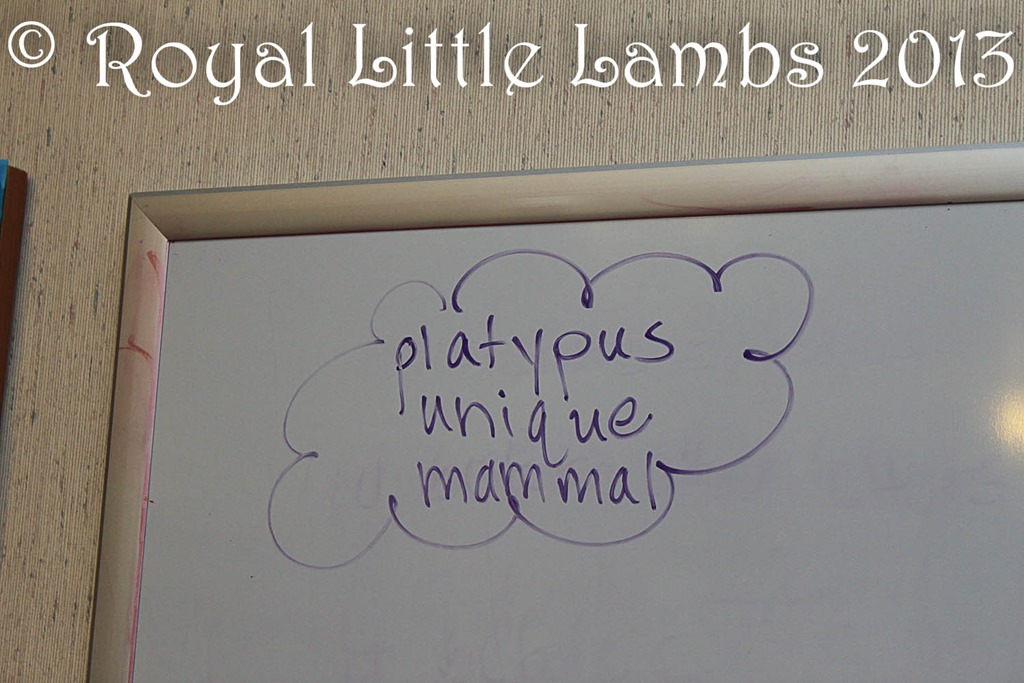
description

A fun little printable I found somewhere with topic and supporting sentences to sort.

paragraph construction

The girls sorted the sentences in order.

paragraph puzzle

More keywords for the whole paragraph:
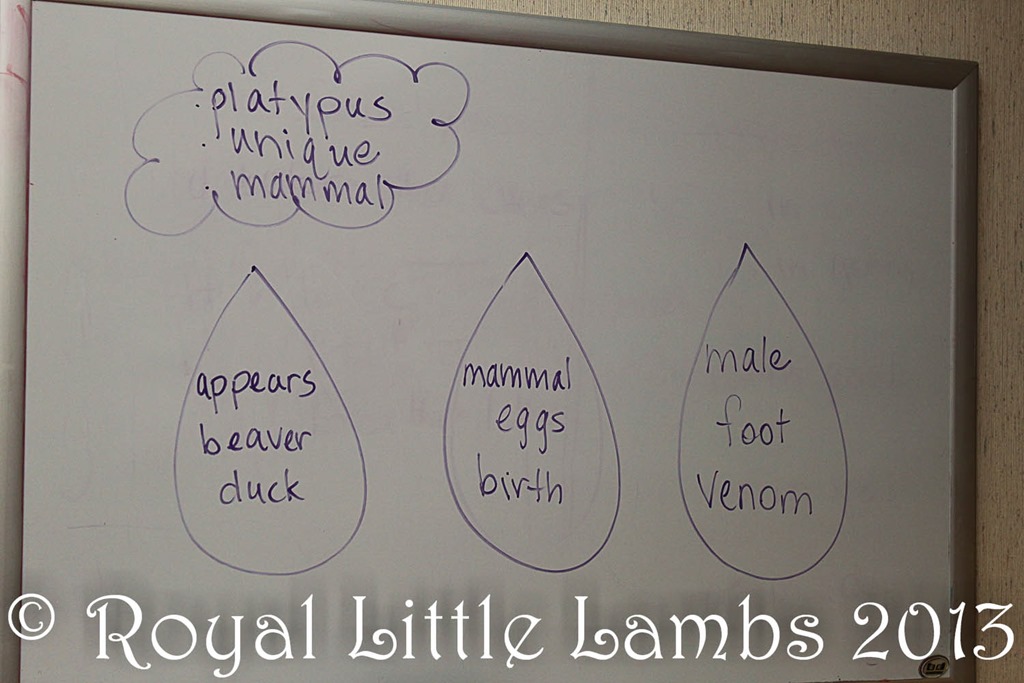
key words

The girls rewrote the sentences from their keywords.

paragraph

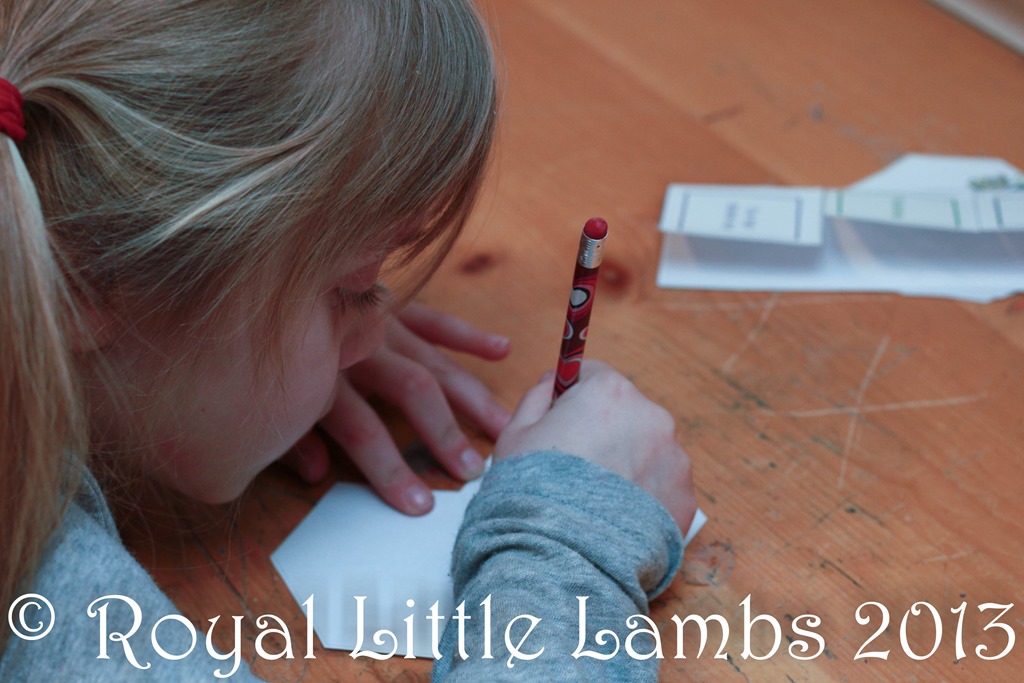
The girls wrote their first essays!

I am so proud. They really like this method!

Look at proud Tori with her first essay!

The girls presented their essays to Dad and practiced public speaking!

I like the suggestion in TWSS of using keywords for public speaking.

 photo levelb_zps2964469a.jpg

Student Writing Intensive Level B (Grades 6-8) is $109

Contains
• Structure & Style Overview DVD for parents and teachers
• Four instructional DVDs for the student
• Three-ring binder with dividers
• Student packet containing scope & sequence, teacher’s notes, and student handouts for one student (about 100 pages in all)

 photo Structurestyleset_zps12b6d638.jpg

Teaching Writing: Structure & Style DVD Seminar with Seminar Workbook for levels A, B, and C is $169

Contains

  • 10 DVDs:
    • Six DVDs with instruction on the nine structural models and multiple stylistic techniques (10 hours total viewing time—may be watched all at once, or viewed one disc at a time throughout the school year)
    • Tips & Tricks for Teaching Through the Nine Units, a two hour supplemental DVD refresher course
    • Three DVDs of sample student workshops at three different grade levels to help you with that first lesson
  • The TWSS Seminar Workbook, which serves as the syllabus for the seminar and contains charts, word lists, sample lesson plans, and more!

Check out these free downloads!

Photobucket
 photo DisclaimerGraphic1_zpsf612f371.gif
Share
Pin2
Share
2 Shares
You might also like:

Filed Under: Schoolhouse Review Crew Tagged With: review, writing

Learning About Life Cycles

This blog may contain affiliate links: disclosure.
Please see my suggested resources.

June 27, 2013 By Jennifer Lambert 2 Comments

Moving Beyond the Page

We reviewed the Moving Beyond the Page science and literature units Lifecycles  Age 7-9: Concept 3 – Cycles: Unit 1 and Charlotte’s Web Age 7-9: Concept 3 – Cycles: Unit 2.

I love that everything I need is included. I was surprised when a big box came with all this:

  • ages 7-9 – unit 3_1 – Science Unit – Lifecycles by Kim A. Howe, M.S.
  • What Is a Life Cycle? by Bobby Kalman
  • Who Eats What? by Patricia Lauber, ill. Holly Keller
  • Green Earth Butterfly Kit
  • ages 7-9 – unit 3_2 – LA – Charlotte’s Web (/Online) by Kim A. Howe, M.S.
  • Charlotte’s Web by E.B. White, ill. Garth Williams

We were already underway with caterpillars in our butterfly habitat and we already had big sister’s copy of Charlotte’s Web. The girls were thrilled to each have their own copies to read together. I loved it.

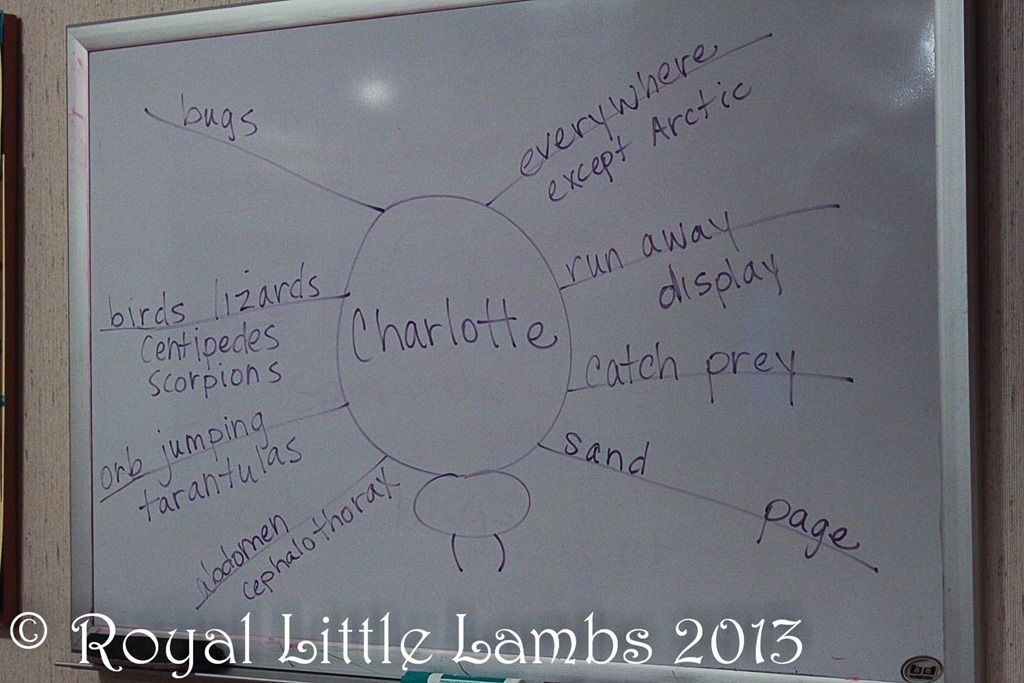
We learned plot with this flow chart.

Charlotte's Web Plot Chart
Charlotte's Web Plot Notebooking

I was impressed with the girls doing so much writing so well!

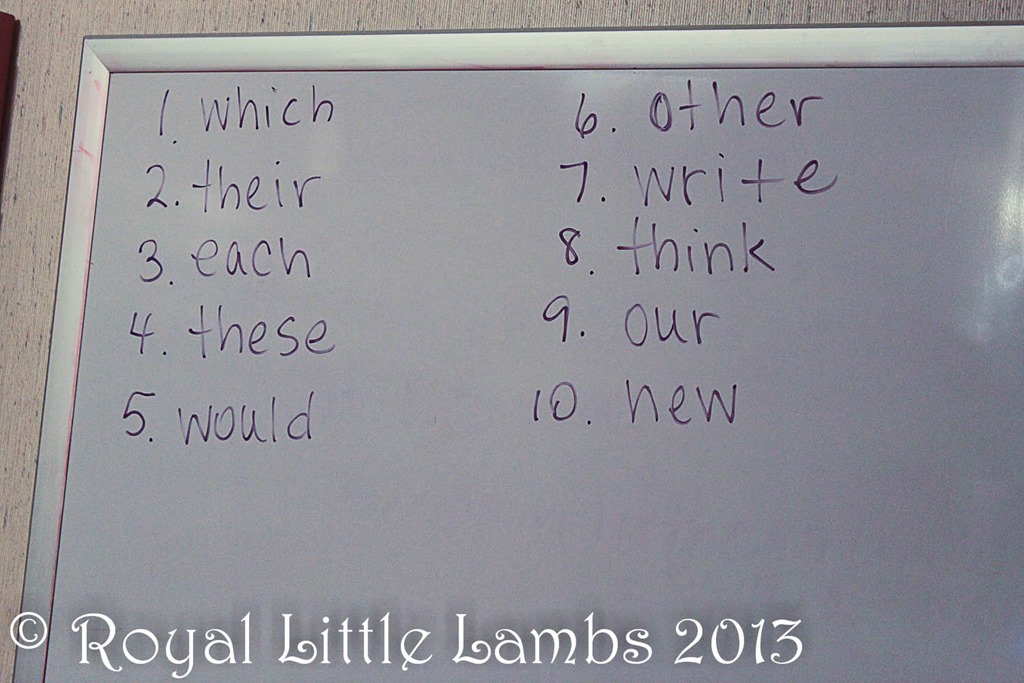
The girls worked on spelling words. I think vocabulary words would have been more helpful. I made my own list after this wasn’t super successful.

Charlotte's Web spelling words

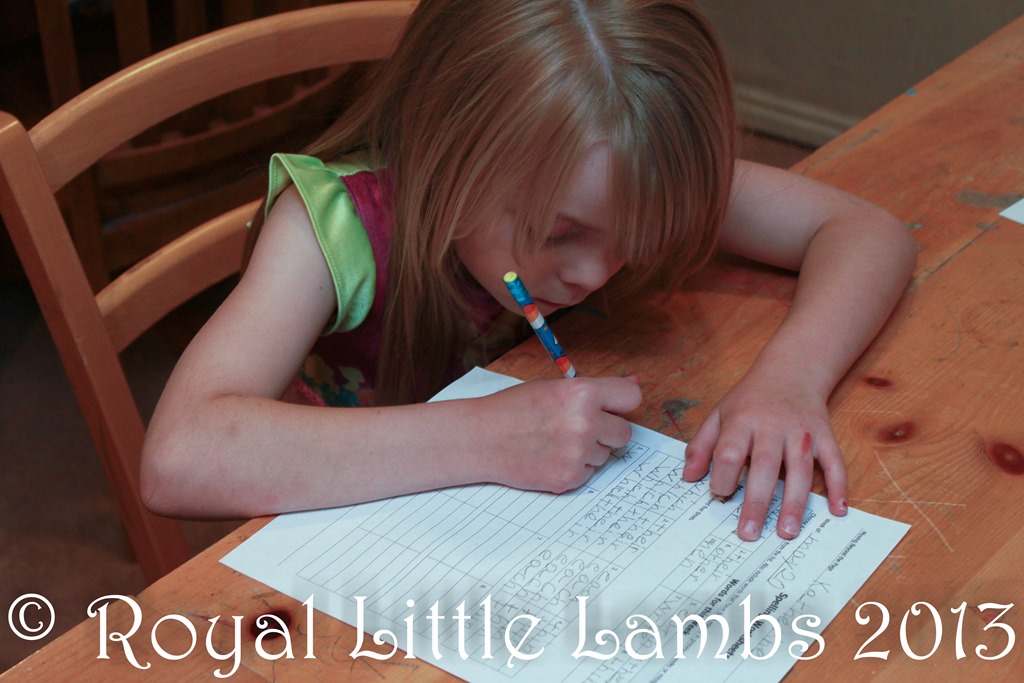
Kate did not really like the spelling sheets.

writing spelling words

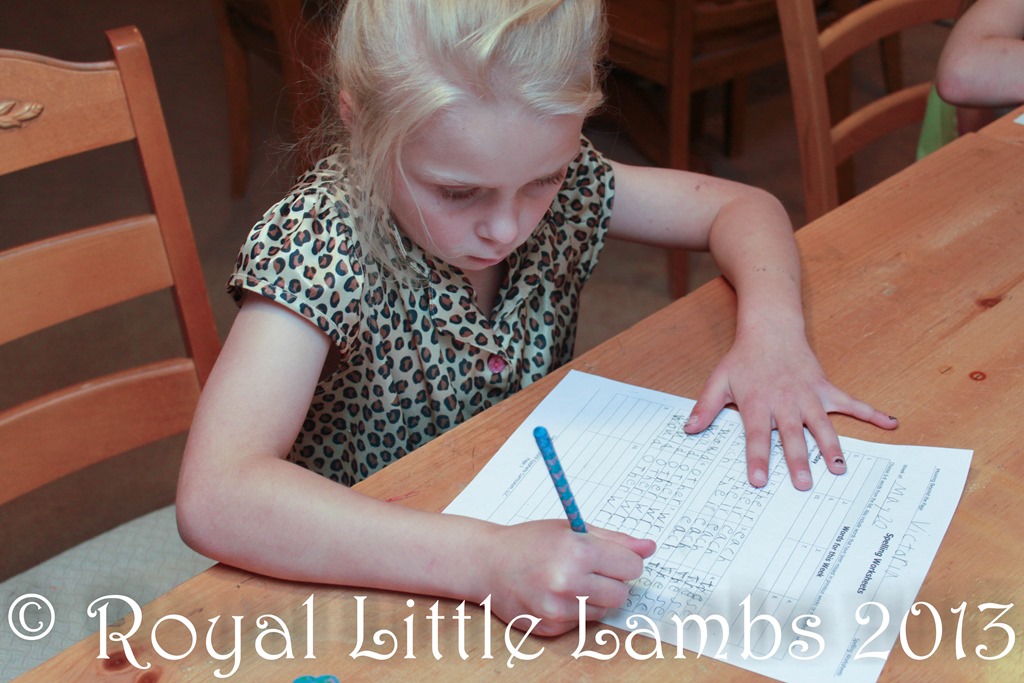
Tori really loathed the spelling assignments.

spelling worksheet

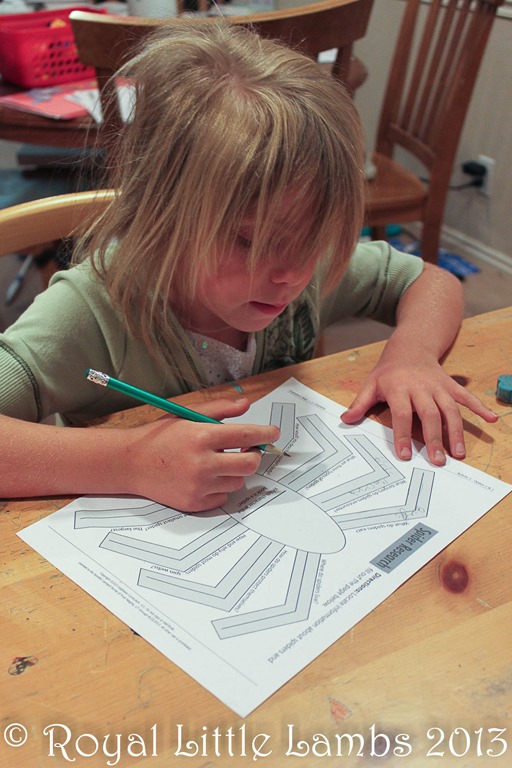
They loved this graphic organizer in the spider shape!

IMG_8178.jpg

They wrote what we learned in our reading on the “legs.”

spider notebooking

Tori enjoyed this writing assignment.

Spider Research notebooking

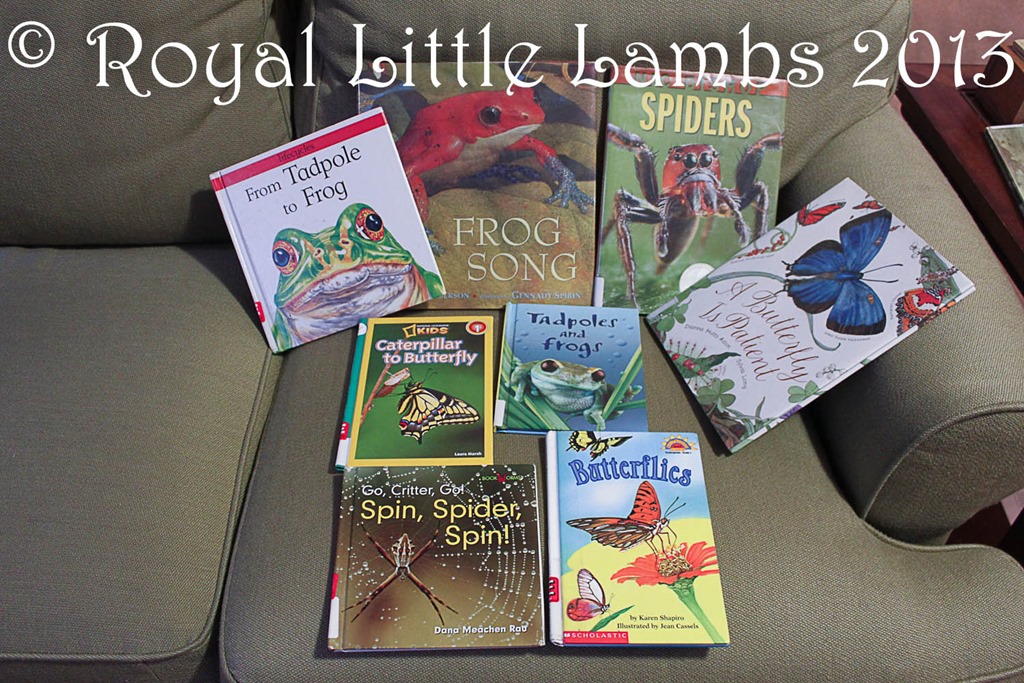
Here are the extra reading books we chose at the library. Kate loved this unit. She is an animal lover!

Life Cycles Books

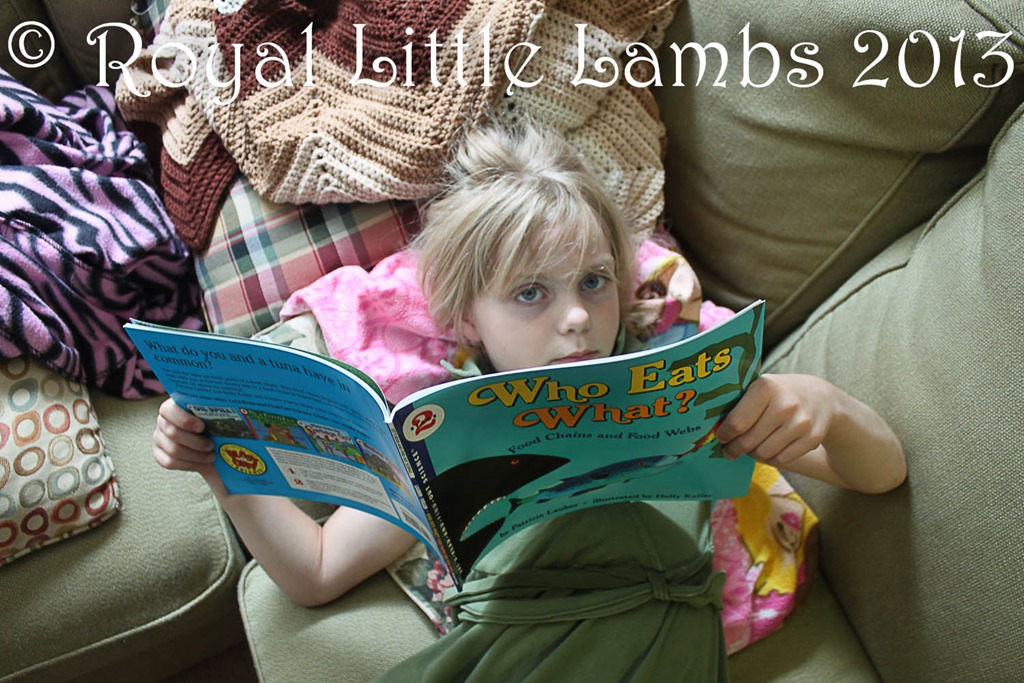
Kate loved reading the books for the unit.

Who Eats What Book

We found three lovely and very different spiders in our front hedge. None like Charlotte though!

Look at this guy’s stripes!

spider in web

I think this one is the same species as the one above, but a lighter color.

spider

This is a wolf spider because of his eyes.

wolf spider

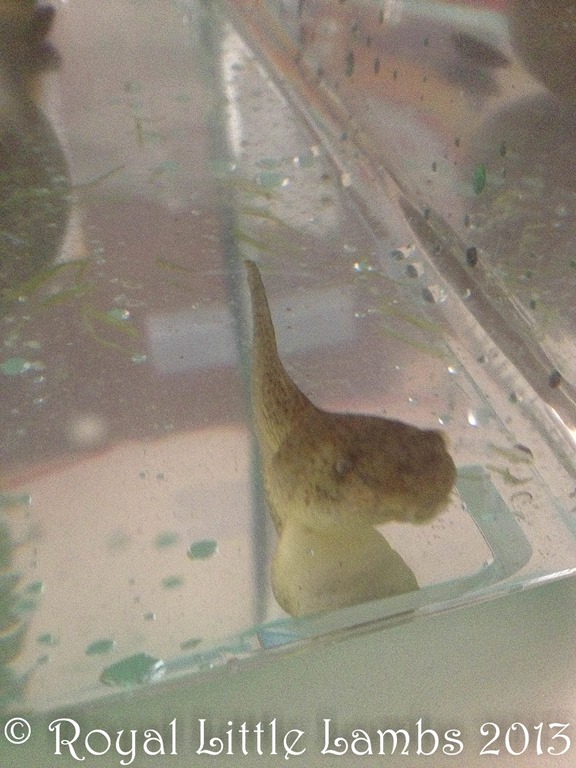
We even got a fun new pet that we love to watch every day: a leopard frog tadpole! His name is Sméagol. He’s just beginning to grow back legs.

IMG_1670.jpg

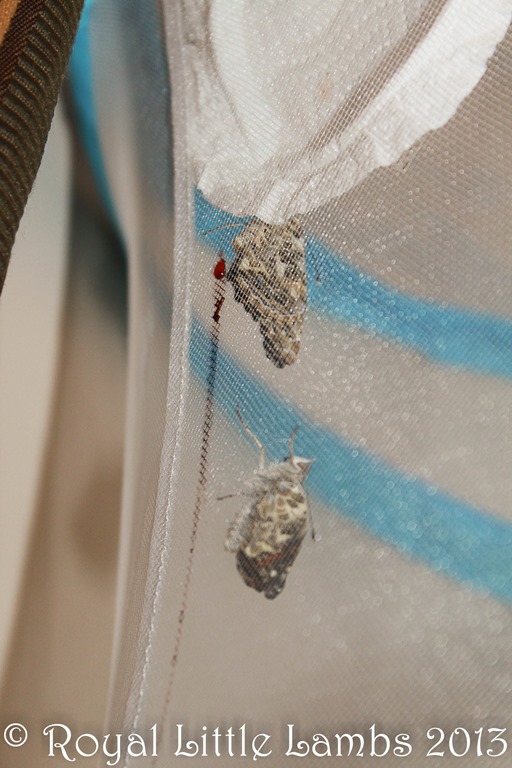
Here are our five chrysalids with one starting to jiggle.

first butterfly

Our first butterfly!

chrysalis

Butterflies produce meconium that looks like blood after they come out of the chrysalids.

butterflies coming out of chrysalis

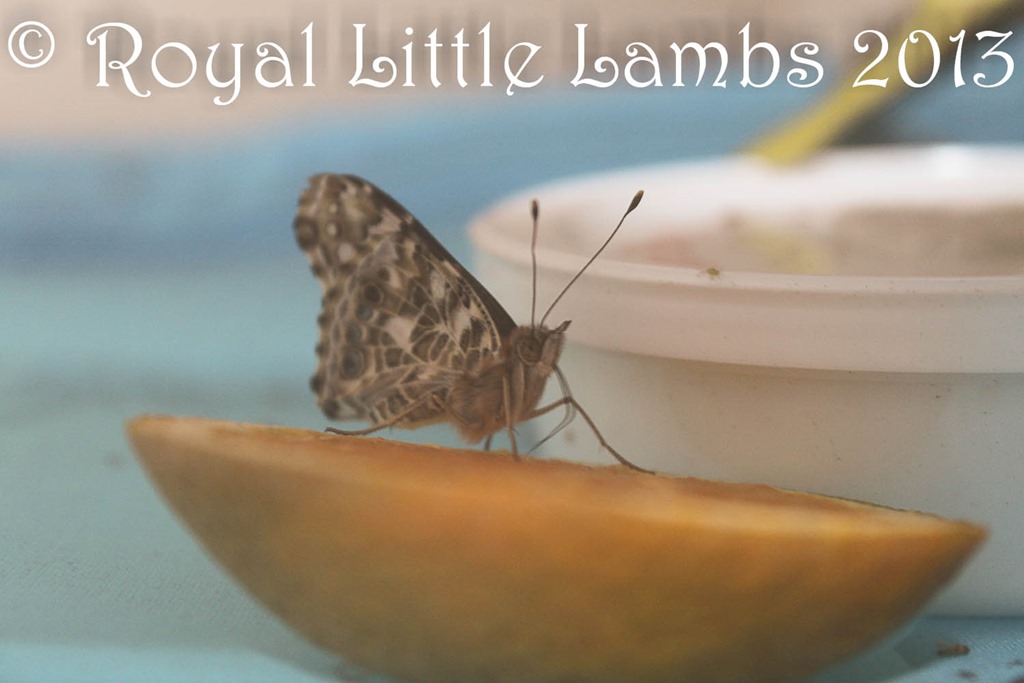
They like oranges!

butterfly on fruit

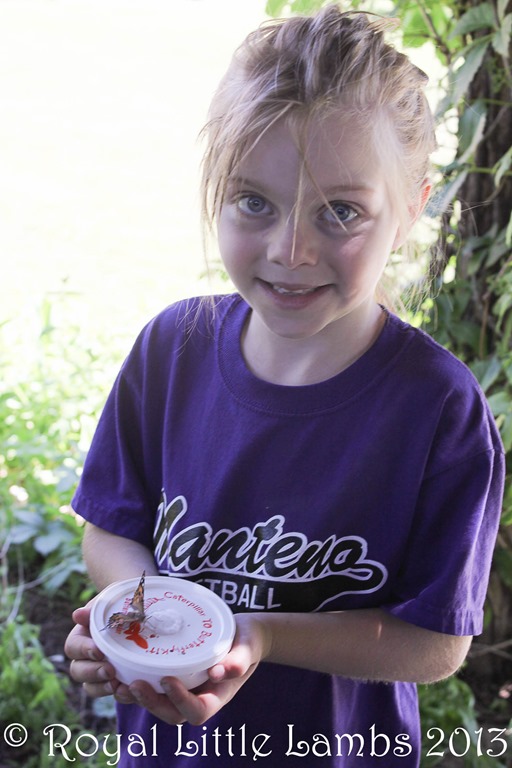
Proud butterfly mama Kate!

holding drinking butterfly

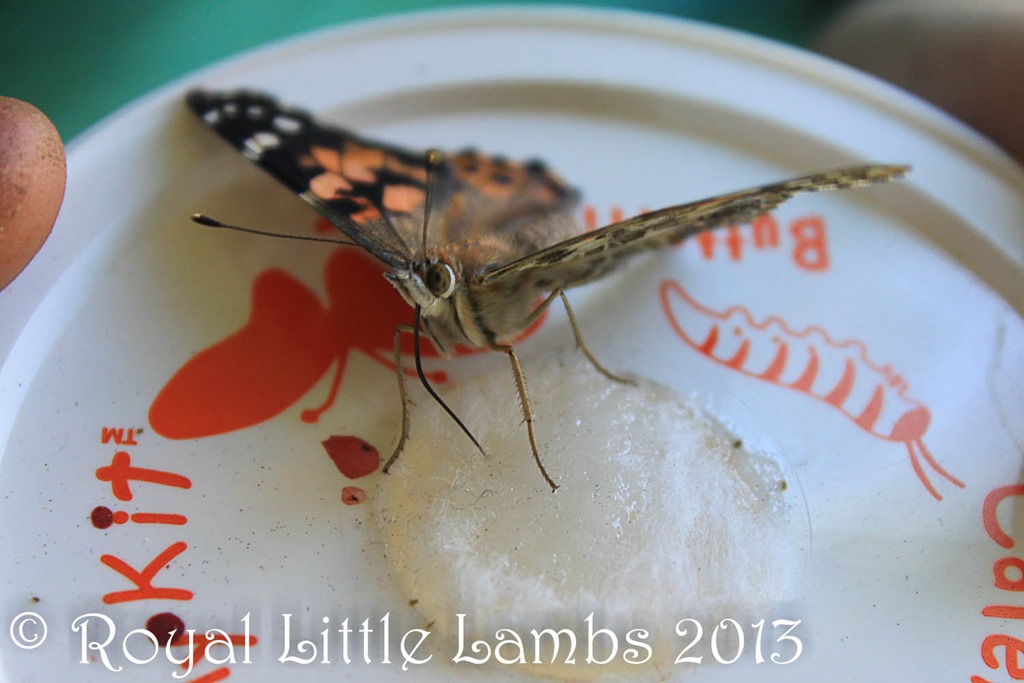
This one acted almost drunk on the sugar water nectar! He didn’t want to fly away!

butterfly drinking

Final shot before the 5th butterfly took off.

butterfly

In the Life Cycles lesson book, there are 9 lessons and a final project. The first page is a How to Use for Parents with a suggested schedule.

Love the vocabulary list and projects! We discussed living things and life cycles. We compared different animals and insects. And there was even a lesson on plants life cycles.

I had these fun magnets that we used for plants. We had done a garden study and we have a vegetable garden, so we’ve been working on that as a family and it was great hands-on learning! (There are some great notebooking pages in the lesson book though!)

plant life cycle magnets

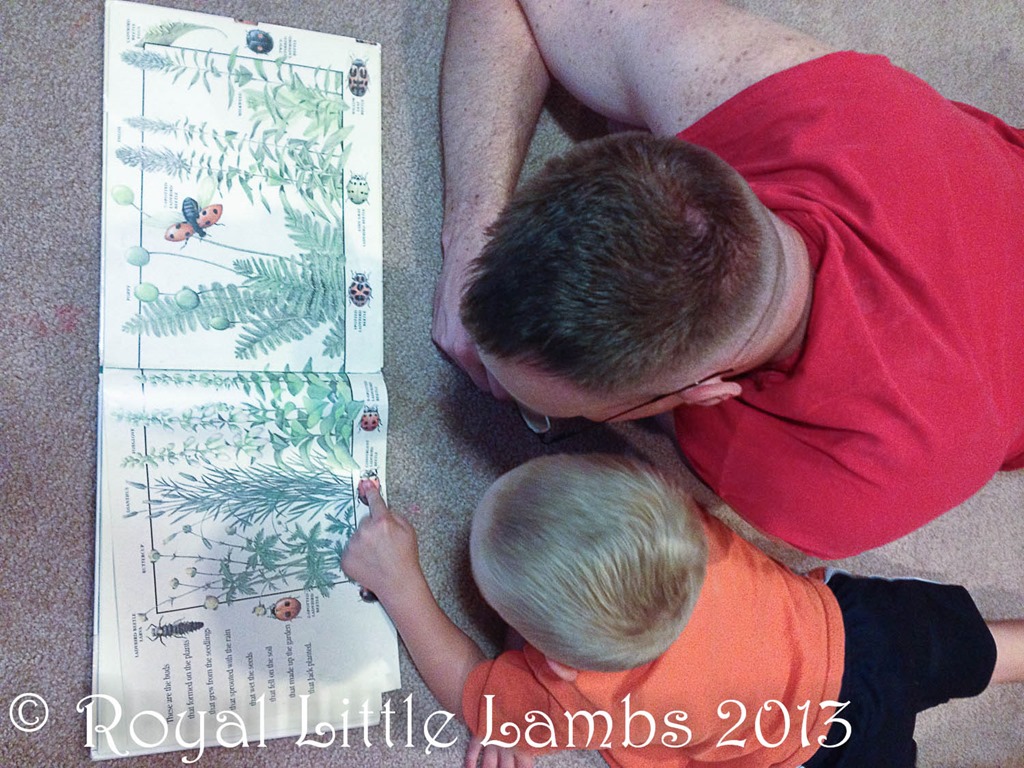
Alex really loved Jack’s Garden. Dad read it to him. I read it to him. The girls read it to him. A favorite!

reading about bugs with Dad

We’re studying animals in our regular science program and this just ties right in. I love that. We got to create a new species as a project too! It offered conditions, questions, and info on life cycle and food chains to help us with our creations. A rubric is included for parents to evaluate the project. A quiz is also available to assess the unit.

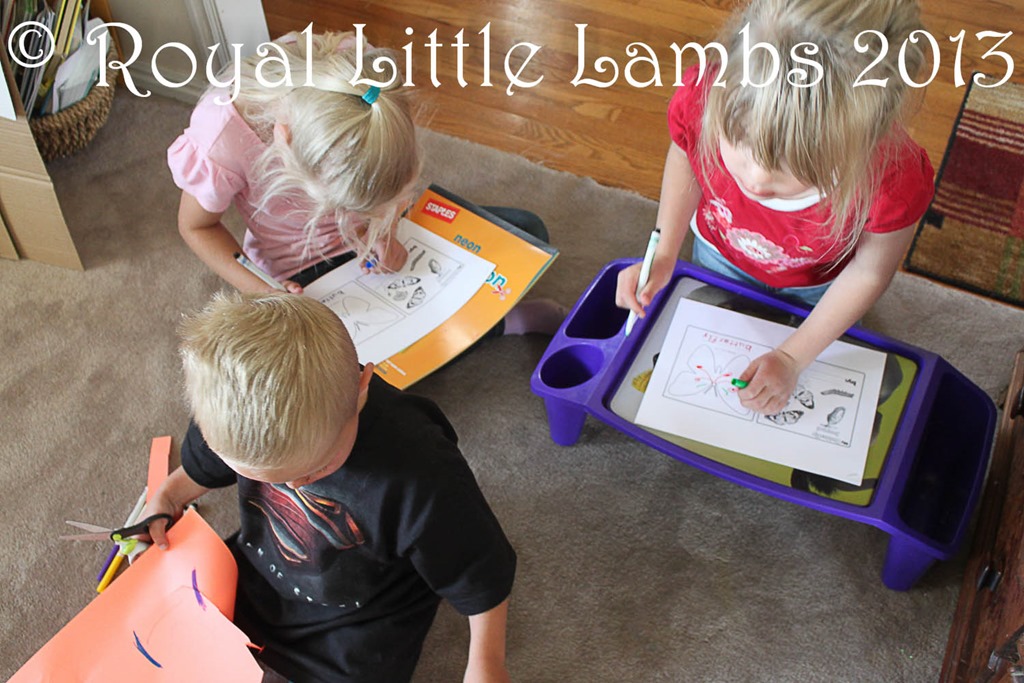
The girls completed a butterfly book about all they learned.

notebooking life cycles

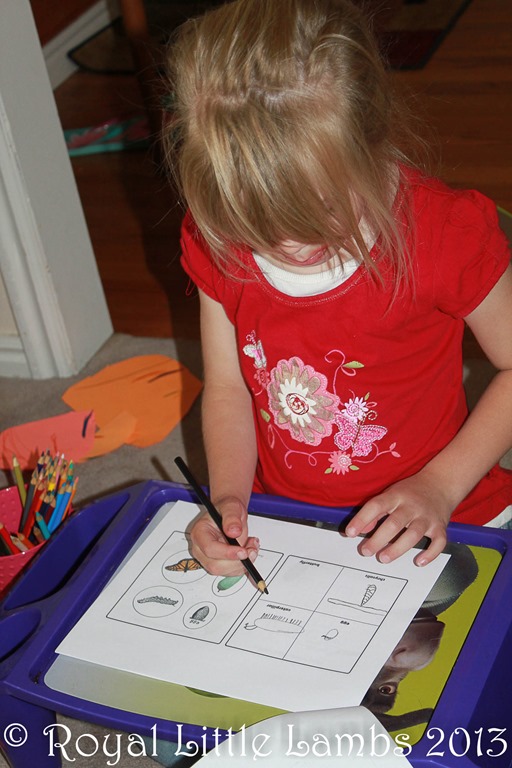
They drew the life cycle of butterflies.

life cycles notebooking

Kate read me the book about butterflies. She loves reading!

butterfly book

I made this bulletin board for our unit

life cycles vocabulary

vocabulary page in the Life cycles unit

Charlotte's Web vocabulary

we discussed senses in a barn

IMG_8545.jpg

Kate reads her instructions to write about barn sensory experiences. When I asked how they would feel in a barn, Kate said “nervous” and Tori said “happy.” So funny!

senses Charlotte's Web

The girls write down our discussion and draws the barn from Charlotte’s Web

I love the online component for Charlotte’s Web. I can print the pages needed for our assignments. They offer written and drawing pages and I let the girls choose (was surprised by their choices!). If members have great lesson ideas, we can submit those to the IdeaShare forum!

The headings at the top are Intro, Activities, and Conclusion. It’s a well-organized lesson plan. There are four activities with multiple printable choices depending on the child’s writing abilities. You can click on Table of Contents to download or save printables. There are seven lessons and a final project. Suggested times are included.

We’ve never really used unit studies because I find it difficult to work into our regular schedule, but these are so well-written and fun, I definitely want to make room to do more! Summer is perfect for units!

The Charlotte’s Web online package is $20.92, with novel included. The unit lesson book alone is $12.93.

The Life Cycles package $45.92, including all materials needed. The unit lesson book alone is $16.99.

Click the images below to check out samples in literature, science, and social studies!

literature sample
science sample
social studies sample
Photobucket
 
 photo DisclaimerGraphic1_zpsf612f371.gif
Share
Pin1
Share
1 Shares
You might also like:

Filed Under: Schoolhouse Review Crew Tagged With: garden, nature study, review, spring

Prima Latina Review

This blog may contain affiliate links: disclosure.
Please see my suggested resources.

June 10, 2013 By Jennifer Lambert 4 Comments

We really adore this company and the Latin programs they offer!

We’ve always used Memoria Press Latin.

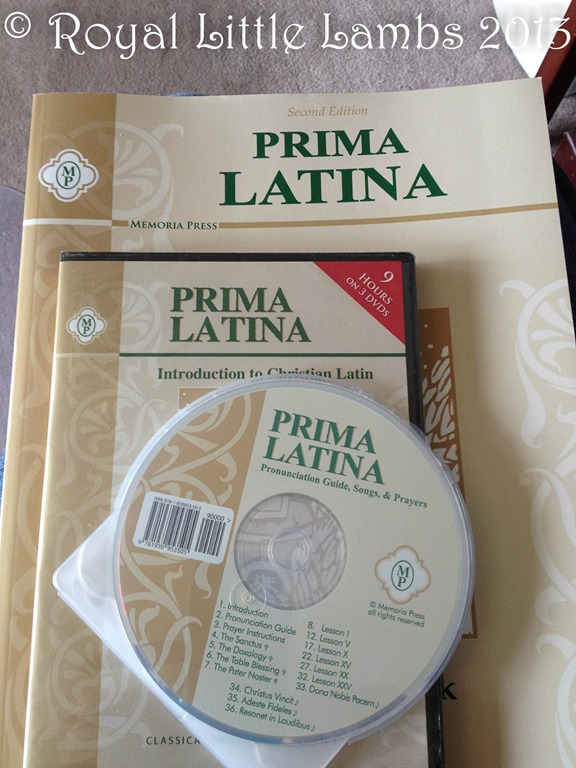
We reviewed Prima Latina from Memoria Press for my middle girls.

 photo mp_header_zps9aa8d9dc.jpg

We were ready to begin Latin with Tori and Kate. Kate had been begging to begin Latin. They’re a bit younger than Liz was when she began. Liz was about 8 when she started with Prima Latina. Kate just turned 6 and Tori just turned 7.

This introductory Latin set is recommended for 2nd grade and up. The girls are transitioning into 2nd grade, so it’s great timing!

 photo PL_completeSet_zps91680a55.png

Kate was super thrilled when this arrived in the mail!

I didn’t tell her it was coming, so it was a great surprise! {I also ordered Tori her own workbook so we could all do it together.}

Prima Latina set

Here’s the setup:

We didn’t really use the flashcards, but we might review with them after we get farther on in Latin.

The lessons are designed to take about a week:

  • Watch the DVD.
  • Read and review.
  • CD.
  • Workbook.

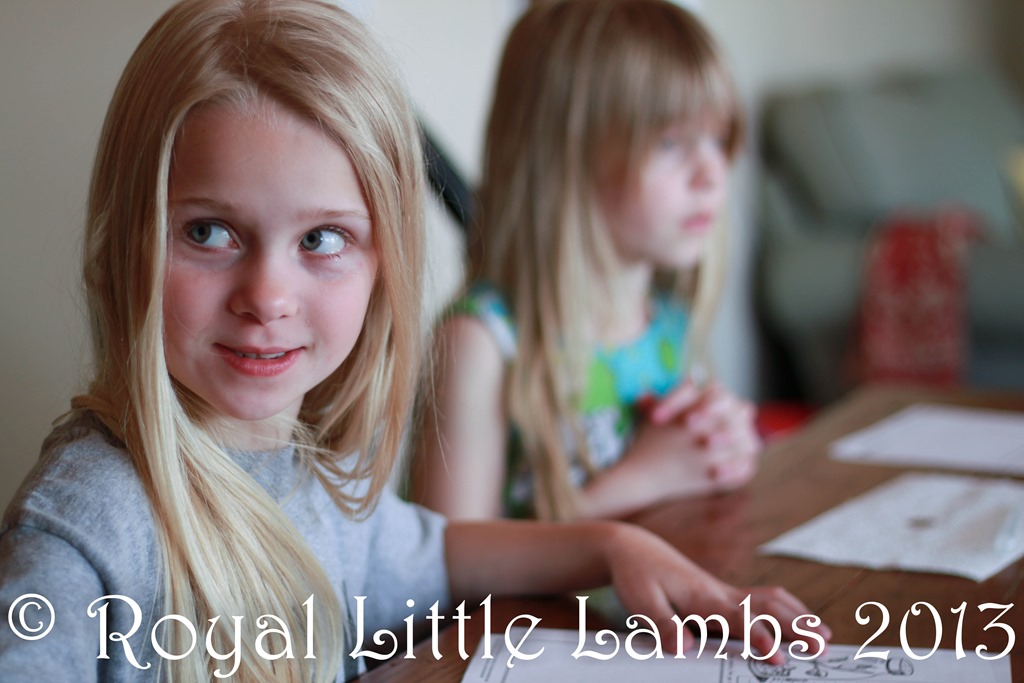
We can do a lesson in a couple days! It’s the first thing the girls want to do each day.

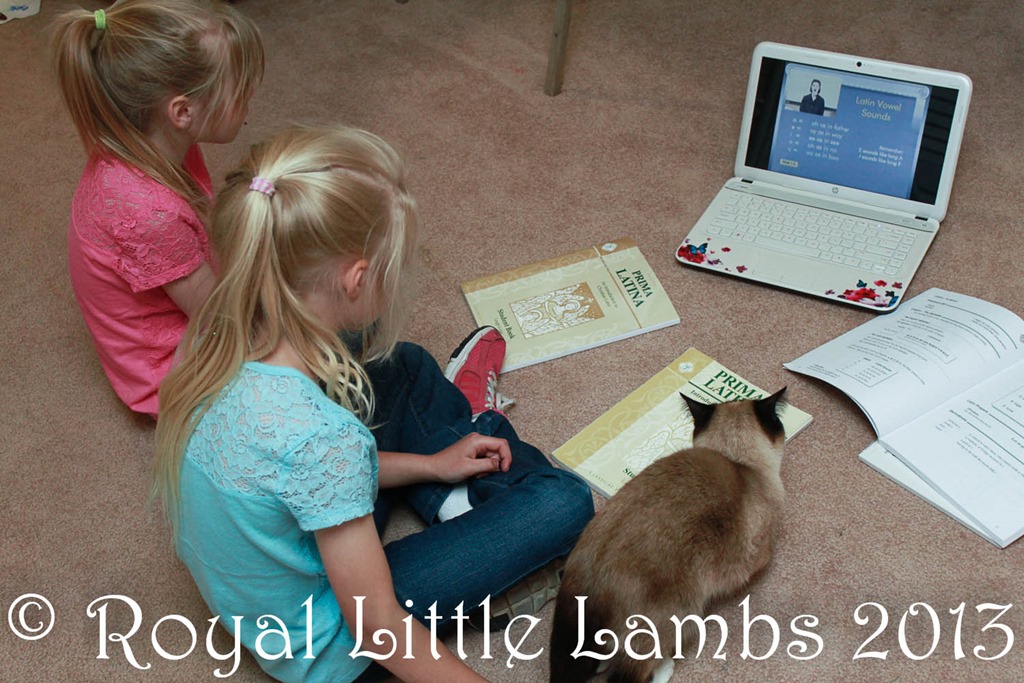
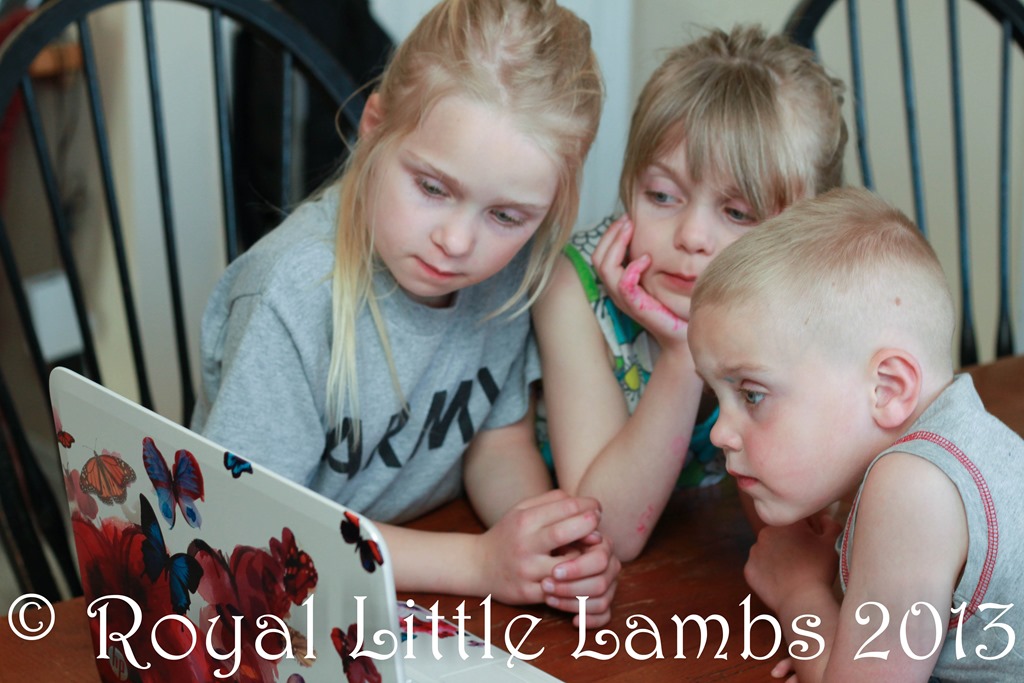
Kitty watches the lessons too. Tori and Kate really like the DVDs. The DVDs are easy to navigate and slides could be printed for note taking. The pronunciation CD is great for extra listening and recitation practice.

Leigh Lowe is a great teacher! {and she sounds like home to me…Southern and all…} I usually sit and watch with the girls to make sure they understand and then we do the workbook exercises together over a couple days.

Prima Latina DVD Lesson

The girls really enjoyed practicing their Latin practical phrases on their big sister, who has done several years of Latin. We listened to the Lingua Angelica songs and the girls really love those. They’re beautiful and they combine a love of music with a love of language! We love learning the Latin prayers. The girls are so proud of their progress!

I love the emphasis on grammar. This helps them learn the details of English as well! Tori struggles a bit, but Kate is already a strong reader and understands the lessons well.

As a classical educator, this Latin program is comprehensive and fun and we love it. It’s a great introduction to Latin and sets a foundation for serious Latin learning with their other programs. Also, there are great supplements, like this copybook.

This introductory course Prima Latina Complete Set is $90.90.

The set consists of:

  • Student Book
  • Teacher Manual
  • Pronunciation CD
  • Instructional DVDs (9 hours!)
  • Flashcards

Click on over to view a sample lesson.

Photobucket
 photo DisclaimerGraphic1_zpsf612f371.gif
Latin & Greek Word Study Notebooking Pages
Share
Pin1
Share
1 Shares
You might also like:

Filed Under: Schoolhouse Review Crew Tagged With: language, Latin, review

Art Ditto by Birdcage Press Review

This blog may contain affiliate links: disclosure.
Please see my suggested resources.

June 7, 2013 By Jennifer Lambert Leave a Comment

We loved reviewing Art Ditto by Birdcage Press.

art ditto review
Birdcage Press Logo photo Birdcage-logo_zpsa3a9555b.jpg
Art Ditto photo Birdcage-ArtDitto_zps3f1d652a.jpg

The kids examined the collecting cards before playing. They looked at the art and noticed the highlighted image on the other side. Kate read the descriptions of the art in all languages.

playing art ditto game

Each collecting card has a theme: tigers, flowers, music, cats, boats, horses, birds, fruit…

You can see on one side is a close-up detail and the artist and year.

art ditto tigers

On the opposite side is the entire image and the title of the piece in four languages: English, French, Spanish, and German. We practiced our pronunciation and learned vocabulary!

art ditto cats

The game is like a cross between Bingo and Memory. We all loved playing memory match. We did an easy version with just matching a card, then we played a harder version of making a memory match before matching to our cards.

Then ensued the most vicious game of Go Fish the world has ever known. ventriloquism, secret hiding places, screaming and cheering. I was exhausted. It was all in fun. And there was no cheating or crying.

We had to have a bowl of Goldfish crackers to play Goldfish (Go, Fish! They knew that’s what it’s called, but they played it crazy!).

art ditto with Goldfish crackers

Kate hid her cards in the lap desk pocket so her sisters wouldn’t try peeking.

If you had to Go Fish you also had to take a Goldfish cracker.

art ditto game

The girls read the titles of the art so they could memorize artists and titles. Great for Tori to practice reading!

Some of the convo went like this:

“Kate, do you have ‘Fishing Boats on the Beach?’”

Kate flips through her stash. She nods.

“May I have it?”

“Maybe.”

Giggles. And Begging.

Alex only wanted the tigers, cats, or boats cards.

This is Alex doing the “I won! I won! Oh yeah!” dance.

playing art ditto

So, we love this game! It’s so fun, versatile, and educational. I want to collect them all!

Art Ditto Memory Game

48 art tiles + 8 big collecting cards
Museum-quality construction

Play memory games with great works of art and collect your favorites on art collecting cards. As you play, you’ll learn how different artists depict birds, boats, cats, flowers, horses, and more. And you’ll learn words in four languages as you have fun with great art!
Ages 4+

$24.95

Photobucket
 
 photo DisclaimerGraphic1_zpsf612f371.gif
Share
Pin1
Share
1 Shares
You might also like:

Filed Under: Schoolhouse Review Crew Tagged With: art, review

McGuffey Reading app Review

This blog may contain affiliate links: disclosure.
Please see my suggested resources.

May 2, 2013 By Jennifer Lambert Leave a Comment

My young kids really liked reviewing the iOS app:

McGuffey app

Phonics and Reading with McGuffey by LiteracySoft

 photo literacysoftlogo_zpse50d3f3c.jpg
 photo literacysoftapp_zps92bba7a1.png
The Phonics and Reading with McGuffey App

It worked out great since Alex is just starting out learning his blends and how it all goes together to make words. Tori needs a bit of review. Helping Alex was great for her and he loved the attention!

spelling on the iPad

It was the cutest thing hearing Alex praise Tori for saying the right sound. She beamed.

spelling iPad

They did the first few lessons together. Then Tori moved on her own as it got into reading and she needed the review. She was able to work at her own pace and it was wonderful.

Kate loved showing off her skills.

McGuffey reader iPad

All three kids think the little animated graphics at the bottom of the screen when an answer is correct are adorable. The dancing banana is a favorite.

And how appropriate this lesson is for this week!?

McGuffey.png

And our Kate is delighted that she’s the “star.”

And, oh my, but lessons 22 and 23 are about cows, Kate’s favorite animal!

iPad together

And maybe you’re wondering what in the world are those lines and dots symbols above and below the letters? Those are phonetic symbols. They tell us about lips, tongue, teeth, and breath placement for the proper pronunciation of the letters.

Kate just mostly ignores them, but Tori uses them to help her remember the “rules.” I love it and teach her what they mean. Everything is science and math to Tori! See them in action. Below is the International Phonetic Alphabet. The Americanist notation is a bit different.

Most lessons consist of 9 components {some later lessons are just reading practice and sight words}:

  1. Letter Sounds
  2. New Words
  3. Phonics Flashcards
  4. Phonics Blender
  5. Lesson Illustration
  6. Reading Practice
  7. Quiz
  8. Spelling Practice
  9. Sight Word Drilling
 photo literacysoftscreenshot1_zps8bf97722.jpg

Kate and Tori liked building silly words.

 photo literacysoftscreenshot2_zpsbb2b49ae.jpg
This app includes:

• All 52 McGuffey Primer lessons
• All 44 letter sounds of English and their graphemes
• 60+ letter sound animations
• 400+ practice word vocabulary
• 9000+ nonsense word audio dictionary

You can try Phonics and Reading With McGuffey on PC risk free for an unlimited time. There is a lite version which you can try for free on iOS. The first 10 lessons are free! 

 photo DisclaimerGraphic1_zpsf612f371.gif
Photobucket
Share
Pin
Share
0 Shares
You might also like:

Filed Under: Schoolhouse Review Crew Tagged With: reading, review

Supercharged Science Review

This blog may contain affiliate links: disclosure.
Please see my suggested resources.

April 7, 2013 By Jennifer Lambert 4 Comments

My family reviewed Supercharged Science  with its experiential e-Science program.

All four of my kids got involved which I loved. It’s not often I can work in lessons that a 3 year old, 6 year old, 7 year old, and almost 13 year old can do together and enjoy and learn!

Supercharged Science

If you have questions, you can call or email for help and they’ll get right back to you.

Nine steps the e-Science program provides in their detailed lesson plans:

  1. Unit Description: This answers the “What is it?” and “Why should I care?”
  2. Outcomes/Goals: What do you want the students to learn?
  3. Objectives/Highlights: Detail the key concept and topic into chunks.
  4. Introduction: How will you present the topic to the students?
  5. Development: This stirs up interest and gets students motivated to learn.
  6. Practice: Bringing the key concept to life.
  7. Further Study: Answering questions and gaining momentum.
  8. Evaluation: How well did you teach and how well did they learn the material?
  9. Closure: Before moving on, celebrate your success!

(Note: The e-Science program does not cover creation nor evolution so all families may participate. The focus of the program is on how to launch the rocket, build the robot, use a microscope, take measurements and data, etc.) YAY!

Here’s a screenshot of all the units available. Overwhelming! We watched some of the videos that went along with what Liz has been studying.

escience units

Here’s my littlest scientist ready to explore!

IMG_7041.jpg

We watched lots of videos about math. Tori really enjoyed those. She’s our math girl!

We learned about the scientific method with water and pennies. This was review for Elizabeth, but rather new for Tori and Kate, and of course, Alex.

The experiment is titled “Underwater Presidents.”

The girls hypothesized how many drops of water the penny would hold before it spilled over the edges.

I walked them through the process and we read the lesson together. We observed our materials and discussed what could happen and why.

IMG_7046.jpg

My kinesthetic learner, Alex, loved this. He was such a big boy!

IMG_7047.jpg

Kate repeated her experiment three times to get an average result.

IMG_7060.jpg

Alex wanted to do this over and over and over. He loved it. We must do it with other coins to compare our results!

IMG_7062.jpg

We wrote up our materials, procedure, drew a picture of what we did and wrote down our results and conclusion. We discussed why the different pennies took different amounts of water: dirt, different size drops, bumps in paper towel slanted the penny, etc.

IMG_7056.jpg

Liz has been studying anatomy lately and they offer conversion charts so you can cross-reference their program with one you’re already using. perfect!

Liz and I watched a video together about nerves and that was amazingly entertaining. The narrator was just fun.

We decided to make a working hand model as a family. My husband, Aaron, had to do most of this one without kid help since it involved slicing and hot glue.

IMG_7051.jpg

The kids watch the video about how to make the hand model.

I read the text material aloud to the kids and we demonstrated the hand model and explained how it all worked and we looked at our own hands and felt the muscles and tendons and discussed the different bones.

IMG_7072.jpg

Liz demonstrates how the hand works. Hers is the one on the left. ha.

one of these things is not like the other

Dad extends the lesson. Kate looks at the insides of a chicken bone. We discussed what blood does and how bones are made.

IMG_7075.jpg

What do we think?

Overall, I really like the idea of the program. It got me out of my comfort zone and the videos walk you through the experiments so that’s easy for me to follow. We’ll use it as a supplement to our current science program.

The kids loved watching videos.

I am really horrible at fitting in arts, crafts, experiments…and I really felt convicted that I don’t do more of this with my kids. They LOVED the together time with BOTH parents, so we’re going to try to make it a regular “Science Sunday” at our house whenever possible schedule-wise.

Many of the experiments weren’t feasible for us since we didn’t have some of the materials or they were too dangerous for me to finagle with four kids. Thankfully, my husband is a scientist! He didn’t care to get crafty, but he did it for me. And for science. They offer a shopping guide for each unit so you can glance at that and see what you have already and what you need to acquire so you can be prepared.

The recommended age level for the program we reviewed is K-8. The program offers many choices within the site to choose from based on ability and resources. Some of the more advanced experiments are phenomenal, like building a hovercraft and alternative energy! When the kids get a bit older, I would love to utilize some of the more bizarre and advanced experiments. I can hardly wait. Now that the weather is getting nicer, I want to build rockets and do some of the fun and messy experiments.

There’s a list of recommended resources, like a science gift guide with books and games and equipment for your science lover! There are oodles of experiments for award-winning science fair projects. If we ever choose to participate in one, this is where I’ll look for ideas!

Here’s the purchase info:

Membership benefits:

  • Videos of teaching real science to your kids, just like I do in an actual classroom
  • Text-book type reading to support the material in the videos
  • Hands-on activities and experiments, with videos that guide your kids through them. These activities and experiments are what really ignite a passion for science in most kids.
  • Homework exercises/quizzes so you can see what your kids are really learning, and tips for how to keep track of your progress in a real a science journal
  • A live science class in difference science areas every few weeks where you can connect with me personally
  • Parent resources for helping you give your kids the best science education they can get
  • A place to ask me questions (lots of them!)
  • Recordings of everything so your kids can do the program on whatever schedule AND at whatever pace suits them.
supercharged science online
Photobucket
 photo DisclaimerGraphic1_zpsf612f371.gif
Share
Pin
Share
0 Shares
You might also like:

Filed Under: Schoolhouse Review Crew Tagged With: review, Science

Margarethe: A Reformation Novel review

This blog may contain affiliate links: disclosure.
Please see my suggested resources.

April 5, 2013 By Jennifer Lambert Leave a Comment

We received the book Margarethe from Salem Ridge Press to review.

Salem Ridge Press
Margarethe

The books from Salem Ridge Press are certainly high quality and have high standards.

They certainly try their best to adhere to this verse:

Finally, brethren, whatsoever things are true, whatsoever things are honest, whatsoever things are just, whatsoever things are pure, whatsoever things are lovely, whatsoever things are of good report; if there be any virtue, and if there be any praise, think on these things. ~Philippians 4:8

My eldest daughter loves historical fiction and I thought this selection would please her since we’ve been studying the Reformation in history and she has been fascinated  I had hoped this review could be hers and I would just offer assistance.

It was not to be. Liz attempted to read Margarethe, but did not care for the book at all. At least she tried. I do not fault her.

I admit that the book does begin a rather slow, but after I started reading through several chapters, it did pick up just a little. The language is stilted and old-fashioned (no contractions!). The omniscient narrator does not flow in writing her story as well as I would like. Margarethe’s personal spiritual development is just not very believable to me. It does not make me long to turn the page or stay up late to finish the book.

The characters are all flat and I have no sympathy for any of them. I could not admire the characters much. I find the main character, Margarethe, mighty whiny and prone to tears at the drop of a hat. I do commend her teaching her village about Luther. Her brother is trapped in the common old-fashioned beliefs of the weakness of women.  He is constantly confused by the opposing forces of duty and the changing society he wishes to join. The old aunt is a shadow of a mother who has no power. The father is paralyzed by fear of poverty and the changing times and ineffectual with his children’s rebellions. The sister, Else, has been banished to a convent and is a poor gray loveless version of her old self. I’m sure Else’s condition must symbolize the darkness of the Church at the time while Luther and Zwingli offer the Light of Truth.

The best quote of the book:

“‘The Reformation must begin in our hears and bear fruit in our lives, if ever it is to be real and true,’ she murmured.  ‘But O, what slow progress it makes in me! how proud and angry I am if anyone ventures to cross me…

The freedom and liberty that we need, the freedom the Gospel offers to us, is the conquest of our own passionate hearts. Of course, I shall always be the same Margarethe in one sense; but I want to be a new Margarethe in another – renewed by God’s Spirit; and if I were, I should not have talked in such a passionate, defiant manner as I did today.'”

p. 216-217

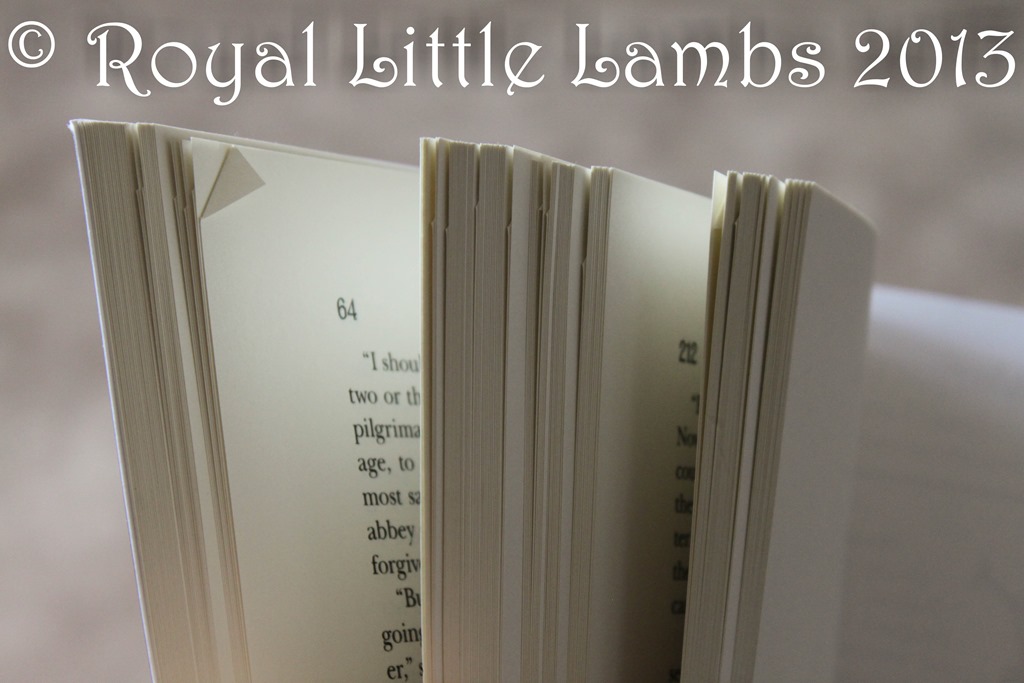
I was able to get past all that and relish in the ideals of the time period and how the people might have felt about Luther and Zwingli among the nobility and peasantry. I have dog-eared many pages that explain the Truths that Luther and Zwingli preached that the people were so fearful to accept under the watchful eyes of orthodox and often ignorant Catholic priests.

dog eared quotes

It’s just not a fun read – for my daughter or for me. And we are both prolific readers. It was dry and boring.

From the company:

  • Story Setting:  Germany and Switzerland in 1517 – 1522 A.D.
  • Notable People:  Martin Luther and Ulrich Zwinglius
  • Notable Events: The German Reformation and The Swiss Reformation
  • Originally published in 1879
  • 280 pages
  • For Ages 12 – Adult
  • Softcover $14.95 and hardcover $24.95

You can read the first chapter here.

About the original author:

Emma Leslie (1837-1909), whose actual name was Emma Dixon, was a prolific Victorian children’s author who wrote over 100 books. Emma Leslie brought a strong Christian emphasis into her writing and many of her books were originally published by the Religious Tract Society.

Salem Ridge Press purchases many old books, often using leads from old catalogs, and carefully evaluates each one, republishing only the best of the best.

There are many selections from Salem Ridge Press about Church History, American History, and World History – for younger readers too.

Photobucket
 photo DisclaimerGraphic1_zpsf612f371.gif
Share
Pin
Share
0 Shares
You might also like:

Filed Under: Schoolhouse Review Crew Tagged With: review

Computer Science for Kids Review

This blog may contain affiliate links: disclosure.
Please see my suggested resources.

April 2, 2013 By Jennifer Lambert 2 Comments

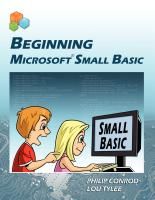
Liz reviewed Computer Science for Kids and very much enjoyed learning Beginning Microsoft Small Basic.

There are 11 lessons. They range from 22-109 pages.

The lessons generally consist of

  • Review and preview
  • Small Basic (lessons)
  • Program (application: actual programming)
  • Summary

Liz quickly became very comfortable with the lessons and completed them all by herself and called me {constantly} to come see her fun little creations.

 photo ComputerScienceForKidsProgrammingTutorialsLogo_zps071e1e50.jpg
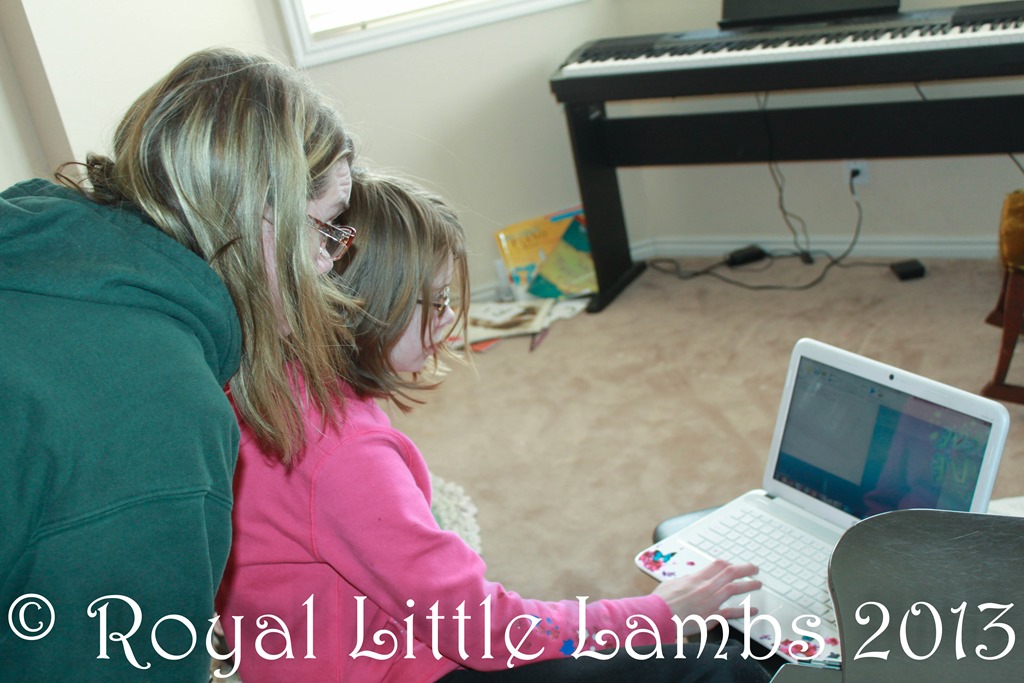
Dad downloaded and set up and looked through the curriculum to see what needed to be done. This was outta Mom’s comfort zone! Liz was bored with waiting.

Dad teaching computer coding

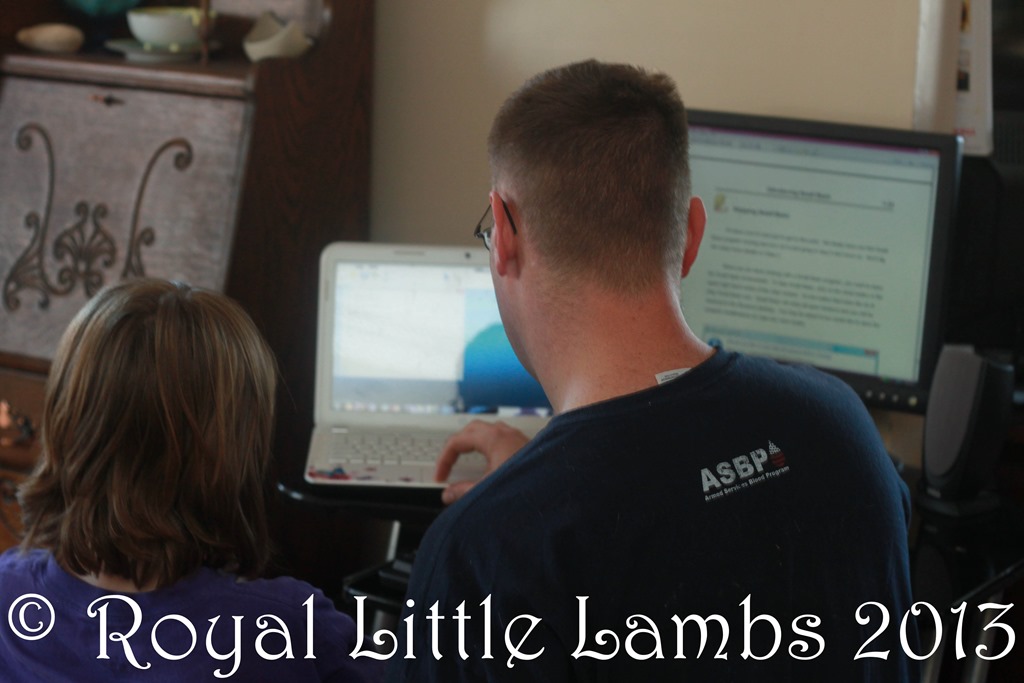
Then after it was all ready, Dad showed her how to work the program a bit, and she perked up.

Dad coding

Elizabeth loved learning about the history of computers and programming in the first lessons. I was impressed with this narrative.

It shows pictures of the first computers – nifty. And did you know that BASIC is an acronym? (Beginner’s All-Purpose Symbolic Code) From Class 1: “Small Basic starts with a really simple programming language that gathers inspiration from the original BASIC language. It has no more than 15 keywords and is strictly imperative.”

Small-Basic-definition.png

She likes the “games.” She likes the control and learning how changing just one letter or character can change the whole program. Her analytical mind at work! I love that she is learning about computers. I know my dad is proud (it’s what he wanted me to do!).  It’s great help to her in math since she has to calculate the size of shapes or borders within the graphics.

learning to computer program

Then she was on her own. She was all proud of herself and showing me all these little “games” she wrote.

programmer

She self-corrected her code when they didn’t work just the way she wanted. Dad helped her change them and showed her different options. Then she ran with it.

Dad helping code

I am thankful that we can utilize the kids’ desktop computer and my laptop so Liz could have the lessons up and do her code at the same time. It made it less frustrating for her. And that makes me happy.

coding

The true test is that she can explain to me why the shape is filled in or outlined in a certain color and which code is needed to make it do what she wants!

I noticed yesterday that she’s completed all 11 lessons – the whole book…

Me: “If you like it, I will purchase the next book for you.”

Liz: “I thought you already had the whole program for me. I want it all!”

And that’s a good review.

A typical lesson only takes a few minutes (tweaking and playing can take much longer!) so many colors, choices, sizes, codes…it’s like a new toy! She has this last on her daily list as an incentive to complete her other work!

 photo Beginning-Microsoft-Small-Basic-1937161196-By-Philip-Conrod-and-Lou-Tylee-Cover-Small_zpsb94fb127.jpg

Purchase options

  1. Paperback Textbook Plus and E-Tutorial E-Book Download with Free Shipping Inside the USA*** $59.95
  2. Instant Internet  “Download Only” Digital E-Book Edition with Single User License*** $59.95 {ON SALE FOR $34.95 – SALE PRICE though July 4th, 2013} 
  3. ANNUAL “UNLIMITED USER” School Site License Teacher Edition Digital E-Book Internet Download Only***Sale Price! $199.95
Photobucket
 photo DisclaimerGraphic1_zpsf612f371.gif
Share
Pin1
Share
1 Shares
You might also like:

Filed Under: Schoolhouse Review Crew Tagged With: coding, review, technology

Lapbook Review

This blog may contain affiliate links: disclosure.
Please see my suggested resources.

April 1, 2013 By Jennifer Lambert 5 Comments

We were so excited to review lapbooks from A Journey Through Learning! I received downloads and printed them out myself for 3 of my kids.

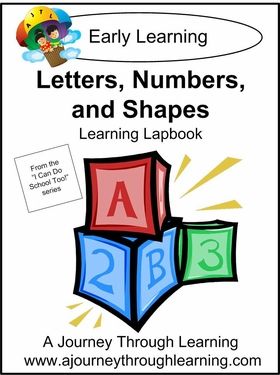
I printed out Letters, Numbers and Shapes (recommended for ages 3-5) for Alex, even though he turns three TODAY! He did awesome.

Letters, Numbers and Shapes photo Lettersnumbersandshapes_zps1d7d968f.jpeg
I printed out TWO COPIES of Knights and Castles (recommended for grades 2-7) for the girls. Kate is almost 6 and Tori just turned 7. They’re not quite in 2nd grade yet.

Knights and Castles photo knightsandcastles_zps3e1f0ab1.jpeg
Luckily, I had lots of file folders lying around and I glued them together as shown in the instructions. Easy peasy! {I recommend gluing the folders together ASAP so they will be dry and ready…ask me how I know this…}

Set up for the 3 lapbooks wasn’t too bad since I printed and cut and assembled after the kids went to bed.  It was quiet alone time for Mama.

Older kids could surely help cutting out the pieces! Other supplies are brads, staples, and of course, glue sticks for putting the completed pieces in the folders.

lapbook folders

Here is Alex’s preschool lapbook all assembled and ready to play!

preschool lapbook pieces

Here are the 2 Middle Ages lapbooks for the girls, assembled and ready to go. I’m really excited about these.

castles lapbook pieces

I got Alex on a really good evening and he completed that whole lapbook in about an hour! He just knocked. it. out. wowsers!

I was impressed that he knew all his colors, shapes, letters, and numbers. And he traced everything for the first time!

I used it as an assessment and I’ll say he did excellently. proud mama moment!

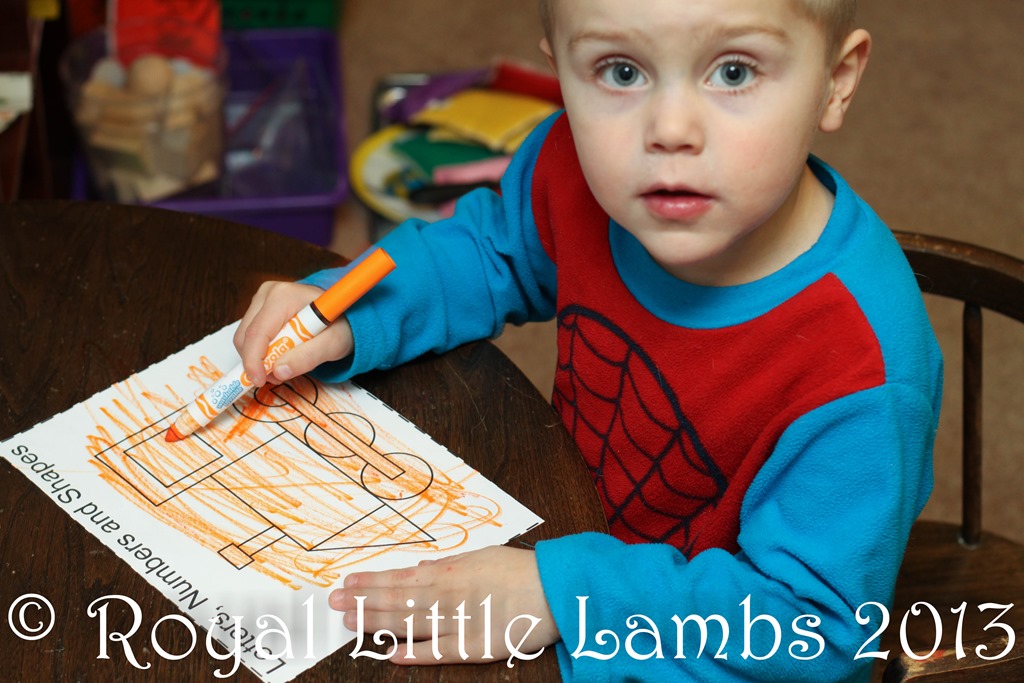
Orange is his favorite color. Can you tell?

coloring train lapbook

Alex loved coloring the shape robot.

coloring lapbook

Fire trucks are ALWAYS cool.

gluing lapbook

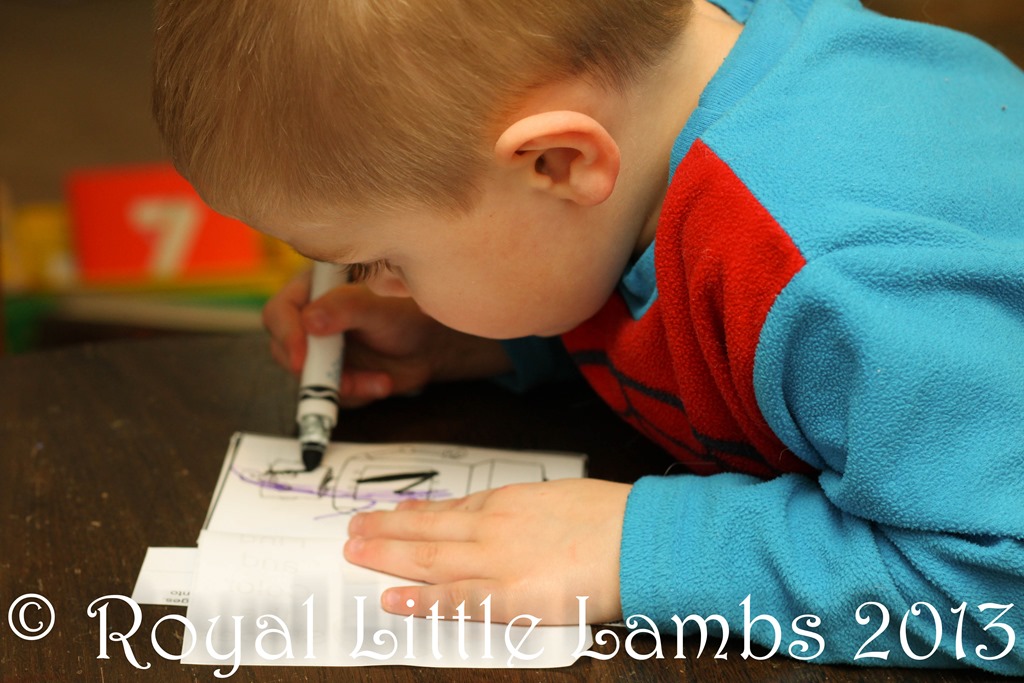
And here we have the tongue of concentration.

lapbook preschool

I read the background material on The Middle Ages to Tori and Kate. And I wrote on the board what they needed to put on their various lap book components.

lapbook cards

The girls loved this lapbook to go along with history. We studied castles and knights earlier this year with Tapestry of Grace Year 2.

I decided to use this as an assessment to make sure there were no gaps to that unit we studied. There weren’t many gaps, and the reading was very informative for their level. It was a great review! They begged me to let them do a few pieces each day until all was completed.

That worked out perfectly for our schedule. It took a couple weeks to complete it all that way.

lapbook booklets

And here are the completed lapbooks…

Tori really enjoyed the drawing and learning about medieval weaponry.

Completed Knights and Castles Lapbook

Katie loved learning about armor.

castles lapbook

Alex’s lapbook…so proud of his tracing!

Later, I plan to go through and discuss an animal for each letter. We left off that part since he needs to work on his drawing ability. He just turned three TODAY and this lapbook is recommended for 3+.

preschool lapbook

I especially love the enrichment pages – additional recommended readings, narration forms, and reading logs for further study and extension.

I am very impressed with the organization and effort that go into creating these lapbooks and making my life so easy by having everything printable and laid out so fine for me to assign to my kids and work with them and glue it into place.

Here are the purchase options:

Letters, Numbers, and Shapes

  • Instant Download-$13.00
  • CD-$14.00
  • Printed-$20.00
  • Assembled-$29.00

Knights and Castles

  • Instant Download-$13.00
  • CD-$14.00
  • Printed-$21.00
Photobucket
 photo DisclaimerGraphic1_zpsf612f371.gif
Share
Pin2
Share
2 Shares
You might also like:

Filed Under: Schoolhouse Review Crew Tagged With: review

Adventus Piano Review

This blog may contain affiliate links: disclosure.
Please see my suggested resources.

March 20, 2013 By Jennifer Lambert 3 Comments

We reviewed the piano curriculum MusIQ HomeSchool from Adventus. It’s designed for ages 4-18+. The software requires a MIDI-compatible keyboard and they have great deals if you want a bundle through their site.

 photo AdventusLogo_zps301dbe63.gif
Adventus Piano

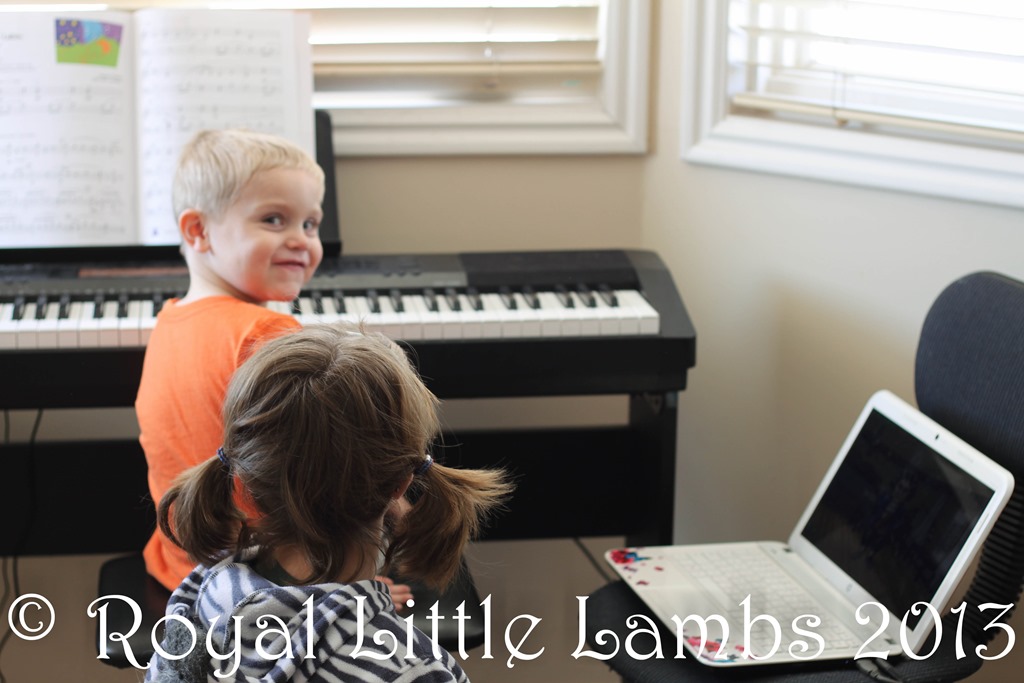
“Adventus” means “arrival” in Latin. I just love that bit of trivia. Our whole family has been learning or reviewing piano! So exciting! I love having a musical family.

Kate and Tori are in Children’s Music Journey level 2. Alex can actually do Children’s Music Journey level 1! {Children’s Music Journey is recommended for ages 4-10. Piano Suite is recommended for ages 10+.}

We figure Liz is about one-third of the way through Piano Suite (there are 12 levels!) since she’s taken formal lessons for several years. There are some gaps in her music education that she needs to review and she loves, loves, loves the collection of music that she can search through and practice songs all over the musical map – from classical to current and popular rock n roll!

My husband tried the Ear Training Coach program (years 2&3) and he says it’s really difficult and sensitive. Liz really needs some extra help in this area, so I am pleased it’s included. I am scared to try! I was terrible at sight reading when I was in chorus in middle school! Glad my kids inherited some music talent from their dad.

I tried Piano Suite (and I have trouble playing a digital radio) and it’s really easy! I like it and it doesn’t make me feel musically dumb. I would never pay for formal lessons, so this makes it really simple to just plug and play and get a quick lesson in when I have a few minutes. Food for the brain, ya know? (better than playing on social media!) and I can impress my eldest daughter with something other than Chopsticks or Mary Had a Little Lamb…

Weekly Lesson run-down:

1. Children’s Music Journey – 25 minutes (approx.)

  • Lesson with “composer”
  • Practice Room with Miss Melody
  • Games Room

2. History Time/Rhythm – 10-15 minutes

  • composer study – printable info sheet, discussion, Q&A
  • review note values
  • do music math equations

3. Improvisation – 5-7 minutes

  • listen to assigned music piece
  • dance moves!
  • practice notation
  • optional: record student piece and go listen to it in The Library

4. Closing – 2-5 minutes

  • Tell the student “great Job!” or something like that…
  • Assign practice sheets {due before next lesson~we do them immediately so we don’t forget!}

Tori does her lesson with The Composer. She learns rhythms and notes. We checked out CMJ1, but then realized that CMJ2 does a quick review of CMJ1 and moves on at a better pace for the girls. Tori just turned 7 and Kate is almost 6, so this is a better fit.

video piano learning

Tori does a lesson in CMJ2. She really enjoys the lessons and can complete them on her own. She needs to do finger strengthening exercises!

piano lesson time

Kate is in the Miss Melody section of the program. She reviews the lessons for The Composer. The girls practice with Miss Melody and she’s really cute and fun!

watching and learning

After the lessons and practice…there are games and worksheets and coloring pages. The girls like the interactive MIDI games, but aren’t as thrilled with the worksheets. They just want to play piano!

piano worksheets

Tori loves the theory and history parts of Piano Suite, but she’s not quite ready to begin with those lessons yet. She’s not a fluent reader, so I help her through this right now.

learning about sounds

Liz liked the Senor Semitone Say (like Simon Says), but with the other games she wasn’t interested. She prefers to just play the music at her level.

piano lesson computer

Even little Alex (almost 3) is able to do some of the rhythm exercises (with help and supervision) in CMJ1.

preschool piano time

The Improvisation “room” on the program is fun for the girls to play around with different sounds of instruments – and they can record their creations and listen to them!

What I liked best: I don’t have to really know much about teaching piano to help my kids run these programs. I can look at the lesson plans and there are checklists and supplements on their blog to help my kids succeed. The programs do all the work, from teaching to practicing to games and I just have to plug in my laptop and queue it up for my kids to do their piano each week. They don’t have to leave the house! Wonderful! If you add up what music lessons typically cost (and if you have more than one child, whew!)…these programs are an amazing deal~from preschool through high school!

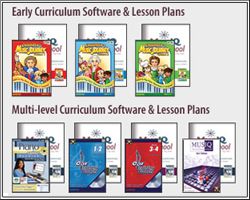
There are 3 different Adventus programs available (including deals on compatible keyboards):

1. Early learning curriculum (ages 4-10):

Children’s Music Journey Volume 1, 2, and 3 are $89.95 EACH. Included in each volume are the computer software and lesson plans.

2. Multi-Level teaching (10+):

Year 1 is $109.95 (term 1-3)

– Piano Suite Premier
– Level 1 Lesson Plans

Year 2 is $59.95 (term 4-6)

– Ear Training Coach 1&2
– Level 2 Lesson Plans

Year 3 is $59.95 (term 7-9)

– Ear Training Coach 3&4
– Level 3 Lesson Plans

Year 4 is $69.95 (term 10-12)

– MusIQ Challenger Game
– Level 4 Lesson Plans

3. A MusIQ HomeSchool Subscription is just $10.95/month

  • unlimited, full-feature access to all the MusIQ HomeSchool software titles (over $450 retail value)
  • a discount on MIDI piano keyboards

We really enjoy using the programs, but they did require my husband’s help installing the downloads and plugging in the cords correctly and setup within the programs so the keyboard would communicate with the computer. After that learning curve, it was all fun and games for us!

Photobucket
 photo DisclaimerGraphic1_zpsf612f371.gif
Share
Pin
Share
0 Shares
You might also like:

Filed Under: Schoolhouse Review Crew Tagged With: Music, review

  • « Previous Page
  • 1
  • 2
  • 3
  • 4
  • 5
  • Next Page »
Suggested ResourcesNotebookingPages.com LIFETIME MembershipFind Weird Books at AbeBooks.com

Archives

Popular Posts

10 DIY Gifts with Essential Oils10 DIY Gifts with Essential Oils
Natural Remedies for HeadacheNatural Remedies for Headache
10 Natural Remedies to Keep on Hand10 Natural Remedies to Keep on Hand
Henna Hands CraftHenna Hands Craft
Homemade Turkey Divan CasseroleHomemade Turkey Divan Casserole
This website uses cookies to improve your experience. We'll assume you're ok with this, but you can opt-out if you wish.Accept Reject Read More
Privacy & Cookies Policy

Privacy Overview

This website uses cookies to improve your experience while you navigate through the website. Out of these, the cookies that are categorized as necessary are stored on your browser as they are essential for the working of basic functionalities of the website. We also use third-party cookies that help us analyze and understand how you use this website. These cookies will be stored in your browser only with your consent. You also have the option to opt-out of these cookies. But opting out of some of these cookies may affect your browsing experience.
Necessary
Always Enabled
Necessary cookies are absolutely essential for the website to function properly. This category only includes cookies that ensures basic functionalities and security features of the website. These cookies do not store any personal information.
Non-necessary
Any cookies that may not be particularly necessary for the website to function and is used specifically to collect user personal data via analytics, ads, other embedded contents are termed as non-necessary cookies. It is mandatory to procure user consent prior to running these cookies on your website.
SAVE & ACCEPT