Jennifer Lambert

A Sacred Balance

Visit Us On FacebookVisit Us On PinterestVisit Us On InstagramVisit Us On Linkedin
  • Homeschool
    • Book Lists
    • How Do We Do That?
    • Notebooking
    • Subjects and Styles
    • Unit Studies
  • Travel
    • Europe
      • Benelux
      • France
      • Germany
      • Greece
      • Ireland
      • Italy
      • London
      • Porto
      • Prague
    • USA
      • Chicago
      • Georgia
      • Hawaii
      • Ohio
      • Utah
      • Yellowstone and Teton
  • Family
    • Celebrations
    • Frugal
  • Military Life
    • Deployment
    • PCS
  • Health
    • Recipes
    • Essential Oils
    • Fitness
    • Mental Health
    • Natural Living
    • Natural Beauty
  • Faith
  • About Me
    • Favorite Resources
    • Advertising and Sponsorship
    • Policies
  • Reviews

© 2025Jennifer Lambert · Copyright · Disclosure · Privacy · Ad

Studying US History

This blog may contain affiliate links: disclosure.
Please see my suggested resources.

October 17, 2013 By Jennifer Lambert Leave a Comment

In light of the government shutdown, it’s been interesting to see how simple things were 225 years ago.

Thankfully, my husband got a paycheck, but we know many who have not and they are struggling. We pray this all gets resolved quickly.

We use Tapestry of Grace as our history core.

We follow a four year cycle of learning history, but US history is only in year three and four because we’re a young country.

See how we do history.

Favorite US History books:

  • A People’s History of the United States by Howard Zinn
  • A Different Mirror by Ronald Takaki  
  • An African American and Latinx History of the United States by Paul Ortiz 
  • A Black Women’s History of the United States by Daina Ramey Berry and Kali Nicole Gross 
  • An Indigenous Peoples’ History of the United States by Roxanne Dunbar-Ortiz  
  • A Disability History of the United States by Kim E. Nielsen  
  • A Queer History of the United States by Michael Bronski  
  • Lies My Teacher Told Me: Everything Your American History Textbook Got Wrong by James W. Loewen
  • A History of US: Eleven-Volume Set by Joy Hakim
  • Life: Our Century In Pictures by Richard B. Stolley
  • The Century for Young People by Peter Jennings

We study our nation’s beginnings in our homeschool.

We love lapbooks and notebooking!

I grew up traveling to many military and history sites around the USA. I hope to show my kids how beautiful the US landscape is and also discuss disturbing history topics and how we can learn from our mistakes.

We watch Schoolhouse Rock videos and do lots and lots and lots of reading.

Studying US History

Travel

We visited the Missions in San Antonio, TX.

We explored Hawaii when we lived there for three years.

We learned about the Transcontinental Railroad in Utah. We took a trip to Yellowstone and the Tetons.

When we moved to Ohio, we learned about the Wright Brothers.

Colonialism

Did Columbus really discover America?

No.

We enjoy reading about different aspects of the discovery of America and the American colonies.

My 4th of July Unit.

My Revolutionary War Unit.

My Constitution Unit.

Government

How was the US Government formed?

We enjoy reading about “the founding fathers” (and mothers) and how our early government worked. It’s pretty unique with states and federal.

My eldest is pretty fascinated by the election process. She likes the Presidential Game and iCivics.

We all loved this mouse book about the Supreme Court.

Here’s the official page of the USS Constitution. It’s important to read and understand it.

Military

The USA probably has the strongest military in the world, but it wasn’t always that way.

Is it right that we’re the policemen of the world?

Old Ironsides coloring page for younger kids.

Learn about sailing with these fun games and activities!

My girls love to make their own timelines, biography pages, and write about their learning in history and other subjects. They wrote a timeline of the events leading up the War of 1812.

  • Revolutionary War
  • Civil War
  • World War I
  • World War II
  • Pearl Harbor Remembrance Day
  • Japan Unit
  • Korea Unit
  • Vietnam Unit
  • The Middle East
  • Patriot Day or 9/11

Pioneer

My girls loved notebooking about Lewis and Clark.

We lived in Utah for four years and they really celebrated Pioneer Day which never really set right with me.

I enjoy learning about homesteading, but the history of the US exploring the west and manifest destiny is terrible.

White Europeans stole land and colonized in the name of God, destroying native culture.

Native Americans

We’re reading about Sacagawea and Tecumseh and I’m loving learning along with the kids!

(They’re still here.)

  • Indigenous People Book List – by and about Natives
  • Thanksgiving Unit
  • Johnston Farm and Indian Agency

Black History

I have a duty to teach my white children truth about our country and its history.

I teach from many different resources about Black history year-round with our history cycles, not just one month a year.

My youngest daughter and I made a cotton gin with Story of the World!
We learn about history by visiting museums like the National Underground Railroad Freedom Center.

Stone Mountain is an odd amusement park that sparks much discussion.

Civil Rights

We’re reading and learning about civil rights in the USA and around the world.

  • Nonviolence Unit Study
  • Being AntiRacist
  • Celebrating Diversity
  • Love Your Neighbor
  • Hispanic Heritage Unit
  • Asian Pacific American Heritage Unit

The US has much work to do for civil rights for all.

Our favorite resource for notebooking is Notebooking Pages.

NotebookingPages.com LIFETIME Membership

What are your favorite US history resources?

Share
Pin26
Share
26 Shares
You might also like:

Filed Under: Homeschool Tagged With: history, notebooking, Tapestry of Grace

Back to School Unit Study

This blog may contain affiliate links: disclosure.
Please see my suggested resources.

September 30, 2013 By Jennifer Lambert 2 Comments

Usually, back to school themes have to do with apples, fall, leaves, getting to know new friends, and many other traditional topics.

We homeschool, and it’s just now changing to cooler temps. We often do not back to school, celebrating the freedom of staying home.

For our Back to School theme, we let our library story time do our activity for us.

Convenient and I didn’t have to think or clean up anything! Bonus.

Our new storybook lady this year is pretty awesome. That makes all the difference in the world! And she loves kids. She spends so much time on the lessons and provides great experiential learning every Wednesday for about an hour.

school theme

My girls are the oldest kids there and they usually help clean up the crafts. Without being asked. Love them.

They like front row seating.

IMG_2733.jpg

The books for this session were fun. Great illustrations and animals!
IMG_2736.jpg

I’d never heard of some of these book selections. They’re just great! Always fun to meet new book friends.

IMG_2735.jpg

These are some of our absolute favorites. Oh, the giggles when she read them.

IMG_2737.jpg

The storytime activity for the kids was to make little books of their very own.

The kids were provided little booklets with colored cardstock covers and white pages inside. Pictures from magazines were already cut out and the kids could choose them to glue into their books to make collages.

Tori made a butterfly book. She wrote a title on her cover.

IMG_9916.jpg

Tori also drew butterflies in addition to pasting pictures.

IMG_9917.jpg

Kate made a book of her favorite animals. Kate wrote the names of all her favorite animals under their pictures.

Alex made a transportation book. He really, really loved this activity.

IMG_2740.jpg

And we all got cool bookmarks!

Back to School Ideas:

  • Night before school party
  • Special breakfast
  • Pictures to commemorate the new year
  • Memory board or interview page
  • Gifts or treats
  • Look through new school materials and books together to get familiar.
  • Set up a work area for each child to complete assignments.
  • Special back to school books. It’s hard to find books celebrating homeschool.
  • New clothes fashion show. It could be new loungewear or pajamas!
  • Schultüte – traditional school cones for 1st graders in Germany. Another Schulüte DIY idea here. DIY auf Deutsch hier.
  • Ice cream!
  • Chalk drawings in the driveway or sidewalk
  • Fresh flowers, especially roses for new schoolers! I love the Waldorf rose ceremony.
  • Discuss plans, desires, and dreams for the year
  • Make calm jars with glitter, oil, food coloring, and water.
  • Make tie-dye shirts or bags.
  • Go hiking or do a nature scavenger hunt.
  • Picnic lunch
  • Bowling
  • Parties with a fun theme, even if it’s just immediate family
  • Movie night

Books:

  • Dinosaur vs. the Library by Bob Shea
  • The Library Dragon by Carmen Agra Deedy
  • Read It, Don’t Eat It! by Ian Shoenherr
  • Library Lion by Michelle Knudsen
  • Homer, the Library Cat by Reeve Lindbergh
  • Book! Book! Book! by Deborah Bruss
  • Wild About Books by Judy Sierra
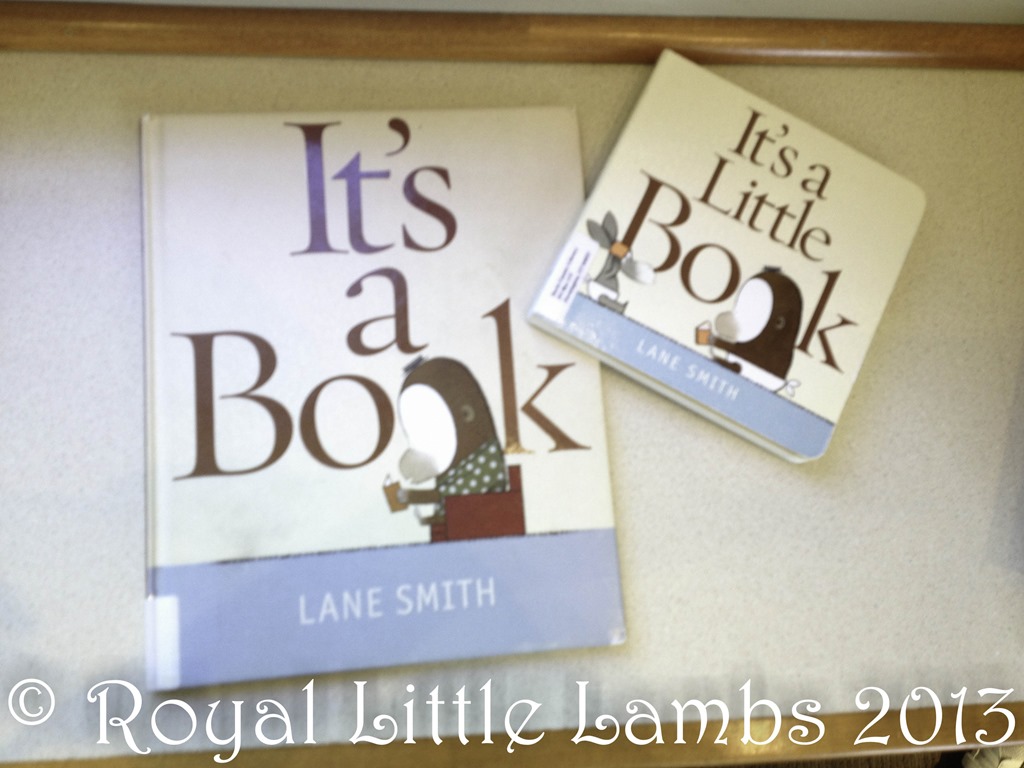
  • It’s a Little Book by Lane Smith

How do you celebrate back to school?

Share
Pin22
Share
22 Shares
You might also like:

Filed Under: Poppins Book Nook Tagged With: back to school, library, PoppinsBookNook, reading

Montessori 2.5 Years

This blog may contain affiliate links: disclosure.
Please see my suggested resources.

September 11, 2013 By Jennifer Lambert 2 Comments

My son had lots of fun this summer!

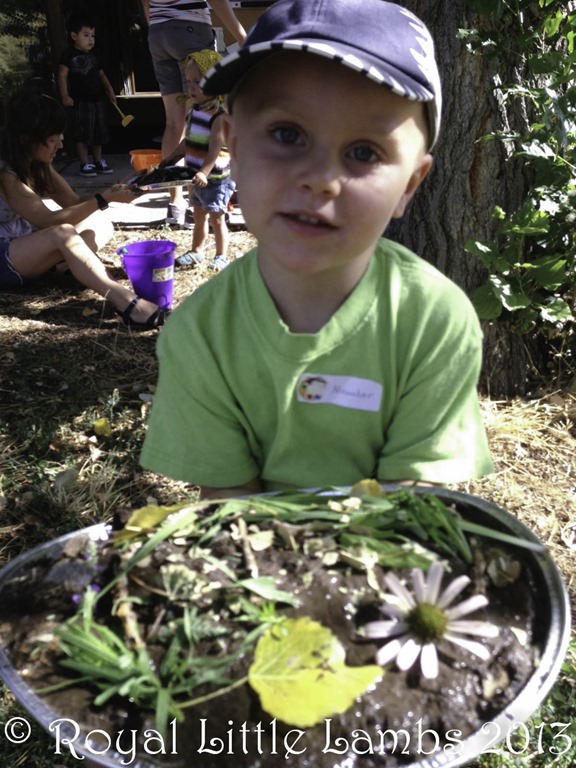
He went to preschool nature camp with Dad at Ogden Nature Center.

We learned fun stuff at library Dig Into Reading sessions. We learned about other countries, history, language, art, animals, and more!

gracias

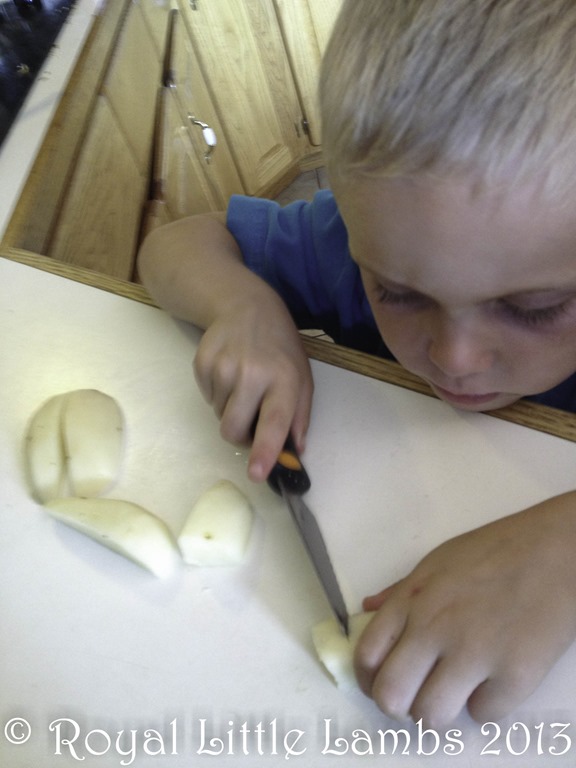
Alex made mashed potatoes almost all by himself. That cool knife? They’re over here. We have 2 of that one and 2 of this knife and the kids love them!

slicing potatoes width=

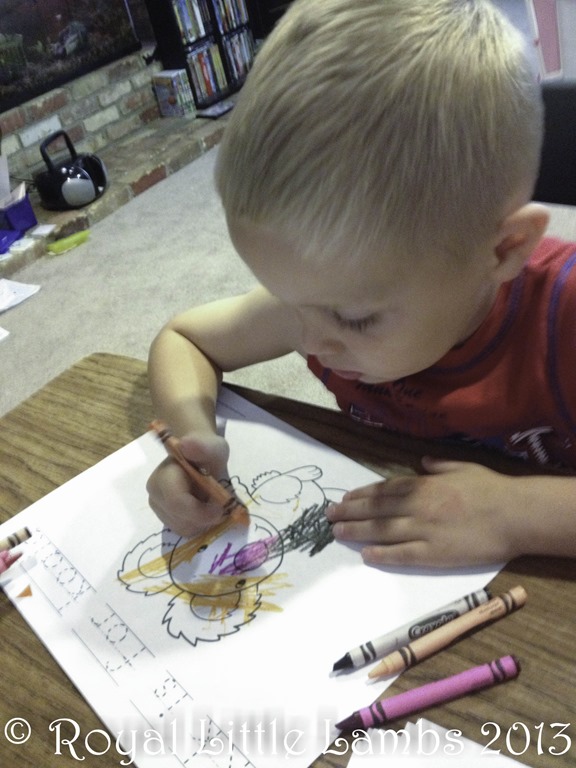
Alex still loves Tot School and Animal ABCs and Raising Rock Stars Preschool.

koala coloring page

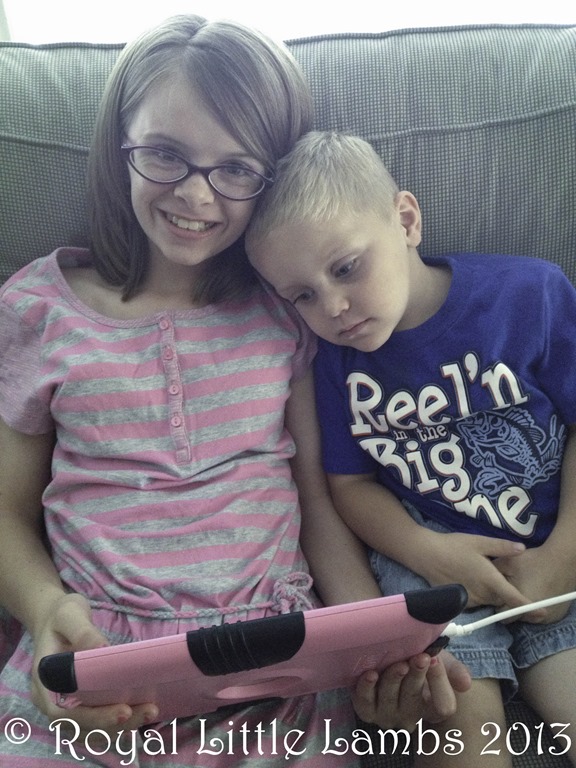
He’s snuggly and likes to watch the iPad with sister

big sister and little brother

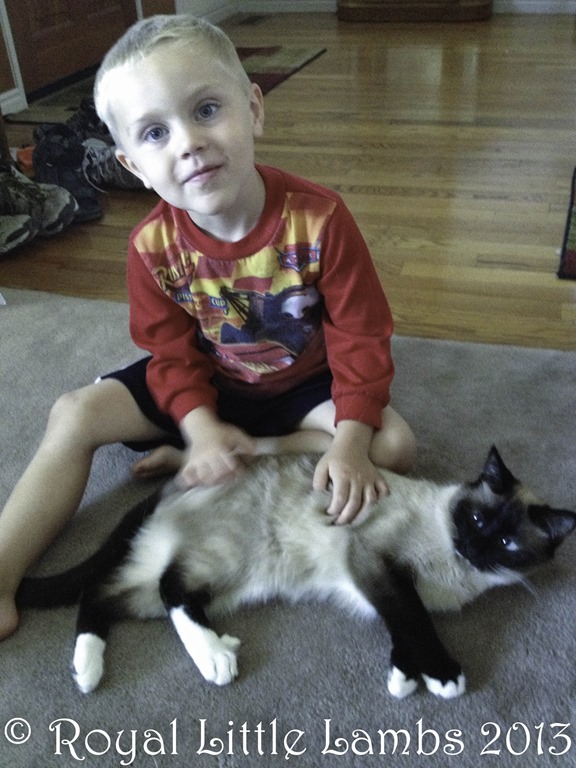
He gets so excited when our cat, Sinéad, allows him to pet her.

Sinead and Bubba

Alex helped in the garden lots. He helped dig up our potatoes.

He likes to help Liz with science. They do experiments together. He dropped the antacid tablets in the water/vinegar solutions to learn about concentration

helping sister with science experiments

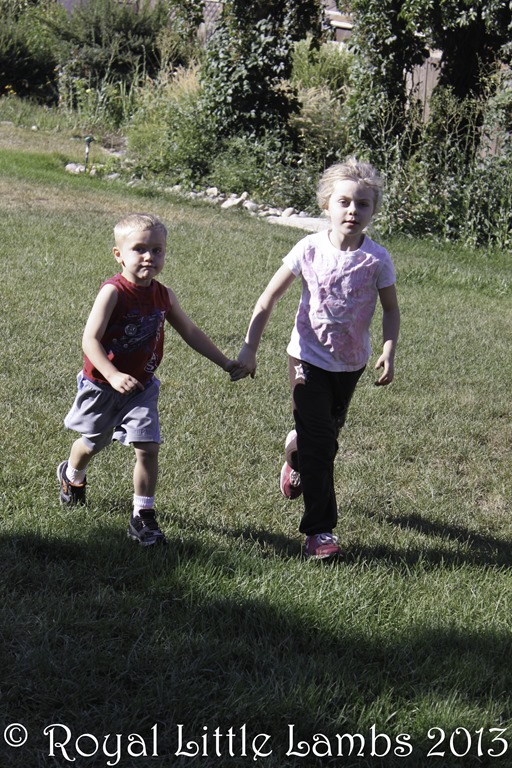
A rare moment of peace between these two

holding hands

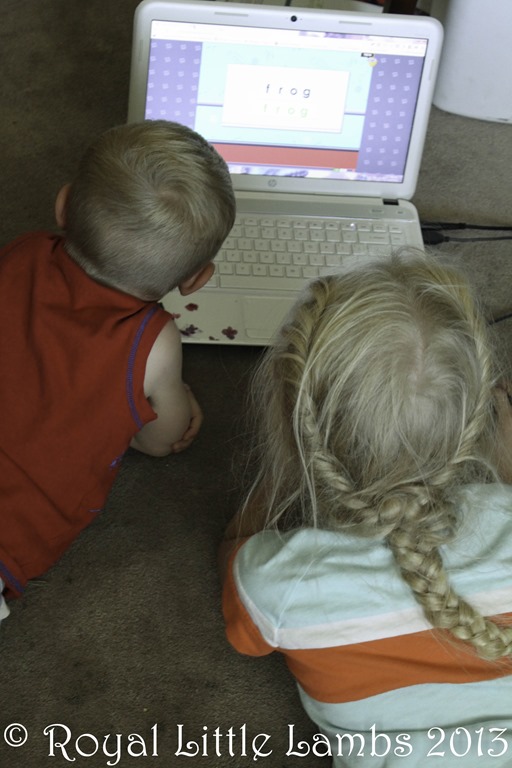
Watching Tori play Reading Kingdom

Reading Kingdom

Alex has a lot of freedom. I try to make sure he’s learning by all the everyday things we do. I want him to love learning and never get discouraged or frustrated. We limit our seatwork since he’s an active little boy!

Check out our Logic of English review…

Logic of English

ProSchool Membership - Productive Homeschooling
Share
Pin1
Share
1 Shares
You might also like:

Filed Under: Homeschool Tagged With: LOTW, Montessori, nature study, preschool

Our Typical Day With a Schedule for Success

This blog may contain affiliate links: disclosure.
Please see my suggested resources.

August 27, 2013 By Jennifer Lambert 18 Comments

Our ideal homeschool day begins the night before.

Our Homeschool Schedule

God said it best: A new day begins in the evening.

And God called the light Day, and the darkness he called Night. And the evening and the morning were the first day. And God called the firmament Heaven. And the evening and the morning were the second day. And the evening and the morning were the third day. And the evening and the morning were the fourth day. And the evening and the morning were the fifth day. And God saw every thing that he had made, and, behold, it was very good. And the evening and the morning were the sixth day. ~Genesis 1:5, 8, 13, 19, 23, 31

If I want to have a successful morning, I need to plan for it the evening before.

I need to love on my babes by praying with them, singing lullabies, snuggling, and discussing the highs and lows of the day past.

I need to be intentional.

When I’d rather just be done for the day and send them up to bed alone and have me time ASAP, I know in my heart that I should remain the discipling mommy a few moments more.

I struggle with this. And I’m not always successful.

It’s often hard being a mom to small kids with so many needs.

I have to be flexible and let go of some of my expectations.

My house isn’t as clean as I want. My hair is doing that thing again. The van needs an oil change.  The cat just puked under the table. The grass needs cut and edged before the HOA sends another notice.

It’s tough being a homeschooling mom with four kids 24/7 – with no breaks ever.

I take little breathers when and where I can.

I pray for my kids while scrambling eggs and folding clothes.

I hum-sing to my toddler while changing his diaper.

I do not roll my eyes while explaining fractions to my daughter. Again.

I actually look at the ordinary rock my preschooler is dying to show me at the park.

How to Have a More Successful Day

Plan Meals Ahead

Planning for the next morning means I need a clean kitchen and at least an idea of breakfast. Having a good meal in the morning helps the kids learn better.

Prepping the coffee is a good idea too. Programming or at least setting it to the point I just have to touch the start button makes my morning go smoother.

My eldest daughter, Elizabeth, usually cleans the kitchen after dinner. Bless her!

Planning dinner ahead helps too. I’ve really slacked on my meal planning this summer. I need to thaw out meat the night before so we have dinner ready to grill or make a casserole or slow cooker meal.

When the weather gets cooler, I use the oven and slow cooker more. Especially on sports practice nights.

Daily Schedule

So, the schedule? That’s what you came for, right?

I’m trying to get up earlier {that’d be 0700 for me} to get my morning VA work finished, breakfast ready, kitchen cleaned up again, so we can begin our homeschool by about 8 AM.

Liz often gets up at 0630 and is ever so much more cheerful to have a few minutes of alone time to start her Bible or drink some tea before Alex and I come downstairs.

My youngest, Alex, demands the iPad immediately and often has cereal on the sofa if I need the time to work or make breakfast for everyone.

My middles, Tori and Kate, come down usually last to eat. Alex often joins them for second breakfast.

I am so not a morning person.

Some of our favorite breakfasts:

  • soaked steel-cut oatmeal with bacon and sausage links
  • egg scramble with cheese and ham or bacon chunks
  • these muffins that Liz loves to make (in four flavors)
  • this breakfast casserole, with variations
  • leftover pancakes or waffles when Dad makes a big weekend batch (love him!)

During breakfast, I read the day’s lesson aloud from The Dig for Kids and we pray together, and pray for our Seed Company tribe.

After breakfast, I send Alex, Tori, and Kate upstairs to dress, brush their teeth, and clean up their rooms. They often play for about an hour. And that’s fine.

I use that time to help Elizabeth get motivated on her school work. She’s got a heavy load this year as a tween. See our curriculum here. She still needs a bit of hand-holding and if I get her to finish the bulk of her work before lunch, it’s a good day.

After Liz completed Bible and math…I leave her to complete Latin, science, and history on her own.

I work with Tori and Kate on their workbooks. We do science and history read alouds on the sofa.

Somehow, in between all that, Alex gets some preschool work done. Most days. He plays a lot and interrupts and wants snacks.

I try to complete as much as possible before lunchtime. Because after that, no one really wants to do much of anything productive. Including me.

Somewhere in all this, we try to accomplish chores. I do laundry almost every day and we have 4 color-coded baskets for the kids that tend to sit until I have a tantrum about putting it away. I’m a big believer in chores. Many hands make light work.

I do have a chore schedule:

  • Monday: empty all trash cans and put big can at the curb
  • Tuesday: dust all the furniture
  • Wednesday: clean all the bathrooms
  • Thursday: sweep and mop or vacuum the floors (we alternate the 3 levels each week)
  • Friday: scrub down the kitchen and put all laundry away
  • Weekends: whatever needs to be done or was forgotten

Some afternoons, we run errands. The girls are all too big for the library story time now and Alex just isn’t that interested. But it doesn’t start up again until September, so we’ll see. Sometimes, I just send the kids to play outside or with their toys in the basement so I can work.

Staying Healthy

We like to be proactive with our health. We eat well, drink lots of water, and prevent most illnesses with essential oils and supplements. We get plenty of fresh air and exercise.

We take cod liver oil (we like the Cinnamon Tingle!) and liquid kids multivitamin for the littles. We anoint with essential oils to help us balance mood and attitude. Liz and I also take supplements.

We start our days with a hearty breakfast and plenty of water, juice, and tea.

We eat lunch together – usually leftovers or something that will mostly hold us over until dinner. Water, and sometimes lemonade to drink.

I make dinner for our family every evening – meat and veggies, sometimes fruit, often salad. Water to drink.

We seldom do snacks. Sometimes, I will cut up fruits and veggies. I’ll provide granola or nuts. A couple kids like yogurt sometimes. I prefer my kids to eat their meals and we seldom have sugary snacks or junk food in the house.

Evening Routine

Our school area needs to be ready for the morning too. Often, after school and play time in the evening, I have the kids do a quick cleanup so it makes for a smoother beginning to our school day.

We often go on a walk around the block to wind down.

We don’t do baths every day. It dries the skin and strips away natural oils. Babies, toddlers, and preschoolers certainly don’t need full baths every day. They get a bath every few days unless they get very messy or dirty somehow. We wash hands frequently with gentle soap. We wash faces and brush teeth twice a day or more.

We have evening read alouds, snuggling on the sofa.

We sing and say prayers as a family.

I tuck the little ones into their beds and sing a lullaby, and oftentimes, I sit beside them until their eyes finally close and their breathing evens out.

With four children, sometimes bedtime takes a little longer than I would wish. I often long for alone time or a bubble bath to read my own books.

Being organized and proactive helps us be efficient and happier during the day.

Share
Pin2
Share
2 Shares
You might also like:

Filed Under: Homeschool Tagged With: homeschool, schedule

Fairy Tales Unit

This blog may contain affiliate links: disclosure.
Please see my suggested resources.

August 26, 2013 By Jennifer Lambert 3 Comments

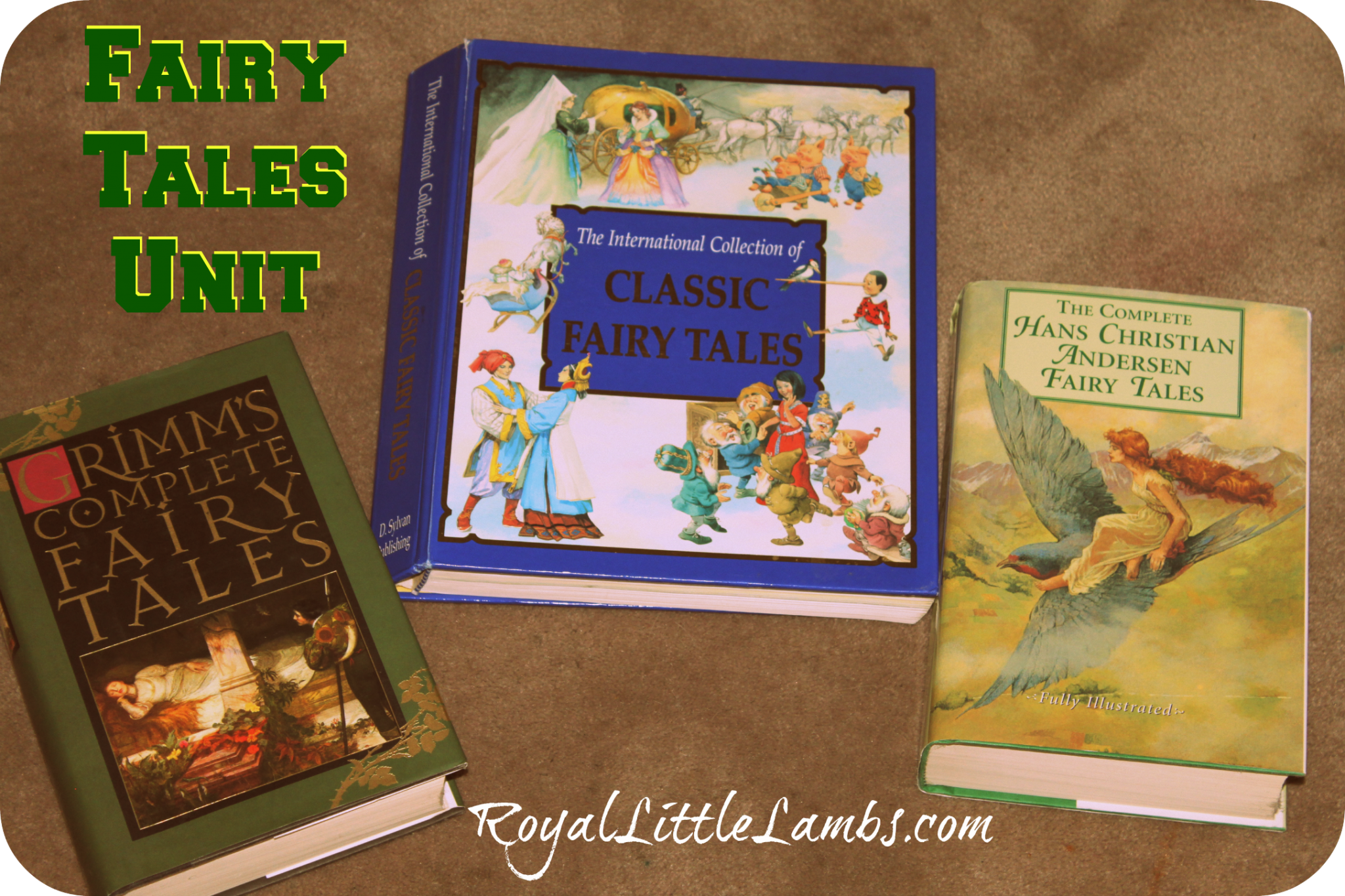
This month, we’re reading fairy tales!

fairy tales

Fairy tales are part of our history and literature reading this quarter with Tapestry of Grace Year 3.

We didn’t really have time for crafts since we’re still on our summer schedule and busy with the garden, traveling on vacation, and doing lots of fun activities outside our home, but we notebooked and discussed the lovely language and art in the books we read.

We researched the Grimm brothers and Hans Christian Andersen and how they gathered their tales for their collections. Fascinating stuff.

Notebooking:

  • Homeschool Share Fairy Tale notebooking
  • character notebooking from The Notebooking Fairy
  • compare/contract form from The Notebooking Fairy – great for comparing/contrasting the traditional tale with a modern story or movie
  • Emergent Readers from the Measured Mom
  • Story map from Amy’s Wandering

Books:

  • Grimm’s Complete Fairy Tales
  • An Illustrated Treasury of Hans Christian Andersen’s Fairy Tales
  • Irish Fairy Tales and Folklore by W. B. Yeats
  • Nordic Tales
  • The Classic Fairy Tales by Norton
  • The Complete Fairy Tales by George MacDonald 
  • The Stinky Cheese Man and Other Fairly Stupid Tales by Jon Scieszka
Share
Pin
Share
0 Shares
You might also like:

Filed Under: Poppins Book Nook Tagged With: fairy tales, literature, reading

Teaching a Gifted Middle Schooler

This blog may contain affiliate links: disclosure.
Please see my suggested resources.

August 17, 2013 By Jennifer Lambert Leave a Comment

When I taught public school language arts, I was also the gifted coordinator for the middle school.

I tested the children who were recommended for the gifted program and placed children in the gifted classes. I taught gifted eighth grade language arts.

Those students were my shining stars, and I still chat with several of them on Facebook today…and they’re now either in grad school or beginning their exciting lives, getting married and having babies, and some are teachers themselves!

My daughter, Elizabeth, reminds me so much of those students.

She’s in my territory now. Bwahahaha!

I was out of my comfort zone for so long teaching preschool and elementary, and now she’s twelve and learning almost at the level I used to teach when I worked in a school.

It’s a wakeup call for Liz, in a way. She doesn’t like to be told her work isn’t up to a standard.

Elizabeth has never been formally tested for IQ or gifted abilities. I don’t know if she would even test into the gifted program at a school since she doesn’t really have any experience with standardized testing, other than one required by the state we lived in three years ago. She scored exceptionally well on that one, except average in math. But that is neither here nor there. I know she has gifted tendencies. I know her abilities and potential. I saw it in many students and she compares well.

My expectations for her have shifted this school year. I now have a standard by which to judge her work, in a way. I certainly know what she’s capable of, academically. I remember the level of work my students did, and I am gradually shifting Liz more towards that level. I am changing the requirements little by little to fit. She deserves to be challenged. This is why we homeschool!

I evaluate and re-evaluate her school subjects and assignments often to make sure it’s not too much nor too little. It’s a constant worry to balance everything and make sure it’s not too challenging, yet challenging enough. She’s no longer in the grammar stage. She’s quite into the dialectic stage now, and I must constantly hold her to that higher standard.

Sometimes Liz flails about (literally and figuratively) during our weekly review conferences and “forgets” all she that memorized in the past. I have to pick the connections out of her like pulling teeth. Other times, she’s full of words and blowing me away with some of her insights.

I guess I could have worse problems than that all she wants to do is lie around and read…

She has no interest whatsoever in popular culture. I told my friend the other day that Liz was born an old woman. She’s so conservative that I might never have to worry about her wearing immodest clothing or reading, watching, or listening to something inappropriate.

We recently added a logic course and it’s challenging both Liz and me. I remember getting a C in this very class in my second semester of college. {collective gasp!} During our reading of Socrates’ Apology, Liz made this connection: “Socrates was smart. Dr. Sheldon Cooper is smart. I am smart. We should start a club for all the really smart people and no one else can join!” {Never mind that Socrates is quite dead and Sheldon is quite fictional…} It really cracked me up.

I’ve had to explain to Elizabeth that she won’t make any friends bragging about her knowledge of Shakespeare or Latin…

It’s often a challenge to me to provide appropriate yet interesting reading material for a young girl. Her lack of cultural and worldly experience make this somewhat difficult at times. Much of her being “sheltered” is by her own choice and interests, but I am glad to have a “little girl” as long as possible. She will grow up all too soon.

Gifted Characteristics:

  1. Gifted students are often perfectionist and idealistic.
  2. Gifted students may experience heightened sensitivity to their own expectations and those of others.
  3. Gifted students are asynchronous.
  4. Some gifted students are “mappers” (sequential learners), while others are “leapers” (spatial learners).
  5. Gifted students may be so far ahead of their chronological age mates that they know half the curriculum before the school year begins!
  6. Gifted children are problem solvers.
  7. Gifted students often think abstractly and with such complexity that they may need help with concrete study and test-taking skills.
  8. Gifted students who do well in school may define success as getting an “A” and failure as any grade less than an “A”.

Creative Thinking

  • Independent thinker
  • Exhibits original thinking in oral and written expression
  • Comes up with several solutions to a given problem
  • Possesses a sense of humor
  • Creates and invents
  • Challenged by creative tasks
  • Improvises often
  • Does not mind being different from the crowd
  • General Intellectual Ability

  • Formulates abstractions
  • Processes information in complex ways
  • Observant
  • Excited about new ideas
  • Enjoys hypothesizing
  • Learns rapidly
  • Uses a large vocabulary
  • Inquisitive
  • Self-starter
  • Specific Academic Ability

  • Good memorization ability
  • Advanced comprehension
  • Acquires basic skill knowledge quickly
  • Widely read in special interest area
  • High academic success in special interest area
  • Pursues special interest with enthusiasm and vigor
  • Leadership

  • Assumes responsibility
  • High expectations for self and others
  • Fluent, concise self expression
  • Foresees consequences and implications of decisions
  • Good judgment in decision making
  • Likes structure
  • Well-liked by peers
  • Self-confident
  • Organized
  • Psychomotor

  • Challenged by difficult athletic activities
  • Exhibits precision in movement
  • Enjoys participation in various athletic opportunities
  • Excels in motor skills
  • Well coordinated
  • Good manipulative skills
  • High energy level
  • Visual/ Performing Arts

  • Outstanding in sense of spatial relationships
  • Unusual ability in expressing self, feeling, moods, etc., through dance, drama, music, etc.
  • Good motor coordination
  • Exhibits creative expression
  • Desire for producing “own product” (not content with mere copying)
  • Observant
  • Share
    Pin22
    Share
    22 Shares
    You might also like:

    Filed Under: Homeschool Tagged With: back to school, homeschool, middle school, teen

    Homeschool Space in Utah, Part 3

    This blog may contain affiliate links: disclosure.
    Please see my suggested resources.

    August 14, 2013 By Jennifer Lambert 9 Comments

    Welcome to our tour of Our Homeschool Learning Spaces…we did a little bit of updating from last year.

    Our front room on the main level is my office. I have two overflowing bookcases. I love my desk setup! I have everything I need within reach.

    mama-magic.png

    We are so blessed to have a basement! We use it for our main learning space. I know we probably won’t have this luxury when we PCS in a year or so.

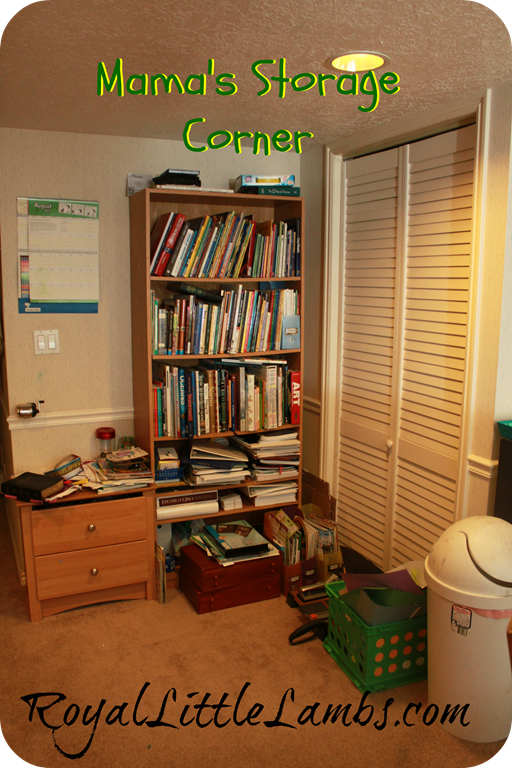
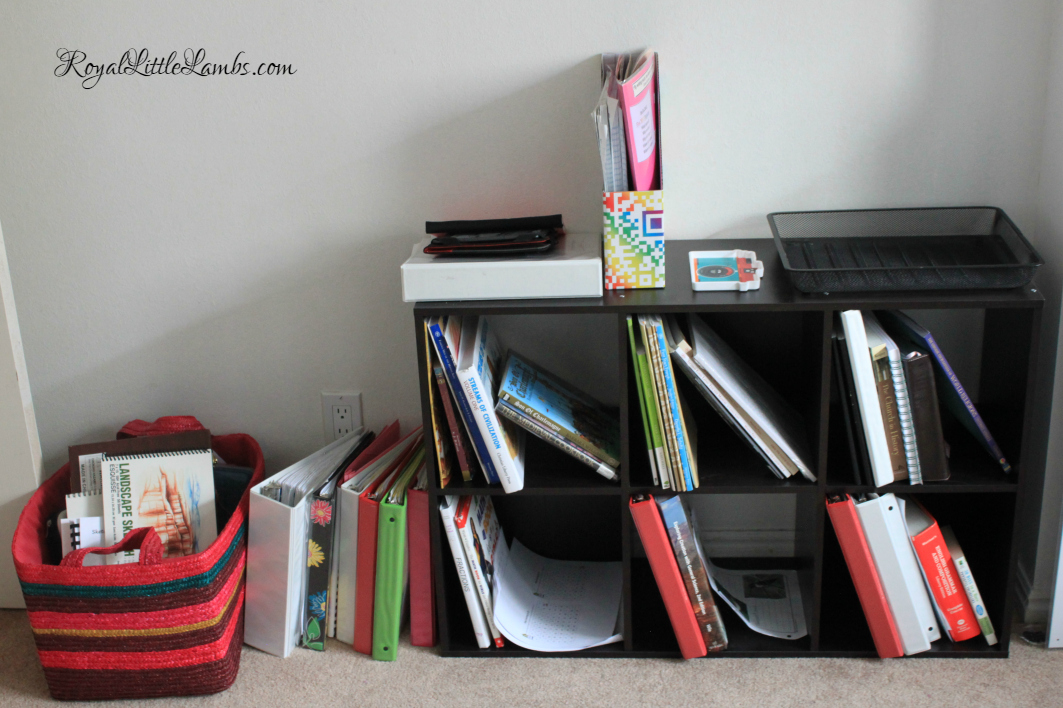
    I keep many books on this bookshelf that we’re not currently using, but we will use again for another round of history, science, Bible, or art. The green cube holds scrap paper for crafts. I also have magazines {Nat Geo Kids, Ranger Rick, Zoobooks} in the files on the floor beside the art boxes.

    Mamas-Storage-Corner.png

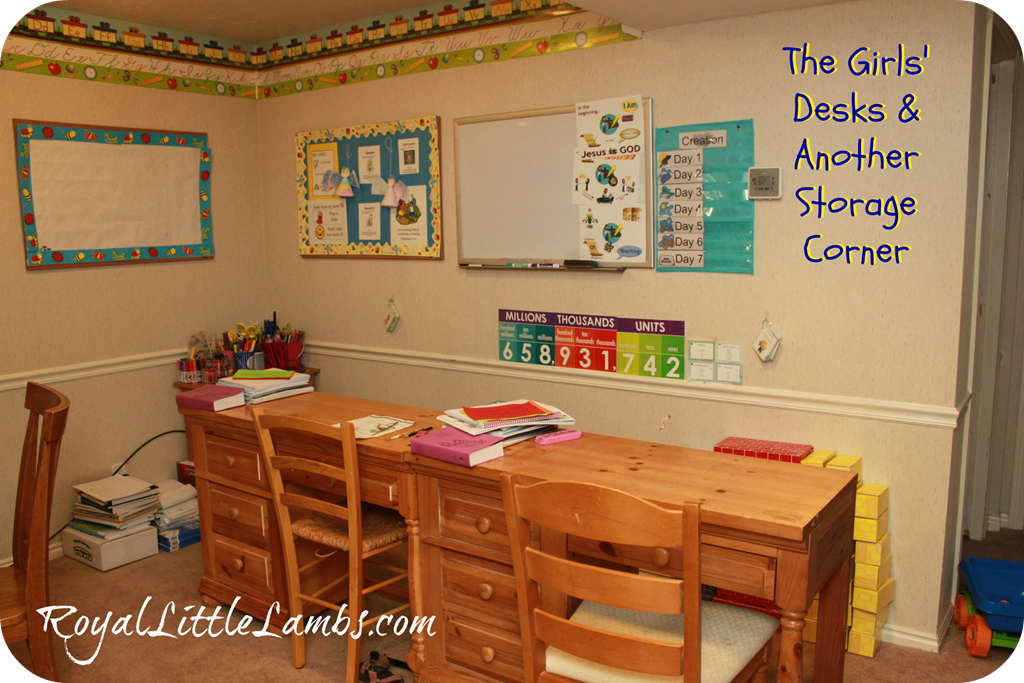
    I found these matching desks used and the girls’ bedroom furniture is the same design and company. I love shopping at thrift stores, yard sales, or online at ksl.com. I have buckets of school supplies on a lazy Susan on the table in the corner. Teacher books are on shelves in that table too. And new stuff is stacked on the floor ready to begin in a couple weeks – after our Yellowstone trip!

    girls-desks.png

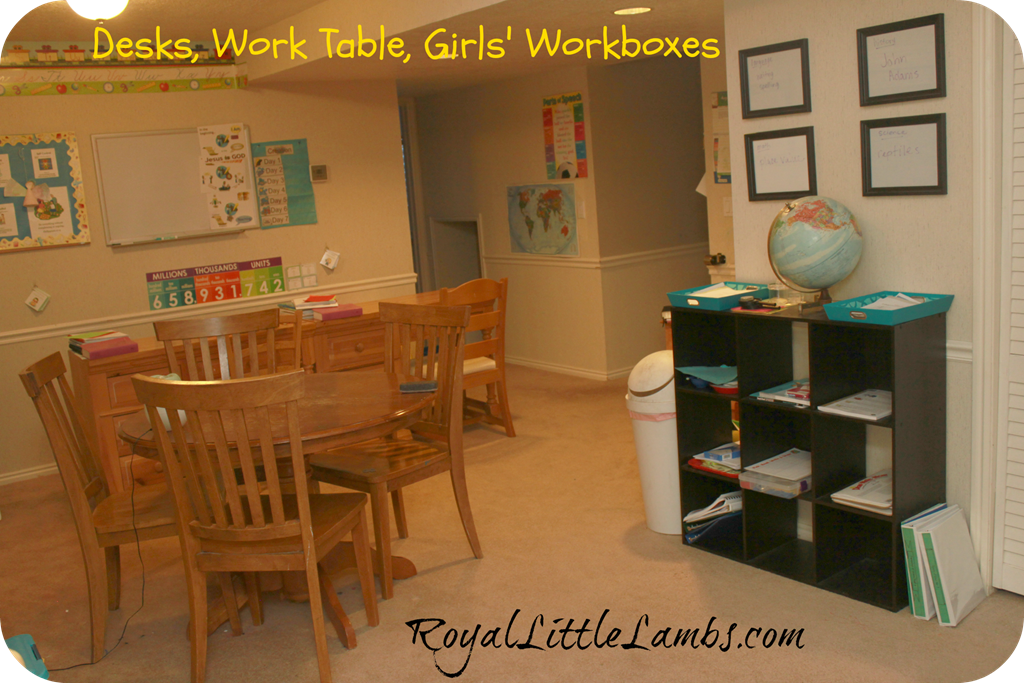
    I found this amazing table and (don’t they match?) 4 sturdy chairs…at TWO DIFFERENT YARD SALES ON THE SAME DAY. Score! The girls use that cube unit from Target for workboxes. I jot down our themes each week on the pictures for each subject. Our clean new empty Tapestry of Grace Year 3 notebooks are propped on the floor for now.

    desks-work-table-workboxes.png

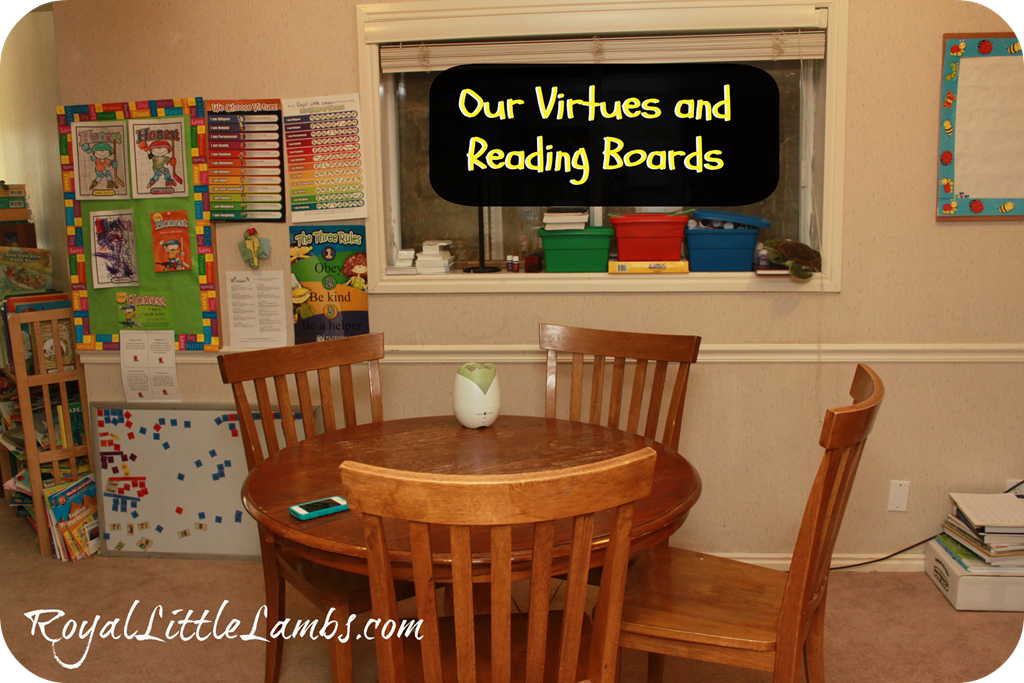
    We do lots of lessons in front of our All About Reading board and our We Choose Virtues board is above that.

    boards

    Our messy book nook with easel and magnets. We can never have enough books!

    book nook

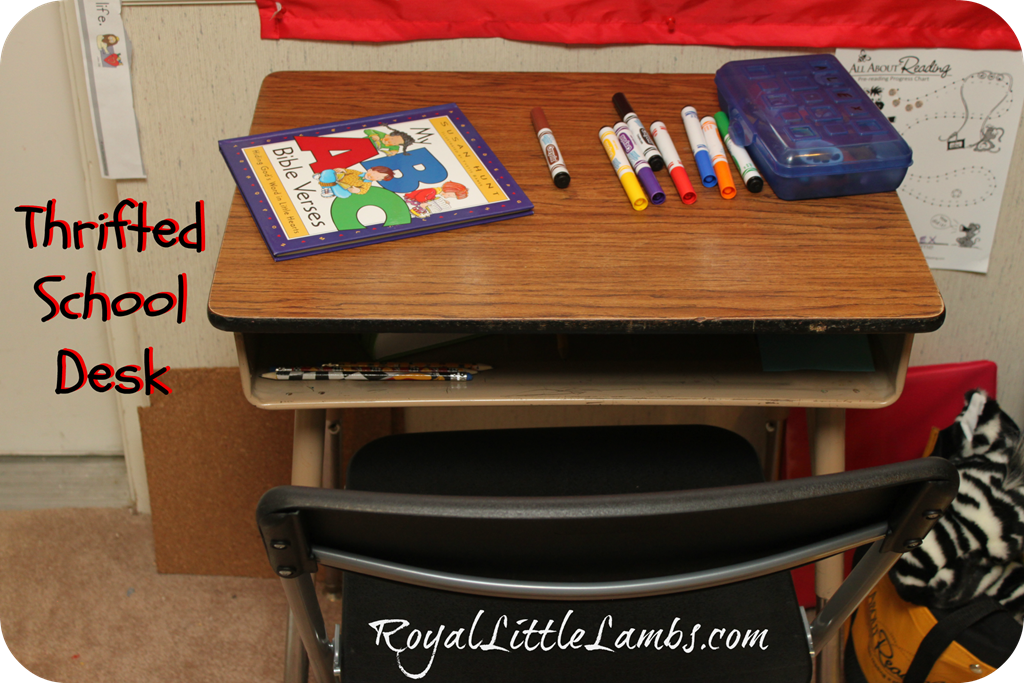
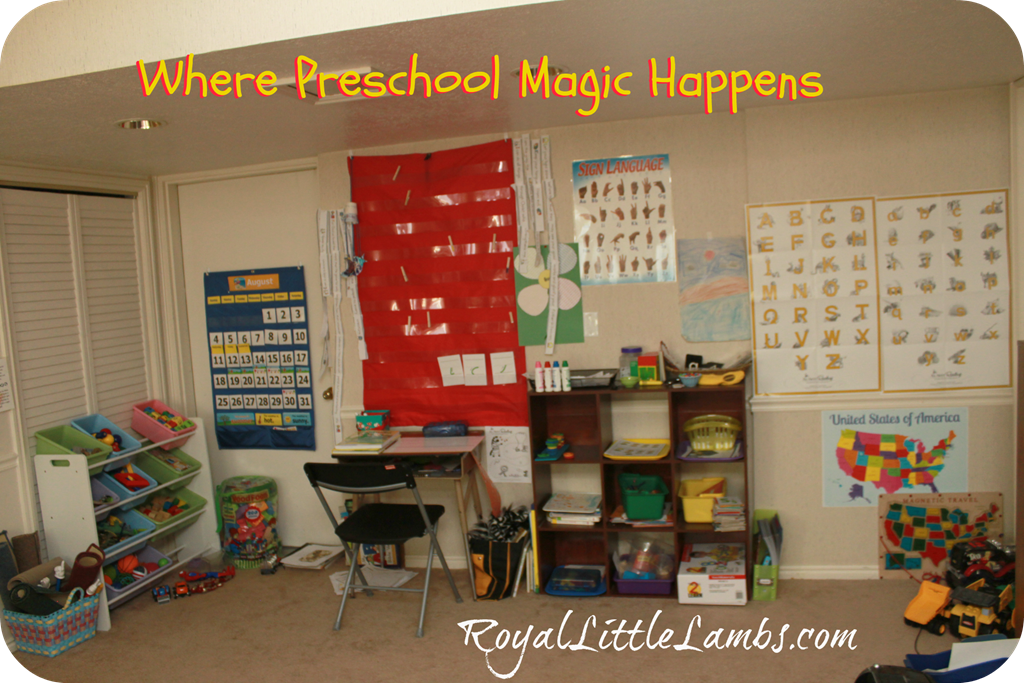
    This is the wall where Alex does his preschool magic. We keep our Montessori mats for all the kids in that basket and toys in the bins. Our calendar is on the cellar door. I found this awesome school desk at Savers and he LOVES it!

    thrifted-school-desk.png

    That cube unit is from Target. All About Reading posters and a U.S. map from the $1 spot with a fun U.S. magnet game. and trucks. Always trucks!

    preschool-magic.png

    Here’s Liz’s setup in our sewing/craft room. Also a cube unit from Target. {yeah, I love em!} She has one cubby for each school subject {history, foreign language, Bible, math, science, and ELA} and a thrifted basket for art. Notebooking binders are propped in between.

    big-girl-workboxes.png

    See what curriculum we’re using this year.

    Share
    Pin1
    Share
    1 Shares
    You might also like:

    Filed Under: Homeschool Tagged With: back to school, homeschool, learning, school room

    Middle East Unit Study

    This blog may contain affiliate links: disclosure.
    Please see my suggested resources.

    August 10, 2013 By Jennifer Lambert 1 Comment

    We learned about the Middle East with Books, Movies, and Notebooking.

    History Series:
    American Revolutionary War
    Civil War
    World War I
    World War II
    Vietnam and Korea (coming soon!)
    Iraq and Afghanistan

    Too few Americans only know about the Middle East from Fox News, Breitbart, and other news outlets. They don’t know any of the history.

    They don’t understand. Some don’t even want to understand or learn.

    There is beauty in Afghanistan, Iraq, Syria, and other Middle East countries.

    People are not our enemy. God loves all of us in this world. The moms and dads love their children in the Middle East just like we love our babies here in America.

    For our struggle is not against flesh and blood, but against the rulers, against the authorities, against the powers of this dark world and against the spiritual forces of evil in the heavenly realms. Ephesians 6:12

    Please pray with me for a more peaceful world.

    This is a difficult concept. Our children have never known our country to not be at war. I remember when Desert Shield and Desert Storm took place when I was in high school. My parents worked for the U.S. Army and provided support for our forces in Iraq.
    CNN and other news channels show their biased accounts of what’s going on “over there” but history is written by the winners.

    The children aren’t winning.

    9/11 disrupted the world and brought many Americans together but tore many others apart. Sides were chosen. America is the world’s police.
    The children aren’t winning.

    My husband deployed to Kandahar Air Field in 2011 for almost 8 months. He protected me from many stories and that’s probably best. I know he saw many horrors there. He worked in the medical facility there and in the blood bank. The medics cared for all injured, no matter whose side they fought for. My husband’s team collected and provided blood from UN Coalition personnel for injured Afghani civilians and soldiers (and even child soldiers) from both sides of that country’s conflict, in addition to our own.

    The children aren’t winning.
    My husband has those memories forever.
    Will the war ever end?

    I have to admit that we haven’t really exposed our kids to these events much yet. We are protecting their innocence as long as possible. It’s such a scary world we live in. The news is full of terrorist attacks and we just don’t discuss it much. We are diligent to be aware of our surroundings when we travel. We realize we are very American in a very hostile environment.

    We’re losing much history, art, and culture with war in the Middle East.

    Resources

    • Center for Middle Eastern Studies – lots of lesson plans
    • War and Terrorism
    • Oil and Water in the Middle East
    • Daily Life in the Middle East
    • Rebuilding Baghdad from Scholastic
    • Teaching the Iraq War Lesson Plans from PBS
    • Refugees
    • Iraq (PBS Nature video)
    • Iraq in Transition
    • Iraq in Pictures
    • Nat Geo Iraq
    • The Changing Face of War
    • Afghanistan (PBS)
    • Women on the Rise in Afghanistan
    • Teaching a People’s History
    • The Homeschool Mom Resources
    • Eclectic Mom Resources
    • Middle East Lapbook
    • Afghanistan Unit Study
    • 8 educational resources to better understand the refugee crisis
    • Productive Homeschooling $

    Movies

    (use discretion)

    • The True Story of Charlie Wilson
    • Restrepo
    • The Battle for Marjah
    • Rendition
    • Zero Dark Thirty
    • Hell and Back Again
    • Hurt Locker
    • Osama

    Books

    (use discretion)

    • Nasreen’s Secret School
    • I See the Sun in Afghanistan
    • A Refugee’s Journey from Afghanistan
    • A Refugee’s Journey from Syria
    • A Refugee’s Journey from Iraq
    • Lost and Found Cat
    • My Beautiful Birds
    • Stepping Stones
    • The Sky of Afghanistan
    • One Green Apple
    • Tasting the Sky
    • Balcony on the Moon
    • A Little Piece of Ground
    • Persepolis
    • The Breadwinner Trilogy
    • Afghanistan: A Military History from Alexander the Great to the War Against the Taliban
    • Kabul Beauty School
    • Ghosts of War
    • The Kite Runner
    • A Thousand Splendid Suns
    • And the Mountains Echoed
    • Waiting for the Owl’s Call
    • Silent Music: A Story of Baghdad
    • The Librarian of Basra: A True Story from Iraq
    • Four Feet, Two Sandals

    We are very respectful of the military and very patriotic.
    Recently, my eldest joined Civil Air Patrol and you can read about it here: My Civil Air Patrol cadet.

    Please join me in praying for our world.

    How we do history…

    You might also like: Raising Readers and How We Study History

    We use Tapestry of Grace for our main history studies.

    My girls especially love the living books and literature selections. They have a government supplement that is wonderful for high school. Four learning levels means the whole family learns together. Each unit has Internet links to relevant sites (most I’ve never heard of). The Revolutionary War begins at the end of Year 2 (from Byzantium to the New World) and the beginnings of our new nation is in the first unit of Year 3 (from Napoleon to Teddy Roosevelt).

    Year 1

    Year 2

    Year 3

    Year 4

    Follow Jennifer Lambert’s board US History on Pinterest.


    Follow Jennifer Lambert’s board Modern History on Pinterest.

    You might also like: Raising Readers and How We Study History.

    Check out the rest of the Crew posts!
    Summer Blog Hop

    Do you have resources to add? How do you teach this difficult time period to your kids?

    ProSchool Membership - Productive Homeschooling
    Share
    Pin46
    Share
    46 Shares
    You might also like:

    Filed Under: Homeschool Tagged With: history, military, Tapestry of Grace, unit study

    World War II Unit Study

    This blog may contain affiliate links: disclosure.
    Please see my suggested resources.

    August 8, 2013 By Jennifer Lambert 9 Comments

    We studied World War II with Notebooking, Books, Videos, and Trips.

    Series:
    American Revolutionary War
    Civil War
    World War I
    World War II
     Iraq and Afghanistan

    World War II Unit

    We watched in horror as the world erupted in war. When America was attacked at Pearl Harbor, it was devastating to Americans.
    We defended our nation and its people and fought valiantly in Europe and the Pacific.
     
    The genocidal state of Germany made the rapid extermination of a cultural and racial group {including women and children} an unprecedented event in the history of the world. Almost 6 million or 78% of the Jews in Europe were murdered during WWII, along with millions of others, such as Slavs, disabled, persons of color, Freemasons, homosexuals, and Jehovah’s Witnesses.
    Few knew about the situation and even fewer tried to help.

    Travel

    • Our Dachau Trip
    • Normandy Memorial Sites
    • Prague Synagogues

    Resources

    • WWII Lapbook
    • WWII Lapbook and Notebooking Pages
    • Homeschool Share Holocaust
    • The Power of a Paperclip
    • Free Unit from Something 2 Offer
    • Unit Study from Tina’s Dynamic Homeschool Plus
    • PBS The War
    • History.com WWII
    • National Archives
    • National WWII Memorial
    • National WWII Museum
    • NPS WWII Memorials
    • Visit Pearl Harbor
    • Pearl Harbor.org
    • Pearl Harbor Historic Sites
    • NPS: Valor in the Pacific
    • History.com Pearl Harbor
    • Holocaust Education
    • Remembering the Holocaust {Scholastic}
    • Aish.com
    • St. Louis
    • US Holocaust Memorial Museum and the Traveling USHMM
    • Holocaust History Project
    • Productive Homeschooling $

    Movies

    {use discretion}

    • Swing Kids
    • Hart’s War
    • The Pianist
    • Schindler’s List
    • Life is Beautiful
    • Paradise Road
    • Come See the Paradise
    • In Enemy Hands
    • Saving Private Ryan
    • Red Tails
    • The Thin Red Line
    • Windtalkers
    • Flags of our Fathers
    • Memphis Belle
    • The Boy in the Striped Pajamas

    Books

    • The Boy in the Striped Pajamas
    • The Hiding Place
    • Anne Frank: The Diary of a Young Girl
    • The Devil’s Arithmetic
    • Number the Stars
    • Hidden: A Child’s Story of the Holocaust
    • Yankee Doodle Gals
    • Early Sunday Morning
    • Meet Molly
    • Catch-22
    • World Wars
    • A History of US: War, Peace, and All That Jazz: 1918-1945 A History of US
    • Terezin: Voices from the Holocaust
    • Baseball Saved Us
    • Terrible Things: An Allegory of the Holocaust
    • Jars of Hope: How One Woman Helped Save 2,500 Children During the Holocaust
    • The Yellow Star: The Legend of King Christian X of Denmark
    • Star of Fear, Star of Hope
    • The Butterfly
    • Passage to Freedom: The Sugihara Story
    • The Little Riders
    • The Harmonica
    • A Father’s Promise
    • The Cats in Krasinski Square
    • The War That Saved My Life
    • War Boy: A Wartime Childhood
    • When Hitler Stole Pink Rabbit
    • Benno and the Night of Broken Glass
    • The Bracelet
    • The Whispering Town
    • Six Million Paper Clips: The Making Of A Children’s Holocaust Memorial

    How we do history…

    You might also like: Raising Readers and How We Study History

    We use Tapestry of Grace for our main history studies.

    My girls especially love the living books and literature selections. They have a government supplement that is wonderful for high school. Four learning levels means the whole family learns together. Each unit has Internet links to relevant sites (most I’ve never heard of). The Revolutionary War begins at the end of Year 2 (from Byzantium to the New World) and the beginnings of our new nation is in the first unit of Year 3 (from Napoleon to Teddy Roosevelt).

    Year 1

    Year 2

    Year 3

    Year 4

    Follow Jennifer Lambert’s board US History on Pinterest.


    Follow Jennifer Lambert’s board Modern History on Pinterest.

    You might also like: Raising Readers and How We Study History

    Check out the rest of the Crew posts!
     
    Summer Blog Hop
    ProSchool Membership - Productive Homeschooling
    Share
    Pin242
    Share
    242 Shares
    You might also like:

    Filed Under: Homeschool Tagged With: history, military, Tapestry of Grace, unit study, World War II, WWII

    World War I Unit Study

    This blog may contain affiliate links: disclosure.
    Please see my suggested resources.

    August 7, 2013 By Jennifer Lambert 6 Comments

    We studied WWI with Notebooking, Books, Videos, and Trips.


    Series:
    American Revolutionary War
    Civil War
    World War I
    World War II
    Iraq and Afghanistan

    World War 1 Unit Study

    American military forces

    The most destructive war the world had seen and the first genuinely world war began exactly 99 years ago. Called the Great War until World War II. The history books focus on Europe, but there were campaigns in Asia, the Pacific, and Africa too. Many Europeans military fought in conflicts all over the world while Americans supported European interests on the Western front.

    But I don’t want my kids to have just an American view of the war – or the world. We study all world history. We learned about the British Commonwealth and their interests during WWI. We learned about German issues.

    It’s important to have the larger picture to understand why it happened, lest we forget.

    Travel

    Our trip to the Flanders Fields WWI Sites with lots of resources.

    On this day, at the 11th hour on the 11th day of the 11th month of 1918, the Great War ends. At 5 a.m. that morning, Germany, bereft of manpower and supplies and faced with imminent invasion, signed an armistice agreement with the Allies in a railroad car outside Compiegne, France.

    Resources

    • WWI Pinterest Unit Study Board
    • General Patton Museum
    • Truman Papers
    • The Great War~PBS
    • Productive Homeschooling $
    • WWI worksheets
    • WWI Notebook/Lapbook
    • WWI Lapbook and Notebooking Pages

    Books

    • All Quiet on the Western Front
    • Farewell to Arms
    • The Night Flyers
    • When Christmas Comes Again
    • World Wars
    • Where Poppies Grow: A World War I Companion
    • War Game: Village Green to No-Man’s-Land
    • A History of US: War, Peace, and All That Jazz: 1918-1945 A History of US
    • WWI Booklist from Booktrust

    Movies

    (use viewer discretion)

    • Flyboys
    • Behind the Lines {renamed Regeneration}
    • World War I in Color
    • War Horse
    • Legends of the Fall
    • list of movies that take place during WW1
    • The Red Baron

    How we do history…

    You might also like: Raising Readers and How We Study History

    We use Tapestry of Grace for our main history studies.

    My girls especially love the living books and literature selections. They have a government supplement that is wonderful for high school. Four learning levels means the whole family learns together. Each unit has Internet links to relevant sites (most I’ve never heard of). The Revolutionary War begins at the end of Year 2 (from Byzantium to the New World) and the beginnings of our new nation is in the first unit of Year 3 (from Napoleon to Teddy Roosevelt).

    Year 1

    Year 2

    Year 3

    Year 4

    Do you have any resources to add to my list?

    Follow Jennifer Lambert’s board US History on Pinterest.


    Follow Jennifer Lambert’s board Modern History on Pinterest.

    You might also like: Raising Readers and How We Study History

    Check out the rest of the Crew posts!
    Summer Blog Hop
    ProSchool Membership - Productive Homeschooling
    Share
    Pin54
    Share
    54 Shares
    You might also like:

    Filed Under: Homeschool Tagged With: history, military, Tapestry of Grace, unit study, World War I, WWI

    • « Previous Page
    • 1
    • …
    • 22
    • 23
    • 24
    • 25
    • 26
    • …
    • 43
    • Next Page »
    Suggested ResourcesCheckout 51NotebookingPages.com LIFETIME Membership

    Archives

    Popular Posts

    10 DIY Gifts with Essential Oils10 DIY Gifts with Essential Oils
    Natural Remedies for HeadacheNatural Remedies for Headache
    10 Natural Remedies to Keep on Hand10 Natural Remedies to Keep on Hand
    Henna Hands CraftHenna Hands Craft
    Homemade Turkey Divan CasseroleHomemade Turkey Divan Casserole
    This website uses cookies to improve your experience. We'll assume you're ok with this, but you can opt-out if you wish.Accept Reject Read More
    Privacy & Cookies Policy

    Privacy Overview

    This website uses cookies to improve your experience while you navigate through the website. Out of these, the cookies that are categorized as necessary are stored on your browser as they are essential for the working of basic functionalities of the website. We also use third-party cookies that help us analyze and understand how you use this website. These cookies will be stored in your browser only with your consent. You also have the option to opt-out of these cookies. But opting out of some of these cookies may affect your browsing experience.
    Necessary
    Always Enabled
    Necessary cookies are absolutely essential for the website to function properly. This category only includes cookies that ensures basic functionalities and security features of the website. These cookies do not store any personal information.
    Non-necessary
    Any cookies that may not be particularly necessary for the website to function and is used specifically to collect user personal data via analytics, ads, other embedded contents are termed as non-necessary cookies. It is mandatory to procure user consent prior to running these cookies on your website.
    SAVE & ACCEPT