Jennifer Lambert

A Sacred Balance

Visit Us On FacebookVisit Us On PinterestVisit Us On InstagramVisit Us On Linkedin
  • Homeschool
    • Book Lists
    • How Do We Do That?
    • Notebooking
    • Subjects and Styles
    • Unit Studies
  • Travel
    • Europe
      • Benelux
      • France
      • Germany
      • Greece
      • Ireland
      • Italy
      • London
      • Porto
      • Prague
    • USA
      • Chicago
      • Georgia
      • Hawaii
      • Ohio
      • Utah
      • Yellowstone and Teton
  • Family
    • Celebrations
    • Frugal
  • Military Life
    • Deployment
    • PCS
  • Health
    • Recipes
    • Essential Oils
    • Fitness
    • Mental Health
    • Natural Living
    • Natural Beauty
  • Faith
  • About Me
    • Favorite Resources
    • Advertising and Sponsorship
    • Policies
  • Reviews

© 2025Jennifer Lambert · Copyright · Disclosure · Privacy · Ad

Why We Love Notebooking

This blog may contain affiliate links: disclosure.
Please see my suggested resources.

August 16, 2016 By Jennifer Lambert 12 Comments

What is notebooking?

Notebooking is…

Creating and compiling a personalized notebook of learning experiences, new knowledge, insights, sketches, illustrations, creative writing, reflections, and more! This is like a scrapbook of things learned.

The notebook takes on the personality of its author – the student – as she decides what content to include, how to present it, how to organize it, and how to shape what she’s learned.

The notebook captures the journey of a child’s learning. Notebooks not only record new knowledge, but also reflect deepening understanding of the world, developing a writing voice, and exploring creative talents.

2 components to notebooking…

Written:

This can include narration, facts, copywork, poetry, vocabulary, essay, creative writing, thoughts and opinions.

Visual:

This can include drawing, maps, timelines, clipart, images, coloring pages, photographs, borders, stickers. They can be as fancy or plain as you like.

Notebooking is not…

It’s not busywork. It’s not like fill-in-the-blank worksheets. It’s not a diary. It’s not inflexible. It’s not cookie-cutter. It’s not just for a certain type of learner. It’s not just for a certain age. There are no limitations.

Why we love notebooking:

Notebooking develops

  • critical thinking skills
  • penmanship
  • research skills
  • pre-writing skills
  • strengthens comprehension and retention.

Notebooking and narrations can be used with or without formal curriculum and it is not limited to any particular homeschool or educational method.

My kids exceed my expectations with their notebooking pages all the time.

Sometimes, they want to do copywork or narration.

Sometimes they want to get really creative.

Sometimes, they feel colorful and other times, they just want to jot down the facts.

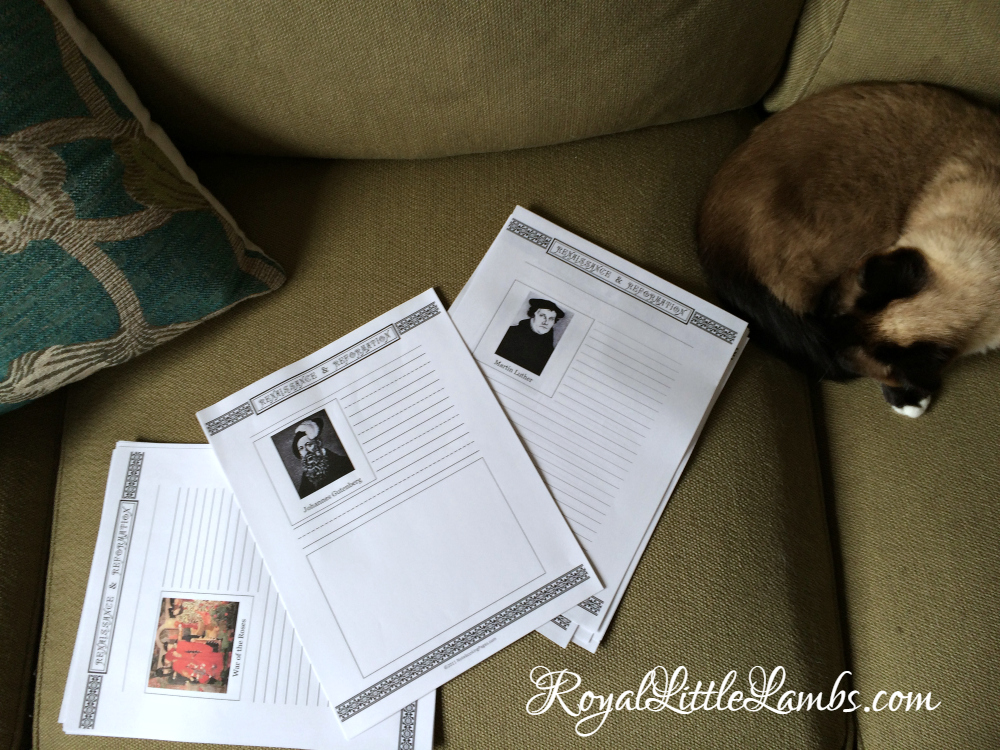
Notebooking Pages for a History Unit

How we use notebooking in all our school subjects:

I often print all the relevant notebooking pages for a unit of history before we begin study. The kids fill them in as we read or afterwards, summarizing what they learned.

We love copywork and art with Draw Write Now. We practice with dry erase boards and then complete the writing and drawing in our workbooks. We keep art journals and portfolios. I even frame some of the really great ones.

We love learning the Bible with notebooking. We write Scripture, do stick figures with Grapevine Studies, complete notebooking journals with Apologia.

We love notebooking about science and nature study. We learned about grasshoppers. We learned about our backyard pond. We went on a winter nature walk and notebooked about what we saw. We also love the Apologia science notebooking journals.

We notebook with Life of Fred math. We also do a lot of hands-on math and notebooking.

Of course, we notebook with literature. See how we use notebooking with language arts. My teen keeps reader notebooks as she reads.

As my kids get older, they love notebooking online or with technology. The Notebooking Publisher App is great for creating notebooking pages – especially handy when we can’t find ready-made ones for special topics.

Our Favorite Tools for Notebooking:

We start with super simple and frugal:

  • Binders
  • Composition books
  • Colorful printer paper
  • Hole puncher

As the kids get older –  more creative and independent, we add other elements:

  • Stickers and scrapbooking supplies
  • Good Prismacolor
  • Blank journals

For personalized notebooks (great for unit studies!):

I use these for unit studies, copywork books, Bible notebooks, and more.

  • Comb binder
  • Combs
  • Cardstock
NotebookingPages.com LIFETIME Membership
Share
Pin25
Share
25 Shares
You might also like:

Filed Under: Homeschool Tagged With: homeschool, notebooking

Our Curriculum for 2016-2017

This blog may contain affiliate links: disclosure.
Please see my suggested resources.

August 11, 2016 By Jennifer Lambert Leave a Comment

I almost forget that it’s back to school time for many families.

Since we homeschool year round, we typically transition into our next levels around March or so.

This year, I actually held back the workbooks and we had some free time over the summer.

But the kids are chomping at the bit to get back into math, spelling, and Bible in addition to science and history!

We’ve pared down our homeschool materials, threw out all the printables, cleared away many manipulatives, and generally streamlined our approach to learning.

Our focused academic time is only a couple hours each day – for each child.

We learn all day, everyday – life skills, reading, playing, creating, exploring.

Our homeschool curriculum for the 2016-2017 school year:

Tapestry of Grace encompasses our literature, history, geography, arts, and worldview studies.

We’re already finished with Year 2 Unit 2 in Tapestry of Grace. We have two more units to complete in Year 2, then it’s Year 3!

We read Bible scripture every morning individually and every evening as a family with the Pray Now app and Book of Concord.

I’m focusing on penmanship through copywork, memorization, and organizing with my younger three this year.

We learn about artists and musicians along with our history schedule.

We use Notebooking Pages for the majority of our academic work and evaluations, especially with history and science.

2nd grade

Alex is only 6 but he begs to keep going, going, going with his studies – and he’s reading and writing so well and doing great in math! He can almost learn everything along with his middle sisters! I make sure he has plenty of play and exploring time. Honestly, I’m so glad we’re out of the preschool stage and I don’t feel any need to “keep him busy.” He’s quite a fluent reader and does well with writing. He doesn’t enjoy play time with his male peers, most of whom are too rough and tumble for him. I’m perfectly happy with my gentle boy.

  • Journey Through the Bible New Testament
  • All About Reading Level 4 (already almost completed!)
  • Singapore Math 2
  • Apologia Botany (almost completed!) and Flying Creatures with junior notebooking journals
  • Daily journaling – art and writing

5th grade

Tori (10) and Katie (9) amaze me every day with their knowledge and interests. They’re pretty much doing dialectic work already, with help and a slower reading schedule. I’m working with Tori (per her request) to improve her reading and spelling with All About Spelling. This is a tough transition age. Academic work increases greatly in upper elementary and middle school and sometimes, we take longer on lessons, but we still maintain our play and exploring time each day.

  • Studying God’s Word F
  • Spelling Workout E
  • Singapore Math 5
  • Apologia Botany (almost completed!) and Flying Creatures with notebooking journals
  • Daily journaling – art and writing
  • Latina Christiana 2, Greek, and French 2

11th grade

Elizabeth turns 16 in October! She will finish up almost all her academics this year, completing some history and literature reading and writing her senior year along with more volunteering and possible dual enrollment or community college courses. She knows she wants to pursue a career in the medical field.

  • The Case for Christ
  • Writing, Government, and Philosophy through Tapestry of Grace
  • College Psychology
  • Videotext Geometry (already halfway completed!)
  • Apologia Physics (already halfway completed!)
  • SAT prep with Khan Academy
  • Red Cross Volunteer at our local hospital two full days a week
  • Civil Air Patrol weekly meetings
  • French 2

We’re taking a break from organized sports and music lessons since they’ve been a less than stellar experience for us. It also saves money so we can travel!

We get plenty of outside play time and nature study – almost every day.

We have more traveling planned this year to coincide with our studies and for fun. We’ll move back to the States next spring!

Share
Pin2
Share
2 Shares
You might also like:

Filed Under: Homeschool Tagged With: back to school, curriculum, homeschool

Celebrating Saint Joan of Arc

This blog may contain affiliate links: disclosure.
Please see my suggested resources.

August 4, 2016 By Jennifer Lambert 15 Comments

I’ve always held a fascination for Joan of Arc, ever since I was a little girl.

The historical story is a remarkable one, no matter what one believes.

To hear heavenly voices and do something amazing, to save one’s country and obey God – it’s the stuff of dreams and fairy tales.

But Joan did all that and more.

Joan was burned at the stake as a heretic in 1431, after a politically-motivated trial. The appellate court retried Joan and declared her innocent on 7 July 1456. She was beatified in 1909 and canonized in 1920.

We’re focusing on European history this year since we’re living in Germany.

We spent several weeks reading about Joan of Arc, the 100-year war, and other issues of the Middle Ages.

To celebrate the end of the first unit of our history cycle 2, we visited Rouen – where Joan of Arc was tried and executed.

For our Joan of Arc Unit Study, we read lots of books, watched some films, completed notebooking pages, and traveled to Rouen.

My son especially loved this book and it was very accurate, not dumbing anything down.

Books:

Joan of Arc: The Lily Maid by Margaret Hodges

Joan of Arc by Michael Morpurgo

Joan of Arc: Heroine of France by Ann Tompert

Dove and Sword: A Novel of Joan of Arc by Nancy Garden

Joan of Arc by Diane Stanley

Joan of Arc by Demi

Joan of Arc by Josephine Poole

Joan of Arc by Mark Twain

DK Biography: Joan of Arc by Kathleen Kudlinski

Joan of Arc (Step into Reading) by Shana Corey

Joan of Arc (Dorling Kindersley Readers, Level 4) by Angela Bull

Films:

Joan of Arc with Ingrid Bergman and Directed by Victor Fleming

Joan of Arc with Leelee Sobieski

The Messenger: The Story of Joan of Arc with Milla Jovovich

The Passion of Joan of Arc (The Criterion Collection) with Maria Falconetti
Joan of Arc Interactive DVD by Nest Learning

There’s also an Nest activity book here.

Activities:

St. Joan of Arc coloring page from Catholic Icing

Reenaction with Legos by Adventures in Mommydom

Simple Joan of Arc Lapbook from Homeschool Epiphany

Online documents of Saint Joan of Arc Trials

Interactive Maps of Travels of Joan of Arc

Joan of Arc notebooking and coloring pages from Shower of Roses

Joan of Arc notebooking page from Homeschool Helper Online

Our Field Trip to Rouen:

Eglise Sainte-Jeanne-d’Arc de Rouen

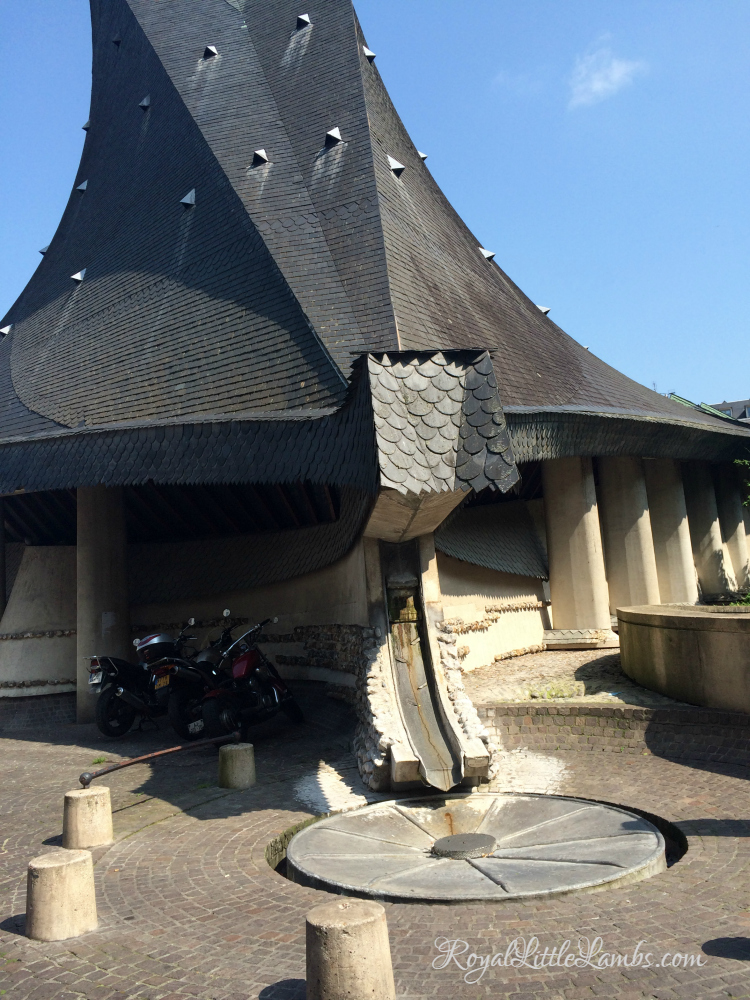
Since 1979, this church stands on the Old Market Square where she was burned. It is both a church honoring St. Joan of Arc and a civil memorial with a cross and eternal flame in the courtyard. The outside is modern, designed by architect Louis Arretche, evoking the sea with a cover of scales in slate or copper. The roof of the church is meant to resemble an overturned Viking ship and consuming flames. Inside, there are remarkable stained glass windows of the old church Saint Vincent Renaissance. There are no relics of St. Joan of Arc.

Cross Monument Eglise outside Sainte-Jeanne-d'Arc de Rouen
Eternal Flame at Base of the Cross outside Eglise Sainte-Jeanne-d'Arc de Rouen
Front Facade of Eglise Sainte-Jeanne-d'Arc de Rouen
Eglise Sainte-Jeanne-d'Arc de Rouen downspout
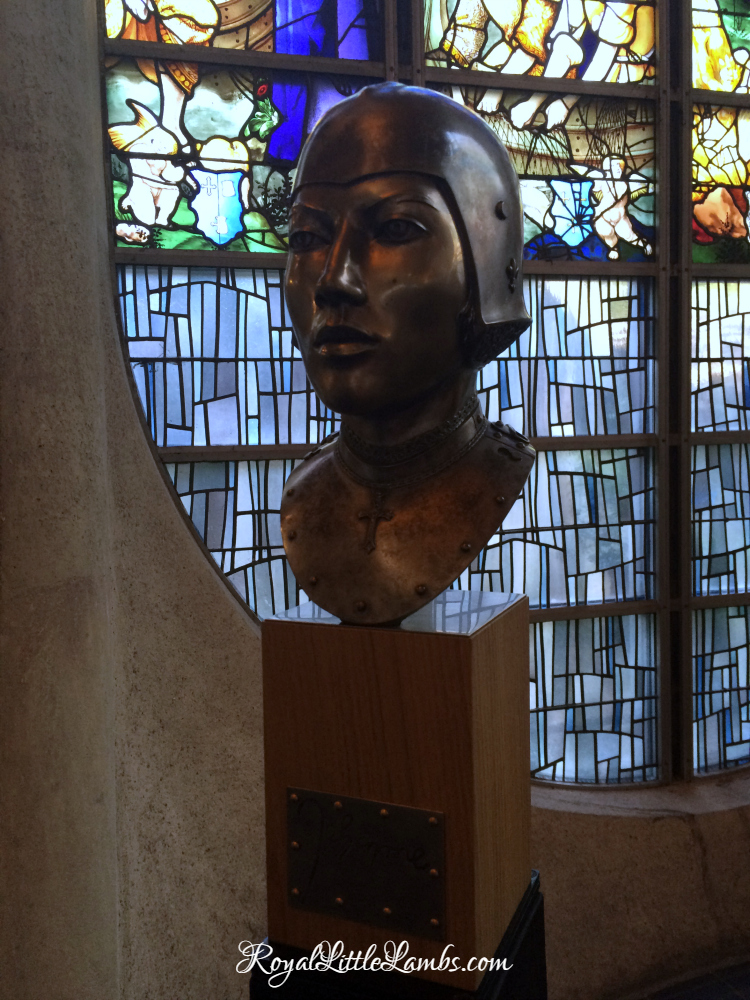
Bust Statue of Joan of Arc
Michel Coste Statue of Joan of Arc

I paid €0,50 for an English brochure.

Joan of History and Message Brochure

Hours:

Monday to Thursday, Saturday : 10am to 12pm and from 14h to 18h

Friday and Sunday : 14h to 18h

Closed : 25 December and 1 January.

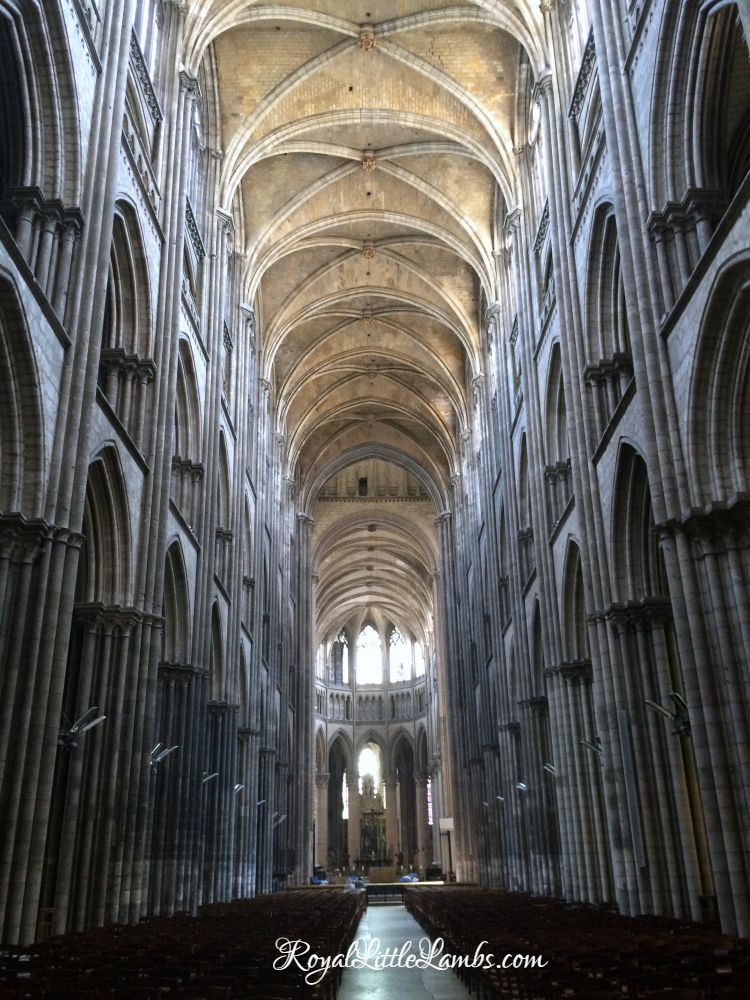
Rouen Cathedral

Joan of Arc was put on trial in the bishops’ palace, but we felt it fitting to visit the famous cathedral.

The highest spire in France, erected in 1876, a cast-iron tour-de-force rising 490 ft above the Cathédrale Notre-Dame de Rouen. Claude Monet immortalized Rouen’s cathedral facade in his paintings.

Rouen Cathedral

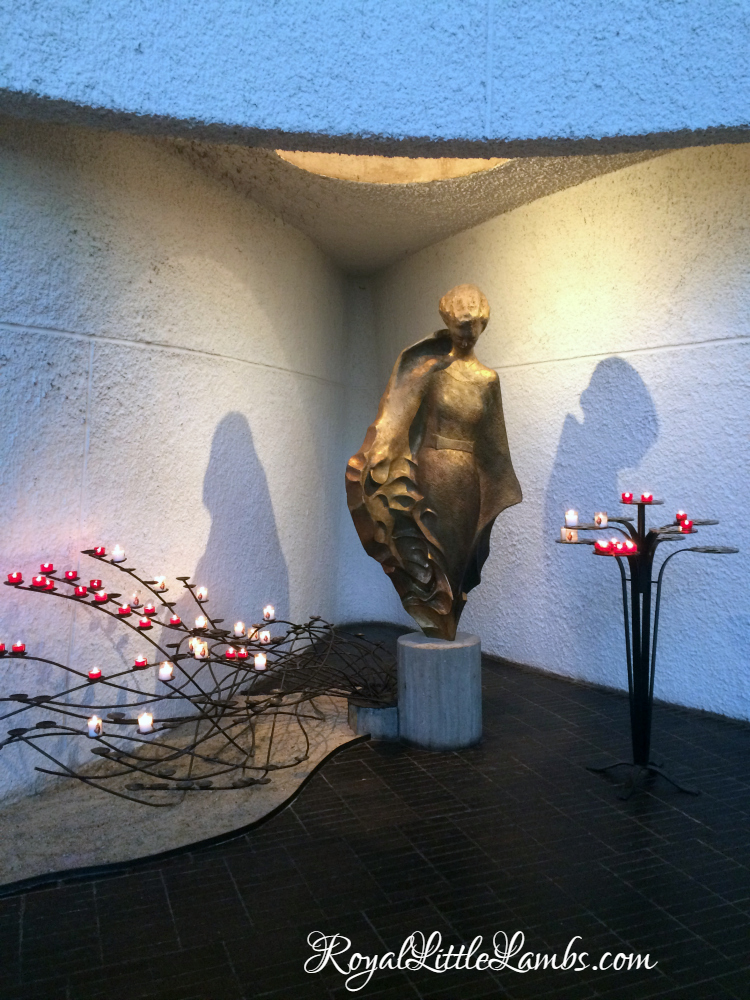
A chapel is dedicated to Joan of Arc.

Joan of Arc Chapel in Rouen Cathedral

New Joan of Arc Museum in Rouen

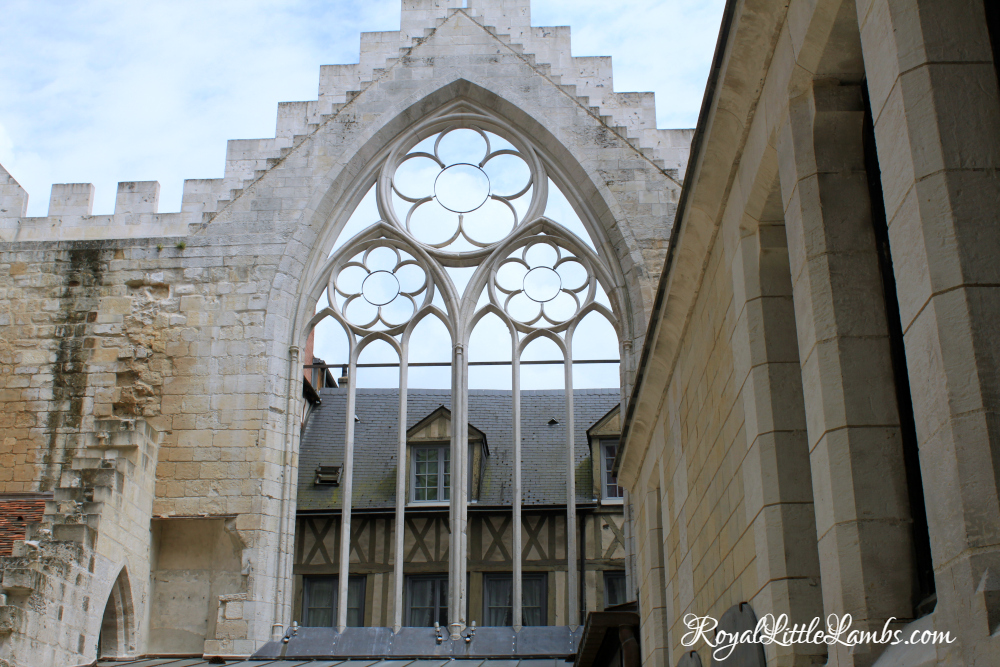
Interior courtyard of the Bishop's palace Rouen

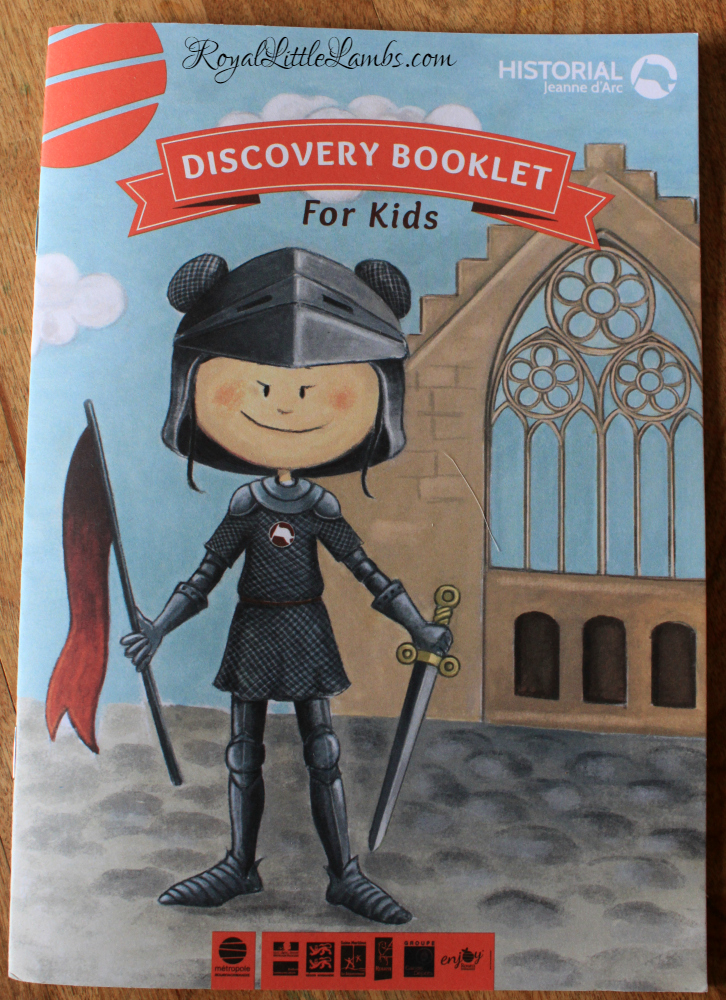
The kids loved these discovery booklets with puzzles, questions, activities, and information about the life and times of Joan of Arc and the city of Rouen.

Joan of Arc Museum Discovery Booklet for Kids

The Joan of Arc museum has projected videos and images that explain the story of Joan in each room of the bishop’s palace. It’s quite innovative and exciting and holds everyone’s attention really well.

There are statues and artifacts at the end of the tour.

We viewed the tower from the attic window.

Joan of Arc Museum

We bought a rare souvenir in the museum gift shop:

Joan of Arc and Rouen Book Souvenir

See info about Historial Jeanne d’Arc here.

Individual Tickets €9,50 or Family Ticket €26

Hours:

31 May to 1 October:

Tuesday to Sunday: 9.45 a.m.–7.45 p.m. (last visit begins at 6 p.m.)

1 June to 30 September

Tuesday, Wednesday, Thursday, Sunday: 9.45 a.m.–7.45 p.m. (last visit begins at 6 p.m.)

Friday and Saturday: 9.45 a.m.–8.45 p.m. (last visit begins at 7 p.m.)

Joan of Arc Tower

This dungeon was part of the castle built in 1204 by Philippe Auguste. It is all that remains of the Rouen Castle. Joan was held prisoner here during her trial.

We didn’t have time to walk over to the tower, but we saw it from the window of the museum.

Tickets € 1.50

Free for children under 18

Hours:

1 April to 30 September

10am to 12.30pm and from 14h to 18h Monday through Saturday. From 14h to 18h30 on Sundays.

October 1 to March 31

10am to 12.30pm and from 14h to 17h Monday through Saturday. From 14 to 17.30 on Sundays.

Closed: Tuesdays and 1 January, 1 May, 1 and 11 November, 25 December.

Rouen is a fun town with lots to see and do, a nice market, and plenty of restaurants and shopping.

We would love to see Domrémy and Reims someday.

Share
Pin15
Share
15 Shares
You might also like:

Filed Under: Europe, France, Homeschool, Travel Tagged With: cathedral, faith, France, history, saint, travel, unit study

Best Book Series for Middle Schoolers

This blog may contain affiliate links: disclosure.
Please see my suggested resources.

June 7, 2016 By Jennifer Lambert 10 Comments

We read good literature in our family.

Sure, my kids like to read fluff once in a while, but they always come back to the good stuff and even complain about their choices of pop fiction with its poor writing, incorrect references to mythology, and predictable plots.

Of course, we all love Narnia, Tolkein, Anne of Green Gables, and The Little House series.

I discourage my kids from reading much of the popular fiction with its themes of dating drama, sexual situations, and occult references.

We go to the library weekly and we see the marketing displays of popular fiction for teens. The book covers make me want to guard their eyes. It’s almost as bad as Harlequin romance novels with those ripped bodices! Many of the plots involve vampires and witches. Almost none of it is worthwhile reading material.

My criteria for good books:

  1. Is it stimulating to the mind and imagination? I want books that are engaging and require my kids to make connections or dream of possibilities.
  2. Does it cultivate our values? I often encourage reading books that differ from our worldview. It’s thought-provoking and a great conversation starter!
  3. Is it well-written? We don’t waste time on poorly written material.
  4. Is it interesting or challenging? I want books that encourage my kids to think long after they close the book. How can we be kinder, help others, be servant leaders?
  5. Does it encourage discussion? I love discussing books with my kids and hearing what they think about what they read!

We read world mythology and folk tales as part of our homeschool curriculum. And my kids love/hate the Percy Jackson series because it’s so “inaccurate,” lol!

I see the value in dystopian lit and we often read these books together and discuss them. I do love sci-fi and fantasy and encourage my kids to love it too.

After completing my homeschool reading assignments, my older teens are welcome to read the popular YA fiction to see for themselves. And so far, they agree with me.

This list goes a bit beyond the great classics that everyone should read.

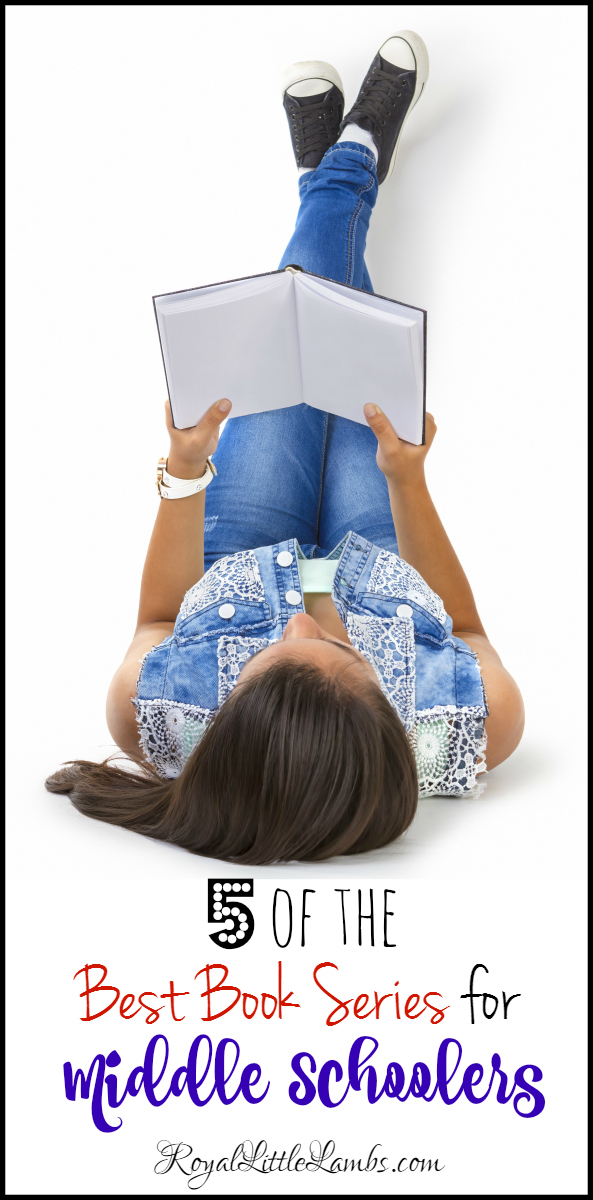
5 of the Best Book Series for Middle Schoolers

5 Great Book Series for Middle Schoolers

My 8-year-old daughter is a very advanced and mature reader and has read all of these and approves them.

I have listed the recommended ages and grade levels, but always preview reading material for appropriateness for your child and family.

1. My Side of the Mountain and more by Jean Craighead George

Fun adventure books about nature and animals.

These living books teach about survival skills, respecting the environment, identifying plants and animals. They’re great for any nature lover!

Age Range: 10 and up

  • Grade Level: 5 and up

2. Swallows and Amazons series by Arthur Ransome

12 books about adventurous kids set between the two World Wars.

We love reading about these siblings and all their pretend play in a simpler time.

3. The Giver series by Lois Lowry

A great dystopian series about valuing all lives.

We love the lessons these books teach about society and relationships.

  • Age Range: 12 and up
  • Grade Level: 7 and up

4. Brian’s Saga series by Gary Paulsen

Survival and self-discovery.

Great books for boys and girls about survival skills, relationships, and learning about self.

  • Ages 11-13

5. Wonder series by R.J. Palacio

Lovely books about looking beyond physical appearances and being kind.

We’re currently reading these and loving them! I encourage kindness in our lives.

  • Age Range: 8 – 12 years
  • Grade Level: 3 – 7

I’m always on the lookout for great literature to add to our collection. We don’t shy away from tough topics. Literature is important for us to learn about the world we live in. I’m raising readers!

Do you have any great books or series to add to my list?

Literature Study (or Book Report) Notebooking Pages
Share
Pin3
Share
3 Shares
You might also like:

Filed Under: Homeschool Tagged With: book list, homeschool, middle school, reading, teen

I Threw Out All the Printables

This blog may contain affiliate links: disclosure.
Please see my suggested resources.

May 31, 2016 By Jennifer Lambert 51 Comments

I had thousands of conputer files of printables and several plastic bins of folders containing laminated cardstock manipulatives, just saved for whenever my son might need or want them.

Then I realized my son had somehow jumped from preK work to solid elementary – with fluent reading and writing and advanced math…and all those printables were just taking up space.

I threw out all the printables and changed the way we learn.

I Threw Out All the Printables

I spent tons of money on paper, ink, and laminating when my middle girls were very little.

Printables worked for us then.

I felt trapped by needing performative homeschooling and showing records of products, but I no longer feel that need. I can see their learning in the critical thinking skills and assimilating questions they ask on our evening walks and around the dinner table.

Now that my kids are growing up, the printables are boring and are met with eye rolls or just simply ignored.

I really don’t have the storage space for all those bins with files of 3-part cards, file folder games, and cutesy literacy and math activities. We move frequently with the military, and being minimalist is a necessity.

It’s very freeing to throw out things I don’t want or need anymore – trash, recycling, donations.

Printables can be a good introduction or substitute for learning about places, events, or people when you can’t travel to experience those things.

Also, I’m not into household printables either. I know they work for some people, but after years of trying and wasting so much paper, I am no longer in denial. I have come to terms with my preference to leave no paper trail.

The cute meal planners, household notebooks, artsy colorful day planners, adult coloring books, colorful prayer journals are just not for me.

I prefer my Excel spreadsheet for our budget and keep the synced family calendar on a phone app. I plan meals based on what I can find that looks good and on sale at the commissary and local grocery. I typically do the heavy shopping twice a month, around pay days.

I have a simple notebook for prayers, scripture writing, and journaling.

We also request companies to email us statements rather than send us paper bills in the snail mail.

Reducing our paper output is better for the environment and helps me maintain my goal of having a simpler life.

Paper items we still love to use:

Notebooking

We primarily use notebooking for assignments and assessment.

The kids have informal journals for art, travel, and writing. We also keep journals for dictation when the kids are young and learning grammar.

I print relevant notebooking pages for history and other subjects. These are more free-form than worksheets, allowing my kids to write about what they find interesting. We often complete these after traveling to summarize what we experienced and learned.

Free Homeschool Resources (Notebooking Pages & More!)

The girls still use their planners where I write their weekly reading assignments and reminds.

We still complete workbooks for spelling and Bible, because they’re easy and work for us. We still do Singapore math workbooks for elementary. We all love Life of Fred math with math journals. My girls are completing VideoText math for middle/high school and my son will too. We all use Apologia science textbooks as guides into real science learning, with lots of experiments and living books as supplements.

But almost everything else we do is experiential learning.

How we learn without printables:

Books

We read a lot. Like, a whole lot.

Our entire curriculum is based on books – literature and history and living books.

Books are super important to me and I want books to be important to my kids.

I don’t want anything dumbed down – we read the real book, not some condensed version in modernized language. We have real dictionaries and encyclopedias and bookshelves in every bedroom and the school room is full of great reading material. We max out our library cards weekly.

See our book lists.

Video

We like to watch videos on Netflix, Amazon, or YouTube that coincide with our studies.

We often compare/contrast the movie to the book.

Video is very important to studying history. It’s the only way we can see it other than in photos or by traveling to view the monuments, museums, and landscape. We also like how many videos bring history to life.

My teen and I watched Saving Private Ryan before our Normandy trip.

Experiential Learning

We like to travel to experience what we’re learning about.

We love to visit museums and natural wonders for art and nature study. I often center our travels around art museums.

We visit churches and castles and military monuments (every chance we get!) to study architecture and church history.

We loved living in Europe for three years to travel to places in history we’ve only read about!

We went to Greece and Rome and Ireland for ancient studies.

We’ve been to Paris and Prague. We went to London, Venice, Florence, and Bruges for medieval and Renaissance studies. We also visited Trim Castle while in in Ireland.

We went back to Paris for early modern studies. We toured an antebellum house and Stone Mountain when we studied the Civil War. We lived in Hawaii for three years and learned the effects of missionaries and plantations on island culture. We went to Flanders to see the WWI monuments.

We traveled to important places for modern studies. We went to Dachau and saw an American cemetery in Luxembourg where Patton is buried. We recently took a trip to Normandy and toured the D-Day museums and monuments.

We visit botanical gardens, aquariums, museums, and zoos for science. We also love nature hikes.

We complete art projects to learn about culture.

We created lovely vases by glass blowing in the Black Forest.

We painted Papier–mâché pots when we studied ancient Greece.

We made henna handprints when learning about India.

We created illuminated historiated initials when learning about medieval Europe.

Throwing out all our printables makes me feel so liberated!

Learning by experience helps my kids remember more than just playing with paper.

I love the direction our homeschool is taking!

I challenge you to make a positive change in your home or homeschool. De-clutter, try a new curriculum, do a family read-aloud, or choose a new technique. Tell me about it!

Share
Pin11
Share
11 Shares
You might also like:

Filed Under: Homeschool Tagged With: back to school, homeschool

Illumination Art Study

This blog may contain affiliate links: disclosure.
Please see my suggested resources.

April 26, 2016 By Jennifer Lambert 4 Comments

We’ve been fascinated with studying Illumination in medieval art.

We traveled to Ireland and saw where the Book of Kells was created.

We’re amazed and thankful that monks worshiped God in such a creative way!

We love this: Marguerite Makes a Book.

Marguerite Makes a Book

We discussed how paint was made in medieval times.

Red

Madder: made by boiling the root of the madder plant rubia tintorium

Vermilion: found in nature as the mineral cinnabar

Rust: found in iron oxide-rich earth compounds

Carmine, also known as cochineal: carminic acid from the female Dactylopius coccus insect is mixed with aluminum salt

Crimson: also known as kermes, extracted from the insect Kermes vermilio

Lac: resinous secretion of insects

Blue

Woad: produced from the leaves of the plant Isatis tinctoria

Indigo: derived from the plant Indigofera tinctoria

Turnsole: also known as folium, a dyestuff prepared from the plant Crozophora tinctoria

Ultramarine: made from the minerals lapis lazuli or the cheaper azurite

Smalt: now known as cobalt blue

Yellow

Weld: processed from the Reseda luteola plant. This is the oldest European dye plant in the world!

Turmeric: from the Curcuma longa plant

Saffron: from the Crocus sativus

Ochre: an earth pigment that occurs as the mineral limonite. Can be heated to become red ochre.

Orpiment: arsenic trisulfide

Green

Verdigris: cupric acetate, made by boiling copper plates in vinegar

Malachite: a mineral found in nature, copper carbonate

China green: a plant-based pigment extracted from buckthorn Rhamnus tinctoria or R. utilis berries.

White

Lead: made by corroding sheets of lead with vinegar, and covering that with decaying matter, such as dung, to provide the necessary carbon dioxide for the chemical reaction

Chalk: calcium carbonate

Black

Carbon: from sources such as lampblack, charcoal, burnt bones or ivory

Sepia: produced by the cuttlefish

Iron gall ink: iron nails would be boiled in vinegar; the resulting compound would then be mixed with an extract of oak apple (oak galls).

Decorations

Designs and Borders

Illustrative miniatures or decorative motifs may enclose the whole of the text space or occupy only a small part of the margin of the page. Some borders were in panelled form while others were composed of foliate decorations or bars which often sprouted plant forms and are known as “foliate bar borders.”

Lettering

The parchment was ruled, usually with leadpoint or colored ink. Ruling lines helped the scribe to write evenly and were part of the design of the page. The scribe wrote with a quill pen made from the feather of a goose or swan. The end of the feather was cut to form the writing nib. A slit cut into the middle of the nib allowed the ink to flow smoothly to the tip of the pen. The appearance of the script—whether rounded or angular, dense or open—was partly dependent upon the shape and the angle of the nib.

Gilding

Gold: leaf, gold hammered extremely thin, or gold powder, bound in gum arabic or egg

Silver: either leaf or powdered

Tin: leaf

We chose to make historiated initials.

These were pages of initials that portray figures or scenes that are clearly identifiable, telling a story.

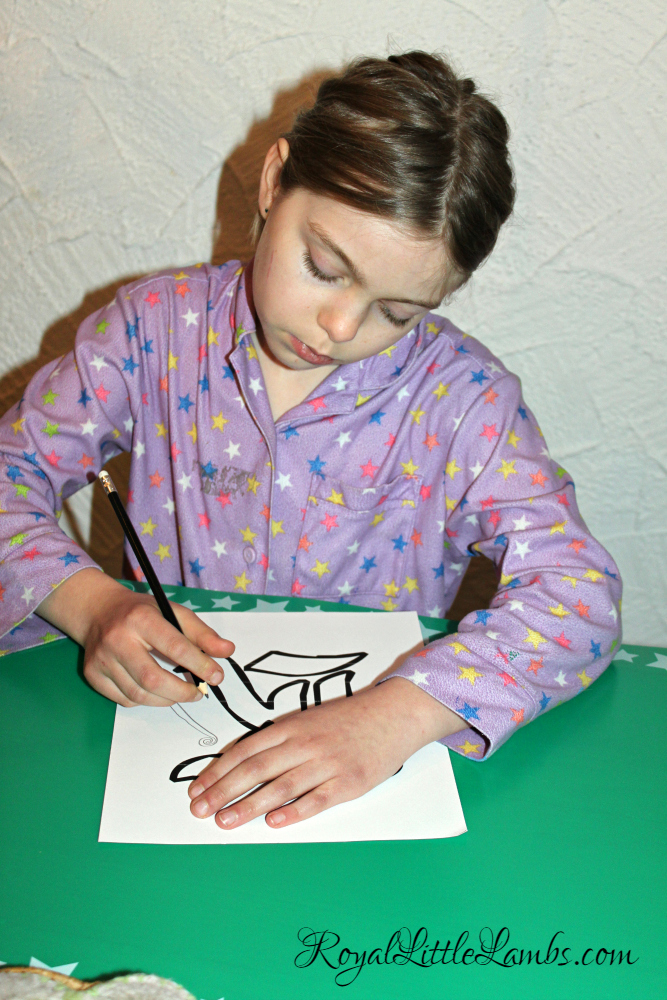
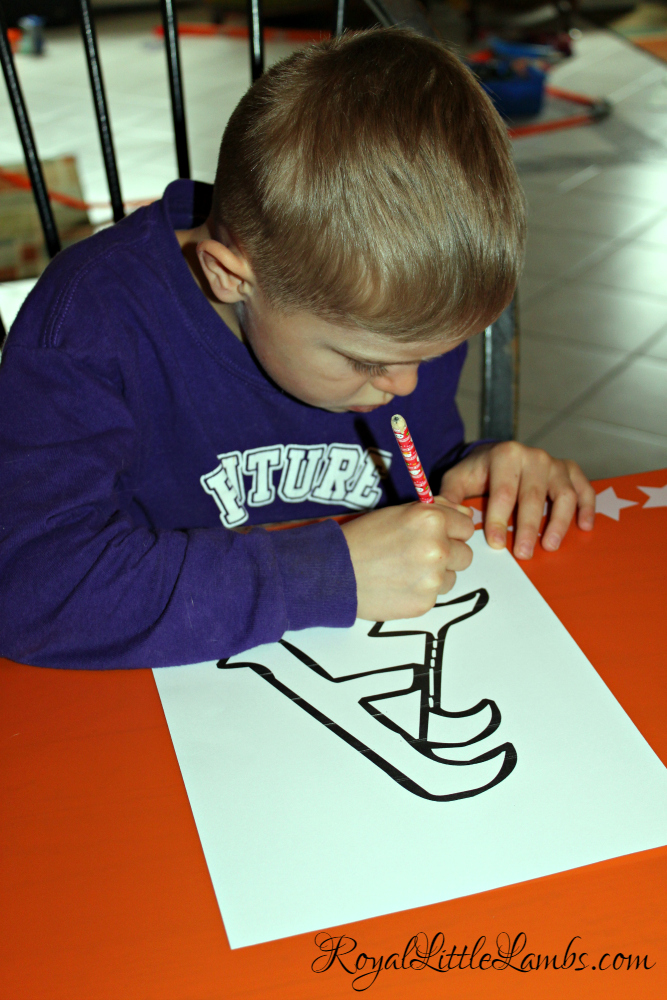
I printed large Old English initial outlines for each of the kids to decorate with their story.

They began with outlining borders and decorations in pencil.

Drawing a Border
Drawing Designs
Outlining a Border
They soon realized how much work must have gone into the illumination of pages and books. They were tired of the detail work after just a few minutes. They took a break and went back to work the next day.
Taking a Break

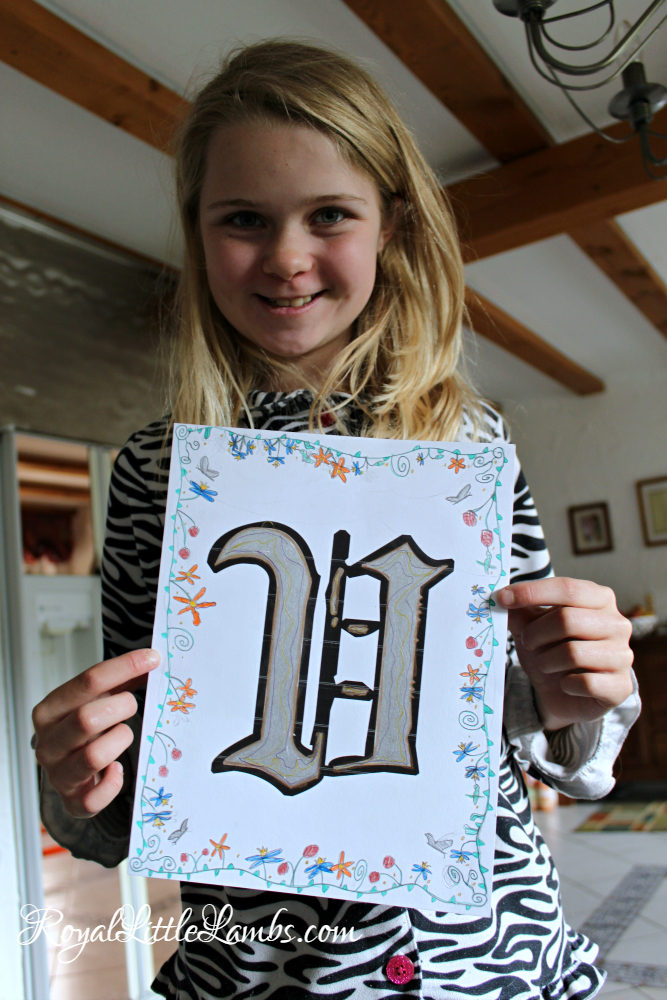
I was impressed with how each of them expressed themselves with their letters by drawing their favorite things and using their favorite colors.

Tori drew lots of flowers and made her initial shiny.

Flowery Letter V
Katie made her entire page shiny and drew lots of undersea animals.
Shiny Undersea Letter K
Alex drew leaves, stars, and flowers and cats playing music and wearing hats.
Letter A
We then framed the initials and hung them up in their rooms!

ProSchool Membership - Productive HomeschoolingLinking up: A Little R&R, Wholehearted Home, Cornerstone Confessions, F Dean Hackett, Rich Faith Rising, Donna Reidland, Our Home of Many Blessings, A Proverbs 31 Wife, What Joy is Mine, Pat and Candy, VMG206, Sarah Celebrates, The Modest Mom, The Quintessential Mommy, Oh My Heartsie Girl, Marilyns Treats, Classical Homemaking, Ducks n a Row, Books and Giggles, Blogghetti, Making Our Life Matter, Life of Faith, Morsels of Life, Living Montessori Now, ABC Creative Learning, Hip Homeschool Moms, Crystal and Co., Lamberts Lately, Frog’s Lilypad, I Choose Joy, My Learning Table, Bloom Designs, Every Star is Different, Education Possible, The Natural Homeschool, Wondermom Wannabe, Coffeeshop Conversations, xoxo Rebecca, Oh My Heartsie Girl, What About, Sincerely Paula, Create with Joy, Life with Lorelai, A Kreative Whim, Happy and Blessed Home, Creative Home Keeper, Holly McBerty, A Wise Woman Builds Her Home, The Deliberate Mom, Children are a Blessing, Raising Homemakers,
Share
Pin5
Share
5 Shares
You might also like:

Filed Under: Homeschool Tagged With: art, history, homeschool, Tapestry of Grace, unit study

Homeschool Foreign Language

This blog may contain affiliate links: disclosure.
Please see my suggested resources.

April 19, 2016 By Jennifer Lambert 11 Comments

I’ve always felt learning a foreign language is important.

My high school offerings were only Spanish and French. My parents encouraged me to take Spanish since they thought it would be more useful. I took three years in high school, but in college, I maxed out the foreign language programs and also took the maximum courses offered in French and German. I really wish I had become a linguist but I had little counseling and didn’t really know that was a possibility.

While I am not fluent, I can get by with small conversations in French, German, and Spanish. I can read it ok, so that’s good when we travel. I can break down and pronounce Italian. Portuguese is harder!

It’s totally true that if you learn one language, it’s easier to learn others.

I don’t want to pay hundreds of dollars on a language program.

We’ve reviewed Mango, but it’s so expensive for a large family. I’ve seen Transparent Language and Rosetta Stone at the library.

Most colleges require 2 credits of the same foreign language. I want my kids to be more than prepared.

Labeling everything with sticky notes is a fun way to learn vocabulary. Reading menus and watching shows in other languages with subtitles can help us understand.

Homeschool Foreign Language

How We Learn Foreign Language in our Homeschool

Latin

Since we follow a classical education model, we focus on Latin in the beginning. It’s a great jumping off point for Spanish, French, Italian, and more!

We being with Prima Latina at about age 8.

Then we follow the books as far as we can:

We study Latina Christiana I and Latina Christiana II for upper elementary or middle school.

Or you can just jump into First Form Latin I-IV (which is mostly Henle in workbooks) in high school. There is some argument among homeschoolers about whether to count each Form as 1 high school credit.

Cassell’s Standard Latin Dictionary is a must buy.

The kids love it. It’s easy. We watch the DVDs and complete the workbooks and sing songs and recite prayers. I know it’s working because when we travel, the kids totally read the Latin inscriptions! It’s a little harder to understand spoken Latin, like at a Catholic Mass.

Latin helps a lot in science and with vocabulary.

Greek

I’m so happy there’s a Greek program that begins with the Alphabet and continues with Elementary Greek I, II, and III.

Easy and I use the teacher’s guide for snags and to make sure since I’m unfamiliar with Greek. When we traveled to Greece, it was fun to pick apart the letters and words. While ancient Greek is a bit different, the sounds and alphabet haven’t changed!

My second child is obsessed with Greek and is so proud she knows the alphabet and how to sound out the words. It helps a lot with science and vocabulary.

French

I’m not super thrilled with First Start French. The lessons are not comprehensive enough for high school credit. The girls enjoy the workbooks. The CD isn’t the greatest, so I read the dialogue exercises aloud. The girls review with apps and love to practice speaking French anytime we go over the border!

We’ve heard great things about William Linney’s Getting Started with French and may look into that. He also offers Spanish and Latin.

My eldest took French in college through College Credit Plus.

Larousse Concise French-English/English-French Dictionary is a must-buy.

German

We live in Germany, so it’s important that we can communicate with our neighbors. I bought some kids workbooks and we worked through those for vocabulary.

We worked through German for Children and now we’re on German DeMYSTiFieD.

Russian

My second child wants to learn Russian and is obsessed with astronauts so I bought her The Everything Learning Russian Book and she’s happily completing that.

Gaelic

Two of my kids are very interested in learning Irish. There is not much out there for lesson books. We are pleased with the revival of the Irish language.

Oxford Pocket Irish Dictionary is a good help. They research pronunciation when they read the Irish folk tales, mythology, and stories.

More

  • Many colleges and universities offer language courses through their extension offices
  • Many city or county rec centers offer language courses
  • Used high school textbooks are great starting points and can be found on Abebooks. These are helpful for students to complete exercises.
  • The kids use the Duolingo app for review.
  • Great resources from Mason’s living languages.
  • These are some free online college courses we’re looking into.
  • Classical Academic Press offers Latin, Greek, French, Spanish curriculum.
  • Compass Classroom offers courses in Latin and Spanish
  • Muzzy BBC Languages offers free online courses.
  • Easy Peasy Spanish and French (scroll down)
  • Time4Languages offers many different language options
  • Georgia Virtual School has courses in Latin, Chinese, Japanese, Spanish, French, or German. I haven’t reviewed these, but they look like little lessons and quizzes, similar to Mango.

We love these apps for when we travel:

  • Google Translate and Word Lens
  • Linguee
  • iTranslate
  • Country or Language specific apps come in handy with basic words and phrases but often have in-app purchases for more info.

How do you teach foreign languages to your students?

Latin & Greek Word Study Notebooking Pages
Share
Pin3
Share
3 Shares
You might also like:

Filed Under: Homeschool Tagged With: French, high school, homeschool, language, Latin

Critical Tips to Acing the SAT and ACT

This blog may contain affiliate links: disclosure.
Please see my suggested resources.

April 14, 2016 By Jennifer Lambert Leave a Comment

High school students have been studying for and taking the SAT and ACT exams for years, but that doesn’t stop the same questions on how to prepare from cropping up each year. As a new set of students approach this stressful exam time they can find themselves missing important details and wondering how best to study for such a comprehensive exam.

Breaking the process down into planning stages and highlighting important key steps helps keep students on track and ensures they don’t miss a deadline or forget an important tool on the morning of the test. Start with the basics and work your way down into the important details (from what kind of pencil you need to how to study for your weakest topic). Getting a firm grasp on one step will make the rest of the decisions easier to focus on.

Critical Tips to Acing the SAT and ACT

Decide Which Exam to Take

The SAT used to reign supreme across much of the country, but the ACT overtook it in popularity in 2012. These days most colleges are used to evaluating either exam when considering admission.

You guidance counselor should be able to help you decide which exam to take, but be sure to also check the requirements of any colleges or universities you’re applying too. Some schools have a preference and may even share the average exam score of their freshman class. This will give you a good gauge of how well you’ll need to do on the SAT or ACT to land a spot at your dream school. Some prominent schools have begun doing away with the test requirement for admission. Take the time to carefully evaluate the requirements of your top schools before deciding on your exam course of action.

Some states require all graduating high school students to take the ACT or SAT as a school exit exam (including Connecticut, Colorado, Minnesota, Michigan and Washington D.C.). In these cases, unless a university specifically requests the other exam or you feel you may do better on the other one, the decision of which test to take is easy.

Know the Important Dates

Both the SAT and ACT is offered multiple times during the year and require pre-registration. Keeping an eye on these dates not only makes sure you don’t miss your chance to take the SAT or ACT, but also gives you the advantage of choosing which date works best for you. If you take the exam during one of the earlier sessions you also have a chance to retake it if you’re not happy with your score.

The SAT is offered in October, November, December, January, March, May and June. Registration deadlines are typically about a month before the exam, however, you can register late for an additional fee.

The ACT is offered in September, October, December, February, April and June. The regular registration deadline for the ACT is also roughly a month before your chosen exam date with a select window for late registration, also requiring a fee.

If you plan on taking both the ACT and SAT select your exam dates carefully so you don’t get overwhelmed and have enough time to appropriately study for each test.

Study, study, study

More than 80% of college admission teams rank grades in college prep courses (essentially any course a college may look at) as having “considerable importance” to college acceptance, according to a survey by National Association for College Admission Counseling. SAT and ACT test scores are considerably important to 58.3% of those surveyed. Doing well in prep classes and on college admissions tests is important to college acceptance.

While you can take the SAT and ACT more than once, doing the best you can is important to getting into the college of your choice. Some universities require you to submit all SAT and ACT test scores, even if you retested to get a better score. The better you do the first time, the better you’ll look to an admissions counselor.

Investing in an ACT or SAT prep course will keep you focused on your studies and help you prepare for the material and format of the exam. If you struggle with a particular subject area, such as Algebra 2, spend extra time focusing on that topic with drill down courses, lessons and practice tests. This is particularly important if you plan on taking any SAT Subject Tests, which the College Board notes are “an additional opportunity to show colleges what you know and what you know you can do.”

Create a Day-of Checklist

The SAT and ACT organizations are extremely strict on what can and can’t be brought into testing environments. For instance, cellphones, tablets, laptops and iPods aren’t allowed into SAT testing rooms and must be turned off and out of reach when taking the ACT – so don’t plan on listening to music during the exam. If you want to keep track of time you’ll need to wear a wrist watch. If you have a smartwatch leave it at home and opt for a more traditional alternative.

To take either exam you’ll need at least two soft lead No. 2 pencils. Soft lead generally means a pencil that you have to sharpen, not a mechanical pencil. The ACT specifically prohibits mechanical pencils. You’ll also need your printed exam ticket and a valid photo ID.

Review the exact requirements the week before your exam date so you can plan according and buy or borrow any tools you might need. Once you know what you can and can’t bring, make a list and lay out everything the night before so you’re not stressed the morning of the exam.

With some careful attention and preparation, the day of the test will be a breeze.

Share
Pin1
Share
1 Shares
You might also like:

Filed Under: Homeschool Tagged With: college, high school

Learning to Read

This blog may contain affiliate links: disclosure.
Please see my suggested resources.

April 14, 2016 By Jennifer Lambert 12 Comments

I have had the privilege and opportunity of teaching 3/4 of my kids how to read.

My eldest daughter attended daycare and preschool and they mostly took care of all the potty training and teaching her the alphabet and reading. I just reinforced what they taught at home. She caught on to reading very easily and quickly at the age of 4 and took off, devouring bigger and bigger books.

I never pushed my kids to read early. I let them go as their interest led them. They will always learn if I get out of the way and allow plenty of tools.

My middle two daughters are very different in personality and ability. The older one is very analytical and the younger one is a free spirit.

We recently learned about eye problems like convergence insufficiency and Victoria had a year of vision therapy which helped her in many ways.

My youngest, the boy, is five and already finishing up a reading curriculum. He loves early readers about animals and transportation. He prefers level 3 books already!

Learn about my goals and tips for reading readiness.

I hated reading until I was in junior high school, so I have no worries about having four lifelong lovers of books, even if they seem reluctant sometimes.

We have a house filled with books and we take library trips at least weekly. Reading is our go-to for learning. Our main curriculum is completely focused on literature and history.

We love leveled readers, Life of Fred, and All About Reading.

Sometimes, young readers need a little help with distractions. I don’t want reading time to foster negative feelings of frustration or dread.

Early Reading Tools

Teaching reading to young children is a challenge for me.

I was trained as a high school English teacher, so early childhood education got me a little anxious.

I relied on teaching books and reading programs to guide us through that process. I took cues from my kids with what worked and what wasn’t as exciting or needed.

Our favorite reading curricula:

I used Teach Your Child to Read in 100 Easy Lessons with my first child. She also learned well with A Beka preK and K curricula. We never used A Beka again.

My younger three kids loved All About Reading. They completed it when there were only 3 levels. Then we just moved on. They were fluent.

My middle girls liked Logic of English. Reading our reviews of Logic of English here and here. It’s very analytical and offers plenty of tools to use.

We’ve used computer programs and apps like Starfall, Funnix, Reading Kingdom, ABCMouse, Reading Eggs.

I read aloud to my kids every day, usually morning and evening. I encourage my girls to take turns reading aloud to me and to each other. In the evenings, we all read aloud from the Bible. My son has started reading his memory verse every morning. As with anything, practice makes perfect.

I encourage my kids to read leveled readers and science nature readers. High interest reading is key to lifelong learners and readers.

Sometimes we get stuck or distracted with reading and need a little help along the way.

Usually, it’s distractions or daydreaming that make them lose their place in the text. Sometimes, it’s just forgetting a sound or word.

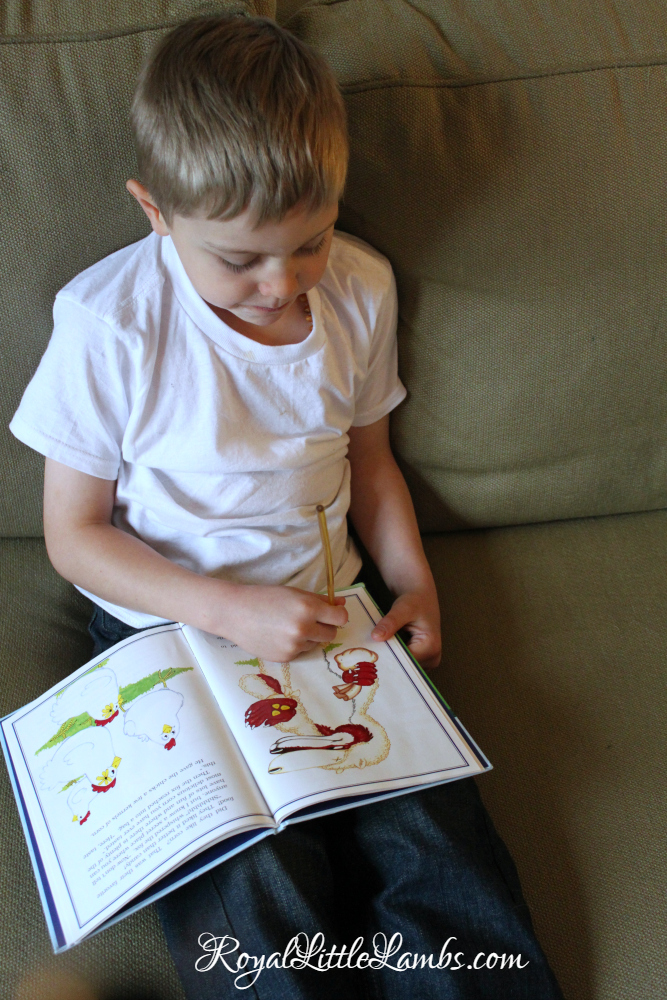
I like these mini plastic pointers to follow each words as we read. They give fidgety fingers something to hold onto and stay on task by tapping each word as it’s read.

Reading with a Pointer

The bigger reading guides show a whole paragraph in the view finder. This is helpful to practice or wean off the smaller reading strips.

There are many variations in the reading guides.

Full page reading guides might help tone down harsh fluorescent lighting or help tired eyes. The translucent pages also multitask with a light box or color blending at a window!

I highly recommend this book: Reading by the Colors: Overcoming Dyslexia and Other Reading Disabilities Through the Irlen Method by Helen Irlen

Strategies for Reading Comprehension

We find notebooking pages with story maps, KWL charts, graphic organizers, and verbal/written narration are helpful.

  • Using Prior Knowledge/Previewing
  • Predicting
  • Identifying the Main Idea and Summarizing
  • Questioning
  • Making Inferences
  • Visualizing

Alex has grown into quite the reader lately! We love All About Reading and it has helped me teach all the phonics rules and sight words for Alex to take off reading well on his own.

Alex really loves reading about dogs and cats lately.

He’s proud of reading like his big sisters!

Early Readers

You might also like:

  • Vision health
  • Letter Recognition
  • Tips for Read Alouds
  • Reading Readiness
  • Learning to Read
  • Learning to Spell
  • Spelling Work
  • Reader Notebook
  • Building a Better Vocabulary
  • I Don’t Teach English
Share
Pin5
Share
5 Shares
You might also like:

Filed Under: Homeschool Tagged With: homeschool, reading

High School Health Credit

This blog may contain affiliate links: disclosure.
Please see my suggested resources.

April 5, 2016 By Jennifer Lambert 10 Comments

I don’t know about you, but I took PE/Health in 9th grade public school and it was a less than stellar experience.

It was taught by the football coach, co-ed, and it was pretty embarrassing for all involved.

How do homeschoolers meet the requirements for high school health credit?

High School Health Credit

What are the requirements for a health class?

Check for state requirements for health education.

I prefer to go above and beyond and max out requirements. We also never know where we might be living since the Air Force moves us around pretty often. Some states require only a 0.5 credit health course, while other states want a full 1.0 credit for graduation.

What’s a credit?

18 weeks = 0.5 credit

36 weeks= 1 credit

135-150 hours of coursework = 1 credit

What should be included in a health course?

A 0.5 credit health course should cover: developing a healthy self, substance-abuse prevention, human development, relationships, disease prevention, HIV/AIDS education, CPR and safety, consumer health, injury/violence prevention, nutrition, fitness, and community health.

A 1.0 credit health course includes everything in the course above and should cover: developing healthy sun exposure habits, acquiring knowledge and skills to practice healthy habits that prevent and/or control disease, learning positive tactics to avoid drug use, and learning healthy eating strategies.

Since we maintain a lifestyle of learning, most of these concepts are review for my teens in high school.

How do I teach health?

Sure, you can buy a traditional textbook health curriculum. Lots of those all-in-one companies include health in their package. If that’s the route you’re going, move along. I refuse to buy a textbook or workbook for something that should be a basic life skill. The library has lots of great resources!

Collect current events articles from newspapers, magazines, online and discuss or research to learn more.

Personal Health:

Study to include human anatomy and physiology, physical fitness, nutrition. We review our chemical-free lifestyle and recipes for personal care products. My daughter took a separate psychology course, so many coinciding health and development topics are covered in that.

Disease Prevention:

We love the links on the CDC and NIH websites.

Drug awareness:

Study to include information and avoidance of illicit drugs, smoking, and alcohol. This offers a great time to discuss peer pressure and self-control. The Bible offers instruction on excessive alcohol consumption. This is a great ministry opportunity for pray or volunteer participation. Also, address marijuana and CBD issues.

Fire safety:

Learn about what to do in the event of household fires, review a fire evacuation plan, learn how to use a fire extinguisher. I like these safety tip sheets. Check out this fire safety guide.

Household safety:

How should cleaning supplies, food items, and toxic items be handled and stored? How do we handle accidents or emergencies?

Basic First Aid:

Minor medical emergencies, to include burns, bleeding, choking, poison, injury, shock. My daughter completed certification courses through the Red Cross. They offer great babysitting and CPR courses.

Consumer Health:

Learn about health care programs around the world. Visit and/or volunteer at a crisis pregnancy center. Learn about propaganda, marketing, drug company lobbying. Really find out where our food comes from. There are great videos available like Food, Inc., Super Size Me, Captivated, Fed Up, and more.

Relationships:

We discuss courtesy, manners, etiquette, friendship, peer pressure, gossip, bullying, dating. We do role playing and review social situations that are successful or unpleasant. The book How Rude! is a great resource for etiquette.

Sex Ed:

This is a touchy subject, but a super important one.

  • Human Development (including reproduction, puberty, sexual orientation, and gender identity)
  • Relationships (including families, friendships, romantic relationships and dating)
  • Personal Skills (including communication, negotiation, and decision-making)
  • Sexual Behavior (including abstinence and sexuality throughout life)
  • Sexual Health (including sexually transmitted diseases, contraception, and pregnancy)
  • Society and Culture (including gender roles, diversity, and sexuality in the media)

My Sex Ed Series:

  • Teaching About Healthy Relationships
  • Is it Time for The Talk?
  • Having The Talk
  • Relationships
  • Making Sense of It Book Review
  • Why I Don’t Teach Purity

Download a great free sex-ed curriculum here.

See my favorite books for life skills.

I like the links and resources at All in One High School Health for guidance.

Civil Air Patrol has monthly safety briefings that cover many of the topics in health courses. We discuss the presentations at home afterwards.

My daughter volunteers two days per week at our local hospital with The Red Cross.

She’s volunteered every Monday in the medical laboratory for over a year. She likes microbiology and virology.

Recently, she’s been volunteering in the maternity ward and has assisted nurses, doctors, and technicians with hearing screenings, taking vitals, circumcisions, and more.

This hands-on experience is teaching her more than a textbook or video ever could!

Share
Pin104
Share
104 Shares
You might also like:

Filed Under: Homeschool Tagged With: health, high school, homeschool, teen

  • « Previous Page
  • 1
  • …
  • 13
  • 14
  • 15
  • 16
  • 17
  • …
  • 43
  • Next Page »
Suggested ResourcesFetch

Archives

Popular Posts

10 DIY Gifts with Essential Oils10 DIY Gifts with Essential Oils
Natural Remedies for HeadacheNatural Remedies for Headache
10 Natural Remedies to Keep on Hand10 Natural Remedies to Keep on Hand
Henna Hands CraftHenna Hands Craft
Homemade Turkey Divan CasseroleHomemade Turkey Divan Casserole
This website uses cookies to improve your experience. We'll assume you're ok with this, but you can opt-out if you wish.Accept Reject Read More
Privacy & Cookies Policy

Privacy Overview

This website uses cookies to improve your experience while you navigate through the website. Out of these, the cookies that are categorized as necessary are stored on your browser as they are essential for the working of basic functionalities of the website. We also use third-party cookies that help us analyze and understand how you use this website. These cookies will be stored in your browser only with your consent. You also have the option to opt-out of these cookies. But opting out of some of these cookies may affect your browsing experience.
Necessary
Always Enabled
Necessary cookies are absolutely essential for the website to function properly. This category only includes cookies that ensures basic functionalities and security features of the website. These cookies do not store any personal information.
Non-necessary
Any cookies that may not be particularly necessary for the website to function and is used specifically to collect user personal data via analytics, ads, other embedded contents are termed as non-necessary cookies. It is mandatory to procure user consent prior to running these cookies on your website.
SAVE & ACCEPT