Jennifer Lambert

A Sacred Balance

Visit Us On FacebookVisit Us On PinterestVisit Us On InstagramVisit Us On Linkedin
  • Homeschool
    • Book Lists
    • How Do We Do That?
    • Notebooking
    • Subjects and Styles
    • Unit Studies
  • Travel
    • Europe
      • Benelux
      • France
      • Germany
      • Greece
      • Ireland
      • Italy
      • London
      • Porto
      • Prague
    • USA
      • Chicago
      • Georgia
      • Hawaii
      • Ohio
      • Utah
      • Yellowstone and Teton
  • Family
    • Celebrations
    • Frugal
  • Military Life
    • Deployment
    • PCS
  • Health
    • Recipes
    • Essential Oils
    • Fitness
    • Mental Health
    • Natural Living
    • Natural Beauty
  • Faith
  • About Me
    • Favorite Resources
    • Advertising and Sponsorship
    • Policies
  • Reviews

© 2025Jennifer Lambert · Copyright · Disclosure · Privacy · Ad

How We Do Science

This blog may contain affiliate links: disclosure.
Please see my suggested resources.

June 9, 2017 By Jennifer Lambert 7 Comments

We use many different resources to learn about science.

We used Apologia science for years, and we’re beginning to look into some other texts and living books to supplement our science studies.

The Apologia elementary books were a great introduction to science, but we need something more in-depth now. We weren’t overly impressed with the Apologia high school texts.

We prefer less Bible and more science. We’re now leaning toward secular science books to really learn good science. It’s hard to find good high school texts.

High school science requires labs for biology, chemistry, and physics.

Our science studies cover these topics, and more:

  • Natural History
  • Astronomy
  • Anatomy
  • Botany
  • Biology
  • Chemistry
  • Physics

How We Study Science:

  • Experiments
  • Activities
  • Notebooking
  • Gardening
  • Cooking
  • Pets
  • Field Trips

Science should be experienced. Textbooks are just supplementary materials. We love the library for living books.

Elizabeth dug for fossils in Texas. We made the moon phases with Oreo cookies. We’ve studied bacteria. We love to cook. We go on nature walks. We love gardening. We love our pets. Science is all around us and it’s impossible to separate it into a sterile subject to be learned at a certain time and place.

We do lots of experiments and activities.

Some are fun and turn into competitions. Other activities are data-collecting and cross-curricular. Some are just demonstrations and visuals.

We’ve explored the world around us in many ways. The kids love sensory experiences when they’re little. As they get older, we follow experiments in the textbooks. The kids have participated in science fairs. We’ve raised caterpillars into butterflies.

Some experiments don’t turn out right, but that’s ok.

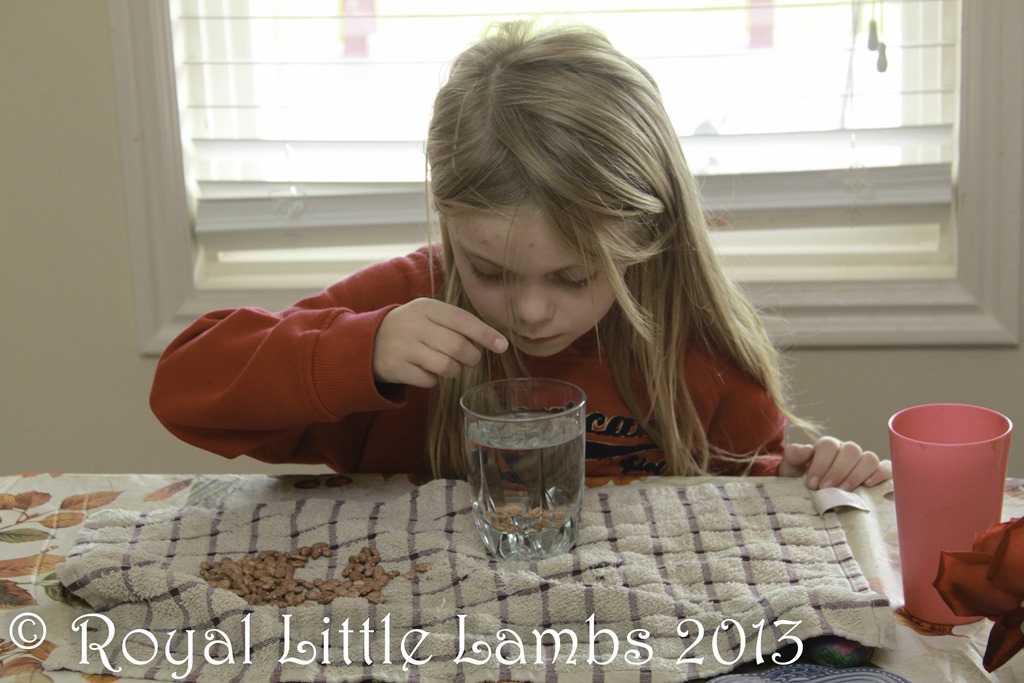
Testing water displacement by counting beans.

science experiment

Liz won the homeschool high school science fair and got published.

We loved raising butterflies.

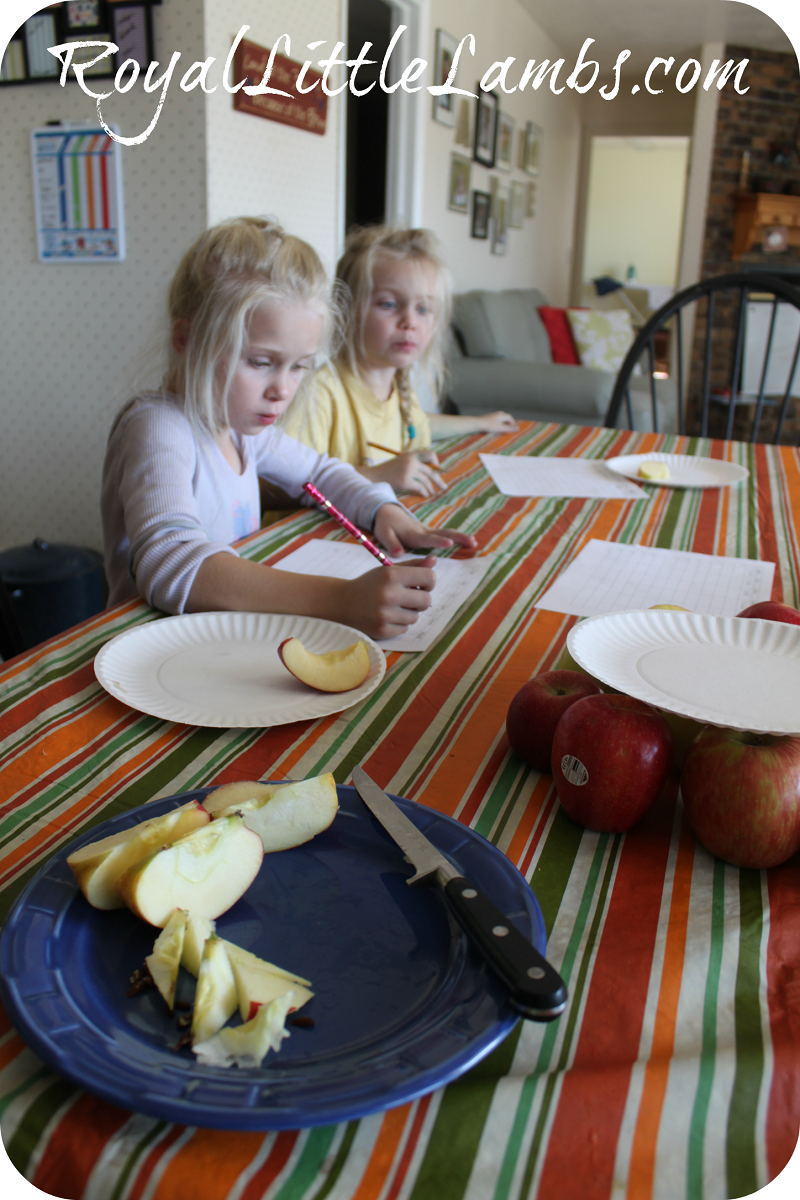
We charted different varieties of apples.

The girls made water molecules with candy.

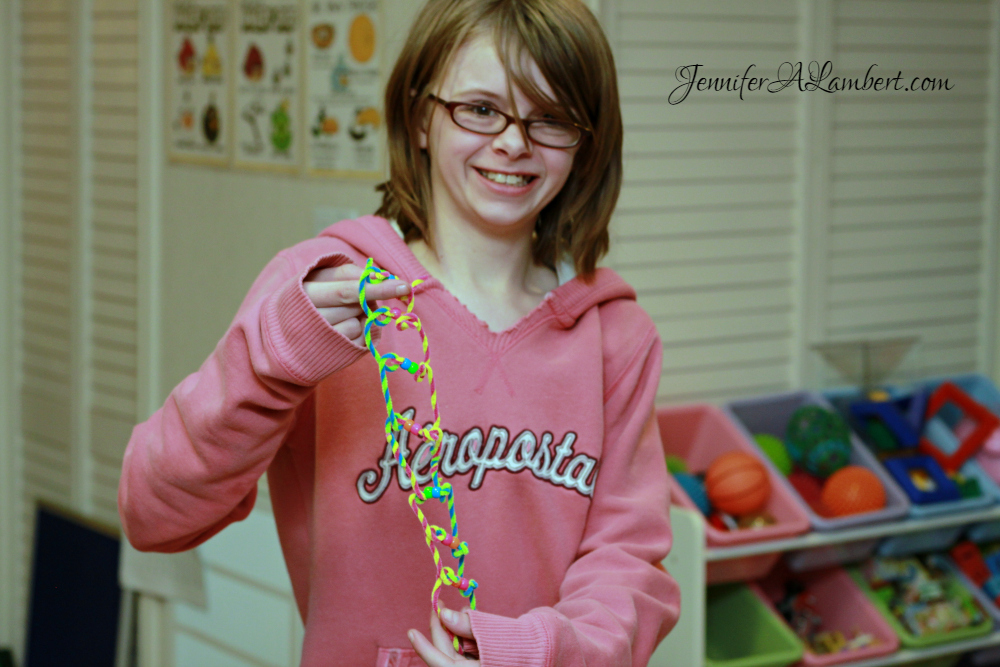
We made a DNA strand out of pipe cleaners.

We enjoyed seeing salt, pepper, and sugar crystals under a microscope.

We had a fun eclipse party!

We use notebooking for every subject in our homeschool.

We love nature study and learning about plants and animals.

Dissections and other labs require lots of specific notebooking and record keeping.

We grew a garden.

We loved growing fun fruits and vegetables for several years. It was a family effort!

We love cooking.

We all love trying and creating fun recipes together.

We discuss how heat and pressure affect different foods and of course, use lots of math in measurements.

Baking is great science!

We love our pets.

Animals are very educational. We often visit zoos, aquariums, and farms to observe them.

We’ve had several aquariums over the years.

We have cats.

It’s hard to move every few years and sell the fish, but the cats have always gone with us, everywhere.

We take lots of field trips.

We learned about TV at the PBS station.

We attended an astronomy party on Antelope Island.

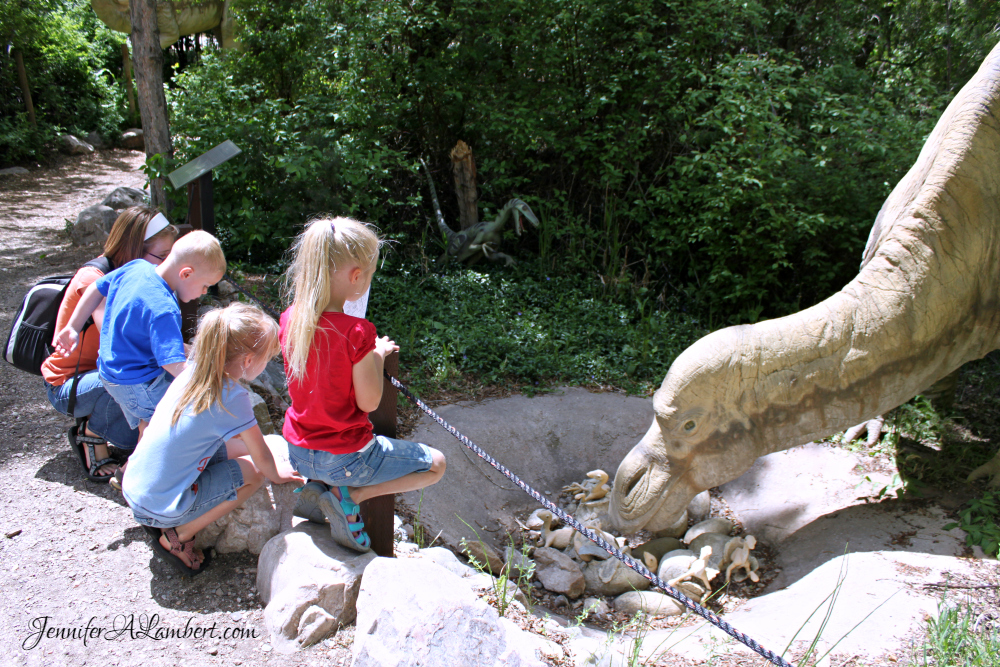
We love dino parks.

We enjoy farms and zoos.

Science has become such a part of our everyday life that we don’t need a textbook as much anymore.

See all of our Science posts here.

See our Nature Study posts here.

How do you do science in your homeschool?

Famous Scientists Notebooking Pages
Share
Pin15
Share
15 Shares
You might also like:

Filed Under: Homeschool Tagged With: homeschool, Science

5 Best Life Skills Books for Teens

This blog may contain affiliate links: disclosure.
Please see my suggested resources.

June 8, 2017 By Jennifer Lambert 22 Comments

We try to prepare our kids for the world. We get through all the academics. We take them to sports, dance, music lessons, chess club. We do the field trips. Sometimes, it seems like certain skills slip through the cracks.

Life skills are important. I don’t want my kids let loose in the world without some proper basics.

Sometimes, books are the best teacher. Sure, you can learn really everything on YouTube and other Internet sites, but having some reference material is always a good idea.

These make great graduation gifts too!

My top five life skills books for teens:

  1. A Good Cookbook

    My suggestion: Better Homes and Gardens New Cook Book

    Since 1930, home cooks have turned to Better Homes and Gardens New Cook Book for guidance in the kitchen. This new edition includes more than 1,200 recipes, 1,000 color photos, and more tips and how-to information than ever. Teens and young adults need to know more than how to make a box of mac and cheese! I still have my grandmother’s copy!

  2. An Etiquette Book

    My suggestion: How Rude!: The Teen Guide to Good Manners, Proper Behavior, and Not Grossing People Out by Alex J. Packer

    In 480 pages, this edition describes the basics of polite behavior in all kinds of situations at home, in school, online, and in the world. I grew up with Emily Post and Miss Manners. This approach might be more interesting!

  3. A Leadership Book

    My suggestion: What I Wish I Knew at 18: Life Lessons for the Road Ahead by Dennis Trittin

    The book is organized into nine powerful chapters and 109 life success pointers that build leadership skills and prepare readers for key upcoming life decisions. Through stories and instruction, it helps young people develop a healthy life perspective, model strong character, build and sustain new relationships, overcome adversity, and become productive and wise decision makers. Also, it shares powerful strategies to succeed in college, career, family, and finances. This is just a great leadership book with words of wisdom.

  4. A Health Book

    My suggestions for GIRLS:

    Cycle Savvy: The Smart Teen’s Guide to the Mysteries of Her Body by Toni Weschler

    Answers that will help you understand what is really happening with your body on a day-to-day basis. It’s the first book specifically designed to teach young women about the practical benefits of charting their cycles. Explore the fascinating world of ovulation, fertility, and why you even have periods at all! And learn all about the body signals, mood changes, and other signs that accompany your cycle. This book was recommended to us by a doula friend of mine and it is wonderful!

    Girling Up: How to Be Strong, Smart and Spectacular by Mayim Bialik

    Growing up as a girl in today’s world is no easy task. Juggling family, friends, romantic relationships, social interests and school…sometimes it feels like you might need to be a superhero to get through it all! But really, all you need is little information.

    Want to know why your stomach does a flip-flop when you run into your crush in the hallway? Or how the food you put in your body now will affect you in the future? What about the best ways to stop freaking out about your next math test?

    Using scientific facts, personal anecdotes, and wisdom gained from the world around us, Mayim Bialik, the star of The Big Bang Theory, shares what she has learned from her life and her many years studying neuroscience to tell you how you grow from a girl to a woman biologically, psychologically and sociologically.

    And as an added bonus, Girling Up is chock-full of charts, graphs and illustrations — all designed in a soft gray to set them apart from the main text and make them easy to find and read.

    Want to be strong? Want to be smart? Want to be spectacular? You can! Start by reading this book.

    My suggestion for BOYS (reader recommendation!): Lintball Leo’s Not-So-Stupid Questions About Your Body by Walt Larimore, MD 

    “Everything a boy should know, but won’t ask!” Finally, everything you wanted to know about your body, but you’ve just been too chicken to ask. This is the first book for boys that gives honest answers to real questions about your body from a biblical perspective. No, you’re not falling apart—you’re just growing up! But there’s no need to fear, when Lintball Leo is near. He’s your personal guide to understanding your body. With information about everything from steroid use to body parts, there’s not a question Lintball Leo hasn’t heard. These aren’t questions some adult made up, but they’re real questions asked by real boys just like you. You want to know the truth? Now you can, because Lintball Leo’s Not–So-Stupid Questions About Your Body gives you the facts—no holds barred! I plan to get this for my son real soon.

    Another reader recommendation for boys:

    Guy Stuff: The Body Book for Boys by Cara Natterson

    This book will provide you with the answers that will help you take care of yourself better, from hair care to healthy eating, bad breath to shaving, acne to voice changes, and everything in between. With tips, how-tos, and facts from a real pediatrician, it’s the perfect book to help you learn about your body’s changes.

    Boying Up: How to Be Brave, Bold and Brilliant by Mayim Bialik

    Why does my voice crack like that? What should I eat to build muscle? How do I talk to someone I have a crush on? What do I do if someone calls me names or bullies me?

    Growing from a boy to a man is no easy task. Bodies are changing, social circles are evolving, hair is appearing in places it never was before — and on top of it all, there’s the ever-present pressure to conform to the typical idea of what it means to be “manly” and masculine. But it’s easier to do if you’re armed with facts.

    Using personal anecdotes as an overly observant mother of two boys and plenty of scientific information from her life as a neuroscientist, Mayim Bialik, PhD, star of The Big Bang Theory, talks directly to teen boys about what it means to grow from a boy to a man biologically, psychologically, and sociologically. Using the same cool, fun, and friendly tone that she took in Girling Up, Mayim takes boys–and their parents!–through the challenges and triumphs of Boying Up today.

    In six sections (How Boys Bodies Work; How Boys Grow; How Boys Learn; How Boys Cope; How Boys Love; and How Boys Make a Difference), she takes a look at what it means for boys to come of age in today’s world, how can they take control of their paths, and what can they do to help shape the types of futures they want for themselves.

  5. An Organization Book

    My suggestion: Smart but Scattered Teens: The “Executive Skills” Program for Helping Teens Reach Their Potential by Richard Guare, Peg Dawson, Colin Guare

    This positive guide provides a science-based program for promoting teens’ independence by building their executive skills–the fundamental brain-based abilities needed to get organized, stay focused, and control impulses and emotions. It’s great to work through together! This book is helpful to set up organization methods for teens to be independent.

Bonus Book:

Girls Garage: How to Use Any Tool, Tackle Any Project, and Build the World You Want to See by Emily Pilloton

Do you have any other favorite books for teens or life skills?

Share
Pin48
Share
48 Shares
You might also like:

Filed Under: Homeschool Tagged With: book list, high school, leadership, teen

Graduating from Homeschool

This blog may contain affiliate links: disclosure.
Please see my suggested resources.

May 31, 2017 By Jennifer Lambert 21 Comments

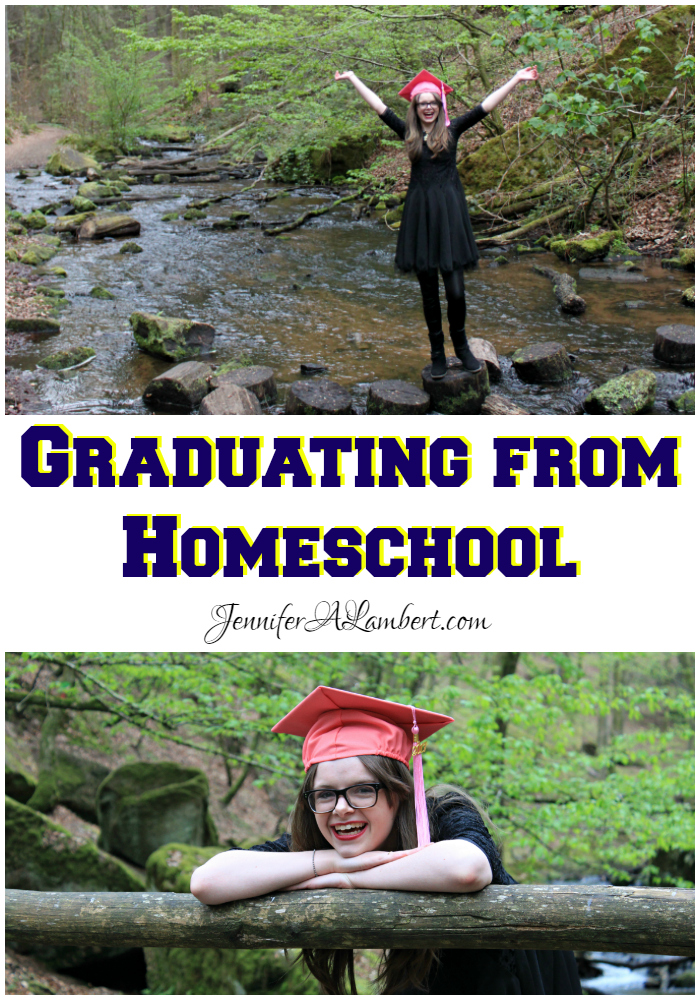
I feel poignant as my eldest child graduates from our homeschool.

I won’t say I’ve done my best. We all have regrets and would love to make changes.

You’re my firstborn and I made many, many mistakes. I am trying to make amends for those mistakes. I think I’m doing better now.

I was amazed by the precocious little girl you were.

I am amazed by the woman you are becoming.

I still remember you as you were the day you were born, with your angry lower lip.

I remember when you bravely went to day care.

I remember when you were bored at preschool.

I remember that first year of homeschooling.

I remember with trepidation as you went for one whole month to third grade at the DoD school on base.

I remember the awkward middle school years.

I remember when I wasn’t there for you.

I remember when I was harsh and hard.

I remember the tears, scrapes, eye rolls, slammed doors, cuddles, and snuggles.

I remember the arguments over my trying to control you.

I remember the struggles over math and bullies.

I remember when you wanted to be an artist, a dentist, a veterinarian, and more.

I can hardly wait to see what you decide.

I’ve seen you shine as a leader at Civil Air Patrol.

I’ve tried to nurture your dreams and offer you experiences to shape your ideas.

I’ve watched you shine on stage and become another person from another time and place.

I’ve watched in awe as you go off to volunteer at the hospital – in the laboratories, maternity ward, pediatrics.

I’ve listened to you sing and play piano.

We’ve looked at amazing art and history in Europe‘s museums.

You’re a great big sister.

We drank Champagne in Paris while viewing the twinkling Eiffel Tower.

You’re so much more than a test score.

The PSAT and SAT are just numbers that mean so very little.

Grades mean nothing.

You’ve learned so much – about the world, history, current events, yourself.

That can’t be measured on a Scan-Tron.

Never stop learning.

We hiked up Diamond Head in Hawaii. I think I’m still sore, years later!

We’ve had a lot of fun in so many beautiful places.

I’d give you the world if I could. And the sun and moon and stars.

We’ve flown over oceans and lived in so many different places.

We’ve endured the stress of moving five times and survived.

I’m proud of you, my daughter, as an strong individual – with original thoughts, dreams, and views.

I’m excited for this new stage in your life and in our relationship.

It’s been awkward for you as a teenager living in Europe.

The rules and laws are different here than in the USA.

On one hand, you have more freedoms, but on the other hand, you have fewer freedoms. At age sixteen, teens in Europe can drink beer and wine, but cannot get a license to drive until age eighteen. As an American, you still cannot get a paying job on or off base until over age eighteen.

So, we have some catching up to do as we move back to the States.

This next year will be busy – finishing up some history and literature studies, applying for college and scholarships, getting a part-time job, learning how to drive and getting a driver’s license.

So many changes and responsibilities, so quickly.

We all have fears for the future.

The unknown…

It’s scary to have so many options and have to make hard decisions.

Homeschooling prepares teens to make decisions and think critically.

I pray that I have prepared you adequately.

Many military families don’t have the luxury of oodles of family members or friends to commemorate the occasion.

Sending out announcements seems like just begging for money and gifts.

Many homeschool students are already earning college credits. Lots have jobs already.

Some graduates don’t want a lot of fuss for various reasons.

Like we’ve done for the past however many years, we can customize a graduation for our needs and desires.

How to celebrate this milestone:

  • graduation ceremony with homeschool group, co-op, church, or family
  • nice dinner out
  • fun trip – for the day, weekend, or whatever is within your means
  • luggage set
  • passport
  • money for a gap year
  • party with friends
  • evening in or out with immediate family
  • photo shoot – with or without a graduation cap and gown
  • flowers, gifts, photo collage or scrapbook
  • framed diploma

High School Homeschool Resources:

  • Homeschool High School
  • Health Credit
  • Transcripts and Credits
  • Homeschool Planner Printables
  • Civil Air Patrol as Elective
  • How we do History
  • I Don’t Teach English
  • How we do Math
  • Foreign Language
  • How we do Science
  • Preparing for After High School
  • 5 Best Life Skills Books for Teens
Share
Pin31
Share
31 Shares
You might also like:

Filed Under: Homeschool Tagged With: high school, homeschool, teen

Homeschooling as a Military Family

This blog may contain affiliate links: disclosure.
Please see my suggested resources.

March 28, 2017 By Jennifer Lambert 19 Comments

Families decide to homeschool their children for so many different reasons: academics, extra-curricular activities, special needs, allergies, religion, and more all bring families to the decision to homeschool.

Who homeschools?

Homeschooling families are as diverse as our United States military families!

According to the National Center for Education Statistics (NCES), in 2012, there were an estimated 1.8 million homeschooled students in the United States, and those numbers are increasing!

Many families homeschool temporarily for various reasons and some families are in it for the long haul.

Why homeschool in the military?

Transitions

Many military families find PCS season easier without having to deal with school transfer paperwork. Who wants more paperwork?

Different standards in each state can make it difficult for children transferring between school districts. With homeschooling, fewer credits are missed because it is a more cohesive transition if parents are in control. Many parents also complain of “gaps” in education standards in the states where they’ve lived.

Flexibility

Instead of worrying about school break schedules and half-days, homeschoolers can travel whenever they want or take time off from book work to spend more time with a soon-to-be deployed or returning parent.

Opportunity

Homeschoolers receive a “real world” education, especially in military families, since we often have the opportunity to live in or travel to so many interesting places around the world! We learn to be more culturally aware. We are third culture families! We’re often “road schooling” so we can see the places we’re learning about in our homeschool.

Homeschooling can be done anywhere, anytime.

What you need to know:

Homeschool families in CONUS locations must abide by the state law where you live (not your sponsor’s state of residency) which may include submitting an “intent to homeschool” letter or form, providing standardized test scores, assessments, portfolios, curricula titles, attendance records, and more annually.

You could be penalized for truancy or worse if you don’t comply.

Know the law and your rights.

For OCONUS locations, homeschool families do not have to report or submit anything to anyone, but it is recommended (not required) to mention it to the sponsor’s commander. Realize that homeschooling is often illegal for local citizens in host countries, so it is good to know your rights under the SOFA agreement. And it’s also nice to be respectful of daytime hours when neighbors might question your or your kids.

It is advisable to keep good records of homeschool documents in case of PCS to a state with stricter policy – or the possibility of future enrollment into public, private, or DoD schools. You just never know what the future may hold.

What about socialization?

Homeschoolers are not all stuck in little closets, reading quantum physics, rebuilding computers, composing symphonies, or hacking into secure servers.

Socialization is a concern, especially for many parents beginning homeschooling. We worry about isolation and how our children will be able to interact with others in a healthy way.

School environments cannot recreate natural socialization within controlled age-segregated institutions.

We’ve discovered many unique opportunities to socialize!

Libraries offer all kinds of fun: storytime, crafts, clubs, games, classes, contests. Ask your librarian to plan homeschool events!

Our children have always taken music lessons from amazing teachers in our community.

My kids participate in gymnastics, soccer, track, and baseball. There are many sports opportunities within most communities.

We attend church frequently where our children interact with so many different people of all ages.

Volunteering is a great opportunity for homeschoolers who have a flexible schedule. My teen daughter works at our installation hospital twice a week. She is certified with the Red Cross and loves it!

My teenage daughter is also a member of a local drama troupe where she performs with many amateur thespians of all ages in our community.

We are members of a local homeschooling organization that holds art shows, science and geography fairs, co-op classes led by parents, talent shows, field trips, holiday parties, and special events. We can participate as much or as little as we want.

Many homeschoolers are involved in Girl Scouts or Boy Scouts or similar extra-curricular activities.

My eldest daughter has participated in Civil Air Patrol since she was 12 years old.

Even shopping, medical appointments, and dining out is educational. It’s a learning experience to interact with and be courteous to store clerks, cashiers, nurses, wait staff, and other patrons.

We as homeschool parents get to choose our children’s socialization…who they associate with and what they spend their time doing.

Our attitudes and experiences impart knowledge to our kids.

What if you can’t (or don’t want to) teach something?

I am so lucky that I am the English and history expert and my husband is the math and science guy. Together, we can tackle almost anything our kids want to learn, even the tougher high school courses.

But what if you don’t want to teach writing or algebra gives you hives?

Many homeschool classes are offered online! Lots of companies provide classes especially for homeschoolers.

Private tutors are an available resource, both online and locally. Many local and DoD libraries offer free or reduced educational services.

You can check for local co-op classes. If there is nothing available in your area to suit your family’s needs, ask other parents to help you create a course! There are probably other parents in need of your skills who can offer their expertise.

Homeschoolers can enroll part-time in many local or DoD schools for academics, electives, or extra-curricular activities. Just speak to the school office for procedure.

What about high school and beyond?

We are navigating this right now and it’s both scary and exciting!

It’s important to keep good records.

Calculate high school credits and complete a transcript.

Prepare for the ACT or SAT.

Complete paperwork for financial aid, applications, scholarships.

Visit college or job fairs.

Homeschool high school doesn’t have to look like traditional school.

Coach your homeschooled students well for after high school – no matter if that’s work, college, a gap year, or whatever.

Whether it’s for a semester or 12+ years, homeschooling is an educational option many military families all over the world choose for their children.

Homeschooling is the hardest job you will ever love.

Resources:

The Homeschool Foundation assists military homeschool families who struggle financially to meet their children’s educational needs.
The Homeschool Association for Military Families is a group advocating for military families to be allowed to choose one location (a family home state) and a set of laws to follow throughout a child’s education. I think that’s great!
Get a starter kit from the Home School Association for Military Families.
Remember: You can get military and teacher discounts at many stores! Check with curricula providers, bookstores, services, and stores for military and teacher discounts.

Homeschool Support Groups:

Military Homeschoolers (Worldwide)
Military Homeschoolers Overseas
Secular Homeschoolers

OCONUS Homeschool Support Groups:

There are lots of groups for each installation. Ask or do an online search to find one near you!

United Homeschoolers of Germany (KMC, Germany)
KMC Christian Homeschoolers (KMC, Germany)
KMC Inclusive Homeschool Group (KMC, Germany)
Eifel Homeschool Group (Spangdahlem, Germany)
Grafenwoehr and Vilseck Homeschoolers and Facebook Group (Germany)
Sigonella Homeschoolers (Italy)
Naples Homeschooling (Italy)
Naples Christian Homeschooling (Italy)
L.I.F.E. Homeschool Group – Lakenheath and Mildenhall (UK)
Okinawa Homeschool Group
Seoul Homeschool Group

Let me know if there’s a group where you live that I don’t have on my list!

Book Resources:

  • The Well-Trained Mind: A Guide to Classical Education at Home by Susan Wise Bauer
  • Last Child in the Woods: Saving Our Children From Nature-Deficit Disorder by Richard Louv
  • Unconditional Parenting: Moving from Rewards and Punishments to Love and Reason by Alfie Kohn
  • The Danish Way of Parenting: What the Happiest People in the World Know About Raising Confident, Capable Kids by Jessica Joelle Alexander and Iben Sandahl 
  • Bringing Up Bébé: One American Mother Discovers the Wisdom of French Parenting by Pamela Druckerman
  • How Children Learn by John Holt
  • Free to Learn: Why Unleashing the Instinct to Play Will Make Our Children Happier, More Self-Reliant, and Better Students for Life by Peter Gray
  • Balanced and Barefoot: How Unrestricted Outdoor Play Makes for Strong, Confident, and Capable Children by Angela J. Hanscom
  • Simplicity Parenting: Using the Extraordinary Power of Less to Raise Calmer, Happier, and More Secure Kids by Kim John Payne
  • Free-Range Kids: How Parents and Teachers Can Let Go and Let Grow by Lenore Skenazy
  • Nonviolent Communication: A Language of Life: Life-Changing Tools for Healthy Relationships by Marshall B. Rosenberg, PhD 
  • Hold On to Your Kids: Why Parents Need to Matter More Than Peers by Gordon Neufeld and Gabor Maté  
  • The Myth of Normal: Trauma, Illness, and Healing in a Toxic Culture by Gabor Maté

You might also like:

  • PCS While Homeschooling
  • Preparing Kids for a PCS
  • Military Kids are TCKs
Share
Pin29
Share
29 Shares
You might also like:

Filed Under: Homeschool, Military Tagged With: homeschool, milfam, military, milkid

How to Write an Essay

This blog may contain affiliate links: disclosure.
Please see my suggested resources.

March 8, 2017 By Jennifer Lambert 13 Comments

When I entered university, I didn’t know how to write the typical 5-paragraph essay.

I vaguely remembered writing a literary research paper in 9th and again in 10th grade, with much hand-holding from the teacher, but I had a substitute teacher for my 11th and 12th grade years, so I basically sat in the back corner, by the window, and read poetry and classic novels. I started college early to escape.

In my second year or college, my Shakespeare professor kindly took me under his wing and tutored me in the essay format and I then took off with it, easily earning A’s in all my English courses.

I majored in literature, which was kind of a cop out and didn’t enable me to explore too many career options. I entered a 15-month master’s program to earn my M.Ed. and then I taught high school English for a few years. I moved on to teach college writing until we moved out of state and I had my babies.

Now I homeschool my four children. I don’t encourage formal writing until my kids are high school age. I don’t place a huge focus on typical English education. We read a lot and have lively discussions.

Essays are a bit more than a series of paragraphs thrown together. I explain the necessary parts of a well-written paragraph here.

Types of essays:

  • Expository essays
  • Descriptive essays
  • Narrative essays
  • Argumentative (Persuasive) essays

Most college essays require research and source citations. Different disciplines require different styles. I typically used MLA since I worked with literature. I love how easy these websites make generating source citations!

Citation Styles:

  • MLA
  • APA
  • Chicago

How to write an essay:

When I taught writing as a school teacher, I used to begin by pulling out an adorable copy of The Three Little Pigs and reading it aloud to the class.

Middle school, high school, college level. The students loved it and giggled, excited to be swept back to preschool storytime days.

It’s a well-known story, familiar and comfortable, so it takes the scary out of essay-writing when it’s so simplified.

After reading the book, I wrote on the board the outline format of the story.

The Three Little Pigs is a perfect 5-paragraph essay!

I. Introduction
II. Straw Pig
III. Stick Pig
IV. Brick Pig
V. Conclusion

Then, we would summarize the story together and I would jot down details on the outline.

Download a worksheet for summarizing The Three Little Pigs here.

Since I had to give grades and busy work to students in middle school and high school, I would assign them to quickly write up the summary in 5-paragraph format.

Then, we would segue into writing 5-paragraph essays on a variety of topics, working up to the dreaded literary analysis essay with citations and sources and references.

I like this handy dandy visual:

Review the format of a 5-paragraph essay:

  1. Determine a thesis.
    This is a statement that serves as the premise to be maintained or proved throughout the essay.
    When I teach essay writing to new writers, I make the formula easy: State the argument including the 3 supporting statements. Place the thesis at the end of the introduction paragraph.
  2. At least 3 supporting statements.
    These three statements become the three body paragraphs. I typically require a resource quote for each paragraph.
  3. Introduction paragraph.
    The introductory paragraph attempts to accomplish these three things:
    • Introduce the topic with some indication of its inherent interest or importance, and a clear definition of the boundaries of the subject area
    • Indicate the structure and/or methodology of the essay, often with the major sections of the essay or its structural principle clearly stated
    • State the thesis of the essay, preferably in a single, arguable statement with a clear main clause
  4. Conclusion paragraph.
    A conclusion paragraph attempts to accomplish these three things:
    • It provides the reader with a sense of closure on the topic
    • It demonstrates to the reader that you accomplished what you set out to do
    • It shows how you have proved your thesis
  5. Works Cited page.
    This is a formatted list of research sources on a separate page after the essay. Many teachers and professors are very particular about spacing and punctuation.

Thesis Examples:

The three little pigs thwarted the big, bad wolf.
Albrecht Durer as a Reformation artist utilized color, symbolism, and secular subjects in his art to express the Protestant values of his peers.
Alice Walker coined the term “Womanism” to unify strong women of color, give them a voice, and differentiate from the more white Feminist ideals.

Tips:

Eliminate “to be” verbs. In data processing programs, search for these and replace with active verbs.
Do not use “you” or “I.”
No slang.
No contractions.
Wikipedia is not a credible source.
Use 1 quote per body paragraph. Make sure to introduce it and support it. Place it in the middle of the paragraph.

Teaching and writing essays shouldn’t be frightening. It’s easy when you follow a formula.

Linking up: Life of Faith, Blogghetti, Practical Mom, The Mrs. Tee, Curly Crafty Mom, Marilyns Treats, Donna Reidland, Strangers & Pilgrims on Earth, A Fresh Start, Inspiration for Moms, Modest Mom, Proverbs 31 Wife, MaryAndering Creatively, Simple Life of a Fire Wife, Oh My Heartsie Girl, Wife Mommy Me, Christian Blogger Community, Rich Faith Rising, Holley Gerth, Teaching what is good, Pat and Candy, Wise Woman, Raising Homemakers, Jaime Wiebel, Becoming Press, Saving 4Six, Katherine’s Corner, Women with Intention, Classical Homemaking, A Bountiful Love, Feeding Big, Life Beyond the Kitchen, Creative K Kids, Oh My Heartsie Girl Friday, Sincerely Paula, Create with Joy, Life with Lorelai, Being a Wordsmith, Strawberry Butterscotch, Arabah Joy, Crystal Waddell, Counting my Blessings, Debbie Kitterman, Happy and Blessed Home, Mommynificent, A Books and More, Pams Party and Practical Tips, Arabah Joy, Hip Homeschool Moms,
Share
Pin55
Share
55 Shares
You might also like:

Filed Under: Homeschool Tagged With: homeschool, LA, writing

We Don’t Do Testing

This blog may contain affiliate links: disclosure.
Please see my suggested resources.

February 16, 2017 By Jennifer Lambert 27 Comments

Apparently, it’s shocking that we don’t do any testing in our homeschool.

Going against the norm is uncomfortable for lots of people. Homeschool parents seem to feel like they must recreate a school environment at home.

We don’t do testing in our homeschool.

Whoever said there’s no such thing as a stupid question never looked carefully at a standardized test. ~Alfie Kohn

Our culture is permeated with performance.

Outcomes, grades, products, success are more important than the process, than learning. When we focus on outcomes, the motivation is extrinsic and meaningless. We cram for the assignment and then purge the information to move on to the next. There’s no learning involved except in the conditioned behavior, like a rat pushing a button for food.

Let’s begin with a few definitions:

What are Assessments?

Assessment focuses on learning, teaching, and outcomes. It provides information for improving learning and teaching. Assessment is an interactive process between student and teacher that informs the teacher how well the student is learning what they are teaching. The information is used to make changes in the learning environment, and is shared with students to assist them in improving their learning and study habits. This information is learner-centered, course based, frequently anonymous, and not graded.

What are Evaluations?

Evaluation focuses on grades and may reflect components other than course content and mastery level. These could include discussion, cooperation, attendance, and verbal ability.

Tests, exams, quizzes, assessments, and evaluations are often used interchangeably among teachers and parents.

In school, you’re taught a lesson and then given a test. In life, you’re given a test that teaches you a lesson. ~Tom Bodett

Some arguments I’ve heard for testing:

How do I  know if the kids are learning?

I have FOUR children. I think I know if they’re learning or not. I don’t have 150 students. Testing is for schools. We’re always learning and the kids are great at self-evaluation. Life is learning. I allow them great freedom to explore their interests.

How do the kids know how to take tests?

Trust me. My kids know what tests are and can complete true/false, multiple choice, fill in the blank, short answer, and essay questions on a variety of subjects. But why would I require such low level evaluation?

How do I report to authorities that require test results?

Sure, it’s probably easier to subject the kids to standardized tests to report to state authorities than complete a portfolio or evaluation form. But is it easiest for the kids or the parent?

Only 8 states require testing with no other option: GA, MN, NC, ND, OR, SC, SD, TN. The standard and penalty are arbitrary, undefined, remediation, “family should remedy,” or enrolling in an umbrella school. AR, MN, NC are the only states which require annual testing without alternatives.

I had my eldest daughter tested in Hawaii in 3rd grade. We weren’t stressed about it. It gave us a baseline, but nothing we didn’t already know. The other states where we’ve lived, TX and UT, didn’t require any reporting.

We’re not interested in comparing our kids to anyone, so testing isn’t important to us.

It’s not difficult to complete portfolio or evaluation requirements. Or just enroll under an umbrella school or homeschool organization if that’s an option.

How are the kids graded?

My kids are not graded.

I repeat: We don’t do grades.

We’re constantly learning. Grades ruin the process. Grades don’t mean anything. They have freedom to learn. They have freedom to take risks, to explore, to fail, to succeed, to be challenged. They are not limited to a rubric. There’s no pressure.

Grades are extrinsic motivation and we prefer intrinsic motivation.

How do the kids know how to study?

I prefer that my kids learn than cram for some test, but they have great skills to help with studying if and when they need it. They’re active readers and writers and remember lots of information and make great connections. I occasionally offer minilessons to teach a skill I think is interesting.

How do I write high school transcripts?

Transcripts are pretty subjective. I list courses completed to mastery. Based on effort, there are a range of A’s and B’s on the transcript.

My eldest audited physics. Civil Air Patrol didn’t issue grades, but she excelled at it.

I’m hoping for colleges to look at a portfolio and not put such an emphasis on grades.

No one has ever asked me for my transcript or GPA or grades since my grad school enrollment.

How do the kids prep for the SAT/ACT?

Strong vocabulary and math skills are key. We read lots and discuss for comprehension, focus on math skills all along, then learn some testing tricks. My teen’s score on the PSAT was great with no prep at all, so we’re hoping to boost that score by a couple hundred points with some practice on Kahn Academy and a vocabulary book.

Thanks to the nation’s testing mania (which I like to call ‘No Child Left Untested’ rather than ‘No Child Left Behind’), children are being barraged with a nonstop volley of standardized tests. From kindergarten to graduate school, students are subjected to an unprecedented number of high-stakes tests. ~Laurie E. Rozakis, I Before E, Except After C: Spelling for the Alphabetically Challenged

How we assess in our homeschool:

My kids are great learners. They don’t need me.

I’m not a teacher. I’m not a tutor.

I’m a guide. I’m a counselor.

Discussion

We constantly discuss what we’re learning and reading and exploring. Narration is a great tool that can be really fun with all ages.

Language is important to express our ideas, preferences, interests.

I love to hear what my kids have to say about art, music, literature, history. I love to see them make connections on their own. I love to see that lightbulb moment.

Notebooking

The kids love to write and draw about their experiences. The open-ended idea of notebooking allows for great creativity and individuality instead of a cookie-cutter worksheet with low level thought processes.

I’m not worried about benchmarks, curricula, What My Child Needs to Know in Nth Grade, grades, tests, or knowledge. We don’t participate in co-ops.

Writing

I don’t discourage essay writing, but I don’t force it. I don’t even really teach it until high school.

I think younger kids need to learn so much more than writing that we don’t focus on it at all. Kids are natural storytellers. We discuss what we read and make connections, synthesizing knowledge…and this paves the way almost effortlessly into the formulaic essays that college professors like.

I’m more concerned that my kids love learning and exploring and grow up to be free thinkers.

Educational success should be measured by how strong your desire is to keep learning. ~ Alfie Kohn

Learning is a lifelong process.

I’ve learned more outside of school, after high school and university, then I ever did inside a classroom.

Kids will learn despite school.

Sources:
https://cft.vanderbilt.edu/guides-sub-pages/blooms-taxonomy/
https://arc.duke.edu/documents/The%20difference%20between%20assessment%20and%20evaluation.pdf
http://a2zhomeschooling.com/main_articles/comparing_testing_requirements/

Linking up: The Modest Mom, Marilyn’s Treats, Strangers & Pilgrims on Earth, Donna Reidland, A Fresh Start, Life of Faith, Inspiration for Moms, Proverbs 31 Wife, Mrs. AOK, Curly Crafty Mom, Practical Mom, This Chaotic Bliss, A Pinch of Joy, Nourishing Joy, Simple Life of a Fire Wife, Teaching What is Good, Blogghetti, Let Me Tell You a Story, Raising Homemakers, Wise Woman, Messy Marriage, Christian Blogger Community, Holley Gerth, Oh My Heartsie Girl, Pat and Candy, Katherine’s Corner, A Bountiful Love, Women with Intention, Saving 4Six, Feeding Big, Creative K Kids, Life Beyond the Kitchen, Chronically Content, Life with Lorelai, RCH Reviews, Create with Joy, Life as we Know It, Oh My Heartsie Girl Friday, Being a Wordsmith, Crafty Moms Share, Hip Homeschool Moms,
Share
Pin33
Share
33 Shares
You might also like:

Filed Under: Homeschool Tagged With: back to school, homeschool, unschooling

China Unit Study

This blog may contain affiliate links: disclosure.
Please see my suggested resources.

February 14, 2017 By Jennifer Lambert 1 Comment

We’ve always been fascinated about China – history, geography, culture – especially Katie.

She chose China as her topic for our homeschool geography fair a couple years ago.

I think she did a great job on her display board!

China Unit Study

We celebrate Chinese New Year and we love making Chinese-inspired recipes like cashew chicken.

Book list: (use discretion)

  • Ruby’s Wish
  • Yeh-Shen: A Cinderella Story from China
  • Lon Po Po: A Red-Riding Hood Story from China
  • Chu Ju’s House
  • Revolution Is Not a Dinner Party
  • Red Scarf Girl: A Memoir of the Cultural Revolution
  • China’s Son: Growing Up in the Cultural Revolution
  • The Story of Silk
  • The Silk Route: 7,000 Miles of History
  • A Single Pebble: A Story of the Silk Road
  • The Silk Road
  • The Empress and the Silkworm
  • The Silk Princess
  • Chengli and the Silk Road Caravan
  • You Wouldn’t Want to Work on the Great Wall of China!
  • The Emperor’s Silent Army
  • The Story of Noodles
  • The Sons of the Dragon King
  • Day of the Dragon King
  • The House of Sixty Fathers


Movies: (use discretion)

  • Kung Fu Panda
  • Mulan
  • Pandas: The Journey Home
  • Born in China
  • The Monkey King
  • Crouching Tiger, Hidden Dragon
  • Hero
  • The Last Emperor
  • Mao’s Last Dancer
  • Confucius
  • Eat Drink Man Woman
  • The Wedding Banquet
  • The Joy Luck Club
  • The Great Wall
  • Snow Flower and the Secret Fan
  • Farewell, My Concubine
  • The Flowers of War

Resources:

  • China Unit Study from Confessions of a Homeschooler
  • The Homeschool Mom China Unit
  • Ancient China Lapbook from Homeschool Share
  • Homeschool Den Ancient China Pages
  • Homeschool Den China Fact Sheet and Khan Pages
  • China Unit from Eclectic Homeschool
  • Marco Polo Lapbook from Tina’s Dynamic Homeschool Plus
  • Planet Smarty China Activities
  • Ancient China Lapbook from Jimmie’s Collage
Country Study Notebooking Pages

We enjoyed learning about China!

Share
Pin82
Share
82 Shares
You might also like:

Filed Under: Homeschool Tagged With: Asia, China, geography, unit study

Homeschool Preschool

This blog may contain affiliate links: disclosure.
Please see my suggested resources.

January 30, 2017 By Jennifer Lambert Leave a Comment

For preschool, we’ve tried lots of different activities and curricula.

Preschool homeschool doesn’t have to cost really anything. I know some homeschool parents who buy these expensive boxed curriculum sets, but I think these are a waste of money and cause lots of stress for child and parent. The schedules are strict and seem to have a lot of worthless busy work.

Our homeschool days have always been only a couple hours of academic work, even for high schoolers!

I highly recommend the books by Louise Bates Ames. Good guides to follow are What Your Preschooler Needs to Know: Get Ready for Kindergarten and What Your Kindergartner Needs to Know: Preparing Your Child for a Lifetime of Learning by E.D. Hirsch, Jr. These are just great jumping off points.

How We Homeschool Preschool:

While I believe that small children should play, play, play as much as possible, my younger kids wanted to “do school” like big sister, so I obliged with workbooks and fun activities and they soaked it up like sponges.

I read aloud to my kids from pre-birth through high school age. We all love books.

Autonomy

I don’t force anything on my kids. I allow them to explore their interests. We don’t worry about handwriting. Reading comes naturally, whenever the child is ready. They love learning about science and history.

Toys

Lots of plastic electronic toys are a waste of money. My kids prefer building materials and toys and recyclable items for craft creations. Pretend play is important. I shop after Halloween sales and thrift shops for fun dressup clothes. Less really is more.

Technology

Screens in moderation. Sometimes kids just need and want the downtime. When it’s bad weather outside or we’re not feeling well, it’s fine to curl up together or alone with the cats and watch a show or play an app. Why should we make kids feel guilty when adults do it all the time? My kids learn how to self-regulate their screen time by not having strict rules about it, other than all devices away at bedtime.

Outdoors

We spend lots of time outside. We play balancing and running games and run free and wild. We learn about and experience nature. I seldom structure this time unless we go on a hike at a nature center. Kids need lots of free play time outdoors.

Practical Life

They use real tools in the kitchen, helping cook real food meals.

We explore textures and colors and drawing with real art supplies.

We go to the library at least weekly – for storytime and checking out lots of fun books.

Lots of fun field trips – farms, museums, science centers, historic locations, beaches, parks, nature centers. We prefer realistic locales over entertainment places like amusement parks. We love to travel!

My middle and youngest children wanted to “do school” almost from birth. They followed their sister around and wanted to do everything she did. I provided activities based on interests and needs so they felt useful and occupied.

Letter of the Week

We loved using the programs from Confessions of a Homeschooler and 1+1+1=1. It was lots of paper and printing, but the girls really loved it. Alex liked it ok.

My girls completed 2 levels of All About Reading and my son used their entire program. They all loved it! It was a fun and easy way to learn to read and they begged to do a lesson every single day.

Here are some of our random letter blog posts. I didn’t record all of our letter learning efforts.

  • Letter A
  • Letter D
  • Letter M
  • Letter N
  • Letter R
  • Letter U

Unit Studies

  • Astronomy
  • Beach
  • Back to School
  • Fall
  • Apples
  • Winter
  • Snow
  • Antarctica
  • Transportation
  • Royalty
  • Dinosaurs
  • Foxes
  • Wizard of Oz

Preschool Pinterest Board

Montessori Pinterest Board

I try to limit toys to encourage imaginative play.

Recommendations:

  • Sarah’s Silks
  • Branch Blocks
  • Geometric Blocks
  • Bilibo
  • Puppet Theater
  • Wiggle Car
  • Hopper Ball
  • K’Nex
  • Dome Climber
  • LeapFrog DVDs
  • Kumon workbooks
  • Kuhn Rikon kinderkitchen
  • Colored Pencils
  • Painting Supplies

Book Recommendations:

  • Your Self-Confident Baby: How to Encourage Your Child’s Natural Abilities — From the Very Start by Magda Gerber
  • Baby Knows Best: Raising a Confident and Resourceful Child, the RIE™ Way by Deborah Carlisle Solomon
  • Elevating Child Care: A Guide To Respectful Parenting by Janet Lansbury
  • No Bad Kids: Toddler Discipline Without Shame by Janet Lansbury
  • Help Your Preschooler Build a Better Brain: A Complete Guide to Doing Montessori Early Learning at Home by John Bowman
  • How To Raise An Amazing Child the Montessori Way by Tim Seldin
  • Montessori at Home Guide: A Short Guide to a Practical Montessori Homeschool for Children Ages 2-6 by AM Sterling
  • Teach Me to Do It Myself: Montessori Activities for You and Your Child by Maja Pitamic
  • Last Child in the Woods: Saving Our Children From Nature-Deficit Disorder by Richard Louv
  • Unconditional Parenting: Moving from Rewards and Punishments to Love and Reason by Alfie Kohn
  • How Children Learn by John Holt
  • Teach Your Own: The Indispensable Guide to Living and Learning with Children at Home by John Holt
  • Free to Learn: Why Unleashing the Instinct to Play Will Make Our Children Happier, More Self-Reliant, and Better Students for Life by Peter Gray
  • Free-Range Kids: How to Raise Safe, Self-Reliant Children (Without Going Nuts with Worry) by Lenore Skenazy
  • The Collapse of Parenting: How We Hurt Our Kids When We Treat Them Like Grown-Ups by Leonard Sax
  • A Disease Called Childhood: Why ADHD Became an American Epidemic by Marilyn Wedge

Preschool does mean Before Schooling. Kids before age six really need to play, play, play.

Share
Pin10
Share
10 Shares
You might also like:

Filed Under: Homeschool Tagged With: back to school, curriculum, homeschool, kindergarten, preschool, tot school

How We Learn

This blog may contain affiliate links: disclosure.
Please see my suggested resources.

January 19, 2017 By Jennifer Lambert 8 Comments

I’m often asked which curricula we use by other homeschool moms. I’m asked about our schedule. I’m asked about high school and transcripts. I’m asked about my kids’ behavior and attitudes.

Lately, I’ve tried to steer clear of conversations like these because we just seem to do things so differently.

Most people just aren’t willing or ready to hear our truth. They don’t really want to make any changes. They want an easy fix.

They want some miracle for their kids to be perfectly obedient, great readers, math whizzes, to ace their SAT/ACT.

They don’t want a relationship with their kids.

They don’t want to work and learn alongside their kids.

I’ve had parents flat out tell me that they quit Latin because they certainly don’t want to learn it with their kids and it was impossible for the kids to do alone.

It seems that so many parents want to recreate school at home. To me, that’s not homeschooling. It’s a waste of time and resources. It creates stress.

What Does School Really Teach Children?

  1. Truth comes from Authority.
  2. Intelligence is the ability to remember and repeat.
  3. Accurate memory and repetition are rewarded.
  4. Noncompliance is punished.
  5. Conform: Intellectually and socially.

We love our freedom to learn anything whenever we want.

I love seeing the uninhibited joy my kids exhibit as they hum a Gloria Estefan song during science notebooking or apply fraction math during cooking and baking.

We all snuggle up on the sofa to read history and literature together.

I love the natural rhythms of our lives as the kids and I learn together. See our schedule here.

We don’t separate our lives into contrived courses like home economics or anything. We just work together to do everything that needs to be done. The kids love to be in the kitchen, learning and working together. We all understand the less desirable chores must be done for a smoothly working household.

How we learn:

  1. We threw out the printables.

    They were a waste of time, took up loads of printer ink, and we ran out of storage room for their “portfolios.” We’d rather not do busy work anymore.

  2. We streamlined curricula.

    The most important curricula? Love and understanding. I want my children to have passion for learning, not held down to a scripted textbook or program. And I absolutely loathe computer curricula. It’s lazy. I do have a very few standards for my kids, but overall, we are very relaxed. I want them to complete Latin, and for the most part, they enjoy it. I learn alongside them. We have all these science textbooks and living books and they really are quite lovely, so we’re working through them. Bible workbooks are fun and offer a basis for great conversation. I want my kids to be Bible literate and comprehensive of apologetics. Math workbooks keep them on track and eliminate any gaps, and they go at their own pace. So what if my 6 year old is completing a 2nd grade workbook? High school credits have to be earned and tracked. We work towards mastery and my eldest is 16 and already graduating in a couple months.

  3. We canceled organized sports and outside lessons.

    The lessons became a waste of time and money. There was little progress in piano or guitar. Kids sports are just expensive controlled play time.

  4. Books outweigh screentime.

    We have an extensive book collection. I keep our coffee table covered with stacks of books pertaining to our time period in history that we learn each month. Each of us is always reading a book for fun. While we do have iPad minis, and spend time watching Netflix and playing games, the book time outweighs the screentime.

  5. No rewards.

    We don’t use incentive programs to motivate our kids. They’re worthless and train the authority more than the child. I never could remember the stupid stickers. Rewards confuse my kids. They ask why they get something for doing what they should do anyway. Kids under reward systems become adults with no self-control or intrinsic motivation.

  6. No punishments.

    If we don’t do rewards, we shouldn’t do punishments either. Natural consequences teach way more than external punishments. Time outs, spanking, restrictions, and taking away gifts or privileges are controlling and cruel. These actions only teach children that they are unloved, isolated, worthless, disrespected, captive. I prefer to be proactive and discuss situations with our kids.

  7. Few schedule controls.

    Children know when they’re hungry or tired. They can regulate their body’s needs.
    I provide a hot breakfast in the mornings, help prepare lunches when they say they’re hungry, and cook dinners in the evenings. Usually, everyone eats meals together, but sometimes, someone isn’t ready or doesn’t like a food, so they’re welcome to make a sandwich or wait until later. I don’t schedule snacks, but we always have fruit, nuts, yogurt, leftovers, and more available.
    We don’t have set bedtimes, but we recommend that the middle girls go to bed by 10 so they get enough sleep.
    Our son usually falls asleep during bedtime reading.
    Our teen stays up as late as she wants and sleeps later in the mornings. She has learned that she should go to bed earlier on the evenings before a work day.

  8. Lots of free play time.

    The kids get to choose when they complete their workbooks and they prefer to get those completed quickly so they have plenty of free play time. They use their free time to read, play on their iPads, create games with their toys, building and creating. I encourage lots of outside time, except when it is bitterly cold out.

  9. The best supplies.

    I try to provide the best supplies for my kids to create and build. They love learning about electricity, magnets, light, and pulleys and we buy science kits with their birthday and Christmas money. They love doing art with coloring pencils and paints. I don’t bother with cheap generic brands. They should be trusted with professional products and they don’t cost too much more.

  10. Travel.

    We make it a priority to travel to places we learn about in history and literature. It’s super important to us to experience travel and we make sacrifices in order to afford these trips. The kids remember these trips way more than a video or book.

Resources:

  • Balanced and Barefoot: How Unrestricted Outdoor Play Makes for Strong, Confident, and Capable Children by Angela J. Hanscom
  • The Collapse of Parenting: How We Hurt Our Kids When We Treat Them Like Grown-Ups by Leonard Sax
  • A Disease Called Childhood: Why ADHD Became an American Epidemic by Marilyn Wedge
  • Teach Your Own: The Indispensable Guide to Living and Learning with Children at Home by John Holt
  • Unconditional Parenting: Moving from Rewards and Punishments to Love and Reason by Alfie Kohn
  • Free to Learn: Why Unleashing the Instinct to Play Will Make Our Children Happier, More Self-Reliant, and Better Students for Life by Peter Gray
  • Last Child in the Woods: Saving Our Children From Nature-Deficit Disorder by Richard Louv
  • Simplicity Parenting: Using the Extraordinary Power of Less to Raise Calmer, Happier, and More Secure Kids by Kim John Payne with Lisa M. Ross
  • Free-Range Kids by Lenore Skenazy
  • Smart Moves: Why Learning Is Not All In Your Head by Carla Hannaford
  • 8 Great Smarts: Discover and Nurture Your Child’s Intelligences by Kathy Koch

What is your learning style?

Share
Pin10
Share
10 Shares
You might also like:

Filed Under: Homeschool Tagged With: back to school, homeschool, unschooling

Favorite Fantasy Books

This blog may contain affiliate links: disclosure.
Please see my suggested resources.

January 13, 2017 By Jennifer Lambert 6 Comments

Fantasy novels are books that contains unrealistic settings, magic, often set in a medieval universe, possibly involving mythical beings or supernatural forms as a primary element of the plot, theme, or setting.

Many lists include horror, sci-fi, and dystopian fiction in the fantasy category. I do not.

I do not enjoy reading certain undesirable themes, like some popular TV shows based on book series have glorified: pornography, incestuous relationships, and torture. I have excluded books that have those themes, if my memory serves right.

There are lots of great fantasy series and books out there, but I haven’t read them all so I can’t attest to their quality.

If you’re not into fantasy books, or think that reading fiction about magic is evil, just move along. We love reading make believe stories!

This list has something for everyone, for all ages, for every fantasy interest – from talking animals to epic quests, medieval knights, and imaginary creatures.

Favorite Fantasy Books

These are some of our favorites:

Fantasy Series

The Lord of the Rings by J.R.R. Tolkien

One Ring to rule them all, One Ring to find them, One Ring to bring them all and in the darkness bind them

In ancient times the Rings of Power were crafted by the Elven-smiths, and Sauron, the Dark Lord, forged the One Ring, filling it with his own power so that he could rule all others. But the One Ring was taken from him, and though he sought it throughout Middle-earth, it remained lost to him. After many ages it fell into the hands of Bilbo Baggins, as told in The Hobbit. In a sleepy village in the Shire, young Frodo Baggins finds himself faced with an immense task, as his elderly cousin Bilbo entrusts the Ring to his care. Frodo must leave his home and make a perilous journey across Middle-earth to the Cracks of Doom, there to destroy the Ring and foil the Dark Lord in his evil purpose.

The Chronicles of Narnia by C.S. Lewis

Fantastic creatures, heroic deeds, epic battles in the war between good and evil, and unforgettable adventures come together in this world where magic meets reality, which has been enchanting readers of all ages for over sixty years. The Chronicles of Narnia has transcended the fantasy genre to become a part of the canon of classic literature.

Shannara by Terry Brooks

Long ago, the wars of the ancient Evil ruined the world. In peaceful Shady Vale, half-elfin Shea Ohmsford knows little of such troubles. But the supposedly dead Warlock Lord is plotting to destroy everything in his wake. The sole weapon against this Power of Darkness is the Sword of Shannara, which can be used only by a true heir of Shannara. On Shea, last of the bloodline, rests the hope of all the races.

The Wheel of Time by Robert Jordan

The Wheel of Time turns and Ages come and pass. What was, what will be, and what is, may yet fall under the Shadow. Let the dragon ride again on the winds of time.

The Dark Tower by Stephen King

Set in a world of ominous landscape and macabre menace, The Dark Tower features one of Stephen King’s most powerful creations—The Gunslinger, a haunting figure who embodies the qualities of the lone hero through the ages, from ancient myth to frontier Western legend. As Roland crosses a desert of damnation in a macabre world that is a twisted image of our own, he moves ever closer to the Dark Tower of his dreams—and nightmares.

The Earthsea Cycle by Ursula K. Le Guin

Ged was the greatest sorcerer in Earthsea, but in his youth he was the reckless Sparrowhawk. In his hunger for power and knowledge, he tampered with long-held secrets and loosed a terrible shadow upon the world. This is the tumultuous tale of his testing, how he mastered the mighty words of power, tamed an ancient dragon, and crossed death’s threshold to restore the balance.

Harry Potter by J.K. Rowling

Harry Potter has no idea how famous he is. That’s because he’s being raised by his miserable aunt and uncle who are terrified Harry will learn that he’s really a wizard, just as his parents were. But everything changes when Harry is summoned to attend an infamous school for wizards, and he begins to discover some clues about his illustrious birthright. From the surprising way he is greeted by a lovable giant, to the unique curriculum and colorful faculty at his unusual school, Harry finds himself drawn deep inside a mystical world he never knew existed and closer to his own noble destiny.

A Wrinkle in Time by Madeleine L’Engle

It was a dark and stormy night; Meg Murry, her small brother Charles Wallace, and her mother had come down to the kitchen for a midnight snack when they were upset by the arrival of a most disturbing stranger.

“Wild nights are my glory,” the unearthly stranger told them. “I just got caught in a downdraft and blown off course. Let me sit down for a moment, and then I’ll be on my way. Speaking of ways, by the way, there is such a thing as a tesseract.”

A tesseract (in case the reader doesn’t know) is a wrinkle in time. To tell more would rob the reader of the enjoyment of Miss L’Engle’s unusual book. A Wrinkle in Time, winner of the Newbery Medal in 1963, is the story of the adventures in space and time of Meg, Charles Wallace, and Calvin O’Keefe (athlete, student, and one of the most popular boys in high school). They are in search of Meg’s father, a scientist who disappeared while engaged in secret work for the government on the tesseract problem.

Oz by L. Frank Baum

The story chronicles the adventures of a young girl named Dorothy Gale in the Land of Oz, after being swept away from her Kansas farm home in a cyclone.

Peter Pan by J.M. Barrie

Peter Pan is a character created by Scottish novelist and playwright J. M. Barrie. A mischievous boy who can fly and never grows up, Peter Pan spends his never-ending childhood adventuring on the small island of Neverland as the leader of his gang, the Lost Boys, interacting with mermaids, Native Americans, fairies, pirates, and occasionally ordinary children from the world outside of Neverland.

The Spiderwick Chronicles by Holly Black

It all started with a mysterious letter left at a tiny bookstore for authors Tony DiTerlizzi and Holly Black. Its closing lines: “We just want people to know about this. The stuff that has happened to us could happen to anyone.” Little could they imagine the remarkable adventure that awaited them as they followed Jared, Simon, and Mallory Grace and a strange old book into a world filled with elves, goblins, dwarves, trolls, and a fantastical menagerie of other creatures. The oddest part is in entering that world, they didn’t leave this one!

Alice in Wonderland by Lewis Carroll

An intrepid little girl discovers a surreal, beautiful, and dangerous land inhabiting the Cheshire Cat, Mad Hatter, and Queen of Hearts.

Xanth by Piers Anthony

Xanth was the enchanted land where magic ruled–where every citizen had a special spell only he could cast. That is, except for Bink of North Village. He was sure he possessed no magic, and knew that if he didn’t find some soon, he would be exiled. According to the Good Magician Humpfrey, the charts said that Bink was as powerful as the King or even the Evil Magician Trent. Unfortunately, no one could determine its form. Meanwhile, Bink was in despair. If he didn’t find his magic soon, he would be forced to leave…

Fantasy Books

The Wind in the Willows by Kenneth Grahame

Far from fading with time, Kenneth Grahame’s classic tale of fantasy has attracted a growing audience in each generation. Rat, Mole, Badger and the preposterous Mr Toad (with his ‘Poop-poop-poop’ road-hogging new motor car), have brought delight to many through the years with their odd adventures on and by the river, and at the imposing residence of Toad Hall.

The Princess Bride by William Goldman

Anyone who lived through the 1980s may find it impossible—inconceivable, even—to equate The Princess Bride with anything other than the sweet, celluloid romance of Westley and Buttercup, but the film is only a fraction of the ingenious storytelling you’ll find in these pages. Rich in character and satire, the novel is set in 1941 and framed cleverly as an “abridged” retelling of a centuries-old tale set in the fabled country of Florin that’s home to “Beasts of all natures and descriptions. Pain. Death. Brave men. Coward men. Strongest men. Chases. Escapes. Lies. Truths. Passions.”

The Once And Future King by T.H. White

A masterful retelling of the saga of King Arthur, a fantasy classic as legendary as Excalibur and Camelot, and a poignant story of adventure, romance, and magic that has enchanted readers for generations.

EVERYTHING by Roald Dahl

Who doesn’t LOVE Roald Dahl books?!

Roald Dahl (1916-1990) was born in Llandaff, South Wales, and went to Repton School in England. His parents were Norwegian, so holidays were spent in Norway. As he explains in Boy, he turned down the idea of university in favor of a job that would take him to “a wonderful faraway place.” In 1933, he joined the Shell Company, which sent him to Mombasa in East Africa. When World War II began in 1939, he became a fighter pilot and in 1942, was made assistant air attaché in Washington, where he started to write short stories. His first major success as a writer for children was in 1964. Thereafter, his children’s books brought him increasing popularity, and when he died children mourned the world over, particularly in Britain where he had lived for many years.The BFG is dedicated to the memory of his eldest daughter, Olivia, who died from measles when she was seven – the same age at which his sister had died (from appendicitis) over forty years before. Quentin Blake, the first Children’s Laureate of the United Kingdom, has illustrated most of Roald Dahl’s children’s books.

Five Children and It by Edith Nesbit

When Cyril, Anthea, Robert, Jane and their baby brother go digging in the gravel pit, the last thing they expect to find is a Psammead – an ancient Sand-fairy! Having a Sand-fairy for a pet means having one wish granted each day. But the children don’t realize all the trouble wishes can cause…

The Kitchen Knight: A Tale of King Arthur by Margaret Hodges

Here noble Gareth, King Arthur’s nephew, is knighted by Sir Lancelot, vanquishes the dreaded knight of the Red Plain, and wins the hand of a fair maiden. We love reading this story and enjoying the beautiful pictures when we study medieval times in history.

Reader Suggestions:

Blood of Kings trilogy by Jill Williamson
Given the chance to train as a squire, kitchen servant Achan Cham hopes to pull himself out of his pitiful life and become a Kingsguard Knight. When Achan’s owner learns of his training, he forces Achan to spar with the Crown Prince–more of a death sentence than an honor. Meanwhile, strange voices in Achan’s head cause him to fear he’s going mad. While escorting the prince to a council presentation, their convoy is attacked. Achan is wounded and arrested, but escapes from prison–only to discover a secret about himself he never believed possible.

The Ascendance trilogy by Jennifer A. Nielson
In a discontent kingdom, civil war is brewing. To unify the divided people, Conner, a nobleman of the court, devises a cunning plan to find an impersonator of the king’s long-lost son and install him as a puppet prince. Four orphans are recruited to compete for the role, including a defiant boy named Sage. Sage knows that Conner’s motives are more than questionable, yet his life balances on a sword’s point — he must be chosen to play the prince or he will certainly be killed. But Sage’s rivals have their own agendas as well.

The Staff and the Sword trilogy by Patrick W. Carr
The Fate of the Kingdom Awaits the Cast of Stones

In the backwater village of Callowford, roustabout Errol Stone is enlisted by a church messenger arriving with urgent missives for the hermit priest in the hills. Eager for coin, Errol agrees to what he thinks will be an easy task, but soon finds himself hunted by deadly assassins. Forced to flee with the priest and a small band of travelers, Errol soon learns he’s joined a quest that could change the fate of his kingdom.

Protected for millennia by the heirs of the first king, the kingdom’s dynasty nears its end and the selection of the new king begins–but in secret and shadow. As danger mounts, Errol must leave behind the stains and griefs of the past, learn to fight, and discover who is hunting him and his companions and how far they will go to stop the reading of the stones.

The Inheritance Cycle by Christopher Paolini
Not so very long ago, Eragon—Shadeslayer, Dragon Rider—was nothing more than a poor farm boy, and his dragon, Saphira, only a blue stone in the forest. Now the fate of an entire civilization rests on their shoulders.

Long months of training and battle have brought victories and hope, but they have also brought heartbreaking loss. And still, the real battle lies ahead: they must confront Galbatorix. When they do, they will have to be strong enough to defeat him. And if they cannot, no one can. There will be no second chances.

The Rider and his dragon have come further than anyone dared to hope. But can they topple the evil king and restore justice to Alagaësia? And if so, at what cost?

What’s your favorite fantasy book?

Share
Pin4
Share
4 Shares
You might also like:

Filed Under: Homeschool Tagged With: book list, reading

  • « Previous Page
  • 1
  • …
  • 11
  • 12
  • 13
  • 14
  • 15
  • …
  • 43
  • Next Page »
Suggested ResourcesReceipt HogNotebookingPages.com LIFETIME Membership

Archives

Popular Posts

10 DIY Gifts with Essential Oils10 DIY Gifts with Essential Oils
Natural Remedies for HeadacheNatural Remedies for Headache
10 Natural Remedies to Keep on Hand10 Natural Remedies to Keep on Hand
Henna Hands CraftHenna Hands Craft
Homemade Turkey Divan CasseroleHomemade Turkey Divan Casserole
This website uses cookies to improve your experience. We'll assume you're ok with this, but you can opt-out if you wish.Accept Reject Read More
Privacy & Cookies Policy

Privacy Overview

This website uses cookies to improve your experience while you navigate through the website. Out of these, the cookies that are categorized as necessary are stored on your browser as they are essential for the working of basic functionalities of the website. We also use third-party cookies that help us analyze and understand how you use this website. These cookies will be stored in your browser only with your consent. You also have the option to opt-out of these cookies. But opting out of some of these cookies may affect your browsing experience.
Necessary
Always Enabled
Necessary cookies are absolutely essential for the website to function properly. This category only includes cookies that ensures basic functionalities and security features of the website. These cookies do not store any personal information.
Non-necessary
Any cookies that may not be particularly necessary for the website to function and is used specifically to collect user personal data via analytics, ads, other embedded contents are termed as non-necessary cookies. It is mandatory to procure user consent prior to running these cookies on your website.
SAVE & ACCEPT