Jennifer Lambert

A Sacred Balance

Visit Us On FacebookVisit Us On PinterestVisit Us On InstagramVisit Us On Linkedin
  • Homeschool
    • Book Lists
    • How Do We Do That?
    • Notebooking
    • Subjects and Styles
    • Unit Studies
  • Travel
    • Europe
      • Benelux
      • France
      • Germany
      • Greece
      • Ireland
      • Italy
      • London
      • Porto
      • Prague
    • USA
      • Chicago
      • Georgia
      • Hawaii
      • Ohio
      • Utah
      • Yellowstone and Teton
  • Family
    • Celebrations
    • Frugal
  • Military Life
    • Deployment
    • PCS
  • Health
    • Recipes
    • Essential Oils
    • Fitness
    • Mental Health
    • Natural Living
    • Natural Beauty
  • Faith
  • About Me
    • Favorite Resources
    • Advertising and Sponsorship
    • Policies
  • Reviews

© 2025Jennifer Lambert · Copyright · Disclosure · Privacy · Ad

Purging Clothes

This blog may contain affiliate links: disclosure.
Please see my suggested resources.

April 19, 2017 By Jennifer Lambert Leave a Comment

When we moved into this house almost three years, I turned around all my clothes hangers.

The goal was to purge all the clothes on the unturned hangers after a year. And I mostly did. Last week, I purged even more.

I’m not really fearless enough to trim down my clothes to like 15 items as a capsule wardrobe. Or even 30 items. I just can’t. I’m not ready for that and I may never be.

For me, that’s not very practical. We move around so much and travel frequently, so I need seasonal clothes and specialty items. And I’m not able to give up some unique pieces I’ve collected and love. I just love coats, jackets, cardigans, and scarves. They can really pull a rather boring outfit together!

I also purged my pajamas, lounge wear, and workout clothes for items I no longer need or wear. I got rid of almost all my high-heeled shoes. I just can’t wear them anymore and they’re not good for my feet anyway. I gave away more than half my purses to my teen daughter and the thrift shop.

I kinda like the idea of a monochrome color scheme. Years ago, it might have been easier when I wore mostly earth tones and black. But, I’ve expanded my color palette over the years and have many textures and fabrics. Most of my clothes are in the greens and blues and neutrals, with some orange and coral.

My teen daughters shopped through my castoffs and scored with some great things that look better on them than they ever did on me. Then I donated all the rest.

Also, we move frequently. There’s no need to pack and move stuff we don’t need.

Since we sometimes move to a location that has four seasons, we clear out all the clothes that don’t fit my youngest children, or will not fit next season. Since it’s still cool in one place and the weather is quite unpredictable, we have to pack rain jackets, jeans, and some long-sleeved shirts…in addition to summer wear we’ll need when we arrive in our new home.

I purged all the clothes that…

  • Don’t fit – and probably never will fit again. I had some shirts that have shrunk or just never fit right. I had some pants that were too tight and low cut that were never comfortable.
  • Are in poor shape, like a tear or bleach spot or unrelenting stain or stretched out. I had some white tops that had yellowed and bleach didn’t fix.
  • Are ridiculously out of style and I will never wear again, even for a theme party.
  • Shirts that I had in every color. I really don’t need that many T-shirts or tank tops.

How I maintain my closet:

  • Shopping isn’t entertainment.
  • Buy only items I love that fit perfectly on my body.
  • I don’t have to fill up the space. American closets are huge! I don’t have to cover every shelf, rack, pole, or loop with stuff.
  • Turning around my hangers again after we move this summer. I can purge again next year – anything I haven’t worn.

It’s really quite exhilarating to let go of stuff. We accumulate so much and need so little.

I love the Buy Nothing Groups so things can go to someone who needs and wants them.

How do you maintain your closets?

Resources:

  • Cleaning House: A Mom’s Twelve-Month Experiment to Rid Her Home of Youth Entitlement by Kay Wills Wyma
  • How to Manage Your Home Without Losing Your Mind: Dealing with Your House’s Dirty Little Secrets by Dana K. White
  • CHAOS to Clean: in 31 Easy BabySteps by Marla Cilley
  • Unstuffed: Decluttering Your Home, Mind, and Soul by Ruth Soukup
  • Having a Martha Home the Mary Way: 31 Days to a Clean House and a Satisfied Soul by Sara Mae
  • Love the Home You Have: Simple Ways to…Embrace Your Style *Get Organized *Delight in Where You Are by Melissa Michaels
  • Say Goodbye to Survival Mode: 9 Simple Strategies to Stress Less, Sleep More, and Restore Your Passion for Life by Crystal Paine
  • Simply Clean: The Proven Method for Keeping Your Home Organized, Clean, and Beautiful in Just 10 Minutes a Day by Becky Rapinchuk
Share
Pin14
Share
14 Shares
You might also like:

Filed Under: Frugal Tagged With: frugal, homemaking, minimizing, organizing

Minimizing

This blog may contain affiliate links: disclosure.
Please see my suggested resources.

February 23, 2017 By Jennifer Lambert 20 Comments

Do you have issues in your house with too much stuff?
Do you struggle with keeping the house tidy and neat?
Do you want more, more, more?

Try minimizing for a simpler, more peaceful life.

If you want your children to turn out well, spend twice as much time with them as half as much money. ~Abigail Van Buren

I’m not advocating for getting rid of all your stuff.

I’ve been to some homes and the people seem to have next to nothing by choice and that’s also stressful when there’s nowhere to sit and the rooms are stark and empty and echoey.

Your home doesn’t have to have a Scandinavian or Asian decor to be peaceful and clutter-free.

A home shouldn’t be sterile.

I always have piles of books – from the library, that I’m reading, that I’m going to read. I do continuously purge books as we outgrow them.

Finding a healthy balance of a home with peace and beauty while having storage for the things we love is a challenge.

I grew up with parents and my grandma buying me almost anything I wanted. But it was because that was the only way they knew how to show love. My grandma made up for the poor relationship she had with my father by showering me with gifts all throughout my childhood and I only saw her maybe two or three times a year. She passed when I was a teenager. My parents totally bought into the Big 80’s idea that more stuff equaled status and power and influence. They bought new cars every three years. My mother has shoes in every single color and clothes in her closet with tags still on them. She would hide her clothing purchases from my father. She has at least four closets full of clothing she will most likely never wear.

I blew all the money I made at my first jobs in retail and restaurants. I didn’t think about saving any of it. I never learned about good financial choices in school or at home.

I never learned the value of anything.

I spent most of my early adulthood blowing money on unimportant things, fighting debt, and learning to budget.

I still struggle. I’m still paying off debt. It seems every time we get close, there’s an emergency to set us back.

I want my children to learn the value of things better than I was taught.

We go through massive purges of our stuff every few years as we move. We’re a military family and we’re constantly re-evaluating our stuff. Our kids are growing up. They need fewer things for homeschool and playing.

We’re all maturing. We need less and less stuff to be happy. With fewer things, we’re all more stress-free. It’s easier to clean up when there’s not so much to be messy. There are fewer arguments and fewer hassles about toys and things.

I’m not into organization porn.

The gospel of minimalism, as preached by bloggers, chat rooms, and Facebook groups, is growing more nebulous as the movement of capitalist austerity—austerity as choice and aesthetic—picks up steam…Spareness is the lot of have-nots; minimalism is only aesthetic when it’s a choice. Minimalism critiques extravagance without condemning the wealth itself, making it a doctrine of the rich, for the rich. It’s the “classiest” version of inconspicuous consumption, one that at its core houses sanctimonious self-abnegation.

Aditi Natasha Kini

While I like the clothes folding method from Marie Kondo, I get anxiety thinking about getting rid of anything that doesn’t “spark joy” this very moment. I have regrets of some items we’ve purged over the years. I did the closet trick a few years ago and it helped to downsize clothing. I’ve also lost some weight the last couple years. It’s actually upsetting not to be able to fit into favorite clothes anymore.

I’ve watched The Minimalists. I see the rise of the tiny house movement and I wonder how long that will last. Most of us don’t come from generational wealth nor do our families own land or property where we can just park our trailer and live rent free.

Minimalism is becoming a culture clash. Westerners see the hustle and want to detach from it, somehow connect to a more Eastern mindset without doing any inner work or systemic change.

I am just not spiritual enough not to care about any material goods. I don’t really think this is a character flaw. Everyone has favorite possessions. We cry if there is a disaster and lose things. We are human.

Have nothing in your house that you do not know to be useful, or believe to be beautiful.

William Morris

How I minimize with practicality:

  1. Less is more.

    We really don’t need as much as we have and we certainly don’t need more stuff. Having fewer and simpler toys encourages creativity and resourcefulness. Just because an item exists or all her friends have it doesn’t mean it’s needed. Having less is also easier to keep clean and tidy. Having a smaller home means cheaper upkeep and utilities. We purged most of our worthless knick knacks and streamlined surfaces.

  2. What’s the motivation?

    Buying stuff doesn’t equal love. Yeah, I know that’s supposed to be one of the love languages, but really? If it’s not useful or needed, don’t buy it. “Retail therapy” is stupid. We gave up giving greeting cards because it gets really expensive and they’re just thrown away. We don’t exchange gifts with extended family anymore either.

  3. Quality over quantity.

    Get the best you can afford. Don’t get some cheap knockoff that you’ll have to keep replacing. Do your research and save up for it. We are slowly replacing the cheaper or worn out items we bought in the earlier years of our marriage.
  4. Set boundaries.

    Determine some boundaries for stuff and don’t let it spill over. Have a place for everything, and don’t buy more storage just to have more stuff. Do you keep certain items only for sentimental value or for some other reason? I had to get over a lot of that, and yes it’s hard.
  5. One in, one out.

    Purge often. If you get something new, get rid of something else. This helps reduce clutter and keeps priorities straight. No one really needs multiple items in all the colors.

  6. Get organized.

    Everything in its place and a place for everything. A neat and tidy house is more peaceful than a cluttered home. Get a system for those cluttery places where you find family members dropping their stuff. Work with it and not against it. Find a method that works for your family. We like pretty natural baskets for toys and simple bookcases with cabinets.

  7. Limit ad exposure.

    Ads are everywhere, breeding discontent. Limit exposure to TV, social media, and print advertisements to limit wants. Unsubscribe from store and deal emails. Shopping isn’t entertainment.

  8. Teach value.

    Limit the gimmes by having a 3-day wait rule for big purchases. If you still desire the item after 3 days, come up with a plan to afford it. We don’t have huge gift-giving events for birthdays or holidays. We give just a few desired or needed items for birthdays and about 4 items for Christmas and nothing tangible on minor holidays. We have discussions before we go to stores about goals and priorities and there has never been any begging. Our kids have never had a meltdown in the checkout line because I’m proactive and communicate.

  9. Have a plan.

    Have a budget or spending plan and stick to it. It helps to be realistic and set aside a little each month instead of splurging and feeling guilty. Ask: Do you need it and/or why do you have it? This limits anxiety.

  10. Practice what you preach.

    If you limit your kids’ toys and clothing, also limit your own purchases. Don’t go get the newest tech gadget or new car if your others function just fine. Learn to make do. Model good financial choices to your kids.

If something cost $1,000, and it is on sale for $750, and then you decide to buy it, you did not save $250. You spent $750.

Resources:

  • The Minimalist Home: A Room-by-Room Guide to a Decluttered, Refocused Life by Joshua Becker
  • Decluttering at the Speed of Life: Winning Your Never-Ending Battle with Stuff by Dana K. White
  • The Home Edit Life: The No-Guilt Guide to Owning What You Want and Organizing Everything by Clea Shearer
  • Love the Home You Have: Simple Ways to…Embrace Your Style *Get Organized *Delight in Where You Are by Melissa Michaels
  • Cleaning House: A Mom’s Twelve-Month Experiment to Rid Her Home of Youth Entitlement  by Kay Wills Wyma
  • The Life Changing Magic of Tidying Up by Marie Kondo
  • Unstuffed: Decluttering Your Home, Mind, and Soul by Ruth Soukup
  • Having a Martha Home the Mary Way: 31 Days to a Clean House and a Satisfied Soul by Sarah Mae
  • CHAOS to Clean: in 31 Easy BabySteps by Marla Cilley
  • Say Goodbye to Survival Mode: 9 Simple Strategies to Stress Less, Sleep More, and Restore Your Passion for Life by Crystal Paine
  • Simply Clean: The Proven Method for Keeping Your Home Organized, Clean, and Beautiful in Just 10 Minutes a Day by Becky Rapinchuk

  • Minimalism in the Modern World: How People of Today Minimize Stress Through Decluttering, Home Organization & Digital Minimalism by SC Thompson
  • Minimalism Room by Room: A Customized Plan to Declutter Your Home and Simplify Your Life by Elizabeth Enright Phillips
  • Love People, Use Things: Because the Opposite Never Works by Joshua Fields Millburn and Ryan Nicodemus

Do you struggle with too much stuff?

You might also like:

  • Teaching Kids About Money
  • How We Save Money
  • How to Set a Budget
  • 5 Money Tips
  • 5 Frugal Tips for Buying Kids Clothes
  • Losing Control
  • A Frugal Birthday
  • Shopping in Germany
  • Obstacles to Being Frugal During the Holidays
  • How to Have a Debt-Free Christmas

Resources:

  • Simply Clean: The Proven Method for Keeping Your Home Organized, Clean, and Beautiful in Just 10 Minutes a Day by Becky Rapinchuk
  • How to Manage Your Home Without Losing Your Mind: Dealing with Your House’s Dirty Little Secrets by Dana K. White
  • Cleaning House: A Mom’s Twelve-Month Experiment to Rid Her Home of Youth Entitlement by Kay Wills Wyma
  • Unstuffed: Decluttering Your Home, Mind, and Soul by Ruth Soukup
  • Say Goodbye to Survival Mode: 9 Simple Strategies to Stress Less, Sleep More, and Restore Your Passion for Life by Crystal Paine
  • Love the Home You Have: Simple Ways to…Embrace Your Style *Get Organized *Delight in Where You Are by Melissa Michaels
  • CHAOS to Clean: in 31 Easy BabySteps by Marla Cilley
  • Having a Martha Home the Mary Way: 31 Days to a Clean House and a Satisfied Soul by Sarah Mae
Share
Pin19
Share
19 Shares
You might also like:

Filed Under: Frugal Tagged With: frugal, homemaking, minimizing, organizing

How to Budget

This blog may contain affiliate links: disclosure.
Please see my suggested resources.

June 30, 2016 By Jennifer Lambert 21 Comments

Being examples and teaching our children how to budget is super important.

Making your money work for you is important.

We’ve spent most of our marriage struggling to climb out of debt while keeping up with too much stuff, wanting this and that – and more, more, more.

As a large military family living on one income, it’s often difficult to keep our heads above water.

We strive to teach our children the value of things and experiences. I want them prepared for real life with all its financial ups and downs.

We teach our children that a trip to Florence is more important than that new Lego set. We want them to realize that rent and food and utilities and insurance have to be paid, but sometimes we have to buy the hamburger instead of the steak to offset the expense of fixing the van. Internet and smart phones and TV are luxuries, even though we’ve come to see them as necessities, like utilities.

We have to be prepared for surprise financial setbacks with a savings account and budget in place.

Growing up as an only child, I was privy to how my parents ran our household and planned for the future. I am fortunate that I accompanied them on home and car purchases to learn how that works. They’re very organized with their investment portfolio. Since they are both retired government employees, they lived on fixed incomes, but with careful planning for many years, they live very comfortably.

Financial education is important.

Isn’t that the goal? We want to prepare for the future. We want to help jumpstart our kids into a financially successful adulthood. We want to live comfortably in retirement. We want to leave our children a legacy. We want to be able to bless others.

How do you set a budget?

Creating a budget or spending plan for the first time can be overwhelming.

A budget dictates to you what you can spend, where, and when; a spending plan allows you the control of your money every single month. It realizes that your purchases change and expenses vary from month to month and that a one-size-fits-all monthly budget doesn’t truly fit anything.

~Becoming Minimalist

What’s Your Income?

Know your income.

This should be a no-brainer, right?

Also, I know some couples who really don’t share this info with each other. That’s a warning sign and y’all should work that out.

So, know how frequently you get paid and how much.

Take into account any other income you receive and what you will use it for. Alimony, child support, investment dividends, tax returns, affiliate income, inheritance, etc. Don’t just blow that money. Have a plan for it.

I know not everyone has a set amount every pay period, with commissions or bonuses or hourly rates or whatnot…so you need to average that out to know what to expect. Then consider the lowest possibility and set your budget for that.

What are Your Bills?

Know what bills you have.

You should be organized with this, right?

We took the “no-paper option” so we get email notifications and most of our bills are automatically deducted from our accounts.

Bills are typically the ones that don’t change (or change very little) from month to month – like rent, insurance, car payments. Our utilities are in this category because they’re a set amount each month and we reconcile annually.

I also put any debt in this category. While ideally, credit cards shouldn’t be used at all or paid off monthly…we’re getting there. And I have set that payment high in order to pay it off sooner rather than later.

What are Your Expenses?

These are the extra and perhaps flexible bills each month.

Utilities often fall into this category.

Luxury items are in this category. Cable or satellite TV, Netflix, Internet, cell phones are things most people have and they sometimes fluctuate based on services used. Remember, these are not necessities. They should be the first to go during financial emergency.

Groceries and gas for vehicles. This is the most flexible area for us. I can cut costs on groceries with careful meal planning.

Our car and renter’s insurance fluctuates just a tiny bit each month, but I usually keep those items in my bills category.

We pay for music lessons for our kids.

My husband and son get their hair cut every 8 weeks or so. I cut my own hair so that’s not an expense for us.

Be honest with yourself about expenses.

Do you get your nails done weekly? Do you regularly go to the hair salon? Do you go shopping for clothes frequently? Do you need a latte fix every day?

Evaluate those expenses and put them in your budget. Consider what you might need to limit or cut out of your life to make it work.

What are Your Priorities?

Everyone has different priorities.

Some people are perfectly content to live on rice and beans and buy the latest and greatest newest technology every time a new model is released.

Others don’t have Internet or cell phones at all but have an extensive garden of fresh fruits and vegetables.

Collectors and hobbyists spend time and money on their interests.

Many want to be able to give generously.

Our priorities:

We like to travel and eat well. We’re investing for our children’s educations and our retirement. And books. Always, more books.

Because of our financial priorities, we live a little differently than a lot of people we know.

We don’t have a car payment right now. Our furniture is thrift store-yard sale chic.

We don’t go shopping for entertainment and we seldom eat out.

We opt out of ads online to limit temptation! Since we don’t have a TV, we don’t see many commercials or advertisements except on Internet sidebars and some online games or apps.

How we save money:

I try to use the library first – before purchasing books for personal use or our homeschool. Often the Kindle versions of books are cheaper than the paper copies.

The kids wear hand-me-downs from cousins, each other, thrift stores, and yard sales. I seldom buy anything new that isn’t on sale.

We don’t have huge birthdays, Christmas, Easter, or other celebrations. We prefer experiences.

Do the Math.

This is easy to create on paper or on the computer.

I list all our bills and income in a column on the left and amounts in the right column. I have a column for X when they’ve cleared our bank. I use an Excel spreadsheet that does the calculations for me. I have a sheet labeled for each month and a sheet for our debt so I can see our progress.

Below is an example of my current Excel budget book. It’s more like a spending plan.
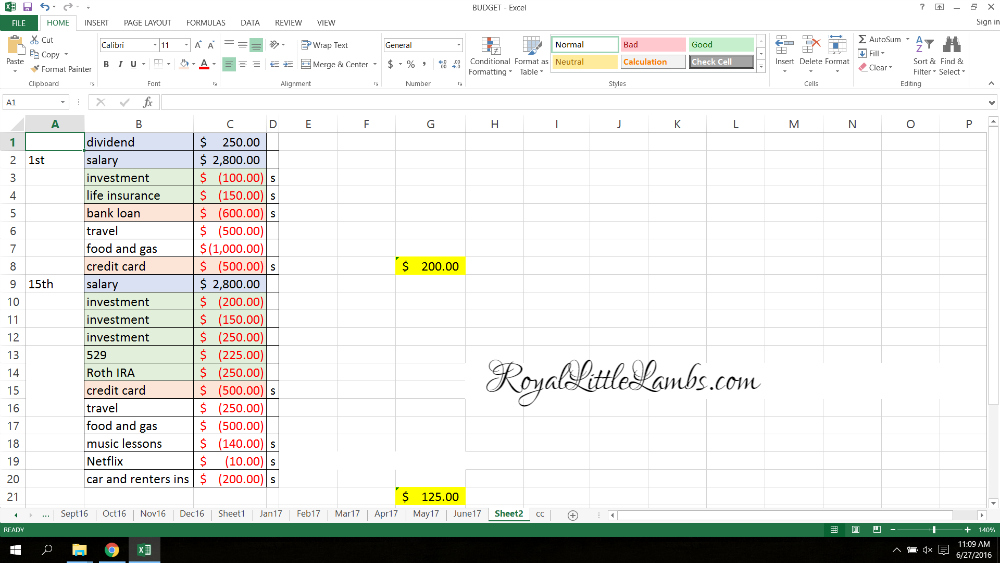
I’ve rounded the numbers and used generic names for our accounts.

I realize not everyone is in a position to invest.

I want to show you the reality.

I am not trying to brag about our income.

It’s public information anyone can look up about military service members. It’s a fixed income.

Yes, we receive some amazing benefits for being a military family: housing and utilities allowances, commissary and AAFES shopping privileges, dental and medical services at the base clinic, tax-reduced (but rationed) gasoline purchases on base. My husband’s state of residence is Illinois, so we don’t pay state taxes as a military family.

The offset is being far from home and family, missing those important holidays and events. Also, deployments, TDYs, training events, and late night or weekend exercises can be difficult on families. PCS (moving) often eats up our savings and is always stressful in many ways.

We currently have about $2500 in our savings account.

I’m fortunate to be able to stay home to educate our four children. We’re grateful for the opportunities military life offers us.

You can see we’re aggressively paying down our debt while not starving or eliminating our priority to travel. We’re still working this out with baby steps. We also have a pin and chip travel credit card that we over-used. It’s not shown in my Excel spreadsheet. We plan to attack that after these debts are paid within the year. We’re using every bit of extra income on paying that travel card (tax return, monetary gifts, and an IRA dividend we receive every autumn). We don’t plan to continue using that credit card since our new bank cards have the pin and chip now!

My Excel budget spreadsheet is color-coded.

The blue is income.

The green are investments, with amounts that seldom change.

The red is debt.

The fields left white are the flexible expenses. These amounts fluctuate from month to month.

My Color Coded Excel Budget

I’m sure you noticed some gaping holes in my budget plan?

We have a separate bank account for our local expenses. Our rent, cell phones, and Internet are auto-deducted from our local account. We have a certain amount auto-deposited each pay period into the local account to cover those expenses. We use anything left over in that account each month to pay that travel credit card. We are at the mercy of the exchange rate from USD to Euro. (I love the idea of a separate account for housing expenses and I will carry that idea over when we move back to the States!)

We also have an auto deduction going directly to our church.

I have a separate account for my blogging “business.” Honestly, I don’t even sorta break even. I pour way more into this enterprise than I make every month. Some days, that’s very frustrating.

What’s Your WHY?

This goes a bit beyond just priorities.

When you get discouraged, when the van breaks down and you use your travel fund to fix it, when your child asks if you can have a “real Christmas” and you feel guilty, what will you do?

Leave room for emergencies and pray about big purchases. Obviously, a working vehicle is necessary for getting to and from work to make the money. While we cringed to fork over that $300+ for the new alternator and valves, we did so knowing that it had to be done and our trip could either be postponed or we could be more frugal somewhere else.

We remind ourselves what the big picture is: planning for our futures, teaching our children values, and leaving a legacy for our kids.

Sure, we splurge sometimes on gelato, a cute new shirt or shoes in sale when needed, flowers for the garden or dining table for a special occasion, or that Kylo Ren lightsaber.

We try to make sure there’s room in the budget for fun or it becomes drudgery.

UPDATE 8/25/16: We have PAID OFF TWO accounts! Only 3 to go. We plan to have those paid by May!

View this post on Instagram

A post shared by Jennifer Lambert, M.Ed. (@jenalambert)


Update August 2017: Only 1 account left to go!

Resources:

  • Debt-Proof Living: How to Get Out of Debt & Stay That Way by Mary Hunt
  • 31 Days to Radically Reduce Your Expenses: Less Stress. More Savings by Kalyn Brooke
  • Slaying the Debt Dragon: How One Family Conquered Their Money Monster and Found an Inspired Happily Ever After by Cherie Lowe
  • 31 Days of Living Well and Spending Zero: Freeze Your Spending. Change Your Life. by Ruth Soukup
  • Unstuffed: Decluttering Your Home, Mind, and Soul by Ruth Soukup
  • Clutter Free: Quick and Easy Steps to Simplifying Your Space by Kathi Lipp
  • The Spender’s Guide to Debt-Free Living: How a Spending Fast Helped Me Get from Broke to Badass in Record Time by Anna Newell Jones
  • The Year without a Purchase: One Family’s Quest to Stop Shopping and Start Connecting by Scott Dannemiller
  • The Year of Less: How I Stopped Shopping, Gave Away My Belongings, and Discovered Life is Worth More Than Anything You Can Buy in a Store by Cait Flanders
  • Make Room for What You Love: Your Essential Guide to Organizing and Simplifying by Melissa Michaels

Do you have any budget tips to share?

You might also like:

  • How to Save Money while Shopping
  • Teaching Kids About Money
  • How We Save Money
  • Minimizing
  • Online Yard Sale Tips
  • Decorating on a Budget
  • 5 Money Tips
Share
Pin16
Share
16 Shares
You might also like:

Filed Under: Frugal Tagged With: budget, finance, frugal, money

How We Save Money

This blog may contain affiliate links: disclosure.
Please see my suggested resources.

April 21, 2016 By Jennifer Lambert 19 Comments

I’m always looking for simple ways to save money.

I weigh the convenience factor with our health, values, and lifestyle.

It takes discipline to save money and to set rules about how we will not waste.

We have to have goals and a plan.

We pray about big purchases. When I see something I want, I try to wait to see if I can do without or if I have something similar I can use to that purpose. If I can’t stop thinking about it after a few days or a week, I try to work it into the budget.

I remember a time when I had way too much month at the end of the money.

I was a school teacher for almost 10 years, but my last year working outside the home was haphazard…and I found myself working two part-time jobs with no benefits. I was struggling to survive financially.

I’ve bounced checks or auto debits because I didn’t realize the check card had been used. I’ve had to juggle which bills I paid so I made rent and had food and gas money. I’ve lived in fear of collection agencies, avoiding the phone calls and dreading certified mail.

Thankfully, we’re a better place financially these days.

We still have some credit card debt we’re paying off, but we’re investing for retirement and our children’s education. We have no car payments and we’re under our BAH allotment for our housing.

Healthy finances are important to me in this ever-changing world.

I want to teach my children how to live frugally but well.

I want them to understand budgeting, investing, taxes, saving, checking accounts, home-buying, and more. It’s important to be financially literate.

I’m tired of explaining that “I don’t have the money” doesn’t always mean that I literally have every penny accounted for, but rather that “This or that isn’t a priority” or “I’m spending as much as I desire at this time.”

These are several simple ways I’ve found to save us money.

Cloth Napkins

I’ve found several mix and match Americana cloth napkin styles that we keep in a drawer by the dining table. We also have some pretty gold ones for special occasions.

We reuse these for a few meals, until they get too greasy or dirty, and then we wash them for next time.

Cloth Napkins

We haven’t gotten on board with family cloth in the bathrooms (ew) or cloth towels in the kitchen, but we do have a large stash of dishcloths for cleaning and wiping up small spills. Paper towels and facial tissues last a really long time for us.

When my son was a baby, we used cloth diapers and made our own wipes from flannel.

Laundry and Cleaning

We make our own laundry soap.

We use wool drying balls.

I try to do laundry every other day, so there are full loads.

I often hang dry the clothes to save on energy.

We don’t buy household cleaners. I use Thieves soap, vinegar, warm water, olive oil. I love my Libman Freedom mop and cleaning cloths.

Seldom Eating Out

We rarely eat out in restaurants and almost never get fast food.

It saves money and keeps us healthier.

We eat at home 95% of the time. We make our own seasonings. I make a hot breakfast every day. I make dinner for the family every evening. We usually have leftovers or sandwiches for lunch.

It has helped that we have stated to ourselves and the kids that eating out is not an option when we leave the house. We try to plan around meal times and do errands mid mornings or late afternoons.

We just have to plan better.

We eat before we leave the house or take a cooler with lunch and snacks. We don’t run errands (or go grocery shopping!) when we’re hungry. We take our lunches for field trips. We make sure dinner is prepped and we make sure to arrive back home in time to cook and eat it.

We do sometimes dine out while traveling and we plan for that if there’s special cuisine or a specific restaurant we want to try, but we often rent an apartment so we can prepare our own meals.

We never buy bottled water. We have a filter on our refrigerator and we refill these glass bottles.

Living Simply

We have simple family birthdays with homemade cake and a special dinner served on a Celebration Plate. We have simple homemade decorations and watch a favorite movie together. We don’t go overboard with lots of presents, but just a few very carefully picked out and lovingly wrapped items.

We often travel for holidays and rarely give big gifts for Christmas or Easter. I eschew giving a bunch of Dollar Store junk in stocking and baskets, so we prefer useful items like pretty school supplies, healthy snacks, and maybe a desired item. We strive for a debt-free Christmas. I like to follow the something they Want, Need, Wear, Read plan of gift-buying and giving.

Shopping is not entertainment.

I buy groceries and other items when we need them. I’m not a hoarder. I don’t do coupons. I just discovered Ibotta and it’s ok, slowly racking up a few dollars every month on a few items I buy anyway.

I don’t subscribe to store emails or social media. We don’t buy newspapers or magazines. We don’t care what’s trending nor do we need the latest and newest tech gadgets or clothes or toys.

My house is not full of fancy décor or lots of knick knacks because they aren’t useful and are just something else to dust. Our furniture is mostly handmedowns and yard sale and thrift shop finds.  I don’t redecorate with the seasons or when we PCS and I don’t read decorating magazines or blogs because they make me discontent. We haven’t purchased new furniture in 10 years, except to upgrade the kids from baby cribs to beds.

I cut my own hair. I’m pretty low maintenance. I don’t have a lot of makeup or accessories. I don’t use product in my hair. I don’t get my nails done.

We put our TV in storage. So, there’s no cable or SAT to watch or pay for. We watch Netflix and Amazon streaming.

We keep our utilities low by setting the AC high and the heating low. We turn off lights and use water sparingly.

Eating Leftovers

I don’t like waste. We don’t often have leftovers with four growing children, but I encourage frugality in this area.

I often double or even triple recipes so we can have lunches the next day.

I store leftovers in glass containers to maintain freshness and use them up within a couple days. We get creative with soups and casseroles.

Also, if an apple or carrot only gets half-eaten, it’s saved for later. It can be used in salads or smoothies.

Limiting Trips into Town

Currently, Wednesday is our going out day.

The girls have music lessons, we run errands and do the grocery shopping, and Tori has gymnastics. (I have to plan and prep dinner and my teen daughter or husband finishes it up since we get home after 6 PM – see above!)

This means I have to plan our meals and make a list when shopping.

Sundays, we all go to church. After lunch, my teen daughter and I go to the gym for about an hour and then go grocery shopping on base (most local stores are closed).

Keeping to this plan allows me to say no to any extra running around. Many homeschoolers and stay at home moms in our area are always going out for field trips, playdates, or shopping entertainment. We prefer to stay home and complete our homeschool work. This helps me only to fill up my minivan’s gas tank about 2-3 times per month.

We also don’t feel pressured to change our schedule very often. We have this as a priority, so we don’t feel the need to deviate unless it’s very important or an amazing opportunity.

The kids know we generally stay home, so they learn they have plenty of free time to play, create, and explore after homeschool work and chores are completed. Work before play.

Paying Cash

We try to live within our means. That means not using credit to pay for anything. The deals on credit cards aren’t attractive enough for me to use them. I don’t have the discipline to pay them off each month. Paying cash makes us think twice before making a purchase. I keep our spending plan on spreadsheets on the computer.

We’ve never really done the envelope system. I just don’t like to go to the ATM every week or whenever.

Most of the stores in Europe are Euro cash-only. I seldom shop at those stores. I like the bigger stores that remind me of a Super Wal-Mart and they cater to the international community here and accept my American account-linked check card.

I don’t shop with calculator in hand. What if I get to the register and my total is more than I have? Embarrassing.

When we travel, we have to use a pin and chip credit card for flights and accommodations, but we try to pay cash for all other expenses.

When the kids need clothing or supplies, we pay cash.

When our minivan needed a new alternator and pulley system, we were so thankful to be able to pay cash for it all. I remember a time when an emergency like that would have really messed us up financially for months.

We’re still learning and some days, weeks, and months it’s hard, but we’re determined to live abundantly on a fixed single income.

Resources:

  • Debt-Proof Living: How to Get Out of Debt & Stay That Way by Mary Hunt
  • 31 Days to Radically Reduce Your Expenses: Less Stress. More Savings by Kalyn Brooke
  • Slaying the Debt Dragon: How One Family Conquered Their Money Monster and Found an Inspired Happily Ever After by Cherie Lowe
  • 31 Days of Living Well and Spending Zero: Freeze Your Spending. Change Your Life. by Ruth Soukup
  • Unstuffed: Decluttering Your Home, Mind, and Soul by Ruth Soukup
  • Clutter Free: Quick and Easy Steps to Simplifying Your Space by Kathi Lipp
  • The Spender’s Guide to Debt-Free Living: How a Spending Fast Helped Me Get from Broke to Badass in Record Time by Anna Newell Jones
  • The Year without a Purchase: One Family’s Quest to Stop Shopping and Start Connecting by Scott Dannemiller
  • The Year of Less: How I Stopped Shopping, Gave Away My Belongings, and Discovered Life is Worth More Than Anything You Can Buy in a Store by Cait Flanders
  • Make Room for What You Love: Your Essential Guide to Organizing and Simplifying by Melissa Michaels

How do you save money?

You might also like:

  • How to Save Money while Shopping
  • Teaching Kids About Money
  • How to Budget
  • Minimizing
  • Online Yard Sale Tips
  • Decorating on a Budget
  • 5 Money Tips
Share
Pin13
Share
13 Shares
You might also like:

Filed Under: Frugal Tagged With: finance, frugal

Obstacles to Being Frugal During the Holidays

This blog may contain affiliate links: disclosure.
Please see my suggested resources.

December 22, 2015 By Jennifer Lambert Leave a Comment

It’s hard to have a debt-free or frugal Christmas.

Even for our family, we find it sometimes difficult not to get caught up in all the commercialism of the holiday season.

When I think about all the unexpected expenses, some of which we feel obligated to participate in despite all my protests, it upsets me…

Do these things even add value to the holiday?

These holiday things are so expected, but I wonder about the worth and expense.

I see social media posts like this circulating every year:

Posted by Jennifer Lambert on Tuesday, December 1, 2015

During November and December, I regularly see social media posts complaining that parents shouldn’t allow “Santa” to provide extravagant or electronic gifts for their kids because some children don’t understand why Santa doesn’t always just give them what they want. The comments ranged from vicious to understanding, admonishing parents to teach kids to be grateful for whatever they get or not do Santa at all.

Did she miss the point?

And it got me thinking.

Kids in foster care or in financially struggling families have a lot of stress around the holidays.

Does Santa need to add to the stress?

We don’t do the traditional American Santa.

The storybooks and movies and TV commercials all portray Santa as the wishgiver. We’ve lost the idea that his elves make wooden toys for all the little boys and girls in the world.

We teach our kids to be grateful and not to brag.

I have successfully made it through a holiday season without baking, attending any office parties, or completing any crafts.

Perhaps I went too far the other way.

I need to find balance.

If I followed social media suggestions, I would be sorely depressed that my tree didn’t have a theme with matching glittery ribbon flowing through it like a river. We didn’t bake, decorate, or give our neighbors artistically iced cookies with chemical-free dye. We didn’t offer handmade painted wrapping paper.

I’m tired of making excuses because I don’t give in to the expectations.

Frugal Holidays

Obstacles to Being Frugal During the Holidays

Pinterest

Don’t even get me started.

I ignored social media the last couple months so I wouldn’t feel guilty.

We have very simple holiday decorations – some thrift store candle holders and a kid-decorated tree with a handmade tree skirt. Electricity is expensive here, so we have only a minimum of lights. Seeing extravagant online home tours and fancy craft tutorials don’t make me feel good about myself.

I don’t need more kitschy crafts to keep my kids busy or to clutter up my house.

Craft items are expensive and I often can’t find many of the items.

I don’t want to see the flashing eyes of a betrayed child ever again as I admit that I tossed that gluey, glittery, sequiny creation in the garbage.

Wrapping

Rolls of colored paper, ribbons, bows, gift bags, tissue paper, tags, labels, cards…

These consumable items are so expensive just to end up in the trash!

We don’t have storage space to go to the after-Christmas sales to stock up for the next year. We have a few gift bags we reuse and some old rolls of paper. The kids really don’t care so much.

Food

Work potluck lunches, parties, cookie exchanges, church hospitality duties, treats for neighbors…

I often don’t consider these items in our monthly food budget and they sure add up!

My eldest daughter has attended a couple events where she wouldn’t eat because the food was just so unhealthy. Her friends don’t understand why she won’t eat greasy fast food pizza or fluorescent cupcakes and sugary soda.

Presents

We don’t give many tangible presents.

Our kids know there won’t be a gazillion presents under the tree on Christmas morning. We don’t do stockings some years.

We were accused of being “like weird Jehovah’s Witnesses” at church for our values. Nice.

We celebrate St. Nicholas and Hanukkah with little gifts and games. We usually travel or have a very simple Christmas.

Since we homeschool, I don’t think much about teacher gifts, but my kids want to give a little something to the music teachers and gymnastics instructor. I love their hearts. They picked out greeting cards to hold gift cards and wrote out a note for their teachers.

Since we’re far from family, we found it easier for years just to send gift cards. I never knew what they want, anyway. We’ve recently decided to forego even that.

Those gift cards add up – and some even have activation fees! And greeting cards are $5 or more!

We don’t send out Christmas cards. We don’t purchase boxed holiday cards or photo collage cards. It’s just a waste. I loathe the braggy holiday newsletters. We keep in touch with friends and family on Facebook and I send out a greeting there.

I continue to look for ways to reduce my overwhelm and stay debt-free.

Resources:

  • Watch for the Light: Readings for Advent and Christmas
  • Advent: The Once and Future Coming of Jesus Christ by Fleming Rutledge
  • Low: An Honest Advent Devotional by John Pavlovitz
  • Honest Advent: Awakening to the Wonder of God-with-Us Then, Here, and Now by Scott Erickson
  • Calm Christmas and a Happy New Year: A little book of festive joy by Beth Kempton
  • Have Yourself a Minimalist Christmas: Slow Down, Save Money & Enjoy a More Intentional Holiday by Meg Nordmann
  • Hundred Dollar Holiday: The Case For A More Joyful Christmas by Bill McKibben
  • Unplug the Christmas Machine: A Complete Guide to Putting Love and Joy Back into the Season by Jo Robinson and Jean C Staeheli
  • WinterSong: Christmas Readings by Madeleine L’Engle

You might also like:

  • Introvert Holiday Survival Guide
  • Gift Guides for Everyone
  • Holiday Blues
  • Introvert Holiday Survival Guide
  • Celebrating Holidays During Deployment
  • Blue Christmas
Share
Pin
Share
0 Shares
You might also like:

Filed Under: Frugal Tagged With: Christmas, frugal

How We Had the Best Christmas Ever

This blog may contain affiliate links: disclosure.
Please see my suggested resources.

December 27, 2014 By Jennifer Lambert 12 Comments

This is the first year in ten years of marriage that I didn’t have a tantrum. I’m not proud of my attitude and behavior in previous years. Holidays were stressful and not full of joy at all for me.

I was determined to have a better Christmas this year.

How did we have the best Christmas ever?

How We Had the Best Christmas Ever

We changed up our focus.

I’ve been under the impression that everything had to be perfect and Hollywood magical for so long – and it’s exhausting. Of course, we study our Advent lessons about Jesus, but it really was more than that for me. That used to be just another added pressure.

I had to let go.

Simplify.

We didn’t do stockings. The kids mentioned it a couple times and I just bit my tongue and said no, not this year. I’ve always felt obligated to fill the stockings with junk and candy. We don’t have a fireplace. It was just something I had to let go.

We didn’t attend any holiday parties. The one my husband wanted to go to was smack in the middle of Tori’s end of year gymnastics class and she is more important than a plastered smile on my face and stress about how my hair looks.

Less Control.

I allowed my kids to go crazy with cookie decorating. They loved it and honestly, there was not much mess. They’re at a great age to have some freedom now. It was a pleasant time had by all.

I slacked up on school time this month. I had a few must-do’s on the list, but the rest of the time, I allowed them to play and they impressed me with their interest-led learning.

Fewer Presents.

We had intended to go on a vacation and skip the whole holiday, but that fell through and I had to scramble to purchase some things for under the tree.

I love the Something they Want, Something they Need, Something to Wear, Something to Read. I loosely followed that and it worked beautifully.

Almost everything arrived just in time for Christmas. My husband and I don’t really give each other presents and we’re ok with that. We buy what we want and need whenever throughout the year.

We didn’t make or buy presents for neighbors, coworkers, or friends. We really don’t know anyone and thankfully, we didn’t receive any from anyone so I don’t feel guilty. We sent our Christmas cards to our oil team and friends and family. I ordered presents for my husband’s niece and nephews. I sent a restaurant giftcard to my parents.

We read through Jotham’s Journey each night of the Advent season. The kids were excited each evening and reminded me it was reading time! We enjoy the candlelight service at church on Christmas Eve (except Alex, who promptly fell asleep on me).

On Christmas morning, we read the final chapters of those books first thing and sang “Go Tell it on the Mountain” – it was such a great moment to pause and worship before the present time.

In previous years, the number of presents were overwhelming and there were meltdowns from the sensory overload and stress of everything (kids and me).

This year, I got it just right.

Quality over quantity.

I love the rule of limiting presents to this:

  • Something they Want
  • Something to Wear
  • Something they Need
  • Something to Read

I like these simple wish lists and these printable wish lists to help kids focus on what’s important.

The kids were content, grateful, and occupied all day.

I wasn’t stressed and was able to enjoy the holiday. We all made dinner together. It was lovely.

Resources:

  • Watch for the Light: Readings for Advent and Christmas
  • Advent: The Once and Future Coming of Jesus Christ by Fleming Rutledge
  • Low: An Honest Advent Devotional by John Pavlovitz
  • Honest Advent: Awakening to the Wonder of God-with-Us Then, Here, and Now by Scott Erickson
  • Calm Christmas and a Happy New Year: A little book of festive joy by Beth Kempton
  • Have Yourself a Minimalist Christmas: Slow Down, Save Money & Enjoy a More Intentional Holiday by Meg Nordmann
  • Hundred Dollar Holiday: The Case For A More Joyful Christmas by Bill McKibben
  • Unplug the Christmas Machine: A Complete Guide to Putting Love and Joy Back into the Season by Jo Robinson and Jean C Staeheli

You might also like:

  • Introvert Holiday Survival Guide
  • Gift Guides for Everyone
  • Holiday Blues
  • Introvert Holiday Survival Guide
  • Celebrating Holidays During Deployment
  • Blue Christmas
Share
Pin37
Share
37 Shares
You might also like:

Filed Under: Frugal Tagged With: Christmas, frugal

5 Tips for Buying Kids Clothes

This blog may contain affiliate links: disclosure.
Please see my suggested resources.

May 6, 2014 By Jennifer Lambert 9 Comments

With four growing kids, I have to be careful with clothing and plan buys to help save money.

I’ve been pretty successful these last few years with scoring on great quality kids clothes for four children at amazing prices and here I share my frugal tips with you!

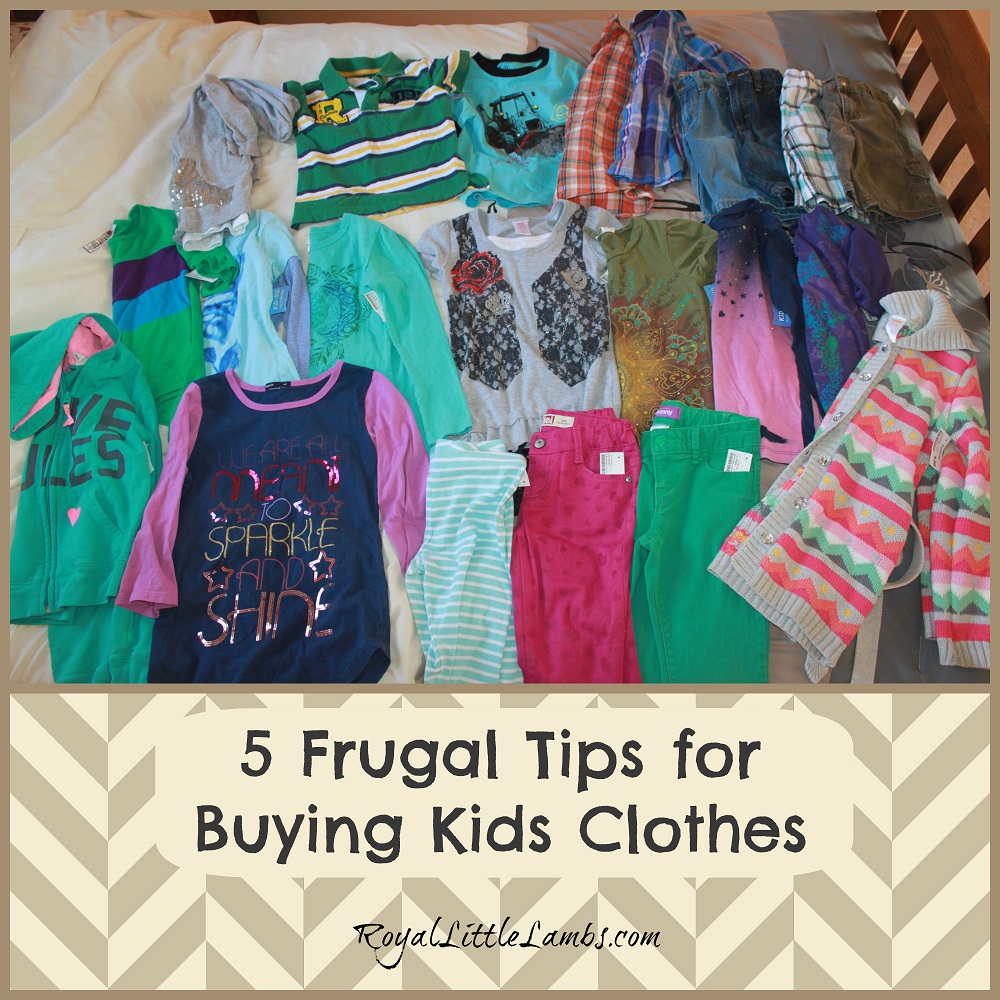
5 Tips for Buying Kids Clothes

5 Frugal Tips for Buying Kids Clothes

1. Buy out of season

You know kids need snow gear, so get it on clearance or at thrift and consignment shops super cheap during summer. When everyone is thinking of swimming, you’re being wise and planning ahead.

Buy sundresses and sandals and beach or pool items at the end of the season (when it’s too hot to even think) and coats are showing up in stores (seriously?!). Just be proactive and get a size up.

Stores like Old Navy have great jeans sales periodically. Stock up! My kids seem to always have holey knees! During back-to-school season, stock up on classics even if your kids don’t wear uniforms. Khaki pants are always a great item to have on hand for church or events that may pop up.

2. Consignment Shops

Our local consignment shop takes only seasonal clothing, so when I switch out clothes in spring and fall, I store the items in the basement to take to the shop to get credit the next season.

There are also HUGE consignment sales at our local expo center in spring and fall. A great place to sell if you’re very organized and so inclined – and an even greater place to stock up on homeschool supplies, toys, baby gear, sports equipment, and clothes.

I recently took three baskets of clothes and toys to our local kids consignment shop and got a credit. I didn’t realize I had never used my credit from last season. When I showed up to purchase some needed items against my $38 credit, I was told I had earned $138. So unexpected! I stocked up!

3. Thrift Stores

I can spot a Gymboree or Land’s End dress several aisles over. I just know the quality and pattern of their fabrics. I like certain brands because they last through several kids and don’t wear out or break down.

Know what you want and need and keep lists of sizes and preferences. Tori likes blue and not pink. Kate loves green and Bohemian clothes. Liz likes classic looks and black and white patterns. Alex loves blue and orange and no buttons.

4. Hand-Me-Down Club with friends or relatives

If you and your friends can work out a hand-me-down system to share clothes and costs and do seasonal swaps, everybody wins! Many of the moms at our church do these swaps informally. And we have a huge church rummage sale. Those who help sort and work get first dibs!

My younger girls love to “shop” from the basement bin of big sister’s old clothes and all my kids love getting boxes from their cousins.

I’m loving the Buy Nothing groups on social media!

5. Yard Sales

Yard sales are my least favorite way to find frugal clothes. The clothes are often poor quality and worse condition and it takes so much time to sort through bins, baskets, or racks.

We have found some great items like roller blades and jackets and furniture at yard sales.

We did have great success with selling baby items and kids clothing last year at our yard sale. It’s just hit or miss. I don’t waste much time looking for everyday clothing at yard sales.

I do like online yard sales and thrift shops. We had great success at KSL.com searching for and finding items we needed or wanted. thredUP and Poshmark are great ways to trade and buy used clothing!

I envy those people who have a monthly clothing budget set aside for those emergencies. I’ve just never seemed to manage it. We often use our tax return and Christmas and birthday money to stock up a few times a year. I’ve never had success with budgeting well for clothing since the kids always seem to need something special at random times.

They outgrow favorite items and I have to sneak them out in the dead of night, feeling pangs of ultimate betrayal. Jeans mystically develop humongous knee holes. Socks lose their sole mates. Shirtsleeves mysteriously grow too short or unraveled. And when they occasionally need a specialty clothing item for some event, I have to scramble to find a deal in the right size, color, and style.

Do you have any frugal tips I’ve missed?

Share
Pin25
Share
25 Shares
You might also like:

Filed Under: Frugal Tagged With: clothes, frugal

Yard Sale Tips

This blog may contain affiliate links: disclosure.
Please see my suggested resources.

April 30, 2014 By Jennifer Lambert 8 Comments

How to have a yard sale and make a million bucks $700.

I am amazed at how successful our yard sale was. I expected a couple hundred dollars, spending money for our travels, a buffer to help us out.

I’ve analyzed what we did and I hope it can be duplicated so you can have a great yard sale too!

How to have a successful yard sale:

  • planning

  • preparing

  • purging

  • praying

How to Have a Successful Yard Sale

I realized I’m moving in two months. In two months! Like, out of the country. To a foreign country. With houses much smaller than I’m used to having.

I walked from room to room in despair, disgusted at myself that I accumulate so much STUFF – nine years of marriage, almost four in this particular house, four kids, two cats.

We don’t need this much STUFF.

Stuff ≠ happiness.

I made lists.

I love making lists! Made a list for items to put in storage. Another list for items to sell or donate. Finally, I felt like I was accomplishing something.

I set a date for the sale.

I put it on my calendar which syncs with my husband’s and all our devices. He took leave from work on the Thursday before and Friday, the first sale day. It’s on like Donkey Kong.

I advertised.

I placed an ad in our local paper online for free! I also listed our two big items that we had to sell in separate free classified ads – the 40 gallon aquarium and my big L-shaped desk with hutch. (The aquarium  – with 9 fish and live plants – sold for $50 to a man who raises angelfish for a living – several days before our yard sale!) Our son was so happy his fish would have friends.

I sorted.

I organized clothes and homeschool materials. I started stacking items for sale in our laundry room. I could barely do laundry for a month. I added to the list. I did a little more each day.

I purged, organized, compartmentalized, rearranged – and suddenly, I have three empty rooms. Seriously. In our basement, I have three empty rooms, like, completely empty. It’s crazy.

I cried a little when I clear off several bookshelves.

My husband helped me go through the cellar (there are spiders in there!) and he cleaned out his military gear and donated most of that to Liz’s Civil Air Patrol squadron.

The day before our sale!

We borrowed tables from church. I stacked everything in the garage. My husband carried out the bigger items. The huge desk stayed put. And we prayed.

The first morning of the sale!

Friday. My husband set up the tables and the kids helped set everything out. People arrived before sunrise. We didn’t even have time to put price stickers on anything. We agreed that we just want to get rid of everything as quickly as possible so we set the prices super low. My husband has the Square Register app on his phone so we could take cash or cards.

My eldest daughter was is in charge of the cash register (she used their toy cash register that has a real working calculator.) I taught her to keep all the bills turned the same way and in their slots. I explained that it’s important to out the customer’s money on the table before getting change. Never immediately put a customer’s money in the register. Never leave the register unattended.

One lady asked my husband how much something was and he responded that it was $5. She exclaimed: “No! It’s worth at least $10!” and made him take a ten dollar bill. Another customer made him repeat himself three times that our recliner really was only $20. It was in fine condition, nothing wrong with it. She was overjoyed.

The first day we made about $400 and sold much of the “good stuff.”

People were impressed with the Square Register app and one older man joked that no one could haggle with us if we took credit cards!


The second day’s forecast was supposed to be rainy so we set up the remainder on tables inside our garage and put an easel at the end of the driveway.

We sold the big desk with hutch to a young man with a new startup home business for only $50.

It only drizzled a tiny bit so we still had lots of customers.

Several men asked to buy items right off our garage shelves. I sold two snow shovels that were hanging on the wall. We still have several, so we’re good.

Several families with vanloads of kids came and almost destroyed my setup! I had to straighten my tables several times.

Some people are strange. A couple ladies got irritated with me when I tried to tell them that a curriculum was a set and they should take it all together instead of just one piece. But if they don’t want the teacher manual or manipulatives, I shouldn’t argue!

I was surprised that more clothing didn’t sell. We had a laundry basket full of too-small summer dresses in great condition. Last year, we sold a ton of clothing – in and out of season.


In the afternoon, we decided to close up because the weather turned cold and rainy, so it was perfect timing. We shut our garage doors to clean up.

We made $700 in two days.

Y’all. Seriously. After I cleaned up from the sale, I took away two vanloads – one to donate to the thrift store and one to trade in at the consignment shop. Also, I donated two bags of winter items to our church for the annual rummage sale.

It was liberating to be done with all that stuff.

Get your FREE downloadable garage sale sign kit!

Resources:

  • Yard Sale Kit
  • Marking Tags
  • Cash Box with Key Lock
  • Large Cash Box with Lock
  • Waist Apron Two Pocket
  • Metal Clothing Rack
Share
Pin48
Share
48 Shares
You might also like:

Filed Under: Frugal Tagged With: declutter, frugal, organize, simplify

Losing Control

This blog may contain affiliate links: disclosure.
Please see my suggested resources.

March 12, 2014 By Jennifer Lambert 14 Comments

So, we saved almost $1500 in a little over a month.

Wanna know how?

By losing control.

We went down to just one vehicle.

How we're surviving with one vehicle

My husband started driving our van to work. We put his truck up for sale on the lot on base since we’re moving out of the country and can only ship one vehicle. And the van is paid for, title in hand.

I have kept a budget in an Excel spreadsheet ever since before we were married. I don’t itemize it as closely as a I should. I have a cell for each bill, many on auto-pay (like our investments and insurance), and others (like utilities, Internet, and cell phones) are generally the same amount each month. Then there’s our food/gas/living expenses cell that fluctuates wildly each pay period. I should have monitored that more carefully. The pay-all-cash, envelope system just doesn’t appeal to my husband or me. We just don’t use ATMs and my husband’s paychecks are direct-deposited. Our bank is really just an online entity.

I’ve been rather proud of being frugal this past year. We’d cut down on our spending pretty drastically. We don’t eat out. That helps a lot.

When I noticed we had all this extra money leftover after a couple paydays, I was rather devastated that I must blow that much cash on errands a few times a week – that it would add up to that much in a month of being stuck at home. I asked my husband to verify the budget and he did some math-y formula stuff and looked at the accounts and numbers.

Then I asked if this could have anything to do with my being stuck at home for almost a month while he took the van to work. He’s been picking up the groceries we need. And we’ve been paying cash for gas.

Light bulb (in the voice of Gru from Despicable Me).

So, how did we save so much money? I didn’t monitor well all the little seeps of using that debit card.

Like, when I poorly plan and we need a single item from the grocery store and then I come home with three bags.

Or grocery shopping too close to meal time and not planning to have a slow cooker dinner ready or lunch leftovers and then picking up a couple of those ready-made pizzas from the deli area.

Or not thawing out meat well enough in advance and having to rush out to pick up some rotisserie chicken or even some fresh meat – and five other items to make the recipe I decided last minute.

Not to mention all the extra gas wasted with the unnecessary running around that could be eliminated with better planning.

With better planning, I could shop for meals monthly or even twice a month, and let that be the end of it.

And all that extra money we’re saving with having one vehicle? So many options! Into our savings account to earn interest. To pay off unsecured debt. To take a vacation en route to our next duty station. To take the kids on fun staycation places before we move.

I wish we had done this sooner. I wish we hadn’t bought into the “need” for two vehicles. This was my selfish demand when we arrived here with our van from our last duty station. I wanted freedom to drive where I wanted, when I wanted. I didn’t even wait to see if we could “survive” with one vehicle.

I didn’t wait on the Lord to provide the perfect vehicle or say NO to me. I pressured my husband to drive the 1.5 hours down to Carmax to purchase a used Jeep Liberty that we owned for a year, then encouraged him to trade that in for a pickup truck that we are now having to sell. And we owe more than it’s worth. (Please pray it sells soon!) And I can imagine even more blessings when we don’t have that extra monthly payment to make!

My husband just mentioned yesterday how simple it is, having only one vehicle, even with having to juggle a couple appointments this week. It makes us appreciate our provision more than ever.

I read blog posts and articles all the time with lists about how to save money, cut costs, be frugal…and they really just all say the same things. They’re good lists, but I haven’t gleaned anything life changing from them.

Eat at home. Combine errands. Don’t use credit cards. Don’t shop online. Reduce. Reuse. Simplify.

I’ve done almost all of that I can do…except sacrifice by having only one vehicle…so there it is.

But I needed to lose control. Of my selfishness. Of my finances. Of my demand. Of that blasted Excel spreadsheet with its numbers and formulas and figures in black and white that don’t necessarily add up to God.

I am amazed and blessed…and shocked.

Check out some other frugal posts by the Review Crew.

Share
Pin1
Share
1 Shares
You might also like:

Filed Under: Frugal Tagged With: budget, finance, frugal, Marriage, money

How to Have a Debt-Free Christmas

This blog may contain affiliate links: disclosure.
Please see my suggested resources.

December 16, 2013 By Jennifer Lambert 11 Comments

We changed our focus and priorities to have a simple, debt-free holiday.

Christmas should be about family, experiences, Jesus. Not stuff. {Tweet this}

How to Have a Debt-Free Christmas

How can we have a debt-free Christmas?

Pay cash.

We don’t do adult gifts.

If we don’t have enough money, we don’t buy it.

Stick to a budget. Plan for the holidays year-round by putting a portion of income each month into a savings account.

We’ve prepared the kids that we well have smaller Christmas than in the past. We don’t do Santa. We don’t do that ridiculous Elf or any of its cousins.

We don’t have piles of gifts like our parents provided us. I shop sales and have been very careful. I find great items year-round and store them away for the holidays.

Planning is key. I keep an Amazon wishlist updated throughout the year and watch prices with Honey.

Set a standard.

I only buy a few gifts for the kids.

I send my parents a gift card because they have more stuff than they could ever use and they like to eat out at restaurants.

My husband and I don’t give presents to each other or extended family.

If you have to do gifts with others…Organize some kind of swap with extended family, like a name drawing. Send money to a charity in family’s name instead of a tangible gift. Be creative.

We don’t watch TV.

By not being exposed to commercials, we don’t have cases of the gimmes.

It almost makes gift buying difficult and I have to be more creative and search for the perfect things. We’ve downscaled a lot. We’ve simplified. We’re picky.

I prefer quality over quantity.

I love this gifting plan:

  • something they want

  • something they need

  • something to wear

  • something to read

But, for us, there’s very little we need (such a blessing!) and I don’t often buy clothing for Christmas gifts.

We don’t know what the “popular” toys are. When someone asked if my girls wanted a particular toy for Christmas since it was “all the rage” at her daughter’s school, I had to Google it. My girls probably would enjoy it, but not because it’s popular. But then they would discard it too soon or it would break.

We don’t strive to keep up with society and it’s so much more relaxing not to have to compare.

We focus on the meaning of Christmas: Jesus.

We read through Advent studies each day. We love the books by Ytreeide. This year we’re reading Bartholomew’s Passage. We light candles and pray and sing carols and we’re together.

We read about and celebrate St. Nicholas day on December 6. The children know this is the base for the legend of Santa Claus.

We learned about and celebrated Hanukkah during our Ancient Studies history and it has become tradition now.

We decorate simply.

Our house doesn’t look like it’s out of a magazine or store catalog. No Anthropologie or Pottery Barn here. We live here; it’s not a museum.

We have an artificial tree. We have a lovely Advent wreath and a new Jesse Tree this year! We’re making do with what we have. Alex wanted the outside of the house decorated and we managed to do it well with lights we bought on clearance years ago. Win!

Our church has an ornament exchange so each of my children gets a new ornament each year. They love it. And their hearts are better than mine that they’re never disappointed in the ornament they receive.

We just don’t go shopping.

It’s really that easy.

My mom used to love to go shopping as entertainment. I don’t. I don’t need retail therapy.

I don’t subscribe to store emails. We don’t get newspapers.

We stay home on Black Friday. We don’t go online all weekend long. We find other stuff to do.

We have a budget and are doing better sticking to it. I go to the grocery store when we need to stock up (and honestly, this is where most of our money goes! We like to eat well).

We go to stores when we need a particular item.

I do most of my buying online long before November. If we don’t go to stores, we’re not tempted. But I’m also learning to get offline when all the sales start. That’s becoming a temptation too. Just because it’s a deal, doesn’t mean we need it.

We read lots of fun and meaningful Christmas books.

I keep books with the holiday decorations and we get more from the library.

A favorite this year is The Dinosaurs’ Night Before Christmas. The accompanying CD is a parody of Christmas carols with hilarious dinosaur fun. The kids love it.

I hope to do some useful crafts and homemade baking projects to share with friends this week. The kids love that and it fits in with our servant leadership goals. We don’t eat many sweets, so these are fun and frugal gifts.

Check out this Essential Guide to a Crap-Free Christmas.

Resources:

  • Debt-Proof Living: How to Get Out of Debt & Stay That Way by Mary Hunt
  • 31 Days to Radically Reduce Your Expenses: Less Stress. More Savings by Kalyn Brooke
  • Slaying the Debt Dragon: How One Family Conquered Their Money Monster and Found an Inspired Happily Ever After by Cherie Lowe
  • 31 Days of Living Well and Spending Zero: Freeze Your Spending. Change Your Life. by Ruth Soukup
  • Unstuffed: Decluttering Your Home, Mind, and Soul by Ruth Soukup
  • Clutter Free: Quick and Easy Steps to Simplifying Your Space by Kathi Lipp
  • The Spender’s Guide to Debt-Free Living: How a Spending Fast Helped Me Get from Broke to Badass in Record Time by Anna Newell Jones
  • The Year without a Purchase: One Family’s Quest to Stop Shopping and Start Connecting by Scott Dannemiller
  • The Year of Less: How I Stopped Shopping, Gave Away My Belongings, and Discovered Life is Worth More Than Anything You Can Buy in a Store by Cait Flanders
  • Make Room for What You Love: Your Essential Guide to Organizing and Simplifying by Melissa Michaels

How do you stay of debt during the holidays?

What are your priorities?

You might also like:

  • How We Save Money
  • How to Set a Budget
  • 5 Money Tips
  • 5 Frugal Tips for Buying Kids Clothes
  • Losing Control
  • A Frugal Birthday
  • Shopping in Germany
  • Obstacles to Being Frugal During the Holidays
  • How to Have a Debt-Free Christmas
Share
Pin65
Share
65 Shares
You might also like:

Filed Under: Frugal Tagged With: Christmas, debt, finance, frugal, money

  • « Previous Page
  • 1
  • 2
  • 3
  • Next Page »
Suggested ResourcesRakuten Coupons and Cash Back

Archives

Popular Posts

10 DIY Gifts with Essential Oils10 DIY Gifts with Essential Oils
Natural Remedies for HeadacheNatural Remedies for Headache
10 Natural Remedies to Keep on Hand10 Natural Remedies to Keep on Hand
Henna Hands CraftHenna Hands Craft
Homemade Turkey Divan CasseroleHomemade Turkey Divan Casserole
This website uses cookies to improve your experience. We'll assume you're ok with this, but you can opt-out if you wish.Accept Reject Read More
Privacy & Cookies Policy

Privacy Overview

This website uses cookies to improve your experience while you navigate through the website. Out of these, the cookies that are categorized as necessary are stored on your browser as they are essential for the working of basic functionalities of the website. We also use third-party cookies that help us analyze and understand how you use this website. These cookies will be stored in your browser only with your consent. You also have the option to opt-out of these cookies. But opting out of some of these cookies may affect your browsing experience.
Necessary
Always Enabled
Necessary cookies are absolutely essential for the website to function properly. This category only includes cookies that ensures basic functionalities and security features of the website. These cookies do not store any personal information.
Non-necessary
Any cookies that may not be particularly necessary for the website to function and is used specifically to collect user personal data via analytics, ads, other embedded contents are termed as non-necessary cookies. It is mandatory to procure user consent prior to running these cookies on your website.
SAVE & ACCEPT