Jennifer Lambert

A Sacred Balance

Visit Us On FacebookVisit Us On PinterestVisit Us On InstagramVisit Us On Linkedin
  • Homeschool
    • Book Lists
    • How Do We Do That?
    • Notebooking
    • Subjects and Styles
    • Unit Studies
  • Travel
    • Europe
      • Benelux
      • France
      • Germany
      • Greece
      • Ireland
      • Italy
      • London
      • Porto
      • Prague
    • USA
      • Chicago
      • Georgia
      • Hawaii
      • Ohio
      • Utah
      • Yellowstone and Teton
  • Family
    • Celebrations
    • Frugal
  • Military Life
    • Deployment
    • PCS
  • Health
    • Recipes
    • Essential Oils
    • Fitness
    • Mental Health
    • Natural Living
    • Natural Beauty
  • Faith
  • About Me
    • Favorite Resources
    • Advertising and Sponsorship
    • Policies
  • Reviews

© 2025Jennifer Lambert · Copyright · Disclosure · Privacy · Ad

Celebrating May Day

This blog may contain affiliate links: disclosure.
Please see my suggested resources.

April 29, 2019 By Jennifer Lambert 11 Comments

May Day is the 1st of May.

May Day or Beltane is an ancient spring festival in the Northern Hemisphere. It’s an astronomical holiday. It’s one of the year’s four cross-quarter days – a day that falls midway between an equinox and solstice. May 1st is between the March equinox and June solstice. The other cross-quarter days are Groundhog Day/Candlemas/St. Brigid’s Day or Imbolc on February 2, Lammas on August 1, and Halloween on October 31. The day stems from the Celtic festival of Beltane, which was related to the waxing power of the sun as the Northern Hemisphere moves closer to summer.

Because the Puritans of New England considered the celebrations of May Day to be licentious and pagan, they forbade its observance and the holiday never became an important part of American culture.

May Day probably was originally a fertility festival in ancient Greece and Roman times.

In Germany, the eve of May Day is Walpurgis Night, and the village youth often play pranks and ours charged a toll to enter the village! They decorated a little evergreen May Tree with ribbons and flowers that is then carried by parade to the village barn or town hall. It stayed there until it completely rotted.

Saint Walpurga, an English abbess and missionary, has been hailed by German Christians since 800 AD for battling “pest, rabies and whooping cough, as well as against witchcraft.” In folklore, Hexennacht, literally “Witches’ Night,” was believed to be the night of a witches’ meeting on the highest peak in the Harz Mountains. Christians prayed to God through the intercession of Saint Walpurga in order to protect themselves from witchcraft. Saint Walpurga was successful in converting the local populace to Christianity. People continue to light bonfires on Saint Walpurga’s Eve in order to ward off evil spirits and witches.

In Hawaii, May Day is also known as Lei Day since 1927.

How to Celebrate May Day

Plant flowers or a tree.

I love getting out in the garden in springtime. I love shopping for vibrant flowers, even if we don’t have much of a budget for them. The kids and I scatter wildflower seeds for a bee and hummingbird garden around Earth Day, Arbor Day, and May Day. Hawthorn is traditional and we like to gather it for decorations with wildflowers.

Make a maypole or personal flower wands.

These are just lovely and fun for all children (and big kids)!

Dance around a maypole.

Dance away the cold winter weather with colorful ribbons and weaving in and out with friends and family.

Make a flower crowns or leis.

These are super fun with real or fake flowers. Makes fun presents!

Have a bonfire.

We use our fire pit in the backyard and roast hot dogs and marshmallows and talk and sing. It’s a fun time.

Give flower baskets.

I love this tradition that must be revived! Make small baskets with some fresh flowers and hang on neighbors doors!

Have an outdoor picnic.

Super easy to gather up some snacks and spend some time in the sunshine at a park or back yard.

Go on a nature walk.

We love exploring nature during season changes to see what’s new.

Read books (especially poetry) about springtime.

May first is the day
When children play,
And hang a basket of flowers
On your doorknob—
and mine.                   ~Nellie Edge

How do you welcome May?

Resources:

  • Rainbow Silk Streamer
  • Ribbon Wands
  • Flower Headband
  • A Treasury of British Folklore: Maypoles, Mandrakes & Mistletoe by Dee Dee Chainey 
  • Mummers, Maypoles and Milkmaids: A Journey Through the English Ritual Year by Sara Hannant 
  • The Festival Book: May-Day Pastime and the May-Pole Dances, Revels and Musical Games for the Playground, School and College by E. J. Hardy

You might also like:

  • Celebrating Candlemas
  • Celebrating St. Brigid’s Day
  • Celebrating Lammas Day
  • Celebrating St. Nicholas’ Day
  • Celebrating St. Patrick’s Day
  • Celebrating St. Valentine’s Day
  • Celebrating St. Lucia’s Day
  • Celebrating Epiphany
  • Celebrating Martinmas
  • Celebrating Joan of Arc
  • Celebrating Halloween
Share
Pin166
Share
166 Shares
You might also like:

Filed Under: Family Tagged With: faith, folklore, may, saint, spring

How to Be Sustainable at Home

This blog may contain affiliate links: disclosure.
Please see my suggested resources.

April 22, 2019 By Jennifer Lambert 10 Comments

We have to start at home if we want to make changes in the world.

We have to teach our children to be sustainable and hope and pray it spreads to others.

We can make a small impact in our own lifestyles.

My kids and I like to clean up the wood and creek behind our house. Lots of trash gets swept away during storms and we don’t want it to impact the lovely wildlife we so enjoy seeing there.

We clear away plastic from our neighborhood pond every so often. We don’t want the frogs, turtles, and fish to get sick or hurt.

We recycle as a family. We pay extra for the recycling bin that comes every other week on trash day.

We try to remember to bring our own reusable bags when we’re shopping.

We try to reduce our plastic use. It’s really hard and is a conscious decision that our society makes really difficult.

We like to read nature books – like Rachel Carson, Barbara Kingsolver, Wendell Berry.

We love being outside, reading poetry. Some favorites are by Mary Oliver, Seamus Heaney, Christina Rossetti, Robert Frost, and Jane Yolen.


The heavens are telling the glory of God;
    and the firmament proclaims his handiwork.
Day to day pours forth speech,
    and night to night declares knowledge.
There is no speech, nor are there words;
    their voice is not heard;
yet their voice goes out through all the earth,
    and their words to the end of the world.
In the heavens he has set a tent for the sun,
which comes out like a bridegroom from his wedding canopy,
    and like a strong man runs its course with joy.
6Its rising is from the end of the heavens,
    and its circuit to the end of them;
    and nothing is hid from its heat.

Psalm 19:1-6

How to be sustainable at home:

  1. Reduce. Stop receiving junk mail. Don’t buy what you don’t need. Purge and minimize what you do have. Be pickier and choosier about your purchases. Do you really need it?
  2. Reuse. We throw away so much that we could reuse in some way. Donate, sell, or upcycle. Start a share co-op/library for items you don’t use often. Plan a clothing swap with your neighborhood or town. Get crafty with hand-me-downs.
  3. Recycle. If your community doesn’t do a recycling program, ask about starting one. Sort and carry your own items to the nearest center. In some places, you can even get paid for returning bottles or cans! Some great tips for thinking beyond traditional recycling.
  4. Garden. Gardening is a wholesome family activity and teaches kids where our food comes from. It’s so satisfying to eat beans and salad from your own soil that you made yourself! If you don’t have room, you can use containers or find a community garden space.
  5. Conserve energy and resources. Get your windows, appliances, HVAC, gas lines updated or replaced for safety and energy efficiency. Use electric lawn equipment instead of gasoline powered. Save water with a dehumidifier and use that to water plants. Turn off lights when not in use. Replace bulbs or fixtures with high efficiency lights. Run dishwasher and wash laundry at night. Hang laundry to dry. Get a programmable thermostat and set it lower. Open windows instead of using air conditioner when it’s mild out.
  6. Less packaging. Buy items with less packaging that you don’t have to throw away or recycle. Bring your own cloth bags when you shop. Don’t use the plastic baggies for produce. You can use reusable lightweight mesh baggies instead. Use glass or stainless water bottles and beverage cups instead of throwaway styrofoam.
  7. Non-toxic cleaners. Harsh cleansers and soaps go down the drain and often pollute public waters. They’re also not healthy for us to breathe in the fumes or have the residue on our skin. Make your own cleaners with vinegar, baking soda, and essential oils. We often make our own laundry soap.
  8. Combine errands. Reduce emissions by having one day or two each week to go out and do shopping, extracurricular activities, and errands.
  9. Walk or ride bicycles (or use public transportation). Most towns have bike lanes. Some towns offer deals once a month to cyclists and pedestrians to encourage this lifestyle. Get exercise and fresh air while running errands or shopping.
  10. Eat and shop local. Support local business and sustainable practices in your community. Eating slow, local, in-season foods is healthier and better for everyone – the farmer, producers, shipping, air quality, ourselves. Shopping at local farmers markets is fun! Read more about sustainable, local, in-season eating in this book.

You might also like:

  • 10 Gifts for Natural Living
  • Homemade Play Dough
  • Homemade Soap
  • Sunscreen
  • Face oil
  • Lotion
  • Bug Spray
  • Hair Spray
  • Hair Wax

Remember that every purchase has an environmental impact and is a political decision.


“But ask the animals, and they will teach you;
    the birds of the air, and they will tell you;
ask the plants of the earth, and they will teach you;
    and the fish of the sea will declare to you.
Who among all these does not know
    that the hand of the Lord has done this?
1In his hand is the life of every living thing
    and the breath of every human being.

Job 12:7-10

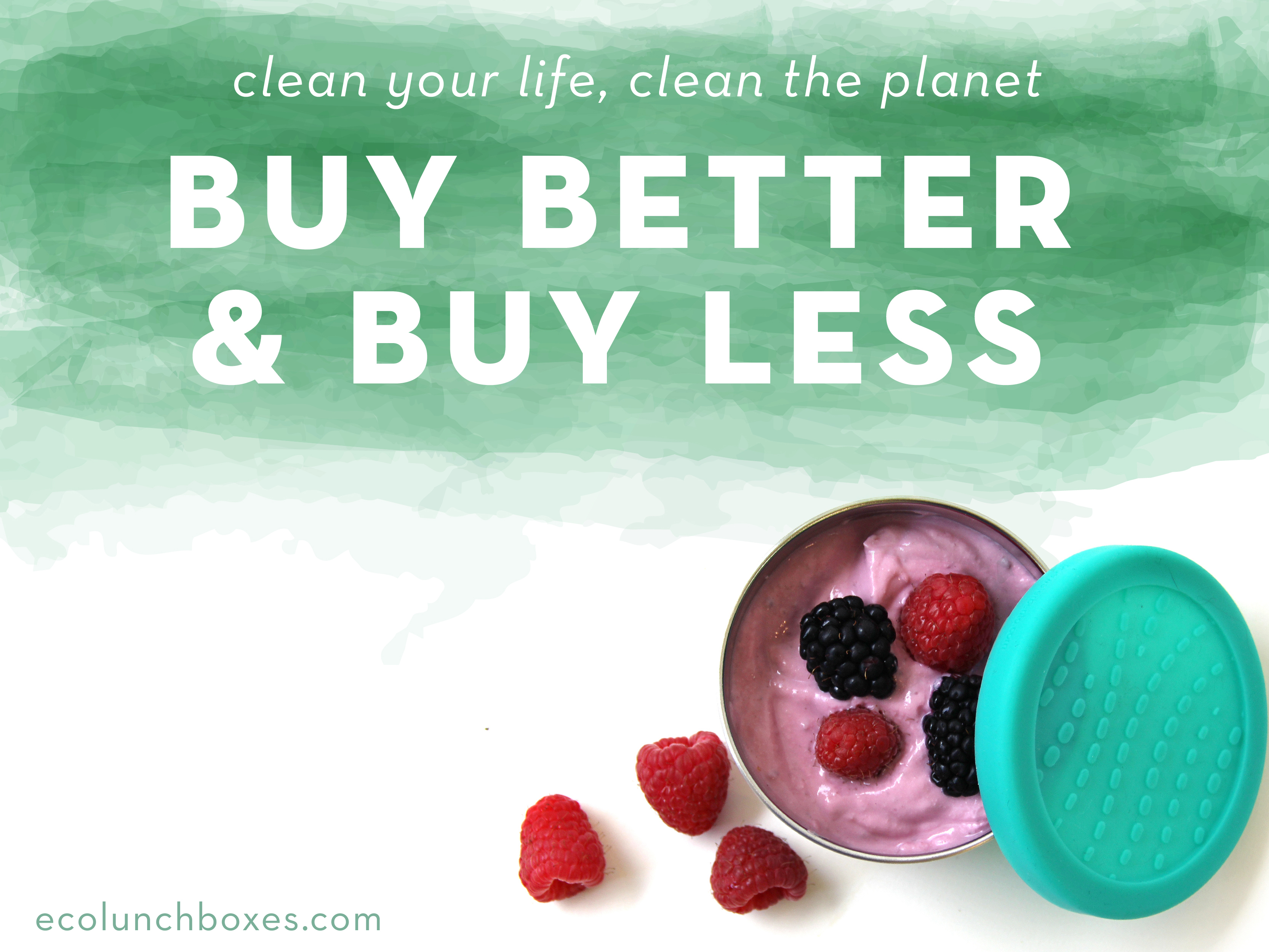
Clean up your life and the planet with ECOlunchbox!
Learn More About the MightyFix One Simple Change Each Month
Share
Pin29
Share
29 Shares
You might also like:

Filed Under: Family Tagged With: Earth Day

Teaching Kids About Healthy Relationships

This blog may contain affiliate links: disclosure.
Please see my suggested resources.

March 4, 2019 By Jennifer Lambert 1 Comment

It begins even before birth.

Those first little twinges, flutters of life inside.

You’re a mother.

And you want to protect her from everything that could ever hurt anyone.

You want to teach him everything you don’t even know.

But how?

With control?

I’m in a lot of online groups for homeschooling and there are always posts asking about the best science or math curricula or how to motivate a crabby tween to complete assignments or how to “de-school” a 4th grader into a homeschool routine.

The concerns are numerous and they are valid and crowdsourcing is the new Google.

But I have different concerns.

How do we have healthy friendships and help our kids navigate friendships in this digital age? How do we teach our kids about healthy sexuality? How do we handle shame?

How do we do any of that when we don’t have any models to follow or mentors of healthy relationships?

How do we rise out of abuse, codependency, narcissism, addiction…to teach our kids about love and kindness?

In light of all the silenced voices who are beginning to roar this past year…I think it’s wonderful and necessary.

I think we need to change our focus.

Instead of (and in addition to) social media posts with #MeToo and #ChurchToo and #AllLivesMatter, accusing and rushing to court…

Why can’t we be more proactive?

What are we doing to teach our kids about healthy relationships?

We’ve often been silent because no one would hear.

Do we want our children silenced or do we want them to realize their voice is important?

There is no time for silence.

I have three daughters and a son. I want all of them to be emotionally and physically healthy. I have to be proactive about teaching them how to have healthy relationships. No one is gonna do that for me. I have to get over my own triggers and hangups to talk to them about the hard topics. I have to talk and teach about bullying, sex, abuse, addiction, mental illness, hate crimes…the things their friends or their friends’ siblings and parents are avoiding or doing to themselves and their families and friends. I don’t want to wait until they experience a negative interaction and don’t know what to do.

My teen daughter has already been bullied and assaulted, harassed and groped. She and her peers think this is just a normal part of growing up.

It shouldn’t be.

She was bullied and assaulted at a military based drama club at age 14.

The mother of the teen boy used all the clichés. “Boys will be boys.” “They’re just children.” “You’re the only one with the problem.” “They should just avoid each other.” Then social media attacks from the boy went on for months. The director and staff did nothing. She quit drama over it.

She’s been groped at school dances she attended with public school friends. It was laughed off.

She’s been harassed at work at age 17, inappropriately touched and spoken to suggestively by adult coworkers. She tells them to stop. She complains to  managers, that they won’t stop. The (female) managers tell her to avoid those men. “Don’t talk to them. Leave the break room if they’re there.” They don’t want more paperwork.

Are you kidding me?

Authorities do nothing or very little to help. Telling makes women the crybaby and tattletale. Many don’t believe us. Too many people ask us what we did to deserve it. We are alienated and isolated, looked at askance. Whispered about behind our backs.

The narrative has to change.

It’s only too obvious to me that many adults don’t know how to have healthy relationships, so they don’t know how to model that or teach it to children.

So we’re dealing with several generations of unhealthy coping mechanisms and dysfunction in families and other relationships.

And it’s getting worse.

Schools don’t teach about healthy relationships.

Elementary schools might have character development lessons and focus on sharing.

Schools probably have a no tolerance anti-bullying rule, but that just makes it much more insidious and dangerous and secret.

High schools don’t teach more than a quarter or semester of “health” and that tends to focus more on monitoring heart rate while exercising, FDA-approved nutrition, and maybe an antiquated abstinence sex ed curriculum.

Churches don’t teach much about healthy relationships.

If anything, too many churches perpetuate abuse cycles and blame victims, shaming those who don’t fit the American societal model of the good Christian, teach parents to harshly and physically discipline their children, and that women and POC or those who are somehow different are inferior and ignorant in a white patriarchal society.

Healthy Relationships

Emotions

Learn and teach that all emotions are valid.

We tend to veer away from negativity and even punish it. This creates unhealthy coping mechanisms and can lead to worse behaviors later on as emotions are stifled and have to find an outlet.

Establishing a secure, strong, loving relationship with parents and caregivers is important.

Feeling accepted and understood by parents helps a child learn how to accept and understand others as he grows.

Many tantrums in babies and toddlers can be avoided.

Deal with the stress. Talk it through. Young kids usually don’t have the language ability or self-control developed yet.

Be the calm you want to see in your child.

1. Power tantrums happens when child hears “no” and he doesn’t know how to respond to that. Simply give him a choice. If he wants to eat ice cream before dinner, tell him that he can eat ice cream after dinner. Tell him why. Give him a choice of 2 different vegetables to choose from at dinner. Limit choices so it’s not overwhelming. Yes, these times can be really hard. Sometimes, they just have to have a stubborn moment to make a difficult decision.

2. Attention tantrums should be mostly ignored. Respond by explaining calmly that you will talk when he is ready to speak nicely. Keep him safe and stay near so he doesn’t feel abandoned. We should model kindness and gentle speaking.

3. Frustration tantrums usually happen when a child cannot do things he wants. For example, my little one used to get frustrated when he couldn’t fit a toy car under the couch or a shape in the correct sized hole in the puzzle. Simply, assure him that you understand why is he upset and ask to show him how to do the task. Don’t do it for him. Offer support.

4. Over-stimulation tantrums occur when young children don’t know how to deal with the feeling of hunger, fatigue, or being overwhelmed. Feed him, put him to sleep, and keep him in a calm place to avoid these tantrums. Be proactive and plan activities around the necessary schedule.

According to John Gottman, children with higher emotional intelligence:

  • deal better with their feelings,
  • calm down faster and recover better from stressful situations,
  • are more understanding and sensitive to other people,
  • make strong, long lasting friendships and intimate relationships,
  • become more confident and successful professionals,
  • are physically healthier,
  • do better in school,
  • have fewer behavior issues, less violence incidents,
  • have less negative feelings and more positive feelings.
  • ARE HEALTHY EMOTIONALLY.

While we (should) eventually outgrow tantrums, we still have the emotions and often unhealthy coping mechanisms from not knowing how or being allowed to express ourselves in a healthy and safe way.

Our American society and church encourages us to stifle negative emotions and always paste on a smile, which is especially a message towards girls.

Empathy

Kids often need to be taught that the world really doesn’t revolve around them. This is an important stage of development. (Some adults haven’t reached this stage yet…)

I’ve found with my four kids, they often teach me empathy. This is their natural predilection.

It’s our job as a parent to model empathy as events become more complicated, gray areas, in our daily interactions.

Usually, toddlers learn to develop real empathy by age 3 or 4.

Begin with language.

“I statements” and validating all feelings are important.

Discuss how it hurts and scares the dog to have his tail pulled. Commiserate with her when she scrapes her knee. Talk about how her friend is sad to have to leave the playdate. The cat doesn’t like sudden, loud noises. Dad is misses her too when he’s at work or deployed.

Use pretend play and role modeling to talk about feelings of others in different circumstances.

Teach and practice proper apology.

Helping Others

If we see someone in need, we must help them. If someone is hurt, we must go to their rescue.

In America, we tend to look the other way. If we help, will we be accused of causing more harm? Will someone misinterpret our assistance? Could we be sued?

In Europe, there are Samaritan Laws and people can be fined or even face jail time if they ignore someone in need.

This idea goes along with empathy. If we can help, we should. We’re always able to go to someone in authority for help if it’s beyond our knowledge or ability.

It’s ok to get angry (or whatever feeling), but it’s never ok to be cruel.

No matter how we’re treated, we must still help others.

Love anyway.

Consent

Teaching about consent begins with babies.

Teach kids that they own their bodies. Asking and explaining what you’re doing from Day 1 with diaper changes, bathing, and clothing is respectful parenting.

Your body is yours. Don’t force kids to hug or kiss anyone. Don’t ridicule if he doesn’t want to high-five or shake hands. Who cares if Auntie Alice or Uncle Bob get offended? They’ll get over it. Kids must feel and stay safe. 

No means NO. No isn’t a game. If no is said, stop the rough-housing. Stop the tickling. Stop whatever it is. No and stop are important words and should be honored. We don’t make light of those words. 

Teach all kids proper body terms instead of slang or baby words.

Don’t be frightened of the word vulva. It is the correct term.

Shaming is silencing.

We don’t use punishment in our house. Spanking teaches that hitting and abuse is ok. We don’t use incentive charts. We don’t use shame.

I sometimes raise my voice, but I apologize if it’s in anger.

Consent is respect. Consent is boundaries.

I always apologize when I am wrong or make a mistake. I must model this healthy attitude.

We’re all human.

Abuse

Bullying is a huge problem. Schools and orgs say they have a zero-tolerance policy but they usually just want to sweep it all under the rug. It’s uncomfortable and the victim is too often blamed.

There’s a societal break when tweens are purposely assaulting classmates with allergens.

Listen and trust what kids are saying and how. Don’t fear everyone, but be alert and aware. If they don’t want to go with someone or take a class or play at someone’s house, find out why.

No “locker room talk” or sex jokes allowed. Once these demeaning ideas abound, it’s harder to get back to healthy ideas.

No ridiculing jokes about race or differences allowed. This should never be tolerated.

Obviously, hitting and physical abuse is a big NO. We’re pacifists and don’t condone physical punishment. Spanking or slapping teaches that abuse is ok.

But many domestic abuse victims tell themselves and think that they’re not abused because “he never hit me.” Abuse comes in many insidious forms – sexual, spiritual, psychological, emotional.

The church has been condoning abuse cycles for decades and this attitude seeps into our society attitudes towards women and minorities, especially.

Control can be a form of abuse.

Hurt people hurt others.

Intuition

Sometimes, you just have a gut feeling that something or someone is not right or safe.

Trust that feeling. 

I’ve often second-guessed that feeling and tried to justify it away. It’s hard when everyone else likes that person or ridicules your worry.

It’s always right.

I have to learn to listen to my intuition and overcome anxiety. I’m learning or relearning to listen to myself after years of being told my intuition is wrong or stupid.

I often ask my husband or eldest daughter about someone, “Is this normal behavior or language or tone?” because I just don’t know sometimes.

I have to address my triggers and heal myself in order to guide my children in this complicated world.

Differences

We have to respect, not just tolerate those with differences. 

There are so many isms.

I am so grateful and proud to see this melting pot of America grow and expand. I am saddened by the hatred and confusion I see in real life and online and in the news.

Our government and church leaders perpetuate these ideas of exclusion instead of leading towards hope and inclusion.

As a middle class white family, we have to be aware of our privilege and how it affects others. 

We have to learn precision of language so we don’t exclude or offend others.

It’s a rocky road towards inclusion. 

We must teach our children how to navigate relationships in a safe and healthy way.

Share
Pin22
Share
22 Shares
You might also like:

Filed Under: Family Tagged With: parenting, relationships

Best Books of 2018

This blog may contain affiliate links: disclosure.
Please see my suggested resources.

January 1, 2019 By Jennifer Lambert Leave a Comment

I read a lot.

Like a lot, a lot.

I can’t remember how many books I read this past year, but I average about 1-2 per week.

I primarily read fiction, self help, theology, education, history, and lots of fun and beautiful books with my kids.

My Favorite Books I Read in 2018

Shameless: A Sexual Reformation by Nadia Bolz-Weber. This book is shattering. Look for my review soon! And preorder your own copy.

Almost Everything: Notes on Hope by Anne Lamott. I love everything she writes. Hope.

Stolen Jesus: An Unconventional Search for the Real Savior by Jami Amerine. Just a fun, true read. I nodded along and highlighted a lot.

Immortal Diamond: The Search for Our True Self by Richard Rohr. I adore everything this man does.

Falling Upward: A Spirituality for the Two Halves of Life by Richard Rohr. Just more of the same. Great.

Feast: True Love in and out of the Kitchen by Hannah Howard. I find myself thinking about this book a lot and our relationship with food.

Love is Stronger than Death by Cynthia Bourgeault. Breaking down walls and experiencing grief in a whole new way.

Leaving Church: A Memoir of Faith by Barbara Brown Taylor. This book helped me grapple with my issues attending church. or not.

Liturgy of the Ordinary: Sacred Practices in Everyday Life by Tish Harrison Warren. I really like the idea of everyday ordinary being sacred.

Future Home of the Living God: A Novel by Louise Erdrich. Brilliant and artful in the style of Margaret Atwood with a Native flair.

What have you been reading?

Share
Pin16
Share
16 Shares
You might also like:

Filed Under: Family Tagged With: book list

Stop Saying Sorry

This blog may contain affiliate links: disclosure.
Please see my suggested resources.

December 17, 2018 By Jennifer Lambert 17 Comments

Do you find yourself saying sorry all the time?

Do you feel guilty, ashamed, or blamed for things beyond your control?

Research shows women apologize more frequently than men.

Saying sorry all the time can be a sign of anxiety, OCD, or abuse.

Saying sorry too often affects our relationships.

Girls constantly receive mixed messages:

  • Be confident, but not conceited
  • Be smart, but no one likes a know-it-all
  • Ambition is good, but trying too hard is bad
  • Be assertive, but only if it doesn’t upset anyone else

What are we teaching our children (and especially our daughters) when we say sorry all the time?

When an apology is warranted, of course it should be offered, but acting a victim and saying sorry for instances outside our control isn’t healthy.

There’s a big difference between a real apology and just saying sorry.

I am raising servant leaders and precision of language is important. We’re respectful but unapologetic when we express our needs.

I don’t want my kids to feel they have to be sorry for being who they are.

Stop Saying Sorry

Stop Saying Sorry…

Stop saying sorry for emotions.

Don’t say sorry for being sensitive, emotional, or passionate.

Stop saying sorry for getting angry.

Stop saying sorry about asking for help.

Stop saying sorry about speaking your mind.

Stop saying sorry for your past.

Stop saying sorry for telling the truth.

Stop saying sorry for being successful.

Feel.

Love.

Emote.

Express.

Be emotionally intelligent.

Stop saying sorry at home.

My house is messy and I won’t be sorry for it since we live here – all day, every day.

I don’t say sorry for asking my spouse or kids to contribute to our household care and cleaning.

I changed my language to be assertive and express my needs.

I am polite but firm when I request the dishwasher unloaded or laundry put away. I can’t and won’t do it all when we all must work together for a smooth-running household.

I stopped saying sorry for needing “me time.” Self-care is important and as an introvert, I need more alone time than the rest of my family members.

Stop saying sorry at church.

Sorry seems to be a very churchy word.

It doesn’t have to be. Change the narrative.

Empathize without using the word sorry.

When we hear bad news, we often automatically say, “I’m sorry.” We express sorrow and sympathy the way we have been conditioned. But we could use better precision of language than saying sorry for things totally beyond our control. When people confide bad news, by all means I sympathize and empathize, but I don’t have to apologize for it unless it is truly my fault.

I can tell someone that I understand (if I really do.) I can say, “That’s unfortunate.” or “That sucks.” Most people don’t want advice or to hear if I’m sorry; they just want me to listen.

When people ask me for something I can’t or don’t want to do, I don’t have to say a sorry no. No means no. I don’t have to offer an apology or explanation. I protect myself and my time.

Stop saying sorry socially.

As a large homeschooling family, we could do so many activities and attend so many field trips and classes, and get so over-involved – and never be home.

No means no. I am very careful about our time and how much we’re involved in. I say no often and unapologetically. I don’t have to offer reasons to anyone.

It’s easier to say no and change to a yes later than the other way around. People don’t handle disappointment well.

When my kids have a scheduling conflict, we all have to compromise. Someone has to arrive early or get picked up late so we all get to where we need to be.

Stop saying sorry at work.

Stop saying sorry for taking time to respond or to do a job well.

Stop saying sorry, even if you’re at fault for a mistake. Use better and more positive language.

I found myself saying “sorry” a lot, even for small errors or something that was completely out of my control, so turning regret into gratitude really helps. Not to mention keeps everything professional, neutral, and not off emotion. ~Maya

Alternatives to Saying Sorry at Work:

  • Thanks for flagging!
  • Good catch! I will make the updates/changes.
  • Many thanks for noticing the error, [name], we will [verb].
  • Thank you for bringing this to our attention. We will [verb].
  • Thank you for clarifying.
  • Thanks for the nudge! (If you missed a previous email)
  • We appreciate your inputs; moving forward, we will [verb].
  • Thank you for your feedback; we will incorporate this into our process.

I used to get all prickly and sweaty and my stomach was in knots when I got emails citing any mistake, even if it wasn’t my fault. I recently tried this out in work emails a couple times and it worked like a charm! I feel more in control and not at all anxious. And I got lovely “thank you” replies from my colleagues.

And never, ever say sorry for asking for payment for your work. Bloggers, artists, and other creators should be compensated for their time and work.

Don’t make the kids say they’re sorry.

We’ve all been there. Maybe we’ve done this.

Kids do something thoughtless or even mean.

We expect them to be and say “sorry.” We want to teach manners and social acceptance.

Making kids say they’re sorry doesn’t teach them anything.

Making kids say they’re sorry is more about us than them.

What to do instead of making kids say they’re sorry?

  • Role model.
  • Affirm feelings.
  • Offer choices.
  • Let them work it out on their own.

Kids often empathize better than adults can. We can learn from them!

Sorry is an overused word and doesn’t even mean what it should most of the time.

I’m a firm believer of saying what you mean and meaning what you say.

How often do you say sorry when you don’t have to?

Share
Pin41
Share
41 Shares
You might also like:

Filed Under: Family Tagged With: apology, relationships

Discouraged

This blog may contain affiliate links: disclosure.
Please see my suggested resources.

October 30, 2018 By Jennifer Lambert Leave a Comment

I can’t stop my tears this week.

It’s October but I feel like it’s February in my soul.

It’s been a busy week. I finally made it to grocery store at dinnertime on a Saturday night. Completely out of milk and bread. This is the epitome of domestic bliss, right? Saturday night grocery shopping, alone.

They’ve rearranged and updated the store over the last month or so. I still can’t find anything and I used to have the store memorized and my list according to aisle. I wandered around the store three times before I found the bread aisle. I was hungry and exhausted and I needed to get home to make dinner.

I cried in the bread aisle at Kroger, y’all.

No witnesses.

They’ve been out of our favorite brand of bread for over two weeks, at multiple stores. There was a preschooler having a four alarm full-blown on the floor tantrum an aisle over that echoed throughout the store, and I felt a spirit bond with her.

It was like the final straw for me this week. I just lost it in the face of so much hate, evil, and sorrow happening in the world, in our country, in our cities, in our churches. It’s overwhelming at times.

I feel so useless just going through the motions of mothering, homeschooling, housework, taxi service to the kids. Barely blogging, working just a little from home, trying to help with little tidbits where I can. Finding projects that I can do. Cutting costs, trying to save wherever to pay off debts more quickly.

My eldest just turned eighteen years old. So much potential and the scary world all wide open before her. She’s more mature, capable, honest, and confident than I was…like a year ago.

What have I done? What do I have to show for eighteen years?

I want to do so much more.

Discouraged

Earlier, I cried when my middle daughter carved her brother’s jack o’lantern. I am ashamed that I didn’t, couldn’t. She is an artist and oh, so capable. She runs circles around me with her abilities and energy and strength.

Today, I cried when my son dusted the entire house because he saw it needed it. They canceled his last baseball game of the season due to bad weather. His always cheerful attitude slays me. I’m more disappointed than he will ever be.

My youngest daughter’s drawing artwork chokes me up with her talent and abilities. What will she do in the future? She is fearless.

My children are better than I am.

And that’s how it should be, what I want for them.

I’ve cried every day recently, multiple times a day, about what I see in the news and on social media – the fear, hatred, evil, sorrow…but also so much kindness, joy, hope, love.

Let us love. Let us be kind.

May we have hope.

Share
Pin14
Share
14 Shares
You might also like:

Filed Under: Family Tagged With: growth

Eighteen

This blog may contain affiliate links: disclosure.
Please see my suggested resources.

October 14, 2018 By Jennifer Lambert Leave a Comment

18.

My baby is 18 now.

An official adult.

In America, this means you can vote! and buy tobacco products (don’t). You’re still treated like a child, but expected to be mature beyond your experience.

In Europe, you could buy liquor or we could have a cocktail together in a pub.

You still don’t have your driver’s license and that’s ok. I try not to push you to do anything until you’re ready.

I know how stubborn you can be.

You’re my first baby, and I did a lot of things wrong.

I hardly felt grown myself when I had you.

I was anxious about the silly things and screwed up some important things. I was too strict in the beginning. I yelled and hit. I was childish and mean.

Then I began to understand.

You’re the reason I’ve done everything.

I pulled myself out of emotional, financial, and relationship pits for you.

We homeschooled for you.

You were my anchor.

It’s a lot of responsibility for a child’s shoulders to bear.

I have lots of regrets and apologies. I’ve tried to always be honest with you, even when I’m ashamed.

I know growing up can be scary. I know there are so many difficult decisions. Sometimes, I get scared for you. It seems that life throws lots of curveballs within just a few years and it seems like you have to make all the right decisions superfast or you will fail miserably. I feel anxiety but you have to learn and make your own way. If I catch you all the time, you won’t be able to march on. Comparing yourself to others makes it worse. I know it seems like others have it made and it looks so easy for them. I know it’s lonely. Even if you make a wrong decision (like I made so, so many), you will still eventually succeed. Your success might look different than you imagine. You can always make amends, changes, u-turns. Hearts heal. You can change your major. You can get a different job. Relationships come and go.

Life hurts.

You are resilient and strong.

I am so proud of you.

What I pray for you now that you’re spreading your wings:

Voice

I love that you know who you are. I am just figuring that out for myself.

I’m learning to listen better.

I love that you’re assertive and have opinions, even when we disagree.

I love who you are as a big sister. Thank you for caring so much.

I admire your wit.

Be careful on social media.

Be kind.

Maintain integrity in everything.

Use your voice to lift up others and make a difference. I believe you can change the world for better.

Self-Care

Learn what your body needs for health.

Yes, it really does help to go outside and enjoy nature – in every kind of weather.

Drink lots of water. It helps flush out toxins and makes you feel better. Honest.

Eat well and regularly. It regulates your metabolism. You will thank me when you’re 35.

Take time for yourself to heal and recover. But make sure you get back out there.

Safety

I still worry.

I still want to know where you are and who you’re with.

I will always be concerned.

I hope you never have to utilize those skills you learned in that 2-hour self-defense class.

I know I can’t keep you safe like I could when you were little, but I hope you’re always aware of your surroundings.

Finances

We’ve tried really hard to stay debt-free. We’ve had our ups and downs.

I want you to have a better beginning, with no student loan debt. No car loan.

Debt can be crippling to recover from.

Credit cards are not for regular use, but only for emergencies.

Start saving for wants and emergencies as soon as you can.

Money is a tool like any other.

I pray we’ve given you a great beginning.

“Intelligence plus character—that is the goal of true education.” ~Martin Luther King Jr.

“Now go, and make interesting mistakes, make amazing mistakes, make glorious and fantastic mistakes. Break rules. Leave the world more interesting for you being here. Make good art.” ~Neil Gaiman

While we have few milestones or coming of age rituals in the USA, I hope I made your birthdays and life events special.

This is 18 Around the World.

What seems to emerge after the trials of the fifteen/sixteen change is a calmer, more self-assured young person.  They don’t need to talk about everything anymore.  They are trying to handle things themselves in a more self-contained way than ever before.  They are preparing for their own life where they must stand on their own two feet.  Parents often are not sure how much to intervene or offer help at this stage.

The Parenting Passageway

You might also like:

  • Thirteen
  • Sixteen
  • Ten
Share
Pin18
Share
18 Shares
You might also like:

Filed Under: Family Tagged With: college, development, high school, parenting, teen

Favorite Halloween Movies

This blog may contain affiliate links: disclosure.
Please see my suggested resources.

October 11, 2018 By Jennifer Lambert 11 Comments

Halloween was always my favorite holiday when I was younger.

I love fall.

Autumn is the new year for many cultures, so maybe that’s why my soul has a yearning for new things.

I love hiking in the woods and smelling the detritus and viewing the splendor of the leaves as they pass away. Theirs is a most glorious death.

There is something magical about that crushed leaf smell on the breeze and the cool mornings with warm sunny afternoons. I love seeing pumpkins on porches. I love lighting candles as the nights begin earlier and earlier.

And the mosquitoes are gone.

Now that my girls are older, they can watch some scary movies with me. We watch certain movies for the pop culture references, film history, and to discuss how these movies portray folklore, historical circumstances, and mental illness.

I don’t like movies about possession. A lot of the modern films make me nervous. I prefer the classics before CGI.

And I still love the sweet kids’ classics that the whole family can watch together.

Favorite Halloween Movies

20 Favorite Family Friendly Halloween Movies

  1. Hocus Pocus

    “It’s a full moon tonight. That’s when all the weirdos are out.”

  2. Ernest Scared Stupid

    If you don’t love Ernest, we can’t be friends.

  3. The Addams Family

    “Are they made from real Girl Scouts?”

  4. It’s the Great Pumpkin, Charlie Brown

    “There are three things I’ve learned never to discuss with people: religion, politics, and the Great Pumpkin.”

  5. Beetlejuice

  6. Practical Magic

    Always down for some midnight margaritas!

  7. Corpse Bride

    Honestly, anything and everything by Tim Burton, please.

  8. Ghostbusters

    “There is no Dana, only Zuul!”
    The new one is good too.

  9. The Haunted Mansion

    Eddie Murphy, y’all.

  10. Harry Potter series

    Perfect time of year for a movie marathon.

  11. Coco

    Such a sweet film and teaches about Mexican culture.

  12. Song of the Sea

    The sweetest Irish story and great animation and music.

  13. Hotel Transylvania series

    “I do not say blah blah blah!”

  14. Ella Enchanted

    Loads of fun!

  15. The Karate Kid

    It takes place at Halloween, ok?

  16. Spirited Away

    A sweet metaphorical story.

  17. Halloweentown

  18. Wallace & Gromit: The Curse of the Were-Rabbit

    We love anything Wallace & Gromit!

  19. Mr. Magorium’s Wonder Emporium

    Magic and a great cast!

  20. E.T. The Extra-Terrestrial

    The first movie I saw in the theatre!

There are other great movies too, but I had to keep my lists concise.

What’s your favorite Halloween movie?

Share
Pin39
Share
39 Shares
You might also like:

Filed Under: Family Tagged With: Halloween, movies

How To Talk To Your Kids About Divorce

This blog may contain affiliate links: disclosure.
Please see my suggested resources.

August 23, 2018 By Jennifer Lambert Leave a Comment

How To Talk To Your Kids About Divorce: 5 Tips

Divorce can be a traumatic event for every member of the family.

When a marriage ends, it can affect everyone differently, but it may have an especially significant impact on your kids. Some experts believe that divorce can have a lifelong impact on children, and others believe support and understanding is the key to helping them through the crisis.

If you and your spouse are preparing to divorce, there are a few different strategies you can use to talk to your kids in a way that may help them understand.

1.    Do Not Wait

If you and your spouse have decided that divorce is the only option, then it is a good idea to discuss it with your children as soon as possible. Putting it off only delays the inevitable, and the sooner they are aware of the situation, the more time they have to ask questions. If possible, schedule a time where you and your spouse can speak to them together, so they understand both their parents are there for them.

2.    Be Concise

Cutting back on details about your divorce can be especially helpful when you are dealing with younger kids between the ages of five to eight. Explain briefly what divorce means and how it will change your family. If the child questions why you are splitting, you can simply explain that you and your spouse are no longer happy and that it affects the happiness of the entire family.

It is important to consider the different ages of your kids when discussing divorce. Preteens and teenagers may experience a variety of emotions, from self-blame to anger at you and your spouse. Do all you can to reassure them the divorce is about your relationship with your partner, not them or their siblings, and that your love for them has not changed.

3.    Do Not Project Your Feelings

While it is normal for you and your children to be upset when discussing a divorce, remember that this is not the time to vent your feelings of anger, disappointment, and fear or to project them onto your kids. They will no doubt be dealing with some very powerful emotions themselves, so while it may be difficult, try to put aside what you feel, avoid belittling or verbally bashing your spouse, and try to give your children the support they are going to need.

4.    Seek Legal Advice Beforehand

Consulting a legal firm that has experience with family law, such as Cordell & Cordell, can provide you with the information you need before you talk to your kids. For example, a knowledgeable lawyer will likely be able to help you work out custody details and offer wise advice so you can answer your kids’ questions with more confidence. This may also help your children feel a bit more at ease.

5.    Do Not Make Kids Choose

Putting older kids in the middle of your divorce can make them feel anxious, tense, and angry. If there is a question of custody, it is important that you work it out with your spouse instead of making the children choose who they would rather live with. This can cause them to feel pressured and as if the other parent might not love them anymore because of their choice.

Forcing your kids to make choices about your divorce can cause them great mental stress. Instead, make an effort to consult a local family firm like Cordell & Cordell, which has offices in many states and can help you make the best choices about custody so your kids do not have to.

Divorce can be rough on every member of the family, but none so much as your kids. However, even if it is your only option, honesty and offering loving support can help them endure.


Share
Pin
Share
0 Shares
You might also like:

Filed Under: Family Tagged With: divorce, Marriage, mental health

12 Bullying Warning Signs

This blog may contain affiliate links: disclosure.
Please see my suggested resources.

July 16, 2018 By Jennifer Lambert Leave a Comment

When kids head back to school these days they face some big stressors in addition to homework grades and peer pressure.

Concerns about bullying and its relationship to school violence add another layer of stress.

More than 43% of teens report being bullied online; additionally, teens are more than twice as likely to tell their peers about bullying than they are to tell parents or other adults, one study found.

Victims of bullying and other early trauma often carry emotional scars into adulthood, Dr. Nelson, author of the bestselling book The Emotion Code explains in this short video.

12 bullying warning signs parents should watch for:

  1. Emotional upset, anxiety, and depression.
  2. Frequent headaches and stomach aches.
  3. Faking illness.
  4. Unexplainable injuries.
  5. Changes in eating habits.
  6. Poor sleep / frequent nightmares.
  7. A drop in school performance.
  8. Not wanting to go to school.
  9. Sudden loss of friends.
  10. Avoidance of social situations.
  11. Low self-esteem.
  12. Self-destructive behaviors including self-harm, running away, or talking about suicide.

If you were bullied when you were younger, the reason you freeze at genuine compliments is because fake compliments were a prelude to an attack.

Many kids who are victimized by bullying don’t ask for help because they are afraid of being seen as weak or a tattletale, or fear backlash from the bully or rejection by friends. As a result, parents are often the last ones to know.

Take necessary action with the school and/or the bullies’ parents to assure the child’s safety. Help the child to know that he or she is valued and that it is safe to communicate with you as a parent or a counselor.

Dr. Nelson explains why some kids become bullies and others can become targets of bullying. He can share how parents can talk with their children to uncover and heal the emotional trauma of bullying, as well as other steps and when to take them.

A holistic Chiropractic Physician and Medical Intuitive, Dr. Bradley Nelson is one of the world’s foremost experts in the emerging fields of Bioenergetic Medicine and Energy Psychology. He has certified thousands of practitioners worldwide in helping people overcome unresolved anger, depression, anxiety, loneliness, and other negative emotions and their associated physical symptoms. His bestselling book The Emotion Code provides step-by-step instructions for working with the body’s healing power. Download a free copy of the eBook and the audiobook by visiting www.EmotionCodeGift.com.

Share
Pin25
Share
25 Shares
You might also like:

Filed Under: Family Tagged With: antibullying, mental health, teen

  • « Previous Page
  • 1
  • …
  • 7
  • 8
  • 9
  • 10
  • 11
  • …
  • 18
  • Next Page »
Suggested ResourcesCheckout 51

Archives

Popular Posts

10 DIY Gifts with Essential Oils10 DIY Gifts with Essential Oils
Natural Remedies for HeadacheNatural Remedies for Headache
10 Natural Remedies to Keep on Hand10 Natural Remedies to Keep on Hand
Henna Hands CraftHenna Hands Craft
Homemade Turkey Divan CasseroleHomemade Turkey Divan Casserole
This website uses cookies to improve your experience. We'll assume you're ok with this, but you can opt-out if you wish.Accept Reject Read More
Privacy & Cookies Policy

Privacy Overview

This website uses cookies to improve your experience while you navigate through the website. Out of these, the cookies that are categorized as necessary are stored on your browser as they are essential for the working of basic functionalities of the website. We also use third-party cookies that help us analyze and understand how you use this website. These cookies will be stored in your browser only with your consent. You also have the option to opt-out of these cookies. But opting out of some of these cookies may affect your browsing experience.
Necessary
Always Enabled
Necessary cookies are absolutely essential for the website to function properly. This category only includes cookies that ensures basic functionalities and security features of the website. These cookies do not store any personal information.
Non-necessary
Any cookies that may not be particularly necessary for the website to function and is used specifically to collect user personal data via analytics, ads, other embedded contents are termed as non-necessary cookies. It is mandatory to procure user consent prior to running these cookies on your website.
SAVE & ACCEPT