Jennifer Lambert

A Sacred Balance

Visit Us On FacebookVisit Us On PinterestVisit Us On InstagramVisit Us On Linkedin
  • Homeschool
    • Book Lists
    • How Do We Do That?
    • Notebooking
    • Subjects and Styles
    • Unit Studies
  • Travel
    • Europe
      • Benelux
      • France
      • Germany
      • Greece
      • Ireland
      • Italy
      • London
      • Porto
      • Prague
    • USA
      • Chicago
      • Georgia
      • Hawaii
      • Ohio
      • Utah
      • Yellowstone and Teton
  • Family
    • Celebrations
    • Frugal
  • Military Life
    • Deployment
    • PCS
  • Health
    • Recipes
    • Essential Oils
    • Fitness
    • Mental Health
    • Natural Living
    • Natural Beauty
  • Faith
  • About Me
    • Favorite Resources
    • Advertising and Sponsorship
    • Policies
  • Reviews

© 2025Jennifer Lambert · Copyright · Disclosure · Privacy · Ad

Prioritizing Rest

This blog may contain affiliate links: disclosure.
Please see my suggested resources.

August 2, 2021 By Jennifer Lambert 7 Comments

This last year or so has highlighted so much that is wrong about our individualist society. I grew up with the message that I should work more, harder…push…bigger, better, faster, more. Even to the point of collapse. Mental health be damned. Just push through physical exhaustion or illness. The prosperity gospel perpetuates this mindset – just fake it ’til you make it. It’s dangerous and wrong.

We have witnessed some privileged rich and famous people taking breaks and stepping away from the limelight to protect themselves and set boundaries. It’s a great thing to see them modeling health for the rest of us, but if we as a society cannot allow for rest, it just spotlights the problems even more. We pride ourselves on our self-reliance and grit to our detriment.

Naysayers (and even I at times) wonder at what point do we push on with courage in the face of fear and adversity or just quit? When do we know what to do? Most of us don’t have that luxury – paid time off, savings for vacations, help with responsibilities.

How many people feel trapped by their circumstances and cannot or refuse to rest or quit? We see so much depression, anxiety, disordered eating, and more. What will it take to wake up and make systemic changes?

We live in a rat race society. I refuse to succumb to the hustle.

We have had seasons of rushing and I didn’t like it. We tried to fit in and do all the things – signing our kids up for every activity, volunteering for everything at church, doing, going, hurrying. I didn’t feel safe or content and I think our health suffered with the added stress.

I had to learn how to say no. And NO. is a complete sentence. I had to learn how to discern what we should and could do with our time, protecting our rest, limiting ourselves to what felt safe and sure.

Thankfully, we are in a season we are able to get enough sleep and rest. I don’t have to stay busy all the time.

My youngest is eleven. I remember the days when he was a baby and toddler and seemed never to sleep. I don’t really miss those times. I love having big kids and teens.

How we rest

I wake up naturally most mornings. I don’t like alarms. I don’t like to be rushed. I don’t think success is waking up before dawn, unless that’s natural and normal for someone. I don’t function well in the early morning.

I don’t make appointments for mornings if I can help it.

During summer, my kids each choose a camp realizing they have to plan to go to bed and wake up earlier to get ready.

Every morning, I refill the bird feeders and I sit on my deck with my tea and our two cats, watching the birds and damselflies. I inspect my garden for new blooms and ripe tomatoes. I love birds and gardening.

I make a hot breakfast for my three kids who live at home every weekday morning. My husband has weekend duty.

Most months, the kids and I do read alouds after breakfast.

The kids usually watch Netflix with their lunch of leftovers or homemade ramen.

Afternoons are usually carefree and easy. The kids work on science, history writing, arts and crafts, hiking and exploring, bug watching, reading, baking. I read or clean or run errands. We sometimes go to the library or a park. I try to schedule appointments in the afternoons – dentist, orthodontist, therapy, doctor, vision. My kids are now old enough that they can stay home alone for a couple hours so I can go by myself to my own appointments or just take the one child to their appointment. I don’t like rushing, so I leave with plenty of time to arrive safely without feeling anxious.

The kids have classes a few evenings a week. One does aerial gymnastics twice a week. One has art classes and ice skating. One plays elite baseball.

We try to have dinner together every night. Occasionally, we eat while watching a TV show and Fridays are usually homemade pizza and movie nights. Some nights are difficult to plan, with art, gymnastics, if my son has a baseball game or practice. I don’t like rushed meals. I don’t like having two dinnertimes. We try to have an early dinner (preferable) or a later dinner to accommodate these evenings. Often, on nights we don’t have activities, we go for a walk after dinner or play cards or board games.

While the kids don’t have a specific bedtime, I encourage winding down and getting in bed by about ten at night. I know this is when our bodies are ready for sleep. I feel the natural melatonin kicking in and my body temp lowers and I get sleepy. I teach my kids to listen to their bodies. We try to limit devices and screens before bed, plugging them in outside bedrooms, and turn off the WIFI at bedtime. We prioritize sleep so our kids grow well and perform at their best.

We worked hard to get here, to this place of peace and rest.

9 Types of Rest

  1. time away
  2. permission to not be helpful
  3. something ‘“unproductive”
  4. connection to art and nature
  5. solitude to recharge
  6. a break from responsibility
  7. stillness to decompress
  8. safe space
  9. alone time at home

Resting is doing.

I am not about that capitalist grind. I don’t have a home business. I am not that boss mom or whatever. I realize how incredibly privileged I am to stay home as a mom and teacher. We have worked hard to get to this place.

I am introverted and highly sensitive. I don’t enjoy being busy. I don’t enjoy crowds or excessive noise.

I protect my kids’ time and childhood. We don’t overschedule. I want them to have lots of time to play instead of every moment of their day filled with programs.

I refuse to push my kids with their academics or make them hate their passions and hobbies by attempting entrepreneurship. They have freedom in our homeschool to explore and go at their own pace. They choose to take classes for art or sports or new activities with spaces and tools we don’t have in our home. We are in a place where my young teens can choose to do volunteer work for experience if they desire – since they legally cannot work yet. I don’t think that older teens or young adults should waste their time with unpaid work. Their time is valuable too and they should be paid for work.

My son chooses to do elite baseball and while I am so proud of him and his growth with the sport, I am not thrilled with missed or delayed meals or rushing to pack healthy portable snacks for games in the middle of breakfast, lunch, or dinner. I have stressed about games far from home and how my son will eat if there isn’t a grocery store nearby for me to acquire healthy choices. We observe with dismay the families who choose to eat greasy fast food during game breaks and then their boys play poorly and sluggishly. There are times when my husband has to take our son to practices or games and I have to take another of our children to a class or appointment. I can’t be everywhere at once.

My middle kids are in high school and I refuse to stress them out with tests, driving lessons, college prep, part time jobs, or volunteering. I offer them opportunities so they can make choices. I coach and guide and answer questions. I do so much research. I am constantly telling my kids to protect their time. I teach them to say no and manage their schedules wisely. There will be time enough for them to stress later. I don’t want to add any anxiety.

My eldest is on her own and I am sad for her hustle to survive and trying to be healthy and happy. Good paying jobs with a healthy work environment are scarce and having a certificate or college degree is no guarantee of insurance, competitive pay, or decent treatment.

I limit my interaction and time on social media. I encourage my kids to be careful online and protect their time. I am impressed that they can and do often walk away often to pursue other interests.

I love that my kids still like exploring and hiking in the woods, playing in the creek, biking, roller blading, skateboarding. They’re often the only kids I ever see outside. They ask to play cards or board games after dinner. They play Legos and Wii and Switch together if the weather is too much.

Fitness and exercise seems even to be stressful for many people. I refuse to overwork myself. I love programs that are short and intense and I do see results. Every evening after dinner, I walk about 45 minutes around this little pond park about a half mile from our house. It’s peaceful and I enjoy seeing the waterfowl, bunnies, sometimes deer or horned owls, even a coyote.

I take a bubble bath with Epsom salts every night before bed. I have chamomile tea and read or watch a show. This is my alone time and I protect it.

I still read a story to my son every night at bedtime. Then I usually read an eBook until I can’t see the words anymore and fall asleep. Screens before bed aren’t recommended. I turn off the blue light with settings and I haven’t noticed any problems.

How prioritizing rest helps:

  • Better digestion
  • Better nighttime sleep
  • General contentedness
  • Less stress
  • Time for exercise
  • Peace
  • Less forgetfulness
  • Less anxiety
  • Less clutter
  • Deeper relationships
  • Time for spontaneity
  • Creativity
  • Better immunity

It’s important we model rest for our children so they have better health. We don’t have to hustle like everyone else.

Resources:

  • The Comfort Book by Matt Haig
  • Why We Can’t Sleep: Women’s New Midlife Crisis by Ada Calhoun
  • Liturgy of the Ordinary: Sacred Practices in Everyday Life by Tish Warren
  • Learning to Pray: A Guide for Everyone by James Martin
  • The Long Night: Readings and Stories to Help You through Depression by Jessica Kantrowitz 
  • Sacred Rhythms: Arranging Our Lives for Spiritual Transformation by Ruth Haley Barton 
  • Motherwhelmed: Challenging Norms, Untangling Truths, and Restoring Our Worth to the World by Beth Berry
  • To Hell with the Hustle: Reclaiming Your Life in an Overworked, Overspent, and Overconnected World by Jefferson Bethke
  • Why We Sleep: Unlocking the Power of Sleep and Dreams by Matthew Walker
  • Amusing Ourselves to Death: Public Discourse in the Age of Show Business by Neil Postman
  • Rest: Why You Get More Done When You Work Less by Alex Soojung-Kim Pang
  • Sacred Pauses: Spiritual Practices for Personal Renewal by April Yamaski
  • Wintering: The Power of Rest and Retreat in Difficult Times by Katherine May
  • Finding Spiritual Whitespace: Awakening Your Soul To Rest by Bonnie Gray
  • Sabbath: Finding Rest, Renewal, and Delight in Our Busy Lives by Wayne Muller
  • The Nap Ministry

How do you prioritize rest?

Linking up: Grammy’s Grid, Pinch of Joy, Random Musings, Anita Ojeda, April Harris, Mostly Blogging, Suburbia, House on Silverado, Stroll Thru Life, LouLou Girls, InstaEncouragements, Shelbee on the Edge, Jenerally Informed, OMHG, Blue Sky at Home, Anchored Abode, Life Abundant, Fluster Buster, Ginger Snap, Ridge Haven Homestead, Girlish Whims, Ducks in a Row, Penny’s Passion, Try it Like it, Artful Mom, Debbie Kitterman, Slices of Life, Embracing Unexpected, Modern Monticello, Fiesta Friday, Answer is Choco, Momfessionals, Hubbard Home, CWJ, Create with Joy, Being a Wordsmith, Pieced Pastimes, Pam’s Party, Simply Sweet Home

Share
Pin28
Share
28 Shares
You might also like:

Filed Under: Family Tagged With: health, mental health

Tending Our Garden

This blog may contain affiliate links: disclosure.
Please see my suggested resources.

April 26, 2021 By Jennifer Lambert 11 Comments

We have had so many gardens over the years.

We have moved six times during our marriage. It does put a lot of stress on a family to start over so many times.

We tried to grow at every home where we ever lived. Some gardens were tiny and some were spacious. Some struggled and some thrived.

I like to think of our gardens as symbolic of our family – when we struggled and when we thrived in our relationships with each other.

Like gardens, relationships need the right conditions. There were bad weather and seasons, rocky or sandy soil. When we spent time, effort, and money on the gardens and our lives, we all grew.

My first little house that I bought myself in Georgia, I had begun to grow roses and flowers and some herbs.

I had to go through boxes of photographs since this is before digital cameras. Ah, the memories!

I loved birds even then and had feeders at the window. I was sad to have to sell this house and if I could go back, I would keep it and rent it out.

Our first little herb garden at our first rental home as a small blended family, in San Antonio, after we PCSed the very first time. We later grew some veggies for the first time. It was fun for our first homeschool year.

When we PCSed to Hawaii for three years, we lived on base and were not allowed to have a garden or change the landscape. We still grew and discovered what and who we wanted to be. We were surrounded by lush green and flowers and we enjoyed it all.

Our largest garden at our rental house in Utah where we grew lots of veggies and had a grape vine along the fence.

The whole family really worked hard in Utah on our garden. We enjoyed having fresh food that we grew ourselves. The kids would be so excited to help and harvest. We preserved, canned, and dried since we produced so much. We lived there four years and were just getting comfortable when we had to move again.

We used containers to grow herbs and veggies with our teeny tiny back yard in Germany. Even with the gorgeous food surrounding us in Europe and a fun little market right at our doorstep, we still yearned to grow our own.

Our baby garden when we rented our current house, that we just bought a year ago. We just had peas and lettuces and green beans. The radishes and carrots didn’t quite take. And I always have herbs.

We just celebrated our house-iversary. We bought our home one year ago!

It’s not perfect, but in many ways, it’s the best we’ve ever had and could ever hope for. While I always wanted more than mediocre suburbia for my kids, we have settled here for reasons. Sometimes, we dream of a hobby farm, but it’s just not feasible and I don’t see it ever happening.

The first thing we did after we signed the mortgage papers, was to have all the walnut trees cut down. It opened up our backyard and we don’t have to wear hard hats on the deck or worry about being pummeled by baseball-sized walnuts anymore.

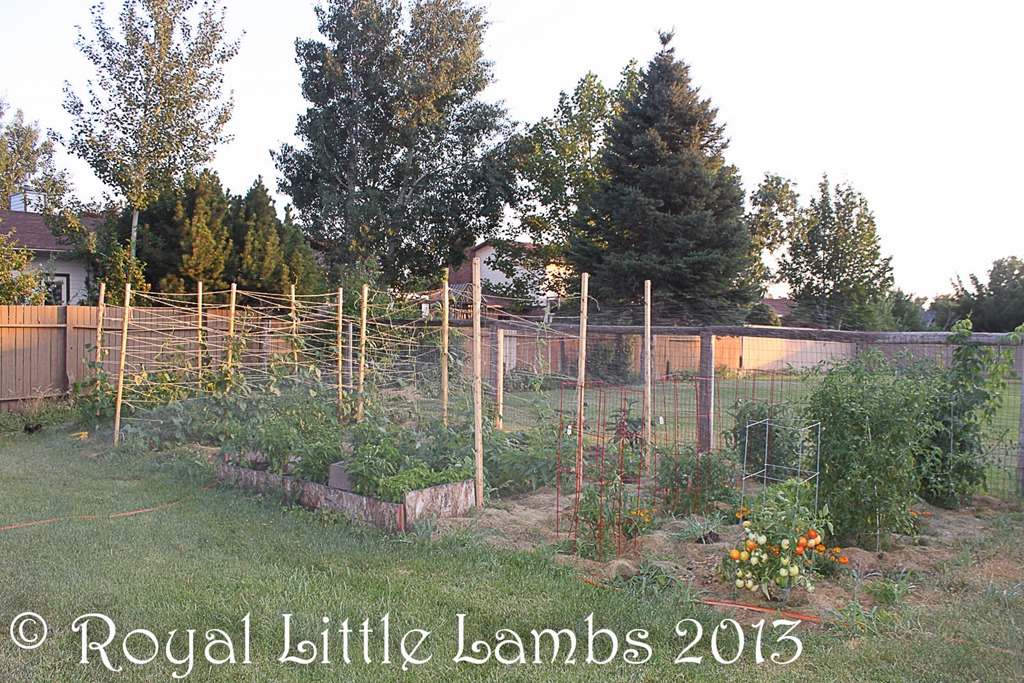
We conditioned the soil and planned a little victory garden. We just planted early veggies – peas, lettuces, onions, potatoes, carrots, radishes, asparagus. We have spots ready to plant tomatoes, green beans, cucumbers, squash when it’s warmer. We also planted two raspberry bushes.

While most of these plants will be ready to harvest in a month or so, the asparagus won’t be ready for about three years. It takes patience and planning.

We’ve never been settled in a place long enough to plan that far ahead.

It’s so exciting to finally realize this is all ours and we can update or change anything. I have to take a deep breath and let it all sink in.

I love planning and planting flowers. My herb garden is thriving. I’m a member of a local online gardening group that is just lovely. I just started my rose garden and I can’t wait to see the blooms!

When we had unexpected snow the end of April, it was disappointing, but we came together to cover the tender young plants against freezing. We prayed and hoped they wouldn’t wither or wilt and will be hardier for their shock of the frost. Just as we hope to weather storms and survive to thrive the hard times in our lives and we sure have had our share of tough times.

I’m transplanting bushes that need more sun and pruning and shaping plants that may have never had that done to them before. We’re fertilizing and adding soil and mulch for nutrients and weed cover.

We make amends and do more of what works and less of what doesn’t – in our relationships and with our plants. We’re constantly learning and growing.

Linking up: Create with Joy, Mostly Blogging, April Harris, Anita Ojeda, Eclectic Red Barn, Jeanne Takenaka, InstaEncouragements, Ducks in a Row, OMHG, Grammy’s Grid, Ginger Snap, Fluster Buster, Girlish Whims, Ridge Haven, Soaring with Him, Anchored Abode, Suburbia, Penny’s Passion, Crystal Storms, Slices of Life, Imparting Grace, Debbie Kitterman, Katherine’s Corner, Grandma’s Ideas, LouLou Girls, Our Three Peas, Try it Like it, Wordsmith, Answer is Choco, Momfessionals, Simply Sweet Home, Embracing Unexpected, Lyli Dunbar, CWJ, Random Musings,

Share
Pin32
Share
32 Shares
You might also like:

Filed Under: Family Tagged With: garden, relationships

Parenting with Depression

This blog may contain affiliate links: disclosure.
Please see my suggested resources.

March 22, 2021 By Jennifer Lambert 12 Comments

I’m really tired of all the blogs and articles telling mothers to just get help.

I think some people assume it’s easy to get help.

There are so many obstacles to getting help.

Sometimes, the help isn’t helpful.

Sometimes, therapy makes things worse.

I’m sorry that I do need more than Jesus. Many require therapy, meds, and many things more than Jesus. When Christians admonish those with mental illness or recovery from abuse or living with addiction that all we need is Jesus, it diminishes us still further, stigmatizes, silences. Why do we need more? Are we not good enough? Are we not Christian enough? Maybe these “Christians” aren’t really showing us Jesus. It’s just empty words like so much emptiness in my heart, mind, soul.

Depression isn’t always obvious.

I hide my inner self because no one really wants the running commentary about everything that is out of sync with our natures with this dying society.

I could fit in if I wanted to, if I tried harder. I could paste on a smile and giggle and be fake and nod along with other parents telling horrendous stories shaming their kids and making fun of their spouses.

My values aren’t their values. No one shares my values.

The trite checklists on how to help moms, depressed or not, is really out of touch with reality.

As a military wife and homeschool mom, I don’t have any help or family or friends or staff or child care. I don’t even have an emergency contact on forms!

Finding a therapist or psychologist is virtually impossible. I don’t have the luxury of shopping around and moving every few years makes for no continuity. Why should I even start to trust someone and open up to them if I have to move?

There is no extra money for hiring out home cleaning or yard maintenance.

Self care is way more than bubble baths. No one actually cares. And I struggle to care for myself.

I learned early in life not to have needs.

It was a cycle: Felt need, shame for need, inability to meet my own need, increased shame for need, paralyzing effects of shame blocking self care, increased need, more shame—on and on until I felt into my darkest, most fearful mental anguish.

Janyne A. McConnaughey, Ph.D.

Those depression and suicide risk assessments at the doctor’s office are bullshit. “Don’t hesitate to reach out.” Reach out to whom, exactly? Reach out for what? If I were honest with health care professionals or acquaintances or family members about my inner thoughts and feelings, I would be locked away against my will and my children might be removed from our home.

Every single appointment, the doctor offers me drugs for anxiety and depression. It’s so easy. I could just medicate myself into annihilation.

So I suffer in silence.

Our culture tends to think of depression in the person who finds work too stressful as a sign of weakness. Self-help articles imply that they just need more mental toughness and they could lean in and solve it. Even some therapists tell them that their depression is a distorted perception of circumstances that aren’t so bad.

Alison Escalante, M.D.

I had panic attacks the first couple years of marriage. We moved across the country, had two babies, and I quit teaching to begin homeschooling my eldest daughter. I just couldn’t cope with all the quick changes.

I struggled for years to do everything I thought I was supposed to do. I was constantly irritable. I just lived angry. I couldn’t delight in my kids and the cute things they said or did. Everything was a dreaded chore. I resented everyone.

I accomplish my duties every day.

Some days, it’s just “good enough.”

I never want to get out of bed. Usually my bladder says otherwise. I drag myself away from the oblivion of sleep to face the day.

I try to fill the kettle with water the night before so I just click the switch to boil the water for tea.

I give myself a pat on the back every day that I unload and load the dishwasher, wash, dry, and put away the laundry, prepare and clean up three meals for the kids. I read aloud for about an hour every morning.

It frustrates me all the mothers who are proud of their neurodivergence. I am not proud. I wish I were oblivious to all the horrors of this world. I wish I were a slaphappy InstaPinterest Stepford wife who doesn’t have a care in the world. I wish I could medicate it all away.

Ignorance really is bliss.

Sometimes the sheer weight of the world knocks me sideways and I inwardly rock with the collective pain. I’m dizzy with fear. I smile it away and pretend I’m fine.

I’m fine.

It’s like I have a constant dull headache.

I don’t want to frighten my family with my inner thoughts. I pretend they’re not there, the intrusive thoughts.

Every single day, multiple times a day, I tell my suicidal thoughts to shut the fuck up.

I am not dying today. I have things to do. Even though my life seems tedious and expendable, I am needed. Maybe I am not so easily replaceable.

I will not traumatize my kids with a dead mother. I will live to see them grow up.

I know all the “right” things to do and I try to do them, especially when I don’t feel like it.

I make my bed every morning – so I won’t climb back in it. I try to eat well. I limit myself to two cups of tea or coffee. I try to remember to brush my teeth. I limit visible clutter to help my inner anxiety. I exercise almost every day. I go for walks outdoors with my kids almost every afternoon. I get off social media when it seems too much. I surround myself with blues and greens. I take an Epsom salts bath every evening. I listen to music and read a lot.

I need to model good practices.

It’s devastating to me that my kids remind me to brush my teeth and take my vitamins. I know they’re just modeling back to me what I have taught them and they’re genuinely concerned, but I’m the mom, the adult, and the kids shouldn’t have to worry about me.

I don’t want to be a burden on my family. I’m sure parents with diabetes or some other physical medical diagnosis or chronic illness don’t feel the shame and guilt that parents with mental illness feel. We suffer in silence and put on a brave face in spite of everything.

I say “I’m sorry” all the time. I feel so ashamed when and if I forget something or get caught being careless.

I’m sorry the store was out of the good sausage and I had to buy this lesser one. I’m sorry I forgot the ice cream again. I’m sorry I am overwhelmed and have to interrupt your game to ask for your help. I’m sorry I got frustrated by the shoes left in my way. I’m sorry that I need your laundry basket back to fill it up with your clean laundry.

I’m sorry

I’m sorry

I’m sorry

Imsorry

Lately, I’ve been so clumsy and disoriented that I’ve knocked glasses off the kitchen counter and slipped getting into the bathtub. The doctor said it’s probably anxiety since my physical health is fine. He offered me meds again. He offered me an appointment with the behavioral health specialist. The last time – four years ago – full of hope and younger then, I went to BHOP, she offered me a breathing app for a smartphone sponsored by the U.S. Air Force. She told me to fill out a graphic organizer detailing my support system. I don’t have a support system. She is no help. She doesn’t really care. I am just a number, a box to check. She even called the house to ask if I’m ok and I let the answering machine pick up multiple times before I picked up to say, that yes, I’m fine. I’m fine.

For the life of me, I can’t remember or find where I got this list, but I think it’s important to post it here as some common reasons for depression in moms.

  1. Standards of Perfection – Holding ourselves to impossible standards
  2. Lack of Adequate Coping Skills or Self Care – Setting boundaries, saying no to more, being confident with your choices – all self-care
  3. Unresolved Pain – Failure to address suffering of past trauma or abuse
  4. Attempting To Control The Future – An unhealthy concern of how today’s actions could result in a future negative outcome: ANXIETY
  5. Lack of Support – Knowing where to turn for help without feeling guilt 

wow, I have all of those!

Wine mom culture isn’t gonna fix it.

I think there are many causes of depression. Of course it’s a mix of environmental causes and brain chemistry.

I’ve had functional depression since about the age of twelve. I think growing into abstract thinking and the hormone surge of adolescence triggers a lot of mental illness. I struggled with cognitive dissonance with my parents’ abuse and societal issues with my introversion and high sensitive emotions. So, it’s a lovely melting pot of negativity and lack of connection and having no one to help me.

It’s been difficult to come to terms with who I really am – as an adult, a wife and mother. I spent my whole life stifling it and hiding as never enough.

Resources:

  • Reasons To Stay Alive: A Novel by Matt Haig
  • Notes on a Nervous Planet by Matt Haig
  • The Midnight Library: A Novel by Matt Haig
  • The Dance of Connection: How to Talk to Someone When You’re Mad, Hurt, Scared, Frustrated, Insulted, Betrayed, or Desperate by Harriet Lerner
  • Motherwhelmed: Challenging Norms, Untangling Truths, and Restoring Our Worth to the World by Beth Berry
  • The Highly Sensitive Person: How to Thrive When the World Overwhelms You by Elaine N. Aron
  • Quiet: The Power of Introverts in a World That Can’t Stop Talking by Susan Cain
  • Boundaries: When to Say Yes, How to Say No To Take Control of Your Life by Henry Cloud and John Townsend
  • The Search for Significance: Seeing Your True Worth Through God’s Eyes by Robert McGee
  • The Babadook

You might also like:

  • Living with Depression
  • Books about Depression
  • Mental Illness Portrayed in Film
  • What Depression Feels Like
  • Memes as Therapy
  • Emotional Health
By Laura Grace Weldon
Click here
Share
Pin26
Share
26 Shares
You might also like:

Filed Under: Family Tagged With: depression, mental health, parenting

Celebrating Spring

This blog may contain affiliate links: disclosure.
Please see my suggested resources.

March 20, 2021 By Jennifer Lambert Leave a Comment

Spring is a time of renewal.

The breezes and rain wash away the old and bring in something bright and new.

The kids and I love to explore our yard and the woods behind our house, seeking out new shoots of green, awakening insects, migrating birds.

We’re surprised every year by the bulbs re-emerging, like we’ve forgotten or are worried they might not appear for some reason this year.

I’ve always felt like a spring baby, even though I’m born on only the 18th. My aunt was born on the 20th and I always thought she was so special.

I remember all the springtimes at every house we’ve lived – the flowers that grew there and I sometimes miss in a different climate. I long for the blooming azaleas of my Southern home.

After the vernal equinox, the days become longer and the nights become shorter. Daylight Saving Time also helps us to enjoy the warmer sunnier weather.

We naturally long to be outside more as the weather warms, after being perhaps more cooped up inside during the colder months, when the sun set at or even before dinnertime.

We enjoy our after-dinner walks again. It helps digestion and sleep and I just generally feel better.

We visit our resident Great Horned Owls by our neighborhood pond and woods. We will soon welcome the Little Brown Bats from their winter slumber to eat up the mosquitoes. Birds, raccoons, squirrels, and opossums will soon have babies foraging at our feeders and in our yard.

It’s baseball season and we’re running around to practices and games, dodging the rain with prayers, blankets, and umbrellas.

We’re planning our backyard vegetable garden. We notice the herbs returning after their winter dormancy. We’ve pruned the roses and fertilized the lawn and shrubs.

The world is awakening in wonder.

Celebrating the Spring Equinox

  • Spring Books
  • Eggs – decorating or eating
  • Flowers!
  • Backyard birds
  • Easter is soon!
  • Passover is soon!
  • Spring cleaning our hearts and homes
  • Seeds
  • Gardening
  • Rain painting
  • Baby animals
  • Backwoods Mama
  • The Seasonal Soul

Books:

  • A Child’s Seasonal Treasury
  • All Year Round: Christian Calendar of Celebrations
  • Festivals Together
  • Festivals Family and Food
  • The Rhythm of Family: Discovering a Sense of Wonder through the Seasons
  • Birthday Book: Celebrations for Everyone
  • Balance in Teaching
  • Flow: The Psychology of Optimal Experience

Step softly. The earth is pregnant.

Share
Pin9
Share
9 Shares
You might also like:

Filed Under: Family Tagged With: equinox, spring

Raised Better

This blog may contain affiliate links: disclosure.
Please see my suggested resources.

March 15, 2021 By Jennifer Lambert 7 Comments

I remember being spanked, backhanded, pushed, yelled at, belittled, called “stupid” and “worthless.” I was told to stop crying or I would be given something to cry about. Nothing I ever did was good enough.

I was not a bad kid. I got good grades. I seldom got in trouble at school. I did home chores, anything I was asked to do. I helped with cleaning and cooking and yard work.

All grown-ups were once children…but only few of them remember it.

Antoine de Saint-Exupéry, The Little Prince

My parents stole so many wonderful memories from me that I longed to happily share with them – moving out in a healthy way, graduating college and grad school, having my first baby.

I did my best to drag myself out of the pit I made. I struggled. I learned. I grew.

What if I had been raised better?

What if I had been protected, loved, cherished, validated?

I can reparent myself as I learn how to gently parent my four children. I can repair and heal myself as I learn better ways.

I’ve spent over twenty years stressed and anxious about my four kids.

I have running commentary inside my head all the time:

Am I doing this right? Am I doing enough? Should I back off? Should I do this? Should we stop that? What can I do differently? What is working or not?

And I have so many regrets about doing the wrong things when I was a younger and more inexperienced parent.

What are my expectations and are they about my ego or what’s best for my child?

We sometimes struggled to give our kids the life we didn’t have. We have no guidance or role models.

When children are little, parents do have to make (sometimes hard) decisions for the child. I try to include my kids and respect them, but sometimes I have to override their wishes to make the best choice for their well-being.

Children naturally trust parents and are attached to them as caregivers. They have little choice, so it’s very important that I do the best I can and treat them well and respectfully. I want my children to grow up healthy in mind, body, and spirit. Better than I was.

I made sure we enrolled the kids in recreational sports, dance, gymnastics, music, art – whatever was available and they expressed interest in. The kids often shared my enthusiasm and we were careful not to pressure them. If they expressed they wanted to move on or update their interests, we welcomed their input and made necessary changes.

As my kids grow into teens and young adults, they sometimes express themselves to me and their dad in ways that hurt. I try really hard not to be triggered or take it personally. I try to listen and understand. I cry alone, in secret. I don’t want my kids to feel guilty or wrong for telling me their thoughts, wishes, dreams, feelings. I want them to feel safe to tell me anything. I don’t want to put pressure on my children to rescue me.

I worry constantly if I’m saying or doing something like my parents did to me.

I have to update my expectations often as I continually remind myself and realize that my children are individuals with their own lives to lead. Parents surely have dreams for their children, but we can’t and shouldn’t impose that or try to live vicariously through our kids.

I have spent over twenty years meeting physical needs and trying my best to guide my children into being healthy adults – mentally, emotionally, psychologically.

If the consequences of my child’s action or inaction does not affect me, then I must force myself to back off.

My kids this spring are 11, 14, 15, and my eldest will be 21 this fall.

I have imparted my values to them. I guide them and answer questions. I try to be proactive. I tell them what my experiences were in similar situations.

I can only be as concerned as my child.

My child’s grades do not affect me.

My child’s hair, skin, makeup, clothing is their personal choice.

My child’s possessions are their responsibility and I cannot dictate how they treat their possessions.

It is not up to me how my child spends her money (whether money is earned or a gift).

My child’s choice to quit or postpone college is not about me.

My child’s car (after age 18) is her responsibility for maintenance, insurance, gas, repairs.

My child’s choice to move into an apartment is not my fault nor can I control anything about it.

My adult child’s food choices are not my concern unless they become disordered or extreme.

My child’s tax return is her responsibility to gather paperwork and to file.

It is not my job to say “should.”

It is not my job to offer unsolicited advice.

It is my concern to help my child manage her personal hygiene and keep her room relatively clean and neat for physical and mental health and to learn executive function.

My child’s health is my concern. No matter her age. I worry about physical, mental, and dental health. I worry that my adult child has to buy her own health insurance this fall. I worry about some of her personal choices that could pose problems later. I worry that I will want or have to rescue her from herself.

While I will, of course, rescue my child in an emergency (in most cases), it is not my duty to be anxious that she makes different choices than I did or would in her circumstances.

I do intervene when a child’s mistake, words, physical abuse, action, or inaction affects her siblings or others. It is often difficult to parent a child who doesn’t react to natural consequences or is constantly flippant, expecting the problems to just go away on their own. Lack of empathy and refusal to make amends is not ok.

It’s been hard having a child who laughs at consequences and no punishment matters.

Parents are still constantly learning.

I am so glad I am out of the baby, toddler, and young child stages. I love having older kids and teens. Conversations are lively and exciting. I love seeing my kids still act like kids and wanting to be together and show affection to each other.

Look at how much love and joy comes from just letting people be who they are.

Dan Levy

Linking up: Pam’s Party, Random Musings, Mostly Blogging, Anita Ojeda, April Harris, Marilyn’s Treats, Uncommon Suburbia, InstaEncouragements, LouLou Girls, Jeanne Takenaka, Grammy’s Grid, Our Three Peas, Grandma’s Ideas, Soaring with Him, Anchored Abode, Ridge Haven, Ginger Snap, Fluster Buster, Girlish Whims, Ducks in a Row, Katherine’s Corner, Penny’s Passion, Crystal Storms, Debbie Kitterman, Slices of Life, Answer is Choco, Momfessionals, Simply Sweet Home, Embracing Unexpected, OMHG, CWJ, Create with Joy,

Share
Pin21
Share
21 Shares
You might also like:

Filed Under: Family Tagged With: abuse, growth, mental health, parenting

Christmas with Teens

This blog may contain affiliate links: disclosure.
Please see my suggested resources.

December 14, 2020 By Jennifer Lambert 7 Comments

When my kids were young, I struggled to make holidays magical.

It was actually pretty easy because kids look for magic everywhere.

I struggled for moderation and balance. I didn’t like going into debt for one day and see all the presents discarded while they played with one simple toy for months afterwards.

I almost miss the pretty dresses and excitement leading up to Christmas morning.

Now that my kids are teens, they really don’t even remember those holidays when they were young. They don’t remember our decorations or the presents or the food or the spilled wine or my sadness, stress, and worry I felt.

The kids ask for stories of holidays when I was young or how did we celebrate in Hawaii when we lived there. I don’t gloss over anything. It helps me to talk about it.

Holidays have always been hard for me. I’ve spent many years laying a foundation of memories for my children in spite of my triggers and stresses and perfectionism.

I realize my giving up control and letting my kids do the holidays how they want has really made us all so much happier.

Over the years, I did some things right and oh, so many things wrong.

Some years, we put the tree up way early. We did this during deployment and this year with the pandemic. We need some joy.

The kids almost set up and decorate everything with very little input from me these last few years. I stand back in awe. They work together like clockwork. The kids even set up the lights and animal decorations outside.

We began traditions years ago that have stayed with us and we all look forward to St. Nicholas’ Day and Hanukkah latkes each year. We look forward to the Solstice.

My teens love to bake and they’re old enough now that I come home from errands or appointments to a lovely walnut pound cake or pumpernickel bread or a new cookie recipe.

My middle daughters make homemade gifts – jewelry and art. I am impressed by their creativity.

My son has always helped me with the gift wrapping. I find it interesting that his sisters have never really expressed interest.

I love seeing the pride on their faces that they did these wonderful magical things for our family. They are making great memories.

I love watching holiday movies with my kids. They still love the fun family favorites and we’re adding new traditions each year. There hardly seems time enough to watch everything!

We love listening to holiday music and find some fun and unique play lists during our pizza making each week.

I still read aloud every morning with our homeschool and holiday books.

My eldest moved out a month ago and we’re enjoying seeing her about once a week for a family dinner. Her siblings miss her and love playing games and watching videos with her.

Many activities we have done every year, but they just seem more special now that my teens look forward to them and even remind me. They rave about my Aunt Betty’s punch that we only have on special occasions.

They’re starting to realize and prefer the frugal activities that mean more than spending lots of money on fleeting experiences or items that won’t last.

Holiday Fun with Teens

  • Advent Readings and Celebrations
  • Frank Kelly Christmas Countdown
  • PNC Christmas Price Index
  • Holiday Movies
  • Holiday Books
  • Saint Nicholas Day
  • Hanukkah Latkes
  • Looking at Lights
  • Baking and Cooking – See some recipes for snowballs, chocolate chip, and chocolate spice cookies
  • Cocoa or Cider Bar
  • Winter Hiking
  • Ice Skating or Tubing
  • Game Night
  • Christmas Tea Party
  • Winter Solstice Activities

How have your holidays changed with older kids?

Resources:

  • Watch for the Light: Readings for Advent and Christmas
  • Advent: The Once and Future Coming of Jesus Christ by Fleming Rutledge
  • Low: An Honest Advent Devotional by John Pavlovitz
  • Honest Advent: Awakening to the Wonder of God-with-Us Then, Here, and Now by Scott Erickson
  • Calm Christmas and a Happy New Year: A little book of festive joy by Beth Kempton
  • Have Yourself a Minimalist Christmas: Slow Down, Save Money & Enjoy a More Intentional Holiday by Meg Nordmann
  • Hundred Dollar Holiday: The Case For A More Joyful Christmas by Bill McKibben
  • Unplug the Christmas Machine: A Complete Guide to Putting Love and Joy Back into the Season by Jo Robinson and Jean C Staeheli

You might also like:

  • Pandemic Holiday Tips
  • Gift Guides for Everyone
  • Holiday Blues
  • Introvert Holiday Survival Guide
  • Celebrating Holidays During Deployment
  • Blue Christmas
Share
Pin88
Share
88 Shares
You might also like:

Filed Under: Family Tagged With: Christmas, teen

Pandemic Holiday Tips

This blog may contain affiliate links: disclosure.
Please see my suggested resources.

December 2, 2020 By Jennifer Lambert 15 Comments

For many people, life as they knew it has been put on hold due to the restrictions we all must adhere to with COVID-19. The days of waiting patiently for life to return to “normal” have passed. In fact, there has been enough time that has passed since the virus hit in early 2020, that we can confidently say, we have developed a new normal. 

At first, this new normal was odd. Anything new is going to be strange to our human brain. We like consistency, predictability, and familiarity. It is what helps us to feel safe and secure, the most basic of our human needs.

We are now about to embark on another adventure in experiencing something new – The Holidays.

This is a time of year that we typically would travel, visit family, go to parties at friends’ homes and restaurants, as well as within our workplaces. We typically deliver presents to share holiday cheer with others. Perhaps your family spends time in service for organizations or with individuals who need extra help and extra support during this time.

While these traditions were part of the bedrock of the holidays, they are most likely not available to us this year. Although this season will look quite different than years past, we may be able to find some hidden treasures in our new “holiday normal.”

Here are a few suggestions to help you get through this new “holiday normal” that are based on the science of how our human brain is wired with a sprinkling of strategies to improve your relationships and boost your resilience. So, in other words, these may be things you choose to add to your life, regardless of whether or not we are in the middle of a pandemic.

  1. Set the Tone: You set the tone of what this holiday will feel like for your children. They certainly will get messages from your community, their peer group, and the news, however, how you feel and talk about the holiday in your home will have the greatest influence on how they feel. Start by asking yourself, am I already setting myself and my children up for being disappointed? Boost your awareness by noticing how you are talking about the holidays with others, especially when your children are present. When you listen to the things that you say, do you feel uplifted or upset? When your children talk about the holidays do you feel your own body get tense or weak? Although you think your children can not sense this inner state, they can, and it greatly affects how they will feel. You can also use a mindfulness platform like Ninja Focus that can be a great companion for your children to check in on “how they are feeling” and listen to guided tracks from wellness experts.
  2. Make a List of Things You Do Not Have to Do: Rather than focus on what has been lost by listing all of the things that you cannot do this holiday season make a list of all of the things that you DO NOT HAVE TO DO because of the pandemic. Having worked with families for over 2 decades, I have found that many of them become overly burdened this time of year because of all of the obligatory things that they must do either personally or professionally. Start this list by titling your paper, “All of the things I do not have to do, and I never enjoyed doing anyway.” After you create that list, how does it feel when you read it?
  3. Focus on What Truly Matters: Without all of those obligations, you now have a lot more time to focus your energy on what truly has meaning to you and your family. Time for another list. What are some things that you wished you could have had more time to enjoy if you were not running all over the place during the holidays? How many times have you purchased gifts for your children, but then not have time to actually play with them? Focus on those things.
  4. Make New Traditions: It is a great opportunity to make some new traditions and get your children involved in it. Whether you are celebrating a specific holiday or simply taking some time off of work because school is closed, now is the time to collectively decide what family or individual things your children would like to explore during this time and perhaps share with you. Plan ahead, and yes, create another list by asking your children about things they are really interested in doing or learning and find creative ways to explore these things together.
  5. Spend Quality Time and Bond as a Family: Last but not least, remember that this is the perfect “storm” for you to actually BE together, as a family to talk and connect. Ask any child psychologist and they will tell you that the best way to raise children to be self-confident, respectful, happy, and secure, is to give them THIS most important present — YOUR PRESENCE. Simply being side by side, listening to each other without being rushed, speaking honestly about their dreams, fears, desires, challenges, and joys. This is what cultivates a happy home and healthy relationships.

Remember the most important thing is to spend a few moments each day enjoying the company of your children this holiday season. It can bring your family closer and boost your mood. If you think it helps, include yoga and mindfulness exercises into your daily routine. 

Ninja Focus is a great resource with short and easy to follow mindfulness exercises and meditations that you can practice as a family with your children.

We’re enjoying winter walks, exercise videos, arts and crafts, kitchen creations, holiday movies and music, and lots of reading. We’re enjoying Advent devotions every night with dinner and a Tomte story after our homeschool read alouds.

Happy holidays!

Resources:

  • Watch for the Light: Readings for Advent and Christmas
  • Advent: The Once and Future Coming of Jesus Christ by Fleming Rutledge
  • Low: An Honest Advent Devotional by John Pavlovitz
  • Honest Advent: Awakening to the Wonder of God-with-Us Then, Here, and Now by Scott Erickson
  • Calm Christmas and a Happy New Year: A little book of festive joy by Beth Kempton
  • Have Yourself a Minimalist Christmas: Slow Down, Save Money & Enjoy a More Intentional Holiday by Meg Nordmann
  • Hundred Dollar Holiday: The Case For A More Joyful Christmas by Bill McKibben
  • Unplug the Christmas Machine: A Complete Guide to Putting Love and Joy Back into the Season by Jo Robinson and Jean C Staeheli

You might also like:

  • Introvert Holiday Survival Guide
  • Gift Guides for Everyone
  • Holiday Blues
  • Introvert Holiday Survival Guide
  • Celebrating Holidays During Deployment
  • Blue Christmas
Share
Pin34
Share
34 Shares
You might also like:

Filed Under: Family Tagged With: Christmas, holiday, quarantine

Kiwi Crates Gift Guide

This blog may contain affiliate links: disclosure.
Please see my suggested resources.

November 11, 2020 By Jennifer Lambert Leave a Comment

KiwiCo inspires kids to see themselves as makers — engineering and creating their own innovative designs and outcomes. Their core offering is a monthly subscription which has delivered millions of hands-on projects. These fun and enriching STEAM projects are designed to spark creativity, tinkering, and learning. Ultimately, their mission is to provide the next generation of innovators with the tools and a foundation to become creative problem-solvers and critical thinkers.

Subscriptions across brands can be ordered on a monthly, 3 month, 6 month, or annual basis. Users can also purchase single crates through the store.

Kiwi Crates make great gifts for birthdays and holidays.

  • KiwiCo’s monthly subscription crates come filled with age appropriate STEAM projects for kids, from toddlers to teenagers, and even adults! STEAM stands for science, technology, engineering, art, and math. Every crate explores a different theme designed to spark creativity, thinking, and learning.
  • All projects, inspiration, and activities are created by a team of product designers in-house in Mountain View, CA, and rigorously tested by kids.
  • KiwiCo offers eight different product lines spanning a variety of interests and age ranges – for kids from age 0-104 (kids at heart!).

Which Kiwi Crate is right for you?

  • Panda Crate (ages 0-24 Months) Developed in partnership with Seattle Children’s Hospital, each crate helps babies learn by doing what they do best — playing, exploring, and most importantly, interacting with the adults in their lives. Crates arrive every other month and are filled with two-months’ worth of content!
  • Koala Crate (ages 2-4) delivers fun hands-on activities to engage the natural curiosity and creativity of preschoolers in play-based learning.
  • Kiwi Crate (ages 5-8) delivers young innovators all the materials and inspiration needed for fun hands-on projects that explore art, science, and engineering.
  • Atlas Crate (ages 6-11) sparks kids’ sense of adventure and curiosity, inspiring them to see themselves as citizens of the world.
  • Tinker Crate (ages 9-16+) allows young innovators to discover and learn about science, engineering, technology, and math through hands-on activities.
  • Doodle Crate (ages 9-16+) invites young designers to build creative confidence by experimenting with art & design techniques in monthly hands-on projects.
  • Eureka Crate (ages 14+) teaches kids (and kids at heart!) how to apply principles of science and math to engineer solutions and make awesome things they’ll love using every day.
  • Maker Crate (ages 14+) Whether you’re 14 or 104, a first-time crafter or an experienced maker, we’ve designed each crate to include a chance to experiment with a new technique, draw inspiration from real designs, and take pride in a finished project that’s both fun and functional.

Prices start at $19.95 per monthly box (which is discounted to as much as $16.95, when you prepay for a year) and go up to $29.95 (or as low as $24.95 with a full-year term). 

You can earn points and 11% cash back with Honey and Rakuten!

Give the gift of wonder and discovery.

Share
Pin18
Share
18 Shares
You might also like:

Filed Under: Family Tagged With: Christmas, giftguide, holiday

Social Dilemma

This blog may contain affiliate links: disclosure.
Please see my suggested resources.

October 19, 2020 By Jennifer Lambert 8 Comments

If you haven’t watched Social Dilemma yet, I do suggest you take the time.

We had some issues with online use with our eldest when she was a tween, so we took more precautions with our younger three kids.

I don’t limit screentime for my kids. It’s too much work for me to police them and creates too much conflict. I want them to learn their own boundaries and limits and time management.

These days, with many kids using computers and smart devices to attend online classes or complete school work, it’s really hard to know where to draw the line between healthy online use and what might be too much. It’s just unfamiliar territory. I do feel there is something lost in translation.

Meetings and talks aren’t as dynamic as when done in person, with audience energy. We are losing our humanity to machines.

My kids are amused and horrified that I didn’t have Internet until I was about 18. Cell phones were bulky and in a big bag when my parents first bought one – for emergencies only. I didn’t own a smartphone until 2005 and that’s when I first got Facebook.

Being Gen X, I can remember not having this little pocket computer that is both a bane and a blessing. The biggest difference I see since I watched tons of TV as a kid is that now it’s all interactive and not safe even if it’s a private group or all the right parental controls are in place.

I have literally watched the explosive growth of the Internet, apps, smart devices…

I recognized early on all the ways that it could be abused and used for evil. While I love the ways it can be used for connection and good, I am wary and careful.

I know what it is to live without it and I know what addiction looks like and how to put it down and walk away.

I know I don’t use social media or my smartphone like many people do, and certainly not like most teens use them lately.

Little do they know that I have multiple devices: an iPad mini, Pixel smartphone, and a desktop computer.

I have a love/hate relationship with technology. I often long for the times before constant instant connection. I hate how we’re just expected to buy the newest and latest smartphone, tablet, computer and the corporations make them to break down quickly and unable to update.

I don’t like all the health tracking apps and smart home devices. I don’t want my information known and stored for whoall to listen, see, and know. How do I know the app or website is keeping me and my info safe? Who has access?

I have recently removed almost all photos of my kids. I posted lots over the years about our travels and homeschooling and daily life. I posted photos and details of my kids without their permission when they were too little to understand. I am updating the blog to remove details and photos. I am concerned about their privacy and consent. Their images and stories are not mine to share.

Yes, I’ve used screens as babysitters at home, in stores and restaurants, at airports and while traveling. It’s hard not to when they’re portable and convenient and seem relatively harmless.

I love how my one daughter uses apps on her tablet to create amazing art. Another daughter follows everything space explorers do worldwide on social media and NASA TV.

My kids and husband and I all send each other memes and I try to keep up with all the latest humor. I especially love the “Not a cell phone in sight. Just people living in the moment…”

I love that we were able to keep in touch so well when my husband was deployed. Technology even has come a long way in just a few years, compared to our first deployment when Skype was all we had and it was sporadic.

My personal boundaries with social media:

  • I don’t feel the need to share everything.
  • I only have about 35 friends on Facebook. I only keep family and close friends. Others can like my Page. I follow only pages and people I want to see.
  • Put down the Twitter when news gets too overwhelming.
  • I loathe Instagram and Pinterest since influencers took over and just use them for ads and sponsored posts.
  • I’m careful what I post of myself and family members online. Only with permission. No location. No info they don’t want or we aren’t comfortable sharing.
  • Regular screen breaks.
  • Apps don’t have to connect to social media.
  • I don’t have to use social media to login third party to apps.
  • I limit how I can be tracked online.
  • I turn off ads as often as I can.

My Concerns

Doomscrolling and schadensurfing eat up lots of time and erode our mental health. We need to find better and healthier ways to use our time.

And we have sadfishing where kids, teens, and adults “fish for” or seek interaction online by posting sad memes and statuses, hoping for likes and comments. But how do we know if and when these posts are real cries for help – depression, anxiety, suicidal?

Does my child have a Finsta or other fake accounts on various social media platforms to hide their identity or post images and statuses that I don’t know about or that they don’t want me to see? It’s important that my kids can be honest with me and feel comfortable talking to me about everything.

Of course I’m worried about online bullies, predators, porn, and ads marketing to children. I constantly discuss concerns with my kids and I keep up to date on the latest trends to protect our family. A disturbing trend is suicide on TikTok. Deepfakes are getting more clever and they’re not often funny. These apps aren’t going to protect anyone and it’s my job to be very aware what’s on them. Luckily, my middle kids only follow certain topics so they haven’t seen anything questionable. yet.

The social media companies spy and track users. They target us with ads that look more and more suspicious, like regular posts from friends, family, acquaintances. They store our information they collect in order to sell us more, more, more. We joke that they can hear us and get inside our heads and that may be partially true based on our clicks and what we like, watch, and share. The marketing gurus are getting paid to make these companies the most money and they don’t care who they exploit to do that.

Having multiple screens limits attention spans. We still don’t know that much about long term screen use and how it adversely affects brain development. I can certainly see the effects when the kids or my husband or I have been staring at screens too long. We get irritable, headachey, experience eye strain, and feel tired. If we’re watching TV or playing a video game, there is no reason to have a smartphone or tablet on too except occasionally for research purposes. I try to model and teach my kids to be all there and present instead of distracted.

It’s ironic that I met my husband online, fifteen years ago on Match. Also, the hot tubs and meetups in the early days of the Internet were far more dangerous then than they seem now with all the safety nets in the current dating apps. My eldest daughter has met some lovely friends online and being able to video chat and share screens is just innovative. We still discuss safety precautions and meeting in public crowded places, being aware or surroundings and letting me know where she is and who she is meeting.

It’s important to maintain face to face relationships, share hobbies, get outside, do activities together that don’t involve screens. We’re losing touch with who we are and our kids don’t know any better if that’s all they see their parents, peers, and others do.

Attention is the rarest and purest form of generosity.

 Simone Weil, Gravity and Grace
The Nap Ministry

Tips for Healthier Social Media Use:

  1. Turn off notifications.
  2. Remove from device any apps that are problematic.
  3. Remove apps from the homescreen.
  4. Set time limits for screen time or certain apps in settings.
  5. No devices at the dinner table or meal times.
  6. Turn off devices and place in charging station one hour before bedtime.
  7. No devices in bedrooms.
  8. Use browser extensions to block social networking sites.
  9. Observe a digital sabbath each day, week, or month.
  10. Only follow people, pages, accounts that add value to your life.
  11. One screen at a time.
  12. Take frequent screen breaks.

Screens are a vital part of our lives, connecting us and granting instant information. While I love being able to research something at any moment, we need balance and moderation in our lives too. I try to model and teach my kids to connect face to face instead of just through screens.

It’s up to me as a parent to navigate this brave new world and keep up so I can teach my kids best practices to protect them from questionable apps, spying social media, inappropriate websites, and mean people online.

Resources:

  • American Girls: Social Media and the Secret Lives of Teenagers by Nancy Jo Sales
  • Disconnected: Youth, New Media, and the Ethics Gap by Carrie James
  • Alone Together: Why We Expect More from Technology and Less from Each Other by Sherry Turkle
  • It’s Complicated: The Social Lives of Networked Teens by danah boyd
  • iGen: Why Today’s Super-Connected Kids Are Growing Up Less Rebellious, More Tolerant, Less Happy–and Completely Unprepared for Adulthood–and What That Means for the Rest of Us by Jean M. Twenge, PhD
  • The Anxious Generation: How the Great Rewiring of Childhood Is Causing an Epidemic of Mental Illness by Jonathan Haidt
  • Last Child in the Woods: Saving Our Children From Nature-Deficit by Richard Louv
  • Simplicity Parenting: Using the Extraordinary Power of Less to Raise Calmer, Happier, and More Secure Kids by Kim John Payne and Lisa M. Ross
  • Hands Free Life: Nine Habits for Overcoming Distraction, Living Better, and Loving More by Rachel Macy Stafford
  • Hands Free Mama: A Guide to Putting Down the Phone, Burning the To-Do List, and Letting Go of Perfection to Grasp What Really Matters! by Rachel Macy Stafford

You might also like:

  • Memes as Therapy
  • Screen Break
  • No More TV
  • I Almost Lost Her
  • The Dirty Dozen Apps
Share
Pin37
Share
37 Shares
You might also like:

Filed Under: Family Tagged With: Internet, parenting, social media, technology

Ten

This blog may contain affiliate links: disclosure.
Please see my suggested resources.

October 5, 2020 By Jennifer Lambert 10 Comments

My three girls are all teens now. My son just turned ten and I will tell you, it’s a different world having all my kids in two digits.

Young kids are so different from bigger kids. It’s fascinating to see their minds begin to develop into abstract when before it was all so concrete and literal, but they loved fantasy and fairy tales.

It’s a lot less physical work in parenting big kids and teens, but it’s way more emotional and psychological work now.

I wish I had been more aware during my kids’ formative years. It’s hard in the trenches to see the big picture and realize the affect our words and actions might have on our children’s psychological development. I was healing myself as I was trying to be a wife and parent to four young kids. I’m still healing and working on being a better parent and person.

While it is always a journey, I feel better equipped as a parent the last few years and I can differences in my youngest and my eldest in their mental health. I pray she forgives me and heals as we grow together.

Looking back, having young kids is like living in survival mode. There is little time to be metacognitive – to sit back, to relax, and enjoy it. There are certainly some moments. There are just glimpses. There are tears of joy and of frustration. There are grave moments of regret and apologies to self, God, and the child. There is often blame when I felt like I did it all with little or no help.

I can laugh about my son not sleeping well for his first three years now. I can apologize to my eldest for relying on her as a parent helper too much now. I can continue to revise our priorities and values more towards simplicity now. I can regret our delving into Christian fundamentalism now and make amends in our family spiritual education and healing.

We’re all healthier and calmer because I work hard to make sure our home is a haven. I constantly revise our priorities. I like simplicity.

During the first seven years, children work mainly out of imitation, while from ages 7-14, children work out of authority. This is why attachment is so important to develop a trusting relationship with kids.

This is also why many families experience difficulties with teens not listening. They didn’t feel attached or safe or listened to as young children, so they won’t just magically begin when they’re older. They develop their own thoughts, values, opinions, preferences. Many parents feel threatened and triggered by kids who express themselves, question authority, and other natural developmental growth.

Around age 9, kids undergo a change or crisis when they begin thinking abstractly. They’re continuing their development from young child to older child. They’re reaching the age of reason. They’re learning to trust themselves. They’re developing an opinion and preferences. Fairy tales are no longer as magical, but they may be rediscovered soon enough. It’s important for me to stay optimistic and positive thinking so my kids don’t get burdened, overly anxious, depressed, or upset.

It’s not time to worry yet.

Changes I See

My kids started becoming much more independent around age 10.

They develop opinions about everything. Clothes, food, room arrangements. They sometimes want a whole new decor theme. I am happy to help and guide their choices. They usually have freedom to do what they want to their bodies and their space. Being a military family, we always rented our homes, but now we own our first home, and it’s so much fun!

They complete their homeschool work much more independently. I’m seeing the transition from the grammar phase to dialectic phase in our homeschool curriculum around this age and it’s so exciting! Sometimes, they ask what else they can do or how they can help.

They desire more privacy and alone time, which can be difficult in a household of six people. We do our best.

They can cook simple meals for themselves and the family. I love waking up to treats! I love having cake almost every week!

They’re making more abstract connections and asking really good questions about complex concepts. It challenges me and my thinking and often I don’t have a good enough answer. It can be frustrating, scary, and exhilarating all at once.

I try to be respectful of my growing kids with their development, but occasionally I forget what I felt like at their age or I don’t understand what they’re thinking or feeling.

I ask a lot of questions. I watch the Tik Tok videos and Instagram memes my girls send me. We talk, discuss, and learn and relearn each other. It’s a process, a journey. I am privileged and blessed to travel this life with my children.

The Waldorf curriculum is so incredible because it is so responsive to student development. I believe all children should have access to an education that respects their development and inspires their soul. I wish I had discovered it many years ago when we began homeschooling. I try to incorporate aspects of it in our learning rhythms.

The time has come when I scan the baseball field and can’t recognize my own son among the boys. He has grown and changed so much so fast that I have to squint and look a few times before I’m sure.

He still snuggles up at bedtime for a story.

I love that he still holds my hand on our evening walks.

Ten year olds really love their family and family life.  They love to play in their neighborhood, if they live in a neighborhood, and sometimes even get along with their siblings (sometimes not!). They tend to respect their teacher and work hard in school. They tend to be more happy than they were at nine, and ten is typically an age of harmony.

The Parenting Passageway

You might also like:

  • Thirteen
  • Sixteen
  • Eighteen
Share
Pin29
Share
29 Shares
You might also like:

Filed Under: Family Tagged With: development, elementary, parenting

  • « Previous Page
  • 1
  • …
  • 3
  • 4
  • 5
  • 6
  • 7
  • …
  • 18
  • Next Page »
Suggested ResourcesNotebookingPages.com LIFETIME Membership

Archives

Popular Posts

10 DIY Gifts with Essential Oils10 DIY Gifts with Essential Oils
Natural Remedies for HeadacheNatural Remedies for Headache
10 Natural Remedies to Keep on Hand10 Natural Remedies to Keep on Hand
Henna Hands CraftHenna Hands Craft
Homemade Turkey Divan CasseroleHomemade Turkey Divan Casserole
This website uses cookies to improve your experience. We'll assume you're ok with this, but you can opt-out if you wish.Accept Reject Read More
Privacy & Cookies Policy

Privacy Overview

This website uses cookies to improve your experience while you navigate through the website. Out of these, the cookies that are categorized as necessary are stored on your browser as they are essential for the working of basic functionalities of the website. We also use third-party cookies that help us analyze and understand how you use this website. These cookies will be stored in your browser only with your consent. You also have the option to opt-out of these cookies. But opting out of some of these cookies may affect your browsing experience.
Necessary
Always Enabled
Necessary cookies are absolutely essential for the website to function properly. This category only includes cookies that ensures basic functionalities and security features of the website. These cookies do not store any personal information.
Non-necessary
Any cookies that may not be particularly necessary for the website to function and is used specifically to collect user personal data via analytics, ads, other embedded contents are termed as non-necessary cookies. It is mandatory to procure user consent prior to running these cookies on your website.
SAVE & ACCEPT