Jennifer Lambert

A Sacred Balance

Visit Us On FacebookVisit Us On PinterestVisit Us On InstagramVisit Us On Linkedin
  • Homeschool
    • Book Lists
    • How Do We Do That?
    • Notebooking
    • Subjects and Styles
    • Unit Studies
  • Travel
    • Europe
      • Benelux
      • France
      • Germany
      • Greece
      • Ireland
      • Italy
      • London
      • Porto
      • Prague
    • USA
      • Chicago
      • Georgia
      • Hawaii
      • Ohio
      • Utah
      • Yellowstone and Teton
  • Family
    • Celebrations
    • Frugal
  • Military Life
    • Deployment
    • PCS
  • Health
    • Recipes
    • Essential Oils
    • Fitness
    • Mental Health
    • Natural Living
    • Natural Beauty
  • Faith
  • About Me
    • Favorite Resources
    • Advertising and Sponsorship
    • Policies
  • Reviews

© 2025Jennifer Lambert · Copyright · Disclosure · Privacy · Ad

Unloved

This blog may contain affiliate links: disclosure.
Please see my suggested resources.

March 4, 2026 By Jennifer Lambert 6 Comments

I really want to know why I am unloved.

I was eight years old when I realized I was all alone in the world, and no one would ever rescue me.

I remember lying down on the dirty wood floor after carefully arranging my insurance card on top of the empty Tylenol PM pill bottle.

I was lost and alone and everyone I thought loved me had abandoned me and told me they didn’t want me anymore, and blamed me for all their problems.

I was twenty-one years old.

My mother arrived to the ER…but my father didn’t come.

I spent a week in a locked ward. I felt like a little child surrounded by adults with real mental health issues. I was the youngest one there, but I felt even years younger because I had never been allowed to transition into a normal adolescence or adulthood.

I wrote about my suicide attempt a long time ago. I think about it too often.

I’m not supposed to be here.

I’ve had many cries for help that all went unanswered.

Why am I unloved?

I don’t share much on social media, to protect my family’s privacy but also because I’ve been criticized for it. Every post I make, I question whether I should post it.

I’m friends with some of my cousins whose political stances do not align with mine. I’ve unfriended and unfollowed so many over the years who just wanted to see drama, and I often wish I never got on Facebook at all. Those I thought were friends were too quick to unfriend and forget us when we moved away.

I had few outlets to vent about my life, my parents, struggles with frequent military moves.

Not much has changed over the years. I’m still alone with my memories.

My goal now is to make sure my children know they are loved and valued. I want them to grow up and have good memories and know that their mother loves them, that it’s not just performative.

My mother had a stroke and I had to rush down to help last year. I had to place my parents in a care home last year. My father passed last summer. So many memories and trauma rising up and bothering me at the most inopportune times.

I never knew what wasn’t normal while I grew up an only child with toxic parents.

Surely, everyone in the extended family knew something, but no one did anything.

No Privacy

My father warped or reset the latch my bedroom door on purpose so it wouldn’t close.

I was never allowed to use the bathroom alone – without one or both of my parents walking in – while on the toilet or in the bath or shower. No doors could be closed.

They went through my room and read anything I wrote, so I stopped writing.

They listened to my phone conversations and were furious if I used the phone late at night.

I’m thankful we didn’t have the technology then that we do now. My kids want the 360 app to keep track of me! haha

Control

I had forgotten about a lot of the weird rules I had growing up that I didn’t have anything to compare to, so I didn’t realize they were odd until I got married, moved away, had my own four kids.

Like, that scene with the penguin figurine in the movie Misery? I lived like that. I understood that scene too well.

I wasn’t allowed to use bath mats. I had to dry off completely while still standing inside the tub or shower, or wipe down my legs and feet before stepping out. And I realize now how odd that is, and also somewhat dangerous if I slip and fall.

I had to be silent. When I had to travel to Atlanta last December to put my parents in a nursing home, the month that I was trapped in the house with them brought back all the stressful memories of having to creep around, close and open doors and cabinets silently, load and unload the dishwasher silently, and just do everything so carefully and quietly. My husband and kids never believed me. I didn’t exaggerate.

Neglect

I have no memory of my parents reading to me. They didn’t play games with me.

So many books I discovered when my kids were small, from library story time or recommendations or my own research. I still love reading to my kids! We often read books together and my kids share their college texts and assignments with me. I love it!

I was constantly dismissed and sent to play alone in my room or outside. I spent many hours alone with my thoughts.

My preferences didn’t matter. My color choices, fabrics, styles, tastes. I realize there wasn’t a lot of money, but I didn’t get to choose. Later, when finances were healthier, I still didn’t get to choose.

My mother wasn’t a great or interesting cook and prepared the few dishes my father would eat. I was a rather picky eater. I never had fresh food beyond fruit or iceberg lettuce. All vegetables were canned and she cooked them to a pulp. I drank Kool Aid, sweet tea, juice, and Coke. I developed disordered eating. I realize now that my mother had disordered eating. I found her journals with detailed notes about her eating and voiding activities.

No Social Life

I wasn’t allowed to have friends over to the house if my father was home. I seldom had anyone over, ever. I accepted any and every invitation to get away. I’m sure I became a joke to my peers.

I never learned how to be appropriate with peers. I missed social cues and still struggle with social norms. I feel like an anthropologist.

I wasn’t successful in social situations and struggled to make friends. Out of sight, out of mind. No one contacted me during breaks, summers, or after moving to a different classroom.

I was not good with relationships with boys or men. I was too desperate and lost myself. I used promiscuity instead of authenticity. I have many regrets.

Three husbands who didn’t love themselves, so how could they love me? In-laws who never accepted me nor cared at all about me nor my children.

I still have no friends. I am mostly content with the peace that comes with that.

I know it’s said that it’s a big red flag for someone to have only complaints about their relationships, but when every single one has been toxic, and I’ve examined myself and done my shadow work, and I realize where I made mistakes and what I could have should have done differently…it’s not just me.

I grieve for family I have never experienced.

One of my son’s baseball team dads asked like a joke, “Well, what’s wrong with you, Jennifer?” Indeed.

Share
Pin1
Share
1 Shares
You might also like:

Filed Under: Family Tagged With: grief

Best Books of 2025

This blog may contain affiliate links: disclosure.
Please see my suggested resources.

January 19, 2026 By Jennifer Lambert 5 Comments

My Favorite Books I Read in 2025

I get a free eBook every month with Amazon Prime.

I love love love renting eBooks for Kindle or Libby from my local library.

I set a reading goal to read 100 books this year, and I barely completed that.

I’ve read a lot of series and systematically read through entire collections of authors such as Octavia Butler and Joe Haldeman and John Scalzi and Simon Tolkein and Emily St. John Mandel.

The Secret Diary of Hendrik Groen

Technically speaking, Hendrik Groen is elderly. But at age 83 and one quarter, this feisty curmudgeon has no plans to go out quietly. Bored of weak tea and potted geraniums, exasperated by the indignities of aging, Hendrik has decided to rebel.

He begins writing an exposé: secretly recording the antics of day-to-day life in his retirement home, where he refuses to take himself, or his fellow “”inmates,”” too seriously. With an eccentric group of friends, he founds the Old-But-Not-Dead Club, and he and his best friend, Evert, gleefully stir up trouble, enraging the home’s humorless director and turning themselves into unlikely heroes.

This was a poignant book for me since I place my parents in assisted living and then my father passed in July. I have so many what-ifs. We really just don’t care about our elders enough.

Artificial Truth: A Novel by J.M. Lee

In the virtual city of Alegria, fantasies are made real, innumerable lifetimes are lived, and even death itself is a survivable experience. An escape from reality that changed the landscape of artificial intelligence, it is home to more than one hundred million people. Though it’s been six years since Alegria’s creator—revolutionary tech genius KC Kim—died of cancer, his legacy is alive in the pinnacle of KC’s genius: an AI named Allen who surges with KC’s memories.

As hard as KC’s widow, Minju, and her new husband, Junmo, try to move on, Minju can’t shake the unnerving feeling that somehow, from somewhere, KC is watching. She sees a stranger who bears an uncanny resemblance to him. A pair of KC’s custom-made shoes arrive at her doorstep. And someone has booked a Tokyo hotel room where she and KC shared happier times. Certain of nothing except KC’s mad innovation, Minju can only imagine what he is accomplishing without even existing.

I hate AI and this book touched on many horrors that I see potentially happening. It turned into a mystery and happy ending and I enjoy Asian novels so much for their different values and style.

I Who Have Never Known Men by Jacqueline Harpman

Deep underground, thirty-nine women live imprisoned in a cage. Watched over by guards, the women have no memory of how they got there, no notion of time, and only vague recollection of their lives before.

As the burn of electric light merges day into night and numberless years pass, a young girl – the fortieth prisoner – sits alone and outcast in the corner. Soon she will show herself to be the key to the others’ escape and survival in the strange world that awaits them above ground.

At no point was I prepared for how anything would turn out and this book has stayed with me and I think about it so often. So many questions unanswered. It’s a great book club item.

The Staircase in the Woods by Chuck Wendig

Five high school friends are bonded by an oath to protect one another no matter what.

Then, on a camping trip in the middle of the forest, they find something extraordinary: a mysterious staircase to nowhere.

One friend walks up—and never comes back down. Then the staircase disappears.

Twenty years later, the staircase has reappeared. Now the group returns to find the lost boy—and what lies beyond the staircase in the woods. . . .

I love all of Chuck Wendig’s books and this one was really interesting with the psychological and supernatural thrills. I hope we revisit this story in a sequel!

Somewhere Beyond the Sea by TJ Klune

A magical house. A secret past. A summons that could change everything.

Arthur Parnassus lives a good life, built on the ashes of a bad one. He’s the headmaster of a strange orphanage on a distant and peculiar island, and he hopes to soon be the adoptive father to the six magical and so-called dangerous children who live there.

Arthur works hard and loves with his whole heart so none of the children ever feel the neglect and pain that he once felt as an orphan on that very same island so long ago. And he is not alone: joining him is the love of his life, Linus Baker, a former caseworker in the Department in Charge of Magical Youth; Zoe Chapelwhite, the island’s sprite; and her girlfriend, Mayor Helen Webb. Together, they will do anything to protect the children.

But when Arthur is summoned to make a public statement about his dark past, he finds himself at the helm of a fight for the future that his family, and all magical people, deserve.

And when a new magical child hopes to join them on their island home―one who finds power in calling himself monster, a name Arthur worked so hard to protect his children from―Arthur knows they’re at a breaking point: their family will either grow stronger than ever or fall apart.

Welcome back to Marsyas Island. This is Arthur’s story.

TJ Klune’s characters are all so adorable and I loved this sequel to The House in the Cerulean Sea. It was just a lovely read and satisfying happy endings.

What was your favorite book this year?

You might also like:

  • My Favorite Books 2024
  • My Favorite Books 2023
  • My Favorite Books 2022
  • My Favorite Books 2021
  • My Favorite Books 2020
  • My Favorite Books 2019
  • My Favorite Books 2018
  • My Favorite Life Changing Books
  • Apocalyptic Media to Binge
  • 10 Classics to Read When the World Seems Too Bleak
  • Top 10 Books for Homeschoolers
  • Great Books for Writers
  • 5 Best Life Skills Books for Teens
Share
Pin1
Share
1 Shares
You might also like:

Filed Under: Family Tagged With: book list

Disengaged

This blog may contain affiliate links: disclosure.
Please see my suggested resources.

September 22, 2025 By Jennifer Lambert 5 Comments

It took twenty years to “reach” my husband.

It’s complicated.

It’s hard growing and changing and evolving alone.

He thought I would leave him when I received access to my inheritance six months ago, so in desperation and fear, he said all the things he thought I wanted to hear, but it was just lip service and everything very quickly went back to the way it’s always been and the kids are old enough now that they notice and they’re not as forgiving as I have always been.

It’s too easy for him to be complacent and thoughtless and invisible. I was too busy to deal with it except periodically – the same argument for decades.

The transition to retirement after twenty years of working outside the home is hard for him. He has no place here in the house. He never wanted to make decisions. He left it all up to me and now he’s hurt and confused and constantly in the way. He yearns to feel needed, but we have spent all these years on our own.

The “Nice Guy” Dilemma: A passive, over-accommodating, validation-seeking man with unclear boundaries who avoids conflict at all costs.

He is in denial that he ever experienced trauma. He has no friends, no hobbies, no interests. He bids constantly to his sisters and brother-in-law, and chats online with his college roommate and past coworkers. He craves affirmation and attention that is undeserved and unearned.

All the excuses, the ultimatums. He wasn’t raised; he wasn’t trained to be a husband whereas I was trained to be everything to everyone. I guess I expected more and that’s on me. There is no team or partnership if I do it all and am expected to think, plan, feel, and anticipate everything for everyone. I’m not even the curious anthropologist trying to figure him out anymore. Curiosity is met with anger.

I gave up my career for this?

Our entire society sets up men and really all people for failure in relationships – failure to recognize self and how be a healthy individual.

All the jokes, memes, complaints online about men won’t go to therapy…so many hurting people who don’t even recognize their trauma or are in absolute denial they ever experienced any abuse or neglect.

We are taught to look to others for completion and happiness. We are not taught how to be emotionally healthy or how to communicate nonviolently.

Men “have a hard time expressing their emotions. (This is so common there’s even a technical term for it: “normative male alexithymia.”) 

Article: She Divorced Me Because I Left Dishes by the Sink

Many of us and especially men have no friends, no one outside their families. They may have acquaintances at work and they may “socialize” but it is shallow unmeaningful activity.

Men rely on their moms, sisters, girlfriend or wife – for everything.

Now that I will be fifty next year, I just don’t care anymore. I refuse to bear the burden when no one rescues or cares for me. I will protect myself and plan for a future alone. I don’t have to waste away while I still have dreams and goals.

Article: Men have no friends and women bear the burden.

“The older women get, the less willing they seem to be a man’s everything—not only because we become more confident, wise, and, well, tired with age, but because our responsibilities pile up with each passing year.”

I refused the mental labor of handling my husband’s sisters and their kids. I refused to play the trophy military wife. I refused to sacrifice myself and my kids on the altar of the American church. I refused to allow my kids to witness the assimilation of myself into an entity only known as Mrs. I watched my parents in an awful marriage and spent the last six months trying to keep them safe.

I refuse to compromise myself.

I did then what I knew how to do. Now that I know better, I do better. ~Maya Angelou

I’ve grown as a person, as a parent, as a wife. I have never been, nor am I, perfect. But I am not who I was even a few years ago. I am a different and evolving and healing person while he remains stagnant. And that’s the sadness.

My parents and my husband and his family are disengaged, passive, uninterested, detached.

I refuse to accept low effort relationships. I don’t understand the shallow self-centered mediocrity, the surface-level small talk, the obliviousness of all the wonders of life. I’ve asked myself since I was eight years old, why? Why is everyone like this? Is it me?

I don’t understand the lack of interests. Even at my lowest points, my darkest depressions, I have always had music, movies, books, nature. I have done my shadow work and read all the books and watched the videos and gone to therapy (which didn’t help, but I tried), and worked on myself and studied my faults to improve.

I’ve asked him what legacy he plans to leave the kids? What memories will they have? Is he content with his lack of relationship with them? What if they all move away and never come back? I don’t know what catalyst there can be to initiate change at this point.

Everyone I have ever known is just going through the motions of living.

What to do when you don’t want or can’t divorce or live separately?

Change the mindset that the other can be fixed or even understands or desires change. There is no active abuse; there’s just distance and disconnect. I’m just tired of reaching out. I’m exhausted.

Ten signs of silent divorce:

1. You live like roommates, not partners.

There’s no teamwork, shared goals, or emotional connection – just coexisting.

2. Communication has stopped.

Conversations feel surface-level, limited to logistics like bills or schedules, with no deeper connection.

3. Physical intimacy is nonexistent.

There’s little to no affection, whether it’s holding hands, hugging, or spending quality time together.

4. You feel lonelier with them than when you’re alone.

Emotional distance can feel even heavier when you’re sharing space with someone.

5. There’s no conflict but also no connection.

Lack of arguments doesn’t mean things are fine; it can mean you’ve stopped engaging altogether.

6. You’re no longer a priority.

Your partner doesn’t invest time or energy in you or your relationship.

7. You avoid spending time together.

You find excuses to be busy or away from home, or even separate while at home.

8. You daydream about a different life.

You fantasize about being single or with someone else, or even just alone and at peace.

9. You feel stuck or resigned.

You’ve accepted unhappiness as your new normal.

10. You’ve lost respect for each other.

Small irritations have grown into contempt or disgust.

(List: Libby Finlayson)

Some of this list are just the way it always has been. It’s all we’ve ever witnessed in our parents, siblings, peers, church acquaintances, even in pop culture. It’s considered normal and accepted.

It’s like there’s something wrong with me for longing for more. I’m asking for too much. My expectations too high.

It is exhausting for wives to be everything to her husband.

I choose myself and my kids. I have created this empire.

Marriage is scam that only benefits men. I stopped auditioning for crumbs.

You might also like:

  • Emotional Health
  • Real Self Care
  • When He Has a Headache
  • Grieving Family Who Are Still Alive
  • Teaching Kids About Healthy Relationships
  • What If I Don’t Have Friends?

Resources:

  • The Seven Principles for Making Marriage Work: A Practical Guide from the Country’s Foremost Relationship Expert by John M. Gottman 
  • The Relationship Cure: A 5 Step Guide to Strengthening Your Marriage, Family, and Friendships by John Gottman
  • Boundaries in Marriage: Understanding the Choices That Make or Break Loving Relationships by Henry Cloud and John Townsend 
  • The Marriage You Want: Moving beyond Stereotypes for a Relationship Built on Scripture, New Data, and Emotional Health by Sheila Wray Gregoire and Dr. Keith Gregoire
Share
Pin3
Share
3 Shares
You might also like:

Filed Under: Family Tagged With: growth, Marriage, milspouse, relationships

The Positive Effect of Independent Living Communities on Senior Well-Being and Independence

This blog may contain affiliate links: disclosure.
Please see my suggested resources.

September 11, 2025 By Jennifer Lambert Leave a Comment


Key Takeaways

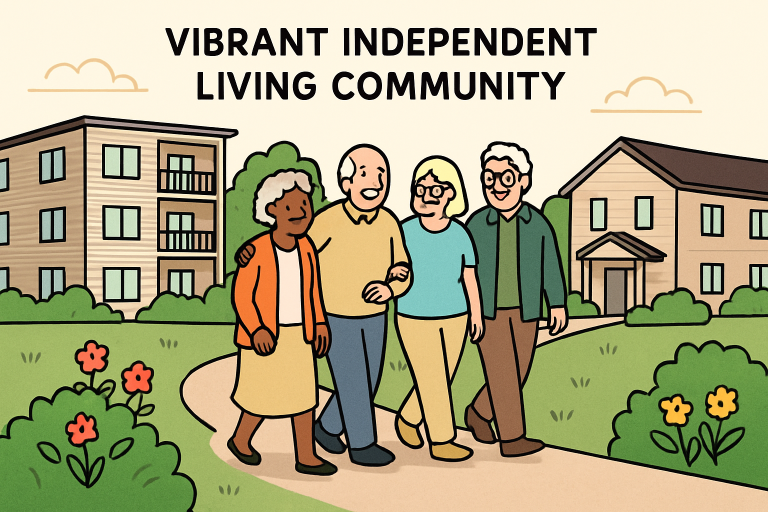
  • Independent living communities greatly support seniors’ physical, mental, and social well-being by creating a nurturing and engaging environment tailored to their evolving needs.
  • Residents benefit from maintenance-free living, wellness programs, and lifelong learning opportunities that extend beyond basic care, promoting growth, resilience, and connection throughout their later years.
  • These communities foster a sense of security and lasting independence for older adults, ensuring peace of mind for both residents and their families while encouraging continued personal autonomy.

Introduction

As the population ages and more seniors seek autonomy combined with support, independent living communities are proving critical in promoting senior well-being and an empowered lifestyle. These vibrant living environments are meticulously designed with the needs and preferences of older adults in mind, blending the comforts of a private residence with convenient access to a wide array of vital services—including health, social, and recreational amenities. The goal is to provide residents with the comforts of home while removing obstacles that may arise with age, promoting both independence and collective well-being.

A shining example, Spring Creek Chalet Senior Housing, demonstrates how embracing independence within a supportive environment can enhance the quality of life for retirees. By combining thoughtfully designed living spaces, a full schedule of social opportunities, and easy access to everyday conveniences, such communities are in many ways redefining what aging looks like. They encourage seniors to remain as active, connected, and independent as possible, while alleviating concerns about isolation, home maintenance, or a lack of support.

Enhanced Physical Health

Regular physical activity becomes increasingly important in later life, as it can help prevent chronic conditions such as heart disease, diabetes, and arthritis. Independent living communities often boast onsite fitness centers, well-lit walking paths, swimming areas, and group fitness classes—such as yoga, chair aerobics, or tai chi—that inspire residents to stay active and mobile. With a variety of fitness options tailored to different interests and physical levels, these communities empower seniors to incorporate movement into their daily lives.

Research published by the National Institute on Aging highlights that seniors who engage in moderate exercise benefit from improved balance, enhanced strength, and longer life expectancy. Besides formal exercise options, these communities encourage regular movement through well-planned communal layouts, inviting outdoor areas, and easy-to-navigate facilities, which motivate residents to get outside, enjoy fresh air, and socialize while staying active. Over time, these opportunities help foster habits that support long-term physical well-being and vitality.

Improved Mental Well-Being

Social isolation among older adults remains a significant health risk, contributing to feelings of loneliness and depression. Independent living communities are uniquely equipped to address this pervasive issue, offering communal dining experiences, hobby groups based on resident interests (such as gardening, crafts, or music), and a robust calendar of scheduled events and social gatherings. These intentionally designed opportunities for gathering bring residents together, helping to strengthen interpersonal connections, nurture meaningful friendships, and create a genuine sense of community. For many seniors, having ready access to social outlets means feeling supported, valued, and emotionally fulfilled on a daily basis.

Studies reported by the Centers for Disease Control and Prevention reinforce that older adults who remain socially engaged are at a lower risk for cognitive decline and mental health challenges. Residents in independent living communities are empowered to participate at their own pace, whether by joining a book club, attending an educational workshop, or simply enjoying a game night with new friends. All of these activities contribute to a better mood, an improved outlook, and greater life satisfaction.

Maintenance-Free Living

A key appeal of independent living communities is the newfound freedom from household upkeep. Seniors no longer contend with demanding chores such as mowing lawns, tending gardens, shoveling snow, or performing complex home repairs. Instead, professional maintenance staff are always on hand to ensure that residences, shared spaces, and outdoor areas remain in excellent condition, freeing up residents to devote more time to their passions, hobbies, or simply relaxing.

This transition to a maintenance-free lifestyle drastically reduces daily stressors and offers peace of mind, which in turn supports both mental and physical health. Not having to worry about home maintenance allows seniors to be more spontaneous, travel more easily, or participate in onsite social and educational events without being tied down by household obligations. It also reassures families that their loved ones are living in a well-cared-for, supportive environment.

Access to Health and Wellness Programs

Comprehensive wellness programs tailored to older adults are a cornerstone of thriving independent living communities. From a variety of onsite exercise classes and preventative health screenings to personalized nutritional counseling and support for managing chronic conditions, these resources promote a holistic approach to wellness. By offering a range of services, including medication management seminars and healthy cooking demonstrations, communities empower residents to take charge of their own health.

Regular participation in such programming empowers seniors to take an active role in their health, potentially reducing hospitalizations, controlling the progression of chronic illnesses, and enhancing overall resilience. The presence of qualified wellness staff and access to educational resources also increases residents’ confidence in their ability to maintain their well-being independently.

Safety and Security

Security is a central consideration for seniors and their loved ones. Independent living communities are designed with modern safety features that promote resident well-being without infringing on personal freedom. These features often include secured entry points to prevent unauthorized access, video surveillance throughout common areas, emergency call systems in every apartment, and a round-the-clock staff presence to handle urgent needs. Some communities also offer wellness checks and staff-led safety training sessions to reassure residents and their families further.

This highly supportive environment enables residents to go about their daily lives with greater peace of mind, knowing help is just moments away if ever needed. For seniors who may have lived alone and worried about falls or medical emergencies, the presence of an attentive, professional team within arm’s reach can be genuinely life-changing.

Opportunities for Lifelong Learning

Cognitive stimulation is crucial for healthy aging, and independent living communities recognize this by offering a robust calendar of lifelong learning opportunities. Technology classes designed specifically for seniors, as well as creative offerings such as painting or pottery workshops, book clubs, writing groups, and regular guest lecture series, all help keep residents intellectually engaged and inspired. These activities encourage curiosity, personal development, and social connection by bringing together like-minded individuals with shared interests.

According to the American Psychological Association, lifelong learning supports cognitive health, delays age-related cognitive decline, and enhances life satisfaction among seniors. The pursuit of new knowledge or skills, even later in life, fosters a sense of accomplishment and purpose, helping residents look forward to each new day with excitement and anticipation.

Conclusion

Independent living communities provide more than just a convenient retirement—they empower seniors to maintain their independence, support overall well-being, and encourage meaningful social connections. For those exploring their next chapter, these communities represent a valuable opportunity to embrace a lifestyle that promotes happiness, vitality, and self-sufficiency. By choosing a supportive setting, older adults can enjoy aging with fulfillment, respect, and a renewed sense of purpose.

Share
Pin
Share
0 Shares
You might also like:

Filed Under: Family

Caring for Aging Parents

This blog may contain affiliate links: disclosure.
Please see my suggested resources.

June 11, 2025 By Jennifer Lambert 6 Comments

As an only child, I am in a unique position to care for my aging parents. While I do get to make all the decisions without having to consult or argue with siblings or other relatives, it’s so stressful and time-consuming having to do it all alone.

Having grown up with low effort parents and no real relationship since I became an independent adult, it’s hard to reconcile how much my parents rely on me now. I feel guilty taking time away from my own family to deal with my ungrateful and noncompliant parents. It’s complicated and hard to explain to outsiders who can’t imagine ever being in this scenario. I will never let my parents go without and I will always provide the highest care and satisfy every whim I can, even though they never did the same for me or my children. It’s also hard living in Ohio and having them live in Georgia.

They say it takes three incidents for aging adults to realize they need assistance. I guess my parents were in absolute denial. I should have intervened sooner, but I’m not sure how else I could’ve forced the issue. It was bad enough when it came to the crisis point in December 2024.

Some history and timeline:

The last time we saw my parents was when they visited the kids and me for Christmas, when my husband was deployed in 2018. I think my father was already experiencing some memory decline then. The visit was a shock and surprise and the only real memory my kids have.

In August 2020, I was informed I should not come down to assist my parents when my mother fell in teh back yard and broke her sternum.

In September 2020, my mother tripped over the vacuum cord and bruised her face and eye really, really badly.

In December 2022, and ongoing, my father had shoulder issues and my mother had spinal issues. At some point, my father had shoulder surgery.

In January 2023, when I posed some difficult questions and concerns, my father informed me they would never leave their tri-level house.

In March 2023, my father fell in the bathroom.

In April 2023, my mother fell in her bedroom.

In June 2023, I was told no when I asked could I come help when my mother had spinal surgery.

Over the years, I asked about a will and POA and legal paperwork because I couldn’t remember if or what they had completed years ago. They ignored me.

I had asked if they planned to downsize or even move into someplace smaller and more accessible. They refused to discuss anything.

I don’t think my parents had any quality of life for at least five years and it’s been very frustrating trying to get information.

I expected a whole mess when and if there were ever an emergency with one or both of my parents.

Then, I got the call in December 2024.

When I arrived to deal with my mother’s stroke, I was surprised by so many things.

So much medicine, lots of it expired. There was an entire room in their basement filled with empty cardboard boxes. They had huge black trash bags filled with grocery store bags. They had a pantry full of expired, rancid, stale food and leftovers in the fridge that were months old. There were so many brand new clothing items, often multiples of the same item, still with tags, in all different sizes, from different years and seasons. My mother easily had twenty pairs of the exact same pair of shoes.

All day long, they sat in their recliners with the music channel on their TV, had toast for a late breakfast, ate canned soup for a late lunch, sometimes TV dinners or nothing. My father got the mail every day and took out the trash can to the curb each week. They had grocery delivery from Walmart. They went to Walgreen’s to pick up pills every week. They went to doctors frequently. They hoarded their material goods and money in the bank.

It would be easy to care for aging parents if they would allow me to help and if they would communicate and work with me, in the knowledge that I want the best for them.

Every family is different and people age at different rates based on their lifestyle, diet, exercise, habits, interests, activities.

My husband is turning 50 this year and we have learned so much about how we need to get our lives in order to make things easier for our kids as we age or in case of an emergency.

Estate planning is not just for rich people. I don’t want to leave anything to chance or the state or have my kids deal with months of probate court. I want to make all my decisions and preferences known. I want my kids not to have to worry or make any difficult decisions.

Caring for Aging Parents

Every state is different in how they handle estates upon incapacity or death. Some states have filial laws.

Legal

It’s super important to make sure legal paperwork is in order as parents age. It’s difficult for some people to discuss end of life decisions. This shouldn’t wait. The sooner it’s handled, the better and there are fewer questions if there is an emergency or incapacity.

I am so grateful that my parents paid an estate lawyer twenty years ago to put myself and my husband as financial and property POA, and also created a living trust, living will, non-resuscitation instructions, filed their property will to avoid probate. It’s made everything so much easier.

We very quickly sold both their cars and put their house on the market. Thankfully the house sold within two months.

Financial

In addition to estate planning paperwork, it’s super important to have all financial accounts accessible.

Years ago, my parents added me to their banking accounts in case of emergency so I would have access and control and to help with their estate and taxes.

The POA doesn’t grant access to bank accounts.

We provided two doctor letters showing incapacity to the bank and credit card companies since the POA paperwork shows my parents acting for each other and then myself and husband as contingency (which is good and normal). They are still living, but are incapacitated, residing in assisted living memory care and cannot make any decisions.

Update beneficiaries on all investments and get copies as proof.

Insurance

It’s important to revisit medical insurance accounts to make sure there is enough medical coverage as we age longer and our bodies break in so many new and exciting ways.

Thankfully, my parents have Tricare, Blue Cross, and Medicare, so they pay very little for their medical care – mostly just copays for prescriptions. It has been educational having to navigate all the claims and bills and statements since we only have Tricare as a military family and all our medical needs are taken care of on the base.

Some life insurance can be cashed out after like age 62 to help cover aging costs or payoff bills. But make sure there are no lapses in coverage or reduction in value.

Medicine

It’s important to keep all medicines in order and have records of current prescriptions and recommended over-the-counter drugs and also interaction concerns, like foods or drinks that should be avoided.

My father didn’t even really understand the meds he was on or why.

It’s important to have a partner or care giver, someone to know what meds we are on and why.

I don’t take any prescription drugs and my husband only takes a couple daily, so it’s not very complicated for us at this time.

Downsizing

I hope I realize when I begin to have difficulty walking up and down the stairs in our house and perhaps it will be time to downsize or go into a transition living situation.

We have so much stuff, a lifetime of twenty years, in addition to important items from my parents’ 83 years, my paternal grandparents’ items, and many items from my husband’s parents (who passed twenty years ago during our first year of marriage) and also his grandparents. It is a lot of stuff.

I’m constantly cleaning and organizing and purging and storing items securely to make it easier on everyone in the future. We reevaluate often: what do we love, what can we let go of, what can we store away? We do not have a storage unit. We have a 4 bedroom house with a finished basement and small cellar. There are so many things I can’t part with yet.

Communication

It’s important to have a plan – multiple plans – in case of emergency, in case of incapacity, in case of decline. Who is the emergency contact? Who is in charge to discern and communicate to family that it’s time to intervene for the safety of the elderly family member?

We have fire-proof safes with files and lots of instructions and information in case something happens.

My parents were in denial for years that they were aging and declining and refused to communicate with me about their future, that very obviously affects me and my family and now is almost all-consuming for ensuring they are safe and cared for. I didn’t even have a house key or know where anything was inside my parents’ house when I arrived six months ago. I had to wing it and make up every little thing along the way.

Assistance

I’m sure it’s hard to realize it’s time to ask for help.

My parents were not ready to give up their independence at age 82, with my father’s failing memory, and my mother’s frail body. They would have preferred to decline with no quality of life, while maintaining their control and independence. It would have been so much easier and better for everyone if they had admitted it was time to seek assistance, downsizing, moving into a facility.

I hope to have a much better relationship with my kids as they grow up and away, so they will surely understand when it’s time and I don’t have tantrums about it. There is an option for a legacy interview so we can record instructions for ourselves and children in the future.

The estate lawyer we met with has a health decision grid that leaves nothing to chance and I can tell my kids what I want and when and for this we are thankful. In a decade, I can add a specific dementia instruction in case that need arises.

Memory Care

I feel that our society doesn’t really have a system in place that helps families plan for aging adults with physical or cognitive or memory issues.

No one is ever prepared for memory loss nor for the paranoia and aggression that may accompany it.

During the month I was stuck in the house with my parents after my mother’s stroke, desperately begging for doctors, nurses, therapists, the VA helpline, police, or a social worker to help, I was told there was nothing anyone could do while I navigated it all alone, but I needed doctor signatures to admit them to assisted living. Their primary care refused to sign.

I am disappointed that none of the medical professionals took responsibility for my parents’ inability to care for themselves. They were in a dangerous situation and I was desperate. I’m angry that there are no helpful services in place to help adult children with aging parents who refuse care.

There are few instructional manuals or good information for caregivers or children having to navigate caring for parents with dementia. There was no option for me to leave my parents in their home, even with nursing care. Two assisted living homes refused their admission because they were not locked down enough to ensure safety for my parents.

I’ve spent the last six months in near daily communication with their care home, a hospice care team for my father when he refused to leave his bed, then traveling to Georgia to clean out their house twice, and deal with a hip replacement and rehab and therapy for my mother.

Then she fell and dislocated her new hip last week and now she is on bed rest. Thankfully, this qualified her also for the hospice care. They now have a great care team helping them with hygiene and daily needs.

They still seem to think their living circumstances are temporary and that they will get better and go home within the year. They seem to think they live in a hotel or rehab center.

Neighbors have visited and either do not understand the situation but riles my parents up, when they have wondered why there is no in-room TV or other conveniences and wish my parents still had possession of their cell phones. Even a nurse recently asked if I could get them a TV or a radio or books. I had provided them a CD radio from day one, but my parents asked me to remove it. There are two large TVs in the facility. My parents were frustrated navigating the remote control in their home, and there really is just no room for a TV in their room. They had no quality of life before but at least now they are safe.

My father is mostly sullen and silent and stays in bed except for a meal or two each day. I’m sad, but he didn’t do much else six months ago, for probably the last several years. He just sat in his recliner all day, every day.

My mother is either in denial or doesn’t understand that my father has more advanced dementia. She gets very frustrated with him. They share a room and he isn’t capable of helping her. When she fell these two times, he just stared at her – unwilling, unable, or too confused to know how to get help. They don’t like having people come into their room, but then she will complain she is not checked on enough. I had to buy a little nanny cam to keep up with what they do in their room.

The only thing my mother cares about is what I can buy her – shoes, shirts, apple juice. I use Walmart delivery and have had to buy them a little fridge for their drinks and snacks along with a plastic storage drawer for their pullups, wipes, and pads. She won’t speak to me on the phone nor has she ever asked any questions about their estate. She complains to anyone who will listen that I took away her perfume and cell phone.

In a fit of rage, my father tore up photos of my family. He didn’t want my help or interference in his life.

I’ve waited all my adult life to reconcile and have relationship with my parents. I mourn the loss of grandparents in my children’s lives.

It’s been very hard for me to realize my parents are low effort family. They never wanted a relationship with me or my children. And now, it’s officially too late.

It saddens me that we have and will hit milestones that they will never see.

You might also like:

  • Going Home for the Last Time
  • Adult Daughter
  • My Father is a Racist
  • Grieving Family Who Are Still Alive

Resources:

  • A Dementia Caregiver Called to Action: The Journey by Dr. Macie P. Smith
  • The Essential Guide to Dementia Caregiving: 70 Vital Tips for Caregivers to Know by Lindsay White
  • Adult Survivors of Emotionally Abusive Parents: How to Heal, Cultivate Emotional Resilience, and Build the Life and Love You Deserve by Dr. Sherrie Campbell
  • The Highly Sensitive Person: How to Thrive When the World Overwhelms You by Elaine N. Aron
  • The Highly Sensitive Child: Helping Our Children Thrive When the World Overwhelms Them by Elaine N. Aron
  • The Empath’s Survival Guide: Life Strategies for Sensitive People by Judith Orloff
  • The Dance of Anger: A Woman’s Guide to Changing the Patterns of Intimate Relationships by Harriet Lerner
  • The Dance of Connection: How to Talk to Someone When You’re Mad, Hurt, Scared, Frustrated, Insulted, Betrayed, or Desperate by Harriet Lerner
  • Will I Ever Be Good Enough?: Healing the Daughters of Narcissistic Mothers by Karyl McBride
  • The Search for Significance: Seeing Your True Worth Through God’s Eyes by Robert S. McGee
  • Boundaries: When to Say Yes, How to Say No To Take Control of Your Life by Henry Cloud and John Townsend
  • Raising An Emotionally Intelligent Child by John Gottman
Share
Pin5
Share
5 Shares
You might also like:

Filed Under: Family Tagged With: grief, parenting, relationships

Going Home for the Last Time

This blog may contain affiliate links: disclosure.
Please see my suggested resources.

February 17, 2025 By Jennifer Lambert 22 Comments

I got the call that no one wants to get on the afternoon of December 12, 2024.

A police officer called me at home to inform me my mother had a stroke and my father was confused and frantic with worry.

I tried to get all the necessary information from the policeman and my dad.

Emory University Hospital had called for a well check when they couldn’t reach my father by phone to get approval for an MRI.

My father said my mom fell and hit her head really bad while they were at a cabin in the mountains to look at flowers. In December. He said he took her to the nearest hospital and that she had been transferred. He claimed she was having surgery. This all sounded so odd to me. Why were my elderly parents in the mountains on a vacation so near Christmas and they told no one they were traveling and probably shouldn’t be driving at all?

I knew it was time.

My adult daughter and I drove from Dayton, Ohio, to Atlanta, Georgia. we didn’t know what we were walking into. We brought funeral clothes. We were terrified.

My father was given written directions to Emory University Hospital by the policeman. He also practiced calling me on my mom’s cell phone. I didn’t know what else to do. He wouldn’t use Uber or a taxi or wait for me. The policeman seemed confident that all was well.

What happened after that is stranger than fiction.

It was not well at all.

My dad never made it to Emory. He got very lost. I was trapped in a nightmare, trying to get to Georgia as soon as we could. It took three hours for my husband to coach him back home with multiple hang-ups and call drops. The traffic was “horrendous” and my father was confused and upset. I’m not sure how he managed to get home by himself the previous night.

My daughter and I arrived at my parents’ house late, after 10 PM. We didn’t know what to expect. Would the house be dark and locked? Was my father safe, asleep, or awake? Did he remember we were coming? Would he pull my grandpa’s .38 on me, thinking we were intruders? The policeman told him to put a key for me under the front door mat, but it wasn’t there.

Luckily, the lights were on, the garage door was up, and my dad was just sitting in his chair, watching TV.

He was so visibly relieved to see me and my daughter. I think he knew he was safe and we would take care of him and take him to visit his wife the next day.

We found three messages on the answering machine from my mother over the last two days and two messages from a nurse. He missed all those calls because he had been driving around, lost in Atlanta, the suburbs, almost to the South Carolina border, confused and worried – for two afternoons.

We asked for clarification for what had happened with my mother.

He told us they were sitting in their chairs, watching TV, when she started breathing strangely and looking oddly and wouldn’t answer him. He thought she was just snoozing, but “after four hours, he called 911.” He tried to follow the ambulance to the local ER, but got lost. He doesn’t know how he got home. Then he got lost trying to go to Emory in Atlanta, then lost again getting back home.

We all went to bed and got up the next morning. I called the nurse who had left a message and we spoke to my mother. Everyone was so relieved. I drove us all to visit my mother. Traffic in Atlanta is always stressful, but my father claimed it was “horrendous traffic” if he saw two cars nearby on the road.

My mother didn’t even understand the timeline, had thought she had been in the hospital for weeks.

My mother was very concerned about their monthly bills. She had never set up any payments for autopay, but did every little thing each month on her schedule. I logged into all her accounts and set up autopay. They had always complained they were on a fixed income, never had any money. Their idea of “having no money” is certainly very far from my idea of living paycheck to paycheck my entire adult life.

Physically, my mother is doing amazing. She hardly has any stroke symptoms. After several tests, she was cleared medically.

My mother’s hospital doctor refused to release her to come home unless I had a plan in place for her care. I was told they both should be in assisted living ASAP.

My parents refused and had sworn for years that they would never move out of their house. This humongous house was never my home. They sold the home I remember when I got married and moved away from Georgia. I have no memories of anything meaningful.

My daughter decided to stay to care for my parents. Everyone seemed excited about the plan. We thought maybe finally we could develop a relationship, forgive, and make some nice memories.

I made regular doctor appointments for Friday for both my parents. It was good I got a medical record update.

I learned my father had a memory change diagnosis in 2022. So, I think it was more like 2018 that he started showing symptoms, and I think it’s been bad for both of them since then and they never told me.

I didn’t realize the confusion for both my parents was so far gone. The stroke most likely exacerbated my mother’s mental condition. My father seemed to lose more and more of himself each day, like he didn’t have to hold back anymore.

It was like it went from zero to sixty in three days. They fed off each other and turned into the horrors I remember from a teenager. They were mean and nasty and name-calling and abusive. They screamed at me and threatened me and my daughter.

We didn’t realize how much care they both needed.

I knew I had to take over for my parents’ safety and well-being. I had assumed we could transition them into assisted living over the next year. We soon realized that was impossible.

Of course it got worse.

Because after my father called the police six times in five days, accusing me of all sorts of horrible misdeeds, I had to prove over and over that in spite of having virtually no relationship nor communication with my parents, they had indeed granted me control of their lives for this very instance that these events called for.

Thankfully, I found the binders in the office closet with copies of their wills, living trusts, POAs. My husband and I were joint POA, having been granted this privilege twenty years ago. I had been on their banking accounts for at least two decades.

I very quickly learned that no one would help me. The medical professionals kept informing me I needed neurology referrals. The police informed me they couldn’t do anything for me, my daughter, my husband, my parents unless there was an active murder or suicide taking place. The mental health hotlines couldn’t do anything other than talk to me with very condescending conversation or vet emergency services calls.

It was all so frustrating.

My daughter went back to Ohio and my husband joined me in Georgia.

They both were quite shocked to realize all the horror stories I have told them are all true. I am not just a spoiled only child who thought her parents were strict. My parents are abusive, emotionally immature, narcissistic and selfish.

I started keeping records of every little thing to build a case for assisted living. I didn’t realize how arduous a journey it would be to get them admitted.

I found and hid his guns and ammo in separate spots in the basement. It was sickening how much he had.

I hid all the car keys since it was obvious neither should drive anymore. I was told I needed a neurologist statement to take to DMV to make this official.

I barricaded the office and hid all their medicines so my father couldn’t pop Tylenol like candy.

My father could barely prepare toast or cereal or canned soup. He refused to eat anything I cooked.

She didn’t want to use her walker.

They both refused to bathe.

He started refusing to take his meds, claiming he didn’t know what I was giving him or why. He stopped sleeping and his eye got infected and I could tell he was feeling very bad.

I couldn’t convince my parents they needed more help than I could give them. They claimed they didn’t need any help. They just screamed I was stealing their cars and money. They didn’t want to see me. They wanted me to leave their house. I was trapped in two rooms and couldn’t leave them alone for their safety. My husband didn’t really understand or know what to do. No one was safe.

Two care homes refused to accept them since their dementia symptoms were too much. It took over thirteen days from home assessment to admission to the memory care facility.

Oh, and this entire ordeal happened over the Christmas and New Year holidays.

And no one works weekends either. My four kids spent the holidays alone. It was the longest I have ever been away from them. I was devastated. I was torn from having to do this for my own conscience even though my parents didn’t “deserve” my time or effort.

I had to do everything by phone and online. Their regular doctors refused to sign any paperwork. I had to contact the hospital doctor to sign for my mother. The facility had their contracted NP sign for my father. I had to get a mobile phlebotomist for TB tests and wait almost four days for those results. I had to sneak into their wallets for photos of their IDs and insurance cards.

I had to lie to get my parents in the car to drive them to the facility, telling them the doctor wanted to discuss their lab results. They were extremely anxious on the drive.

My father realized where we were after a few moments and started screaming at me so the nurse had to sneak me out a back door like I was Elvis.

I had to rush to pack up all their bedding and necessaries since I hadn’t been able to plan anything like a normal daughter with normal parents. It took multiple trips back and forth, thirty minutes one way.

My father refused to look at me. My mother turned on her charm for appearances, like always, but demanded items from home or for me to purchase. I told them I was driving back home, but I don’t know if they really understood.

They have enough income and savings and investments to pay for their own care in the memory care home for like fifty years. They have three medical insurances. But it’s frustrating for me to navigate all the bills for their care – the private memory care facility monthly fee, the prescription service monthly fee, the visiting nurse practitioner fees. And the recommended private home care aide for my father since he is still refusing to shower or eat.

We drove home to Ohio on 11 January. It was the first time seeing that Ohio sign on the river bridge that it felt like home to me.

It’s now been almost two months. My mother has called twice and I get texts from the director for my mother’s shopping list of snacks, drinks, underwear.

I am nothing but the keeper of funds now.

It’s both better and also worse than it ever was. I lost parents I never really had in the first place. There is no hope for reconciliation now. My kids never had grandparents.

This was the hardest thing I ever had to do, and it was made that much harder since my parents hate me.

You might also like:

  • Adult Daughter
  • My Father is a Racist
  • Grieving Family Who Are Still Alive

Resources:

  • The Highly Sensitive Person: How to Thrive When the World Overwhelms You by Elaine N. Aron
  • The Highly Sensitive Child: Helping Our Children Thrive When the World Overwhelms Them by Elaine N. Aron
  • The Empath’s Survival Guide: Life Strategies for Sensitive People by Judith Orloff
  • The Dance of Anger: A Woman’s Guide to Changing the Patterns of Intimate Relationships by Harriet Lerner
  • The Dance of Connection: How to Talk to Someone When You’re Mad, Hurt, Scared, Frustrated, Insulted, Betrayed, or Desperate by Harriet Lerner
  • Will I Ever Be Good Enough?: Healing the Daughters of Narcissistic Mothers by Karyl McBride
  • The Search for Significance: Seeing Your True Worth Through God’s Eyes by Robert S. McGee
  • Boundaries: When to Say Yes, How to Say No To Take Control of Your Life by Henry Cloud and John Townsend
  • Raising An Emotionally Intelligent Child by John Gottman
Share
Pin7
Share
7 Shares
You might also like:

Filed Under: Family Tagged With: grief, parenting, relationships

Best Books of 2024

This blog may contain affiliate links: disclosure.
Please see my suggested resources.

February 10, 2025 By Jennifer Lambert 6 Comments

My Favorite Books I Read in 2024

I get a free eBook every month with Amazon Prime.

I love love love renting eBooks for Kindle or Libby from my local library.

I typically read about one book every week or two, sometimes more and sometimes less depending on my schedule.

I love historical fiction and scifi, but also I have been expanding into queer literature and memoirs and other genres. I still read school books with my kids too, even though they’re attending university now!

I didn’t realize that GoodReads has challenges, so I began that for the first time this year and it tracked my reading and gave me statistics.

I’ve read 77 books this year, but these stood out as my favorites.

The Covenant of Water by Abraham Verghese

Spanning the years 1900 to 1977, The Covenant of Water is set in Kerala, on South India’s Malabar Coast, and follows three generations of a family that suffers a peculiar affliction: in every generation, at least one person dies by drowning—and in Kerala, water is everywhere. At the turn of the century, a twelve-year-old girl from Kerala’s long-existing Christian community, grieving the death of her father, is sent by boat to her wedding, where she will meet her forty-year-old husband for the first time. From this unforgettable new beginning, the young girl—and future matriarch, known as Big Ammachi—will witness unthinkable changes over the span of her extraordinary life, full of joy and triumph as well as hardship and loss, her faith and love the only constants.

I loved his first book Cutting for Stone and this book is also wonderful and I loved the epic family legend and how everyone handled the “curse.”

Station Eleven: A Novel by Emily St. John Mandel

It is fifteen years after a flu pandemic wiped out most of the world’s population. Kirsten is an actress with the Traveling Symphony, a small troupe moving over the gutted landscape, performing Shakespeare and music for scattered communities of survivors. But when they arrive in the outpost of St. Deborah by the Water, they encounter a violent prophet who digs graves for anyone who dares to leave. Spanning decades, moving back and forth in time, and vividly depicting life before and after the disaster brought everyone here, this suspenseful, elegiac novel is rife with beauty, telling a story about the relationships that sustain us.

I love dystopian fiction and yes, it’s probably overdone with the pandemic but this book is lovely. I didn’t want this book to end and I realize there’s a show based on it.

Herland by Charlotte Perkins Gilman

Herland, Gilman’s most famous novel, is a feminist utopian comedy in which three men stumble upon a society of women that has banished men. Also included in this Penguin Twentieth-Century Classics edition is a selection of Gilman’s poetry and other short fiction. Gilman scholar Denise D. Knight has written an enlightening Introduction that explores Gilman’s use of the utopian form, satire, and fantasy to provide a critique of women’s place in society and to propose creative solutions.

I enjoyed the psychology explored in this novel and can’t stop thinking about the events that took place. I just found out there is a trilogy.

The Boys from Brazil: A Novel by Ira Levin

Alive and hiding in South America, the fiendish Nazi Dr. Josef Mengele gathers a group of former colleagues for a horrifying project―the creation of the Fourth Reich. Barry Kohler, a young investigative journalist, gets wind of the project and informs famed Nazi hunter Ezra Lieberman, but before he can relay the evidence, Kohler is killed.

Thus Ira Levin opens one of the strangest and most masterful novels of his career. Why has Mengele marked a number of harmless aging men for murder? What is the hidden link that binds them? What interest can they possibly hold for their killers: six former SS men dispatched from South America by the most wanted Nazi still alive, the notorious “Angel of Death“? One man alone must answer these questions and stop the killings―Lieberman, himself aging and thought by some to be losing his grip on reality.

I’m a little obsessed with Ira Levin’s novels and I’ve read most of them. They are nontraditional horror and quite chilling to think about.

The Moonflowers: A Novel by Abigail Rose-Marie

Tig Costello has arrived in Darren, Kentucky, commissioned to paint a portrait honoring her grandfather Benjamin. His contributions to the rural Appalachian town and his unimpeachable war service have made him a local hero. But to Tig, he’s a relative stranger. To find out more about him, Tig wants to talk to the person who knew her grandfather best: Eloise Price, the woman who murdered him fifty years ago.

Still confined to a state institution, Eloise has a lifetime of stories to tell. She agrees to share them all―about herself, about Tig’s enigmatic grandmother, and about the other brave and desperate women who passed through Benjamin’s orbit. Most revealing of all is the truth about Whitmore Halls, the mansion on the hill that was home to triage, rescue, death, and one inevitable day that changed Eloise’s life forever.

As Tig begins to piece together the puzzle of her mysterious family tree, it sends her spiraling toward a confrontation with her own painful past―and a reconciliation with all its heartrending secrets.

I didn’t want to like this book and it was slow at times and the characters could’ve been more vibrant, but the story was great.

I’m working through another reading challenge this year and I plan to try to read at least 100 books!

What was your favorite book this year?

You might also like:

  • My Favorite Books 2023
  • My Favorite Books 2022
  • My Favorite Books 2021
  • My Favorite Books 2020
  • My Favorite Books 2019
  • My Favorite Books 2018
  • My Favorite Life Changing Books
  • Apocalyptic Media to Binge
  • 10 Classics to Read When the World Seems Too Bleak
  • Top 10 Books for Homeschoolers
  • Great Books for Writers
  • 5 Best Life Skills Books for Teens

Linking up here!


Share
Pin2
Share
2 Shares
You might also like:

Filed Under: Family Tagged With: book list

How to Plan Burial and Funeral Services While Grieving

This blog may contain affiliate links: disclosure.
Please see my suggested resources.

February 5, 2025 By Jennifer Lambert Leave a Comment

Planning a funeral and burial service can be one of the most emotionally taxing experiences, especially while grieving the loss of a loved one. In Virginia, the process may seem overwhelming, but knowing your options and creating a plan can help honor your loved one while navigating the emotional complexities of grief. This article provides an overview of burial and funeral services in Virginia and practical tips to plan during such a challenging time. 

Understanding Burial and Funeral Services in Virginia

 Virginia offers a range of burial and funeral service options to suit various cultural, religious, and personal preferences. Services can be as traditional or personal as you would like, allowing families to pay their respects meaningfully. 

Burial Options

Traditional Burial:

Traditional burial services often include a casket, a graveside ceremony, and an interment in a cemetery. Virginia has many cemeteries, including public, private, and veteran cemeteries like the Virginia Veterans Cemetery in Amelia. Families may choose between single or family plots.

Green Burial:

For those seeking an eco-friendly option, Virginia allows green burials in designated natural burial grounds. This option foregoes embalming fluids, metal caskets, and concrete vaults, preserving the environment.

Cremation Burial:

Cremated remains can be buried in a cemetery plot or a columbarium. Many families choose this option because it is flexible and lower-cost.

Funeral Services

Traditional Funeral Services:

These typically include a viewing or visitation, a formal ceremony, and a graveside service. Religious or cultural practices can be incorporated to reflect the deceased’s beliefs.

Memorial Services:

Memorial services are held after the burial or cremation and can occur at various locations, including homes, places of worship, or outdoor venues.

Celebration of Life:

This service takes a more personalized approach and highlights the deceased’s life and achievements, often with storytelling, music, and unique rituals.

Planning While Grieving: Practical Steps

Grieving a loved one can cloud decision-making, making funeral planning especially challenging. These steps can help guide the process.

Seek Support

Grief can be isolating, but you don’t have to plan alone. Rely on family members, friends, or clergy to share the responsibilities. Professional funeral directors in Virginia are also experienced in assisting families during difficult times and can help with logistical and emotional support.

Understand Legal Requirements

Virginia law has specific requirements for burials and cremations:

  • Death Certificate: Obtain a death certificate from the local health department, as it is needed for burial or cremation.
  • Permits: Cremation requires authorization from the medical examiner.
  • Burial on Private Property: Families may opt for burial on private property but must adhere to local zoning laws.

A funeral director can ensure these legalities are handled efficiently so you can focus on other arrangements.

Set a Budget

Funeral costs in Virginia can vary widely depending on the services and burial options chosen. On average, traditional funerals cost between $7,000 and $12,000, while cremation services are often less expensive. Determine your budget early and discuss costs with the funeral home to avoid unexpected expenses.

Choose the Right Funeral Home

Virginia has numerous reputable funeral homes offering comprehensive services. Look for a licensed provider with experience in accommodating your specific needs, whether a traditional ceremony or a culturally specific service.

Personalize the Service

Adding personal touches can make the service more meaningful. Consider including:

  • A photo slideshow or video montage.
  • Music that reflects the deceased’s personality.
  • Readings or eulogies from loved ones.
  • Special rituals, such as planting a tree in their honor.

Plan Ahead if Possible

If your loved one expressed specific wishes for their burial or funeral, incorporate those into the planning. Pre-planning services, offered by many funeral homes, can ease the burden on grieving families by documenting preferences in advance.

Coping with Grief While Planning

 Grief is a natural response to loss, but it can complicate the decision-making process. Here are ways to cope while managing funeral arrangements:

Acknowledge Your Feelings

Allow yourself to grieve. It’s okay to feel overwhelmed or seek moments of quiet reflection. Recognizing your emotions can prevent them from becoming too overwhelming.

Take Breaks

Planning a funeral can feel like an endless list of tasks. Take breaks to rest, hydrate, or spend time with loved ones. Small moments of self-care can recharge your energy.

Ask for Help

Delegate tasks to others. Family members or friends may be willing to handle tasks like selecting flowers, coordinating with the funeral home, or arranging transportation.

Seek Professional Grief Support

Consider speaking to a grief counselor or joining a support group. Virginia offers numerous resources, including local support groups, faith-based organizations, and online communities.

Final Thoughts

 Planning a burial or funeral service in Virginia while grieving is undoubtedly difficult, but it is also an opportunity to honor your loved one and find closure. Understanding the options available and taking practical steps can ease the burden. Remember, you are not alone—lean on family, friends, and professionals to help you navigate this journey with love and compassion.

Creating a meaningful farewell honors their life and begins the healing process.


Share
Pin
Share
0 Shares
You might also like:

Filed Under: Family

Unplugging

This blog may contain affiliate links: disclosure.
Please see my suggested resources.

December 9, 2024 By Jennifer Lambert 5 Comments

Maybe not enough years ago…I realized I don’t have to participate.

How many decisions about life, job, health, or children are we making out of peer or family pressure? We can model the change we want for ourselves and for our children to see.

There is no village and I don’t want to be a part of the mom society I see online and in our community.

The only point to therapy other than trauma processing is to learn how to acclimate to our sick society. I tried several times and it was always disappointing. I shouldn’t have to be medicated to succeed. Perhaps our society’s values should change?

I don’t have to view advertisements and I sure don’t have to purchase items or services. We are a capitalist consumer society but I don’t have to consume. It’s not a competition.

I don’t have to read blogs or articles or news reports. It’s getting harder to discern what is even real anymore.

I don’t have to care about having an aesthetic or brands or labels.

I don’t care about what’s popular or trendy. I didn’t care when I was seventeen, but I was ostracized and alienated so I tried to periodically fit in and then wondered why I got so depressed. I feel more myself now that I’ve given up on keeping up.

I can remove all expectations that society places on me as a woman and wife and mother.

I lurk in online groups for mothers and military spouses and homeschoolers. It is depressing how many questions there are in these anonymous settings about how to keep up with this rat race society instead of slowing down and being original or fighting oppression. I’ve had posts deleted that don’t align with their worldview the admins claimed were “unkind.” I feel like an anthropologist. They just crave confirmation bias. Don’t we all? But no one is fighting against abuse and control. OMG so many of these moms seem like they hate their kids.

I have snoozed every single company or profile in my FB feed wanting to laminate my brows, extend my lashes, inject or fill my face, remove my blemishes, blonde my hair, clean my house, detail my car, vacuum my air ducts, steam my carpet, clear my yard, pressure wash my driveway, or offering cottage baked goods. It’s excessive how many side hustles there are and I wonder how many are even legit companies and I see a lot of scam complaints. It’s sad that people have to do this to try to survive financially.

I deleted my Twitter with the new TOS about AI with no options. I really don’t utilize social media the way many of my peers, family members, or acquaintances do. I don’t post many pictures of my family or selfies. I don’t like bragging or fishing for engagement. I seldom crowdsource because I don’t need that kind of affirmation. I am only on Facebook to keep up with my cousins. I have 41 “friends” who consist of relatives by blood and marriage, my daughter’s roommates, past students, and ten actual IRL friends. I follow a few pages of organizations I like. I’m considering deleting Instagram, because it’s worthless since it’s just reels and screenshots. It seems that many parents don’t see the irony of using their smartphones, tablets, social media while ridiculing their kids and teens for the exact same thing. Many youths really don’t use social media the same way adults do and that’s fine. Forbidding it or limiting it or using it as a punishment tool will backfire.

I can decorate my house however I want to with no guilt or pressure from an aesthetic look or sad beige club. I don’t want my house to look like a dentist office. I like retro decor for memories and antique well-made items instead of the “fast fashion decor garbage.” I saw someone say they didn’t want dirty old things in their house and I feel sad for her in her sterile house. Why are all these dinner reels just empty kitchens with two utensils and four neutral dog dishes to feed her little Stepford family?

I don’t have to have the newest or latest technology. I reluctantly have one television in our basement and all the stupid streaming services. We have a Wii and Switch. Everyone in my little family has an iPad and smartphone. We have computers. I don’t see the need to upgrade every year.

I don’t shop in stores or online for entertainment. I actually hate shopping. But I’ve also never used a meal or grocery delivery or Doordash or the like. I like thrifting and antique malls.

I don’t do brunch. I’m not a morning person and I have absolutely no desire to wake up and get dressed and go out in public and deal with people while uncaffeinated. I don’t even eat out, except very, very rarely, and only at like two or three places. I have a well-stocked pantry, freezer, and bar so I cook breakfast and dinner every single day and I make my own drinks. My kids have packed lunches during their classes at a local university. I don’t think I know anyone who actually cooks real food. They’re too busy or it’s not worth the effort or some such excuse.

I think people get offended when we aren’t ashamed of things that they were taught to be ashamed of and they resent us for not caring what everybody thinks.

I don’t have to be a puppet of capitalism or whatever society says I should be or do.

I feel at peace being unplugged.

Share
Pin1
Share
1 Shares
You might also like:

Filed Under: Family Tagged With: mental health

Winter Gear for Sports Parents

This blog may contain affiliate links: disclosure.
Please see my suggested resources.

September 23, 2024 By Jennifer Lambert 3 Comments

I am not made for cold weather.

Many sports begin in one season and end in another. Often, there is wind and rain, even sleet or snow at the beginning of baseball season! Sometimes, it seems as if that is the same day.

I recently wrote about Summer Gear for Sports Parents. Obviously heat can be dangerous and we need to make sure we stay cool with rising temperatures. But being cold is miserable.

I want to support and cheer for my kids while staying warm and dry.

I’ve loved seeing my kids play soccer and baseball and do ice skating. I’m so proud of all they have tried and learned and how they continue to improve in their endeavors.

Baseball is normally a warm weather sport, but there have been times in early spring or late fall that have been miserably cold and wuthery. Also, ice skating rinks are often very cold for spectators. I like being prepared and staying warm.

Winter Gear for Sports Parents

Clothing

  • Under Armour ColdGear
  • Warm hats
  • Screen-friendly gloves

Blankets

  • 4-in-1 Waterproof Large Outdoor Blanket
  • Hooded Stadium Blanket
  • Wearable Blanket
  • Portable Heated Blanket

Tents

  • Tent Pod For 3-4 People
  • WeatherPod

Seating

  • Plush Camping Chair
  • Camp Chair with Heating Pad

Warmers

  • Rechargeable Hand Warmer
  • Sports Hand Warmer (like a muff)
  • HotHands Hand Warmers

Snacks and Drinks

  • THERMOS Stainless King 40 oz
  • THERMOS FUNTAINER 10 oz
  • Stanley Classic
  • Stanley Stay-Hot Camp Crock

I don’t like being cold and I am not made for winter. These items help me to cheer on the sidelines for my kids playing sports in cold weather.

Do you have tips for cold weather gear?

You might also like:

  • The Problem with Kids Sports
  • How We Do PE
Share
Pin
Share
0 Shares
You might also like:

Filed Under: Family Tagged With: homeschool, parenting, sports, winter

  • 1
  • 2
  • 3
  • …
  • 18
  • Next Page »
Suggested ResourcesCheckout 51Fetch

Archives

Popular Posts

10 DIY Gifts with Essential Oils10 DIY Gifts with Essential Oils
Natural Remedies for HeadacheNatural Remedies for Headache
10 Natural Remedies to Keep on Hand10 Natural Remedies to Keep on Hand
Henna Hands CraftHenna Hands Craft
Homemade Turkey Divan CasseroleHomemade Turkey Divan Casserole
This website uses cookies to improve your experience. We'll assume you're ok with this, but you can opt-out if you wish.Accept Reject Read More
Privacy & Cookies Policy

Privacy Overview

This website uses cookies to improve your experience while you navigate through the website. Out of these, the cookies that are categorized as necessary are stored on your browser as they are essential for the working of basic functionalities of the website. We also use third-party cookies that help us analyze and understand how you use this website. These cookies will be stored in your browser only with your consent. You also have the option to opt-out of these cookies. But opting out of some of these cookies may affect your browsing experience.
Necessary
Always Enabled
Necessary cookies are absolutely essential for the website to function properly. This category only includes cookies that ensures basic functionalities and security features of the website. These cookies do not store any personal information.
Non-necessary
Any cookies that may not be particularly necessary for the website to function and is used specifically to collect user personal data via analytics, ads, other embedded contents are termed as non-necessary cookies. It is mandatory to procure user consent prior to running these cookies on your website.
SAVE & ACCEPT