Jennifer Lambert

A Sacred Balance

Visit Us On FacebookVisit Us On PinterestVisit Us On InstagramVisit Us On Linkedin
  • Homeschool
    • Book Lists
    • How Do We Do That?
    • Notebooking
    • Subjects and Styles
    • Unit Studies
  • Travel
    • Europe
      • Benelux
      • France
      • Germany
      • Greece
      • Ireland
      • Italy
      • London
      • Porto
      • Prague
    • USA
      • Chicago
      • Georgia
      • Hawaii
      • Ohio
      • Utah
      • Yellowstone and Teton
  • Family
    • Celebrations
    • Frugal
  • Military Life
    • Deployment
    • PCS
  • Health
    • Recipes
    • Essential Oils
    • Fitness
    • Mental Health
    • Natural Living
    • Natural Beauty
  • Faith
  • About Me
    • Favorite Resources
    • Advertising and Sponsorship
    • Policies
  • Reviews

© 2025Jennifer Lambert · Copyright · Disclosure · Privacy · Ad

Zoology for Kids Book Review

This blog may contain affiliate links: disclosure.
Please see my suggested resources.

March 17, 2015 By Jennifer Lambert Leave a Comment

I am thrilled to review Zoology for Kids: Understanding and Working with Animals, with 21 Activities by Josh and Bethanie Hestermann.

My kids are animal lovers.

Two of my kids constantly inform me that they want to grow up to be zoologists. I figure Zoology for Kids is a perfect start!

Review:

The book has 144 pages of animal fun and facts!

The book begins with an introduction by Martin and Chris Kratt of the great PBS shows Zoboomafoo and The Kratt Brothers. Then there’s a nice zoology timeline.

This book is so much more interesting than a textbook. There are bold words listed in the glossary and 21 fun activities, crafts, and experiments to help kids understand the concepts.

There are two parts to the book: part one has three chapters about zoology for beginners and part two discusses zoology in real life in four chapters.

This is a great intro science book that parents can read aloud to children. My girls read it together, but they’re advanced readers. They love the facts and activities!

Reading About Zoology

Most of the activities are simple enough for my kids to do on their own. They love to recite the facts they learn. They even want to do more research on the animals they find especially interesting.

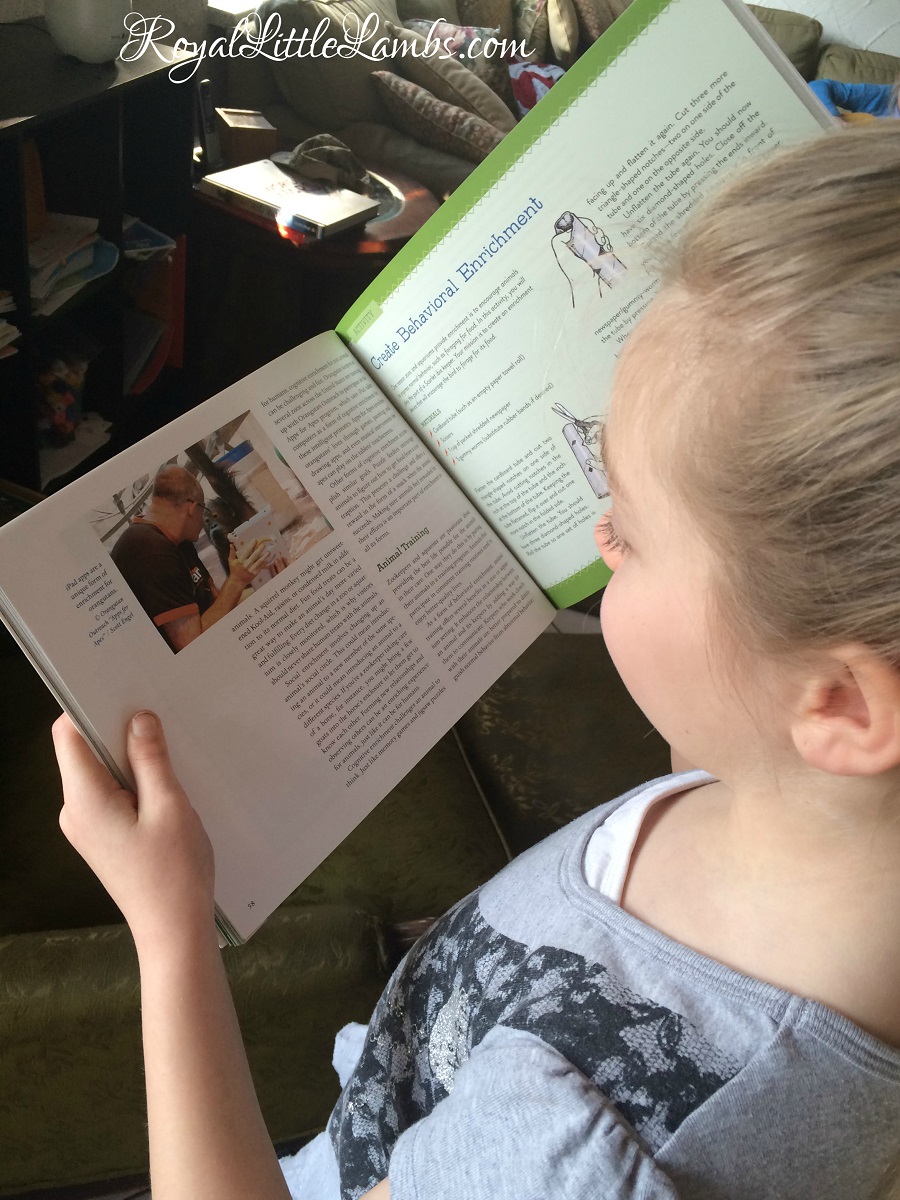
Reading about chimps

Kate’s favorite part was how chimps can learn to communicate with language.

Alex loved telling me which episodes of Wild Kratts featured animals from the book.

This is a book that will be well-loved and cherished. It has yet to be shelved as the kids are enjoying studying it.

About the authors:

Josh Hestermann is a marine-mammal keeper and trainer at the Aquarium of the Pacific in California. Bethanie Hestermann is a freelance writer who also serves as a contributing writer and editor at large at Connected World magazine. They live in Long Beach, California.

About the book:

Written for readers ages 9+, specifically for ages 11-14, Zoology for Kids is a comprehensive guide that helps budding naturalists and animal lovers understand and prepare for a career in animal biology. Peer reviewed by subject experts, Zoology for Kids combines the concepts of zoology with real-life applications.

Order Zoology for Kids now for $15.53 on Amazon.

disclaimer.png
Share
Pin
Share
0 Shares
You might also like:

Filed Under: Book Reviews Tagged With: book review

Stop Complaining About Military Life

This blog may contain affiliate links: disclosure.
Please see my suggested resources.

March 16, 2015 By Jennifer Lambert 3 Comments

Who is helped by hearing constant complaints?

I understand that some spouses find military life hard. But I also think some people would just find any kind of life hard. Some people just suck the joy right out of life. And if someone is struggling, let’s be uplifting instead of tearing them down.

Some spouses seem to constantly complain of every aspect of military life. They’re so weary with the PCSing and the deployments and the stress and inconveniences.

I’m weary too.

I’m weary of the negativity and complaining about military life.

I’m also tired of people proclaiming that all military spouses are the same. We’re just lumped all together with Coach bags, MLMs, pregnant, flouting our husband’s rank. It’s a tired stereotype.

I’m sick of hearing that military spouses are uneducated and jobless and mooching off the government.

Stop Complaining About Military Life - I’m weary of the negativity and complaining about military life.

I don’t raise my family any differently because we’re a military family.

I’m not a different wife because my husband is active duty Air Force.

But perhaps I have a bit of an edge having grown up a military brat. I don’t remember a time when I didn’t go to a commissary or eXchange or travel on a road trip without stopping at a base or post to check out the history there or even stay in TLF on the off-season. My dad traveled lots as a reservist and GS. His dad was active duty Navy and he lived all over the coastal USA.

I realize some spouses have no prior experience with military life, but they should certainly research before starting a serious relationship with a service member.

Normal life is what you make of it.

We live in the greatest era for connection there has ever been. It’s 2020, not 1915! We have the Internet – with Facebook and Skype and Google and all sorts of ways to research and communicate with others. There are no excuses for lack of availability of information. Learn how to Google. Stop crowdsourcing for your affirmation. Seriously.

When my husband deployed the first time, we had just PCSed to a new state. I had four kids under the age of ten. No friends, no church, no family nearby. I homeschooled and I got no break for almost a year.

And he left on our anniversary.

And I had never experienced winter before.

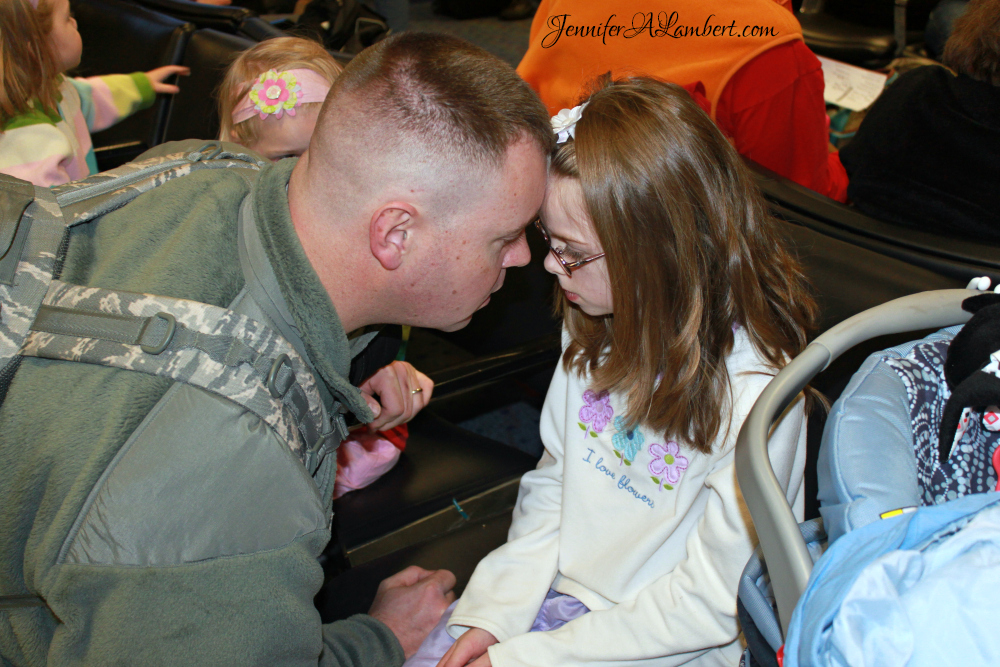
saying good bye

For like that whole deployment, it was winter, y’all. I’d never lived anywhere that had winter. I learned to drive in blizzards and buy snowsuits and boots for our kids. I found out where to go sledding. Then it snowed again and our basement flooded on Memorial Day in May. Fun times. {I’m not made for winter.}

There were occasions when I was miserable. There were evenings when I cried in a ball on the kitchen floor. There were nights I put the kids to bed at 6:30 so I could just be alone. I lost my temper with my kids. I hated my husband. I hated myself. I hated God.

But mostly, life ran like clockwork.

There was so much less laundry! I had leftovers from dinner for lunch the next day. I could cook bell peppers all I wanted (Aaron doesn’t like them)!!! My eldest daughter and I stayed up late on weekends, talking and watching movies, after the babies went to bed. The house was spotless. Everything was so efficient.

I am quite capable of parenting, housework, homeschooling, yard work, and simple home repairs. I knew other military wives who really could not function alone, and they had way more help from family, friends, church, and community than I’ve in my entire life. I was a single mom and homeowner for four years. So maybe that’s why it’s no big deal to me to go it alone sometimes. I trust myself.

I can get lazy and rely on my husband too much when he’s available to help. I get expectations. Without having to defend my parenting or having to divide my time between a wife’s role and parent’s role, it was often more peaceful.

I missed most the being able to sleep in an extra half hour or so on Saturday mornings while he made pancakes for the kids. But I also learned how capable my kids could be if given the chance.

Our expectations must change if we are to focus on the positives instead of the negatives. If we see everything as a learning opportunity rather than an inconvenience, it will help us make better memories for our families as we teach our kids what’s most important.

Homecoming

Are we different or special because we’re a military family?

Sometimes.

Is life hard for us because we’re a military family?

Sometimes.

Sure, there is often a lot of stress.

But despite all the negatives we could focus on, we realize how blessed we are to be able to live in different places and experience different cultures and learn so much about the world when other families miss out on that.

My son, our youngest child, told me the other day: “Mama, I love it that we get to move around and live in all these cool places and see the world.”

I just won life.

We got to live in Hawaii, Germany, Texas, Georgia, Utah, Germany, Ohio – and see such amazing sites rather than just the challenges – the stress and negativity that can come with inconveniences, deployments, TDYs, and PCSes.

I want my kids’ memories to be about the great opportunities we get to experience!

Resources:

  • Third Culture Kids 3rd Edition: Growing up among worlds by Ruth E. Van Reken, Michael V. Pollock, David C. Pollock
  • This Is Where You Belong: Finding Home Wherever You Are by Melody Warnick 
  • Almost There: Searching for Home in a Life on the Move by Bekah DiFelice
  • God Strong: The Military Wife’s Spiritual Survival Guide by Sara Horn
  • Tour of Duty: Preparing Our Hearts for Deployment: A Bible Study for Military Wives by Sara Horn
  • Chicken Soup for the Military Wife’s Soul: 101 Stories to Touch the Heart and Rekindle the Spirit by Jack Canfield, Mark Victor Hansen, and Charles Preston
  • Faith Deployed: Daily Encouragement for Military Wives by Jocelyn Green
  • Faith Deployed…Again: More Daily Encouragement for Military Wives by Jocelyn Green
  • Faith, Hope, Love, & Deployment: 40 Devotions for Military Couples by Heather Gray

You might also like:

  • Celebrating the Holidays During Deployment
  • Reintegration
  • How Deployment Affects Kids
  • When a Parent Travels
  • Military Children and Toxic Stress
Share
Pin2
Share
2 Shares
You might also like:

Filed Under: Military Tagged With: milfam, military, milkid, TCK

Humility in a Bottle

This blog may contain affiliate links: disclosure.
Please see my suggested resources.

March 12, 2015 By Jennifer Lambert Leave a Comment

My teen daughter probably would be labeled all sorts of letters if she attended school.

We prefer to manage any potential issues without medication. Many behavior issues can be fixed with proper nutrition.

She is often difficult when she wants to be.  Most days, we get along well — with only a few squinty stares as she weighs a decision whether to obey or fight.

What Does Stubborn Look Like?

I often struggle to successfully motivate and teach her while remaining unemotional and objective. I do know that she sometimes feels triumphant when I lose it over not being able to “control” her. She knows how to push all the buttons.

She is stubborn. Like, sit at the table for three hours, staring at one math page, refusing to pick up a pencil, stubborn.

Nothing we say or do seems to matter at these times.

Changing Behavior

My husband gets increasingly frustrated with not making any progress in prompting her to cooperate.

He finally turned to our oil table on a particularly difficult Saturday morning when we had hoped to have her quickly complete some school work before we all head outdoors for some fun. And she decided to be stubborn.

We had just ordered a Potential blend in our monthly essential oil shipment. We had purchased a Humble blend after testing it and liking it – and and we had used it before with great success.

He took both those bottles and dripped some of each into his palm and anointed her head.

Humble Blend + Potential Blend + Progesterone =Humility in a Bottle

Obedience in a Bottle | https://www.jenniferalambert.com/

While we don’t prescribe to blind obedience in our parenting methods, we do sometimes have to take more drastic measures to communicate to our children our desires, or override their potential poor choices. We have to coach and teach and model self-control. When stubbornness and stand-offs occur, we often take a step back to evaluate our attitudes. Sometimes, we look to natural methods like diffusing essential oils or massage to help ease the situation.

“Obedience is doing what you’re told, no matter what’s right. Morality is doing what’s right, no matter what you’re told.” L.R.Knost

The Effects

Within a few minutes, she had gotten dressed, become amazingly more agreeable, and was working diligently on her math assignment.

We stood back in awe.

She completed her math more cheerfully than ever before. The rest of the day, she was compliant and good-natured.

It was really weird, y’all.

Natural Progesterone

For several months, we have encouraged her to use a natural, plant-based Progesterone before bed. Our daughter does not use this regularly. We understand that hormone therapy is very sensitive stuff. She uses only a drop or two a few evenings each month.

The Progesterone has helped to maintain balance with her fluctuating hormones. We saw improvement in her mood steadily with essential oil use. Super helpful during this tumultuous time of being a fourteen-year-old girl!

I also like to use the Progesterone in the evenings. 

We also got labs completed to rule out any physical issues. Her vitamin D and iron levels were extremely low. Her cortisol levels were also very low, but the doctors assure us she will grow out of that. We upped the supplements and changed her diet to more natural with lots of vitamin B rich foods. We also got a happy funshine lamp. Within a few months, her mood is much more even and she doesn’t feel so tired anymore. The endocrinologist visits were very helpful to rule out any issues, problems, and set our minds at ease. We all eat whole foods, so diet is not really an issue.

We do not recommend treating hormones without professional guidance.

My husband and I are quite amazed by how quickly the oils help us with all sorts of situations. While we use the oils frequently and for various reasons, we are constantly surprised by new methods and successes.

Why did these particular essential oils help with compliance?

We Need to Learn Humility

What is in the Humble essential oil blend?

  • Rosewood (Aniba rosaeodora)
  • Ylang Ylang (Cananga odorata)
  • Geranium (Pelargonium graveolens)
  • Melissa (Melissa officinalis)
  • Frankincense (Boswellia carteri)
  • Spikenard (Nardostachys jatamansi)
  • Myrrh (Commiphora myrrha)
  • Rose (Rosa damascena)
  • Neroli (Citrus aurantium)

If My people, who are called by My name, shall humble themselves, pray, seek, crave, and require of necessity My face and turn from their wicked ways, then will I hear from heaven, forgive their sin, and heal their land. 2 Chronicles 7:14 AMP

We Need to Reach Our Potential

What will you find in the Potential essential oil blend?

  • Cypress (Callitrus intratropica)
  • Ylang ylang (Cananga odorata)
  • Cedarwood (Cedrus atlantica)
  • Tansy (Tanacetum annuum)
  • Fir (Abies concolor)
  • Galbanum (Ferula gummosa)
  • Frankincense (Boswellia carteri)
  • Sandalwood (Santalum album)
  • Lavender (Lavandula angustifolia)
  • Cinnamon (Cinnamomum verum)
  • Rose (Rosa damascena)
  • Spruce (Picea mariana)
  • Geranium (Pelargonium graveolens)
  • Jasmine (jasminum officinale)

Essential Oils as Effective Parenting Tools

These essential oils (among many others!) are great parenting tools.

We hesitate to use the word obedience, but sometimes, we do want to firmly guide kids in a certain direction while keeping communication open and modeling self-control. I have more life experience than a child, tween, teen, young adult. I’ve been there and realize the consequences that could follow their actions. Sometimes, it’s good for them to experience the consequences. I don’t want to save them from learning experiences, but I do want a teachable spirit.

We encourage our children to work through their flesh natures and to practice better behaviors, to develop self-control. We pray and discuss the behaviors that honor God and others. The behaviors that we desire them to exhibit as they grow up into adulthood. We don’t use rewards or punishments. We expect intrinsic motivation. We teach empathy.

Essential oils are great tools to help us encourage the desired character we want exhibited in our children. I love that we can use oils, combined with nutrition, supplements, and prayer, to help us achieve our family goals.

We focus on respectful parenting. We don’t use punishments and rewards. We don’t bully, coerce, or physically restrain our kids. We use our words calmly and reason with our children about expectations, needs, and desires. We listen. We explain. We teach and coach. There are occasional battles of wills and it’s not about winning. It’s about communication and relationship. Love is more important than getting one’s way. We have to shift our focus and figure out what’s really important. Some issues are non-negotiable.

Check out my favorite resources here!

Also see my Parenting and Leadership Pinterest boards.

Share
Pin149
Share
149 Shares
You might also like:

Filed Under: Essential Oils Tagged With: essential oils, parenting, teen

Building a Better Vocabulary

This blog may contain affiliate links: disclosure.
Please see my suggested resources.

March 11, 2015 By Jennifer Lambert 1 Comment

Having a high schooler means that I have to get real intentional about vocabulary building.

It’s a lot of newness with grades and schedules, and teaching her to budget her time well. We have to make lists and check off the assignments and stay on task. We’re not used to having to be so diligent keeping track and recording.

I am blessed to have four children who love reading and words as much as I do. My husband complains there is never anywhere for him to sit because every surface is covered in books.

I don’t see the problem.

5 Tools for Vocabulary Building

5 Tools for Vocabulary Building

Reading and writing are the best tools to building a strong vocabulary. But sometimes we need a little help.

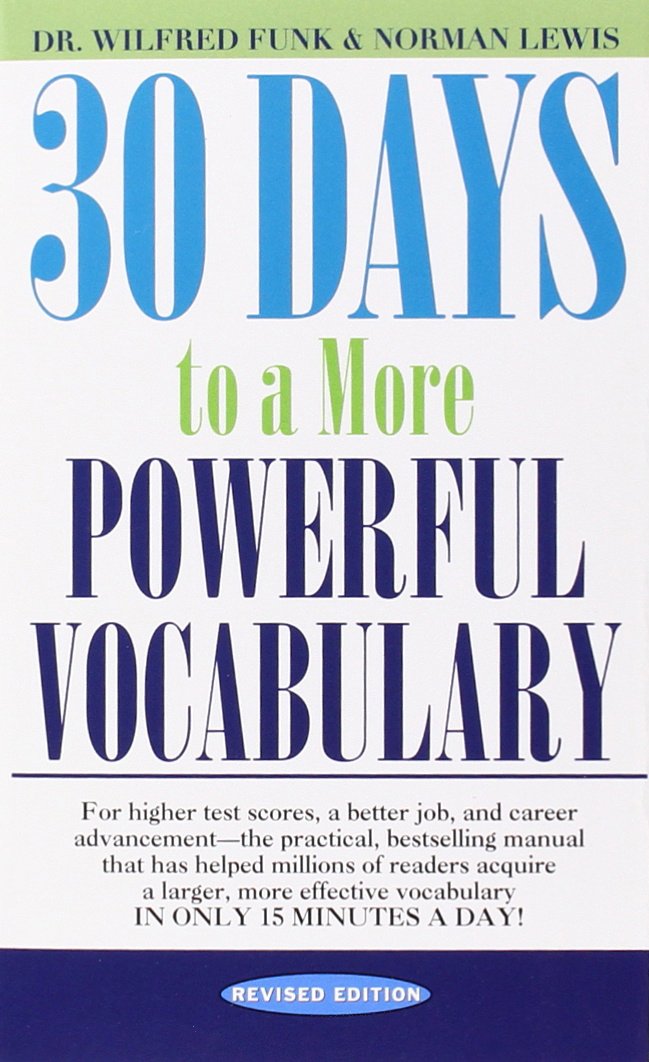
1. 30 Days to a More Powerful Vocabulary

30 Days to a More Powerful Vocabulary is a great little book that helps with test scores and cramming vocabulary in that style. I used it when I taught study skills and test taking tips and my husband and I used it to refresh for grad school entrance exams.

2. Reader Notebook

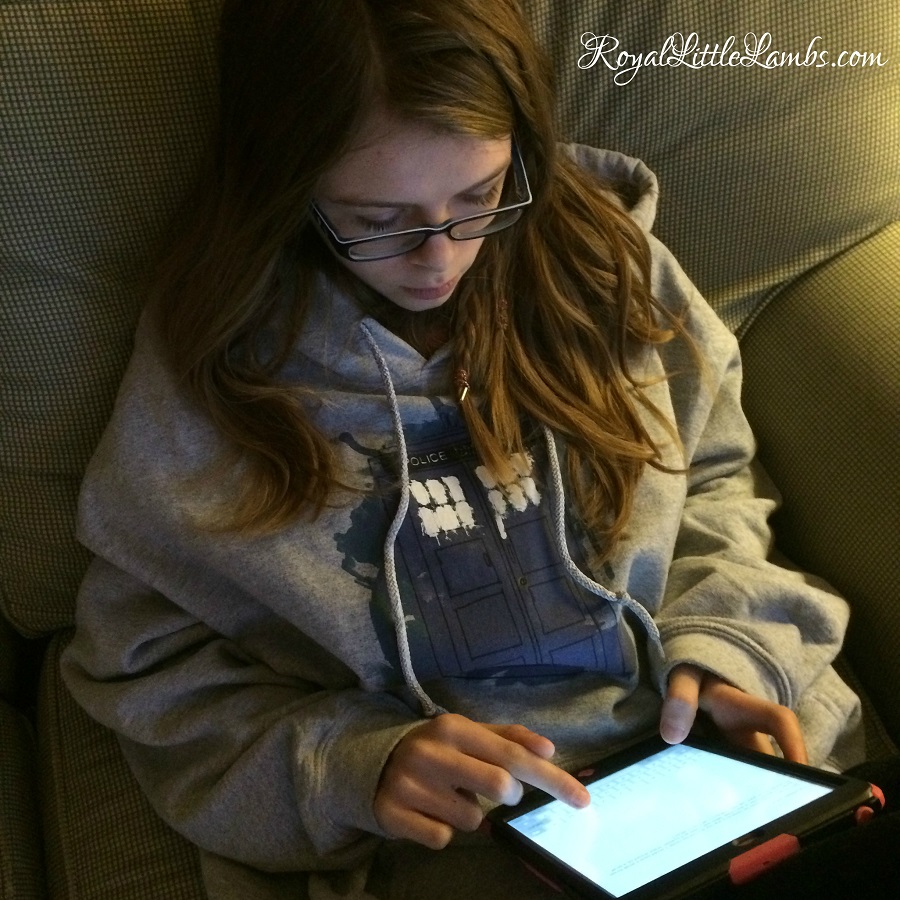
Keeping a reading writing notebook makes my daughter own her vocabulary lists. Ideally, she jots down words in the quotes as she reads literature and looks up definitions to keep a running list. Sometimes it’s an archaic word or a term in a new context, but this helps her be responsible for learning. With the Kindle app on her iPad, it’s often instantaneous to learn definitions and she gets lazy, but she’s only cheating herself. She loves adding Notebooking Pages to her reading writing notebook. She uses it for all her literature reading.

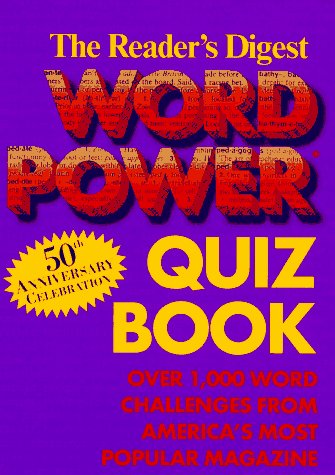
3. Reader’s Digest Word Power

My father and I have been competing for decades on the Reader’s Digest Word Power quizzes and I am so pleased that my kids are now joining in the competition.

4. Word of the Day

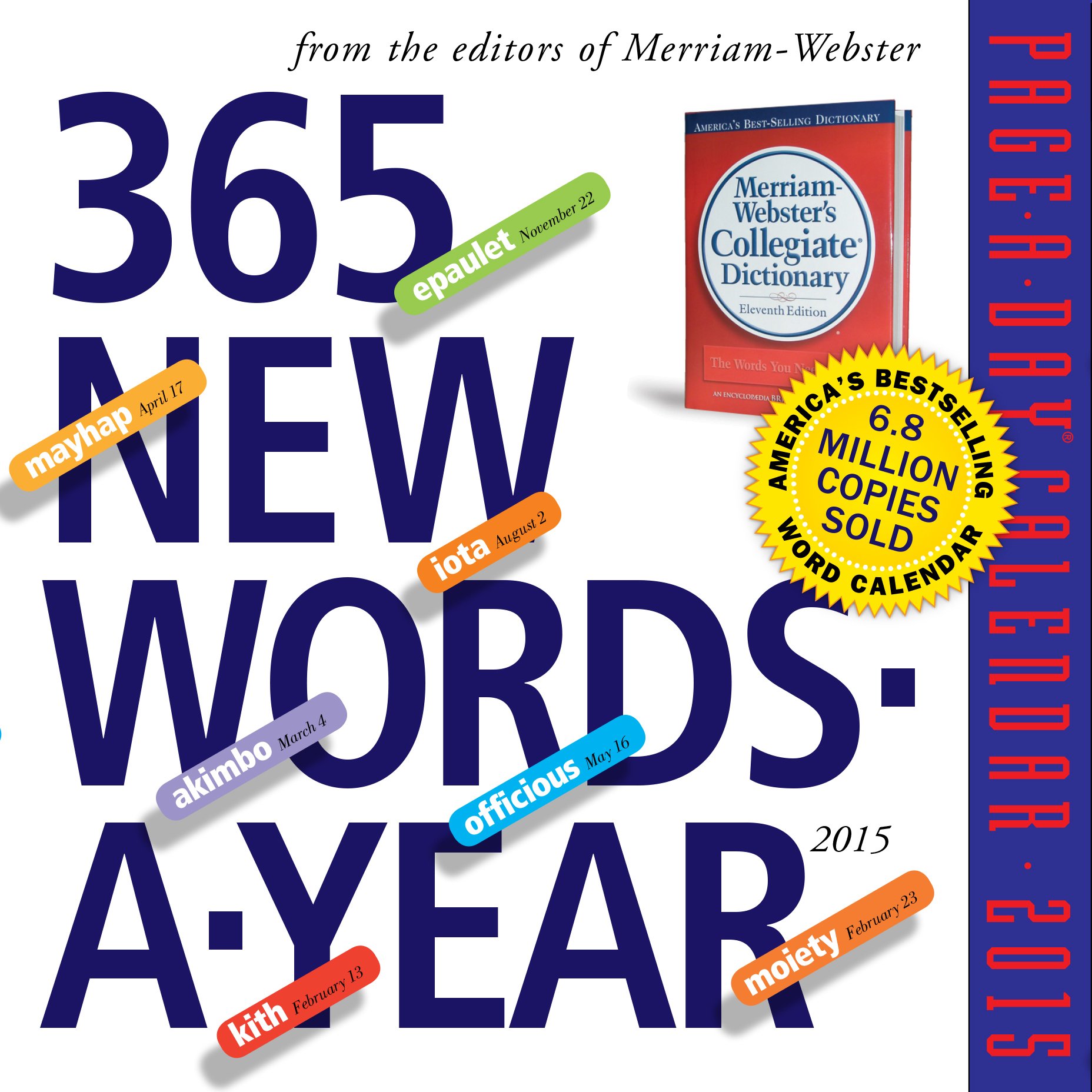
When I was a teen, my parents bought me a Word of the Day tear-off desk calendar. I loved that thing. My kids now love to check the word of the day app every morning.

5. Spelling Workout

My kids love Spelling Workout for quick and fun vocabulary lessons. I love the various activities in each lesson – prefixes and suffixes, analogies, synonyms and antonyms, dictation, editing, freewriting exercises, puzzles, riddles, and more. Books recommended for grades 1-8.

These are fun vocabulary building tools for the whole family to learn new vocabulary.

It can be a challenge to try to fit those new words into regular conversation throughout the day. We have done copywork in the past, but I think that just focuses on good penmanship. I love to work with my kids and these vocabulary builders have assisted our kids increase their word count. I am blessed that we have strong readers and they all love words and learning how to use them well.

Share
Pin3
Share
3 Shares
You might also like:

Filed Under: Homeschool Tagged With: reading, writing

Resources for Brain Health

This blog may contain affiliate links: disclosure.
Please see my suggested resources.

March 9, 2015 By Jennifer Lambert 3 Comments

Despite having a natural lifestyle, we still occasionally have a focusing issue with our children. These tips have worked for us (and our friends) to keep our kids medication-free.

Sometimes, it’s as simple as adding a nourishing, vitamin-rich diet and supplements to help kids (and adults) to focus and think well. We recognize that some individuals need medications. We also never, ever recommend ending a medication regimen without consulting your physician.

Resources for Brain Health

Resources for Brain Health

1. The Autism & ADHD Diet by Barrie Silberberg

Barrie Silberberg, a mother who honed her skills using the GFCF Diet with her son, who was diagnosed with ASD, gives you everything you need to know to put the diet into action with your child, including:

  • What the GFCF Diet is and why it’s so effective
  • How to start the diet
  • Where and how to buy GFCF foods
  • How to avoid cross-contamination
  • How to understand labels on packaging
  • How to make this diet work day-to-day

2. The Feingold Cookbook by Ben F. Feingold, M.D.

The Feingold Diet is a form of elimination diet where foods containing certain harmful additives are removed and replaced with similar foods that are free of those additives. When starting the diet, certain foods and non-food items containing an aspirin-like chemical called salicylate are also eliminated, and later tested for tolerance.

Happily, there is a huge selection of foods of every kind, including snacks, desserts, convenience foods and mixes that are acceptable on the Feingold Diet.

First, the diet is used as a  diagnostic tool to determine if any of the eliminated items are triggering some or all of the problems you are seeing.  When successful, it is continued as a treatment, and can also be combined with any other necessary medical treatments.

3. Eating for Autism by dietitian Elizabeth Strickland

What your child eats has a major impact on his brain and body function. Eating for Autism is the first book to explain how an autism, Asperger’s, PDD-NOS, or ADHD condition can effectively be treated through diet. Eating for Autism presents a realistic 10-step plan to change your child’s diet, starting with essential foods and supplements and moving to more advanced therapies like the Gluten-Free Casein-Free diet. Parents who have followed Strickland’s revolutionary plan have reported great improvements in their child’s condition, from his mood, sleeping patterns, learning abilities, and behavior to his response to other treatment approaches. Complete with 75 balanced, kid-friendly recipes, and advice on overcoming sensory and feeding skill problems, Eating for Autism is an essential resource to help a child reach his full potential.

4. Eating Mindfully by Susan Albers

What would it be like to really savor your food? Instead of grabbing a quick snack on your way out the door or eating just to calm down at the end of a stressful day, isn’t it about time you let yourself truly appreciate a satisfying, nourishing meal?

In our modern society, weight concerns, obesity rates, and obsession with appearance have changed the way we look at food—and not necessarily for the better. If you have ever snacked when you weren’t hungry, have used guilt as a guide for your eating habits, or have cut calories even when you felt hungry, you have experienced “mindless” eating firsthand. This mindless approach to food is dangerous, and can have serious health and emotional consequences. But if you’ve been mindlessly eating all your life, it can be difficult to make a change. When it comes down to it, you must take a whole new approach to eating—but where do you begin? Practicing mindful eating habits may be just the thing to make that important change. In fact, it might just be the answer you’ve been searching for all these years.

The breakthrough approaches in Eating Mindfully, by Susan Albers, use mindfulness-based psychological practices to take charge of cravings so they can eat when they are hungry and stop when they feel full. Ten years after the release of the first edition, this book continues to help thousands of readers change the way they approach mealtime. So what’s changed? For starters, there is a new section that focuses on the “occasional mindless eater.” This second edition emphasizes that mindful eating isn’t only for those on a diet or for those who have severely problematic eating habits—it’s for everyone. In addition, this new edition features over 50 new tips for eating mindfully. Inside, you will learn how to be more aware of what you eat, get to know your fullness and hunger cues, and how to savor and appreciate every bite. You will also learn how mindlessness corrupts the way you eat, and how it can manifest in a number of different eating problems. No matter where you are in your journey toward mindful eating, this book will be an invaluable resource, and you will gain insight into how mindfulness can provide you with the skills needed to control the way you eat—leading to a healthier, happier life.

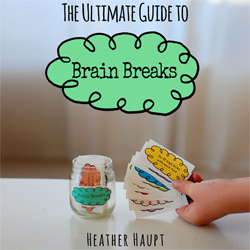
5. The Ultimate Guide to Brain Breaks by Heather Haupt

Fun ideas to help your kids take some breaks so they can work hard when they need to focus.

The Ultimate Guide to Brain Breaks

We specifically use a combination of essential oils, dietary supplements, a natural whole foods diet, cod liver oil, plenty of fresh air, and exercise to help us perform at our best.

Share
Pin6
Share
6 Shares
You might also like:

Filed Under: Health Tagged With: health, natural living

Creating a Healthy Family Culture

This blog may contain affiliate links: disclosure.
Please see my suggested resources.

March 9, 2015 By Jennifer Lambert 2 Comments

Most of my time as a mom seems to be spent going against the grain.

Making sure I do everything differently than my parents did.

Being counter-cultural.

Finding my groove.

Defining my marriage and being a good example of a wife to my kids (and failing fantastically!).

How Do I Create a Healthy Family Culture?

Creating a Healthy Family Culture

I realize that every experience, every word, every tradition, every event, every occasion…makes memories for my kids.

And those memories? Do I want them to reminisce and feel anxious and need therapy? Or do I want them to get warm fuzzies when they look back on this event or tradition?

Do I want them to desire to replicate or reject their past?

What are my priorities as a mom?

What do I want my kids to remember?

What is important in our lives?

I have goals I want my kids to achieve and I have to hold everything up against those standards to make sure they measure up. I work backwards from those goals, constantly reevaluating and changing to match those values.

We’re Geeky.

Nerd is the new sexy. When I was a teen, it just wasn’t. I’m so thrilled that being smart is cool and my kids are proud to be geeky.

I love that the kids make Doctor Who references for everything. Alex is becoming obsessed with Star Wars. Liz understands the merits of Star Trek and appreciates Sherlock. The kids love classic sci-fi stories.

Conversation always revolves around superheroes and Jesus.

I love how we can relate all these fictional characters to history and the Bible. There’s always a Christ figure in comics and sci-fi. There’s always good vs. evil. And the good guy always wins.

Math and science are super important to our family, and even though they were my least favorite and worst subjects in school, I love learning right along with my kids now. With my husband’s help, I make these a priority in our homeschool. I ensure my girls won’t become statistics in a classroom environment. They can learn STEM subjects safely at home and soar as high as they want.

The only problem? My kids often find it difficult to make friends in their peer groups. It’s sometimes hard to find other kids who are interested and knowledgeable about these topics.

Bible Time is Important.

The kids love to listen to and read the Bible and do Bible studies.

I didn’t grow up with any religious education and we didn’t attend church, so I want to make sure I don’t fail my family in this area. We try to attend church often and we make sure to have open discussion at home about our worldview. And I provide many opportunities for Bible study – all sorts of tools and apps to help us learn about God and His creation.

We all read Bible in the morning. We include biblical curriculum in our daily school lessons. We’ve recently added this app PrayNow to our nightly reading repertoire.

Alex especially gets upset if anything disrupts Bible time. He reminds me every morning and evening that it’s time to read Bible.

So, I’m doing something right!

We Love Books.

We have five overflowing bookcases (I wish we had room for more!) and we max out the family library account each and every week. All of my kids love reading and listening to read alouds. Even Dad likes to hear the stories at bedtime!

Our house is built on books. I’ve always read to my babies and we make sure we incorporate reading, writing, and language study in all our subjects.

Reading opens so many doors to learning and I am so grateful that my kids love to learn. The kids and I all prefer books to screen-time. But I do utilize the Kindle app on all our iPad minis for school and pleasure reading.

Words are so important and I am so grateful that I can share my love of language with my kids.

I Want to Leave a Legacy of Health.

Cooking and eating together is our way of life. The kids love to help in the kitchen and we revel in creating delicious, healthy real food. We seldom dine out because it’s cheaper, healthier, less stressful, and tastier to eat at home.

We save money by eating our meals at home. We have achieved greater health by eating real food at home. We don’t have official snack times because it’s ok and normal to get hungry between meal times. I do keep yogurt, cheese, nuts, fruits, and veggies in stock that the kids know they can eat if they ate an early breakfast or if dinner will be later than usual.

Our kids seldom ask to eat out as a treat since they understand that is not our standard.

When we do eat out, it’s so much more special. Our kids have impeccable manners (which we achieved with a lot of consistent training). I am never embarrassed to take them anywhere. The quality of food in European restaurants is so much more superior to that of American food. But I know the limits of my kids. They don’t desire a two-hour dining experience. I have small, quiet toys in my purse they know are only for those times.

We do plan ahead if we’re going out since there are no real fast food places or drive-thrus. It can be inconvenient at times. We usually eat before we leave or make sure we’re home by mealtime. I marinate meats in the evening or morning for dinners or use my slow cooker. Often, I pack snacks or a picnic if we’re going on a field trip (or in case of emergency). And we always bring water bottles with us.

The kids know the medicine cabinet contains vitamin and mineral supplements, tinctures, herbal remedies, and essential oils instead of the typical products we used to have. I’m training them that there’s a better way. They can heal with food, exercise, fresh air – proper methods of living instead of bandaging symptoms. See our daily routine.

I often wonder what some families do for standards.

If they don’t follow Jesus, what moral compass do they have to teach to their children? Where do they draw the line? What do they consider right and wrong?

I struggled with these issues growing up. I didn’t have a good moral compass and nothing to measure anything by.

As our children get older and have more freedom to attend lessons and extracurricular activities with a variety of people from different backgrounds, this question comes up more often.

If I don’t have a solid foundation to stand on to show my children, then we are more likely to falter. If I don’t have firm goals, better priorities, and strong values, then I can’t teach my children what to work toward and why.

I want my children to understand what we believe and why and how they can achieve their personal goals within that worldview.

I expect respect from my kids. But I must also give them respect.

You might also like:

  • If I Had a Sibling
  • Books About Siblings
  • Should I Label My Children?
  • The Whole-Brain Child: 12 Revolutionary Strategies to Nurture Your Child’s Developing Mind by Daniel J. Siegel and Tina Payne Bryson 
  • Jesus, the Gentle Parent: Gentle Christian Parenting by L.R. Knost
  • Peaceful Parent, Happy Siblings: How to Stop the Fighting and Raise Friends for Life by Dr. Laura Markham 
  • Peaceful Parent, Happy Kids: How to Stop Yelling and Start Connecting by Dr. Laura Markham 
  • Siblings Without Rivalry: How to Help Your Children Live Together So You Can Live Too by Adele Faber and Elaine Mazlish
Share
Pin
Share
0 Shares
You might also like:

Filed Under: Family Tagged With: healthy living, parenting

A Simple Life

This blog may contain affiliate links: disclosure.
Please see my suggested resources.

March 2, 2015 By Jennifer Lambert 3 Comments

It’s ok for kids to be bored.

I fear for a society that thrives on medication and activity.

I don’t feel that I have to fill every second of our days. I love that we have downtime.

I think creativity is born out of boredom.

I prefer a simple life.

I prefer a Simple Life

We like to be home during the week. We homeschool.

I realize many do homeschool differently, with frequent field trips, co-op, classes, etc. And that may work for them. But it just doesn’t work for me.

We just signed the girls up for weekly music lessons. Liz is gonna be in a play and she meets weekly with Civil Air Patrol. We went to a birthday party and homeschool free gym time a couple weeks ago.

I am stressed running around that much.

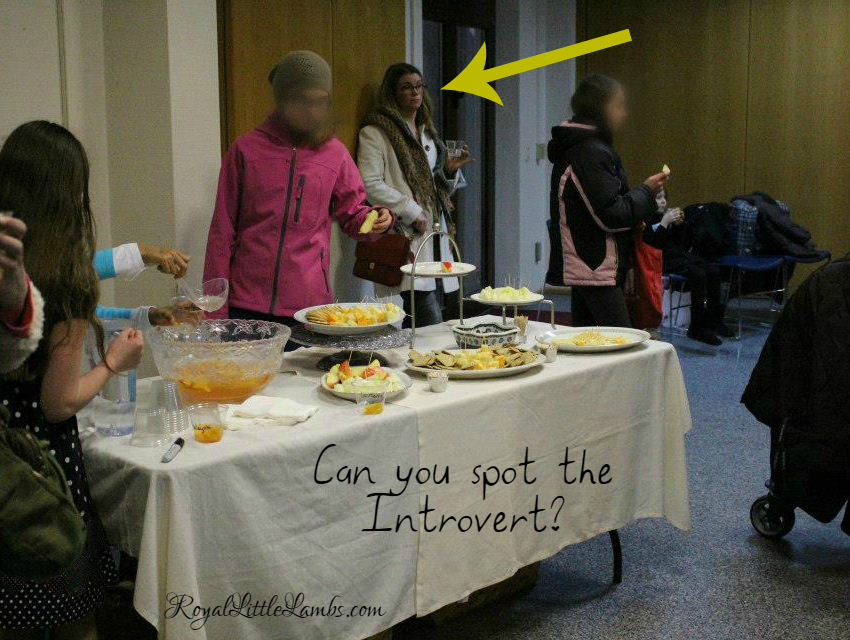
But I know it’s good for them. This INTJ mama knows her social babies need some activity and human interaction.

See below, I took my kids to a homeschool art show and they had a blast. I enjoyed the punch and observing. I’m a good mama!

Can you spot the Introvert

I still strive to have a homecooked meal on the table every night. I prefer that we all eat together, and we succeed at that, except Mondays because of Civil Air Patrol and during play rehearsals. Liz eats after afterwards.

On these dreary afternoons and weekends? The kids do get whiny and bored. Um, play with toys. No, we’re not sitting glued to screens.

I don’t feel the need to create jam-packed periods of activity. We prefer downtime.

Boredom is actually a good thing.

My kids get creative when they’re bored.

I’m not their cruise director.

They need to learn to play. I refuse to feel guilty because I make sure they get plenty of mama time so they aren’t resentful of the times I tell them to go find something to do.

When we take vacations, we make sure there is plenty of time to explore.

We don’t do amusement parks.

You’ll never see us at Disney.

We love nature, history, art, God’s and man’s creation and beauty to envelop us and teach us.

I worry about comments from parents who ask for travel tips that are “not cultural or historical -as my kids will get bored VERY QUICKLY.”

That is all we want to do!

We’re in Europe for such a short time and we have our daily lives, but we want to soak up all that culture and history as much as possible. These people make me sad.

I won’t give up.

This year has certainly been one our most difficult. There were several times I said the words: “Maybe we should enroll them in school.” The kids tried my patience and our teen pushed all the buttons to drive us nuts. I questioned everything and reevaluated our goals and reasons.

It gets tedious adulting and parenting all the time. I have to protect myself so I don’t get burnt out.

I set limits on my time.

I used to have trouble saying no. I’ve grown out of that obligation anxiety and it feels so good.

I am not obligated to take a position of leadership (but I can’t complain if it’s not done my way either).

I am not obligated to follow every page or person online who follows me (sorry). I don’t have to subscribe to RSS or newsletters if I don’t have time or interest to read them. Choices, people.

I am not obligated to sign up my kids for every activity that is available. I am not competing with anyone and I don’t have to compare. My family understands our limitations on time, budget, and my lack of desire for being a taxi service.

I like having free time and not being scheduled every minute of every day. I like a simpler pace.

Share
Pin2
Share
2 Shares
You might also like:

Filed Under: Family Tagged With: homeschool, simple

Raising Readers

This blog may contain affiliate links: disclosure.
Please see my suggested resources.

February 16, 2015 By Jennifer Lambert 5 Comments

Liz has always been an accelerated reader. It never occurred to me to not let her fly.

She attended day care from six months – and then a Christian preK that used A Beka curriculum.

She complained loudly that they finished their curriculum by April and then watched Veggie Tales movies for the rest of the school year. The program did give her enough to go on for her to teach herself how to read.

So I didn’t have to really toilet train her or teach her how to read. Not sure how I feel about that.

I remember when she read the entire series of Magic Treehouse and Junie B. Jones our first few months of homeschooling – and we carried home stacks of Minnie Moo and early chapter books from the library each week.

I didn’t know that was unusual for a four-year-old.

I chalked it up to early exposure to words and reading. I was an English professor after all.

We had more books than anything else in our house. Books are important.

I very quickly developed some standards for her reading material.

I didn’t really like Junie B. Jones and a lot of that sort of fluff. I discovered Charlotte Mason and Ambleside Online and The Well-Trained Mind and all these amazing works of literature for children. Living books entered my vocabulary.

Somehow, I skipped over a lot of really good reading material when I was a kid.

I suppose I am a product of a school system focused on test scores and workbooks more than critical thinking and quality of reading material.

I actually really loathed reading until I was about 10.

I remember one night, lying to my mom about a homework reading assignment and I couldn’t narrate back to her anything about the text. I still feel ashamed. But it was so boring and I really didn’t care for any of the school assignments.

And I seem to have jumped right into Stephen King and Dean Koontz in late elementary school. I didn’t have the greatest guidance from teachers or parents.

I honestly don’t remember reading anything worthwhile in school until 8th grade with Diary of Anne Frank. We only did maybe 2-3 novels each year of high school. In 11th and 12th grade, I sat in the back of English class, by the window overlooking the teachers’ parking lot, reading the Beat poets and Russian novels that were nowhere on the curriculum lists.

I didn’t know how to write an essay until my sophomore year in college, in my Shakespeare class.

So, of course, it made perfect sense for me to become an English teacher.

My ten years or so of teaching English taught me a great deal about life, kids, parents, and education.

I certainly knew what I didn’t want for my kids when we decided to homeschool.

Thank God all four of our kids love words, books, and writing. Read alouds are an everyday, twice-a-day occurrence – and even the littlest one loves to snuggle while I read aloud from really hard, great books.

I am blessed with curious children, constantly asking the hard questions, demanding to get at the marrow of life, desiring to know what’s really important, trusting in my opinions, striving to learn the righteous path.

It’s a really tough transition into high school. The early teen years are fraught with confusion and making difficult connections and having virtually no life experience from which to draw conclusions.

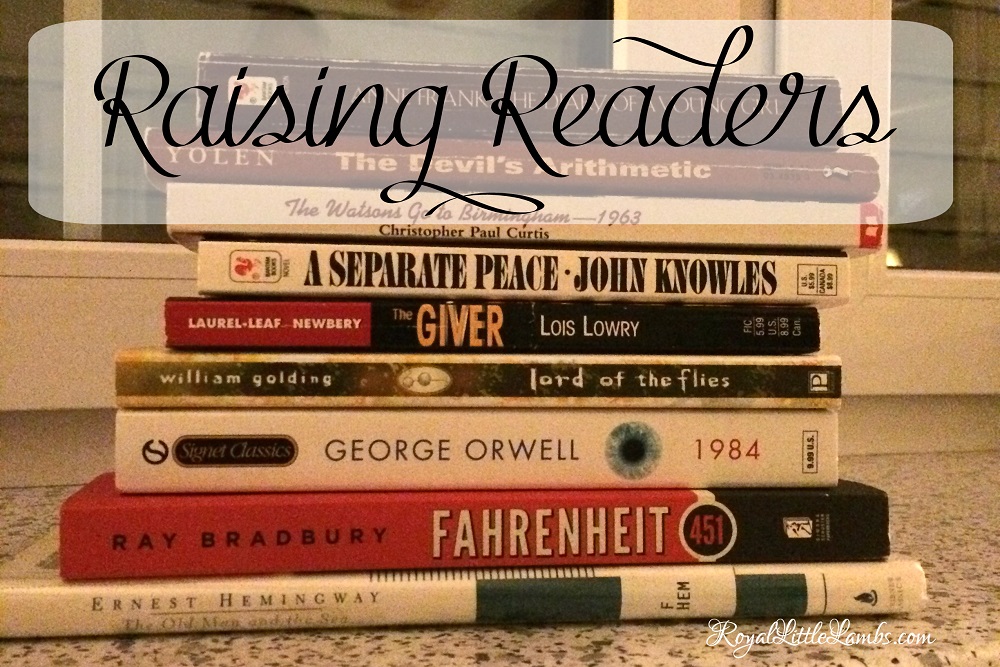
I’m raising readers.

Raising Readers - Reading literature helps us to learn and understand the nature of man in all its beauty and ugliness. | www.JenniferALambert.com

How to Raise Readers

Read read READ aloud to kids from prebirth until they won’t let you anymore. We read aloud in the mornings and bedtime stories in the evenings.

Buy lots of books. Get lots of books from libraries or used sales or borrow from friends.

Read a lot all the time and let that habit pass like osmosis to the rest of the family.

Find books on topics your kids are interested in. There’s always something for a reluctant reader. But don’t suggest or press or offer it. Just leave it lying around in their path for them to discover.

Audiobooks count. Movies based on books count. Anything to get kids interested in a literary life, to love words and phrases and imagination.

  • The Read-Aloud Family: Making Meaningful and Lasting Connections with Your Kids by Sarah Mackenzie
  • The Read-Aloud Handbook by Jim Trelease
  • Before They Were Authors: Famous Writers as Kids by Elizabeth Haidle
  • Give Your Child the World: Raising Globally Minded Kids One Book at a Time by Jamie C. Martin
  • The Book Whisperer: Awakening the Inner Reader in Every Child by Donalyn Miller
  • Reading in the Wild: The Book Whisperer’s Keys to Cultivating Lifelong Reading Habits by Donalyn Miller

Great literature helps us learn about people and events and the WHY.

This cycle 4 of modern times in our history studies is a really tough year to learn. I skipped most of the subject matter TWICE during our history cycles because I.Can’t.Even.

Modern history is tragic and really hard.

But we need to just jump in and do this.

Sample of a 9th grade reading list:

  • The Call of the Wild and White Fang by Jack London
  • Anne of Green Gables by LM Montgomery
  • The Short Novels by John Steinbeck
  • The Old Man and the Sea by Ernest Hemingway
  • Short Stories by Faulkner
  • The Great Gatsbyby F. Scott Fitzgerald
  • The Jungle by Upton Sinclair
  • The Catcher in the Rye by JD Salinger
  • The Outsiders by SE Hinton

Plays:

  • Our Town by Thornton Wilder
  • The Glass Menagerie by Tennesee Williams
  • The Crucible by Arthur Miller

Dystopian and Sci-Fi:

  • The Metamorphosis by Franz Kafka
  • The Invisible Man by HG Wells
  • 1984 and Animal Farm by George Orwell
  • Lord of the Flies by William Golding
  • A Separate Peace by John Knowles
  • Fahrenheit 451 by Ray Bradbury
  • The Giver by Lois Lowry
  • Have Space Suit – Will Travel by Robert A. Heinlein
  • I, Robot by Isaac Asimov

War:

  • The Diary of a Young Girl by Anne Frank
  • The Book Thief by Markus Zusak
  • Broken by Lauren Hillenbrand
  • Lots of history material from the library and she’s performing in the play KinderTransport.

Civil Rights:

  • Bud, Not Buddy by Christopher Paul Curtis
  • Roll of Thunder, Hear My Cry by Mildred D. Taylor
  • Invisible Man by Ralph Ellison
  • To Kill a Mockingbird by Harper Lee
  • The Help by Kathryn Stockett
  • The Watsons Go to Birmingham – 1963 by Christopher Paul Curtis
  • Maya Angelou

We’re also watching many great films that showcase historical events well. Liz and I are having great discussions. She asks amazing questions and understands well. I’m actually not forcing too many assignments. She has a reader notebook and some assignment notebooking pages, but much fewer than usual. I want her to enjoy reading.

I know many parents shy away from the tougher subjects. Modern and contemporary history and events are too close. It’s uncomfortable. We remember lots of it. Our parents and grandparents lived through it. Their views formed our opinions and values. But we must study and review events with new eyes as we teach our children so we can all learn from the mistakes of the past.

We do our children a disservice not to walk through this with them and teach them about horrific events that took place. We must put aside any discomfort to discuss events that affects millions of people. We can’t live in a bubble and pretend that horror didn’t and doesn’t happen every day.

I refuse to send my teens out into the world ill-equipped– without an understanding of the sexual nature of mankind, without a knowledge of war, without being taught discernment, without an awareness of people’s fears.

Reading literature helps us to learn and understand the nature of man in all its beauty and ugliness.

My youngest daughter is disappointed that she can’t join the homeschool book clubs in our area because they have rules and their two clubs are only for certain age groups.

She loudly complained to me, “But Mo-om! I read teen books!” She’s 7. It pains me to see her confusion.

Even in the homeschool community, accelerated students are shunned. I get that there have to be rules, but kids shouldn’t be punished for being smart.

My 5-year-old son is now reading level 3 readers.

I won’t dumb down life for my kids.

Literature Study (or Book Report) Notebooking Pages

The #1 Writing Tool
Share
Pin24
Share
24 Shares
You might also like:

Filed Under: Homeschool Tagged With: book list, high school, reading, Tapestry of Grace

A Day in Our Life

This blog may contain affiliate links: disclosure.
Please see my suggested resources.

February 11, 2015 By Jennifer Lambert 2 Comments

Want a peek into our day? I’m always curious about other people’s schedules and how they fit in homeschool, work, chores, and whatever.

I aim at a 2 for 3 kinda day.

I can focus on our homeschool. I can focus on housework and chores. I can focus on my blogging and home business.

On any given day, I can’t get it all done well.

I can successfully get homeschool and chores accomplished or chores and work or homeschool and work. But never all three.

A day in our life.

Here’s a typical Monday for us.

I have a 15 year old girl, two girls almost 9 and 8, and an almost 5 year old boy.

Morning

Alex wakes me up at

6:40.

He demands bacon and eggs. We read his Bible storybook and I do my Bible study. Kate soon comes down. They watch X-Men on Netflix while I make breakfast. I clean up the kitchen from last night’s dishes.

BACON and Sausage

We eat. They demand a sip of coffee. We clear the table. I load and start the dishwasher.

I take my supplements.

I begin a load of laundry.

8:14

Liz comes downstairs and doesn’t want anything to eat. Tori soon follows and also doesn’t want anything to eat yet.

I encourage Tori to eat something. I think she snags some bacon and cereal.

(This is not going at all like I planned! The idyllic family breakfast just isn’t happening.)

Kate and Tori sweep the dining room.

Liz reads her Bible study.

Morning Devotional Time

I give the kids their supplements.

I tell the girls to sweep again and actually move the chairs and sweep the entire dining room area, baseboards and all.

Tori and Kate read their Sword Fighting Bible devotional. They fight over who reads what. I intervene.

I remind Liz to go make her bed and take her supplements. She finally decides to eat a tangerine.

We apply our daily essential oils.

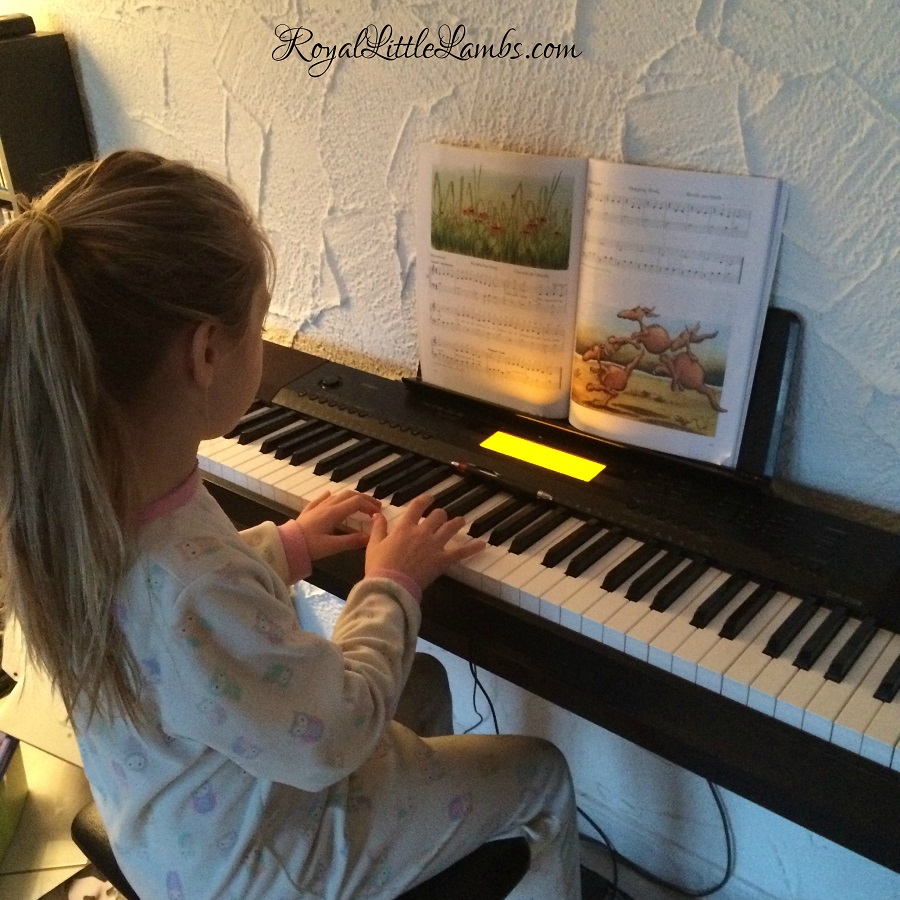
Kate practices piano and Tori practices guitar. They’re doing so well! We just began music lessons this month.

Practicing Piano
Practicing Guitar

School Time

8:50

We start with our read alouds. Today is Anne of Green Gables, Winnie-the-Pooh, Harlem Stomp!, and World Wars.

Halfway through Anne, Tori accidently bumped Alex’s nose. After comforting him and asking her through clenched teeth to sit on the other sofa, we finish a chapter of Anne.

I remind them all to brush their teeth. Why must I remind them to brush their teeth every single day?

Then we finish reading Pooh, World Wars, and Harlem Stomp.

9:42

Alex has a tantrum that he’s starving, but he won’t tell me what he wants to eat. He doesn’t want a banana. He runs to his room in despair.

The girls and I head to our school room.

Alex decides to eat a carrot.

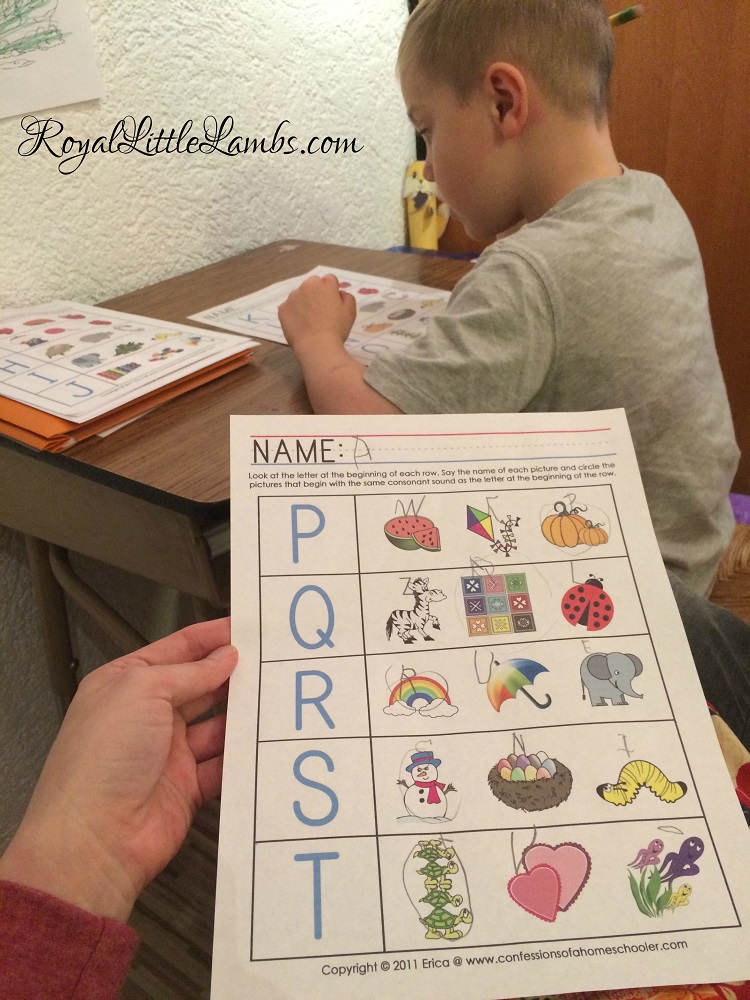
I help Alex with reading printables and Singapore math.

This kid kills me. Apparently, he didn’t feel challenged enough, so he wrote the beginning letter over each picture also:

Phonics Work

Tori and Kate work independently on their Spelling Workout and a winter fun pack.

Liz works on Latin Form 2, VideoText algebra, and Apologia physical science independently. I check those later.

I do some money math with Alex. He refuses to read or be read to. sigh

11:18

I put frozen mini pizzas in the oven for lunch. Because, sometimes, it’s just easier, y’all. I do cut up some and onion, red bell pepper, and pepperoni for toppings. Semi-homemade, right?

Afternoon

12:23

Liz and I watch a couple episodes of Downton Abbey with our lunch. The littles watch the iPad – Wild Kratts.

They stack their plates on the counter and go play.

1:13

I help Liz organize her math notebook and write out her agenda for the week. We discuss history and literature and what she learned last week.

I realize I never finished school with Tori and Kate. sigh

We school year-round, so this isn’t a problem. We usually alternate science and history every day. We’re so ahead in math that it’s not an issue.

3:24

I hang up the laundry to dry. I print out eMeals.com recipes for the week. Liz wants a cool notebook cover for math. I find some funny math eCards and print a collage of those. She’s delighted.

Tori and Kate are playing so nicely with dolls and/or Legos upstairs. Alex watches his shows on his iPad.

3:57

I link up some blog posts and do some research.

We have to leave the house at 5:00 to take Liz to Civil Air Patrol for PT at 6:00. It’s already dark. I drop Liz off at the gym and stop by the library to check out a stack of civil rights leaders’ biographies.

Dinner time

We get back home about 6:15.

I make a quick dinner – sautéed pecan chicken, couscous, and salad. I unload the dishwasher so we can easily load our plates. I tell the kids to go ahead and get in pajamas so it’s an easy night. After dinner, they run to brush their teeth.

Evening

It’s now 7:09 PM.

We have family reading – currently Pollyanna and Bible stories. We put our bedtime essential oils on. We have a prayer circle, holding hands (and the cats always snuggle in too!). I sing lullabies.

8:00

Bedtime!

Liz and Aaron come home about 9:00 or so, eat leftover dinner, clean up, and it’s lights out for all.

I usually stay up until 11 or so, reading and working.

Share
Pin
Share
0 Shares
You might also like:

Filed Under: Homeschool Tagged With: homeschool, schedule

Showing Love to My Children

This blog may contain affiliate links: disclosure.
Please see my suggested resources.

February 10, 2015 By Jennifer Lambert Leave a Comment

How can I show my children I love them? How do they really know? How can I do more than a perfunctory kiss on the forehead and “I love you” before bed? How can I comfort them in the absolute knowledge of our unconditional love?

Do I speak my child’s love language?

Chances are, we might have trouble communicating love to each other.

Showing Unconditional Love to My Children

How I can show unconditional love to my children:

Positive Words

Kids need to hear positive words from their parents. We all need affirmation. Recently, I was accosted by a mom of one of my daughter’s friends. She sang her daughter’s praises but condemned her son. They stood right beside her. I was so uncomfortable. Her daughter beamed and tossed her hair while her son stared at the floor. I felt so sorry for him. He doesn’t feel loved, good enough, worthwhile. That family is all performance-based and it’s so sad. I don’t think empty praise is useful, but finding ways to point out something good makes our kids feel good about themselves and their accomplishments.

Death and life are in the power of the tongue: and they that love it shall eat the fruit thereof. Proverbs 18:21

Do I have a child who is struggling with motivation? I should look to my words.

A person who feels appreciated will always do more than what is expected.

A child who feels appreciated will always do more than what is expected.

How I Can Offer Affirming Words to My Children:

  • Thank You Notes in lunchboxes, in drawers, on pillows, on desks, on mirror
  • Specific praise for a job well done or great effort or lesson learned
  • Boasting about their overcoming a struggle or accomplishing a difficult task
  • Thanking God for my children and their talents, gifts, abilities, strengths
  • Being courteous and respectful, not raising my voice, and always saying “Thank you” and “Please” and “I’m sorry” when it’s needed

Loving Touch

Kids need hugs and kisses and snuggles. My children thrive on affection and I know I am stingy with it. Children who are spanked, hit, or slapped will come to mistrust touch and get confused or flinch away from it. Ask me how I know. It is the simplest thing in the world (and free!) to love a child with hugs, kisses, pats, holding hands, or any of the myriad ways a child will strive to touch.

Most people need about thirteen loving touches per day to feel loved and appreciated.

My son is a snuggler and I know when his tank is full on physical affection, he is happy and content. He’s a great example to me of how to use loving touch more.

How I Will Practice Affection with My Children

  • Kiss every morning and before bed
  • Hug every time I leave and arrive
  • Hold hands when I walk together
  • Pat, squeeze, ruffle hair, or something similar when I walk by
  • Snuggle more during reading or quiet time

Service

As a mom, I serve our kids all the time. But am I gracious about it? Do I grumble or make my kids feel guilty? I love to do things for my children and I struggle with doing too much sometimes. It pleases me to make their favorite muffins or mend a hole in their favorite pants or help them with a learning concept. When I start to feel grumbly, I’m being selfish. I’m expecting too much of my young children to do for themselves. I try to include my kids in everything I can. We do the dishes together and make breakfast together and hang the laundry together. They’re learning and we’re interacting and they see me serve them by caring for them. And I make sure I thank them for helping me. I model the behaviors I wish to see in them.

Unique Ways I Can Serve My Children

  • Pray for and with them
  • Teach them useful life skills whenever they’re ready and interested
  • Random acts of kindness
  • Tell them stories of your life growing up and about their grandparents or other family members
  • Respect them and what they feel is important

Time

My kids want to spend time with me. We hear too much lately: “Mama, look at me and not your phone!” “Dad, can your put your phone down and play a game with me?” My kids want my attention. This often goes along with service. I need to put aside the distractions and slow down and just be with my children. They grow up so quickly. Do I want to have regrets? Do I want our kids to have memories of my being too busy?

How I Will Spend Quality Time with My Kids:

  • Play a game
  • Color or draw or do art journals together
  • Go on a walk
  • Make milkshakes and talk
  • Watch a sunset (or sunrise!)

Gifts

Of course I want to give good gifts to our children. I love my kids and it’s natural to want to give them gifts.

You parents—if your children ask for a loaf of bread, do you give them a stone instead? Or if they ask for a fish, do you give them a snake? Of course not! So if you sinful people know how to give good gifts to your children, how much more will your heavenly Father give good gifts to those who ask him. Matthew 7:9-11

I needn’t think of gifts as things I buy from a store. In this era and society of too much stuff, I should look to give my children gifts that money can’t necessarily buy. It often pains me that I can’t give them what I think they deserve or what I think I should give them. Then guilt sets in.

Guilt-free Gifts to Give My Children:

  • Classes or Lessons
  • Travel Experiences
  • Field trips
  • Books, journals, diaries, art supplies
  • Love notes on their pillow, in their lunch box, in a drawer, on the mirror

I certainly want my children to know that I love them. I don’t want them guessing or wondering. I want them to be secure in that knowledge. I want a healthy, loving relationship with my kids.

I can’t offer them empty praise without being inauthentic. I can’t assume they know that I’m proud of them. And I don’t want them to think it’s only about performance.

Linking up: Arabah Joy, Raising Homemakers, My JoyFilled Life, The Fairy and the Frog, Hip Homeschool Moms, Golden Reflections, Los Gringos Locos, Milk&Cuddles, True Aim, The Life of Jennifer Dawn, Blessed Learners, Peaklepie, 123Homeschool4Me, Jenny Evolution,
Share
Pin21
Share
21 Shares
You might also like:

Filed Under: Family Tagged With: love

  • « Previous Page
  • 1
  • …
  • 75
  • 76
  • 77
  • 78
  • 79
  • …
  • 137
  • Next Page »
Suggested ResourcesFind Weird Books at AbeBooks.comRakuten Coupons and Cash Back

Archives

Popular Posts

10 DIY Gifts with Essential Oils10 DIY Gifts with Essential Oils
Natural Remedies for HeadacheNatural Remedies for Headache
10 Natural Remedies to Keep on Hand10 Natural Remedies to Keep on Hand
Henna Hands CraftHenna Hands Craft
Homemade Turkey Divan CasseroleHomemade Turkey Divan Casserole
This website uses cookies to improve your experience. We'll assume you're ok with this, but you can opt-out if you wish.Accept Reject Read More
Privacy & Cookies Policy

Privacy Overview

This website uses cookies to improve your experience while you navigate through the website. Out of these, the cookies that are categorized as necessary are stored on your browser as they are essential for the working of basic functionalities of the website. We also use third-party cookies that help us analyze and understand how you use this website. These cookies will be stored in your browser only with your consent. You also have the option to opt-out of these cookies. But opting out of some of these cookies may affect your browsing experience.
Necessary
Always Enabled
Necessary cookies are absolutely essential for the website to function properly. This category only includes cookies that ensures basic functionalities and security features of the website. These cookies do not store any personal information.
Non-necessary
Any cookies that may not be particularly necessary for the website to function and is used specifically to collect user personal data via analytics, ads, other embedded contents are termed as non-necessary cookies. It is mandatory to procure user consent prior to running these cookies on your website.
SAVE & ACCEPT