Jennifer Lambert

A Sacred Balance

Visit Us On FacebookVisit Us On PinterestVisit Us On InstagramVisit Us On Linkedin
  • Homeschool
    • Book Lists
    • How Do We Do That?
    • Notebooking
    • Subjects and Styles
    • Unit Studies
  • Travel
    • Europe
      • Benelux
      • France
      • Germany
      • Greece
      • Ireland
      • Italy
      • London
      • Porto
      • Prague
    • USA
      • Chicago
      • Georgia
      • Hawaii
      • Ohio
      • Utah
      • Yellowstone and Teton
  • Family
    • Celebrations
    • Frugal
  • Military Life
    • Deployment
    • PCS
  • Health
    • Recipes
    • Essential Oils
    • Fitness
    • Mental Health
    • Natural Living
    • Natural Beauty
  • Faith
  • About Me
    • Favorite Resources
    • Advertising and Sponsorship
    • Policies
  • Reviews

© 2025Jennifer Lambert · Copyright · Disclosure · Privacy · Ad

My Favorite Affiliate Programs

This blog may contain affiliate links: disclosure.
Please see my suggested resources.

April 2, 2016 By Jennifer Lambert 1 Comment

Ever wonder how to make money blogging?

I certainly don’t make a full-time income – not even enough to make a regular difference in our household budget.

I’m realistic about my little hobby. I occasionally have made upwards of $500/month, but it usually trickles in and accumulates over several very lean months.

I don’t like some of the popular programs that regularly ask bloggers to review chemical commercial cleaners or junk food. We don’t use those things and I won’t threaten my integrity just to make a buck. So, I do few reviews on the site since few things have been worth it. I will occasionally review books that look interesting. I get so many emails that I delete every day asking me to review products and services we would never use.

My kids asked me please to stop reviewing things. They like the curricula we use and don’t want to try anything else.

Blogging as a business takes a lot of time.

I tried too hard about a year ago and it took me away from my family too much.

I was stressed.

I was constantly checking my smartphone, tablet, laptop, looking for inauthentic ways to make money, get more pageviews, share my posts, grasp any opportunity.

My kids and husband asked me please to stop being online so much.

I don’t really like most bloggers and what they stand for or don’t.

Quality is better than quantity.

My Favorite Affiliate Programs

My favorite affiliate programs:

Shareasale

100s of great programs for clothes, subscription boxes, food, education, toys, and more!

Contests and bonuses!

My best sellers on Shareasale:

  1. Cents of Style
  2. Dayspring
  3. Picmonkey
  4. Little Passports
  5. Stella & Dot

Productive Homeschooling (Notebooking Pages)

We love the fun printable pages for our homeschool.

We have the lifetime membership that allows my four kids (and me!) to journal about anything. Also an online app!

History of the Middle Ages Notebooking Pages

Get notebooking freebies!

eMeals

(affiliate with CJ.com)

Lots of great options for meal planning. We love adding their recipes to our dinner repertoire. See my eMeals review here.

All About Learning

Great reading and spelling programs that my kids loved! It did all the work for me, a nervous preschool mama.

Amazon

Did you know when you use my Amazon link it costs you nothing extra but helps support our homeschool? Thank you so much!

Other

Also, we use Rakuten and Honey to get cashback on online purchases. I love iBotta and Checkout 51 to save on shopping.

I occasionally accept a sponsored post with a military blogging group or blog tour for book releases.

I usually write content and post 2-3 times per week, share on basic social media, include native affiliate links where I can, and spend time homeschooling, parenting, and traveling – so I can write about it and share tips.

What are your favorite affiliate programs or blogging income opps?

Share
Pin9
Share
9 Shares
You might also like:

Filed Under: Blogging Tagged With: blog

Reichsburg Castle in Cochem

This blog may contain affiliate links: disclosure.
Please see my suggested resources.

March 31, 2016 By Jennifer Lambert 16 Comments

We’re studying the Middle Ages this year and so we need to visit ALL THE CASTLES.

We loved touring Reichsburg Castle in Cochem!

It is the large largest hill-castle on the Mosel.

Tours are given in several languages from 9-5 daily, from March till November. We had a German guide who spoke English well and so she gave the tour in both. And we had little flyers to explain the sites too!

We were able to drive almost all the way and park in a school parking lot. Getting back down wasn’t fun in our big minivan though.

Cochem Town and Reichsburg Castle is a great day trip from the KMC. Fun for the whole family with a chair lift and lots of festivals.

We like fountains!

Here is the timeline at the entrance.

Castle Directions
The majestic gate:
Gateway

Look at this gorgeous mosaic on the tower!

Cochem Castle
Nice dining room
Castle Table
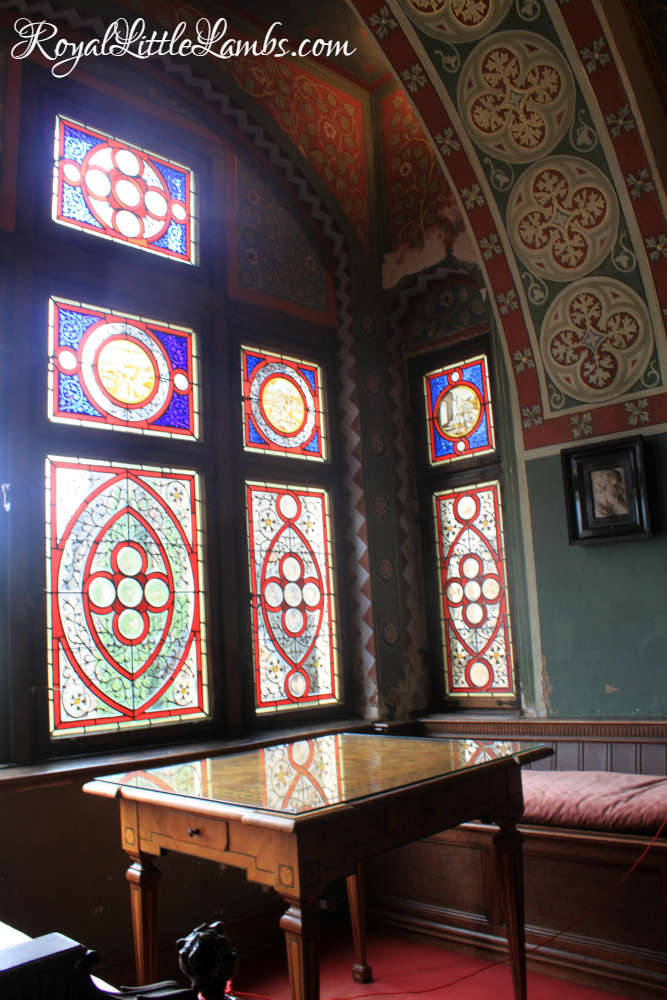
I love stained glass! And that table.
Stained-Glass
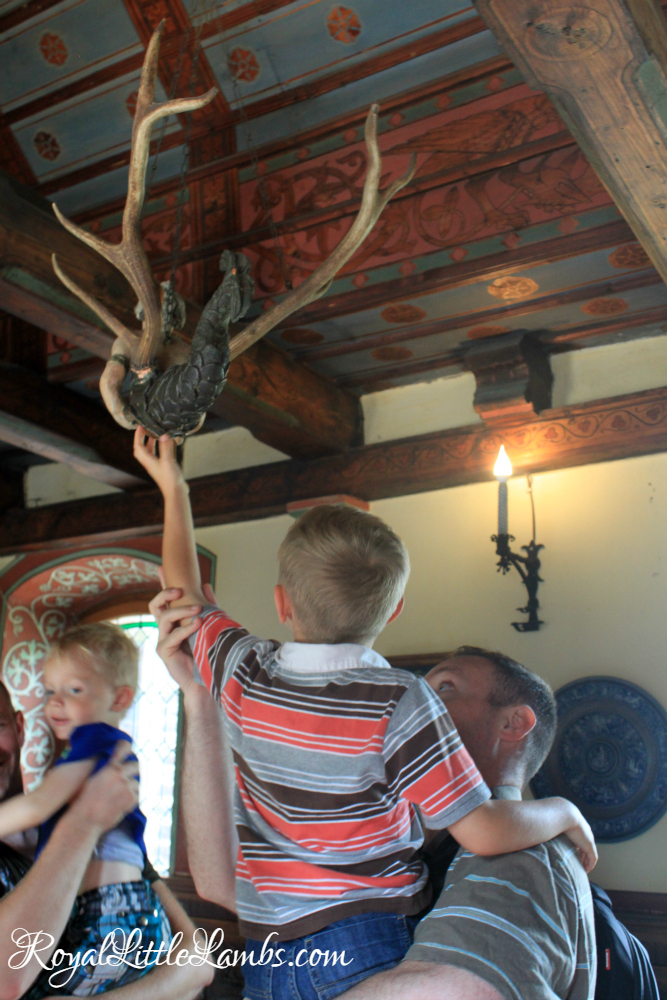
We should always decorate with antlers.
Beer, Antlers, and Window
Here is the courtyard well:
Deep Well
It’s good luck to rub the mermaid:
Lucky Mermaid
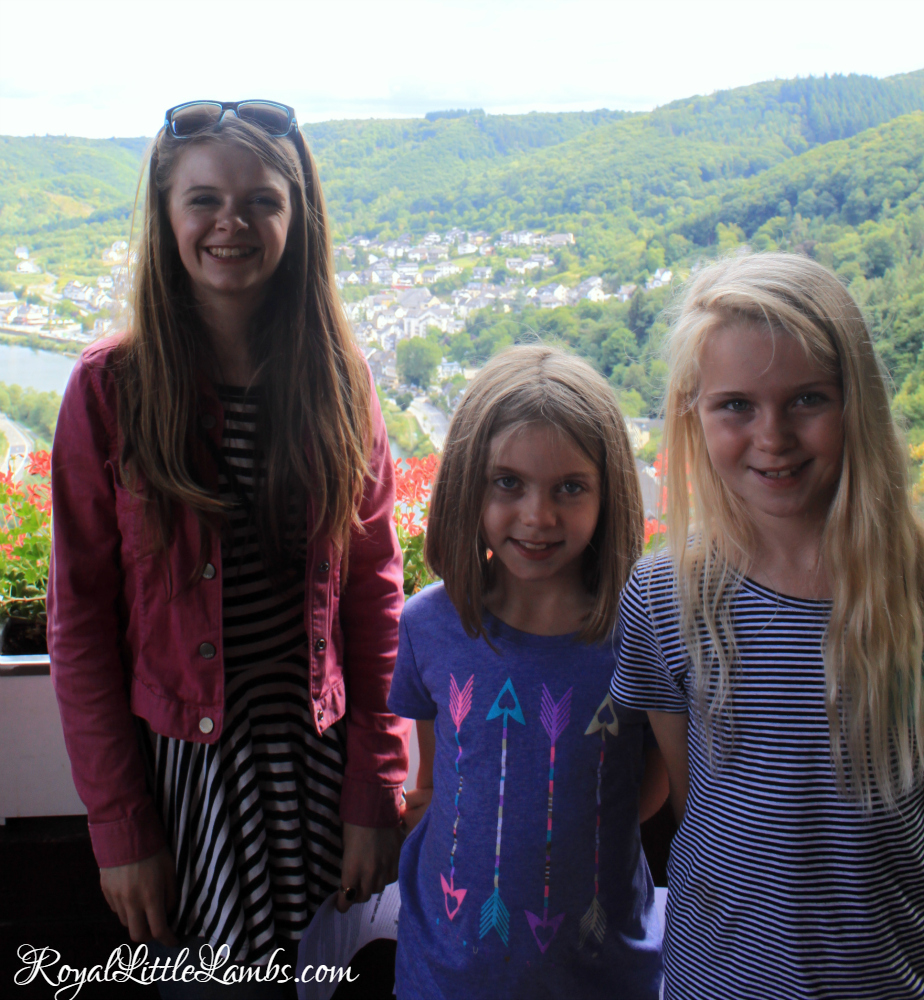
My GIRLS!
Girls Portrait
A rare family photo on the balcony. Our lovely tour guide offered to take this!
Family Photo

The village of Cochem is super cute too.

There’s a fun little chairlift with great views. We walked around on top of the hill and there’s a restaurant, of course. You can take the lift roundtrip or 1-way and hike.

There’s a good parking garage right by the chairlift and we walked around the town. There’s a shuttle bus that travels from the town up to the castle.

We bought some lovely wine to take home and gelato for the kids.

Cochem is about 1.5 hours from Ramstein and about an hour Spangdahlem.

Castle tickets:

Adults: €6

Kids: €3

Family: €16

Studying Castles and the Middle Ages

Resources:

  • A Medieval Feast Unit Celebration
  • Knights and Castles Lapbook
  • This castle-shaped lapbook is way cute!
  • Lots of Middle Ages activities from Homeschool Share
  • Middle Ages Notebooking & Coloring Pages
  • Medieval Unit Study
Linking up: Modest Mom, What Joy is Mine, Crazy Organized, Marilyn’s Treats, The Quintessential Mommy, Donna Reidland, Play Dough and Popsicles, Practical Mom, Blogghetti, Life of Faith, Frog’s Lilypad, Lamberts Lately, Children are a Blessing, I Choose Joy, The Deliberate Mom, Pat and Candy, Raising Homemakers, A Wise Woman Builds Her Home, A Little R&R, Whole Hearted Home, Holly McBerty, Cornerstone Confessions, F Dean Hackett, Rich Faith Rising, Bloom Designs, My Learning Table, Oh My Heartsie Girl, VMG206, Sarah Celebrates, Happy and Blessed Home, Creative Homekeeper, Organized 31, Hip Homeschool Moms, The Natural Homeschool, Crystal and Co., Christian Montessori Network, A Kreative Whim, Curly Crafty Mom,
Share
Pin3
Share
3 Shares
You might also like:

Filed Under: Europe, Germany, Travel Tagged With: castle, Germany, travel

Teaching Self Control

This blog may contain affiliate links: disclosure.
Please see my suggested resources.

March 30, 2016 By Jennifer Lambert 14 Comments

We begin teaching our kids self-control when the children are babies.

It’s the most important lesson.

Self-control is the biggest factor in future success.

What is self-control?

Definition: Restraint of oneself or one’s actions, feelings, etc.

It’s really hard to begin teaching self-control when kids are older, especially teenagers. It’s possible, but very difficult to begin then.

We have high expectations after toddlerhood. We teach our kids to have self-control despite being bored.

If we provide a gazillion options for entertaining our kids, then they will expect that and develop no self-control.

It’s ok to be bored.

It’s ok to have downtime without screens, food, or toys.

It’s a societal lie we tell ourselves that we must provide entertainmment for our kids all the time. I’m not a cruise director.

How do we teach self-control?

For this very reason, make every effort to supplement your faith with virtue, and virtue with knowledge, and knowledge with self-control, and self-control with steadfastness, and steadfastness with godliness, and godliness with brotherly affection, and brotherly affection with love. For if these qualities are yours and are increasing, they keep you from being ineffective or unfruitful in the knowledge of our Lord Jesus Christ. For whoever lacks these qualities is so nearsighted that heis blind, having forgotten that he was cleansed from his former sins. 2 Peter 1:5-9

Self-control is the biggest factor in future success.

We make sure we’re not wasting a lesson when kids are hungry, tired, or sick.

We’re not afraid to say NO.

We say NO to junk food or snacks right before meals.

We say NO to screens when they can play outside on a nice day.

We say NO to relationships or events that may be questionable or harmful.

We say NO to wasting money or time.

We say NO to medicating our kids.

Home

We require inside voices at home. We don’t allow running indoors, for safety.

We actively teach our expectations and provide practice sitting still and quiet.

We have read-aloud and Bible time when the kids must sit quietly.

We expect kindness, politeness, and courtesy.

We use natural consequences instead of punishment.

Examples:

“Clean your room or complete this chore and you can go outside to play.”

“Finish your chemistry project and you can go to your friend’s event.”

Using natural consequences takes the stress off mom and dad and all the responsibility lies on the child’s shoulders. If he takes 4 hours to clean his room, then there is no park time. If she doesn’t complete the chemistry project, then she has to explain to her friend why she missed the event.

If this becomes a perpetual habit, then there has to be a conference and incentives, but we don’t do sticker charts, rewards, or treats.

Chores are not an option.

We all have to help each other with cleaning up our living space.

Home training:

  • I model the correct behavior.
  • We all work together.
  • Attitude is the most important thing.

Homeschool

I don’t push seat work too much or too long. I don’t want the kids to resent learning. I’m fairly lenient for quite some time as long as the kids aren’t disruptive of siblings.

It’s great practice for kids to sit down quietly for writing, reading, drawing, coloring, and listening to read alouds.

By the time kids are about 6, I expect them to be able to sit quietly and respectfully during reading and lessons.

We teach time management and priorities: school work over fun.

I provide frequent breaks and lots of outside time and indoor free play time.

We do not medicate our children. Children are supposed to act like children and the government school model of requiring kids to sit still and quiet for 6+ hours is unrealistic and damaging. No child should be expected to fit that standard.

Homeschool training:

  • Blanket training for babies, toddlers, and preschoolers (provide quiet toys on blankets or mats)
  • Quiet activities for fidgety hands
  • Coloring pages relevant to reading for little ones

Church

We have never brought toys or food to occupy our kids during church.

We’ve never attended a church that separates kids from adults. We all sit in the pew together for the entire service.

My kids glance at me, wide-eyed when they see their peers brining rice cakes and toys into church or dancing up and down the pew aisle. They wonder at the big kids who don’t know how to whisper or who cry because they don’t want to sit still and quiet.

Our kids have been trained to sit still and quietly during church time.

We use church to teach our kids the liturgy, reading, music, and sight reading.

We ask our children questions about the sermon after church and they now pay attention so they can answer us!

We require them to behave during Sunday school. There is no sleeping, running around, talking out, or any misbehavior. Often the teachers are teens and young adults who have little experience with classroom managment. I don’t care how the other kids act and take advantage of a situation. My children will not act that way.

Church training:

  • Outlines to fill in on sermon topics
  • Coloring pages
  • Sermon notes

Meals and Restaurants

I don’t remember kids’ menus or coloring pages at restaurants when I was little. And going to a restaurant was a special event. We only went out to eat for birthdays. And all this “casual family dining” is a new concept. I remember when they remodeled Red Lobster and we hated it! We were expected to wait until the food came and again to wait until everyone’s meal was finished and paid for and the adults were ready to leave. Good behavior was expected. It was a privilege to go to a restaurant.

American restaurant meals usually have coloring pages, TV, or activities to occupy children (and adults). I’ve even seen kids’ corners where parents let loose their little monsters to disrupt everyone in the restaurant. No one wants to see or hear kids running around and screaming at a restaurant.

The rest of the world either doesn’t expect children to dine out at all or to have well-behaved children with self-control.

My kids are taught that waiting for good food is normal. They learn to sit still and quietly in restaurants and to be respectful of others. I am confident taking them to many restaurants that most consider adult-only because I know they can handle it and they love the food and experience!

Restaurant training:

  • Coloring pencils for napkins or paper
  • Quiet and respectful games like I Spy
  • A little sack of tiny animal figures

Events

We often attend concerts, shows, and other events where we must be still, quiet, and respectful.

We start with minor local and high school stage productions to train the kids to behave.

We attend matinée performances, dress rehearsals, field trips to expose our children to fine arts and teach etiquette for these events.

Event training:

  • We offer refreshments at intermission.
  • We teach about the instruments or drama for interest.
  • We provide follow-up discussion when we discuss the show or performance.

We praise good behavior. We guide and teach about bad behavior. We don’t reward, punish, blame, call names, or shame.

We’re diligent in our training. We don’t expect perfection immediately. We work at it over days, months, weeks, and years.

A life-changing book:


Share
Pin2
Share
2 Shares
You might also like:

Filed Under: Family Tagged With: parenting

How to Prepare for After High School

This blog may contain affiliate links: disclosure.
Please see my suggested resources.

March 29, 2016 By Jennifer Lambert 8 Comments

When we begin our homeschooling journey, we think that high school is so far away.

Thinking about “after high school” seems silly when you’re playing patty cake with a toddler, singing ABCs with a preschooler, or teaching a 6-year-old how to read and add.

But the goals we set when our kids are young ensure our children’s success when they are adults.

How should you prepare your child for college, vocational school, or work?

How do you know your child is ready for life after homeschool?

Three important areas should be addressed for success after high school: our child’s Heart, Hands, and Head.

Humans have three areas in our bodies that are in communication with each other through the vagus nerve:

• the heart = intelligence

• the gut = intuition

• the head = intellect

Heart:

Spiritual, emotional, and psychological well-being are important for success after high school.

What is your child’s worldview and character like?

Is your child equipped with critical thinking skills? Does your child know how to handle adversity, relationships, emotions, communication? It’s important to learn how to apologize and be emotionally healthy.

Is your child able to show self-control when her peers indulge in poor behavior? Teaching self-control is probably the most important lesson children can learn.

Can your child exhibit empathy if a friend experiences a tragedy – illness, injury, death in her family, failing a course, an ugly breakup with a boyfriend? Teaching and modeling kindness is integral for a child to show compassion to others.

Hands:

Life skills are necessary for success after high school.

Life skills books are helpful, but doing makes for more lasting learning.

Most teens get a driver’s license before age 18. It’s important that young adults learn defensive driving skills. Driver’s ed is a requirement in many states for teens under age 18.

Car maintenance schedules and simple auto tasks should be taught so they don’t get taken advantage of by mechanics due to their ignorance.

We love this book: Girls Garage: How to Use Any Tool, Tackle Any Project, and Build the World You Want to See by Emily Pilloton.

Make sure your child understands finances: balancing a checkbook, the difference between a credit card and a debit or check card, avoiding debt, the basics of investing or planning for retirement, and taxes.

Cooking skills are super important. An easy way to ensure this is to include your children in meal planning, shopping, cooking, and cleaning up. Have your child practice simple cooking with help and supervision – building up to planning and preparing several simple, frugal, and healthy meals. We build recipe binders for our four kids with their favorites that they are very proud of that they will eventually take with them when they grow up and away.

Laundry care is important. Kids should learn all the washing and drying basics. Reading labels is necessary to keep clothing well maintained. Learning how to remove tough stains and make small mending repairs is helpful. We’ve even made our own laundry soap.

Housekeeping chores and home maintenance are very necessary skills. Everyone should know how to do dishes, laundry (to include ironing and mending), deep cleaning of every room, and minor handyman tasks.

Basic safety tips for real life and online are necessary. It’s more than a single conversation about sex ed. I give my kids a lot of freedom online, but we constantly discuss online safety and problematic apps.

Survival skills are a lost art. We love to go hiking and camping so my kids know how to prep fish and use a compass. What happens when the

First aid knowledge will be helpful in all sorts of situations and emergencies. Practice using a fire extinguisher and know when to use it. Also discuss kitchen fires and how to use salt or baking soda on grease. Knowing what to do in emergencies and car accidents is imperative so the child doesn’t panic. Calling authorities for help is scary and should be discussed so teens know what to expect when they’re in their first fender bender. Role playing and checklists can help.

Head:

Academics are certainly important for success in college, many technical schools, and jobs.

Here’s an unpopular thought: Academics are the smallest factor for success in life.

That being said, let’s not be lazy.

Too many homeschoolers I know seem to take the easiest way out. Parents choose a simpler, cheaper, or easier curriculum, often DVD, online, or workbook, just to check it off on the transcript. And that may be fine for some of the hoops we homeschoolers have to jump through, depending on state graduation requirements. Just don’t fear a challenge or shortchange yourself.

I’ve even known some homeschoolers who “graduated” without completing all their high school coursework. Is a ceremony and party so important that we shouldn’t have integrity?

Homeschoolers need to complete a decent course of study in the core academic areas: English, math, science, and social studies.

If a teen has his heart set on a specific career, then tailoring his high school focus towards that academic goal is wise. Look at the college or technical school requirements and make sure he completes all that – to excellence.

Electives are a great way to customize a homeschooler’s education to interests and strengths.

Many homeschoolers have the freedom to get a headstart on college courses online or at local colleges during their junior or senior year. This is a great way to gently transition into college life or to prove to a chosen university that the homeschooler can succeed at college coursework.

Liberal arts college isn’t the only option.

There are many training opportunities after high school.

Teens need career counsel to help them on their future path.

Teens need to know how to fill out applications and conduct a successful interview. Following up with thank you letters or emails are good too.

Good communication and organization skills are necessary before independence.

Ensuring our children grow up to be successful, content adults who contribute well to society is a tough job.

It requires diligence, consistency, and discipline.

Share
Pin37
Share
37 Shares
You might also like:

Filed Under: Homeschool Tagged With: college, high school, homeschool, teen

Homeschool High School Credits

This blog may contain affiliate links: disclosure.
Please see my suggested resources.

March 24, 2016 By Jennifer Lambert 11 Comments

How do you determine high school credits?

High school homeschool shouldn’t be scary or confusing.

Counting credits and completing transcripts is a daunting task for homeschool parents.

Here’s how we’re doing high school transcripts.

High School Credits and Transcripts

What’s a credit?

Generally, one credit equals one year or 36 weeks of 50 minutes per day per subject. This is a “Carnegie unit.”
It generally amounts to almost four hours per subject each week, or 150 hours per year.

18 weeks = 0.5 credit

36 weeks= 1 credit

150 hours of coursework = 1 credit

Check your state’s requirements for the amount of high school credits needed to graduate.

Suggested College Preparatory High School 4-Year Program:

English4 credits
Social Studies3-4 credits
Science3-4 credits
Math3-4 credits
Foreign Language2-4 credits
PE/Health1-2 credits
Fine Arts1-2 credits
Electives 2-4 credits

What’s a GPA?

A grade point average is “the average obtained by dividing the total number of grade points earned by the total number of credits attempted —called also quality point average.” {dictionary}

You as a homeschool parent get to determine your own policy on calculating grades.

I like the traditional scale of 90-100=A, 89-80=B, 79-70=C, etc. It’s not complicated. We don’t inflate. We don’t make things harder than they should be.

I’m tough when it comes to grading, when we even have grades. My kids know they won’t be “those homeschoolers” who are given high grades without properly earning it.

A GPA depends on three things:

  1. Your grading scale
  2. The letter grade earned for each course
  3. The credit earned for each course

Typically, A = 4, B = 3, C = 2, D = 1, F = 0

The grade points are multiplied by the number of credits earned per course, resulting in “quality points.”

How to calculate a GPA:

  1. Assign each course a credit value.
  2. Assign each course a numerical grade.
  3. Multiply each course credit by it’s numerical grade. That gives you the grade point for that particular course.
  4. Add all the grade points for all the classes that are complete.
  5. Divide the total grade points by the number of credits completed.
  6. The answer is the current grade point average.

What about weighting grades?

Weighted grades are for honors classes, college courses, AP classes, etc.  Since these course are more rigorous, they have a greater GPA value than other high school courses, so receive a 1-point increase in their numeric value.  Use the higher value for that course and then calculate the GPA as usual.

Contact the college or university your child is planning to attend for their grading preferences. Always tailor the transcript to the college’s needs.

See detailed information about GPA calculations at Back to College.

So, how does a homeschool parent determine credits for all these courses?

The three easiest ways to determine course credits are by textbook completion, recording time, and mastery of subject.

Textbook

Most textbooks are meant to be used for a year-long course, so 1.0 credit is given. For example, Algebra I is a year-long course, even if a child takes longer than a year to complete it. Often, textbooks will list at the beginning or on their website how much credit should be given for the course.

Many homeschool curricula list recommended course credits for completion, even at different levels of study. For example, our main curriculum Tapestry of Grace offers a chart I can follow to determine how many credits my kids earn for the time she puts in for her work.

Time

What if there isn’t an actual curriculum? Or you’re an unschooler? Or your high schooler spends every Monday for over two years volunteering at the hospital?

For some activities or courses, you can log the hours spent. This is where it’s important to know how many hours equals 0.5 or 1.0 credit.

My daughter calculates her time spent volunteering at our local hospital laboratory as a Red Cross certified volunteer.

Mastery

Homeschoolers have so many of opportunities for non-traditional education.

Credit can and should be awarded for mastery of a subject.

Projects completed and entered into a contest or winning an award earn mastery credit. Apprenticeships are amazing opportunities.

My eldest was in Civil Air Patrol, and earned the rank of Captain.

She starred in the play Kindertransport and participated as an extra in Mary Poppins with our community theatre. She has learned so much about stage productions!

Transcript Planning

I start to keep records of courses my children complete beginning in the middle school years. It’s good practice for me and can come in handy if they’re already taking advanced classes.

My daughter completed her Latin language requirements before age 14. She’s now learning French.

She’s been in Civil Air Patrol since she was 12. This is a great elective, similar to ROTC.

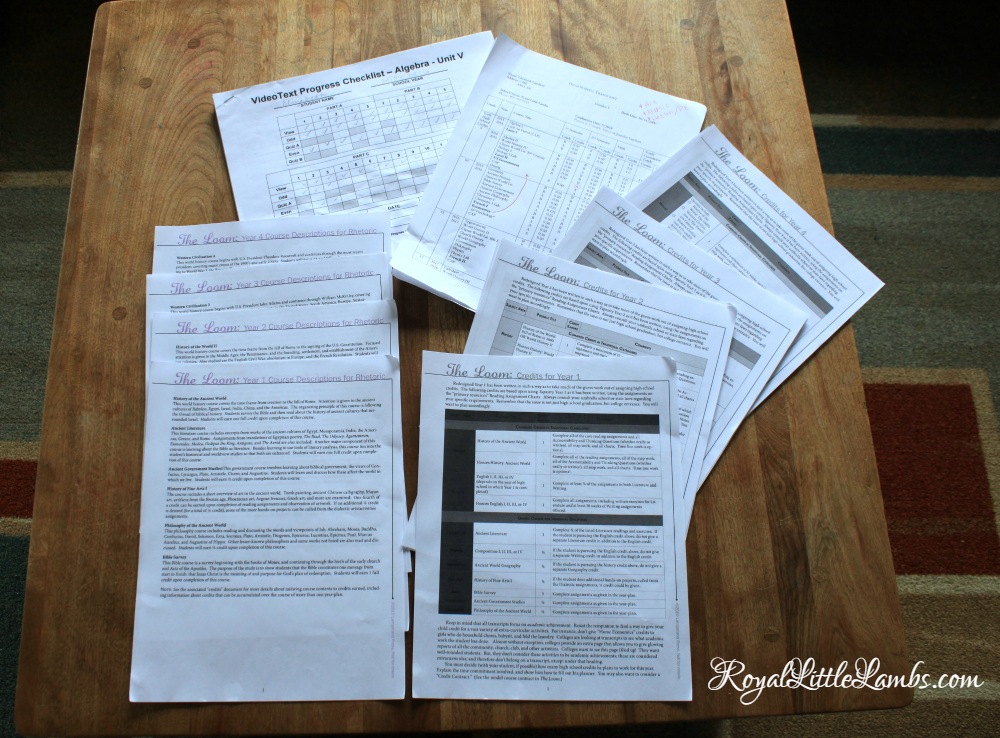
I printed the course checklist for VideoText Algebra and recorded the assignments, quizzes, and tests.

Our main curriculum, Tapestry of Grace, has printable course descriptions and suggested credits for literature, writing, geography, fine arts, Bible/church history, government, and philosophy. I love that.

I created a sample transcript and list the courses already completed and the potential courses for each year.

My daughter completed economics earlier than I had planned. I jotted down in the top right corner a reminder to myself that we need to make sure she completes courses in art, music, and health/PE.

See how we homeschool high school.

I also include spaces for PSAT and SAT/ACT scores.

High School Transcript Planning

Don’t fall into these traps:

Don’t give credit unless the student has actually completed a course. We’ve known homeschoolers who “graduate” before actually having completed a high school course of study. What message does that send?

Don’t count electives as academic courses. Academics are core classes: math, science, social studies, and English. Many curricula list what kind of course it is. Look at high school or college syllabi to see where the course should be places on a transcript.

Don’t give credits for fluff. If you can honestly calculate hours for a credit in a subject, then list it. Otherwise, chalk it up to life experience or a hobby. There are places to explain those on college and scholarship applications.

Don’t inflate grades. You’re not doing your child any favors. If a high school student struggles with a course and earns a solid C, don’t feel guilty or whatever and inflate that grade to a B to make him look better. You’re not preparing him for success.

Graduating a homeschooler is an exciting time for a parent, successfully launching an adult into the world, after years of being so involved in the educational process.

I can’t wait to see what our four children grow up to be and do.

Extra Tips:

List curriculum titles, especially for lab sciences.

Make a space for volunteering on the transcript and log the hours.

Explain unique extracurricular activities.

List on-the-job training or part-time work.

We have so much freedom as homeschoolers to list all the fun learning opportunities!

Many homeschoolers are highly successful during and after high school – going on to do great things in the workforce, university, alternative education, and life.

Transcript Resources:

  • Fast Transcripts
  • Transcript from FiveJs
  • The Homeschool Mom
  • The Homeschool Source
  • Walking by the Way
  • Annie and Everything
  • Responsible Homeschooling
  • Homeschool Tracker
  • Pros and Cons of Homeschooling
  • Student Handouts
  • Oklahoma Homeschool
  • Homeschool Christian
  • Clep Prep
  • Regent University
  • Cedarville University

How do you record life skills in your homeschool transcript?

Share
Pin101
Share
101 Shares
You might also like:

Filed Under: Homeschool Tagged With: high school, homeschool

Real Store Tour

This blog may contain affiliate links: disclosure.
Please see my suggested resources.

March 23, 2016 By Jennifer Lambert Leave a Comment

My friend leads tours to local grocery stores so military spouses learn to shop on the German economy.

The kids and I attended her Real store tour.

Real Store Tour

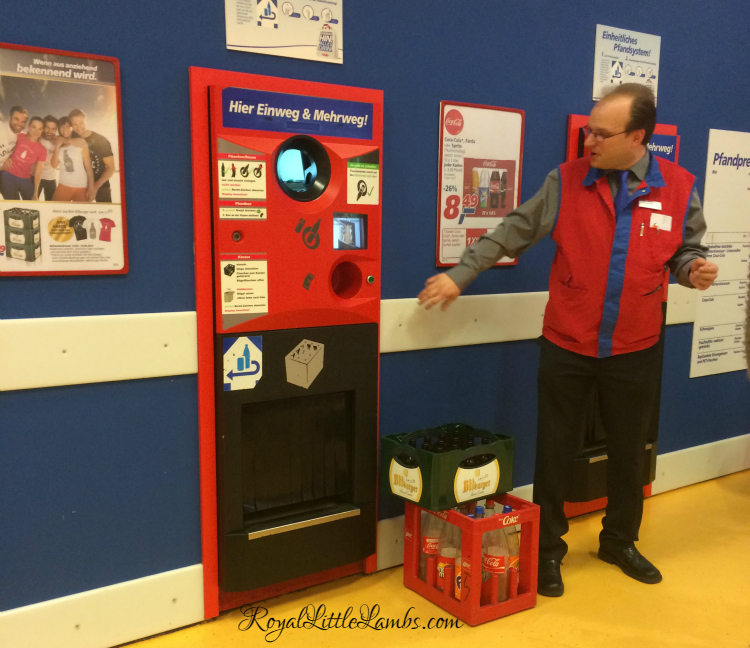
We learned about the bottle return for recycling.

Bottle Return

Look for this symbol to recycle glass and plastic bottles and get a cash return!

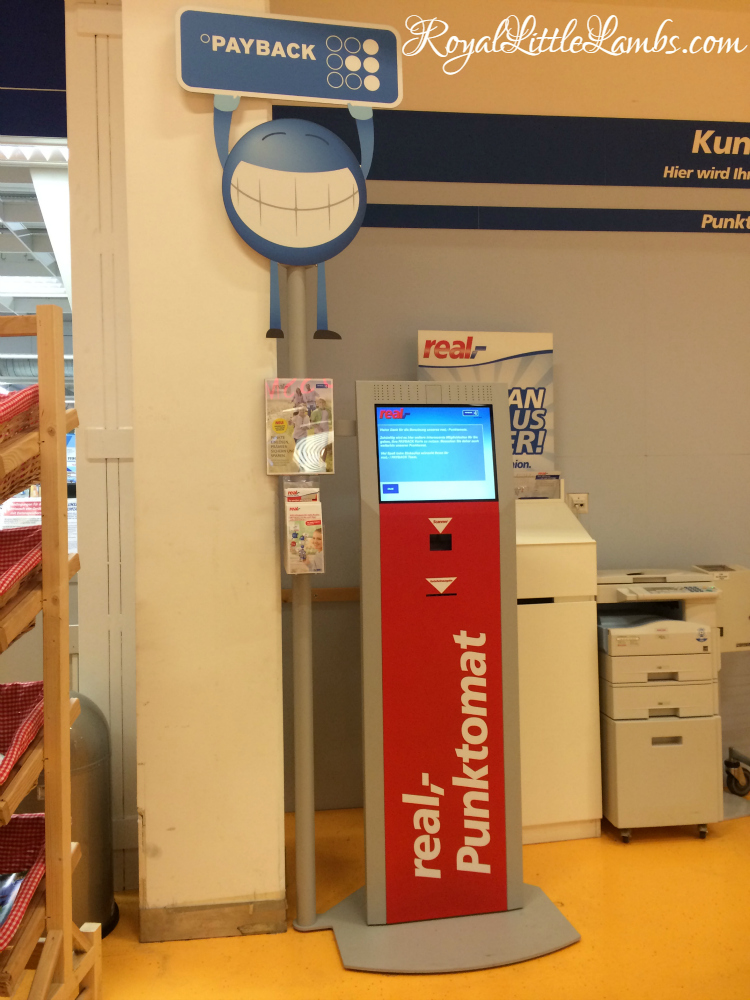
This nifty little machine is by the entrance and you can sign up for a Payback card and look for or redeem points.

Real Points Machine

I love that Real has self checkout!
Self Checkout

Real boasts having NO GMO produce! I love that!
No GMO Produce

Tip is the Real store brand and it’s great quality at better prices.
Tip Store Brand

The labels in the wine aisle show flags for country of origin, temperature recommended for serving, and color coding for sweetness. Yellow is trocken or dry and red is lieblich or sweet.
Wine Labels

Real has a great gluten free aisle with lots of options for prepared foods and mixes.
Gluten Free Food
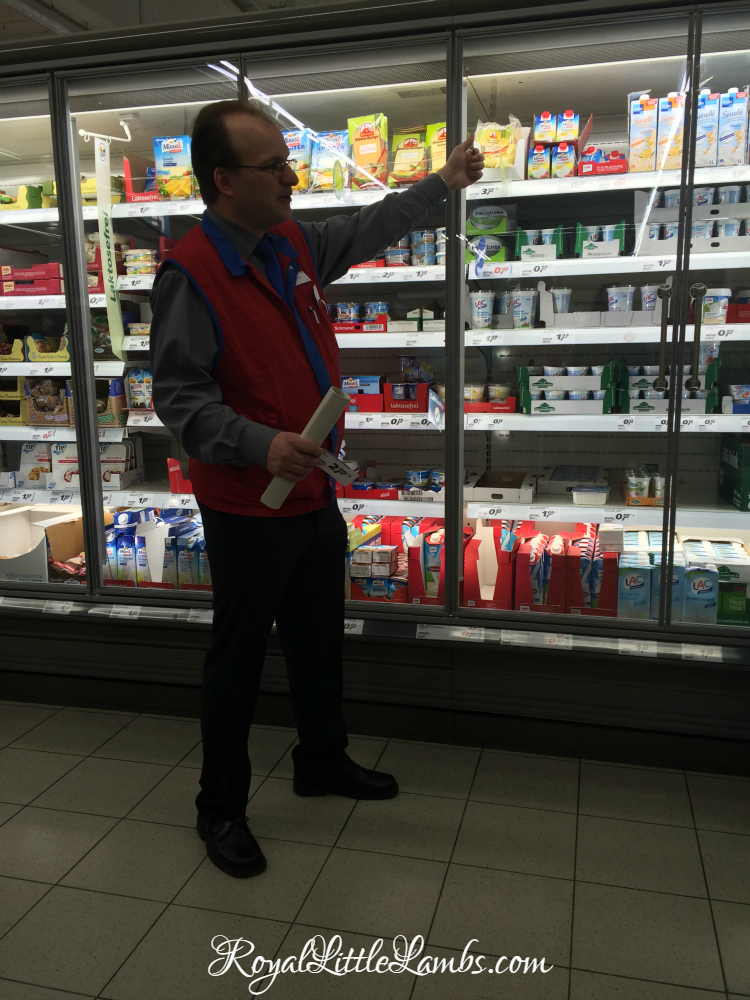
The signage is easy to find for gluten free or lactose free items!
Laktosefrei
The lactose free items are in their own cooler.
Showing Labels

Aisles are labeled with numbers and items.

Pasta

Real provided us with a lovely lunch buffet!
Lunch Buffet

My kids got to make adorable Easter baskets – filled with lots of goodies!
Kids Making Baskets

It was super fun for my kids to have an activity while I walked around and learned what the store had to offer.

Here’s the super cute Easter baskets they made!
Paper Easter Basket

And this lamb cake is to die for!
Lamb Cake

We love shopping at Real!

You might also like:

  • PCS to Germany
  • PCSing OCONUS with a Vehicle
  • Best and Worst KMC
  • 13 Best Restaurants in KMC
  • Shopping in Germany
  • German vs. American Bacon
  • What to Do with Clothes
  • Driving in Germany
  • Gartenschau Dino Park
  • Kaiserslautern Volkspark
  • Kaiserslautern Wildpark
  • REAL Store Tour
  • Karlstal Hike
  • Burg Nanstein
  • Hohenecken Castle Ruins
Share
Pin1
Share
1 Shares
You might also like:

Filed Under: Germany Tagged With: field trip, Germany

Homemade Taco Seasoning

This blog may contain affiliate links: disclosure.
Please see my suggested resources.

March 22, 2016 By Jennifer Lambert 19 Comments

On Wednesdays, my teenager, Elizabeth, make dinner.

It’s the day I run errands and take the younger kids to music lessons.

This is a great opportunity for kids to be responsible and learn valuable home economics skills.

This week, Katie helped and Liz took pictures of the process.

One of our favorite family meals is homemade tacos.

Whenever we ask the kids what they want for dinner, their go-to is TACOS.

We make our own taco spice mix.

I made the spice mix so pretty, layered in a jar. It looks like sand art!
Homemade Taco Seasoning - Frugal and Healthier

It’s much cheaper and healthier to make our own homemade taco seasoning.

Tacos are easy and quick to make and it’s a great frugal meal for a large family.

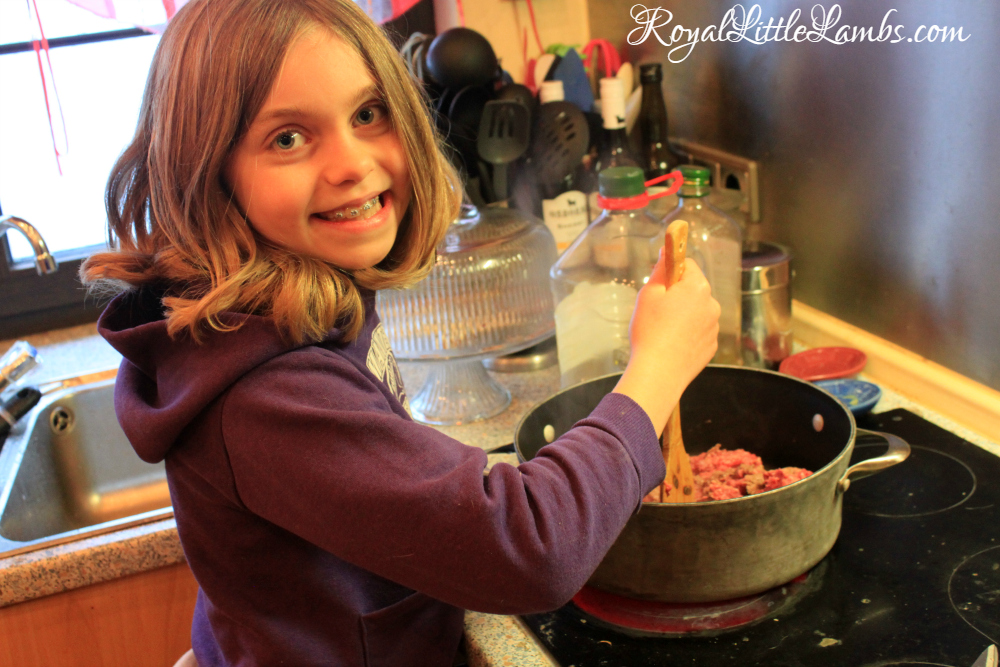
The girls browned two pounds of ground sirloin in a large pot.

Sirloin doesn’t have as much fat, so there’s nothing to drain.

You could also use a mix of ground beef and pork, or ground chicken or turkey – whatever you prefer.
Taco MeatMaking Tacos

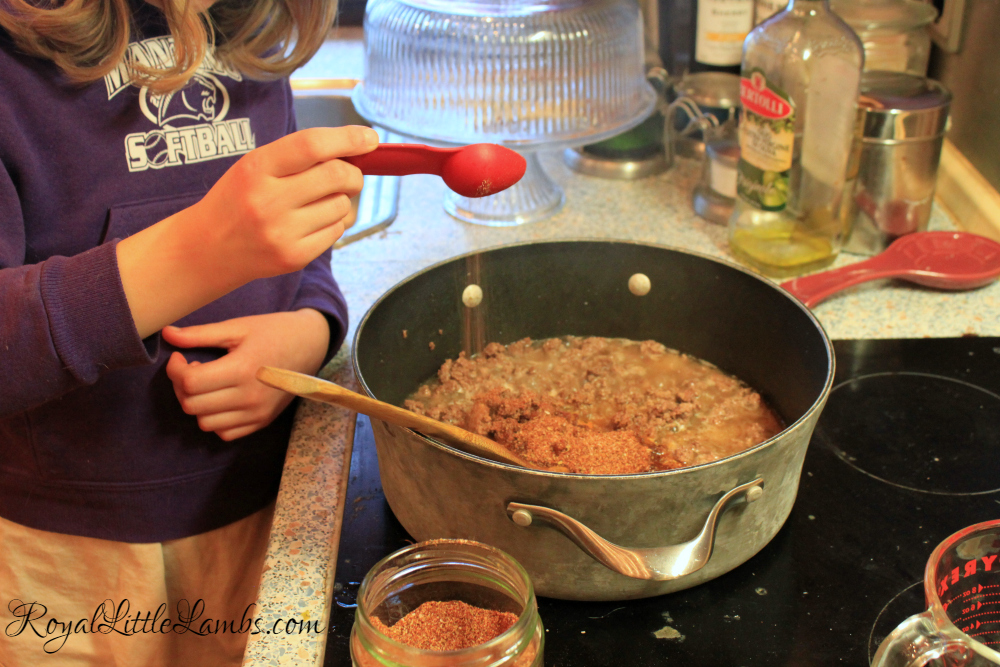
About three tablespoons of taco spice mix for 2 lbs of meat.

Spices

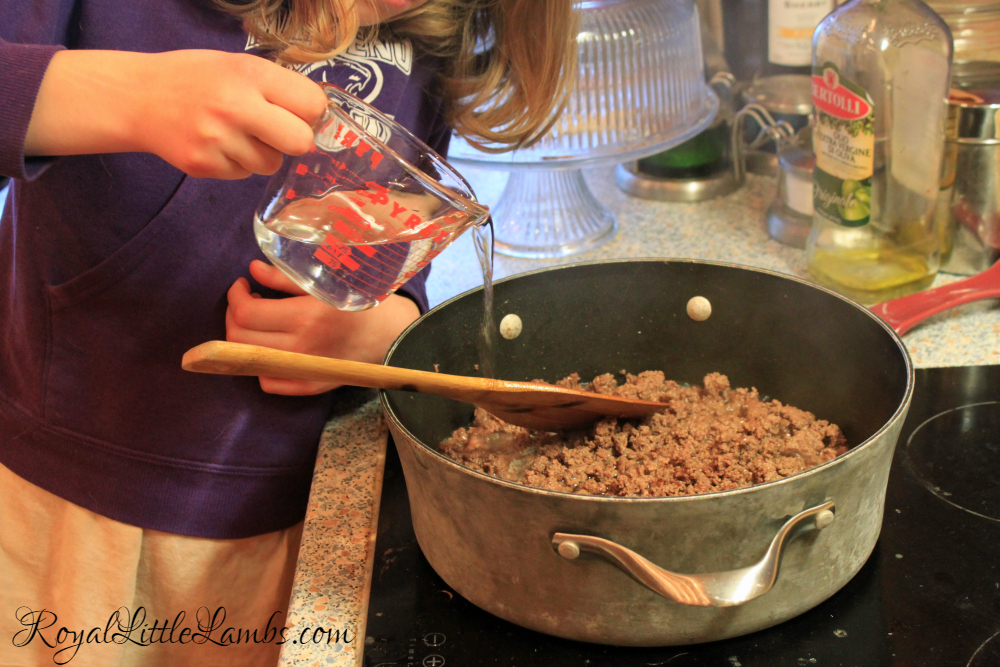
Two cups of water and stir well. Eventually the water evaporates and leaves it just a bit saucy. After it’s mixed together, put a lid on top and let it simmer on low heat.

Adding Water

Katie enjoyed stirring in the spices.

Adding Spices

Tacos are best with refried beans, cheese, and salsa – to make them even more delicious.

Alex and Tori like soft tacos.
Soft Taco
Katie and I like taco salads. Liz likes crunchy tacos.
Taco Salad

Why do we make our own taco seasoning?

It’s healthier and more frugal.

Spice mix envelope from the store:

Cuminum cyminum, Capsicum annuum,Origanum vulgare, Allium cepa, amalgam of globular proteins, glucose monomer of solanum tuberosum, citric acid, and sucrose.
In non-scientific jargon, it has chili pepper, cumin, paprika, oregano, onion, whey, salt, sugar, garlic, potato starch, and citric acid.
Cost per ounce = 58 cents.
I don’t need milk, sugar, potato, or preservatives in taco seasoning. And I like to know exactly what we’re ingesting. I like control.


My ingredients:

Chili powder, garlic powder, onion powder or flakes, crushed red pepper flakes, dried oregano, paprika, cumin, salt, and pepper.
Cost per ounce = 27.5 cents!
The homemade taco seasoning costs half what the pre-made envelope costs.

And the best thing about this is you can adapt it to your family’s tastes. Substitute smoked paprika or Mexican oregano for a different twist.  If you like it milder, omit the red pepper flakes…if you like it with a capsaicin rush, double the pepper flakes.

It’s a versatile spice mix recipe. Customize it to your family’s tastes!

Print

Taco Seasoning

Mix together ingredients in a jar or airtight container. Use 2-3 tablespoons for ground beef tacos or in all your favorite Mexican recipes!We like to keep a jar of this in our cabinet at all times.I really love lots of chili, garlic, and cumin. Feel free to add as much or as little as you like to create your family’s special blend.It’s a great spice blend for tacos, soups, slow cooker meals…lots of family favorites!
Course Main Dish
Cuisine Mexican
Prep Time 5 minutes
Total Time 5 minutes
Servings 4 servings

Ingredients

  • 2-3 T chili powder
  • 2-3 T garlic powder
  • 2 T onion powder
  • 1-2 t pepper flakes (optional)
  • 2 T dried oregano
  • 2 T paprika
  • 2-3 T cumin
  • 1 T kosher salt
  • 1 T black pepper

Check out the other participants in the Kids in the Kitchen monthly blog hop!

Quick and Delicious Flourless Peanut Butter Chocolate Chip Muffins | Living Montessori Now
Mud Pudding  | Raising Little Superheroes
Mouse-tacular Chocolate Cookies | A Little Slice Of Us
Roll-Out Butter Cookies | The Gifted Gabber
Marble Pound Cake | Kitchen Counter Chronicles
Simple Cupcakes for kids to decorate | Rainy Day Mum
Easy Zucchini Muffins | Mess for Less
Dairy Free Banana Nut Muffins | For This Season
Baked Mini Cinnamon Donut Holes  | Kidgredients
Chocolate Butterscotch Rice Krispie Treats  |  Royal Baloo
Easy Bite Sized Chocolate Dipped Pretzels | Sugar Aunts

Share
Pin2
Share
2 Shares
You might also like:

Filed Under: Recipes Tagged With: frugal, recipe

County Meath in Ireland

This blog may contain affiliate links: disclosure.
Please see my suggested resources.

March 17, 2016 By Jennifer Lambert 3 Comments

We saved the best for last on our Ireland trip.

We drove from Ashford Castle to County Meath to tour all the sites we’ve only read and dreamed about.

County Meath in Ireland

It’s about a 3-hour drive, depending on traffic and weather…and GPS mistakes.

We stopped first at Trim Castle.

My ancestor, Hugh de Lacy, constructed Trim Castle over a thirty-year period with his son, Walter.

Construction of the massive three-storied keep, the central stronghold of the castle, was begun in 1176 on the site of an earlier wooden fortress. Ready for occupancy in 1173, Trim Castle is the largest, best-preserved Anglo-Norman castle in Ireland. Trim get its name from the Irish áth Truim, meaning “The Ford of the Elder Trees.”

Trim Castle on the River Boyne

The kids were excited to run up to the gate.
Front Gate to Trim Castle

We just opted for the self-guided tour instead of the extra group tour of the keep. It would have taken over an hour and we were a bit pinched for time. I didn’t know if Alex would have found it interesting enough to listen to the guide for that long.

We bought the guide book and that is quite comprehensive.

The keep is a twenty-sided cruciform design with walls 3m thick. It was protected by a ditch, curtain wall, and moat.

Trim Castle Keep

In the 16th and 17th centuries, Trim Castle declined in importance, and it was allowed to deteriorate.

Admission Prices:

Adult €4 | Child/Student €2 | Family €10

Castle Excluding the Keep – Adult €2 | Child/Student €1 | Family €4

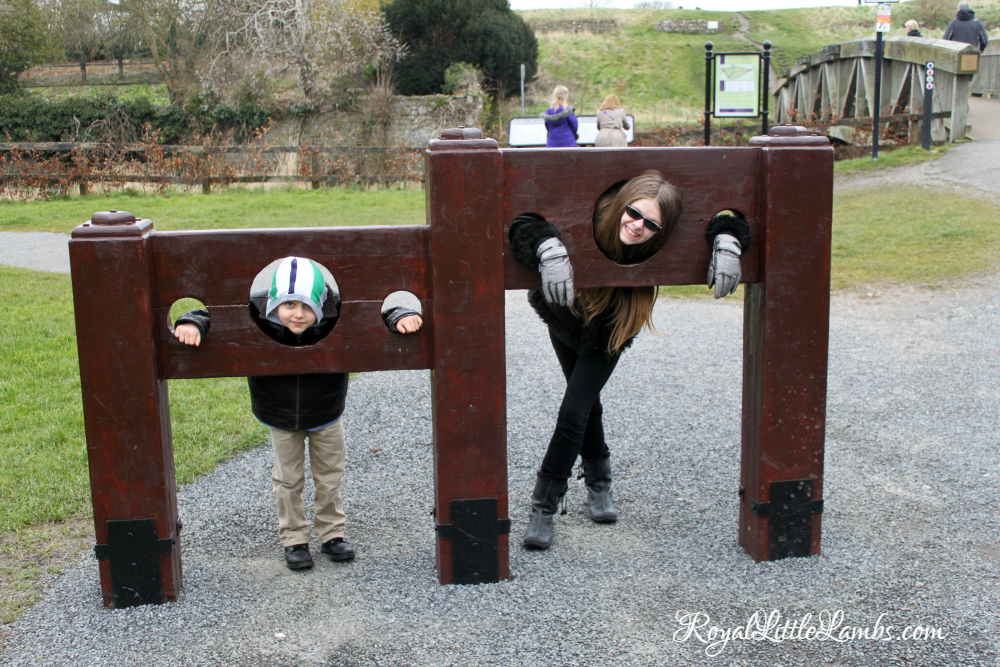
Alex enjoyed seeing the stocks outside the castle grounds. He had asked about them and had a hard time understanding.

Experiential learning is always best.

Stocks at Trim Castle

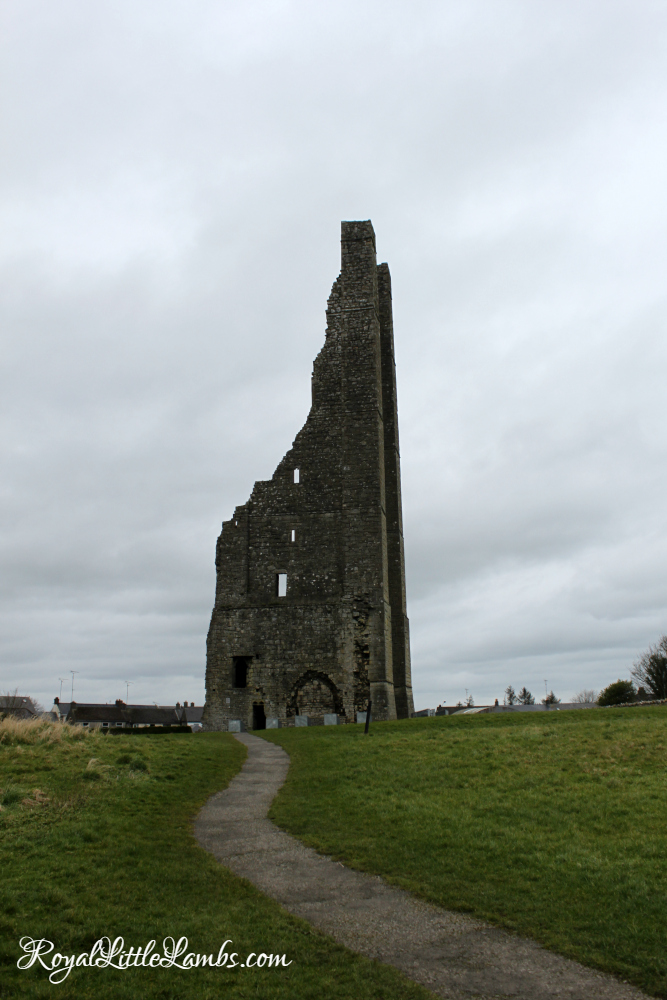
We walked the trail around the castle and across the River Boyne bridge to see the Sheep’s Gate and Yellow Steeple ruins of St. Mary’s Abbey.

The Yellow Steeple St. Mary's Abbey

St. Patrick’s Church is in the background, to the left.

Trim Castle and St. Patrick's Cathedral

St. Patrick

St. Patrick's Church

After getting a treat at a shop in town, we got back in the car.

Our next stop was The Hill of Tara.

It was cold, windy, misty, and quite muddy.

I lost my grip and slid halfway down one of the hills, thinking the Fenians were dragging me back to the Underworld.

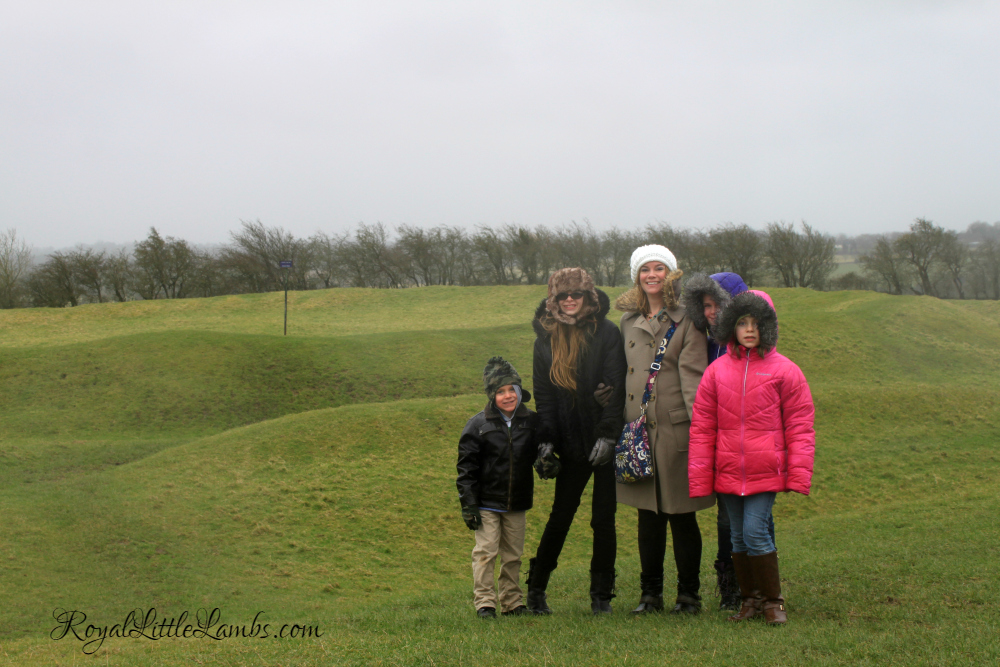
The Hill of Tara

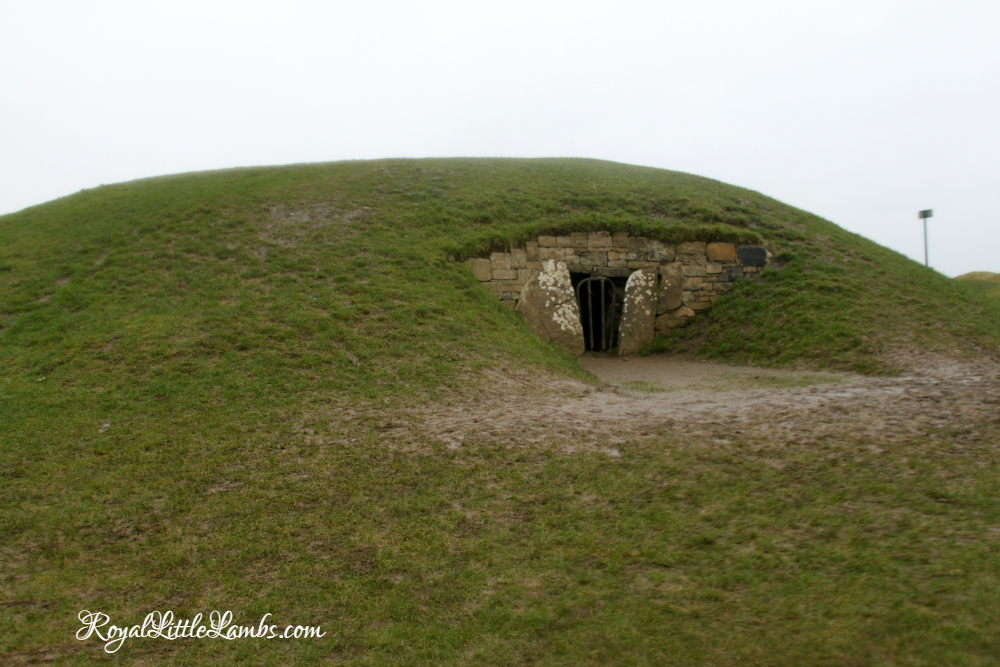
The megalithic passage tomb called the Mound of the Hostages (Duma na nGiall) is the oldest monument on the Hill of Tara, dating between 2500 and 3000 B.C. The passage, 4 m in long and 1 m wide, is divided by sill stones into three compartments, each containing cremated remains. There’s a lovely etched stone inside with a triple spiral triskelion.Mound of the Hostages

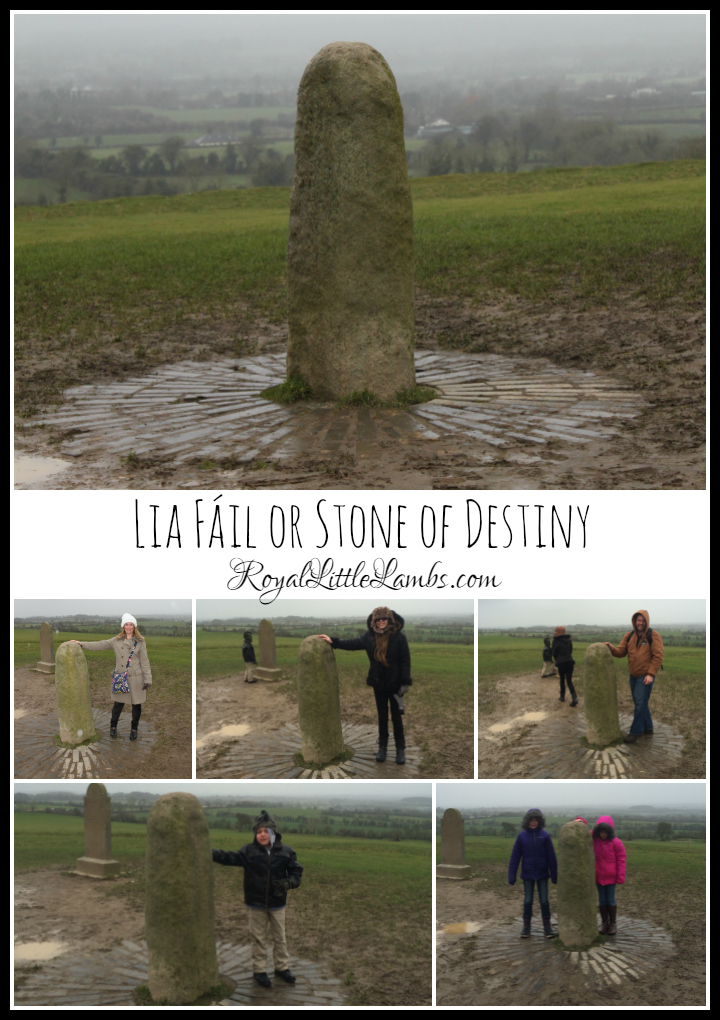
The Lia Fáil or Stone of Destiny stands about one meter high on the King’s Seat.

According to legend: if touched by a worthy king, the stone would scream its approval. It could be heard all over Ireland.

It didn’t scream for us.

Lia Fáil or Stone of Destiny

Admission Fees

Adult: €4.00
Child/Student: €2.00
Family: €10.00

Then, we drove to Newgrange.

We arrived just in time for the last bus from the visitor’s center to the site. You can only visit the Newgrange archaeological site with tickets, the bus trip, and a guide.

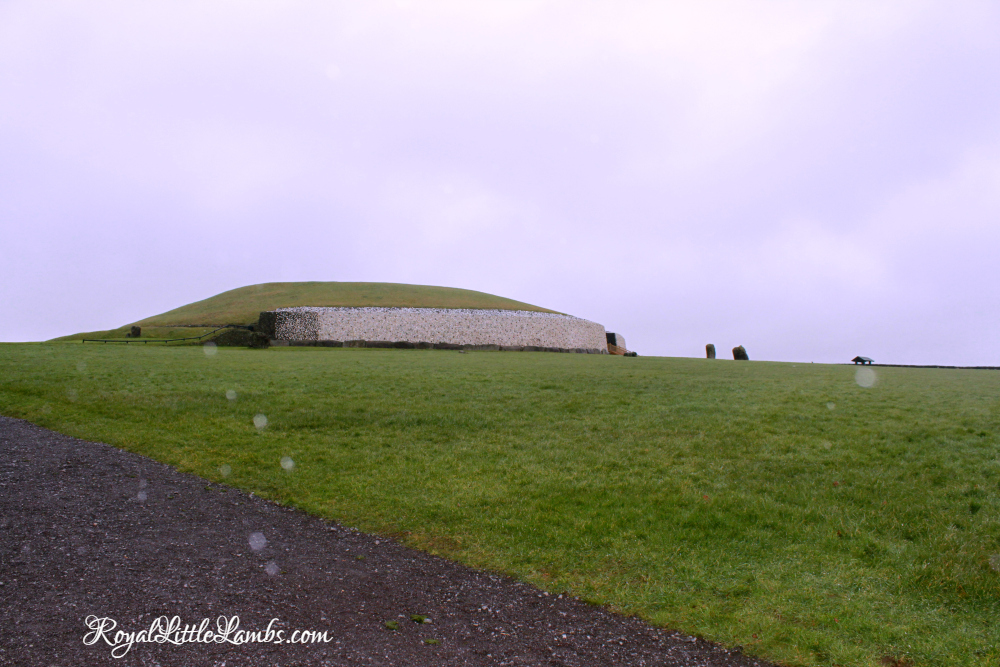
The mound dates to 3,200 BC, which makes it older than Stonehenge and Great Pyramids of Giza. It is approximately 80 m in diameter with the base consisting of 97 stones.

Newgrange Monolithic Site

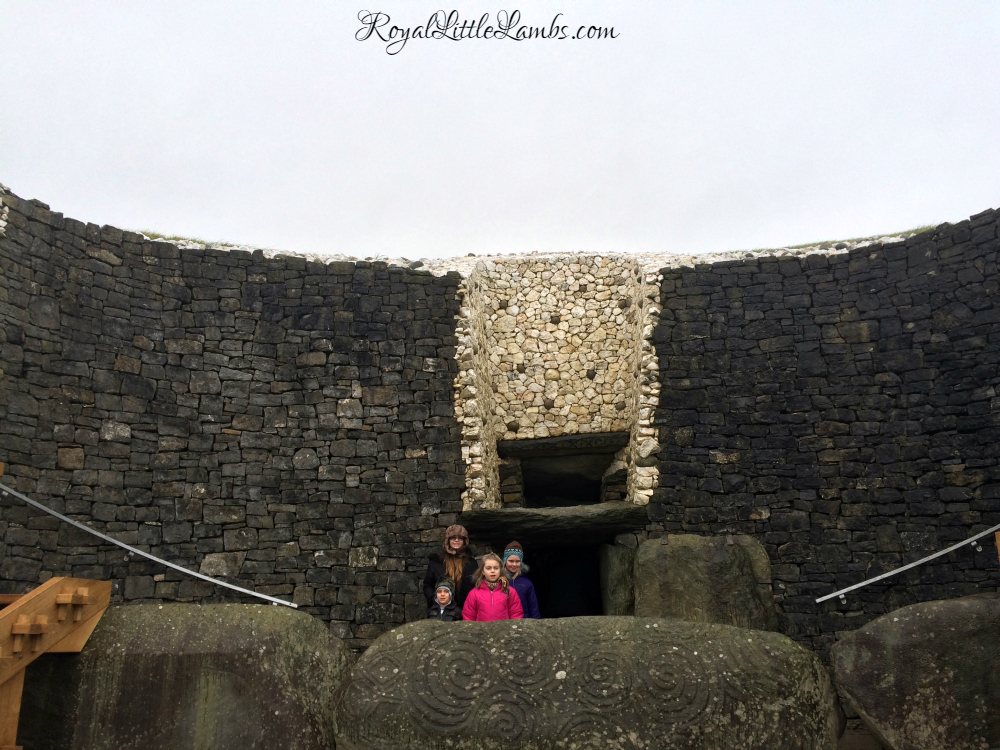
At dawn on the winter solstice and for a number of days before and after, a shaft of sunlight enters the chamber through an opening in the aperture above the entrance.

Newgrange

Pictures aren’t allowed inside. The ceiling is so low, adults have to bend over a bit, but can stand up at the end. The ground actually rises gradually from the entrance to the rear. The passage ends in a cross-shaped chamber. The passage points southeast and is a little fewer than 19 m long. The chamber consists of three recesses with a corbelled roof. To construct this roof, the builders overlapped layers of large rocks until the roof could be sealed with a capstone, 6 meters above the floor. After 5,000 years, the roof is still waterproof.

There are large stone basins in each recess and the walls are decorated with carvings of geometric designs like diamonds, triangles, spirals, and triskelia.

Kerbstone 52 is directly opposite the entrance stone on the outside of Newgrange. You can see carved spirals, diamonds, and triangles on the left, and more elaborate shapes on the right.

Newgrange Kerbstone 52

Visitors Center and Newgrange Megalithic Tomb

Adult: €6.00
Senior/Group: €5.00
Child/Student: €3.00
Family: €15.00
Average Length of Visit is 2 hours.

Some great educational resources on the Brú na Bóinne site.

The Battle of the Boyne site and museum is just down the road from Newgrange, but it was getting late and we were tired and hungry.

River Boyne

We drove to the city of Kells to see some sites and eat dinner.

Kells derives from the Irish Ceanannas Mór, meaning “great residence.”

We saw the 9th century Market High Cross as soon as we drove into Kells. The carvings depict scenes from the Old Testament.

Kells Market High Cross and Old Courthouse

The Abbey of Kells was first founded by St. Columba in 554. We’re so glad we watched The Secret of Kells!

The Book of Kells remained at Kells Abbey until the 1650s, when Cromwell’s troops were stationed in the town. It was sent then to Dublin for safekeeping. In 1661, the Book of Kells ended up in Trinity College, Dublin, where it remains.

The Round Tower is 90 feet high and unusual in that it has five windows, rather than the usual four, overlooking the five main roads into the town. The Churchyard Wall marks the original limit of the monastery. It was rebuilt in 1714 and 1998.

Round Tower and Churchyard Walls

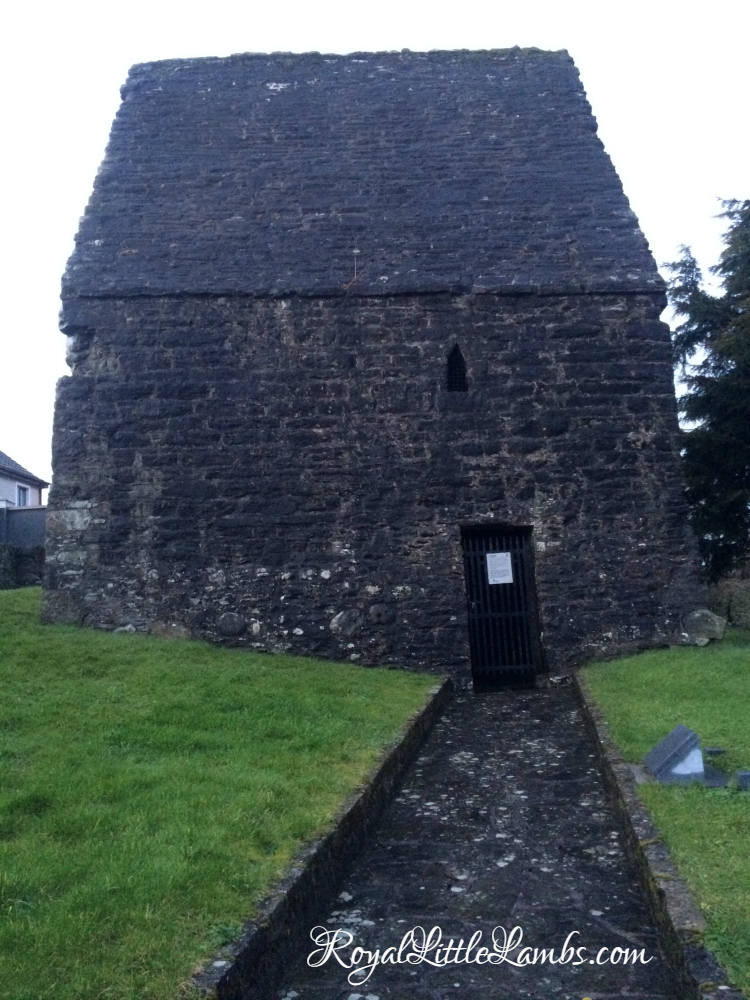
St. Columcille’s House probably dates from the early 10th century and is characteristic of an oratory from that period. There is no mortar in the house, it is stacked and angled stones, an amazing feat of early architecture. There was an underground passage from the house to the church.

St. Columba's House

The Abbey gates were locked and the old lady who holds the key to St. Columba’s house wasn’t home.

We had dinner at The Bective. It was recommended by a sweet local passerby when we were looking at the Round Tower.

The food was quite divine. I’m just not sure what the restaurant wants to be: it’s not a pub, but neither is it fancy white tablecloths.

We were squeezed into a small table in the middle of the room since we didn’t have a reservation.

Instead of water, we were served a Tang-like orange cordial. We loved that. Don’t get me wrong: I grew up with Tang and it’s a delightful memory.

The service was iffy.

I had to beg for a waitress to explain their beer selection from a smudged chalkboard in the far back corner of the restaurant. If they advertise “local craft beer” then maybe they should have a menu I can read up close. I was never quite sure which lady was our main waitress.

They didn’t pay attention when we all ordered and then switched up two of my daughters’ meals so I had to scramble to share around to cover up their mistake. I understand it’s odd for my teen to order off the kids’ menu and my 10-year-old to order an adult meal, but that’s just normal for us. The chicken wings my one daughter ordered off the kids’ menu came out all spicy sauce and all, but they quickly replaced them with plain ones. Maybe the menu descriptions could be a little clearer.

The salmon and trout were some of the best I’ve ever had.

I ordered a mushroom au gratin that was like cheesy cream soup. It was good, but not what I expected.

Their card machine was on the fritz so we had to pay cash.

We then drove back to Ashford Castle. It was late when we arrived.

Share
Pin48
Share
48 Shares
You might also like:

Filed Under: Europe, Ireland, Travel Tagged With: history, Ireland, travel

Our Trip to Ireland

This blog may contain affiliate links: disclosure.
Please see my suggested resources.

March 16, 2016 By Jennifer Lambert 6 Comments

It’s long been my dream to visit Ireland.

Since I turn the big 40 this month, we took a short trip to visit some key places in Ireland!

Our Trip to Ireland

We flew into Kerry from Frankfurt Hahn on RyanAir.

We rented a car. That was an interesting experience for my husband, driving on the “wrong” side of the road.

We stayed at Ashford Castle.

Ashford Castle in the Morning

Day 1:

We visited Kylemore Abbey.

The drive through the hills was lovely!

Kylemore Abbey

We had a lovely tea at Ashford Castle in the afternoon.

Day 2:

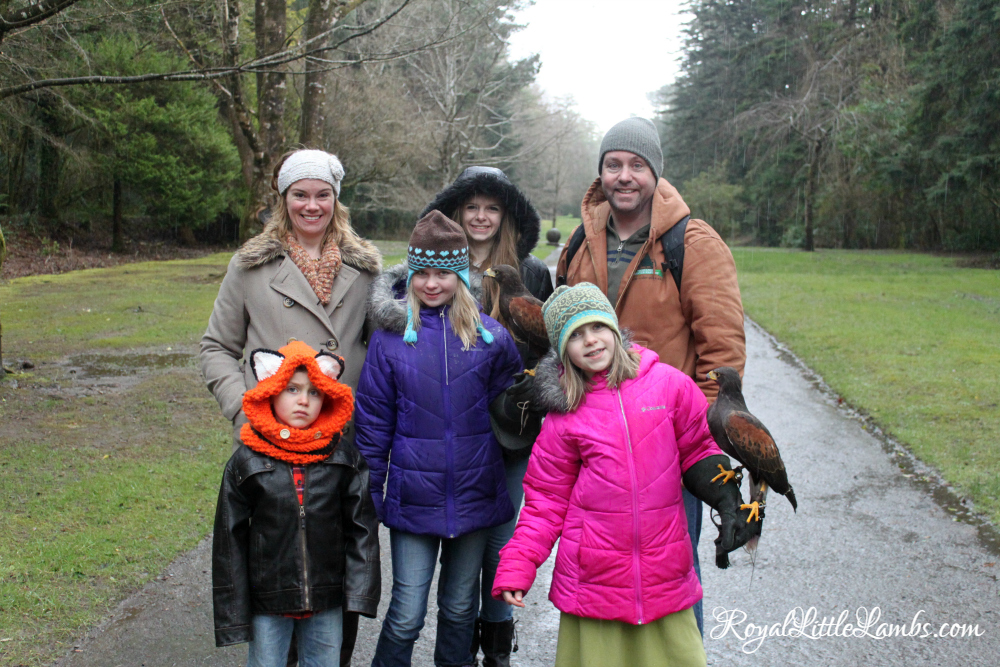
In the morning, we went on a Hawk Walk at Ashford Castle.

Falconry

We walked around Galway City in the afternoon.

Day 3:

We drove over to County Meath to see Trim Castle, Newgrange, The Hill of Tara, and the City of Kells.

It was a loooong drive but all of those places were close together once we got there.

We got back to the castle pretty late that night.

Our trip was too short.

We lost two days just traveling there and home – and I had hoped we’d have more opportunity to take side trips on the way to/from the castle/airport on those days.

There were several places we longed to see, but we just ran out of time.

The speed limits on the crowded little 2-lane country roads and the rainy weather made the going very slow.

I’d love to go back to Ireland to see The Cliffs of Moher and The Burren and to visit Dublin to see The Book of Kells.

Ashford Castle

Share
Pin35
Share
35 Shares
You might also like:

Filed Under: Europe, Ireland, Travel Tagged With: familytravel, Ireland, travel

Galway City in Ireland

This blog may contain affiliate links: disclosure.
Please see my suggested resources.

March 16, 2016 By Jennifer Lambert Leave a Comment

We took a short trip to Ireland and rented a car so we could drive around and explore.

We spent an afternoon walking around the lovely Galway City.

Galway is on the southern side of the Corrib Lake and Ashford Castle is on the northern side. It’s about an hour to drive down and around.

Our Galway City Ireland Trip

We found a parking garage right by the Spanish Gate in Galway.

Super convenient and right by Quay Street and Claddagh.

Spanish Gate in Galway City

We ate at McDonagh’s for fish and chips per Laura’s recommendations (she was our favorite clerk at Ashford Castle).

McDonagh’s is on Quay Street. Opening times: Monday to Saturday 12 noon – 11pm and Sunday 2pm – 9pm

Fish and Chips at McDonagh's in Galway

We mostly walked around Quay Street, window shopping.

The kids loved this statue of Oscar Wilde.

Oscar Wilde

We strolled over to St. Nicholas Collegiate Church. What a treasure.

Built around 1320, St. Nicholas’ Collegiate Church is well worth a visit and is the largest medieval parish church in Ireland, which has been in continuous use. Currently serving the Church of Ireland community, the church is dedicated to St. Nicholas of Myra, the patron saint of children (the model for Santa Claus) and mariners. Through the centuries, the church has played a central role in Galway’s history. In 1477, the explorer Christopher Columbus prayed at this church. During the 1600s, two tribe families of Galway extended the church but after the city was besieged in 1652, Cromwellian troops used the church as a stable.
The exterior has numerous carvings of animals and mythical creatures, while inside there are a diverse number of notable artefacts and monuments such as the Crusader’s grave (1300s), the carved baptismal font (1600s), a decorated stone lectern (1500s), and the Lepers’ Gallery.

St. Nicholas Church in Galway Ireland

We crossed over to the Claddagh district. It was super windy and getting colder.

Claddagh

Claddagh means “the shore.” It’s is an area close to the centre of Galway city, where the Corrib River meets Galway Bay. It was formerly a fishing village, just outside the old city walls. It is just across the river from the Spanish Arch, which was the location of regular fish markets where the locals supplied the city with seafood as recently as the end of the 19th century. People have been gathering seafood and fishing from the area for millennia. It is one of the oldest former fishing villages in Ireland – its existence having been recorded since the arrival of Christianity in the 5th century.
During the 19th century the Claddagh attracted many visitors, including writers who spread its fame. The original village of thatched cottages was razed in the 1930s and replaced by government buildings.

I wish we’d had more time to see Galway Cathedral, but we were cold and tired and it was several blocks away. We could see the dome of the cathedral.

Galway was a delightful little city with lots of shopping opportunities, pubs and restaurants, and culture.

Share
Pin
Share
0 Shares
You might also like:

Filed Under: Europe, Ireland, Travel Tagged With: Galway, Ireland, travel

  • « Previous Page
  • 1
  • …
  • 63
  • 64
  • 65
  • 66
  • 67
  • …
  • 137
  • Next Page »
Suggested ResourcesReceipt Hog

Archives

Popular Posts

10 DIY Gifts with Essential Oils10 DIY Gifts with Essential Oils
Natural Remedies for HeadacheNatural Remedies for Headache
10 Natural Remedies to Keep on Hand10 Natural Remedies to Keep on Hand
Henna Hands CraftHenna Hands Craft
Homemade Turkey Divan CasseroleHomemade Turkey Divan Casserole
This website uses cookies to improve your experience. We'll assume you're ok with this, but you can opt-out if you wish.Accept Reject Read More
Privacy & Cookies Policy

Privacy Overview

This website uses cookies to improve your experience while you navigate through the website. Out of these, the cookies that are categorized as necessary are stored on your browser as they are essential for the working of basic functionalities of the website. We also use third-party cookies that help us analyze and understand how you use this website. These cookies will be stored in your browser only with your consent. You also have the option to opt-out of these cookies. But opting out of some of these cookies may affect your browsing experience.
Necessary
Always Enabled
Necessary cookies are absolutely essential for the website to function properly. This category only includes cookies that ensures basic functionalities and security features of the website. These cookies do not store any personal information.
Non-necessary
Any cookies that may not be particularly necessary for the website to function and is used specifically to collect user personal data via analytics, ads, other embedded contents are termed as non-necessary cookies. It is mandatory to procure user consent prior to running these cookies on your website.
SAVE & ACCEPT