Jennifer Lambert

A Sacred Balance

Visit Us On FacebookVisit Us On PinterestVisit Us On InstagramVisit Us On Linkedin
  • Homeschool
    • Book Lists
    • How Do We Do That?
    • Notebooking
    • Subjects and Styles
    • Unit Studies
  • Travel
    • Europe
      • Benelux
      • France
      • Germany
      • Greece
      • Ireland
      • Italy
      • London
      • Porto
      • Prague
    • USA
      • Chicago
      • Georgia
      • Hawaii
      • Ohio
      • Utah
      • Yellowstone and Teton
  • Family
    • Celebrations
    • Frugal
  • Military Life
    • Deployment
    • PCS
  • Health
    • Recipes
    • Essential Oils
    • Fitness
    • Mental Health
    • Natural Living
    • Natural Beauty
  • Faith
  • About Me
    • Favorite Resources
    • Advertising and Sponsorship
    • Policies
  • Reviews

© 2025Jennifer Lambert · Copyright · Disclosure · Privacy · Ad

Best Book Series for Middle Schoolers

This blog may contain affiliate links: disclosure.
Please see my suggested resources.

June 7, 2016 By Jennifer Lambert 10 Comments

We read good literature in our family.

Sure, my kids like to read fluff once in a while, but they always come back to the good stuff and even complain about their choices of pop fiction with its poor writing, incorrect references to mythology, and predictable plots.

Of course, we all love Narnia, Tolkein, Anne of Green Gables, and The Little House series.

I discourage my kids from reading much of the popular fiction with its themes of dating drama, sexual situations, and occult references.

We go to the library weekly and we see the marketing displays of popular fiction for teens. The book covers make me want to guard their eyes. It’s almost as bad as Harlequin romance novels with those ripped bodices! Many of the plots involve vampires and witches. Almost none of it is worthwhile reading material.

My criteria for good books:

  1. Is it stimulating to the mind and imagination? I want books that are engaging and require my kids to make connections or dream of possibilities.
  2. Does it cultivate our values? I often encourage reading books that differ from our worldview. It’s thought-provoking and a great conversation starter!
  3. Is it well-written? We don’t waste time on poorly written material.
  4. Is it interesting or challenging? I want books that encourage my kids to think long after they close the book. How can we be kinder, help others, be servant leaders?
  5. Does it encourage discussion? I love discussing books with my kids and hearing what they think about what they read!

We read world mythology and folk tales as part of our homeschool curriculum. And my kids love/hate the Percy Jackson series because it’s so “inaccurate,” lol!

I see the value in dystopian lit and we often read these books together and discuss them. I do love sci-fi and fantasy and encourage my kids to love it too.

After completing my homeschool reading assignments, my older teens are welcome to read the popular YA fiction to see for themselves. And so far, they agree with me.

This list goes a bit beyond the great classics that everyone should read.

5 of the Best Book Series for Middle Schoolers

5 Great Book Series for Middle Schoolers

My 8-year-old daughter is a very advanced and mature reader and has read all of these and approves them.

I have listed the recommended ages and grade levels, but always preview reading material for appropriateness for your child and family.

1. My Side of the Mountain and more by Jean Craighead George

Fun adventure books about nature and animals.

These living books teach about survival skills, respecting the environment, identifying plants and animals. They’re great for any nature lover!

Age Range: 10 and up

  • Grade Level: 5 and up

2. Swallows and Amazons series by Arthur Ransome

12 books about adventurous kids set between the two World Wars.

We love reading about these siblings and all their pretend play in a simpler time.

3. The Giver series by Lois Lowry

A great dystopian series about valuing all lives.

We love the lessons these books teach about society and relationships.

  • Age Range: 12 and up
  • Grade Level: 7 and up

4. Brian’s Saga series by Gary Paulsen

Survival and self-discovery.

Great books for boys and girls about survival skills, relationships, and learning about self.

  • Ages 11-13

5. Wonder series by R.J. Palacio

Lovely books about looking beyond physical appearances and being kind.

We’re currently reading these and loving them! I encourage kindness in our lives.

  • Age Range: 8 – 12 years
  • Grade Level: 3 – 7

I’m always on the lookout for great literature to add to our collection. We don’t shy away from tough topics. Literature is important for us to learn about the world we live in. I’m raising readers!

Do you have any great books or series to add to my list?

Literature Study (or Book Report) Notebooking Pages
Share
Pin3
Share
3 Shares
You might also like:

Filed Under: Homeschool Tagged With: book list, homeschool, middle school, reading, teen

Stone Mountain

This blog may contain affiliate links: disclosure.
Please see my suggested resources.

June 2, 2016 By Jennifer Lambert 1 Comment

I grew up near Atlanta and my four kids have never been back here, so we enjoyed showing them some of my favorite places in the area.

We visited Stone Mountain while we stayed with my parents before PCSing to Germany.

It sure is different than the last time I was there.

We had been studying The Civil War and this was a nice way to finish our lessons.

Stone Mountain is an interesting field trip for history, geology, botany, and family fun.

I discussed with my kids the problematic aspects of the relief on the mountainside along with the plantation village tours.

Stone Mountain Field Trip

We ended up purchasing passes for 2 adults and 3 kids. Alex was free.

Adventure Passes are $26.95 for adults and $20.95 for kids.

The Adventure Passes include: Summit Skyride, Scenic Railroad, 4-D Theater, SkyHike®, Camp Highland Outpost, Geyser Towers®, The Great Barn®, Great Locomotive Chase Adventure Golf, Historic Square, and Discovering Stone Mountain Museum (and other seasonal events).

We really just wanted to do the Summit Skyride and Scenic Railroad but the passes seemed like a better deal after we studied the grid in the ticket office.

Who doesn’t love a train ride?

Boy on a Train
Stone Mountain Train

Since it was included in the ticket, we played a round of Great Locomotive Chase Adventure Golf.

Minigolf

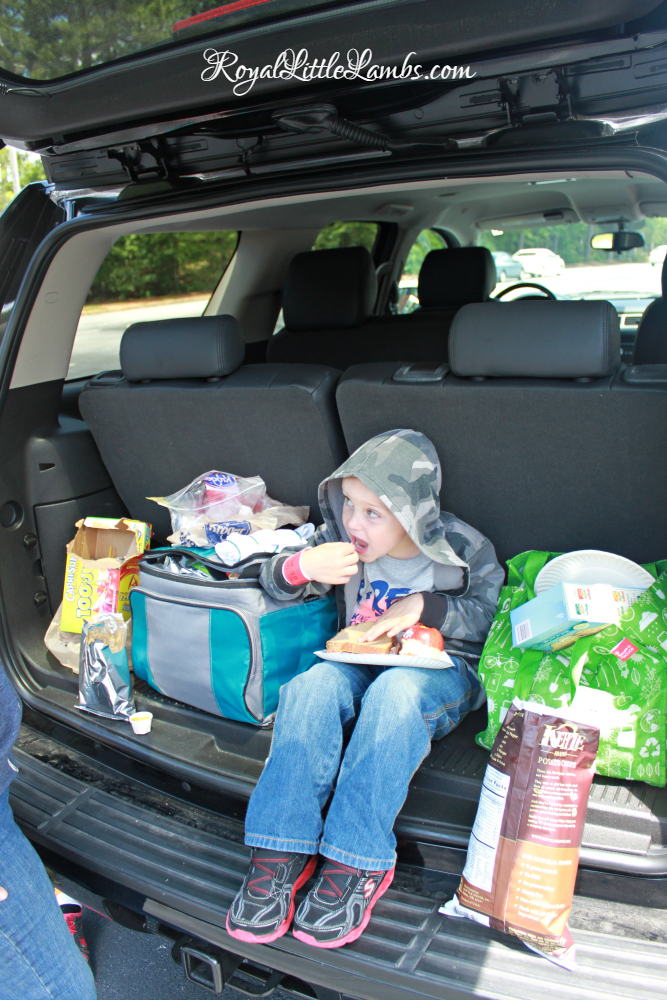
Then we had a frugal picnic lunch with sandwiches, fruit, and juice in the parking lot.

Frugal Lunch

We took the Aerial Tramway to the top of the mountain.Stone Mountain Aerial Tramway

It was windy!

Windy Stone Mountain

Tori loves rocks.

Stone Mountain granite is 60% feldspar, 28% quartz, 11% muscovite mica, and 1% biotite mica.

The kids loved seeing all the cool plants. Great for botany studies.

Stone Mountain Plants

Liz loved the SkyHike® and the kids loved The Great Barn®.

SkyHike is a ropes course and Liz did amazingly well.

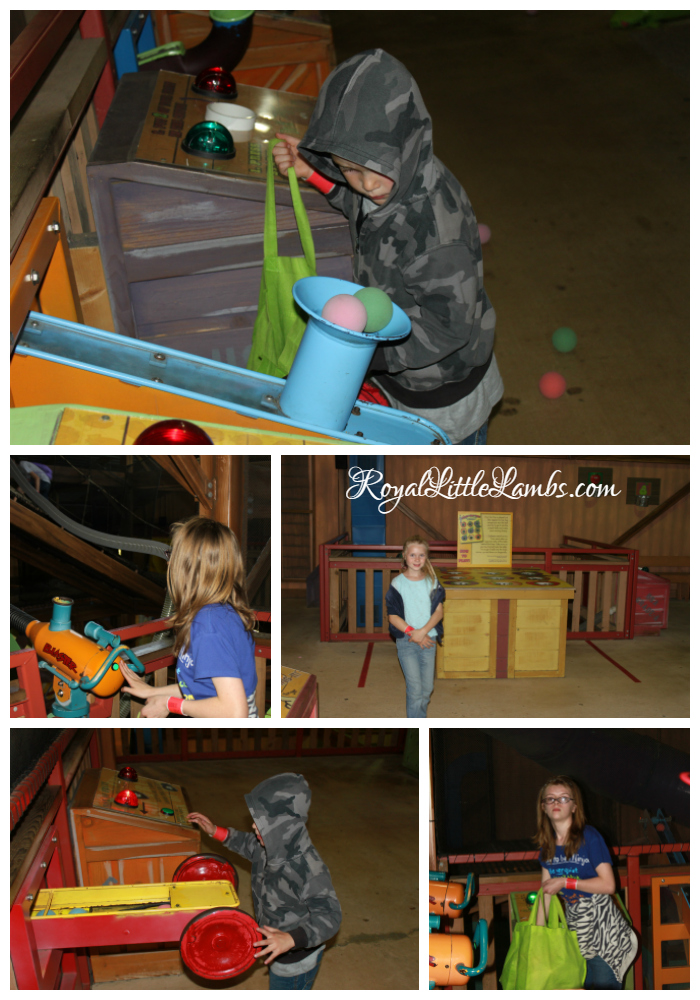
The Great Barn is an indoor playground with slides, rope climby things, and balls.

The idea is to pretend you’re farming, but we just liked to shoot each other.

The Great Barn

It was a fun day for all of us.

Stone Mountain Park is about 30 minutes from downtown Atlanta and 45 minutes from McDonough.

Daily parking is $15.

Adventures Passes are $26.95 (plus tax)for adults and $20.95 (plus tax) for kids.

Share
Pin6
Share
6 Shares
You might also like:

Filed Under: Georgia Tagged With: field trip, Georgia, travel

I Threw Out All the Printables

This blog may contain affiliate links: disclosure.
Please see my suggested resources.

May 31, 2016 By Jennifer Lambert 51 Comments

I had thousands of conputer files of printables and several plastic bins of folders containing laminated cardstock manipulatives, just saved for whenever my son might need or want them.

Then I realized my son had somehow jumped from preK work to solid elementary – with fluent reading and writing and advanced math…and all those printables were just taking up space.

I threw out all the printables and changed the way we learn.

I Threw Out All the Printables

I spent tons of money on paper, ink, and laminating when my middle girls were very little.

Printables worked for us then.

I felt trapped by needing performative homeschooling and showing records of products, but I no longer feel that need. I can see their learning in the critical thinking skills and assimilating questions they ask on our evening walks and around the dinner table.

Now that my kids are growing up, the printables are boring and are met with eye rolls or just simply ignored.

I really don’t have the storage space for all those bins with files of 3-part cards, file folder games, and cutesy literacy and math activities. We move frequently with the military, and being minimalist is a necessity.

It’s very freeing to throw out things I don’t want or need anymore – trash, recycling, donations.

Printables can be a good introduction or substitute for learning about places, events, or people when you can’t travel to experience those things.

Also, I’m not into household printables either. I know they work for some people, but after years of trying and wasting so much paper, I am no longer in denial. I have come to terms with my preference to leave no paper trail.

The cute meal planners, household notebooks, artsy colorful day planners, adult coloring books, colorful prayer journals are just not for me.

I prefer my Excel spreadsheet for our budget and keep the synced family calendar on a phone app. I plan meals based on what I can find that looks good and on sale at the commissary and local grocery. I typically do the heavy shopping twice a month, around pay days.

I have a simple notebook for prayers, scripture writing, and journaling.

We also request companies to email us statements rather than send us paper bills in the snail mail.

Reducing our paper output is better for the environment and helps me maintain my goal of having a simpler life.

Paper items we still love to use:

Notebooking

We primarily use notebooking for assignments and assessment.

The kids have informal journals for art, travel, and writing. We also keep journals for dictation when the kids are young and learning grammar.

I print relevant notebooking pages for history and other subjects. These are more free-form than worksheets, allowing my kids to write about what they find interesting. We often complete these after traveling to summarize what we experienced and learned.

Free Homeschool Resources (Notebooking Pages & More!)

The girls still use their planners where I write their weekly reading assignments and reminds.

We still complete workbooks for spelling and Bible, because they’re easy and work for us. We still do Singapore math workbooks for elementary. We all love Life of Fred math with math journals. My girls are completing VideoText math for middle/high school and my son will too. We all use Apologia science textbooks as guides into real science learning, with lots of experiments and living books as supplements.

But almost everything else we do is experiential learning.

How we learn without printables:

Books

We read a lot. Like, a whole lot.

Our entire curriculum is based on books – literature and history and living books.

Books are super important to me and I want books to be important to my kids.

I don’t want anything dumbed down – we read the real book, not some condensed version in modernized language. We have real dictionaries and encyclopedias and bookshelves in every bedroom and the school room is full of great reading material. We max out our library cards weekly.

See our book lists.

Video

We like to watch videos on Netflix, Amazon, or YouTube that coincide with our studies.

We often compare/contrast the movie to the book.

Video is very important to studying history. It’s the only way we can see it other than in photos or by traveling to view the monuments, museums, and landscape. We also like how many videos bring history to life.

My teen and I watched Saving Private Ryan before our Normandy trip.

Experiential Learning

We like to travel to experience what we’re learning about.

We love to visit museums and natural wonders for art and nature study. I often center our travels around art museums.

We visit churches and castles and military monuments (every chance we get!) to study architecture and church history.

We loved living in Europe for three years to travel to places in history we’ve only read about!

We went to Greece and Rome and Ireland for ancient studies.

We’ve been to Paris and Prague. We went to London, Venice, Florence, and Bruges for medieval and Renaissance studies. We also visited Trim Castle while in in Ireland.

We went back to Paris for early modern studies. We toured an antebellum house and Stone Mountain when we studied the Civil War. We lived in Hawaii for three years and learned the effects of missionaries and plantations on island culture. We went to Flanders to see the WWI monuments.

We traveled to important places for modern studies. We went to Dachau and saw an American cemetery in Luxembourg where Patton is buried. We recently took a trip to Normandy and toured the D-Day museums and monuments.

We visit botanical gardens, aquariums, museums, and zoos for science. We also love nature hikes.

We complete art projects to learn about culture.

We created lovely vases by glass blowing in the Black Forest.

We painted Papier–mâché pots when we studied ancient Greece.

We made henna handprints when learning about India.

We created illuminated historiated initials when learning about medieval Europe.

Throwing out all our printables makes me feel so liberated!

Learning by experience helps my kids remember more than just playing with paper.

I love the direction our homeschool is taking!

I challenge you to make a positive change in your home or homeschool. De-clutter, try a new curriculum, do a family read-aloud, or choose a new technique. Tell me about it!

Share
Pin11
Share
11 Shares
You might also like:

Filed Under: Homeschool Tagged With: back to school, homeschool

Heidelberg Castle

This blog may contain affiliate links: disclosure.
Please see my suggested resources.

May 26, 2016 By Jennifer Lambert Leave a Comment

We took the train to Heidelberg.

Heidelberg offers a pretty town, castle, a large wine vat, and apothecary museum.

You can only view the inside on a guided tour.

It sucked.

I couldn’t hear or understand the tour guide. I was unable to speak or ask questions due to the acoustics since I was told to be quiet by the guide and another family (and my husband) because they couldn’t hear. We were rushed through the castle and I could hardly take any pictures of anything interesting.

The castle ruins are among the most important Renaissance structures north of the Alps.

The castle has only been partially rebuilt since its demolition in the 17th and 18th centuries. It is located 80 metres (260 ft) up the northern part of the Königstuhl hillside, and thereby dominates the view of the old downtown. It is served by an intermediate station on the Heidelberger Bergbahn funicular railway that runs from Heidelberg’s Kornmarkt to the summit of the Königstuhl.

The earliest castle structure was built before 1214 and later expanded into two castles circa 1294; however, in 1537, a lightning-bolt destroyed the upper castle. The present structures had been expanded by 1650, before damage by later wars and fires. In 1764, another lightning-bolt caused a fire which destroyed some rebuilt sections.

There are four ways to get to the castle – car, bike, funicular, or walking.

We walked. It was hot.

Walking to Heidelberg Castle

We gathered for the next English tour, then they divided us in half with two different tour guides.

We entered into a room with lots of fun statues, old books, and things I wanted to look at. The guide explained none of it and gave no time to view it.

Fun with Statues

 Old Books

Then we went inside the castle and upstairs. There were these fun trunks with a gazillion locks.

Heidelberg Trunk

Lots of little rooms with decorations and paintings.

We loved the fireplace!

Big Fireplace

Then we were in the chapel that is no longer used except for pretty.

Heidelberg Chapel Altar

The tour was over.

We made our way over to the BIG VAT.

Heidelberg Tun

The Heidelberg Tun or Great Heidelberg Tun, is an extremely large wine vat contained within the cellars of Heidelberg Castle. There have been four such barrels in the history of Heidelberg. In 1751, the year of its construction, the present one had a capacity of 221,726 litres (58,573.8125 U.S. gallons). Due to the drying of the wood its current capacity is 219,000 litres (57,853.6795 U.S. gallons). One hundred and thirty oak trees were reputedly used in its construction. It has only rarely been used as a wine barrel, and in fact presently enjoys more use as a tourist attraction, and also as a dance floor since one was constructed on top of the tun.

Heidelberg Castle has a history of enormous barrels; today’s barrel (Fass) is the fourth in the history of the Neckar town.

  1. Johann-Casimir-Fass (1591)
  2. Karl-Ludwig-Fass (1664)
  3. Karl-Philipp-Fass (1728)
  4. Karl-Theodor-Fass (1751)

When the French army captured the castle, the soldiers believed the empty wine barrel to be full of wine; their hatchet marks left on the barrel were later visible to tourists. According to tradition and local legend, the eternal keeper of the enormous Tun remains Perkeo of Heidelberg, once a court jester and master of the castle’s spirit production (and a famously Herculean wine drinker).

Perkeo of Heidelberg

We looked at the view from the terrace.

Old Bridge over the Neckar River

Then we toured the Apothecary Museum. This was our favorite part!

Old Pharmacy

Laboratory
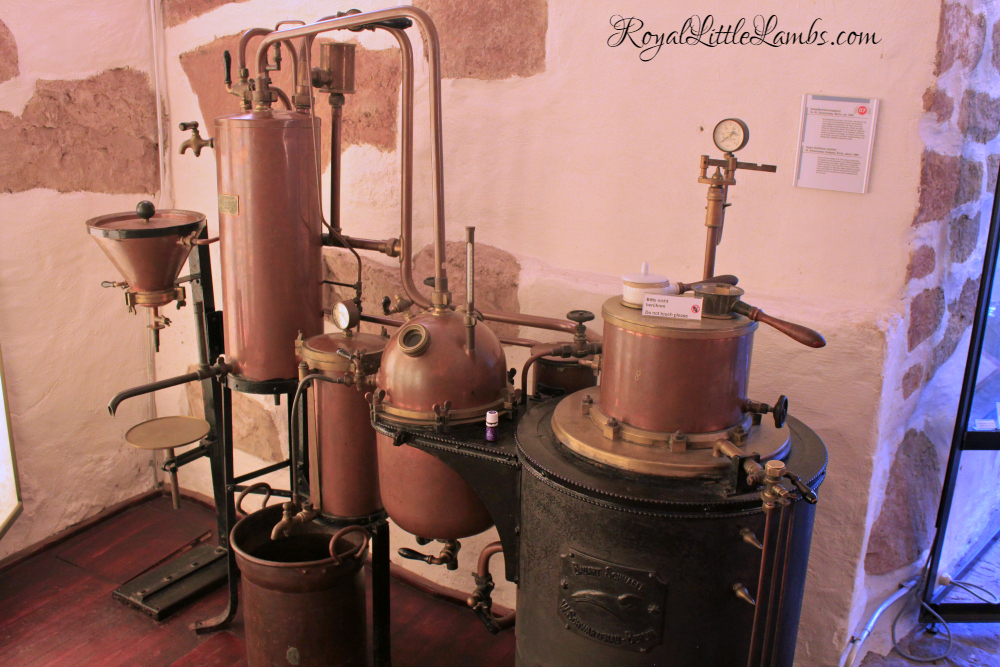
Old Distillery
We won’t take the train again. We couldn’t pack enough snacks and drinks in the backpack for all six of us on a hot day. It’s just so much easier to drive and pack up a picnic and be comfortable.

Hours

Courtyard: 8:00am – 6:00pm (last entry 5:30pm)

Big Vat: 8:00am – 6:00pm (last entry 5:50pm)

Pharmacy Museum: 10:00am – 5:30pm (last entry 5:10pm)

Rates

Courtyard, Great Cask, and Apotheken-Museum: Adults €3.00

Tours of interior are an additional €4.00 for adults. Tours are in English daily, when demand is sufficient.

Heidelberg is about 1.25 hours from Ramstein and 2.25 from Spangdahlem.

Studying Castles and the Middle Ages

Resources:

  • A Medieval Feast Unit Celebration
  • Knights and Castles Lapbook
  • This castle-shaped lapbook is way cute!
  • Lots of Middle Ages activities from Homeschool Share
  • Middle Ages Notebooking & Coloring Pages
  • Medieval Unit Study
Share
Pin1
Share
1 Shares
You might also like:

Filed Under: Europe, Germany, Travel Tagged With: castle, Germany, travel

Tea Sandwiches

This blog may contain affiliate links: disclosure.
Please see my suggested resources.

May 24, 2016 By Jennifer Lambert Leave a Comment

It’s been cold and rainy here all month-long. We even had frost in the mornings last week!

The kids loved having a fancy tea at Ashford Castle, so we decided to recreate those yummy sandwiches in our own home.

We love having a fancy tea time for lunch on rainy days and listening to classical music.

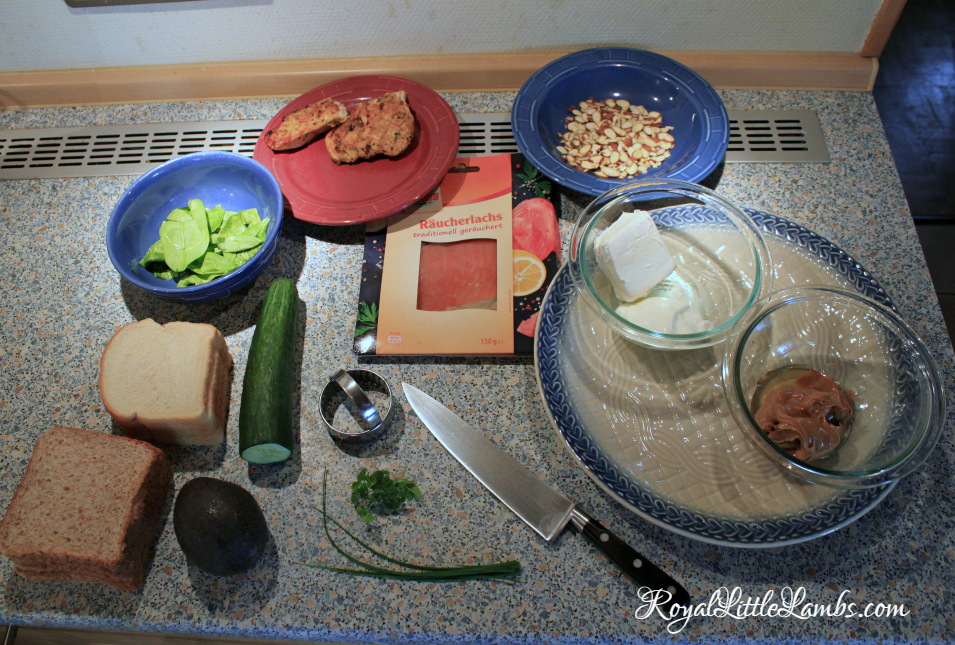
I gathered the ingredients for several kinds of tea sandwiches:

  • Smoked Salmon
  • Turkey Avocado
  • Cucumber
  • Peanut Butter and Honey
Mise en Place

The peanut butter and honey whipped together is quite special.

I mixed half a package of cream cheese and Greek yogurt (that looks like 1/2 cup, yes?) with chopped chives.

I love that my German friends call cream cheese “The cheese that is not cheese.”

Cream Cheese with Chives and Yogurt

I added some salt and pepper. I couldn’t get it very smooth. I think letting it sit out to get room temperature is key.

Chive Cream Cheese

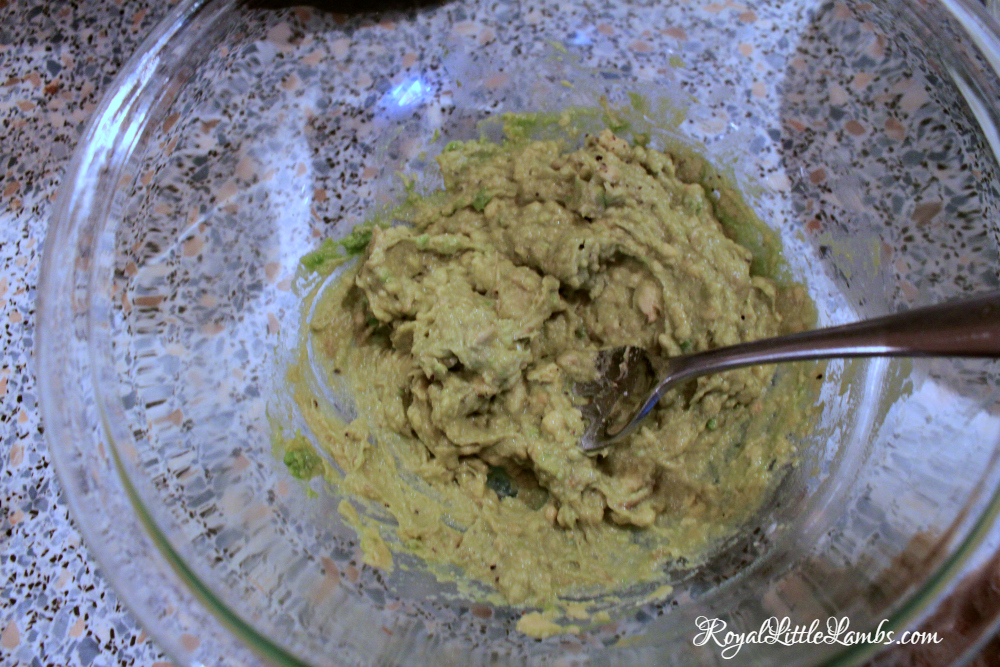
I mashed avocado with salt and pepper. You can add a little lemon or lime juice if you’re worried about it oxidizing. Or you can just use a container of premade guacamole.

Mashed Avocado

We had some leftover curry turkey breast that works so well! I miss this from our German butcher shop.

Curry Turkey

For pretty, trim the crusts off the bread. Yes, I used icky store-bought bread. We almost never do. But the German stuff is much cleaner than the American bread. And I know there are some organic ones that are healthier.

Crustless Bread

I sliced the cucumbers thin. I didn’t peel them first.
Don’t mind my nails. I’ve been gardening. And I’m a mom. I haven’t had a mani-pedi in over 3 years.

Thin-Sliced Cucumbers

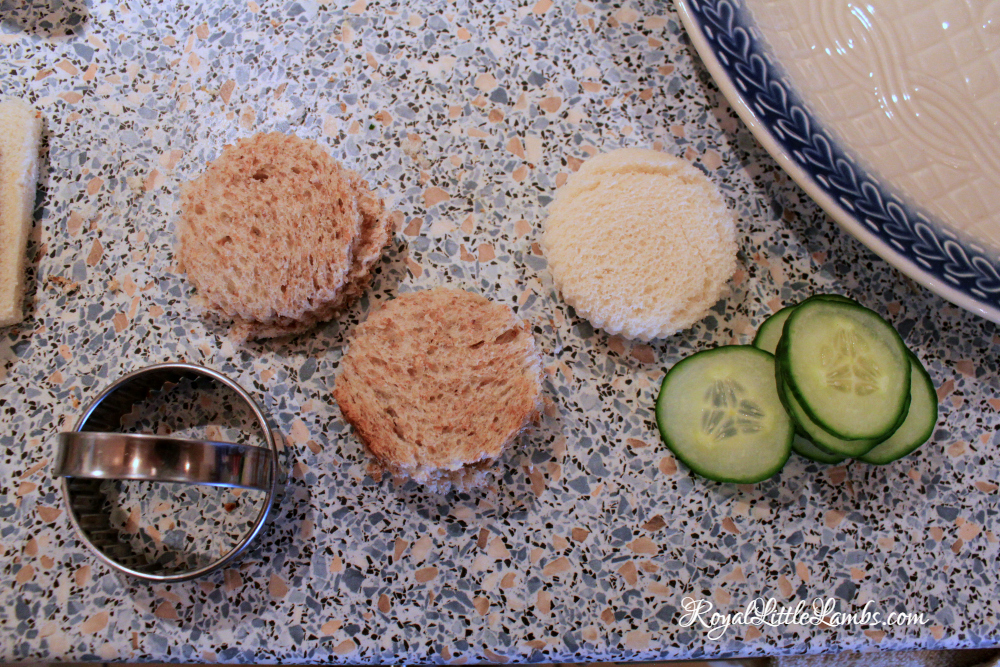
I used a biscuit cutter to make some bread rounds.

Round Bread

Then I assembled the sandwiches.

I used the cream cheese mixture with the smoked salmon.

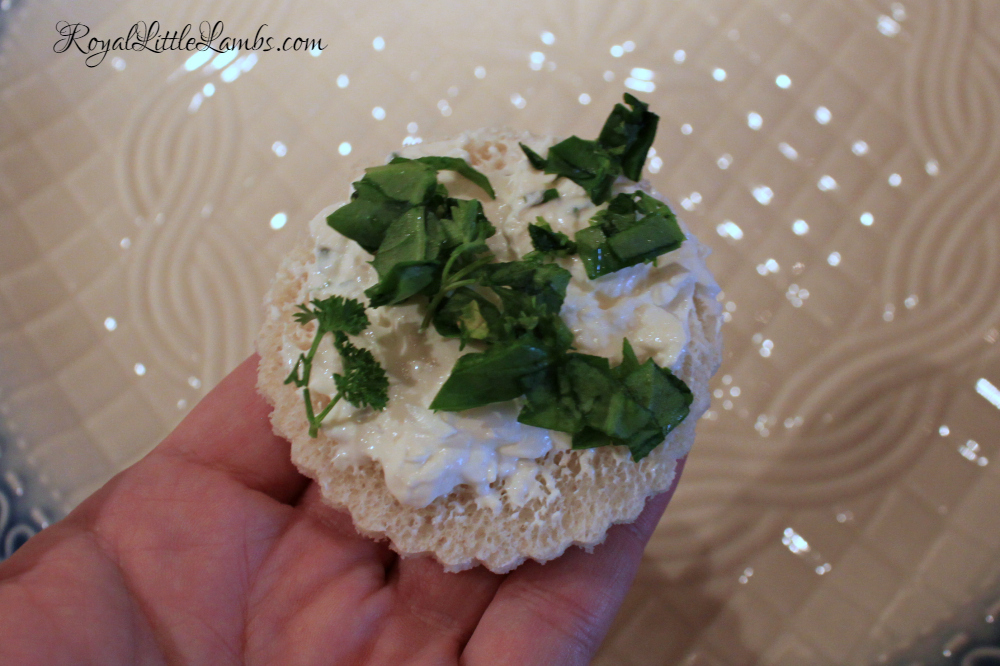
I also chopped spinach and parsley and added that for a touch of green and flavor.

I think next time, I need some more seasoning. They were just a little bland.

Assembling Smoked Salmon Sandwiches

The cucumber sandwiches were perfect with the spinach and parsley.

Watercress is more traditional, but I couldn’t find any this week.

Assembling the Cucumber Sandwiches

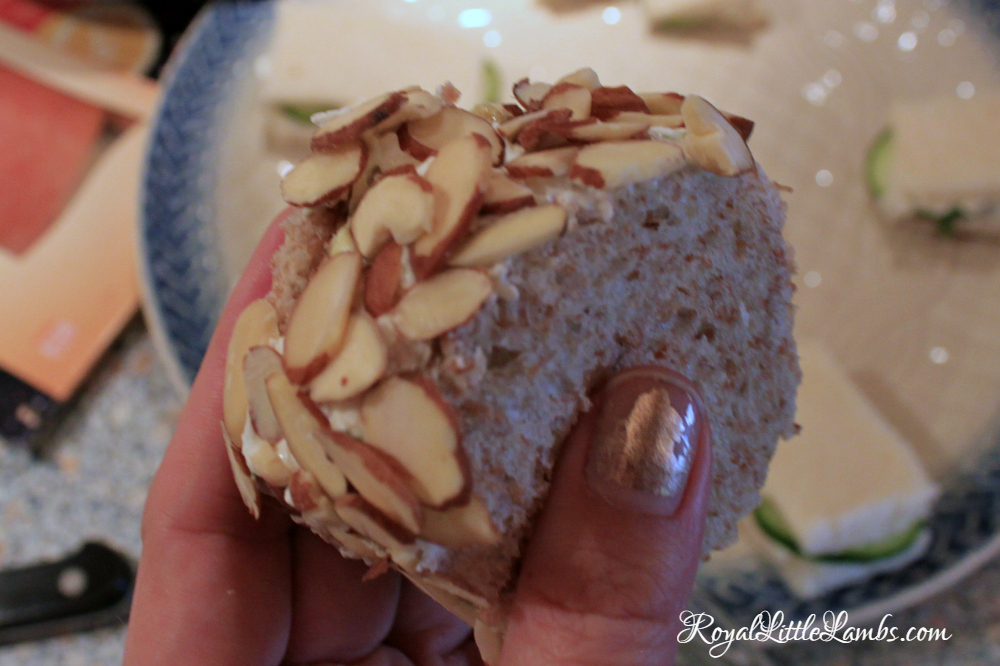
I roll the turkey avocado sandwiches with sliced almonds for an extra special touch. They’re Liz’s favorite.

I used a dab of the cream cheese spread for almond glue, but mayonnaise works fine too.

Turkey Avocado with Almonds

My middle girls dressed up for the occasion.

Sisters at Tea Time

My teen was miserable and cold. It was rainy all day long. German houses are stone and always cool.

The turkey avocado are her favorites so she’s almost happy!

Tea Time with My Teenager

I also made little triangle sandwiches with the curry turkey and some of the peanut butter honey. They were amazing.

My son ate something totally different. He’s not into sandwiches yet.

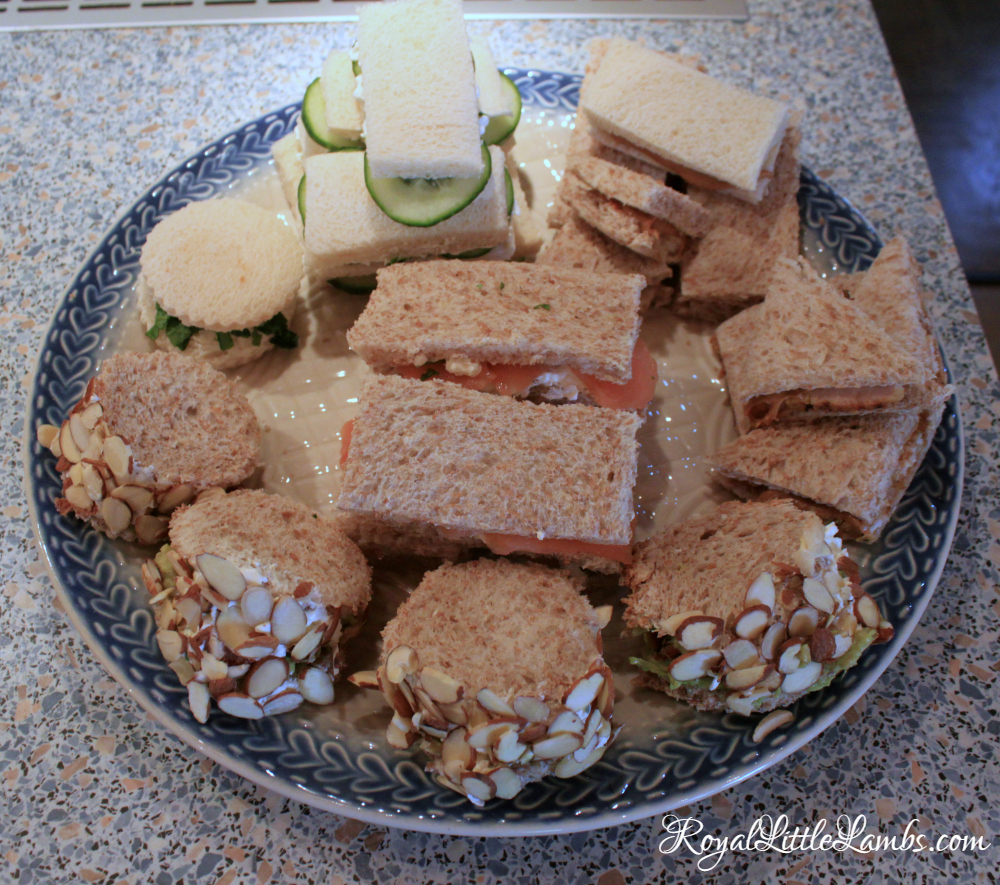
Our pretty sandwich platter:

Tray of Tea Sandwiches

I added some fresh local berries and chopped veggies with homemade maple oatmeal scones to complete our tea.

Tea Sandwiches
Print

Tea Sandwiches

Fun tea sandwiches for any occasion!
Cuisine Holiday
Prep Time 30 minutes
Total Time 30 minutes

Ingredients

Cream Cheese Spread

  • 1/2 package cream cheese
  • 1/2 cup Greek yogurt
  • 1 T chives chopped

Peanut Butter and Honey

  • 1/2 cup natural peanut butter
  • 1 T local honey

Turkey Avocado

  • 1 cup chicken or turkey cooked
  • 1 avocado mashed (or prepared guacamole)
  • 1/2 cup almonds sliced
  • 1/4 cup mayonnaise or cream cheese spread

Fillings

  • 3-4 oz smoked salmon
  • 1 cup cucumbers sliced thin
  • 1-2 T parsley chopped
  • 1 cup spinach or watercress chopped

Breads

  • 1/2 loaf wheat bread crusts trimmed
  • 1/2 loaf white bread crusts trimmed

Recipe Notes

Share
Pin
Share
0 Shares
You might also like:

Filed Under: Recipes Tagged With: recipe, tea

Burg Nanstein

This blog may contain affiliate links: disclosure.
Please see my suggested resources.

May 19, 2016 By Jennifer Lambert Leave a Comment

Nanstein Castle takes its name from red sandstone.

Red Sandstone

It was built around the year 1162 after Holy Roman Emperor Frederick I demanded its construction as additional defense for the Palatinate.
In 1504, German knight Franz von Sickingen, inherited part of the castle after his father’s death in the War of the Bavarian Succession, finally acquiring the entire castle in 1518. He immediately began extensive refortification to make the castle suitable for firearms.
Nanstein is well known for an elaborate siege during the Knights’ Revolt in 1523 which claimed the life of von Sickingen. The fall of Nanstein was a symbol for the decline of castles in the Palatinate.
In 1542, von Sickingen’s sons recovered Nanstein as a fief and started reconstruction of the castle. Reinhard von Sickingen completed the reconstruction in 1595. In 1668, Elector Charles I Louis forced Lotharingian troops from the castle and razed the fortifications.
In the 19th century the first conservation work was done on Nanstein, and this has continued to the present day.

Burg Nanstein

The kids were super excited to see their first castle!
Doorway

We hiked all over the castle and grounds.

Burg Nanstein German Flag

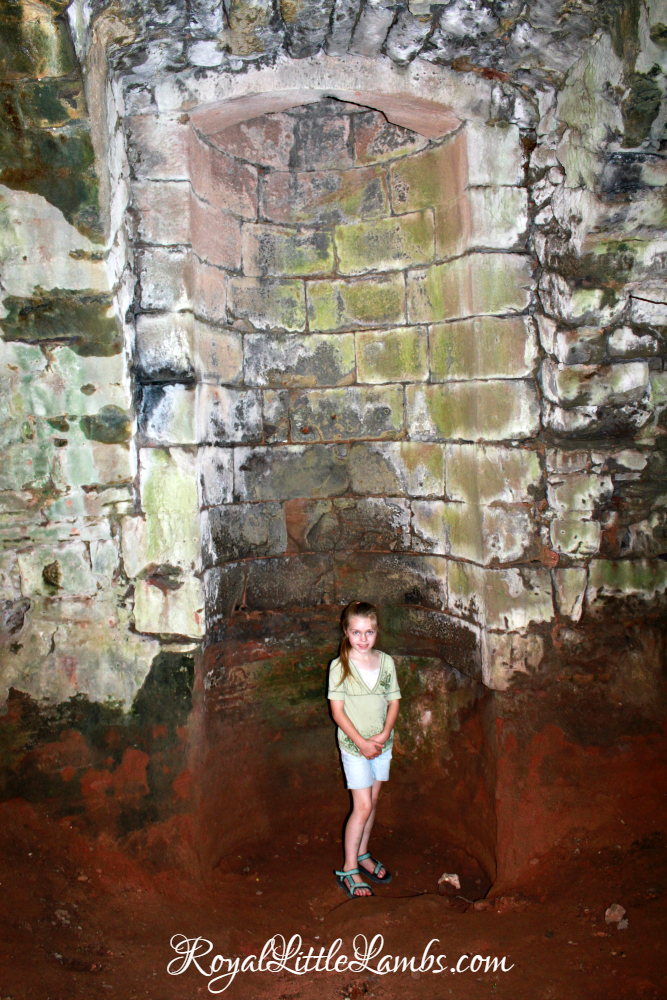
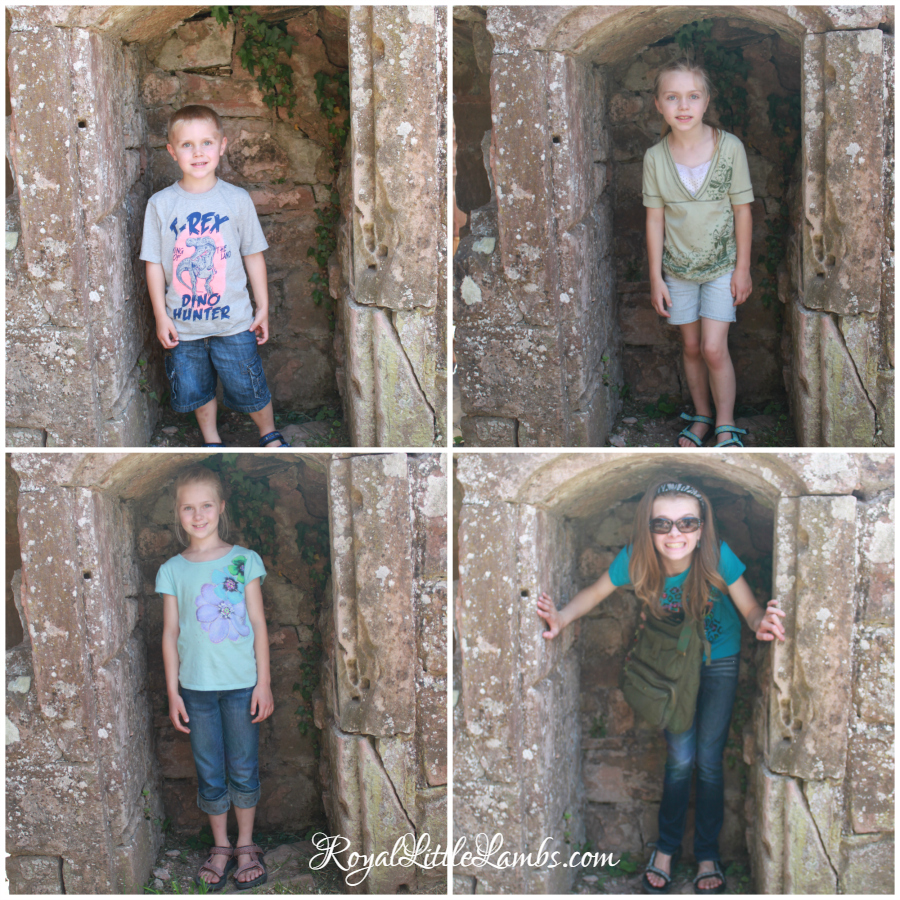
Katie thought it was hilarious to stand in the garderobe.

Garderobe

Fun standing in little niches.

Fun in Niches
Love this fountain!
Fountain in Courtyard

Look at that gorgeous view of Landstuhl!

View of Landstuhl

There’s a great little cafe too. We got our first taste of German food – great salads, schnitzel, and beer!

Burg Nanstein has lots of fun events and festivals year round.

Opening times:

Jan. – March:    10:00 to 16:00
April – Sept.:   09:00 to 18:00
Oct – Nov:       10:00 to 16:00
December:       closed
Mondays, except holidays: closed

Admission prices:

Adult€4,00
Children (ages 7+) €2,50
Family ticket 1 (1 adult and children) €4,00
Family ticket 2 (2 adult and children) €8,00
Audioguide €1,00
Castle guides €1,10 in German and English

Burg Nanstein is about 5 minutes from Ramstein and about 1.25 hours from Spangdahlem.

Studying Castles and the Middle Ages

Resources:

  • A Medieval Feast Unit Celebration
  • Knights and Castles Lapbook
  • This castle-shaped lapbook is way cute!
  • Lots of Middle Ages activities from Homeschool Share
  • Middle Ages Notebooking & Coloring Pages
  • Medieval Unit Study

You might also like:

  • PCS to Germany
  • PCSing OCONUS with a Vehicle
  • Best and Worst KMC
  • 13 Best Restaurants in KMC
  • Shopping in Germany
  • German vs. American Bacon
  • What to Do with Clothes
  • Gartenschau Dino Park
  • Kaiserslautern Volkspark
  • Kaiserslautern Wildpark
  • REAL Store Tour
  • Karlstal Hike
  • Hohenecken Castle Ruins
Share
Pin2
Share
2 Shares
You might also like:

Filed Under: Europe, Germany, Travel Tagged With: castle, Germany, travel

Karlstal Hike in Trippstadt

This blog may contain affiliate links: disclosure.
Please see my suggested resources.

May 10, 2016 By Jennifer Lambert Leave a Comment

We hiked the Karlstalschlucht in Trippstadt.

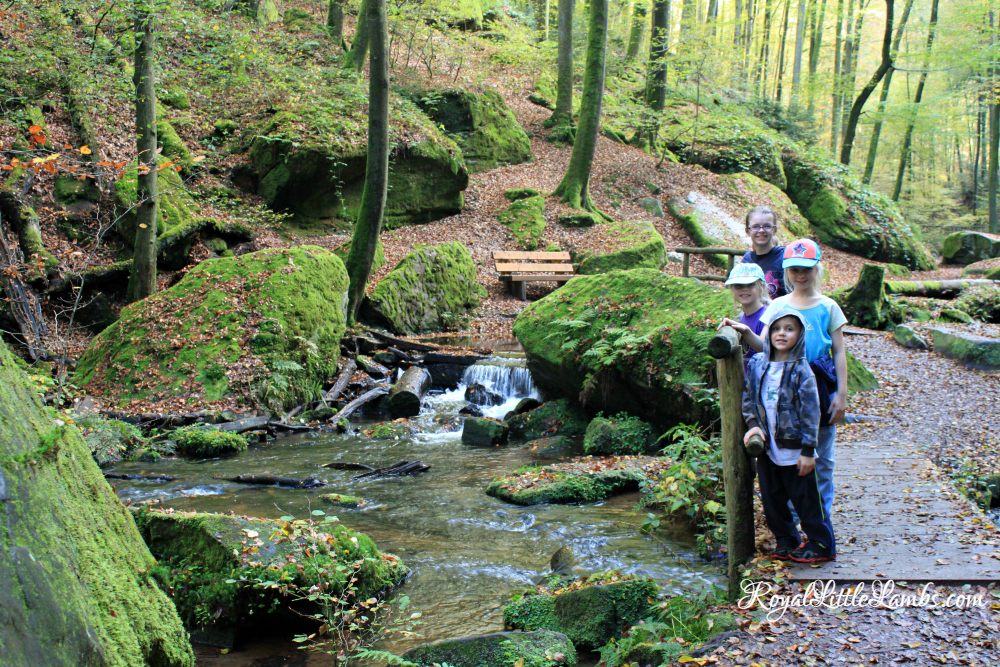
It’s a pretty little river and hiking area.

There’s not really any parking. We’ve always been lucky to have room on the side of the road. There is more parking in town and you can walk down.

The Karlstalschlucht is a great family hike and lovely for photo opportunities.

Entrance to Karlstalschlucht

A square, black iron sign at the entrance to Karlstal reminiscent of an important visitor: “King Ludwig I of Bavaria, Grand Duke Louis III of Hesse, and Archduchess Hildegard of Austria together with high wake dwelt on 9 August 1862. Karlstal.”

Karlstalschlucht Entrance Sign

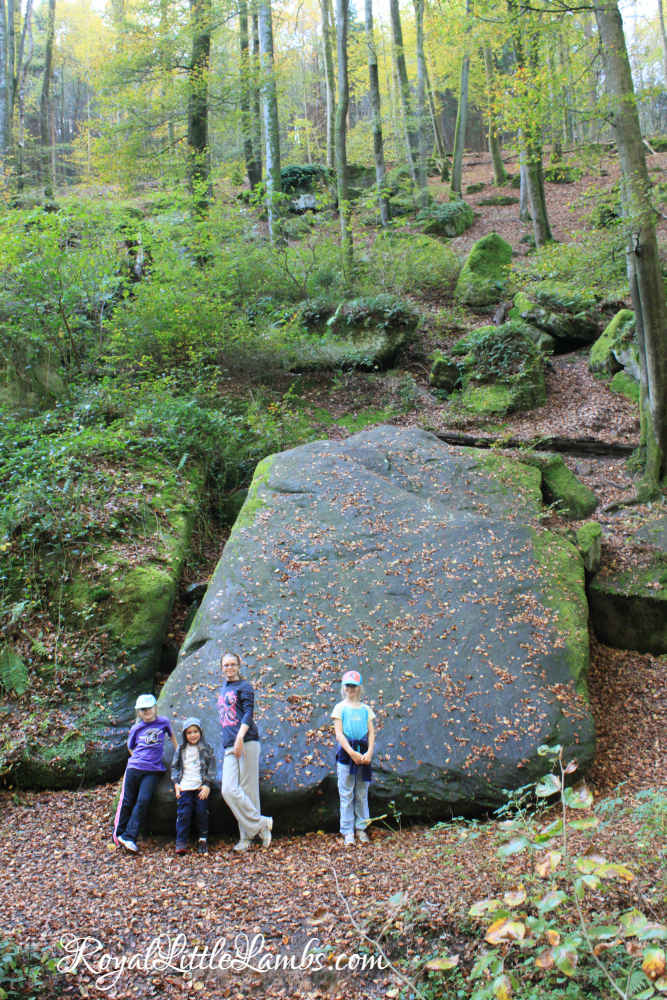
The kids enjoyed the sound of the water and looking at leaves and moss, and BIG ROCKS.

Big Rock

Lots of great photo opportunities! Every time we go, we see girls in impossibly high heels and pretty clothes trying to pose while not getting dirty or sinking into the mud.

Karlstal Family Photos
Karlstal Bridge
Trippstadt Hike

It’s a nice easy walk for families. The path is mostly even and safe, though strollers might be difficult.

There are benches to rest or sit and watch the world go by.

Trippstadt Karlstalschlucht is about 30 minutes from Ramstein AFB and 1.5 hours from Spangdahlem.

You might also like:

  • PCS to Germany
  • PCSing OCONUS with a Vehicle
  • Best and Worst KMC
  • 13 Best Restaurants in KMC
  • Shopping in Germany
  • German vs. American Bacon
  • What to Do with Clothes
  • Gartenschau Dino Park
  • Kaiserslautern Volkspark
  • Kaiserslautern Wildpark
  • REAL Store Tour
  • Burg Nanstein
  • Hohenecken Castle Ruins
Share
Pin
Share
0 Shares
You might also like:

Filed Under: Europe, Germany, Travel Tagged With: Germany, nature study, travel, waterfall

Homemade Bath Bombs

This blog may contain affiliate links: disclosure.
Please see my suggested resources.

May 3, 2016 By Jennifer Lambert Leave a Comment

A super fun and frugal craft for kids and teens to make!

DIY bath bombs with oatmeal, rose, and lavender.

Also perfect gifts for Mother’s Day!

Bath Bombs and Cards

These bath bombs smell great. Lavender and rose are my favorites.

My kids made me adorable cards with teacups, coffee cups, and pretty fans for Mother’s Day.

My kids love the fizzy bath bombs too.

DIY Bath Bombs with Oatmeal, Rose, and Lavender

Ingredients:

  • 1/2 cup Citric Acid
  • 1 cup Baking Soda
  • 1/4 cup Quick Oats
  • 10-15 drops Lavender Essential Oil
  • 5-10 drops Geranium Essential Oil
  • Lavender Petals 
  • Rose Petals
  • Witch Hazel (in a spray bottle)
  • Bath Bomb Molds

Directions:

1. Sift citric acid and baking soda into a large bowl. Sifting removes any clumps ensures a smooth consistency in the bath bombs.

2. Pour oats into the bowl and stir. Next, add essential oils and mix well. I find that using my hand is far better than a spoon since I can break any clumps with my fingers.

3. Spray the mixture with witch hazel until it reaches a slightly damp consistency. What you’re looking for is the mixture to hold form when you squish it into a ball in your hand.

4. Add flower petals to one half of the bath bomb mold. Fill with bath bomb mix.

5. Add more flowers and more mix to the other half.

6. Squeeze halves together firmly.

7. Carefully, open the mold and tap ball onto a drying area like plastic wrap over a towel. Let dry completely for a few hours.

8. Wrap in a pretty bag with ribbon for gift giving!

These can also be made in muffin tins or ice trays instead of bath bomb molds.

Share
Pin22
Share
22 Shares
You might also like:

Filed Under: Essential Oils Tagged With: diy, essential oils, homemade, mothers day, skin care

Easy Eggs Benedict

This blog may contain affiliate links: disclosure.
Please see my suggested resources.

April 27, 2016 By Jennifer Lambert 25 Comments

I’m not sure why people are scared to make Hollandaise sauce. Maybe it’s the tempering of the eggs into the melted butter.

We found a super easy and quick way to make the perfect Hollandaise sauce!

Tori has always loved fried eggs. Since she’s the only one, she’s often stuck eating scrambled since it’s easier to cook for all of us than just her.

What better way to eat eggs than with ham and lemony buttery Hollandaise sauce?

Dad took Tori to a kids cooking workshop at Harmon’s when she was 8 and the menu included eggs benedict. She was so proud!

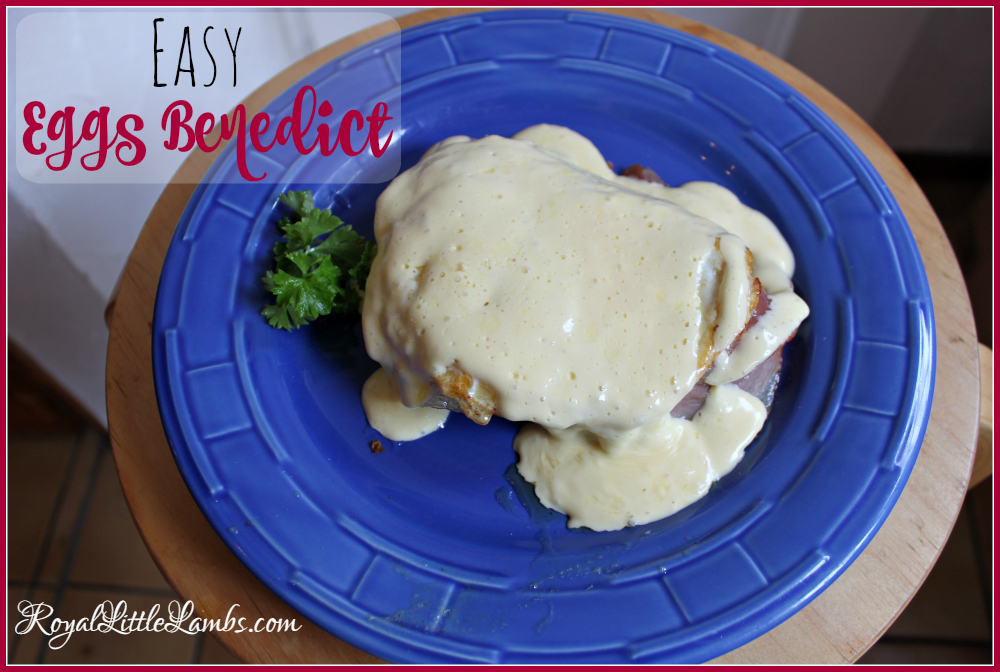
Easy Eggs Benedict

We gathered our ingredients for the Hollandaise sauce.

Something so simple bursts with flavor!

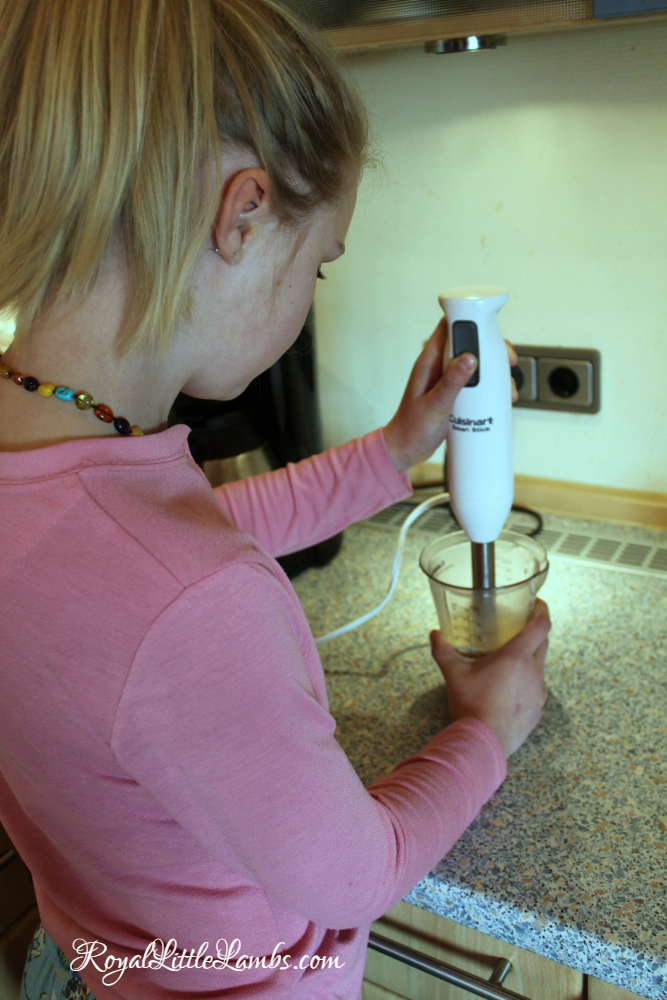
I love love love my Cuisinart Smart Stick.

I use it way more than I ever thought I would. It comes with handy little cups and whisk attachments.

Ingredients for Hollandaise Sauce

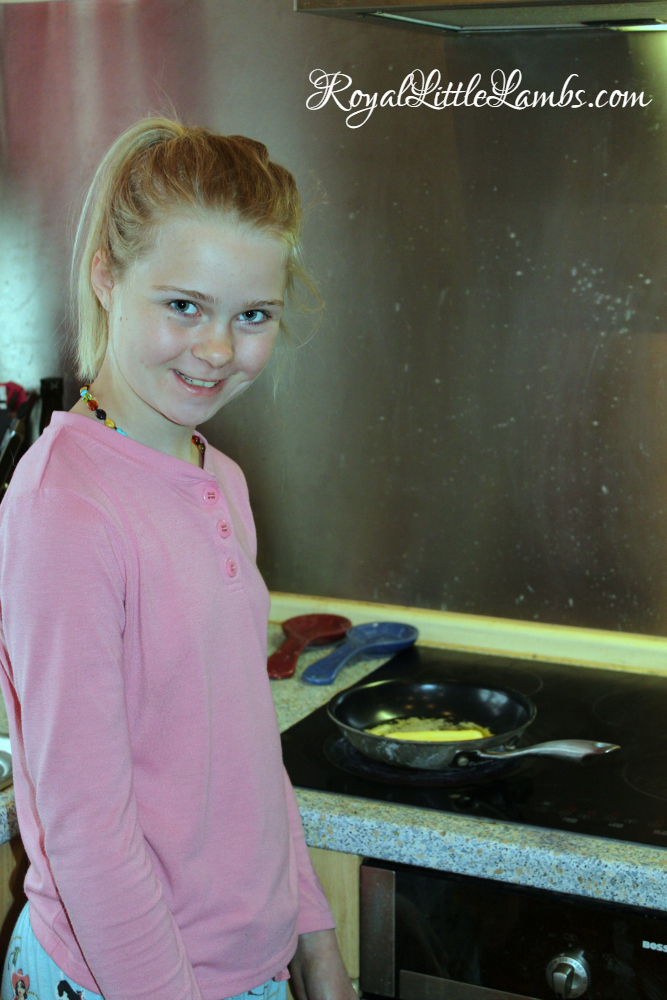
Tori melted the butter. We don’t own a microwave, so we used our egg pan. It only took a minute.

We’ll use the same pan again to fry the egg. No sense having two dirty pans!

Melting Butter

She did a super job separating the egg yolk! That’s sometimes a tough task.

Separating the Egg Yolk

Then Tori added the water and lemon juice to the egg yolk.

Adding Water and Lemon Juice

Then Tori blended the ingredients together and the sauce voilà thickened and was perfect!

Blending the Hollandaise Sauce

Just look at that creamy thick lemony buttery Hollandaise sauce!

Perfect Hollandaise Sauce

After we made the sauce, the rest of the meal comes together very quickly.

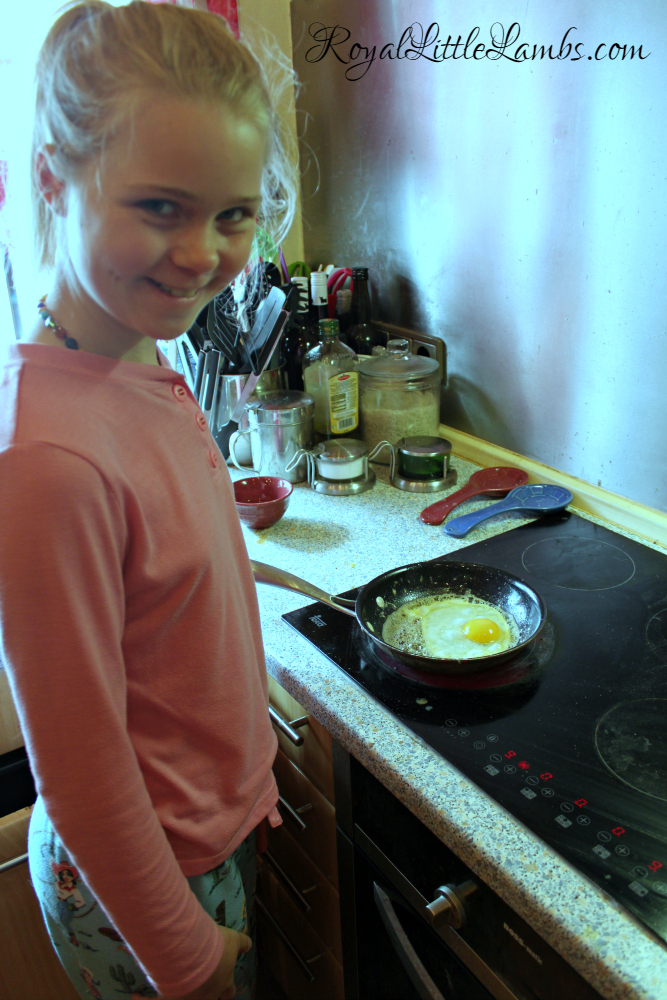
Tori fried her egg. I helped her flip it which is still sometimes difficult for me. She doesn’t like her yolk broken.

Frying the Egg

We fried up some German ham. I sliced a piece of our favorite homemade wheat sandwich bread and toasted it.

Our Favorite Homemade Wheat Sandwich Bread

Then we were ready for plating.

Plating Eggs Benedict

Tori poured her Hollandaise sauce all over her egg.

Pouring the Hollandaise Sauce

Tori likes a bit of sauce.

Perfect Easy Hollandaise Sauce

I think she did a great job!

Why is it called Eggs Benedict?

History gives us at least five stories:

  1. 1860‘s at Delmonico’s Restaurant, NYC- Mrs. LeGrand Benedict discussed a new dish with the chef.
  2. Charles Ranhofer has a recipe called Eggs a la Benedick (Eufa a’ la Benedick) in his cookbook called The Epicurean, published in 1894.
  3. Craig Claiborne wrote a column in The New York Times Magazine in September 1967 about a letter he had received from Edward P. Montgomery, an American then residing in France. Montgomery claimed the dish was created by Commodore E.C. Benedict, a banker and yachtsman who died in 1920 at the age of 86.
  4. Elizabeth David’s French Provincial Cooking (first published in 1962) describes a traditional French dish named œufs bénédictine. This recipe calls for salt cod rather than ham.
  5. Mrs. Beeton’s Book of Household Management had recipes in the first edition in 1861 for “Dutch sauce, for benedict” (p. 405) and its variant on the following page, “Green sauce, or Hollandaise verte.” Most likely also for codfish.
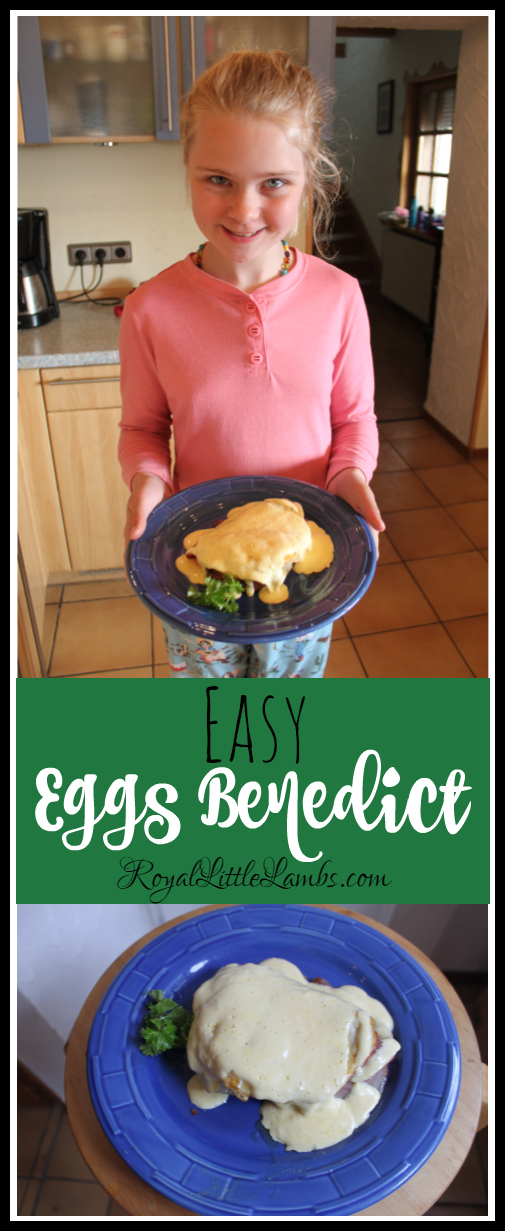
It’s fun to research food history and even more fun to create and eat fun recipes.

Tori ordered eggs benedict for breakfast twice at Ashford on our Ireland trip.

Print

Easy Hollandaise Sauce

Prep Time 5 minutes
Total Time 5 minutes
Servings 4 servings

Ingredients

  • 1 large egg yolk
  • 1 T lemon juice
  • 1 T warm water
  • 4 T butter
  • pinch kosher salt
  • pinch cayenne pepper optional

Instructions

  1. Melt butter. Separate egg yolk into the mixer. Add water and lemon juice to egg yolk. Blend. Slowly add butter and blend.
Easy Eggs Benedict and Perfect Hollandaise Sauce

Check out the other posts in our Kids in the Kitchen blog hop!

Kids’ Kitchen: Apple Breakfast Loaf Recipe | Sugar, Spice & Glitter
Healthy, Yummy, Gluten-Free Blueberry Muffins | Living Montessori Now
Buttermilk Pancakes with Strawberry Compote  |  Royal Baloo
Tex-Mex Migas | The Gifted Gabber
Pear and banana breakfast oat and almond muffins | Kidgredients
No Bake Energy Bites | Mess for Less
Cheesy Chive Scrambled Eggs | Kitchen Counter Chronicles
Easy Omelet Recipe | Sugar Aunts

Linking up: Sugar and Spice and Family Life, Curly Crafty Mom, Making Our Life Matter, Practical Mom, Life of Faith, Blogghetti, Modest Mom, Marilyns Treats, The Quintessential Mommy, A Proverbs 31 Wife, What Joy is Mine, Donna Reidland, ABC Creative Learning, Home Stories A to Z, Rich Faith Rising, F Dean Hackett, Sarah Celebrates, VMG206, Simple Life of a Fire Wife, Deceptively Educational, Living Montessori Now, Classical Homemaking, Raising Homemakers, A Wise Woman Builds Her Home, A Little R&R, Wholehearted Home, Pat and Candy, Crystal and Co., Oh My Heartsie Girl, Adventures of Mel, The Natural Homeschool,  A Bowl Full of Lemons, Snap Creativity, Buns in My Oven, Bloom Designs, A Bountiful Love,  Lamberts Lately, Frogs Lilypad, I Choose Joy, Wondermom Wannabe, A Kreative Whim, Design Dining and Diapers, Life with Lorelai, Happy and Blessed Home, Sincerely Paula, Create with Joy, the Crazy Organized Blog, Sugar Spice and Family Life, Coffeeshop Conversations,  Being a Wordsmith,
Share
Pin1
Share
1 Shares
You might also like:

Filed Under: Recipes Tagged With: breakfast, eggs, recipe

Illumination Art Study

This blog may contain affiliate links: disclosure.
Please see my suggested resources.

April 26, 2016 By Jennifer Lambert 4 Comments

We’ve been fascinated with studying Illumination in medieval art.

We traveled to Ireland and saw where the Book of Kells was created.

We’re amazed and thankful that monks worshiped God in such a creative way!

We love this: Marguerite Makes a Book.

Marguerite Makes a Book

We discussed how paint was made in medieval times.

Red

Madder: made by boiling the root of the madder plant rubia tintorium

Vermilion: found in nature as the mineral cinnabar

Rust: found in iron oxide-rich earth compounds

Carmine, also known as cochineal: carminic acid from the female Dactylopius coccus insect is mixed with aluminum salt

Crimson: also known as kermes, extracted from the insect Kermes vermilio

Lac: resinous secretion of insects

Blue

Woad: produced from the leaves of the plant Isatis tinctoria

Indigo: derived from the plant Indigofera tinctoria

Turnsole: also known as folium, a dyestuff prepared from the plant Crozophora tinctoria

Ultramarine: made from the minerals lapis lazuli or the cheaper azurite

Smalt: now known as cobalt blue

Yellow

Weld: processed from the Reseda luteola plant. This is the oldest European dye plant in the world!

Turmeric: from the Curcuma longa plant

Saffron: from the Crocus sativus

Ochre: an earth pigment that occurs as the mineral limonite. Can be heated to become red ochre.

Orpiment: arsenic trisulfide

Green

Verdigris: cupric acetate, made by boiling copper plates in vinegar

Malachite: a mineral found in nature, copper carbonate

China green: a plant-based pigment extracted from buckthorn Rhamnus tinctoria or R. utilis berries.

White

Lead: made by corroding sheets of lead with vinegar, and covering that with decaying matter, such as dung, to provide the necessary carbon dioxide for the chemical reaction

Chalk: calcium carbonate

Black

Carbon: from sources such as lampblack, charcoal, burnt bones or ivory

Sepia: produced by the cuttlefish

Iron gall ink: iron nails would be boiled in vinegar; the resulting compound would then be mixed with an extract of oak apple (oak galls).

Decorations

Designs and Borders

Illustrative miniatures or decorative motifs may enclose the whole of the text space or occupy only a small part of the margin of the page. Some borders were in panelled form while others were composed of foliate decorations or bars which often sprouted plant forms and are known as “foliate bar borders.”

Lettering

The parchment was ruled, usually with leadpoint or colored ink. Ruling lines helped the scribe to write evenly and were part of the design of the page. The scribe wrote with a quill pen made from the feather of a goose or swan. The end of the feather was cut to form the writing nib. A slit cut into the middle of the nib allowed the ink to flow smoothly to the tip of the pen. The appearance of the script—whether rounded or angular, dense or open—was partly dependent upon the shape and the angle of the nib.

Gilding

Gold: leaf, gold hammered extremely thin, or gold powder, bound in gum arabic or egg

Silver: either leaf or powdered

Tin: leaf

We chose to make historiated initials.

These were pages of initials that portray figures or scenes that are clearly identifiable, telling a story.

I printed large Old English initial outlines for each of the kids to decorate with their story.

They began with outlining borders and decorations in pencil.

Drawing a Border
Drawing Designs
Outlining a Border
They soon realized how much work must have gone into the illumination of pages and books. They were tired of the detail work after just a few minutes. They took a break and went back to work the next day.
Taking a Break

I was impressed with how each of them expressed themselves with their letters by drawing their favorite things and using their favorite colors.

Tori drew lots of flowers and made her initial shiny.

Flowery Letter V
Katie made her entire page shiny and drew lots of undersea animals.
Shiny Undersea Letter K
Alex drew leaves, stars, and flowers and cats playing music and wearing hats.
Letter A
We then framed the initials and hung them up in their rooms!

ProSchool Membership - Productive HomeschoolingLinking up: A Little R&R, Wholehearted Home, Cornerstone Confessions, F Dean Hackett, Rich Faith Rising, Donna Reidland, Our Home of Many Blessings, A Proverbs 31 Wife, What Joy is Mine, Pat and Candy, VMG206, Sarah Celebrates, The Modest Mom, The Quintessential Mommy, Oh My Heartsie Girl, Marilyns Treats, Classical Homemaking, Ducks n a Row, Books and Giggles, Blogghetti, Making Our Life Matter, Life of Faith, Morsels of Life, Living Montessori Now, ABC Creative Learning, Hip Homeschool Moms, Crystal and Co., Lamberts Lately, Frog’s Lilypad, I Choose Joy, My Learning Table, Bloom Designs, Every Star is Different, Education Possible, The Natural Homeschool, Wondermom Wannabe, Coffeeshop Conversations, xoxo Rebecca, Oh My Heartsie Girl, What About, Sincerely Paula, Create with Joy, Life with Lorelai, A Kreative Whim, Happy and Blessed Home, Creative Home Keeper, Holly McBerty, A Wise Woman Builds Her Home, The Deliberate Mom, Children are a Blessing, Raising Homemakers,
Share
Pin5
Share
5 Shares
You might also like:

Filed Under: Homeschool Tagged With: art, history, homeschool, Tapestry of Grace, unit study

  • « Previous Page
  • 1
  • …
  • 61
  • 62
  • 63
  • 64
  • 65
  • …
  • 137
  • Next Page »
Suggested ResourcesCheckout 51

Archives

Popular Posts

10 DIY Gifts with Essential Oils10 DIY Gifts with Essential Oils
Natural Remedies for HeadacheNatural Remedies for Headache
10 Natural Remedies to Keep on Hand10 Natural Remedies to Keep on Hand
Henna Hands CraftHenna Hands Craft
Homemade Turkey Divan CasseroleHomemade Turkey Divan Casserole
This website uses cookies to improve your experience. We'll assume you're ok with this, but you can opt-out if you wish.Accept Reject Read More
Privacy & Cookies Policy

Privacy Overview

This website uses cookies to improve your experience while you navigate through the website. Out of these, the cookies that are categorized as necessary are stored on your browser as they are essential for the working of basic functionalities of the website. We also use third-party cookies that help us analyze and understand how you use this website. These cookies will be stored in your browser only with your consent. You also have the option to opt-out of these cookies. But opting out of some of these cookies may affect your browsing experience.
Necessary
Always Enabled
Necessary cookies are absolutely essential for the website to function properly. This category only includes cookies that ensures basic functionalities and security features of the website. These cookies do not store any personal information.
Non-necessary
Any cookies that may not be particularly necessary for the website to function and is used specifically to collect user personal data via analytics, ads, other embedded contents are termed as non-necessary cookies. It is mandatory to procure user consent prior to running these cookies on your website.
SAVE & ACCEPT