I have taught writing for many years – to middle schoolers, high schoolers, and college level. I was a writing and English tutor for also – to both public school students and homeschoolers.
We don’t use a writing curriculum in our homeschool because I am confident in my teaching methods.
We have reviewed IEW and it’s a good program. We’ve used workbooks, monthly calendar journal topics, and scripted curricula to see if it would help or interest my kids with writing.
I found most of it was worthless busy work.
We do lots of informal writing in journals and notebooking pages from preschool on. When left alone, kids love to write, mimicking their parents, elder siblings, anyone they see writing regularly. I keep regular prayer journals and we love notebooking.
I never pressure my kids to write. I only encourage them to write formally in high school.
The early years are for the gathering of facts, memorizing, filling the empty bucket with so much knowledge, stored for use later on. These are the grammar years and we focus on play, experiential learning, basics of reading, writing, and math. Exploring with science and history and art and music and great literature. Journaling is more for handwriting practice with copywork, memorization, and fact recording. Form and quality is more important than quantity.
The middle years are for making connections with all that knowledge stored away. Grammar rules begin to make sense. I love to see the beginnings of self-correction in their behavior. The understanding of relationships among people, events, and experiences help with the overall comprehension of history, science, the arts, and literature. We continue to explore the world around us and journal about it more purposefully. I limit anxiety by eliminating grades – and correction unless asked. I begin teaching good writing methods, like eliminating slang, contractions, and filler phrases sucah as “needless to say.” I address indenting and correct pronunciation. Reader notebooks are a great way to interact with books and begin to synthesize with reading.
The upper years are for synthesis with the knowledge and connections. This is when abstract thinking comes into play. There’s no sense wasting time forcing kids to learn to write when they still can only think concretely. Sure, they can memorize the methods, but the magic is lost. Waiting until high school to encourage writing is so much more fulfilling. We work on analyzing literature, history, psychology, sociology – comparing and contrasting, research and criticism.
I have used this paragraph outline with my own children, middle schoolers, high schoolers, and college level students.
The best way to learn how to write is to practice.
I don’t expect the same quality paragraph from an elementary student that I do from an 8th grader. I expect more from college students than I do high schoolers. But the difference lies mainly in complexity and vocabulary. The format is the same across the board.
I grew up in a time when it was normal and even expected for meals to come from a box, can, bag, or package.
Margarine, Crisco, and canola oil were the go-to fats in our pantry. We didn’t read labels. We ate soft white Sunbeam bread and liberally sprinkled table salt on our food. We didn’t have a garden. We bought the cheapest meats we could and stretched everything as far as it could go.
Breakfasts were colorful, sugary cereals swimming in 2% milk or Pop-Tarts with a glass of frozen concentrated orange juice, thawed and mixed with water. Weekends were for quick-mix Bisquick biscuits or pancakes or muffins from the pouch with on-sale Oscar Meyer bacon or Tennessee Pride sausage patties.
Lunches eaten at public school: congealed soggy pizza rectangles, unidentifiable soy-based meat patties and gray gravy, corn, white rolls, hot dogs, hamburgers, overcooked peas or green beans, occasional iceberg lettuce and carrot strips, and little cartons of Mayfield chocolate milk.
Lunches eaten at home: fish sticks, frozen pizzas, Oscar Meyer Bologna and American cheese slices or Jif peanut butter on white Sunbeam bread with Doritos. I drank Coke and red tropical punch Kool-Aid all the time.
Dinners were often canned Green Giant Frenched green beans or LeSeur peas, scalloped potatoes from a box, and Spam or Oscar Meyer hot dogs or fried cube steak with a jar of gravy.
Special occasions called for Duncan Hines yellow cake mix and canned double chocolate frosting.
No one I knew lived much differently.
We didn’t know any better.
I learned how to cook some basic meals and treats from early PBS cooking shows, my grandmother, my aunt, and friends’ moms. I enjoyed learning new styles and recipes from cookbooks from the bargain bin at the bookstore or library.
I practiced cooking meals and baking at home from the time I was 12 or so, but my dad would seldom enjoy the meals I prepared. It was very discouraging. He doesn’t like new foods, textures, styles, or flavors. When I learned a way to improve upon meals we’d always eaten, it was too often met with disdain.
My parents take pills by the handful every day now. My dad has suffered from obesity all my life, now complicated with high blood pressure and pre-diabetes. My mother has very high cholesterol. They both have arthritis and live with pain every day. I feel many of these aging disorders can be prevented or slowed with a better diet and lifestyle.
In the early years of my marriage, it was frustrating, expensive, and exhausting for me to plan, prepare, and cook all the time after working all day teaching school, then later, homeschooling one, two, then three young children. I often got lazy, relying on easier, quicker, cheaper, and processed “foods.”
When I got sick in 2008, we knew we needed a big lifestyle change. I was tired all the time. I just couldn’t do all the things I was used to doing. I was drained. The doctor put me on a Paleo diet and prescribed a lot of vitamin and mineral supplements. In a few months, I was feeling more like myself. We decided to continue that regimen with our whole family.
Thankfully, we have no food allergies. We noticed some sensitivities that don’t show up in lab tests, but we’ve done elimination diets that reveal sensitivity to modern wheat products and low-quality dairy in a couple of our family members.
We started to research eating better, more natural whole foods for our whole family.
For the past few years, we seldom eat out, almost never get fast food, and prepare almost all our foods from scratch at home.
My goals for cooking real food are simplicity, ease, and quality.
Simple means that I want foods as close to their natural state as possible.
Fruits and vegetables have no “ingredients” or labels. They’re simple.
Preparation can be as simple as consuming them raw in a salad or blended into a smoothie.
We often steam or roast or grill veggies. We eat a lot of fun colorful salads with interesting flavor combos.
I like simple, fewer-ingredient recipes with lots of flavor, but nothing too complicated or time-consuming.
We occasionally try new recipes that require some advanced preparation or complicated steps, but they are special and rare. Even our holiday meals have simplified.
Ease requires a bit of preparation ahead of time.
When I do my big grocery shopping trips (twice a month), we prep the food to make it easier to consume during the week.
We clean and chop fruits and veggies into manageable portions so snacktime and meal prep aren’t so stressful.
We marinate and grill a bag of chicken strips for salads and snacks.
We thaw a bag of mini shrimp and place in a glass storage container to be ready.
We freeze bone broth for soups and sauces. I miss my deep freezer (it’s in storage) – we don’t have the quantity of ready-made homemade items we used to have around.
Quality doesn’t have to be super expensive.
I buy the best we can afford.
We buy fresh food in season and we shop at local stores, farmers markets, and the military commissary as needed.
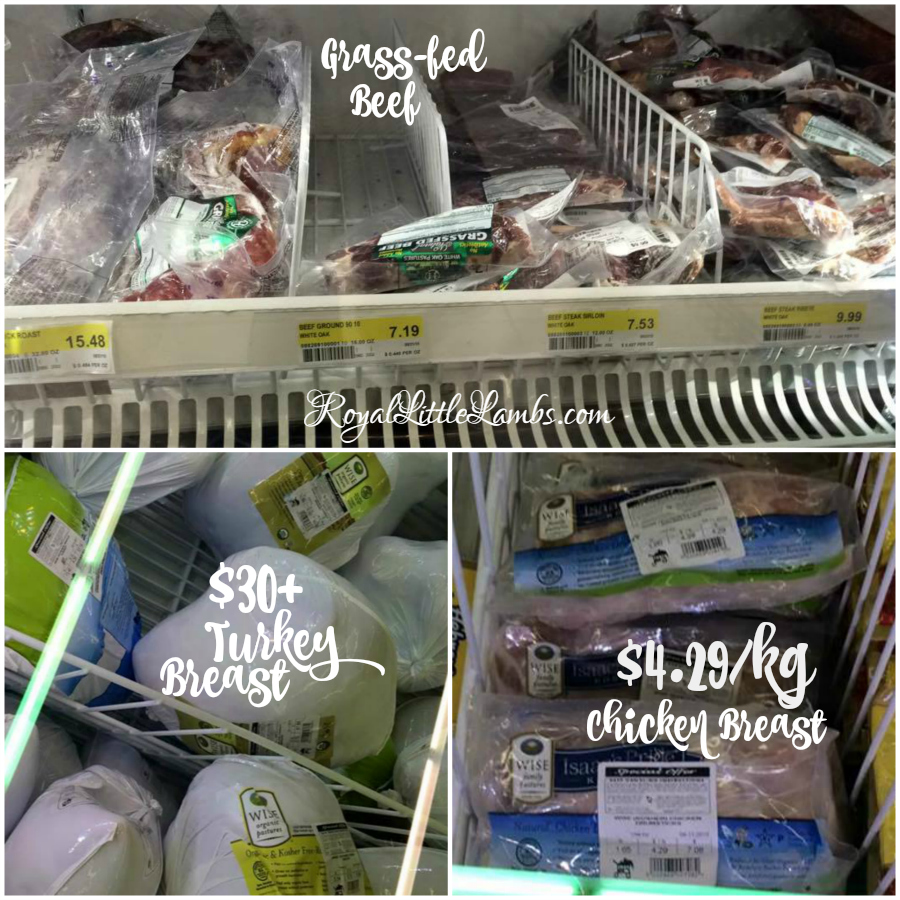
While it is ideal to consume organic food and grass-fed meats and dairy, it’s just not readily available in our area.
The local military commissary has a small frozen section of organic, free-range, grass-fed meats, but they’re 3-4 times as expensive as the regular local meats – and they’re often freezer-burned from sitting in the freezer for so long.
That’s not quality to me.
We’re realistic.
I have four kids and a very carnivorous husband. We don’t often eat a plant-based diet, although I totally could most days. We like meat and we like animal protein at every meal. We’re trying to eat more fish, but it’s so expensive here.
We do consume dairy and wheat. My girls and I like yogurt and kefir and kombucha, but my son and husband just do not. We’re learning to make sourdough and we often make our own yeast breads. I’m experimenting with spelt, buckwheat, and sprouted grains. I buy German honey O’s cereal for my son (they’re more natural than the American Honey Nut Cheerios).
I don’t sneak in fruits or vegetables without my family knowing.
I don’t make my kids or husband eat foie gras or pâté, but I sometimes sprinkle liver powder into ground beef dishes to boost nutrition.
We love to try new foods when we travel and come home to recreate it.
I respect that everyone has preferences. I try to make meals with variety so everyone has choices they love.
I prepare many different foods with fun flavor combos and textures. I encourage everyone to try new foods frequently. Often, my family is pleasantly surprised. My girls and I love Brussels sprouts. Everyone loves broccoli and asparagus. My son loves steamed cauliflower. The middle girls and I love cabbage.
We buy German Oreos and frozen potatoes and 100% juice Capri Suns. I hear many Canadian and UK products are better too! We’re not terrified of sugar, but we do like to limit the chemicals we ingest when we can.
We have a Soda Stream and buy the natural syrups for ginger ale, lemon-lime, and root beer. We also make homemade fizzy juices. These products have fewer harmful ingredients than the most soda, even natural ones.
I never tell my kids what they can or cannot eat. I encourage them to make better food choices and eat meals before treats – like most parents, I assume.
The kids love to be in the kitchen, learning and helping and creating. They’re getting more and more independent with baking and preparing meals and I couldn’t be more proud.
I know we’re on the right track when my kids make good choices on their own at events, parties, or church pot lucks without my supervision – when peer pressure is at its finest from even the other adults.
I want our family to be healthy and live long prosperous lives and we feel that a healthy balanced real food diet can help us achieve that.
Most Christian parents I know today feel a bit like pioneers.
Younger Generation X parents or older Millennial parents came of age in the 1990s, a decade of grunge fashion, MTV reality shows, and the birth of the World Wide Web.
Many of our parents didn’t know how to help us navigate the sexual messages rife in our culture—so they stayed silent.
Many Christian parents today know they can’t be silent. They have to speak about how to steward sexual urges and desires. But how?
If you have a child who is a tween or teen, you know their bodies are preparing them for adulthood (and with that, sex), but their minds are still struggling to be free from childish ways of thinking.
3 most common mistakes parents make…
1. Telling their pre-teens or teens not to think about sex. This is the exact opposite of what they should do.
2. Stressing only the power of sex, not its goodness. The Bible stresses both.
3. Emphasizing “purity,” which stresses the absence of sexual sin, but not talking about what to pursue instead.
Check out this article: What We Wish Our Parents Would Have Taught Us About Sex as Teens.
Relationships is a book geared towards kids 11 years old and up.
Lessons include:
▪ How to guard the heart from sexual and relational temptations ▪ How to guard the eyes from tempting sexual media and images ▪ How to handle peer pressure ▪ Why sexual holiness is more than just the absence of sexual sin ▪ Hot button issues like homosexuality, pornography, and masturbation ▪ How to pursue godly opposite sex friendships—in a way that doesn’t lead people on ▪ How to pursue accountability relationships (that actually help) ▪ How Jesus restores the sexual sinner
When it comes to the matter of teaching kids about sex, Christian parents are often confused about what to say and when to start saying it. The Talk contains 7 studies, all anchored in the Scriptures, to help parents talk meaningfully with children about the basics of sexuality.
The Talk was written for parents to read with their children ages 6 to 10 years old. The study supplies elementary-age children with Biblical truths about sexuality at a level they can understand.
Puberty can be an awkward time for many kids, but as Christian parents, we can prepare them for the changes to come. We can give them a biblical understanding of God’s sovereign purpose in the design of their changing minds and bodies. Changes is a series of 7 biblical lessons aimed at helping parents talk to their children about puberty from God’s perspective.
Changes was written for parents to read with children ages 8-12 years old, giving pre-teens a biblical and biological understanding of puberty.
As Christian parents, it is of utmost importance that we’re guiding our teens through the sometimes overwhelming sexual desires and temptations they experience. Relationships contains 11 Bible studies that provide a foundational understanding of how to navigate sexual temptations and desires in a godly manner.
Relationships was written for parents to read with their kids ages 11-14 years old this study will help prepare your teen for sexual temptations that they are sure to encounter and give them a greater understanding of biblical sexuality.
We ate a lovely breakfast buffet each morning at The Ranch House Restaurant then drove into Yellowstone Park to see the sites and picnic, but we came back to Colter Bay each evening to grill dinner and play at the rocky beach.
We entered at the South Entrance.
There were forest fires, and we had to check on road closures each day.
We saw the remains of trees. We learned that forest fires are healthy for the forest since many cones won’t open without the heat. The ash replenishes the soil and new growth is already seen!
The only stretch we didn’t get to make it to due to the fires were from Canyon Village to the Fishing Bridge.
I splurged and bought Tori and Katie these lovely scavenger hunt cards and notebooks for our car rides.
It was pretty exciting to see the Continental Divide.
Day 1: Old Faithful
There is a ton of stuff to do at the Old Faithful Geyser area.
Educational backpacks for kids to check out with thermometers, drawing tools, and all sorts of fun stuff.
Boardwalks to walk around to view all the other fun geysers and hot pools.
A great little museum where kids can learn and explore and earn a Junior Ranger badge.
We watched Old Faithful about three times. It was so fun and fascinating.
The best part?!
Our son had been toilet training and was *this close* to having everything just click right into place. He refused to wear diapers or pullups anymore, so accidents were horrendous and messy and we were traveling and worried about all that. A lot.
When he told me he had to go, I took his hand to lead him to the single toilet bathroom in the visitor’s center. The girls were reading signs in the little museum and Aaron was at the viewing window.
He didn’t want me inside with him, so I waited right at the door.
A few minutes later, he opened the door a crack. He was so proud.
We flushed and washed. I told him to go tell his dad.
My favorite memory of Yellowstone is my son running through the Old Faithful Visitor’s Center towards his dad, yelling, “I pooped! I pooped! I POOPED!” while all the French people and Asians stared at him like he was being abducted.
Then we got to see Old Faithful again.
We had a lunch picnic outside the gift shop at Old Faithful.
Then we got some ice cream at the shop and sat on a bench to rest. And watched Old Faithful again.
Day 2: Geysers and Gibbon Falls
These elk crossed our paths and were so close we could almost pet them. But we didn’t. We were so good.
We stopped at Madison for a picnic lunch and break.
Norris was probably our least favorite location. We didn’t even complete the trail before we headed back to the car.
When driving, you have to watch out for the animals!
This big guy stopped traffic:
Day 3: Mammoth Hot Springs
Historic Fort Yellowstone is near Mammoth Hot Springs. There’s a little museum and lots of shops and restaurants.
We drove from Mammoth to Canyon. It’s a beautiful landscape.
From the car, we saw lots of deer and antelope.
Deer were frolicking and foraging by the roadside.
Day 4: Canyon Village, Yellowstone Falls, and West Thumb
Liz completed the Junior Ranger program at every center in the park. The hardest one was at Canyon Village.
We saw a baby bear! Lots of stupid people had pulled over and were out of their cars, chasing it with cameras. We slowed down and I snapped this out the window. We left before Mama Bear appeared.
The Grand Canyon of Yellowstone and the Falls were lovely.
West Thumb was our last stop at Yellowstone.
The geysers, hot springs, and colorful pools are always amazing.
Yellowstone tips:
Clothing layers and good walking shoes. The weather changes quickly. It’s cool in mornings and evenings, but warms up during the day. It’s very bright if the sun shines, so sunglasses and hats are good to bring.
We ate picnic lunches every day to save money. And it was easier to have a cooler of healthy foods and snacks with us. We could stop whenever we needed at a picnic site for a break or meal.
Stay on the boardwalks, walking paths, and trails. We didn’t venture away from the safety of these.
Don’t bother animals. Don’t try to touch them or feed them.
When I was planning our family trip to Yellowstone, I was disappointed that I couldn’t find anywhere we could camp and use a fire pit.
I looked into RV sites and tent camping, and finally learned about this recommendation for camp cabins from another homeschool family. There were grills right by the beach park!
When I was younger, I didn’t have much guidance for my future beyond doing well in school and getting a decent job.
And I wasn’t even really sure what that entailed. Good grades and lots of money was what I assumed.
I wasn’t actively taught much at home or in school about relationships, finances, stress, or anything actually important that currently seeps its way into my subconscious and lurks with criticisms and less-than reminders every single waking moment.
My parents wobbled between totally hands-off and stifling authoritarianism, depending on the situation.
I ran absolutely wild through the neighborhood from about 4 years old on up after school and summers, but I seldom had any friends over to my house for a meal or sleepover or playtime, and not ever if my dad was home. I’ve never had many friends, but I’ve had lots of acquaintances over the years who came and went.
My parents only ever intervened at school maybe three times in 13 years. The rest of the time I was on my own to work out any issues with bullies, inept teachers, politicized and uncaring administrators, groping boys, and weird parents.
While I realize that having been left to myself, I developed character and learned a lot about how to solve problems, but I think I’d like to be a little more involved and proactive with my family.
While there are gazillions of articles, blog posts, books, and videos dictating rules and regulations, and shoulds and shouldn’ts, I think we all have to set our own values and goals. We’re bombarded with so much information that sounds like authority, but if we don’t hold any of it to any standard, we will fail and collapse with information overload.
What’s your standard?
My standard is the Bible.
As a Christian wife and mom, I hold up everything to the standard of Scripture. If it doesn’t fit with my worldview, then it’s not for my family.
This is true for books and TV shows and movies.
This is true for friends.
This is true for activities.
If anything takes away from or somehow doesn’t align with my values and goals, then it’s not for us.
How do we find our focus?
Discovering our personal values and setting goals for our families should be accompanied with much prayer and discussion with our spouse.
If you’re not pleased with your home life, then take a good look at where your priorities lie. Maybe it’s time for an evaluation and some changes.
Focus in Faith
We spent many years trying to determine our beliefs. My husband grew up Presbyterian, which meant he attended Sunday school as a child and that was about it. I never attended church except with my grandma 2-3 times a year or with friends who occasionally invited me.
I knew I wanted to raise my children with a strong faith foundation.
We teetered from Presbyterian to Baptist and tottered back to Presbyterian and then to Lutheran.
It’s often difficult to find a temporary church home when we move around so frequently.
Focus in Family
My children are my priority.
This means that I limit my social engagements. I don’t work or volunteer outside the home.
I don’t overschedule our family, so we’re seldom stressed. We like a peaceful home atmosphere.
I enjoy being with my kids. I enjoy teaching them and working with them and everything in between.
I seldom go anywhere without my kids.
Focus in Education
Homeschooling is my calling.
I don’t rely on videos, DVDs, games, other people, or the government to educate my children.
We read books together. We learn together.
I delight in my children learning new concepts.
I make time for art, nature study, music, and each of my children’s interests in addition to the math, Latin, history, and science we learn. Academics aren’t everything. Life is our education.
Focus in Friends
We’re very choosy about who we spend time around.
This is probably our prickliest topic.
While I don’t need a lot of social interation and rarely trust people, I know my husband and at least two of my children crave social stuff.
So, I make sure to provide opportunities to feed their social butterflies.
Focus for the Future
We are active planners for the future.
This includes financial planning and also teaching concepts my children will need in certain situations, like what to do regarding:
suspicious strangers,
bullying,
rude questions, requests, or touches from adults,
advances from peers of the opposite (or same) sex,
emergency training,
car maintenance,
kitchen safety,
fire safety, and more.
I want my kids to have open conversations with me. I want them to feel safe discussing anything with me. And I want them prepared for social interations or life situations that might become unsafe.
It’s my job to create a healthy environment for my children to grow emotionally, psychologically, academically, and physically.
It seems like all homeschool parents stress over socialization.
What is socialization?
The enculturation for the process of being socialized to a particular culture. {anthropology}
Children learn the norms, customs, values, and ideologies of society from their parents…and eventually others. {Wikipedia}
I don’t want my family to be representative of our culture.
When I first began homeschooling, it was purely for academic and financial reasons. After a few years, we realized this would be our lifestyle.
When we met an older KMC couple at the American Cemetery in Normandy, the lady who is a DODs school teacher, nodded her approval that our kids are “at least in the base sports…for socialization.”
I gritted my teeth and pasted on a smile.
My husband’s family has expressed that everything I post online is a direct attack on them as public school teachers. I never tag them nor directly send them articles I write or share. I was a public and private school teacher and college professor and private tutor, so it’s not like I don’t know the system and issues. I chose to get out of the system and homeschool.
I post and write articles for discussion and provoking conversation. So many are indoctrinated into what the government and society wants us to believe is best that they defend it! There are other options.
Herding groups of same-age children for 13 years is not socialization.
Too many people think that a school environment is the only way children can and should be socialized. They offer weak arguments. They’re confused how my homeschooled children will ever cope in the world.
I’m not buying what they’re selling.
I don’t believe socialization is any of this:
Bullying
Competition
Age Segregation
Standing in line
Sitting still
Being silent
Raising hands for permission to do anything
Power and control by adults over children
Using the toilet only on a schedule
Eating a barely nutritious state-funded “lunch” in fewer than 20 minutes
I’m not worried about my kids not knowing how to stand in line or act quietly when necessary.
I’ve noticed that when we attend community events, it’s often the children who attend school who have self-control problems.
The education I provide my children is above and beyond better than anything a school can offer.
We use amazing books, travel experiences, real art, and handicrafts projects (instead of cutesy worthless crafts).
I make sure I find time to include all the art, music, nature study, and interests my children have in addition to our math, Latin, history, and science.
We read and study the Bible every day, not just on Sundays at church.
My job is not to recreate a school environment.
We choose not to participate in co-ops and seldom attend field trips or events in our homeschool community because they too often replicate a school environment.
Almost all the field trips and co-op classes are age-segregated and offer very little of value to me or my children. When we have attended in the past, my kids soon complain since the courses are unorganized, the other kids are unruly and disrupt their attempts to learn, deadlines are arbitrary, and rules are enforced inconsistently. We’ve been bullied.
Just because it’s the norm doesn’t mean it’s for us.
Too many homeschool events seem to be just exclusive clubs for cliques within the homeschool community. For example, a particular mom plans an event or field trip and messages her children’s friends’ moms to sign up so the event is full before others even notice it’s on the calendar.
I read articles, blogs, memes, and social media statuses attempting to be humorous, describing kids and siblings and families fighting and bickering and being mean to each other. Or memes about back to school time where the parents are ecstatic to get rid of their kids. Or the public shaming of kids acting like children. I don’t find it funny. It saddens me that this is the expectation and considered normal.
The kids and I all get along really well. My kids seldom argue. They never fight. We are respectful and kindto each other.
I respect my children as people. They are perfectly capable of answering questions without my input. They are perfectly capable of making wise choices (most of the time). They are perfectly capable of deciding what and how and when they learn.
The kids work together and help around the house, assist each other, and have great attitudes (most of the time).
This kind of learning is way more important to me than if my kids compete in sports, do well academically, stand in line without fidgeting, ace the SAT, or get a high-paying job.
I think I’m doing all right.
I recently received this text from a neighbor:
Because it matters more to me that my kids are kind and well-behaved and know how to interact well with others when I’m not around.
I’m raising leaders, not followers.
Linking up: Proverbs 31 Wife, What Joy is Mine, Sarah Celebrates, Marilyns Treats, Southern Beauty Guide, VMG206, Modest Mom, Our Home of Many Blessings, Holly Barrett, Cornerstone Confessions, Strangers and Pilgrims on Earth, Darling Downs Diaries, Moms the Word, A Fresh Start, Life of Faith, Inspiration for Moms, Blogghetti, Practical Mom, Squishable Baby, Crafty Moms Share, Smart Moms Smart Ideas, Written Reality, Simple Life of a Fire Wife, Messy Marriage, Christian Blogger Community, Jamie Wiebel, Holley Gerth, W2w Ministries, 3DLessons4Life, A Wise Women Builds Her Home, Raising Homemakers, Pat and Candy, Moms are Frugal, I Choose Joy, Frog’s Lilypad, My Learning Table, Oh My Heartsie Girl, Katherines Corner, Cookin and Craftin, Jamiffer, Happily Ever After, Wondermom Wannabe, A Bountiful Love, Adventures of Mel, The Natural Homeschool, Crystal and Comp, Hip Homeschool Moms, Al Things Beautiful, A Kreative Whim, OMHG Friday, Life with Lorelai, Juggling Food and Real Life, Happy and Blessed Home, What About, Create with Joy, Sincerely Paula, RCH Reviews, The Diary of a Real Housewife, Momfessionals, Crystal Waddell, Saving 4Six, Sweet Little Ones, Coffeeshop Conversations, Arabah Joy, Counting My Blessings, Susan Mead, xoxo Rebecca, Books and More, Strawberry Butterscotch, Pam’s Party and Practical Tips, Craft-o-Maniac, Crafty Moms Share, Being a Wordsmith, Janis Cox,
Moving is stressful for anyone, but especially so for children.
PCS is a huge change, whether it’s the first or the fifth.
PCS=Permanent Change of Station, even though it seems temporary – usually only 2-4 years!
According to the DOD, the average military child moves 6 to 9 times between kindergarten and high school graduation.
Military families relocate 10 times more often than civilian families – on average, every 2 to 4 years.
That’s a roller-coaster!
Moving is more stressful than divorce.
Think about that.
How can we make the moving transition easier on our kids?
Prepare
As soon as you know a PCS is coming up, start preparing the kids for the transition.
Talk about it, explain that you’ll have to pack up everything you own and move to a new home.
Even though it could take a few more months to receive actual orders, it’s important to start the conversation so that kids can prepare their hearts and minds for the changes.
Discuss purging items and having a yard sale. I have a PCS checklist you can download!
Educate
Start reading about moving. Show your child what to expect.
Learn about your new location as soon as you know where you’re going. Research the area, school opportunities, activities, church, day trip ideas.
It’s exciting to move to a new town and explore all it has to offer!
There’s an app from Sesame Street: The Big Moving Adventure, available from iTunes, Amazon, and Google Play. I have a book list at the end of the post for you!
Listen
Pay attention to your kids’ needs. Listen to their complaints and concerns.
Moving is never easy and it might be very difficult for kids to leave their friends, school, activities.
Babies and toddlers have a hard time understanding. Teens might rebel.
Try to handle disappoint well. If you’re upset about where you’re going, the kids will internalize that and have bad feelings about their new locale – and you’re stuck with it for a few years!
Every location has benefits. We’ve PCSed to some places not on our list and we made the best of it.
We also knew people who hated living in Hawaii and Germany, so there’s that.
Prayer does wonders!
Celebrate
Have a farewell party to say goodbyes.
Give your child a job to do during packing out and moving in so they feel like a valuable part of the process.
Do something silly and fun like having a pizza picnic on the empty floor after packing out, or sleeping on an air mattress the last night. You can repeat this on the other end!
Let your child pack a few treasures for comfort during travel.
Try to stay at cool hotels if possible during travel to your new location.
Start out at the new location with new traditions.
Let your child choose something for his or her new room, within reason and budget – new bedding, a paint color for an accent wall, a collectible, a new rug or picture.
Keep in Touch
With today’s technology, it’s easier than ever to keep in touch with friends from around the world.
Make it easy with your children and their friends with social media or free email accounts. There’s Skype and Facetime too.
I know some families who even plan vacations back to visit friends or somewhere in between to meet every year.
Get Help
It’s an added stress to have little ones underfoot during packing out and moving. Enlist a trusted teen or adult friend to help keep little kids occupied in the backyard, with a video in a corner, or even taking them out to get ice cream or to the park. This gives them a break from the tediousness of packing and protects them from getting in the way. Then you get to focus on the task at hand.
Put aside big changes during a move. Don’t potty-train or wean babies during this stressful time. Schedules go out the window.
Get Kids Settled ASAP
Get kids’ rooms back in order as soon as possible to make the transition easier on them. Familiar blankets and toys will help them feel comfortable in a new home.
Then work on the kitchen and common spaces – with the necessary items you need immediately.
Find fun new places to explore and meet new friends! Let your child lead you in her time. We have a couple very social, outgoing kids and two who are more reserved and quiet.
Look at moving as an adventure! Happiness is contagious and the kids will catch that mood if you show it.
I reviewed Listen by Patty Wipfler and Tosha Schore.
My review:
I love the simple tips from the authors to reset our entire parenting philosophy.
I have been going in this direction for a while and it just affirms my beliefs to respect my children and LISTEN to them instead of assuming.
As a homeschool mom who gave up a university teaching career to stay home to raise and educate my four babies, I’m always looking for tips on parenting and educating to improve myself and offer my readers.
Listen offers some unique approaches to parenting that I have not previously seen, with Q&A and role playing scripts to walk parents through tantrums and conflicts toward a peaceful end, connecting with and listening to the child’s needs. I think these methods would work with any child, even with special needs. It offers respect and gentleness to every interaction with a child. These ideas should be taught in every daycare, preschool, and school. I see too many teachers and parents dismiss children without listening, hearing, or caring about the child’s needs.
I especially like the part in the book that encourages us as adults to listen to ourselves and ponder why our reaction to certain situations is negative or immature. The authors offer great insight into our current behaviors because of unmet needs as children.
I highly recommend this book to every care giver of children!
Q & A from the authors of Listen: Five Simple Tools to Meet Your Everyday Parenting Challenges
Why did you want to write this book?
Patty: The Listening Tools we describe are so powerful, I felt compelled to try to spread word about them broadly! Hundreds of parents we have worked with at Hand in Hand Parenting have asked for this book to be written. Every parent dreams of helping their child with the hard parts of childhood. And every parent wants to resolve their child’s behavior problems, not just cope with them. When parents know how to strengthen their connection with their child, the rewards in parenting flow in, and children thrive. We simply had to write this book!
What do you think made you the right person to write Listen?
Patty: I have over forty years of experience with this approach. I know many children who were raised this way, and see how they are parenting their own children. The benefits stretch through the generations! And I’m in close contact with many hundreds of parents using this approach, and have brought over 130 stories, in their own words and from their own lives, to illustrate how parents can use the tools we present to alleviate difficulties in their children’s lives. Parents have the power to heal and grow in the process! I have seen it so many times, with all kinds of parents!
What are the most important things you want parents to take away from reading this book?
I want parents to know that they have the power to help their children with a few very simple changes in how they think about and interact with them. And that their children are far smarter than any one of us would ordinarily guess. Even when their child is in the middle of a tantrum, he’s doing the smartest thing possible. And I hope parents will discover that connecting with one another, listening to one another, they can enhance their own ability to parent with generosity and wisdom.
Your book suggests that by using five simple tools parents can make enormous changes in their families and that these changes can have an impact on society in general. Can you tell us what you mean by that?
When we take intimidation and punishment out of parenting, and replace them with well-set limits and listening to children’s feelings, they tend to grow up with greater confidence, greater resilience, and a greater capacity for creative and collaborative work. These attributes are what we’ll need in order to solve the pressing problems of an increasingly complex and connected world.
On first hearing about your approach some parents may think it feels permissive to listen to an upset or tantruming child. How do you respond to parents who say “The real world isn’t going to listen to their feelings” or similar things?
It is difficult to listen to a child who’s throwing a tantrum! And many people on the street wouldn’t be up for doing that. But listening to an upset child has the effect of allowing the child to resolve the issue, and that child, who is supported to work her feelings though, is so much more cooperative and easygoing afterwards! So we’re saying, try it once or twice, and see if it doesn’t save you time and aggravation in the longer run. And as for the people in the “real world,” they’re not your child’s parents. We’ve seen that when a parent sets reasonable limits and then listens to their child’s upsets, that child works through a backlog of upsets over time. Meanwhile, leadership qualities grow, along with a child’s sense that his parents really do support him. This sense of connection is invaluable going into the teen years. It sets children up for “the real world” quite well!
Your approach suggests parents move away from punishments, consequences, and Time Out. If instead you are giving attention to children aren’t you rewarding bad behavior?
In order to think well, and to take others into consideration, children need to feel connected to their parents or the other trusted people they are with. When children don’t feel connected, their minds shut down, and out pops unworkable behavior. The real remedy is to rebuild the sense of connection, and sometimes, that entails allowing a child to release the feelings that have built up inside. Our approach is built on the idea that a misbehaving child is a child who feels hurt. A well-set limit, followed by listening to the feelings that limit brings up, is a powerful remedy for misbehavior, and the best part about it is that over time, a child becomes far less likely to fall into that same misbehavior. The same is not true of punishment or of isolating a child. The problem comes around again and again, because the child’s hurt feelings haven’t been heard. Limits, followed by support and connection, supports a child’s inborn intelligence. It models caring, and trust in a child’s innate goodness.
Parents with two-job households or who are struggling to get by may thing this type of parenting is for rich white people, not the real world. What do you do to include a wide variety of different kinds of parents in your work?
We have a diverse Instructor corps, who reach out to and teach a wide variety of parents. Our Instructors include single parents, parents of one to eight children, adoptive parents, parents of children with disabilities, parents who are immigrants, gay parents, parents who are in recovery, parents who grew up poor, African American parents, Latino/a parents, Asian parents, and parents on five continents. We raise money each year to support classes for parents who can’t afford them, and are working for ever greater diversity in our outreach and training programs.
I have more than one child, how can I possibly stop everything to listen to one of them?
Parenting is a juggling act! Unfortunately, we can’t change that! What seems to help is the Listening Partnership, the one-on-one exchange of listening that we encourage parents to do so that they can both give and get support. The trust that builds when parents actually listen to one another’s thinking and feelings is great. And over time, having someone you can think with regularly makes a huge difference in your ability to make the most of the energy you do have, and the opportunities your children give you. You are offloading your own feelings, so situations don’t bug you so much. Your children are offloading their feelings, with your support, so situations don’t bug them so much over time. And life becomes more fun, more satisfying. You are solving difficulties, rather than just coping with them. So even our Instructor with eight children has found that life, though challenging, is easier with Listening Tools at her fingertips than it ever was without them. We have several stories in Listen from parents of multiple children!
How do you respond to parents out there who are thinking, “Both of us work and we’re busy, we don’t have time to hear every feeling about everything our kids might not like” or “Once they get to school no one is going to listen to how they feel, they are going to have to deal with it.”
That’s right! When we aspire to be “perfect parents,” we’re bound to fail. There is no “perfect parent,” and I don’t think there ever will be. But our children aren’t hothouse flowers. They thrive when we sometimes listen, sometimes play, sometimes snuggle. Each time we do listen, they get a renewed sense of our love and support, and they get a precious chance to be supported as they clear out hurt feelings beneath the issues that bother them often. And however harsh a child’s external environment might be, having a haven of support when they get home will ensure that they get the best possible foundation from which to use their fine intelligence. From a safe haven with a supportive parent, a child can bump up against adversity, learn, and grow. We’ve seen children thrive and excel despite situations like brain injury, birth trauma, physical differences, and learning disabilities with grace and intelligence, with good support from their parents.
What Are the Five Simple Tools You Need to Meet Your Everyday Parenting Challenges?
Listen: Five Simple Tools to Meet Your Everyday Parenting Challenges.
Each of the five Hand in Hand Listening Tools plays an important role in building wellbeing for your family. The tools work together to connect you and your children. And your child’s developing mind needs a close sense of connection with you as surely as she needs food, shelter, cleanliness, and sleep.
Special Time is a simple way to pour love and attention into your child. You set aside one-on-one time, and let your child choose what the two of you will do. She will use this time to show you what’s important to her and reveal her struggles. Special Time lets your child feel seen. It deepens her trust in you, while giving you a window into her thinking. It builds the sense of safety that promotes cooperation. Special Time can help connect you and your child from her earliest years through her adolescence, young adulthood, and beyond. It’s almost always the first Listening Tool to reach for when you’re thinking, “I don’t know what to do with this kid!”
Staylistening transmits your caring while your child feels hurt or afraid, and is expressing intense feelings. She pours out the hurt she feels; you listen, and pour in your quiet confidence that she’ll recover. You protect her while she feels alone and undone. Listening to your child’s upset doesn’t mean approving of her feelings; it’s your way of bathing her in your caring during her toughest moments. As her feelings pour out, an emotional burden will lift, and she’ll be left with the deep imprint of your love and support in its place. Both you and she will learn that feelings of hurt will heal when someone listens and cares. Because most of us were not listened to in this way, Staylistening can be challenging for a parent. But this tool has the power to lift your child’s spirits and transform bothersome behavior.
Setting Limits is crucial in your work as a parent. Your child needs and deserves a limit the minute her behavior starts to veer off track. A good limit gives your child the chance to offload the emotional tension that clouds her behavior, so she can return to the fun of learning and enjoying those around her. We’ll help you recognize the early warning signals your child sends out, and show you how to set limits without harshness. There are even ways to bring a limit that will fill your child with laughter.
Playlistening is the art of eliciting laughter in play with your child, without tickling. A heartwarming, creative tool, it will strengthen your connection as you make time for fun and enjoyment. Laughter is a powerful antidote to stress. Your child’s confidence will build as you learn to instigate playful role reversal and games full of friendly challenge and affection. Laughter will foster warmth in your family.
Finally, the Listening Partnership gives you a way to replenish your energy for parenting. An exchange of listening time with another parent can help you shed the stress that crops up when you live with young children. A Listening Partnership also gives you a haven for learning. You get a safe, private place to unfold your thoughts and feelings. How do you want your parenting to be different from the way you were raised? What gifts from your parents do you want to pass on? When you find yourself struggling with your child over a particular issue, how does your own past experience come into play? You’ll also have the privilege of listening to another parent as they think, feel, and learn. You won’t exchange advice, but you’ll learn from one another every time you meet. As you listen and are listened to, you’ll find it easier to enjoy your children, and to connect warmly with them during their troubled moments.
So there you have it!
Each tool is powerful in its own right, but no one tool is meant to be used alone. Setting limits—your use of parental power—is tempered with Special Time, which puts your child in the driver’s seat for short chunks of time. Playlistening, the lighthearted side of parent-child interactions, helps to balance out the full-throated drama your child goes through as you Staylisten. Your Listening Partnership is a vital learning laboratory, as well as your sanctuary. There, you are respected and understood. Your every feeling is welcome, every experience is of interest, and every thought, an important one.
With these five Hand in Hand Listening Tools, you can fully express your deep love for your kids and strengthen your family life. Enjoy!
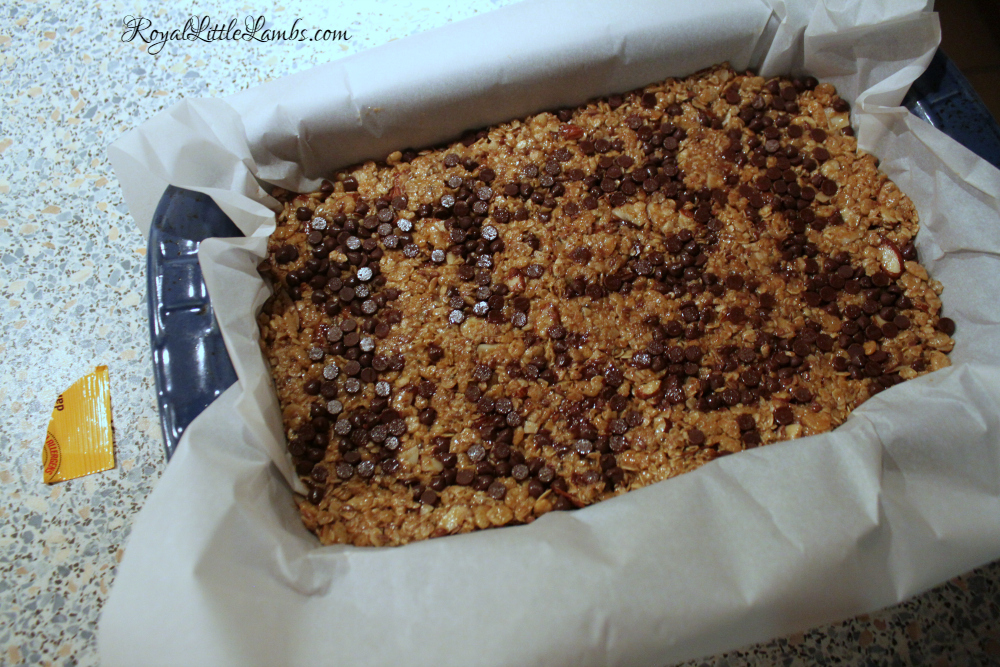
We used to love a particular store-bought peanut butter chocolate chip granola bar. We always had them in our pantry.
When we became more conscious about what we were putting into our bodies, we realized they were full of additives and undesirable things.
I’ve been experimenting to make our own, as close to that flavor we remember.
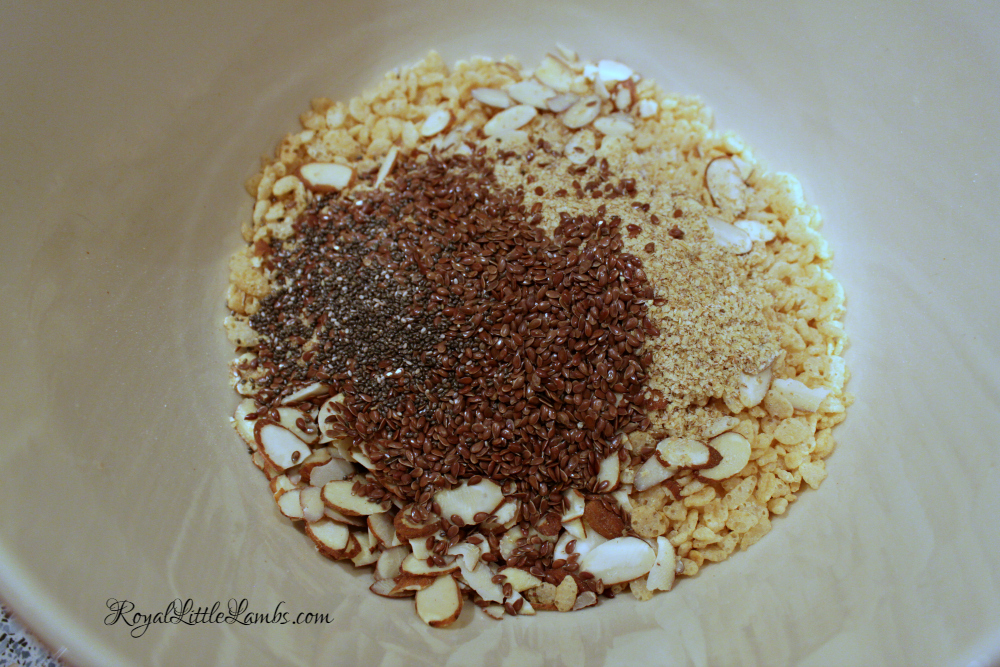
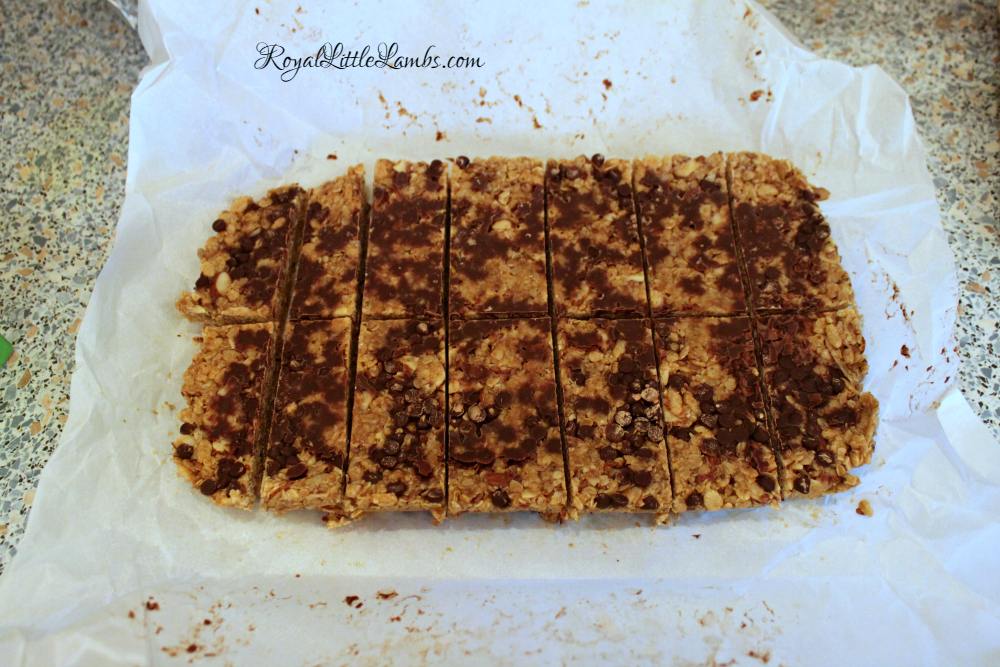
Our no-bake granola bars, customizable with ingredients like rice cereal, dried fruit, nuts, and nut butter!
Here are all our favorite ingredients:
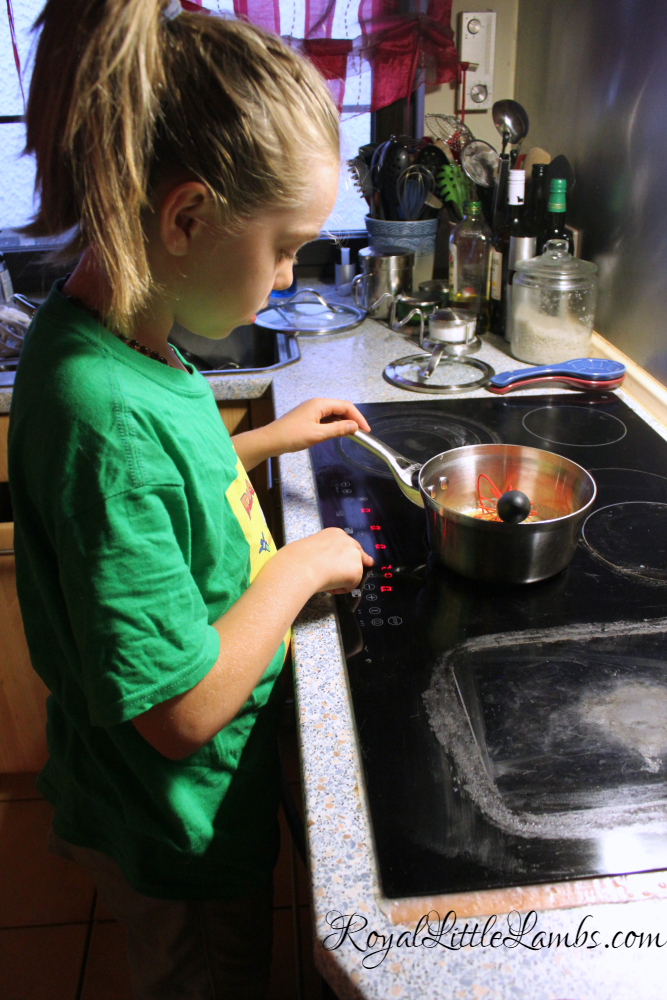
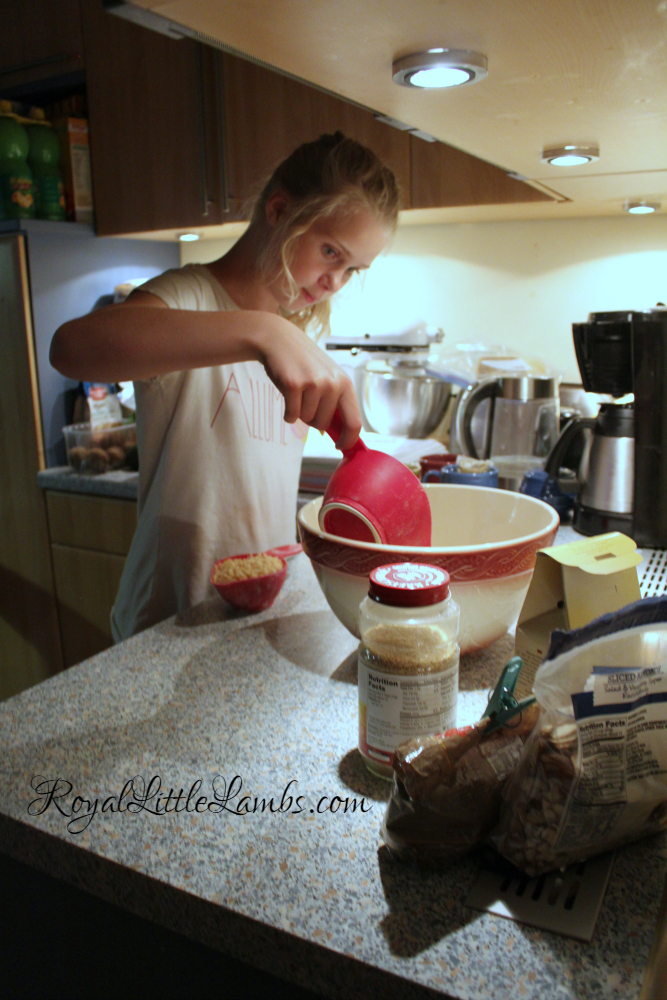
Katie melts the honey, sugar, and peanut butter: Tori mixes the dry ingredients:
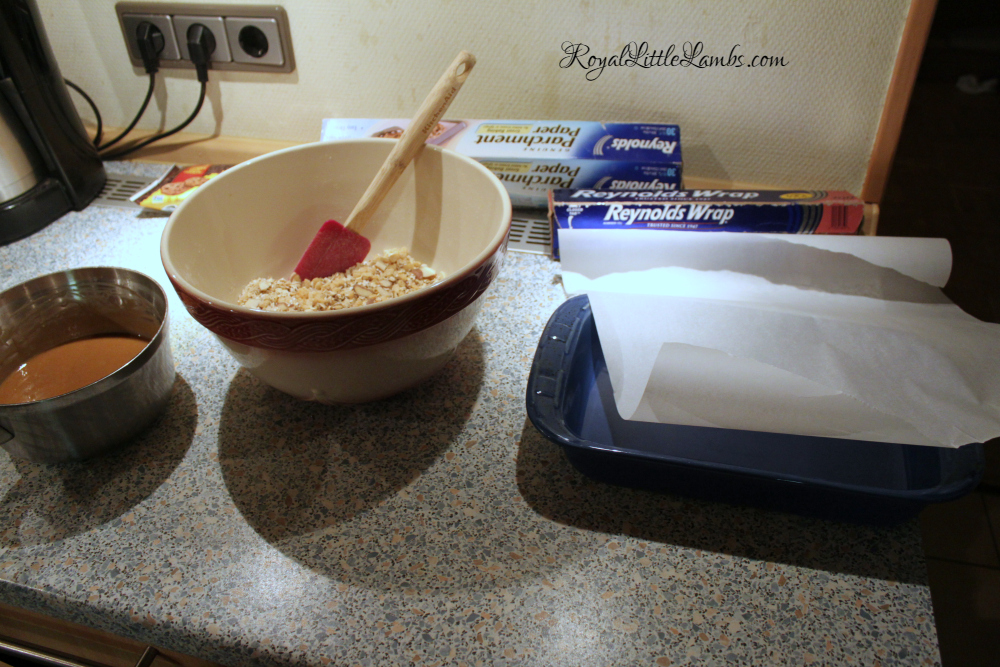
We fold in the peanut butter syrup to the dry ingredients: I line a pan with parchment paper: I press the granola into the pan: Chocolate chips are pressed last so they don’t melt too much. I fold over the parchment and press with my hands, then cover over it all with foil, and refrigerate. For at least an hour, usually overnight. The cold granola cuts pretty. We store it in zip bags in the fridge since it’s a little more gooey than store-bought bars. These granola bars are super easy to make. You can add different nuts, nut butter (or not), chocolate, dried fruit, seeds, different cereals – make them how you want! You can add more or less sweetener to your taste.
This website uses cookies to improve your experience. We'll assume you're ok with this, but you can opt-out if you wish.AcceptRejectRead More
Privacy & Cookies Policy
Privacy Overview
This website uses cookies to improve your experience while you navigate through the website. Out of these, the cookies that are categorized as necessary are stored on your browser as they are essential for the working of basic functionalities of the website. We also use third-party cookies that help us analyze and understand how you use this website. These cookies will be stored in your browser only with your consent. You also have the option to opt-out of these cookies. But opting out of some of these cookies may affect your browsing experience.
Necessary cookies are absolutely essential for the website to function properly. This category only includes cookies that ensures basic functionalities and security features of the website. These cookies do not store any personal information.
Any cookies that may not be particularly necessary for the website to function and is used specifically to collect user personal data via analytics, ads, other embedded contents are termed as non-necessary cookies. It is mandatory to procure user consent prior to running these cookies on your website.




 into ground beef dishes to boost nutrition.
 . I hear many Canadian and UK products are better too! We’re not terrified of sugar, but we do like to limit the chemicals we ingest when we can.
 and buy the natural syrups for ginger ale, lemon-lime, and root beer. We also make homemade fizzy juices. These products have fewer harmful ingredients than the most soda, even natural ones.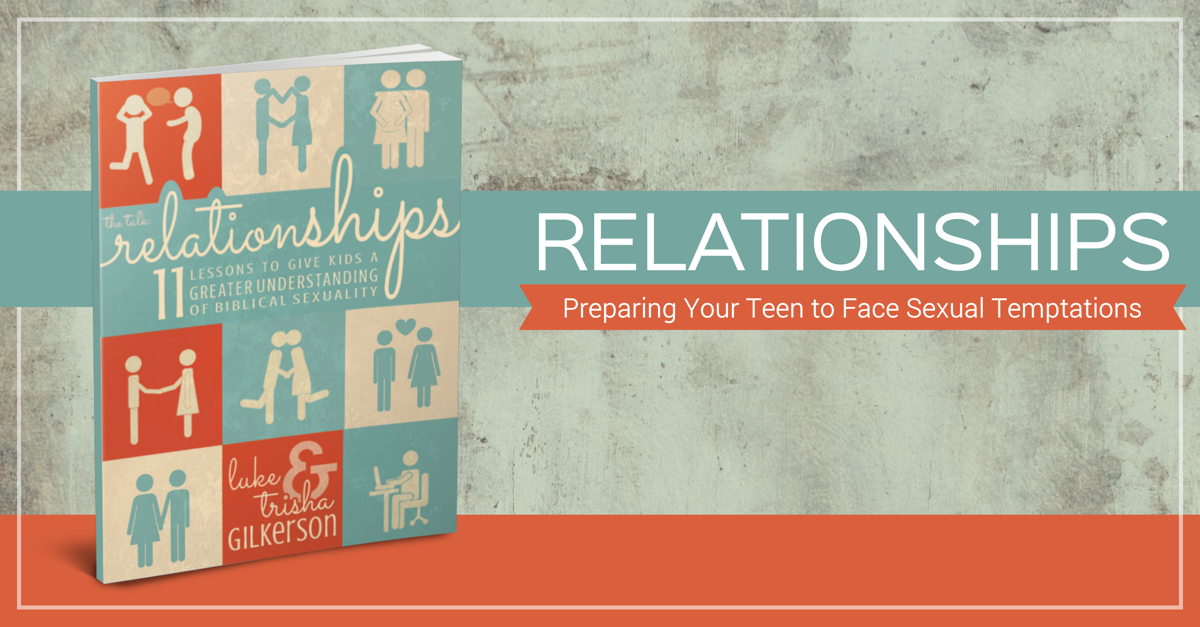












 offers some unique approaches to parenting that I have not previously seen, with Q&A and role playing scripts to walk parents through tantrums and conflicts toward a peaceful end, connecting with and listening to the child’s needs. I think these methods would work with any child, even with special needs. It offers respect and gentleness to every interaction with a child. These ideas should be taught in every daycare, preschool, and school. I see too many teachers and parents dismiss children without listening, hearing, or caring about the child’s needs.
 today!