Jennifer Lambert

A Sacred Balance

Visit Us On FacebookVisit Us On PinterestVisit Us On InstagramVisit Us On Linkedin
  • Homeschool
    • Book Lists
    • How Do We Do That?
    • Notebooking
    • Subjects and Styles
    • Unit Studies
  • Travel
    • Europe
      • Benelux
      • France
      • Germany
      • Greece
      • Ireland
      • Italy
      • London
      • Porto
      • Prague
    • USA
      • Chicago
      • Georgia
      • Hawaii
      • Ohio
      • Utah
      • Yellowstone and Teton
  • Family
    • Celebrations
    • Frugal
  • Military Life
    • Deployment
    • PCS
  • Health
    • Recipes
    • Essential Oils
    • Fitness
    • Mental Health
    • Natural Living
    • Natural Beauty
  • Faith
  • About Me
    • Favorite Resources
    • Advertising and Sponsorship
    • Policies
  • Reviews

© 2025Jennifer Lambert · Copyright · Disclosure · Privacy · Ad

Top 5 Life Changing Decisions

This blog may contain affiliate links: disclosure.
Please see my suggested resources.

February 2, 2017 By Jennifer Lambert 19 Comments

Looking back, I can now pinpoint some major decisions that really changed the course for our family. Some weren’t conscious, active decisions, but more gradual, or even me kicking and screaming and banging on closed doors.

Top 5 Life Changing Decisions

It’s important to me to analyze my goals and vision for my family.

Five decisions have changed our lives for the better.

1. Homeschooling

I used to be a teacher. I taught middle school, high school, and university.
Homeschooling my own children has probably been our greatest decision as a family.

School is not necessary.

As a student and a teacher, I had very few good experiences. I wanted better for my children. We’ve experimented with different curricula over the years, and have finally gotten to a comfortable place, with very little scheduling. My kids own their learning experiences, make decisions, and we respect their choices.
We don’t participate in a co-op. We learn at home.

2. Alternative health

We made the shift to primarily alternative methods gradually.

My husband was on several medications that really didn’t improve his health. He was on meds for high blood pressure, high cholesterol, pre-diabetes, and a diuretic. We made several lifestyle changes that enabled him to not need those medications anymore, so he gradually weaned off and the doctors gave him the all-clear to quit taking them. He no longer has any health issues other aches and pains and a CPAP.

Our eldest child was diagnosed with ADHD at age 8, but we didn’t like the common methods from the medical community expected to manage that. We sought alternatives and loved all the results.

We use essential oils, cod liver oil, vitamins, exercise, the outdoors, and healthy real foods to be proactive about our physical and mental health.

We do go to doctors if needed – for injuries, and recently, for one of our daughter’s double ear infections. And yes, she took antibiotics. I think this is the first time any of my three younger children ever has!

We made a radical decision to eat much healthier about ten years ago.

I was in “adrenal failure” after the two back-to-back births of my middle daughters and was prescribed many vitamin supplements and a paleo diet (before it was even a thing).

As a family, we added in more whole foods, and lessened our daughters’ intake of certain chemicals, but we didn’t eliminate all processed food.

When we did eliminate the processed foods, we really saw some wonderful improvements in our health, mood, behavior, and energy levels.

The ADHD symptoms mostly went away. Our weight leveled out. Medical labs came back better and rx meds were no longer needed.

We continue to eat mostly natural foods, cheating only occasionally. We all feel so much better because of this!

3. Faith

It’s been an arduous journey to discover my faith.

I didn’t grow up with church or religion other than attending a Lutheran church with my grandma twice a year when she visited. I said a blessing at dinner and a little recited prayer before bed.

As I grew up, I began to realize something was missing and I resented how my dad ridiculed my grandma’s and others’ faith.

I started attending a Pentecostal church with my first husband. It was an extreme introduction to church and so vastly different from my grandma’s Lutheran service. I was swept up in the teachings of the charismatic doctrine.

I experienced some spiritual abuse – for being an outspoken woman, asking questions for understanding, and then shamed for divorce. It was all very confusing and I had few truly wise counselors. Then two different self-proclaimed “Christian” employers abused their positions and fired me for arbitrary reasons when I needed a job the most.
When I met my new husband, I began attending a Presbyterian church at his request since that’s what he grew up with. It was bland and a show for the rich in town.

Moving around so much with the military has exposed our family to several different denominations and church experiences.

We attended a fundamental Baptist church in Hawaii that confirmed everything I don’t want for my family. It was very legalistic and narrow-minded. They even had brochures in the lobby with scriptures supporting how women and children should appear and behave!

Then we attended a Presbyterian church in Utah with an amazing pastor, but little in the way of adult Sunday school. We recently attended a Lutheran church, but it offers little in the way of spiritual growth for our family. The lay leaders are very liberal and the new pastor wants to make a lot of changes and compromises. We’re mostly just bored. We attempted to attend a Presbyterian church when we moved to Ohio, but it was complicit in racism, sexism, capitalism and I had a hard time reconciling that. The leaders were not welcoming or open to growth so we left.

I read a lot and I’m dismayed by the religious best sellers and their outright heretical teachings. So many Christians and churches support these authors and their books, having classes and conferences, spreading these lies that people devour since they don’t know any better. The children and I read devotionals and scripture every morning and evening together.

It’s my job to seek out the truth for my family.

4. Respectful parenting

I’m dealing with my own past and learning how to be more respectful towards my children. I grew up with extremely authoritarian parents, very conditional, walking on eggshells. I want to have a good relationship with my kids. We’ve gone away from punishment and rewards and it’s very liberating. I’ve changed my whole perspective on parenting and it’s very enjoyable. The kids and I have marvelous discussions about all sorts of things. I’m delighted at their interests and how well they get along with each other. I know I’m on the right track, and it feels revolutionary.

I’m now highly aware of other parents when they disrespect their children and it saddens me. I realize that much of Western culture is still steeped in Puritanical beliefs that children should be seen and not heard and are incapable of making decisions even about their own bodies and needs. These beliefs create adults who can’t make decisions without an authority approving it. I should know!

I know from experience that children are very capable and trustworthy.

5. Being debt-free

It’s important to us that we are not tied down financially. We are *this* close to being debt-free! We were once before, a few years ago, but we got sucked back into credit card debt.

This decision greatly affects the way we live in that our priorities are different than most. We focus on investments for the future. We delay instant gratification for longer term benefits. We teach our kids the value of money.

We simplified our needs and purged our stuff to only what we use regularly.

When we desire to make a purchase, we think about it, pray about it, and often wait to see if it is truly needed or if a better deal comes along. Sometimes, the desire goes away or a different opportunity presents itself.

We like to be able to travel frequently. It’s important that I show my kids the world to expand their views and educate them.

What decisions have affected your life?

Share
Pin18
Share
18 Shares
You might also like:

Filed Under: Family Tagged With: growth

Homeschool Preschool

This blog may contain affiliate links: disclosure.
Please see my suggested resources.

January 30, 2017 By Jennifer Lambert Leave a Comment

For preschool, we’ve tried lots of different activities and curricula.

Preschool homeschool doesn’t have to cost really anything. I know some homeschool parents who buy these expensive boxed curriculum sets, but I think these are a waste of money and cause lots of stress for child and parent. The schedules are strict and seem to have a lot of worthless busy work.

Our homeschool days have always been only a couple hours of academic work, even for high schoolers!

I highly recommend the books by Louise Bates Ames. Good guides to follow are What Your Preschooler Needs to Know: Get Ready for Kindergarten and What Your Kindergartner Needs to Know: Preparing Your Child for a Lifetime of Learning by E.D. Hirsch, Jr. These are just great jumping off points.

How We Homeschool Preschool:

While I believe that small children should play, play, play as much as possible, my younger kids wanted to “do school” like big sister, so I obliged with workbooks and fun activities and they soaked it up like sponges.

I read aloud to my kids from pre-birth through high school age. We all love books.

Autonomy

I don’t force anything on my kids. I allow them to explore their interests. We don’t worry about handwriting. Reading comes naturally, whenever the child is ready. They love learning about science and history.

Toys

Lots of plastic electronic toys are a waste of money. My kids prefer building materials and toys and recyclable items for craft creations. Pretend play is important. I shop after Halloween sales and thrift shops for fun dressup clothes. Less really is more.

Technology

Screens in moderation. Sometimes kids just need and want the downtime. When it’s bad weather outside or we’re not feeling well, it’s fine to curl up together or alone with the cats and watch a show or play an app. Why should we make kids feel guilty when adults do it all the time? My kids learn how to self-regulate their screen time by not having strict rules about it, other than all devices away at bedtime.

Outdoors

We spend lots of time outside. We play balancing and running games and run free and wild. We learn about and experience nature. I seldom structure this time unless we go on a hike at a nature center. Kids need lots of free play time outdoors.

Practical Life

They use real tools in the kitchen, helping cook real food meals.

We explore textures and colors and drawing with real art supplies.

We go to the library at least weekly – for storytime and checking out lots of fun books.

Lots of fun field trips – farms, museums, science centers, historic locations, beaches, parks, nature centers. We prefer realistic locales over entertainment places like amusement parks. We love to travel!

My middle and youngest children wanted to “do school” almost from birth. They followed their sister around and wanted to do everything she did. I provided activities based on interests and needs so they felt useful and occupied.

Letter of the Week

We loved using the programs from Confessions of a Homeschooler and 1+1+1=1. It was lots of paper and printing, but the girls really loved it. Alex liked it ok.

My girls completed 2 levels of All About Reading and my son used their entire program. They all loved it! It was a fun and easy way to learn to read and they begged to do a lesson every single day.

Here are some of our random letter blog posts. I didn’t record all of our letter learning efforts.

  • Letter A
  • Letter D
  • Letter M
  • Letter N
  • Letter R
  • Letter U

Unit Studies

  • Astronomy
  • Beach
  • Back to School
  • Fall
  • Apples
  • Winter
  • Snow
  • Antarctica
  • Transportation
  • Royalty
  • Dinosaurs
  • Foxes
  • Wizard of Oz

Preschool Pinterest Board

Montessori Pinterest Board

I try to limit toys to encourage imaginative play.

Recommendations:

  • Sarah’s Silks
  • Branch Blocks
  • Geometric Blocks
  • Bilibo
  • Puppet Theater
  • Wiggle Car
  • Hopper Ball
  • K’Nex
  • Dome Climber
  • LeapFrog DVDs
  • Kumon workbooks
  • Kuhn Rikon kinderkitchen
  • Colored Pencils
  • Painting Supplies

Book Recommendations:

  • Your Self-Confident Baby: How to Encourage Your Child’s Natural Abilities — From the Very Start by Magda Gerber
  • Baby Knows Best: Raising a Confident and Resourceful Child, the RIE™ Way by Deborah Carlisle Solomon
  • Elevating Child Care: A Guide To Respectful Parenting by Janet Lansbury
  • No Bad Kids: Toddler Discipline Without Shame by Janet Lansbury
  • Help Your Preschooler Build a Better Brain: A Complete Guide to Doing Montessori Early Learning at Home by John Bowman
  • How To Raise An Amazing Child the Montessori Way by Tim Seldin
  • Montessori at Home Guide: A Short Guide to a Practical Montessori Homeschool for Children Ages 2-6 by AM Sterling
  • Teach Me to Do It Myself: Montessori Activities for You and Your Child by Maja Pitamic
  • Last Child in the Woods: Saving Our Children From Nature-Deficit Disorder by Richard Louv
  • Unconditional Parenting: Moving from Rewards and Punishments to Love and Reason by Alfie Kohn
  • How Children Learn by John Holt
  • Teach Your Own: The Indispensable Guide to Living and Learning with Children at Home by John Holt
  • Free to Learn: Why Unleashing the Instinct to Play Will Make Our Children Happier, More Self-Reliant, and Better Students for Life by Peter Gray
  • Free-Range Kids: How to Raise Safe, Self-Reliant Children (Without Going Nuts with Worry) by Lenore Skenazy
  • The Collapse of Parenting: How We Hurt Our Kids When We Treat Them Like Grown-Ups by Leonard Sax
  • A Disease Called Childhood: Why ADHD Became an American Epidemic by Marilyn Wedge

Preschool does mean Before Schooling. Kids before age six really need to play, play, play.

Share
Pin10
Share
10 Shares
You might also like:

Filed Under: Homeschool Tagged With: back to school, curriculum, homeschool, kindergarten, preschool, tot school

Slow Cooker Asian Pork Ribs

This blog may contain affiliate links: disclosure.
Please see my suggested resources.

January 26, 2017 By Jennifer Lambert Leave a Comment

Slow Cooker Asian Pork Ribs is one of my family’s favorite meals.

It’s a simple and flavorful fix and forget meal.

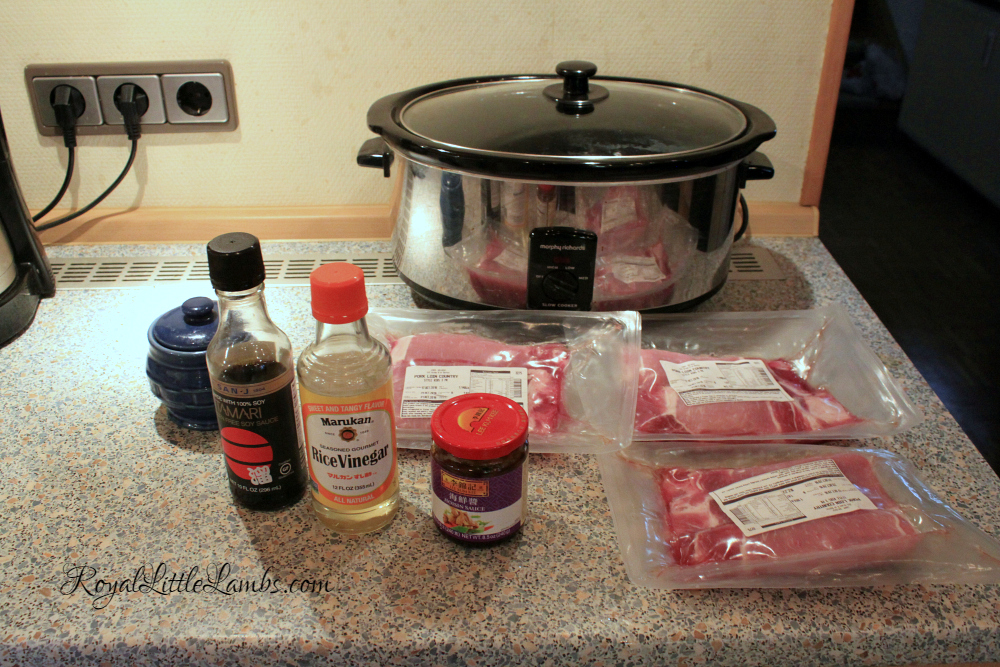
slow-cooker-asian-pork-ribs

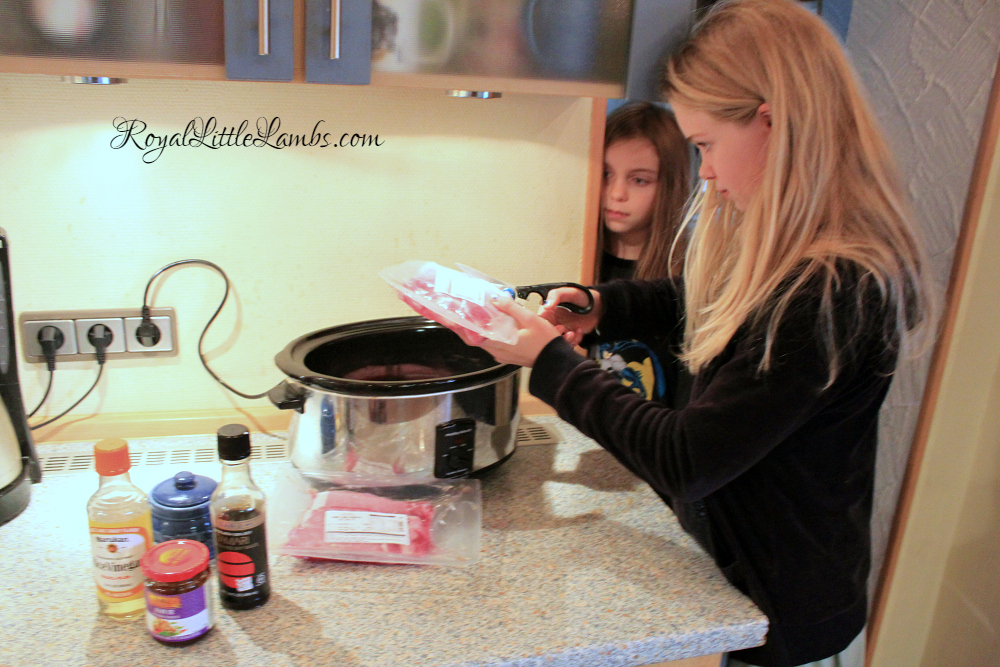
My girls love to prepare this meal for a great dinner we all look forward to all day long.

preparing-slow-cooker-asian-pork-ribs

We buy country style pork ribs and drizzle them with Hoisin sauce, soy sauce, Mirin, brown sugar, minced garlic, grated ginger, and sherry.

slow-cooker-ribs

They’re fall apart good!

I love my slow cooker that has a medium setting, so they’re still firm, but tender and moist.

We like to serve these with jasmine rice and steamed vegetables.

Slow Cooker Asian Pork Ribs
Print

Slow Cooker Asian Pork Ribs

Course Main Dish
Cuisine Asian
Prep Time 5 minutes
Cook Time 4 hours
Total Time 4 hours 5 minutes
Servings 6

Ingredients

  • 2 lbs country style pork ribs
  • 1/4 c soy sauce
  • 1/4 c Hoisin
  • 1/4 c Mirin
  • 1/4 c dry sherry
  • 1/4 c brown sugar
  • 2 t minced fresh garlic
  • 2 t grated fresh ginger

Instructions

  1. Place country pork ribs in slow cooker.
  2. Mix sauce ingredients together in small bowl and pour over ribs.
  3. Cover and slow cook for 6 hours.
  4. Serve with jasmine rice and steamed veggies.


Share
Pin2
Share
2 Shares
You might also like:

Filed Under: Recipes Tagged With: dinner, pork, recipe, slow cooker

How We Learn

This blog may contain affiliate links: disclosure.
Please see my suggested resources.

January 19, 2017 By Jennifer Lambert 8 Comments

I’m often asked which curricula we use by other homeschool moms. I’m asked about our schedule. I’m asked about high school and transcripts. I’m asked about my kids’ behavior and attitudes.

Lately, I’ve tried to steer clear of conversations like these because we just seem to do things so differently.

Most people just aren’t willing or ready to hear our truth. They don’t really want to make any changes. They want an easy fix.

They want some miracle for their kids to be perfectly obedient, great readers, math whizzes, to ace their SAT/ACT.

They don’t want a relationship with their kids.

They don’t want to work and learn alongside their kids.

I’ve had parents flat out tell me that they quit Latin because they certainly don’t want to learn it with their kids and it was impossible for the kids to do alone.

It seems that so many parents want to recreate school at home. To me, that’s not homeschooling. It’s a waste of time and resources. It creates stress.

What Does School Really Teach Children?

  1. Truth comes from Authority.
  2. Intelligence is the ability to remember and repeat.
  3. Accurate memory and repetition are rewarded.
  4. Noncompliance is punished.
  5. Conform: Intellectually and socially.

We love our freedom to learn anything whenever we want.

I love seeing the uninhibited joy my kids exhibit as they hum a Gloria Estefan song during science notebooking or apply fraction math during cooking and baking.

We all snuggle up on the sofa to read history and literature together.

I love the natural rhythms of our lives as the kids and I learn together. See our schedule here.

We don’t separate our lives into contrived courses like home economics or anything. We just work together to do everything that needs to be done. The kids love to be in the kitchen, learning and working together. We all understand the less desirable chores must be done for a smoothly working household.

How we learn:

  1. We threw out the printables.

    They were a waste of time, took up loads of printer ink, and we ran out of storage room for their “portfolios.” We’d rather not do busy work anymore.

  2. We streamlined curricula.

    The most important curricula? Love and understanding. I want my children to have passion for learning, not held down to a scripted textbook or program. And I absolutely loathe computer curricula. It’s lazy. I do have a very few standards for my kids, but overall, we are very relaxed. I want them to complete Latin, and for the most part, they enjoy it. I learn alongside them. We have all these science textbooks and living books and they really are quite lovely, so we’re working through them. Bible workbooks are fun and offer a basis for great conversation. I want my kids to be Bible literate and comprehensive of apologetics. Math workbooks keep them on track and eliminate any gaps, and they go at their own pace. So what if my 6 year old is completing a 2nd grade workbook? High school credits have to be earned and tracked. We work towards mastery and my eldest is 16 and already graduating in a couple months.

  3. We canceled organized sports and outside lessons.

    The lessons became a waste of time and money. There was little progress in piano or guitar. Kids sports are just expensive controlled play time.

  4. Books outweigh screentime.

    We have an extensive book collection. I keep our coffee table covered with stacks of books pertaining to our time period in history that we learn each month. Each of us is always reading a book for fun. While we do have iPad minis, and spend time watching Netflix and playing games, the book time outweighs the screentime.

  5. No rewards.

    We don’t use incentive programs to motivate our kids. They’re worthless and train the authority more than the child. I never could remember the stupid stickers. Rewards confuse my kids. They ask why they get something for doing what they should do anyway. Kids under reward systems become adults with no self-control or intrinsic motivation.

  6. No punishments.

    If we don’t do rewards, we shouldn’t do punishments either. Natural consequences teach way more than external punishments. Time outs, spanking, restrictions, and taking away gifts or privileges are controlling and cruel. These actions only teach children that they are unloved, isolated, worthless, disrespected, captive. I prefer to be proactive and discuss situations with our kids.

  7. Few schedule controls.

    Children know when they’re hungry or tired. They can regulate their body’s needs.
    I provide a hot breakfast in the mornings, help prepare lunches when they say they’re hungry, and cook dinners in the evenings. Usually, everyone eats meals together, but sometimes, someone isn’t ready or doesn’t like a food, so they’re welcome to make a sandwich or wait until later. I don’t schedule snacks, but we always have fruit, nuts, yogurt, leftovers, and more available.
    We don’t have set bedtimes, but we recommend that the middle girls go to bed by 10 so they get enough sleep.
    Our son usually falls asleep during bedtime reading.
    Our teen stays up as late as she wants and sleeps later in the mornings. She has learned that she should go to bed earlier on the evenings before a work day.

  8. Lots of free play time.

    The kids get to choose when they complete their workbooks and they prefer to get those completed quickly so they have plenty of free play time. They use their free time to read, play on their iPads, create games with their toys, building and creating. I encourage lots of outside time, except when it is bitterly cold out.

  9. The best supplies.

    I try to provide the best supplies for my kids to create and build. They love learning about electricity, magnets, light, and pulleys and we buy science kits with their birthday and Christmas money. They love doing art with coloring pencils and paints. I don’t bother with cheap generic brands. They should be trusted with professional products and they don’t cost too much more.

  10. Travel.

    We make it a priority to travel to places we learn about in history and literature. It’s super important to us to experience travel and we make sacrifices in order to afford these trips. The kids remember these trips way more than a video or book.

Resources:

  • Balanced and Barefoot: How Unrestricted Outdoor Play Makes for Strong, Confident, and Capable Children by Angela J. Hanscom
  • The Collapse of Parenting: How We Hurt Our Kids When We Treat Them Like Grown-Ups by Leonard Sax
  • A Disease Called Childhood: Why ADHD Became an American Epidemic by Marilyn Wedge
  • Teach Your Own: The Indispensable Guide to Living and Learning with Children at Home by John Holt
  • Unconditional Parenting: Moving from Rewards and Punishments to Love and Reason by Alfie Kohn
  • Free to Learn: Why Unleashing the Instinct to Play Will Make Our Children Happier, More Self-Reliant, and Better Students for Life by Peter Gray
  • Last Child in the Woods: Saving Our Children From Nature-Deficit Disorder by Richard Louv
  • Simplicity Parenting: Using the Extraordinary Power of Less to Raise Calmer, Happier, and More Secure Kids by Kim John Payne with Lisa M. Ross
  • Free-Range Kids by Lenore Skenazy
  • Smart Moves: Why Learning Is Not All In Your Head by Carla Hannaford
  • 8 Great Smarts: Discover and Nurture Your Child’s Intelligences by Kathy Koch

What is your learning style?

Share
Pin10
Share
10 Shares
You might also like:

Filed Under: Homeschool Tagged With: back to school, homeschool, unschooling

Favorite Fantasy Books

This blog may contain affiliate links: disclosure.
Please see my suggested resources.

January 13, 2017 By Jennifer Lambert 6 Comments

Fantasy novels are books that contains unrealistic settings, magic, often set in a medieval universe, possibly involving mythical beings or supernatural forms as a primary element of the plot, theme, or setting.

Many lists include horror, sci-fi, and dystopian fiction in the fantasy category. I do not.

I do not enjoy reading certain undesirable themes, like some popular TV shows based on book series have glorified: pornography, incestuous relationships, and torture. I have excluded books that have those themes, if my memory serves right.

There are lots of great fantasy series and books out there, but I haven’t read them all so I can’t attest to their quality.

If you’re not into fantasy books, or think that reading fiction about magic is evil, just move along. We love reading make believe stories!

This list has something for everyone, for all ages, for every fantasy interest – from talking animals to epic quests, medieval knights, and imaginary creatures.

Favorite Fantasy Books

These are some of our favorites:

Fantasy Series

The Lord of the Rings by J.R.R. Tolkien

One Ring to rule them all, One Ring to find them, One Ring to bring them all and in the darkness bind them

In ancient times the Rings of Power were crafted by the Elven-smiths, and Sauron, the Dark Lord, forged the One Ring, filling it with his own power so that he could rule all others. But the One Ring was taken from him, and though he sought it throughout Middle-earth, it remained lost to him. After many ages it fell into the hands of Bilbo Baggins, as told in The Hobbit. In a sleepy village in the Shire, young Frodo Baggins finds himself faced with an immense task, as his elderly cousin Bilbo entrusts the Ring to his care. Frodo must leave his home and make a perilous journey across Middle-earth to the Cracks of Doom, there to destroy the Ring and foil the Dark Lord in his evil purpose.

The Chronicles of Narnia by C.S. Lewis

Fantastic creatures, heroic deeds, epic battles in the war between good and evil, and unforgettable adventures come together in this world where magic meets reality, which has been enchanting readers of all ages for over sixty years. The Chronicles of Narnia has transcended the fantasy genre to become a part of the canon of classic literature.

Shannara by Terry Brooks

Long ago, the wars of the ancient Evil ruined the world. In peaceful Shady Vale, half-elfin Shea Ohmsford knows little of such troubles. But the supposedly dead Warlock Lord is plotting to destroy everything in his wake. The sole weapon against this Power of Darkness is the Sword of Shannara, which can be used only by a true heir of Shannara. On Shea, last of the bloodline, rests the hope of all the races.

The Wheel of Time by Robert Jordan

The Wheel of Time turns and Ages come and pass. What was, what will be, and what is, may yet fall under the Shadow. Let the dragon ride again on the winds of time.

The Dark Tower by Stephen King

Set in a world of ominous landscape and macabre menace, The Dark Tower features one of Stephen King’s most powerful creations—The Gunslinger, a haunting figure who embodies the qualities of the lone hero through the ages, from ancient myth to frontier Western legend. As Roland crosses a desert of damnation in a macabre world that is a twisted image of our own, he moves ever closer to the Dark Tower of his dreams—and nightmares.

The Earthsea Cycle by Ursula K. Le Guin

Ged was the greatest sorcerer in Earthsea, but in his youth he was the reckless Sparrowhawk. In his hunger for power and knowledge, he tampered with long-held secrets and loosed a terrible shadow upon the world. This is the tumultuous tale of his testing, how he mastered the mighty words of power, tamed an ancient dragon, and crossed death’s threshold to restore the balance.

Harry Potter by J.K. Rowling

Harry Potter has no idea how famous he is. That’s because he’s being raised by his miserable aunt and uncle who are terrified Harry will learn that he’s really a wizard, just as his parents were. But everything changes when Harry is summoned to attend an infamous school for wizards, and he begins to discover some clues about his illustrious birthright. From the surprising way he is greeted by a lovable giant, to the unique curriculum and colorful faculty at his unusual school, Harry finds himself drawn deep inside a mystical world he never knew existed and closer to his own noble destiny.

A Wrinkle in Time by Madeleine L’Engle

It was a dark and stormy night; Meg Murry, her small brother Charles Wallace, and her mother had come down to the kitchen for a midnight snack when they were upset by the arrival of a most disturbing stranger.

“Wild nights are my glory,” the unearthly stranger told them. “I just got caught in a downdraft and blown off course. Let me sit down for a moment, and then I’ll be on my way. Speaking of ways, by the way, there is such a thing as a tesseract.”

A tesseract (in case the reader doesn’t know) is a wrinkle in time. To tell more would rob the reader of the enjoyment of Miss L’Engle’s unusual book. A Wrinkle in Time, winner of the Newbery Medal in 1963, is the story of the adventures in space and time of Meg, Charles Wallace, and Calvin O’Keefe (athlete, student, and one of the most popular boys in high school). They are in search of Meg’s father, a scientist who disappeared while engaged in secret work for the government on the tesseract problem.

Oz by L. Frank Baum

The story chronicles the adventures of a young girl named Dorothy Gale in the Land of Oz, after being swept away from her Kansas farm home in a cyclone.

Peter Pan by J.M. Barrie

Peter Pan is a character created by Scottish novelist and playwright J. M. Barrie. A mischievous boy who can fly and never grows up, Peter Pan spends his never-ending childhood adventuring on the small island of Neverland as the leader of his gang, the Lost Boys, interacting with mermaids, Native Americans, fairies, pirates, and occasionally ordinary children from the world outside of Neverland.

The Spiderwick Chronicles by Holly Black

It all started with a mysterious letter left at a tiny bookstore for authors Tony DiTerlizzi and Holly Black. Its closing lines: “We just want people to know about this. The stuff that has happened to us could happen to anyone.” Little could they imagine the remarkable adventure that awaited them as they followed Jared, Simon, and Mallory Grace and a strange old book into a world filled with elves, goblins, dwarves, trolls, and a fantastical menagerie of other creatures. The oddest part is in entering that world, they didn’t leave this one!

Alice in Wonderland by Lewis Carroll

An intrepid little girl discovers a surreal, beautiful, and dangerous land inhabiting the Cheshire Cat, Mad Hatter, and Queen of Hearts.

Xanth by Piers Anthony

Xanth was the enchanted land where magic ruled–where every citizen had a special spell only he could cast. That is, except for Bink of North Village. He was sure he possessed no magic, and knew that if he didn’t find some soon, he would be exiled. According to the Good Magician Humpfrey, the charts said that Bink was as powerful as the King or even the Evil Magician Trent. Unfortunately, no one could determine its form. Meanwhile, Bink was in despair. If he didn’t find his magic soon, he would be forced to leave…

Fantasy Books

The Wind in the Willows by Kenneth Grahame

Far from fading with time, Kenneth Grahame’s classic tale of fantasy has attracted a growing audience in each generation. Rat, Mole, Badger and the preposterous Mr Toad (with his ‘Poop-poop-poop’ road-hogging new motor car), have brought delight to many through the years with their odd adventures on and by the river, and at the imposing residence of Toad Hall.

The Princess Bride by William Goldman

Anyone who lived through the 1980s may find it impossible—inconceivable, even—to equate The Princess Bride with anything other than the sweet, celluloid romance of Westley and Buttercup, but the film is only a fraction of the ingenious storytelling you’ll find in these pages. Rich in character and satire, the novel is set in 1941 and framed cleverly as an “abridged” retelling of a centuries-old tale set in the fabled country of Florin that’s home to “Beasts of all natures and descriptions. Pain. Death. Brave men. Coward men. Strongest men. Chases. Escapes. Lies. Truths. Passions.”

The Once And Future King by T.H. White

A masterful retelling of the saga of King Arthur, a fantasy classic as legendary as Excalibur and Camelot, and a poignant story of adventure, romance, and magic that has enchanted readers for generations.

EVERYTHING by Roald Dahl

Who doesn’t LOVE Roald Dahl books?!

Roald Dahl (1916-1990) was born in Llandaff, South Wales, and went to Repton School in England. His parents were Norwegian, so holidays were spent in Norway. As he explains in Boy, he turned down the idea of university in favor of a job that would take him to “a wonderful faraway place.” In 1933, he joined the Shell Company, which sent him to Mombasa in East Africa. When World War II began in 1939, he became a fighter pilot and in 1942, was made assistant air attaché in Washington, where he started to write short stories. His first major success as a writer for children was in 1964. Thereafter, his children’s books brought him increasing popularity, and when he died children mourned the world over, particularly in Britain where he had lived for many years.The BFG is dedicated to the memory of his eldest daughter, Olivia, who died from measles when she was seven – the same age at which his sister had died (from appendicitis) over forty years before. Quentin Blake, the first Children’s Laureate of the United Kingdom, has illustrated most of Roald Dahl’s children’s books.

Five Children and It by Edith Nesbit

When Cyril, Anthea, Robert, Jane and their baby brother go digging in the gravel pit, the last thing they expect to find is a Psammead – an ancient Sand-fairy! Having a Sand-fairy for a pet means having one wish granted each day. But the children don’t realize all the trouble wishes can cause…

The Kitchen Knight: A Tale of King Arthur by Margaret Hodges

Here noble Gareth, King Arthur’s nephew, is knighted by Sir Lancelot, vanquishes the dreaded knight of the Red Plain, and wins the hand of a fair maiden. We love reading this story and enjoying the beautiful pictures when we study medieval times in history.

Reader Suggestions:

Blood of Kings trilogy by Jill Williamson
Given the chance to train as a squire, kitchen servant Achan Cham hopes to pull himself out of his pitiful life and become a Kingsguard Knight. When Achan’s owner learns of his training, he forces Achan to spar with the Crown Prince–more of a death sentence than an honor. Meanwhile, strange voices in Achan’s head cause him to fear he’s going mad. While escorting the prince to a council presentation, their convoy is attacked. Achan is wounded and arrested, but escapes from prison–only to discover a secret about himself he never believed possible.

The Ascendance trilogy by Jennifer A. Nielson
In a discontent kingdom, civil war is brewing. To unify the divided people, Conner, a nobleman of the court, devises a cunning plan to find an impersonator of the king’s long-lost son and install him as a puppet prince. Four orphans are recruited to compete for the role, including a defiant boy named Sage. Sage knows that Conner’s motives are more than questionable, yet his life balances on a sword’s point — he must be chosen to play the prince or he will certainly be killed. But Sage’s rivals have their own agendas as well.

The Staff and the Sword trilogy by Patrick W. Carr
The Fate of the Kingdom Awaits the Cast of Stones

In the backwater village of Callowford, roustabout Errol Stone is enlisted by a church messenger arriving with urgent missives for the hermit priest in the hills. Eager for coin, Errol agrees to what he thinks will be an easy task, but soon finds himself hunted by deadly assassins. Forced to flee with the priest and a small band of travelers, Errol soon learns he’s joined a quest that could change the fate of his kingdom.

Protected for millennia by the heirs of the first king, the kingdom’s dynasty nears its end and the selection of the new king begins–but in secret and shadow. As danger mounts, Errol must leave behind the stains and griefs of the past, learn to fight, and discover who is hunting him and his companions and how far they will go to stop the reading of the stones.

The Inheritance Cycle by Christopher Paolini
Not so very long ago, Eragon—Shadeslayer, Dragon Rider—was nothing more than a poor farm boy, and his dragon, Saphira, only a blue stone in the forest. Now the fate of an entire civilization rests on their shoulders.

Long months of training and battle have brought victories and hope, but they have also brought heartbreaking loss. And still, the real battle lies ahead: they must confront Galbatorix. When they do, they will have to be strong enough to defeat him. And if they cannot, no one can. There will be no second chances.

The Rider and his dragon have come further than anyone dared to hope. But can they topple the evil king and restore justice to Alagaësia? And if so, at what cost?

What’s your favorite fantasy book?

Share
Pin4
Share
4 Shares
You might also like:

Filed Under: Homeschool Tagged With: book list, reading

Top 10 Parenting Advice

This blog may contain affiliate links: disclosure.
Please see my suggested resources.

January 12, 2017 By Jennifer Lambert 6 Comments

I’ve grown a lot as a parent in 16+ years.

I didn’t have role models or help. I traveled this journey mostly alone, often with very poor advice and terrible intentions and horrible teachings.

I have many regrets, such as attending a fundamentalist church who taught very harsh parenting practices like blind obedience from the Pearls. I wish I could undo that year, praying the damage to reverse.

I’ve been selfish, hired nannies and babysitters we couldn’t afford in the name of what society has told me I need more of: “me-time.”

We tried day care, preschool, camps, even school for a month. We listened to “experts” who told us what kids “need” to be successful.

After many trials and errors – realizing that kids are not experiments, not wild animals to be tamed, not creatures to be controlled, not extensions of myself, not a vicarious experience, not evil beings to be punished, not inconveniences to be scorned – I have come to realize that children are more than worthy of respect, and control and blind obedience is not the way to parent.

The media and society perpetuates the ideas that kids are a nuisance, born to thwart our every desire, ruin our bodies, mess up our homes, talk back, rebel, and generally wreak havoc on our orderly adult lives.

This doesn’t have to be our expectation or reality.

Children are naturally desirous of being helpful. They are deserving of respect. They need loving guidance.

Our homes and lives can be peaceful, enjoyable, fun. We just need a change of perspective and be willing to take the risk to be different.

“Obedience is doing what you’re told, no matter what’s right. Morality is doing what’s right, no matter what you’re told.” L.R.Knost

Top 10 Parenting Advice

My list of top 10 parenting advice:

  1. Embrace the delicious chaos of babyhood. Put everything else on hold to celebrate every single moment. Take a gazillion pictures for memories, but you don’t have to share them all on Instagram. I promise you’ll look back on this time with fondness, after you’re able to sleep through the night again and wear clean and stylish clothes without worry of breast milk leakage. Don’t panic about milestones. Be knowledgeable about babies and biology and development, but do what you feel is best for your family.
  2. Please, please, please coddle your infant. Wear her, hold her, snuggle her. Don’t let her “cry it out.” Go above and beyond to meet all her needs so she will trust you and feel safe and loved. Ask for help for household needs from older children, spouse, friends, family members. Your infant is the most important thing in your life. Limit responsibilities so you can stay home and get to know your new little person.
  3. Respect your toddler. Let him choose what to eat and wear. Don’t allow societal embarrassment to make you feel the need to control him. If he wants to wear sister’s princess tutu and his Batman mask and cape to the grocery store, let him! His feelings of validation are more important than the cashier’s eyes askance or the disapproving glances of strangers. Let him try and fail and help with chores.
  4. Preschool is not necessary, no matter what anyone says. Preschoolers should play. Give them freedom to learn, explore, manipulate their environment. Let them cook with real tools in the kitchen, explore nature, learn how fire eats up sticks, sing, dance, make messes, and how plants grow. Go outside every day.
  5. School is not needed, no matter what anyone says. Sure, you can argue that Christian kids need to be a light in a public school classroom, or that private schools will be the best option for high test scores to get into a good university. Don’t try to recreate school at home. Learning is natural. Don’t control it or make it become unnatural and artificial.
  6. You don’t teach children how to make good decisions by treating them like they are incapable, controlling their every move, and restricting their access to the world that you eventually want them to be part of. When they finally gain freedom and autonomy they don’t know what to do with it. Guide your child lovingly and respectfully, walking together on the journey.
  7. Give kids real books, not condensed or dumbed down versions. Teach them to read and understand the KJV Bible and they can read anything! Give them a real dictionary and show them how to use it.
  8. Allow kids to make mistakes and messes. This is how they learn. Natural consequences are the best teacher. Clean up together – without shame or ridicule or blame.
  9. Limit distractions and organized activities to encourage imagination and creativity. Provide plenty of art supplies and loose parts for opportunities to create and play. Save items you would normally recycle or throw away. Have more open-ended toys than electronics and screens. Don’t guide play. Stand back and watch and listen.
  10. Deal with your triggers so you don’t react poorly to your children. Heal yourself so you can love your child and respond to frustrations in a healthy way. Many of us were raised in authoritarian (or permissive) households and must work through many issues while raising our children with a better way. We must learn to speak respectfully to all children, even more so since we were not spoken to with respect.

Resources:

  • A Disease Called Childhood: Why ADHD Became an American Epidemic by Marilyn Wedge
  • Teach Your Own: The John Holt Book Of Homeschooling by John Holt
  • The Collapse of Parenting: How We Hurt Our Kids When We Treat Them Like Grown-Ups by Leonard Sax
  • Unconditional Parenting: Moving from Rewards and Punishments to Love and Reason by Alfie Kohn
  • Free to Learn by Peter Gray 
  • Last Child in the Woods: Saving Our Children From Nature-Deficit Disorder by Richard Louv
  • Simplicity Parenting: Using the Extraordinary Power of Less to Raise Calmer, Happier, and More Secure Kids by Kim John Payne
  • Free-Range Kids: How to Raise Safe, Self-Reliant Children (Without Going Nuts With Worry) by Lenore Skenazy

What are you doing differently?

Share
Pin4
Share
4 Shares
You might also like:

Filed Under: Family Tagged With: parenting

No Resolutions

This blog may contain affiliate links: disclosure.
Please see my suggested resources.

January 6, 2017 By Jennifer Lambert 16 Comments

I’m really not into making New Year’s resolutions.

I felt in the past that I just set myself up for failure.

I don’t feel I need to make any drastic changes for improvement. Of course, there is always room for improvement, but I don’t need an overhaul or anything.

I don’t need any challenges for my health, weight, reading, happiness, or faith.

I don’t need a one word to live by. I’m a Christian and I don’t need any Eastern mysticism or New Age mantra.

I don’t need a gimmick to post online, to show anyone that I’m anything.

I don’t need a fancy expensive planner with stickers and colored pens. I don’t need a Bible coloring book. I would never use those.

I don’t need affirmation from strangers that I’m on the right track.

I just carry on.

I frequently set small goals that are attainable – all throughout the year.

What I do year-round:

I already read at least one book each week, in addition to multiple read alouds with my children. We don’t read fluff or self-deprecating pseudo-Christian self-help garbage. We read classic literature, the Bible, well-written non-fiction on a variety of subjects, and occasionally popular contemporary fiction.

We enjoy music and art, visiting museums often. We create and learn, listen and observe.

I read the Bible, write scripture, and pray every day. My children do a Bible study together every morning. We as a family have devotions every evening before bed.

I exercise almost daily for 30 minutes or more.

We all eat mostly natural whole foods. We all cook together and it’s fun to try new recipes. We’re incorporating more plant-based recipes into our repertoire.

We take vitamins, use a happy lamp, and try to go outside daily to stave off depression and winter blues.

We’re well on our way to being debt-free! Our only debt is a car payment and one low-interest loan.

What I’m not doing:

I realize I can’t change the world. While there are probably many great charitable organizations, we choose not to support any at this time. I realize this is an unpopular view and makes me seem callous, but I can’t justify spending time and money where I see so little change or good. I won’t share hearts on Facebook or dump ice water on myself. I’m not going to throw out all my clothes that might not be sustainable and only wear whatever the trend is this week to support whomever. Too many people have the “look at me!” addiction for all they do for whatever cause.

I focus on respecting my children. “Even if we fight against racial injustice, even if we fight for world peace, even if we fight for a sustainable world, if we are using our power over the children in our lives, we are perpetuating injustice and oppression. We are setting children up to accept a world that is based on the more powerful controlling the less powerful.” Teresa Graham Brett

Worrying what others think. I just don’t have any time for this. Moderators may delete my comments and posts from online groups. I may get hateful comments on my blog posts. I may be ridiculed by family or at church or in our local homeschool community for my personal views and parenting style. I’m secure in myself and I don’t need the approval of others. People may be rude or thoughtless, but I am responsible for my reactions.

I limit my screentime and social media use because of how negative it makes me feel. I don’t need any comparisons to feel less-than. I won’t shame or embarrass my children or cats or husband online or in public. I ask their permission before posting anything about them online. I watched Broken Mirror on Netflix recently. Technology is a tool. Social media should not be a way of life. It’s artificial and I prefer reality.


What are you doing this year?

Share
Pin31
Share
31 Shares
You might also like:

Filed Under: Family Tagged With: goals, New Year, resolutions

Cashew Chicken

This blog may contain affiliate links: disclosure.
Please see my suggested resources.

December 27, 2016 By Jennifer Lambert 7 Comments

Cashew chicken is a favorite at our house.

It’s easy to make on a weeknight.

It’s even easy enough for my kids to make it!

Everyone loves it – even my baby niece who eats next to nothing. They now call it “Aunt Jennifer’s Chicken.”

We chop up boneless skinless chicken breasts into bite-size chunks. Sprinkle on a little cornstarch and stir in some sugar, salt, sesame oil, and soy sauce. We let it sit for about 30 minutes. This makes a delicious crust when it’s stir-fried in hot oil. We use peanut oil, but coconut oil or olive oil works well too. We avoid canola and most other oils.

Marinating Chicken

My kids love to help by chopping up veggies and setting the table. They often help cook too! The hot oil is a bit too dangerous – even for me. The husband usually does that part.

Yes, she knows she’s supposed to have her hair pulled back. Sigh.

Chopping Vegetables

My husband heats up peanut oil in the wok. He stir-fries the chicken in batches.

Sauteeing Chicken

After stir-frying the chicken, we let it drain in a colander.

He stir-fries the veggies, then adds the chicken and sauce in.

Draining Chicken

These are our favorite cashews. (you can use almonds or peanuts or none at all!)

Our Favorite Cashews

I blend the sauce in a measuring cup. It’s just chicken stock, cornstarch, and Hoisin sauce. Super simple but very flavorful! I often use lots of minced garlic.

Sauce for Cashew Chicken

I like onions, peppers, and mushrooms in mine. The kids prefer just water chestnuts. I make jasmine rice and usually steam some broccoli, carrots, and cauliflower also.

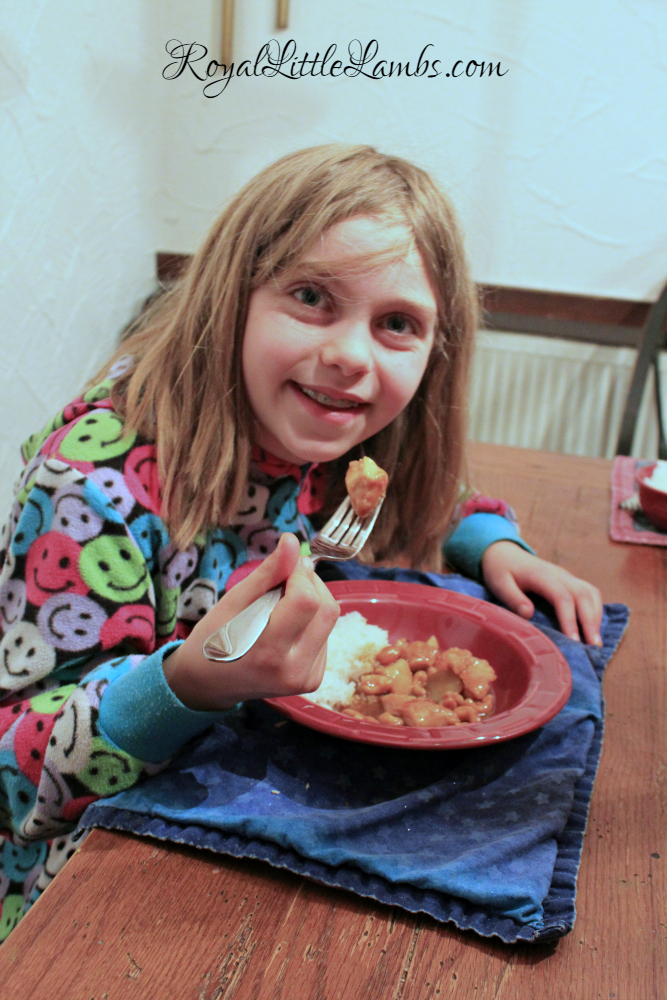
We always have happy kids on Cashew Chicken night!

Cashew Chicken for Dinner
Print

Cashew Chicken

Course Main Dish
Cuisine Asian
Prep Time 20 minutes
Cook Time 20 minutes
Total Time 40 minutes
Servings 6

Ingredients

  • 4-6 chicken breasts or thighs boneless skinless
  • 1 c vegetables water chestnuts, onions, bell peppers, mushrooms, etc.
  • 2-3 T peanut or coconut oil
  • 1/2 c cashews

Marinade

  • 2 T soy sauce
  • 2 T sesame oil
  • 2 T cornstarch
  • 1 T sugar

Sauce

  • 1 T cornstarch
  • 1.5 c chicken stock
  • 2 T hoisin sauce

Instructions

  1. Slice chicken into bite-sized pieces.
  2. Roll chicken pieces in cornstarch. Marinate in soy sauce, sesame oil, and sugar.
  3. While chicken is marinating, chop veggies and prep rice. Mix sauce in a small bowl or measuring cup. Set aside.
  4. Stir fry chicken in small batches in wok or large skillet. Drain in colander or on paper towels.
  5. Stir fry or steam veggies.
  6. Return chicken to pan and pour in sauce. It should thicken quickly. Add veggies to saucy pan if desired. Sprinkle cashews over top. Garnish with cilantro if desired.
  7. Serve over jasmine rice.

Other Kids in the Kitchen recipes:

Raspberry White Frozen Hot Chocolate – Cooking with Kids | The Gifted Gabber

Super-Healthy and Super-Yummy Strawberry Pineapple Smoothie | Living Montessori Now

Linking up: LouLou Girls, Modest Mom, Strangers & Pilgrims on Earth, Tell Me a True Story, What Joy is Mine, Pat and Candy, VMG206, Oh My Heartsie Girl, Southern Beauty Guide, Classical Homemaking, Holly Barrett, Holley Gerth, Live Laugh Rowe,  Feeding Big, Creative K Kids, Life Beyond the Kitchen, Sincerely Paula, Create with Joy, Happy and Blessed Home, Juggling Real Food and Real Life, Sugar Spice and Family Life, Being a Wordsmith, Strawberry Butterscotch, Saving 4 Six, Kids Activities Blog,
Share
Pin5
Share
5 Shares
You might also like:

Filed Under: Recipes Tagged With: chicken, dinner, recipe

Victuals Book Review

This blog may contain affiliate links: disclosure.
Please see my suggested resources.

December 21, 2016 By Jennifer Lambert Leave a Comment

The kids and I just love Victuals: An Appalachian Journey, with Recipes by Ronni Lundy.

My Review:

Victuals is a photographic wonder, a delightful story about the history and current artists of Appalachian cookery. The recipes are rich and filling, full of seasonal and regional ingredients.

The heritage of Germans and Scots dot the North Georgia mountains where we would often take day trips or mini vacations. It was always fun to visit the bakeries and shops.

I grew up south of Atlanta, and most of my mother’s family are spread all over the valleys and plains of Georgia and the Carolinas. I can’t rightly claim this as my heritage, but many of the recipes are the same as what I grew up with in my grandmother’s and great aunt’s houses.

My girls especially loved the history and stories of the recipes. We now have names for some of our favorites that I make often: killed greens for fresh lettuces drizzled with seasoned bacon grease. Sallet (sautéed mixed greens) graces our table almost weekly. We all love Salmon Cakes.

We have some fun new recipe to try: Miner’s Goulash, Root & Sausage Pie, and some delectable desserts.

Some of the ingredients listed aren’t available where we currently live. Some ingredients are seasonal and regional. I’d love to visit some of the restaurants and shops listed in the book.

American cuisine is sometimes ridiculed by foodies, but there is a rich food culture in Appalachia that I am proud to call close to home.

About the Author:

Born in Corbin, Kentucky, Ronni Lundy has long chronicled the people of the hillbilly diaspora as a journalist and cookbook author. She is the former restaurant reviewer and music critic for The Courier-Journal in Louisville, former editor of Louisville Magazine, and has contributed to many national magazines. Her book Shuck Beans, Stack Cakes and Honest Fried Chicken was recognized by Gourmet magazine as one of six essential books on Southern cooking. In 2009, Lundy received the Southern Foodways Alliance Craig Claiborne Lifetime Achievement Award. She has contributed to Eating Well, Gourmet, Bon Appétit, Esquire, and other magazines.

Summary:

Victuals is an exploration of the foodways, people, and places of Appalachia. Written by Ronni Lundy, regarded as the most engaging authority on the region, the book guides us through the surprisingly diverse history–and vibrant present–of food in the Mountain South.

Victuals explores the diverse and complex food scene of the Mountain South through recipes, stories, traditions, and innovations. Each chapter explores a specific defining food or tradition of the region–such as salt, beans, corn (and corn liquor). The essays introduce readers to their rich histories and the farmers, curers, hunters, and chefs who define the region’s contemporary landscape. Sitting at a diverse intersection of cuisines, Appalachia offers a wide range of ingredients and products that can be transformed using traditional methods and contemporary applications. Through 80 recipes and stories gathered on her travels in the region, Lundy shares dishes that distill the story and flavors of the Mountain South.

Awards:

— Atlanta Journal-Constitution: Best Cookbooks of 2016
— Chicago Tribune: Best Cookbooks of 2016
— Cooking Light: Fall Cookbook Roundup, September issue
— Louisville Courier-Journal: Cookbook Gift Guide
— San Fransisco Chronicle: “Best of” Cookbook Roundup
— The Kitchn: Holiday Cookbook Roundup
— Tampa Bay Times: Cookbook Gift Guide
— Tasting Table: The Most Exciting New Cookbooks for Fall
— Tasting Table: Holiday Cookbook Gift Guide
— Wall Street Journal: Holiday Gift Guide: Food Books
— Washington Post: Best Cookbooks of 2016

I received this book from Blogging for Books for this review.

Share
Pin
Share
0 Shares
You might also like:

Filed Under: Book Reviews Tagged With: book review

Books about Siblings

This blog may contain affiliate links: disclosure.
Please see my suggested resources.

December 6, 2016 By Jennifer Lambert 8 Comments

I love using great books to teach my children about positive relationships.
We love to read and these books represent siblings with amazing adventures, struggles, yet loving relationships.

It’s important to me that my four children grow up to love and respect each other.

I am diligent about cultivating great relationships among my four children.

I am saddened by many other families and how their kids don’t even seem to like each other. The parents seem amused and resigned to the sibling rivalry, fighting, bickering, and other negativity. A lot of popular media perpetuates this stereotype that siblings don’t get along.

My parents didn’t have great relationships with their siblings. My husband has little interaction with his two sisters. I’m an only child and I refuse to give in to stereotypes.

Books about Siblings

I have a vision for my children when they are grown and love to be around each other, friends for life.

My 30+ books and series about brothers, sisters, siblings, and family relationships:

The Boxcar Children by Gertrude Chandler Warner

The Aldens begin their adventure by making a home in a boxcar. Their goal is to stay together, and in the process they find a grandfather.

You’re All My Favourites  by Sam McBratney

Mummy and Daddy Bear reassure their three little bears that each is equally special. But the little bears start to wonder: do their differences mean one is loved less? After some love and affection, the bears are satisfied that they really are all their parents’ favourites!

Sisters by Raina Telgemeier

Raina can’t wait to be a big sister. But once Amara is born, things aren’t quite how she expected them to be. Amara is cute, but she’s also a cranky, grouchy baby, and mostly prefers to play by herself. Their relationship doesn’t improve much over the years, but when a baby brother enters the picture and later, something doesn’t seem right between their parents, they realize they must figure out how to get along. They are sisters, after all.

A Wrinkle in Time Quintet by Madeleine L’Engle

It was a dark and stormy night; Meg Murry, her small brother Charles Wallace, and her mother had come down to the kitchen for a midnight snack when they were upset by the arrival of a most disturbing stranger.

“Wild nights are my glory,” the unearthly stranger told them. “I just got caught in a downdraft and blown off course. Let me sit down for a moment, and then I’ll be on my way. Speaking of ways, by the way, there is such a thing as a tesseract.”

The Chronicles of Narnia by CS Lewis

Fantastic creatures, heroic deeds, epic battles in the war between good and evil, and unforgettable adventures come together in this world where magic meets reality.

Swallows and Amazons Series by Arthur Ransome

The first title in Arthur Ransome’s classic series, originally published in 1930: for children, for grownups, for anyone captivated by the world of adventure and imagination. Swallows and Amazons introduces the lovable Walker family, the camp on Wild Cat island, the able-bodied catboat Swallow, and the two intrepid Amazons, Nancy and Peggy Blackett.

The Penderwicks Series by Jeanne Birdsall

This summer the Penderwick sisters have a wonderful surprise: a holiday on the grounds of a beautiful estate called Arundel. Soon they are busy discovering the summertime magic of Arundel’s sprawling gardens, treasure-filled attic, tame rabbits, and the cook who makes the best gingerbread in Massachusetts. But the best discovery of all is Jeffrey Tifton, son of Arundel’s owner, who quickly proves to be the perfect companion for their adventures.

The icy-hearted Mrs. Tifton is not as pleased with the Penderwicks as Jeffrey is, though, and warns the new friends to stay out of trouble. Which, of course, they will—won’t they? One thing’s for sure: it will be a summer the Penderwicks will never forget.

Deliciously nostalgic and quaintly witty, this is a story as breezy and carefree as a summer day.

Five Children and It by E. Nesbit

When Cyril, Anthea, Robert, Jane and their baby brother go digging in the gravel pit, the last thing they expect to find is a Psammead – an ancient Sand-fairy! Having a Sand-fairy for a pet means having one wish granted each day. But the children don’t realize all the trouble wishes can cause…

The Railway Children by Edith Nesbit

When Father goes away with two strangers one evening, the lives of Roberta, Peter and Phyllis are shattered. They and their mother have to move from their comfortable London home to go and live in a simple country cottage, where Mother writes books to make ends meet. However, they soon come to love the railway that runs near their cottage, and they make a habit of waving to the Old Gentleman who rides on it. They befriend the porter, Perks, and through him learn railway lore and much else. They have many adventures, and when they save a train from disaster, they are helped by the Old Gentleman to solve the mystery of their father’s disappearance.

Ramona Series by Beverly Cleary

Kids everywhere feel connected to Ramona’s unique way of looking at the world as she tries to adjust to new teachers, feels jealous about Susan’s curls, and is secretly pleased by Yard Ape’s teasing. The scrapes she gets herself into—like wearing pajamas to school or accidentally making egg yolk shampoo—are funny and heartwarming, and sometimes embarrassing. No matter what—Ramona’s lively, curious spirit shines through.

Little Women by Louisa May Alcott

Lovely Meg, talented Jo, frail Beth, spoiled Amy: these are hard lessons of poverty and of growing up in New England during the Civil War. Through their dreams, plays, pranks, letters, illnesses, and courtships, women of all ages have become a part of this remarkable family and have felt the deep sadness when Meg leaves the circle of sisters to be married at the end of Part I. Part II, chronicles Meg’s joys and mishaps as a young wife and mother, Jo’s struggle to become a writer, Beth’s tragedy, and Amy’s artistic pursuits and unexpected romance.

Little House on the Prairie Series by Laura Ingalls Wilder

Set during the pioneer days of the late 1800s and early 1900s, Laura Ingalls Wilder’s books chronicle her life growing up on the Western frontier. Come along for the adventure with this collector’s set of the first five Little House books, featuring Garth Williams’ interior art in vibrant full color.

The Little House books have been cherished by generations of readers as both a unique glimpse into America’s frontier history and a heartwarming, unforgettable story.

The story begins in 1871 in a little log cabin on the edge of the Big Woods of Wisconsin. Laura lives in the little house with her Pa, her Ma, her sisters Mary and Carrie, and their trusty dog, Jack. Pioneer life is sometimes hard for the family, since they must grow or catch all their own food as they get ready for the cold winter. But it is also exciting as Laura and her family celebrate Christmas with homemade toys and treats, do the spring planting, bring in the harvest, and make their first trip into town. And every night they are safe and warm in their little house, with the happy sound of Pa’s fiddle sending Laura and her sisters off to sleep.

My Neighbor Totoro by Tsugiko Kubo

Eleven-year-old Satsuki and her sassy little sister Mei have moved to the country to be closer to their ailing mother. While their father is working, the girls explore their sprawling old house and the forest and fields that surround it. Soon, Satsuki and Mei discover Totoro, a magical forest spirit who takes them on fantastic adventures through the trees and the clouds–and teaches them a lesson about trusting one another.

The House on Mango Street by Sandra Cisneros

The remarkable story of Esperanza Cordero. Told in a series of vignettes – sometimes heartbreaking, sometimes deeply joyous – it is the story of a young Latina girl growing up in Chicago, inventing for herself who and what she will become.

Roll of Thunder, Hear My Cry by Mildred D. Taylor

Set in Mississippi at the height of the Depression, this is the story of one family’s struggle to maintain their integrity, pride, and independence in the face of racism and social injustice. And it is also Cassie’s story—Cassie Logan, an independent girl who discovers over the course of an important year why having land of their own is so crucial to the Logan family, even as she learns to draw strength from her own sense of dignity and self-respect.

The Tillerman Cycle by Cynthia Voigt

“It’s still true.” That’s the first thing James Tillerman says to his older sister, Dicey, every morning. It’s still true that their mother has abandoned the four Tillermans in a mall parking lot somewhere in the middle of Connecticut. It’s still true that they have to find their own way to Great-aunt Cilla’s house in Bridgeport. It’s still true that they need to spend as little as possible on food and seek shelter anywhere that is out of view of the authorities. It’s still true that the only way they can hope to all stay together is to just keep moving forward.

Deep down, Dicey hopes they can find someone to trust, someone who will take them in and love them. But she’s afraid it’s just too much to hope for…

So Far From the Bamboo Grove by Yoko Kawashima Watkins

In the final days of World War II, Koreans were determined to take back control of their country from the Japanese and end the suffering caused by the Japanese occupation. As an eleven-year-old girl living with her Japanese family in northern Korea, Yoko is suddenly fleeing for her life with her mother and older sister, Ko, trying to escape to Japan, a country Yoko hardly knows.

Their journey is terrifying—and remarkable. It’s a true story of courage and survival that highlights the plight of individual people in wartime. In the midst of suffering, acts of kindness, as exemplified by a family of Koreans who risk their own lives to help Yoko’s brother, are inspiring reminders of the strength and resilience of the human spirit.

Journey To Topaz: A Story Of The Japanese-American Evacuation by Yoshiko Uchida

Based on Yoshiko Uchida’s personal experiences, this is the moving story of one girl’s struggle to remain brave during the Japanese internment of World War II. In a bleak and dusty prison camp, eleven-year-old Yuki and her family experience both true friendship and heart-wrenching tragedy.

A Tree Grows in Brooklyn by Betty Smith

The American classic about a young girl’s coming-of-age at the turn of the century.

Morning Girl by Michael Dorris

A tale based on an entry in the diary of Christopher Columbus that tells of a native family living in a vibrant community striving to coexist with the natural world.

Sarah, Plain and Tall by Patricia McLachlan

This book gently explores themes of abandonment, loss, and love. The 30th Anniversary edition includes author Patricia MacLachlan’s Newbery speech, a discussion guide, and a reading list.

Set in the late nineteenth century and told from young Anna’s point of view, Sarah, Plain and Tall tells the story of how Sarah Elisabeth Wheaton comes from Maine to the prairie to answer Papa’s advertisement for a wife and mother. Before Sarah arrives, Anna and her younger brother, Caleb, wait and wonder. Will Sarah be nice? Will she sing? Will she stay?

Peter Pan by JM Barrie

A mischievous boy who can fly and never grows up, Peter Pan spends his never-ending childhood adventuring on the small island of Neverland as the leader of his gang, the Lost Boys, interacting with mermaids, Native Americans, fairies, pirates, and occasionally ordinary children from the world outside of Neverland.

Wonder Series by R. J. Palacio

I won’t describe what I look like. Whatever you’re thinking, it’s probably worse.

August Pullman was born with a facial difference that, up until now, has prevented him from going to a mainstream school. Starting 5th grade at Beecher Prep, he wants nothing more than to be treated as an ordinary kid—but his new classmates can’t get past Auggie’s extraordinary face. WONDER begins from Auggie’s point of view, but soon switches to include his classmates, his sister, her boyfriend, and others. These perspectives converge in a portrait of one community’s struggle with empathy, compassion, and acceptance.

The Hunger Games Series by Suzanne Collins

In the ruins of a place once known as North America lies the nation of Panem, a shining Capitol surrounded by twelve outlying districts. Long ago the districts waged war on the Capitol and were defeated. As part of the surrender terms, each district agreed to send one boy and one girl to appear in an annual televised event called, “The Hunger Games,” a fight to the death on live TV. Sixteen-year-old Katniss Everdeen, who lives alone with her mother and younger sister, regards it as a death sentence when she is forced to represent her district in the Games. The terrain, rules, and level of audience participation may change but one thing is constant: kill or be killed.

The Spiderwick Chronicles by Holly Black and Tony DiTerlizzi

It all started with a mysterious letter left at a tiny bookstore for authors Tony DiTerlizzi and Holly Black. Its closing lines: “We just want people to know about this. The stuff that has happened to us could happen to anyone.” Little could they imagine the remarkable adventure that awaited them as they followed Jared, Simon, and Mallory Grace and a strange old book into a world filled with elves, goblins, dwarves, trolls, and a fantastical menagerie of other creatures. The oddest part is in entering that world, they didn’t leave this one!

And the Mountains Echoed by Khaled Hosseini

In this tale revolving around not just parents and children but brothers and sisters, cousins and caretakers, Hosseini explores the many ways in which families nurture, wound, betray, honor, and sacrifice for one another; and how often we are surprised by the actions of those closest to us, at the times that matter most. Following its characters and the ramifications of their lives and choices and loves around the globe—from Kabul to Paris to San Francisco to the Greek island of Tinos—the story expands gradually outward, becoming more emotionally complex and powerful with each turning page.


What’s your favorite book about siblings?

Do you have a good relationship with your siblings?

You might also like:

  • Creating a Healthy Family Culture
  • If I Had a Sibling
  • Should I Label My Children?
  • The Whole-Brain Child: 12 Revolutionary Strategies to Nurture Your Child’s Developing Mind by Daniel J. Siegel and Tina Payne Bryson 
  • Jesus, the Gentle Parent: Gentle Christian Parenting by L.R. Knost
  • Peaceful Parent, Happy Siblings: How to Stop the Fighting and Raise Friends for Life by Dr. Laura Markham 
  • Peaceful Parent, Happy Kids: How to Stop Yelling and Start Connecting by Dr. Laura Markham 
  • Siblings Without Rivalry: How to Help Your Children Live Together So You Can Live Too by Adele Faber and Elaine Mazlish
Share
Pin22
Share
22 Shares
You might also like:

Filed Under: Family Tagged With: book list, reading, siblings

  • « Previous Page
  • 1
  • …
  • 54
  • 55
  • 56
  • 57
  • 58
  • …
  • 137
  • Next Page »
Suggested ResourcesReceipt HogNotebookingPages.com LIFETIME Membership

Archives

Popular Posts

10 DIY Gifts with Essential Oils10 DIY Gifts with Essential Oils
Natural Remedies for HeadacheNatural Remedies for Headache
10 Natural Remedies to Keep on Hand10 Natural Remedies to Keep on Hand
Henna Hands CraftHenna Hands Craft
Homemade Turkey Divan CasseroleHomemade Turkey Divan Casserole
This website uses cookies to improve your experience. We'll assume you're ok with this, but you can opt-out if you wish.Accept Reject Read More
Privacy & Cookies Policy

Privacy Overview

This website uses cookies to improve your experience while you navigate through the website. Out of these, the cookies that are categorized as necessary are stored on your browser as they are essential for the working of basic functionalities of the website. We also use third-party cookies that help us analyze and understand how you use this website. These cookies will be stored in your browser only with your consent. You also have the option to opt-out of these cookies. But opting out of some of these cookies may affect your browsing experience.
Necessary
Always Enabled
Necessary cookies are absolutely essential for the website to function properly. This category only includes cookies that ensures basic functionalities and security features of the website. These cookies do not store any personal information.
Non-necessary
Any cookies that may not be particularly necessary for the website to function and is used specifically to collect user personal data via analytics, ads, other embedded contents are termed as non-necessary cookies. It is mandatory to procure user consent prior to running these cookies on your website.
SAVE & ACCEPT