Jennifer Lambert

A Sacred Balance

Visit Us On FacebookVisit Us On PinterestVisit Us On InstagramVisit Us On Linkedin
  • Homeschool
    • Book Lists
    • How Do We Do That?
    • Notebooking
    • Subjects and Styles
    • Unit Studies
  • Travel
    • Europe
      • Benelux
      • France
      • Germany
      • Greece
      • Ireland
      • Italy
      • London
      • Porto
      • Prague
    • USA
      • Chicago
      • Georgia
      • Hawaii
      • Ohio
      • Utah
      • Yellowstone and Teton
  • Family
    • Celebrations
    • Frugal
  • Military Life
    • Deployment
    • PCS
  • Health
    • Recipes
    • Essential Oils
    • Fitness
    • Mental Health
    • Natural Living
    • Natural Beauty
  • Faith
  • About Me
    • Favorite Resources
    • Advertising and Sponsorship
    • Policies
  • Reviews

© 2025Jennifer Lambert · Copyright · Disclosure · Privacy · Ad

The Lyons Lifestyle Book Review

This blog may contain affiliate links: disclosure.
Please see my suggested resources.

March 20, 2017 By Jennifer Lambert Leave a Comment

The Lyons Lifestyle: The Seven Hardest (and Easiest) Steps to a Healthy Body by M. Frank Lyons II, M.D., published by WestBow Press, is a comprehensive book on how to change our lifestyles for better health.

My Review:

Everything in this book confirms what I’ve been diligently working for with my family. We strive to eat healthy and live without medication. I read and research and learn about the best methods. I have worried about the discrepancy that the American government and organizations teach about diet and health for many years. Living in Europe the past three years has been a delightful break from the poor quality foodstuffs of America.

Almost everyone I know has a medical problem and I’ve often wondered why. Most don’t have any desire to change their lifestyle. They don’t realize that their poor health is a direct result of the poor foods and combinations they eat. They’d rather have a quick fix of pills and it’s a vicious cycle. I even question doctors if they have anything to say about thyroid disorders and other issues that seem to prevalent in our society but were not so common in previous generations. They are bland and say they don’t know.

Supplements and prescription medicines are not the answer. All these bloggers recommend their MLM dietary products and essential oils as a miracle for any ailment. But it often makes problems worse.

Some of the articles and books I’ve read have very conflicting information.

If it ain’t broke…

There’s no reason to take pills if you eat right. The American diet is a lie.

Multivitamins are not necessary.

The body usually cannot absorb so many vitamins and minerals and many contradict each other and cancel out or they aren’t in the right form. Overdosing on some vitamins can cause problems. Others are just eliminated as body waste. They’re mostly just a waste of money.

Supplements are not usually necessary.

Playing with hormones should be left to the professionals.

Excess DHEA can cause acne.

A recommended supplement for women has all sorts of herbs and minerals, enzymes and oils. My periods got heavier after I experimented with it. There’s no way of knowing if I had a reaction to one or all of them.

My thyroid is fine. I don’t have any history of thyroid problems in my family. We eat pretty healthy. I’ve read that I should eat Brazil nuts every day and take a thyroid supplement to stave off metabolism slowdown. It just causes severe stomach cramps if nothing is wrong!

I stopped taking all the supplements and my period is lighter, my acne cleared up, and I feel fine.

Probiotics are not for everyone.

So many bloggers and authors are huge into gut health. They spout special diets, cleanses, and probiotics consumption. They say the gut is connected to mental health and everything stems from the gut bacteria. But there aren’t really any definitive studies about this.

But I think my gut is pretty ok.

Probiotics (probably) made me break out in severe acne that would not go away with anything topical or dietary. And now my digestion is back to being regular.

What I do for my health:

I’ve been lazy and much too sedentary this past year. I’m only maybe 15 pounds overweight, but it’s very obvious on my small frame. It’s all settled on my middle, butt, and thighs – so I look pregnant. To slim down, I’m walking and getting outside more and watching my sugar intake.

We take cod liver oil. We eat a pretty balanced diet. We’re researching different grains that are healthier options than traditional American wheat.

This is a great book to learn about why we have health problems when we think we’re doing everything right.

Book Summary:

We have seen an explosive deterioration of America’s health in the past 50 years. 70 million people suffer from metabolic syndrome, 700,000 individuals die annually from heart disease, untold numbers are affected by cancers. We have seen an epidemic of esophageal reflux, fatty liver disease, gout, kidney failure, autoimmune disorders, inflammatory diseases and vitamin D deficiency. Why? One of the primary reasons for our failing health is our nutrition. We have been following guidelines that are deeply flawed and now nearly all of us is affected by one or several of these maladies. This book enlightens you about those flaws and the remedies for you to correct them. True health care reform starts with your own nutritional health and this book guides you through the steps needed to improve your nutritional health and perhaps even reverse some disease processes presently affecting you.

About the Author:

M. Frank Lyons II, M.D., a practicing gastroenterologist in Tacoma, Washington, has been a clinical researcher, writer, and teacher for over a quarter of a century. A Fellow of the American College of Gastroenterology and the American College of Physicians, he has answered many clinical questions through his scientific investigations. His medical research has included hepatitis C, esophageal diseases, Helicobacter pylori infections, and intestinal cancer prevention. He has received several teaching, research and clinical awards, and has authored chapters of textbooks, scientific papers and abstracts.

Dr. Lyons obtained his B.S. and M.S. degrees in microbiology from the University of Idaho. He then received his Doctorate in Medicine from the Uniformed Services University of the Health Sciences in Bethesda, Maryland. He completed his Internal Medicine residency at Madigan Army Medical Center in Tacoma, Washington and Gastroenterology at Walter Reed Army Medical Center in Washington, DC. He is board certified in Internal Medicine and Gastroenterology.

His desire to teach his patients about their medical conditions led to the research and writing of two recent books: 42 Days to a New Life—a book that describes the importance of a balanced fat diet and the elimination of trans fats to prevent numerous diseases; and Fructose Exposed—the book that explores and clarifies the misunderstanding surrounding fructose, high fructose corn syrup and the metabolic disaster that occurs in our body from chronic, excess fructose consumption.

Share
Pin1
Share
1 Shares
You might also like:

Filed Under: Book Reviews Tagged With: book review, health

My Top 40

This blog may contain affiliate links: disclosure.
Please see my suggested resources.

March 16, 2017 By Jennifer Lambert 14 Comments

I turned 42 on Sunday.

Sometimes, it hits me and I’m shocked because I don’t feel 42. I’m not sure what 42 is supposed to feel like.

I often still feel the same way I felt at 15 and 21 and 29 and 32. I have the same dreams and fears.

We live in such a casual time that it doesn’t matter what I wear, how I style my hair, or which fork I use.

During my mom’s generation, women over a certain age didn’t wear the color pink or their hair long. That was for younger women.

Sometimes, when I go out with my teen daughter, people mistake us for sisters and that’s delightful.

Other times, I feel very old and persnickety. My knees crackle when I stand up. My back hurts when I stand for a long time.

I’m past the desire to get tattoos or piercings. I’d rather spend my money on other things – experiences.

Sometimes, I feel panicky that I haven’t accomplished anything important. My time is too short and I have to hurry and do something, anything, quickly, write write write, create create create.

Then, I feel overwhelmed and it’s been all done before. I have nothing to offer. Do I?

I usually lie in bed at night and listen to the night sounds and make myself ill about what I should have done or could do better.

Then I think about all the things I have done and I’m able to breathe a little easier for another night.

I’m accepting that I’m an INTJ and a 1/5 combo on Enneagram. This is who I am and I constantly improve and grow.

I had some amazing experiences that shaped me into who I am today. When I look back on what means the most to me, my priorities are clear.

My top 40:

  1. I flew alone to Washington, D.C., when I was 9, to visit my grandma. It was a fun week.
  2. My parents took me to Puerto Rico when I was 14. It was a business trip for my dad. I missed a week of school, excused for “educational purposes.”
  3. My intro to art class in 10th grade. The teacher was quite a bitch, but I still remember the projects and techniques I learned. It ruined me but I’m rediscovering it.
  4. Entering college early. Dual enrollment was a new concept and my high school wasn’t too keen, so I just bypassed them. I got a double scholarship.
  5. “Wasting time” on college classes in Spanish, French, and German. The lessons I learned serve me well now in Europe and teaching my kids foreign languages!
  6. My college classes on art history and music theory still affect me today. Those professors were passionate and delightful.
  7. Overcoming depression. It’s a daily battle.
  8. Getting my Master’s in education. It was a joke of a program, but I jumped through those hoops and have the paper to prove it.
  9. Teaching in public school. I learned so much about kids, parents, learning, government school systems, bureaucracy, and more. I’ve taught at many levels, mostly middle school and high school, including ESL and gifted. I worked in elementary after school programs. I was also a substitute teacher in many different kinds of classrooms.
  10. The birth of my first daughter.
  11. Teaching college writing. Almost my dream job.
  12. Getting married. (The first two don’t count…) Surviving PCSes and a deployment. Deployment #2 coming up.
  13. Moving to Texas. This was a quite a catalyst for change. I couldn’t find work. We began homeschooling. It was the first time I ever lived away from my parents and home state. My husband’s parents both passed away. My husband changed job fields in order to remain in the Air Force. I birthed two babies. It was a stressful two years.
  14. Homeschooling. It’s been an amazing adventure!
  15. Starting a blog. It sure has evolved since 2005!
  16. The birth of my second daughter.
  17. The birth of my third daughter. A C-section is not a failure. I’m still telling myself this. Medical bullying and trauma is a thing though.
  18. Living in Hawaii for 3 years.
  19. My husband adopting my first daughter.
  20. Changing our lifestyle to be healthier and more natural.
  21. The birth of my son. VBAC, for the win!
  22. Stopped attending a legalistic fundamentalist church. Wish we’d left sooner!
  23. Introducing my husband and kids to camping.
  24. Family road trip to Yellowstone National Park.
  25. Living in Germany for 3 years. Being able to explore Europe!
  26. Traveling to Paris. Twice.
  27. Traveling to Prague.
  28. Traveling to Netherlands.
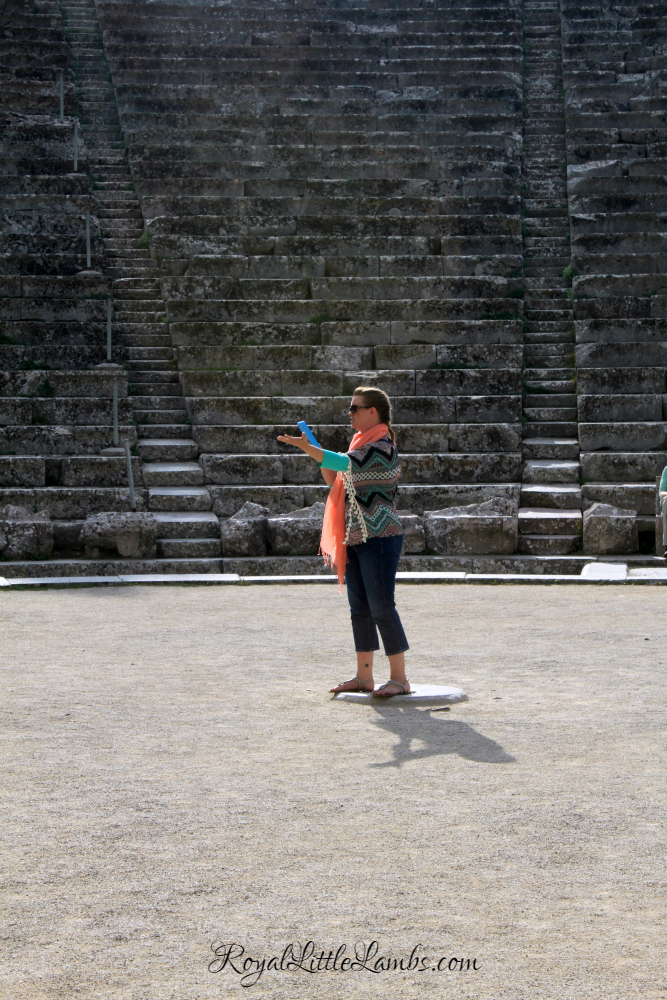
  29. Traveling to Greece.
  30. Traveling to London. Twice.
  31. Traveling to Porto.
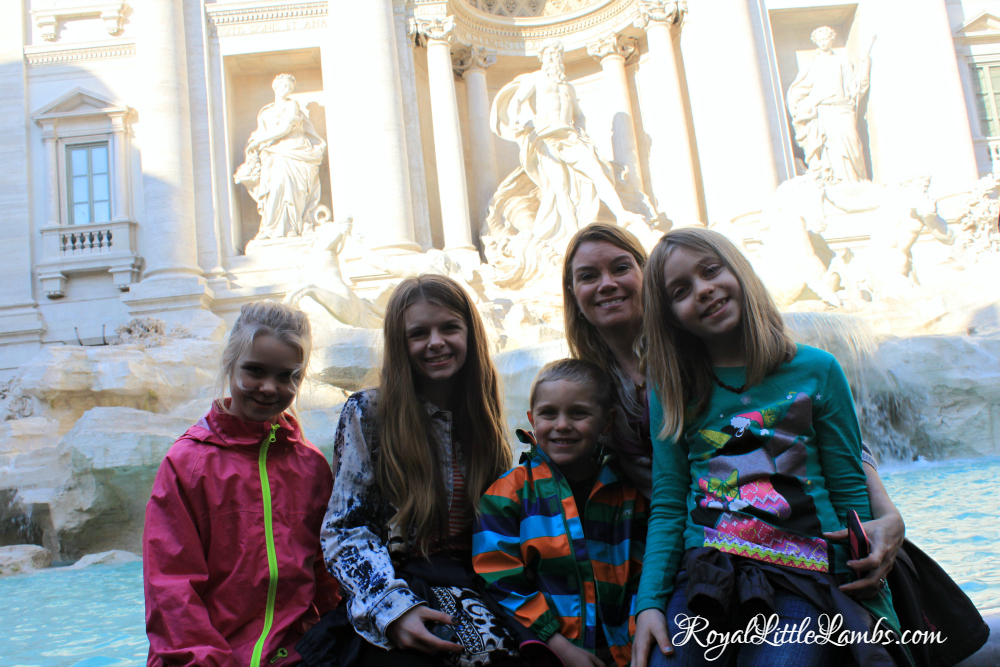
  32. Traveling to Rome.
  33. Traveling to Ireland.
  34. Traveling to Normandy, France.
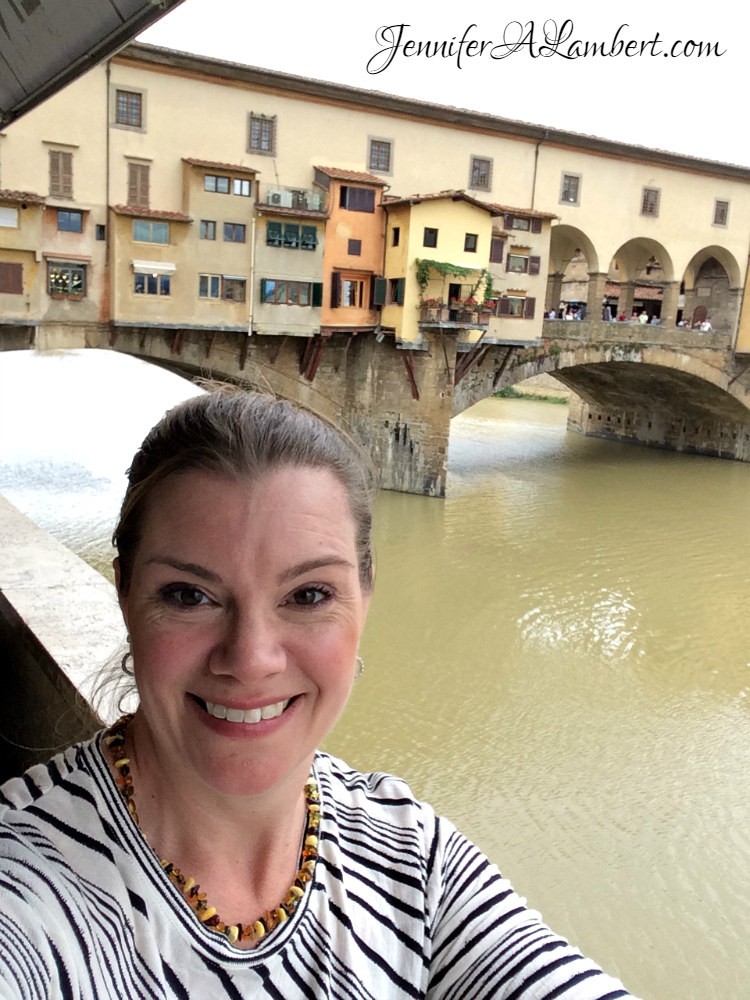
  35. Traveling to Florence.
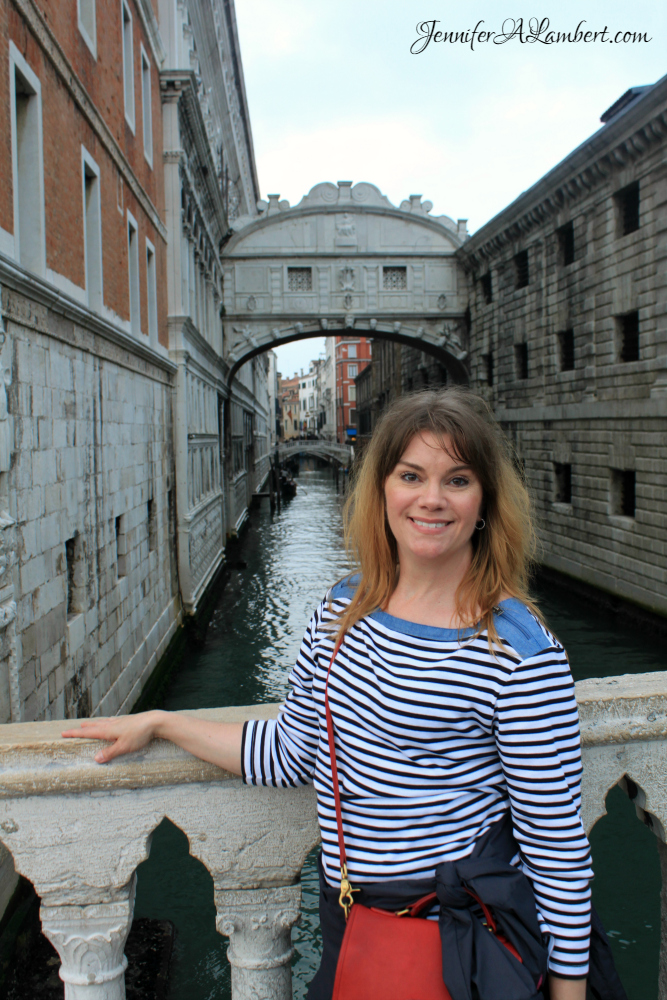
  36. Traveling to Venice.
  37. Deciding to practice respectful parenting.
  38. Becoming credit card debt-free. We’re almost there!
  39. Doing Bible study at home instead of attending church.
  40. I have found my voice. I am still angry. I am not afraid.

I can do so much more now that I’m 42 than when I was in my 20’s.

I am more confident. I have more life experience. I am more discerning. I have my priorities straight.


Share
Pin16
Share
16 Shares
You might also like:

Filed Under: Writing Tagged With: growth

How to Write an Essay

This blog may contain affiliate links: disclosure.
Please see my suggested resources.

March 8, 2017 By Jennifer Lambert 13 Comments

When I entered university, I didn’t know how to write the typical 5-paragraph essay.

I vaguely remembered writing a literary research paper in 9th and again in 10th grade, with much hand-holding from the teacher, but I had a substitute teacher for my 11th and 12th grade years, so I basically sat in the back corner, by the window, and read poetry and classic novels. I started college early to escape.

In my second year or college, my Shakespeare professor kindly took me under his wing and tutored me in the essay format and I then took off with it, easily earning A’s in all my English courses.

I majored in literature, which was kind of a cop out and didn’t enable me to explore too many career options. I entered a 15-month master’s program to earn my M.Ed. and then I taught high school English for a few years. I moved on to teach college writing until we moved out of state and I had my babies.

Now I homeschool my four children. I don’t encourage formal writing until my kids are high school age. I don’t place a huge focus on typical English education. We read a lot and have lively discussions.

Essays are a bit more than a series of paragraphs thrown together. I explain the necessary parts of a well-written paragraph here.

Types of essays:

  • Expository essays
  • Descriptive essays
  • Narrative essays
  • Argumentative (Persuasive) essays

Most college essays require research and source citations. Different disciplines require different styles. I typically used MLA since I worked with literature. I love how easy these websites make generating source citations!

Citation Styles:

  • MLA
  • APA
  • Chicago

How to write an essay:

When I taught writing as a school teacher, I used to begin by pulling out an adorable copy of The Three Little Pigs and reading it aloud to the class.

Middle school, high school, college level. The students loved it and giggled, excited to be swept back to preschool storytime days.

It’s a well-known story, familiar and comfortable, so it takes the scary out of essay-writing when it’s so simplified.

After reading the book, I wrote on the board the outline format of the story.

The Three Little Pigs is a perfect 5-paragraph essay!

I. Introduction
II. Straw Pig
III. Stick Pig
IV. Brick Pig
V. Conclusion

Then, we would summarize the story together and I would jot down details on the outline.

Download a worksheet for summarizing The Three Little Pigs here.

Since I had to give grades and busy work to students in middle school and high school, I would assign them to quickly write up the summary in 5-paragraph format.

Then, we would segue into writing 5-paragraph essays on a variety of topics, working up to the dreaded literary analysis essay with citations and sources and references.

I like this handy dandy visual:

Review the format of a 5-paragraph essay:

  1. Determine a thesis.
    This is a statement that serves as the premise to be maintained or proved throughout the essay.
    When I teach essay writing to new writers, I make the formula easy: State the argument including the 3 supporting statements. Place the thesis at the end of the introduction paragraph.
  2. At least 3 supporting statements.
    These three statements become the three body paragraphs. I typically require a resource quote for each paragraph.
  3. Introduction paragraph.
    The introductory paragraph attempts to accomplish these three things:
    • Introduce the topic with some indication of its inherent interest or importance, and a clear definition of the boundaries of the subject area
    • Indicate the structure and/or methodology of the essay, often with the major sections of the essay or its structural principle clearly stated
    • State the thesis of the essay, preferably in a single, arguable statement with a clear main clause
  4. Conclusion paragraph.
    A conclusion paragraph attempts to accomplish these three things:
    • It provides the reader with a sense of closure on the topic
    • It demonstrates to the reader that you accomplished what you set out to do
    • It shows how you have proved your thesis
  5. Works Cited page.
    This is a formatted list of research sources on a separate page after the essay. Many teachers and professors are very particular about spacing and punctuation.

Thesis Examples:

The three little pigs thwarted the big, bad wolf.
Albrecht Durer as a Reformation artist utilized color, symbolism, and secular subjects in his art to express the Protestant values of his peers.
Alice Walker coined the term “Womanism” to unify strong women of color, give them a voice, and differentiate from the more white Feminist ideals.

Tips:

Eliminate “to be” verbs. In data processing programs, search for these and replace with active verbs.
Do not use “you” or “I.”
No slang.
No contractions.
Wikipedia is not a credible source.
Use 1 quote per body paragraph. Make sure to introduce it and support it. Place it in the middle of the paragraph.

Teaching and writing essays shouldn’t be frightening. It’s easy when you follow a formula.

Linking up: Life of Faith, Blogghetti, Practical Mom, The Mrs. Tee, Curly Crafty Mom, Marilyns Treats, Donna Reidland, Strangers & Pilgrims on Earth, A Fresh Start, Inspiration for Moms, Modest Mom, Proverbs 31 Wife, MaryAndering Creatively, Simple Life of a Fire Wife, Oh My Heartsie Girl, Wife Mommy Me, Christian Blogger Community, Rich Faith Rising, Holley Gerth, Teaching what is good, Pat and Candy, Wise Woman, Raising Homemakers, Jaime Wiebel, Becoming Press, Saving 4Six, Katherine’s Corner, Women with Intention, Classical Homemaking, A Bountiful Love, Feeding Big, Life Beyond the Kitchen, Creative K Kids, Oh My Heartsie Girl Friday, Sincerely Paula, Create with Joy, Life with Lorelai, Being a Wordsmith, Strawberry Butterscotch, Arabah Joy, Crystal Waddell, Counting my Blessings, Debbie Kitterman, Happy and Blessed Home, Mommynificent, A Books and More, Pams Party and Practical Tips, Arabah Joy, Hip Homeschool Moms,
Share
Pin55
Share
55 Shares
You might also like:

Filed Under: Homeschool Tagged With: homeschool, LA, writing

No More Faking Fine Book Review

This blog may contain affiliate links: disclosure.
Please see my suggested resources.

February 27, 2017 By Jennifer Lambert Leave a Comment

My review for No More Faking Fine: Ending the Pretending by Esther Fleece, published by Zondervan.

Description:

If you’ve ever been given empty clichés during challenging times, you know how painful it can feel to be misunderstood by well-meaning people. Far too often, it seems the response we get to our hurt and disappointment is to suck it up, or pray it away.

But Scripture reveals a God who meets us where we are, not where we pretend to be.

No More Faking Fine is your invitation to get gut-level honest with God through the life-giving language of lament. Lament, a practice woven throughout Scripture, is a prayer that God never ignores, never silences, and never wastes. As author Esther Fleece says, “Lament is the unexpected pathway to true intimacy with God, and with those around us.”

Esther learned this the hard way, by believing she could shut down painful emotions that haunted her from a broken past she tried to forget on her fast track to success. But in silencing her pain, she robbed herself of the opportunity to be healed. Maybe you’ve done the same.

No More Faking Fine is your permission to lament—to give voice to the hurt, frustration, and disappointment you’ve kept inside and silenced for too long. Drawing from careful biblical study and hard-won insight, Esther reveals how to use God’s own language to draw closer to Him as He leads us through any darkness into His marvelous light.

My Review:

This book was quite interesting to me.

I agree that many people, even Christians can’t handle laments. Most of us are silenced and reduced to “faking fine.” No one really wants to know anything about the negative. But everyone seems to be a counselor and offers advice that’s unwanted and unneeded.

I couldn’t relate to the author’s neverending supply of supportive friends who helped her all along the way with her issues. I found myself wanting to feel more sorry for her lack of relationship with her family, but I had some questions. She left her brother out of her story almost altogether. How did he react to events?

I couldn’t relate to the somewhat shallow craving for shopping and closets full of shoes. I don’t lament things. I’m not into prosperity gospel. And who gets to go on a long retreat to Alaska to heal? Almost none of us.

I think I was hoping for more of a workbook than a personal account. The book touches on a lot of good points about biblical laments in Psalms, Job, Lamentations. Some of the stories became repetitive and I think it could have been condensed a bit.

The book is a good commentary of realizing that many of us are not “just fine.”

About the Author:

Esther Fleece is an international speaker and writer on Millennials and faith, leadership, and family, recognized among Christianity Today’s “Top 50 Women Shaping the Church and Culture” and CNN’s “Five Women in Religion to Watch.” As founder and CEO of L&L Consulting,  she works to connect influential individuals and organizations to their mutual benefit.

Disclosure of Material Connection: I received this book free from the publisher through the BookLook Bloggers book review bloggers program. I was not required to write a positive review. The opinions I have expressed are my own. I am disclosing this in accordance with the Federal Trade Commission’s 16 CFR, Part 255 <http://www.access.gpo.gov/nara/cfr/waisidx_03/16cfr255_03.html> : “Guides Concerning the Use of Endorsements and Testimonials in Advertising.”

Share
Pin
Share
0 Shares
You might also like:

Filed Under: Book Reviews Tagged With: book review

The Pledge of a Lifetime Book Review

This blog may contain affiliate links: disclosure.
Please see my suggested resources.

February 27, 2017 By Jennifer Lambert Leave a Comment

My review for The Pledge of a Lifetime: Her hope for connection. His guide through conflict. by Mark T. Oelze, MA, published by WestBow Press.

Description:

What is it about conflict that causes all of us to shy away? Why is it so difficult? What if there was a step-by-step process to guide us through conflict and create a deeper connection at the same time? And what if the principles learned could enhance all communication?

In The Pledge of a Lifetime, follow Jake and Lisa’s story and discover how to transform tense confrontations into rich conversations. Watch family dynamics improve as everyone works together to communicate in a manner governed by love.

From his years of conflict resolving experiences, Mark Oelze leads you into the counselor’s office between the covers of this book, where you will learn the keys to process any conflict, big or small. Fear no longer has to hold you back. Work the PLEDGE to build strong healthy communication with love as your highest goal!

My Review:

I could barely get through this book. I didn’t learn anything. It didn’t save my marriage. It didn’t teach me how to better communicate. It insulted my intelligence.

I didn’t like the book format of a fictional married couple in counseling. They were flat unlikeable characters. I couldn’t relate to their trite little issues that just stereotype men and women. I was done when the husband accused the wife of talking too much.

I didn’t like the fictional counselor. I thought he seemed tired and sarcastic and exasperated with the couple and that’s just rude.

The acrostic PLEDGE just regurgitates all the psychobabble that marriage counselors have given couples for decades. It’s nothing new, just packaged cute.

The end of each chapter has a summary of the “lessons” for each letter of the PLEDGE.

I suppose this book would be ok for married couples who are just experiencing a little bit of communication conflict, but not any major issues. This is not a book for marriages in crisis.

About the Author:

Mark Oelze has been a marriage and family counselor since 1985, helping couples process conflict in a manner that is completely governed by love. Married 33 years, he and his wife, Zerrin, teach the Madly In Love Marriage Conference. They have three grown children and live in Wichita, Kansas. Knowing the power of words, Mark and Zerrin have a passion to see intentional love shape the way we communicate.

Disclosure of Material Connection: I received this book free from the publisher through the BookLook Bloggers book review bloggers program. I was not required to write a positive review. The opinions I have expressed are my own. I am disclosing this in accordance with the Federal Trade Commission’s 16 CFR, Part 255 <http://www.access.gpo.gov/nara/cfr/waisidx_03/16cfr255_03.html> : “Guides Concerning the Use of Endorsements and Testimonials in Advertising.”

Share
Pin
Share
0 Shares
You might also like:

Filed Under: Book Reviews Tagged With: book review

Teaching the Trinity

This blog may contain affiliate links: disclosure.
Please see my suggested resources.

February 27, 2017 By Jennifer Lambert 32 Comments

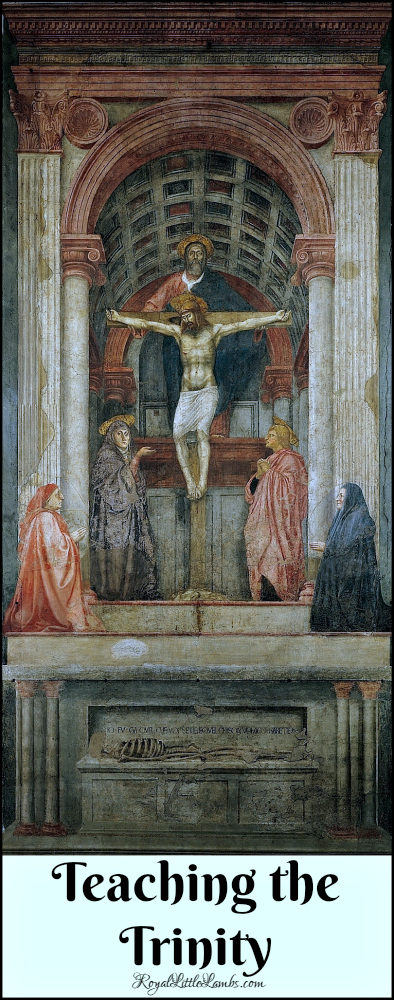
The Trinity is a mystery and teaching it to young children can be quite challenging. The Lenten season is a great time to meditate on the mystery of God and learn about the Trinity.

While the word Trinity never appears in the Bible, the idea of the three-part or triune God is all over both the Old Testament and New Testament. The Hebrew word for God, the plural form Elohim (The plural form of El, meaning “Strong One.”) appears approximately 2,570 times in the Tanakh or Old Testament writings.

As soon as Jesus was baptized, he went up out of the water. At that moment heaven was opened, and he saw the Spirit of God descending like a dove and alighting on him. And a voice from heaven said, “This is my Son, whom I love; with him I am well pleased.” Matthew 3:16-17

Other Trinity Bible verses: John 14:26, 1 John 5:7-8, John 14:16-17, 1 Corinthians 8:5-6, 1 Peter 1:2

Teaching the Trinity

I love this book about the mystery of the Trinity:

Teaching the Trinity Three Ways:

Teaching the Trinity with Shamrocks

St. Patrick’s Day is a great time to use shamrocks to teach the Trinity (even if the story of St. Patrick using it as a teaching tool is just a legend and has little evidence).

Three leaves on one stem. Each heart-shaped leaf represents an aspect of God: Father, Son, Holy Spirit. It’s a great visual!

We sing this song (to the tune of Frère Jacques):

Praise the Father. Praise the Father.

Praise the Son. Praise the Son.

Praise the Holy Spirit. Praise the Holy Spirit.

Three in one. Three in one.

Teaching the Trinity with Shamrocks

Teaching the Trinity with Apples

I love how this book guides children through the Trinity with parts of an apple.

The three parts of an apple represent the Father, Son, and Holy Spirit.

Here’s even a video of the book!

Teaching the Trinity with Apples

Teaching the Trinity with Eggs

A fun science-y way to learn about the Trinity with a hard-boiled egg. Similar to the apple: the parts of the egg represent Father, Son, and Holy Spirit.

A great Sunday school or Easter craft lesson – especially if kids don’t like to eat those pretty dyed eggs they made!

Teaching the Trinity with Eggs

BONUS:

Teach the Trinity with the three phases of water!

liquid: water, solid: ice, gas: steam or vapor.

This is also a great lesson time to teach and/or memorize the Apostles’ Creed and Nicene Creed.

A family study about the Nicene Creed:

And this one about the Apostle’s Creed:

Sing and learn hymns about the Trinity.

The Doxology:

Praise God, from Whom all blessings flow;
Praise Him, all creatures here below;
Praise Him above, ye heavenly host;
Praise Father, Son, and Holy Ghost.

Happy Spring! He is risen indeed.

  • The Ology: Ancient Truths, Ever New by Mary Machowski
  • Three in One: A Book About God by Lynne M. Lepley
  • The Oak Inside the Acorn by Max Lucado
  • The Trinity: Little Seminary’s Guide to the Father, Son, and Holy Spirit by Ryan MacKenzie
  • 3 in 1: A Picture of God by Joanne Marxhausen

Linking up here.

Share
Pin274
Share
274 Shares
You might also like:

Filed Under: Faith Tagged With: Bible study, Easter

Minimizing

This blog may contain affiliate links: disclosure.
Please see my suggested resources.

February 23, 2017 By Jennifer Lambert 20 Comments

Do you have issues in your house with too much stuff?
Do you struggle with keeping the house tidy and neat?
Do you want more, more, more?

Try minimizing for a simpler, more peaceful life.

If you want your children to turn out well, spend twice as much time with them as half as much money. ~Abigail Van Buren

I’m not advocating for getting rid of all your stuff.

I’ve been to some homes and the people seem to have next to nothing by choice and that’s also stressful when there’s nowhere to sit and the rooms are stark and empty and echoey.

Your home doesn’t have to have a Scandinavian or Asian decor to be peaceful and clutter-free.

A home shouldn’t be sterile.

I always have piles of books – from the library, that I’m reading, that I’m going to read. I do continuously purge books as we outgrow them.

Finding a healthy balance of a home with peace and beauty while having storage for the things we love is a challenge.

I grew up with parents and my grandma buying me almost anything I wanted. But it was because that was the only way they knew how to show love. My grandma made up for the poor relationship she had with my father by showering me with gifts all throughout my childhood and I only saw her maybe two or three times a year. She passed when I was a teenager. My parents totally bought into the Big 80’s idea that more stuff equaled status and power and influence. They bought new cars every three years. My mother has shoes in every single color and clothes in her closet with tags still on them. She would hide her clothing purchases from my father. She has at least four closets full of clothing she will most likely never wear.

I blew all the money I made at my first jobs in retail and restaurants. I didn’t think about saving any of it. I never learned about good financial choices in school or at home.

I never learned the value of anything.

I spent most of my early adulthood blowing money on unimportant things, fighting debt, and learning to budget.

I still struggle. I’m still paying off debt. It seems every time we get close, there’s an emergency to set us back.

I want my children to learn the value of things better than I was taught.

We go through massive purges of our stuff every few years as we move. We’re a military family and we’re constantly re-evaluating our stuff. Our kids are growing up. They need fewer things for homeschool and playing.

We’re all maturing. We need less and less stuff to be happy. With fewer things, we’re all more stress-free. It’s easier to clean up when there’s not so much to be messy. There are fewer arguments and fewer hassles about toys and things.

I’m not into organization porn.

The gospel of minimalism, as preached by bloggers, chat rooms, and Facebook groups, is growing more nebulous as the movement of capitalist austerity—austerity as choice and aesthetic—picks up steam…Spareness is the lot of have-nots; minimalism is only aesthetic when it’s a choice. Minimalism critiques extravagance without condemning the wealth itself, making it a doctrine of the rich, for the rich. It’s the “classiest” version of inconspicuous consumption, one that at its core houses sanctimonious self-abnegation.

Aditi Natasha Kini

While I like the clothes folding method from Marie Kondo, I get anxiety thinking about getting rid of anything that doesn’t “spark joy” this very moment. I have regrets of some items we’ve purged over the years. I did the closet trick a few years ago and it helped to downsize clothing. I’ve also lost some weight the last couple years. It’s actually upsetting not to be able to fit into favorite clothes anymore.

I’ve watched The Minimalists. I see the rise of the tiny house movement and I wonder how long that will last. Most of us don’t come from generational wealth nor do our families own land or property where we can just park our trailer and live rent free.

Minimalism is becoming a culture clash. Westerners see the hustle and want to detach from it, somehow connect to a more Eastern mindset without doing any inner work or systemic change.

I am just not spiritual enough not to care about any material goods. I don’t really think this is a character flaw. Everyone has favorite possessions. We cry if there is a disaster and lose things. We are human.

Have nothing in your house that you do not know to be useful, or believe to be beautiful.

William Morris

How I minimize with practicality:

  1. Less is more.

    We really don’t need as much as we have and we certainly don’t need more stuff. Having fewer and simpler toys encourages creativity and resourcefulness. Just because an item exists or all her friends have it doesn’t mean it’s needed. Having less is also easier to keep clean and tidy. Having a smaller home means cheaper upkeep and utilities. We purged most of our worthless knick knacks and streamlined surfaces.

  2. What’s the motivation?

    Buying stuff doesn’t equal love. Yeah, I know that’s supposed to be one of the love languages, but really? If it’s not useful or needed, don’t buy it. “Retail therapy” is stupid. We gave up giving greeting cards because it gets really expensive and they’re just thrown away. We don’t exchange gifts with extended family anymore either.

  3. Quality over quantity.

    Get the best you can afford. Don’t get some cheap knockoff that you’ll have to keep replacing. Do your research and save up for it. We are slowly replacing the cheaper or worn out items we bought in the earlier years of our marriage.
  4. Set boundaries.

    Determine some boundaries for stuff and don’t let it spill over. Have a place for everything, and don’t buy more storage just to have more stuff. Do you keep certain items only for sentimental value or for some other reason? I had to get over a lot of that, and yes it’s hard.
  5. One in, one out.

    Purge often. If you get something new, get rid of something else. This helps reduce clutter and keeps priorities straight. No one really needs multiple items in all the colors.

  6. Get organized.

    Everything in its place and a place for everything. A neat and tidy house is more peaceful than a cluttered home. Get a system for those cluttery places where you find family members dropping their stuff. Work with it and not against it. Find a method that works for your family. We like pretty natural baskets for toys and simple bookcases with cabinets.

  7. Limit ad exposure.

    Ads are everywhere, breeding discontent. Limit exposure to TV, social media, and print advertisements to limit wants. Unsubscribe from store and deal emails. Shopping isn’t entertainment.

  8. Teach value.

    Limit the gimmes by having a 3-day wait rule for big purchases. If you still desire the item after 3 days, come up with a plan to afford it. We don’t have huge gift-giving events for birthdays or holidays. We give just a few desired or needed items for birthdays and about 4 items for Christmas and nothing tangible on minor holidays. We have discussions before we go to stores about goals and priorities and there has never been any begging. Our kids have never had a meltdown in the checkout line because I’m proactive and communicate.

  9. Have a plan.

    Have a budget or spending plan and stick to it. It helps to be realistic and set aside a little each month instead of splurging and feeling guilty. Ask: Do you need it and/or why do you have it? This limits anxiety.

  10. Practice what you preach.

    If you limit your kids’ toys and clothing, also limit your own purchases. Don’t go get the newest tech gadget or new car if your others function just fine. Learn to make do. Model good financial choices to your kids.

If something cost $1,000, and it is on sale for $750, and then you decide to buy it, you did not save $250. You spent $750.

Resources:

  • The Minimalist Home: A Room-by-Room Guide to a Decluttered, Refocused Life by Joshua Becker
  • Decluttering at the Speed of Life: Winning Your Never-Ending Battle with Stuff by Dana K. White
  • The Home Edit Life: The No-Guilt Guide to Owning What You Want and Organizing Everything by Clea Shearer
  • Love the Home You Have: Simple Ways to…Embrace Your Style *Get Organized *Delight in Where You Are by Melissa Michaels
  • Cleaning House: A Mom’s Twelve-Month Experiment to Rid Her Home of Youth Entitlement  by Kay Wills Wyma
  • The Life Changing Magic of Tidying Up by Marie Kondo
  • Unstuffed: Decluttering Your Home, Mind, and Soul by Ruth Soukup
  • Having a Martha Home the Mary Way: 31 Days to a Clean House and a Satisfied Soul by Sarah Mae
  • CHAOS to Clean: in 31 Easy BabySteps by Marla Cilley
  • Say Goodbye to Survival Mode: 9 Simple Strategies to Stress Less, Sleep More, and Restore Your Passion for Life by Crystal Paine
  • Simply Clean: The Proven Method for Keeping Your Home Organized, Clean, and Beautiful in Just 10 Minutes a Day by Becky Rapinchuk
  • Minimalism in the Modern World: How People of Today Minimize Stress Through Decluttering, Home Organization & Digital Minimalism by SC Thompson
  • Minimalism Room by Room: A Customized Plan to Declutter Your Home and Simplify Your Life by Elizabeth Enright Phillips
  • Love People, Use Things: Because the Opposite Never Works by Joshua Fields Millburn and Ryan Nicodemus

Do you struggle with too much stuff?

You might also like:

  • Teaching Kids About Money
  • How We Save Money
  • How to Set a Budget
  • 5 Money Tips
  • 5 Frugal Tips for Buying Kids Clothes
  • Losing Control
  • A Frugal Birthday
  • Shopping in Germany
  • Obstacles to Being Frugal During the Holidays
  • How to Have a Debt-Free Christmas

Resources:

  • Simply Clean: The Proven Method for Keeping Your Home Organized, Clean, and Beautiful in Just 10 Minutes a Day by Becky Rapinchuk
  • How to Manage Your Home Without Losing Your Mind: Dealing with Your House’s Dirty Little Secrets by Dana K. White
  • Cleaning House: A Mom’s Twelve-Month Experiment to Rid Her Home of Youth Entitlement by Kay Wills Wyma
  • Unstuffed: Decluttering Your Home, Mind, and Soul by Ruth Soukup
  • Say Goodbye to Survival Mode: 9 Simple Strategies to Stress Less, Sleep More, and Restore Your Passion for Life by Crystal Paine
  • Love the Home You Have: Simple Ways to…Embrace Your Style *Get Organized *Delight in Where You Are by Melissa Michaels
  • CHAOS to Clean: in 31 Easy BabySteps by Marla Cilley
  • Having a Martha Home the Mary Way: 31 Days to a Clean House and a Satisfied Soul by Sarah Mae
Share
Pin19
Share
19 Shares
You might also like:

Filed Under: Frugal Tagged With: frugal, homemaking, minimizing, organizing

We Don’t Do Testing

This blog may contain affiliate links: disclosure.
Please see my suggested resources.

February 16, 2017 By Jennifer Lambert 27 Comments

Apparently, it’s shocking that we don’t do any testing in our homeschool.

Going against the norm is uncomfortable for lots of people. Homeschool parents seem to feel like they must recreate a school environment at home.

We don’t do testing in our homeschool.

Whoever said there’s no such thing as a stupid question never looked carefully at a standardized test. ~Alfie Kohn

Our culture is permeated with performance.

Outcomes, grades, products, success are more important than the process, than learning. When we focus on outcomes, the motivation is extrinsic and meaningless. We cram for the assignment and then purge the information to move on to the next. There’s no learning involved except in the conditioned behavior, like a rat pushing a button for food.

Let’s begin with a few definitions:

What are Assessments?

Assessment focuses on learning, teaching, and outcomes. It provides information for improving learning and teaching. Assessment is an interactive process between student and teacher that informs the teacher how well the student is learning what they are teaching. The information is used to make changes in the learning environment, and is shared with students to assist them in improving their learning and study habits. This information is learner-centered, course based, frequently anonymous, and not graded.

What are Evaluations?

Evaluation focuses on grades and may reflect components other than course content and mastery level. These could include discussion, cooperation, attendance, and verbal ability.

Tests, exams, quizzes, assessments, and evaluations are often used interchangeably among teachers and parents.

In school, you’re taught a lesson and then given a test. In life, you’re given a test that teaches you a lesson. ~Tom Bodett

Some arguments I’ve heard for testing:

How do I  know if the kids are learning?

I have FOUR children. I think I know if they’re learning or not. I don’t have 150 students. Testing is for schools. We’re always learning and the kids are great at self-evaluation. Life is learning. I allow them great freedom to explore their interests.

How do the kids know how to take tests?

Trust me. My kids know what tests are and can complete true/false, multiple choice, fill in the blank, short answer, and essay questions on a variety of subjects. But why would I require such low level evaluation?

How do I report to authorities that require test results?

Sure, it’s probably easier to subject the kids to standardized tests to report to state authorities than complete a portfolio or evaluation form. But is it easiest for the kids or the parent?

Only 8 states require testing with no other option: GA, MN, NC, ND, OR, SC, SD, TN. The standard and penalty are arbitrary, undefined, remediation, “family should remedy,” or enrolling in an umbrella school. AR, MN, NC are the only states which require annual testing without alternatives.

I had my eldest daughter tested in Hawaii in 3rd grade. We weren’t stressed about it. It gave us a baseline, but nothing we didn’t already know. The other states where we’ve lived, TX and UT, didn’t require any reporting.

We’re not interested in comparing our kids to anyone, so testing isn’t important to us.

It’s not difficult to complete portfolio or evaluation requirements. Or just enroll under an umbrella school or homeschool organization if that’s an option.

How are the kids graded?

My kids are not graded.

I repeat: We don’t do grades.

We’re constantly learning. Grades ruin the process. Grades don’t mean anything. They have freedom to learn. They have freedom to take risks, to explore, to fail, to succeed, to be challenged. They are not limited to a rubric. There’s no pressure.

Grades are extrinsic motivation and we prefer intrinsic motivation.

How do the kids know how to study?

I prefer that my kids learn than cram for some test, but they have great skills to help with studying if and when they need it. They’re active readers and writers and remember lots of information and make great connections. I occasionally offer minilessons to teach a skill I think is interesting.

How do I write high school transcripts?

Transcripts are pretty subjective. I list courses completed to mastery. Based on effort, there are a range of A’s and B’s on the transcript.

My eldest audited physics. Civil Air Patrol didn’t issue grades, but she excelled at it.

I’m hoping for colleges to look at a portfolio and not put such an emphasis on grades.

No one has ever asked me for my transcript or GPA or grades since my grad school enrollment.

How do the kids prep for the SAT/ACT?

Strong vocabulary and math skills are key. We read lots and discuss for comprehension, focus on math skills all along, then learn some testing tricks. My teen’s score on the PSAT was great with no prep at all, so we’re hoping to boost that score by a couple hundred points with some practice on Kahn Academy and a vocabulary book.

Thanks to the nation’s testing mania (which I like to call ‘No Child Left Untested’ rather than ‘No Child Left Behind’), children are being barraged with a nonstop volley of standardized tests. From kindergarten to graduate school, students are subjected to an unprecedented number of high-stakes tests. ~Laurie E. Rozakis, I Before E, Except After C: Spelling for the Alphabetically Challenged

How we assess in our homeschool:

My kids are great learners. They don’t need me.

I’m not a teacher. I’m not a tutor.

I’m a guide. I’m a counselor.

Discussion

We constantly discuss what we’re learning and reading and exploring. Narration is a great tool that can be really fun with all ages.

Language is important to express our ideas, preferences, interests.

I love to hear what my kids have to say about art, music, literature, history. I love to see them make connections on their own. I love to see that lightbulb moment.

Notebooking

The kids love to write and draw about their experiences. The open-ended idea of notebooking allows for great creativity and individuality instead of a cookie-cutter worksheet with low level thought processes.

I’m not worried about benchmarks, curricula, What My Child Needs to Know in Nth Grade, grades, tests, or knowledge. We don’t participate in co-ops.

Writing

I don’t discourage essay writing, but I don’t force it. I don’t even really teach it until high school.

I think younger kids need to learn so much more than writing that we don’t focus on it at all. Kids are natural storytellers. We discuss what we read and make connections, synthesizing knowledge…and this paves the way almost effortlessly into the formulaic essays that college professors like.

I’m more concerned that my kids love learning and exploring and grow up to be free thinkers.

Educational success should be measured by how strong your desire is to keep learning. ~ Alfie Kohn

Learning is a lifelong process.

I’ve learned more outside of school, after high school and university, then I ever did inside a classroom.

Kids will learn despite school.

Sources:
https://cft.vanderbilt.edu/guides-sub-pages/blooms-taxonomy/
https://arc.duke.edu/documents/The%20difference%20between%20assessment%20and%20evaluation.pdf
http://a2zhomeschooling.com/main_articles/comparing_testing_requirements/

Linking up: The Modest Mom, Marilyn’s Treats, Strangers & Pilgrims on Earth, Donna Reidland, A Fresh Start, Life of Faith, Inspiration for Moms, Proverbs 31 Wife, Mrs. AOK, Curly Crafty Mom, Practical Mom, This Chaotic Bliss, A Pinch of Joy, Nourishing Joy, Simple Life of a Fire Wife, Teaching What is Good, Blogghetti, Let Me Tell You a Story, Raising Homemakers, Wise Woman, Messy Marriage, Christian Blogger Community, Holley Gerth, Oh My Heartsie Girl, Pat and Candy, Katherine’s Corner, A Bountiful Love, Women with Intention, Saving 4Six, Feeding Big, Creative K Kids, Life Beyond the Kitchen, Chronically Content, Life with Lorelai, RCH Reviews, Create with Joy, Life as we Know It, Oh My Heartsie Girl Friday, Being a Wordsmith, Crafty Moms Share, Hip Homeschool Moms,
Share
Pin33
Share
33 Shares
You might also like:

Filed Under: Homeschool Tagged With: back to school, homeschool, unschooling

China Unit Study

This blog may contain affiliate links: disclosure.
Please see my suggested resources.

February 14, 2017 By Jennifer Lambert 1 Comment

We’ve always been fascinated about China – history, geography, culture – especially Katie.

She chose China as her topic for our homeschool geography fair a couple years ago.

I think she did a great job on her display board!

China Unit Study

We celebrate Chinese New Year and we love making Chinese-inspired recipes like cashew chicken.

Book list: (use discretion)

  • Ruby’s Wish
  • Yeh-Shen: A Cinderella Story from China
  • Lon Po Po: A Red-Riding Hood Story from China
  • Chu Ju’s House
  • Revolution Is Not a Dinner Party
  • Red Scarf Girl: A Memoir of the Cultural Revolution
  • China’s Son: Growing Up in the Cultural Revolution
  • The Story of Silk
  • The Silk Route: 7,000 Miles of History
  • A Single Pebble: A Story of the Silk Road
  • The Silk Road
  • The Empress and the Silkworm
  • The Silk Princess
  • Chengli and the Silk Road Caravan
  • You Wouldn’t Want to Work on the Great Wall of China!
  • The Emperor’s Silent Army
  • The Story of Noodles
  • The Sons of the Dragon King
  • Day of the Dragon King
  • The House of Sixty Fathers


Movies: (use discretion)

  • Kung Fu Panda
  • Mulan
  • Pandas: The Journey Home
  • Born in China
  • The Monkey King
  • Crouching Tiger, Hidden Dragon
  • Hero
  • The Last Emperor
  • Mao’s Last Dancer
  • Confucius
  • Eat Drink Man Woman
  • The Wedding Banquet
  • The Joy Luck Club
  • The Great Wall
  • Snow Flower and the Secret Fan
  • Farewell, My Concubine
  • The Flowers of War

Resources:

  • China Unit Study from Confessions of a Homeschooler
  • The Homeschool Mom China Unit
  • Ancient China Lapbook from Homeschool Share
  • Homeschool Den Ancient China Pages
  • Homeschool Den China Fact Sheet and Khan Pages
  • China Unit from Eclectic Homeschool
  • Marco Polo Lapbook from Tina’s Dynamic Homeschool Plus
  • Planet Smarty China Activities
  • Ancient China Lapbook from Jimmie’s Collage
Country Study Notebooking Pages

We enjoyed learning about China!

Share
Pin82
Share
82 Shares
You might also like:

Filed Under: Homeschool Tagged With: Asia, China, geography, unit study

What If I Don’t Have Friends?

This blog may contain affiliate links: disclosure.
Please see my suggested resources.

February 9, 2017 By Jennifer Lambert 39 Comments

I don’t have any friends.

Maybe you can relate?

Come to think of it, I’ve never really had any real friends. I had lot of acquaintances because we were thrown together by similar circumstances – school classes, playing in the neighborhood after school, working…

My parents didn’t feel that it was important to teach me how to cultivate healthy friend relationships. They didn’t and don’t have any friends either.

Most of the “friends” I had while growing up destroyed their lives with drugs, sex, and other bad habits – during and after high school. I focused on my education and earned my Master’s degree, despite trying to fit into that destructive world. I guess I just compartmentalized well. While we all grew apart and I lost touch with them, I matured and was able to put the broken pieces of my life back together. Then there was no place for us in each other’s lives anymore.

Perhaps, being an only child and comfortable with myself, I exude a lack of need for others. I’m confident and naturally a leader. I’ve been told I’m intimidating. I had RBF before I even knew it’s a thing.

Some of it is surely my INTJ personality. I’m also a 1/5 Enneagram. I’m a loner.

Here are a few articles that confirm this: Intimidating and no BFFs. What’s it’s like being an introvert. And it’s not my problem if you don’t get me.

But now, as a mom with four children whom I feel that I need to teach how to make and keep friends and be friendly, it feels like a weakness that I have no friends.

All the shallow efforts I have wasted over the years…my entire lifetime! Feeling like a Molly Ringwald movies…and watching my kids go through the same things.

Unfortunately, sometimes friends aren’t really friends.

Here’s some history:

The mommy peer pressure is just too much.

I wish I had back all the money I blew through trying to keep up with mommy “friends.”

I should’ve remembered how I felt during Rush Week at university. I have to pay how much to be in a stupid sorority with girls I don’t even like? I remember one girl in a red dress (they were all wearing red dresses!) asked me what I liked to do. I told her, “I like to read.” She beamed a huge smile at me and gushed, “Oh, I love to read too! My favorite author is Danielle Steel.” I froze in horror and gave up on sororities. Money doesn’t buy friends.

I’m pretty simple, low-maintenance.

I’d rather wear Levi’s jeans, a 3/4-sleeve T-shirt, and TOMS – than trendy heels and designer clothes with a bunch of coordinating accessories. I like to be comfortable. I have no one to impress.

I’m an Air Force wife. I grew up an Army brat. Several officers’ wives made me feel less-than during our first few years of marriage.

We were pretty isolated, with no family nearby. We had little in common with my husband’s work peers.

So, I completely bought into their attitude of needing more stuff, wearing more jewelry, having the right purses, getting my hair and nails done, hiring a nanny and babysitters so I could go to OSC meetings and socialize.

I was told it would help my husband’s career. Because, you know, that’s my sole worth.

I tried to fit in, believing what those wives told me.

It wasn’t worth it.

I was miserable.

I lost at least three years striving after these unnecessary things.

Three years of putting my babies after my “needs.”

It shouldn’t matter what I look like. I don’t need name-brand makeup, trendy accessories, expensive hair highlights, or fake nails to be a good wife or mom.

No one cares what brand of shoes or purses I have. (If they do care about that, they’re not someone I want to be around.)

My kids don’t care what kind of car I drive. We had our Dodge minivan for almost 10 years and just recently traded it in for a newer model after it started really falling apart and I just couldn’t take it anymore. We’re down to one vehicle next month.

And then, I tried again with a different group of moms when we PCSed to a different base. Failed again. I give up with that whole group idea.

That time at playgroup when one mom with a Pottery Barn-decorated home was begging for sympathy about her mistake of giving her infant 2nd degree burns when she spilled her hot tea on him, but then she then scowled at me so superior and announced to everyone present that she would never leave a 10-year-old child alone.

I never went back to playgroup. I didn’t even know what to say to all that judgment.

When I’ve attended homeschool park or gym time, the other moms barely smile in my direction and never speak to me. They are shielded by their children. The moms of babies and toddlers huddle together. My kids are older now. My teen doesn’t come to park or gym day anymore, so I encourage my younger three to play while I sit on the sidelines with a book, and they stay close together, protecting each other from too many kids who don’t seem to know how to be kind or cooperative. Some moms feel the need to control gym time and organize relays and my kids don’t like that, so we haven’t gone back for a couple weeks.

I’ve analyzed my priorities.

We are hospitable. We have hosted gatherings for church and homeschool, neighbors and coworkers, without ever expecting reciprocation. We’ve sat in an empty house, waiting excitedly for anyone to show up to dinner and birthday parties, because apparently no one RSVPs anymore. I’m tired of stressing out and making so much effort for nothing.

It’s easier for me to be alone than to settle. Recently, the political climate has really brought the negativity out into the open and I have retreated further into my shell to avoid it.

If you were of the world, the world would love you as its own; but because you are not of the world, but I chose you out of the world, therefore the world hates you. John 15:19

For we do not wrestle against flesh and blood, but against the rulers, against the authorities, against the cosmic powers over this present darkness, against the spiritual forces of evil in the heavenly places. Ephesians 6:12

I dislike the position I always seem to find myself in when I’m in a group. No matter with whom and where, I get placed into teacher mode. People ask for advice, question me, talk about their health and troubles. I don’t understand it and it’s exhausting. While I loathe small talk, I also get drained by constantly being bombarded like this.

I don’t have a niche.

There is no village.

I’ve never had a group of friends.

I was a quiet loner all throughout school, crying myself to sleep because I didn’t have any friends. I was never picked by Karen (always the mom) to play house. The boys wouldn’t let me play Legos. I seldom went to birthday parties or sleepovers. Few kids ever came to my house for anything, even when I invited the whole class for my birthday. My mom was the room mom, making the crafts and planning the events and doing the story time. I was never successful at sports, much to my dad’s disappointment.

Lots of kids seemed to fit in, having their niche with no effort.

I told myself that I would blossom when I got older and finally find others who shared my interests and values.

High school was a social nightmare.

College was all go, go, go – working fulltime and classes fulltime and then mental breakdown and near death.

Almost ten years of destructive behaviors.

I didn’t fit in there either. Thank God.

I’m older now, and it all seems even more distant than ever.

My teen daughter can’t find her niche  either and she blames me.

She’s my opposite, never meeting a stranger, always friendly and can talk to anyone about anything. But I’ve made her cynical and over-analytical.

Part of me wants to apologize and make amends…and another part of me wants to rage against the system.

We’re transient as a military family. We’ve lived all over for 2-4 years at a time and that makes it difficult to create lasting friendships.

We’re almost used to the plethora of well-meaning, almost-interested barrage of questions and then the blank stares and uncomfortable smiles that don’t reach their eyes as people realize we’ve lived in Hawaii and Germany and Utah. That we’ve traveled all over.

They can’t relate. We can’t relate to the experience of living in the same town for 27 years.

I don’t want someone to mooch off me, either physically or emotionally. I’m not a therapist and while I love to listen and counsel, it gets draining when all someone wants to do is whine and complain all the time. I don’t want to be a babysitter to your kids so you can run off and play, neglecting your duties to your family.

Why can’t I find my place?

I’ve read so many books and blogs and articles about “how to find my tribe.” (BTW, the word tribe is offensive to Native Peoples.)

The authors make it sound so simple. Because for them, it was simple. Which makes me further feel that there’s something wrong with me.

I loathe these trite calls to action about finding my purpose.

There are even online quizzes on finding a niche or purpose.

I’ve been hurt. Yes, I’ve been bullied. Yes, my heart has been hardened.

Yet, I keep trying.

“If you feel like you don’t fit into the world you inherited it is because you were born to help create a new one.” ~ Ross Caligiuri, Dreaming in the Shadows

Why don’t I have a group?

I filter my relationships.

People have an obsession with never being at home.

For whatever reason, modern moms feel the need to spend all their time away from home, whether it’s at a paying job, volunteering, social outings, or shopping.

They teach their kids that this is normal by throwing them into every activity they can sign them up for so they’re never home either.

These moms and their kids are all so busy all the time.

We were excluded at our last church because we didn’t participate in Scouts or game hunting. Some of the older lady members excluded me because they assumed and didn’t trust that I could cook for potlucks or plan anything well. So welcoming. Neither my husband nor I are ever asked to be in leadership because it is well-known we move every few years and the terms are usually 3 years.

The older women must train the younger women to love their husbands and their children,  to live wisely and be pure, to work in their homes, to do good… Titus 2:4-5, emphasis mine

Then they complain about their busyness and get sympathetic nods and duck faces from other “busy” moms.

So much for any idea of planning a park meetup or play date or just hanging out for coffee or tea.

Their kids are in school all day, then every afternoon it’s something: Scouts, violin lessons, golf clinic, French tutoring, swim team, gymnastics, or dance.

Even the homeschoolers: they send their kids to enrichment classes or co-op or partial days and extracurriculars at the public school, and it’s the same thing in the afternoons: Scouts, music, language, sports, clubs, lessons.

It’s not worth it to me if you have to schedule a play date or social event with me or my family months in advance. Or cancel at the last minute.

There’s no spontaneity anymore.

People have an obsession with entertainment.

Do not love the world or the things in the world. If anyone loves the world, the love of the Father is not in him. For all that is in the world—the desires of the flesh and the desires of the eyes and pride of life —is not from the Father but is from the world. And the world is passing away along with its desires, but whoever does the will of God abides forever. 1 John 2:15-17

If people aren’t rushing around, going places, and doing things, they’re pursuing mindless entertainment.

What is with these adult coloring books? Is it a cry for help that people are so stressed they need to resort to that comforting hobby we had as kids? The “shut up and color” mentality is killing our creativity. Or is that no one wants to be a responsible adult, so they try to prolong the illusion of childhood by coloring and avoiding?

And what is with these coloring and journaling Bibles? It’s not enough to just read and apply the teachings of the Bible? I’m so tired of seeing all this advertised and bragged about on social media.

I don’t watch the same TV shows or read the same books. I have higher standards. Much of what is popular is just garbage.

We don’t do amusement parks. We just don’t waste our time and money on that. Yeah, I don’t do Disney. That’s an unpopular idea.

I couldn’t care less about sports.

Leisure activities are idols.

I don’t understand the itching to throw the kids into a preschool in order to “socialize” them and “have more time to yourself.” To do what, exactly? I know so many women who have no self-worth as a mother. They get rid of their kids to pursue their own selfish interests.

We don’t spend our money on much entertainment. We travel frequently and eat well at home and seldom buy “stuff.”

Our entertainment: museums, history, culture, cuisine.

I don’t know what to do with people who don’t read or travel.

People have an obsession with food.

Why do so many American women have thyroid issues? Why do so many Americans have weight problems? I think many health and personal problems are exacerbated by eating out in fast food and casual dining restaurants. The quality and nutrition of the food are poor.

Food is an idol for many.

We don’t like fast food or takeout at home either. It helps that we’re a long way from the nearest restaurants. The food would be all cold by the time we got it home anyway.

We cook from scratch almost all the time. I prefer to know exactly what we are ingesting.

I don’t want to go out to eat.

We seldom go out to eat. It’s expensive and the food is seldom worth it. It’s more stress for me to get myself and the kids dressed and out the door, wait at a restaurant, potentially have a rude server or a mistake on my order than to prepare healthy, yummy meals at home. We don’t even really like to eat out on special occasions. We occasionally go out when we travel, but we are very picky and it’s usually just for lunch in order to save money and leave behind the crowds. I read reviews and have a few favorites around the world.

Our kids often get interrogated at church or homeschool events about their food choices. My kids choose for themselves what to eat and drink, based on our conversations and education at home. I don’t interrogate others about their choices, good or bad, but these people argue with us about what we eat or don’t eat!

One local American homeschool mom hasn’t spoken to me since I explained my stance on eating out. For them, it’s entertainment, and that’s their choice.

People have their heads in the sand.

Few people I try to converse with have any real knowledge or understanding of government, popular culture, political issues, history, the arts, classic literature, or anything I feel is important.

Many people don’t even know basic geography.

Too many people get their news from social media and we should all know that all media is biased and tells us only what they want us to know.

I don’t care for small talk.

The last few months leading up to and after the presidential election has brought the crazies out of the woodworks. What before was taboo to be said out loud is now being shouted at strangers on the stree and written loud and proud on social media. We always knew there were people with these views, but to witness it and have to explain the hatred to our children is saddening.

If we stand by, silent, doing nothing, then we are part of the problem.

I don’t have time for shallow people with bigoted or ignorant views.

I feel like a minority.

I’m embarrassed to be white. I’m embarrassed to be American. I’m embarrassed to be middle class. All throughout history, those two things have been signs of forced superiority and it disgusts me that others look at me and don’t really see me, but only see my skin and nationality and assume the worst. We’ve traveled and the attitudes people have about Americans is troubling to me. We’re not all like Fox News portrays!

As a Christian, I often feel looked down on because of my faith. What bewilders me is when other Christians criticize and judge. Their lack of love and knowledge of Jesus saddens me. They too often compromise and have little integrity. I don’t want to have to explain away some Christians’ behavior and life choices to my children. Many of my husband’s co-workers and homeschool moms in our community are shocked that I allow my 16-year-old to read Stephen King novels, watch R-rated movies, get a tattoo, nose and belly button piercings.

They don’t like how I allow my children freedom to learn without grades, without punishments or rewards, with no strict standards. They are bewildered.

How is it any of their business? They feel threatened somehow.

For what will it profit a man if he gains the whole world and forfeits his soul? Or what shall a man give in return for his soul? Matthew 16:26

As a homeschool mom, I am seldom sought out for friendship by parents whose kids attend school. We might have some things in common, but I wouldn’t know. I understand that I’m usually not free during the day since I’m educating my kids, but there are other times and exceptions. Even in the homeschool community, I don’t have much in common with others because we educate and parent very differently than mainstream families. I have four kids – currently ages 6 (my only son), 9, 10, and 16. I feel discounted by those who don’t have the same or similar family dynamics. People seem indoctrinated and comfortable in sexism and ageism belief systems. There are lots of specific playgroups planned lately, like “8 year old boys.” Why so much exclusion? We’re pretty laid back, don’t do testing, have no real schedule, have a varied curricula, learn year-round. People seem shocked at the things I don’t do.

As a military spouse, we move around a lot and I think many people don’t want to bother investing time in a friendship that might end when we move away. Even with social media to keep in touch easily. And a family we thought were our friends at our last location visited our new city for an entire week and did not even want to meet up to say hi or have a drink or meal together. It was hurtful. And I don’t play Bunko or care about Coach purses.

I have boundaries.

When someone sees the same people every day, they wind up becoming a part of that person’s life. And then they want the person to change. If someone isn’t what others want them to be, the others become angry. Everyone seems to have a clear idea of how other people should lead their lives, but none about his or her own. ~ Paulo Coelho

I’ve lost several friends the last few years because I have boundaries for myself and my family.

Some people were passive-aggressive and unfriended me on Facebook while still seeing me at social functions or even at church weekly. Classy. Mature.

I don’t have many personal contacts on social media. I have extended family and a few people I’ve known since I was very young. Many of them I’ve unfollowed. I don’t want to see what they post. I don’t post much at all. I’m private. I don’t feel the need to prove anything to the world by having 5,000 “friends” on Facebook. I don’t get the trend of friending everyone, even if you’ve never met IRL. It makes no sense to me to be confronted in a public place for not accepting a “friend request.” I actually have only about 30 friends and they’re my family members, a few friends, and past students. It’s a personal choice. Follow my public Facebook page.

I am not responsible for solving people’s personal problems or to reconcile adults who quarrel with each other. I don’t want to be in the middle of any of that. Group chats are not for me. Any emails where people feel the need to “reply all” with ridiculous and childish comments is not anything I want to be involved in.

I protect my children from bullies and especially adults who disrespect children. I don’t want us to be around that kind of negativity.

I have even flat out been told that I am overconfident and too much of a leader and unapproachable and that they are jealous of my abilities. Sorry, not sorry.

I am confident in my life decisions and daily challenges and I won’t apologize for that. I don’t need random affirmation from strangers or acquaintances. I’m not a whiner.

It’s exhausting to “play the game” at social events.

I seldom attend work parties with my husband. The plastered-on fake smiles that don’t reach the eyes, the weak drinks in sweaty palms, the tasteless overcooked food. Networking? Helping my husband’s career? No one cares if I’m there or not. They don’t even notice.

I don’t like the unorganized homeschool holiday or theme parties. My kids have actually requested not to attend anymore.

We don’t attend the church potlucks where we try to guess what’s in this or that and our kids get interrogated about why they won’t eat Cheetos or drink Hawaiian Punch.

I have a couple of friends with whom I interact mostly online. I have actually met them IRL and I think the distance helps us not to irritate each other unnecessarily. I ignore it when they actually want to speak on the telephone or anything like that. We mostly send memes back and forth. Is that all friendship has become?

I can play the game. I don’t have anxiety. But it’s all so stressful.

I just a really great intellectual conversation with my optometrist. I guess I’m a loser.

Do not be conformed to this world, but be transformed by the renewal of your mind, that by testing you may discern what is the will of God, what is good and acceptable and perfect. Romans 12:2

Surely, it can’t all be my fault?

Is it pride? What’s wrong with me? Do I have a superiority complex?

We have a family joke that I am sad to say my kids are picking up on: I must just be a deterrent to people, like a magnet repelling everyone. All the memes about being introverted and sarcastic and anti-social? I guess those are about me.

Yes, I know the old adage of “to have a friend, be a friend.” After 40+ years of effort, it gets tiresome to constantly get alienated, ridiculed, passed over, uninvited.

All this being said, it’s sad to have only shallow relationships, acquaintances online, to be a stranger within a community, with only passing hellos and little waves as greetings.

I don’t really like feeling like I’m always on the outside, looking in, but it’s always been this way.

Be careful how far you push me away; I may end up liking it there.

People don’t value real friendships much anymore. The Internet is a surrogate for real social interaction.

I’ve scrutinized my circumstances, attitude, conversations, facial expressions (I do not have a poker face!), body language, triggers, past relationships…and I do make effort to be kind and courteous and friendly to people. With little or no return.

I try to offer grace and compassion to others. I know we are all sinners. I know I am imperfect as well.

I have my husband, children, and Jesus.

So, I use the time that could be taken up with “friends” to focus on our family’s priorities: traveling, cooking, bird watching, gardening, reading, homeschooling, studying scripture and Bible history, traveling, learning about the topics we enjoy.

Perhaps this is a season that will pass. Maybe it’s a stepping stone to somewhere else.

Maybe this is who I am and where I should be. I don’t like the us vs. them mentality. I’m in my second season of life and feel like I’m surrounded by immaturity.

People like me don’t have people. We are the people that people have.

Do you feel you have a lot of real friends?

Do you think social media is a detriment to friendships?

Resources:

  • The Collapse of Parenting: How We Hurt Our Kids When We Treat Them Like Grown-Ups by Leonard Sax
  • The Highly Sensitive Person: How to Thrive When the World Overwhelms You by Elaine N. Aron
  • When Bad Things Happen to Good People by Harold S. Kushner
  • Boundaries: When to Say Yes, How to Say No to Take Control of Your Life by Henry Cloud and John Townsend
Share
Pin22
Share
22 Shares
You might also like:

Filed Under: Military Tagged With: growth, introvert, relationships

  • « Previous Page
  • 1
  • …
  • 53
  • 54
  • 55
  • 56
  • 57
  • …
  • 137
  • Next Page »
Suggested ResourcesFetchReceipt Hog

Archives

Popular Posts

10 DIY Gifts with Essential Oils10 DIY Gifts with Essential Oils
Natural Remedies for HeadacheNatural Remedies for Headache
10 Natural Remedies to Keep on Hand10 Natural Remedies to Keep on Hand
Henna Hands CraftHenna Hands Craft
Homemade Turkey Divan CasseroleHomemade Turkey Divan Casserole
This website uses cookies to improve your experience. We'll assume you're ok with this, but you can opt-out if you wish.Accept Reject Read More
Privacy & Cookies Policy

Privacy Overview

This website uses cookies to improve your experience while you navigate through the website. Out of these, the cookies that are categorized as necessary are stored on your browser as they are essential for the working of basic functionalities of the website. We also use third-party cookies that help us analyze and understand how you use this website. These cookies will be stored in your browser only with your consent. You also have the option to opt-out of these cookies. But opting out of some of these cookies may affect your browsing experience.
Necessary
Always Enabled
Necessary cookies are absolutely essential for the website to function properly. This category only includes cookies that ensures basic functionalities and security features of the website. These cookies do not store any personal information.
Non-necessary
Any cookies that may not be particularly necessary for the website to function and is used specifically to collect user personal data via analytics, ads, other embedded contents are termed as non-necessary cookies. It is mandatory to procure user consent prior to running these cookies on your website.
SAVE & ACCEPT