Jennifer Lambert

A Sacred Balance

Visit Us On FacebookVisit Us On PinterestVisit Us On InstagramVisit Us On Linkedin
  • Homeschool
    • Book Lists
    • How Do We Do That?
    • Notebooking
    • Subjects and Styles
    • Unit Studies
  • Travel
    • Europe
      • Benelux
      • France
      • Germany
      • Greece
      • Ireland
      • Italy
      • London
      • Porto
      • Prague
    • USA
      • Chicago
      • Georgia
      • Hawaii
      • Ohio
      • Utah
      • Yellowstone and Teton
  • Family
    • Celebrations
    • Frugal
  • Military Life
    • Deployment
    • PCS
  • Health
    • Recipes
    • Essential Oils
    • Fitness
    • Mental Health
    • Natural Living
    • Natural Beauty
  • Faith
  • About Me
    • Favorite Resources
    • Advertising and Sponsorship
    • Policies
  • Reviews

© 2025Jennifer Lambert · Copyright · Disclosure · Privacy · Ad

I Don’t Go to Conferences

This blog may contain affiliate links: disclosure.
Please see my suggested resources.

August 13, 2018 By Jennifer Lambert 2 Comments

Several years ago, I attended lots of conferences. It just seemed like the thing to do.

I attended Christian conferences, writing conferences, a state homeschool conference, and essential oil conferences.

I was all about learning and networking and growing my blog and business.

Then I hit a plateau that wouldn’t budge.

We moved to Europe and all that went out the window.

All that time and money I spent on the conferences doesn’t even seem to matter now.

I wasn’t able to keep up with my business at all and I put my blog on the back burner.

I didn’t feel I could maintain a relationship with many authors, bloggers, and oilers.

I found I didn’t often agree with them or their values. I quit writing for other blogs.

I take fewer sponsored jobs now and seldom review products.

I’m pickier and choosier.

Now we’re back in the States, but I have little desire to pick it back up.

I don’t want to go to conferences.

There are so many conferences for bloggers, writers, oilers, homeschoolers, religion…you name it.

I don’t feel the conferences really have all that much to offer me for the high price tag.

I feel selfish for wasting weeks of my time and so much money on plane tickets and hotels. I missed my family and they missed me. It just wasn’t worth it.
Many of the moms at the conferences I attended were just so excited to experience some freedom, but I found I didn’t have much in common with them. Conversations lagged and then it became awkward and embarrassing.

Online personas are often very different from the reality and several bloggers got very upset when I didn’t recognize them right away from their online headshots…or remember them the next day. One lady was very blonde in her profile pic, but in person had very dark hair and I just couldn’t reconcile it in my brain over the weekend. Some bloggers use images obviously from a long time ago and they just look completely different in reality.

There are so many people and it can be really overwhelming. I’m an introvert and was bombarded with too much.

Some of the writing and homeschooling conference agendas don’t interest me. And I don’t want to sign a statement of faith that I don’t agree with just to attend some workshops. I’m pretty comfortable with who I am and how we homeschool and I don’t need the sessions or curriculum fairs.

Some of the faith conferences I’ve attended made me really uncomfortable. It seems the target audience for most of these events is an evangelical, charismatic, conservative demographic. These conferences interspersed writing, blogging, charity meetups with religious churchy clappy-happy preachy services. When they started singing “Jesus is my boyfriend” music and painting in the Spirit, I ducked out and found the hotel bar or executive lounge.

I don’t care about Christian celebrity speakers. I’m not a conference groupie.

There seems to a certain kind of speaker that makes the conference circuits and they’re all pals.

All the speakers, authors, organizers are buddies and I refuse to be a sycophant.

Once you’ve heard one, you’ve pretty much heard them all. They’re little more than motivational speakers with some Bible verses thrown in for effect. But the messages often are toxic and unrealistic for most people to live with – prosperity gospel, fake it until you make it, just smile more and pray more. There are so many privileged wealthy daughters of megachurch pastors or celebrities who got a book deal or viral blog or podcast ads or video program boost from their parents and connections.

I also don’t like the groupthink or the emotional high that comes with conferences. Then, the inevitable low or hangover when reality sets back in.

I doubt I will attend conferences in the future. I just have other priorities.

Advice for Going to a Conference:

Success for Conferences

  1. Know your Goals. Why do you want to go? What do you expect to get out of it?
  2. Plan. Most agendas are online. Make a list of the sessions of interest. Which speakers do you want to hear? Are there any extra fees for meetups?
  3. Look Your Best but Be Comfortable. Wear sharp, clean, comfortable, and classic clothes. If you have some signature item like a scarf or jewelry, wear it every day so people can remember you.
  4. Eat Lightly. Don’t fill up on salty carbs but choose wisely at the buffets or with meal choices. Don’t overdo it with cocktails or drinks. Use the gym or take a walk around the block to relieve stress.
  5. Meetups. These are greet small meetings to get to know others in your niche or interest group. Much more manageable and often more casual than the big anonymous sessions.
  6. Stay Open. Some of the best networking happens in the hallway. Be ready with a little bio info that sound authentic and stay open to new ideas.
  7. Follow Up. Make notes on the backs of business cards or tape them to a page in a notebook or folder to keep track of meetings. Follow up with network contacts immediately via email – even during the conference if you can make some time before crashing. Try to follow up within a week after the conference.

How to Conference as an Introvert

  1. Find a roomie…or don’t. I attend most conferences alone and rent a room to give myself much-needed downtime and privacy. I did have roomies for one conference and it was uncomfortable and they passed out very early in the evening while I wasn’t ready to sleep yet.
  2. Get out of your comfort zone. I’m not shy, but I’m often quiet. I have to speak up and greet people if I want to know them or network. I tell myself that I deserve to be at that conference as much as anybody.
  3. Don’t attend all the sessions. Don’t be afraid to skip a session to have a private chat with some new contacts or to give yourself a break. Or to go to the hotel bar or pool. Don’t worry about FOMO.
  4. Order room service or dine alone or with small groups. Sure, most conferences include meals and buffets, but that doesn’t mean you have to feel obligated. I often get breakfast ordered to my room so I can prepare myself for a busy day. One of my favorite conferences had an executive lounge where I could grab dinner and drinks alone after the conference schedule. Another time, a few of us met at the hotel bar and ate dinner across the street.
  5. Social media. Follow the conference hashtags for info on sessions you missed or to interact with speakers and other conference attendees.

What are your conference tips?

Share
Pin
Share
0 Shares
You might also like:

Filed Under: Blogging

Consider This Before Renting a Home

This blog may contain affiliate links: disclosure.
Please see my suggested resources.

August 6, 2018 By Jennifer Lambert 12 Comments

We’ve always rented our homes.

As a military family, we PCS or move residences every 2-4 years. Purchasing a home just doesn’t make financial sense to us.

Most of us move out of our parents’ homes into apartments with friends or college roommates, then we eventually get a real job, find a partner, and buy a house. It’s so linear.

My life has never been linear.

My active duty Air Force husband receives a housing allowance that differs everywhere we go based on cost of living and various military installations. It’s supposed to cover about 80% of housing expenses, but it often doesn’t even cover that much.

We feel the stigma of renters. Neighbors come to meet us and visibly shy away when they realize we’re renting in their neighborhood.

Do they think we won’t care for the lawn? Do they feel we bring down their property value?

They realize we’re transient and they don’t want to make the effort of a temporary friendship. Most of the people we’ve met in our Ohio town don’t understand military life.

And we homeschool, which often puts up another barrier.

It can be a lonely life.

What Do We Consider Before Renting a Home?

We’ve often rented sight unseen – and I don’t really recommend that, but it’s stressful enough moving across the country or around the world.

We use online sites that specialize in finding military housing like Military By Owner. We’ve found some great deals. And homeowners who use these sites know military families.

We try to find a house to suit us that is less than our allowance. We don’t want to be house-poor. It’s really hard to find what we want since we have a rather large family and we’re at home a lot more than other families.

We pray about what we want and need. After so many years of renting, we have a few items we really don’t want to budge on in a house. It’s amazing to see those prayers get answered in amazing ways.

Research the Neighborhood

Some families are concerned about school districts. We homeschool, so that’s not a worry for us.

I usually join a social media group for military families, homeschoolers, or a city-based group to get info on the area. These are great places to ask questions.

We want a good balance of families with kids so our children can make friends. I want the streets to be safe for walking and biking and rollerblading, so sidewalks are a bonus.

Is it near enough to the base where my husband works? He doesn’t want to commute more than 30 minutes each way and I don’t blame him. Traffic sucks.

Is it easily accessible to a good grocery store and library? These are our priorities.

Ask Owner about Pets and other Things

We have two cats. We know we have non-refundable deposits for them. It’s sometimes very hard to find a good rental that will accept us with pets or cats.

Can I paint walls? Hang curtains or drapes? Can I get blinds or shades?

Can I plant flowers? Can I transplant something that is unhappy in its current location? Do I have to replace a plant that dies? Can I trim trees?

Is there something special I need to know about and maintain – like a water softener? Or a sump pump?

Be proactive. This is not the time to ask forgiveness instead of permission.

Inspect the Home

Document any damages to prove you didn’t make them – inside and out.

Perhaps have a friend come help who isn’t emotionally invested and has a good eye. Make note of broken tile, wall holes, floor scratches, torn carpet, window sills, door frames, counters, cabinets…

If there is furniture left inside the house, make sure it’s in the contract and you’re not liable if it breaks. I prefer to have all the owner’s stuff removed.

Take photos and write it all down on the contract or make a list and have the landlord sign and date it as proof of agreement.

For example, our landlady knows the windowsill in the laundry room was chewed up from her dogs, so we won’t be held liable.

Study the Contract

Make sure you understand everything in it.

Look up your state’s landlord tenant laws and know those.

Ask questions. Make changes. Initial every page and have the landlord do so also and make copies.

Landlords always want to know everything about you before renting, but that should be a two-way street. How many units do you own? What’s your monthly income? Mortgages? How many people have you evicted? What were the circumstances? I need references from your previous tenants.

Kelgore Trout

Discuss Deposits, Repairs, Requirements, Responsibilities

Is the deposit refundable? What could invalidate the refund?

Are there fees or deductibles for repairs? We usually have to pay for minor repairs like plumbing. For larger repairs, we’ve had a $50 deductible. I guess this is to help ensure we don’t just go around breaking stuff.

What is the landlord’s responsibility? The way I see it, it’s not my house, so they should handle the major stuff. I replace light bulbs and filters. If an appliance stops working, I expect it to be repaired or replaced.

What will you as the tenant be responsible to do? I take care of the lawn by mowing and edging, but I’m not paying for a chemical service to keep it “golf course weedfree.”

Worst Case Scenarios

It seems to me that most landlords don’t want to return deposits. They seem to do anything, make outrageous complaints so they don’t have to return the deposit money – even when there’s nothing wrong with the house. “Normal wear and tear” is a relative term. I can’t imagine moving without a previous deposit to place on the new place. What do people do when it’s required to pay two months’ rent upfront as a deposit?

I owned my home in Georgia when I met Aaron. He was stationed at Robins AFB then. Selling it was a hassle and I regret not keeping it and being a landlady myself. It was a cute little 3BR ranch on a pretty lot, convenient to everything!

Our first rental house in San Antonio, Texas, was near Lackland AFB. Aaron’s cousin went to check out the house for us. It was clean and pretty new. I don’t think we could have done any better with our financial situation at the time. The owners were dual military officers, stationed overseas and the house was through a management company. When our brick patio started eroding and deteriorating, we took photos as proof and repaired it as best we could. We cleaned it well upon move-out and got our deposit back, no problem. We lived there two years.

We lived on Hickam AFB in Hawaii. There weren’t many other options. The housing office is generally fine to deal with, but our neighbors were nightmares. They dug up plants and chopped down protected trees and when housing came to accuse me about it, I got very upset. The housing allowance just disappears when you live on base, but some utilities are usually included. We lived there three years.

We rented sight unseen in Utah – near Hill AFB. When we showed up in our rental minivan in the driveway from a very long flight, the man with our key was unavailable for a while. The condition of the house wasn’t as described or the photos in the ad. It was much more rundown than we expected. The owner was a Navy 06 living in Maryland. Repairs were always a hassle. The local contact down the street we had for “management” suddenly passed away from a heart attack. The neighborhood handyman we were told to call refused to help and complained he never got paid! We always felt the landlord and his wife were suspicious of us. We seldom complained. We did so much to that house that was falling apart around us. We stripped wallpaper and painted the living room and kitchen to match the dining room. They even traveled to inspect the house in person and criticized my cleaning. There was a leak in the basement bathroom wall and the owner’s son spent a month repairing it – with no rent deduction and supplies and dust were everywhere. The entire basement flooded on Memorial Day. The neighborhood rallied together to help me. And the owner’s wife swore there was a sump pump and I could have prevented the flood. There was no sump pump. Upon move-out, we cleaned the house top to bottom and several ladies came to help us. We had to pay for a commercial whole house carpet cleaning and show the receipt. The owner was moving back into the house with his wife. He refused to return our deposit. He made petty complaint after complaint. The wallpaper in the stairwell to the basement was torn, but it was like that when we moved in. The flat stovetop wasn’t cleaned and we should replace it – for $650. I rushed over and scraped it with a razor. Supplies were left in a storage room – by his son. The grass wasn’t manicured and my husband and son rushed over in the dark to borrow an edger and fix it. My kids drew a welcome sign in chalk on the front stoop and he wanted it scrubbed off – even though it was supposed to rain later that week. Really?! Finally, we complained to the neighbors and asked what should we do since he kept adding to his list. They gave him a talking-to and we finally got the deposit check returned – only a couple days before we were leaving the state! We lived there four years.

Overseas housing is a little different. Rental houses must get approval through the military housing office and applications are handled through them. This is supposed to protect us as the American military tenant. Also, rent is due in Euro and our housing allowance is in American dollars. It’s all a bit stressful. We found a nice house in a village near Kaiserslautern, Germany, that was about 45 minutes from where my husband worked at the Landstuhl hospital. We rented this house because it had an amazing kitchen with a big stovetop and two ovens – American size! and an American refrigerator. The bathroom was pretty great too. The housing office puts a lot of pressure on to find a house ASAP so they don’t have to support us staying in temporary housing on the bases. We looked at 3-4 houses before deciding on this one and it was a relief. The landlady and her daughter and son-in-law seemed delightful. They invited us over for New Year’s and were always friendly. We had them over for a celebration dinner with American grilled food. When we did our final walkthrough with a checklist for the housing office, they said everything was cleaned and in order. We breathed a sigh of relief. We had about 10 days until we flew back to the States. The housing office called and said the landlady claimed we owed €3000 for the kitchen wallpaper and another €650 for a cleaning fee. When we questioned this, she didn’t think the bathroom was cleaned well nor the blinds dusted. My husband and daughter rushed over to rewash everything, even though it had been spotless when we left. Germany and old stone houses are dusty. So they canceled that cleaning fee. They still wanted wallpaper money and that ate up our whole deposit. The housing office clerk said they couldn’t request that much as a going rate for paint. They played semantics and we ended up getting part of our deposit back – only €2400. The final insult was that “they were trying to prepare the house for German tenants and they were pickier than Americans.” We lived there three years. Apparently, the house is still vacant – after more than a year. They can’t find or maybe they don’t want another American tenant. Rumor has it that Germans won’t pay the rental fees that is set for Americans through the housing office agreements. The landlady owns 7 or more homes in the area that she rents out – mostly to Americans, because it pays.

We’re now in Ohio near Wright-Patterson AFB. This house is undoubtedly the best house we’ve ever lived in. It’s on a quiet street. There’s a creek in the backyard and lots of wildlife. The landlady just updated the kitchen and flooring and it seems brand new. There are very few problems or inconveniences. She pays for an exterminator to come out quarterly. We have fixed all the toilet mechanisms ourselves since the hard water destroys plastic quickly. We’re being proactive about making minor repairs like patching picture holes in the walls and fixing paint stains. None of the paint in this house is washable!

I hope we don’t have issues upon move-out time. I am pretty weary of fighting with landlords over little things.

After all this renting, we know exactly what we want when it comes time to buy our own home.

Do you have a rental horror story? Do you have rental tips?

Resources:

  • This Is Where You Belong: Finding Home Wherever You Are by Melody Warnick 
  • Almost There: Searching for Home in a Life on the Move by Bekah DiFelice
  • God Strong: The Military Wife’s Spiritual Survival Guide by Sara Horn
  • Tour of Duty: Preparing Our Hearts for Deployment: A Bible Study for Military Wives by Sara Horn
  • Chicken Soup for the Military Wife’s Soul: 101 Stories to Touch the Heart and Rekindle the Spirit by Jack Canfield, Mark Victor Hansen, and Charles Preston
  • Faith Deployed: Daily Encouragement for Military Wives by Jocelyn Green
  • Faith Deployed…Again: More Daily Encouragement for Military Wives by Jocelyn Green
  • Faith, Hope, Love, & Deployment: 40 Devotions for Military Couples by Heather Gray

You might also like:

  • Decorating on a Budget
  • DIY Kitchen Pantry Makeover
  • Our Learning Spaces
  • How to Clean a House
  • Container Gardening on a Small Patio
Share
Pin13
Share
13 Shares
You might also like:

Filed Under: Military Tagged With: homemaking, military

Inspired Book Review

This blog may contain affiliate links: disclosure.
Please see my suggested resources.

August 2, 2018 By Jennifer Lambert Leave a Comment

Inspired: Slaying Giants, Walking on Water, and Loving the Bible Again by Rachel Held Evans, is a spectacular book for the curious, seeking, injured…if you know and love the Bible or not.

Intelligent but approachable, this book regales well-known Biblical stories and deconstructs them for today’s doubting audiences. We don’t have to dismiss the hard topics. We can embrace them in all their complexity. God can handle our doubt and questions.

I remember my discomfort about some of the Bible stories and issues, but was silenced and never allowed to ask questions. My grandma was gentle with me and explained as best she could. My Bible thumping born again classmates in high school and college couldn’t discuss anything. They were blank-eyed zombies for Jesus. When I tried church after church and denomination after denomination as a young adult, I found that questions were unwanted and I was not befriended.

I’m highlighting all the quotes from Biblical scholars for later research.

Yeah, I’ve been exposed to so much new stuff lately. I guess I wasted all my time in college reading Shakespeare and such. I only took one ancient philosophy class and no religion. I’m making up for it now.
 
The book is divided into eight sections, each with a little diary synopsis of a Biblical character and then an explanation and various experiences about those stories:
  1. Origin Stories
  2. Deliverance Stories
  3. War Stories
  4. Wisdom Stories
  5. Resistance Stories
  6. Gospel Stories
  7. Fish Stories
  8. Church Stories

This is a great book for a women’s group, college age young adults, or anyone seeking answers.

About the Book:

If the Bible isn’t a science book or an instruction manual, then what is it? What do people mean when they say the Bible is inspired? When Rachel Held Evans found herself asking these questions, she began a quest to better understand what the Bible is and how it is meant to be read. What she discovered changed her–and it will change you too.
Drawing on the best in recent scholarship and using her well-honed literary expertise, Evans examines some of our favorite Bible stories and possible interpretations, retelling them through memoir, original poetry, short stories, soliloquies, and even a short screenplay. Undaunted by the Bible’s most difficult passages, Evans wrestles through the process of doubting, imagining, and debating Scripture’s mysteries. The Bible, she discovers, is not a static work but is a living, breathing, captivating, and confounding book that is able to equip us to join God’s loving and redemptive work in the world.

About the Author:

Rachel is an author from the small town of Dayton, Tennessee – home of the famous Scopes Monkey Trial of 1925.
Rachel Held Evans is a New York Times bestselling author who writes about faith, doubt, and life in the Bible Belt.
Rachel has been featured in the Washington Post, The Guardian, Christianity Today, Slate, the Huffington Post, and the CNN Belief Blog, and on NPR, BBC, Today, and The View. She served on President Obama’s Advisory Council on Faith-Based and Neighborhood Partnerships, and keeps a busy schedule speaking at churches, conferences, and universities around the country.

Rachel is married to Dan and they have two young children. A lifelong Alabama Crimson Tide fan, Rachel’s preferred writing fuel is animal crackers and red wine.

Her website is https://rachelheldevans.com

Share
Pin
Share
0 Shares
You might also like:

Filed Under: Book Reviews Tagged With: book review

Year 3 History Resources

This blog may contain affiliate links: disclosure.
Please see my suggested resources.

August 1, 2018 By Jennifer Lambert 5 Comments

Year 3 History: 1650-1900

It becomes really fascinating when you study world history chronologically and see how interconnected everything is, all the causes and effects.

Every chronological history program seems to divide their volumes at different time periods. Many events are ongoing over many decades. I have tried to included the easiest divisions. Since we school year-round, we don’t worry about cut-offs and just ease into the new volumes as needed.

We use Tapestry of Grace for book lists, but I also peruse Ambleside Online and other lists for a well-rounded history curriculum. I want all sides and perspectives.

We use these spine history texts as a guide: The Story of the World: Volume 3: Early Modern Times and Volume 4: The Modern Age.

I go to the library about every week and get what I can.

I shop thrift stores, yard sales, half-price and used bookstores to get books we love to read again and again.

Other books we use throughout our history studies – over several years:

  • This Country of Ours by HE Marshall
  • Our Island Story by HE Marshall
  • The Struggle for Sea Power by MB Synge
  • The Story of Mankind by Hendrik Willem van Loon
  • Magic Treehouse
  • If You Grew Up…
  • American Girl Collection and Real Stories From My Time
  • The Royal Diaries
  • Dear America

We love Netflix and Amazon Prime for streaming. We sometimes view YouTube.

See how we do history.

Year 1

Year 2

Year 4

I am trying to teach real history, from every perspective. I want my children to understand that the winners wrote most of the history I learned. I love learning along with my kids and opening my mind to new ideas.

I want to learn and teach my kids about accurate events and stories involving colonization, racism, religion, and war.

I’ve read these books to help me educate myself:

Lies My Teacher Told Me: Everything Your American History Textbook Got Wrong by James W. Loewen

A People’s History of the United States by Howard Zinn

It’s my job to teach my kids Truth and sometimes it’s really hard to face it and learn alongside my kids the issues my parents, public school teachers, and curriculum conveniently left out.

Unit 1: American Founding Fathers and Napoleon

Literature

Carry On, Mr. Bowditch by Jean Lee Latham

Pocahontas by Ingri d’Aulaire

Mutiny on the Bounty by Charles Nordhoff

The Scarlet Pimpernel by Baroness Orczy

A Tale of Two Cities by Charles Dickens

Les Miserables by Victor Hugo

I, Crocodile by Fred Marcellino

Diary of an Early American Boy by Eric Sloane

The Diary of a Napoleonic Foot Soldier by Jacob Walter

Seeker of Knowledge by James Rumford

Marshall, the Courthouse Mouse by Peter W. Barnes

A Visit to William Blake’s Inn by Nancy Willard

William Wordsworth poems

Johnny Tremain by Esther Forbes

Johnny Appleseed by David Harrison

The Swiss Family Robinson by Johann D. Wyss

Frankenstein by Mary Shelley

Ox-Cart Man by Donald Hall

Sacajawea: Her True Story by Joyce Milton 

Sam the Minuteman by Nathaniel Benchley

Ben and Me by Robert Lawson

Paul Revere’s Ride by Henry Wadsworth Longfellow 

The Courage of Sarah Noble by Alice Dalgliesh 

The Fourth of July Story by Alice Dalgliesh

The Matchlock Gun by Walter D. Edmonds

History

Topics:

The French Revolution

Napoleon

American Colonialism

French and Indian Wars

Revolutionary War

War of 1812

South American Independence

Lewis and Clark

Books:

The New Americans: Colonial Times: 1620-1689 by Betsy Maestro 

Once on This Island by Gloria Whelan

Of Courage Undaunted by James Daugherty

In the Land of the Jaguar by Gena K. Gorrell

Activities

Any colonial or Revolutionary War museum, site, or exhibit

Paper Dolls

Music from this period

Art from this period

Colonial Kids: An Activity Guide to Life in the New World by Laurie Carlson 

George Washington for Kids: His Life and Times with 21 Activities by Brandon Marie Miller 

The American Revolution for Kids: A History with 21 Activities by Janis Herbert 

Revolutionary War Days: Discover the Past with Exciting Projects, Games, Activities, and Recipes by David C. King  and Cheryl Kirk Noll

Great Pioneer Projects: You Can Build Yourself by Rachel Dickinson 

Pioneer days: Discover the past with fun projects, games, activities, and recipes by David C King 

Westward Ho!: An Activity Guide to the Wild West by Laurie Carlson 

The Lewis & Clark Expedition: Join the Corps of Discovery to Explore Uncharted Territory by Carol A. Johmann 

Going West!: Journey on a Wagon Train to Settle a Frontier Town by Carol A. Johmann and Elizabeth J. Rieth

America: Ready-To-Use Interdisciplinary Lessons & Activities for Grades 5-12 by Dwila Bloom

Church History

William Carey

Trial and Triumph by Richard M. Hannula

William Wilberforce

Adoniram Judson

Movies

Liberty’s Kids

Four Feathers

The Swiss Family Robinson

Frankenstein

Horatio Hornblower

Amazing Grace

Master And Commander

The Bounty

The Scarlet Pimpernel

A Tale of Two Cities

Les Miserables

Unit 2: Victorian England and American Manifest Destiny

I have a Native Peoples book list.

Literature

The Boy Who Drew Birds by Jacqueline Davies

Alfred Tennyson poems

Island of the Blue Dolphins by Scott O’Dell

David Copperfield by Charles Dickens

Oliver Twist by Charles Dickens

A Christmas Carol by Charles Dickens

The Princess and the Goblin by George MacDonald

The Whale Rider by Witi Ihimaera

History

Topics:

Queen Victoria

Native Americans

The Trail of Tears

Davy Crockett

Early Industrial Revolution

Australia and New Zealand

China and Opium Wars

Oregon Trail

California Gold Rush

Read Alouds:

In the Days of Queen Victoria by Eva March Tappan

North American Indian by David Murdoch

Soft Rain: A Story of the Cherokee Trail of Tears by Cornelia Cornelissen 

Moccasin Trail by Eloise Jarvis McGraw

Samuel Morse and the Telegraph by David Seldman

Bound for Oregon by Jean van Leeuwen

Activities

Any Native American museum, site, or exhibit

Paper Dolls

Music from this period

Art from this period

More Than Moccasins: A Kid’s Activity Guide to Traditional North American Indian Life by Laurie Carlson

Victorian Days: Discover the Past with Fun Projects, Games, Activities, and Recipes by David C. King and Cheryl Kirk Noll  

Church History

The Church in History by BK Kuiper

George Muller

Movies

The Last of the Mohicans

The Young Victoria

Unit 3: Civil War

I have a Civil War unit study.

Literature

Shipwrecked!: The True Adventures of a Japanese Boy by Rhoda Blumberg

Emily Dickinson poems

Little House in the Big Woods by Laura Ingalls Wilder 

Tom Sawyer by Mark Twain

Huckleberry Finn by Mark Twain

Amos Fortune: Free Man by Elizabeth Yates

Great Expectations by Charles Dickens

Across Five Aprils by Irene Hunt

Little Women by Louisa May Alcott

Turn Homeward, Hannalee by Patricia Beatty 

The First Strawberries by Joseph Bruchac

Caddie Woodlawn by Carol Ryrie Brink 

Alice’s Adventures in Wonderland and Through the Looking-Glass by Lewis Carroll 

Forty Acres and Maybe a Mule by Harriette Gillem Robinet 

History

Topics:

Slavery

US Civil War

Underground Railroad

Sojourner Truth

Harriet Tubman

Nat Turner

Florence Nightingale

Clara Barton

The Alamo

Jim Bowie

Sam Houston

Books:

Commodore Perry in the Land of the Shogun by Rhoda Blumberg 

Abraham Lincoln’s World by Genevieve Foster

Abraham Lincoln by Ingri D’Aulaire

Bound for America: The Forced Migration of Africans to the New World by James Haskins 

Activities

Any Civil War museum, site, or exhibit

Paper Dolls

Music from this period

Art from this period

The Civil War for Kids: A History With 21 Activities by Janis Herbert 

Civil War Days: Discover the Past with Exciting Projects, Games, Activities, and Recipes by David C. King and Cheryl Kirk Noll 

Church History

Hudson Taylor

William Booth

David Livingstone

For Those Who Dare: 101 Great Christians and How They Changed the World by John Hudson Tiner

Movies

Shaka Zulu

Amistad

12 Years a Slave

Lincoln

Glory

Little Women

Gettysburg

Gone With the Wind

Unit 4: Industrial Revolution

Literature

Black Beauty by Anna Sewell

Seabird by Holling C. Holling

Robert and Elizabeth Barrett Browning poems

Around the World in 80 Days by Jules Verne

Just So Stories by Rudyard Kipling

The Jungle Book by Rudyard Kipling

Rikki-Tikki-Tavi by Rudyard Kipling

King Solomon’s Mines by H. Rider Haggard

Crime and Punishment by Fyodor Dostoyevsky 

The Hound of the Baskervilles by Sir Arthur Conan Doyle 

The Secret Garden by Frances Hodgson Burnett

A Little Princess by Frances Hodgson Burnett

Little Lord Fauntleroy by Frances Hodgson Burnett

Heidi by Johanna Spyri

The Strange Case of Dr. Jekyll and Mr. Hyde by Robert Louis Stevenson

Sarah, Plain and Tall by Patricia MacLachlan

The Invisible Man by HG Wells

History

Topics:

Imperialism

Charles Darwin

Steam Engine

Transcontinental Railroad

Thomas Edison

Photography

Louis Pasteur

Impressionism

Immigration

Carnegie

Orphan Trains

Spanish-American War

Books:

Ten Mile Day: And the Building of the Transcontinental Railroad by Mary Ann Fraser

When Jessie Came Across the Sea by Amy Hest 

Immigrant Kids by Russell Freedman

Kids On Strike! by Susan Campbell Bartoletti 

The Story of the Statue of Liberty by Betsy Maestro 

Coming to America: The Story of Immigration by Betsy Maestro

At Ellis Island: A History in Many Voices by Louise Peacock 

Island Of Hope: The Story of Ellis Island and the Journey to America by Martin W. Sandler 

Orphan Train Rider: One Boy’s True Story by Andrea Warren 

Activities

Paper Dolls

Music from this period

Art from this period

Ride a train

Mining for gold or gems

The Industrial Revolution for Kids: The People and Technology That Changed the World, with 21 Activities by Cheryl Mullenbach 

Church History

Mary Slessor

DL Moody

Lottie Moon

Charles Spurgeon

Movies

Newsies

Around the World in 80 Days

US Colonial Books

I’m still adding to my list. I love researching and learning with my kids.

See my Pinterest board for Year 3 History:

History of Early Modern Times Notebooking Pages
Share
Pin30
Share
30 Shares
You might also like:

Filed Under: Homeschool Tagged With: history, homeschool

3 Critical Considerations When Homeschooling

This blog may contain affiliate links: disclosure.
Please see my suggested resources.

July 24, 2018 By Jennifer Lambert Leave a Comment

For homeschooling families, each day comes with a unique set of opportunities and challenges. In most cases, the challenges come from outside the realm of education. From finding quiet time for yourself and your child to managing your home and social life, it can certainly be an uphill battle to stay focused on your goals.

Here are a few things that homeschooling families should consider to make sure everyone finds a positive life balance.

7255a28d3c6e940a778abf1393b6c77f.jpeg
Image via Flickr by IowaPolitics.com (CC-By-SA 2.0)

Manage Your Busy Schedule

Being your child’s teacher, coach, driver, and parent is a full-time job, but what about all of life’s other tasks? Finding ways to manage your schedule and reducing stress is key to providing a sustainable homeschooling environment. 

Set a structure for your curricula ahead of time. While most public school students attend classes for six hours or more each day, a homeschooled child receives more focused attention. This means that each day is different, and so some states also allow fewer daily hours. As your child ages, online courses and independent learning can free up additional time.

Setting schedules and expectations early and often helps create a consistent and fulfilling experience for both you and your child.

Keep Your Home Clean

Naturally, homeschooling families spend a great deal more time within their own four walls. This additional time at home brings added traffic, dust, rubbish, and an increased use of appliances. It’s easy to see how clutter can get out of hand. What most don’t consider is the additional exposure that homeschool families have to volatile organic compounds (VOCs), which are found in ordinary household cleaners. These harmful contaminants can cause respiratory health issues, particularly during prolonged exposure.

To more safely manage your home cleaning, keep a visible calendar or chore chart to make sure that all areas of the home get cleaned regularly. Create daily and weekly checklists for each member of your household so that everyone is helping out. You can reduce your exposure to VOCs by eliminating aerosol or spray cleaners and by having an HVAC expert install air handlers to deliver clean air into your home and remove the pollutants.

Don’t Forget to Socialize

Homeschooling provides an incredible opportunity to focus on your child’s education and life experiences, but you must also find time for your child to socialize. There are many places that provide safe social environments for your child to interact with others, including local homeschooling groups, extracurricular activities offered by your school district, libraries, and parks. These outings not only stimulate your child in new and creative ways that the home classroom may not provide, but it also allows you the opportunity to meet new people and share thoughts and experiences with other homeschooling families.

Instead of overwhelming your family and your schedule, look to double your efforts by combining chores and errands with social outings. Visit the grocery store and work on a budgeting lesson with your child. This venue is a great place to socialize with members of your community, and you can tackle that grocery list at the same time. 

Homeschooling can be a blessing for both child and parent. Taking the time to create a healthy, schedule that benefits your entire family gives you the best opportunity to be successful.

Share
Pin
Share
0 Shares
You might also like:

Filed Under: Uncategorized

Wright Brothers Unit Study

This blog may contain affiliate links: disclosure.
Please see my suggested resources.

July 23, 2018 By Jennifer Lambert 10 Comments

One of the first things we wanted to do when we moved to the Dayton, Ohio, area was to visit the Wright Brothers sites.

Huffman Prairie Flying Field is right by Wright-Patterson Air Force Base.

There are historical plaques and markers explaining the history of the Wright Brothers and aviation in Dayton, Ohio.

This is a little train station platform for supplies.

The storage and repair barn

The launching area where they catapulted the plane into the air

We recently revisited Huffman Prairie to see the flowers.

When we first saw the prairie the end of June 2017, it had been really rainy and the flowers were taller and farther along in their bloom. There were even little toads hopping all around and we saw several deer.

In mid-July 2018, it’s been really hot and dry and the flowers are shorter and not as many are blooming. We saw no toads or deer, but lots of bees and butterflies.

Huffman Prairie Flying Field Interpretive Center

This ancient hill was once the burial ground of a Mound Builder Native American culture.

A gorgeous lookout, monument, and another museum.

The kids got a second Junior Ranger badge.

Huffman Dam

You can see Wright-Patterson Air Force Base on the right.

Wright B Flyer

Visit Wright “B” Flyer’s hangar and museum where you can get up close to our aircraft and meet the volunteers who designed, built, operate, and maintain them.  It’s all free!

Become an Honorary Aviator Member for $100.00 and receive a free orientation flight on Wright “B” Flyer. (We haven’t done that…yet.)

Wright-Dunbar Interpretive Center

The museum is extensive. We really enjoyed our time there!

Reading botany notebooks by Paul Laurence Dunbar and Orville Wright  – just like our Charlotte Mason nature study notebooking pages! They both were taught botany in 1887 by the same teacher – William Werthner.

The upper level includes a parachute museum.

Great photo ops with a parachute cutout and ejection seat.

The kids got Junior Ranger badges. Aaron got his Passport stamps.

We ate a picnic lunch at a little park outside the center.

The Wright Cycle Company Museum:

Orville’s last workshop façade memorial:

RiverScape Metropark

RiverScape is a gorgeous park in downtown Dayton to picnic, relax, walk, run, or bike.

They have concerts and events throughout the year.

Woodland Cemetery and Arboretum

Founded in 1841, Woodland Cemetery is one of the nation’s five oldest rural garden cemeteries and a unique cultural, botanical, and educational resource in the heart of Dayton, Ohio.

Memorial at the entrance to the Wright Brothers:

Wright Family Graves:

We also visited The National Museum of the Air Force last fall. We couldn’t even see it all. It’s HUGE!

Did you know?

The Wright brothers weren’t the first to earn their wings!
This brother team from Dayton, Ohio, did come up with the first truly controllable aircraft, we’ll give them that, but the real claim for first in flight fame goes to a German immigrant named Gustav Whitehead that occurred in Bridgeport, Connecticut. In 2013, Jane’s All the World’s Aircraft, which calls itself the world’s foremost authority on aviation history, named the August 1901 flight by Whitehead as the first successful powered flight in history, according to flyingmag.com. Jane reviewed evidence from aviation researcher John Brown that Whitehead may have made one and possibly two flights in a small monoplane of his own design (and powered by a tiny motor also of his own design) as early as 1901—two full years before the Wright Brothers.

Resources:

  • Simple Living Creative Learning unit
  • Study on Flight by DIY Homeschooler
  • More Resources by DIY Homeschooler
  • Aviation Resources from The Homeschool Mom
  • Schooling a Monkey Airplane Craft
  • Webquest by Garden of Praise
  • Lapbook from Confessions of a Homeschooler $
  • Lapbook by Knowledge Box Central $
  • Resources from Homeschool Giveaways
  • Documentary about the Wright Brothers
  • Huffman Prairie documentary
ProSchool Membership - Productive Homeschooling

Share
Pin58
Share
58 Shares
You might also like:

Filed Under: Homeschool Tagged With: history, ohio, unit study

Shark Unit Study

This blog may contain affiliate links: disclosure.
Please see my suggested resources.

July 19, 2018 By Jennifer Lambert 7 Comments

It’s Discovery Channel’s 30th anniversary of Shark Week, and you don’t want to miss out on this fun shark unit study.

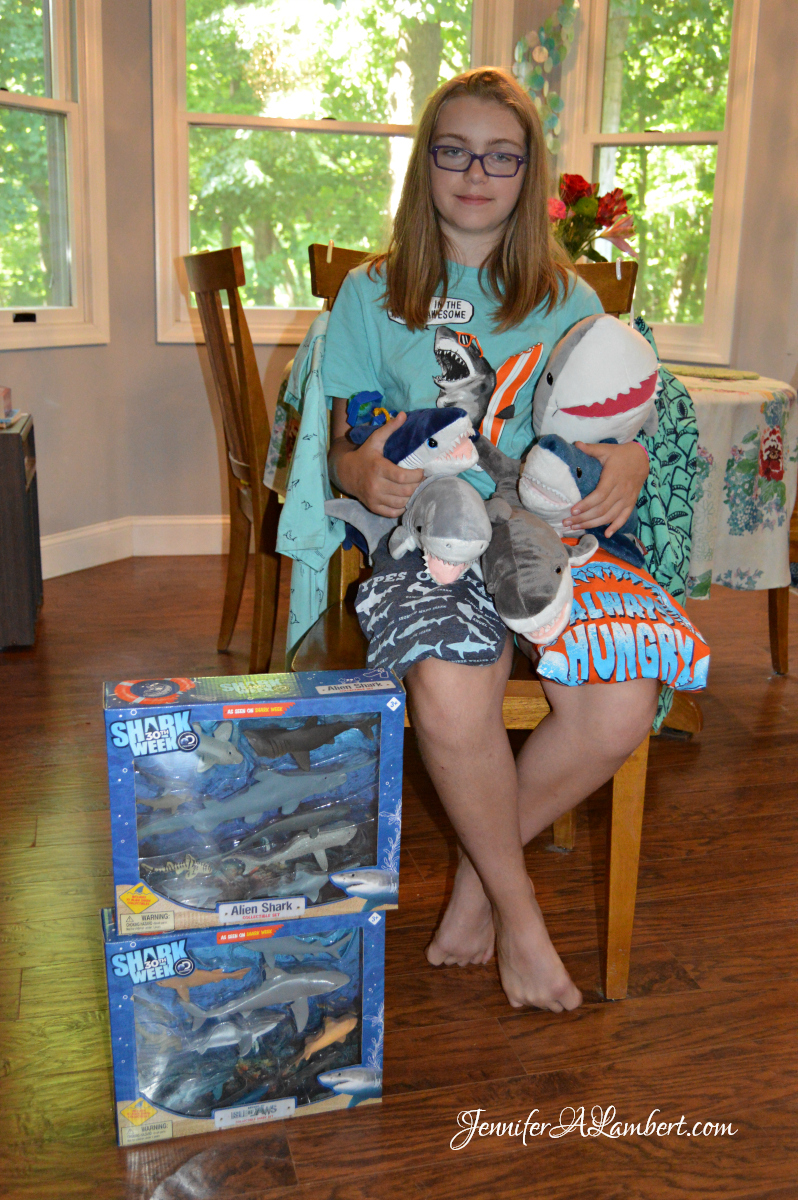
My daughter has a lot of shark stuff.

My youngest daughter is a tad bit obsessed with sharks.

She has shirts, stuffed sharks, play sets, a shark tooth necklace, and more.

She’s watched all the Jaws and Sharknado movies and lots of other fictional and documentary films about sharks. She also has the Jaws hardcover book and Sharkopedia.

We love visiting aquariums.

We recently took trips to the Shedd Aquarium in Chicago and Newport Aquarium near Cincinnati.

We have also visited Columbus Zoo and Aquarium in Ohio and The Living Planet Aquarium in Sandy, Utah, and Waikiki Aquarium, Sea Life Park, and Maui Ocean Center in Hawaii.

She wants to be a marine biologist, specializing in the study of sharks.

She had a shark-themed 11th birthday.

She made cupcakes with red jelly for a shark attack. She molded sharks and fins on top with fondant. The buttercream was dyed to look like ocean foam.

Katie, Tori, and a friend designed a shark-themed restaurant for an architecture class.

The design was made using all recyclable materials. They had hydroponics and an aquarium and lava tubes. Diners were underwater! The restaurant was fully sustainable and eco-friendly.
They won at the local level and went to compete at district!

 Shark Units and Resources

  • The Homeschool Scientist links
  • Homeschool Share lapbook
  • Unit Study by Build Your Library $
  • Homeschool On Unit Study for Grades 2-6
  • Montessori Unit by Living Montessori Now
  • Shark Week Books by 3 Boys and a Dog
  • Natural Beach Living Printables
  • Super Cute Crafts by Natural Beach Living
  • Every Star is Different Montessori Unit and Printables
  • Hammerhead Unit for PreK-1 by SuperMommy to the Rescue
  • Unit Study by Royal Baloo
  • Printable Puzzles by In All You Do
  • Shark Fin Jello Cups by Oh My Creative
  • Shark Bait Snack by Young at Heart Mommy
  • Crafts by Crystal and Company
  • LEGO Sharks by Little Bins for Little Hands
  • Chestnut Grove Academy Workboxes
  • Coloring Pages from A Natural Homeschool
  • K-1st Activities from Mrs. Wills’ Kindergarten
  • Notebooking Pages from Blessed Beyond a Doubt

Shark Movies (these can be pretty scary or gory)

  1. Jaws and sequels
  2. Deep Blue Sea
  3. Open Water and 2 sequels
  4. Sharknado and 5+ sequels
  5. Sharks in Venice
  6. Super Shark
  7. Mega Shark Versus Giant Octopus
  8. Jurassic Shark
  9. Sharktopus
  10. Shark Tale – animated for kids

What’s your favorite shark (or ocean creature)?

Print

Cupcakes

Prep Time 10 minutes
Cook Time 15 minutes
Total Time 25 minutes
Servings 12 cupcakes

Ingredients

  • 1 stick unsalted butter softened
  • 1 cup sugar
  • 2 eggs
  • 1/2 t vanilla
  • 1 1/2 c cake flour
  • 1 1/2 t baking powder
  • 1/4 t kosher salt
  • 1/2 c milk

Instructions

  1. Cream together butter, sugar, and vanilla in a bowl.

  2. Sift together dry ingredients in another bowl.

  3. Alternate adding milk with the dry ingredients into the butter sugar mix. Whip batter for several minutes.

  4. Fill 12 muffin cups 2/3. Bake at 350* for about 15 minutes.

  5. Allow to cool before frosting with your favorite flavor.

ProSchool Membership - Productive Homeschooling
Share
Pin21
Share
21 Shares
You might also like:

Filed Under: Homeschool Tagged With: sharkweek, unit study

12 Bullying Warning Signs

This blog may contain affiliate links: disclosure.
Please see my suggested resources.

July 16, 2018 By Jennifer Lambert Leave a Comment

When kids head back to school these days they face some big stressors in addition to homework grades and peer pressure.

Concerns about bullying and its relationship to school violence add another layer of stress.

More than 43% of teens report being bullied online; additionally, teens are more than twice as likely to tell their peers about bullying than they are to tell parents or other adults, one study found.

Victims of bullying and other early trauma often carry emotional scars into adulthood, Dr. Nelson, author of the bestselling book The Emotion Code explains in this short video.

12 bullying warning signs parents should watch for:

  1. Emotional upset, anxiety, and depression.
  2. Frequent headaches and stomach aches.
  3. Faking illness.
  4. Unexplainable injuries.
  5. Changes in eating habits.
  6. Poor sleep / frequent nightmares.
  7. A drop in school performance.
  8. Not wanting to go to school.
  9. Sudden loss of friends.
  10. Avoidance of social situations.
  11. Low self-esteem.
  12. Self-destructive behaviors including self-harm, running away, or talking about suicide.

If you were bullied when you were younger, the reason you freeze at genuine compliments is because fake compliments were a prelude to an attack.

Many kids who are victimized by bullying don’t ask for help because they are afraid of being seen as weak or a tattletale, or fear backlash from the bully or rejection by friends. As a result, parents are often the last ones to know.

Take necessary action with the school and/or the bullies’ parents to assure the child’s safety. Help the child to know that he or she is valued and that it is safe to communicate with you as a parent or a counselor.

Dr. Nelson explains why some kids become bullies and others can become targets of bullying. He can share how parents can talk with their children to uncover and heal the emotional trauma of bullying, as well as other steps and when to take them.

A holistic Chiropractic Physician and Medical Intuitive, Dr. Bradley Nelson is one of the world’s foremost experts in the emerging fields of Bioenergetic Medicine and Energy Psychology. He has certified thousands of practitioners worldwide in helping people overcome unresolved anger, depression, anxiety, loneliness, and other negative emotions and their associated physical symptoms. His bestselling book The Emotion Code provides step-by-step instructions for working with the body’s healing power. Download a free copy of the eBook and the audiobook by visiting www.EmotionCodeGift.com.

Share
Pin25
Share
25 Shares
You might also like:

Filed Under: Family Tagged With: antibullying, mental health, teen

Choices Matter in Pain Management

This blog may contain affiliate links: disclosure.
Please see my suggested resources.

July 10, 2018 By Jennifer Lambert 9 Comments

I received this product for free from Moms Meet (momsmeet.com) to use and post my honest opinions. Compensation for this post was provided and this page may contain affiliate links.

I delivered my third child via Caesarean section on 11 May 2007.

I was told that after two rather traumatic large natural no-meds births that an elective C-section was the only way to go for my baby’s health and safety. If I chose to attempt to deliver naturally that could lead to complications and an emergency C-section, it could be dangerous.

I thought I was prepared.

With an elective C-section, almost everything was out of my control.

I felt like a failure.

But my perfect little girl was all worth it.

I didn’t have many options for pain management in a military hospital.

The anesthesiologist administered an epidural for the surgery. I received oral pain meds during my hospital stay that made me nauseated. I got an opioid prescription to take at home.

I didn’t receive any helpful post-care or information about pain management, healing, scar care, or effects of opioids on my nursing baby. I was simply sent home with an opioid prescription, stool softener, and some brochures.

My parents were visiting but are no help to me or my family. I had to entertain them when all I wanted was rest. My husband had to return to work within the week. I had pressing concerns  – caring for my newborn and other children while recovering from major surgery – and doctors are supposed to be trustworthy professionals.

Right?

The medical professionals all assured me it was safe to take my prescriptions while nursing. I took as few of the opioids as possible, for only a couple days, because they made me feel nauseated. Then I moved on to milder and most likely safer pain meds – non-steroidal anti-inflammatories (NSAID). Luckily, I was young and strong and healed well and quickly. I had two other kids to care for and I couldn’t afford to be laid up for long. Great pain management options also include CAM treatments, long-acting anesthetics, warm baths, heating pads, or ice packs. I utilize integrative methods when I can.

I recommend doing your own research and discussing options before surgery so you won’t have to make quick important decisions while groggy or in pain.

My daughter is now 11 years old and is by far my healthiest child of four, and surely is fine despite the opioids I took for pain those first few days after her birth while I was nursing her. But what if the meds had affected her? How many children have been or are being affected by side effects of strong pain meds? We don’t have all the answers to exposure. There are lots of options for pain management for nursing moms after C-section.

Choices Matter is a campaign designed to educate and empower patients, caregivers, and physicians to discuss pain management options, including effective non-opioid options, prior to surgery. The use of non-opioid options before, during, and after surgery can significantly decrease or, in many cases, completely eliminate the need for opioids after many common procedures, including C-section deliveries.

Some Caesarean section statistics:

• More than 1 in 3 women had C-section deliveries; overall, 1 in 5 C-sections were unplanned
• More than 1 in 3 (36%) women did not have a birth plan, which is an opportune time for a patient to speak with their doctor about pain management options, including non-opioids
• 38% of women are open to pain management options, but think some kinds of pain medications are or could be harmful to them or their baby

Opioids and childbirth:

• 19% believe they are fine for other procedures, but not childbirth
• 25% believe they will be able to handle the pain without opioids
• 21% have no issue taking opioids
• 35% prefer to let their doctors decide what is best
• Nearly nine-in-ten (88%) of mothers have concerns about taking opioids during and after childbirth. Despite these concerns, more than half (51%) of C-section patients are prescribed an opioid.

Leading concerns surrounding opioids and childbirth:

• Breastfeeding/impact on baby: 53%
• Side effects: 52%
• Nearly a quarter (24%) of those surveyed fear the risk of dependence or addiction
• While C-section patients had more opioids and anesthetics in the hospital and at home, they were less satisfied with their overall pain management
• 44% of C-section mothers were not completely satisfied with how their pain was managed during birth

The US is currently in the throes of an opioid crisis.

Interesting facts:

There were more than 42,000 deaths attributed to opioids in 2016, and 40% of all opioid overdose deaths involve prescription opioids.
In 2012, there were 793 million doses of opioids prescribed in Ohio, enough to supply every man, woman, and child, with 68 pills each. Roughly 20 percent of the state’s population was prescribed an opioid in 2016. And Ohio leads the nation in overdose deaths.
The state of Ohio has sued five major drug manufacturers for their role in the opioid epidemic.
The Justice Department report shows that federal prosecutors investigating the company found that Big Pharma knew about “significant” abuse of opioids in the first years after the drug’s introduction in 1996 and concealed that information. For children growing up in the shadow of the opioid crisis, public schools have become the safety net of last resort.
Center for Disease Control (CDC) statistics report that one in 10 Native American children will use prescription opioids for nonmedical use — twice the rate of white children.

Our church supports charities to counter the opioid epidemic, like Brigid’s Path.

Have you experienced a Caesarean section birth? What was it like?

Share
Pin17
Share
17 Shares
You might also like:

Filed Under: Health Tagged With: childbirth, ChoicesMatter, onelesspill

Our Curriculum for 2018-2019

This blog may contain affiliate links: disclosure.
Please see my suggested resources.

July 9, 2018 By Jennifer Lambert 6 Comments

I have homeschooled since 2005.

It’s been a wild journey and I have learned so much about myself as a mom and teacher over the years.

You can see how we began with our first and second years.

Here’s how I plan a homeschool year.

You can scroll through all the curricula we’ve used over the years for various levels.

I also created these pages of homeschooling topics and to help answer questions.

This year, I’m only homeschooling 3 kids!

We’re still finishing up some maths, science, and history…but we should have about a month off from academics. We typically school year round with lots of breaks for holidays, resting, and travel.

My eldest is dual enrolled at a local university, and has all but completed her high school work of French and history.

We continue to use our core curriculum of Tapestry of Grace for history, geography, literature, art, music, and church history.

We use Memoria Press for Latin. My son is finishing up Prima Latina and the girls are doing Latina Christiana. We also learn modern languages.

We’ll take local weekly art classes again since we love the teacher.

My middle girls are 11 and 12 years old. We don’t really do grade levels, but I guess they’re in about 7th.

Katie is trying soccer again.

Tori loves being outdoors and walks, runs, bikes, rollerblades all the time.

This year, they’re studying:

  • Beauty in the Heart Bible study
  • Spelling Workout Level H
  • New Elementary Maths 1
  • Apologia Physical Science and notebook

My son is 8 years old. He is in about 4th grade.

Alex loves baseball and will play fall ball and spring league again this year.

He is studying:

Apologia Chemistry and Physics to coincide with his sisters’ physical science.

A winter Astronomy Unit

  • Stargazer’s Guide
  • Apologia Astronomy and notebook
  • The Astronomy Book
  • journals
  • various library books
  • telescope
  • Christian Liberty Nature Reader 3
  • Studying God’s Word Book D
  • Primary Maths 4
  • Spelling Workout Level B

Some of this curriculum is no longer printed or has updated to new editions. I’ve had these books for years and if it ain’t broke…

What are you studying in your homeschool this year?

Share
Pin3
Share
3 Shares
You might also like:

Filed Under: Homeschool Tagged With: back to school, curriculum, homeschool

  • « Previous Page
  • 1
  • …
  • 39
  • 40
  • 41
  • 42
  • 43
  • …
  • 137
  • Next Page »
Suggested ResourcesFetch

Archives

Popular Posts

10 DIY Gifts with Essential Oils10 DIY Gifts with Essential Oils
Natural Remedies for HeadacheNatural Remedies for Headache
10 Natural Remedies to Keep on Hand10 Natural Remedies to Keep on Hand
Henna Hands CraftHenna Hands Craft
Homemade Turkey Divan CasseroleHomemade Turkey Divan Casserole
This website uses cookies to improve your experience. We'll assume you're ok with this, but you can opt-out if you wish.Accept Reject Read More
Privacy & Cookies Policy

Privacy Overview

This website uses cookies to improve your experience while you navigate through the website. Out of these, the cookies that are categorized as necessary are stored on your browser as they are essential for the working of basic functionalities of the website. We also use third-party cookies that help us analyze and understand how you use this website. These cookies will be stored in your browser only with your consent. You also have the option to opt-out of these cookies. But opting out of some of these cookies may affect your browsing experience.
Necessary
Always Enabled
Necessary cookies are absolutely essential for the website to function properly. This category only includes cookies that ensures basic functionalities and security features of the website. These cookies do not store any personal information.
Non-necessary
Any cookies that may not be particularly necessary for the website to function and is used specifically to collect user personal data via analytics, ads, other embedded contents are termed as non-necessary cookies. It is mandatory to procure user consent prior to running these cookies on your website.
SAVE & ACCEPT