Jennifer Lambert

A Sacred Balance

Visit Us On FacebookVisit Us On PinterestVisit Us On InstagramVisit Us On Linkedin
  • Homeschool
    • Book Lists
    • How Do We Do That?
    • Notebooking
    • Subjects and Styles
    • Unit Studies
  • Travel
    • Europe
      • Benelux
      • France
      • Germany
      • Greece
      • Ireland
      • Italy
      • London
      • Porto
      • Prague
    • USA
      • Chicago
      • Georgia
      • Hawaii
      • Ohio
      • Utah
      • Yellowstone and Teton
  • Family
    • Celebrations
    • Frugal
  • Military Life
    • Deployment
    • PCS
  • Health
    • Recipes
    • Essential Oils
    • Fitness
    • Mental Health
    • Natural Living
    • Natural Beauty
  • Faith
  • About Me
    • Favorite Resources
    • Advertising and Sponsorship
    • Policies
  • Reviews

© 2025Jennifer Lambert · Copyright · Disclosure · Privacy · Ad

Introvert Holiday Survival Guide

This blog may contain affiliate links: disclosure.
Please see my suggested resources.

November 25, 2019 By Jennifer Lambert 22 Comments

The holiday decorations are for sale in stores before Halloween and Christmas music blasts everywhere on or even before November 1.

Christmas in America is all about commercialism. It’s about rushing, doing, more. I kinda hate it.

As an introvert, I really do dread the holidays. They wear me out. I try to be bright and cheery for my kids, but I really would love to hibernate from Halloween until about Mid-March. I often wake up early or go to bed late just to get some alone time.

As a military family, we’ve seldom been near family to visit over the holidays. While in a way, this relieves me of the potential stress, it also makes me feel very, very guilty.

We visited my husband’s mom at Christmas the year after we married. I was worried about her since it was her first holiday alone since his dad had passed in April. Then she passed the following April, so I’m so glad we went.

I invited my parents to visit the kids and me last Christmas while my husband was deployed. They’re getting older and I worry how many more opportunities we will have. It was actually mostly pleasant.

My kids have missed out on so much. Holidays are just the six of us. But still, it’s stressful to me.

What’s an introvert to do with all the expectations that come with the holidays?

Priority

Everyone has her favorite and least favorite aspects of holidays. What’s yours?

Discover your priority for the season.

Be mindful of what you’re doing, giving, having during the holidays.

Give to charity or volunteer. Try new recipes. Travel. Offer experiences instead of presents. Join a cookie or ornament swap.

Save money, time, and effort by forgoing card sending. It’s also more ethical and less wasteful. Send texts or social media greetings, or individual emails and online cards. Recycle or upcycle the cards you receive.

Take time to get outside in nature to unwind and think. There’s no bad weather, only bad clothing choices!

Make time for selfcare. I keep up my exercise routine and take a very hot Epsom salt bath almost every evening with chamomile or lavender tea. It really makes a difference.

The Thanksgiving holiday is rather a disappointment for me. We used to travel over the long weekend. We went to Prague and Porto and Venice. Several family members don’t even like turkey. We don’t really care about football. We certainly do not go shopping.

We’ve traveled to Chicago and Maui and Rome over Christmas. Magical!

We’ve lived in so many different places as a military family that travel was a priority until the kids asked to stay home with a Christmas tree and home-cooked dinner. But we miss it too.

Focus

Each year, I focus on something different.

We’ve traveled over holidays. That really eased up a lot of stress for me. But, it created other stresses.

Some years, I really get into the Advent readings with my family.

Other years, I decorate all out. My front yard was a zoo last year with light up animals.

We often go to a local drive-through Christmas park to look at the decorations. We really enjoy those!

We went to see The Nutcracker ballet a couple years ago.

We try new recipes during the holidays, but not on the actual day in case of disappointment for tradition.

Tradition

I realize that I’m making memories for my kids.

What are your favorite memories of the holidays? Do that for yourself and your family.

It’s all about the food for us.

While I don’t make a lot of sweets, we really do love the fancy dinners.

I roast a turkey breast for Thanksgiving. I make the most wonderful herb sausage cornbread dressing. Two of my kids don’t like turkey so much. I try to have lots of sides and maybe some ham for them.

The kids get Advent calendars. Everyone gets chocolate. My son and husband share the Star Wars Lego. This year, the kids asked for Yu-Gi-Oh! My eldest daughter gets a bath bomb or makeup calendar.

We celebrate Saint Nicholas. We do stockings for St. Nick with chocolate orange candies and small gifts. This has relieved a lot of pressure for Christmas Eve and Day.

We celebrate Hanukkah with roast beef. When Hanukkah falls mid-December instead of during Christmas week, it’s extra special because it’s like we celebrate more and longer. I seldom can do eight nights of presents, but I try to make it special with a nice family gift. We read Hanukkah stories and celebrate the Light.

We have prime rib and Irish ham for Christmas Eve and Day dinners. My third child really loves the slow roasted ham.

With twice baked potatoes. They’re a favorite!

We also look forward to ham au gratin potatoes as leftovers!

I try to purchase my children an ornament each year so they will have a starter box of their very own Christmas when they grow up.

We almost always get new winter pajamas. And lots of books. And new house slippers.

We read lots of holidays books and watch fun holiday movies every year.

We have a simple celebration for New Year’s.

Our holiday season ends after Epiphany with Candlemas.

Delegate

Trusting my kids is a huge part of sanity over the holidays.

While my husband has a panic attack when they carry his grandmother’s china dishes and my crystal butter dish to and from the dining table, I know they can handle it. They take great care with these items. And they’re just things. Someday, it will all be theirs.

My kids always wanted to help put up our artificial Christmas tree when they were very little. I think they considered it a fun puzzle with the colored branch tips.

Nowadays, I bring the big duct-taped box out of the cellar and let them have at it. They’re plenty old enough and do a great job putting it up and pulling it down to store away for another year. I stand back in awe at their methods and cooperation. My husband and I usually string the lights. We all help sort and hang the ornaments.

The kids completely decorated the front of the house during deployment. It looked like a holiday zoo! I hardly had to help at all. They were amazing.

My middle daughter is quickly becoming self-proficient in the kitchen. She’s in charge of any potato dish. She also sets the table just lovely. I never have to check the placement of a fork or wine glass with her!

My husband is in charge of the prime rib or tenderloin. My son loves cooking meats – frying, grilling, all of it. He loves thermometers! He wants to work in a butcher shop when he’s older.

Let it go

I don’t go to holiday parties.

Most of my husband’s work obligations don’t include me anyway. Our street has had an adults-only progressive dinner, but I’d rather spend time with my family than drunk overgrown frat boys and their second wives. For unavoidable events where it’s important to make an appearance, know when and how to leave as early as possible without seeming rude.

We don’t go to church anymore. I kinda miss the advent readings and candle lighting and midnight singing. Years ago, the church we attended did a fun ladies ornament exchange. But I don’t miss the stress and drama at all.

I really, really, really hate shopping, even throughout the year. It’s not hard for me to say no to shopping in November and December. I shop online all year round. I save money with cash back apps. Giving experiences is better as my kids get older.

Declutter before the presents arrive so it’s less stress. One in, one out is our flexible rule. We don’t give lots, but try to limit presents to about four with this little poem.

We do a few gifts within our immediate family. No gifts for extended family. I don’t send cards. I absolutely don’t send braggy annual newsletters, not even on social media. I don’t like receiving those humble brags either. This is all for my sanity and for ethical reasons.

Resources:

  • Low: An Honest Advent Devotional by John Pavlovitz
  • Calm Christmas and a Happy New Year: A little book of festive joy by Beth Kempton
  • Unplug the Christmas Machine: A Complete Guide to Putting Love and Joy Back into the Season by Jo Robinson
  • Hundred Dollar Holiday: The Case For A More Joyful Christmas by Bill McKibben
  • Have Yourself a Stressless Little Christmas by Darla Satterfield Davis
  • Quiet: The Power of Introverts in a World That Can’t Stop Talking by Susan Cain
  • The Empath’s Survival Guide: Life Strategies for Sensitive People by Judith Orloff
  • The Highly Sensitive Person: How to Thrive When the World Overwhelms You by Elaine N. Aron

What do you want your family to remember about the holidays?

You might also like:

  • Holiday Movies
  • Holiday Books
  • Celebrating Advent
  • Celebrating St. Nicholas
  • Celebrating Hanukkah
  • Celebrating Epiphany
  • Celebrating Holidays During Deployment
  • Blue Christmas
  • Hope in the Dark
  • Holiday Blues
Share
Pin112
Share
112 Shares
You might also like:

Filed Under: Health Tagged With: Christmas, introvert, mental health

Our Wild Calling Book Review

This blog may contain affiliate links: disclosure.
Please see my suggested resources.

November 22, 2019 By Jennifer Lambert Leave a Comment

I love animals. I’ve always loved animals.

I feel it is my duty to teach my children love and respect for nature and animals.

I’ve always made nature and animal encounters a priority in our homeschool and life.

We’re a military family and I love to learn about the flora and fauna of every new place we live.

We chose to rent our current house in Ohio because the backyard is all wooded with a little creek. We often see deer, opossums, raccoons, stray cats, owls, hawks, herons, ducks, woodpeckers, hummingbirds, and sometimes even a coyote. I set out food for the critters and my family calls me Snow White.

Our next door neighbor is a certified Ohio naturalist!

The little pond near our current house offer close encounters with kingfishers, herons, ducks. I love to watch them as I take my daily walk.

We lived in the Pfalz forest in Germany and saw lots of foxes and boar along the road and in the meadows. We had a lovely little backyard pond where frogs and toads would lay eggs and we watched them grow up. We also learned about the dragonfly life cycle. We even had a huge salamander one day!

We would giggle as we watched the quail skedaddle across our backyard in Utah. The hummingbird fights were breathtaking in the mornings and evenings. We lived near Antelope Island and Farmington Bay and loved to go watch the bison, antelope, deer, water birds, eagles, and coyotes.

We spent almost every meal on our lanai in Hawaii and our nightly dinner guest was this very friendly red cardinal who would perch on the back of a chair and dine on our crumbs. He brought his wife and family every season.

I grew up in an Atlanta suburb, but I loved birds, bugs, and water life. I played in the Flint River creek system behind our neighborhood, despite my mother’s warnings.

Our camping friend

I anticipate magic when I encounter nature. I anticipate a connection with animals and I am seldom disappointed.

No young child chooses to turn away from nature. Losing touch with that relationship hurts just as it would to be separated from any other loving, foundational connection they have in their lives.

Nicolette Sowder

We have cat companions and they are members of our family. They are better than therapy and help us through tough times. They know when we are sick or feeling down and snuggle up to us to comfort.

Without any apology, lightweight theology, or fear of heresy, I can appropriately say that Venus [the black lab] was also Christ for me.

Richard Rohr, The Universal Christ
cat companions

I am a firm believer that if we are still and quiet in nature, we will be rewarded with blessings of magical animal encounters. They are curious and long to connect with us if they don’t see us as threats to them.

I’ve read sections of Our Wild Calling aloud to my family and we are all delighted at the animal encounter stories.

We looked up biophilic design. We remember seeing the animal bridges in Europe across the Autobahn and highways. My daughter told us about the turtle tunnels in Japan.

In his newest book, OUR WILD CALLING: How Connecting with Animals Can Transform our Lives—and Save Theirs, author Richard Louv redefines the future of human-animal coexistence by exploring our deep bonds with other animals and calling for a transformation in how we view, treat, and inhabit our environment. 

Through interviews with researchers, theologians, wildlife experts, indigenous healers, parents, teachers, and psychologists, Louv reveals how dogs can teach children ethical behavior, how animals in urban areas are blurring the lines between the domestic and the wild, and what role the human-animal relationship plays in our spiritual well-being.

He explores urgent topics such as biodiversity, inter-species health, and unprecedented conservation practices – including the proposal to set aside half of the planet for nature and wildlife and the assisted migration of invasive species. Louv also introduces readers to pioneering biologists who practice “practical anthropomorphism” as a way to do better science, naturalists now helping thousands of people learn bird language, scientists developing new ways communicate with pets and wild animals, and animal-assisted therapists and teachers challenging the fields of mental health and education.

About the Author

Richard Louv is a journalist and author of ten books.  Louv is co-founder and chair emeritus of the nonprofit Children & Nature Network, which supports a new nature movement through partnerships with such organizations as the National League of Cities. In 2008, he was awarded the Audubon Medal, presented by the National Audubon Society.

Richard Louv’s landmark book, Last Child in the Woods, inspired an international movement to connect children and nature and has now sold over half a million copies. Co-founder of the Children & Nature Network and winner of the Audubon Medal. Louv has become the expert on radically improving mental and physical health through our relationship to the natural world. 

Get your copy of Our Wild Calling.

You might also like:

  • My Favorite Nature Books for Kids
  • Fishing Nature Study
  • Hummingbird Nature Study
  • Winter Birds Study
  • Grasshopper Nature Study
  • Quail Nature Study
  • Our Trip to Yellowstone
  • Our Stay in the Tetons

What animal encounters have you experienced?

Share
Pin
Share
0 Shares
You might also like:

Filed Under: Book Reviews Tagged With: book review, nature

Holiday Blues

This blog may contain affiliate links: disclosure.
Please see my suggested resources.

November 18, 2019 By Jennifer Lambert Leave a Comment

With the holidays upon us it’s easy for us to get caught up in the rush of it all. While we may be cooking, shopping, and enjoying holiday events, there are others, many of whom are in our very own circles, having a tougher time.

Most holiday stress and anxiety come from:

  1. Gifts
  2. Expectations
  3. Overwhelm

We can reduce our gift-giving and offer experiences or fewer things.

We can simplify our expectations and stop comparing and refuse to look at Pinterest.

We can say no to situations or things that are not priority.

5 Kinds of People Most Likely to Get the Holiday Blues and How to Help:

1. Divorced or widowed

Loss is a sad, life-changing event at any time of the year. 

However, it tends to be harder when everyone around you is joyful celebrating the holidays and you feel it’s an effort to get out of bed. 

If someone in your circles is going through a major loss and life transition, be supportive and understanding.

They are grieving and mourning and are especially sensitive around the holidays. It’s important that they feel included but don’t be offended if they choose to opt out of certain events.

Checking in and offering them the option to participate in whatever they want, when they want is a great way to help. Love them through it.

2. Entrepreneurs

The holidays could be stressful for small business owners because so much rides on the end of year.

They may be fretting over their profits (or lack thereof), the goals they didn’t reach, and the many things still to do.

They feel overwhelmed and when they are expected to shop, entertain and be present for their families, they may be short tempered and anxious.

The best way to help the busy entrepreneur is to make their life easier in any way possible. If they can’t make it to a family dinner, tell them your door is open for dessert. Oftentimes they feel guilty and obligated which only adds to their frustration.

Also consider that these worker-bees are conflicted. When they are working, they miss their families and when they are with family, they are thinking of work.

3. Caretakers

Adults who are caretakers to their chronically ill children, relatives, or elderly parents are incredibly overwhelmed and often overlooked.

As a caretaker, they always have to consider the well-being of their patient. They can’t just get up and go. 

Caretakers may feel resentful, isolated and stuck during the holidays which leads to conflicted feelings of resentment and guilt. They also believe they have to be hands on managing everything.

It’s important to lighten the caretakers load by offering support even if it means asking them how they are doing.

Be patient and ask the caretaker what they need. It could be something as simple as having food delivered to their home to free up time for other tasks.

4. Recovering addicts

Recovering from addiction is hard.  Period. 

But it’s harder when holiday festivities are filled with friends and family drinking everything from spiked eggnog to champagne. 

Understand that those in recovery from substance abuse are hyper-sensitive about being judged. They feel as if all eyes are on them and that pressure may trigger the desire to use drugs or alcohol to soothe their anxiety. When they aren’t fully recovered, they may anticipate possible “landmines” and avoid them. They may choose to stay to themselves and observe more and participate less. They might opt out of larger family gatherings that are too overwhelming.

Offer an open invitation and remind them they are welcome whenever they are ready.

Offer a safe celebration inclusive of all – with no temptation for alcohol, drugs, or gambling.

A balance of love, support, and acceptance is what they are in most need of.

5. Children of divorce

Divorce means two separate holidays at two different places and kids often feel overwhelmed having to double up.

It’s incredibly important for parents to agree civilly on where the kids are going during the holidays and all the logistical details.

Kids want to feel safe and secure. They don’t want to feel as if they are the expected to be rushed here and there because their parents chose to divorce.

It could be unsettling to younger kids and teens may isolate and rebel against any family events as they are sorting out their own emotions as they get used to a new normal.

Don’t burden kids with guilt trips or overdo it with presents to make up for the stress. Just be honest and supportive and loving.

You really want to establish a game plan for the holidays and if possible, stick to it every year.

The holidays can be a stressful time of year for many of us. It’s a time when we must be aware and extra kind to those on the fringes.

You might also like:

  • Hope in the Dark
  • Blue Christmas
  • 5 Ways to Cultivate Relationships
  • How to Have a Debt-Free Christmas
  • Obstacles to Being Frugal During Holidays
  • How We Had the Best Christmas Ever
  • Do They Know it’s Christmas?

Resources:

  • Watch for the Light: Readings for Advent and Christmas
  • Advent: The Once and Future Coming of Jesus Christ by Fleming Rutledge
  • Low: An Honest Advent Devotional by John Pavlovitz
  • Honest Advent: Awakening to the Wonder of God-with-Us Then, Here, and Now by Scott Erickson
  • Calm Christmas and a Happy New Year: A little book of festive joy by Beth Kempton
  • Have Yourself a Minimalist Christmas: Slow Down, Save Money & Enjoy a More Intentional Holiday by Meg Nordmann
  • Hundred Dollar Holiday: The Case For A More Joyful Christmas by Bill McKibben
  • Unplug the Christmas Machine: A Complete Guide to Putting Love and Joy Back into the Season by Jo Robinson and Jean C Staeheli

Quotes from Dr. Sanam Hafeez, a NYC based licensed clinical psychologist, teaching faculty member at the prestigious Columbia University Teachers College and the founder and Clinical Director of Comprehensive Consultation Psychological Services.

Share
Pin15
Share
15 Shares
You might also like:

Filed Under: Health Tagged With: Christmas, depression, mental health

Teaching Gratitude

This blog may contain affiliate links: disclosure.
Please see my suggested resources.

November 11, 2019 By Jennifer Lambert 31 Comments

Feeling grateful boosts happiness and fosters both physical and psychological health, even among those already struggling with mental health problems. Studies show that practicing gratitude curbs the use of words expressing negative emotions and shifts inner attention away from such negative emotions as resentment and envy, minimizing the possibility of ruminating over them (a hallmark of depression).

Our materialistic culture encourages constant wanting and sees possessions as the source of happiness. This is not the most fertile ground for gratitude, but it is not an insurmountable barrier to developing it. Envy and especially cynicism and narcissism are “thieves of gratitude.”

I periodically take breaks from social media to help me detox from our culture of covetousness.

A study of couples found that individuals who took time to express gratitude for their partner not only felt more positive toward the other person but also felt more comfortable expressing concerns about their relationship.

Teachers or managers who remember to say “thank you” to people may find that they feel motivated to work harder.

We know that gratitude is healthy and people who are grateful are happier. There’s lots of research out there telling us this.

But sometimes, it’s still really hard.

The root of joy is gratefulness…It is not joy that makes us grateful; it is gratitude that makes us joyful.

― Brother David Steindl-Rast, Music of Silence: A Sacred Journey Through the Hours of the Day

We all want our children to be grateful. It’s just good manners, right?

Can gratitude be taught?

I’m a firm believer that children lead the way and teach us adults how to be more grateful.

If you leave kids alone, they surprise us in so many ways with their empathy and gratitude.

Adults seem to have lost our way and look for ulterior motives, second guess someone’s tone, or just generally assume the worst.

There’s so much more to gratitude than having a Bless This Mess sign in your kitchen.

But have you ever thought about gratitude not as a response but as a force in its own right; an initiating and healing energy that is not dependent on external circumstances but is rather an innate power of the human soul?

Cynthia Bourgeault

During the holidays, I try to focus on being content and grateful more than shopping for more things we don’t really need.

We once attended a church that bragged they didn’t express gratitude for several reasons:

  • We should do things in service to God and not to man.
  • If we are thanked for our service, it would make us prideful.
  • If we thank others, it’s not honoring God nor is it expressing humility.

I think they missed the mark a bit. Of course, we should honor God. Hearing gratitude or expressing thanks is just polite and courteous. We are the hands and feet of God. If a person isn’t humble and is instead prideful, seeking recognition, that’s between them and God.

Make sure no one repays a wrong with a wrong, but always pursue the good for each other and everyone else. Rejoice always. Pray continually. Give thanks in every situation because this is God’s will for you in Christ Jesus.

1 Thessalonians 5:15-18 CEB

Gratitude should be an ongoing lifestyle, not just one day a year, often eclipsed by heavy food and sports.

Develop an Attitude of Gratitude:

Practicing gratitude helps us build a brain primed to see the positive. 

The human brain has a strong negativity bias. It helps us survive but not thrive.

Gratitude counters that bias so we can enjoy life to the fullest. It’s a little more than just always focusing on the positive. It’s an active mindfulness of being grateful.

Cultivating a natural sense of gratitude in kids starts with modeling from their most important grown-ups. 

When we pause and appreciate the good around us (explicitly exploring what we feel, think and sense in our body) we show them that appreciation is important and worth taking the time for.

It’s not just about saying Thank You!

It’s things like “This ice cream is delicious. I’m so glad I have a tongue to taste it with, and you to share it with. I’m going to take a super slow bite and let it melt in my mouth. Want to try that with me?” 

Pray or Meditate. 

We can use prayer to cultivate gratitude.

I’ve encountered a lot of blogs and articles and books centering on a gospel of gratitude, and while I think being grateful and practicing gratitude is a key to a successful life, I don’t think that’s the sole purpose of any religion. It’s just another tool to help us.

Mindfulness meditation involves focusing on the present moment without judgment. You can focus on a word or phrase or focus on what you’re grateful for.

If the only prayer you ever say in your entire life is thank you, it will be enough.

Meister Eckhart

Forced thank you’s can backfire. 

Feeling gratitude and saying thank you aren’t the same thing, and pressure to say specific words can lead to resistance and resentment.

We can support our kids by helping them figure out what they are actually feeling, and finding the words to match.

As they get a bit older, we can start exploring how what we say to others may make them feel, and how expressing gratitude makes us feel. Emotional health is important.

We can help kids develop an attitude of gratitude through regular rituals and activities that build mental habits. 

If the whole family participates it will also lead to increased feelings of connection with each other.

Some examples of gratitude rituals include:

Practicing a one-word gratitude circle at meals or another time that works for your family.

Naming aspects of our own body, mind, and heart that supported us that day at bedtime.

Keeping a gratitude journal (these can be individual, but you can also create a family journal that everyone can contribute to). Journaling is very helpful!

Writing a thank you note once a week.

When fun or fulfilling things happen, make a habit of “taking in the good” by remembering and talking about the sensory and emotional experience of the positive situation.

Creating gratitude art projects for things children enjoy or appreciate.

A gratitude web, for example, may have a bubble of ice cream in the middle, and then around it would be the grown up who worked to buy it, the people at the shop or store who sold it to us, the person who made it, the farmer who milked the cow, the cow itself, etc.

Letting our kids know we are grateful for them (in specific ways that validate who they are) gives them an embodied experience of what it feels like to be appreciated. 

It builds up their sense of self, and strengthens your relationship while supporting their capacity to feel gratitude. When we feel appreciated, it’s much easier to appreciate others and the world around us!

Make sure you apply your child’s love language so they feel appreciated and loved.

There are studies that show being mindful of gratitude for more than 21 days improves contentedness and our happiness quotient.

Think of the various tests you encounter as occasions for joy. After all, you know that the testing of your faith produces endurance. Let this endurance complete its work so that you may be fully mature, complete, and lacking in nothing.

James 1:2-4 CEB

What are you most grateful for today?

You might also like:

  • Grateful: The Subversive Practice of Giving Thanks by Diana Butler Bass
  • Gratitude by Oliver Sacks
  • The Gratitude Diaries: How a Year Looking on the Bright Side Can Transform Your Life by Janice Kaplan
  • Our favorite Thanksgiving book list
  • Makahiki – Thanksgiving in Hawaii
  • Thanksgiving Unit Study
  • How to Apologize
  • How to Be Happier
  • Teaching Kindness
  • Teaching Self-Control
  • Eliminating Entitlement
Share
Pin105
Share
105 Shares
You might also like:

Filed Under: Homeschool Tagged With: gratitude, thanksgiving

Organizing Recipes

This blog may contain affiliate links: disclosure.
Please see my suggested resources.

November 4, 2019 By Jennifer Lambert 27 Comments

We have a lot of cookbooks.

I have a bin full of handwritten recipes from my husband’s two grandmothers. I plan to scan those in to my computer so they’re never lost. I’m working to organize them in page protectors or even a printed scrapbook cookbook.

All recipes tell a story.

I have two BHG cookbooks. My mom’s with handwritten notes and a newer one. I prefer my mom’s where she jotted down when I made wheat bread for a colonial class project. She also added the years she made which Christmas cookies or cakes.

We also collect a lot of recipes – from magazines and online sites.

How to Organize Recipes

Recipe Binders

Super easy to make a recipe binder and fun for gifts for the cook or foodie.

I have started compiling recipe binders for my kids as keepsakes of our favorite family recipes for them.

What you need for a recipe binder:

  • Big 3 ring binder or several small binders for various cooking styles (desserts, main dishes, grilling, baking)
  • Pretty cover for binder
  • Dividers
  • Clear page protectors
  • Clear small pockets for small recipe cards and/or recipes clipped from magazines

Cooking Journals

I have a couple recipe journals to make notes when I try new recipes.

I seldom follow a recipe exactly, and it’s a huge joke with my kids that no recipe is perfect for me. I always want more of something, add a little of this or that, or don’t measure.

My grandmother never measured anything.

We measure garlic with our hearts.

My husband is often irritated that I don’t make the same dish twice because I often don’t measure or follow the recipe the same way or I don’t remember how I tweaked it last time and everyone loved it. I’m trying to remember to make notes in the journal!

Computer and/or Software

  • Eat Your Books
  • Trello
  • Dropbox
  • OneNote
  • Office documents
  • MasterCook
  • Cook’n

Apps

Many cooks prefer to declutter and have recipes digitized.

This makes recipes searchable by several criteria, saving time and space. You can easily pull up a recipe on a tablet or laptop on the counter or table while you cook.

  • Evernote. I love this app for all sorts of digital organizing.
  • BigOven
  • Basil Recipe Manager
  • Pepperplate
  • Tasty
  • ChefTap
  • Paprika Recipe Manager
  • Copy Me That Recipe Manager

Pinterest

I have pin boards for lots of our family interests, and several for various cooking genres.

This helps me to find the recipes easily again and also share my faves with you!

Organizing recipes is a huge task to undertake, but I may digitize most of our recipes this summer to clear up space and get them all in one place.

Share
Pin46
Share
46 Shares
You might also like:

Filed Under: Family Tagged With: homemaking, organizing, recipe

A Mother’s Résumé

This blog may contain affiliate links: disclosure.
Please see my suggested resources.

October 28, 2019 By Jennifer Lambert 16 Comments

I haven’t worked at a “real job” for at least a dozen years.

It’s frustrating that introductory small talk still focuses on “What do you do?” and is disdainful or even scornful of motherhood as a vocation. People even dare ask or mention that my education was a waste. It’s like my only worth is in a salary or job for pay outside my home.

These microaggressions don’t endear me to people whom I’ve just met. They dismiss me as unimportant because I don’t have a salary and it’s so frustrating.

Motherhood isn’t valued in American culture. Homeschooling is still considered weird.

There’s little purpose to keeping up my LinkedIn profile.

I can’t imagine going back to teach at any school, at any level. I sometimes miss the classroom, but the hassles and negatives don’t outweigh the few positives. I don’t have current state certification and I don’t have any desire to jump through hoops to recertify.

If you hired someone to do the work of maintaining a household, especially if you have children, the cost would be approximately $ 90,000 a year. This is what a “traditional” at-home spouse would get paid today to clean the house, be a personal shopper and personal assistant, run errands, and take care of the children.

Eight Dates: Essential Conversations for a Lifetime of Love by John Gottman, Ph.D., Julie Schwartz Gottman Ph.D., Doug Abrams,  Rachel Carlton Abrams M.D.,

Things You Didn’t Put on Your Résumé

How often you got up in the middle of the night
when one of your children had a bad dream,

and sometimes you woke because you thought
you heard a cry but they were all sleeping,

so you stood in the moonlight just listening
to their breathing, and you didn’t mention

that you were an expert at putting toothpaste
on tiny toothbrushes and bending down to wiggle

the toothbrush ten times on each tooth while
you sang the words to songs from Annie, and

who would suspect that you know the fingerings
to the songs in the first four books of the Suzuki

Violin Method and that you can do the voices
of Pooh and Piglet especially well, though

your absolute favorite thing to read out loud is
Bedtime for Frances and that you picked

up your way of reading it from Glynis Johns,
and it is, now that you think of it, rather impressive

that you read all of Narnia and all of the Ring Trilogy
(and others too many to mention here) to them

before they went to bed and on the way out to
Yellowstone, which is another thing you don’t put

on the résumé: how you took them to the ocean
and the mountains and brought them safely home.

~Joyce Sutphen

As a mother for the past 19 years, I can attest to having quite an impressive work history and specific skill set.

The mental workload of being a mother far outweighs any “job” I’ve ever had.

As a teacher in various school and classroom environments, then as a homeschool educator for the last 15 years, I honed my expertise by focusing on my students’ unique needs.

As a military spouse, I retained my skills and honed a lot of new ones over the last decade and a half.

There are no gaps in my work history. I worked constantly, year-round, daily, overnights, with no vacation days, through sickness and injury, and during two deployments with no assistance or support.

Experience

Director of Child Development

$39,744 average annual salary

  • Oversee social, academic, and emotional development of students from birth until adulthood
  • Develop educational programs and standards
  • Design program plans, oversee daily activities, and prepare budget for activities and curriculum
  • Support gross and fine motor skills
  • Maintain instructional excellence

Educational Leadership

$88,390 average annual salary

  • Knowledge of pedagogy and methodology
  • Relationship building
  • Continuing education in field regarding trends, concerns, issues
  • Global mindset
  • Plan cross-curricular lessons for various ages, abilities, interests
  • Conflict resolution
  • Extensive library
  • Use of technology
  • Personalize feedback on student assignments
  • Advise students regarding academic courses and career opportunities
  • Encourage students to present their views and participate in discussion
  • Share personal experiences and values
  • Record keeping

Project Management

$134,182 average annual salary

  • Initiating, planning, executing, controlling, and closing the work of a team to achieve specific goals and meet specific success criteria at the specified time.
  • Establish expectations
  • Be proactive
  • Organization
  • Risk management
  • Delegation
  • Teamwork
  • Growth Mindset

Life Coach

$46,678 average annual salary

  • Discuss needs and goals
  • Develop strategies and plans
  • Keep records of progress
  • Evaluation
  • Adjust goal strategies as needed
  • Assist manage stress and increase productivity
  • Excellent listening and questioning skills
  • Confidence to challenge in a caring way
  • Support goal-setting, personal growth, and behavior modification 

Domestic Engineer

$59,496 average annual salary

  • Oversee operations of all systems and procedures
  • Budget for and allocated appropriate expenditures
  • Delegate operational tasks to promote equal labor division
  • Maintain cleanliness and sanitation of all work, play, and living areas
  • Food purchasing, preparation, and storage
  • Multi-tasking
  • Home economics
  • Laundry expertise
  • Basic mending ability by hand and sewing machine
  • Organization and efficiency

Religious Advisor

$58,130 average annual salary

  • Education about religion and faith through various books, activities, social justice, music, tradition, travel
  • Evolve faith through experience and learning
  • Help understand spirituality to promote peace, healing, and union with God and others
  • sensitivity, empathy, and understanding
  • Ensure proper growth and relational development
  • Spiritual counsel and advice
  • Meet their spiritual, emotional, and relational goals
  • Meditation and contemplation

Protocol Officer

$71,135 average annual salary

  •  Research traditions and customs
  • Distinguish between time-honored tradition and mindless repetition
  • Knowledge of preferences and customs of each person
  • Prioritize welcome and respect
  • Educate daily on etiquette and customs for various situations
  • Minimize or eliminate any opportunity for embarrassment or offense
  • Establish and enforce consistency using logic
  • Develop itineraries and agendas
  • Identify security risks and create safety plans

Travel and Event Planner

$41,873 average annual salary

  • Research, suggest, and decide where to go, methods of transportation, car rentals, hotel accommodations, tours, and attractions
  • Advise about weather conditions, local customs, attractions, necessary documents, and currency exchange rates
  • Visualization
  • Organization and planning
  • Plan and execute ceremonies and special events     

Budget Analyst

$71,590 average annual salary

  • Manage family finances, analyze and prepare monthly expenditures
  • Estimate future financial needs
  • Research of domestic economic and spending trends
  • Develop projections based on past economic and spending trends
  • Technical analysis, monitoring spending for deviations, and preparing monthly and annual reports
  • Analyze investments and their market performance
  • Education about financial terms, issues, trends, economic history

Historian

$55,800 average annual salary

  • Organize data, and analyze and interpret its authenticity and relative significance
  • Gather historical data from sources such as archives, court records, diaries, news files, and photographs, as well as collect data sources such as books, pamphlets, and periodicals
  • Thorough investigative and research skills
  • Analyze and interpret information
  • Interest in human behaviour, culture and society
  • Enquiring mind

Personal Stylist

$50,346 average annual salary

  • Attention to detail
  • Analytical mind
  • Problem-solving ability
  • Knowledge of fabrics, colors, seasonal items, accessories, etiquette
  • Knowledge brands, designs, trends

Personal Chef

$62,282 average annual salary

  • Customize unique meal and snack plans
  • Skilled at recognizing flavors and judging the balance of seasonings
  • Knowledge of kitchen tools and appliances and their uses
  • Procure and organize various recipes
  • Shop for all groceries within budget
  • Prepare the meal in a timely manner
  • Clean up the kitchen to excellent standards
  • Store leftovers promptly

Chauffeur

$22,440 average annual salary

  • Transport people to various activities in a safe and timely manner
  • Stock vehicles with amenities
  • Keep vehicles shiny and clean
  • Vehicle maintenance and repair

Waste Management

$64,000 average annual salary

  • Plan, implement, and coordinate comprehensive waste systems designed to maximize waste prevention, reuse, and recycling opportunities.
  • Evaluate the success of plans and make changes as necessary.
  • Minimize the impact of waste to protect the environment.

Plumber

$50,620 average annual salary

  • Unclog sink drains and pipes as needed
  • Replace salt in home water softener
  • Humidify and/or dehumidify the air in home
  • Repair water supply lines, waste disposal systems, and related appliances and fixtures

Special Skills

  • Good at untying knots
  • Feeding picky children and spouse
  • Finder of lost things
  • Making shoddy rental houses comfy and homey
  • Empath
  • Introvert
  • Comforter
  • Creativity
  • Innovation
  • Initiative
  • Time management
  • Stress management
  • Interpersonal relationships
  • Excellent verbal and written communication

Research

I can research anything. I enjoy researching. I loved researching literary, psychological, and educational analyses in university – and all the details of citing the sources properly. I can find anything on Google. Over time, I just have learned the best keywords for a search. I can find the best whatever we’re looking for in minutes, before we move to a new base or city. I research what we’re learning about in our homeschool and design my own curriculum.

Frugal

We have learned to thrive with one income. We’ve learned to survive with one vehicle. I’ve worked with very tight budgets as we’ve raised and homeschooled four kids all over. We focus on eating well and traveling and living life to the fullest. We’re investing for the future with 529s, IRAs, mutual funds, life insurance, and retirement plans. We’re paying down debt.

Multitasking

I can do it all and do it well. When life gets hectic, I’m in charge to streamline everything. I have a great memory and seldom get sidetracked for long.

Adaptable

Things change. We’ve received written orders that have changed last minute. We had to cancel plans to travel on vacation in order to PCS. We’ve had extensions fall through. We’ve experienced deployments. I have to stay flexible. I have to be strong for my kids.

Critical Thinking

I don’t want my kids just to regurgitate information and blindly obey. I want them to know right from wrong and question everything – me, tradition, reality, authority – why? why? WHY?

Observation, analysis, interpretation, reflection, evaluation, inference, explanation, problem solving, and decision making

  • Understand the logical connections between ideas.
  • Determine the importance and relevance of arguments and ideas.
  • Recognise, build, and appraise arguments.
  • Identify inconsistencies and errors in reasoning.
  • Approach problems in a consistent and systematic way.
  • Reflect on the justification of their own assumptions, beliefs, and values.

Education

M.Ed. secondary English education, gifted endorsement

B.A. English literature with minor in psychology, cum laude

Summary

As a military spouse, I have some unique skills.

I may have developed these abilities anyway.

But my life is very different than it could have been because I married an Air Force officer, my dad retired from the Army Reserves, and both my parents worked as GS employees since forever.

Being a military spouse can be like having a full-time job. Much of the expertise I’ve developed over the years are highly transferable and marketable in the workforce.

All in different seasons and different bases, I have worked outside the house, stayed at home, worked from home, and considered going back to school. I have a master’s degree in education, so that’s essentially an expensive piece of paper at this point since I don’t want to go back to teach in a school.

Every day, I develop and further solidify impressive marketable life experience just by supporting my active duty husband, being a stay-at-home mom, and homeschooling my kids. 

I may not have an impressive résumé or curriculum vitae, but I know what my abilities are.

My worth is not only in what I do. My value is not in the income I bring or don’t bring into our household. As a wife, mother, and homeschooler, I have intrinsic value in the efficiency of my household management.

The TRUTH about the military spouse job search.

There’s little to no personal fulfillment.

Resources:

  • Motherwhelmed by Beth Berry
  • Jesus, the Gentle Parent by LR Knost
  • Adult Children of Emotionally Immature Parents by Lindsay Gibson
  • The Highly Sensitive Parent: Be Brilliant in Your Role, Even When the World Overwhelms You by Elaine N. Aron, Ph.D
  • Raising An Emotionally Intelligent Child by John Gottman
  • The Mother Dance: How Children Change Your Life by Harriet Lerner
  • I’m So Effing Tired: A Proven Plan to Beat Burnout, Boost Your Energy, and Reclaim Your Life by Dr. Amy Shah, MD
  • Hold On to Your Kids: Why Parents Need to Matter More Than Peers by Gordon Neufeld
  • Originals: How Non-Conformists Move the World by Adam Grant
  • Good-Enough Mother: The Perfectly Imperfect Book of Parenting by René Syler and Karen Moline
  • The Mom Gap by Karen Gurney
  • The Mother Dance: How Children Change Your Life by Harriet Lerner

You might also like:

  • How much is a mom worth?
  • Mommy Guilt
  • Celebrating Holidays
  • Birthday Unit Study
  • Healing Mother
  • Standing Alone
  • Balancing Blogging and Mothering
  • Navigating Motherhood During Deployment
  • Childcare Crisis
Share
Pin150
Share
150 Shares
You might also like:

Filed Under: Military Tagged With: homemaking, homeschool, Marriage, military, milspouse, motherhood

Top 10 Restaurants Near The Westgate NYC

This blog may contain affiliate links: disclosure.
Please see my suggested resources.

October 25, 2019 By Jennifer Lambert Leave a Comment

Staying at the Westgate New York Grand Central Hotel, you’ll be in the heart of the city at 304 E 42nd Street, New York, NY 10017. As of August 2019, the Westgate NYC has added luxe rooms. See details on their website. If you can manage to pull yourself away from the hotel, you can easily access all midtown Manhattan has to offer: nightlife, theatre, art galleries, fine dining, and tours of historic landmarks. Dining out is one of the pleasures of visiting New York. To experience the local eateries of Murray Hill neighborhood, here are the top ten restaurants near the Westgate NYC.

Royal 35 Steakhouse

Lux steakhouse with impeccable food, service, and atmosphere. The use of mahogany, oak, and leather in the decor, adds to the luxurious setting where you can enjoy USDA prime beef that has been dry-aged for 30-35 days. Try the porterhouse, rib-eye, salmon cakes, german potatoes, and green beans. Private dining for events or business meetings is available.

Wokuni

Japanese restaurant that strives for the freshest seafood and professional service. They are focused on bringing Japanese cuisine to the world and sustainable fishing. Their newest venture is fish farming to expand their mission. Try the sashimi, black cod, and gyu-don, and experience the freshness.

Banc Cafe

Contemporary American restaurant in a 1920’s bank for a unique intimate atmosphere. They have styled the decor after Parisian brasseries from the nineteenth century. They also have a patio if you have your French poodle in tow. Try the Chinese dumplings, angel-hair pasta, hamburger, and fresh fruit martinis.

Bedford on Park

A new-American kosher restaurant, with a dimly-lit ambiance for an intimate dining experience. For a Kosher restaurant, it’s style and offerings are on the hipper side. Try the spare ribs, lamb bacon, cowboy steak, kale caesar, truffle fries, creme brulee, and chocolate chunk cookie.

VinoTapa

Spanish Tapas and bar with a vibrant atmosphere. Take a break from the hustle and bustle of New York City and relax the Spanish way, grazing on tapas with a bottle of red wine. Try the steak and charred avocado salad, fried calamari, fresh corn tapas, and sangria. They have plenty of gluten-free, vegan, and vegetarian options.

Vago Restaurant

Vago Restaurant is Italian,  with an emphasis on the Mediterranean diet. Vago means “beauty” in old Latin and inspires the cuisine and motif of this New York Italian eatery. Try the Chicken Parmigiano, grilled lobster tail, osso buco, lasagna, beet salad, and tiramisu. Take advantage of their daily specials and stop in on Wednesdays for live Jazz music.

Spice Symphony

Spice Symphony is an Indian and Chinese-Indian fusion restaurant that has a reputation for having the best Indian food in all of New York and New Jersey. A welcoming staff is pleasured to serve you a sumptuous and vibrant feast, colored by spice. Try the curried cauliflower, Tikki masala, lamb curry, and naan (Indian style flat-bread).

Coppola’s East

Enjoy a leisurely, classic Italian meal in this cozy neighborhood gem. Try the black linguine, fried calamari, and chicken parmesan. Have the server recommend a bottle from their extensive wine list. One of their secrets to their authentic southern Italian cuisine is home-made pasta and fresh daily ingredients.

Galata Restaurant

Galata offers modern Turkish and Mediterranean cuisine with attentive staff. Enjoy a simple and nutritious meal with vegetarian options. Try the shishkebob, falafel, lahmacun (Turkish style pizza), lamb shanks, and baklava. The private dining room is available for events and larger parties.

Docks Oyster Bar and Seafood Grill

Fresh, well-prepared seafood in a quintessential New York restaurant. It’s a substantial restaurant with multiple floors and maintains a casual but classy atmosphere. If you have got a large appetite, don’t miss the $30 bottomless brunch (including mimosas). Try the oyster bar and the key-lime pie. Great for drinks after exploring the city.

With all of these options and the proximity to the best of New York City, you are sure to have a memorable experience at the Westgate New York Grand Central Hotel. You can try a different cuisine every night depending on how long you are in town- Indian, Italian, Chinese-Indian fusion, Turkish, Mediterranean, Japanese, Spanish, and New American. Enjoy your stay in Murray Hill at the West Gate NYC and happy eating!

Share
Pin
Share
0 Shares
You might also like:

Filed Under: Uncategorized

Stella & Dot’s Ultimate Holiday Edit

This blog may contain affiliate links: disclosure.
Please see my suggested resources.

October 23, 2019 By Jennifer Lambert Leave a Comment

**This post contains affiliate links and I will be compensated if you make a purchase after clicking on my links.

The holidays are coming and that means parties, hanging out with friends over brunch or drinks, sweaters and boots, and celebrating!

Stella & Dot has all your holiday essentials from makeup, jeweled accessories, and pretty sweaters.

I love unique details that make sweaters POP!

Buttons, puff sleeves, and different fabric panels are like built-in accessories. Pair these lovely sweaters with unique and classic jewelry from Stella & Dot for the perfect look for any occasion!

My favorite sweaters:

The Side Button Sweater

55% Cotton, 25% Viscose, 20% Nylon

I love classic black and white that goes with anything. Buttons are a great detail!

Get it here!

The Puff Sleeve Pullover

Updated with an elongated sleeve cuff to create long, sleek lines and in a super durable and soft Scuba Knit fabrication. 

Just like Anne of Green Gables, I love a puff sleeve! The long cuffs are elegant.

Get it here!

The Chevron V Pullover

Front Panel: 77% Nylon, 23% Cotton, Back Panel / Sleeve: 50% Nylon, 50% Cotton

I adore V necklines and this pretty fuzzy feminine pink!

Get it here!

Feminine sweaters with fun details and designs make the holidays warmer.

Shop the Ultimate Edit Collection on Stella & Dot Today! Share What You Love! Get the Digital Access kit and become a S&D Ambassador for $99!

Sign-up to be a Stella & Dot Stylist Today!
Share
Pin
Share
0 Shares
You might also like:

Filed Under: Uncategorized

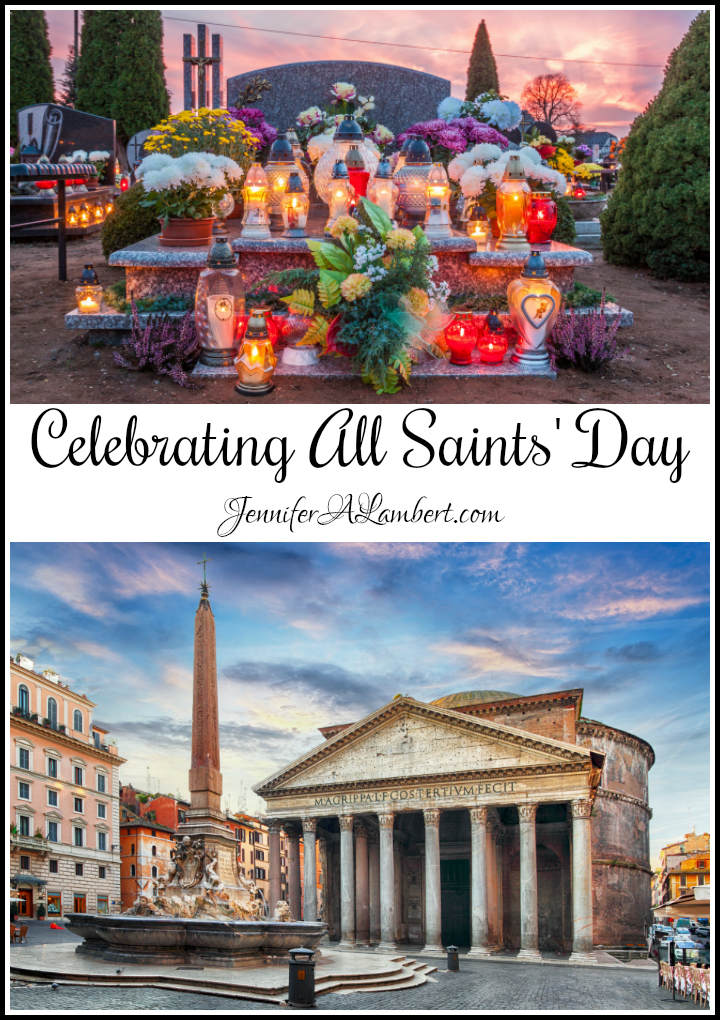
Celebrating All Saints’ and All Souls’ Days

This blog may contain affiliate links: disclosure.
Please see my suggested resources.

October 21, 2019 By Jennifer Lambert 13 Comments

Halloween, All Saints and All Souls Days celebrate the natural new year, a time when traditionally the harvest is complete, and signs of winter begin to appear. In many religions, this is a holy time when it is believed that the veil between the worlds of the living and the dead is very thin and fragile.

Many of us don’t even know our family lines well enough to tell the stories, remember the memories, and pass on a legacy. Maybe it’s something we can begin for better stability?

Halloween or All Hallows (Holy) Eve is October 31.

All Saints’ Day on November 1, is an opportunity to honor all saintly people and to look forward to the upcoming festivals – Martinmas on November 11, and Saint Nicholas on December 6th.

November 2, All Souls’ Day, is an opportunity to remember family members and friends who have passed. People remember, tell stories, and pray to those who passed on to ask for blessings.  Food is shared and sometimes left out overnight for the visiting spirits.

Samhain 1994

by Cathal Ó Searcaigh

Anocht agus mé ag meabhrú go mór fá mo chroí

Gan de sholas ag lasadh an tí ach fannsholas gríosaí

Smaointím airsean a dtug mé gean dó fadó agus gnaoi.

A Dhia, dá mba fharraige an dorchadas a bhí eadrainn

Dhéanfainn long den leabaidh seo anois agus threabhfainn

Tonnta tréana na cumhaí anonn go cé a chléibhe…

Tá sé ar shiúl is cha philleann sé chugam go brách

Ach mar a bhuanaíonn an t-éan san ubh, an crann sa dearcán;

Go lá a bhrátha, mairfidh i m’anamsa, gin dá ghrá.

English translation by Nigel McLoughlin:

Tonight as I search the depths of my heart,

in the dark of the house and the last ember-light,

I’m thinking of one I loved long ago.

And if the darkness between us became like the sea,

I’d make a boat of this bed, plunge its bow

through the waves that barge the heart’s quay.

Although he is gone and won’t ever be back,

I’ll guard in my soul the last spark of his love,

like the bird in the egg and the tree in the nut.

History

In the early years of the Christian faith, there was a consistent effort to eradicate pagan practices and to replace these with Christian festivals. The Roman Catholic church changed the Celtic Samhain festival and the Roman Feast of the Lamures and renamed them “All Hallows’ Eve,” in an attempt to turn peoples’ thinking away from a focus on the fright of death and ghosts and towards the many saints advocating for Christians in the Kingdom of Heaven. All Saints’ Day was established as the first of November with All Hallows’ Eve replacing the festival of Samhain. All Saints’ Day was probably first started by Pope Boniface IV, who consecrated the Pantheon at Rome to the Virgin Mary and all the Martyrs on May 13, 609 AD.

In the Catholic Church, All Saints’ Day is a “holy day of obligation.” Attendance at mass is a requirement on these days. All Saints’ Day is also commemorated by members of the Eastern Orthodox Church as well as some protestant churches, such as Lutheran and Anglican churches.

All Souls’ Day was established in the early fifth century with a similar intention. This day is not a holy day of obligation. The more sanctified remembering of those who have died help new Christians relate to the departed in a less frightening, or less pagan way.

Lá Féile na Marbh

On the eve of All Souls’ Day in Ireland, families lit a candle in the window to guide the souls of the Dead back to their old homes. As the veil between the worlds thinned, a sluagh, or host, of spirits walked the land, and encountered the same hospitality the Celts have always shown the living, Doors and windows were left unfastened, and any passage through the house that they once used was kept open. The table was laid with the best white cloth, and special food was left out for them to enjoy.

Until quite recently in the Irish Gaeltacht, families kept a seomra thiar, or “room to the West” – sometimes just an alcove or nook–where they placed objects that reminded them of departed ones. At sunset, the family solemnly turned towards the setting sun and spent time in loving remembrance of them. A candle was lit for each soul, then the whole family sat down to a communal feast in their honor.

It was once widely believed that the souls of the faithful departed would return to their family home on All Soul’s Night. Great care was taken to make them feel welcome.

Rituals included sweeping the floor clean, lighting a good fire, and placing the poker and tongs in the shape of a cross on the hearth. A bowl of spring water was put on the table, along with a place setting for each deceased relative. In some areas, children would go “soul-caking” – they’d visit neighbors and beg for cakes in exchange for prayers to be said for the dead.

Families would usually retire early, but before they did, many of them went to the cemetery where their loved ones were buried. They would say prayers for each departed family member, make sure the gravesites were neat and tidy, and then they would leave a candle burning on each grave.

During evening prayers, the family would again light a candle for each of their departed relatives . Often, a candle would be placed in the window of a room where a relative had died. Or, it might be placed in a window that faced in the direction of the cemetery. Then, when evening prayers were over, the candles would either be extinguished or left to burn out.

The door was always left unlatched.

Historically, the Celtic nations have always had a great respect for their ancestors and they believed that at certain times of year, the boundaries between mortals and the souls of the dead cease to exist. This is especially true of the “Three Nights of the End of Summer” – Hallowe’en, Samhain, and All Soul’s Day. The ancients also believed that the dead were the repositories of wisdom and lore and that one of the reasons they return is to speak to their descendants.

Its from these visits by a beloved ancestor that the more fortunate among us are given two very special gifts: the ability to remember old days and old ways, and a deeper understanding of how we are forever linked by blood to the past – and to the future. Source

Ideas for Celebration:

  • Learn about El Día de los Muertos/The Day of the Dead. This is a lovely site with timelines, history, traditions, and recipes.
  • Put out photos of loved ones who have passed away. Tell stories about their lives.
  • Share a harvest meal with friends and family.
  • Light candles inside and outside – in jack o’ lanterns or votive holder or pretty decorative autumn globes.
  • Plant flower bulbs in remembrance and in promise of spring!
  • Kids Party Games
  • Activities for Kids
  • Kids Party Ideas
  • Watch or read Coco.
  • Printables from Shower of Roses
  • A Slice of Smith Life
  • Attend church services. Or do these prayer services at home.
  • Visit a memorial in your city.
  • Visit a cemetery. Bonus if there are famous people or family members or passed friends.
  • Go on a history walk in your town. Our town offers ghost walks about town founders and important people.
  • Go to a thin place and feel the Spirit. Pray and thank Her for the past year and the future year.

It is certainly a good idea around Halloween to help little ones think loving thoughts about our beloved ancestors. To remember them and think of them watching over us with interest and affection can help us all feel protected in this time of year as the days of light turn to the days of darkness.

Resources:

  • The Rhythm of the Christian Year: Renewing the Religious Cycle of Festivals by Emil Bock
  • Festivals with Children by Brigitte Barz
  • The Tao of Jesus: A Book of Days for the Natural Year by John Beverley Butcher
  • All Saints: Daily Reflections on Saints, Prophets, and Witnesses for Our Time by Robert Ellsberg
Share
Pin24
Share
24 Shares
You might also like:

Filed Under: Faith Tagged With: faith, fall, folklore, saint

Hispanic Heritage Unit Study

This blog may contain affiliate links: disclosure.
Please see my suggested resources.

October 15, 2019 By Jennifer Lambert Leave a Comment

From September 15th to October 15th, the USA celebrates the generations of Hispanics who have influenced and enriched our society. But we shouldn’t just limit our learning about other cultures to one month out of the year!

The term “Hispanic,” as defined by the U.S. Census Bureau, refers to a person of Cuban, Mexican, Puerto Rican, South or Central America, or other Spanish culture or origin regardless of race.

I think it’s so important to teach our children to celebrate and value all people. We love to learn about other cultures and enjoy their art and cuisine. We love to learn history and read literature.

Often in our curriculum, the white narrative dominates and I must be diligent to seek out sources and materials to honor all cultures and peoples.

I try really hard to teach my white children about other cultures, about immigrants, and the experiences of people not like us. Sometimes, it’s uncomfortable and that’s where the learning happens. I love learning along with my kids!

Hispanic Heritage Book List

Marisol McDonald Doesn’t Match by Monica Brown

Marisol McDonald has flaming red hair and nut-brown skin. Polka dots and stripes are her favorite combination. She prefers peanut butter and jelly burritos in her lunch box. And don’t even think of asking her to choose one or the other activity at recess—she’ll just be a soccer playing pirate princess, thank you very much. To Marisol McDonald, these seemingly mismatched things make perfect sense together.

Unfortunately, they don’t always make sense to everyone else. Other people wrinkle their nose in confusion at Marisol—can’t she just be one or the other? Try as she might, in a world where everyone tries to put this biracial, Peruvian-Scottish-American girl into a box, Marisol McDonald doesn’t match. And that’s just fine with her.

A mestiza Peruvian American of European, Jewish, and Amerindian heritage, renowned author Monica Brown wrote this lively story to bring her own experience of being mismatched to life. Her buoyant prose is perfectly matched by Sara Palacios’ engaging acrylic illustrations.

Last Stop on Market Street by Matt de la Peña 

Every Sunday after church, CJ and his grandma ride the bus across town. But today, CJ wonders why they don’t own a car like his friend Colby. Why doesn’t he have an iPod like the boys on the bus? How come they always have to get off in the dirty part of town? Each question is met with an encouraging answer from grandma, who helps him see the beauty—and fun—in their routine and the world around them.

This energetic ride through a bustling city highlights the wonderful perspective only grandparent and grandchild can share, and comes to life through Matt de la Pena’s vibrant text and Christian Robinson’s radiant illustrations.

Carmela Full of Wishes by Matt de la Peña

When Carmela wakes up on her birthday, her wish has already come true–she’s finally old enough to join her big brother as he does the family errands. Together, they travel through their neighborhood, past the crowded bus stop, the fenced-off repair shop, and the panadería, until they arrive at the Laundromat, where Carmela finds a lone dandelion growing in the pavement. But before she can blow its white fluff away, her brother tells her she has to make a wish. If only she can think of just the right wish to make . . .

With lyrical, stirring text and stunning, evocative artwork, Matt de la Peña and Christian Robinson have crafted a moving ode to family, to dreamers, and to finding hope in the most unexpected places.

Love by Matt de la Peña

In this heartfelt celebration of love, Newbery Medal-winning author Matt de la Peña and bestselling illustrator Loren Long depict the many ways we experience this universal bond, which carries us from the day we are born throughout the years of our childhood and beyond. With a lyrical text that’s soothing and inspiring, this tender tale is a needed comfort and a new classic that will resonate with readers of every age.

Miguel and the Grand Harmony by Matt de la Peña

La Música exists in many places—in the twang of a guitar, in the beat of a drum, even in the whistling wind and the morning bird’s song. She brings color and life wherever she goes, connecting people to a grand harmony. And in the town of Santa Cecilia, she is everywhere.But when La Música discovers a boy with longing in his heart and no music in his home, she vows to help him find his passion.Join award-winning author Matt de la Peña and Pixar artist Ana Ramírez in this story inspired by the Disney Pixar film Coco—a story about friendship, family, and the power of music. 

Hairs/Pelitos by Sandra Cisneros

This jewel-like vignette from Sandra Cisneros’s best-selling The House on Mango Street shows, through simple, intimate portraits, the diversity among us.

Tomas and the Library Lady by Pat Mora

Tomás is a son of migrant workers. Every summer he and his family follow the crops north from Texas to Iowa, spending long, arduous days in the fields. At night they gather around to hear Grandfather’s wonderful stories. But before long, Tomás knows all the stories by heart. “There are more stories in the library,”Papa Grande tells him.  The very next day, Tomás meets the library lady and a whole new world opens up for him. 

Based on the true story of the Mexican-American author and educator Tomás Rivera, a child of migrant workers who went on to become the first minority Chancellor in the University of California system, this inspirational story suggests what libraries–and education–can make possible.  Raul Colón’s warm, expressive paintings perfectly interweave the harsh realities of Tomás’s life, the joyful imaginings he finds in books, and his special relationships with a wise grandfather and a caring librarian. 

Schomburg: The Man Who Built a Library by Carole Boston Weatherford

Amid the scholars, poets, authors, and artists of the Harlem Renaissance stood an Afro–Puerto Rican named Arturo Schomburg. This law clerk’s life’s passion was to collect books, letters, music, and art from Africa and the African diaspora and bring to light the achievements of people of African descent through the ages. When Schomburg’s collection became so big it began to overflow his house (and his wife threatened to mutiny), he turned to the New York Public Library, where he created and curated a collection that was the cornerstone of a new Negro Division. A century later, his groundbreaking collection, known as the Schomburg Center for Research in Black Culture, has become a beacon to scholars all over the world.

Waiting for the Biblioburro by Monica Brown

Ana loves stories. She often makes them up to help her little brother fall asleep. But in her small village there are only a few books and she has read them all. One morning, Ana wakes up to the clip-clop of hooves, and there before her, is the most wonderful sight: a traveling library resting on the backs of two burros‑all the books a little girl could dream of, with enough stories to encourage her to create one of her own.

Inspired by the heroic efforts of real-life librarian Luis Soriano, award-winning picture book creators Monica Brown and John Parra introduce readers to the mobile library that journeys over mountains and through valleys to bring literacy and culture to rural Colombia, and to the children who wait for the BiblioBurro.

Playing Loteria /El juego de la loteria by Rene Colato Lainez

Together a little boy and his grandma discover a world of language and realize that loved ones have special ways of understanding each other.

From North to South / Del Norte al Sur by René Laínez

Near the border, the cars began to move very slowly. Papá, go fast. I want to see Mamá, I said. José loves helping Mamá in the garden outside their home in California. But when Mamá is sent back to Mexico for not having proper papers, José and his Papá face an uncertain future. What will it be like to visit Mamá in Tijuana? When will Mamá be able to come home? Award-winning children s book author René Colato Laínez tackles the difficult and timely subject of family separation with exquisite tenderness. René is donating a portion of his royalties to El Centro Madre Assunta, a refuge for women and children who are waiting to be reunited with their families up north. Joe Cepeda s bright and engaging illustrations bring this story of hope to vivid life.

Soñadores by Yuyi Morales

En 1994, Yuyi Morales dejó su hogar en Xalapa, México, para emigrar a Estados Unidos con su hijo pequeño. Aunque dejó atrás casi todas sus pertenencias, no llegó con las manos vacías.

Trajo consigo su fortaleza, su trabajo, su pasión, sus esperanzas y sueños… y sus historias. El nuevo y magnífico libro de Yuyi Morales, Soñadores, se centra en la búsqueda por encontrar un hogar en un nuevo lugar. El trayecto de Yuyi y su hijo Kelly no fue fácil, ya que ella no hablaba inglés en esa época. Pero, juntos, descubrieron un lugar desconocido e increíble: la biblioteca pública. Allí, libro a libro, descifraron la lengua de esta nueva tierra y formaron en ella su hogar.

Soñadores es un homenaje a los migrantes y a todo lo que traen con ellos, y aportan, cuando dejan sus países. Es una historia de familia. Una historia que nos recuerda que todos somos soñadores que llevamos nuestros propios regalos donde quiera que vayamos. Bella y poderosa en todo momento, pero especialmente de una urgente premura hoy en día en que el futuro de los dreamers es incierto, esta es una historia actual y eterna.

El poético texto se complementa con unas espléndidas ilustraciones llenas de detalle y simbolismo. Incluye un ensayo autobiográfico sobre la experiencia de Yuyi, una bibliografía de los libros que la han inspirado (y la siguen inspirando) y una descripción de las bellas imágenes, texturas y recuerdos que utilizó para la creación de este libro.

También disponible la edición en inglés, Dreamers.

La Frontera: El Viaje Con Papa / My Journey with Papa by Deborah Mills

Join a young boy and his father on a daring journey from Mexico to Texas to find a new life. They’ll need all the resilience and courage they can muster to safely cross the border ? la frontera ? and to make a home for themselves in a new land.

My Shoes and I: Crossing Three Borders / Mis zapatos y yo: Cruzando tres fronteras by René Colato Laínez 

Young René’s mother has sent him a new pair of shoes from the United States. He loves his new shoes. “They walk everywhere I walk. They jump every time I jump. They run as fast as me. We always cross the finish line at the same time.”

René—with his new shoes—and his father set off on the long journey to meet his mother in the United States. He says goodbye to his friends in El Salvador, and “Uno, dos, tres, my shoes and I are ready to go.” The trip is difficult. They take buses and walk across El Salvador, into Guatemala and then into Mexico. His brand-new shoes lose their shine, turning dirty and gray. They become elephants, pushing against the wind; race cars, fleeing hungry dogs; swim shoes, escaping floods; and submarines, navigating through sticky mud. When holes appear on the soles of his shoes, his father won’t let him give up. “René, my strong boy, we want to be with Mamá.”

Sharing his own experiences, René Colato Laínez’s moving bilingual picture book brings to life the experiences of many young children who make the arduous journey from Central America to the United States in search of a better life.

Round Is a Tortilla: A Book of Shapes by Roseanne Thong

In this lively picture book, children discover shapes all around them: rectangles are ice-cream carts and stone metates, while triangles are slices of watermelon and quesadillas. Many of the featured objects are Latino in origin, and all are universal in appeal. With rich illustrations, a fun-to-read rhyming text, and an informative glossary, this playful concept book will reinforce the shapes found in every child’s day!

One Is a Piñata: A Book of Numbers by Roseanne Thong

Boisterous illustrations and rhyming text: One is a rainbow. One is a cake. One is a piñata that’s ready to break! In this lively picture book, a companion to the Pura Belpré–honored Green Is a Chile Pepper, children discover a fiesta of numbers in the world around them, all the way from one to ten. Many of the featured objects are Latino in origin and all are universal in appeal. With rich, boisterous illustrations, a fun-to-read rhyming text, and an informative glossary, this vibrant book enumerates the joys of counting and the wonders that abound in every child’s day!

Green Is a Chile Pepper: A Book of Colors by Roseanne Thong

In this lively picture book that Booklist described as “a cheerful color-concept book that presents a slice of Latino culture through food and fun,” children discover a world of colors all around them: red is spices and swirling skirts, yellow is masa, tortillas, and sweet corn cake. Many of the featured objects are Latino in origin, and all are universal in appeal. With rich, boisterous illustrations, fun-to-read rhyming text, and an informative glossary, this playful concept book will reinforce the colors found in every child’s day!

What Can You Do with a Paleta / ¿Qué Puedes Hacer con una Paleta? by Carmen Tafolla

Abuela (English Edition with Spanish Phrases) by Arthur Dorros

In this bilingual paperback edition, discover the joys of a paleta—the traditional Mexican popsicle treat sold from the wagon with the tinkly bell that brings children running from every direction. Create a masterpiece, make tough choices (strawberry or coconut?), or cool off on a warm summer’s day—there’s so much to do with a paleta.

Come join Rosalba and her grandmother, her abuela, on a magical journey as they fly over the streets, sights, and people of New York City which sparkles below. The story is narrated in English, and sprinkled with Spanish phrases as Abuela points out places that they explore together. The exhilaration in Rosalba’s and Abuela’s story is magnified by the loving bond that only a grandmother and granddaughter can share.

In the Country We Love: My Family Divided by Diane Guerrero

Diane Guerrero, the television actress from the megahit Orange is the New Black and Jane the Virgin, was just fourteen years old on the day her parents were detained and deported while she was at school. Born in the U.S., Guerrero was able to remain in the country and continue her education, depending on the kindness of family friends who took her in and helped her build a life and a successful acting career for herself, without the support system of her family.

In the Country We Love is a moving, heartbreaking story of one woman’s extraordinary resilience in the face of the nightmarish struggles of undocumented residents in this country. There are over 11 million undocumented immigrants living in the US, many of whom have citizen children, whose lives here are just as precarious, and whose stories haven’t been told. Written with bestselling author Michelle Burford, this memoir is a tale of personal triumph that also casts a much-needed light on the fears that haunt the daily existence of families likes the author’s and on a system that fails them over and over.

Enchanted Air: Two Cultures, Two Wings: A Memoir by Margarita Engle

In this poetic memoir, which won the Pura Belpré Author Award, was a YALSA Nonfiction Finalist, and was named a Walter Dean Myers Award Honoree, acclaimed author Margarita Engle tells of growing up as a child of two cultures during the Cold War.

Margarita is a girl from two worlds. Her heart lies in Cuba, her mother’s tropical island country, a place so lush with vibrant life that it seems like a fairy tale kingdom. But most of the time she lives in Los Angeles, lonely in the noisy city and dreaming of the summers when she can take a plane through the enchanted air to her beloved island. Words and images are her constant companions, friendly and comforting when the children at school are not.

Then a revolution breaks out in Cuba. Margarita fears for her far-away family. When the hostility between Cuba and the United States erupts at the Bay of Pigs Invasion, Margarita’s worlds collide in the worst way possible. How can the two countries she loves hate each other so much? And will she ever get to visit her beautiful island again?

The Distance Between Us: Young Readers Edition by Reyna Grande

When her parents make the dangerous and illegal trek across the Mexican border in pursuit of the American dream, Reyna and her siblings are forced to live with their stern grandmother, as they wait for their parents to build the foundation of a new life.

But when things don’t go quite as planned, Reyna finds herself preparing for her own journey to “El Otro Lado” to live with the man who has haunted her imagination for years: her long-absent father. Both funny and heartbreaking, The Distance Between Us sheds light on the immigrant experience beautifully capturing the struggle that Reyna and her siblings endured while trying to assimilate to a different culture, language, and family life in El Otro Lado (The Other Side).

Path to the Stars: My Journey from Girl Scout to Rocket Scientist by Sylvia Acevedo

A meningitis outbreak in their underprivileged neighborhood left Sylvia Acevedo’s family forever altered. As she struggled in the aftermath of loss, young Sylvia’s life transformed when she joined the Brownies. The Girl Scouts taught her how to take control of her world and nourished her love of numbers and science.
     With new confidence, Sylvia navigated shifting cultural expectations at school and at home, forging her own trail to become one of the first Latinx to graduate with a master’s in engineering from Stanford University and going on to become a rocket scientist at NASA’s Jet Propulsion Laboratory.

The Astronaut With a Song for the Stars: The Story of Dr. Ellen Ochoa by Julia Finley Mosca

Growing up in a family of immigrants, Ellen dreamed of becoming a professional flutist, but all of that changed when she discovered engineering in college. Though she was told that field of study wasn’t for girls, the bright young scientist refused to give up-ultimately becoming a NASA astronaut who shattered barriers and rocketed to success!

The Storyteller’s Candle / La Velita De Los Cuentos by Lucia Gonzalez 

The winter of 1929 feels especially cold to cousins Hildamar and Santiago—they arrived in New York City from sunny Puerto Rico only months before. Their island home feels very far away indeed, especially with Three Kings’ Day rapidly approaching. But then a magical thing happened. A visitor appears in their class, a gifted storyteller and librarian by the name of Pura Belpré. She opens the children’s eyes to the public library and its potential to be the living, breathing heart of the community. The library, after all, belongs to everyone—whether you speak Spanish, English, or both. The award-winning team of Lucía González and Lulu Delacre have crafted an homage to Pura Belpré, New York City’s first Latina librarian. Through her vision and dedication, the warmth of Puerto Rico came to the island of Manhattan in a most unexpected way.

Sylvia & Aki by Winifred Conkling

Young Sylvia Mendez never expected to be at the center of a landmark legal battle. Young Aki Munemitsu never expected to be sent away from her home and her life as she knew it. The two girls definitely never expected to know each other, until their lives intersected on a Southern California farm in a way that changed the country forever. Who are Sylvia and Aki? And why did their family stories matter then and still matter today? This book reveals the remarkable, never-before-told story—based on true events—of Mendez vs. Westminster School District, the California court case that desegregated schools for Latino children and set the stage for Brown vs. Topeka Board of Education at the national level.

Who Was Selena? by Max and Kate Bisantz 

As a young girl, Selena Quintanilla sang in a band called Selena y Los Dinos with her brother and sister. The family performed at fairs, weddings, quinceañeras, and on street corners in their native Texas. Selena learned how to sing in Spanish and soon became hugely popular within the Latino community–so much so that she became the best-selling Latin artist of the 1990s. Selena was poised to be a great success, but her life was cut short after being fatally wounded by the president of her fan club. Selena’s contributions to music and fashion during her life made her one of the top Latin musicians in the 1990s, and readers will want to know more about the woman who introduced the world to Tejano music.

I Got This: To Gold and Beyond by Laurie Hernandez

Gold medal-winning Olympic gymnast and Dancing with the Stars champion Laurie Hernandez shares her story in her own words in this debut book for fans of all ages—with never-before-seen photos!

At sixteen years old, Laurie Hernandez has already made many of her dreams come true—and yet it’s only the beginning for this highly accomplished athlete. A Latina Jersey girl, Laurie saw her life take a dramatic turn last summer when she was chosen to be a part of the 2016 US Olympic gymnastics team. After winning gold in Rio as part of the Final Five, Laurie also earned an individual silver medal for her performance on the balance beam. Nicknamed “the Human Emoji” for her wide-eyed and animated expressions, Laurie continued to dance her way into everyone’s hearts while competing on the hit reality TV show Dancing with the Stars, where she was the youngest-ever winner of the Mirrorball Trophy.

Poignant and funny, Laurie’s story is about growing up with the dream of becoming an Olympian and what it took to win gold. She talks about her loving family, her rigorous training, her intense sacrifices, and her amazing triumphs.

Be prepared to fall in love with and be mesmerized by America’s newest sweetheart all over again.

That’s Not Fair! / ¡No Es Justo!: Emma Tenayuca’s Struggle for Justice/La lucha de Emma Tenayuca por la justicia by Carmen Tafolla and Sharyll Teneyuca

A vivid depiction of the early injustices encountered by a young Mexican-American girl in San Antonio in the 1920’s, this book tells the true story of Emma Tenayuca. Emma learns to care deeply about poverty and hunger during a time when many Mexican Americans were starving to death and working unreasonably long hours at slave wages in the city’s pecan-shelling factories. Through astute perception, caring, and personal action, Emma begins to get involved, and eventually, at the age of 21, leads 12,000 workers in the first significant historical action in the Mexican-American struggle for justice. Emma Tenayuca’s story serves as a model for young and old alike about courage, compassion, and the role everyone can play in making the world more fair.

Separate Is Never Equal: Sylvia Mendez and Her Family’s Fight for Desegregation by Duncan Tonatiuh

Almost 10 years before Brown vs. Board of Education, Sylvia Mendez and her parents helped end school segregation in California. An American citizen of Mexican and Puerto Rican heritage who spoke and wrote perfect English, Mendez was denied enrollment to a “Whites only” school. Her parents took action by organizing the Hispanic community and filing a lawsuit in federal district court. Their success eventually brought an end to the era of segregated education in California.

Dolores Huerta: A Hero to Migrant Workers by Sarah Warren

Dolores is a teacher, a mother, and a friend. She wants to know why her students are too hungry to listen, why they don’t have shoes to wear to school. Dolores is a warrior, an organizer, and a peacemaker. When she finds out that the farm workers in her community are poorly paid and working under dangerous conditions, she stands up for their rights.

This is the story of Dolores Huerta and the extraordinary battle she waged to ensure fair and safe workplaces for migrant workers. The powerful text, paired with Robert Casilla’s vibrant watercolor-and-pastel illustrations, brings Dolores’s amazing journey to life. A timeline, additional reading, articles, websites, and resources for teachers are included.

My Name is Celia/Me llamo Celia: The Life of Celia Cruz/la vida de Celia Cruz by Monica Brown

This bilingual book allows young readers to enter Celia Cruz’s life as she becomes a well-known singer in her homeland of Cuba, then moves to New York City and Miami where she and others create a new type of music called salsa.

An inspiring picture book biography of storyteller, puppeteer, and New York City’s first Puerto Rican librarian, who championed bilingual literature.

Planting Stories: The Life of Librarian and Storyteller Pura Belpré by Anika Aldamuy Denise

When she came to America in 1921, Pura Belpré carried the cuentos folklóricos of her Puerto Rican homeland. Finding a new home at the New York Public Library as a bilingual assistant, she turned her popular retellings into libros and spread story seeds across the land. Today, these seeds have grown into a lush landscape as generations of children and storytellers continue to share her tales and celebrate Pura’s legacy.

Dancing Hands: How Teresa Carreño Played the Piano for President Lincoln by Margarita Engle

As a little girl, Teresa Carreño loved to let her hands dance across the beautiful keys of the piano. If she felt sad, music cheered her up, and when she was happy, the piano helped her share that joy. Soon she was writing her own songs and performing in grand cathedrals. Then a revolution in Venezuela forced her family to flee to the United States. Teresa felt lonely in this unfamiliar place, where few of the people she met spoke Spanish. Worst of all, there was fighting in her new home, too—the Civil War.

Still, Teresa kept playing, and soon she grew famous as the talented Piano Girl who could play anything from a folk song to a sonata. So famous, in fact, that President Abraham Lincoln wanted her to play at the White House! Yet with the country torn apart by war, could Teresa’s music bring comfort to those who needed it most?

Dona Flor: A Tall Tale About a Giant Woman with a Great Big Heart by Pat Mora

Doña Flor is a giant lady who lives in a tiny village in the American Southwest. Popular with her neighbors, she lets the children use her flowers as trumpets and her leftover tortillas as rafts. Flor loves to read, too, and she can often be found reading aloud to the children. One day, all the villagers hear a terrifying noise: it sounds like a huge animal bellowing just outside their village. Everyone is afraid, but not Flor. She wants to protect her beloved neighbors, so with the help of her animal friends, she sets off for the highest mesa to find the creature. Soon enough, though, the joke is on Flor and her friends, who come to rescue her, as she discovers the small secret behind that great big noise.

Mama The Alien/Mama la Extraterrestre by Rene Colato Lainez

When Mama’s purse falls on the floor, Sofia gets a peek at Mama’s old Resident Alien card and comes to the conclusion that Mama might be an alien from outer space. Sofia heads to the library to learn more about aliens. Some are small and some are tall. Some have four fingers on each hand and some have large, round eyes. Their skin can be gray or blue or green. But Mama looks like a human mother! Could she really be an alien? Sofia is still puzzling out this mystery when she sees an alien-looking Mama one night. It turns out Mama is doing a beauty treatment so she will look her best for her citizenship ceremony. That’s when Sofia realizes that in English, an alien can be someone from another planet, and it can also be a person from another country. Just like Mama! Filled with imagination and humor, Mama the Alien/Mama la extraterrestre is a lighthearted immigration tale and a celebration of family, no matter where that family comes from. Even if it s outer space!”

I Love Saturdays y domingos by Alma Flor Ada

Saturdays and Sundays are very special days for the child in this story. On Saturdays, she visits Grandma and Grandpa, who come from a European-American background, and on Sundays — los domingos — she visits Abuelito y Abuelita, who are Mexican-American. While the two sets of grandparents are different in many ways, they also have a great deal in common — in particular, their love for their granddaughter.
While we follow our narrator to the circus and the pier, share stories from her grandparents’ pasts, and celebrate her birthday, the depth and joy of both cultures are conveyed in Spanish and English. This affirmation of both heritages will speak to all children who want to know more about their own families and ethnic backgrounds.

Maya’s Blanket/La Manta de Maya by Monica Brown

Little Maya has a special blanket that Grandma stitched with her own two hands. As Maya grows, her blanket becomes worn and frayed, so with Grandma s help, Maya makes it into a dress. Over time the dress is made into a skirt, a shawl, a scarf, a hair ribbon, and finally, a bookmark. Each item has special, magical, meaning for Maya; it animates her adventures, protects her, or helps her in some way. But when Maya loses her bookmark, she preserves her memories by creating a book about her adventures and love of these items. When Maya grows up, she shares her book Maya’s Blanket/La manta de Maya with her own little daughter while snuggled under her own special blanket. Inspired by the traditional Yiddish folk song Hob Ikh Mir a Mantl ( I Had a Little Coat ), this delightful story puts a child-focused, Latino spin on the tale of an item that is made into smaller and smaller items. Maya’s Blanket/La manta de Maya charmingly brings to life this celebration creativity, recycling, and enduring family love.

Sofia Valdez, Future Prez by Andrea Beaty

Every morning, Abuelo walks Sofia to school . . . until one day, when Abuelo hurts his ankle at a local landfill and he can no longer do so. Sofia misses her Abuelo and wonders what she can do about the dangerous Mount Trashmore. Then she gets an idea—the town can turn the slimy mess into a park! She brainstorms and plans and finally works up the courage to go to City Hall—only to be told by a clerk that she can’t build a park because she’s just a kid! Sofia is down but not out, and she sets out to prove what one kid can do.

A Gift from Abuela by Cecilia Ruiz

The first time Abuela holds Nina, her heart overflows with tenderness. And as Nina grows up, she and Abuela spend plenty of time together. Abuela can’t help thinking how much she’d like to give Nina a very special treat, so she saves a little bit of her money every week — a few pesos here, a few pesos there. When the world turns upside down, Abuela’s dream of a surprise for Nina seems impossible. Luckily, time spent together — and the love Abuela and Nina have for each other — could turn out to be the very best gift of all. With a soft and subtle hand, author-illustrator Cecilia Ruiz draws from her own history to share a deeply personal tale about remembering what’s most important when life starts to get in the way.

The Quiet Place by Sarah Stewart

When Isabel and her family move to the United States, Isabel misses all the things she left behind in Mexico, especially her aunt Lupita and hearing people speak Spanish. But she also experiences some wonderful new things–her first snow storm and a teacher who does not speak Spanish but has a big smile. Even better, Papa and her brother Chavo help her turn a big box into her own quiet place, where she keeps her books and toys and writes letters to Aunt Lupita. As she decorates and adds more and more on to her quiet place, it is here that Isabel feels the most at home in her new country while she learns to adjust to the changes in her life.

Set in the 1950s and told through Isabel’s letters to her aunt, Sarah Stewart and Caldecott Medalist David Small have created a charming and unforgettable young heroine who will win the hearts of readers in this story of immigration and assimilation. 

What Can You Do With a Rebozo?/¿Qué puedes hacer con un rebozo? by Carmen Tafolla

A cradle for baby, a superhero’s cape, a warm blanket on a cool night–there are so many things you can do with a rebozo. Through the eyes of a young girl, readers are introduced to the traditional shawl found in many Mexican and Mexican-American households.

Growing Up With Tamales / Los tamales de Ana by Gwendolyn Zepeda

“My name is Ana. Every year, my family makes tamales for Christmas. This year, I am six, so I get to mix the dough, which is made of cornmeal. My sister Lidia is eight, so she gets to spread the dough on the corn husk leaves. I wish I was eight, so that my hands would be big enough to spread the dough just right–not too thick and not too thin.”

And so the years pass, and Ana turns eight, ten, twelve, fourteen, sixteen. But every year, big sister Lidia is always two years older. Ana envies her elder sibling and wishes she could do what Lidia does: put just the right amount of meat inside the tamales and roll them up; steam the tamales without scalding herself with the hot, hot steam; chop and cook the meat for the tamales without cutting or burning her hands.

When she turns eighteen, though, Ana knows she will keep making tamales and she will be able to do all of the steps herself in her very own factory. When Christmas comes around, Ana will deliver tamales to all of her customers around the world, in delivery trucks that say “Ana’s Tamales.” And maybe Ana will even let Lidia work for her.

Gwendolyn Zepeda’s rhythmic prose is combined with April Ward’s bright illustrations to create an affectionate and amusing story about sibling relationships that introduces an important Hispanic holiday tradition–making tamales!

Mango Moon by Diane de Anda

When a father is taken away from his family and facing deportation, his children are left to grieve and wonder about what comes next. Maricela, Manuel, and their mother face the many challenges of having their lives completely changed by the absence of their father and husband. Their day-to-day norm now includes moving to a new house, missed soccer games and birthday parties, and emptiness. Though Mango Moon shows what life is like from a child’s perspective when a parent is deported, Maricela learns that her love for her father continues on even though he’s no longer part of her daily life.

Mango, Abuela, and Me by Meg Medina

Mia’s abuela has left her sunny house with parrots and palm trees to live with Mia and her parents in the city. The night she arrives, Mia tries to share her favorite book with Abuela before they go to sleep and discovers that Abuela can’t read the words inside. So while they cook, Mia helps Abuela learn English (“Dough. Masa”), and Mia learns some Spanish too, but it’s still hard for Abuela to learn the words she needs to tell Mia all her stories. Then Mia sees a parrot in the pet-shop window and has the perfecto idea for how to help them all communicate a little better.

Walk with Me by Jairo Buitrago

A deceptively simple, imaginative story depicting the complex emotional reality of a girl whose father no longer lives at home.

The girl conjures up an imaginary companion, a lion, who will come with her on the long walk home from school. He will help her to pick up her baby brother from daycare and shop at the store (which has cut off the family’s credit), and he’ll keep her company all along the way until she is safe at home. He will always come back when she needs him, unlike the father whom she sees only in a photograph — a photograph in which he clearly resembles a lion.

Alma and How She Got Her Name by Juana Martinez-Neal

If you ask her, Alma Sofia Esperanza José Pura Candela has way too many names: six! How did such a small person wind up with such a large name? Alma turns to Daddy for an answer and learns of Sofia, the grandmother who loved books and flowers; Esperanza, the great-grandmother who longed to travel; José, the grandfather who was an artist; and other namesakes, too. As she hears the story of her name, Alma starts to think it might be a perfect fit after all — and realizes that she will one day have her own story to tell.

All Around Us by Xelena Gonzalez

Grandpa says circles are all around us. He points to the rainbow that rises high in the sky after a thundercloud has come. “Can you see? That’s only half of the circle. That rest of it is down below, in the earth.” He and his granddaughter meditate on gardens and seeds, on circles seen and unseen, inside and outside us, on where our bodies come from and where they return to. They share and create family traditions in this stunning exploration of the cycles of life and nature.

The Composition by Antonio Skarmeta

Pedro is a nine-year-old boy whose main interest in life is playing soccer. The arrest of his friend Daniel’s father and a visit to the school of an army captain who wants the children to write a composition entitled “What My Family Does at Night” suddenly force Pedro to make a difficult choice. 

César: ¡Sí, se puede! Yes, We Can! by Carmen T. Bernier-Grand

Born in 1927 in Yuma, Arizona, César Chavez lived the hardscrabble life of a migrant worker during the Depression. Although his mother wanted him to get an education, César left school after eighth grade to work. He grew to be a charismatic leader and founded the National Farm Workers Association, an organization that fought for basic rights for farm workers. In powerful poems and dramatic stylized illustrations, Carmen T. Bernier-Grand and David Díaz pay tribute to Chavez’s legacy helping migrant workers improve their lives by doing things by themselves for themselves.

Clemente! by Willie Perdomo

Born in Puerto Rico, Roberto Clemente was the first Latin American player to be inducted into the Baseball Hall of Fame, and the only player for whom the five-year initiation period was waived. Known not only for his exceptional baseball skills but also for his extensive charity work in Latin America, Clemente was well-loved during his eighteen years playing for the Pittsburgh Pirates. He died in a plane crash while bringing aid supplies to earthquake victims in Nicaragua.

Danza!: Amalia Hernández and Mexico’s Folkloric Ballet by Duncan Tonatiuh

Danza! is a celebration of Hernández’s life and of the rich history of dance in Mexico. As a child, Amalia always thought she would grow up to be a teacher, until she saw a performance of dancers in her town square. She was fascinated by the way the dancers twirled and swayed, and she knew that someday she would be a dancer, too. She began to study many different types of dance, including ballet and modern, under some of the best teachers in the world. Hernández traveled throughout Mexico studying and learning regional dances. Soon she founded her own dance company, El Ballet Folklórico de México, where she integrated her knowledge of ballet and modern dance with folkloric dances. The group began to perform all over the country and soon all over the world, becoming an international sensation that still tours today.

Joelito’s Big Decision: La Gran Decisión de Joelito by Ann Berlak

Every Friday evening 9 year old Joelito goes with his family to MacMann’s for a juicy burger. But this Friday is different. This time, Joelito’s best friend Brandon is standing in a crowd outside the fast food restaurant protesting the low pay his parents earn there. Will Joelito cross the picket line for a tasty burger? Find out in Joelito’s Big Decision (La gran decisión de Joelito), in English & Spanish. Ages: 6-12. “…the flow of the story is not only well-paced but lovingly told. It feels natural, as if based on conversations overheard among children. Berlak has a vivid understanding of the issue as seen through the fourth-grader’s eyes… The influence of classic Mexican folkloric art is proudly overt… In fact, the creative visuals should only enhance the readers’ sense of wonder. Camacho is widely celebrated for his murals…The story of workers fighting for dignity and security for their families is ongoing. The heritage of struggle is well told here.” The Cultural Worker “This is a wonderful book taking on a timely topic. What do you do when Friday is your favorite day because you get to go have hamburgers at your favorite restaurant, BUT, when you get there your friends are outside protesting? …Will you stand up or sit down (and eat)? 

Kitchen Dance by Maurie J. Manning

A little girl wakes in the night to mysterious, inviting noises. She rouses her brother, and they sneak downstairs and peek into the kitchen. To their amazement and delight, their parents are dancing and singing—“?Como te quiero! Oh, how I love you!” —as they clean up and put food away. Mama and Papa discover the two kids and sweep them into the embrace of a family dance. Slowly, the song changes to a lullaby. . . the children close sleepy eyes. . . then Mama and Papa tuck them into bed again. The story reads like poetry. The art moves from subdued tones to hot tropical colors and back again. And as you turn the pages, you can almost hear the music—changing from a pop ballad to a hot tango to a cozy lullaby. All in all, it’s a perfect bedtime book, with a satisfying hugs-and-kisses ending.

The Little Doctor /El Doctorcito by Juan J. Guerra

Salvador raced home from school to share exciting news with his abuela: he made an A+ on his science test! But at home, he learns that his grandmother needs his help. She is going to the doctor and wants her grandson to interpret for her. Abuela is nervous because she has never been to a doctor in the United States. In El Salvador, she either saw a curandera or drank te de manzanilla when she felt sick.

When he learns that none of the physicians speak Spanish, the boy realizes that he is completely responsible for making sure the doctor understands his grandmother and that she understands his instructions! But in spite of his help, the visit does not go well. The doctor rushes in and out. He doesn’t listen to Abuela. And he tells Salvador that she should not eat so much Mexican food! Abuela is so upset that she threatens not to take the medication the doctor prescribes! What can Salvador do to help her?

Looking for Bongo by Eric Velasquez

The boy knows Bongo was right there with him this morning—but suddenly, Bongo is missing. He asks his whole family if they’ve seen the stuffed toy.  “Yo no sé,” says abuela, “I don’t know.” 

Mom and Dad haven’t seen him either. And Gato just meows and runs away. 

When he finds Bongo, the boy is thrilled—but he still doesn’t understand how his toy ended up there. So he sets a trap to catch the Bongo thief.

Luis Paints the World by Terry Farish

Luis wishes Nico wasn’t leaving for the Army. To show Nico he doesn’t need to go, Luis begins a mural on the alleyway wall. Their house, the river, the Parque de las Ardillas―it’s the world, all right there. Won’t Nico miss Mami’s sweet flan? What about their baseball games in the street?

But as Luis awaits his brother’s return from duty, his own world expands as well, through swooping paint and the help of their bustling Dominican neighborhood.

Martí’s Song for Freedom / Martí y sus versos por la libertad by Emma Otheguy

A bilingual biography of José Martí, who dedicated his life to the promotion of liberty, the abolishment of slavery, political independence for Cuba, and intellectual freedom. Written in verse with excerpts from Martí’s seminal work, Versos sencillos. 

My Papi Has a Motorcycle by Isabel Quintero

When Daisy Ramona zooms around her neighborhood with her papi on his motorcycle, she sees the people and places she’s always known. She also sees a community that is rapidly changing around her.

But as the sun sets purple-blue-gold behind Daisy Ramona and her papi, she knows that the love she feels will always be there.

Little Night/Nochecita by Yuyi Morales

As the long day comes to an end, Mother Sky fills a tub with falling stars and calls, “Bath time for Little Night!”

Little Night answers from afar, “Can’t come. I am hiding and you have to find me, Mama. Find me now!”

Where could Little Night be? Down a rabbit hole? In a blueberry field? Among the stripes of bees? Exquisitely painted and as gentle as Little Night’s dress crocheted from clouds, this is a story to treasure.

Octopus Stew by Eric Velasquez

The octopus Grandma is cooking has grown to titanic proportions. “¡Tenga cuidado!” Ramsey shouts. “Be careful!” But it’s too late. The octopus traps Grandma!

Ramsey uses both art and intellect to free his beloved abuela.

Then the story takes a surprising twist. And it can be read two ways. Open the fold-out pages to find Ramsey telling a story to his family. Keep the pages folded, and Ramsey’s octopus adventure is real.

This beautifully illustrated picture book, drawn from the author’s childhood memories, celebrates creativity, heroism, family, grandmothers, grandsons, Puerto Rican food, Latinx culture and more.

Pele, King of Soccer/Pele, El Rey del Futbol by Monica Brown

This bilingual picture book will inspire, teach, and amaze readers as they learn about the man who revolutionized the sport of soccer.

Do you know how a poor boy from Brazil who loved fútbol more than anything else became the biggest soccer star the world has ever known?

Rene Has Two Last Names / Rene tiene dos apellidos by Rene Colato Lainez

Young Rene is from El Salvador, and he doesn’t understand why his name has to be different in the United States. When he writes Colato, he sees his paternal grandparents, Rene and Amelia. When he writes Lainez, he sees his maternal grandparents, Angela and Julio. Without his second “like a hamburger without the meat or a pizza without cheese or a hot dog without a wiener.”

His new classmates giggle when Rene tells them his name. “That’s a long dinosaur name,” one says. “Your name is longer than an anaconda,” another laughs. But Rene doesn’t want to lose the part of him that comes from his mother’s family. So when the students are given a project to create a family tree, Rene is determined to explain the importance of using both of his last names. On the day of his presentation, Rene explains that he is as hard working as Abuelo Rene, who is a farmer, and as creative as his Abuela Amelia, who is a potter. He can tell stories like his Abuelo Julio and enjoys music like his Abuela Angela.

Roses for Isabella by Diana Cohn

Roses for Isabella invites us to experience life in Ecuador through the eyes of a young girl who keeps a journal and loves to write. We learn about Isabella’s parents who work on one of the hundreds of farms growing beautiful roses that are sold all over the world. But not all of these farms are fair to workers and kind to the earth. Through Isabella, we learn how her family’s life changes for the better when her parents find work at a Fair Trade farm. 

Sofi and the Magic, Musical Mural / Sofi y el mágico mural musical by Raquel M. Ortiz

When Sofi walks through her barrio to the local store, she always passes a huge mural with images from Puerto Rico: musicians, dancers, tropical flowers and her least favorite a vejigante, a character from carnival that wears a scary mask.

One day on her way home from the bodega, she stops in front of the mural. Is one of the dancers inviting her to be his partner? “Okay, lets dance,” Sofi giggles, and suddenly shes in Old San Juan, surrounded by dancers and musicians playing bongos, tambourines and güiros. She begins to dance and sing with her new friends, but her pleasure turns to fear when the vejigante wearing a black jumper with yellow fringe and a red, three-horned mask spins her around and around! What does he want from her? How can she get away?

Tito Puente, Mambo King/Tito Puente, Rey del Mambo by Monica Brown 

In this vibrant bilingual picture book biography of musician Tito Puente, readers will dance along to the beat of this mambo king’s life. Tito Puente loved banging pots and pans as a child, but what he really dreamed of was having his own band one day. From Spanish Harlem to the Grammy Awards—and all the beats in between—this is the true life story of a boy whose passion for music turned him into the “King of Mambo.”

¡Si, Se Puede! / Yes, We Can!: Janitor Strike in L.A. by Diana Cohn

¡Sí, Se Puede! / Yes, We Can! is a bilingual fictional story set against the backdrop of the successful janitors’ strike in Los Angeles in 2000. It tells about Carlitos, whose mother is a janitor. Every night, he sleeps while his mother cleans in one of the skyscrapers in downtown L.A. When she comes home, she waves Carlitos off to school before she goes to sleep. One night, his mamá explains that she can’t make enough money to support him and his abuelita the way they need unless she makes more money as a janitor. She and the other janitors have decided to go on strike.

How will Carlitos support his mother? Carlitos wants to help but he cannot think of a way until his teacher, Miss Lopez, explains in class how her own grandfather had fought for better wages for farmworkers when he first came to the United States. He and the other children in his class join the marchers with a very special sign for his mom!

Two White Rabbits by Jairo Buitrago

In this moving and timely story, a young child describes what it is like to be a migrant as she and her father travel north toward the U.S. border.

They travel mostly on the roof of a train known as The Beast, but the little girl doesn’t know where they are going. She counts the animals by the road, the clouds in the sky, the stars. Sometimes she sees soldiers. She sleeps, dreaming that she is always on the move, although sometimes they are forced to stop and her father has to earn more money before they can continue their journey.

As many thousands of people, especially children, in Mexico and Central America continue to make the arduous journey to the U.S. border in search of a better life, this is an important book that shows a young migrant’s perspective.

The Streets are Free by Kurusa

This inspiring book is based on the true story of the children of the barrio of San Jose de la Urbina in Caracas, Venezuela. There are no parks where they live, and the children must play in the streets. They ask the mayor for an empty lot to build a playground, but all they get are campaign promises. They know that they are the only ones who will make something happen, so they get their friends and family involved until the whole barrio unites to create a space of their own.

A Chair for My Mother by Vera B. Williams

After their home is destroyed by a fire, Rosa, her mother, and grandmother save their coins to buy a really comfortable chair for all to enjoy.

Where Are You From? by Yamile Saied Méndez

This resonant picture book tells the story of one girl who constantly gets asked a simple question that doesn’t have a simple answer. A great conversation starter in the home or classroom—a book to share, in the spirit of I Am Enough by Grace Byers and Keturah A. Bobo.

When a girl is asked where she’s from—where she’s really from—none of her answers seems to be the right one.

Unsure about how to reply, she turns to her loving abuelo for help. He doesn’t give her the response she expects. She gets an even better one.

Where am I from?

You’re from hurricanes and dark storms, and a tiny singing frog that calls the island people home when the sun goes to sleep….

With themes of self-acceptance, identity, and home, this powerful, lyrical picture book will resonate with readers young and old, from all backgrounds and of all colors—especially anyone who ever felt that they don’t belong.

Books about Sonia Sotomayor for every reading level:

Who Is Sonia Sotomayor? by Megan Stine

When I Grow Up: Sonia Sotomayor by Annmarie Anderson

I am Sonia Sotomayor by Brad Meltzer

Sonia Sotomayor: A Judge Grows in the Bronx / La juez que crecio en el Bronx by Jonah Winter

The Beloved World of Sonia Sotomayor

Turning Pages: My Life Story by Sonia Sotomayor

Women Who Broke the Rules: Sonia Sotomayor by Kathleen Krull

Celebration Ideas

  • Read a new book. Get some that are in Spanish and in English.
  • Learn some history about Central and South American and Latinx Americans.
  • Learn about different countries, ethnic groups, origins.
  • Go to a new restaurant or try a new recipe. There’s so much more out there than mediocre strip mall Tex-Mex dives.
  • Visit an art or cultural exhibit.
  • Listen to music.
  • Dance!
  • Donate to a charity benefiting an Hispanic or immigration cause.
  • Movie night.
  • Learn some Spanish.
  • Discuss discrimination and injustice.
  • Discuss immigration.
  • Activities from Scholastic.

How do you celebrate different cultures in your home, classroom, or homeschool?

Share
Pin14
Share
14 Shares
You might also like:

Filed Under: Homeschool Tagged With: book list, unit study

  • « Previous Page
  • 1
  • …
  • 26
  • 27
  • 28
  • 29
  • 30
  • …
  • 137
  • Next Page »
Suggested ResourcesNotebookingPages.com LIFETIME Membership

Archives

Popular Posts

10 DIY Gifts with Essential Oils10 DIY Gifts with Essential Oils
Natural Remedies for HeadacheNatural Remedies for Headache
10 Natural Remedies to Keep on Hand10 Natural Remedies to Keep on Hand
Henna Hands CraftHenna Hands Craft
Homemade Turkey Divan CasseroleHomemade Turkey Divan Casserole
This website uses cookies to improve your experience. We'll assume you're ok with this, but you can opt-out if you wish.Accept Reject Read More
Privacy & Cookies Policy

Privacy Overview

This website uses cookies to improve your experience while you navigate through the website. Out of these, the cookies that are categorized as necessary are stored on your browser as they are essential for the working of basic functionalities of the website. We also use third-party cookies that help us analyze and understand how you use this website. These cookies will be stored in your browser only with your consent. You also have the option to opt-out of these cookies. But opting out of some of these cookies may affect your browsing experience.
Necessary
Always Enabled
Necessary cookies are absolutely essential for the website to function properly. This category only includes cookies that ensures basic functionalities and security features of the website. These cookies do not store any personal information.
Non-necessary
Any cookies that may not be particularly necessary for the website to function and is used specifically to collect user personal data via analytics, ads, other embedded contents are termed as non-necessary cookies. It is mandatory to procure user consent prior to running these cookies on your website.
SAVE & ACCEPT