Jennifer Lambert

A Sacred Balance

Visit Us On FacebookVisit Us On PinterestVisit Us On InstagramVisit Us On Linkedin
  • Homeschool
    • Book Lists
    • How Do We Do That?
    • Notebooking
    • Subjects and Styles
    • Unit Studies
  • Travel
    • Europe
      • Benelux
      • France
      • Germany
      • Greece
      • Ireland
      • Italy
      • London
      • Porto
      • Prague
    • USA
      • Chicago
      • Georgia
      • Hawaii
      • Ohio
      • Utah
      • Yellowstone and Teton
  • Family
    • Celebrations
    • Frugal
  • Military Life
    • Deployment
    • PCS
  • Health
    • Recipes
    • Essential Oils
    • Fitness
    • Mental Health
    • Natural Living
    • Natural Beauty
  • Faith
  • About Me
    • Favorite Resources
    • Advertising and Sponsorship
    • Policies
  • Reviews

© 2025Jennifer Lambert · Copyright · Disclosure · Privacy · Ad

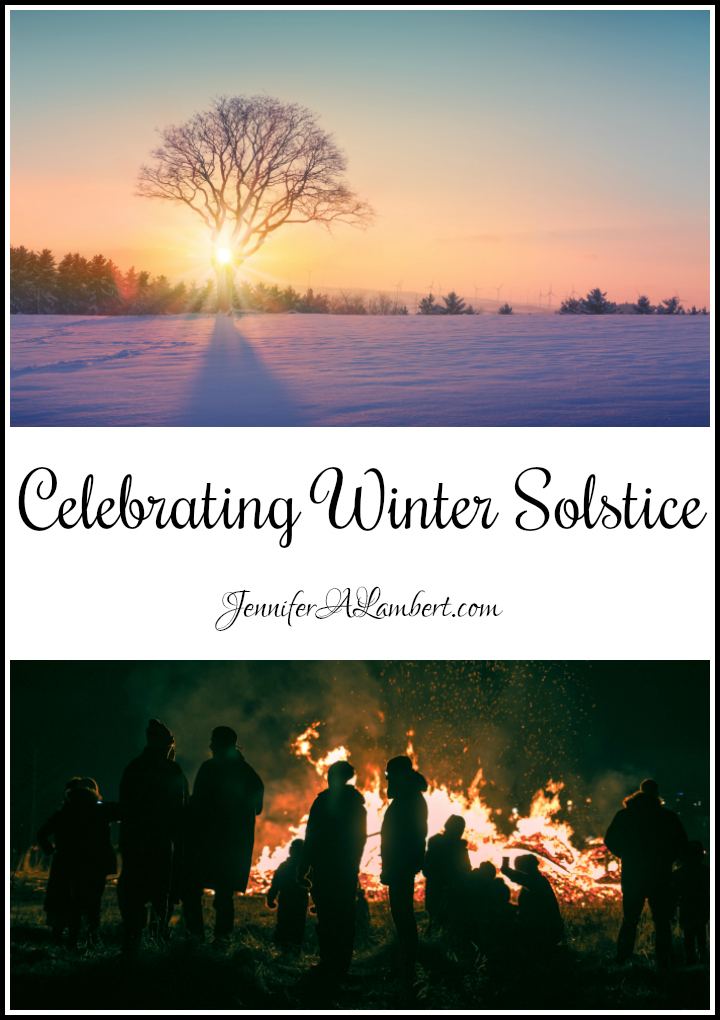
Celebrating Winter Solstice

This blog may contain affiliate links: disclosure.
Please see my suggested resources.

December 16, 2019 By Jennifer Lambert Leave a Comment

The winter solstice which falls on or around December 21, marks an important milestone. It’s the shortest day of the year and the longest night of the year, signaling a powerful transition point between seasons.

“Solstice” comes from two Latin words: sol meaning “sun” and sistere meaning “to stand still” because it appeared as though the sun and moon had stopped moving across the sky.

Other names are “midwinter,” the “extreme of winter,” or the “shortest day.”

The birth of Jesus at the solstice is symbolic of the birth of the spiritual sun within, that we are not separate from our Creator, as we have been conditioned to believe to feel that we are less than divine.

Many visit Stonehenge in UK and Newgrange in Ireland for Solstice festivals.

Saint Thomas

St. Thomas is known for his doubts, and for demanding physical proof of the wounds of Christ’s Crucifixion. He was the first person to explicitly acknowledge the divinity of Jesus.

St. Thomas died on December 21, 72, in Mylapore, India.

This was traditionally the feast of St. Thomas the Apostle; his feast is now celebrated on July 3rd. 

St. Thomas day, St. Thomas gray,
The longest night and shortest day.

In Tyrol and in parts of Canada, this was considered “pie day,” with meat pies baked for the family, then cooled and frozen. The pies are saved for the feast of the Epiphany, and are thawed, reheated, and eaten.

In England, this was a day of charity, when the poor women went a “Thomasing” or begging. Wheat was cooked and distributed for the poor.

A seven-day celebration culminates every year on December 21, when many Christians in Guatemala observe Saint Thomas’ Day in honor of Thomas the Apostle.

Celebrate doubts, questions, concerns. Discuss with family, friends, or a prayer group.

A lovely lesson from Kennedy Adventures.

Blue Christmas

It’s natural and normal to feel a little down this time of year.

Many of us feel the loss of loved ones more poignantly during the holidays. Some struggle with all the hustle and bustle and commercialism. Mental illness becomes sharper with all the holiday expectations.

There are many quiet and dimmed “Blue Christmas” services and meetings for those who are depressed, lonely, traumatized, or just want something different than the joyful and bright holiday events.

The winter solstice represents the seasonal “dark night of the soul.”

We are a reflection of the universe that surrounds us. What takes place outside of us, must also take place within us.

The Dark Night of the Soul (from Spanish) by Saint John of the Cross

Once in the dark of night,
Inflamed with love and yearning, I arose
(O coming of delight!)
And went, as no one knows,
When all my house lay long in deep repose

All in the dark went right,
Down secret steps, disguised in other clothes,
(O coming of delight!)
In dark when no one knows,
When all my house lay long in deep repose.

And in the luck of night
In secret places where no other spied
I went without my sight
Without a light to guide
Except the heart that lit me from inside.

It guided me and shone
Surer than noonday sunlight over me,
And led me to the one
Whom only I could see
Deep in a place where only we could be.

O guiding dark of night!
O dark of night more darling than the dawn!
O night that can unite
A lover and loved one,
Lover and loved one moved in unison.

And on my flowering breast
Which I had kept for him and him alone
He slept as I caressed
And loved him for my own,
Breathing an air from redolent cedars blown.

And from the castle wall
The wind came down to winnow through his hair
Bidding his fingers fall,
Searing my throat with air
And all my senses were suspended there.


I stayed there to forget.
There on my lover, face to face, I lay.
All ended, and I let
My cares all fall away

Forgotten in the lilies on that day.

Sing the carol: “In the Bleak Midwinter.”

Music: “Cranham,” Gustav Theodore Holst, 1906. Words: Christina Georgina Rossetti, 1872.

In the bleak midwinter, frosty wind made moan,
Earth stood hard as iron, water like a stone;
Snow had fallen, snow on snow, snow on snow,
In the bleak midwinter, long ago.

Our God, Heaven cannot hold Him, nor earth sustain;
Heaven and earth shall flee away when He comes to reign.
In the bleak midwinter a stable place sufficed
The Lord God Almighty, Jesus Christ.

Enough for Him, whom cherubim, worship night and day,
Breastful of milk, and a mangerful of hay;
Enough for Him, whom angels fall before,
The ox and ass and camel which adore.

Angels and archangels may have gathered there,
Cherubim and seraphim thronged the air;
But His mother only, in her maiden bliss,
Worshipped the beloved with a kiss.

What can I give Him, poor as I am?
If I were a shepherd, I would bring a lamb;
If I were a Wise Man, I would do my part;
Yet what I can I give Him: give my heart.

Celebrate the Light

In the Northern Hemisphere, the winter solstice marks the shortest day of the year. It will probably be dark outside by 4 PM, which can feel a little depressing. It’s no surprise for many cultures, taking advantage of the light is so important on this day.

The seaside city of Brighton in the UK has an annual Burning of Clocks festival. People wear costumes representing clocks and the passage of time carry lanterns made of wood and paper to the beach, where the lanterns are burned in a huge bonfire, symbolizing the wishes, hopes, and fears that will be passed into the flames.

In the town of Penzance, people wear carnival costumes, “guisers” parade with lanterns, creating a “river of fire” meant to celebrate the return of the sun. 

How we celebrate Winter Solstice

Try to get outside while it’s still light out to connect with nature.

Take a walk, go for a hike, bundle up and enjoy your coffee, tea, or cocoa while sitting outside for a little bit.

We like to drive around and look at light displays.

Once the sun goes down, turn off all the electric lights and spend a moment or the rest of the evening in darkness.

After you’ve honored the sun’s light, light some candles with loved ones. It’s a great night for Hygge.

Bonfires are common on this night to chase away the darkness. Oak logs are traditional at Yule feasts. We love our backyard firepit.

Cleanse, purge, donate, and volunteer. Helping others is an ancient solstice custom, and is not just limited to modern Muslim, Jewish, and Christian religious members.

Watch all through the night. Attend a prayer service or watch the stars and sky. Contemplate and meditate. Welcome back the light of dawn.

Reflect and think about how you might recreate yourself in the new year.

Renewal. Write down things you want to let go of, then toss the paper into the fire as a symbol of release.

Bell ringing is traditional. Attend a bell choir concert or sing Jingle Bells with bells and tambourines.

The orange is a symbol of the return of the sun. Make orange pomanders to celebrate the solstice and decorate and freshen the home for the holidays. Lots of amazing citrus sales this week in stores! Now you know why.

Make sun ornaments or decorations.

Make “snowball cookies” – fun, easy treats like Danish wedding cookies. We almost make darker Pfeffernusse cookies.

Decorate with evergreens, berries, and natural elements. I like to make a wreath for our Advent candles.

Read books about the solstice.

I like to recite poetry by candlelight or around the firepit.

Resources:

  • Dark Night of the Soul Step Sheet from Practicing the Way
  • Hope in Darkness Summary from Center for Action and Contemplation
  • Dark Night of the Soul by Contemplative Monk
  • Eckhart on the Dark Night of the Soul
  • The Solstice Badger by Robin McFadden 
  • Sun Bread by Elisa Kleven
  • The Return of the Light: Twelve Tales from Around the World for the Winter Solstice by Carolyn McVickar Edwards
  • The Gospel of Thomas for Awakening: A Commentary on Jesus’ Sayings as Recorded by the Apostle Thomas by Abbot George Burke (Swami Nirmalananda Giri) 
  • Thomas the Apostle: Builder and Believer by Barbara Yoffie
  • The Shortest Day by Susan Cooper
  • The Fairies of Frost by Hayley Nystrom
  • The Winter Solstice by Ellen Jackson
  • The Shortest Day: Celebrating the Winter Solstice by Wendy Pfeffer 
  • Winter: A Solstice Story by Kelsey E. Gross 
  • The Wheel of the Year: An Illustrated Guide to Nature’s Rhythms by Fiona Cook

You might also like:

  • Hope in the Dark
  • Blue Christmas
  • Introvert Holiday Survival Guide
  • Celebrating Holidays During Deployment
  • Holiday Blues
  • Celebrating the Lights of Hanukkah

How do you celebrate the light?

Share
Pin47
Share
47 Shares
You might also like:

Filed Under: Faith Tagged With: Christmas, December, faith, folklore, saint, winter

Going Outside in Winter

This blog may contain affiliate links: disclosure.
Please see my suggested resources.

December 9, 2019 By Jennifer Lambert 8 Comments

Sometimes, in winter, it’s not very appealing to go outside. I have to change my attitude if I want my kids to play outside year round, in all weather.

There’s no such thing as bad weather, only bad clothing choices.

I realize that winter gear can get expensive. We get handmedowns and shop sales when we can.

Growing up in Georgia, I only had a lightweight winter coat. I never had snow suits or boots. I never went sledding or snowboarding or skiing or ice skating.

I was outside all year round, no matter the weather. It was a different time, when kids played outside together until the street lights came on. Georgia winters, that was probably around 7, and summers, after 9.

Winter in Georgia is rarely very harsh. They get a few weeks of very cold and maybe some ice, once in a long while a dusting of snow, like the “blizzards” of ’81 and ’94.

I joke with my family that I’m just not made for winter and of course, that’s true. Humans have to bundle up in layers to be protected against the elements. I much prefer warm weather and being inside when it’s cold.

We lived two years in San Antonio, Texas, and three years Honolulu, Hawaii, where winter is virtually nonexistent. Honestly, the heat in Texas was stifling. We were out early mornings and that’s about it. We were outside all the time in Hawaii.

We lived four years in Salt Lake City, Utah, where the powder snow and dry air was actually quite lovely. It was totally new for me to have concern about winter clothing and snow tires. I learned how to shovel the driveway before it melted into an ice layer! We never did go skiing or tubing because the kids were so small and it was just so very expensive.

We lived three years in Kaiserslautern, Germany, where it’s wet and cool year round, and winter is just a little colder and slushier. Germans don’t care about the weather. They walk and hike every day no matter what.

We’re in Ohio now and the kids really look forward to the first snow and playing, making a snowman, sledding. I actually enjoy the exercise of shoveling the driveway. I want to be a good example for my kids, so I get outside with them as much as possible.

Get Your Family Outside! It’s Good for You!

Parents and guardians may be tempted to dial back outdoor activities when cold temperatures arrive, but getting outside is good for children and their families, even in the wintertime.

Time outdoors can equal happiness. 

Nature is one of those things that can really bring your spirits up. Indeed, studies show that spending time outdoors is good for your mental health, and those who manage to do so are generally happier than those who stay cooped up inside. Butcher does his part to try to put people in touch with nature. Just recently, his gallery in the Big Cypress Swamp in south Florida sponsored a fall festival that included guided swamp-walk tours for children and adults alike. Those swamp walks provide what Butcher thinks of as education by immersion. 

Time outdoors makes children healthier. 

A sedentary lifestyle can lead to children being overweight, which in turn increases their risk for a number of diseases, such as asthma and diabetes. When children spend time outdoors, they are almost certain to get more exercise, reducing those risks. Health professionals also say that, while over exposure to the sun can be harmful, some time absorbing the sun’s rays is helpful in such ways as boosting your body’s vitamin D. 

Time outdoors makes children better stewards of the earth. 

It’s important to protect the environment, and to preserve natural wonders for future generations, but it’s difficult to truly appreciate nature without venturing out into it. Children who take the time to explore what nature has to offer, he says, are more likely to become advocates for protecting it. Sometimes, in the abstract, it’s difficult to understand why nature is so important. But when children step into it, and see it firsthand, they can fall in love with it. Then they begin to understand.

How families can appreciate the outdoors in cold weather:

Do outdoor activities that are fun. 

Weather that many consider to be “messy” can be a huge canvas for children and their imaginations.

Fall leaf piles, snowball fights, and snow forts offer a wealth of opportunities for parents to play with their children and to explore and experiment in our living landscapes.

Encourage exploration. 

Ask your child to look at how the landscape changes with the seasons.

Talk about what happens after leaves fall, when snow arrives, when it’s windy, and more, linking these seasonal changes with basic science about clouds, rainfall, temperature changes, and the earth.

We love learning about astronomy and what we can see in different seasons.

Try something new. 

Try your hands at cross-country skiing, igloo-building, fall and winter hiking, ice fishing, ice skating, snow sculpting, snowshoeing, or something else that your children want to try to give them an appreciation of the outdoors in all seasons.

Our city Metro Parks offer lots of activities to learn about for the inexperienced winter person.

Do yardwork as a family. 

Involve everyone in seasonal yard chores.

Children can help put outdoor toys into storage and help tidy the yard.

My kids love learning how to use power equipment like the lawn mower, weed eater, hedge trimmer, and leaf blower for cleanup. Safety first with protective glasses, closed toe shoes, and long sleeves and pants!

Getting outside helps our happiness. 

Even winter sunshine can make kids happy—literally.

Sunlight boosts Vitamin D, which helps regulate emotional and mental moods by increasing serotonin in the brain.

Even exposure to weaker sunlight in the winter can cause this joy boost.

Also, I encourage my kids to go barefoot as long as they’re comfortable in our yard, creek, and backwoods to get good bacteria in their system.

Tolerate some mess. 

It’s a given that kids going outside in all sorts of weather will often return wet, muddy and messy.

Be prepared for wet and cold kids and get them warmed up when they return from playing outside.

My kids look forward to tea or hot cocoa while I organize the wet snowsuits and boots to dry.

Process what they did.

Ask kids to share about what they did outdoors or ask them to write or draw out their activities and observations.

We often have notebooking pages ready to record experiences.

Did they see something new? Did something surprise them? What was fun?

You might also like:

  • Winter Nature Walk
  • Winter Nature Hike
  • Winter Birds Study
  • Snow Unit Study
  • Winter Unit Study
  • Winter Books
  • Sledding
  • Tot School Winter
  • Snowy Preschool

How often do you get outdoors in winter?

Share
Pin31
Share
31 Shares
You might also like:

Filed Under: Homeschool Tagged With: nature, winter

Respectful Parenting During the Holidays

This blog may contain affiliate links: disclosure.
Please see my suggested resources.

December 4, 2019 By Jennifer Lambert 15 Comments

The holidays are a busy time and many children are manipulated in order to receive presents.

I don’t ever like how children are treated differently than adults, but it really frosts me around the holidays.

No one forces adults to do something they don’t want to do. No one asks adults insulting questions.

Respectful Parenting During the Holidays

All children are good.

I don’t buy into the idea of naughty or nice.

I don’t like it when strangers, friends, acquaintances, or relatives ask my kids if they’ve been good this year.

Behaviors don’t imply inherent goodness or badness.

We don’t believe in rewards or punishments. We communicate and discuss emotions and issues. We work through disagreements and big feelings.

Behavior is just communication. It is adults who judge behaviors as “good” or “bad.” Most kids act age appropriately.

Children long to do good and desire connection with caregivers, family members, friends.

All children are good.

Research reveals that a person’s “goodness” was seen by both age groups as more of a biological, innate trait than “badness.” Both children and adults were more likely to say that goodness, rather than badness, was something with which people are born and a fundamental, unchanging part of who they are.

Larisa Heiphetz

No threats.

I loathe the Elf on a Shelf and all its many variations.

I don’t need spies on my children.

I don’t control or manipulate my kids.

Even a funny and cute bully violates family trust.

There is no good or bad behavior. Behavior is just communication.

I’m really irritated by social media posts and blogs offering parenting advice about throwing empty wrapped presents into the fire or phone calls from “Santa” admonishing kids.

Of course people can buy all the commercial Pinteresting trappings for an Elf or Doll or Toy just for fun and/or change the purpose to be kind and respectful with the mission of charitable calls to action. Bravo and carry on.

I just don’t have time or desire for any of that for 24 days.

Ideas to do instead:

  • Tomte
  • Kindness Elf
  • Kindness cards for Elf
  • Advent Angel
  • Kindness Elves

Gifts don’t come with rules.

I remember some really weird and horrific gifts as a kid. I know it was hard for me to say thanks or hide my disappointment.

I remember my mother being horrified and embarrassed and scolding me later. Southern ladies paste on a smile no matter what.

I realize our society expects gratitude for gifts. I encourage my kids to say thanks even if the present is disappointing. We discuss the situation later.

With some very special items, I do offer recommendations to my kids if it might require extra or unique care.

Yes, it’s really hard sometimes to see something used differently than I would choose to use it.

My kids know that a gift is theirs to do whatever they please with it.

  • upcycle or repurpose
  • donate
  • throw away
  • share or not
  • display
  • get dirty

Gifts shouldn’t come with conditions.

We don’t believe in taking our children’s possessions away as a punishment. I don’t control my kids with their toys. If they have trouble cleaning up, I help them.

Santa can be scary.

My first child adored Santa and anything that dressed up in a costume. I didn’t question the tradition.

We stopped “doing Santa” when my second child was terrified of him.

I didn’t like her fear. I wasn’t going to subject my young child to sit on a stranger’s lap for a photo opportunity.

I argued with my husband about it. I didn’t want to lie to our children about a fantasy commercialized man who climbs down chimneys with toys. We didn’t even have a chimney for years and had a dumb “Santa Key” from Hallmark.

We celebrate Saint Nicholas. We read during Advent.

There is no magic lost. My kids have always loved to read stories about Santa and elves. They’re fairy tales like all the others we love to read.

No forced affection.

I remember being forced into hugs and kisses from aunts, uncles, and cousins. I didn’t like not having control over it. I remember feeling bad for being scolded for not wanting to do it or not appearing happy enough about it.

I try to prepare my kids if and when we visit relatives.

I warn my kids about expectations. I offer my kids alternatives like shaking hands or fist bumps.

I act as a buffer between my children and overbearing adults.

It’s not my or my child’s fault if some grown adult gets her feelings hurt.

Kids own their bodies and can decide for themselves how and when to show affection.

Slow down.

The holidays can be a very busy time.

They don’t have to be.

Consider the natural rhythms of children. Meals, naps, bedtimes schedules are very important for kids.

Most negative behaviors come from disrupting the schedule or not taking kids’ emotions and needs into consideration.

Kids know when they’re hungry and what they like to eat. Don’t force them to try something just to be polite.

Let them open gifts at their own pace or take breaks or even bring the item home to open later.

Let kids help decorate and help make holiday decisions.

Routines need to be a priority. If this means cutting activities, visits, parties short, then the children’s needs should come first.

We collect holiday books that we read daily in December. We watch holiday movies at least every Friday in December.

We can allow ourselves space to be the best parents we can be to our kids.

Share
Pin65
Share
65 Shares
You might also like:

Filed Under: Family Tagged With: parenting, relationships

Celebrating St. Barbara

This blog may contain affiliate links: disclosure.
Please see my suggested resources.

December 3, 2019 By Jennifer Lambert Leave a Comment

St. Barbara is a 3rd century saint whose story is a mix of reality and legend. 

She is the patron saint of armourers, artillerymen, architects, mathematicians, and miners. St. Barbara is one of the Fourteen Holy Helpers, venerated because their intercession is believed to be particularly effective against diseases. Barbara is often invoked against thunder, lightning, and fire, and all accidents arising from explosions of gunpowder.

We saw statues and little altars for St. Barbara in a German gemstone mine we visited!

Saint Barbara in a gemstone mine

Barbara’s Story

Barbara, the daughter of a rich Pagan named Dioscorus, was carefully guarded by her father who kept her locked up in a tower in order to preserve her from the outside world.

Barbara secretly became a Christian and dedicated her life to knowing the true God and making Him known to others. She chose a life of consecrated virginity. She rejected all offers of marriage.

Dioscorus allowed for Barbara to leave her tower, hoping some freedom would change her attitude. Barbara used this opportunity to meet other Christians. They taught her about the Lord Jesus, the Holy Trinity and the Church. A priest from Alexandria, disguised as a merchant, baptized Barbara into Christ and His Church.

Her father had a private bath-house built for her. The original architectural plans were for two windows to be built, but, while her father was away, Barbara advised the workers to make a third window to symbolize the Trinity.

Barbara’s bathhouse became a place full of healing power and many miracles occurred there. St. Simeon Metaphrastes even compared it to the stream of Jordan.

After Dioscorus returned, Barbara informed him she had become a Christian and would never marry. Full of rage, her father grabbed his sword and went to strike her. Before he could do so, Barbara ran off.

Her father chased after her, but was abruptly stopped when a hill blocked his way. The hill opened and hid Barbara within a crevice. Dioscorus searched and searched for his daughter, but could not find her.

Dioscorus came across two shepherds and asked them if they had seen her. The first denied, but the second betrayed Barbara. Some legends indicate that he was turned to stone and his flock was turned into locusts.

Her father took her to the provincial prefect, who ordered her to be tortured and beheaded. Dioscorus himself performed the execution and, upon his return home, was struck by lightning and reduced to ashes.

She eventually met her end via martyrdom on December 4, 267 AD.

Her symbols are flowers and breads.

Celebrations around the world

To celebrate St. Barbara’s Day, known as “Eid il-Burbara,” Christians in Jordan, Syria, and Lebanon prepare and share a dessert made from boiled wheat, rose water, cinnamon, anise and nuts. This aromatic sweet represents the wheat fields where St. Barbara hid from her father, who kept her locked in a tower because she had converted to Christianity in A.D. 235. Middle Eastern Christians believe that, before her death, St. Barbara escaped her tower prison, and freshly planted wheat fields miraculously rose up around her, concealing her path.

St. Barbara’s feast marks the beginning of the Christmas decorating season for Lebanese Christians. Lebanese families also plant wheat grains, lentils, chickpeas and other legumes with the idea that in three weeks, the sprouts will be plentiful, accenting the Nativity scene under the Christmas tree.

Some believers take cherry branches into their homes Dec. 4. If the “Barbara branch” blooms on Christmas, it is considered to bring good fortune. This custom recalls the prophesy in the Old Testament book of Isaiah: The Messiah will spring from the root of Jesse. Christians expectantly await Jesus Christ during Advent, and he will blossom or be born at Christmas.

From this tradition comes “Barbarazweig,” the German and Austrian custom of taking branches into the house Dec. 4, with hopes of a bloom on Christmas. In Central Europe, it is believed that the blooming branch signals a promise of marriage in the year ahead.

Families in the Provence region of France germinate wheat on beds of wet cotton in three separate saucers, keeping them moist throughout Advent. When the contents of the three saucers — which symbolize the three persons of the Trinity — are green, they are used to decorate the creche, usually placed under the Christmas tree.

Celebrating St. Barbara

Forced paperwhite bulbs are often displayed the first week of December. It’s hard to find cherry blossoms, so silk sprays can be displayed.

Sprout grains. Cook with grains or bake breads.

St. Barbara’s feast day is an awesome opportunity to break out some fireworks! As the patron of firework manufacturers, families can remember St. Barbara by having a fun with fireworks or firework-related entertainment like sparklers and noise makers.

We like to celebrate the rhythms of the year and slow down during the holiday season.

A lovely lesson from Kennedy Adventures.

The Honorable Order of Saint Barbara recognizes those individuals who have demonstrated the highest standards of integrity and moral character; displayed an outstanding degree of professional competence; served the United States Army or Marine Corps Field Artillery with selflessness; and contributed to the promotion of the Field Artillery in ways that stand out in the eyes of the recipient’s seniors, subordinates and peers alike. 

Resources:

  • Silk Cherry Blossom Flowers
  • Paperwhites Flower Bulbs 
  • Saint Barbara Candle
  • Saint Barbara: Convert and Martyr of the Early Church
  • St. Barbara Statue
  • Saint Barbara: Truth, Tales, Tidbits, & Trivia by Erin Graffy de Garcia
Share
Pin25
Share
25 Shares
You might also like:

Filed Under: Faith Tagged With: Christmas, faith, saint

Holiday Communication

This blog may contain affiliate links: disclosure.
Please see my suggested resources.

December 2, 2019 By Jennifer Lambert Leave a Comment

The kids are watching and learning how to behave based on what they observe the adults doing and saying.

During the holidays, sometimes we have to just put our differences aside and try to get along.

7 tips to self-regulate and communicate for a happier holiday season and beyond

1.     Make a List and Check It Twice.

Make a list of the things your relatives, especially those on the other side of the aisle, have done for you and what they mean to you. During your holiday conversations, validate the feelings and emotions of both those you agree with and those you do not.  You can say, Interesting, I hear you, that must feel hard for you. Assume and remember the best intentions of those around you. As you express your opinions, remember to focus on the kindness, compassion and respect your relatives have shown you for years, their acts of love and affection. John Gottman’s work shows that it takes 5 positive interactions to overcome one negative interaction and therefore it’s crucial to remember that what you say can damage your relationship.

2.     Walk in Someone Else’s Shoes.

Step into your relatives’ shoes and try to understand their point of view. Consider What could be going on in the other person’s life? What is the other person’s situation? What do I know about their motivation, values and intentions? Don’t make assumptions about their motivations and perspective, instead listen and reflect, reserve judgement and try to hear their point of view. You might come to find insight you did not anticipate.

3.     Watch Your Tone and Dismissive Comments.

Emotions often bubble up into our tone and our comments.  Name-calling and zingers will not build a bridge to understanding. If your intention is to speak to your family with respect, take steps like breathing deeply and pausing before responding to ensure your tone remains neutral. Avoid using words like “always”, “never” and avoid bold statements to make a point.  Make a plan in advance to respond to someone who does not follow this advice and may become aggressive to you, e.g. by saying “I really hope we can keep this conversation respectful,” or “I am hearing you becoming frustrated, let’s continue to try to understand each other.”

4.     Listen.

Real active listening means you are interested and you are hearing the other person’s point of view without judgement. As you speak with your family, make eye contact and check your body language and facial expressions. Try to avoid interrupting or simply listening for your chance to jump in and speak your opinion. A good exercise in advance of the holiday is to consider what speaking compassionately looks like; it means showing interest in the other person’s feelings and opinions, being curious and listening to the person so you can relieve their suffering and be a shoulder to lean on. A way to neutralize the conversation is to use reflective listening which simply involves recapping what the person said and making empathetic comments like That must be hard, or I hear you or I am hearing that this was very painful for you.

5.     Manage Emotions Rather Than Letting Them Manage You.

When you feel upset, you are flooded with emotions that often hijack your brain and affect your behavior. Be aware when you start to experience emotional flooding your body. Pay attention to your body signals, ask yourself what you typically feel in your body, stomach and face when your emotions are rising. What do you feel like when you are angry but in control, anxious, and what do you feel like when you are losing control? Do you get flushed, feel a stomach ache, maybe tingle in your arms and legs? By breathing in and out, pausing before speaking, chewing slowly and mindfully, placing your feet on the ground and noticing how your legs feels and grounding yourself, you can help to use mindfulness to manage your emotions.

6.     Don’t Try to Change Anyone’s Mind.

Holidays are not for influencing or changing someone’s mind and the conversation is not meant to be a showstopper full of uncomfortable topics. Don’t try to educate or change someone’s mind. There is no need to cajole, shame, scold, coerce or try to change the mind of your family members. Instead, take the time together to ask questions to better understand their side of things; you can decide how you feel about it once the visit is over and you have some physical and emotional distance.

7.     Return to common ground.

There are often areas where you agree or where you have a mutual fondness, even if you have to reach as far back as a shared favorite movie or family memory. Reconnect with that touchstone when you need to. That can only come with listening, really hearing the perspective of another person and trying to support another.

The seemingly inevitable family feuds endemic to “the most wonderful time of the year” can be avoided by self-regulating and communicating, says social skills coach Caroline Maguire, PCC, M.Ed., who has taught thousands of people of all ages to cultivate good relationships and communicate.

Maguire says empathy and kindness are becoming lost arts, so she teaches self-regulation: how to manage your body, mind and emotions in pursuit of a goal, which allows you to resist impulses, control your words and actions, calm yourself when you are upset, hold back a comment and resist using your fists instead of your words.

It is the ability to remember your intention to be kind and then manage what you say and do so you follow through on that intention. It is an essential skill in all aspects of life and people with the ability to self-regulate are happier and achieve more of their goals.

Resources:

  • Watch for the Light: Readings for Advent and Christmas
  • Advent: The Once and Future Coming of Jesus Christ by Fleming Rutledge
  • Low: An Honest Advent Devotional by John Pavlovitz
  • Honest Advent: Awakening to the Wonder of God-with-Us Then, Here, and Now by Scott Erickson
  • Calm Christmas and a Happy New Year: A little book of festive joy by Beth Kempton
  • Have Yourself a Minimalist Christmas: Slow Down, Save Money & Enjoy a More Intentional Holiday by Meg Nordmann
  • Hundred Dollar Holiday: The Case For A More Joyful Christmas by Bill McKibben
  • Unplug the Christmas Machine: A Complete Guide to Putting Love and Joy Back into the Season by Jo Robinson and Jean C Staeheli

You might also like:

  • Introvert Holiday Survival Guide
  • Gift Guides for Everyone
  • Holiday Blues
  • Introvert Holiday Survival Guide
  • Celebrating Holidays During Deployment
  • Blue Christmas
Share
Pin1
Share
1 Shares
You might also like:

Filed Under: Family Tagged With: Christmas, relationships

Celebrate Your Child During the Holidays

This blog may contain affiliate links: disclosure.
Please see my suggested resources.

December 2, 2019 By Jennifer Lambert Leave a Comment

Guest post by Annette Hines :

The holiday season is not an easy time when you’ve lost a child. It’s a time of year when you get together to celebrate family. And lots of things happen that accentuate that loss. You see people that you don’t normally see all year such as grandparents, aunts and uncles. You take time off work so you have more down time and time out of your daily routine to think about that loss. It’s also particularly time for celebration of children with gift giving and sweets!

In my world, it’s even more meaningful and charged with emotion because my daughter death anniversary is November 18th, so it leads off the holiday season with a bang! For me it has been six years now. Our new holiday traditions are evolving, and everybody’s new holiday journeys will be their own for sure. Also, I am not an expert and by no means am I trying to offer clinical advice. Although, in my law practice I have had the opportunity to speak with many families who have been through a loss like mine. It’s not an experience you want to share, but it is also comforting to not be alone, especially this time of year.

5 ways to remember and celebrate your child during the holidays:

1. Telling Stories of Remembrance

This is my favorite and best advice. I love love love telling stories of “remember when Elizabeth laughed so hard that the sweet potatoes came flying out of her mouth and then the dog ate them off the floor!?” Ha,Ha! Pulling out videos and photo albums can help with the memories. Some family members and friends may not have known your child that well, or at all, so this will help them enormously in both supporting you and sharing in your joys and sorrows. I love the idea that it keeps Elizabeth’s memory alive because I am always afraid of the idea that people are going to forget her and the world is going to move on without her.

2. A Celebration Meal That Includes Your Child’s Favorite Food Items

In our family, I still serve some of Elizabeth’s favorite things on certain holidays: Christmas breakfast has pancakes, and Easter will definitely have a ham. For many families, food is part of the tradition and food is love! It definitely is for us.

It also includes eating popcorn, pizza potato chips and onion dip while watching our favorite holiday movies: Christmas Vacation, and Planes, Trains and Automobiles.

3. Hanging Decorations That Your Child Made

Thank you so much to every teacher, aide and nurse who helped Elizabeth make every Christmas ornament, Mother’s Day Card and Thanksgiving Poem. I pull them out and go through them. Then I hang them throughout the house to have her close to me during the Holidays.

4. Doing For Others

During this time of sorrow – and it is always a time of sorrow for me – it really helps me to give to others. It’s a fact that getting up out of our own misery to help others can be just what we need to beat the holiday blues. Sign up to serve a holiday meal, deliver presents or warm clothes at your church or temple, or sing holiday songs at a local nursing home. Find some way to give back to your local community.

5. Self-Care is Very Important Too

Please be sure to take time for yourself as well. You may need time to be sad and grieve on your own. Be sure to seek counsel if that is in your self-care routine, get lots of sleep, exercise and eat well. The holidays can be stressful under the best of circumstances. Grief can be tricky and sneaks up on you!

Practice the art of saying no. Let someone else cook dinner for 20 people! It can be very stressful to do all that work, and as mentioned previously, seeing people that you haven’t seen all year who are naturally going to want to ask you about how you are doing. I used to get anxious for weeks before the holidays about what people were going to say or ask. And then I would be sleepless for days cooking and cleaning to get ready for the day.

It was a recipe for disaster! I was tired and sad and on edge. And of course, I would end up either being completely sad and withdrawn or blowing up at people. Not good!

This year, what is working for me is a change of scenery. My husband and I have decided to go the mountains with our puppy for a holiday getaway hiking extravaganza. I hope you find your way to both old and new traditions that work for you and your family.

Annette Hines, Esq., is the author of Butterflies and Second Chances: A Mom’s Memoir of Love and Loss. She is a powerhouse advocate for the special needs community. Not only has she founded the Special Needs Law Group of Massachusetts, PC, specializing in special needs estate planning, where special needs families compromise 80 percent of the firm’s clients, Hines brings personal experience with special needs to her practice, as the mother of two daughters, one of whom passed away from Mitochondrial disease in November 2013. This deep understanding of special needs fuels her passion for quality special needs planning and drives her dedication to the practice. For more information, please visit, https://specialneedscompanies.com/ and connect with her on Facebook, @SpecialNeedsLawGroup and listen to her podcast, Parenting Impossible – The Special Needs Survival Podcast.

Share
Pin
Share
0 Shares
You might also like:

Filed Under: Family Tagged With: Christmas, relationships

How to Help Kids Make Friends

This blog may contain affiliate links: disclosure.
Please see my suggested resources.

December 2, 2019 By Jennifer Lambert Leave a Comment

I struggled to make friends as a kid and I still struggle as an adult. I can honestly say that I don’t have any friends. I would wonder what was wrong with me and sometimes I still do, but I’m learning to accept that I’m just different, with contrary values to most of Western society.

It breaks my heart to see my kids struggle with something that I don’t really know how to fix.

As a homeschool mom, I often worry about gaps in my kids’ educations. What I worry about more is the isolation that often comes with being home alone all day every day. Sure, we go on field trips, do extracurriculars like art, music, and sports. But, it’s still often very hard to make friends, even within the homeschool community. It’s lonely.

Being a military family, we move around every few years, and I think our transience has gotten into our attitudes as well. We don’t see the point in trying too hard if we’re just going away again.

Kids don’t play outside anymore. My children don’t know where to look for playmates and friends. It seems so many are overscheduled with private lessons, extracurriculars, extra classes, and special events that they don’t have enough free time to play.

We’ve also noticed a shift in parenting the last decade or so. Parents are scared to let their kids play outside, even in their front yards. Kids are overprotected and coddled, not allowed any risk or decision making. Parenting is fear-based.

I’ve made many efforts to provide friend opportunities for my kids, but it’s really hard as they get older and into their teens.

Unfortunately, sometimes friends aren’t really friends.

Some kids’ brains are wired in a way that makes it harder for them to connect socially with others and make friends. They lack the executive function skills and it’s not something they figure out on their own, contrary to popular belief. 

Kids often need direct experience in the step-by-step brain-based processes that develop social awareness, self-awareness, self-regulation and positive social behaviors.

  1. Ask, don’t tell. Ask questions with genuine, respectful curiosity to find out what’s going on for your child.
  2. Listen and learn. Welcome what your child has to say. Be calm, listen and make him comfortable.
  3. Keep your cool. Your calm coaching response will allow you a little emotional distance, which goes a long way in finding a helpful middle ground to problem-solve with your child.
  4. Hold the metacognitive mirror up. Help your child take a bird’s eye view of the situation and reflect on his role. 
  5. Honor your child’s aha. Whatever the realization, allow your child to have his own perspective and realizations in the process of growing awareness, reflection, goal-setting and problem-solving.
  6. Prep first, then pave the way. Prepare the ground for sensitive conversations by sharing stories from work and elsewhere about how people do what they can for themselves, but sometimes they need to ask for help.
  7. Meet them where they are. Better that you recognize your child’s capabilities at the present time and work with what’s real. That helps you both focus on goals and plans that are realistic.
  8. Be a cheerleader. Celebrate positive steps, small wins, or your child’s aha and you will keep the momentum going.

In her groundbreaking book, Caroline Maguire shares her decade-in-the-making protocol–The Play Better Plan– to help parents coach children to connect with others and make friends.

Children of all ages–truly, from Kindergarten to college age– will gain the confidence to make friends and get along with others.

Coaching, using the following simple techniques and the Play Better lessons, tools and skill-building activities, creates those learning experiences for your child.

*Social Sleuthing: learn to pay attention to social cues

*Post-Play Date Huddles: help kids figure out what to look for in a friendship

*Reflective Listening: improve your child’s relationship with their peers

Caroline Maguire, PCC, M.Ed. (media features include US News & World Report, Salon, HuffPost, Parade, MindBodyGreen, Publishers Weekly and more) has successfully coached thousands of families suffering from chronic social dilemmas, ranging from shyness to aggression to ADHD and more, and spells out her program for effective parent coaching for social skills based on proven strategies and techniques that support positive behavioral change in Why Will No One Play with Me? The Play Better Plan to Help Children of All Ages Make Friends and Thrive (Hachette’s Grand Central Publishing; Sept. 24, 2019).

Share
Pin27
Share
27 Shares
You might also like:

Filed Under: Family Tagged With: parenting, relationships

Gift Guides for Everyone

This blog may contain affiliate links: disclosure.
Please see my suggested resources.

November 28, 2019 By Jennifer Lambert 5 Comments

I try to recommend items that we love and currently use or have used when my kids were little.

I do most of my shopping online. I use some neat sites to save money or get cash back.

I’ve also been saving some really cool things from our local “Buy Nothing” group for the holidays.

This year, I loved shopping for unique finds on Etsy. TikTok viral trends are exciting for my teens and we have a few of those under the tree. I always buy calendars for the upcoming year.

Gift Guides for Everyone

  • Foodie Gift Guide
  • 10 DIY Gifts with Essential Oils
  • 10 Gifts for Natural Living
  • 10 Gifts for a Military Family
  • 10 Gifts for Travelers
  • Best Gifts for Geeks
  • Gifts for a Homeschool Family
  • Top 10 Homeschool Items
  • Kitchen Tools for Kids
  • My Kitchen Essentials
  • Little Passports Gift Guide
  • Kiwi Crates Gift Guide
  • Lodge Cast Iron Cookware

Book Lists

Books for Every Season

  • Spring Books
  • Summer Books
  • Fall Books
  • Winter Books

Holiday Books

  • Easter Books
  • Christmas Books
  • Thanksgiving Books
  • Halloween Books
  • Valentine Books

Books by Topic

  • Pirate Books
  • Pumpkin Books
  • Poetry Books for Kids
  • Hispanic Heritage
  • Indigenous Peoples
  • Chapter Books
  • Middle School Books
  • Books About Siblings
  • Fantasy Books
  • Dystopian Books
  • Top 10 Books for Homeschoolers
  • Favorite Nature Books
  • 5 Life Skills Books for Teens
  • 9/11 Books
  • 10 Classics for a Bleak World
  • Books for Military Families
  • Parenting Books
  • Great Books for Writers
  • Women’s Literature Study
  • My Favorite Life-Changing Books
  • My Favorite Books I Read in 2018
  • My Favorite Books I Read in 2019
  • My Favorite Books I Read in 2020
  • My Favorite Books I Read in 2021
  • My Favorite Books I Read in 2022
  • My Favorite Books I Read in 2023

Amazing Amazon

  • Amazon Prime Book Box for Kids
  • How to Get the Most Out of Amazon Prime

What is the best present you ever received?

Share
Pin99
Share
99 Shares
You might also like:

Filed Under: Family Tagged With: book list, Christmas, giftguide, holiday

Three Benefits of Peptides

This blog may contain affiliate links: disclosure.
Please see my suggested resources.

November 25, 2019 By Jennifer Lambert 2 Comments

Peptides (from Greek language πεπτός, peptós “digested”; derived from πέσσειν, péssein “to digest”) are short chains of amino acids (very small proteins) linked by peptide (amide) bonds.

Peptides serve a variety of functions within the human body. They can be extremely beneficial for your physical and mental well-being.

An experienced professional in the field, like Ryan Smith Lexington KY, can help you design a plan to use peptides in a way that makes sense for your body and lifestyle.

I love adding peptide powders to my morning smoothies and I can really tell a difference in my appearance and skin quality. My vitality is improved lately too!

Weight Loss

Peptides are a fantastic tool for losing weight, especially when you also eat healthily and exercise. Ipamorelin in particular works especially well to elevate your levels of growth hormone, and as a result, your body will become more efficient at breaking down fat. Improved body composition will, in many cases, lead to greater mental acuity as well.

Beautiful Skin

Are you looking for a way to eliminate fine lines and wrinkles? As you age, your body produces less collagen, which causes the skin to lose elasticity and become more fragile. This effect is exacerbated by factors including sun damage, the use of tobacco, and exposure to pollution. Depending on what you would most like to improve about your skin, you have a wide variety of peptides from which to choose. Acetyl hexapeptide-3, a common active ingredient in anti-aging skincare products, has an effect similar to Botox, smoothing out and greatly reducing the appearance of wrinkles. Palmitoyl tetrapide-7 and palmitoyl oligopeptide, meanwhile, are excellent choices to protect against damage from UV rays.

Lower Blood Pressure

High blood pressure, which affects a high percentage of the American population, can have harmful effects. People with high blood pressure are more likely to experience heart disease, stroke, and memory loss. Peptides can be helpful in reducing blood pressure, and they are most effective when the person using them also makes lifestyle changes such as quitting smoking and reducing the amount of sodium in his or her diet. If reducing your blood pressure is the main benefit that you are seeking from peptides, you should look into using milk-derived or fish-derived peptides.

No matter what your health goals may be, you can achieve them by making healthy choices and using an appropriate peptide supplement.

I take a scoop of collagen peptides in my evening camomile tea every night and I think it makes a big difference!

Do you use peptides? What’s your favorite way to take peptides?

Resources:

  • Benefits of Peptides for Skin
  • Vital Proteins Collagen Peptides (my fave)
  • Orgain Hydrolyzed Collagen Peptides
  • Sports Research Collagen Peptides
  • Physician’s CHOICE Collagen Peptides
Share
Pin
Share
0 Shares
You might also like:

Filed Under: Health Tagged With: beauty, natural health, skin care

A Decade Later

This blog may contain affiliate links: disclosure.
Please see my suggested resources.

November 25, 2019 By Jennifer Lambert 21 Comments

So much has happened in ten years.

We lived in Hawaii for three years. We explored Oahu, Maui, and The Big Island.

My husband adopted my daughter.

I was pregnant with my son.

We were and still are shifting to gentler, more respectful parenting, constantly reevaluating methods and learning.

I’ve homeschooled our four kids for over fifteen years now. I’ve come full circle in my educational and religious beliefs after exploring so many options, many of which were very harmful to me and my family.

We’re a military family. We moved from Hawaii to Utah to Germany to Ohio.

Looking back over the last decade, I realize there are few photos of me since I’m usually the one behind the camera.

I rarely take selfies. We rarely get family photos. My kids don’t have a record of me in pictures.

This picture was taken in fall 2016.

Here’s a photo of me in the same outfit in May 2019.

It’s a bit of a glow up. I feel more confident and healthy.

It’s been an adventure for sure.

I’m trying to do better to ask my family to snap photos of me, preferably when I don’t have my mouth full.

I’ve changed quite a bit in the last decade, especially the last couple years. I think I’ve improved. I’m never content with a status quo. I’m constantly growing.

If we are not regularly deeply embarrassed by who we are, the journey to self-knowledge hasn’t begun.

Alain de Botton

Self Improvement

Health

I lost 20+ pounds the last couple years.

I’m not concerned with weight as a number. I’m not concerned with aging gracefully. I just want to be healthy.

The first picture is the heaviest I ever was, not pregnant. I weighed in at about 175. I didn’t feel good. My knees hurt. I felt tired all the time. I was too sedentary. I didn’t eat well. I didn’t exercise enough or correctly. I was depressed. I needed to jumpstart my metabolism.

I have no medical complications or issues. Thank God.

I take supplements that work for me. Glutathione and progesterone before bed. B vitamins and evening primrose in the mornings.

I massage castor oil into my hands, scalp, and thighs probably weekly.

I drink lots of water.

I only have 2-3 cups of caffeine each day. I have found I do better with tea than coffee.

I pray and meditate every day.

I try to go outside every day.

I don’t have social media on my smartphone or iPad.

I will say that I seldom have joint pain now and I feel happier and more energetic.

Food

I try to eat real foods.

I happen to really like almost all foods. I have no allergies or sensitivities.

Food has no morality.

Fiber and good fat is really important. I add collagen, chia, and flax to my smoothies.

I splurge and sometimes get takeout from Raising Cane’s. I actually seldom eat out. I drink a beer or glass of wine with dinners on weekends.

I don’t like this idea of “cheat days” or “being good” by eating more veggies or the idea that veganism will save the world.

I know sugar isn’t good for me and causes health problems, so I do try to limit my refined sugar intake.

I really like bread.

I eat mostly what I want, what I like, when I’m hungry. Sometimes, that means coffee at brunchtime and a sensible dinner. I suppose it’s intermittent fasting, but I just eat when I want to, not when society tells me to.

I teach my kids that balance and moderation is key.

Exercise

I do HIIT workouts about three times a week.

I had physical therapy for my knee last year and I continue to practice what I learned with my exercise ball, balance trainer, kettle weight, and hip band.

Here’s how I maintain my health. It’s not all about exercise and eating!

Everyone is different. I’m not competing with anyone but myself.

I try to walk outside 1-3 miles every evening after dinner. If I don’t get my walk in, I don’t feel well and I don’t sleep well. This is my down time to destress and listen to the birds and wind. It calms me. I get to think and work through problems or issues or conversations.

Rest

Rest is so, so, so important.

I try to not be too busy. I like being peaceful and not rushed.

Life happens.

Even good stress can affect us physically and mentally.

When I’m stressed, I get bloated. I don’t sleep well. I feel anxious. It’s a vicious cycle.

Moving every 3 or so years is stressful. Cats get sick. Finances get wonky. Car accidents or repairs that can’t be avoided. I take extra care during stressful life events.

I try not to overschedule the kids so we don’t have to hurry and we can almost always have dinner together.

We have leisurely mornings over breakfast. We do reading. I do work while they complete their lessons. We watch shows or run errands. Evenings are for sports, dinner, walking, more reading, prayers.

Learning

I am constantly reading. I love to read books about parenting, education, religion, psychology, politics, history, historical and speculative fiction.

I have stacks of books on my shelves and tables and oodles of Kindle editions. I get books from the library if I can.

I like to read articles about my many topics of interest. These often lead to more books from their bibliography and source notes and quotations.

Learning is very important to me. I want to keep up with everything. I want to fill in the gaps in my lackluster Georgia public school education.

My aunt and several elderly female cousins had Alzheimer’s and I worry about my parents and my husband and myself.

I am learning about anti-racism and how to counter prejudice and stereotypes. What can we do to improve our society and eliminate the wealth and class gaps?

I dream of a better future for all of us.

View this post on Instagram

A post shared by Jennifer Lambert, M.Ed. (@jenalambert)

I’m constantly reevaluating my priorities as my family and I grow and change.

I don’t have a Word for the year. I don’t really do resolutions. I constantly try to improve and become who I am supposed to be. I want to exude love and kindness and teach my family what that should look like.

What are your priorities?

Share
Pin57
Share
57 Shares
You might also like:

Filed Under: Health Tagged With: growth, health, New Year

  • « Previous Page
  • 1
  • …
  • 25
  • 26
  • 27
  • 28
  • 29
  • …
  • 137
  • Next Page »
Suggested ResourcesNotebookingPages.com LIFETIME Membership

Archives

Popular Posts

10 DIY Gifts with Essential Oils10 DIY Gifts with Essential Oils
Natural Remedies for HeadacheNatural Remedies for Headache
10 Natural Remedies to Keep on Hand10 Natural Remedies to Keep on Hand
Henna Hands CraftHenna Hands Craft
Homemade Turkey Divan CasseroleHomemade Turkey Divan Casserole
This website uses cookies to improve your experience. We'll assume you're ok with this, but you can opt-out if you wish.Accept Reject Read More
Privacy & Cookies Policy

Privacy Overview

This website uses cookies to improve your experience while you navigate through the website. Out of these, the cookies that are categorized as necessary are stored on your browser as they are essential for the working of basic functionalities of the website. We also use third-party cookies that help us analyze and understand how you use this website. These cookies will be stored in your browser only with your consent. You also have the option to opt-out of these cookies. But opting out of some of these cookies may affect your browsing experience.
Necessary
Always Enabled
Necessary cookies are absolutely essential for the website to function properly. This category only includes cookies that ensures basic functionalities and security features of the website. These cookies do not store any personal information.
Non-necessary
Any cookies that may not be particularly necessary for the website to function and is used specifically to collect user personal data via analytics, ads, other embedded contents are termed as non-necessary cookies. It is mandatory to procure user consent prior to running these cookies on your website.
SAVE & ACCEPT