Jennifer Lambert

A Sacred Balance

Visit Us On FacebookVisit Us On PinterestVisit Us On InstagramVisit Us On Linkedin
  • Homeschool
    • Book Lists
    • How Do We Do That?
    • Notebooking
    • Subjects and Styles
    • Unit Studies
  • Travel
    • Europe
      • Benelux
      • France
      • Germany
      • Greece
      • Ireland
      • Italy
      • London
      • Porto
      • Prague
    • USA
      • Chicago
      • Georgia
      • Hawaii
      • Ohio
      • Utah
      • Yellowstone and Teton
  • Family
    • Celebrations
    • Frugal
  • Military Life
    • Deployment
    • PCS
  • Health
    • Recipes
    • Essential Oils
    • Fitness
    • Mental Health
    • Natural Living
    • Natural Beauty
  • Faith
  • About Me
    • Favorite Resources
    • Advertising and Sponsorship
    • Policies
  • Reviews

© 2025Jennifer Lambert · Copyright · Disclosure · Privacy · Ad

Tritip Steak

This blog may contain affiliate links: disclosure.
Please see my suggested resources.

January 7, 2020 By Jennifer Lambert Leave a Comment

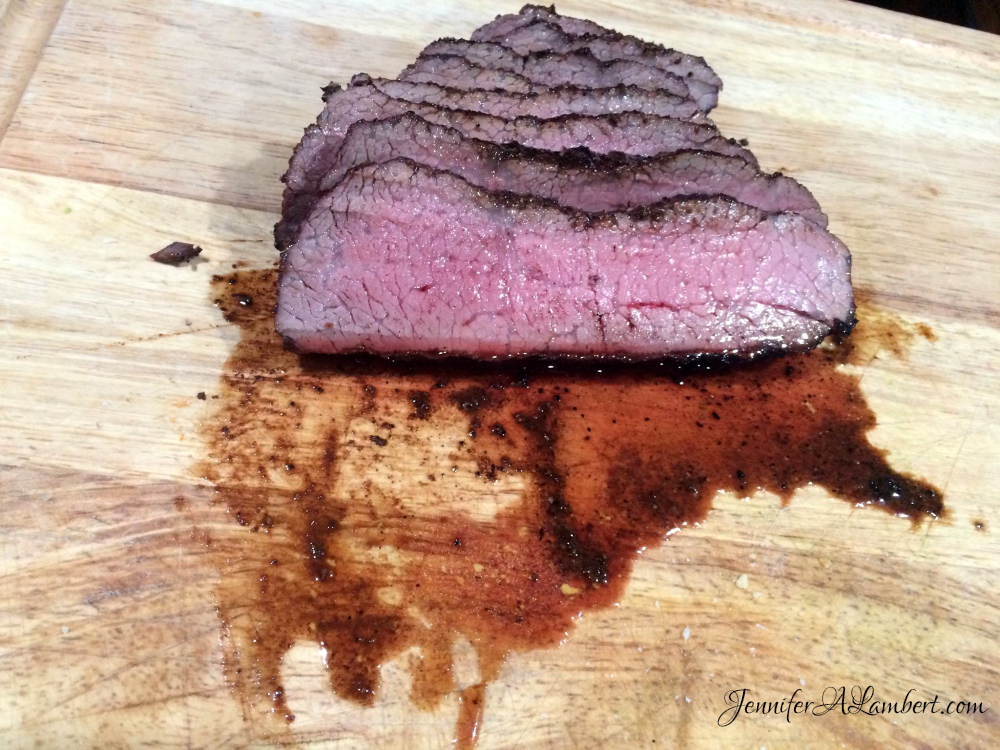
One of our favorite family meals is tritip steak.

It’s a simple and frugal cut of beef. Everyone likes it. It doesn’t take very long on the gas grill. We seldom have leftovers.

I rub spices and olive oil into the meat and let it marinate for at least an hour.

It takes about 20-30 minutes on the grill for medium rare.

Gorgeous thin slices against the grain for tenderness.

We serve tritip with rice or potatoes, salad, fried broccoli or grilled asparagus.

Print

Tritip Steak

Course Main Course
Cuisine American
Prep Time 5 minutes
Cook Time 25 minutes
Servings 6 people

Ingredients

  • 1 tsp coarse black pepper
  • 1 tsp ground coriander
  • 1 tsp sea or kosher salt
  • 1 tsp ground coffee
  • 1/2 tsp cinnamon
  • 1/2 tsp raw sugar
  • 1/2 tsp cocoa powder
  • 1/4 tsp ground cloves
  • 1/4 cup olive oil

Instructions

  1. Mix rub ingredients together in a bowl or jar.

  2. Massage rub into tritip steak on all sides.

  3. Pour olive oil over steak, turning to coat. Let sit for at least an hour in the fridge.

  4. Grill steak over medium heat on gas grill for about 20-30 minutes, or until thermometer reads about 120*

  5. Let rest for 5-10 minutes. Slice thinly against the grain and serve with reserved juices.

Share
Pin23
Share
23 Shares
You might also like:

Filed Under: Recipes Tagged With: beef, dinner, grilling, recipe

Loving Each Child

This blog may contain affiliate links: disclosure.
Please see my suggested resources.

January 6, 2020 By Jennifer Lambert Leave a Comment

Children need love and attention from their parents, but having two or more children can pose a challenge for moms and dads to spread the warmth evenly.

Sometimes this imbalance occurs when siblings are sharply different in terms of talents and personality.

Giving children equal attentiveness is important to their happiness and starts with parents appreciating their uniqueness.

“Children are unique, unknown little people waiting to be revealed,” Lynch says. “Parents need to ask themselves, how can I embrace these differences and make each child feel and recognize their beautiful uniqueness? “Let the mystery of who they are and who they are meant to be unfold in their own authentic way, however awesome or peculiar it is. Everyone is different and it’s important to make every child feel special, important and loved.” 

Tips to help parents balance attention on multiple children who have different interests, personalities, and talents: 

Give them quality one-on-one time. 

Consistently taking time to give your children one-on-one time, Lynch says, shows them you care and that they are important. “This means no phones, no distractions, and being 100 percent present with your child,” Lynch says. “Make eye contact, ask questions, and just listen and let them lead at whatever activity or interaction is taking place. This makes them feel safe, in control and loved.” 

Celebrate their uniqueness. 

An imbalance in parental attention can lead to siblings comparing themselves — never a good idea because that can create jealousy and low self-esteem, thus accentuating a sibling rivalry. At the same time, children may think the parent is showing favoritism. “Susie may be faster than Johnny, but Johnny may be a brilliant chess player,” Lynch says. “So when they begin to compare themselves with their siblings, take that conversation and turn it into how great it is that they each have a place that shines. And bring in more examples of how their differences are beautiful and important. Set up scenarios showing examples of how those differences are good.” 

Show your love for them. 

“You obviously love your children, so don’t be afraid to show it,” Lynch says. “Give them that authentic shout-out, or the gentle, grace- filled redirection and encouragement when they need to try again at something, whether it’s poor behavior or just losing a game. Leave the shame out of it.” 

Validate them but be authentic. 

When it comes to praise, Lynch says quality is much more important than quantity. “Children can recognize a fake compliment a mile away,” Lynch says. “They know if you’ve really seen them or not. They know if it’s from the heart or just surface praise.” “In these ways, showing appreciation for who each of them are will help your children develop confidence in themselves,” Lynch says.

“They will take your lead and begin to find other amazing things about themselves and their friends. Making each of your very different children feel truly loved and valued will help them grow up to be happy and responsible adults.”

Jennifer Lynch, author of the children’s book Livi and Grace, is an educator and child advocate who serves as a guardian ad litem, a person appointed to represent a child’s interests in a court case. She has worked as a special education teacher for an elementary school and as a preschool teacher. In addition, Lynch created the You Are Good brand of T-shirts and other products for sale and for donations. Thousands of the shirts have been donated to children and teenagers in the system. She holds a bachelor’s degree in psychology from Texas A&M University.

Share
Pin
Share
0 Shares
You might also like:

Filed Under: Family Tagged With: parenting, relationships

SunWatch Indian Village/Archaeological Park

This blog may contain affiliate links: disclosure.
Please see my suggested resources.

January 5, 2020 By Jennifer Lambert Leave a Comment

The Mission of SunWatch Indian Village/Archaeological Park is to protect, preserve and research the cultural remains of the SunWatch National Historic Landmark archaeological site and to serve as a visitor and educational center for archaeology, Native American culture, and heritage stewardship as they relate to the site.

Our Boonshoft membership is reciprocal with Sunwatch and Fort Ancient.

SunWatch has an historical video about how the site was found and the work they’re doing here.

There’s a nice little museum and shop, and then, of course, the recreated village.

Village model:

There are artifacts, bones, and reenacted displays:

The village is still an archaeological site:

Visit SunWatch:

Adults $7.00
Seniors (60+) $6.00
Students (6-17) $6.00

April–November
Tuesday-Saturday
9:00 a.m.-5:00 p.m.
Sunday: noon-5:00 p.m.
Closed on Mondays

December–March
Closed except for special events or by appointment. Call 937.268.8199 to book your group visit or field trip!

Closed: New Year’s Eve, New Year’s Day, Thanksgiving, Christmas Eve, Christmas Day, Easter

Share
Pin1
Share
1 Shares
You might also like:

Filed Under: Ohio Tagged With: indigenous, nativeamerican, ohio, travel

January Themes

This blog may contain affiliate links: disclosure.
Please see my suggested resources.

January 4, 2020 By Jennifer Lambert 15 Comments

When my kids were very small, we had monthly themes on our bulletin board, for our homeschool lessons, and to order our daily lives.

As the kids get older, the themes aren’t quite so vivid. I enjoy the liturgical calendar, the natural cycles of the world, and celebrating the flow and small events in our lives.

We loved these themed Calendar Connections.

We’ve packed away the holiday decorations except for the pretty candle holders and front door wreath.

I’m still sweeping up Christmas tree needles, and I’m sure I will still find some in June.

I feel like a refresh. I’m cleaning and organizing, minimizing and streamlining.

It’s been cold but sunny and that makes me happy.

We totally binge watched The Witcher and Lost in Space the last couple weeks. I ate too much, laid around too much, and neglected most of the regular cleaning. I was a slug.

January offers fun calendar themes to begin again or refresh while continuing what’s working well.

We love reading about Catholic saints and Celtic saints and sometimes do spiritual activities. And we also talk about how white saviors and missionaries weren’t the best for indigenous peoples.

Here’s a neat list of what’s on sale.

Fun January calendar theme days!

New Year

Discuss new beginnings, resolutions, goals, self improvement, growth mindset.

  • New Year Memories Cards
  • How We Celebrate NYE
  • A Decade Later
  • Achievable Goals
  • No Resolutions
  • Setting and Keeping Goals
  • Resolutions
  • Homeschool Goals
  • Bible Studies for the New Year
  • My Favorite Books I Read in 2019
  • Creative Leftovers
  • Organizing Recipes

The Asian New Year is on a lunar calendar. Sometimes, it’s in January and sometimes it’s in February.

Epiphany

Surely, you haven’t packed away the Nativity set yet?

Celebrate Twelfth Night, Epiphany, Three Kings, The Magi, The Wise Men – with stories, cake, and fun.

Celebrating Epiphany

Saints

I love learning about the Saints’ lives.

  • January Book Basket by Kennedy Adventures
  • January by Catholic Playground
  • January Feast Table by Elizabeth Clare
  • January Links from Shower of Roses

Winter

  • Winter Unit Study
  • Winter Book List
  • Winter Tot School
  • Going Outside in Winter
  • Winter Nature Hike
  • Winter Nature Walk
  • Winter Bird Study
  • Frozen Bubbles
  • Antarctica Unit Study
  • Self-Care in Winter

Snow

  • First Snow Ever
  • Snow Much Fun!
  • Sledding
  • Ice Skating
  • Measuring Snow
  • Tot School Winter
  • Painting Snow
  • Snow Unit Study
  • Snowy Preschool

Martin Luther King, Jr.

  • Nonviolence Unit Study
  • Love your Neighbor
  • Celebrating Diversity
  • Our Souls are the Same Color
  • Black History Unit Study

History: Racial Injustice Calendar and The Zinn Education Project.

Fun Stuff: National Days

Something for each day of the month – from fun foods to celebrating squirrels to justice issues to historical landmarks.

Celebrate National Bubble Bath Day on the 8th!

We like to read poetry for Burns Night on the 25th.

What are your favorite themes in January?

Share
Pin82
Share
82 Shares
You might also like:

Filed Under: Homeschool Tagged With: January, month, New Year, snow, winter

Best Books of 2019

This blog may contain affiliate links: disclosure.
Please see my suggested resources.

December 30, 2019 By Jennifer Lambert 16 Comments

I can’t remember how many books I read this past year, but I average about 1-2 per week. Which means that sometimes I stay up very late to finish a book.

I love reading, like, a lot.

I get many books from my local libraries. I love that I can borrow eBooks and read them within three weeks!

I was today years old when I realized I could organize my Kindle eBooks into categories within the app. I was up until 2 AM and still have about 400 books to categorize.

I won’t give up on a book even if I hate it.

I’ve read White Teeth twice. My daughter was assigned it in a college course and I thought maybe I would like it more the second time around. Nope.

My Favorite Books I Read in 2019

Weapons of Mass Instruction: A Schoolteachers’ Journey Through the Dark World of Compulsory Schooling by John Taylor Gatto

I’m anti-school. I taught for ten years and we’ve homeschooled for sixteen years. While most of the experiences mentioned in this book was not surprising to me, the history of American public schooling is insidious. I love all Gatto’s books.

Lies My Teacher Told Me: Everything Your American History Textbook Got Wrong by James W. Loewen

Growing up in and teaching in Georgia public schools, I can say that yes, I was taught incorrect and biased history from poorly written textbooks and we rarely even finished each school year.

Reasons to Stay Alive by Matt Haig

A super important book for anyone who has ever suffered from anxiety or depression or considered suicide.

Fear of Flying by Erica Jong

A bit of a break for me, but very enjoyable and funny. I love this feminist manifesto, pseudo autobiography.

You Are Not Special…and Other Encouragements by David McCullough, Jr.

A profound expansion of a popular commencement speech—a call to arms against a prevailing, narrow, conception of success. Perfect for the “everyone gets a trophy” generations.

Parenting Forward: How to Raise Children with Justice, Mercy, and Kindness by Cindy Wang Brandt

A wonderful introduction to respectful, progressive parenting in these challenging times. I found myself nodding and cheering as I agreed with just about everything in this book.

Hold Onto Your Kids: Why Parents Need to Matter More than Peers by Gordon Neufeld

A great book for parents of older kids and teenagers. Family is super important to me and I want my kids to feel safe and happy in my home. I know friends and peers matter a lot to kids because society portrays this as normal. But family matters more and should have more influence than peers.

The Continuum Concept: In Search of Happiness Lost by Jean Liedloff

American writer Jean Liedloff spent two and a half years in the South American jungle, living with indigenous peoples. The experience demolished her Western preconceptions of how we should live and led her to a radically different view of what human nature really is. She offers a new understanding of how we have lost much of our natural well-being and shows us practical ways to regain it for our children and for ourselves.

See my favorite books of 2018. See my favorite life-changing books.

What did you read recently?

Share
Pin37
Share
37 Shares
You might also like:

Filed Under: Family Tagged With: book list

Real Life Benefits of Modern Technology and Virtual Tools

This blog may contain affiliate links: disclosure.
Please see my suggested resources.

December 27, 2019 By Jennifer Lambert Leave a Comment

It’s already clear that modern students are familiar with and eager to use existing and emerging technology. As teachers, this brings up a lot of exciting chances for teachers to integrate their teaching methods with specific forms of technology. Along the way, teachers may find that their jobs are at least a little bit easier, and students may be more engaged in the learning process. Are there other benefits as well?

Increased Student Engagement

Before moving on to a few of the many benefits of bringing technology into the classroom, take a closer look at how student engagement is improved. One great example of this is the variety of tools that allow teachers to ask a question and receive answers from every student in the class and, in some cases, even students who aren’t in the physical classroom. Similarly, students can ask questions without posing them in front of the rest of the class and receive answers from the teacher.

Improved Retention of Information

Interactive presentations are visually appealing and capture the interest of students who are used to speedy clips of information. These presentations may include virtual field trips to art museums, underground caves, magnificent examples of architecture, courtrooms, music halls, and scientific laboratories. In addition to field trips, this technology makes it possible for biology teachers to take students deep into the human body and for astronomy teachers to give students glimpses of outer space. When students are interested and engaged in the learning process, they are more likely to remember what they’ve learned.

Preparation for Use of Technology

At least one of the goals of education is to prepare students for entering the workforce. In today’s environment, familiarity with and comfort using technology is a must. Students must be prepared to put together presentations, understand and send emails, practice appropriate online etiquette, fill out forms, and recognize reliable sources of online information. Experienced teachers may find that they are learning along with students when it comes to these skills.

Logistical Convenience and Time Savings

Online word processing programs allow teachers to receive student papers without worrying about the assignments getting lost or students leaving their names off the pages. Instead of writing notes on the chalkboard for students to copy, notes can be sent directly to students. Teachers could also choose to lecture while students type notes directly into their computers. Assigning and correcting assessments is also simpler when delivered online. Digital records of student performance can also help a teacher show parents the progression of their students’ efforts and results.

For many teachers, one of the most impressive benefits of modern technology is the chance to work with students individually, so they can learn at their own paces. There are so many ways for students to learn that teachers are often required to present information in a variety of formats. Modern tools and resources offer solutions for this challenge.

Better Use of Teachers’ Time

Of course, teachers’ time is extremely valuable. With so many hours spent at the front of the classroom, it’s hard for teachers to find enough time to correct assignments, prepare new information, and engage in their own continuing education. With modern tools that simplify tasks such as preparing grades and creating presentations, teachers have more time to devote to related, outside of class activities. 

The internet and related technology have drastically changed the ways people teach and learn. As emerging generations of students are already engaging in the use of technology, it’s crucial that teachers keep pace. The benefits of using modern tools include better results, increased retention (and scores), time savings, and more convenience for teachers. Are you already using modern technology in your classroom? What benefits have you experienced?

Share
Pin
Share
0 Shares
You might also like:

Filed Under: Uncategorized

Intermittent Fasting

This blog may contain affiliate links: disclosure.
Please see my suggested resources.

December 26, 2019 By Jennifer Lambert Leave a Comment

Diet trends come and go. You can’t miss them on the front pages of grocery store magazines and Google. You may have seen the story of a Massachusetts doctor that shed an impressive 125 pounds over the course of 18 months. Dr. Kevin Gendreau had life-changing results and attributes his success to the 16:8 intermittent fasting diet.

The 16:8 diet is a time-restricted fast that requires participants to fast for 16 hours a day, but then feed on whole foods the remainder of the time. It is always important to consult a doctor before starting any intermittent fasting regime. It is especially true for individuals with diabetes and is ill-advised for expecting mothers or women that are planning on getting pregnant. Keep in mind that there are other intermittent fasting plans that don’t limit you as much as the 16:8, and may be easier on your body type and fitness level.

Another success story was the case of beauty influencer Janelle Wright, who lost an awe-inspiring 65 pounds in 6 months. These success stories are growing in numbers, which has other hopefuls adopting intermittent fasting as the holy grail of diets.

Americans are obsessed with diet and exercise crazes. And why wouldn’t they be? Many of us are at least “overfat,” and there is nothing wrong with wanting to look and feel better or have a flatter tummy or firmer biceps. Only trouble is, the vast majority of people refuse to grasp the reality that these trends may not be good for their health.

Not all diets or exercise routines are created equal. There is no magic pill or ten-minute workout that will transform you overnight. A healthy and balanced physique takes time and an acute understanding of what your individual body needs. Your body and biology is entirely unique. While a plant-based diet or circuit training may work wonderfully for the person on the treadmill next to you, it doesn’t mean that it is what’s best for your genetic makeup or build.

Personal biology aside, women and men should have slightly different diets and fitness routines. It goes without saying that men are hormonally different from women, and are genetically keyed to respond differently to certain exercises and nutritional plans.

Fasting – A Tale as Old as Time

Different ritualistic styles of fasting have been practiced for millennia. Both Gautama Buddha, Pythagoras and Confucius were hip to fasting. It is rarely known that they were all contemporaries, and it is even rumored that Pythagoras traveled a great distance to meet with Buddha. Imagine that swapping of wisdoms.

They all lived long lives, with Buddha passing at around 80 years of age. That is quite the feat of longevity considering life expectancy in 400 B.C. was 35. So what did these wise men understand about fasting that made them embrace it as a discipline?

Fasting was mostly a spiritual pursuit that was said to cleanse the body and clear the mind and spirit. It was only until the 14th century that fasting took on a more medicinal purpose. Renaissance doctor Paracelsus coined fasting as the “physician within.”

Whether you subscribe to fasting for the sake of weight loss, religious or meditative purposes, fasting is a practice that has merit. But how beneficial is this new-age spin on fasting for our long-term health?

The Long and Short of IF

Let’s begin with the more promising and less confusing benefits of intermittent fasting (IF). Studies are rolling out new findings on intermittent fasting daily because of its popularity. The great news is, most of it is positive.

Basically, the act of fasting temporarily rewires your body to pull energy from stored fat supplies, rather than what is readily available in your stomach or gut. Hibernation could be considered an act of fasting, but in this instance the participant is active and awake. Hibernating mammals survive almost entirely on stored fat supplies while they hunker down for long periods of time.

Several things take place when you fast. Intermittent fasting modifies the function of cells, genes and hormones. Your body, being the cleverly crafted enigma that it is, signals for a cellular repair response and begins changing hormone levels to make stored fat more accessible. That is another reason why women should be cautious of intermittent fasting. Hormone levels change dramatically during fasting. This may not be ideal for some female candidates, depending on age and overall fitness level.

Certainly not recommended for expecting moms.

You can count on a few things happening when you are intermittently fasting.

  • Insulin levels significantly drop. Which triggers the fat burning phase of fasting.
  • When intermittently fasting, the human growth hormone kicks into overdrive and skyrockets to as much as 5 times its normal presence. This hormone promotes muscle gain as well as fat burning.
  • Cellular repair might be one of the most astonishing occurrences to happen during intermittent fasting. Your body induces the cellular repair process and begins to actually remove waste material from cells.
  • If cellular detoxification didn’t dazzle you, fasting also changes genes and molecules that are responsible for longevity and your body’s ability to fight off disease.

Understanding & Establishing Healthy Eating Habits

Nowadays it seems that most foods are designed to work against us, even if we have the best intentions. Fast foods, processed ‘diet’ foods and sugary juice cleanses are all conspiring to confuse us and derail our minds from understanding what a healthy diet looks like. Simply put, we all should be eating more vegetables, fruits and nuts.

Whole foods are at the very center of a balanced diet. Just because you’ve decided to pick up intermittent fasting as a way to drop extra weight, doesn’t mean that you should continue to eat high carbohydrate meals or overdo it on the refined grains when you are eating. Always steer clear of processed sugar like energy drinks and sodas. Swap them all out with water. Water is your friend.

Fasting does sound rather extreme if you’ve never tried it before, but there could be an easier approach.

How do you get the benefits of intermittent fasting without the strict regimented guidelines?

Well to start, don’t eat late into the night. This is an avoidable bad habit.

Fasting doesn’t have to be a labor intensive drag. It really boils down to using your better judgement and applying a little discipline to your routine. Consider the times of the day you are most active and eat within that time frame.

Eat whole fruits, vegetables and grains during the times you are not fasting. Drink plenty of water, and you may even want to take short walks after meals. Set a time to stop eating in the early evening and stick to it! If you are most active between the hours of 7AM-5PM, whittle out a block of time before 5PM to get all your nutrients in and adhere to that timeline. It is best to space your meals out and not have your full calorie allowance in one sitting.  

All signs mostly point to intermittent fasting being a productive way to rewire the body to burn fat in a different way. Find a version of fasting that works for you, your body and schedule. There is no point in starting a fasting routine if you are unable to practically accomplish it.

Proceed with Cautious Optimism

Many of us are searching Google for information on intermittent fasting for the sake of weight loss. But it is extremely important to be acutely aware of your body, your goals and how the strain of fasting will impact your overall health. With all of these astonishing biological occurrences flitting about, it is easy to get overly sold on the idea of intermittent fasting to drop some winter weight.

It is important to reiterate one glaring truth. Intermittent fasting isn’t a foolproof science. It affects everyone differently, and the long term research hasn’t yet surfaced to concretely say that fasting is beneficial or detrimental to the modern human body. Some medical professionals warn against the strain fasting has on the heart and other organs. While there have been studies, we are still existing in that gray area.

One of the pitfalls that most people tend to overlook when beginning intermittent fasting is overeating during the feeding cycle. This varies for everyone though. Just because you fasted earlier, doesn’t mean you go heavy on the sauce, so to speak. The purpose of intermittent fasting is to trigger biological shifts in the body and to burn fat reserves. By over consuming during times when you aren’t fasting, you are putting added strain on your system and defeating the purpose of fasting in the first place.

Women should be especially cautious when engaging in intermittent fasting. Because of the significant fluctuations in hormone levels, some women have complained of missed periods, moodiness and even early onset menopause. Hormones that are regulating important functions like ovulation are hypersensitive to energy intake. To be on the safe side, contact a qualified healthcare professional before moving forward with any drastic weight loss regime.

For the time being it looks as if intermittent fasting is here to stay. And it does work wonderfully in the short-term for many people. Just remember to be aware of any negative shifts in mood, sleep patterns, fatigue and don’t overeat during times when you aren’t fasting. If you stay vigilant and follow a well-balanced diet when you do eat, you should be well on your way to enjoying some mental clarity while also cleansing your body of unneeded fat.

To avoid nutrient deficiencies, remember to eat a plentiful variety of nutrient rich foods and don’t load up on carbs. If you are unsure of what types of nutrients you need more of and which ones you should limit, you can easily take a nutrient test to better understand the wants and needs of your body.

Share
Pin
Share
0 Shares
You might also like:

Filed Under: Uncategorized

Celebrating St. Stephen

This blog may contain affiliate links: disclosure.
Please see my suggested resources.

December 26, 2019 By Jennifer Lambert Leave a Comment

When we visited Rome over Christmas, we prepared ourselves for everything to be closed early on Christmas Eve, all day Christmas Day, and all day on St. Stephen’s Day. It was a little stressful since we were staying in an apartment and worried about having enough to do and eat on those few days. We knew we couldn’t pop down to the local big box store or off to a chain restaurant for a meal. There weren’t any and nothing was open.

We didn’t have leftovers from our takeout to make anything traditional for the day.

The traditional food would be St. Stephen’s Day stew made up of turkey, ham or bacon, vegetables, and other leftovers served hot. Cakes and pies would be served for dessert.

It’s traditional for people to visit the nativity scenes inside local churches and make a small donation. It was a sunny day and we enjoyed walking and looking at the sites along with locals.

San Lorenzo fuori le Mura is about 1.5 hours away on foot, so we never did get to see that part of Rome.

Celebrating St. Stephen

Stephen was a deacon in the early church at Jerusalem who upset the Jewish leaders with his teachings. Accused of blasphemy at his trial, he made a long speech denouncing the Jewish authorities who were sitting in judgment on him and was then stoned to death. His martyrdom was witnessed by Saul of Tarsus, a Pharisee who would later become a follower of Jesus and known as Paul the Apostle.

In Western Churches around the world, St. Stephen’s Day is celebrated on December 26, the day after Christmas. In Eastern Orthodox Churches where the Julian calendar is used, St. Stephen’s Day is celebrated on December 27th. St. Stephen was the first Christian martyr who died around the year of 34 A.D.

St. Stephen is the patron saint of stonemasons, casket makers, sufferers of headaches, horses and deacons.

Read the interesting account in the Bible in Acts 6-8:1. Stephen’s speech about Jewish history is interesting and objectionable by many as anti-Semitic. He changed from “our ancestors” to “your ancestors” at the end before he is stoned.

Yesterday we celebrated the temporal birth of our Eternal King; today we celebrate the triumphant passion of His soldier. For yesterday our King, clothed in the garb of our flesh and coming from the palace of the virginal womb, deigned to visit the world; today the soldier, leaving the tent of the body, has gone to heaven in triumph. The one, while preserving the majesty of the everlasting God, putting on the servile girdle of flesh, entered into the field of this world ready for the fray. The other, laying aside the perishable garment of the body, ascended to the palace of heaven to reign eternally. The One descended, veiled in flesh; the other ascended, crowned with blood.

The latter ascended while the Jews were stoning him because the former descended while the angels were rejoicing. “Glory to God in the highest,” sang the exulting angels yesterday; today rejoicing, they received Stephen into their company. Yesterday the Lord came forth from the womb of the Virgin; today the soldier of Christ has passed from the prison of the flesh.

Yesterday Christ was wrapped in swathing bands for our sake; today Stephen is clothed by Him in the robe of immortality. Yesterday the narrow confines of the crib held the Infant Christ; today the immensity of heaven has received the triumphant Stephen. The Lord descended alone that He might raise up many; our King has humbled Himself that He might exalt His soldiers. It is necessary for us, nevertheless, brethren, to acknowledge with what arms Stephen was girded and able to overcome the cruelty of the Jews that thus he merited so happily to triumph.

Stephen, therefore, that he might merit to obtain the crown his name signifies, had as his weapon charity, and by means of that he was completely victorious. Because of love for God, he did not flee the raging Jews: because of his love of neighbor he interceded for those stoning him. Because of love he convinced the erring of their errors, that they might be corrected; because of love, he prayed for those stoning him that they might not be punished. Supported by the strength of charity, he overcame Saul, who was so cruelly raging against him; and him whom he had as a persecutor on earth, he deserved to have as a companion in heaven.

St. Fulgentius, Third Sermon on St. Stephen

Countries around the world list St. Stephen’s Day as an official public holiday including Austria, Slovakia, Germany, Canada, Finland, Poland, Italy, Ireland, England, Australia, Czech Republic, Croatia, the region of Catalonia, and many others. Often, people of these countries will celebrate the holiday by spending time with close family and friends, and having meals together.

In Finland, in addition to spending time with family and friends, St. Stephen’s Day is celebrated with sleigh rides or horse rides, as St. Stephen was known as the patron saint of horses. These rides generally take place in small towns and rural areas.

One of the oldest folk-songs of Sweden, Saint Stephen was Riding (Staffansvisa) is sung at Christmastide in honor of St. Stephen, telling the delightful “Miracle of the Cock.” According to this story, Herod would not believe Stephen when he was told that “One greater than thou has been born this holy night.” The proof of his words came when a roasted cock rose up out of the gravy and crowed as he had crowed at the break of day.

The Staffan of the song has the features of two entirely different personalities, those of the deacon, St. Stephen of Jerusalem, whose feast is celebrated on December 26 and therefore closely connected with Christmas, and those of the eleventh century missionary, Staffan, who traveled far in the north. The latter was killed by pagans; and an unbroken foal brought his body to Norrala, where a chapel was built over his grave. In all Germanic lands he became the patron of health and of horses, and being confused with St. Stephen of Jerusalem he shares in his honors on December 26, such as the “Stephen-Cup,” drunk to good health, and horseback rides around churches and through villages.

In Ireland, St. Stephen’s Day is known as the Day of the Wren. This day is an official holiday of Ireland. The Irish name is called Lá Fhéile Stiofán (Boxing Day) or Lá an Dreoilin (Wren Day). The Wren’s Day celebration began hundreds and hundreds of years ago. One explanation for Wren Day was that St. Stephen was in hiding from his enemies. Unfortunately, he was hiding near a wren. The wren’s chirping gave away St. Stephen’s hiding place and he was found. The wren, therefore, was to be captured and stoned to death, just as St. Stephen was stoned to death. Today, musicians travel from house to house in search of the wren. As they visit each house, they receive money, food or drink as they sing the wren song. This is just one version of the wren song found in an old Irish tale:

The wren, the wren, the king of all birds,
On St. Stephenses day he was caught in the furze;
Although he’s small, his family’s great,
So pray, good ladies, give us a trate.”

Catalonia is another region which celebrates St. Stephen’s Day. In this region, a festive luncheon is served with cannelloni stuffed with escudella i carn d’olla (leftover turkey meat from Christmas day dinner).

St. Stephen’s Day is also called Boxing Day. Boxing Day pertains to filling boxes with gifts to give to others. Countries which celebrate Boxing Day include UK, Australia, Canada, Wales, and other Commonwealth communities. This day is a national holiday in many of these countries.

The old English carol Good King Wenceslas tells how King Wenceslas went out on St. Stephen’s day to bring charity to the poor. The snow was covered with the blood of his freezing feet:

Heat was in the very sod which the saint had printed.

With St. Stephen as our teacher, we learn quickly that as Christ came to us on Christmas Day so we must follow in the footsteps of the holy martyrs in our way to God. Psalm 62, used on the feast of St. Stephen, is a first lesson to teach:

O God, Thou art my God: earnestly do I seek Thee, My soul thirsts for Thee, my flesh longs for Thee, like a dry and thirsty land, without water. So do I gaze upon Thee in the sanctuary, to see Thy might and Thy glory. . . .

Antiphon: My soul cleaves to Thee, because my flesh was stoned for Thee, my God.

Lauds for the feast of St. Stephen, 3rd Psalm and Antiphon

Prayer: Lord Jesus, you chose Stephen as the first deacon and martyr of your One, Holy, Catholic and Apostolic Church. The heroic witness of his holy life and death reveals your continued presence among us. Through following the example of his living faith, and by his intercession, empower us by your Holy Spirit to live as witnesses to the faith in this New Missionary Age. No matter what our state in life, career or vocation, help us to proclaim, in both word and in deed, the fullness of the Gospel to a world which is waiting to be born anew in Jesus Christ. Pour out upon your whole Church, the same Holy Spirit which animated St Stephen, Martyr, to be faithful to the end, which is a beginning of life eternal in the communion of the Trinity.

Scripture: Acts 6:8-7:60

Resources:

  • Kennedy Adventures lessons
  • You might like this Sunday School lesson.
  • Another Bible class lesson.
  • Lesson and paper craft
  • Lesson and craft
  • Lesson on Acts 6-7
  • Story summary and activities
  • Recipes and activities (on right sidebar)
  • The Story of Stephen in multiple languages and activities
  • Rock Dough activity
  • Painting Rocks
  • Forgiveness Relay
  • St. Stephen Statue
  • First Martyr: The Story of Saint Stephen by Nathan Michael Urban
Share
Pin31
Share
31 Shares
You might also like:

Filed Under: Faith Tagged With: Christmas, faith, saint, winter

Finding the Right Nursing Program

This blog may contain affiliate links: disclosure.
Please see my suggested resources.

December 23, 2019 By Jennifer Lambert Leave a Comment

If you’re looking for a great profession with a recession-proof demand and upward mobility for those dedicated to education and professional development, there are a lot of opportunities in the medical field. For many, nursing represents one of the most accessible careers in the field, because nurses are always in demand and the wide range of roles they play provides graduates from Grand Canyon University Nursing with a broad selection of career opportunities when they get into the workforce.

Continuing Education and Advancement

While you can get into the profession with a two-year training program and degree, nursing involves a depth of medical understanding that relies on the continuing education of nurses. For some, that just means staying on top of the professional development that keeps you up to date on protocols and best practices. For others, it means crafting a degree path that opens up opportunities for teaching, greater managerial responsibilities, or even an eventual role as an independent nurse practitioner. The upward mobility of the career means you can not only carve your own path through the profession, but you can also rise to any level you wish with the right ambition and timing.

A Career That Matters

From nurses who care for the seriously ill in hospital and residential settings to those who help with outpatient procedures and maintenance treatments for the chronically ill, nurses are responsible for helping patients access the care they need at every level. They are often the primary point of contact between patients and medical institutions during stays, and they also provide doctors with important information about the development of a patient’s individual case. It doesn’t matter if that case is minor recovery after a procedure or an ongoing fight for health, your career matters. So does the place you go for training.

Features of a Great Nursing Program

With all the options for your education and career training, you need to know how to tell the best of the offerings from the rest. Here are the key features of a well-designed program you should look for when picking out the schools you want to apply to.

  • Continuing education for those seeking advanced degrees in nursing
  • Career placement in the community
  • Accessible locations to your home and the community you want to work in
  • Experiential learning opportunities at all levels

Grand Canyon University nursing professionals find themselves well-prepared for the various roles they take up because they know to seek out a program that allows them to reach their dreams through education, support, and professional mentoring. Whether you’re looking for a program in the area or seeking one in a community elsewhere in the country, the model for a good nursing program remains the same.

Keep Searching for Your Best Fit

Not every program is suited to every applicant. Some great schools only offer very traditional schedules for those pursuing a full-time degree. Others specialize in fitting the program to your schedule, allowing you to keep your current career active until you’re ready to make the switch into nursing. It’s all a matter of what fits your life right now. If you’re trying to figure out whether a program is going to work for your schedule and lifestyle, you need to develop questions to ask when you query for more details. Keep these in mind as you search:

  • How flexible is the scheduling?
  • What internship opportunities are available?
  • What experiential learning opportunities are there beside the mandatory hands-on classes?
  • Which employers draw from the applicant pool?
  • Are there any specializations the school excels with? Are they the ones you want?

There’s no replacement for having the right information when you apply, but you need to start with the right questions. Begin your search today.

Share
Pin
Share
0 Shares
You might also like:

Filed Under: Uncategorized

Creative Leftovers

This blog may contain affiliate links: disclosure.
Please see my suggested resources.

December 23, 2019 By Jennifer Lambert 6 Comments

As the kids get bigger and older, we don’t often have as many leftovers as we used to have, but occasionally, there is a serving or two left that gets shoved to the back of the fridge shelf.

I try to do a fridge cleanout a couple times a week for lunches and maybe a dinner if there’s a lot.

Using up leftovers is a necessity for a frugal waste-free lifestyle.

Having a good pantry and freezer system is key to using up leftovers. I have to plan to have certain items to make this successful and tasty.

I keep chicken and beef stock in the freezer and have some boxes of storebought organic stock in the pantry.

I have a huge assortment of spices and sauces.

I stock up on canned beans when they’re on sale. I just don’t have the freezer room to batch them from dried. Bags of frozen veggies when they go on sale for $1 or less.

We can our own marinara sauce.

I occasionally buy rotisserie chickens if I have a coupon or they’re on a really great sale. They’re awesome to use in many different recipes and I make stock from the bones.

I try to keep potatoes and onions on hand at all times. Also fresh carrots and celery.

These are our favorite ways to use up leftovers creatively:

Soup

I love making soups with various leftovers. This is a great way to clean out the fridge after a busy week!

Creamed vegetable is a favorite at our house to use up old veggies in the drawer.

I can always make soup with leftover chicken like this lovely lemony dill chicken soup.

Vegetable soup is my go-to to throw everything together, especially with leftover beef. I like to add beans and noodles to make it like minestrone.

Beans, lentils, or split peas are great in soup with a ham bone or smoked turkey.

Leftover ham is great for soup like ham and bean soup.

We like to make stock from turkey, chicken, and beef bones. Nothing goes to waste!

Split pea soup with leftover ham and poultry stock is a winner.

Casseroles

Noodles and rice with a cheesy sauce and leftover meat with some veggies makes a great casserole.

Turkey Divan is a great way to use up poultry leftovers.

Pot pie is another favorite with gravy, meat, and vegetables. Refrigerated or frozen dough, or drop herb biscuits on top make it quick and easy!

Salad

Leftover grilled meats and all sorts of veggies can be served cold over lettuce greens. I sometimes sneak a bit of bacon to save for later in a salad. This is a great lunch idea.

See our favorite salads.

Remix

I love making fried rice for my family. It’s a simple, frugal, easy way to use up leftovers. I often make extra rice just to have leftover for this meal.

My girls like ramen, and I love making it healthier with an egg, leftover meats and veggies, and homemade teriyaki sauce.

Stuffing canned biscuits or crescent rolls with cheese and chopped meats is a fun instant snack or lunch.

What’s your favorite way to use up leftovers?

Resources:

  • The Case Against Sugar by Gary Taubes
  • The Big Fat Surprise: Why Butter, Meat and Cheese Belong in a Healthy Diet by Nina Teicholz
  • The Great Cholesterol Myth, Revised and Expanded: Why Lowering Your Cholesterol Won’t Prevent Heart Disease–and the Statin-Free Plan that Will by Jonny Bowden and Stephen T. Sinatra
  • Animal, Vegetable, Miracle: A Year of Food Life by Barbara Kingsolver
  • Food Matters: A Guide to Conscious Eating with More Than 75 Recipes by Mark Bittman
  • VB6: Eat Vegan Before 6:00 to Lose Weight and Restore Your Health . . . for Good by Mark Bittman
  • In Defense of Food: An Eater’s Manifesto by Michael Pollan
  • The Whole30: The 30-Day Guide to Total Health and Food Freedom by Melissa Hartwig Urban and Dallas Hartwig
  • 100 Days of Real Food: Fast & Fabulous: The Easy and Delicious Way to Cut Out Processed Food by Lisa Leake

You might also like:

  • How to Save Money while Shopping
  • Teaching Kids About Money
  • How to Budget
  • Minimizing
  • Online Yard Sale Tips
  • Decorating on a Budget
  • 5 Money Tips
Share
Pin29
Share
29 Shares
You might also like:

Filed Under: Frugal Tagged With: frugal, homemaking, recipe

  • « Previous Page
  • 1
  • …
  • 24
  • 25
  • 26
  • 27
  • 28
  • …
  • 137
  • Next Page »
Suggested Resources

Archives

Popular Posts

10 DIY Gifts with Essential Oils10 DIY Gifts with Essential Oils
Natural Remedies for HeadacheNatural Remedies for Headache
10 Natural Remedies to Keep on Hand10 Natural Remedies to Keep on Hand
Henna Hands CraftHenna Hands Craft
Homemade Turkey Divan CasseroleHomemade Turkey Divan Casserole
This website uses cookies to improve your experience. We'll assume you're ok with this, but you can opt-out if you wish.Accept Reject Read More
Privacy & Cookies Policy

Privacy Overview

This website uses cookies to improve your experience while you navigate through the website. Out of these, the cookies that are categorized as necessary are stored on your browser as they are essential for the working of basic functionalities of the website. We also use third-party cookies that help us analyze and understand how you use this website. These cookies will be stored in your browser only with your consent. You also have the option to opt-out of these cookies. But opting out of some of these cookies may affect your browsing experience.
Necessary
Always Enabled
Necessary cookies are absolutely essential for the website to function properly. This category only includes cookies that ensures basic functionalities and security features of the website. These cookies do not store any personal information.
Non-necessary
Any cookies that may not be particularly necessary for the website to function and is used specifically to collect user personal data via analytics, ads, other embedded contents are termed as non-necessary cookies. It is mandatory to procure user consent prior to running these cookies on your website.
SAVE & ACCEPT