Jennifer Lambert

A Sacred Balance

Visit Us On FacebookVisit Us On PinterestVisit Us On InstagramVisit Us On Linkedin
  • Homeschool
    • Book Lists
    • How Do We Do That?
    • Notebooking
    • Subjects and Styles
    • Unit Studies
  • Travel
    • Europe
      • Benelux
      • France
      • Germany
      • Greece
      • Ireland
      • Italy
      • London
      • Porto
      • Prague
    • USA
      • Chicago
      • Georgia
      • Hawaii
      • Ohio
      • Utah
      • Yellowstone and Teton
  • Family
    • Celebrations
    • Frugal
  • Military Life
    • Deployment
    • PCS
  • Health
    • Recipes
    • Essential Oils
    • Fitness
    • Mental Health
    • Natural Living
    • Natural Beauty
  • Faith
  • About Me
    • Favorite Resources
    • Advertising and Sponsorship
    • Policies
  • Reviews

© 2025Jennifer Lambert · Copyright · Disclosure · Privacy · Ad

Living with Depression

This blog may contain affiliate links: disclosure.
Please see my suggested resources.

March 2, 2020 By Jennifer Lambert 13 Comments

Everyone gets the blues sometimes.

If you’re sad and empty, have trouble concentrating, eating, or sleeping for two weeks or more, you could have depression.

Depression is not a one-size-fits-all illness. It comes in many forms, each with slightly different symptoms.

Depression can be treated, usually with medicine, talk therapy, or both.

After years of living with various degrees of depression, trying different meds with horrible side effects, and therapies to little effect, I realize I just have functional depression.

It’s just a persistent melancholy or dysthymia that’s always in the background and I plug on, carry on, but sometimes I experience pits of despair that I struggle to pull out of and life gets really hard.

Depression feels different for everyone.

5 Lies Christians Tell About Mental Illness

  1. God won’t give you more than you can handle.
  2. Just pray and read the Bible more for healing.
  3. Mental illness is a sin, curse, or demon possession.
  4. If you loved Jesus more you would be happier and better. 
  5. You can’t be a good Christian if you have a mental illness.

I’m sick and tired of hearing lies like these about mental illness from well-meaning people. You don’t hear things like this about people with physical illness. It’s not just from the proponents of prosperity gospel either. It’s dangerous to tell people that “it’s all in their head.”

We need to do better.

You may not realize some people have depression or other mental illnesses. It’s often not very obvious.

You won’t know I’m not sleeping or oversleeping, binging or abstaining from food, online shopping, gaming, social media…if I’m paranoid afraid that my spouse or kids will leave, get hurt, or die. When I’m overly irritable, people will just assume it’s PMS.

I may seem all smooth and serene, but it’s really that I feel dead inside this week, this month, this season. I’m really good at hiding it behind polite smiles and small talk. Since I am an introvert, you won’t know the difference between my normal and my down days.

Types of Depression

Major Depressive Disorder or Clinical Depression

To make a diagnosis, doctors look for at least five symptoms that affect how you feel, think, and behave, including:

  • Sadness
  • Loss of interest in activities
  • Sleeplessness
  • Trouble making decisions
  • Difficulty concentrating
  • Sleepiness
  • Suicidal thoughts or actions
  • Changes in appetite
  • Feelings of guilt or worthlessness

Persistent Depressive Disorder or Dysthymic Disorder or Dysthymia

If you’ve been feeling down for at least two years, you may have persistent depressive disorder. More women than men seem to have PDD. Kids and teens can have it, too. It makes them more irritable than depressed, and for them to have this diagnosis, their symptoms need to last only a year. I consider this functional depression. Melancholy.

Bipolar Disorder, used to be called Manic Depression

This features emotional high periods called mania and the lows of depression. These swings affect not only how you feel, but your behavior and judgment, too. This can cause problems with work, relationships, and day-to-day life. Suicidal thoughts and behaviors also are common with bipolar disorder.

Seasonal Affective Disorder

The dreary days of winter can be hard for those with seasonal affective disorder (SAD). These symptoms are the same as depression, but generally happen only when there’s less daylight. About 5% of adults in America have SAD. Treatments such as light therapy or medication can ease symptoms and they can also improve on their own when sunnier weather and season arrives.

Adjustment Disorder

Any of life’s unexpected curveballs can bring on extra stress. If it becomes difficult to move forward, you may have an adjustment disorder that can cause depression, anxiety, or both. You may hear this called “situational disorder or symptoms.” The symptoms can start within three months of a stressful event, and they’re usually gone about six months later, but they can last longer, depending on the cause. Usually, talk therapy is the recommended treatment. As a military spouse, I’ve absolutely seen adjustment disorder too often in my family and others.

Psychotic Depression

This is a severe type of depression. Its symptoms include hallucinations and delusions. You may be agitated and be unable to relax. Your ability to think clearly or move normally may slow down dramatically. Psychotic depression usually requires a hospital stay.

Premenstrual Dysphoric Disorder

Many women get the cramping and moodiness of premenstrual syndrome (PMS). If you have severe PMS that affects your job and relationships, you may have PMDD. Symptoms often start 7 to 10 days before your period and usually go away a few days after the period begins. If you think you have PMDD, see your doctor to help rule out other issues. I was just diagnosed with a uterine fibroid and I now have a Mirena IUD to shrink it.

Treatments can include:

  • Lifestyle changes, such as diet and exercise
  • Oral contraceptives or hormone therapy
  • Antidepressants

Postpartum Depression

Most mothers feel a little blue after their baby’s birth due to changing hormones and other factors. If those feelings become severe, you could have postpartum depression. Symptoms can creep in a few weeks after the baby’s birth or even up to a year later. Mood swings, difficulty bonding with your baby, changes in thoughts and behavior, and fears about your mothering are common. If you think you have more than the baby blues, see your doctor. Our culture is very hard on mothers and offers little support for new moms. I suffered terribly after having each of my four babies with no rest or support system. I had no recovery time. We need to do better.

Atypical Depression

Most forms of depression make you feel sad and empty. But if yours lifts briefly after good news or a positive experience, you may have atypical depression. A doctor can help clarify and distinguish this type. It isn’t rare, but its symptoms are a little different. Other than the temporary mood lift, you may:

  • Have a bigger appetite
  • Sleep ten or more hours a day
  • Be especially sensitive to criticism.
  • Get a heavy feeling in your arms and legs that is not because you’re tired

Disruptive Mood Dysregulation Disorder

Although most children have temper tantrums, kids with this disorder are usually excessively irritable and have outbursts well beyond what’s expected. The previous diagnosis for some of these kids was pediatric bipolar disorder, but their symptoms do not always fit this description. It’s a good idea to observe your child in different environments and encourage children to take risks within a safety net so they learn appropriate boundaries and challenge their potential. Reach out to teachers and caregivers for assistance. A doctor can help distinguish this disorder from ADHD or other issues. Lifestyle changes may help.

Subsyndromal Depression

Subsyndromal means that you may have some symptoms of a disorder, but not enough for a diagnosis. Subsyndromal depression means you have at least two symptoms, but fewer than the five necessary for your doctor to say you have a major depression disorder.

For you to get a diagnosis of this type of depression, your symptoms must affect your quality of life for at least two weeks. Doctors can help rule out any physical reasons for symptoms that may mimic depressive symptoms. Sometimes, there is a vitamin deficiency or other underlying cause.

Treatment-Resistant Depression

For most people with depression, modern treatments work well to help you get your life back on track. But up to about a third of people with depression disorders need a little more help.

Doctors are looking at why some people respond well to treatment while others don’t. Some people may have success with their treatment for a little while then have it stop working.

Even if your depression is tougher to treat, you should keep seeing your doctor for assistance and solutions. I know it’s hard.

Do you know someone living with depression?

Check on your friends, family members, coworkers…anyone who you come in contact with on a regular basis.

Don’t just make assumptions. Don’t get your feelings hurt if they pull away.

Please don’t just vaguely say, “Let me know if you need anything.”

People with depression and other mental illnesses need a lot of things, but we will almost ask. We don’t think we deserve your attention. We don’t want to be a burden. We have learned that society doesn’t really care or want to help.

Please reach out.

Because I won’t.

You might also like:

What Depression Feels Like and Books about Depression

More Articles to Help:

  • Homeschooling through Depression
  • How Kids Can Talk to Parents About Depression
  • Treating and Living with Anxiety
  • Addiction and Depression: Treating Co-Occurring Disorders
  • A Navigation Guide to Self-Discovery During Your Addiction Recovery Journey
  • Recognizing and Treating Depression During Pregnancy
  • Marriage and Mental Health: How to Cope When Your Spouse Has Been Diagnosed with Schizophrenia
  • 7 Tips for Creating a Healthy and Positive Work Environment
  • A Healthy Home is a Happy Home: How to Optimize Your Home for Healthy, Stress-free Living
  • 8 Common Misbeliefs about Suicide
  • Resources for Parents with Children with Mental Health Problems
  • For Teachers: Children’s Mental Health Disorder Fact Sheet for the Classroom
  • Promoting Mental Health at Home: How to Design the Perfect Meditation Room
  • Free Downloads
  • 5 Ways to Use Feng Shui in Your Home Design
  • Drug Abuse and Addiction: Recognizing the Signs and Symptoms of Drug Addiction
  • Swift River Centers
  • Elderly Mental Health: How to Help Your Senior
  • Coping with the Loss of a Loved One
Share
Pin21
Share
21 Shares
You might also like:

Filed Under: Health Tagged With: depression, mental health

Teaching Black History

This blog may contain affiliate links: disclosure.
Please see my suggested resources.

February 28, 2020 By Jennifer Lambert Leave a Comment

It’s hard to teach my white kids about Black history and Civil Rights in America.

But I won’t shy away from what makes me uncomfortable.

I can’t just begin in the 1960s with Martin Luther King, Jr. and the Civil Rights Act. I can’t just teach about this in February: Black History Month.

The fight for civil rights began long ago and continues today.

No one really wants to discuss the creation of the idea of race surrounding the colonization of Europeans to the New World.

Pioneer days are lauded as an exciting time when white Europeans claimed Manifest Destiny and took land from the Natives who had lived in America for hundreds of years. Theses times are glorified in skewed history books with white saviors “evangelizing and rescuing people of color from themselves and their savagery.”

The Civil War didn’t end slavery. It made slavery illegal, and other later court decisions made Jim Crow Laws and segregation illegal, but discrimination and stereotypes in the media, schools, and our own homes uphold racism.

The Ku Klux Klan was and is hateful toward anyone who is not a White Anglo-Saxon Protestant.

This is hard and necessary history to teach my white children who have been mostly oblivious in their sheltered lives. It’s hard history for me to revisit and enlighten myself so I understand true American history.

I share articles from social media and the news that are important about current events to my teens so they understand that racism is unfortunately still alive and well in the world.

Civil rights are human rights.

It is my duty to learn and teach anti-racism. All year round and not just one month each year.

Studying Black American History Year Round

Our favorite history texts:

  • A History of US: Eleven-Volume Set by Joy Hakim
  • Lies My Teacher Told Me: Everything Your American History Textbook Got Wrong by James W. Loewen
  • A People’s History of the United States by Howard Zinn
  • Story of the World, Vol. 1: History for the Classical Child: Ancient Times by Susan Wise Bauer
  • Story of the World, Vol. 2: History for the Classical Child: The Middle Ages by Susan Wise Bauer
  • Story of the World, Vol. 3: History for the Classical Child: Early Modern Times by Susan Wise Bauer
  • Story of the World, Vol. 4: History for the Classical Child: The Modern Age by Susan Wise Bauer
  • Life: Our Century In Pictures by Richard B. Stolley
  • The Century for Young People by Peter Jennings

Topics for Discussion

I know this is an incomplete timeline. We discuss issues as I learn about them and we read about them in our studies.

  • Colonialism
  • Enslavement
  • Underground Railroad
  • Harriet Tubman
  • Fugitive Slave Act
  • Nat Turner
  • Abolitionism 
  • John Brown
  • Dred Scott
  • The US Civil War. See my unit study.
  • Emancipation Proclamation
  • Juneteenth
  • Reconstruction
  • Freedmen’s Bureau
  • Black Codes
  • Jim Crow
  • Historically Black Colleges and Universities (HBCUs)
  • 14th and 15th Amendments
  • Ku Klux Klan
  • Tuskegee Institute
  • Ida B. Wells sued the Chesapeake, Ohio and Southwestern Railroad
  • National Association for the Advancement of Colored People (NAACP)
  • Plessy v. Ferguson
  • Woodrow Wilson orders physical re-segregation of federal workplaces and employment
  • Marcus Garvey and UNIA
  • Great Migration
  • Harlem Renaissance
  • East St. Louis massacres
  • Red Summer
  • Tulsa Race Massacre
  • Tuskegee Airmen
  • Brotherhood of Sleeping Car Porters
  • Jesse Owens wins four gold medals at the 1936 Summer Olympics in Berlin
  • Negro League Baseball
  • Jackie Robinson
  • Brown v. Board Of Education
  • Recy Taylor
  • Emmett Till
  • Rosa Parks and the Montgomery Bus Boycott
  • Southern Christian Leadership Conference (SCLC)
  • Little Rock Nine
  • Sit–in Movement 
  • Student Nonviolent Coordinating Committee (SNCC)
  • Congress of Racial Equality (CORE)
  • Freedom Rides
  • James Meredith integrates Ole Miss
  • 16th Street Baptist Church in Birmingham, Alabama, bombed
  • Dr. Martin Luther King, Jr.’s “I Have a Dream” speech
  • Civil Rights Act of 1964
  • Freedom Summer and the “Mississippi Burning” Murders
  • Selma to Montgomery March
  • Malcolm X
  • Voting Rights Act of 1965
  • Black Power
  • Fair Housing Act of 1968
  • MLK Assassination
  • Shirley Chisholm Runs for President in 1972
  • President Jimmy Carter appoints Andrew Young to serve as Ambassador to the United Nations
  • The Bakke Decision and Affirmative Action
  • Jesse Jackson and People United to Save/Serve Humanity (PUSH)
  • Oprah Winfrey Talk Show
  • Los Angeles Riots
  • Million Man and Woman Marches
  • Colin Powell becomes Secretary of State
  • Barack Obama becomes 44th U.S. President
  • Civil Rights Extensions
  • Black Lives Matter
  • Colin Kaepernick

February 1976: Black History Month is founded by Professor Carter Woodson’s Association for the Study of Afro-American Life and History.

November 2, 1983: President Ronald Reagan signs a bill creating a federal holiday to honor MLK.

January 20, 1986: Martin Luther King, Jr. Day is first celebrated as a national holiday.

Resources and Reading List

I prefer to read works written by Black people about Black people. Some other books we’ve read and discussed, but they had problems.

  • The 1619 Project: A New Origin Story by Nikole Hannah-Jones
  • 1619 Project online
  • 1619 Project Teaching/Reading Guide
  • The Native Americans Who Assisted the Underground Railroad
  • Racial Equality Tools
  • Frederick Douglass
  • Langston Hughes
  • W.E.B. Du Bois
  • Zora Neale Hurston
  • James Baldwin
  • Maya Angelou
  • Alice Walker
  • Toni Morrison
  • Ta-Nehisi Coates
  • Ibram X. Kendi
  • A Black Women’s History of the United States by Daina Ramey Berry and Kali Nicole Gross
  • An African American and Latinx History of the United States by Paul Ortiz
  • The Cooking Gene: A Journey Through African American Culinary History in the Old South by Michael W. Twitty
  • And Still I Rise: Black America Since MLK by Henry L. Gates and Kevin M. Burke
  • Unseen: Unpublished Black History from the New York Times Photo Archives
  • Making Our Way Home: The Great Migration and the Black American Dream by Blair Imani
  • Betty Before X by Ilyasah Shabazz and Renée Watson
  • A Child’s Introduction to African American History: The Experiences, People, and Events That Shaped Our Country by Jabari Asim
  • Well-Read Black Girl: Finding Our Stories, Discovering Ourselves by Glory Edim
  • Heart and Soul: The Story of America and African Americans by Kadir Nelson
  • Hair Love by Matthew A. Cherry
  • One Crazy Summer by Rita Williams-Garcia
  • Brown Girl Dreaming by Jacqueline Woodson
  • The Watsons Go to Birmingham by Christopher Paul Curtis
  • Elijah of Buxton by Christopher Paul Curtis
  • Bud, Not Buddy by Christopher Paul Curtis
  • Logans Series by Mildred Taylor
  • Books by Angie Thomas
  • Biographies about former enslaved people
  • Biographies about Civil Rights leaders
  • Raising Antiracist Kids by Local Passport Family

Anti-Racism Books

Some of these are on my list to read. Some I’ve read and liked or disliked. It’s frustrating when white people write about anti-racism from a place of socio-economic power and white savior stance.

  • I’m Still Here: Black Dignity in a World Made for Whiteness by Austin Channing Brown
  • The Cross and the Lynching Tree by James H. Cone
  • Black Theology and Black Power by James H. Cone
  • I Bring the Voices of My People: A Womanist Vision for Racial Reconciliation by Chanequa Walker-Barnes
  • The Color of Compromise: The Truth about the American Church’s Complicity in Racism by Jemar Tisby
  • Dear Church: A Love Letter from a Black Preacher to the Whitest Denomination in the US by Lenny Duncan
  • White Fragility: Why It’s So Hard for White People to Talk About Racism by Robin DiAngelo
  • Why Are All the Black Kids Sitting Together in the Cafeteria? And Other Conversations About Race by Beverly Daniel Tatum
  • Waking Up White: and Finding Myself in the Story of Race by Debby Irving
  • White Awake: An Honest Look at What It Means to Be White by Daniel Hill

Movies

Obviously, some of these are not for young children. Use discretion.

I love movies and I love using movies to teach history and culture. Spike Lee, Ava DuVernay, and Jordan Peele have great films.

  • The Princess and the Frog
  • Amistad
  • 12 Years a Slave
  • The Color Purple
  • Sounder
  • Ruby Bridges
  • 4 Little Girls
  • Remember The Titans
  • Ali
  • Marshall
  • Selma
  • Malcolm X
  • 42
  • Hidden Figures
  • The Help
  • Fruitvale Station
  • When They See Us
  • 13th
  • Mississippi Burning
  • Red Tails
  • Tuskegee Airmen
  • Loving
  • Straight Outta Compton
  • Get Out
  • Us

Music

I love music and I love the rich history that African Americans have brought to our musical repertoire. See how we learn about music.

  • Spirituals and Folk Songs
  • Jubilee Singers
  • Barbershop quartets
  • Blues
  • Jazz
  • Soul
  • R&B
  • Rap
  • Hip Hop

The removal of racist songs from children’s music programs is long overdue.

Celebrate Black composers, singers, and musicians throughout history.

Field Trips

We live in Ohio and we’re learning local history along with world and US history.

National Underground Railroad Freedom Center in Cincinnati

Harriet Beecher Stowe House in Cincinnati:

Underground Railroad Walk in Springboro, Ohio:

Quilts often were maps for the Underground Railroad.

It’s important to revisit history lessons again and again. I learn so much while researching to teach my children Truth.

I’m constantly revisiting my upbringing and the stereotypes I was washed in during my Georgia public school education. I want to do better. I want to do better teaching my children.

How do you teach Black History?

You might also like:

  • Celebrating Diversity
  • Our Souls are the Same Color
  • Love Your Neighbor
  • Nonviolence Unit Study
Famous African Americans Notebooking Pages
Share
Pin31
Share
31 Shares
You might also like:

Filed Under: Homeschool Tagged With: civil rights, history, unit study

March Themes

This blog may contain affiliate links: disclosure.
Please see my suggested resources.

February 27, 2020 By Jennifer Lambert Leave a Comment

When my kids were very small, we had monthly themes on our bulletin board, for our homeschool lessons, and to order our daily lives.

As the kids get older, the themes aren’t quite so vivid. I enjoy the liturgical calendar, the natural cycles of the world, and celebrating the flow and small events in our lives.

We loved these themed Calendar Connections.

We love reading about Catholic saints and Celtic saints and sometimes do spiritual activities. And we also talk about how white saviors and missionaries weren’t the best for indigenous peoples.

Here’s a neat list of what’s on sale each month.

Fun March calendar theme days!

Saint Patrick

  • Celebrating Saint Patrick
  • Preschool Saint Patrick
  • Ireland Unit Study
  • Teaching the Trinity
  • My Saint Patrick Pinterest Board

I love learning about the Saints’ lives.

  • March Book Basket by Kennedy Adventures
  • March by Catholic Playground
  • March Feast Table by Elizabeth Clare
  • March Links from Shower of Roses

Read Across America Week

Read Across America Unit Study

Spring

  • Celebrating Spring
  • Spring Unit Study
  • Spring Nature Study
  • Spring Pastel Art
  • Spring Homeschool
  • Favorite Spring Books
  • Backyard Signs of Spring
  • Tot School Spring
  • March Sensory Bin
  • March Tot School
  • Spring Clean Your Heart
  • Learning About Seeds
  • My Spring Pinterest Board

Rainbows

  • Preschool Letter R
  • Wizard of Oz Unit

Women’s History

Women’s Literature Study

Daylight Savings Time

Pi Day on 3/14

Ides of March

Caterpillars and Butterflies

Purim

  • Purim Unit Study
  • My Purim Pinterest Board

Passover

  • Celebrating Passover
  • My Passover Pinterest Board

Easter

  • Celebrating Easter
  • Natural Easter Egg Dye
  • 50 Easter Basket Ideas
  • Favorite Easter Books
  • Resurrection Eggs
  • My Easter Pinterest Board

History: Racial Injustice Calendar and The Zinn Education Project.

Fun Stuff: National Days

Don’t miss Chip and Dip Day on 3/23!

Share
Pin26
Share
26 Shares
You might also like:

Filed Under: Homeschool Tagged With: March, month, spring

Languages of Learning

This blog may contain affiliate links: disclosure.
Please see my suggested resources.

February 24, 2020 By Jennifer Lambert 10 Comments

As a teacher and homeschool mom, it’s important that I know how best to teach each of my individual students so that they learn best.

There are many different personality types and styles of learning and I want to utilize best methods to teach my kids so they are most successful.

Five Languages of Learning

There are at least five main ways that people express their learning language, with one way usually being more predominant than others.

1. Visual (Spatial):

Visual learners benefit when they have an image or cue to help them process information. They may need to map things out in order to completely understand their thoughts.

Characteristics of visual learners include: 

  • A good spatial and directional sense
  • Can easily visualize objects, plans, and outcomes
  • Are good at using maps and rarely get lost

2. Aural (Auditory-Music):

This is a very unique type of learning and is classified by those who primarily respond to sound. Many people who are aural learners are also musicians, and learn the information better when it’s presented through the medium of a song or a clever rhyme.

Characteristics include:

  • Listens to music in the background while learning or working
  • Has a good sense of pitch or rhythm
  • Often hears songs, jingles, and themes in their head without prompts

3. Verbal (Linguistic):

Verbal learners are successful when they receive instruction verbally or through writing, and excel with both. These learners usually pursue careers in public speaking, writing, journalism, and debate. You may be a verbal learner if you need to read content aloud in order to learn something or if you prefer to have someone speak the information to you so you can process it.

Characteristics include:

  • Enjoys reading and writing
  • Likes tongue twisters and rhymes
  • Has a large vocabulary and enjoys learning new words

4. Physical (Kinesthetic):

The people who learn physically are the people who like to get their hands dirty. Physical learners are very animated and are always moving. If you don’t learn something until you do it, or are constantly in motion while you speak, you might be a physical learner.

Other characteristics include:

  • Appreciation for the physical world around them
  • Enjoys sports, exercise, and other outdoor activities
  • Tends to use and pick up on body language

5. Logical (Mathematical):

Many logical thinkers end up being engineers, mathematicians, or pursuing the sciences. This is because of their unique way of learning. These individuals want to understand the reason behind everything and enjoy games like chess and doing brainteasers. Logical learners tend to prefer making organized lists while studying and extracting key points from the material.

Logical learner characteristics also include:

  • Create procedures for future use
  • Classify and group information together to gain a better understanding
  • Planning and ranking agendas and itineraries

Which learning language do you speak best?

You might also like:

Our Family’s Learning Styles and Personality Types

Share
Pin18
Share
18 Shares
You might also like:

Filed Under: Homeschool Tagged With: homeschool, learning

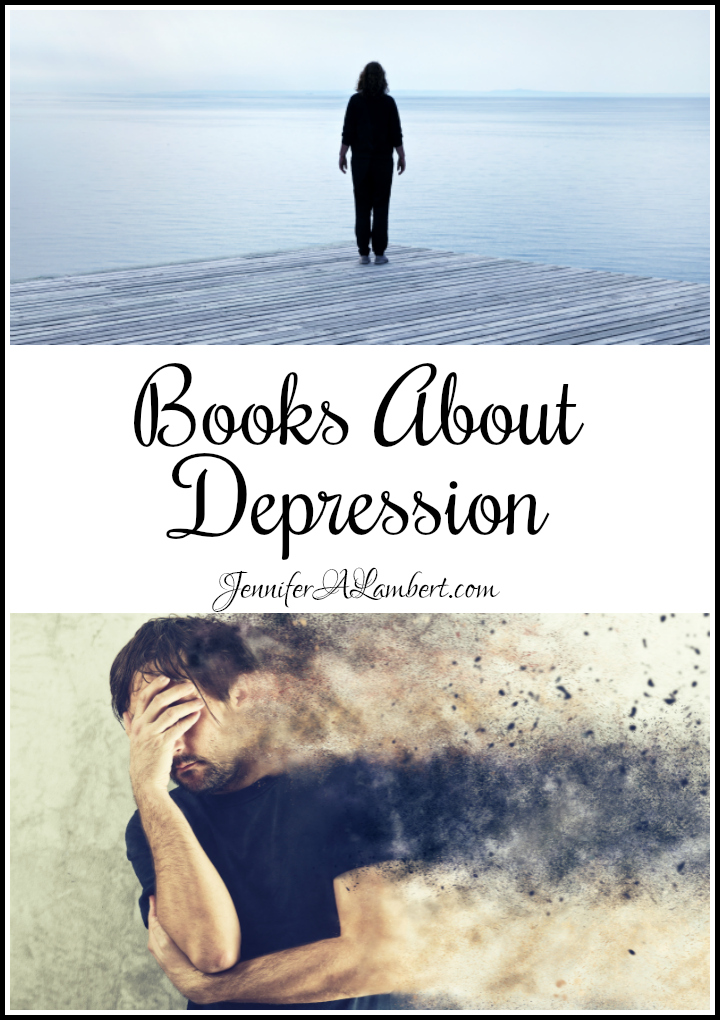
Books about Depression

This blog may contain affiliate links: disclosure.
Please see my suggested resources.

February 17, 2020 By Jennifer Lambert 11 Comments

People who have never suffered from depression just don’t understand.

Our society overuses the word depressed to mean temporarily sad.

But depression is an ongoing illness.

Depression doesn’t just go away when life quality, finances, relationships, or circumstances improve.

Medications don’t always help. I’ve tried several and I tired of the side effects and being a guinea pig. I don’t like feeling numb or half here.

So many people think they’re really helping when they recommend trite self-help books that just tell the reader to be happier, listen to more Contemporary Christian pop music, read the Bible, and pray more.

A business person makes money off your problems, they are invested in you having a problem. When Rachel Hollis says you have a problem, it’s because she hopes to profit from your problem.

Devi Abraham

I do appreciate the memoirs about people rescuing themselves by running with their dogs or finding something to live for – clinging to hope in a prayer, pet, memory, or child.

It’s just that every person with depression is different, experiences it differently, copes differently.

Here’s what depression feels like to me.

These books show a reality to depression and living and surviving…or not.

Depression isn’t just feeling down or having the blues or feeling out of sorts.

It’s a nagging, staticy feeling at the very base of the brain all the time, often rising to the surface and taking over everything.

I don’t think there are many books that show the harsh reality of depression.

Even having depression, I often look at others and characters in movies and books and wonder why they have it? I find myself believing the lies of “but they have such a nice life with no problems.”

Depression lies.

If I wanted to not be this way, then I wouldn’t be this way.

There are oodles of coping mechanisms and ways to bring us back to ourselves. I like to read.

Books about Depression

Reasons to Stay Alive by Matt Haig

Like nearly one in five people, Matt Haig suffers from depression. Reasons to Stay Alive is Matt’s inspiring account of how, minute by minute and day by day, he overcame the disease with the help of reading, writing, and the love of his parents and his girlfriend (and now-wife), Andrea. And eventually, he learned to appreciate life all the more for it.

Everyone’s lives are touched by mental illness: if we do not suffer from it ourselves, then we have a friend or loved one who does. Matt’s frankness about his experiences is both inspiring to those who feel daunted by depression and illuminating to those who are mystified by it. Above all, his humor and encouragement never let us lose sight of hope. Speaking as his present self to his former self in the depths of depression, Matt is adamant that the oldest cliché is the truest—there is light at the end of the tunnel. He teaches us to celebrate the small joys and moments of peace that life brings, and reminds us that there are always reasons to stay alive.

All the Bright Places by Jennifer Niven

When Finch and Violet meet on the ledge of the bell tower at school—six stories above the ground— it’s unclear who saves whom. Soon it’s only with Violet that Finch can be himself. And it’s only with Finch that Violet can forget to count away the days and start living them. But as Violet’s world grows, Finch’s begins to shrink…

All the Bright Places is coming to Netflix soon! I’m interested to see what they do with it.

By The Time You Read This, I’ll Be Dead  by Julie Anne Peters

After a lifetime of being bullied, Daelyn is broken beyond repair. She has tried to kill herself before, and is determined to get it right this time. Though her parents think they can protect her, she finds a Web site for “completers” that seems made just for her. She blogs on its forums, purging her harrowing history. At her private Catholic school, the only person who interacts with her is a boy named Santana. No matter how poorly she treats him, he just won’t leave her alone. And it’s too late for Daelyn to be letting people into her life . . . isn’t it?

In this harrowing, compelling novel, Julie Anne Peters shines a light on what might make a teenager want to kill herself, as well as how she might start to bring herself back from the edge. A discussion guide and resource list prepared by “bullycide” expert C. J. Bott are included in the back matter.

Suicide Notes by Michael Thomas Ford

Fifteen-year-old Jeff wakes up on New Year’s Day to find himself in the hospital—specifically, in the psychiatric ward. Despite the bandages on his wrists, he’s positive this is all some huge mistake. Jeff is perfectly fine, perfectly normal; not like the other kids in the hospital with him.

But over the course of the next forty-five days, Jeff begins to understand why he ended up here—and realizes he has more in common with the other kids than he thought.

Girl, Interrupted by Susanna Kaysen

In 1967, after a session with a psychiatrist she’d never seen before, eighteen-year-old Susanna Kaysen was put in a taxi and sent to McLean Hospital. She spent most of the next two years in the ward for teenage girls in a psychiatric hospital as renowned for its famous clientele—Sylvia Plath, Robert Lowell, James Taylor, and Ray Charles—as for its progressive methods of treating those who could afford its sanctuary.

Kaysen’s memoir encompasses horror and razor-edged perception while providing vivid portraits of her fellow patients and their keepers. It is a brilliant evocation of a “parallel universe” set within the kaleidoscopically shifting landscape of the late sixties. Girl, Interrupted is a clear-sighted, unflinching document that gives lasting and specific dimension to our definitions of sane and insane, mental illness and recovery.

Prozac Nation: Young and Depressed in America by Elizabeth Wurtzel

Elizabeth Wurtzel writes with her finger on the faint pulse of an overdiagnosed generation whose ruling icons are Kurt Cobain, Xanax, and pierced tongues. Her famous memoir of her bouts with depression and skirmishes with drugs, Prozac Nation is a witty and sharp account of the psychopharmacology of an era

The Bell Jar by Sylvia Plath

The Bell Jar chronicles the crack-up of Esther Greenwood: brilliant, beautiful, enormously talented, and successful, but slowly going under — maybe for the last time. Sylvia Plath masterfully draws the reader into Esther’s breakdown with such intensity that Esther’s insanity becomes completely real and even rational, as probable and accessible an experience as going to the movies. Such deep penetration into the dark and harrowing corners of the psyche is an extraordinary accomplishment

I haven’t read these yet, but they’re on my list:

Project Semicolon: Your Story Isn’t Over  by Amy Bleuel

Project Semicolon began in 2013 to spread a message of hope: No one struggling with a mental illness is alone; you, too, can survive and live a life filled with joy and love. In support of the project and its message, thousands of people all over the world have gotten semicolon tattoos and shared photos of them, often alongside stories of hardship, growth, and rebirth.

How I Stayed Alive When My Brain Was Trying to Kill Me: One Person’s Guide to Suicide Prevention by Susan Rose Blauner

An international epidemic, suicide has touched the lives of nearly half of all Americans, yet is rarely talked about openly. In this timely and important book, Susan Blauner breaks the silence to offer guidance and hope for those contemplating ending their lives — and for their loved ones.

A survivor of multiple suicide attempts, Blauner eloquently describes the feelings and fantasies surrounding suicide. In a direct, nonjudgmental, and loving voice, she offers affirmations and suggestions for those experiencing life-ending thoughts, and for their friends and family. Here is an essential resource destined to be the classic guide on the subject.

The Long Night: Readings and Stories to Help You through Depression by Jessica Kantrowitz

You’ve done what you can: you’ve seen your doctor, made an appointment with a therapist, picked up the prescription for the antidepressant and swallowed that first strange pill. But it can take four to eight weeks for the meds to start to work, and it might take two or more tries before you and your doctor find the ones that work best for you. When you’re in the midst of terrible depression, those weeks can feel like an eternity. You just want to feel better now. This book is for those who are in the long night of waiting. It does not promise healing or deliverance; it is not a guide to praying away the depression. It is simply an attempt to sit next to you in the dark while you wait for the light to emerge.

Reader suggestions:

Confessions of a Domestic Failure: A Humorous Book About a not so Perfect Mom by Bunmi Laditan

Recover in Color: 52 Recovery Lessons by Kathleen E. Yancosek

The Upward Spiral: Using Neuroscience to Reverse the Course of Depression, One Small Change at a Time by Alex Korb, PhD

The Other Side of Night: A Novel by Adam Hamdy

A Mind Restored: Finding Freedom from the Shame and Stigma of Mental Illness by Kimberly Muka Powers

They Both Die at the End by Adam Silvera

Legends & Lattes: A Novel of High Fantasy and Low Stakes and Bookshops & Bonedust by Travis Baldree

Furiously Happy: A Funny Book About Horrible Things by Jenny Lawson

Steppenwolf: A Novel by Hermann Hesse

Rise from Darkness: How to Overcome Depression through Cognitive Behavioral Therapy and Positive Psychology: Paths Out of Depression Toward Happiness by Kristian Hall

Battlefield of the Mind: Winning the Battle in Your Mind by Joyce Meyer

Hyperbole and a Half: Unfortunate Situations, Flawed Coping Mechanisms, Mayhem, and Other Things That Happened by Allie Brosh

I’m Tired, Not Lazy: Recharge Your Life With The Power of Acceptance by Emily Roberts

What are your most helpful coping tools for depression?

You might also like:

  • What Depression Feels Like
  • Breaking the Cycle
  • I’m Angry
  • How to Be Happy
  • I am a Suicide Survivor
  • It’s OK that You’re Not OK
  • Step Away from the Edge
  • Military Spouse Mental Health
  • Balancing Act
  • Love Hurts
Share
Pin9
Share
9 Shares
You might also like:

Filed Under: Health Tagged With: book list, depression, mental health

Realistic Homeschool Schedule

This blog may contain affiliate links: disclosure.
Please see my suggested resources.

February 10, 2020 By Jennifer Lambert 8 Comments

I struggled with *getting it all done* when the kids were young.

I thought I had to get up before the crack of dawn and read Bible devotionals and do high impact workouts before the kids woke up.

I wondered why I was so stressed and tired all the time.

My kids are 19, 14, 13, and 10 this year.

I would love to say that life’s a breeze now but that would be a lie.

I could paint a rosy picture of everyone being super independent and getting along 100% with all chores and work completed to excellence and in a timely manner all day, every day.

But that’s not reality for anyone.

Our schedules have evolved over the years:

  • Homeschooling with preschoolers and a toddler
  • Homeschooling My 3 Girls and Preschool Son
  • Successful Schedule
  • Homeschooling in Germany
  • Homeschooling a High Schooler
  • A Typical Monday
  • More Free Time
  • What Do We Do All Day?
  • Homeschooling Teens

I update my philosophy for homeschooling and living priorities frequently. I prefer relaxed, streamlined, stress-free to busy, rushing, and cluttered. I thrive with a slow schedule.

If a chore or assignment doesn’t get completed today, there’s always tomorrow. My kids don’t need harsh deadlines right now.

We clean what needs to be cleaned without a strict chore chart. We all live here and we all pitch in when we can. Some things get tidied almost daily and others weekly. Some things get forgotten until it’s embarrassing. I’ve made sure to encourage my kids to be helpers from a very young age and they almost always have great attitudes when asked to help with a task.

We all live here all day, every day. I won’t apologize when it seems most people who work full time and have their kids go to school have spotless homes because they’re never there and/or hire maids.

I like getting up when my body is ready and feeding the birds while I wait for my coffee. I enjoy the ease of snuggles on the sofa during read alouds every day. I don’t mind postponing dinner to look at sunset or the moon or because they don’t want to come inside just yet.

This is my mission field. This is my church.

I am raising life givers, world changers, lovers of nature and humanity, laughers at the impossible, greeters of the birdsong.

Our Realistic Schedule:

My eldest works a part time job at a local bank typically Mondays, Wednesdays, Fridays, and Saturday mornings. I drive her and sometimes pick her up for her lunch break and my husband or I pick her up when her shift is over.

She shares our VW Beetle, and my husband drives it to work Mondays, Wednesdays, and Fridays. We also have a minivan for the family.

She takes college courses Tuesdays and Thursdays. She drives herself to class in the VW and my husband takes the minivan to work those days.

I don’t have access to a car those days. It works fine for us for now. I just schedule appointments and make sure to run errands and go grocery shopping Monday, Wednesday, or Friday.

Every weekday

My son and I usually get up around 8 AM.

I make a hot breakfast for my younger three kids.

I get the middle girls up.

My youngest daughter never wants to get out of bed. Her breakfast is usually cold by the time she comes downstairs, no matter how proactive my planning might be.

I unload the dishwasher and usually start a load of laundry. Doing a load of laundry every day keeps me on top of it. It’s mostly pajamas, loungewear, workout clothes, and my husband’s uniforms. I really don’t wash the towels and bedding as often as I should.

I plan dinner if it’s not already thought out and thawed.

After breakfast, I do read alouds – religion, history, literature, science, and Life of Fred math.

Then the kids individually work on their science, vocabulary workbooks, foreign language, notebooking pages.

I switch the laundry to the dryer. I catch up on writing and social media.

Lunchtime is usually leftovers or something quick and easy.

Afternoons (usually Monday, Wednesday, Friday) are reserved for errands, shopping, or finishing up school work. I help the kids with notebooking or maps.

When Dad gets home from work, he does the math lessons and reviews science and completes any demonstrations or experiments with the kids.

I often go on a walk (about 1.5 miles) in the evenings, before dark, so earlier in winter and later in summer. The kids and my husband sometimes accompany me.

We all eat a hot dinner together every night.

When it’s nice out, the kids play, ride bikes, roller blade, scooter, go to their friends’ houses in the neighborhood, play catch or scoops in the front yard. Otherwise and in addition to that, the kids read, play video games, watch shows after dinner.

Almost every night, I take an Epsom salt bath before bed – with chamomile tea. It’s me time.

Bedtime is usually around 10 PM. iPads are plugged in to charge in my bedroom and wifi is turned off at midnight so we sleep better.

Sundays

These are usually easy days. I have little responsibility on Sundays. We have a big breakfast and usually a nice relaxing dinner. When it’s nice out, we go on nature hikes. Some seasons, there are soccer or baseball games.

Mondays

I feel most productive on Mondays. I clear away the stress and mess of the weekend.

Tuesdays

This is our boring day. Nothing special and I’m ok with that.

Wednesdays

My husband takes our son to ninja lessons. Dinner is after that.

Thursdays

The two oldest girls have aerial gymnastics. Dinner is after that.

Fridays

Homemade pizza and movie night!

Saturdays

We don’t really have a weekend schedule. Saturdays are for yard work and big chores. Relaxing with movies if it’s rainy or very cold. Catching up with math and science and projects. There are sometimes baseball or soccer games during those seasons. We often like to grill and have a relaxed dinner.

I keep our schedule flexible so we don’t get overwhelmed.

I like having a lot of free time to be spontaneous like hiking in the woods near our backyard creek or baking brownies. We can go for a walk or watch a movie together.

I do not limit screentime or food. I make suggestions. I try to model healthy behavior. Some days, it’s a down day because someone doesn’t feel well or whatever. If someone tries to get a lot of junk food right before a meal time or bedtime, I ask if they think that’s a good idea. I also don’t buy a lot of junk food except on special occasions. If someone doesn’t like a meal or misses it due to an event, she is free to eat whatever they like afterwards.

We don’t stress over any academics because they will always get done one way or another. Academics aren’t the most important thing to me. I am not striving for my kids to get perfect scores on standardized tests or into the best college. Since we don’t follow a public school schedule, we don’t do grades or levels or testing, and my kids are happy.

I prefer to focus on guiding my kids in their critical thinking and being kind and loving to everyone.

We flow along with the seasons and I love watching my children grow and change as I guide them along with life and learning.

Resources:

  • Teach Your Own: The Indispensable Guide to Living and Learning with Children at Home by John Holt
  • Hold On to Your Kids: Why Parents Need to Matter More Than Peers  by Gordon Neufeld
  • Simplicity Parenting: Using the Extraordinary Power of Less to Raise Calmer, Happier, and More Secure Kids by Kim John Payne and Lisa M. Ross
  • Free-Range Kids: How Parents and Teachers Can Let Go and Let Grow by Lenore Skenazy
  • Unconditional Parenting: Moving from Rewards and Punishments to Love and Reason by Alfie Kohn
  • Last Child in the Woods: Saving Our Children From Nature-Deficit Disorder by Richard Louv
  • Balanced and Barefoot: How Unrestricted Outdoor Play Makes for Strong, Confident, and Capable Children by Angela J. Hanscom
  • Free to Learn: Why Unleashing the Instinct to Play Will Make Our Children Happier, More Self-Reliant, and Better Students for Life by Peter Gray

What does your schedule look like?

Share
Pin24
Share
24 Shares
You might also like:

Filed Under: Homeschool Tagged With: homeschool, schedule

Favorite Soups

This blog may contain affiliate links: disclosure.
Please see my suggested resources.

January 31, 2020 By Jennifer Lambert 18 Comments

Winter is the perfect time for warm and filling soups.

January is National Soup Month!

These recipes are great for busy weeknights or using up leftovers.

With a salad and homemade bread, these soups are perfect on cold and dreary winter evenings.

They freeze beautifully and are welcome staples at potlucks. They’re great for lunches the next day too!

Our favorite soups:

  • Ham and Bean Soup
  • Creamed Veggie Soup
  • Vegetable Hamburger Soup
  • Dill Chicken Soup
  • Cheesy Potato Soup
  • Chicken Noodle Soup
  • Zuppa Toscana
  • Cockaleekie Soup

What’s your favorite soup?

Linking up: Little Cottage, Grammy’s Grid, Kippi at Home, Suburbia, Home Stories, Confessions, April Harris, Mary Geisen, LouLou Girls, Our Home, InstaEncouragements, Purposeful Faith, Our Three Peas, Soaring with Him, Anchored Abode, Worth Beyond Rubies, Ridgehaven Homestead, Country Cottage, Ducks in a Row, Girlish Whims, Fluster Buster, Gingersnap Crafts, Maryandering Creatively, Grandma’s Ideas, Apron Strings, Crystal Storms, Imparting Grace, Marilyn’s Treats, Debbie Kitterman, Answer is Choco, Chic on a Shoestring, Friday Faves, Penny’s Passion, Della Devoted, Momfessionals, Lyli Dunbar, OMHGF, Katherine’s Corner, Pieced Pastimes, Fireman’s Wife, CWJ, Being a Wordsmith, Create with Joy,

Share
Pin28
Share
28 Shares
You might also like:

Filed Under: Recipes Tagged With: recipe, soup

Cockaleekie Soup

This blog may contain affiliate links: disclosure.
Please see my suggested resources.

January 31, 2020 By Jennifer Lambert 1 Comment

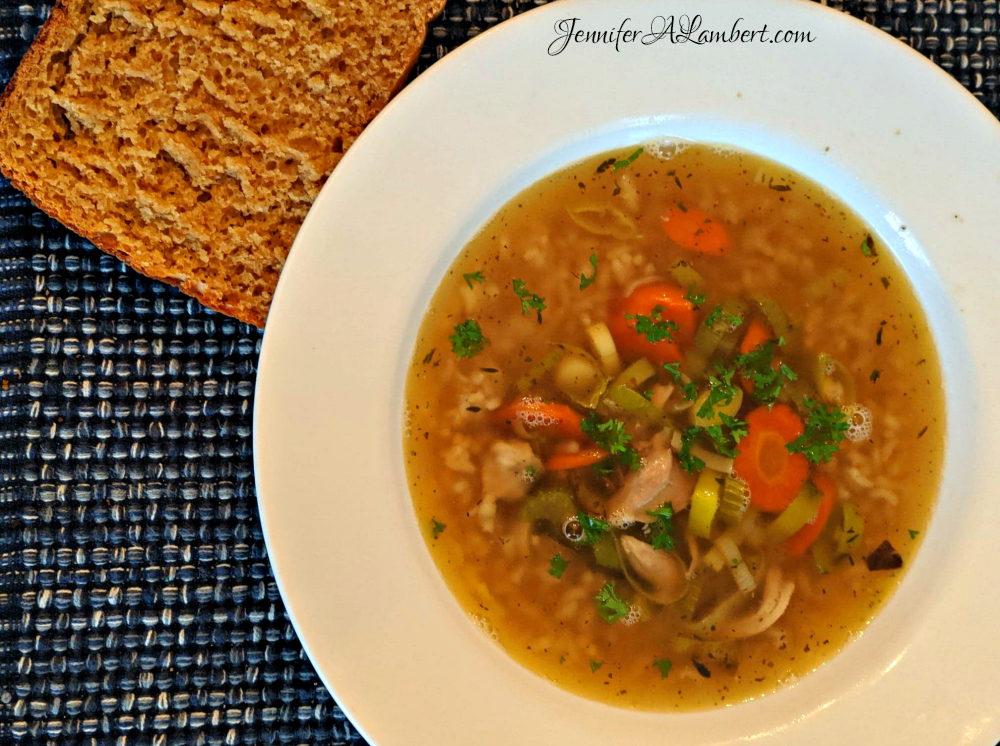
A quick and easy meal for weeknights is cockaleekie or chicken and leek soup.

Leeks are typically a spring vegetable. They’re lighter and sweeter than onions.

They look like giant green onions or chives.

I love having leftover chicken in the freezer and chicken stock on hand for easy meals like this one.

I chop up celery and carrots. I clean and slice up the leeks.

Sauteed in butter or oil, they smell heavenly.

I add herbs, black pepper, chicken stock, and chopped cooked chicken.

It’s ready in fewer than 30 minutes!

With a salad and some 1-hour bread machine soda bread, it’s a hearty meal for a cold night.

Print

Cockaleekie Soup

Course Soup

Ingredients

  • 1 c sliced leeks
  • 1 carrot, peeled and sliced
  • 1 stalk celery, diced
  • 1-2 T butter, oil, or bacon grease
  • 1-2 T white wine or sherry
  • 3 c chicken stock
  • 1 c cooked chicken
  • 1 T black pepper
  • 1 T thyme leaves
  • 1 c cooked brown rice

Instructions

  1. Saute vegetables in fat for about 5 minutes. Splash with wine.

  2. Add stock and chicken. Heat to boiling.

  3. Add seasoning and rice. Serve warm with soda bread.

Share
Pin12
Share
12 Shares
You might also like:

Filed Under: Recipes Tagged With: chicken, recipe, soup

Cheesy Potato Soup

This blog may contain affiliate links: disclosure.
Please see my suggested resources.

January 30, 2020 By Jennifer Lambert Leave a Comment

Potato soup is a family favorite.

We typically have two kinds of potato soup: creamy or chunky cheesy.

Sautéing up a mirepoix, making a roux, and adding parcooked potatoes is super easy.

I often use leftover potatoes. If not, I boil them separately while I saute up the veggies and make the roux, then the cheese sauce.

I add in the potatoes and make some yummy toppings and it’s like a loaded baked potato in a bowl.

Look at gorgeous this creamy cheesy soup looks!

Print

Cheesy Potato Soup

Course Soup

Ingredients

  • 5 medium potatoes, peeled and parcooked
  • 1-2 stalks celery, minced
  • 1/2 onion, diced
  • 1/4 c butter
  • 1/4 c AP flour
  • 3 c half and half
  • 3 c chicken stock
  • 16 oz Velveeta, cubed
  • 1-2 t garlic powder
  • salt and white pepper
  • 4 strips bacon, chopped and fried crisp for topping
  • 1 c shredded Colby Jack or Cheddar for topping
  • 1/4 c chopped parsley for topping
  • 1/4 c chopped chives and/or green onions for topping

Instructions

  1. Boil peeled and chopped potatoes if not already cooked.

  2. Saute celery and onion in butter for a few minutes.

  3. Sprinkle with flour and add the chicken stock and bring to boil. Add half and half and turn down heat to make a thick sauce. Do not boil.

  4. Add potatoes to soup.

  5. Add cubed Velveeta until melted and creamy. Do not boil.

  6. Season with garlic, salt, and pepper.

  7. Ladle into bowls and toppings. Enjoy!

Share
Pin
Share
0 Shares
You might also like:

Filed Under: Recipes Tagged With: potato, recipe, soup

Zuppa Toscana

This blog may contain affiliate links: disclosure.
Please see my suggested resources.

January 30, 2020 By Jennifer Lambert Leave a Comment

I often make variations of Zuppa Toscana based on what I have on hand.

It’s one of the quickest and easiest soups to make.

I always have the three main ingredients on hand:

  • Potatoes
  • Greens
  • Sausage

I often saute breakfast sausage and/or bacon with chopped onions.

I add potatoes, either chopped and parboiled, or leftovers.

Chicken stock is almost always in my freezer.

I quarter the potatoes for pretty.

Last, I toss in some chopped greens to wilt and salt and pepper for the finishing touch.

Bon appetit!

Print

Zuppa Toscana

Course Soup

Ingredients

  • 1 package sausage Italian or breakfast
  • 1/2 onion, diced
  • 5 new potatoes, cooked
  • 3 c chicken stock
  • 1-3 T minced garlic
  • 2-3 c chopped kale or other greens
  • 1 t red pepper flakes optional
  • salt and pepper
  • 1 c cream or half and half optional
  • 1-2 T Parmesan cheese, grated for topping

Instructions

  1. Boil potatoes in water in a separate pot if not already cooked.

  2. Brown sausage and onion with a bit of olive oil or bacon grease to keep it from sticking.

  3. Add garlic and saute.

  4. Deglaze pan with chicken stock and bring to a boil. Adjust seasoning.

  5. Drain and quarter potatoes. Add to the soup.

  6. Add greens until just wilted.

  7. Add cream if using. Do not allow to boil.

  8. Grate Parmesan cheese on top of soup to serve.

Share
Pin
Share
0 Shares
You might also like:

Filed Under: Recipes Tagged With: potato, recipe, soup

  • « Previous Page
  • 1
  • …
  • 22
  • 23
  • 24
  • 25
  • 26
  • …
  • 137
  • Next Page »
Suggested ResourcesCheckout 51Find Weird Books at AbeBooks.com

Archives

Popular Posts

10 DIY Gifts with Essential Oils10 DIY Gifts with Essential Oils
Natural Remedies for HeadacheNatural Remedies for Headache
10 Natural Remedies to Keep on Hand10 Natural Remedies to Keep on Hand
Henna Hands CraftHenna Hands Craft
Homemade Turkey Divan CasseroleHomemade Turkey Divan Casserole
This website uses cookies to improve your experience. We'll assume you're ok with this, but you can opt-out if you wish.Accept Reject Read More
Privacy & Cookies Policy

Privacy Overview

This website uses cookies to improve your experience while you navigate through the website. Out of these, the cookies that are categorized as necessary are stored on your browser as they are essential for the working of basic functionalities of the website. We also use third-party cookies that help us analyze and understand how you use this website. These cookies will be stored in your browser only with your consent. You also have the option to opt-out of these cookies. But opting out of some of these cookies may affect your browsing experience.
Necessary
Always Enabled
Necessary cookies are absolutely essential for the website to function properly. This category only includes cookies that ensures basic functionalities and security features of the website. These cookies do not store any personal information.
Non-necessary
Any cookies that may not be particularly necessary for the website to function and is used specifically to collect user personal data via analytics, ads, other embedded contents are termed as non-necessary cookies. It is mandatory to procure user consent prior to running these cookies on your website.
SAVE & ACCEPT