Jennifer Lambert

A Sacred Balance

Visit Us On FacebookVisit Us On PinterestVisit Us On InstagramVisit Us On Linkedin
  • Homeschool
    • Book Lists
    • How Do We Do That?
    • Notebooking
    • Subjects and Styles
    • Unit Studies
  • Travel
    • Europe
      • Benelux
      • France
      • Germany
      • Greece
      • Ireland
      • Italy
      • London
      • Porto
      • Prague
    • USA
      • Chicago
      • Georgia
      • Hawaii
      • Ohio
      • Utah
      • Yellowstone and Teton
  • Family
    • Celebrations
    • Frugal
  • Military Life
    • Deployment
    • PCS
  • Health
    • Recipes
    • Essential Oils
    • Fitness
    • Mental Health
    • Natural Living
    • Natural Beauty
  • Faith
  • About Me
    • Favorite Resources
    • Advertising and Sponsorship
    • Policies
  • Reviews

© 2025Jennifer Lambert · Copyright · Disclosure · Privacy · Ad

Poor or Broke

This blog may contain affiliate links: disclosure.
Please see my suggested resources.

June 6, 2022 By Jennifer Lambert 9 Comments

We’re living in economic conditions worse than those during the Great Depression. The wealth gap is greater now than it was then. But it seems that many live in denial with rising gas and food prices. It surely soon will become untenable.

The middle class is shrinking. The wealth gap is widening.

People say “live within your means” like it’s not becoming almost impossible with rising costs for housing, food, and gas.

There’s a difference between being poor and being broke.

Many people are struggling and broken.

The availability of credit and the expectation of debt makes many people believe they’re just supposed to be broke all the time, and it’s accepted by almost everyone.

Financial hardship can come on suddenly – medical bills, student loans, divorce, children’s expenses, job loss, housing repairs, car trouble, vet bills.

My Story

My grandparents grew up during the Great Depression and those ideals and traditions trickled down to my parents and to me. I understand and respect those values even if I don’t always share them now that I am an adult and parent.

I never thought I grew up poor.

My needs were met. I didn’t grow up around a lot of wealth disparity. There was no Internet or comparison readily available so how could I even know other than watching Silver Spoons and Richie Rick. I lived and played and went to school and suffered the lot of a child in the 70s, 80s, 90s – mostly unseen, unheard, free range. As were all of my peers.

My father worked a steady full time job during the week and was in the Army Reserves. My mother left her job and stayed at home when I was born. Most mothers I knew stayed home. I’m an only child. They paid their mortgage and bills on time. I don’t know much about their debt levels, but I don’t think they took on too much and their credit was always good.

But there wasn’t ever anything extra.

My mother certainly didn’t seem to enjoy being a stay at home mom. She didn’t like cooking or cleaning or looking after me. She did enjoy socializing with friends, neighbors, family. Times were different then. Expectations were different. Most of my memories of my mom were of her smoking while on the kitchen wall phone. I was left to fend for myself, entertain myself, while staying quiet and out of her way.

There’s a big difference between being broke and being poor. I was poor for about 2 years. I was broke for the following decade.

Erynn Brook

My mother returned to work when I was in the third grade. She impressed me with her decision by saying we could eat often at Pizza Hut. I was 10, so…

We did take Florida vacations for a week in the summer after my mom started working. That was nicer than camping weekends.

There was still nothing extra for ballet or piano lessons or any extracurricular activities I asked for. I’m still devastated about the ballet and piano lessons I longed for. I have tried to offer lessons and classes to my kids and provide for all their passions, however fleeting.

But I don’t remember eating often at Pizza Hut until 8th grade when I managed to catch a ride with another cheerleader’s family after football games. My parents both worked and I don’t remember them ever come to see me cheer at afterschool games.

There still wasn’t ever much extra.

The end of 6th grade, my mom cut and permed my hair at home after I begged to get bangs and a style like the magazines, like my peers. I couldn’t get a salon spiral perm or feathered bangs like my schoolmates. My mother controlled my appearance.

I was 14 the first time I was able to get a shirt from The Gap. It was on clearance and I loved it so much. Dark blue sweatshirt with a mock neck striped green and white. I cherished that shirt.

We moved the spring I turned 16 and I had to switch schools that next year. Looking back, I realize my parents scrimped and saved and always said they had no money maybe because they wanted a better house in a better neighborhood. I didn’t appreciate moving or changing schools or their timing.

My dad bought me my first car: a 1974 Volkswagen Beetle for $600. The summer after I turned 16, I got a job at McDonald’s to fix it up.

I was so proud of that car but it was frozen one night when I got off work late and my mom was furious that I had to call her to come pick me up. I’m still pissed that my parents sold it and got me another (newer safer more reliable) car that I didn’t even want.

I didn’t have a lot of choices growing up. My clothes and food were chosen for me. Everything was chosen for me. I didn’t get to make any decisions. That’s not a great way to become a young adult or learn how to be responsible.

They told me there wasn’t any money for me to live away at college in a dorm. I didn’t ask questions because they just got mad at me. I commuted to a local community college, then a state university. I earned academic scholarships. I am the first girl in my family to get a college degree. I got a loan for my master’s degree. Thankfully, it is paid off. I am horrified how the college loan situation has escalated in recent years for so many people.

My maternal uncle passed when I was about 19 and there was some money left to my mom, but they didn’t use any of it to help me with my education. My paternal grandma died when I was 18 and the sale of her house went into their savings, eventually becoming the down payment for the even bigger newer house they bought when I was 28.

I don’t have a home to return to anymore.

So I never thought I grew up poor, but money was always such a stressful topic. My parents constantly complained they didn’t have any. I learned not to ask for things I wanted. They still complain!

They still complain about money now that they are retired. Their retirement income exceeds my husband’s salary by more than half. They are paralyzed by a scarcity mentality.

I still don’t ask for anything. Not for me, not for my kids.

When I met my first husband, I thought he was so sophisticated. He lived in a retro apartment in downtown Atlanta. I was dazzled by the thought of independence. I ignored all the red flags. When I left home and moved in with him and got married (because evangelicism), I realized the fantasy he was living. He had grown up quite poor but his family lived in denial, maxing out credit cards. His father didn’t work at all, but claimed he was “retired.” I wasn’t allowed to ask questions. I grew up quickly from my disillusionment.

My parents disowned me over that marriage and I found myself without a car and without health insurance, so I learned to take buses to and from my college classes. I got a job as a secretary and my husband and I juggled sharing his old pickup truck. I had never had to pay bills before and it became overwhelming. We fought over expenses, of course. He seemed like he didn’t understand how bank cards worked, that the money in the joint account was deducted immediately and wasn’t there for other expenses we had. I needed his receipts (this was way before internet banking or apps) to reconcile the checking account and he needed to adjust his lifestyle to be more frugal. It was a constant battle. Then I learned my new husband was dealing drugs. I was so naïve.

When I began student teaching, I couldn’t work anymore and we moved into a new apartment closer to my school. Then after a big fight and short separation, we moved into a rental house nearer to his family. I still couldn’t all our pay bills on time, having to pick and choose which one to pay a little late or even the next month. He worked a shift job at $11/hour. There just was never enough money. There was a time I filled out paperwork for Medicaid, but I was too ashamed to fulfill the application process.

After I graduated, I began teaching full-time. I got a summer job to pay for my maternity leave. We had a baby. We both got new vehicles. Then we bought a house near his family, even though my commute was about an hour. I thought all these things were typical, normal, expected, progress. Then he hit me the second time and I left with the baby. My parents paid for the divorce and cosigned for me to get an apartment near them. More strings.

Living on my own as a single mom was hard, but I eventually became more stable emotionally. My credit was destroyed during the divorce. The house foreclosed. Even though the divorce decree stated we had to both pay the credit card, house, and the new truck he kept, he never paid for anything. And even though the divorce decree stated he owed us $92/week in child support, he quit his job, worked randomly for cash, filed bankruptcy, and moved out of state to avoid paying anything or having wages garnished. His parents also filed for bankruptcy. I had to negotiate with the bank over the truck loan and it finally just was absorbed by the lender. My credit was ruined. Credit scores are a joke. I traded my car in for another that my dad had to cosign for to get my husband’s name unattached to mine. I knew my money priorities were rent, utilities, and my new car payment. It was so hard.

I lost five jobs in two years. It was hard finding where I fit in. I worked as an adjunct English professor and part time at a day spa. I didn’t have health insurance and I had to pay cash for a doctor’s visit and for antibiotics when I came down with strep. I tried going to church and praying for direction. Most church members prayed for me to be reconciled to my husband, but they didn’t understand my circumstances. Or they didn’t care. It was a very confusing time for me.

I didn’t think I was ever poor because I had a roof over my head and food. I paid my bills on time, mostly. Even though I struggled, it just didn’t cross my mind since I could see a little progress. But I was always just a tiny step away from homelessness and financial ruin. The circumstances that surrounded me and could’ve happened are terrifying.

Paying for childcare was a nightmare. I wanted my daughter to have the stability and consistency and I believed then that daycare and preschool was best for her. It ate away most of my income. I dreamed of a time when she could go to public school and the financial burden might be eased. With her October birthday, it seemed such a long way off. There was a lottery in our county for public 4K, but that was still a couple years in the future. We had to eat dinner with my parents every night in order for me to be able to pay my other bills. At least I didn’t have to worry about food.

It’s been a long road and I’ve learned a lot along the way – about myself and how I want to teach my kids about finances and social responsibility.

It’s taken us over seventeen years, but we’ve finally purchased a home and feel pretty comfortable financially, just in time for my husband’s retirement from the Air Force. We have investments and savings and plans for the future. I can’t say the same about many of our peers. I know the statistics for retirement funds and the prediction that many won’t ever see any social security payments.

I still struggle and it’s sometimes in weird little ways. Some things still seem like an extravagance to me. I open a bag of sugar over the canister to catch every little grain. I can’t imagine not using every little scrap of paper on the roll. I don’t like wasting food.

Many of the jobs we had as teens aren’t available anymore because adults are hustling with side jobs for yard maintenance, delivery services, errand helpers, babysitters, pet sitters, anything to make a dollar. No one I know is willing to pay a teen if they can get an adult to do the same job, as if adults are more qualified or mature. Kids are losing skills, milestones, and transitions into adulthood.

We joke about people who are obviously wasteful or careless and say they’re certainly in a different tax bracket. Many of our neighbors have weekly cleaners and yard maintenance crews, but I could never bring myself to pay for those services. It’s astonishing to me that people will pay money for services to clean their garbage cans or pick up dog waste in their yards. With wealth, comes a lack of time, and an attitude of entitlement.

The Church

I have have been conflicted for years with what The Church and Christians say and think and pray about people living in poverty. They view charity as good deeds, like some point system they earn with God. During a Sunday school class one time, there was argument about giving money to panhandlers or beggars. “What if they just use the money for drugs or alcohol?” they kept asking and it just didn’t set well with me. I didn’t have the words then that I do now. I wasn’t strong enough to speak out then.

I taught a Sunday School class to other single moms with Crown Ministries on financial lessons. Oh, the irony. My partner teacher had some very different financial outlooks. She received social security payments for three disabled children. Her new husband received social security payments for his two kids because their mom had died. If she worked, her kids wouldn’t receive their disability payments. They supported seven kids on his income as a cable installer. She was very into the prosperity gospel and that concerned and confused me. When their cell phones got turned off for nonpayment, they just went to a different company and got new ones. This was a different financial perspective for me. I don’t think that’s what Jesus is about.


But if anyone has the world's goods and sees his brother in need, yet closes his heart against him, how does God's love abide in him? 1 John 3:17

Don’t just give or buy a homeless person food. Just give them the money if you have it. You think you mean well but what you’re doing is taking away their autonomy and the ability to make choices for themselves. Don’t be performatist in your giving and brag about your charity. And don’t even get me started on the predatory practices of Dave Ramsey and his ilk.

The poor you will always have with you.

“What if they buy drugs and alcohol?” You buy drugs and alcohol with your money; what’s the difference? source

What they do isn’t your concern. Giving (freely and honoring their dignity) is your concern.

What can we do?

Society criminalizes the poor.

When I met my current husband, I was impressed by the stability being a military wife could offer. I also wanted my daughter rescued from her deadbeat dad. Moving out of state solved many of my personal and financial problems. My husband adopted my daughter and the child support and visitation rights were out of the picture. My credit improved with each cosigned purchase. We’ve dug ourselves in and out of debt several times with circumstances that seemed unavoidable – car repairs, vet services for our cats, trips home for dying parents. We’ve never made a late payment. The government has faced furlough several times, but we have always pulled through.

We are now as financially stable as I ever hoped to be.

I think our understanding of poverty is odd in Western society. I grew up having my needs met. I got things for Christmas and my birthday. I received good medical and dental care. There was constant upward mobility for my parents. I can see how far I have come with my own family in the last twenty years. I take for granted things now that I used to dream of having. That’s not poverty.

It took years for me to realize I have financial trauma and other trauma that affects how I make decisions.

I don’t think most people really grasp how low the federal minimum wage ($7.25) is. If you get charged $20 for a late fee, that’s almost three times the minimum wage. If you get an overdraft fee of $30, that’s over four hours (half a standard workday) of minimum wage labor.

Aidan Smith

Another interesting financial perspective was introduced to me at a Sunday school class when a young enlisted military family mentioned their WIC and Medicaid provisions were part of their income. I had never considered this idea before.

I think it’s quite upsetting that military service members don’t earn a living wage. Many families struggle and everyone deserves better pay for their jobs.

Poverty isn’t just being homeless. Poverty isn’t just being on welfare. Poverty can be a mindset.

If you pay your employees so little that they require food stamps and Medicaid, you’re not a job creator, you’re mooching off the public dime. (and yes, the majority of people on public assistance are employed).

Dan Price

I hate how poverty is seen as personal failure rather than a societal one.

A parking space in downtown cities makes $27/hour. I, a real person with thoughts and feelings, capable of suffering, make less than a damn parking space.

posted multiple times on Twitter

My daughter left our home a year ago. She quit college. She got a full-time job as a caregiver to disabled adults. She seems happy with her independence. I’m proud of her. I’m also frightened that she is one little emergency or circumstance away from poverty, homelessness, financial disaster. She doesn’t make enough to save anything. If she gets sick and can’t work, she doesn’t get paid. I’ve helped her several times with car repairs and buying her groceries, gas, and medicine. I paid cash for her therapy the last couple months. I put her up in an extended stay when her roommates got COVID. She lost her dependent status and insurance when she turned 21. We are trying to help her figure out open enrollment insurance options. I worry all the time.

I realize this is a controversial take but maybe being one blown tire, one broken bone, or one paycheck away from homelessness & financial ruin at all times isn’t actually “freedom” the way we were raised to believe it is.

Libby Bakalar

Those in power aren’t really concerned about children or their schooling. It’s become obvious that school is just childcare so parents can be available to work.

When COVID-19 hit, so many couldn’t work or lost jobs and it was a desperate time for many who relied on steady income and never imagined struggling. Many faced eviction. Our country and world is in crisis.

Too many just want to “go back to normal” because they have never been affected negatively by social circumstances. They just want their restaurant food or fancy coffee concoction for their morning commute and their kids back in school so they don’t have to worry about childcare. I try to understand this. But I also feel that our society should shift priorities. There are answers if we just try a little harder. We can look to other successful countries for how they manage social needs.

We’re educating generations of children to lack empathy.

What kind of world are we creating, maintaining, leaving for future generations? Where is there hope if we’re just retaining the status quo and not striving for improvements?

when we say poverty is violent we don’t mean because we can’t afford luxury things, we mean watching our loved ones suffer from treatable diseases, not being able to properly care for ourselves without risking bankruptcy, having to work in the midst of life altering trauma.

L on Twitter

I see the boats, RVs, and SUVs in my neighbors’ driveways. I certainly don’t know their financial situations, but I wonder if they are just a couple paychecks away from disaster.

You are closer to being homeless than being a billionaire.

It’s surely the sign of a sick society when basic needs are seen as extravagance. We treat our youngest and oldest and the disabled as disposable.

People are getting complacent instead of angry. Gas prices are soaring. Rent is ridiculous and rising. Food costs are high and I’m seeing many independent restaurants closing.

I’m angry. Are you?

Resources:

  • Debt-Proof Living: How to Get Out of Debt & Stay That Way by Mary Hunt
  • 31 Days to Radically Reduce Your Expenses: Less Stress. More Savings by Kalyn Brooke
  • Slaying the Debt Dragon: How One Family Conquered Their Money Monster and Found an Inspired Happily Ever After by Cherie Lowe
  • 31 Days of Living Well and Spending Zero: Freeze Your Spending. Change Your Life. by Ruth Soukup
  • Unstuffed: Decluttering Your Home, Mind, and Soul by Ruth Soukup
  • Clutter Free: Quick and Easy Steps to Simplifying Your Space by Kathi Lipp
  • The Spender’s Guide to Debt-Free Living: How a Spending Fast Helped Me Get from Broke to Badass in Record Time by Anna Newell Jones
  • The Year without a Purchase: One Family’s Quest to Stop Shopping and Start Connecting by Scott Dannemiller
  • The Year of Less: How I Stopped Shopping, Gave Away My Belongings, and Discovered Life is Worth More Than Anything You Can Buy in a Store by Cait Flanders
  • Make Room for What You Love: Your Essential Guide to Organizing and Simplifying by Melissa Michaels

What seems like an extravagance to you?

You might also like:

  • How to Save Money while Shopping
  • Teaching Kids About Money
  • How We Save Money
  • How to Budget
  • Minimizing
  • Online Yard Sale Tips
  • Decorating on a Budget
  • 5 Money Tips
Share
Pin25
Share
25 Shares
You might also like:

Filed Under: Family Tagged With: finance, frugal, money

How Does My Garden Grow?

This blog may contain affiliate links: disclosure.
Please see my suggested resources.

May 23, 2022 By Jennifer Lambert 6 Comments

We’ve lived in this house for about five years now, purchased it two years ago after we realized we were staying and my husband retiring from the Air Force here.

I feel like it’s finally starting to feel like home.

The kids love to help me in the garden and enjoy the veggies and herbs we grow. We all love bird watching and seeing the wildlife in our backyard woods.

We’ve always rented and it’s so nice to finally have a place to call home and the kids can start to grow some roots figuratively and literally. We have no family and few friends and always feel like outsiders since we’ve moved around so frequently.

It took me over a year to get the front yard weed-free. We had so much crabgrass from all the years of neglect. Neighbors who have lived on this street for decades have stopped to compliment my hard work, that it’s never looked better.

It’s a stress reliever for me to work in my yard and garden. I love cutting the grass and digging in the dirt, weeding, all of it.

I’ve had the herb garden since our first year here. The oregano, chives, and sage does come back every year. I can’t seem to get hardy rosemary and my thyme didn’t come back this year, so I had to replace it. I buy parsley and basil every year. I keep fighting cilantro which does ok until I harvest some, then it seems to get mad and wilt or go to seed.

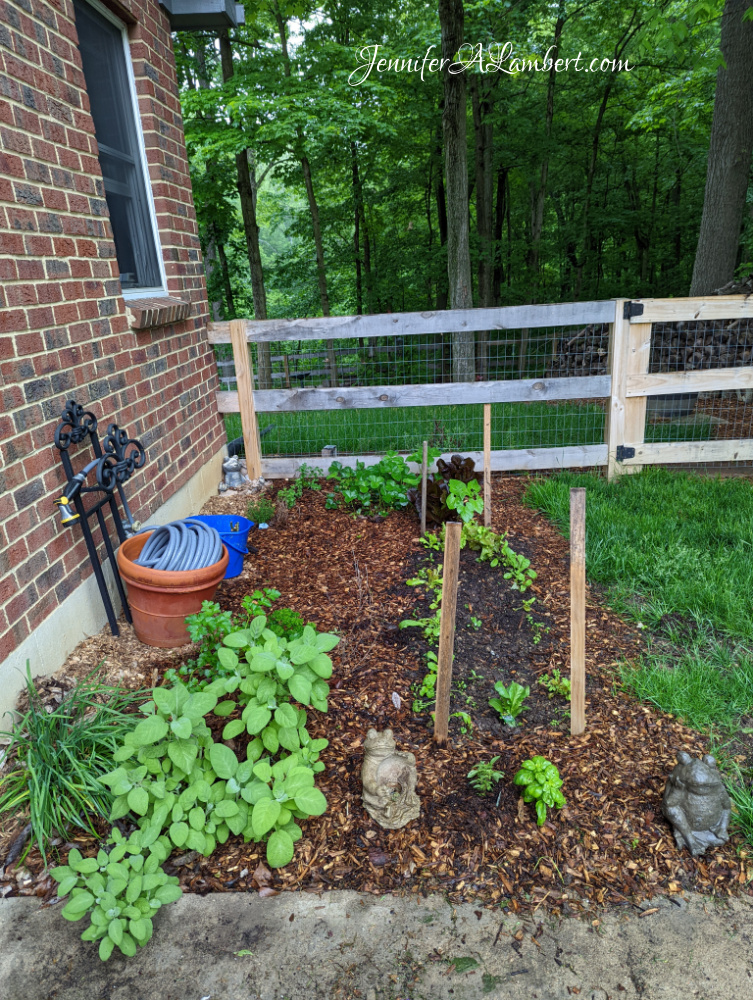
I have strawberries, some lettuces, and a rogue green bean! I transplanted my Russian sage and a trumpet vine on the other side of the fence.

I love gnomes, mushrooms, and frogs. I have lots of fun little statues around the garden.

My spiderwort is very happy this year! I also have a huge hellebore. I got some free Heucheras that are doing great. My lavender is coming back from winter. The irises and gladiolas won’t bloom, so I think they need more direct sunshine, so I will have to find another place for them. In early spring, we have lots of daffodils and hyacinths.

I have a small sun-loving garden in front of our wood pile, at the end of the driveway.

I got this lovely forsythia free from a Buy Nothing group. I bought two purple azaleas and transplanted some grape hyacinths from the yard. There’s also some forget-me-nots in there from seed that I hope aren’t choked out! It was so pretty when it bloomed.

I have two rose trees that were just given to me and I really hope they make it, but their roots were chopped pretty bad, so we will see.

I have three kinds of mint in a half barrel pot so it doesn’t take over. I have prolific lemon balm growing, so I may have to put that in another pot or thin it out.

I love, love, love roses and I wish I had a larger space for a magnificent rose garden.

I’ve had roses at every house I’ve lived in and it’s always sad to move and leave them. I hope they’re being loved and cared for by whoever lives in those homes now.

There was one rose already here when we moved in. I have acquired the others from our local Buy Nothing group and I’ve purchased two – a Blue Girl and Elizabeth. I also have lavender, mini irises, and a peony that has been transplanted for the third time and looks like it might finally be happy to bloom!

I also just ordered some allium that I think will look lovely poking up around the roses. They also are supposed to ward off pests.

I just read that white geraniums ward off Japanese beetles, so we will see if these work!

Here’s my first rose bloom this year – Blue Girl!

The backyard is a lot brighter after we had the walnut trees removed. We tilled the soil and fertilized it well. This is our second year with a nice little vegetable garden. We had a truckload of topsoil and compost delivered last month and that really helped!

I love the raised beds my husband made out of pallets. We have carrots, beets, radishes, bok choy, leeks, green onions, sweet onions. We have several kinds of sweet and hot peppers.

We have peas, potatoes, tomatoes, yellow squash, zucchini, eggplant, cucumbers, raspberries.

I plan to get in green beans and sweet potatoes this weekend.

In the far right corner, I am slowly building up a shade garden with more hostas, astilbe, bleeding hearts, lily of the valley, Solomon’s seal, and a little lacy Japanese maple.

The hostas were almost all here when we moved in. I have divided them and acquired more from our local Buy Nothing group.

This is the edge of our backyard fenceline and I love the birdbath from Lowe’s and plan to get a 4×4 to make a more permanent bird feeder.

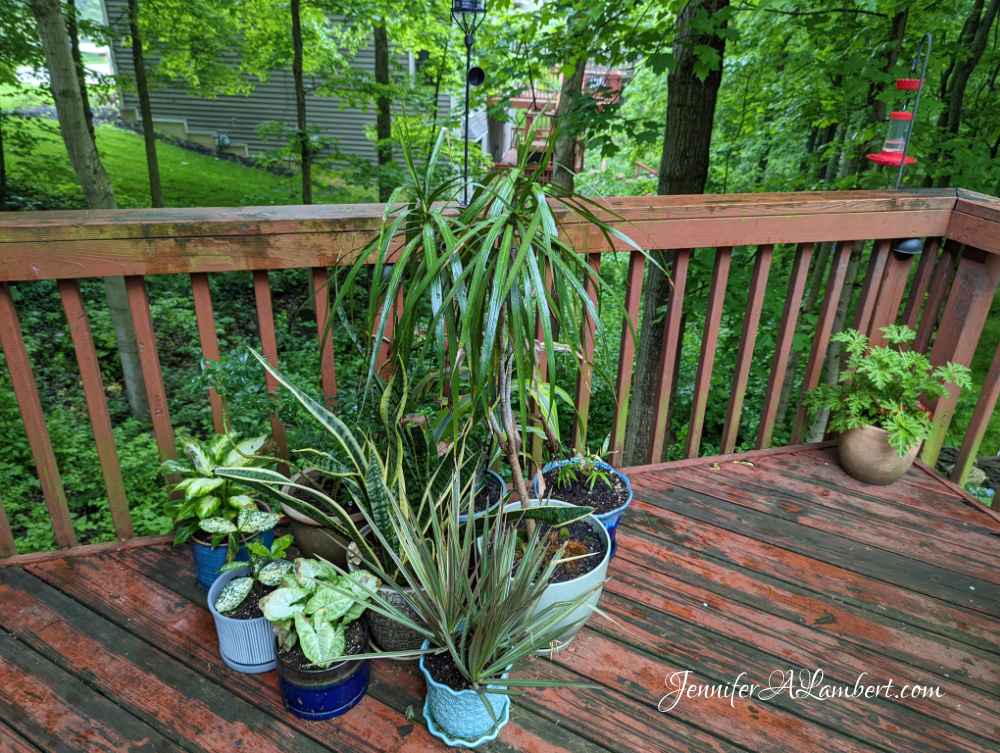
I have a jungle on my deck. I bring all my houseplants outside for the summer and they love it!

I love annuals in pots that attract hummingbirds and also help to keep mosquitoes and wasps away.

Lots of houseplants were given to me from our Buy Nothing group. I also scout the clearance corners at Home Depot, Lowe’s, and Walmart.

The clearance section also a great way to get very cheap orchids and tropicals!

These two plants were crammed into one container and very unhappy and I think it was only $7 or $8. I separated them and they seem more cheerful alone.

My bathroom windowsill is full of orchids! I can never have too many. Many people don’t want them after the blooms fall off. Maybe they’re not interested in waiting for more blooms or think orchids are difficult to maintain. I don’t know. But I love them!

I’ve always loved geraniums on the front porch. I bring my big geraniums inside for the winter, and they’re happy under the dining room window, so these are about four years old!

So, the landlady replaced the front door and sidelights all of a sudden with no notice while my husband was deployed. She wanted me to paint it, inside and out but I refused. After she berated the poor contractors from Lowe’s who didn’t have the holes drilled for a deadbolt, she painted it herself, white. I didn’t think there was anything wrong with the old door, which was red, like the frame surround. I would have never chosen this plain door with plain windows! Now that we’ve bought the house, I plan to get a beautiful front door and sidelights someday.

We have a magnolia and redbud tree that the kids enjoy when they bloom.

I toy with removing the boxwoods and barberry from the front of the house, but they’re quite large and I worry it would be a huge job and mess up all the other plants. I think it’s odd that the boxwoods do great on one side and always look burnt and yellowed on the other side. I don’t think they get enough sun. I’m not sure what to replace them with, and I can’t afford replacement plants that large, so it would look silly with tiny plants.

We have a hedge of lovely lilacs in front of our garage.

I’m so, so proud of our little pollinator garden.

Coneflowers were already here and I have added hyssop, bee balm, salvia, milkweed, SO MUCH YARROW, dill, fennel, a passion vine, cardinalis, foxglove, black eyed susans.

I love how all the plants are getting established and seem happy.

I enjoy working in my yard and garden and I’m constantly moving and evaluating and adding. I can never just sit and not think about how I could change or update some part of it. I love how it’s growing every year!

How does your garden grow?

You might also like:
  • Making a House a Home
  • Tending Our Garden
  • Container Gardening on a Small Patio
  • Garden Unit Study
  • How to Be a Good Homeowner
  • Consider This Before Renting a Home
  • Decorating on a Budget
  • How to Clean a House
  • Minimizing
  • Canning and Preserving with Kids
Share
Pin26
Share
26 Shares
You might also like:

Filed Under: Family Tagged With: garden, homemaking

Deconstruction

This blog may contain affiliate links: disclosure.
Please see my suggested resources.

May 2, 2022 By Jennifer Lambert 8 Comments

I spent 27 years maintaining a broken façade.

It’s taken me over 15 years to tear it all down.

I was a never good enough daughter. I was an average student. I was a terrible wife to an abusive husband. I can’t hold a successful job.

Then I was striving to be a good military wife.

I struggled to be a certain kind of homeschool mom.

Now I’m rebuilding.

I have an irresistible impulse to go home again in order to find myself.

But I don’t know where home is.

Deconstruction is a philosophical movement and theory of literary criticism that questions traditional assumptions about certainty, identity, and truth.

Jacques Derrida

Deconstructing into Wholeness

We’re all living in a time of deep social and spiritual upheaval. We’re off autopilot, all of us, reassessing everything.

Bob Holmes

Evaluation

When I didn’t know any better, it was hard.

I occasionally caught glimpses of a different perspective that I wanted but I didn’t understand it nor how I could achieve it.

I questioned everything. It was so important to me that I judged everything and wanted to know why instead of just blindly following.

I think we live in a very sick society and too few question how and why we are complacent.

But maybe every life looked wonderful if all you saw was the photo albums. People always obediently smiled and tilted their heads when a camera was put in front of them.

Liane Moriarty

When I had kids, I knew I wanted a good life for them, better than what I had. I knew I needed to completely reevaluate every single priority and choose wisely.

I tried so many different paths and it was terrible for my kids to have to walk with me while I discovered who I wanted to be.

What is truth? What do I want our truth to be?

Choices

Every single day, we experience choices.

Some choices don’t seem important or life-changing. There are articles, studies, books about making good choices and how even very simple decisions can impact our lives.

I didn’t have good choices. I didn’t have mentors or role models to help.

It’s taken me years to unravel and begin making better choices. My kids have good choices.

Making good morning choices is very important to ensure a good day.

I am not a morning person, but I try to get up at a reasonable hour.

I exercise three times a week before going downstairs to start my day. Sometimes, it’s just a few minutes but it makes a difference.

I make my bed every single day. It pleases me to see it neat and pretty.

I make a hot breakfast for my kids every weekday morning.

I wash a load of laundry every day and I put it away.

We read every day – aloud, together, separately. Reading is important.

We have a hot dinner together as a family every evening.

I take a walk outside every single day. Outside time is important.

I choose not to give into depression.

Reset

If I notice something off or someone seem excessively irritable, I look for a source for those symptoms.

I realize we have to reset.

We’ve maybe gotten too busy or rushed if someone is feeling stressed or anxious. We need to reevaluate our priorities and make some changes in our choices.

Nothing is certain. Everything is fluid and mutable.

Some weeks are just stressful and busy. I look to the light at the end of the appointments and meetings and sports practices for when I can rest a bit.

Self-Control

It’s super important for me to model self-control and help my kids learn to self-regulate.

We all experience big emotions sometimes and few of us has ever learned healthy ways to recognize or express those big feelings. It’s good to sit with feelings and learn to understand them.

I try to take time to talk through conflicts or issues rather than just reacting. Often a child experiences something and I feel triggered and have to take a break to experience that and realize I am not under attack.

We’ve come a long way and we are still learning.

Remodel

I still feel like I am searching for my identity.

Layers of irrelevant desires have peeled away during my 46 years. I am still seeking meaning and peace.

Just like I’m always updating my home and cleaning, adding, or removing, improving…I am doing the same things to my soul.

We’ve tried so many churches and spiritual paths over the years. I have gone full circle to the natural spirituality of my youth. We stopped going to church with all its racism and sexism and abuse a few years ago.

I remodel myself and remove all the false teachings I learned as a child from people who didn’t know any better or struggled with themselves. Many adults caused more harm than help and I am relearning healthier ways.

Introspection

I wasn’t always like this. I had to be reduced to ashes before realizing not everyone can withstand my darkness or sustain my light.

L.L. Musings

I’ve long known that I feel and seem different from most women. I never had close female friends. I didn’t fit in. I don’t have the same likes as many of the moms I’ve known over the years.

I don’t know what to do or what to say in many social situations.

There were too many shallow interactions. I don’t want to be in your wino book club, drunk Bunko, or shopping/lunch bunch. I don’t want to be in a Bible study where the ladies just sit around and brag how much better they are than others.

I prefer more to life than drinking and capitalism.

I don’t want shallow interactions or relationships. I would rather be alone.

Now, I just refuse to participate. I’m mostly fine being alone. It does seem odd to most people that I have absolutely zero friends, no support system, no one to put as an emergency contact.

Words like neurodivergence fly about and maybe I am… Maybe I’m on the spectrum. I know when and where and how I am comfortable.

I don’t want to compromise myself anymore.

I expect to continue to spend many more years learning and leaving behind the self I don’t want to be as I slowly become who I am.

Resources:

  • Hold on to Your Kids by Gordon Neufeld 
  • Adult Children of Emotionally Immature Parents: How to Heal from Distant, Rejecting, or Self-Involved Parents by Lindsay C. Gibson
  • The Myth of Normal: Trauma, Illness and Healing in a Toxic Culture by Gabor Maté
  • When the Body Says No: the cost of hidden stress by Gabor Maté
  • The Body Keeps the Score: Mind, Brain and Body in the Transformation of Trauma Kindle Edition by Bessel van der Kolk
  • Motherwhelmed: Challenging Norms, Untangling Truths, and Restoring Our Worth to the World by Beth Berry
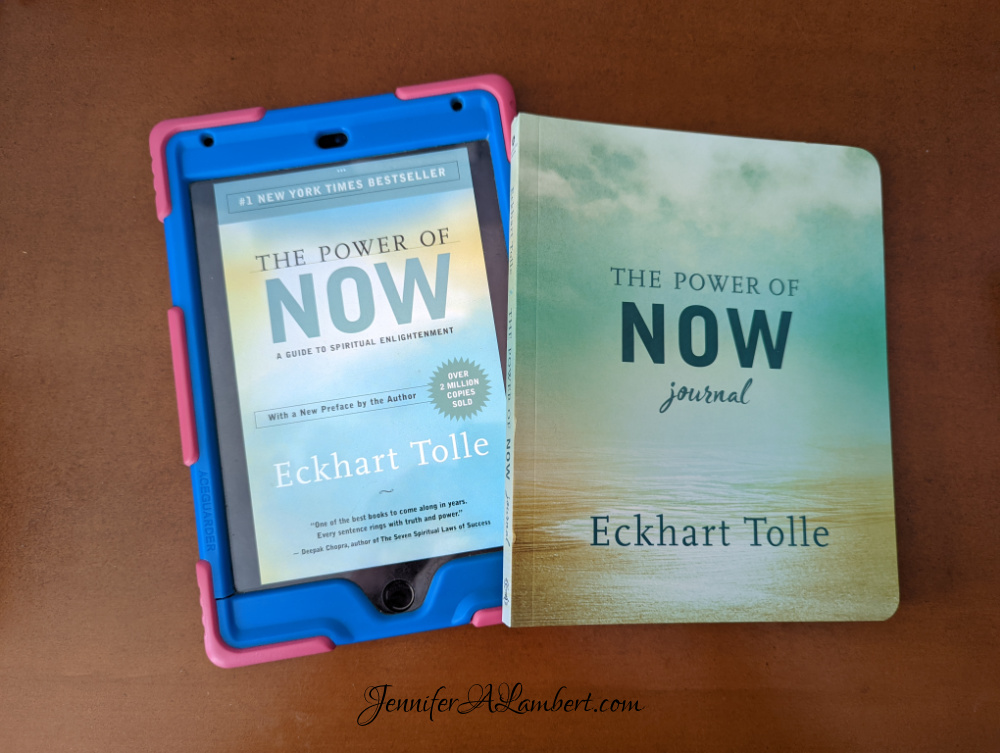
  • The Power of Now: A Guide to Spiritual Enlightenment by Eckhart Tolle
  • Falling Upward: A Spirituality for the Two Halves of Life by Richard Rohr

Linking up: Pinch of Joy, Grammy’s Grid, Silverado, Eclectic Red Barn, Anita Ojeda, Random Musings, Shelbee on Edge, Suburbia, InstaEncouragements, LouLou Girls, Jenerally Informed, God’s Growing Garden, OMHG, Create with Joy, Mostly Blogging, Wee Abode, Soaring with Him, Anchored Abode, Fluster Buster, Ducks in a Row, Life as LEO Wife, Penny’s Passion, Artful Mom, Try it Like it, Good Random Fun, Imparting Grace, Ridge Haven Homestead, Slices of Life, Momfessionals, Simply Beautiful, Modern Monticello, Pam’s Party, Lauren Sparks, Being a Wordsmith, Answer is Chocolate, April Harris,

Share
Pin24
Share
24 Shares
You might also like:

Filed Under: Faith Tagged With: church, faith, mental health

What can we do?

This blog may contain affiliate links: disclosure.
Please see my suggested resources.

April 27, 2022 By Jennifer Lambert 5 Comments

One of the last times I attended church, I was dismayed by one of the deacons/elders proudly exclaiming that he gave lots of money to charities and that was all he was required and convicted to do as a Christian. He went on to say that Jesus wasn’t political and citizenship didn’t require any more of him than his comfortable middle class life allowed.

I stared at him with my mouth open. Nothing I could think of to say mattered or would change his mind.

I realize this attitude is common in the church. No one wants to get his hands dirty or actually work for justice. They don’t even realize injustice exists since they are protected in their privileged lives. Some people seem to think that injustice is just something in movies or made up for sensationalism in the news. It doesn’t affect them in any way. They shake their heads at people who somehow cause their own problems instead of seeing the systematic injustices for what they are.

That has been pretty much the mindset of most people I’ve known in church and we just don’t attend church anymore. It still hurt to hear it said out loud, in front of the pastor and their family.

The last few years have been hard.

The news has been awful.

We are living in a time of continuous war, pandemic, an attempted coup, domestic violence, racism, and child abuse.

Most people just shake their heads and nothing affects them. They are desensitized. They are untouched.

Yes, some are simply surviving. Many have taken a financial downturn or have health issues and it’s reasonable to take some time to cocoon and rest and hopefully emerge triumphant later.

But there’s almost always something we can do to improve the world we live in.

What can we do?

What bothers you?

It’s easy to be a social media warrior or armchair activist. Too many want to be performative in their charitable activities, taking selfies while donating or providing a service.

If you’re not angry, you’re not paying attention.

Sit and seethe and learn from your feelings, especially the feelings deemed wrong or negative by caregivers and authority figures when we were growing up.

Ask questions of your soul about how your religion alienates and ostracizes others who might look or live or pray differently than you do.

What do you think needs to change?

Where does your heart, passion, talent lie?

What can I do where I am?

Learn

Read, read, read. Find book lists of authors of color, LGBTQA+, those who survived poverty, mental illness, or war, anyone different than you. Internalize their struggle and experiences. Realize your privilege.

Follow people different than you on social media and watch, read, listen. Don’t feel the need to comment in outrage, sadness, or solidarity. That is not for you.

Start making friends with people who look or live differently than you do.

Volunteer

There are lots of opportunities for volunteering. You can start small. Give an hour. Let your children help or see you.

There are lots of needs in our parks and public communities, schools, libraries, women’s centers, shelters for the unhoused, your workplace.

Look at the organization’s purpose and vision to determine if it fits your beliefs and values.

Protest

Join a peaceful protest in your community, city, school, or workplace.

Yes, there could be potential consequences. Plan accordingly.

What are you willing to risk?

Get Involved

Learn about how local, state, and federal government decisions affect you and your children and neighbors.

Be a concerned citizen.

Attend community and city meetings.

Vote.

Write to local leaders.

Write to your Congress people.

You don’t get to complain for not knowing the facts or not making a difference.

Donate

Yes, it’s good to donate, but do so mindfully and intelligently.

Look at the organization and make sure the people they claim to help actually receive the assistance they need and not so much the CEOs making the big bucks.

Also, look at where you use your money and why. Spend more wisely. There are lots of great companies that have better products and pay better wages to their employees and treat their customers and employees better than the huge conglomerates where you’re just a number. We use the Buycott app to choose better products when we’re shopping. We can slowly change our habits to get better sourced chocolate and coffee, more sustainable clothing and cleaning supplies.

What will you do?

There’s a lot we can do other than doomscrolling and lamenting the state of the country and world.

We can begin by being mindful where we spend our money and how we spend our time. We can learn about the world and how we can improve conditions for everyone.

We live in the dumbest dystopia where people on social media are casting movies about wars while they are taking place. I am tired of fragile white men cry about beer and wanting to continue to abuse women and revel in their toxicity.

It’s frustrating that most of our news comes from companies owned by billionaires who just want to rule the world and have all the power with none of the responsibility.

Linking up: A Pinch of Joy, House on Silverado, Grammy’s Grid, April Harris, Anita Ojeda, Random Musings, Uncommon Surburbia, Mostly Blogging, Create with Joy, Eclectic Red Barn, Stroll Thru Life, Shelbee on the Edge, LouLou Girls, God’s Growing Garden, InstaEncouragements, Jeanne Takenaka, Jenerally Informed, Anchored Abode, Ridge Haven Homestead, Ducks in a Row, Fluster Buster, Imparting Grace, Slices of Life, Artful Mom, Try it Like it, Good Random Fun, LEO Wife, Simply Beautiful, Modern Monticello, Answer is Chocolate, Bijou Life, Lauren Sparks, CWJ, Pieced Pastimes, Momfessionals, OMHG,

Share
Pin24
Share
24 Shares
You might also like:

Filed Under: Faith Tagged With: faith

Is a Christian Based Rehab Program Right for Me?

This blog may contain affiliate links: disclosure.
Please see my suggested resources.

April 22, 2022 By Jennifer Lambert Leave a Comment

Is a Christian based rehab program right for me? When facing addiction, many questions go through your mind. It isn’t easy to decide the best way to recover from alcoholism or drug use. There are many decisions to consider and various treatment centers to select from.

What Is Christian Based Rehab

Christian based rehab programs incorporate the teachings of Jesus Christ into treatment. These programs are available at Christian, secular, and individual churches. As a person in recovery, you may have experienced some feelings of guilt or shame associated with your addiction. A Christian-based rehab program can help alleviate these feelings by focusing on forgiveness and understanding. 

Religious Beliefs Are the Cornerstone

Christian-based programs are based on the belief that people can only truly overcome their addiction by accepting Jesus Christ into their lives. This may not be the right program if you are not a Christian. This is not to say that non-Christians cannot receive help through a Christian-based program, but it will require an open mind and acceptance of the faith.

Spiritual Healing Is a Major Focus

Spiritual healing is a significant focus in faith-based rehabilitation programs. People struggling with addiction have to deal with more than just the physical aspects of getting clean and sober. In many cases, addicts start using drugs or alcohol to relieve emotional pain, including stress, trauma, and other challenging life situations. Faith-based rehab can help them find peace with God and themselves to start living a better life in recovery.

Non-denominational Approach

Many options are available if you prefer to attend a non-denominational rehab program. These programs focus on spirituality without promoting a particular religion or denomination. For many people, prayer and meditation are essential components of recovery. 

Non-denominational rehab programs offer a spiritual structure without forcing participants to follow specific beliefs. Prayer and mediation are emphasized, but there are no religious studies or other practices that could conflict with your personal beliefs.

Christian Faith Leads to a Better Life

The following are some of the benefits that are attending a Christian-based rehab program:

  • There is a  greater likelihood of staying sober. It has been shown that individuals who have faith in God have a higher chance to keep their recovery going even after the rehabilitation process has ended. This is because they can now rely on someone other than themselves for strength.
  • A higher rate of success. This type of program is more successful at keeping people off drugs and alcohol because it provides them with a spiritual approach to life.

Conclusion

The main difference between a Christian based rehab program and other faith-based programs is that some Christian based rehab programs will incorporate religious teachings into the 12-step program. A Christian-based rehabilitation program is an ideal approach for people motivated by their faith. It can be an opportunity to develop a stronger relationship with Christ and experience the forgiveness he offers. These programs give people the chance to focus on their faith while working towards long-term recovery.

Share
Pin
Share
0 Shares
You might also like:

Filed Under: Uncategorized

The Power of Now Chapter Ten

This blog may contain affiliate links: disclosure.
Please see my suggested resources.

April 22, 2022 By Jennifer Lambert Leave a Comment

This concludes my book study of The Power of Now.

It’s been interesting these last few weeks.

My eldest child got COVID, but they harassed her to return to work too early and she is not healing. I am upset about a situation that I can’t help.

My middle daughter got her wisdom teeth out.

My third child got their cast off their leg and is starting physical therapy.

I have lots of responsibilities and my schedule is full.

I love how this chapter reflects on illness and injury and how being present, conscious, in The Now gives enlightenment to tragic circumstances in our lives. I have longed to express that inner knowledge that I knew in my soul for decades.

I have felt saddened by so many who wear an illness on their sleeves like a badge of honor. Many American Christians attest to suffering as following Jesus and I am always bothered by that sentiment.

Chapter Ten: The Power of Surrender

Favorite quotes:

To some people, surrender may have negative connotations, implying defeat, giving up, failing to rise to the challenges of life, becoming lethargic, and so on. True surrender, however, is something entirely different. It does not mean to passively put up with whatever situation you find yourself in and to do nothing about it. Nor does it mean to cease making plans or initiating positive action.

Surrender is the simple but profound wisdom of yielding to rather than opposing the flow of life.

Let me give you a visual analogy to illustrate the point I am making. You are walking along a path at night, surrounded by a thick fog. But you have a powerful flashlight that cuts through the fog and creates a narrow, clear space in front of you. The fog is your life situation, which includes past and future; the flashlight is your conscious presence; the clear space is the Now.

It is true that only an unconscious person will try to use or manipulate others, but it is equally true that only an unconscious person can be used and manipulated.

Then one day, in the middle of an argument, you will suddenly realize that you have a choice, and you may decide to drop your own reaction — .just to see what happens. You surrender.

Nonresistance doesn’t necessarily mean doing nothing. All it means is that any “doing” becomes nonreactive.

Remember the deep wisdom underlying the practice of Eastern martial arts: Don’t resist the opponent’s force. Yield to overcome.

In Taoism, there is a term called wu wei, which is usually translated as “actionless activity” or “sitting quietly doing nothing.”

Until there is surrender, unconscious role-playing constitutes a large part of human interaction. In surrender, you no longer need ego defenses and false masks. You become very simple, very real.

What the ego doesn’t know, of course, is that only through the letting go of resistance, through becoming “vulnerable,” can you discover you discover your true and essential invulnerability.

Surrender does not transform what is, at least not directly. Surrender transforms you. When you are transformed, your whole world is transformed, because the world is only a reflection.

When you are ill or disabled, do not feel that you have failed in some way, do not feel guilty. Do not blame life for treating you unfairly, but do not blame yourself either. All that is resistance. If you have a major illness, use it for enlightenment. Anything “bad” that happens in your life – use it for enlightenment.

Become an alchemist. Transmute base metal into gold, suffering into consciousness, disaster into enlightenment.

Are you seriously ill and feeling angry now about what I have just said? Then that is a clear sign that the illness has become part of your sense of self and that you are now protecting your identity — as well as protecting the illness. The condition that is labeled “illness” has nothing to do with who you truly are.

As far as the still unconscious majority of the population is concerned, only a critical limit-situation has the potential to crack the hard shell of the ego and force them into surrender and so into the awakened state. A limit-situation arises when through some disaster, drastic upheaval, deep loss, or suffering your whole world is shattered and doesn’t make sense anymore. It is an encounter with death, be it physical or psychological. The egoic mind, the creator of this world, collapses. Out of the ashes of the old world, a new world can then come into being.

Full attention is full acceptance, is surrender. By giving full attention, you use the power of the Now, which is the power of your presence. No hidden pocket of resistance can survive in it. Presence removes time. Without time, no suffering, no negativity, can survive.

God is Being itself, not a being. There can be no subject-object relationship here, no duality, no you and God. God-realization is the most natural thing there is. The amazing and incomprehensible fact is not that you can become conscious of God but that you are not conscious of God.

Choice implies consciousness — a high degree of consciousness.

Nobody chooses dysfunction, conflict, pain. Nobody chooses insanity. They happen because there is not enough presence in you to dissolve the past, not enough light to dispel the darkness. You are not fully here. You have not quite woken up yet. In the meantime, the conditioned mind is running your life.

It always looks as if people had a choice, but that is an illusion.

You cannot truly forgive yourself or others as long as you derive your sense of self from the past. Only through accessing the power of the Now, which is your own power, can there be true forgiveness. This renders the past powerless, and you realize deeply that nothing you ever did or that was ever done to you could touch even in the slightest the radiant essence of who you are. The whole concept of forgiveness then becomes unnecessary.

When you surrender to what is and so become fully present, the past ceases to have any power. You do not need it anymore. Presence is the key. The Now is the key.

You might also like:

  • Chapter One
  • Chapter Two
  • Chapter Three
  • Chapter Four
  • Chapter Five
  • Chapter Six
  • Chapter Seven
  • Chapter Eight
  • Chapter Nine
Share
Pin
Share
0 Shares
You might also like:

Filed Under: Faith

Best Plants For Pollinators

This blog may contain affiliate links: disclosure.
Please see my suggested resources.

April 22, 2022 By Jennifer Lambert Leave a Comment

Did you know that over 80% of the world’s food is directly or indirectly the result of pollination? Plants don’t exist by themselves and can only be produced by crops by pollinators. Have you ever wondered which plant is suitable for an environment dominated by rainforests or flowers? Here are some of the best plants for pollinators

Aster

Asters are a group of hardy, fall-blooming plants found in the wild throughout North America. These daisy-like flowers come in various colors and attract butterflies, bees, and other beneficial insects.

Blanketflower

Blanketflower is a perennial native to the United States. It grows in open meadows and prairies and can grow two feet tall. It blooms from July to September, attracting butterflies and hummingbirds.

Blue Mistflower

A native perennial wildflower that grows up to 3 feet tall, the blue mistflower produces long-lasting blue flower clusters that bloom from July to frost. Its nectar and pollen attract bumblebees, butterflies, and hummingbirds.

Butterfly Weed

The Butterfly Weed is a native plant, making it an excellent choice for pollinators. It is easy to grow and resistant to disease, ideal for a beginner gardener. The butterfly weed is a perennial, which means it will come back year after year without reseeding. This plant grows in clumps that can get up to 4 feet wide and 3 feet tall. 

Columbine

Columbine (Aquilegia canadensis) is a popular perennial wildflower that attracts hummingbirds and butterflies. Columbine is an easy plant to grow, and ants distribute the seeds. The bright petals open in June, and flowers bloom until fall.

Goldenrod

Goldenrod is probably one of the best plants for bees because it blooms right as many other flowers are starting to die down. Honeybees, bumblebees, and other pollinators will flock to these plants when they want a late-season snack.

Ironweed

Ironweed is an excellent native wildflower for providing nectar and pollen to butterfly caterpillars, bees, moths, and other pollinators. Ironweed is a tall plant that grows to 4-5 feet and has purple flowers. The leaves are dark green and fuzzy. A large field of ironweed looks beautiful in a late summer garden or meadow.

Joe Pye Weed

Joe Pye Weed (Eupatorium maculatum), which grows to at least 6 feet tall, is an excellent plant for attracting butterflies. It blooms from July through September and prefers well-drained soil and full sun. This plant is an excellent nectar source for hummingbirds, honeybees, monarchs, swallowtails, and other pollinators.

Conclusion

Pollinators are critical to the survival of many plant species, but they’re also crucial to human survival. These pollinators contribute to at least 75% of the earth’s flowering plants and more than two-thirds of all crops, providing 90% of our food. The decline in pollinator populations is a complex issue, but it’s clear that human activity has played a significant role. By planting even one or two flowers from this list, you can help these beautiful creatures survive—and in turn, we’ll all benefit. Contact a native plant nursery for some of these varieties.

Share
Pin
Share
0 Shares
You might also like:

Filed Under: Home Tagged With: garden

Top 6 Essential Supplies For Teaching Young Children In Sunday School

This blog may contain affiliate links: disclosure.
Please see my suggested resources.

April 14, 2022 By Jennifer Lambert Leave a Comment

Volunteering to teach Sunday School to the young children of your church can quickly become overwhelming. Fortunately, with a little bit of prep work and the right supplies, you’ll be able to map out your lessons so you’ll have a solid plan in place ahead of time. There are a number of essentials that every well-prepared Sunday School teacher should have. While some of these are available for free online, you’ll also find a wealth of great Sunday School materials for sale.

1. A Good Curriculum

No matter how well you know the Bible and all the lessons it can impart, there is no substitute for a strong written curriculum. Make sure to know the general age range of your students before selecting one. An age-appropriate lesson plan ensures the material will be easily understood and absorbed by your pupils. If you are very ambitious, you can even create your own curriculum. Write one that focuses on specific themes that are woven throughout the Bible, or make one based on different Bible stories.

2. Craft Supplies

Young children are very tactile learners, so incorporating a hands-on activity into your Sunday School lesson is sure to get their attention. Consider filling a plastic tub with things like glue sticks, markers, construction paper, stickers, feathers, popsicle sticks, cardboard, and other similar items. Check to see what your church has on hand. You may discover items you can utilize for your lessons, saving you a trip to the store. Base your craft projects on something from a specific Bible story. For example, you could have the children make cotton ball sheep to go along with teaching Jesus’ parable of the lost sheep found in both Matthew and Luke.

3. Games

Sunday School games provide a wonderful way to reinforce key concepts you’ve covered in class. Searching online will yield a range of game ideas that only require basic supplies you may already have on hand, or that are easy and cheap to find at the store. Young children can get restless when having to sit for an hour or more, so having a game break with something active can help them to regain focus.

4. Age-Appropriate Books

Having age-appropriate books on hand can be very useful when teaching Sunday School. There’s a good chance your church will have a collection for your use. Browse through your available options and pick a few out for the upcoming Sunday. Public libraries also provide an option for finding books to read to your class.

5. Chalk Board or Whiteboard

Drawing and coloring materials can encompass a wide range of items. If the room you are teaching in doesn’t have a chalkboard or whiteboard, consider buying a small one that you can put on an easel. As an alternative, you could use a large pad of paper. Make sure to have kid-friendly markers for using with these.

6. Coloring Supplies

A quick online search for free printable coloring pages will bring up many options. Print out multiple options and take them with you each Sunday, even if you don’t have plans for using them. If you get through your lesson sooner than expected, passing out coloring pages or plain paper to draw on can be a good way to fill some empty time.

Leading a Sunday School class should be a rewarding experience and one that you’re able to enjoy for as long as you’re needed. When you have the right tools and materials in place for teaching your young students, you’ll find that the class will go much more smoothly. It just might become the favorite part of their week.

Share
Pin
Share
0 Shares
You might also like:

Filed Under: Faith

The Power of Now Chapter Nine

This blog may contain affiliate links: disclosure.
Please see my suggested resources.

April 13, 2022 By Jennifer Lambert Leave a Comment

Whew, I feel like this chapter, it all started coming together.

I’ve felt an awakening coming the last ten years or so. I knew there was more to religion than how American Christians teach and live. I’ve gone through many cycles of despair and joy; it’s a constant spiral of learning.

I feel like I’ve come back around to the mystic spiritualism of my youth from evangelical Christianity and seeking Truth.

I’ve grown on a path to inner healing despite all the outside forces trying their darnedest to keep me stagnant, comfortable, status quo. I lost so many friends and even family members in my quest for Being.

Some days it’s hard. Sometimes I wonder if it’s worth it. I sometimes wish I could be ignorant, mainstream, basic: bliss. It’s often unpleasant seeing all the people around me living under capitalism, in their pain-body, striving to keep up appearances.

I know how far I’ve come from when my eldest was a teenager and would hurt me immensely with her words and behaviors. I would internalize it all and feel so bad, wondering what I did wrong, how could I make it better. Now that my third child is acting out in similar ways, I take it in stride, with so much more peace. I don’t take it personally. I know they are in pain and lashing out and I allow it and I wait for it to pass.

I like how Tolle differentiates between happiness and joy.

I mentioned last week I was also reading The Island by Aldous Huxley.

Lo, and behold, this allusion to the book is in this chapter of The Power of Now! It’s incredible to me that I just happened to decide to read these simultaneously. I often like to read a fiction and nonfiction book side by side. These two go well together.

There is a novel by Aldous Huxley called Island, written in his later years when he became very interested in spiritual teachings. It tells the story of a man shipwrecked on a remote island cut off from the rest of the world. This island contains a unique civilization. The unusual thing about it is that its inhabitants, unlike those of the rest of the world, are actually sane. The first thing that the man notices are the colorful parrots perched in the trees, and they seem to be constantly croaking the words “Attention. Here and Now. Attention. Here and Now.” We later learn that the islanders taught them these words in order to be reminded continuously to stay present.

Tolle alludes to The Four Noble Truths of Buddhism in various ways:

The First Noble Truth: There is suffering. Suffering should be understood. Suffering has been understood.

The Second Noble Truth: There is the origin of suffering, which is attachment to desire. Desire should be let go of. Desire has been let go of.

The Third Noble Truth: There is the cessation of suffering. The cessation of suffering should be realized. The cessation of suffering has been realized.

The Fourth Noble Truth: There is the Eightfold Path—the way out of suffering. This path should be developed. This path has been fully developed.

Chapter Nine: Beyond Happiness and Unhappiness There is Peace

Favorite quotes:

Happiness depends on conditions being perceived as positive; inner peace does not.

And when you live in complete acceptance of what is — which is the only sane way to live — there is no “good” or “bad” in your life anymore. There is only a higher good – which includes the “bad.”

Forgiveness of the present is even more important than forgiveness of the past. If you forgive every moment — allow it to be as it is — then there will be no accumulation of resentment that needs to be forgiven at some later time.

For example, when a loved one has just died, or you feel your own death approaching, you cannot be happy. It is impossible. But you can be at peace. There may be sadness and tears, but provided that you have relinquished resistance, underneath the sadness you will feel a deep serenity, a stillness, a sacred presence. This is the emanation of Being, this is inner peace, the good that has no opposite.

“Accept whatever comes to you woven in the pattern of your destiny, for what could more aptly fit your needs?” This was written two thousand years ago by Marcus Aurelius, one of those exceedingly rare humans who possessed worldly power as well as wisdom.

Whenever you are not honoring the present moment by allowing it to be, you are creating drama.

You cannot have an argument with a fully conscious person.

“No one who is at one with himself can even conceive of conflict,” states A Course in Miracles.

There are cycles of success, when things come to you and thrive, and cycles of failure, when they wither or disintegrate and you have to let them go in order to make room for new things to arise, or for transformation to happen. If you cling and resist at that point, it means you are refusing to go with the flow of life, and you will suffer.

Many illnesses are created through fighting against the cycles of low energy, which are vital for regeneration.

The cyclical nature of the universe is closely linked with the impermanence of all things and situations. The Buddha made this a central part of his teaching.

Whenever a major loss of one kind or another occurs, just become deeply unhappy or make themselves ill. They cannot distinguish between their life and their life situation.

Nothing can give you joy. Joy is uncaused and arises from within as the joy of Being. It is an essential part of the inner state of peace, the state that has been called the peace of God. It is your natural state, not something that you need to work hard for or struggle to attain.

Many people never realize that there can be no “salvation” in anything they do, possess, or attain. Those who do realize it often become world-weary and depressed: If nothing can give you true fulfillment, what is there left to strive for, what is the point in anything?

A Course in Miracles rightly points out that, whenever you are unhappy, there is the unconscious belief that the unhappiness “buys” you what you want.

No other life-form on the planet knows negativity, only humans, just as no other life-form violates and poisons the Earth that sustains it.

I have lived with several Zen masters — all of them cats. Even ducks have taught me important spiritual lessons.

Recurring negative emotions do sometimes contain a message, as do illnesses.

Somebody says something to you that is rude or designed to hurt. Instead of going into unconscious reaction and negativity, such as attack, defense, or withdrawal, you let it pass right through you. Offer no resistance. It is as if there is nobody there to get hurt anymore. That is forgiveness. In this way, you become invulnerable. You can still tell that person that his or her behavior is unacceptable, if that is what you choose to do. But that person no longer has the power to control your inner state. You are then in your power – not in someone else’s, nor are you run by your mind.

Having gone beyond the mind-made opposites, you become like a deep lake. The outer situation of your life and whatever happens there is the surface of the lake. Sometimes calm, sometimes windy and rough, according to the cycles and seasons. Deep down, however, the lake is always undisturbed. You are the whole lake, not just the surface, and you are in touch with your own depth, which remains absolutely still.

True relationship becomes possible only when there is an awareness of Being.

Compassion is the awareness of a deep bond between yourself and all creatures.

One of the most powerful spiritual practices is to meditate deeply on the mortality of physical forms, including your own. This is called: Die before you die. Go into it deeply. Your physical form is dissolving, is no more. Then a moment comes when all mind-forms or thoughts also die. Yet you are still there — the divine presence that you are. Radiant, fully awake. Nothing that was real ever died, only names, forms, and illusions.

To have deep empathy for the suffering of another being certainly requires a high degree of consciousness but represents only one side of compassion. It is not complete. True compassion goes beyond empathy or sympathy.

Just as the images in a dream are symbols of inner states and feelings, so our collective reality is largely a symbolic expression of fear and of the heavy layers of negativity that have accumulated in the collective human psyche.

Your primary task is not to seek salvation through creating a better world, but to awaken out of identification with form.

Only those who have transcended the world can bring about a better world.

When you are fully present and people around you manifest unconscious behavior, you won’t feel the need to react to it, so you don’t give it any reality. Your peace is so vast and deep that anything that is not peace disappears into it as if it had never existed. This breaks the karmic cycle of action and reaction. Animals, trees, flowers will feel your peace and respond to it. You teach through being, through demonstrating the peace of God. You become the “light of the world,” an emanation of pure consciousness, and so you eliminate suffering on the level of cause. You eliminate unconsciousness from the world.

To recognize the primacy of Being, and thus work on the level of cause, does not exclude the possibility that your compassion may simultaneously manifest on the level of doing and of effect by alleviating suffering whenever you come across it. When a hungry person asks you for bread and you have some, you will give it. But as you give the bread, even though your interaction may only be very brief, what really matters is this moment of shared Being, of which the bread is only a symbol. A deep healing takes place within it. In that moment, there is no giver, no receiver.

All evils are the effect of unconsciousness. You can alleviate the effects of unconsciousness, but you cannot eliminate them unless you eliminate their cause. True change happens within, not without.

Without a profound change in human consciousness, the world’s suffering is a bottomless pit. So don’t let your compassion become one-sided. Empathy with someone else’s pain or lack and a desire to help need to be balanced with a deeper realization of the eternal nature of all life and the ultimate illusion of all pain. Then let your peace flow into whatever you do and you will be working on the levels of effect and cause simultaneously.

Remember: Just as you cannot fight the darkness, so you cannot fight unconsciousness.

Raise awareness by disseminating information, or at the most, practice passive resistance. But make sure that you carry no resistance within, no hatred, no negativity.

“Love your enemies,” said Jesus, which, of course, means “have no enemies.”

You might also like:

  • Chapter One
  • Chapter Two
  • Chapter Three
  • Chapter Four
  • Chapter Five
  • Chapter Six
  • Chapter Seven
  • Chapter Eight
Share
Pin
Share
0 Shares
You might also like:

Filed Under: Faith

The Power of Now Chapter Eight

This blog may contain affiliate links: disclosure.
Please see my suggested resources.

April 8, 2022 By Jennifer Lambert Leave a Comment

What is true salvation?

This chapter was a hard one for me.

I struggle with interpersonal relationships.

I have no friends.

My husband and I for sure have our ups and downs. It’s difficult to stay in The Now when we’re constantly hurting each other.

The concepts mentioned seem so simple, but they’re very complicated to implement, and have to be recalled again and again and again.

My parents just turned 80. I just turned 46. I know this chapter is more about partnerships and romantic relationships, but my estrangement from my parents affects every single aspect of my life. My memories swing in and whop me upside the head. I feel triggered by my husband and kids and I have to be still to gather myself so I don’t lash out. I don’t always succeed.

I am reminded of all the marriage counselors, both Christian and secular, who pointed their fingers at me, the wife, the woman. I never did enough, am not enough. I still see this online every day – on social media, from abused wives and girlfriends, from pastors, from Christian counselors – blaming women.

Tolle describes how women are more connected to emotions and the body, but he doesn’t blame women for having to carry an entire relationship between two adult people.

Tolle even discusses how women experience personal and collective pain from misogyny.

I am currently also reading Island by Aldous Huxley and this book espouses similar mystic or alternative ideas about society and relationships.

Chapter Eight: Enlightened Relationships

Favorite quotes:

You see time as the means to salvation, whereas in truth it is the greatest obstacle.

Unless and until you access the consciousness frequency of presence, all relationships, and particularly intimate relationships, are deeply flawed and ultimately dysfunctional.

They do not cause pain and unhappiness. They bring out the pain and unhappiness that is already in you.

For love to flourish, the light of your presence needs to be strong enough so that you no longer get taken over by the thinker or the pain-body and mistake them for who you are.

The greatest catalyst for change in a relationship is complete acceptance of your partner as he or she is, without needing to judge or change them in any way.

What is God? The eternal One Life underneath all the forms of life. What is love? To feel the presence of that One Life deep within yourself and within all creatures. To be it. Therefore, all love is the love of God.

True communication is communion — the realization of oneness, which is love.

But if you accept that the relationship is here to make you conscious instead of happy, then the relationship will offer you salvation, and you will be aligning yourself with the higher consciousness that wants to be born into this world.

To relinquish judgment does not mean that you do not recognize dysfunction and unconsciousness when you see it. It means “being the knowing” rather than “being the reaction” and the judge.

If there isn’t an emanation of love and joy, complete presence and openness toward all beings, then it is not enlightenment.

Your main task as a woman now is to transmute the pain-body so that it no longer comes between you and your true self, the essence of who you are.

A victim identity is the belief that the past is more powerful than the present, which is the opposite of truth.

Being an outsider to some extent, someone who does not “fit in” with others or is rejected by them for whatever reason, makes life difficult, but it also places you at an advantage as far as enlightenment is concerned. It takes you out of unconsciousness almost by force.

If you cannot be at ease with yourself when you are alone, you will seek a relationship to cover up your unease.

I think The Body Keeps the Score by Bessel van der Kolk is a good book to deal with pain-body concepts. We can heal ourselves and our relationships.

You might also like:

  • Chapter One
  • Chapter Two
  • Chapter Three
  • Chapter Four
  • Chapter Five
  • Chapter Six
  • Chapter Seven
Share
Pin
Share
0 Shares
You might also like:

Filed Under: Faith

  • « Previous Page
  • 1
  • …
  • 8
  • 9
  • 10
  • 11
  • 12
  • …
  • 137
  • Next Page »
Suggested ResourcesNotebookingPages.com LIFETIME MembershipReceipt Hog

Archives

Popular Posts

10 DIY Gifts with Essential Oils10 DIY Gifts with Essential Oils
Natural Remedies for HeadacheNatural Remedies for Headache
10 Natural Remedies to Keep on Hand10 Natural Remedies to Keep on Hand
Henna Hands CraftHenna Hands Craft
Homemade Turkey Divan CasseroleHomemade Turkey Divan Casserole
This website uses cookies to improve your experience. We'll assume you're ok with this, but you can opt-out if you wish.Accept Reject Read More
Privacy & Cookies Policy

Privacy Overview

This website uses cookies to improve your experience while you navigate through the website. Out of these, the cookies that are categorized as necessary are stored on your browser as they are essential for the working of basic functionalities of the website. We also use third-party cookies that help us analyze and understand how you use this website. These cookies will be stored in your browser only with your consent. You also have the option to opt-out of these cookies. But opting out of some of these cookies may affect your browsing experience.
Necessary
Always Enabled
Necessary cookies are absolutely essential for the website to function properly. This category only includes cookies that ensures basic functionalities and security features of the website. These cookies do not store any personal information.
Non-necessary
Any cookies that may not be particularly necessary for the website to function and is used specifically to collect user personal data via analytics, ads, other embedded contents are termed as non-necessary cookies. It is mandatory to procure user consent prior to running these cookies on your website.
SAVE & ACCEPT