


What is true salvation?
This chapter was a hard one for me.
I struggle with interpersonal relationships.
I have no friends.
My husband and I for sure have our ups and downs. It’s difficult to stay in The Now when we’re constantly hurting each other.
The concepts mentioned seem so simple, but they’re very complicated to implement, and have to be recalled again and again and again.
My parents just turned 80. I just turned 46. I know this chapter is more about partnerships and romantic relationships, but my estrangement from my parents affects every single aspect of my life. My memories swing in and whop me upside the head. I feel triggered by my husband and kids and I have to be still to gather myself so I don’t lash out. I don’t always succeed.
I am reminded of all the marriage counselors, both Christian and secular, who pointed their fingers at me, the wife, the woman. I never did enough, am not enough. I still see this online every day – on social media, from abused wives and girlfriends, from pastors, from Christian counselors – blaming women.
Tolle describes how women are more connected to emotions and the body, but he doesn’t blame women for having to carry an entire relationship between two adult people.
Tolle even discusses how women experience personal and collective pain from misogyny.
I am currently also reading Island by Aldous Huxley and this book espouses similar mystic or alternative ideas about society and relationships.
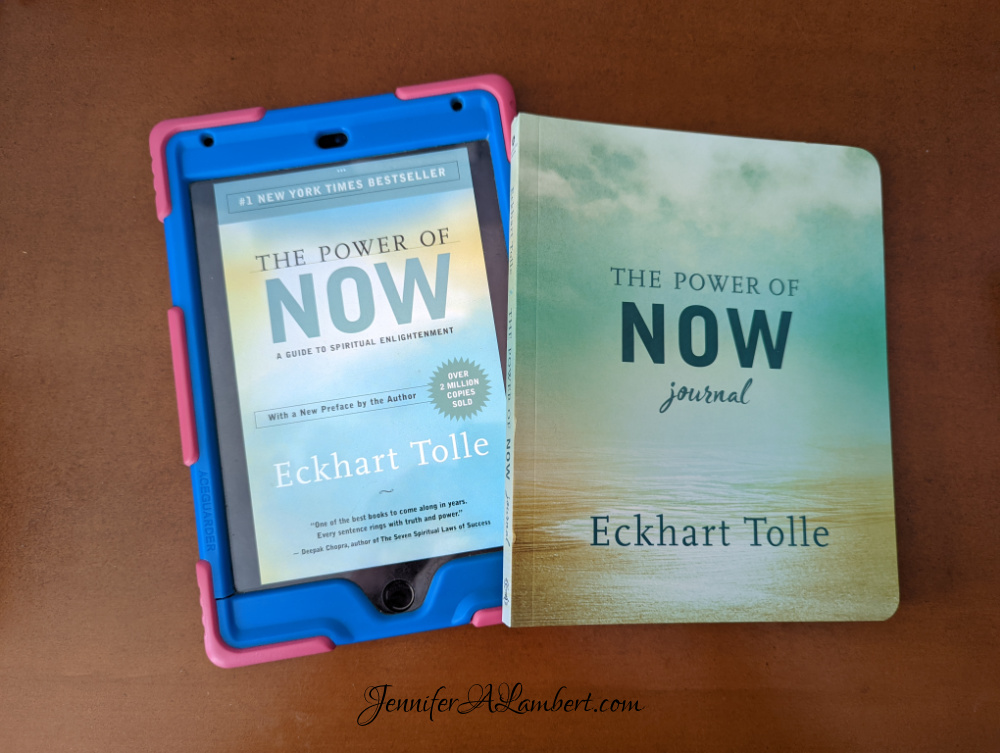
Chapter Eight: Enlightened Relationships
Favorite quotes:
You see time as the means to salvation, whereas in truth it is the greatest obstacle.
Unless and until you access the consciousness frequency of presence, all relationships, and particularly intimate relationships, are deeply flawed and ultimately dysfunctional.
They do not cause pain and unhappiness. They bring out the pain and unhappiness that is already in you.
For love to flourish, the light of your presence needs to be strong enough so that you no longer get taken over by the thinker or the pain-body and mistake them for who you are.
The greatest catalyst for change in a relationship is complete acceptance of your partner as he or she is, without needing to judge or change them in any way.
What is God? The eternal One Life underneath all the forms of life. What is love? To feel the presence of that One Life deep within yourself and within all creatures. To be it. Therefore, all love is the love of God.
True communication is communion — the realization of oneness, which is love.
But if you accept that the relationship is here to make you conscious instead of happy, then the relationship will offer you salvation, and you will be aligning yourself with the higher consciousness that wants to be born into this world.
To relinquish judgment does not mean that you do not recognize dysfunction and unconsciousness when you see it. It means “being the knowing” rather than “being the reaction” and the judge.
If there isn’t an emanation of love and joy, complete presence and openness toward all beings, then it is not enlightenment.
Your main task as a woman now is to transmute the pain-body so that it no longer comes between you and your true self, the essence of who you are.
A victim identity is the belief that the past is more powerful than the present, which is the opposite of truth.
Being an outsider to some extent, someone who does not “fit in” with others or is rejected by them for whatever reason, makes life difficult, but it also places you at an advantage as far as enlightenment is concerned. It takes you out of unconsciousness almost by force.
If you cannot be at ease with yourself when you are alone, you will seek a relationship to cover up your unease.
I think The Body Keeps the Score by Bessel van der Kolk is a good book to deal with pain-body concepts. We can heal ourselves and our relationships.
You might also like:


Leave a Reply